Tag Archive | Susana Ellis

Regency Rites: Almack’s Assembly Rooms

What was Almack’s?

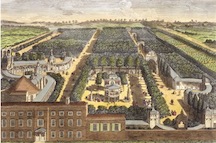
Almack’s was founded in 1765 by a Mr. McCall. The building was located on King Street just off St. James Street* and included a large ballroom, as well as supper rooms and card rooms.

Almack’s was ruled by a select committee of society matrons known as the Lady Patronesses. These ladies ruled the club with an iron hand; only the crème de la crème (about 25%) of London society were authorized to cross the threshold of this exclusive circle. Each application for membership was carefully scrutinized by the high-handed patronesses, who were not above using their power for retribution against their rivals or other personal reasons.

The food served was not of the best quality. Alcohol was not served—only tea and lemonade.The floor of the ballroom was said to be dreadful, and the rigid rules set by the patronesses could not be broken by anyone. It is said that the Duke of Wellington, the hero of the Peninsular War, was refused admission because he did not sport the proper dress—knee breeches, white neckcloth, and a long-tailed coat. The doors were locked precisely at eleven o’clock and no one was allowed in after that for any reason. There was a long list of”do’s” and “don’ts” (mostly don’ts) for the young debutantes, and any infraction could result in expulsion from the club and social censure. When the waltz was finally given the seal of approval—it was condemned for years as being scandalous due to the close proximity of the dancers’ bodies—the young ladies had to be individually approved to dance it by one of the patronesses.
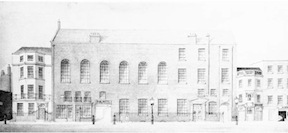
Almack's Assembly Rooms

Almack’s Assembly Rooms

Almack’s balls were decidedly not anywhere near the grandest balls of the London Season, so why did the matchmaking mothers of the haut ton scramble to get their hands on those square cardboard vouchers that would gain them admittance?

One word—marriage. Almack’s was the exclusive “marriage mart” of the ton. While potential spouses for your sons and daughters could be found elsewhere, the “best” ones could ideally be found at Almack’s, where the average, everyday riffraff need not apply. Who wouldn’t want their daughter to find a wealthy, well-connected—perhaps titled—spouse to enrich the family fortunes? Matchmaking mothers everywhere yearned to have their marriageable offspring included among the exclusive company of Almack’s.

Who were the Patronesses?

The Lady Patronesses—six or seven at any one time—were:

Lady Castlereagh

Lady Castlereagh

Lady Castlereagh (Emily Anne) was a wealthy earl’s daughter who married the Viscount Castlereagh (later the 2nd Marquess of Londonderry), who held many political posts (Secretary of States for War, Secretary of State for Foreign Affairs, and leader of the House of Commons) during the period. Lady Castlereagh was the one who insisted that the door to Almack’s be closed promptly at eleven. She and Mrs. Drummond Burrell were both known for their disdainful arrogance.
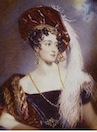
Lady Jersey

Lady Jersey

Lady Jersey, “Queen Sarah,” “Silence,” or “Sally” to her close friends was the wealthy daughter of the 10th Earl of Westmoreland who married the 5th Earl of Jersey. Lady Jersey’s mother-in-law, Lady Frances Jersey, was at one time the mistress of the Prince of Wales (it was she who recommended he choose Princess Caroline for his wife), and her parents eloped to Gretna Green (quite the scandal). Lady Jersey’s younger sister married the brother of the scandalous Lady Caroline Lamb, but when the latter ridiculed her in her vengeful novel Glenarvon, Lady Jersey barred her from Almack’s forever.
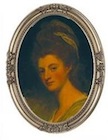
Lady Sefton

Lady Sefton

Lady Sefton (Maria) assisted many a green girl to negotiate the hazards of the marriage mart. Her husband was an enthusiastic sporting man, and a member of the Four-in-Hand Club (an elite club for only the best drivers).
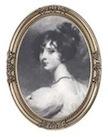
Lady Cowper

Lady Cowper

Lady Cowper (Emily) was the daughter of the great political hostess, Lady Melbourne, and due to her mother’s numerous affairs, her paternity was never verified. She disapproved of her sister-in-law, Lady Caroline Lamb, but was otherwise known as one of the kindest of the patronesses.

Princess Esterhazy

Princess Esterhazy

Princess Esterhazy (Thérèse) was the grand niece of Queen Charlotte and never let anyone forget it. Her husband Prince Paul Esterhazy served as the Austrian ambassador to England 1815-1842. She and the Countess Lieven demonstrated the utmost in continental sophistication.

Countess Lieven

Countess Lieven

Countess Lieven (Dorothea) was the first foreigner to serve as a patroness of Almack’s. Her husband the Count was the Russian ambassador to England from 1812 to 1834. Besides being a leader of London society, she was a significant political force in Great Britain, France and Russia.
Mrs. Drummond Burrell

Mrs. Drummond Burrell

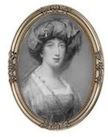
Mrs. Drummond Burrell (Clementina) was a great heiress and daughter of an earl who later became a baroness when her husband succeeded to his father’s title. Although one of the younger patronesses, she was considered the most arrogant and haughty of them all.

Appearance was everything.

It’s interesting to note that while London society, as demonstrated by the Lady Patronesses, demanded a high degree of moral perfection, it was really the façade that counted. As long as you behaved with discretion—i.e., didn’t get caught—you could have adulterous affairs with impunity. While it was expected that wives would remain faithful to their husbands until the birth of an heir or two, after that, it was quite common for both husband and wife to indulge in affairs. It was widely known that Lady Melbourne had affairs with politically powerful men who fathered many of her children, but her the importance of her position precluded any open censure.

Most of the Lady Patronesses of Almack’s had notorious affairs. Emily Cowper, taking the advice of her mother, the above-mentioned Lady Melbourne, to be true to her lover rather than her husband, had a long affair with Lord Palmerston, who later became Prime Minister, and after her husband died, they married and lived happily ever after.

As long as it was behind closed doors—and you were wealthy and important enough—you could get away with a considerably lower standard of behavior. Of course, marriages tended to be more about property, wealth and family connections than any sort of love or affection, so perhaps such scenarios were a natural result of cold-blooded unions.

The King Street location of Almack’s is an office building now; when I was there two weeks ago, it was covered with scaffolding. Christie’s Auction House is across the street.

The Regency Rites series

Regency Rites: The Well-Dressed Regency Lady 

Regency Rites: Presentation at Court

Regency Rites: Almack’s Assembly Rooms 

Regency Rites: The London Season

Regency Rites: The London Season

The Haut Ton

The haut ton referred to the members of some three hundred families who owned large estates that supplied their primary income. Sometimes they were called “the upper ten thousand.” Not all were titled, but they were usually at least well-connected and wealthy enough to stand the enormous expenses of socializing with the crème de la crème of English society, which included:

  • owning or renting a suitable residence in a fashionable area of London (in addition to a great country home on their estate), along with the requisite servants, stables, etc.
  • extensive wardrobes in the first stare of fashion for all members of the family who participated in the Season
  • food, drink, decorations, musicians, etc. required to provide entertainment for other members of the ton in grand style
  • costs of renting theatre boxes, purchasing entrance tickets to public entertainments, such as the Vauxhall Pleasure Gardens, Astley’s Amphitheatre, etc.
  • allowance or pin money for wives, sons or daughters.

What was the London Season?

Lady Theresa

Lady Theresa

The London Season evolved from the legislative sessions of Parliament, which would run roughly from January/February to June. Generally, a peer would bring his family to London sometime after the holidays, which provided a perfect opportunity for their families to socialize and seek suitable spouses for their children. The Season didn’t heat up until spring, though, and by the end of June, most of the first families escaped the odiferous heat of London for the fresh air of their country estates or perhaps a seaside resort.

Many families would return to London in September for the “Little Season,” which was much less prestigious, but few were left in Town by the end of November.

Essentially, anyone who was anyone would participate in the London Season, even if they had to run up enormous debts to do it.

In Treasuring Theresa, an earl’s daughter such as Lady Theresa would be expected to have a London Season and make a suitable marriage. Unfortunately, however, her first Season was unsuccessful, and later, there was no money for it, so when childhood sweetheart Reese Bromfield broke her heart by betrothing himself to another, Lady Theresa’s options for marriage were limited. Incidentally, Reese Bromfield, as the son of a squire, was not highly-connected, but as the son of a wealthy member of the gentry, he would have been welcomed to participate in the ton, although not, perhaps, in the highest circles.

What did people do in the London Season?

Vauxhall Pleasure Gardens

Vauxhall Pleasure Gardens

London offered—and still does to this day—an endless number of delights for visitors, regardless of status. In the early 19th century, one could walk or ride through the park (Hyde Park or Green Park were quite popular), visit the British Museum or any number of museums or galleries, attend a circus performance at Astley’s Amphitheatre, visit the Pleasure Gardens of Vauxhall with its nightly fireworks, and attend the theatre or opera. The best shopping in the world could be had on Bond Street, and for the gentlemen there was racing, boxing, gaming, and all sorts of attractions that couldn’t be found on a remote country estate.

For the haut ton, there were balls and parties, soirées, routs, musical evenings, Venetian breakfasts, al fresco teas, extravagant dinners…all sorts of opportunities to hobnob with wealthy aristocrats and politicians and make connections that could potentially lead to even higher status and prestige.

Hyde Park

Hyde Park

It was all great fun—but very expensive, especially for those who succumbed to the gambling fever. Entire fortunes were won and lost in this period—and not just by the gentlemen either. Before she died in 1806, Georgiana, the Duchess of Devonshire, had lost what amounts today to a billion dollars. (See Lady P’s insights on that here.)

What did people do the rest of the year?

Whatever they wished! Many spent the summer on their country estates, which generally sported expansive mansions with huge ballrooms that could be used for house parties, during which they would entertain their friends from other parts of England for a week or more. Sometimes gentlemen took a personal interest in their estates, but often the management was left to a steward or estate manager so that the owner was free to participate in local society, or travel to the seaside, or take the waters at a spa resort, such as Bath. Hunting and fishing were popular sports for the gentlemen.

Damian Ashby, Lord Clinton

Damian Ashby, Lord Clinton

In Treasuring Theresa, Damian Ashby was a society dandy who despised the country, except for the income it provided him. Lady Theresa despised the superficiality of the ton and preferred life on her country estate, where she counted among her friends villagers and commoners, as well as the local gentry. How will these two seemingly complete opposites manage to bear each other’s company for an extended period of time as her dying father wishes?

About Treasuring Theresa (a sweet Regency short story)

At the betrothal ball of the man she had expected to marry herself, Lady Theresa latches on to Damian Ashby, hoping to divert attention from her own humiliating situation. Of course, she’s not seriously interested because he’s a useless London fribble, in her opinion. He is not favorably impressed with her either.

Still, she’s the daughter of an earl, and he’s the heir to her father’s title and estate, so they are destined to spend more time in each other’s company…sooner rather than later. And who knew that the two of them would develop an unlikely attraction to one another?

But can a London swell and a country lady ever make their diverse lives and interests work together?

Note: Excerpts and additional reads—including an epilogue to this story—are available here.

Available

Ellora’s CaveAmazonBarnes & NobleAllRomance eBooksKobo

The Regency Rites series

Regency Rites: The Well-Dressed Regency Lady 

Regency Rites: Presentation at Court
Regency Rites: Almack’s Assembly Rooms 

Regency Rites: The London Season

Historical Romance Deal Breaker #4: Cliffhanger Endings

Blast From the Past: Susana just got back from traveling in Scotland and she thought some of you might enjoy revisiting some of her previous posts on Susana’s Parlour.

Decades of reading historical romances have led me to develop strong opinions of what defines a truly satisfying story, so the other day I set about making a list of characteristics that turn a potential five-star read into a one- or two-star. Admittedly, there are some skillful authors who manage to successfully incorporate one or more of these scenarios in their books; however, I have run across quite a few more who in my opinion haven’t quite managed it.

These are what I call “deal breakers”—characteristics that make a book a wall-banger. Not surprisingly, many involve character, particularly, the character of the hero and heroine. They have to be likable. They have to be three-dimensional, i.e., well-drawn-out characters with flaws, not fairy princesses. And they have to be able to fall in love, convincingly, the head-over-heels kind of love.

Overview of Susana’s Historical Romance Deal-Breakers

  1. Reluctant Heroes
  2. Adultery
  3. Anachronistic Behavior and Historical Inaccuracies
  4. Cliffhanger Endings
  5. Unattractive or Drop-Dead Gorgeous Heroines
  6. Heroes With Mistresses or Who Sleep With Servants
  7. Drop-Dead Gorgeous Heroes
  8. Promiscuous Heroines
  9. Contrived Endings
  10. Waifs and Silly Heroines
  11. Long Separations
  12. Excessively Cruel Heroes and Heroines
  13. Breaking the Rules: Why Some Authors Get Away With It

The fourth deal breaker is cliffhanger endings.

There’s nothing more annoying than to get to the last chapter of a book and discover that it’s not the end. That you have to buy another book to find out how your protagonists fared.

If I really care about the characters, I may buy the sequel. But I am seething inside, and any chance I will ever trust that author again is virtually gone. Even if it’s a favorite author.

If the sequel isn’t even available yet, there is no chance I will buy it. Because months later, I won’t likely care about those characters anymore.

Why do authors cheat their readers this way? If it’s meant as a technique to promote books, it’s a misguided one indeed. Nobody likes to be teased or manipulated. Eventually, readers will get disgusted and move on.

I adore a good romance series, with cameo appearances by protagonists from previous books. I love it when secondary characters from a previous book become the protagonists in the sequel. If the books aren’t spaced too far apart (i.e., I haven’t had time to forget all about them), I will buy all of them just to make sure my old friends are still doing well.

But if there’s no satisfactory HEA at the end of the book—if I discover that instead of being rewarded for their suffering, my hero and heroine have more tribulations in store for them in the next book—I’m seriously wanting my money—and my time—back.

What do you think? Are there some authors who can get away with teasing their readers with cliffhangers?

Historical Romance Deal Breaker #3: Anachronistic Behavior and Historical Inaccuracies

Blast From the Past: Susana is traveling in Scotland this week and she thought some of you might enjoy revisiting some of her previous posts on Susana’s Parlour.

Decades of reading historical romances have led me to develop strong opinions of what defines a truly satisfying story, so the other day I set about making a list of characteristics that turn a potential five-star read into a one- or two-star. Admittedly, there are some skillful authors who manage to successfully incorporate one or more of these scenarios in their books; however, I have run across quite a few more who in my opinion haven’t quite managed it.

These are what I call “deal breakers”—characteristics that make a book a wall-banger. Not surprisingly, many involve character, particularly, the character of the hero and heroine. They have to be likable. They have to be three-dimensional, i.e., well-drawn-out characters with flaws, not fairy princesses. And they have to be able to fall in love, convincingly, the head-over-heels kind of love.

Overview of Susana’s Historical Romance Deal Breakers

  1. Reluctant Heroes
  2. Adultery
  3. Anachronistic Behavior and Historical Inaccuracies
  4. Cliffhanger Endings
  5. Unattractive or Drop-Dead Gorgeous Heroines
  6. Heroes With Mistresses or Who Sleep With Servants
  7. Drop-Dead Gorgeous Heroes
  8. Promiscuous Heroines
  9. Contrived Endings
  10. Waifs and Silly Heroines
  11. Long Separations
  12. Excessively Cruel Heroes and Heroines
  13. Breaking the Rules: Why Some Authors Get Away With It

Deal breaker #3 is: anachronistic behavior and historical inaccuracies.

So many of the newer historical authors seem to be turning out what I consider contemporary stories in historical settings, and it seems as though many readers don’t care. The curvy girl on the cover wears a beautiful gown, and the novel is full of balls and handsome dukes, and if the girl sneaks out to the garden and engages in steamy sex with someone, reviewers praise it to the heavens for being “hot.” Am I the only one who questions the assumption that a gently-born young woman would be allowed to accompany a gentleman on the terrace for more than five minutes without her chaperone coming to look for her?

While I have to acknowledge that readers new to this genre may not recognize these problems, too many indications of the author’s ignorance of the time period can ruin a book for those of us who know better. And it may well be that the author doesn’t care. If all she is looking for are a few extra dollars and some temporary éclat, the ease of self-publishing can give her the platform, and her devoted friends and family can shower her work with favorable reviews until she moves on with her life.

Unfortunately, it’s not just the self-published stories that feature egregious historical inaccuracies. It seems as though the editors—if they still exist—are also unfamiliar with the time periods of the books they handle. Either that or they are so over-worked they hope the readers will be too engrossed in the story to balk at a few “minor” issues. And it’s true: I find I can ignore a problem or two in an otherwise wonderful read. However, if there are too many, or if the entire plot is dependent upon some unlikely scenario, that’s when the book ceases to be a pleasurable experience and becomes a wall-banger for me.

Here are some anachronisms and historical inaccuracies I have encountered just within the past five months in books considered historical romances (not erotica*), all involving young, innocent heroines:

  • The heroine is allowed to leave her home and walk around London without any sort of chaperone, in some cases even going to call on a single gentleman alone.
  • The heroine attends a house party hosted by a gentleman known for his scandalous house parties—which is enough in itself to ruin her reputation—but she is so loosely chaperoned that she and her lover can easily sneak into each other’s rooms at night.
  • In a medieval, the hero and heroine cannot marry because their siblings are married to each other, which by church law makes them siblings as well. So they run off and pretend to be married. Really? While our 21st century wisdom tells us this law is ridiculous, these characters lived with medieval cultural and religious mores; the guilt over time would eventually take its toll, even if their deception were never uncovered. NOT a satisfactory HEA.
  • The heroine attends a ball and inadvertently has sex with a stranger in a library so dark they cannot see each other’s faces.
  • The heroine’s father wants her to marry an old lecher and tells her to allow him whatever liberties he wants.
  • The heroine is allowed to remain alone in the family home with no supervision.
  • The heroine is allowed to host her brother’s scandalous house parties.
  • The heroine goes shopping for a gown to wear at a ball that very evening. (I suppose she dropped in at Harrod’s to look through the dresses on the rack?)
  • Waffles are served for breakfast.
  • The heroine is allowed to entertain gentleman callers and ride in a closed carriage with a gentleman with no supervision.
  • The hero is a male prostitute in a brothel where aristocrats bring their daughters to be “breached” prior to the wedding night. (!!!)
  • The author doesn’t understand British titles and refers to a young girl as Lady Davenport instead of Lady Camilla. (HINT: before writing a historical novel set in England, read up on the proper use of titles. It’s really not something you can just guess at.)
  • An illegitimate son is the heir to his legitimate half-brother’s title and estate.
  • A man is allowed to marry his father’s or brother’s widow, or a woman is allowed to marry her deceased sister’s widower.

What anachronisms and historical inaccuracies make a book a wall-banger for you?


Historical Romance Deal Breaker #2: Adultery

Blast From the Past: Susana is traveling in Scotland this week and she thought some of you might enjoy revisiting some of her previous posts on Susana’s Parlour.

Decades of reading historical romances have led me to develop strong opinions of what defines a truly satisfying story, so the other day I set about making a list of characteristics that turn a potential five-star read into a one- or two-star. Admittedly, there are some skillful authors who manage to successfully incorporate one or more of these scenarios in their books; however, I have run across quite a few more who in my opinion haven’t quite managed it.

These are what I call “deal breakers”—characteristics that make a book a wall-banger. Not surprisingly, many involve character, particularly, the character of the hero and heroine. They have to be likable. They have to be three-dimensional, i.e., well-drawn-out characters with flaws, not fairy princesses. And they have to be able to fall in love, convincingly, the head-over-heels kind of love.

Overview of Susana’s Historical Romance Deal Breakers

  1. Reluctant Heroes
  2. Adultery
  3. Anachronistic Behavior and Historical Inaccuracies
  4. Cliffhanger Endings
  5. Unattractive or Drop-Dead Gorgeous Heroines
  6. Heroes With Mistresses or Who Sleep With Servants
  7. Drop-Dead Gorgeous Heroes
  8. Promiscuous Heroines
  9. Contrived Endings
  10. Waifs and Silly Heroines
  11. Long Separations
  12. Excessively Cruel Heroes and Heroines
  13. Breaking the Rules: Why Some Authors Get Away With It

The second one is adultery involving the hero or heroine.

I’ve seen scenarios where the non-hero husband is cruel and abusive, even threatening to kill the heroine (especially in medievals), but I don’t find that a good enough excuse for adultery. I wouldn’t tell a 21st century abused woman that she either has to go back to her husband or go to a nunnery (perhaps the closest thing to a medieval equivalent of a shelter for battered women), but in medieval times there weren’t many other options. In one story I read recently, the abused wife ran away to a distant town with her lover and they pretended to be married. But the guilt of their deceit had already started to tarnish their relationship before the book’s conclusion, leaving the reader with a very unsatisfactory HEA. (In fact, the story was set up in such a way as to make a satisfactory HEA impossible.) I know this isn’t fair by 21st century standards, but you really should not write a novel set in medieval times and then proceed to ignore the social and religious mores of the time. Less knowledgeable readers might not notice, but those of us who have read widely in the genre will recognize an amateur when we see it. [Historical inaccuracy, another deal breaker, will be discussed in a later post.]

What about a spouse who is ill, disabled, or confined to a mental institution? Or a spouse who has run off with another person and disappeared? While I do not expect a hero to remain celibate forever under these circumstances, I cannot like the heroine to be his mistress. Remember Jane Eyre? She knew she couldn’t have a proper HEA with Edward while his wife was living, even if she was a lunatic. I mean, how can you justify stigmatizing your children with the label “bastard”? Somehow, the HEA has to include a legal marriage, and I can’t believe a heroine who starts out as a mistress can have that much confidence that her husband/protector won’t eventually deceive her as well.

Oh, and the plots where the sterile husband invites his best friend to impregnate his wife? NO! Forget it! It doesn’t matter if the husband is good or evil, the whole adultery/deception angle opens up a Pandora’s box of guilt and fear that always manages to tarnish the HEA in some way.

What about you? Do find adultery in a historical romance acceptable in some situations?


Historical Romance Deal Breaker #1: Reluctant Heroes

Blast From the Past: Susana is traveling in Scotland this week and she thought some of you might enjoy revisiting some of her previous posts on Susana’s Parlour.

Decades of reading historical romances have led me to develop strong opinions of what defines a truly satisfying story, so the other day I set about making a list of characteristics that turn a potential five-star read into a one- or two-star. Admittedly, there are some skillful authors who manage to successfully incorporate one or more of these scenarios in their books; however, I have run across quite a few more who in my opinion haven’t quite managed it.

Overview of Susana’s Historical Romance Deal Breakers

  1. Reluctant Heroes
  2. Adultery
  3. Anachronistic Behavior and Historical Inaccuracies
  4. Cliffhanger Endings
  5. Unattractive or Drop-Dead Gorgeous Heroines
  6. Heroes With Mistresses or Who Sleep With Servants
  7. Drop-Dead Gorgeous Heroes
  8. Promiscuous Heroines
  9. Contrived Endings
  10. Waifs and Silly Heroines
  11. Long Separations
  12. Excessively Cruel Heroes and Heroines
  13. Breaking the Rules: Why Some Authors Get Away With It

These are what I call “deal breakers”—characteristics that make a book a wall-banger. Not surprisingly, many involve character, particularly the character of the hero and heroine. They have to be likable. They have to be three-dimensional, i.e., well-drawn-out characters with flaws, not fairy princesses. And they have to be able to fall in love, convincingly, the head-over-heels kind of love.

The first deal breaker for me is the reluctant hero.

Nothing is guaranteed to turn me off a book so much as a hero who denies his feelings until the very last chapter. Certainly some initial reluctance is expected; what Regency buck is eager to tie himself down to a leg-shackle before he has sown his wild oats? But the attraction needs to happen fairly soon after he meets the heroine; there must be indications early on that he enjoys her presence, resents it when other men pay her attention, etc. Which doesn’t mean that love at first sight is de rigueur. Instant attractions can be quite wonderful, but ultimately, the feelings between them must be based on something other than physical characteristics.

Below are some examples of reluctant heroes I have encountered recently:

  • The hero was so in love with his deceased wife that he cannot imagine ever risking his heart again, so when he starts falling for the heroine (poor thing), he determines to marry another young lady he doesn’t care as much for instead. Heroes cannot be idiots.
  • The hero recognizes his soulmate, but continually spurns her because childhood traumas make him feel unworthy. Heroes cannot be whiners.
  • The hero is damaged from his experiences in the war, but not too much to fall into bed with his deceased best friend’s sister. When events come to the point where her reputation will be ruined, he refuses point-blank to marry her. Heroes cannot use the heroine and then abandon her.
  • The hero is a notorious rake who has determined never to marry, and when faced with the love of his life, he runs away with another woman, forcing her to marry another man, who abuses her cruelly. Heroes cannot be jerks.
  • The hero and the heroine share a kiss in a moonlit garden and arrange several more meetings. When the heroine, who is being pressured to marry a wealthy old man, begs the hero to marry her, he confesses that he is already married (how could he forget?), and abandons her to a miserable marriage. Heroes cannot be cowardly or adulterers.

Of course, the above cases are extreme; many times the reluctant hero is simply…reluctant. Not mean or cruel or particularly stupid. . . just there. While he may not get my dander up, he’s also…boring. And frankly, heroes cannot be boring either.

What do you think? Can you add some examples of reluctant heroes that you have encountered lately? Or can you think of stories where an initially reluctant hero successfully makes the transition into delightfully besotted hero? I’d love to hear about them!

Spotlight on Philippa Carr

Philippa Carr is a pseudonym of Eleanor Hibbert (1906-1993), who also wrote under the names of Jean Plaidy (historical fiction), Victoria Holt (gothic romance), and Eleanor Burford (contemporary romance), among others.

philippa2Eleanor worked in a jewelry store until she married George Hibbert, who was twenty years older, whereupon she was able to quit her job and begin writing “in earnest.” Her first efforts did not meet with success, but that changed after she took the advice of an editor and began writing romantic fiction. She published 32 contemporary romances under her maiden name before turning to historical fiction, which she wrote under the name of Jean Plaidy. Later, she wrote Gothic-style romances under the name of Victoria Holt and then she produced a series called The Daughters of England (historical fiction) under the name Philippa Carr.

My first introduction to Hibbert’s work was in the late 1960’s and 70’s when I would devour all the gothic romances I could find. Victoria Holt was my favorite; she couldn’t write fast enough for me! In 1973 I discovered Jean Plaidy’s historical fiction; she became my next obsession; I didn’t realize the two were the same person until years later, but I knew I couldn’t get enough of their writing. I don’t recall when I discovered Philippa Carr, but I’m sure by then I was aware of her true identity. And her books went to the top of my TBR list along with the rest. Several years ago, by trolling eBay, I was able to acquire a complete collection of Jean Plaidy and Philippa Carr books for my personal collection.

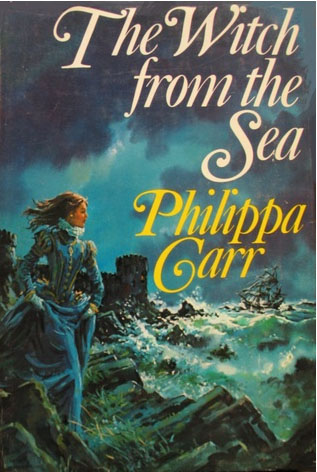
Good News: Open Road Media is reissuing these titles for today’s historical fiction lovers. The digital version that I received from NetGalley is a collection of the first three titles in The Daughters of England series: Miracle at St. Bruno’s, The Lion Triumphant, and Witch From the Sea.

From the Publisher

Miracle at St. Bruno’s

During the tumultuous reign of King Henry VIII, Damask Farland, named after a rose, is captivated by the mysterious orphan Bruno. Discovered upon the abbey altar on Christmas morning, then raised by monks, Bruno becomes the great man whom Damask grows to love—only to be shattered by his cruel betrayal.

The Lion Triumphant

While the rivalry between Inquisition-torn Spain and Elizabethan England seethes, Captain Jake Pennlyon thrives as a fearsome and virile plunderer who takes what he wants—and his sights are set on Catherine Farland. Blackmailed into wedlock, Cat vows to escape. Fate intervenes when she’s taken prisoner aboard a Spanish galleon . . . unaware that she’s a pawn in one man’s long-awaited revenge.

The Witch from the Sea

Linnet Pennlyon, proud daughter of a sea captain, finds herself in a vicious trap: Pregnancy has forced her to marry the cunning Squire Colum Casvellyn. Once their baby is born, she devotes herself to their son. Yet, little by little, against her will, Linnet finds herself drawn to her passionate, mercurial husband. Dark secrets lurk in their castle, and when a beautiful stranger washes up on the shore, Linnet suddenly finds she’s no longer in control of her family—or her life.

Susana Says: Riveting Reads, 4/5 Stars

SusanaSays3Damask, Catherine, Linnet, Tamsyn…are the strong, independent female protagonists in this fascinating saga of The Daughters of England. The first clue that these stories are more along the lines of historical adventures than romances is the use of the first person. The reader’s knowledge of the thoughts of the other characters comes directly from the narrator’s thoughts and beliefs—and because she is sometimes mistaken, the reader finds herself equally astonished when certain truths are revealed.

Damask comes from a wealthy family; her father is a devout Catholic who watches Henry VIII’s gradual power grab from the Church with concern. These are dangerous times for men with consciences, for anyone who disagrees openly with the king may soon find himself bending over a chopping block. Damask, like all girls, must marry, and she finds herself with a choice of her worthy distant cousin and another young man, whose birth was said to be miraculous, and who, unbeknownst to her, harbors lofty ambitions.

Her daughter Catherine finds herself on the Spanish island of Tenerife, the victim of a revenge plot. With little hope of rescue, she tries to make the most of her situation, and when her liberation is finally at hand, she is horrified by the direction it takes and fears that there will be worse problems ahead. Great description of the events leading up to and following the defeat of the Spanish Armada.

Linnet is well on her way to becoming the wife of a worthy businessman when she suddenly finds herself wed to a cocky brute eerily reminiscent of her own father. Although theirs is a volatile relationship, they share a passionate nature, and Linnet is content. But then a beautiful Spaniard washes up on the shore, and suddenly Linnet begins to have doubts about her marriage…and her husband’s mysterious occupation.

witchThese books will take you through a hundred years of English history as though you were there living it yourself. I’d forgotten how much I liked the first-person point of view, since it’s fallen out of fashion in recent years, but in these stories, its use strengthens the link between the narrator and the reader, to the point where you feel you are Damask, Catherine, Linnet, and Tamsyn.

This volume is a bargain at $9.99 for three full-length novels and a series of exciting adventures to the past. I’m already dusting off the remaining books in this series because I disliked seeing it come to an end.

Amazon • Barnes & Noble

http://en.wikipedia.org/wiki/Eleanor_Hibbert

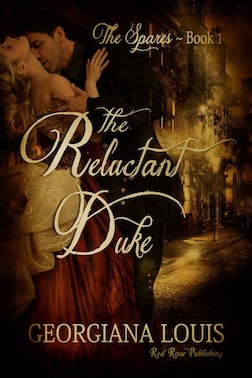
Georgiana Louis and “The Reluctant Duke” + Giveaway

Georgiana is offering a digital copy of The Ruined Marquis, the second in the Spares series, to the most original commenter.

Why I Love the Regency Period

I did an interview on an American radio station last week and the host asked me why I wrote about the Regency period, as there was no Regency period in Australia. I had to laugh, because I rarely write about things I know about. Where’s the fun in that?

Instead I write about places I dream of, times that interest me.

Ever since I picked up Sabrina Jeffries’ To Pleasure a Prince in a secondhand book store, I have been hooked on the Regency period. And it’s not because of the clothes either!

I actually find the clothes to be quite horrible, and don’t write much about them.

Instead, what I love, are the rules, the society and most of all I love the changes within society that began through that period. The way love matches within the aristocracy and gentry became more common, versus the contracted marriages of the the late 18th century.

I love the rules about how a lady must act, the ridiculous double standards for gentlemen.

The Regency period was a time when ladies became more than just a pretty society piece. Ladies who had conversation became more prized, and I think that is what totally enthralls me.

I hope you enjoy my Spares series—I loved writing it. My four, tortured heroes and the women who bring them to their knees.

About The Reluctant Duke

Colin Lyre, recently inherited 10th Duke of Lincoln, has been told his whole life that he is superfluous to his family.

When he must deal with the responsibility and stress that comes with his new title, he flounders rather badly. He is determined do his ‘duty’’ and marry an ‘appropriate Duchess.’

Life throws Colin’s plans wayward when he rescues the beautiful Annabelle from a ball. She makes him realize how much better his life could be, but he doesn’t know if he truly deserves such happiness.

Annabelle wants nothing to do with the responsibility of marrying a title. She simply wants to make a suitable match with a gentleman who can support her family.

Colin is Annabelle’s perfect prince until she realizes what life as his life would be like. However, making the rational decision to stay away from one another is much harder than either of them expects.

Available

Red Rose Publishing

Excerpt

TheReluctantDuke_LRG“Thank you so much sir. I need to get out of here before anyone sees me. Can you help me please?” She implored through her ministrations.

“Oh… of… course I can,” Colin stammered, his mind racing with the logistics of how to get her out of the grounds unseen. Why hadn’t he been thinking about that before she mentioned it? He should have been the one to offer aid.

“I can’t be found like this,” Her voice broke on the words and two fresh tears slipped down her cheeks. “No one would ever marry me.”

Colin’s heart all but broke at the pitiful look on her face, for it was indeed true. Her beauty and virginity were the two things that would be her greatest assets on the marriage mart. If people regarded her as damaged goods, no one of any consequence would marry her, no matter how beautiful she was.

“I’ll get you out of here, let’s walk towards the front of the house and you can hide whilst I get a carriage.” Colin put his arm gingerly around the angel, ushering her towards the house.

“I’m Annabelle by the way,” she sniffed as she wiped her face again with his now soaked handkerchief.

“Oh … well…” Colin stammered again, how did this beautiful woman keep flabbergasting him? He’d never been so verbally incompetent in his life.

“I think we’re past polite names do not you? After all, you have probably seen more of me tonight than any one should before marriage.”

Colin was shocked by her honest and far too accurate assessment of the situation. It occurred to him if someone saw them in her current state of ‘dress’ it would be his head on the chopping block, or in the parson’s trap as the case may be.

“I do not want to get married,” he blurted out louder than he should have, stopping her in their rather quick race to the front gate.

Annabelle chuckled at him.

“I did not mean I wanted to marry you, my lord. I just meant that considering the state you found me in and after all you have done for me tonight, the least I could do was introduce myself as Annabelle and not Miss such and such, daughter of such and such.” She sighed loudly. “I hate all that.”

Colin smiled despite himself. Was there really a marriageable female here that did not care about connections? He frowned cynically, he did not think she’d feel the same way when she was properly introduced to him.

“I’m Colin,” he smiled shyly at her. He’d never been introduced as just ‘Colin’ in his entire 26 years. What an odd, exhilarating feeling. ‘Colin’ could be anyone, do anything.

“Colin,” she said his name with a slight huskiness that sent a bolt of desire to his groin.

About the Author

all photos sept 2011 282Georgiana Louis is a chiropractor, wife and mother in the real world. However, her passion for writing could not be denied. She fell in love with romance novels at the tender age of eleven. Thousands of books have been read, absorbed and enjoyed since then. More recently, the wonderful world of Regency romance—dashing heroes and beautiful heroines in an era just beginning to accept love matches. Please join her in the fictional world, where everything ends as it should, happily ever after.

Contacts

Joan Vincent and The Honour Series

It is my pleasure to introduce Joan Vincent, whose Dell Candelight Regencies I used to read years ago. I was so delighted to run into Joan and her sister Vera at the Romantic Times Convention in Kansas City last month and to discover that she is back to writing her fabulous Regencies once again!

Susana Ellis and Joan Vincent at Club RT in Kansas City

Susana Ellis and Joan Vincent at Club RT in Kansas City

I came to write the Honour series in a very roundabout manner. Between 1977 and 1983 I sold eight novels that were published in the Dell Candlelight series. I returned to teaching in 1983 because my daughters needed dental surgery and braces. I still wrote that first year but gave it up when the demands on time and energy from the combination of family, teaching, and learning computers, networking etc. became too great. It wasn’t until 2000 when I retired that I returned to writing at the urging of my sister, Vera. The book I chose to write was one for which I sketched a brief outline before I discontinued writing. In fact, I had described it in such detail that my daughters both remembered me talking about it almost twenty years earlier.

I did some review research on 1808 England. Then I studied my outline, sketched my characters, and began writing. I was surprised that after so many years the story flowed so easily. That is, it flowed until I was in the midst of Chapter Five. In the middle of that chapter I was astounded as I typed one character telling another that Mr. Martin had died.  Mr. Martin was the villain. You don’t have much of a book if it is only five chapters long! (This is just one of my many experiences when my characters acted like true children of the mind and did what they pleased no matter what an outline said! Thankfully, I learned this happens to other writers also.)

My sister Vera has always read my books as I wrote them so I visited with her about the problem. Then I decided to let the mind mull it over in its own strange way for a few days. When I returned to the keyboard I found a new villain already in the book and a deliciously evil one at that-—the French master spy Donatien. The only problem was that it completely changed the tone of the book from a sweet regency like my earlier work into something more complex and definitely darker. I thought on it a few more days and came up with the idea of a Napoleonic spy mystery with an element of romance.  I revamped my characters and their motivation a bit and learned the hero was an officer in the 15th Light Dragoons with four fellow officers who were very good friends.  One of these had a very important part in the book.

By Chapter Seven I knew I needed an English spy but who to pull out of the character hat?  Once again I brainstormed with Vera. She came up with the idea of using Andre Ribeymon, Baron de la Croix. Andre had first appeared in Bond of Honour, published in the early 80’s as the six-year-old nephew of the heroine. In 1808 he would be in his early 20’s and ripe for adventure. Of course he would have a good friend to go on escapades with him and Hadleigh Tarrant, the hero in Honour’s Choice came to life. What was truly fascinating was that I later realized Donatien is also in Bond of Honour. He is part of a group that attempted to kidnap Andre.

At that point I had seven strong hero types and an excellent villain in Donatien. I had this vision of my seven posed like the men in that old 80’s western The Magnificent Seven—the 15th Light Dragoons in their regimentals (Bellaport, Danbury, Merristorm, Vincouer and Goodchurch for those unfamiliar with the Honour series), Andre in his guise as a dandy and Hadleigh in his staid Brummel style-dress. I also had six more stories—one for each of my other heroes—come to me full-blown in which each man in turn would battle Donatien and also find his true love.

Choice-final epub coverThe Honour Series was not a nine-month term baby but more a month in gestation. Writing about how it came to be has reminded me of how many pillars underpin a book! And I haven’t even told you about the two gentlemen from the Royal Agricultural Society in Britain who helped me, via email, track down where and when the Agricultural Society met in 1809. It is a minor point in Choice but one I wanted to have it correct. It almost takes a village to write a book.

Honour’s Choice, the story of an older woman and younger man, came into existence long before the so-called cougar trend began.  Anyone who reads the story would hardly think of Sarah as a cougar in any guise. Her knowledge of herbal medicine led me to a lot of research on the topic and many calls to my sister-in-law who is a nurse and who plied doctors with questions for me. I can’t really remember when I realized Hadleigh had a fascination with insects, but that aspect of his life has also led me to many books on bugs I never thought I’d read. Hadleigh and Sarah have struck a strong chord with all who have read their story. That has been true from the first very rough draft, although sadly, I’d have to admit I’m not certain why. I am very glad I wrote their story and hope those who read it enjoy it as much as I did.

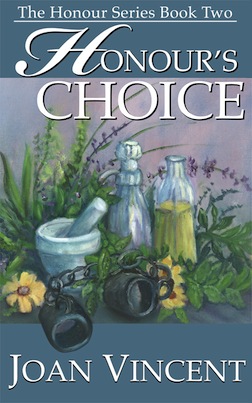
About Honour’s Choice (The Honour Series Book Two)

She’s the only one who can help when a spy hunt goes terribly wrong.

1809 England. Hadleigh Tarrant joins in the hunt for government bullion thieves. Captured and tortured by their leader Donatien, Hadleigh is left to die. Sarah, Lady Edgerton, a middle-aged widow, nurses the critically injured Hadleigh when he is found near her home despite the danger to her reputation. Their hearts choose each other, but Hadleigh is haunted by the tragedy of his parent’s marriage and fears that love will cause him pain worse than that of any torture. Sarah, trapped by the years between them and secrets that would turn him from her forever, tries to hide her love and do what is best for Hadleigh by giving him up. Donatien, the malicious French spy reappears determined to purloin military secrets. He is also intent upon a revenge that threatens Sarah and Hadleigh’s growing love and their very lives. Hadleigh must unmask the spy before he and Sarah can decide between dishonour and Honour’s Choice.

  4* Review from RT Book Reviews

Available

Amazon • Barnes & Noble

About the Author

jvincentJoan Vincent lives with her husband in Kansas. Her hobbies include sewing for and playing with her young grandchildren, quilt making and quilting, flower arranging, and research. Her husband claims her favorite hobby/passion is filling an ever-increasing number of bookcases with books on all facets of 18-19th century English, French, and Spanish life and politics.

JV Website

Facebook

blog

Joan’s earlier Regencies are available at Regency Reads.

  • The Audacious Miss
  • A Bond of Honour
  • The Curious Rogue
  • The Education of Joanne
  • Never To Part
  • The Promise Rose
  • Rescued By Love
  • A Scheme For Love
  • Thomasina

Episode #15: Lady P On Assignment in 1814 Kent

Susana: Lady P, who is still visiting her daughter’s family in 19th century Kent, heard some rather juicy gossip about the scion of a prominent family in the area and decided to investigate, intending to present the results of her investigation to me in an attempt to make reparations for making free with my credit card to buy gifts for her grandchildren prior to her return to her own time period.

Lady P [interrupting]: Although I know Susana well enough to know that it is not the money that concerns her; it’s something called the Prime Directive. So silly really, to think that something as innocuous as the Laugh and Learn Learning Puppy could cause the end of the world. [Shaking her head] In any case, I sent a note to Lord Rutherford to call upon me at my son-in-law’s home in Thanport at his earliest convenience, and he was pleased to do so.

* * * * * *

Lady P: I am much obliged to you, sir, for your prompt response to my invitation.

Rutherford [bowing]: You indicated that it was a matter of some urgency?

Lady P: Yes, indeed. Rumor has it, my lord, that you are a sapskull.

Rutherford [eyebrows raised]: A sapskull, madam? Indeed? And how did you come to that conclusion?

Lady P: Although perhaps it is merely a ploy to draw attention from your dabbling in the area of espionage.

Rutherford: Espionage? Really, my lady. I think you’ve been reading too many Minerva romance books.

Lady P [waving an arm]: Do not be alarmed; your secret is safe with me. I am more concerned about your attentions toward a certain highly-regarded young lady in the area.

Rutherford [rather stiffly]: If you mean Miss Marsh…I suppose it is no secret that I am courting her.

Lady P: It is hardly flattering to Miss Marsh that you spent so many years sniffing after Lady Phoebe and only turned to her when Lady Phoebe became engaged to another.

Rutherford: I was not sniffing after Lady Phoebe. She has never been more than a friend. I was merely waiting until Miss Marsh attained an age to marry. [Under his breath: Shocking how meddlesome older ladies can be!]

Lady P [with narrowed eyes]: What was that about older ladies?

Rutherford: Nothing ma’am. Are you quite finished with your interest in my affairs?

Lady P: Not even close, my lord. Then you waited on the sidelines while Miss Marsh received countless offers of marriage…surely any sensible man would have made an effort to fix his interest with the woman he intends to marry. What if she’d have accepted one of them? Where would you be, then?

Rutherford: I had the situation well in hand. If it appeared as if she were interested in another gentleman, I would have stepped in.

Lady P: Why did you decide on Miss Marsh? What are the qualities you saw in her that gave you the impression that she would make a suitable wife for you?

Rutherford: I have known her all her life. She is a well-behaved, proper lady who has all the attributes I desire in a wife. Furthermore she is used to taking her lead from me. I wish to live a well ordered life. With Miss Marsh there will be no surprises.

Lady P: I understand, however, that Miss Marsh has turned down your offer of marriage.

Rutherford [running a finger down his cravat]: That is true. A fit of pique, only.

Lady P: But you persist in pursuing her. What makes you think you can prevail upon her to change her mind? Miss Marsh appears to be a young lady who knows her own mind. I doubt she will be easily importuned.

Rutherford: I have been busy during the past couple of years. Once I spend some time dancing attendance on her, I’m sure she’ll come around. After all, we have been close friends for years.

The Secret Life of Miss Anna MarshLady P: What can you offer Miss Marsh that her other suitors could not?

Rutherford: I beg your pardon, my lady, but these questions are extremely intrusive. [To himself: not to mention something I don’t wish to think about.]

Lady P: How have your feelings changed toward Miss Marsh since your return to Kent?

Rutherford: Really, these questions are outside of enough. My feelings toward Miss Marsh are no concern of yours. All anyone need know is that I intend to make her my wife. You can tell that to Lady Blanchard. [Rutherford mutters behind his hand: Now if I can only convince Anna. I wish I knew why the devil she is being so difficult.)

[A maid comes in and whispers in Lady P’s ear.]

Lady P [to the maid]: Tell my daughter I’ll be along shortly. [to Lord Rutherford]: I do beg your pardon, Lord Rutherford, but a domestic squabble requires my attention. Before you depart, however, there is one last point of curiosity I should like you to satisfy, if you would be so kind.

Rutherford [rolling his eyes]: By all means, my lady. I have no wish to leave your curiosity unfulfilled.

Lady P [with a saucy grin]: Can you tell me where I might find a copy of that book Miss Marsh found in the library? You know, the one with all the—er—fascinating illustrations? I have a novelist friend who would give her eye-teeth to have one.

Rutherford [clearing his throat] I believe I must take my leave of you, madam. It’s been a pleasure, of course.

Lady P [winking and offering her hand]: Indeed it has, Lord Rutherford. I wish you well in your endeavor to win Miss Marsh’s affections. Perhaps a match between you is not quite so ill-conceived as I thought.

Rutherford: À bientôt, my lady. [softly cursing as he walks out the door]

About The Secret Life of Miss Anna Marsh

Since she was a young girl, Anna Marsh has dreamed of Sebastian, Baron Rutherford asking for her hand in marriage. But that was in another life when her brother Harry was alive, before she vowed to secretly continue the work he valiantly died for. Now as Sebastian finally courts Anna, she must thwart his advances. Were he to discover her secret, he would never deem her a suitable wife…

Sebastian has always known Anna would become his wife someday. He expects few obstacles, but when she dissuades him at every turn he soon realizes there is much more to this intriguing woman. Somehow he must prove to her that they are meant to be together. But first he must unravel the seductive mystery that is Miss Anna Marsh…

Available for pre-order on Amazon.com

SusanaSays3Susana Says: Fabulous Read, 5/5 stars

On the surface, Anna Marsh appears to have everything a young lady could wish for. She’s beautiful, accomplished, well-mannered, and sought after by countless eligible gentlemen. She’s also a wealthy heiress. But Anna is not a typical debutante. She has a secret life that she is determined never to give upeven if it means she must remain unmarried the rest of her life. In any case, the man she’s always loved, Sebastian, Lord Rutherford, seeks a biddable, compliant wife, which she knows she’ll never be.

Sebastian, Lord Rutherford has been waiting for Anna to mature into a desirable young lady, and now that she has, he’s ready to pop the question. But when he doesn’t get the answer he expects, he becomes all the more determined to win her heart. But how can he truly love Anna when he doesn’t really know her? The question becomes: is he a suitable husband for her?

Anna is a strong, independent woman determined to make more of her life than the typical society maven. There were times in the beginning when I wanted to slap Rutherford silly for taking Anna for granted for so long, but, on the other hand, there is nothing quite like seeing a man grovel to appease his lady, and Rutherford manages to do so quite satisfactorily.

There is a very sweet secondary romance in this story, and also a mystery to solve originating from Anna’s “secret life.”

The Secret Life of Miss Anna Marsh is the second in a series, following The Seduction of Lady Phoebe. The book stands well on its own, however. This review was written from an ARC provided by the author, who, incidentally, has the first book on pre-order. Ella Quinn is a wonderful new talent in the Regency world, and this Regency devotee looka forward to enjoying her future works.

About the Author

Ella QuinnElla’s studies and other jobs have always been on the serious side. Reading historical romances, especially Regencies, were her escape. Eventually her love of historical novels led her to start writing them.

She is married to her wonderful husband of twenty-nine years. They have a son and granddaughter, Great Dane and a Chartreux. After living in the South Pacific, Central America, North Africa, England and Europe, she and her husband decided to make St. Thomas, VI home.

Ella is a member of the Romance Writers of America, The Beau Monde and Hearts Across History. She is represented by Elizabeth Pomada of Larsen-Pomada Literary Agency, and published by Kensington. Her debut novel The Seduction of Lady Phoebe, will release in September 2013

Contacts

Website: (Up soon) www.ellaquinnauthor.com

Facebook: www.facebook.com/EllaQuinnAuthor

Twitter www.twitter.com/ellaquinnauthor

Blog http://ellaquinnauthor.wordpresscom


The Lady P Series

Episode #1: Susana’s Adventures With Lady P: The Introduction

Episode #2: Lady P Talks About… Pride and Prejudice?

Episode #3: Lady P and the Duchess Who Lost a Billion Dollars

Episode #4: Lady P and the Face On the $100 Bill

Episode #5: In Which Lady P Discovers Sparkly Fabrics and Ponders Violating the Prime Directive

Episode #6: Lady P Dishes the Dirt on the Duchess of Devonshire

Episode #7: The Political Exploits of Lady P and the Duchess of Devonshire

Episode #8: Lady P and the Prince Regent’s Illicit Marriage

Episode #9: In Which Lady P Depletes the Cooking Sherry During Her Discussion of Caroline of Brunswick

Episode #10: Lord Byron: Mad, Bad, and Dangerous to Know

Episode #11: In Which Lady P Talks About Hannah More and the Rights of Women

Episode #12: Lady P’s Revelations Regarding George III and His Peculiar Progeny

Episode #13: Lady P Discusses the Luddite Uprising, the Assassination of Spencer Perceval, and the General Unfairness of Life

Episode #14: In Which Leticia, Lady Beauchamp, Pops In For an Interview On Her Personal Acquaintance With Princess Charlotte of Wales

Episode #15: Lady P On Assignment in 1814 Kent

Lady P Quizzes Jane Livingston, the Hero’s Sister From “A Twelfth Night Tale”