Tag Archive | Susana Ellis

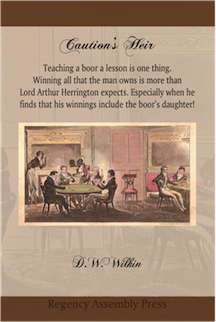
D.W. Wilkin: Caution’s Heir

18-4-18

My Dear Lady Chevly

You know that as we are the closest of friends I never in all the long years that we have known each, resort to gossip.

Untitled1

Oops, ink spill, I have to cut a new quill.

I know you are thinking of the time I shared that delicious piece about Devonshire, and then well the other time about Caro Lamb, but who wasn’t talking about Caro then. Poor creature.

Very well, I am sure you want to know as quickly as I can relate it, especially before someone mentions it and you are nabbed. I so hate being betwattled that way.

It is Bartle’s nephew, Daventry. Oh, I know you know all about how he took that fool Hroek for everything he had. And how your Chevly was there and said that Daventry was a gentleman through and through, trying to make light of the bet and return it all to Hroek. Shame that the man was not like his elder brother. Now that was a marquess!

And I well remember how we both made eyes at the man when he came to Town. The old marquess, not his nit of a brother. Well, did you know that the new one had a daughter? I surely didn’t. She’s never been to Town nor had a season at all. Well, of course not if she’s never been to Town. Louisa. That is her name. Lady Louisa Booth.

Well, she is in London now. Showed up at the Earl of Daventry’s house this very morning. She and her companion and claimed that as how Daventry won everything from her father, who has apparently fled for the Americas, including all in his house, Daventry had won her too!

I know you must be choking, as I was when my maid ran in to inform me of all that was taking place about Golden Square. I haven’t got more than a glimpse of the girl through the window, and she looks fetching from what I can see. Wouldn’t that just choke Bartle as if she swallowed a fish bone. Her nephew married to a penniless chit, when she hopes to snare a fortune for the man and repair the wealth that her brother the Duke has wasted.

I intend to drop my card over there later and hope that the girl will call upon me. I will write as soon as she does.

Yours,

Dartenmore

About Caution’s Heir

coverTeaching a boor a lesson is one thing.

Winning all that the man owns is more than Lord Arthur Herrington expects. Especially when he finds that his winnings include the boor’s daughter!

The Duke of Northampshire spent fortunes in his youth. The reality of which his son, Arthur the Earl of Daventry, learns all too well when sent off to school with nothing in his pocket. Learning to fill that pocket leads him on a road to frugality and his becoming a sober man of Town. A sober but very much respected member of the Ton.

Lady Louisa Booth did not have much hope for her father, known in the country for his profligate ways. Yet when the man inherited her gallant uncle’s title and wealth, she hoped he would reform. Alas, that was not to be the case.

When she learned everything was lost, including her beloved home, she made it her purpose to ensure that Lord Arthur was not indifferent to her plight. An unmarried young woman cast adrift in society without a protector. A role that Arthur never thought to be cast as. A role he had little idea if he could rise to such occasion. Yet would Louisa find Arthur to be that one true benefactor? Would Arthur make this obligation something more? Would a game of chance lead to love?

 Amazon (digital) • Amazon (print)

Barnes & NobleiBooksSmashwords

Caution’s Heir Website

About the Author

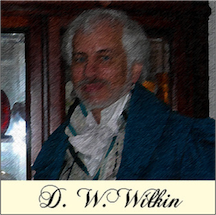
UntitledAn award winning author, Mr. Wilkin is a graduate in history. He has been writing in various genres for thirty years. Extensive study of premodern civilizations, including years as a re-enactor of medieval, renaissance and regency times has given Mr. Wilkin an insight into such antiquated cultures.

Trained in fighting forms as well as his background in history lends his fantasy work to encompass mores beyond simple hero quests to add the depth of the world and political forms to his tales.

Throughout his involvement with various periods of long ago days, he has also learned the dances of those times. Not only becoming proficient at them but also teaching thousands how to do them as well.

Mr. Wilkin regularly posts about Regency history at his blog, and is a member of English Historical Fiction Authors. His very first article was published while in college, and though that magazine is defunct, he still waits patiently for the few dollars the publisher owes him for the piece.

Mr. Wilkin is also the author of several Regency romances, and including a sequel to the epic Pride and Prejudice by Jane Austen. His recent work, Beggars Can’t Be Choosier has won the prestigious Outstanding Historical Romance award from Romance Reviews Magazine.

Blog

Blog post about Caution’s Heir

Maggi Andersen: What a Rake Wants (The Spies of Mayfair Series)

Interview With Maggi Andersen

Susana: What inspired you to start writing?

Maggi: I needed little inspiration I remember writing at a very young age. When I had the time to devote to a career in writing, I took it up seriously.

Susana: How long have you been writing?

AuthorPicMaggi: I began 15 years ago. I wrote my first book for my master’s degree. It was a murder mystery titled Murder in Devon.

Susana: What advice would you give to writers just starting out?

Maggi: Patience is something writers need in spades, although these days it’s not nearly as bad as it was years ago, when we had to post everything and wait months for a reply. It takes time to find your voice and learn your craft though. Don’t be too hasty sending off your work. Make sure it’s as perfect as you can get it. Put it aside for as long as you can and then look at it with new eyes. You’ll be surprised at the mistakes you’ll find, and what you can see to improve it. Wait a few weeks if you can. Another example of why we need patience! J

Susana: Do you ever suffer from writer’s block? If so, what do you do about it?

Maggi: No, never. I don’t believe in it. If I run out of ideas, I just start writing. The creative brain kicks into action and something will come. You can always edit the first draft. You can’t edit a blank page.

Susana: What comes first: the plot or the characters?

Maggi: When I first began writing it was plot driven, but now the characters drive the story. Sometimes, without me at the wheel.

Susana: Are you a plotter or a pantser?

Maggi: I tend to be a bit of both. I know the ending. It’s not hard it’s a romance! I plot a scene ahead but that can change as the characters lead me off somewhere surprising. I like the panster element in my writing because it can go off on tangents I would never have thought of plotting the story. A spy story or mystery needs more plotting. I like to end up with a reasonable first draft.

Susana: Tell us something about your newest release that is NOT in the blurb.

Maggi: Flynn, Lord Montsimon is playing the game of a rake due to the hurt he suffered as a child in Ireland. It takes a woman like Lady Althea Brookwood to show him his true feelings and melt his heart. My inspiration for Flynn came from Errol Flynn, the Australian actor. Despite his racy reputation, Flynn was known to be a cultured gentleman. I love his movies, who doesn’t like Captain Blood?

Susana: Are you working on something at present that you would like to tell us about?

Maggi: I’m writing another Regency series, The Baxendale Sisters. The first is Lady Honor’s story. The book is titled: Honor’s Debt.

Susana: What are you reading now?

Maggi: Not a historical. Slow Hand by Victoria Vane. It’s great!

Susana: What author or authors have most influenced your writing?

Maggi: Surprisingly, Harlan Coben. A suspense writer can learn a lot from the way he crafts his stories. My love of historials came from Georgette Heyer, Victoria Holt, Eloisa James and Jane Austen. I like Julia Quinn and Anna Campbell too.

Susana: What is your work schedule like when writing?

Maggi: I spend long hours at my desk every day. (My husband is retired from the law and does the cooking). I don’t write at night, I join him to watch something on the television or read.

Susana: What did you want to be when you grew up?

Maggi: I dreamed of living in an English country village while writing. (My artist mother was born of English parents, and this was her dream too) I now live in a quaint, Australian country village in the Southern Highlands of New South Wales, where tourists come to see the spring gardens. And I spend my days writing, so I guess I’ve come close to living my dream.

Susana: What is your favorite food? Least favorite? Why?

Maggi: My love of all kinds of cheeses, which comes from my Danish father. Least favorite, any kind of offal. I remember my Dad loved brains and my mother would cook them for him on his birthday. Yuk!

Susana: What is one thing your readers would be most surprised to learn about you?

Maggi: My first job was in a bank, and for a creative person like me, I found it difficult and boring. I can balance a check book though.

Susana: Is there a writer you idolize? If so, who?

Maggi: I’d have to say Mary Stewart who died recently in her 90s. She was a poet and wrote the first romantic suspense novels. I have her entire library.

Question for the Readers: What problem didn’t occur to Althea when she chose the gown she wore?

About What a Rake Wants

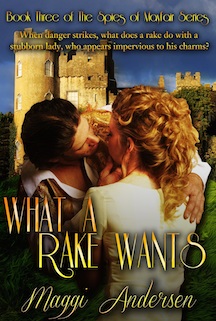
WARW2 copyKing George sends his private investigator, an Irishman, Kieran Flynn, Lord Montsimon, on a mission, the reason for which is unclear. Is it a plot against the Crown? Or something entirely unrelated? Flynn’s inquiries lead him to the widow, Lady Althea Brookwood. Known amongst the ton as a rake, Flynn is rarely turned down by a lady, and when Althea refuses not just him but many other men, he becomes intrigued.

After her neighbor, Sir Harold Crowthorne informs Lady Althea that he means to take her country property, Owltree Cottage, by fair means or foul, she must search for help. The first man she turns to is promptly murdered and the second lies to her. That leaves Flynn, Lord Montsimon, a man she has been studiously avoiding. But Montsimon is decidedly unhelpful, and more than a little mysterious. Her only option is to seduce him. Lady Althea has little confidence that she will succeed, especially as before her husband was killed in a duel, he often told her she was quite hopeless at intimacy.

When a spy is murdered, Flynn wonders just what Althea knows and what her involvement might be with the man the king wants Flynn to investigate.

Amazon Kindle • Amazon Print

Excerpt

(Lord Montsimon and Lady Althea Brookwood are forced to share a bed for the night.)

The attic room had a low, sloping ceiling. A green hook rug covered the floor and a jug, basin, and towels had been placed on the tall dresser. A straight-backed chair sat in the corner and the bed against the far wall. Mrs. Fletcher’s description of the bed had been accurate: the small wooden bedstead was covered in a bright quilt and not designed for two. Althea stared at it, her throat tight with dismay, as Montsimon shut the door. His nearness in the small space was overwhelming.

Seemingly unaffected, Montsimon peeled off his coat and sat on the feather-filled mattress, which sank visibly under his weight. He looked annoyingly at home. He tugged at his cravat then undid the buttons on his shirt to reveal a strong throat and a glimpse of dark chest hair. She took in the male strength, the cleanliness and beauty of him and turned away to fuss with her cloak before hanging it over the chair.

“Would you help me off with my boots?”

“I’m hardly a valet,” she said, sounding peevish.

“Not as strong, but we shall manage,” he said with a grin. His waistcoat joined his coat on the chair. How much was he going to remove? She wished her breath would slow.

Althea took hold of the mud-splashed, black leather Hessian boot and pulled. It didn’t budge.

“Perhaps a bit harder?”

Annoyed by his manner, she gave a violent yank. The boot slid down Montsimon’s well-defined calf so fast she fell onto her derriere on the hard plank floor.

“Are you all right?” His grin widened as he leapt up.

“Perfectly.” She waved his hand away and climbed to her feet, resisting a rub of the damaged area. “Your other foot if you please.”

“If you’re sure?” he asked with a burst of laughter.

With a dismissive scowl, she planted her feet and taking a firm hold of the boot, eased it down more gradually. It slid off his leg without further mishap. There was something disturbingly intimate about his broad chest encased in white linen, the form-fitting grey trousers and his big stockinged feet. Had she ever seen Brookwood this way? He always came to her chamber dressed in his banyan and slippers. And she had dreaded the sight of him.

Montsimon stood, ducking his head under a beam. “You’ll never manage that dress on your own.”

She crossed her arms. “I’m keeping it on.”

“Such a pretty gown was meant for a drawing room, not for sleeping in.”

“Nevertheless, I shall sleep in it.” She perched on the chair and took off her shoes.

He frowned. “Give me a look at those.”

“Why?” She handed them to him.

He turned a shoe over in his big hands. The sole of one had worn through. “These are about to fall apart. I had no idea you wore such flimsy shoes.”

“They are meant for drawing rooms, my lord. As is my dress.”

“That gown will look like a rag in the morning. As you have nothing else to change into, you will have to bear it until we return to London.”

Why did he so often make sense? She brushed down her skirts, which were already dreadfully crushed, and was forced to agree. She wasn’t a shy, green girl; she just didn’t want to inflame Flynn’s passions. It would take very little, she suspected. But her underwear covered her and was perfectly modest. “The bed is too small. A gentleman would sleep in the chair.”

His eyebrows flew up. “It’s made of wood.”

“Obviously.”

He flapped a hand in dismissal. “I intend to sleep in that bed, my lady. Where you choose to sleep is entirely up to you. I’m going downstairs to wash at the pump. While I’m away, you can undress and hide beneath the covers.” He paused, one hand on the doorknob. “Again, do you require help to undo those impossible little buttons at your back?”

“Odd that this problem didn’t occur to me when I chose to wear it.” Her lips puckered in annoyance. While they were arguing, what remained of the night was passing. She turned her back. “If you will.” If he treated her like a servant, she would do likewise.

Her hair had begun to escape the topknot, and she swept it up out of the way, scattering pins. She tingled under the gentle touch of his fingers as they moved down her back. Her gown fell away. “What are you doing?”

“Unlacing your stays. You can’t sleep in this uncomfortable garment!”

“I had intended to,” she said, pulling away as he tugged at the laces. Too late, she felt them give.

“You have lovely hair, Althea,” he said softly.

His use of her name was very seductive. Her pulse skittered alarmingly. She spun around, clutching the bodice of her dress to her chest as her stays slipped to the floor.

Montsimon looked her up and down, warm approval in his gaze.

She backed away from him, longing for the shelter of darkness. “Once I’m in bed, shall I blow out the candle?”

“If you wish.” Montsimon closed the door behind him.

About the Author

Maggi Andersen lives with her lawyer husband in a quaint old town in the Southern Highlands of New South Wales, Australia. She began writing fiction after raising three children and studying for a BA and an MA in Creative Writing.

When not creating stories, Maggi reads, enjoys her garden, goes for long walks and feeds the local wildlife. Her six kookaburras (Australian Kingfishers) prefer to be hand fed.

An Amazon bestselling Regency author, Maggi writes in several genres, contemporary and historical romances and young adult novels. Having grown up reading Enid Blyton and Georgette Heyer, Maggi’s romances are filled with adventure, mystery or intrigue, but always with a happy ending.

Her latest releases:

The Spies of Mayfair Series

A Baron in Her Bed

Taming a Gentleman Spy

What a Rake Wants

Website

Historical Tidbit

Did you know that in the fifteenth century, only a few could afford glass windows? They became more common in the sixteenth but were still expensive. When people moved they took their windows with them! Tudor windows were small pieces of glass held together by strips of lead in a criss-cross or lattice pattern. To make a pane of glass, a blog of glass was blown into a cylinder-shaped bubble, which was placed on a cooling table. Then afer the bubble cooled, it was cut in half producing a small piece.

The poor, however, still had to make do with strips of linen soaked in linseed oil.

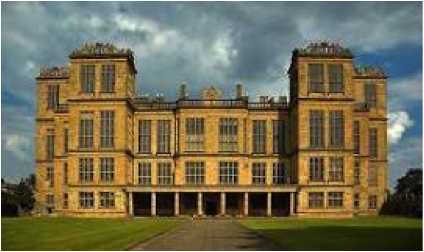
Hardwick Hall, owned by Dowager Countess of Shrewsbury, was famous for its Tudor windows. It inspired a rhyme: “Hardwick Hall more glass than wall.”

Untitled

Marlow Kelly: A Woman of Honour

BBT_AWomanOfHonour_Banner copy

Marlow will be awarding a $25 Amazon GC to a randomly drawn winner via Rafflecopter during the tour. Click here for the Rafflecopter. Click on the banner above to follow the tour and increase your chances of winning.

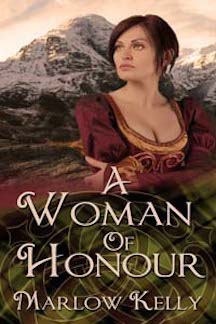
About A Woman of Honour

Duncan Campbell wakes to discover he is imprisoned with a woman in his enemy’s dungeon in the Highlands of Scotland. The disenchanted warrior hopes his last few moments on earth will be spent in the arms of the sweet-voiced Isabel. If only she will cooperate.

Isabel Douglas has no intention of obliging the crude captive. The penniless noblewoman considers herself too tall and thin to be desirable. She intends to become a nun. But first, disguised as a boy, she must deliver an important letter to Scotland’s hero in hiding, King Robert the Bruce.

Together, the pair make a daring escape that plunges them into the bleak countryside in the middle of winter. In the struggle to survive, they learn the true strength of their feelings for each other. But when Duncan’s animosity towards the king becomes evident, Isabel must decide between her heart and her country.

Excerpt

Cover_A Woman of Honour copyDuncan Campbell drifted into consciousness and opened his eyes to absolute blackness. He lay perfectly still on the cold, dirt floor listening. A small rustle of fabric echoed in the darkness. He cocked his head, getting a sense of the sound’s location, then rose to his feet.

“Tell me who you are before I tear you apart,” he roared, seizing his opponent. Whoever it was didn’t answer, just silence. A fist punched him on the nose. Pain ricocheted through him, and he grabbed his face. In the dark, he lost his balance and fell in the dirt, cradling his head in his hands.

“Oh my, are you all right?” asked a small voice.

“No, I’m not.”

“You threatened me, and I wanted to give you fair warning I will fight back if you touch me.”

The lyrical voice stunned him. A woman? She spoke Gaelic with a strong, lowland accent. He shook off the pain and asked, “Where am I?”

“Dunstaffnage Castle. Don’t you remember your capture? I’ve heard of people getting a bump on the head and not remembering their own name. Is that what happened to you? Did you bump your head?”

Lord, she was talkative.

“Is it?”

“I remember I was hit from behind scouting the bast….Are we in the dungeon?” He rose to his feet.

“Yes.”

He grunted. On the bright side he hadn’t gone blind. On the other hand they were in a dank, windowless cell with no hope of escape. There wasn’t even a sliver of light coming through the door.

About the Author

After being thrown out of England for refusing to drink tea, Marlow Kelly made her way to Canada where she found love, a home and a pug named Max. She also discovered her love of storytelling. Encouraged by her husband, children and let’s not forget Max, she started putting her ideas to paper. Her need to write about strong women in crisis drives her stories and her curiosity regarding the lives and loves of historical figures are the inspiration for her characters.

 WebsiteFacebook Twitter


Beth Trissel: Traitor’s Legacy

SBB_TraitorsLegacy_Banner copy

Beth will be awarding a $35 Amazon gift card to a randomly drawn winner via Rafflecopter during the tour. Click here for the Rafflecopter. Click the banner above to follow the tour and increase your chances of winning.

About Traitor’s Legacy

1781. On opposite sides of the War of Independence, British Captain Jacob Vaughan and Claire Monroe find themselves thrust together by chance and expediency.

Captain Vaughan comes to a stately North Carolina manor to catch a spy. Instead, he finds himself in bedlam: the head of the household is an old man ravaged by madness, the one sane male of the family is the very man he is hunting, and the household is overseen by his beguiling sister Claire.

Torn between duty, love, and allegiances, yearning desperately for peace, will Captain Vaughan and Claire Monroe forge a peace of their own against the vagaries of war and the betrayal of false friends?

Excerpt

Cover_TraitorsLegacy copyShe fixed those wonderful eyes on him, more lethal than a backwoods rifleman. “Shall I lead the way, Captain?”

“Certainly.” He’d be tempted to follow her anywhere. A most unsettling thought.

Nothing about this fetching young lady struck Vaughan as calculating, but for the sake of her adored brother and sacred revolution he strongly suspected she’d try to deceive him. He’d hate to have to make her arrest. In fact, he should loathe it to his core. And he’d only just met her.

Why did she have such a potent effect on him, and why did it seem his fate to encounter beguiling females on the wrong side of this infernal conflict? If they weren’t Rebels to begin with, they inevitably adopted the cause.

Could he persuade Miss Monroe of her duty to the king, to him, and win her allegiance? Perhaps. She’d conducted herself splendidly thus far, and for such a prize he was willing to give his all.

About the Author

Author Beth Trissel copyMarried to my high school sweetheart, I live on a farm in the Shenandoah Valley of Virginia surrounded by my children, grandbabies, and assorted animals. An avid gardener, my love of herbs and heirloom plants figures into my work. The rich history of Virginia, the Native Americans and the people who journeyed here from far beyond her borders are at the heart of my inspiration. In addition to American settings, I also write historical and time travel romances set in the British Isles, and nonfiction about gardening, herbal lore, and country life.

 FacebookBlogTwitter Amazon Author PageBarnes & Noble Page

The Exeter Road: Basingstoke, Andover and Salisbury and the Events They Witnessed

dust jacket

The following post is the eighth of a series based on information obtained from a fascinating book Susana recently obtained for research purposes. Coaching Days & Coaching Ways by W. Outram Tristram, first published in 1888, is chock full of commentary about travel and roads and social history told in an entertaining manner, along with a great many fabulous illustrations. A great find for anyone seriously interested in English history!

Basingstoke

In 1645 Cromwell took Basing House after a four-year struggle, stripped the lead off the roof of the Abbey in order to cast bullets, leaving the house in ruins. Basingstoke, however was a popular place for coaches to stop for meals.

Between Basingstoke and Andover is a “desolate country” where coaches could make good time. The White Hart in Whitchurch was a “bustling place” where coaches from London to Salisbury and Oxford to Winchester crossed each other.” (Note: it’s still there and has fifteen rooms available should you desire to stay there!)

Andover

Here Henry VII rested from his labours after suppressing the insurrection of Perkin Warbeck; but whether the miserly Tudor put up at the Star and Garter, or the everlasting White Hart, or their medieval equivalents, if there were any, is more than I can say. It was upon Andover to link another royalty with the place, that James II fell back, after the breaking-up of the camp at Salisbury. Here it was that he was deserted by Prince George [Prince of Denmark, his daughter Anne’s husband], remarkable for his impenetrable stupidity and his universal panacea for all contingencies in a catch-word. Whatever happened, “Est-il possible?” was his exclaim. He supped with the king, who was at the moment overwhelmed naturally enough with his misfortunes, said nothing during a dull meal, but directly it was over slipped out to the stable in the company of the Duke of Ormond, mounted, and rode off. James did not exhibit much surprise on learning the adventure, being used to desertion by this time. He merely remarked, “What, is ‘Est-il possible?’ gone too! A good trooper would have been a greater loss;” and left for London—I was going to say by the next coach.

Two important coaching roads diverge about a half-mile out of Andover, which was also the scene of an escaped lioness on the Exeter Mail on October 20, 1816.

Salisbury

salisbury-cathedral-whats-on-in-salisbury“One of the most picturesque towns in the south of England,” Salisbury, where the Quicksilver (which could do 175 miles in 18 hours, our author notes repeatedly) stopped to change horses, “is almost exactly half way between Exeter and London.”

The town of Salisbury, which is eighty miles seven furlongs from Hyde Park Corner, is chiefly remarkable for its cathedral; and it owes this agreeable notoriety to the north wind. This may sounds trange in the ears of those who have not, attired as shepherds, highwaymen or huntsmen, braved the elements in the surrounding plain. Those however who have enjoyed this fortune, will not be surprised to learn, that when the winds raged in the good old days of 1220 round the original church of Old Sarum, which was quite unprotected and perched upon a hill, the congregation were utterly unable to hear the priests say mass; and no doubt they were unable to hear the sermon too. This fact much exercised the good Bishop Poore; and so, a less windy site having opportunely been revealed to him in a dream by the Virgin he got a license from Pope Honorius for removal. Which done—with a medieval disregard for the safety of the local cowherd or government inspector—he aimlessly shot an arrow into the air from the ramparts of Old Sarum, and (unlike Mr. Longfellow’s hero), having marked where it fell, there laid the foundations of the existing beautiful church.

The first among the myriad of royal visitors to Salisbury was Richard II, “who was here immediately before his expedition to Ireland, where he should clearly never have gone.” Apparently the town was not at all impressed with his “amiable inclination towards charging his subjects with his outings,” considering the fact that his household consisted of “ten thousand persons, three hundred of whom were cooks” and for him they had to provide tables. The town “a short time after expressed their thanks for his visit, by, with almost indecent alacrity, espousing the cause of Henry.”

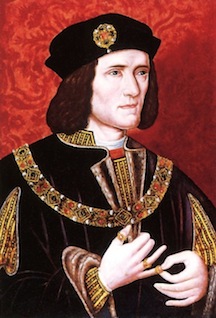
In 1484

Richard III

Richard III

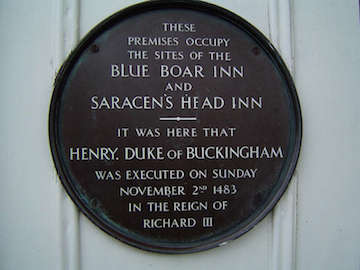
…the hunchbacked Richard honoured Salisbury with his presence; but he was not I expect in the best of tempers, for here to him was brought the Buckingham we have all read of in the play, who had just seized the fleeting opportunity to head an insurrection against the king, in an unprecedentedly wet season in Wales. The result was that he was unable to cross the Severn, and this misfortune brought him too to Salisbury, where Richard was waiting to superintend his execution at what is now the Saracen’s Head.

In the courtyard of this inn, which was then called the Blue Boar, and not “in an open space,” as Shakespeare has described it (as if he were speaking of Salisbury Plain), Buckingham had his head cut oft according to contemporary prescription. We have none of us seen the episode presented on the stage, but we have read the carpenters’ scene, which Shakespeare wrote in, to give the gentleman who originally played Buckingham a chance, and allow a few moments more preparation for Bosworth Field. And we may recollect that it consists princiapply in Buckingham asking whether King Richard will not let him speak to him, and on being told not at all, informing the general company, at some length, that it is All-Souls’ Day, and that as soon as he has been beheaded, he intends to commence “walking”.

plaque2

Although the inn has been replaced by Debenham’s, a department store, some say they have seen or experienced the Duke’s ghost, so ladies, you might want to reconsider using the dressing rooms there—just an FYI.

After Richard and Buckingham, there came to Salisbury in the way of kings, Henry VII in 1491. Henry VIII in 1535 with Ann Boleyn, already in all probability engaged in those sprightly matrimonial differences as to men and the things which culminated the year following on Tower Green. Next in order, came to Salisbury, Elizabeth, bound for Bristol, bent, as on all her royal progresses, on keeping her nobility’s incomes within bounds, and shooting tame stags that were induced to meander before her bedroom windows. After the virgin queen came James I, who liked the solitudes which surrounded the Salisbury of those days, for the two-fold reason, firstly, because they saved him in a large measure from the invasion of importunate suitors (who were afraid of having their purses taken on Salisbury Plain before they could proffer their supplications), and, secondly, because they were well stocked with all sorts of game on which he could wreak his royal and insatiable appetite for hunting. The “open” nature of the country might perhaps be added as another reason for the sporting king’s liking for the place: for James was no horseman, and as he was in no danger of meeting a hedge in an area of thirty miles, the going must have suited him down to the ground.

Sir Walter Raleigh

Sir Walter Raleigh

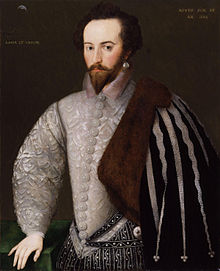
It was also hear that Sir Walter Raleigh, upon his return to England from an unsuccessful expedition to Spain, tried to gain audience with James to explain himself and beg pardon, but was forced to return to London where he was imprisoned and executed.

The merry monarch [Charles II] was here twice, but on neither occasion, I suspect was he peculiarly merry; for after the battle of Worcester, when he lay concealed near the town for a few days, and his companions used to meet at the King’s Arms in John Street, to plan his flight, the Ironsides were much too close on his track to allow opportunity for jesting; and when he came here as king in 1665, all but the most forced mirth was banished from a court which dreaded every day to be stricken by the plague.

 Index to all the posts in this series

1: The Bath Road: The (True) Legend of the Berkshire Lady

2: The Bath Road: Littlecote and Wild William Darrell

3: The Bath Road: Lacock Abbey

4: The Bath Road: The Bear Inn at Devizes and the “Pictorial Chronicler of the Regency”

5: The Exeter Road: Flying Machines, Muddy Roads and Well-Mannered Highwaymen

6: The Exeter Road: A Foolish Coachman, a Dreadful Snowstorm and a Romance

7: The Exeter Road in 1823: A Myriad of Changes in Fifty Years

8: The Exeter Road: Basingstoke, Andover and Salisbury and the Events They Witnessed

9: The Exeter Road: The Weyhill Fair, Amesbury Abbey and the Extraordinary Duchess of Queensberry

10: The Exeter Road: Stonehenge, Dorchester and the Sad Story of the Monmouth Uprising

11: The Portsmouth Road: Royal Road or Road of Assassination?

12: The Brighton Road: “The Most Nearly Perfect, and Certainly the Most Fashionable of All”

13: The Dover Road: “Rich crowds of historical figures”

14: The Dover Road: Blackheath and Dartford

15: The Dover Road: Rochester and Charles Dickens

16: The Dover Road: William Clements, Gentleman Coachman

17: The York Road: Hadley Green, Barnet

18: The York Road: Enfield Chase and the Gunpowder Treason Plot

19: The York Road: The Stamford Regent Faces the Peril of a Flood

20: The York Road: The Inns at Stilton

21: The Holyhead Road: The Gunpowder Treason Plot

22: The Holyhead Road: Three Notable Coaching Accidents

23: The Holyhead Road: Old Lal the Legless Man and His Extraordinary Flying Machine

24: The Holyhead Road: The Coachmen “More Celebrated Even Than the Most Celebrated of Their Rivals” (Part I)

25: The Holyhead Road: The Coachmen “More Celebrated Even Than the Most Celebrated of Their Rivals” (Part II)

26: Flying Machines and Waggons and What It Was Like To Travel in Them

27: “A few words on Coaching Inns” and Conclusion

The Exeter Road in 1823: A Myriad of Changes in Fifty Years

dust jacket

The following post is the seventh of a series based on information obtained from a fascinating book Susana recently obtained for research purposes. Coaching Days & Coaching Ways by W. Outram Tristram, first published in 1888, is chock full of commentary about travel and roads and social history told in an entertaining manner, along with a great many fabulous illustrations. A great find for anyone seriously interested in English history!

Fifty Years Later

Mr. Tristram, our illustrious author, wants us to know that travel has undergone a great deal of change from 1773, so he tells us the story of our hero Mirabel (see previous posts) fifty years later, when he’s in his seventies, having lived most of his life overseas and now is returning to England to take the same route to Exeter. Dressed in much the same way he did then, he waits outside the Gloucester Coffee-house for the Exeter Fly, where the young bucks stare at his old-fashioned attire.

Perhaps Mirabel looks like Mr. Bennet from P&P?

Perhaps Mirabel looks like Mr. Bennet from P&P?

The Comet

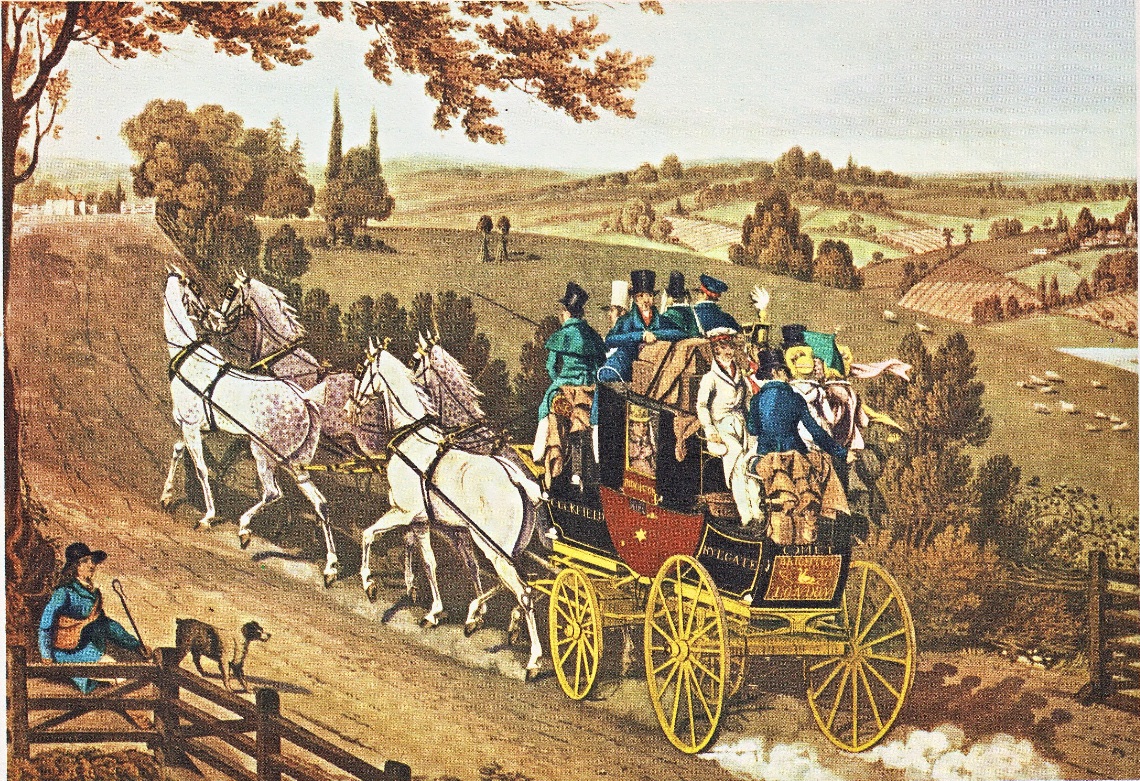
He expects to see the Exeter Fly—a trifle improved upon possibly—but still the Exeter Fly. And what does he see in its stead rapidly approaching? Why, a turn-out drawn by four spanking grays, which he takes to be a gentleman’s carriage, and which would do credit to a crowned head.

comet

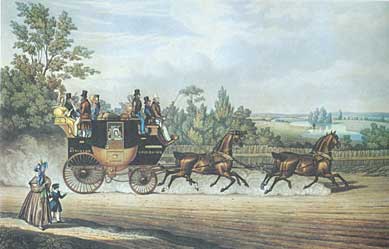
The Comet on the way to Brighton

It’s called the Comet and our friend Mirabel soon learns where its name came from. He mistakes the coachman, who is well-dressed and genteel (for he is also the proprietor of the coach) for a gentleman. The Hercules Pillars at Hyde Park Corner no longer exists (recall that Apsley House replaced it soon after our last trip to Exeter), and the roads are macadamized and therefore much smoother than when they were made with stone.

The Comet travels at ten miles an hour and arrives at Hounslow fifty-five minutes after leaving Hyde Park Corner, not stopping at Brentford at all. Mirabel is eager for some breakfast since being told that the coach would change horses there.

The proprietor, smiling superior, blandly tells him that they have changed horses while he was putting on his spectacles. “Only one minute allowed for it at Hounslow, sir, and it is often done in fifty seconds by those nimble-fingered horse-keepers.”

He then proceeds to urge the horses forward in such a way as to cause the coach to rock violently and alarm our valiant Mirabel (remember when he apprehended the highway back in 1773?). In response to his concerns, the proprietor says simply: “Oh, sir, we always ‘spring them’ over these six miles.”

He looks out and sees death and destruction before his eyes, the horses going at the rate of a mile in three minutes, and the coachman in the act of taking a pinch of snuff.

The King's Arms at Bagshot

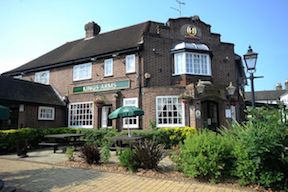
The King’s Arms at Bagshot

At Staines, the coach takes on a fine thoroughbred “with a twitch on his nose” and Mirabel feels queasy, but the proprietor says, “Let ’em go, and take care of yourselves.” Just as Mirabel expected, the thoroughbred takes off and soon the horses are galloping and the coach rocks unmercifully, but the proprietor manages to steady them, and when Mirabel descends from the Comet at Bagshot, he is grateful to be alive and determined to find a slower and safer coach to take for the remainder of the journey.

The Regulator

Assured that the Regulator will be there in hour, Mirabel finally gets his breakfast and is ready and waiting when the Regulator draws up to the King’s Arms.

He sees…that it is a strong, well-built drag, painted chocolate, bedaubed all over with gilt letters, a bull’s head on the doors, a Saracen’s head on the hind boot, and drawn by four strapping horses.

The inside being full, Mirabel rides on the outside, and is relieved when the Regulator travels at a steady pace for the first five miles out of Bagshot. Once they reach the Hartford Bridge Flats, however, the coachman “springs ’em” to a gallop, and they go so face they catch up to the Comet. In the words of the coachman:

“He [Mirabel] was seated with his back to the horses, his arms extended to each extremity of the guard irons, his teeth set grim as death, his eyes cast down towards the ground, thinking the less he saw of his danger the better;”

and in this state he arrived at Hartford Bridge. Here he dismounted from the Regulator with the alacrity of lightning. “I will walk into Devonshire,” he cries. Then he thinks better of this, and says he will post; then he is told that posting will cost him twenty pounds; and then he says that will never do, and asks whether the landlord of The White Lion can suggest no coach to his notice that does not carry luggage on the top.

The Quicksilver Mail (the Devonshire)

The landlord advises him to take the Quicksilver mail, which travels at night, well-armed, with lamps and guards, and when asked about the speed, demurs and doesn’t mention that the Quicksilver mail (the Devonshire) is the fastest coach in England and commonly called the miracle of the road. But it doesn’t have luggage on top, at least.

Mirabel loses his head, and in spite of the assurances of the passengers that all is right, thrusts it out of the window to see where the deuce they are going to, sees nothing but dust and whirling wheels, and loses his wig.

Alas, we never find out whether or not poor old Mirabel ever got to Exeter, just that the coach reached Basingstoke, and presumably left our elderly hero there.

At least it wasn’t snowing as it did the last time!

 Index to all the posts in this series

1: The Bath Road: The (True) Legend of the Berkshire Lady

2: The Bath Road: Littlecote and Wild William Darrell

3: The Bath Road: Lacock Abbey

4: The Bath Road: The Bear Inn at Devizes and the “Pictorial Chronicler of the Regency”

5: The Exeter Road: Flying Machines, Muddy Roads and Well-Mannered Highwaymen

6: The Exeter Road: A Foolish Coachman, a Dreadful Snowstorm and a Romance

7: The Exeter Road in 1823: A Myriad of Changes in Fifty Years

8: The Exeter Road: Basingstoke, Andover and Salisbury and the Events They Witnessed

9: The Exeter Road: The Weyhill Fair, Amesbury Abbey and the Extraordinary Duchess of Queensberry

10: The Exeter Road: Stonehenge, Dorchester and the Sad Story of the Monmouth Uprising

11: The Portsmouth Road: Royal Road or Road of Assassination?

12: The Brighton Road: “The Most Nearly Perfect, and Certainly the Most Fashionable of All”

13: The Dover Road: “Rich crowds of historical figures”

14: The Dover Road: Blackheath and Dartford

15: The Dover Road: Rochester and Charles Dickens

16: The Dover Road: William Clements, Gentleman Coachman

17: The York Road: Hadley Green, Barnet

18: The York Road: Enfield Chase and the Gunpowder Treason Plot

19: The York Road: The Stamford Regent Faces the Peril of a Flood

20: The York Road: The Inns at Stilton

21: The Holyhead Road: The Gunpowder Treason Plot

22: The Holyhead Road: Three Notable Coaching Accidents

23: The Holyhead Road: Old Lal the Legless Man and His Extraordinary Flying Machine

24: The Holyhead Road: The Coachmen “More Celebrated Even Than the Most Celebrated of Their Rivals” (Part I)

25: The Holyhead Road: The Coachmen “More Celebrated Even Than the Most Celebrated of Their Rivals” (Part II)

26: Flying Machines and Waggons and What It Was Like To Travel in Them

27: “A few words on Coaching Inns” and Conclusion

The Exeter Road: A Foolish Coachman, a Dreadful Snowstorm and a Romance

dust jacket

The following post is the sixth of a series based on information obtained from a fascinating book Susana recently obtained for research purposes. Coaching Days & Coaching Ways by W. Outram Tristram, first published in 1888, is chock full of commentary about travel and roads and social history told in an entertaining manner, along with a great many fabulous illustrations. A great find for anyone seriously interested in English history!

Breakfast at The Three Pigeons Inn, Brentford

Brentford-Market & Three Pigeons

The Brentford Market and the Three Pigeons Inn

In the 17th and 18th centuries when Brentford was a thriving market and resort town, the Three Pigeons Inn was famous for its post-horses, of which it could stable up to one hundred. Its varied entertainments can be found in such literature as The Roaring Girle or Moll Cut-Purse (1611), She Stoops to Conquer (1773), The Merrie Conceited Jests of George Peele—The Jests of George Peele with Four of His Companions at Brainford (1607) and The Alchemist 1610).

Decisions! Decisions!

It’s snowing when our intrepid passengers are refreshed after their breakfast at The Three Pigeons. “…the coachman’s nose beams a benignant purple, and the ostler recommends another glass as an antidote to the weather, of which he presages the worst.”

Following their earlier adventure with the highway (see the previous post), the ladies are more concerned with the possibility of further encounters with outlaws. Mirabel, our gallant hero, squeezes the lovely Belinda’s hand in reassurance and they exchange “delicious looks.”

coach in snow

Upon reaching Hounslow, the coach begins to jolt and stops at The George Inn, where the landlord, who has six empty beds, warns them that the Bath Flying Machine has been snowed up at Colnbrook and that they had best stop for the night. “As sole answer to this appeal, the coachman, full of valour, calls for more brandy, and two more horses to take them over the heath…”

The first thing they encounter is the Salisbury Fly in a snowdrift.

The driver of the Exeter Fly observes this catastrophe, but he does not regard it, or regards it purely as a landmark, and majestically avoids the pit into which his unfortunate brother has fallen.

“The snow drives; the wind blows it full in their faces; the horses begin to show signs of suddenly capitulating.” The coachman whips them unmercifully, but they slow down to a walk. The passengers begin to believe they are lost, but then the snow relents, and the coach pulls in to The Bush at Staines. The landlord counsels them to stay for the night, and the passengers, if truth be told, would like to follow that advice.

Success, stimulant, and the lull in the snow storm have, however, made the coachman daring. He observes thickly that he is an Englishman, and declares his intention of inning at Bagshot for the night, whether the passengers leave the coach or stick to it. Upon this, the young captor of the highwayman [Mirabel] says, blushing with ingenuous shame, that he is willing to go on; upon which the lady [Belinda], blushing also, says that she is willing too. This necessitates the mother also putting her neck in jeopardy, and she, too, re-enters the coach.

brentford to bagshot map

A = Brentford, B = Bagshot

After this, the lawyer and the captain cannot honorably refuse, so the coach takes off with a full quota of passengers, and the snow begins to fall once more. Nerves on edge, the captain and the lawyer bicker, the guard, fearing highwaymen, takes out his blunderbuss, and the coachman tries to urge the horses to go faster as they approach Bagshot Heath. “…but highwaymen are not such fools as to be out in such weather, and the driver, who can see nothing at all, drives into a rut a yard deep.”

The gallant Mirabel takes the opportunity to rescue Belinda and her mother from the overturned coach, then turning to do the same with the rest of the motley crew. At that point he suggests that someone go on ahead to The King’s Arms at Bagshot to get help.

“The only answer to this appeal comes from the guard, who raises his blunderbuss gravely, and mistaking a too curious shepherd who approaches from behind a bush for a footpad, shoots him…”

The injured shepherd is given a bottle of brandy, and Mirabel, realizing he cannot be in two places at one time, confers the safety of the ladies to the lawyer, and takes off on one of the horses to get help. In under an hour, the rescuers approach, only to be shot at by the guard, who is drunk with power at having just shot the shepherd.

All’s Well That Ends Well

All the way to the King’s Arms he [the guard] babbles of the hundred pounds due him for ridding the heath of a footpad; the shepherd consults the lawyer meanwhile as to damages and as to how an action would lie…Mirabel gently presses Belinda’s hand and the pressure is ever so faintly returned…and the party arrive finally at The King’s Arms, Bagshot where a wonderful display of good cheer oppresses a groaning table—“Iris-tinted rounds of beef, marble-veined ribs, gelatinous veal pies, colossal hams, gallons of old ale, bins full of old port and burgundy.”

And here, in the midst of an old English plenty, my travellers are snowed up for nearly a week. And Mirabel proposes to Belinda, and is accepted; and the man of law drinks a congratulatory bottle of port with the fortunate wooer; and proposes himself to the widow next day, and is refused; and Mirabel drinks a bottle of port with him—a consolatory one this time; and the guard is forgiven by the shepherd; and the captain is rude to Betty the chambermaid, and gets his face slapped for his pains in a long oak corridor; and so in the old coaching days, when Exter was five days’ journey from London, and ladies wore hoops and farthingales, and gentlemen bag wigs and three-cornered hats, the old coaching world went round.

kings-arms

I love a happy ending. Don’t you?

BTW, today you could travel from Brentford to Bagshot in 36 minutes. But perhaps not in snowstorm.

Susana’s August Giveaway*

Susana brought back some lovely treasures from her trip to England, and she’d like to share them with you. This month she’s giving away a lovely mug (purchased at Chatsworth) illustrated with a famous painting of the Duchess of Devonshire.

Click on the image of the mug in the right column to enter the Rafflecopter. A runner-up will win “The Regency: Love’s Golden Age” mug. Enter every day if you wish! Good luck!

*International winners will receive the equivalent in gift cards.


 Index to all the posts in this series

1: The Bath Road: The (True) Legend of the Berkshire Lady

2: The Bath Road: Littlecote and Wild William Darrell

3: The Bath Road: Lacock Abbey

4: The Bath Road: The Bear Inn at Devizes and the “Pictorial Chronicler of the Regency”

5: The Exeter Road: Flying Machines, Muddy Roads and Well-Mannered Highwaymen

6: The Exeter Road: A Foolish Coachman, a Dreadful Snowstorm and a Romance

7: The Exeter Road in 1823: A Myriad of Changes in Fifty Years

8: The Exeter Road: Basingstoke, Andover and Salisbury and the Events They Witnessed

9: The Exeter Road: The Weyhill Fair, Amesbury Abbey and the Extraordinary Duchess of Queensberry

10: The Exeter Road: Stonehenge, Dorchester and the Sad Story of the Monmouth Uprising

11: The Portsmouth Road: Royal Road or Road of Assassination?

12: The Brighton Road: “The Most Nearly Perfect, and Certainly the Most Fashionable of All”

13: The Dover Road: “Rich crowds of historical figures”

14: The Dover Road: Blackheath and Dartford

15: The Dover Road: Rochester and Charles Dickens

16: The Dover Road: William Clements, Gentleman Coachman

17: The York Road: Hadley Green, Barnet

18: The York Road: Enfield Chase and the Gunpowder Treason Plot

19: The York Road: The Stamford Regent Faces the Peril of a Flood

20: The York Road: The Inns at Stilton

21: The Holyhead Road: The Gunpowder Treason Plot

22: The Holyhead Road: Three Notable Coaching Accidents

23: The Holyhead Road: Old Lal the Legless Man and His Extraordinary Flying Machine

24: The Holyhead Road: The Coachmen “More Celebrated Even Than the Most Celebrated of Their Rivals” (Part I)

25: The Holyhead Road: The Coachmen “More Celebrated Even Than the Most Celebrated of Their Rivals” (Part II)

26: Flying Machines and Waggons and What It Was Like To Travel in Them

27: “A few words on Coaching Inns” and Conclusion

Five Random Things About Me: Authors After Dark

I’m Susana Ellis and I’m a Featured Author at the Authors After Dark conference in Charlotte, NC this coming week. I’m SO looking forward to meeting you all at the AAD!

I write Regency romance since I’m a complete nut about history and romance (not in that order). My mom made me a spectacular Regency gown and pelisse that I plan to wear for the book signing. I have two blogs—Susana’s Parlour for historical readers, and Susana’s Morning Room for all types of romance. I brought back a number of treasures for giveaways from my recent trip to London, and hope you’ll enter the contest (see photo at right). But even if you don’t win that one, I’ll have some great prizes to give away Friday for my parlor game at the AAD.

Five Random Things About Me

  1. I’m a lifelong resident of Ohio, but I recently became a snowbird (just in time to miss last year’s nasty winter). I live in Toledo from May through October and Eustis, Florida from November through April. It wouldn’t bother me if I never saw snow again!
  2. One of my sisters has eleven children (ages 20 to 11 months). The first two are National Merit Scholars, and it looks like the third might be one too. They are entirely home-schooled until they go to college.
  3. I really hate housework, especially dusting. Why bother, since it’ll just get dusty again anyway? My floors are usually pretty clean, though, since I have Roomba robot vacuum cleaners (Romeo I and Romeo II) in both of my residences. Now why can’t they invent a robot to dust and clean toilets?
  4. I’m completely obsessed with anything Outlander. I paid $600 in an auction to have lunch with Diana Gabaldon last October in Phoenix. I signed up for STARZ just to watch the new show, and after seeing the first episode, I’m certain it’s going to be a huge hit!
  5. I buy almost all my clothes from QVC. It’s just…simpler. My favorite hosts are Lisa Robertson, Antonella Nestor, Leah Williams, Jayne Brown, David Venable and Mary Beth Roe. I love Philosophy and Mally Cosmetics and, well, lots of other stuff too!

hat

I’ll probably wear my black floral hat a lot in Charlotte, so stop by and chat with me about yourself and what books and authors you prefer. I read lots of sub-genres and heat levels and am always looking for great new reads!

Web site • Email • Facebook • Twitter • Linked In • Pinterest • Google+

Susana’s Parlour

Susana’s Morning Room

Other AAD Authors To Check Out

Julie Morgan • Candace Blevins • Kerry Adrienne • Bethany Lopez

Mina Khan JoLynne Valerie • Colette Saucier

The Bath Road: The Bear Inn at Devizes and the “Pictorial Chronicler of the Regency”

The following post is the fourth of a series based on information obtained from a fascinating book Susana recently obtained for research purposes. Coaching Days & Coaching Ways by W. Outram Tristram, first published in 1888, is chock full of commentary about travel and roads and social history told in an entertaining manner, along with a great many fabulous illustrations. A great find for anyone seriously interested in English history!

dust jacket

The Bear Inn

bear inn old

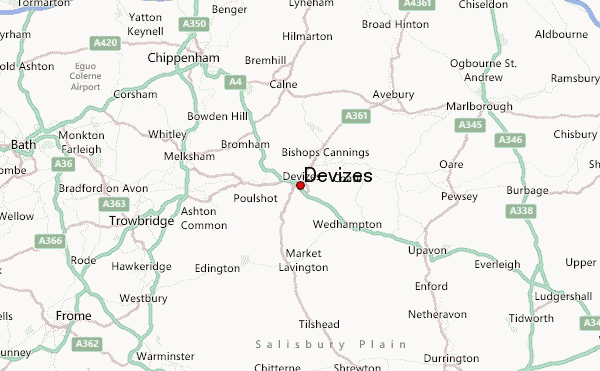
The Bear Inn (or Hotel) in Devizes was a popular stopping-off point for travelers headed for Bath. According to Mr. Tristram, author of Coaching Days & Coaching Ways, the Bear Inn was known for its fine stables. After Bath became a popular retreat for the wealthy elite, the roads also became targets for highwaymen, and many travelers abandoned the normal routes to take the one through Devizes. At its peak, the Bear was taking in up to 30 coaches a day.

Devizes.10

Among its more prestigious guests were King George III and Queen Charlotte as well as the Duchess of Kent and Princess Victoria. In 1817, Queen Charlotte wrote that she had had an “elegant repast” at the Bear and that the landlord had put at her disposal “10 pairs of horses as fine as any were put to harness.”

SAMSUNG DIGITAL CAMERA

Note: The Bear Hotel continues to be a hotel today. Rooms can be had for as little as 99 pounds. Click here for more information.

Miss Fanny Burney and Hester Thrale Make the Acquaintance of a Young Thomas Lawrence

Miss Fanny Burney

Miss Fanny Burney

In April of 1780, Miss Fanny Burney, who later became a famous novelist (Evelina was published anonymously in 1778), was traveling to Bath with her friend and patron, Hester Thrale. While waiting for supper, the pair sat down to cards, but were soon interrupted by the sound of a pianoforte. Following the music, they found the musician to be “a very handsome girl with fine dark hair upon a finely-formed forehead”. Another girl welcomed them and found them chairs, and it was then that the visitors discovered that the girls were the daughters of the hostess of the inn. “Oh, what a surprise!”

“But though these pretty girls struck us much,” she writes, “the wonder of the family was yet to be produced. This was their brother, a most lovely boy of ten years of age, who seems to be not merely the wonder of their family, but of the times, for his astonishing skill at drawing. They protest he has never had any instruction, yet showed us some of his productions, that were really beautiful.”

Apparently, the father of the future Sir Thomas Lawrence was making good use of his son’s talents. Tristram says that:

Instead of offering lame excuses when the roast had gone wrong, or saying that a bad bottle of claret was simply “sick from a journey,” this original in the way of a host, used to simply to introduce his son to the malcontents, and in a moment where there had been disgust there was wonder. At the simple talisman, “Gentlemen, here’s my son; will you have him recite from the poets or take your portraits?” the most confirmed bald-headed grumbler ceased his monotonous drone, and the storm in the coffee-room fell before the smile of the young genius.

The Rise To Fame Of Sir Thomas Lawrence

Thomas Lawrence self-portrait in pastels

Thomas Lawrence self-portrait in pastels

By the time the family moved to Bath soon after this encounter, young Thomas was supporting his family drawing portraits in pastel. Due to his talent, charm and good looks, Thomas became very popular about Bath society and was allowed to view private art collections. In 1787, at the age of not quite eighteen, he established a studio in London, settling his parents nearby. In 1788 he exhibited five portraits in pastel and one in oil. In 1789 he exhibited 13 portraits, mostly in oil, to critical acclaim. At age 20, he received his first royal commission, portraits of Queen Charlotte and Princess Amelia. After the death of Sir Joshua Reynolds in 1792, George III appointed him “painter-in-ordinary-to-his-majesty.” In 1794, he became a full member of the Royal Academy. He went on to paint many portraits of the elite, as well as important figures in the war with Napoleon, and even the Pope. In 1815 he was knighted, and in 1820 he became President of the Royal Academy.

Sir Thomas and the Siddons Sisters

Sally Siddons

Sally Siddons

Maria Siddons

Maria Siddons

Thomas fell in love with Sally Siddons, one of the daughters of the famous actress, Sarah Siddons. But then he fell in love with her sister Maria. But then he decided to go back with Sally. (Imagine the turmoil in that household!) But neither of the girls was healthy. Before Maria died in 1798, she got her sister to promise not to marry him. Sally did not, refusing to see him for the five years before she herself passed away.


Lawrence never married. His companions in later life were Elizabeth Croft (half-sister of Sir Richard Croft, the accoucheur who apparently botched the delivery of Princess Charlotte’s son and who committed suicide soon after) and Isabella Wolff, separated from her husband and whose son Herman may have been Lawrence’s.

Plagued With Financial Problems

One might expect that, with all the commissions pouring in and his prolific work ethic, Lawrence should be a wealthy man. On the contrary, he was constantly in debt, to the point where he seemed to be always on the brink of bankruptcy and had to be rescued by his friends, dying insolvent. Nobody is quite sure why this was, except for an assumption that he was unable to keep good accounts, and perhaps he was too generous with family and friends. He himself wrote:

“I have never been extravagant nor profligate in the use of money. Neither gaming, horses, curricles, expensive entertainments, nor secret sources of ruin from vulgar licentiousness have swept it from me.”

Legacy

The director of the National Portrait Gallery described Lawrence as “a huge figure. But a huge figure who we believe deserves a great deal more attention. He is one of the great painters of the last 250 years and one of the great stars of portraiture on a European stage.”

Queen_Charlotte_by_Sir_Thomas_Lawrence_1789

Queen Charlotte

George IV at his Coronation

George IV at his Coronation

Pinkie

Pinkie


 Index to all the posts in this series

1: The Bath Road: The (True) Legend of the Berkshire Lady

2: The Bath Road: Littlecote and Wild William Darrell

3: The Bath Road: Lacock Abbey

4: The Bath Road: The Bear Inn at Devizes and the “Pictorial Chronicler of the Regency”

5: The Exeter Road: Flying Machines, Muddy Roads and Well-Mannered Highwaymen

6: The Exeter Road: A Foolish Coachman, a Dreadful Snowstorm and a Romance

7: The Exeter Road in 1823: A Myriad of Changes in Fifty Years

8: The Exeter Road: Basingstoke, Andover and Salisbury and the Events They Witnessed

9: The Exeter Road: The Weyhill Fair, Amesbury Abbey and the Extraordinary Duchess of Queensberry

10: The Exeter Road: Stonehenge, Dorchester and the Sad Story of the Monmouth Uprising

11: The Portsmouth Road: Royal Road or Road of Assassination?

12: The Brighton Road: “The Most Nearly Perfect, and Certainly the Most Fashionable of All”

13: The Dover Road: “Rich crowds of historical figures”

14: The Dover Road: Blackheath and Dartford

15: The Dover Road: Rochester and Charles Dickens

16: The Dover Road: William Clements, Gentleman Coachman

17: The York Road: Hadley Green, Barnet

18: The York Road: Enfield Chase and the Gunpowder Treason Plot

19: The York Road: The Stamford Regent Faces the Peril of a Flood

20: The York Road: The Inns at Stilton

21: The Holyhead Road: The Gunpowder Treason Plot

22: The Holyhead Road: Three Notable Coaching Accidents

23: The Holyhead Road: Old Lal the Legless Man and His Extraordinary Flying Machine

24: The Holyhead Road: The Coachmen “More Celebrated Even Than the Most Celebrated of Their Rivals” (Part I)

25: The Holyhead Road: The Coachmen “More Celebrated Even Than the Most Celebrated of Their Rivals” (Part II)

26: Flying Machines and Waggons and What It Was Like To Travel in Them

27: “A few words on Coaching Inns” and Conclusion

Sabrina York: Defiant (Noble Passions Book Five)

About Defiant

When rakish Ned falls in with the wrong crowd, his brother decides to send him to the Continent for “seasoning”. For Sophia, this just won’t do. She’s loved Ned for ages—and also longed for adventure. She runs away from her boring suitors and disguises herself as a cabin boy on the Defiant, the ship sailing Ned to Italy.

Ned knows he’s not good enough for Sophia, but once they’re on the Defiant, he can’t stop himself from touching her, tasting her, loving her. Not when a wild tempest and a band of ruthless pirates threaten them. Not when every look from her gives him such pleasure. And certainly not when she comes, warm and wild and willing, to his bed.

If they survive their voyage, Sophia’s brother might kill him, but it will have been worth every moment and every hot, sweet kiss.

A Romantica® Regency historical erotic romance from Ellora’s Cave

Ellora’s Cave • Amazon

Excerpt

Sophia stood on the bow of the boat in the dark as the wind and rain lashed her face. She loved it. Loved it. Not only was the storm elemental and fierce, it hid her tears.

Surely she hadn’t expected Ned to greet her with open arms. Not when she had barged in on his adventure as she had. But she certainly hadn’t expected him to be so horrid. His expression had devastated her.
defiant copyFoolish girl, it said.

But then, her heart agreed.

She was foolish.

Foolish to ever think that he—

“You’re soaked.”

She whirled around, though she knew what she’d see. More glowering.

She was right.

“What the hell do you think you’re doing?”

“I’m reveling.” She thrust out her chin, in case he didn’t believe her.

He gaped at her. “Reveling?”

“Yes.” She didn’t mean to shout, but his wintry demeanor annoyed her tremendously. She threw out her arms. “Look at this!”

“It’s a storm.”

“It’s beautiful. The waves are wild, untamed—”

“You could be swept overboard.”

“The wind is howling and the rain is savage. It’s glorious.”

“It’s freezing. Come inside.”

“It’s not freezing. It’s summer.”

I’m cold.”

“Then you go inside.”

“Sophia Fiona—”

“Don’t call me that.”

“It’s your name.”

“You sound like Ewan.”

“I’m starting to think Ewan is a saint.”

She glared at him. “What a beastly thing to say.” She hated that her chin wobbled a little. Hated that he winced.

“I’m sorry, Sophia. This has been trying for me.” He sluiced the water from his face. “Won’t you please come inside?”

“All right. Fine.”

“You will?”

“You did say please.”

He blew out a breath and offered her his arm. She frowned at it. “I’m a cabin boy, remember? You don’t offer a cabin boy your arm.” When he didn’t lower it, she smacked it. “Someone will see.”

That caught his attention and he slowly lowered his arm. “Right then. Come inside.” He followed her back to the cabin, his stride decidedly unsteady. If anyone was tipping overboard, it was most likely him.

When she once again stood in his chambers, she realized the folly of her actions. She hadn’t brought a change of clothes and she was drenched. So was he. Without a word, he relit the lamp and then opened his trunk and pulled out several shirts, two of which he tossed to her. “Change.”

That was it. One word. Just “change” and then he presented her with his back. She huffed a breath, but did as he asked because she was really rather cold. The feel of the cloth falling over her chilled flesh warmed her. Because it was his shirt. It had touched his skin. She wasn’t sure why the thought sent heat scudding through her belly.

“Use the other shirt to dry your hair,” he suggested, as he began toweling off as well.

She huffed a laugh. “All of your clothes will be wet.”

“They’ll dry. Are you clothed?”

“Yes.”

He turned. And froze. His gaze locked onto her bare legs. “I-I thought you said you were clothed.” A squawk.

“I am.” But the intensity of his stare made her self-conscious, so she slipped into the bed.

“Close your eyes,” he said as he unbuttoned the damp linen clinging to his chest.

“Why?”

“I need to change as well. I’m f-freezing.”

“Okay.” She did. But she peeked.

He ripped off his wet shirt and her breath caught at the sight of his broad back. Muscles rippled as he moved and she swallowed. He was beautiful. He tugged the fresh shirt over his head and she nearly whimpered as that magnificent vision disappeared. But then, he unfastened his trousers.

All pretense of not peeking evaporated.

He sat and took a moment to work off his boots. And then he stood. His trousers were tight, as was the fashion, and he had to peel them off. As he bent, she caught a flash of his bare behind.

She must have made a noise because he whirled around. His cheek bunched when he saw her watching. “You’re supposed to have your eyes closed.”

She hunkered in the covers, as though that would disguise the fact that her eyes were open wide.

“Sophia…”

It was probably wrong to grin at him, but she couldn’t help it.

“Sophia Fiona!”

“Stop calling me that. It always makes me think I’m in trouble.”

“You are in trouble. You have no idea how much trouble you’re in.”

She tipped her head to the side. “We both know Ewan will be so relieved to see me, he’ll forget how angry he is—”

Ned stilled and fixed her with a dark glare. “What makes you think I’m talking about Ewan?”

“I… ah…”

“I’ve a mind to bend you over my knee.”

Why a shiver rippled through her, she had no idea. She’d been spanked once or twice as a child and she hadn’t cared for it in the slightest. But something dark and domineering in Ned’s tone made her womb warm.

“You-you wouldn’t.”

“Wouldn’t I? Now, look away. Your brother would skewer me if I gave you the education you’re about to have.”

She attempted not to snort. Ned—and everyone—thought her a prim and innocent miss on account of the polish she’d acquired at Lady Satterlee’s. Nothing could be further from the truth. As a child, before Ewan had made his fortune, they’d lived a hand-to-mouth existence in the slums of Perth. She’d seen more than one couple rutting against a wall in a dingy alleyway. And at one point, she and her brother had taken refuge in a bordello. She’d been only seven, but if she’d had an education, she got it there. She could probably teach Ned a few things.

Still, because he seemed to expect it, she squeezed her eyes tight and didn’t hardly peek at all as he finished changing. Besides which, the spot she was interested in was mostly shadows.

With a great huff, he threw himself back into the chair. “Now, go to sleep.”

“Don’t you want me to put out the light?”

“No. I want to be able to see where you are.”

“I’m not leaving again tonight.” Probably. Unless her despair overcame her once more.

“Leave it on.” A grunt, and not a very nice one at that. Why he had call to be annoyed, she couldn’t fathom.

Blast and damn, he was an annoying man. Sophia grunted as well and rolled over, facing the wall of the cabin. She studied the patterns the swinging lamp made for a long while, listening as he shifted one way and then the other.

It was really unfair for him to have to sleep in the chair. This was his room. But he would never share her bed. She grimaced at the way the words came out, but it was true. He wouldn’t. Unless…

She rolled over again and watched him twist in the chair. He caught her eye and frowned.

“Ned?”

An impatient groan. “Yes, Sophia?”

“Ned, I’m cold.”

He stilled. Then barked, “Put on another blanket.”

“There aren’t any more.” She faked a shiver. She wasn’t cold in the slightest. She never was. Ewan said she ran hot. “Brr. My teeth are chattering.”

His glower became a frown.

“I hope I don’t get ill.”

He paled. “You shouldn’t have gone out in the rain. Why did you go out in the rain?”

She sneezed. Or something like it. “I don’t know.”

“Sophia?”

“Am I running a fever?” She put her palm to her forehead. “I think I’m running a fever.”

His brow wrinkled. He stood and made his way across the tiny chamber as though on his death march. He set the backs of his fingers to her cheeks. His frown darkened. “You are warm.”

“No. I’m cold.” She shivered and peered up at him, her eyes as wide as she could make them. “Won’t you warm me?”

He wrenched his hand away as though she’d burned him. “What?”

“Lie here beside me and warm me up?”

“There’s not enough room for both of us.”

“I’m small.”

“Sophia.” She’d never heard her name in such a strangled voice, not even when Ewan was at his wit’s end.

“Just for a bit? You can be on top of the covers. Surely that is decent.”

The muscle in his cheek bunched again, as though he were grinding his teeth.

“Please?”

He gusted a sigh. “All right, Sophia. Scoot over and make room.”

She did. With alacrity.

“And roll over, facing the wall.”

She frowned at him “Why?”

“Just do it. Please.”

“Oh, all right.” But only because he said please. And because, when she was facing the other way, he couldn’t see her grin.

He settled in behind her and a shiver rocked her. He was warm. And he smelled delicious. Not fishy in the slightest. It was delightful, lying here with him. She closed her eyes and imagined he wanted this as much as she.

If only. If only.

Check out the other books in the Noble Passions Series from Sabrina York


Follow the decadent exploits of friends and enemies as they find love and passion in the glittering world of the Regency—and its dark underbelly.
folly_msr (final) copyBook 1: Folly

2014 EPIC eBook Award Finalist

2013 Passionate Plume Finalist

Widowed and threatened with penury by her heartless in-laws, Eleanor–Lady Ulster–hatches a plot to save herself. Determined to produce the Ulster “heir”, she seduces a stranger at a tawdry masquerade. Little does she know, this magnificent masked lover is none other than her husband’s greatest nemesis. And God knows Ulster had plenty.

Ethan Pennington is mortified to arrive at a house party and discover Lady Ulster in attendance. He has wanted her and hated wanting her–his enemy’s bride–for years. When he overhears Eleanor’s predicament and her plans to place a cuckoo in the Ulster nest, he is more than willing to oblige. The opportunity to finally claim her–while taking the revenge he craves–is more than he can resist. Ethan strikes a bargain with Eleanor, promising to provide her with the heir she so desperately needs…if she will meet his needs in return. Every decadent one of them.
darkduke_msrBook 2: Dark Fancy

The sizzling prequel to Folly

2014 Winner of the Carolyn Readers’ Choice Award

When Lady Helena Simpson flees an unwanted marriage to a revolting lord, she finds refuge with James, a charming, handsome man unlike any she’s ever known. Helena concocts the perfect solution to her problem. She asks—begs—James to ruin her. Surely her betrothed will repudiate her if she is no longer pure. And if all her efforts fail and she still ends up married to a horrid man until the end of her days, she will at least once have known true passion.

But James is not all he seems. He is, in fact, a wicked lord with a dark fancy. When Helena awakens his desire, he becomes determined to take everything she has to offer and more. No matter the cost.
darkfancy_msrBook 3: Dark Duke

Edward Wyeth, the Dark Duke of Moncrieff’s life has been turned on its end. His well-ordered home has been invaded. By destitute relatives. From Scotland. How on earth can he write Lord Hedon’s salacious novels with hellions battling in the garden and starting fires in the library? But with the onslaught has come a delicious diversion. His cousin’s companion, the surprisingly intriguing Kaitlin MacAllister. He is determined to seduce her. Using her desperate need for funds and her talents as an artist, he convinces her to draw naughty pictures for his naughtier books…and he draws her into his decadent web.

But Kaitlin has a secret. She’s fled Scotland—and a very determined betrothed. When Edward’s cousin is kidnapped and held in her stead, Kaitlin is honor-bound to return to her homeland and rescue her—much to Edward’s chagrin.

Because suddenly he can’t bear the thought of Kaitlin marrying another man. He can’t bear the thought of losing her at all.
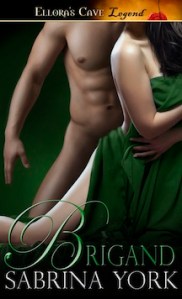
brigand_msrBook 4: Brigand

Kidnapped and held prisoner by menacing Scottish brigand, the notorious McCloud, Violet Wyeth does her best to persevere…and resist his rakish charms. But when she realizes The McCloud is really Ewan St. Andrews, the boy who once saved her life, the boy who once kissed her and made her heart flutter, she is lost.

Ewan has every intention of marrying Lady Kaitlin MacAllister. He desperately needs the entrée into the ton this bride can provide. But when his bride is delivered—bound and gagged—it’s not Kaitlin. It’s Violet Wyeth—the girl who betrayed him and ruined his life when he was a boy. He keeps her, determined to punish her for her sins. But when he discovers the truth about what really happened so long ago, and seething passion rises between them, he can no longer hold on to his rusty grudge. By the time he realizes how much he loves Violet—that he always has—he’s lost her.

All he can do is follow her. Follow her into the bowels of hell—and partake in the torment of the glittering London Season, where the harpies are far more dangerous than a Scottish brigand.

About Sabrina York

Sabrina_head_smHer Royal Hotness, Sabrina York is the award winning author of over 20 hot, humorous stories for smart and sexy readers. Her titles range from sweet & sexy erotic romance to scorching BDSM. Connect with her on twitter @sabrina_york, on Facebook or on Pintrest. Check out Sabrina’s books and read an excerpt on Amazon or wherever e-books are sold. Visit her webpage at www.sabrinayork.com to check out her books, excerpts and contests.

Free Teaser Book: http://sabrinayork.com/home-2/sabrina-yorks-teaser-book/ And don’t forget to enter to win the royal tiara!