Tag Archive | Regency romance

Shannon Donnelly: Lady Chance

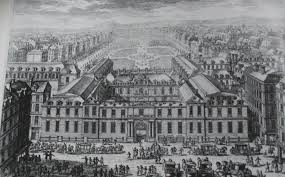
palaisroay1600

Researching the Palais Royal

One of the fun things about writing—for me, at least—is the research. I love to dig into history; in particular, I love to look for just the right setting to help a scene come alive. Lady Chance, the follow-up book to Lady Scandal, comes out this August; it’s set in Paris of 1814, and since gambling and cards are in the book, that meant I could use the Palais Royal.

The palace was originally designed by Jacques Lemercier and construction started 1628 for the infamous Cardinal Richelieu. It was originally known as the Palais Cardinal, but became a royal palace after the cardinal bequeathed the building to Louis XIII.

Louis handed the palace to the Queen Mother, Anne of Austria, and then Henrietta Maria and her daughter Henrietta Anne Stuart, who had escaped from the English civil war, took up residence. Henrietta Anne later married Phillipe de France, duc d’Orléans, and the palace became known as the House of Orléans. The duchesse was the one who created the ornamental garden of the palace.

Louis XIV was succeeded by his great-grandson, and the duc d’Orléans became regent of young Louis XV. The Palais Royal was then opened so the public could view the Orléans art collection, and that began the palace’s more public life.

Louis Philippe II held the royal palace from 1780 until his death. He renovated the building, and the garden was now surrounded by a mall of shops, cafes, salons, refreshment stands and bookstores.

At that time, the Palais Royal became a meeting ground for revolutionaries. Its owner, Philippe d’Orléans sided with the revolutionaries. He changed his name to Philippe Égalité and his house became the Palais de l’Égalité. He opened the gardens to the public and enclosed them with colonnades lined with shops.

palaisroyal-demimonde

On the ground floor shops sold “perfume, musical instruments, toys, eyeglasses, candy, gloves, and dozens of other goods. Artists painted portraits, and small stands offered waffles.” The demi-monde could also parade their wares—themselves—and often had rooms on the upper floors for their customers’ convenience.

By 1807, the Palais Royal boasted “twenty-four jewelers, twenty shops of luxury furniture, fifteen restaurants, twenty-nine cafes and seventeen billiards parlors.”
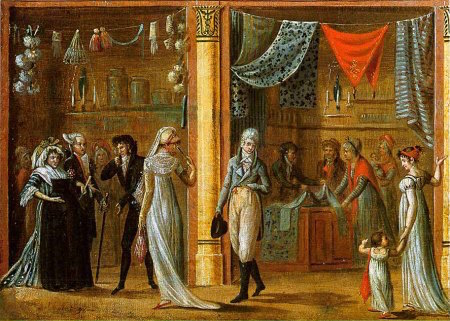
palais-royal-10 copy

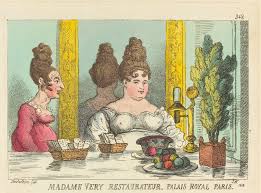
While the more elegant restaurants were open on the arcade level to those with the money to afford good food and wine, the basement of the Palais Royal offered cafés with cheap drinks, food and entertainment for the masses, such as at the Café des Aveugles.
palisroyal

Upon the death of the duc, the palace’s ownership reverted to the state, and for a time it was known as Palais du Tribunat. After the Bourbon restoration to power in 1814, the duc d’Orléans took back his title and the Palais Royal took back its name, but kept its reputation for a fashionable meeting place. And that is when Lady Chance is set.

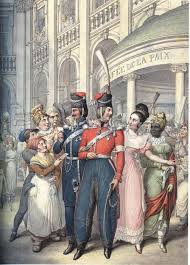
In 1814, Paris was under occupation by the allied forces that had defeated Napoleon. Russian cuirassiers, Prussian lancers, Hungarian hussars, Cossacks, and French soldiers all rubbed shoulders—and were not always in harmony with each other. But it was said of the Palais Royal that “You can see everything, hear everything, know everyone who wants to be found.”
paris_russians

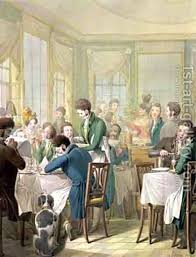
Véry Frères in the Palais Royal was accounted the most expensive restaurant in Paris, and one could dine with “brilliantly lit salons, granite tables, gilt bronze candelabra and mirror-lined walls.” Trois Frères Provençaux was famous for poulet à la Marengo—Chicken Marengo, said to be the dish served Napoleon’s victory at Marengo. In Paris Between Empires, Philip Mansel talks of dining at Le Caveau, or at the royalist Café de Foy. While Café des Mille Colonnes on the first floor of arcade provided its patrons, “Mirrored salons, hung with ‘magnificent chandeliers’ and supported by Corinthian columns of green marble.” The building was also home to the fashionable resturant Le Grand Véfour.
palaisroyalresturant

On the second floor, elegant card rooms offered deep gaming—these are the salons featured in Lady Chance.

About Lady Chance

Can an English lady find love and common ground with a French soldier?

In Paris of 1814, as Bourbon king again takes the throne, and the Black Cabinet—a shadowy group of agents employed by the British—is sent to unmask dangerous men and stop assassinations. When Diana, Lady Chauncey—known as Lady Chance—is recruited by her cousin to use her skill at cards to help him delve into these plots, she meets up with a man she thought dead. Diana finds herself swept into adventure and intrigue, and once again into the arms of the French officer she tangled with ten years ago. But she is no longer an impulsive girl, and he may not be the man she once thought was honorable and good.

After the recent defeat of his country, Giles Taliaris wants nothing more than a return to his family’s vineyards in Burgundy. But his younger brother seems involved in dangerous plots to return France to a republic. To get his family through these troubles, Giles can only tread warily. When he again meets meet the English girl he once knew and thought lost to him, he finds himself torn between duty and desire. Can he find his way through this tangle—and if he does, how can he convince his Diana to give up everything for him?

Amazon

Excerpt

Diana blinked twice and let her stare travel the room once more. “I rather thought the gaming rooms of the Palais Royal would be more…”

“Degenerate? Depraved? Decayed?” Jules asked.

“Grand, actually. Oh, the colonnade outside is charming, but this…” She fluttered a kid glove at their surroundings—at the draped windows, the high vaulted room with its plaster ceiling, the discreet décor with respectable landscapes hung over a tasteful, floral wallpaper. Chandeliers glittered overhead. Around them, dozens of uniformed gentlemen lounged or indulged in intense card play or watched the gaming with elegant women on their arms.
Lady Chance 01_sm copyShe had seen Russian Cossacks in the streets, distinct with their heavy boots, loose black trousers and red jackets. Inside this room, above the closed shops of the Palais Royal, officers from the Army of Silesia leaned against the walls, their uniforms as precise as their actions. Sullen French officers lurked at the edges of the room, unhappy with the foreign soldiers who had so recently beaten them. Accents and languages tumbled around her—a hint of Dutch, a dash of French, guttural Germanic phrases. Perfumes and a hint of smoky tallow from the candles scented the air. Diana gave Jules a sideways glance. “This almost looks more like the engravings I’ve seen of London clubs.”

Or like affairs of the London season, she thought. She’d had only two seasons and had not wanted a third. The play in London had always been dull or had been filled with women whose eyes glittered too brightly and gentlemen who bet too rashly. Here in the Palais Royal, just as with any notable event in London, music drifted through the rooms. A quartet was playing, she thought. Skilled enough to take on Mozart’s music and do the lively tune some justice.

Turning to her, Jules leaned closer. “The Bourbons may be back on the throne, but the Parisians look to good English coin to return prosperity. Hence this emulation of London with the rather French addition of the demi-monde in attendance. However, do not mistake matters. There are those who would have their emperor back.”

Stepping behind her, he helped her off with her cloak. He left that and his hat and cane with the porter. He wore his customary black coat, along with formal evening breeches, a white shirt, and a pale yellow waistcoat. He looked stark and properly British. She had worn gold to compliment his dress. A clinging silk that almost left her feeling a girl again with ruffles at her ankles and a daringly low Parisian neckline. They stepped into the club and Jules found them glasses of champagne. She walked the room beside him, watching him nod to acquaintances.

She had been to the Palais Royal during the day to visit the shops on the ground floor. Perfume could be had, along with toys, candy, gloves, waffles from stands, or portraits from struggling artists. But at night, the shops closed and the Palais Royal transformed itself. Véry Frères, the most expensive restaurant in Paris she had heard, offered brilliantly lit salons, granite tables, gilt-bronze candelabra and mirror-lined walls, as well as fabulous meals. In the basements of the Palais Royal, one could find establishments offering drink, food or entertainment such as at the Café des Aveugles, renowned for its orchestra of blind musicians.

They were blind for a reason for the galleries were where ladies of all shapes and colors and sizes offered themselves for sale.

This establishment—above the streets and the closed shops and below the rented rooms of those girls looking for customers—seemed designed to cater to patrons with money. There would be few enough Frenchmen who fit that description just now, Diana knew.

She had glimpsed the poverty on the journey to Paris.

The crossing to France had been long, taking fourteen hours to Boulogne with a fitful, unfriendly wind. The carriage ride to Paris had been even longer. And quite sad. This was not the country she knew from ten years ago. Old men, women, and thin boys populated the villages, for the young men had all gone to war. She had glimpsed far too many skinny cows and poorly worked fields. They had been cheered in some towns—the English liberators who had helped free France from an oppressive empire. In other towns, the French watched them pass with suspicion in their eyes. Not everyone welcomed back the rightful French king. And the destruction on the outskirts of Paris marked where battle had raged less than a fortnight ago. No wonder so many of these Frenchmen appeared so gloomy with defeat a sore and recent memory.

All that seemed put aside, however, in the pleasure houses of the Palais Royal. After a sip of champagne with bubbles that tickled her nose, Diana asked, “Just why am I being paraded?”

“A small introduction only. Making you a familiar face that will be welcomed when you deem to grace one of the tables.”

She eyed the women with their painted faces who clung to the officers’ arms. Very few sons of France seemed to be able to compete with the dashing foreigners. She glanced at Jules and kept her voice dry. “I can see the last of my respectability vanishing on the horizon.”

“Cousin, this is Paris. You may rub elbows with these delightful creatures who hire out their most intimate charms and still be free to dance with dukes and true ladies the next evening. The French understand these things.”

“It is good someone does. Now that I am decked out in the finest Paris has to offer, and have your grandmama’s emeralds hanging about my neck—I do hope your mother did not object to such a loan—what exactly is it that I am here to do?”

They had spent the journey to Paris discussing recent events, political situations, and the gossip of who was who in Paris. All of it a prelude to this—or so she guessed. To own the truth, she had simply wanted to enjoy going somewhere. Anywhere. Now she glanced around the room, a flutter in her stomach. What was she doing here? She wasn’t up to this sort of intrigue.

She forced a smile and lifted an eyebrow at Jules.

He gave her a small, approving nod. “You are doing all you must. You look a likely widow in need of amusement. Soon you shall find a spot at a select table. Win a bit. Lose more. After the drink has flowed and the hour grows late, I shall make a few introductions. Those gentlemen will lose heavily to you, I expect.”

She gave a small shrug. She had learned young how easy it was to lose at any game. Growing up, her older cousins—Jules included—had pounded home that lesson. They had never let her succeed at anything unless she deserved the win. And of her marriage—well, the less said there, the better, she thought. She twirled her fan. “Am I to keep their funds? Press them for something other than coins to clear their debts of honor to me?”

Jules’ smile did not falter, but Diana thought something hard appeared in his eyes. “Cousin, in cards, one never reveals one’s hand until all play is done. Let us say for now it is good to have certain pockets empty. It takes money to make mischief.”

She huffed out a breath. “Why do simple answers always sound only part of the truth? And chess is your game. You always plan at least seven moves ahead. So what are you not yet telling me?”

He patted her hand. “Enough for now, other than that I count on your shocking, unpredictable whims to keep us all on our toes.”

Diana shook her head and drained her champagne. “In chess, in Paris, or merely as a gamester?”

“You said it yourself—you must be an adventuress.”

Pulling in a breath, she pushed back her shoulders. “Yes, I did say so. Well, adventuring we go. Where do I begin? And I hope all this…this whatever is for a good cause.”

“Good may depend upon one’s views. Our view is to safeguard England’s interests. If certain rumors are true, a good man’s life may be at stake. However, Paris is rife just now with stories of everything from a dozen pretenders to the throne—the lost Bourbon prince returned from God knows where—to schemes that might bring back that dangerous fellow we were just discussing.”

“Ah, poor Louis-Charles, the dauphin.” She shook her head. “I would rather meet him than the former emperor.” A chill touched her back. She had met Bonaparte once. Seen him briefly, really. Before he had crowned himself emperor, and long before his recent surrender. At the time of her encounter he’d had another man’s wife on his arm, stolen from one of his generals. She still thought that a petty thing to do. She had also thought him short, fascinating in a way, and not much of a gentleman. He had once brought order to the French Revolution, but he had gone on to set Europe ablaze. And his command of a decade ago to arrest all the English in France had sent her running from Paris. That still rankled. She had been having such fun at the time. And if that had not happened, then she would not…

Ah, but this trip—and Jules—would give her better memories. She would focus on that.

It certainly took little effort to do as Jules bade her. He guided her to a table where gallant young gentlemen played—two French officers, an English gentleman in evening wear, and a Hungarian Hussar in a dashing uniform with excessive braid who at once offered her his seat. She played as Jules had asked, winning a little, losing a bit more. Jules had offered to stand the nonsense so she had no worries about emptying her purse. She found the play a touch tame. The Palais Royal was not living up to its reputation for vice. Given the circumstances, she only sipped at her wine and watched the cards fall with mild interest.

Jules soon introduced a fellow to her—a young Frenchman whose fair windswept hair and high shirt points spoke of his dandy ambitions. He joined the table, and Diana took up the cards. Jules gave her a nod and a direct stare, and she knew he wanted her to stop being careless.

She had barely dealt out the cards when a name came to her that she had never expected to hear again. A card tumbled from suddenly numb hands. Forcing a smile, Diana begged pardon. She finished the deal with stiff fingers and swept the room with a glance. It could not be, she thought, her heart beating too quick and her breath short and fast. He had died on a battlefield years ago. Someone must have only mentioned his name, that was all. But she had to look anyway. She had to be certain.

She scanned the faces nearest the entrance, seeking anything familiar—a profile, a glimpse of a captain’s uniform, a face that she could still recall from so long ago. And there—across the room in the foyer—he stood, far too solid to be a ghost.

About the Author

Shannon Donnelly’s writing has won numerous awards, including a nomination for Romance Writer’s of America’s RITA award, the Grand Prize in the “Minute Maid Sensational Romance Writer” contest, judged by Nora Roberts, and others. Her writing has repeatedly earned 4½ Star Top Pick reviews from Romantic Times magazine, as well as praise from Booklist and other reviewers, who note: “simply superb”…”wonderfully uplifting”….and “beautifully written.”

In addition to her Regency romances, she is the author of the Mackenzie Solomon, Demon/Warders Urban Fantasy series, Burn Baby Burn and Riding in on a Burning Tire, and the SF/Paranormal, Edge Walkers. Her work has been on the top seller list of Amazon.com and includes the historical romances, The Cardros Ruby and Paths of Desire.

She is the author of several young adult horror stories, and has also written computer games and offers editing and writing workshops. She lives in New Mexico with two horses, two donkeys, two dogs, and the one love of her life. Shannon can be found online at shannondonnelly.com, facebook.com/sdwriter, and twitter.
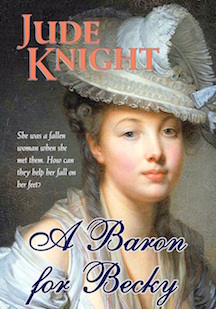
Jude Knight: A Baron for Becky

BfB cover final small copy

Aldridge Interviews His Creator

by Jude Knight

In the rush to launch A Baron for Becky, this past month I’ve given the study no more than a flick with a duster and a lick and a promise from the vacuum. Every surface is covered with papers and books. The Marquis of Aldridge looks out of place, prowling the limited space between the clutter, the two computer stations, the stack of printers, and the bookshelves.

I can’t mistake him, though. This invention of my overactive mind is actually here, in the 21st century, in my work room, tipping his head to read the book spines, and picking up the pair of copper seals on the window ledge.

Aldridge

Anthony Grenville, Marquis of Aldridge

He is such a peacock, with his highly embroidered waistcoat, the jewelled pin placed just so in a cravat knot of his own devising, the pantaloons and coat fitting so tightly to to every muscled inch of him that my mouth goes dry. I have been happily married for forty-three and a half years, but I am neither blind nor dead, and anyone can admire the conformation of a fine thoroughbred.

What is he doing here? One of my friends had a similar visit when she offended a character by not knowing how to pronounce his name, and I must admit to providing Aldridge with plenty of reason to be annoyed with me.

“Good morning, Aldridge.”

He quirks one corner of his mouth, the signature half-grin I’ve seen so many times in my imagination. “So this is where you make us all,” he says.

“Here, on the way to and from the office, sitting up in bed, out in the lounge,” I tell him. I write all my first drafts on the iPad, which goes everywhere with me. And even when I’m not writing I’m often thinking about little bits of dialogue or ways to solve plot issues, or details of character background.

He nods as if I’ve said all that aloud. “We never leave you alone, do we?” His warm voice is sympathetic.

“Take a seat, Aldridge,” I suggest, but he shakes his head.

“There is only the one chair, ma’am,” he points out. True. I work at a standing desk and the room is small, so the only chair is the one my husband uses at his workstation. And Aldridge, whose manners are impeccable, would never sit while I remain standing.

“Fetch a chair from the next room,” I tell him, and he brings in a dining room chair, which he turns back on to the seat I’ve now taken and straddles, resting his elbows on the curved wooden top rail.

I return to his question. “You never do,” I agree. “You, in particular, Aldridge. This latest book was not on my publication schedule, but you insisted.” I have around 40 plots roughly sketched covering 20 years in the fictional world that Aldridge inhabits, and A Baron for Becky was not one of them.

He dismisses my complaint with a casual wave. “You are pleased with this book,” he reminds me. “And it is not my book, anyway. It is very much Becky’s book.”

This is true, but it was Aldridge who bothered me until I began writing. And his presence in the book is not inconsiderable.

“Is there something I can do for you, Aldridge?” I asked.

He widens his eyes, cocks his head to one side, and straightens his lips to look sincere. “I thought it would be nice to visit.” His guileless look wouldn’t fool me even if I had not made him. I raised six children. I know when someone is trying to feed me a line.

“You have some questions?” I ask.

I see the calculation in his eyes as he considers, and the moment when he decides to come clean; the relaxation of tiny muscles around the eyes and mouth, the sudden warmth in the gold flecks that lighten the brown of his eyes.

“How long do I have to wait?”

I know what he is asking, but I’m not sure what I can safely answer. It wouldn’t do to give him information he could use to avoid the stories to come. I had better find out what he already knows. “What year are you in, Aldridge?”

“1810, ma’am. The wedding was last week.”

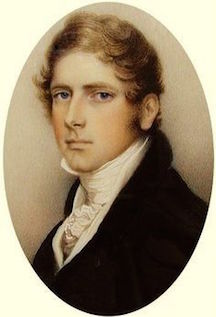
Edward Archer by Andrew Plimer, 1815 copy

Anthony Grenville, Marquis of Aldridge

Ah. It will be a while then. In 1810, Aldridge’s happy ending was still four years in the future.

“I’m sorry, Aldridge. You will have to be patient. But trust me. I do believe in happy endings, you know.”

He stands abruptly, tipping the chair then catching it with a casual hand before pacing again—two paces to the paper store, two paces back to the bookshelf. With his back to me, he combs the fingers of one hand through his hair, a dearly familiar gesture that ripples the muscles of his shoulder in interesting ways.

When he turns again, his face is calm, set in its usual amused lines though the twinkle is missing from his eyes.

“I have no choice but to trust you, ma’am.” Then, suddenly wistful, “You will see us happy, will you not? As you did Rede and Anne, and their friends Candle and Min? A real marriage, with friendship and mutual respect as well as passion?” His brows draw together, and his voice is stern. “You are not always so kind to your characters, ma’am.”

I remember what happened to John, and am silent. Aldridge is right, but so am I. To be fair to my readers means being unfair to my characters, and happy endings for some may involve unhappy endings for others.

Aldridge will have his happy ending. I cannot promise him that, since his future must remain a mystery to him, but I know it. He has some trials to come, poor bedevilled rake that he is, but he will have his happy ending.

Perhaps he sees the truth in my eyes, because he leans over and kisses my cheek. “I know you will do your best,” he says. “I will talk to you soon.”

He fades from view, as if someone slid a transparency control, leaving nothing behind but the lingering scent of bergamot and wintergreen.

I have no doubt I’ll be hearing from him again; perhaps not in person, but certainly at 1.30am when I wake with his voice in my ears, telling me more of his personal story. Yes. Aldridge will certainly have his happy ending. In time.

A random commenter will receive a digital copy of A Baron for Becky.

About A Baron for Becky

Becky is the envy of the courtesans of the demi-monde—the indulged mistress of the wealthy and charismatic Marquis of Aldridge. But she dreams of a normal life; one in which her daughter can have a future that does not depend on beauty, sex, and the whims of a man.

Finding herself with child, she hesitates to tell Aldridge. Will he cast her off, send her away, or keep her and condemn another child to this uncertain shadow world?

The devil-may-care face Hugh shows to the world hides a desperate sorrow; a sorrow he tries to drown with drink and riotous living. His years at war haunt him, but even more, he doesn’t want to think about the illness that robbed him of the ability to father a son. When he dies, his barony will die with him. His title will fall into abeyance, and his estate will be scooped up by the Crown.

When Aldridge surprises them both with a daring proposition, they do not expect love to be part of the bargain.

Amazon • Amazon UK  • Amazon Aus

Smashwords • Barnes & Noble • iBooks • Kobo

Excerpt

The maid must have added a fresh log to the fire just before they arrived. The top was still uncharred, but flames licked up from the bed of hot embers. A twig that jutted from one side suddenly flared, turned black, and shrivelled. The bottom of the log began to glow red.

The duchess spoke again, startling Becky out of her flame-induced trance.

“What do you want for your daughter, Mrs Darling?”

“A better life,” Becky said, suddenly fierce. “A chance to be respectable. A life that does not depend on the whims of a man.”

“The first two may be achievable,” the duchess said, dryly. “The third is unlikely in the extreme. And you expect my son to help you to this goal, I take it.”

Becky was suddenly tired of polite circling. “I was saving so that I could leave this life; start again in another place under another name. But my last protector cheated me and stole from me.

“I do what I must, Your Grace. Should I have killed myself when I was disgraced? I had no skills anyone wanted to buy. I could play the piano, a little; sew, but others were faster and better; paint, but indifferently; parse a Latin sentence, but not well. Should I have starved in the gutter where they threw me?

“Well, I wasn’t given that choice. Those who took me from the gutter knew precisely what I had that others would pay for. As soon as I could, I began selling it for myself, and I Will. Not. Be. Ashamed.”

Her vehemence did not ruffle the duchess’s calm. “We all do what we must, my dear. I am not judging you. Men have the power in this world, and we women of the gentry are raised to depend on them for our survival. But you must know that Aldridge cannot offer marriage to a woman with your history.”

About the Author

Jude Knight copyJude Knight writes strong determined heroines, heroes who can appreciate a clever capable woman, villains you’ll love to loathe, and all with a leavening of humour.

Jude Knight is the pen name of Judy Knighton. After a career in commercial writing, editing, and publishing, Jude is returning to her first love, fiction. Her novella, Candle’s Christmas Chair, was released in December 2014, and is in the top ten on several Amazon bestseller lists in the US and UK. Her first novel Farewell to Kindness, was released on 1 April, and is first in a series: The Golden Redepennings.

Website • Facebook • Twitter

Newsletter • Blog • Goodreads

Collette Cameron: Virtue and Valor

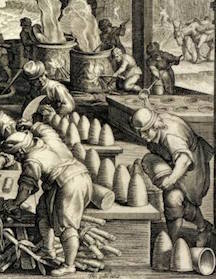
sugar loaf moulds copy

One Lump or Two?

by Collette Cameron

Often, when reading historicals (Over four decades now! Gads!) I’ll read something and not think twice about it.

In this instance, I’m talking about lumps of sugar, you know, as in, Do you want one lump or two in your tea?

For years, I mistakenly assumed it was the British way of referring to sugar cubes, which weren’t patented until 1843 by Jakub Krystof Rad who operated a sugar refinery. According to history, his wife sliced her finger cutting a lump of sugar and complained that sugar should come in a convenient size for a teacup. Being a dutiful husband, he created the nifty little units we take for granted today.

220px-Cukrová_homole_001 copyThe English, however, had to wait until 1875 for the luxury of sugar cubes on their tea trays.

Until the late nineteenth century, sugar was purchased in whitish cone-shaped loaves or pieces hacked from a loaf with a chisel and hammer (Hard stuff-those loaves!).

After a lengthy refining process, the sugar was poured into cone-shaped molds with a small hole in the bottom to let the dark syrup drain out. To whiten the sugar, a solution of dissolved loaf sugar or white clay was repeatedly applied to the large end of the loaf, and as the liquid drained through the sugar, it purged any remaining molasses or dark coloring.

Once tapped from the molds, the sugar was wrapped in blue paper to enhance the whiteness.

The largest loaves (called bastards) were lower grade sugar, and as you can imagine, the smaller loaves were extremely expensive.

sugar copy

After purchasing whatever quality of sugar the mistress of the household could afford, how did she fill her sugar basin? She couldn’t very well pass around the entire loaf and ask her guest so take a lick! I did read sometimes larger chunks were simply dunked in the tea because they wouldn’t fit into the cup.

Those were dried and used again. I’m truly hoping not by different guests.

The elite ladies of the ton, weren’t about to get their dainty fingers sticky, no indeed. Plucking a lump or two from a china sugar basin with tongs was much preferred.

But, how to get those neat little lumps?

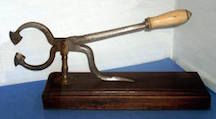
sugar nips copy

First, a section of sugar had to be hammered from the loaf, and then nippers—an iron plyer-like tool—were used to lop of a hunk.

That in itself was no easy chore.

The larger cones weighed thirty pounds and measured fourteen inches tall with a three foot base. The higher quality cones used for tea typically weighed between one and three pounds with only a six-inch base and were much more manageable.

220px-Zuckerhüte_Zucker-Museum copy

Still, no convenient granulated sugar or cubes for those Regency biscuits or tea!

sugar nippers on stand copy

Some nippers came on stands so the user could put their weight into nipping off a piece of sugar. Naturally, tidy, uniform lumps were preferred for serving guests, and that chore generally fell to the mistress of the house or a highly trusted servant.

Sugar, like tea, was expensive and both were often kept in locked chests or caddies to which the mistress kept the keys. Some sugar chests had compartments for powdered and granulated sugar.

Just how did the cook come by powdered and granulated sugar? The lumps were pounded or grated to create granulated sugar and a mortar and pestle was used to make powdered sugar.

download copy

Now, don’t you have even more appreciation for those elaborate confections nibbled by callers as they whispered about the latest on dit over a steaming cup of sugar-sweetened tea?

In my new release, Virtue and Valor (Highland Heather Romancing a Scot, Book 2), Isobel enjoys a morning cup of tea.

VirtueandValor_MEME_4 copy

About Virtue and Valor (Highland Heather Romancing a Scot Series, Book 2)

Bartholomew Yancy never expected to inherit an English earldom and had no intention of marrying. Now, the Earl of Ramsbury and last in his line, he’s obligated to resign his position as England’s War Secretary, find a wife, and produce an heir. Only one woman holds the least appeal: Isobel Ferguson, an exquisite Scotswoman. Brought to Scotland to mediate between feuding clans, he doggedly woos her.

Disillusioned with men pursuing her for her attractiveness, rather than her unusual intellect, Isobel has all but abandoned any hope of finding a husband in the Highlands. Not only does she believe Yancy no different than her other suitors, he’s a notorious rake. She’s been told he’s practically betrothed. Therefore, his interest in her cannot possibly be honorable, and so she shuns his attentions.

When Isobel is mistakenly abducted by a band of rogue Scots, Yancy risks his life to rescues her. To salvage her compromised reputation, her brother and father insist she marry him. Yancy readily agrees, but Isobel—knowing full well she’s fated for spinsterhood by refusing his offer— won’t be coerced into marriage.

Amazon

Excerpt

Pouring a cup of tea, Isobel inhaled the heady scent. She added two lumps of sugar and a dash of milk before stirring the contents.

perf5.000x8.000.inddShe adored the smell of hot tea. The scent reminded her of her childhood. Every morning, Mother had gathered the children around her for a cuddle and enjoyed a cup with them.

Lifting the hand-painted teacup to her lips, Isobel eyed the disgruntled maid stomping about the bedchamber, casting her astringent glances every now and again.

“Suppose this means ye be plannin’ on wallowin’ about in the muck too.” Maura did exaggerate so.

Isobel pointedly focused her attention on the ceiling to keep from rolling her eyes.

“I do not wallow, as you know full well.” She wiggled her free hand at the maid. “My hands and nails shan’t even get dirty.”

“Ladies do not collect rocks and dead things turned to rocks.” Maura harrumphed and trundled her way to the rumpled bed. She shuddered dramatically. “It be unnatural, I tell ye. Creatures turned to stone. They be cursed. The same as Lot’s wife in the Good Book.”

“She was turned into a pillar of salt, not stone.” Isobel suppressed a chuckle and spread jam over a roll.

Humph. Stone. Salt. It makes no matter to me.”

Maura patted the purple and white coverlet into place then adjusted a couple of pillows to her satisfaction. “A curse is a curse—like those Callanish sinners turned to stone for their heathen activities on the Sabbath.”

“Maura, that’s Superstitious drivel. The Callanish Circle was used to track lunar activity.”

Clearly baffled, Maura pursed her lips and squinted at Isobel. “Loony activity?”

Lunar. The path of the moon.” Isobel smiled, pointing with a forefinger and drawing an arc in the air.

“The sinner’s-to-stone business is nonsense. Simply a silly legend spread by the early Kirk of Scotland to discourage rites they didn’t approve of.”

About the Author

Collette Cameron copyBestselling, award-winning author, Collette Cameron, has a Bachelor of Science in Liberal Studies and a Master’s in Teaching. Author of the Castle Brides Series, Highland Heather Romancing a Scot Series, and Conundrums of the Misses Culpepper Series, Collette writes Regency and Scottish historicals and makes her home in the Pacific Northwest with her husband and five mini-dachshunds. Mother to three and a self-proclaimed Cadbury Chocolate chocoholic, Collette loves a good joke, inspirational quotes, flowers, trivia, and all things shabby chic or cobalt blue. You’ll always find dogs, birds, quirky—sometimes naughty—humor, and a dash of inspiration in her novels.

Her motto for life? You can’t have too much chocolate, too many hugs, too many flowers, or too many books. She’s thinking about adding shoes to that list.

Connect with Collette:

Website • Blue Rose Romance Blog • Twitter • Facebook • Newsletter

Resources:

http://www.nytimes.com/2012/11/18/magazine/who-made-that-sugar-cube.html?_r=0

http://www.oldandinteresting.com/sugar-nippers.aspx

https://en.wikipedia.org/wiki/Sugarloaf

https://regencyredingote.wordpress.com/2008/11/14/take-your-lumps-sweet-ones/

http://etiquipedia.blogspot.com/2014/04/regency-era-etiquette-and-when-sugar.html

Images courtesy of Wikimedia Commons

Bath: a guide for readers of The Third MacPherson Sister

BTP_BathCityCentreMap_V2

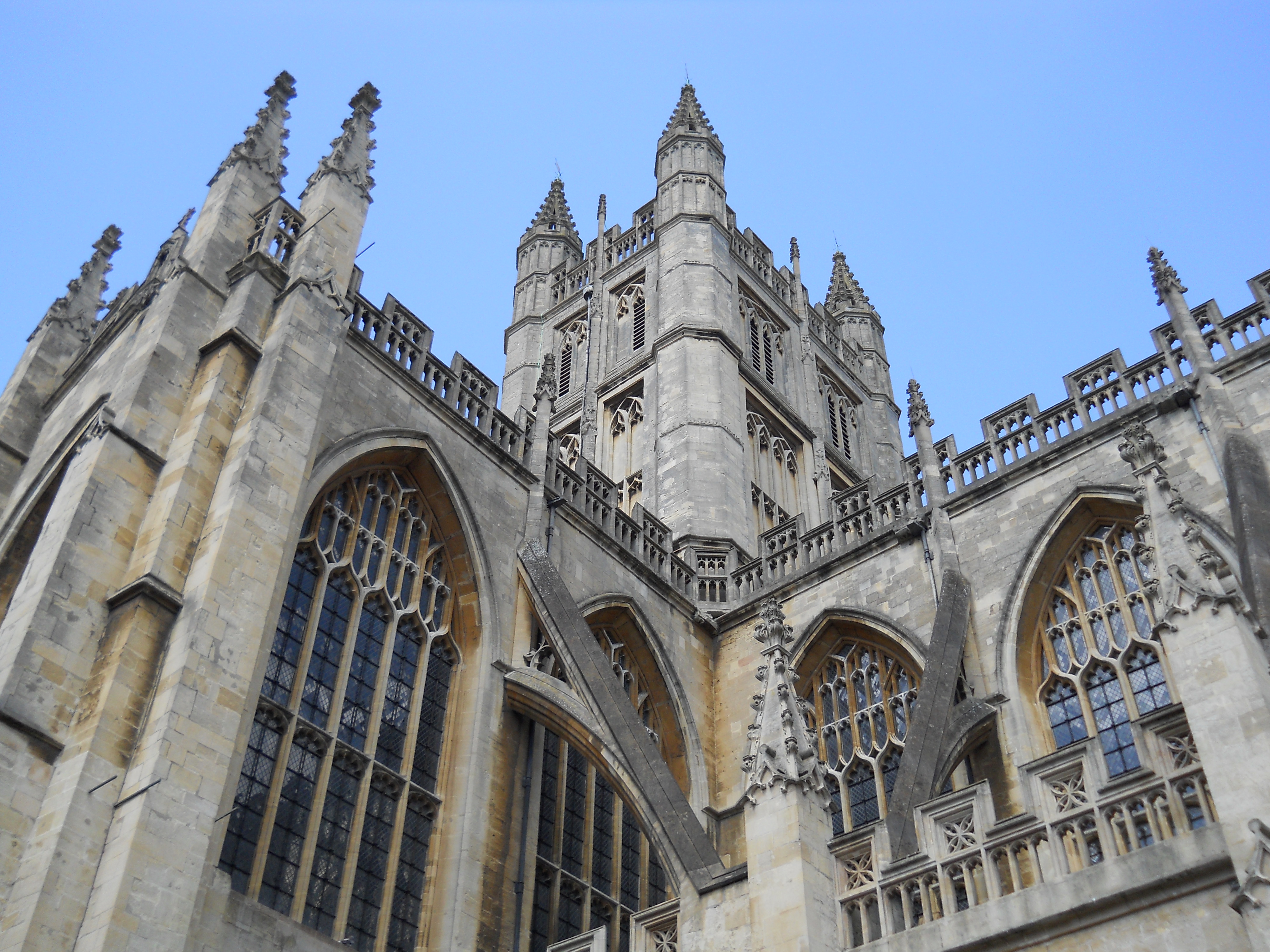
Bath Abbey

Five things to know about Bath Abbey*

  • Three different churches have occupied the site of today’s Abbey since 757 AD. First, an Anglo-Saxon monastery which was pulled down by the Norman conquerors of England; then a massive Norman cathedral which was begun about 1090 but lay in ruins by late 15th century; and finally, the present Abbey Church as we now know it.
  • The first King of all England, King Edgar was crowned on this site in 973 (as shown above). The service set the precedent for the coronation of all future Kings and Queens of England including Elizabeth II.
  • The first sight most visitors have of Bath Abbey is the West front, with its unique ladders of Angels. The story behind this is that the Bishop of Bath, Oliver King, is said to have had a dream of angels ascending and descending into heaven which inspired the design and which also inspired him to build a new Abbey church – the last great medieval cathedral to have been built in England.
  • After the dissolution of the monasteries in 1539 by order of King Henry VIII, the Abbey lay in ruins for more than 70 years. It wasn’t until 1616, that much of the building we see today was repaired and in use as a parish church and over two hundred years later, in the 1830s, that local architect George Manners added new pinnacles and flying buttresses to the exterior and inside, built a new organ on a screen over the crossing, more galleries over the choir and installed extra seating.
  • The Abbey as we know it is the work of Sir George Gilbert Scott, who from 1864 to 1874, completely transformed the inside of the Abbey to conform with his vision of Victorian Gothic architecture. His most significant contribution must surely be the replacement of the ancient wooden ceiling over the nave with the spectacular stone fan vaulting we see today.

*http://www.bathabbey.org/history

Photo by Barbara S. Andrews

Photo by Barbara S. Andrews

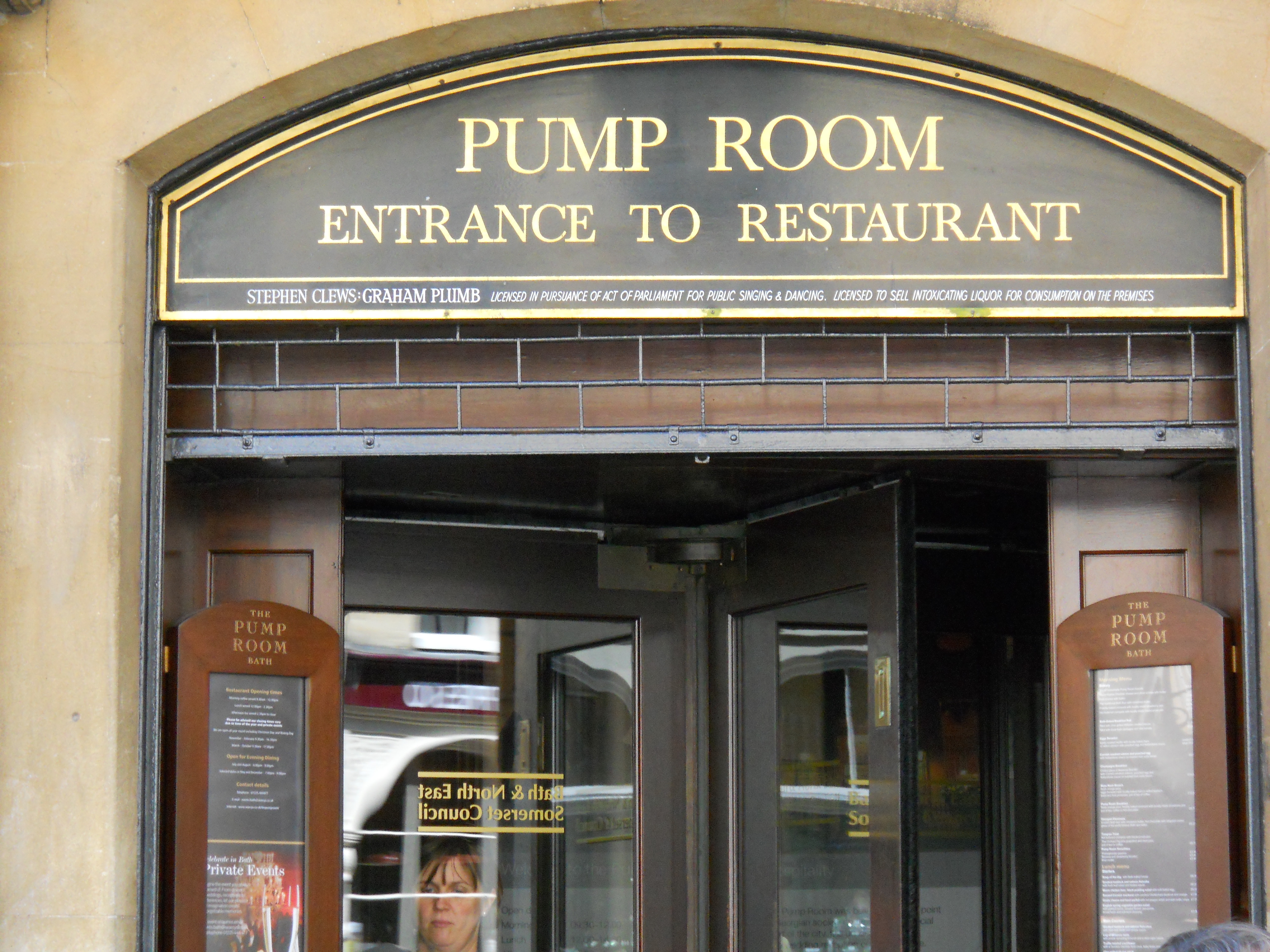
The Pump Room

Situated next to main street entrance to the Roman Baths, visitors can sample the waters from the warm spring which fills the Roman Baths. The building also houses a restaurant, where it is popular to sample the afternoon tea.

pumproomsign

Photo by Barbara S. Andrews

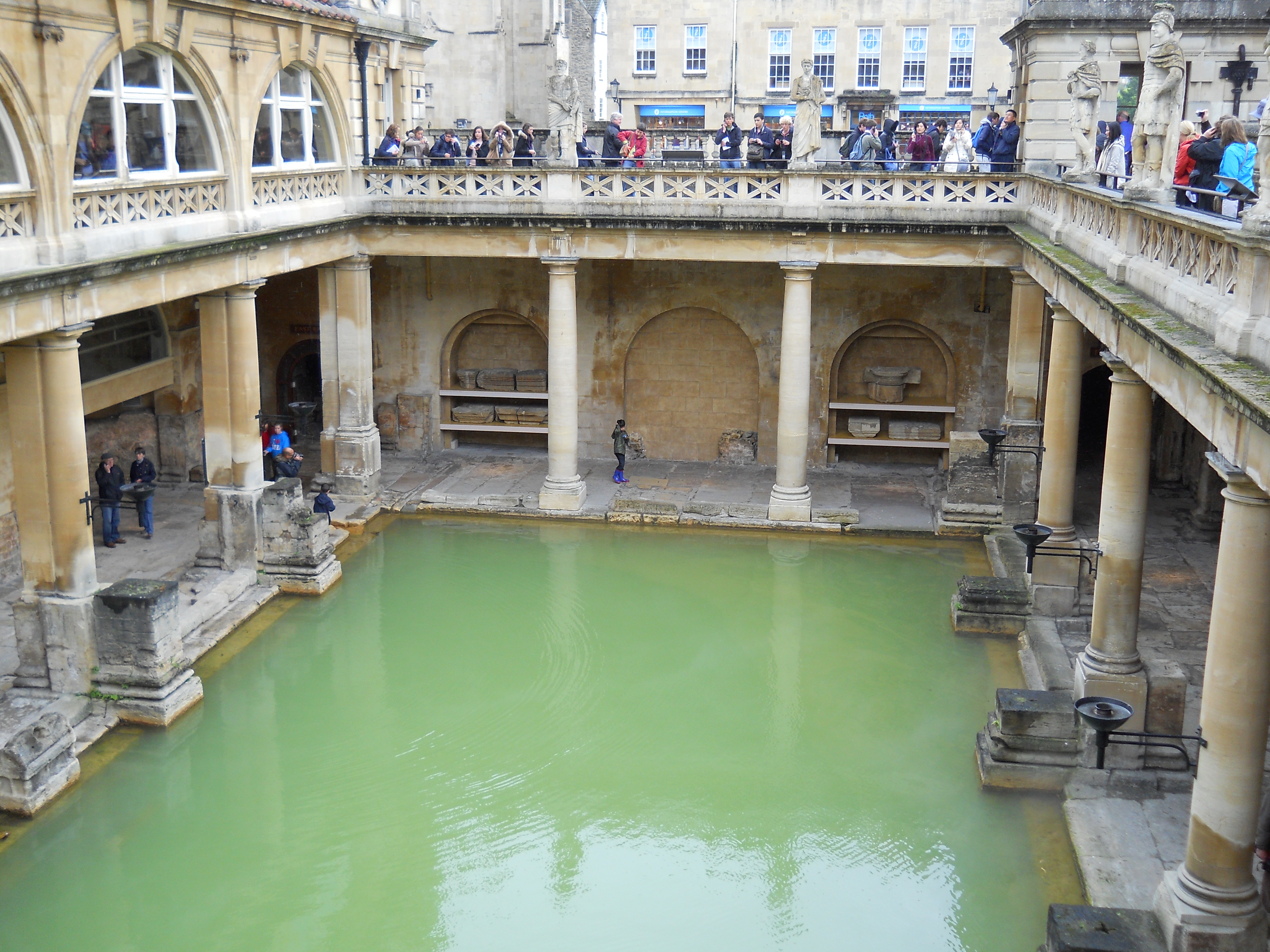
The Roman Baths

The house is a well-preserved Roman site for public bathing. The Roman Baths themselves are below the modern street level. There are four main features: the Sacred Spring, the Roman Temple, the Roman Bath House and the Museum holding finds from Roman Bath. The buildings above street level date from the 19th century.

Photo by Barbara S. Andrews

Photo by Barbara S. Andrews

The Pulteney Bridge

The bridge features two ranges of shops designed in the Palladian style c. 1770, between them forming a narrow street over the bridge. The street and buildings sit above three segmental arches of equal span.

The shops on the north side have cantilevered rear extensions. Consequently the northern external façade of the bridge is asymmetrical, much altered and of no architectural merit, whereas the southern external side clearly shows the hand of Robert Adam.

Shops on the Pulteney Bridge  By Erebus555 at English Wikipedia [CC BY-SA 3.0 (http://creativecommons.org/licenses/by-sa/3.0) or GFDL (http://www.gnu.org/copyleft/fdl.html)], via Wikimedia Commons

Shops on the Pulteney Bridge
By Erebus555 at English Wikipedia [CC BY-SA 3.0 (http://creativecommons.org/licenses/by-sa/3.0) or GFDL (http://www.gnu.org/copyleft/fdl.html)%5D, via Wikimedia Commons

Sydney Gardens (formerly Bath Vauxhall Gardens)

The Sydney Gardens are the only remaining 18th century pleasure gardens in England.

The gardens were constructed in the 1790s opening in 1795 as a commercial pleasure grounds, following the development of Bathwick by Sir William Pulteney, 5th Baronet across the River Avon from the city centre. The original plans were by Thomas Baldwin and completed by Charles Harcourt Masters who included a maze or labyrinth, grotto, sham castle and an artificial rural scene with moving figures powered by a clockwork mechanism. The gardens were illuminated by over 15,000 “variegated lamps”. Around 1810 the Kennet and Avon Canal was built through the gardens.

Sydney Gardens  By Plumbum64 (Own work) [CC BY-SA 3.0 (http://creativecommons.org/licenses/by-sa/3.0)], via Wikimedia Commons

Sydney Gardens
By Plumbum64 (Own work) [CC BY-SA 3.0 (http://creativecommons.org/licenses/by-sa/3.0)%5D, via Wikimedia Commons

The Sydney Hotel

The Sydney Hotel was built within the gardens. The original design for the hotel, prepared by Thomas Baldwin in 1794, was a two-storey building which would serve the pleasure gardens. After Baldwin was bankrupted his design for the hotel was not implemented. Instead a three-storey building was designed by Charles Harcourt Masters. The foundation stone was laid in 1796 and the building was ready by 1799. Visitors entered the gardens through the Hotel. Projecting from the rear of the building at first floor level was a conservatory and a semi-circular Orchestra with a wide covered loggia below. Two semi-circular rows of supper boxes projected from the sides of the building. The gardens were used daily for promenades and public breakfasts which were attended by Jane Austen among others. At public breakfasts tea, coffee, rolls and Sally Lunn buns were served at about midday, followed by dancing. There were generally three evening galas each summer, usually on the birthdays of George III and the Prince of Wales, and in July to coincide with the Bath races. During these galas the gardens were lit with thousands of lamps and the guests took supper accompanied by music and fireworks. Breakfasts, coffee-drinking, newspaper-reading and card-playing took place in the ground floor of the Hotel and dancing in a ballroom on the first floor. All the rooms could be hired for private parties and meetings.

The Assembly Rooms

The Assembly Rooms formed the hub of fashionable Georgian society in the city, the venue being described as “the most noble and elegant of any in the kingdom” They were originally known as the Upper Rooms as there was also a lower assembly room in the city, which closed soon after the Upper Rooms opened. They served the newly built fashionable area which included The Circus, Queen Square and the Royal Crescent.

People would gather in the rooms in the evening for balls and other public functions, or simply to play cards. Mothers and chaperones bringing their daughters to Bath for the social season, hoping to marry them off to a suitable husband, would take their charge to such events where, very quickly, one might meet all the eligible men currently in the City.

Photo by Barbara S. Andrews

Photo by Barbara S. Andrews

The Theatre Royal

The present main entrance to the Theatre Royal, in Sawclose, was built in 1720 by Thomas Greenway, and was Beau Nash’s first house. The exterior of the building, with arches, pilasters, garlands and ornaments, which is visible from Beauford Square, was designed by George Dance the Younger and erected by John Palmer.

The theatre itself was erected in 1805, replacing the Old Orchard Street Theatre which was also called the Theatre Royal, which is now a Freemason’s Hall.

The theatre is said to be haunted by The Grey Lady, who was an actress centuries ago. She has been seen watching productions in the Grey Lady Box, and she leaves the distinctive scent of Jasmine. She has been seen and scented in recent years.

Theatre Royal, Bath   By MichaelMaggs (Own work) [CC BY-SA 2.5 (http://creativecommons.org/licenses/by-sa/2.5)], via Wikimedia Commons

Theatre Royal, Bath
By MichaelMaggs (Own work) [CC BY-SA 2.5 (http://creativecommons.org/licenses/by-sa/2.5)%5D, via Wikimedia Commons

Text from Wikipedia.

About The Third MacPherson Sister (part of the Sweet Summer Kisses anthology)

TheThirdMacPhersonSister2inchAfter a disastrous fourth Season in London, Rebecca and her mother take refuge in Bath to determine their next course of action. Rebecca has always known she’ll never be able to measure up to her older sisters, the “Golden Twins,” who were the reigning queens of the ton in their day, but surely there is a gentleman somewhere capable of appreciating her finer qualities.

Miles Framingham, Duke of Aylesbury, finds himself in need a wife… although he doesn’t really want one. Burdened with the responsibilities of a dukedom from a young age, what he really yearns for is freedom. Marriage to the right woman, though, might not be such an onerous task.

When the hapless Rebecca finds herself pushed into the lap of this eminently eligible duke in the nave of Bath Abbey, a match between them seems ordained by the heavens… except for the little matter of his past history with her sisters.

SweetSummerKisses2med

Bluestockings and wallflowers seek happily-ever-afters. Only handsome, respectable and deeply romantic persons need apply. Dukes and marquesses will be given special consideration. Apply within.  

This anthology contains nine fun, heart-tugging, and wholesomely romantic Regency novellas that are as sigh-worthy as they are sweet, brought to you by USA Today and national bestselling, award-winning authors.

AmazonBarnes & NobleKoboiBooks • Google

Vanessa Kelly: How to Marry a Royal Highlander

HIGHLANDER

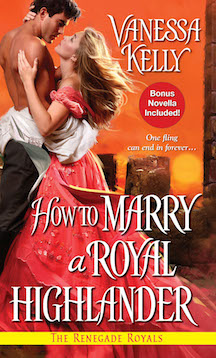
About How to Marry a Royal Highlander

Illegitimate yet thoroughly irresistible, the Renegade Royals are leaving behind their careers as daring spies for the greatest adventure of all…

At sixteen, Alasdair Gilbride, heir to a Scottish earldom, fled the Highlands and an arranged betrothal. Ten years later, Alasdair must travel home to face his responsibilities. It’s a task that would be much easier without the distracting presence of the most enticing woman he’s ever met…

After one escapade too many, Eden Whitney has been snubbed by the ton. The solution: rusticating in the Scottish wilderness, miles from all temptation. Except, of course, for brawny, charming Alasdair. The man is so exasperating she’d likely kill him before they reach the border—if someone else weren’t trying to do just that. Now Eden and Alasdair are plunging into a scandalous affair with his life and her reputation at stake—and their hearts already irreparably lost…

SusanaSays3Susana Says

… another Renegade Royal meets his match: 5/5 stars

Alasdair Gilbride, a natural son of the Duke of Kent (who will soon become the father of the future Queen Victoria), has been avoiding his responsibilities as heir to a Scottish earldom (through his deceased mother) for the past ten years by serving his country as a spy during the war with France. The war is over, his grandfather is ailing, and he no longer has any excuse for avoiding his dilemma—an unwanted betrothal to his cousin.

At the same time, Eden Whitney finds herself needing to get out of Town for awhile. The last thing she wants to do is spend the winter in a cold castle in Scotland, but her mother insists they accept Captain Gilbride’s offer. Edie and Gilbride have always had a bickering sort of relationship, but the closer they get to the frozen tundra that Scotland is presumed to be, the more her feelings for him begin to melt her antagonism. But family honor demands that he marry another… even if breaks her heart.

Like the rest of the Renegade Royals, Alasdair harbors his share of guilt and shame for being the “cuckoo in the nest,” even though he was the innocent party, and even though he does legitimately carry the blood of the earl his grandfather, through his mother. Eventually that’s what causes him to abandon the family and seek honor through service to his country. But does that mean he can get away with breaking a betrothal and wreaking havoc in the clan without a pang of conscience?

The relationship between Alec and Eden was amusing to watch, as it was easy to see how they felt about each other even before they could admit it to themselves. Mrs. Whitney took a bit longer to warm up to, but even she proved to be a worthy opponent to the crotchety old earl. How to Marry a Royal Highlander was a truly enjoyable read, and I highly recommend it—whether or not you’ve read any of the other books in the series.

About the Author

IMG_0031 copyVanessa Kelly is an award-winning author who was named by Booklist, the review journal of the American Library Association, as one of the “New Stars of Historical Romance.” Her sensual, Regency-set historical romances have been nominated for awards in a number of contests, and her second book, Sex and The Single Earl, won the prestigious Maggie Medallion for Best Historical Romance. Her third book, My Favorite Countess, was nominated for an RT Reviewers’ Choice Award for Best Regency Historical Romance.

Vanessa’s current series, The Renegade Royals, is a national bestseller. The first book in the series, Secrets for Seducing a Royal Bodyguard, received a starred review from Publishers Weekly.

When she’s not dreaming up plots for her next Regency historical novel, Vanessa is writing USA Today Bestselling contemporary romance with her husband under the pen name of V.K. Sykes. The first book in their forthcoming Seashell Bay Series will be released by Grand Central in February, 2015.

You can find Vanessa at www.vanessakellyauthor.com or at www.vksykes.com. She’s also a member of The Jaunty Quills, a group of bestselling authors like Kristan Higgins, Shana Galen, and Jesse Hayworth. You can visit The Jaunty Quills at www.jauntyquills.com.

Becca St. John: An Independent Miss

Depravity of the Novel, Oh My!

Becca St. John

Untitled1What is so wrong with the 18th century circulating library to provoke Jane Austen to pen, “Mr. Collins readily assented, and a book was produced; but, on beholding it (for everything announced it to be from a circulating library), he started back, and begging pardon, protested that he never read novels.” (Pride and Prejudice)

Ye Gads! It’s not the Lending Library at fault, but The Novel! Worse, novels read by women and, dare I say (fist to mouth) romance novels! Moral panic descends.

“Women, of every age, of every condition, contract and retain a taste for novels […T]he depravity is universal. … the mistress of a family losing hours over a novel in the parlour.” (Sylph no. 5, October 6, 1796: 36-37)

Untitled2How many hours have we all lost in the parlor on the sofa? Too many, in my case, and delightfully so. But is it really a feminine preoccupation? According to an article in The Huffington Post , women still read more novels than men. Which, my dear reader, makes sense if you look to the babe in swaddling.

Studies reaffirm what every mother, who has held a squirming baby boy, knows. Boys twist and stretch to see everything, fascinated by thingamabobs and motion. While their baby sisters focus on faces, captivated by each flitter of expression, intricate nuance of mood. Defined differences before anyone has a chance to teach them they’re different.

And thus, the male of the species are expected to understand the workings of the world, leaving the mystery of emotion to their counterparts. Sexist you say? Most certainly was back in 1760, when George Colman wrote about the notorious effects of reading novels:

” … a man might as well turn his Daughter loose in Covent-garden, as trust the cultivation of her mind to a CIRCULATING LIBRARY.” (Polly Honeycombe by George Colman)

We’ve come a long way baby, or have we?

Do you think women are, by nature, more prone to romance? Or are men just wary of being seen as fools? Leave your opinion in the comments below and be eligible to have a book and a character, in my next novel, dedicated to you. Warning ~ you never know which character that might be, lord, lady or villain.

Below are two characters, a romantic woman and a not-so-romantic man, from my latest novel, An Independent Miss.

About An Independent Miss

What’s love to do with anything?

Immersed in her herbal laboratory, Lady Felicity secretly yearns for a dashing, romantic love straight from a gothic novel. So when her brother’s houseguest, Lord Andover, presses her hands to his chest, and proposes, she is too stunned to take in his words of undying love. Words he surely spoke. Didn’t he? Oh, drat, she should have listened…

Victims of misguided and inept medical men, Lord Andover’s father and brothers are in their graves, his mother lost to the apothecary’s opium. Desperate to save his mother, give her a will to live, he sets three goals: marry a sweet, soothing young lady, produce an heir and free his homes of herbalists and quacks. In return, he offers all that he is, all that he owns, except his beleaguered heart.

Title, wealth, and good name are all a man need offer.

Amazon.com

AN INDEPENDENT MISS - Front Cover(2) copy 2

Excerpt

Felicity picked at her dress, wide enough to accommodate hips decidedly wider than her waist. “These current styles don’t suit me.”

Caro threw up her hands. “That’s because you have a figure. Mother has always said some women look better undressed.”

“Undressed?”

Caro snickered, wickedly.

Felicity gave her a shove and moaned. “That doesn’t help. It only makes me more nervous.”

“Delicious. Felicity as a mortal, and a wet-behind-the-ears fledgling mortal at that.” Caro chuckled.

Too distracted to listen, Felicity merely agreed “Perhaps,” frowning as she realized what she had just said.

They stood quietly in the hallway.

“Is he proposing?”

Felicity’s head snapped up as she tamped down girlish notions. “No.” It was impossible, a foolish dream. “Of course not. He is committed to Lady Jane.” She shook her head as if words weren’t enough. “I’m sure of it.” She shook her head again, feeling a bit woozy. “No,” she repeated.

She’d assumed he sought her company because she was the only quiet one in a boisterous family and on this, his first step out of mourning, he would need peace. The Redmond household was not a gentle first step.

Caro was right, she just had to go in there and see what he wanted. It didn’t matter what she wore. No one would call her an incomparable, nor did he expect to see her as one. Hesitating in a doorway would not change that.

With a deep breath she stepped off a veritable cliff, into the room, her stomach roiling as self-assurance plummeted, her confident self swept away in the fall, revealing an unfamiliar shy, vulnerable girl she never thought to be.

“Lord Andover?”

He turned to her, fit and handsome in buff trousers and a superfine jacket a rich shade of cobalt. His neatly knotted cravat, secured with a sapphire pin, complemented the coat. A glint of sun highlighted the ebony dark of his hair, perfect foil to cerulean eyes. Not that she could see those eyes with the sun at his back. But she knew them.

“Lady Felicity.” He reached out both hands, naked of gloves, as were hers.

Did he mean for her to take them? To touch, flesh to flesh? So casually? Heat blossomed in her cheeks as she crossed the room, hands clutched at her waist, uncertain of his intention in reaching for her like that. Jarred by that uncertainty.

“Allow me this liberty.” He took her hands, eased them open, pressed them against his chest as he spoke in that deep, comforting voice of his. It poured over her, a warm waterfall of sound, as she stared, enthralled by the sight of her hands caught between the warmth of his body and the hardness of his palms.

A thrilling, foreign intimacy, the steady thump of his heart, the vibration of his baritone. A language of the senses.

Earthy heat radiated through his shirt, carried the scent of his cologne. She inhaled the spicy exotic fragrance and swallowed, afraid she might melt, right there, into a puddle at his feet. Grappling for security, she reminded herself she was a pragmatic, intelligent young lady, vastly more mature than most women her age and far beyond being carried away by bare skin. She knew the feel of flesh in a clinical, detached sort of way.

But not like this. Nothing like this.

Silence.

Startled, she looked up. He finished whatever he was saying, watched her with a small smile.

Oh Lord, she should have paid attention.

“Will you?” He finally asked again, for she was certain he had already asked her once. “Will you do me the honor of marrying me?”

She blinked, stunned. “Me?”

His chuckle washed over her, as he freed one hand to brush a finger across her cheek. “Yes, you.”

She swallowed again, just to be certain she could, as she tried to reign in the tumult of thoughts his words provoked.

“Is this a prank?” She looked about for her brothers. Thomas for certain, possibly Edward, even Annabel, though a bit young, would be up to this sort of game. No one popped out from behind a settee. No suspicious lumps or toes peeked from where the curtains were gathered.

“A prank?” He bent enough to look in her eyes. “This is no jest. Your father and I have been discussing the details all week.”

And no one told her? As if she were some silly schoolgirl?

“You are not here to visit Thomas?”

Still clasped, Andover let their hands fall down between them, his thumb absently caressing her knuckles. It rippled through her into dark private places.

“I arrived for a small house party with no particular aim other than friendly amusement.” He looked out toward the window before returning to her gaze. “Then I found you. Did you not notice my attention?”

“You’ve been kind and polite.” And attentive.

She never dared presume it meant anything to him, other than friendly camaraderie. He was to marry Lady Jane Townsend. Lady Jane herself had assured the whole of Easton Academy for Young Women that one day she would be Lady Andover. With Caro still at Easton, surely they would have heard the high drama if those expectations failed to reach fruition.

Then again, there had been no mention of Lady Jane in the whole of Andover’s visit. Not even from Lord Upton, Andover’s closest friend and Lady Jane’s brother. He was visiting, as well, and one would expect him to say something if a betrothal was on the boards.

“Would you like time to think about it?” he offered, his smile replaced with a knotted brow.

No, she didn’t need time, not that she would tell him that. “You have taken me by surprise.”

Marriage. To Lord Andover.

Oh Lord, oh Lord, oh Lord.

She fought for a serene smile while her insides rioted. He proposed to her, Felicity, not some vivacious other girl. Not to some terribly regal miss. He saw beyond her reticence, accepted her unfashionably educated mind, and chose her rather than a social bully like Lady Jane.

The flurry of excitement stalled. Lady Jane’s infamous temper was a very real obstacle. Felicity had been the brunt of it far too often to dismiss it easily.

“Have I surprised you in a bad way?”

“No, not at all. I’m just beyond words.”

“I see.”

Did he? This was no surprise to him, or to her father or to, well, how many others? Did everybody know, and if so, how could that be without her the least bit aware?

Yet here he stood, near enough she felt the starch of his shirt, smelled the intoxicating hint of cologne. As close as in her dreams.

Baldly, she burst out, “Are you quite certain?”

Relief billowed on his laugh, reigniting her excitement. “Yes, Lady Felicity. I am certain. What about you? Could you see to marrying this poor soul?”

Pour soul indeed. Lord Richard Henry Albert Carmichael, Marquis of Andover, Earl of Sutton, Viscount St. John. Good God—he was a Marquis, and a comfortably placed one at that.

Not that such things mattered. She would marry him if he were a poor parson’s son.

“Will you marry me?”

What mattered was the warmth in his eyes, the tilt of his chin when they chatted after dinner. The furrow of his brow during games of chess. The way he chuckled at her younger siblings, rather than rebuking them for their rudeness.

The way he guided her, however unknowingly, into normality. She was not a source for what ailed him, but a woman. A flesh and blood woman whose heart fluttered at the sound of his voice. Whose breath sighed at the touch of his hand.

She never dreamt this day possible. Collected the memories instead, little vignettes of his visit, their quiet talks, silent walks. Secret reminiscences to hold dear after he married Lady Jane.

“Lady Felicity?”

But it was possible, unless this moment was the dream.

Too dazed to utter a single word, she nodded and sighed, as he raised her hands to his lips.

“You will not be sorry, Lady Felicity, I promise you I will be a good husband.” His words whispered across her fingers, clear through to her toes, and then his lips pressed against the bare skin of her wrist.

You will not be sorry, but she would be, if his proposal lacked words of love. If that beat of his heart had not been for her. She did not want a marriage of convenience. She did not want to wed because they ‘suited one another.’ There were alternatives to marriage for her, alternatives that were not fashionable, but would please her, nonetheless.

She had her studies, after all. Could spend her life immersed in them. Make a living from them.

If she were to marry, she wanted a love to match the novels hidden under her bed. Novels her mother forbade. Wonderful, sensational stories of dramatic emotions, wrenching passion and love. Most important of all, love.

Andover could have promised all those things while she dumbly stared at their hands. She desperately needed to know if he had.

Oh Lord, she should have listened…

About the Author

Untitled3Becca St. John ~ An Accidental Writer ~

Writing was a tool, not a toy, until a stay in a haunted hotel and creaking floors sent Becca to a bookcase full of dog-eared romances. The Candlelight Regency, Lord Stephen’s Lady, by Janette Radcliffe her first taste of the genre, Becca was hooked. She read old romances, new romances, both sexy and sweet, until her own tales begged to be written.

Living in Florida, Becca divides her time between dreaming up stories, diving deep into history, kayaking, and swimming. Her husband gives her the space she needs by fishing mangroves and waterways, or watching football (the English sort) with his British buddies. Becca and her hubby break the routine with adventure travel; though, at heart, Becca is a homebody believing there is no greater playground than inside the mind.

Website • Facebook • Twitter

Amazon Author Page


Mariana Gabrielle: La Déesse Noire (Giveaway)

Bluestocking-Belles-logo-01

A Hearty Welcome to Fellow Bluestocking Belle

 Mariana Gabrielle

Susana: How long have you been writing?

Mariana: I’ve been a professional writer almost twenty-five years, writing fiction since 2009.

Susana: What advice would you give to writers just starting out?

MarianaGabrielle copyMariana: Write. Write some more. Keep writing.

Susana: Do you ever suffer from writer’s block? If so, what do you do about it?

Mariana: I tend not to get writer’s block, because I am well-used to switching among projects and formats and genres. On the rare occasions when I do, I typically switch to marketing work for a while.

Susana: What comes first: the plot or the characters?

Mariana: Characters, with plot not far behind. The first draft is almost always the characters filling me in on the story, before I fictionalize [what they think are] their nonfiction accounts.

Susana: Are you a plotter or a pantser?

Mariana: Panster. Full stop. Even in nonfiction, I almost never start with a plan, and if I do, it gets tossed out the window very early. The work evolves.

Susana: Tell us something about your newest release that is NOT in the blurb.

Mariana: There are two heroes, three villains, and two sidekicks in this short novel. I am told I managed to pull it off.

Susana: Are you working on something at present that you would like to tell us about?

Mariana: I am working on a series of three prequel novellas connected to my first novel, Royal Regard, the first of which will appear in the Bluestocking Belles’ holiday box set. In ‘Tis Her Season, Charlotte and Alexander start their life together; in Shipmate, readers will learn how Bella ended up with her first husband; and in the unnamed third book, Bella’s brother, John, meets his wife, Rose.

Susana: What did you want to be when you grew up?

Mariana: I wanted to be a musical theatre star.

Susana: What is one thing your readers would be most surprised to learn about you?

Mariana: I am not—in the least—a romantic (not even a little bit).

Susana: What would we find under your bed?

Mariana: Dust. (Cats, if there are other people in the house.)

Susana: Do you write in multiple genres or just one? If just one, would you consider straying outside your genre?

Mariana: Thus far, I have only published Regency romance, but next year, I will release Blind Tribute, a mainstream historical about a Civil War newspaper reporter with divided loyalties. I am currently working in non-fiction on a marketing book, and I have already released a book-length epic poem about the Mayan underworld. As far as fiction, though, I don’t foresee straying from some form of historical.

Susana: What is something you’d like to accomplish in your writing career next year?

Mariana: I’d like to release all three Royal Regard prequel novellas, and I would like Blind Tribute to be on the verge of publication by this time next year. I wouldn’t mind having a good start on Book One of my Regency family series.

Susana: When was the moment that you knew you had to be a writer

Mariana: During the same week, in my third year of college (the first time around), I was offered an internship at the Denver Post, and was also approached by the Music Department chair to try for an audition at the National Musical Theater Conservatory. I decided writing was a more stable career path. Largely, I was correct.

Susana: Describe the “perfect hero.” What about the “perfect hero” for you?

Mariana: I am the perfect hero (and heroine) for me.

Rafflecopter contest May 15 – June 9

Print

Facebook Launch Party: June 10, 12:00 noon – 8 p.m. EDT

About La Déesse Noire

Sired by a British peer, born of a paramour to Indian royalty, Kali Matai has been destined from birth to enthrall England’s most powerful noblemen—though she hadn’t counted on becoming their pawn. Finding herself under the control of ruthless men, who will not be moved by her legendary allure, she has no choice but to use her beauty toward their malicious and clandestine ends.

When those she holds most dear are placed in peril by backroom political dealings, she enlists some of the most formidable lords in England to thwart her enemies. But even with the help of the prominent gentlemen she has captivated, securing Kali’s freedom, her family, and the man she loves, will require her protectors stop at nothing to fulfill her desires.

Amazon.comAmazon.ukBarnes and NobleKobo

iTunesAll Romance eBooksSmashwordsGoodreads

Excerpt

Mayuri had done her no favors, preparing her for the worst. Fitz had no reason to be gentle, she had been warned, no cause to concern himself with her wishes, desires, or fears. No matter how handsome, how charming, how solicitous in the drawing room, Mayuri had said, there was every possibility he would be driven entirely by his own lust, disregarding even the most basic courtesies. And no matter what he did, Kali was to pretend she had never been more excited by anything in her life.

She turned away to stare into the corner of the garish red-and-gold room, wishing it felt less like a cheap brothel, fingers tripping over the buttons of her dress, trying to speed things up to be finished that much faster.

She couldn’t help glancing at the bed, with a frame as large as a farm wagon. Piles of pillows in shades of rose, bed curtains of garish silk velvet, and a red satin eiderdown quilt nearly as thick as the feather-filled mattress. As comfortable as it all must be, she glared like it concealed a hungry crocodile.

He tugged the shirttail from his waistband and unbuttoned it over his broad chest, then came to her and held her hands motionless, kissing her fingertips.

“I will not hurt you, my sweet, I promise. No more than a pinprick, as with any woman’s first time. Mayuri explained?”

She nodded again, trying to bring her voice back under her own control. “Yes, my lord.” She’d known exactly what to expect for at least ten years.

“My name is Fitz,” he said, recalling her attention to his face, “not ‘my lord.’ I cannot bear such formality from you, Kali. Can you indulge me?”

“Yes, Si—Fitz.”

“Much better,” he said, kissing her cheek, then her earlobe, murmuring, “Now then, I prefer a woman who would invite me to her bed for the enjoyment, so I plan to ensure it. May I bring you pleasure, sweeting? Will you allow it?”

She had no right to deny him anything he wanted in bed, nor anywhere else, truth be told, and she probably knew more than he—theoretically—about the pleasures of the flesh. That he was asking her agreement and treating her as an innocent predisposed her to look past her fear.

“It is my fondest desire to please you in all things, my lor…” She trailed off when she saw his frustration at the pat response. She struggled to salvage the moment, but had no untutored words. She tried to explain this inadequacy with her eyes as she offered, grasping his hands more tightly, “Perhaps I might dance? Or indulge your… more exotic pleasures.”

She had been trained to expect anything and to use every part of her body, her mind, her wardrobe, and myriad implements to enhance any sexual act he chose. She had been told of every possibility before she was fourteen, then experienced all but the final act of coition at the hands of another, older tawaif, or the castrati who staffed Mayuri’s house of male delights.

She had not been trained in how to explain she was frightened, that she couldn’t remember how to put either of them at ease, that she was afraid of what he might ask if he kept her, but petrified he would find her wanting and send her away. It would be much simpler if he threw her across the bed and took his pleasure like a rutting dog. If, in the morning, she could remain indifferent.

About the Author

Mariana Gabrielle is a pseudonym of Mari Christie, a professional writer, editor, and designer with almost twenty-five years’ experience. Published in dozens of nonfiction and poetry periodicals since 1989, she began writing mainstream historical fiction in 2009 and Regency romance in 2013. In all genres, she creates deeply scarred characters in uncommon circumstances who overcome self-imposed barriers to reach their full potential. She is a member of the Bluestocking Belles, the Writing Wenches, and the Rocky Mountain Fiction Writers. Her first Regency romance, Royal Regard, was released in November 2014.

 Website/BlogFacebookTwitter

PinterestAmazon Author Page Goodreads

Ella Quinn: A Kiss For Lady Mary

A Kiss for Lady Mary copy

About A Kiss For Lady Mary

Ella Quinn’s bachelors do as they like and take what they want. But when the objects of their desire are bold, beautiful women, the rules of the game always seem to change…

Handsome, charming, and heir to a powerful Viscount, Christopher “Kit” Featherton is everything a woman could want—except interested in marriage. So when he hears that someone on his estate near the Scottish border is claiming to be his wife, Kit sets off to investigate.

Since her parents’ death, Lady Mary Tolliver has been hounded by her cousin, a fortune-hunting fool after her inheritance. Refusing to settle for anything less than love, Mary escapes to the isolated estate of rakish bachelor, Kit Featherton. Knowing he prefers Court to the country, she believes she will be safe. But when Kit unexpectedly returns, her pretend marriage begins to feel seductively real…

AmazonBarnes & NobleiTunes

Excerpt

He strode north on St. James Street, then turned right onto Jermyn Street. His building was in the center of the block. Taking the stairs two at a time he bellowed, “Piggott, get packed, we’re leaving.”

Wiping his hands on a cloth, Piggott stepped from Kit’s bedchamber into the main room. “For how long, where are we going, and when do we depart?”

“About three weeks, if not more. Northumberland. It’s going to take a week to get there. You will leave as soon as you’ve packed my father’s traveling coach. I must stop by Dunwood House first. I’ll find you on the road. I’m taking the curricle.”

Piggott’s jaw dropped. “All that way, sir?”

“Damned if I’ll be cooped up in a coach for a week. No one would be able to bear me, not even myself.”

“May I inquire as to the rush?”

“I’ll tell you later. Right now I must cry off from all my engagements. Pack me a bag with what I’ll need if we get separated, including my buckskin breeches. No need to wear Town togs while traveling.”

Sitting at his writing table, Kit removed his gloves. Well, at least this got him out of Town and bride hunting. Guilt attempted to take hold, and he shook it off. Who the devil would have the unmitigated presumptuousness to pose as his wife? Despite supposedly being a lady, though one would have to be awfully talented to fool Lady Bellamny, the woman would have to be a bold piece. The sooner he got on his way, the faster he’d have the answers to his questions. Perhaps he’d run down Lady B and try to pry more information out of her. On second thought, that would involve her more than he wished. She was trying enough. He certainly did not want her meddling in his affairs, and he’d run the risk of meeting the young lady residing with her.

He wanted to punch something or someone. It was a shame he did not have the time to go to Jackson’s. He could not believe a lady was masquerading as his wife—only an experienced charlatan would be able to pull off a deception like that. Not to mention that no lady would demean herself so, and take such a risk with her reputation. Whoever she was, she wouldn’t be there for much longer.

About the Author

Ella QuinnBestselling author Ella Quinn’s studies and other jobs have always been on the serious side. Reading historical romances, especially Regencies, were her escape. Eventually her love of historical novels led her to start writing them. She has just finished her first series, The Marriage Game, and her new series will start in April 2016.

She is married to her wonderful husband of over thirty years. They have a son and granddaughter, one cat and a dog. After living in the South Pacific, Central America, North Africa, England and Europe, she and her husband decided to make their dreams come true and are now living on a sailboat cruising the Caribbean and North America.

Ella is a member of the Romance Writers of America, The Beau Monde and Hearts Through History. She is represented by Elizabeth Pomada of Larsen-Pomada Literary Agency, and published by Kensington.

WebsiteFacebook TwitterBlog

Regan Walker: To Tame the Wind

The Coaching Inn—Tonbridge

Around the end of the Georgian period (1714 to 1830), the population of Tonbridge in Kent in Southeast England numbered about two thousand. It was a main stop for stagecoaches travelling from London to Hastings and Rye and was used as a staging post for the mail coaches, where horses could be changed and passengers provided with food.

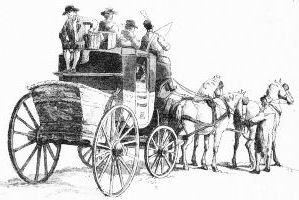
Stage coach

The coaches the travelers rode in during the early eighteenth century were heavy, lumbering vehicles devoid of springs. They were generally covered with dull black leather, studded with nails and the frames and wheels picked out with red. The windows were covered with boards or sometimes with leather curtains. Pastor Moritz, who came to England in 1782, found a coach of this description still upon the roads, and having a taste for fresh air and sunshine he complained of a fellow traveller, a farmer “who seemed anxious to shun the light and so shut up every window he could come at.” It was not the light to which the farmer objected—no one in England minded light—but they did object to the air that came through the window. This was considered prejudicial to health.

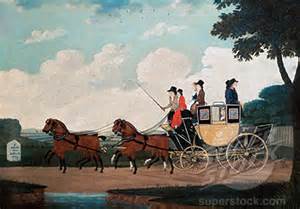
Mail coach, London to Birmingham, 18th century

Mail coach, London to Birmingham, 18th century

Though the carriage or coach ride had to be jarring, the countryside in Essex would have been beautiful.

Countryside in Sussex

Countryside in Sussex

In To Tame the Wind, set in 1782, the hero and heroine flee London (and her French pirate father) for Rye via carriage, which is how the upper classes most frequently traveled (though some Englishmen might prefer to travel on horseback). It would take them two days from London with an overnight in Tonbridge.

The roads were very rough and they would be jostled around in what was essentially a padded box. In Sussex the roads were often impassable in winter. Fortunately, my hero and heroine traveled in summer.

Once they arrived in Tonbridge, they stayed at the Rose and Crown, a coaching inn open for business then and still serving travelers today. Located on High Street, it is just down from the Ivy Public House.

Rose & Crown, Tonbridge

Rose & Crown, Tonbridge

The original Rose and Crown inn was a Tudor house built in the 16th century. The front and porch display alterations made some two centuries later. Thus, as my hero and heroine saw it, the inn was a fine timber-framed building with an impressive brick façade. According to its current owner, it still features “many oak beams and Jacobean panels” inside.

 Rose & Crown sign

At the sign of the Rose and Crown, one could find a comfortable bed and a hot meal. It was known in the Stuart Court, to Roundheads and Cavaliers, to the diary writers John Evelyn and Samuel Pepys and to all the travellers who passed on their way to Rye, Hastings or “the Wells” in the wasteland to the south.

While a traveller had his choice of inns, he had to choose carefully. There were the grand establishments, the posting houses, such as the Rose and Crown, which entertained the quality who posted in their own carriages. Such inns might accommodate a riding gentleman if his servants accompanied him. Some of these inns accepted passengers from the mail-coach, some did not; but they would not to take in passengers from a common stage. Those people had to go to the inns that catered to them.

Even in good inns it was not unusual for strangers to share rooms or even beds, as my hero, Captain Powell tells the heroine. This was regarded in much the same way as the sharing of a ship’s cabin in later times.

On the whole, English coaching inns were good. Arthur Young, who had travelled through the length and breadth of England, described them as “neat inns, well-dressed and clean people keeping them, good furniture and refreshing civility.

About To Tame the Wind

ReganWalker_ToTametheWind - 800px copyParis 1782…AN INNOCENT IS TAKEN

All Claire Donet knew was the world inside the convent walls in Saint-Denis. She had no idea her beloved papa was a pirate. But when he seized Simon Powell’s schooner, the English privateer decided to take the one thing his enemy held most dear… her.

A BATTLE IS JOINED

The waters between France and England roil with the clashes of Claire’s father and her captor as the last year of the American Revolution rages on the sea, spies lurk in Paris and Claire’s passion for the English captain rises.

Amazon

About the Author

Regan Walker profile pic 2014 copyBestselling author Regan Walker loved to write stories as a child, particularly those about adventure-loving girls, but by the time she got to college more serious pursuits were encouraged. One of her professors suggested a career in law, and she took that path. Years of serving clients in private practice and several stints in high levels of government gave her a love of international travel and a feel for the demands of the “Crown.” Hence her romance novels often involve a demanding sovereign who taps his subjects for “special assignments.” Each of her novels features real history and real historic figures. And, of course, adventure and love.

Regan lives in San Diego with her golden retriever, Link, who she says inspires her every day to relax and smell the roses.

WebsiteBlog FacebookTwitter 

Lauren Smith: The Duelist’s Seduction

The Duelist’s Seduction Playlist

Have you ever heard a song that just fills your mind with images? That’s how music is for me. I can be standing in a crowded mall and hear the faint strains of a song and it just captures me. I see things, scenes, characters, stories not yet told, as they unfurl like brightly colored flags in my mind.

Music is true inspiration. For every song you can dream up a thousand stories. Music enchants us, spellbinds us, weaves emotions and tones into a beautiful symphony that leaves us bewitched. Because this connection for me and music is so incredibly powerful, I make sure to create a playlist for every story I write. Some characters have their own theme music, some scenes have a particular song, or the hero and heroine together have a song or songs that help me channel the emotions and the plot points of the story. In other words, music is magic for a writer like me.

When I set out to write my Regency romance novella The Duelist’s Seduction, I knew I’d need a special blend of songs because the hero, Gareth is dark and brooding, and the heroine, Helen is young and innocent, but full of love and hope.

So dear readers, settle back in your favorite armchair, with a cup of hot chocolate, your e-reader and your mp3 player and settle in for a great playlist!

The List:

  • Bad Company by Bad Company
  • Don’t Deserve You by Plumb
  • Elements (Orchestral Version) by Lindsey Stirling
  • Dead in the Water by Ellie Goulding
  • You Can Go Your Own Way by Lissie
  • Feel Me by Mecca Kalani
  • New York by Snow Patrol
  • Young and Beautiful by Lana Del Rey

Hope you all enjoyed the songs and get a chance to check out my novella, The Duelist’s Seduction, the first in the sexy Seduction series!

Meme1 copy

About The Duelist’s Seduction

Helen Banks is going to die. When her twin brother gambles away their fortune, she must save his life and take his place in a duel to satisfy the honor of a man her brother couldn’t pay. Disguised as her brother, Helen faces the one man she’s admired from afar, a widower with a dark past and eyes that scorch her very soul.

Since Gareth Fairfax lost his wife, the darkness in his heart continues to grow. Lashing out at anyone who opposes him, Gareth is stunned to face a lovely young woman opposite his dueling pistol. After discovering Helen’s deception, he offers her a choice: become his mistress or her brother dies.

Their devil’s bargain turns into a slow, sweet, intoxicating seduction. With each passing hour, Helen uncovers Gareth’s secret heartbreak and yet she can’t help but fall for the man who has ruined her. With Helen in his arms, Gareth wonders if he might yet be saved. All it takes is one passionate embrace, a kiss from the depths of his soul and a night of wild abandon.

 AmazonBarnes & NobleKobo • iBooks

Excerpt

Chapter 1

The predawn sky shone brightly with flickering stars as Helen Banks readied herself for the duel. Her hair was coiled and pinned tightly against her head, concealing its thick mass and giving her a boyish look—a disguise she prayed would last. Checking the black mask covering her face, she resumed walking. She took a deep, steadying breath as she adjusted her breeches and the black coat she’d pinched from her brother’s wardrobe.

The open field near the spa city of Bath was quiet. Two coaches waited in the distance along the roadside, and ahead of her, two men waited, watching her approach. Not even a breeze dared rustle the knee-high grass as Helen walked up to her enemy and his second. Both men also wore masks to conceal their identities should someone witness the illegal duel. The paling skies played with the retreating shadows of night, lending a melancholy air to the moment she stopped inches from the men.

perf5.500x8.500.indd“You are late, Mr. Banks,” the taller of the two men announced coldly.

With his broad shoulders and muscular body, Gareth Fairfax cut an imposing figure. He seemed perpetually tense, as though ready to strike out at anyone who might offend him. Dark hair framed his chiseled features, and the eyes that glowered from between the spaces of his mask were a fathomless blue. They were the sort of eyes a woman lost herself in, like gazing into a dark pool of water that seemed to sink endlessly, drawing her in until she can’t find her way back to the surface. She recognized the sensual, full lips, now thinned by anger, and the gleam of his eyes on her. She was never more thankful that the early morning’s pale light did not expose her as being a woman.

If he ever discovered she was a woman, he would be appalled and furious. Especially given that she was only dueling him to save her brother’s life.

She briefly studied her opponent’s second. He was just as tall, his features nearly as striking as Gareth’s.

Helen choked down a shaky breath. “I was waylaid.” She prayed her voice sounded gruff and masculine.

Gareth’s eyes were dark orbs, burning with thinly controlled anger. He shifted restlessly on his feet, his imposing form momentarily revealed by the dark blue coat that contoured to his shape.

“Is this your second?” His growl sent shivers down her spine as his glaze flicked to the squat man in his mid-thirties standing behind her. She glanced over her shoulder, widening her eyes in silent encouragement for her second to come closer.

“I am,” Mr. Rodney Bennett replied and bowed.

“Mr. Banks, I am Mr. Ambrose Worthing,” Gareth’s second announced politely.

Well, finally someone was acting like a gentleman. “Mr. Worthing,” Helen said, making sure to keep her voice low. “Allow me to introduce my second, Mr. Rodney Bennett.”

Bennett passed by Helen, and he and Worthing shook hands. Bennett offered the pistols to Worthing for inspection. Since Gareth and Worthing had not brought the weapons, that duty fell to her as the challenged party. As the two men drew apart from her and Gareth, she tried not to stare at him. He was impossibly handsome, in that dark, mysterious sort of way that a woman simply couldn’t ignore. Like gazing upon a visage of an angry god, all fire and might, ready to burn her to ash with passion.

Her opponent glowered at her. “I suppose I should trust that you’ve not tampered with my pistol?”

His icy tone made her bristle with indignation. “You have my word it shoots fair,” Helen snapped. The nerve of the man to accuse her of cheating!

“Your word? We would not be here if I could trust your word. A man who does not honor his debts may not find it necessary to honor the rules of a duel,” Gareth retorted.

She wanted to scream. Her fists clenched at her sides. Her nails dug painfully into her palms as she struggled to calm down. She wanted to throttle her brother, whose rash and inconsiderate behavior had gotten her into this mess.

“Easy, Fairfax. Both pistols appear to be in working order,” Worthing announced as he and Bennett rejoined them.

Helen breathed a sigh of relief as Bennett resumed his position behind her. She’d paid him the last bit of money she’d had for him to appear as her second. She didn’t really know the man, having only met him briefly when she’d had to drag her brother away from the card tables a few nights ago. When she first approached Bennett with her plan, he had tried to talk her out of it, but when she offered money, he couldn’t refuse and had agreed to help her take her brother’s place in the duel. Even though he was a gentleman, the gambler inside him craved any bit of money he could get his hands on to return to the tables. She was lucky he hadn’t gambled away his pair of pistols, or else she would have been completely humiliated to turn up at a duel without weapons.

“Now,” Mr. Worthing said, “before we settle this, is it possible that you and Mr. Banks can reconcile the dispute?”

Helen started to nod, wanting desperately to find a way to settle the problem without bloodshed, but Gareth spoke up, stilling the bobbing of her head.

“Mr. Banks has run up a debt to me of over a thousand pounds. He has not been able to pay it back to me over the last three months. Furthermore, he created an additional liability of five hundred pounds last evening when he played with money he did not have.”

Helen swallowed hard, a painful lump in her throat choking her. Martin, you damned fool…

“Why did you accept his vouchers then?” Rodney spoke up. “I saw you agree to play with him. You didn’t have to.”

“Banks had money on him. I assumed he’d replenished his funds and would settle his debts to me.” Gareth shot a withering look in Helen’s direction. “Shooting him will be a bonus.”

A man who would now take her life as payment for a debt she didn’t owe. But what else could she do? She couldn’t let Martin die. A man had options to survive, a woman did not, at least not one that wouldn’t make her despise herself for the rest of her life.

Her memory of the previous night was tinged with fury and disappointment in Martin. Her heart had plummeted into the pit of her stomach when she’d retired for the evening and found his room empty. All of her hopes were dashed the moment she’d learned he’d gone back to the gambling tables.

She’d hidden in the shadows outside the gambling hell, trying not to be seen by anyone passing by. The smell of alcohol stung her nose, and the raucous laughter echoing from the entrance sent chills of trepidation down her spine. It would ruin her completely if she were witnessed outside such an establishment. Bennett had promised to bring Martin out to her, but when Martin emerged, he was being roughly hauled out by a dark-haired gentleman, a man she recognized, a man she’d admired for the last few months from afar.

About the Author

Lauren_Smith_2014 copyLauren Smith is an attorney by day, author by night, who pens adventurous and edgy romance stories by the light of her smart phone flashlight app. She’s a native Oklahoman who lives with her three pets—a feisty chinchilla, sophisticated cat and dapper little schnauzer. She’s won multiple awards in several romance subgenres including being an Amazon.com Breakthrough Novel Award Quarter-Finalist and a Semi-Finalist for the Mary Wollstonecraft Shelley Award.

Check her out at http://www.laurensmithbooks.com. You can sign up for her newsletter at her website, follow her on Facebook at http://www.facebook.com/LaurenDianaSmith and on Twitter at @LSmithAuthor. Her blog is http://theleagueofrogues.blogspot.com.