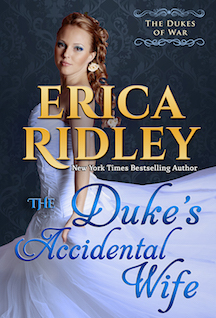
Erica Ridley: The Duke’s Accidental Wife (Giveaway)

Interview with Erica Ridley

Susana: Where do you live?

Erica: I was born in the United States, and have lived in six different countries. I currently live on a macadamia farm in the rainforests of Costa Rica, and love it immensely. Given my wanderlust, I wouldn’t be surprised if I found myself somewhere else a few years from now, but for now I’m more than happy in Costa Rica.

Susana: What is one place that I should see if I visit your hometown?

erica_8322b copyErica: I live in Nuevo Arenal, Costa Rica, a stone’s throw from Lake Arenal, the biggest and prettiest lake in the country. So definitely you should come see it! If it’s a clear day, there will be windsurfers on the lake, and you may even be able to see one or two of the closest volcanos.

Susana: What place that you haven’t visited would you like to go?

Erica: India is high on my list! I’ve been invited twice by friends who live there, but both times the round trip airfare was cost-prohibitive. I’ll make it there eventually!

Susana: When did you realize you wanted to be a writer?

Erica: Ever since I could read! I was told it wasn’t a very practical idea, so I ended up going to university to study International Business. I managed to stay in the corporate world for about ten years, before I decided that I absolutely had to try to become a writer, come what may. I’m so glad I did!

Susana: What’s been the highlight of your career to this point?

Erica: Even better than hitting the New York Times bestseller list is getting feedback from happy fans. Nothing else in this world can compare to hearing someone say that one of my books made their day, or got them through a tough time, or made them miss their subway stop for the second time in a row.

During the dark days of revision and editing, when I worry that every book is never going to be finished, those kinds of comments are what helps me get through.

Susana: Do you prefer paper books or e-books?

Erica: I have an unholy collection of both, and it looks like it’s going to stay that way for the near future. I use Calibre to manage my e-book collection (although I’m bitterly disappointed that my new kindle won’t import my Calibre tags as shelves/collections) and my paper books are actually piled on bookshelves in two countries, lol. I have books spilling off the shelves here in Costa Rica, and three times as many back in storage in the United States. I donate books to libraries and charities every chance I get, but they still multiply behind my back like gremlins. Wonderful, heartwarming, totally addicting gremlins.

Susana: If you were a cartoon, which one would you prefer being? Why?

Erica: I would like to be Sherman, so I could get to hang out with Mr. Peabody and travel in the way-back machine. (The Mystery Machine is a close second… Maybe I like machines?)

Giveaway: E-book copy of The Captain’s Bluestocking Mistress

If you were a cartoon, which one would you prefer being? Why? A random commenter will win an e-book copy of The Captain’s Bluestocking Mistress.

About The Duke’s Accidental Wife

tdaw_800

The Dukes of War historical romance series features roguish peers and dashing war heroes who return from battle only to be thrust into the splendor and madness of Regency England.

Reader Group: http://facebook.com/groups/DukesOfWar

Miss Katherine Ross is a wealthy, eccentric socialite who knows precisely what she wants: No husband. No children. No candlelit tête-à-tête with the insufferably emotionless Duke of Ravenwood. She’s convinced his heart is ice — until she touches that chiseled chest for herself. One lapse in judgment is all it takes to turn both their lives topsy-turvy…

The Duke of Ravenwood isn’t cold and haughty, but a secret romantic who has always dreamt of marrying for love. Instead, he gets Miss Katherine Ross — a headstrong hoyden intent on unraveling his carefully ordered world. He doesn’t know whether to kiss her or throttle her. Can they survive each other’s company long enough to turn a compromise into love?

AmazoniBooksNookKoboGoogle

About the Author

Erica Ridley is a New York Times best-selling author of historical romance novels. When not reading or writing romances, Erica can be found riding camels in Africa, zip-lining through rainforests in Costa Rica, or getting hopelessly lost in the middle of Budapest.

WebsiteFacebookTwitter • PinterestYouTubeNewsletter

Romance of London: The Bottle Conjuror

Romance of London: Strange Stories, Scenes And Remarkable Person of the Great Town in 3 Volumes

John Timbs

John Timbs (1801-1875), who also wrote as Horace Welby, was an English author and aficionado of antiquities. Born in Clerkenwell, London, he was apprenticed at 16 to a druggist and printer, where he soon showed great literary promise. At 19, he began to write for Monthly Magazine, and a year later he was made secretary to the magazine’s proprietor and there began his career as a writer, editor, and antiquarian.

This particular book is available at googlebooks for free in ebook form. Or you can pay for a print version.

A “foolish experiment on the credulity of the public”

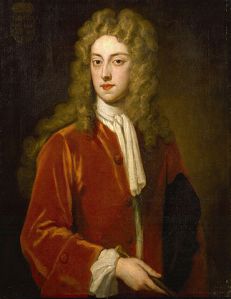
2nd Duke of Montagu

2nd Duke of Montagu

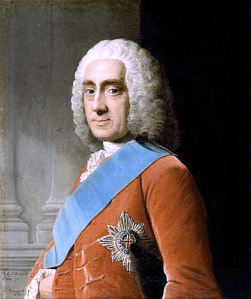
The Duke of Montague being in company with some other noblemen, proposed a wager, that let a man advertise to do the most impossible thing in the world, he would find fools enough in London to fill a playhouse, who would think him in earnest. “Surely,” said Lord Chesterfield, “if a man should say that he would jump into a quart bottle, nobody would believe that!” The Duke was somewhat staggered; but for the sake of the jest, determined to make experiment. Accordingly it was advertised that the next day, (Jan. 10, 1749,) a person would, at the Haymarket Theatre, “play on a common walking-cane the music of every instrument then used, to surprising perfection; that he would, on the stage, get into a tavern quart bottle, without equivocation, and while there, sing several songs, and suffer any spectator to handle the bottle; that if any spectator should come masked, he would, if requested, declare who he was; and that, in a private room, he would produce the representation of any person, dead, with which the person requesting it should converse some minutes, as if alive.” The prices of admission were—gallery, 2s; pit, 3s; boxes, 5s; stage, 7s. 6d.

Haymarket Theater

Haymarket Theater

4th Earl of Chesterfield

4th Earl of Chesterfield

At night the house was crowded with curious people, many of them of the highest rank, including no less eminent a person than the Culloden Duke of Cumberland. They sat for a little while with tolerable patience, though uncheered with music; but by-and-by, the performer not appearing, signs of irritation were evinced. In answer to the continued noise of sticks and catcalls, a person belonging to the theatre came forward and explained that, in the event of a failure of performance, the money should be returned. A wag then cried out, that, if the ladies and gentlemen would give double prices, the conjuror would go into a pint bottle, which proved too much for the philosophy of the audience. A young gentleman threw a lighted candle upon the stage, and a general charge upon that part of the house followed. According to a private letter—it was written by a Scotch Jacobite lady—”Cumberland was the first that flew in a rage, and called to pull down the house… He drew his sword and was in such a rage, that somebody slipped in behind him and pulled the sword out of his hand, which was as much as to say, ‘Fools should not have chopping sticks.’ This sword of his has never been heard of, nor the person who took it. Thirty guineas of reward are offered for it. Monster of Nature, I am sure I wish he may never get it.

Haymarket Theater

Haymarket Theater

At that point, most of the audience charged out of the theater, losing items of clothing in the process, but a few stayed long enough to demolish the inside and take away much of the furnishings for a bonfire on the street.

Cumberland-Reynolds

Duke of Cumberland, younger son of George II (and of Culloden fame)


The proprietor of the theatre afterwards stated that, in apprehension of failure, he had reserved all the money taken, in order to give it back; and he would have returned it to the audience if they would have refrained from destroying his house.

The Bottle-hoax proved an excellent subject for the wits, particularly those of the Jacobite party. In Old England appeared this advertisement: “Found entangled in a slit of a lady’s demolished smock petticoat, a gilt-handled sward of martial temper and length, not much the worse of wearing, with the Spey curiously engraven on one side, and the Scheldt on the other; supposed to be taken from the fat sides of a certain great general in his hasty retreat from the Battle of Bottle Noddles, in the Haymarket. Whoever has lost it may inquire for it at the sign of the Bird and Singing Land, in Rotten Row.”

Romance of London Series

  1. Romance of London: The Lord Mayor’s Fool… and a Dessert
  2. Romance of London: Carlton House and the Regency
  3. Romance of London: The Championship at George IV’s Coronation
  4. Romance of London: Mrs. Cornelys at Carlisle House
  5. Romance of London: The Bottle Conjuror
  6. Romance of London: Bartholomew Fair
  7. Romance of London: The May Fair and the Strong Woman
  8. Romance of London: Nancy Dawson, the Hornpipe Dancer
  9. Romance of London: Milkmaids on May-Day
  10. Romance of London: Lord Stowell’s Love of Sight-seeing
  11. Romance of London: The Mermaid Hoax
  12. Romance of London: The Bluestocking and the Sweeps’ Holiday
  13. Romance of London: Comments on Hogarth’s “Industries and Idle Apprentices”
  14. Romance of London: The Lansdowne Family
  15. Romance of London: St. Margaret’s Painted Window at Westminster
  16. Romance of London: Montague House and the British Museum
  17. Romance of London: The Bursting of the South Sea Bubble
  18. Romance of London: The Thames Tunnel
  19. Romance of London: Sir William Petty and the Lansdowne Family
  20. Romance of London: Marlborough House and Sarah, Duchess of Marlborough
  21. Romance of London: The Duke of Newcastle’s Eccentricities
  22. Romance of London: Voltaire in London
  23. Romance of London: The Crossing Sweeper
  24. Romance of London: Nathan Mayer Rothschild’s Fear of Assassination
  25. Romance of London: Samuel Rogers, the Banker Poet
  26. Romance of London: The Eccentricities of Lord Byron
  27. Romance of London: A London Recluse

Callie Hutton: The Highlander’s Accidental Bride (Giveaway)

Dearest Mother,

This is a difficult letter to write since I have done something very foolish. Please do not think from my actions that I in any way disavowed your upbringing or teachings. I was merely not in a frame of mind at the time to consider my words.

First, it saddens me to inform you that the driver and footman you hired to accompany me and my maid on the journey to visit Sybil was killed in a carriage crash. The carriage was also destroyed in the accident.

Alice and I are unhurt, however. We met two lovely gentlemen on the road, professors at the University of Scotland, who assisted us to reach the nearest inn. Mother, you will never guess, but one of the professors is cousin to Lady Margaret’s husband, Laird Duncan McKinnon! I was quite relieved to discover that since Professor McKinnon offered—well actually I asked—his company for the remainder of the journey to Sybil’s home.

It was while traveling with the professor that my situation… changed. It appears somehow in the confusion of trying to obtain a room at an inn that was quite full, I inadvertently… Well, I accidentally…

I wish there was another way to say this. But, I unintentionally…

Mother – I am married.

Love,

Sarah

A bit of history on ‘irregular marriages’ from Wikipedia:

Under early modern Scots law, there were three forms of “irregular marriage” which can be summarized as the agreement of the couple to be married and some form of witnessing or evidence of such. An irregular marriage could result from mutual agreement, by a public promise followed by consummation, or by cohabitation and repute. All but the last of these were abolished by the Marriage (Scotland) Act 1939, from 1 January 1940. Prior to this act, any citizen was able to witness a public promise… A marriage by “cohabitation with repute” as it was known in Scots Law could still be formed; popularly described as “by habit and repute”, with repute being the crucial element to be proved. In 2006, Scotland was the last European jurisdiction to abolish this old style common-law marriage or “marriage by cohabitation with repute”, by the passing of the Family Law (Scotland) Act 2006. https://en.wikipedia.org/wiki/Marriage_in_Scotland.

If you lived in the Regency period, what would you hate the most? What would you like the most? One commenter will win a $5 Amazon gift card, along with an ebook copy of the USA Today best-selling book The Elusive Wife. That book is the first in the Marriage Mart Mayhem series. If the winner has already read it, they can select any other book in the series.

THAM1600 (1) copy

About The Highlander’s Accidental Marriage

On the way to visit her twin sister in the Highlands, Lady Sarah Lacey makes a huge mistake which has the ability to change her life’s plans… Now what does she do?

Lady Sarah Lacey is on her way to the Highlands to visit her twin sister, Lady Sybil MacBride, when she meets with an accident. Stranded on the road, she encounters Professor Braeden McKinnon, traveling to his home near Sarah’s destination. She cajoles him into escorting her and her maid.

As they take to the road together, Braeden finds the fiery Lady Sarah a handful of trouble. But nothing prepares him for the words she utters in front of witnesses that binds them together in matrimony. Waiting for word that he has been selected to work on an archaeological dig in Rome, he had no intention of taking a wife for a long time. Now that she has accidentally married them, however, perhaps it would not be such a bad thing, after all.

Except Sarah has no intention of being anyone’s wife. She has other plans…

http://calliehutton.com/the-highlanders-accidental-marriage-marriage-mart-mayhem-book-6/

Excerpt

She smiled at him. “Yes. I am ready.” Without another word, she sashayed over to his horse and stood next to it, her eyebrows raised. “Well. Are we leaving?”

Professor McKinnon had to shut his mouth, which hung open. He stomped over and, grasping her waist, flung her onto the horse’s back. She immediately began to slide to the other side, the weight of the wet clothes pulling her over. He reached out and grabbed her, tugging her the other way. Her arms flailing, she slid toward him and fell off, landing on him, sending both of them into the mud.

She lay sprawled on top of his muscular body, not more than an inch from his surprised expression. Mud splattered his spectacles as well as the rest of his face. Unable to help herself, she burst out laughing. He glowered at her and then his muscles relaxed, a slight smile teasing his lips which turned into a grin. “I’d love to lie here with ye on top of me, lass, but I dinna think we’ll get very far if ye do. ’Tis not fond of an audience, I am.”

About the Author

Cropped copyUSA Today best selling author of The Elusive Wife, Callie Hutton writes both Western Historical and Regency romance, with “historic elements and sensory details” (The Romance Reviews). Callie lives in Oklahoma with several rescue dogs, her daughter, son, daughter-in-law, twin grandbabies (thankfully all not in the same house), and her top cheerleader husband of thirty-nine years. Callie loves to hear from readers, and would welcome you as a friend on Facebook. You can contact her through her website: www.calliehutton.com.

If you would like to keep informed on sales, contests and new releases, sign up for her newsletter.

Facebook • Newsletter

MMM_Series(1) copy

2016 releases

Stephen’s Bride, April

Wild Western Women Boxed Set, Volume 3, April

The Earl’s Return, Marriage Mart Mayhem #7, August

Wild Western Women Christmas Boxed Set, October

The Christmas Wager, Marriage Mart Mayhem novella, November

The Matchmaker Series, Book One, December


Romance of London: Mrs. Cornelys at Carlisle House

Romance of London: Strange Stories, Scenes And Remarkable Person of the Great Town in 3 Volumes

John Timbs

John Timbs (1801-1875), who also wrote as Horace Welby, was an English author and aficionado of antiquities. Born in Clerkenwell, London, he was apprenticed at 16 to a druggist and printer, where he soon showed great literary promise. At 19, he began to write for Monthly Magazine, and a year later he was made secretary to the magazine’s proprietor and there began his career as a writer, editor, and antiquarian.

This particular book is available at googlebooks for free in ebook form. Or you can pay for a print version.

Mrs. Cornelys at Carlisle House

Teresa Cornelys - Carlisle House Soho

Teresa Cornelys at Carlisle House, Soho

Teresa, by birth a German, and during man-years a public singer in Italy and Germany, settled in London about the year 1756, and for twenty years entertained “the votaries of fashion of both sexes” with great success. For this purpose Mrs. Cornelys obtained possession of Carlisle House, in Soho Square, formerly the mansion of the Earl of Carlisle.

Carlisle House

View of Soho Square and Carlisle House

View of Soho Square and Carlisle House

Carlisle House was of considerable extent: the Catholic chapel in Sutton Street was the banqueting-room, and the connecting passage between it and the house in Soho Square was called “the Chinese Bridge.” The arched entrance below the chapel was exclusively for chairs or sedans.

Mrs. Cornelys's assembly room at Carlisle House

Mrs. Cornelys’s assembly room at Carlisle House

The Antecedent of Almack’s?

TICKET

The nobility and gentry had the entrée of Carlisle House by payment of an annual subscription, for which they received a ticket of admission to all entertainments given there. They had the privilege of lending their tickets to friends, provided they wrote “the name of the person upon the back of the said ticket to whom they have lent it, to prevent any mistake.” Mrs. Cornelys had great success; but she had her troubles in powerful competitors; for we find her issuing this advertisement: “Whereas, it is been industriously reported, to the disadvantage of Mrs. Cornelys, that she has expressed herself dissatisfied with a subscription now on foot to build a large room in opposition to her; she esteems it her duty, in this public manner, to declare that she never once entertained a thought so unjust and unreasonable…” The “large room” here referred to in opposition is thus referred to by Horace Walpole, in a letter dated Dec. 16, 1764: “Mrs. Cornelys, apprehending the future assembly at Almack’s, has enlarged her vast room, and hung it with blue satin, and other with yellow satin; but Almack’s room, which is to be 90 feet long, proposes to swallow up both hers, as easily as Moses’s rod gobbled down those of the magician’s.” However, Mrs. Cornelys made additions to Carlisle House, with new embellishments, furniture, and decorations, which in the year 1765 cost some 2,000l… in consequence of which she was compelled to charge subscribers an additional guinea.
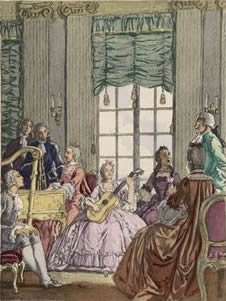
A musical evening at Carlisle House

A musical evening at Carlisle House

The ball on Feb. 26, 1770

…Mrs. Cornelys gave a magnificent fête to some 800 maskers. Walpole devotes great part of a long letter to a description of this masquerade, at which he was present.

Our civil war has been lulled asleep by a Subscription Masquerade, for which the House of Commons literally adjourned yesterday. Instead of Fairfax’s and Cromwells, we have had a crowd of Henry the Eighths, Wolseys, Vandykes, and Harlequins; and because Wilkes was not mask enough, we had a man dressed like him, with a visor in imitation of his squint, and a Cap of Liberty on a pole… The ball was last night at Soho; and, if possible, was more magnificent than the King of Denmark’s…

…The mob was beyond all belief: they held flambeaux to the windows of every coach and demanded to have the masks pulled off and put on at their pleasure, but with extreme good humor and civility. I was with my Lady Hertford and two of her daughters in her coach: the mob took me for Lord Hertford, and huzzaed and blessed me! One fellow cried out, “Are you for Wilkes?” Another said, “D—n you, you fool, what has Wilkes to do with a masquerade?”

Among the company were Lady Waldegrave, Lady Pembroke, the Duchess of Hamilton, Mrs. Crewe, Mrs. Hodges, Lady Algeria Carpenter, &c. The characters assumed were very eccentric. Sir R. Phillips appeared as “a double man,” half-miller, half chimney-sweeper. The Earl of Carlisle figured as a running footman; Mr. James, the painter, as Midas. The Duke of Devonshire was “very fine, but in no particular character.” And “Lord Edg—b, in the character of an old woman, was full as lovely as his lady.” The ladies were superbly dressed. “The Countess Dowager of Waldegrave wore a dress richly trimmed with beads and pearls, in the character of Jane Shore.” “The Duchess of Bolton, in the character of Diana, was captivating.” “Lady Stanhope, as Melpomene, was a striking fine figure.” “Lady August Stuart, as a Vestal, and Lady Caroline as a Fille de Patmos, showed that true elegance may be expressed without gold and diamonds.” “The Countess of Pomfret, in the character of a Greek Sultana, and the two Miss Fredericks, who accompanied her, as Greek slaves, made a complete group;” and to eclipse all, “Miss Moncton, daughter to Lord Galway, appeared in the character of an Indian Sultana, in a robe of cloth of gold and a rich veil. The seams of her habit were embroidered with precious stones, and she had a magnificent cluster of diamonds on her head: the jewels she wore were valued at 30,000l.”
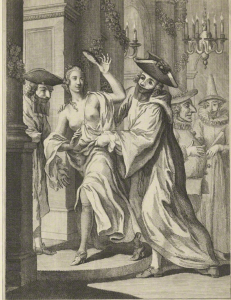
BIGAMOUS DUCHESS OF CHUDLEIGH

The Bigamous Duchess of Kingston

An “opera strife” leads to bankruptcy

In the following year, 1771, Mrs. Cornelys got embroiled in an opera strife. Walpole writes, Feb. 22, 1771: “Our most serious war is between two Operas. Mr. Hobart, Lord Buckingham’s brother, is manager of the Haymarket. Last year he affronted Guadagni, by preferring the Zamperina, his own mistress, to the singing hero’s sister. The Duchess of Northumberland, Lady Harrington, and some of the great ladies, took up the brother, and without a license erected an opera for him at Madame Cornelys’s… Mr. Hobart began to starve, and the managers of the theatre were alarmed. To avoid the Act, she pretended to take no money, and had the assurance to advertise that the subscription was to provide coals for the poor, for she has vehemently courted the mob, and succeed in gaining their princely favour. She then declared her masquerades were for the benefit of commerce.… At last, Mr. Hobart informed against her, and the Bench of Justices, have pronounced against her. Her opera is quashed, and Guadagni… is not only fined, but was threatened to be sent to Bridewell.

Mrs. Cornelys’s masquerades were characterized not only by indecency, but also by mockery of solemn feelings and principles… The lessees of the theatre, injured by her popularity, opposed her; and she was convicted before Sir John Fielding for performing dramatic entertainments without a license.… Next, bills of indictment were preferred to the grand jury, insinuating of Mrs. Cornelys “that she does keep and maintain a common disorderly house, and did permit and suffer diverse loose, idle, and disorderly persons, as well men as women, to be and remain the whole night, rioting and otherwise misbehaving themselves.” In November following, appeared in the bankrupt list of the London Gazette, “Teresa Cornelys, Carlisle House, St. Anne, Soho, dealer.”
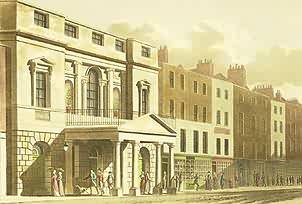
Pantheon_from_Papworth's_Select_Views_1816

The Pantheon, one of the competitors of Mrs. Cornelys’s that eventually caused her downfall

Mrs. Cornelys’s last stand

Nevertheless, Mrs. Cornelys resumed her revels here with great spirit in 1776. Two years later, Carlisle House was again advertised to be sold by private contract…

…Mrs. Cornelys attempted to retrieve her fortunes in various places; one being in a large detached mansion, known as Knightsbridge Grove, in Porter’s Lane, approached through a fine avenue of trees from the highway. At length, in 1785, Mrs. Cornelys gave up her precarious trade. “Ten years after,” says Davis’s Memorials of Knightsbridge, “to the great surprise of the public, she reappeared at Knightsbridge as Mrs. Smith, a retailer of asses’ milk. A suite of breakfast-rooms was opened; but her former influence could not be recovered.” The speculation failed; and at length she was confined in the Fleet Prison, where she died August 19, 1797.

In the literature of the day

Murphy, in his Epilogue to Zobeide, 1771, refers to her popularity:

Oh farewell!

For her each haunt that charms a modern belle!

Adieu, Almack’s! Cornelys! Masquerade!

Sweet Ranelagh! Vauxhall’s enchanting shade!

Combe, in his satire, The Diobalady, 1777, thus severely castigates the licentiousness of the amusements:

The ready ministers of hell’s commands, Obedient, fly and take their several stands

At Court,  Cornelys’, and the Coterie;

Where vice, more vicious by effrontery,

Fearless, unblushing, braves the eternal laws

Of God and man, to aid the devil’s cause.

Note: Teresa Cornelys was one of the mistresses of the famous lover, Casanova, to whom she bore a child.
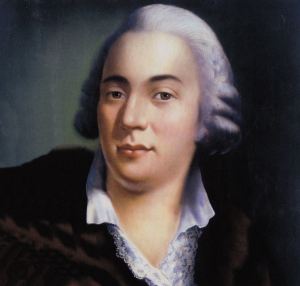
casanova-tour

Giacomo Girolamo Casanova


Romance of London Series

  1. Romance of London: The Lord Mayor’s Fool… and a Dessert
  2. Romance of London: Carlton House and the Regency
  3. Romance of London: The Championship at George IV’s Coronation
  4. Romance of London: Mrs. Cornelys at Carlisle House
  5. Romance of London: The Bottle Conjuror
  6. Romance of London: Bartholomew Fair
  7. Romance of London: The May Fair and the Strong Woman
  8. Romance of London: Nancy Dawson, the Hornpipe Dancer
  9. Romance of London: Milkmaids on May-Day
  10. Romance of London: Lord Stowell’s Love of Sight-seeing
  11. Romance of London: The Mermaid Hoax
  12. Romance of London: The Bluestocking and the Sweeps’ Holiday
  13. Romance of London: Comments on Hogarth’s “Industries and Idle Apprentices”
  14. Romance of London: The Lansdowne Family
  15. Romance of London: St. Margaret’s Painted Window at Westminster
  16. Romance of London: Montague House and the British Museum
  17. Romance of London: The Bursting of the South Sea Bubble
  18. Romance of London: The Thames Tunnel
  19. Romance of London: Sir William Petty and the Lansdowne Family
  20. Romance of London: Marlborough House and Sarah, Duchess of Marlborough
  21. Romance of London: The Duke of Newcastle’s Eccentricities
  22. Romance of London: Voltaire in London
  23. Romance of London: The Crossing Sweeper
  24. Romance of London: Nathan Mayer Rothschild’s Fear of Assassination
  25. Romance of London: Samuel Rogers, the Banker Poet
  26. Romance of London: The Eccentricities of Lord Byron
  27. Romance of London: A London Recluse

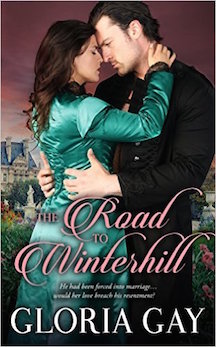
Gloria Gay: The Road to Winterhill

Interview with Gloria Gay

Susana: What inspired you to start writing?

Gloria: I was given a book as a gift at school. Later the Nancy Drew, Dana Girls and Judy Bolton books inspired me to write, but I thought people were born writers and I didn’t know if I was born to be a writer. A silly idea but that’s what I thought at the time.

Susana: How long have you been writing?

UntitledGloria: I began to think seriously about writing when I became obsessed with Rebecca by Daphne DuMaurier and I thought I’d write a gothic novel similar to Rebecca.

Susana: What advice would you give to writers just starting out?

Gloria: Read read read the kind of book you would like to write. It’s important for a person who wants to be a writer to understand that there is a structure to a novel and if you don’t learn how to do this you get your reader either bogged down with too much description at the beginning or the reader becomes lost with too many characters, etc. A person wanting to become a writer should read a few books on plot, structure, characterization, etc. A few courses on writing would also be of immense help. Also, join a writers club.

Susana: Do you ever suffer from writer’s block, if so, what do you do about it?

Gloria: I suffer from what I call daily writer freeze rather than writer’s block. Each day I have to force myself to start, by doing the following: I read the last paragraph and I either add to it or re-write it. Once I get going, I’m all right.

Susana: What comes first, the plot or the characters?

Gloria: For me the characters have always come first for inspiration. Usually either a scene pops up in my mind without any effort on my part or I think of a character that has started to “call” at me and I make up a scene in my mind. So it’s always a scene or character, never plot unless small slivers of an idea for the plot are tangled up in the character because of the way the character is.

I’m definitely a pantser, as you can see from the previous question.

I’ve never outlined a plot before writing a book. I do start writing the synopsis and list of characters once I have some of the book written but only so that I will have an idea of where I’m going and will not get tangled up with the characters.

Susana: Tell us something about your newest release this is not in the blurb.

Gloria: My heroine is an ugly duckling, a timid, kind, sweet girl who is her mother’s victim and this kind of heroine is not popular with readers of Regencies in the United States, unfortunately. In England they seem to love ugly duckling heroines because I got a few five-star reviews right away and the book is doing well there.

The heroines of all my other Regencies are beautiful and feisty, some spectacularly so. These are the kinds of heroines Regency readers like although this kind of heroine does not reflect real life. But I guess readers prefer to identify with beautiful and feisty. There are some reviewers in Amazon who are the mirror bullies of the school ground and they are allowed to do so by the hide-behind the fake name system.

Thankfully, blog reviewers stand behind their review with their name. This, to me is a breath of fresh air that is going through the publishing world.

cover

About The Road to Winterhill

In the silence of St. George’s Cathedral, the clergyman’s voice rang out unnaturally loud: “Do you, Richard Branston, Earl of Berrington, take this woman, Belinda Presleigh, of Hunsley Manor, as your lawful wedded wife, to love and honor until death do you part?”

The few wedding guests crowding around them waited for Berrington’s response which was long in coming. Belinda saw their smirks and heard their muffled laughter.

She felt the sting of tears in her eyes at the long pause and realized she could not undo what she had done. The awful deed had come to roost in her heart.

She wished he would say no. She’d rather be jilted than that awful hesitation in which everyone looked at each other, some with smirks of “I told you so.”

Finally, Lord Berrington’s voice rang out—loud, impatient and clear: “I do.”

Amazon

About the Author

Author Gloria Gay’s love of painting and writing has always been entwined in her life. Her debut novel, First Season, earned a four-star review from Romantic Times Book Review. She recently published a new, expanded version of First Season under the title, Love in a Dangerous Season.

Recently, Boroughs Publishing Group published her Regency historical romances, Scandal at Almack’s and Lovely Little Liar.

Gloria also published a new edition of Canceled Courtship under the title, Kissed in the Dark, as well as Enchanted Summer, a Regency romance and A Bridge Through Time, a time travel romance.

Gloria and her husband Enrique, an architect, have three grown children and six grandchildren and they are lucky to have them all living near them in San Diego, California.

FacebookTwitter


Romance of London: The Championship at George IV’s Coronation

Romance of London: Strange Stories, Scenes And Remarkable Person of the Great Town in 3 Volumes

John Timbs

John Timbs (1801-1875), who also wrote as Horace Welby, was an English author and aficionado of antiquities. Born in Clerkenwell, London, he was apprenticed at 16 to a druggist and printer, where he soon showed great literary promise. At 19, he began to write for Monthly Magazine, and a year later he was made secretary to the magazine’s proprietor and there began his career as a writer, editor, and antiquarian.

This particular book is available at googlebooks for free in ebook form. Or you can pay for a print version.

The Championship of England*

ScrivelsbyCourt

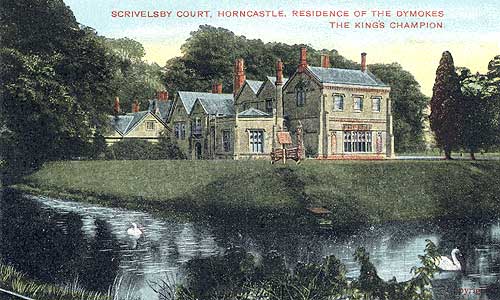
The chivalrous and dignified office of Champion of England at our coronations is conferred by the feudal manor of Scrivelsby, about two miles south of Horncastle, on the road towards Boston in Lincolnshire. By the holding of this manor, the ancient family of the Dymokes have derived the office of champion to the sovereigns of England…

edwardvi

The manor of Scrivesby, which was granted by the Conqueror to Robert de Marmion (Lord of Fontenoy, in Normandy), to be held by grand sergeantry, “to perform the office of champion at the King’s coronation.” The Marmians, it is said, where hereditary champions to the Dukes of Normandy prior to the conquest of England.

Dymock Champion

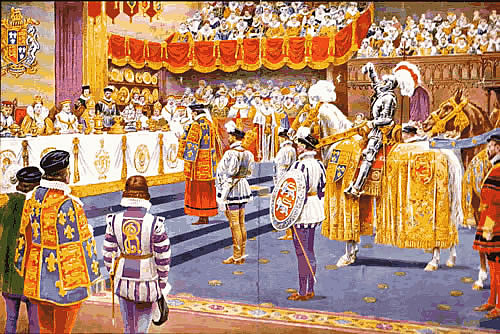
The Kings Champion in full armor in the banqueting hall at the coronation of Queen Elizabeth I

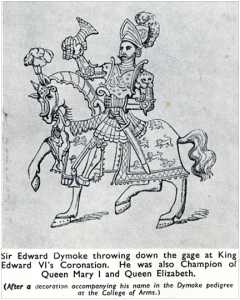
Sir John Dymoke served as Champion of England at the coronation of Richard II. Sir Robert Dymoke did so for Richard II, Henry VII, and Henry VIII. Sir Edward Dymoke was champion for Edward VI, Mary I, and Elizabeth I. John Dymoke was champion for George III, and when the time came for George IV’s coronation, the honor went to his grandson, Sir Henry Dymoke, due to the fact that his son, Rev. John Dymoke, was a cleric.

0020 16.tif

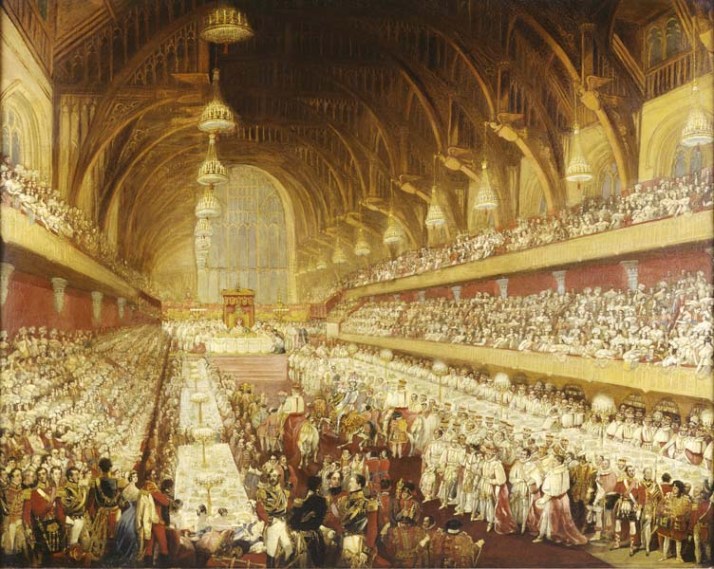
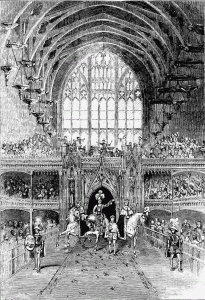
George IV’s coronation banquet was held in Westminster Hall in 1821; it was the last such banquet held.

The entry of the champion at the close of the Banquet in Westminster Hall, at the coronation of George IV., was a splendid spectacle. Haydon, the historical painter, thus describes this ancient feudal ceremony which he witnessed: “The hall-doors were opened, and the flower-girls entered, strewing flowers. The distant trumpets and shouts of the people, the slow march, and at last the appearance of the King, crowned and under a golden canopy, and the universal burst of the assembly at seeing him, affected everybody… After the banquet was over, came the most imposing scene of all, the championship. Wellington, in his coronet, walked down the hall, cheered by the officers of the Guards. He shortly returned, mounted, with Lords Anglesey [formerly the Earl of Uxbridge] and Howard. They rode gracefully to the foot of the throne, and then backed out. The hall doors opened again; and outside, in twilight, a man in dark-shadowed armor appeared against the shining sky. He then moved and passed into darkness under the arch, and suddenly Wellington, Howard, and the champion stood in full view, with doors closed behind them. This was certainly the finest sight of the day. The herald then read the challenge; the glove was thrown down. They all then proceeded to the throne.”

championship

Coronation of George IV, Westminster Hall: the Champion’s Challenge

Sir Walter Scott, in his letter describing the coronation, says, “The Duke of Wellington, with all his laurels, moved and looked deserving the baton, which was never grasped by so worthy a hand. The marquess of Anglesey showed the most exquisite grace in managing his horse, notwithstanding the want of his limb, which he left at Waterloo. I never saw so fine a bridle-hand in my life, and I am rather a judge of horsemanship. Lord Howard’s horse was worse bitted than those of the two former noblemen, but not so much as to derange the ceremony of returning back-out of the hall. The champion was performed (as of right) by young Dymoke, a fine-looking youth, but bearing, perhaps a little too much the appearance of a maiden knight to be the challenger of the world in a King’s behalf. He threw down his gauntlet, however, with becoming manhood, and showed as much horsemanship as the crowds of knights and squires around him would permit to be exhibited. On the whole, this striking part of the exhibition somewhat disappointed me, for I would have had the champion less embarrassed by his assistants, and at liberty to put his horse on the grand pas; and yet, the young Lord of Scrivelsby looked and behaved extremely well.”

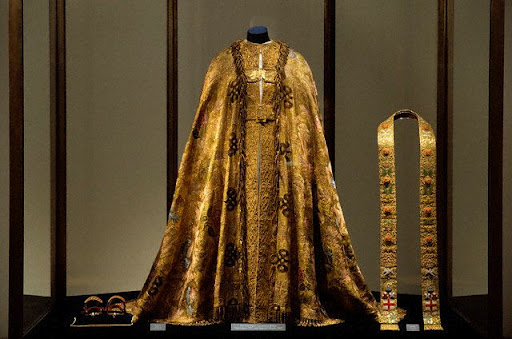
Supertunica-stole-and-spurs

The Imperial Mantle was made for the coronation of George IV in 1821 and is designed in the style of earlier ones worn by the Tudor and Stuart monarchs, it is worn over the Supertunica and the Stole. The Imperial Mantle is made of gold cloth, lined with red silk and woven with colored threads designed with a pattern of crowns, eagles, fleur-de-lis, roses, thistles and shamrock held together at the chest with a gold clasp in the form of an eagle.

*George IV’s was the last coronation to include a championship.


Romance of London Series

  1. Romance of London: The Lord Mayor’s Fool… and a Dessert
  2. Romance of London: Carlton House and the Regency
  3. Romance of London: The Championship at George IV’s Coronation
  4. Romance of London: Mrs. Cornelys at Carlisle House
  5. Romance of London: The Bottle Conjuror
  6. Romance of London: Bartholomew Fair
  7. Romance of London: The May Fair and the Strong Woman
  8. Romance of London: Nancy Dawson, the Hornpipe Dancer
  9. Romance of London: Milkmaids on May-Day
  10. Romance of London: Lord Stowell’s Love of Sight-seeing
  11. Romance of London: The Mermaid Hoax
  12. Romance of London: The Bluestocking and the Sweeps’ Holiday
  13. Romance of London: Comments on Hogarth’s “Industries and Idle Apprentices”
  14. Romance of London: The Lansdowne Family
  15. Romance of London: St. Margaret’s Painted Window at Westminster
  16. Romance of London: Montague House and the British Museum
  17. Romance of London: The Bursting of the South Sea Bubble
  18. Romance of London: The Thames Tunnel
  19. Romance of London: Sir William Petty and the Lansdowne Family
  20. Romance of London: Marlborough House and Sarah, Duchess of Marlborough
  21. Romance of London: The Duke of Newcastle’s Eccentricities
  22. Romance of London: Voltaire in London
  23. Romance of London: The Crossing Sweeper
  24. Romance of London: Nathan Mayer Rothschild’s Fear of Assassination
  25. Romance of London: Samuel Rogers, the Banker Poet
  26. Romance of London: The Eccentricities of Lord Byron
  27. Romance of London: A London Recluse

Alanna Lucas: Waltzing with the Earl

Interview with Alanna Lucas

Susana: What is your favorite food? Least favorite? Why?

AlannaAlanna: My favorite food is pasta. Well, pasta, chocolate, and wine- but not altogether 😉 Chutney would be my least favorite. Let’s just say that chutney and a ten-hour flight are not a good combination and leave it at that.

Susana: What has been your biggest adventure to date?

Alanna: Marriage and children. There is never a dull moment and we have had some wonderful family adventures!

Susana: Is there a writer you idolize? If so, who?

Alanna: I adore Sabrina Jeffries! She is the nicest, sweetest person, and an awesome writer!

Susana: What is the one modern convenience you can’t do without?

Alanna: All the conveniences one would find in a bathroom. Especially hot running water.

Susana: Do you have a favorite quote or saying?

Alanna: “The world is a book, and those who do not travel read only a page” ~ St. Augustine

Susana: What are you reading now?

Alanna: I am rereading Lord of Scoundrels by Loretta Chase. Such a great book!

Susana: What advice would you give to writers just starting out?

Alanna: Write, take classes, write, join a professional writer’s organization- like RWA, and write. Oh, and never give up 🙂

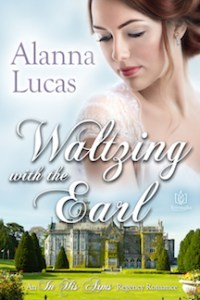
Waltzing with the Earl copy

About Waltzing with the Earl

Believing he is cursed, Tristram, Lord Trevena, the Earl of Longstone, agrees to do just one favor for a friend, to dance with the man’s sister, but the beautiful and headstrong Isabel Albryght will settle for no less than claiming his lonely heart.

A Prophecy Foretold

Raised by her doting older brother, Isabel Albryght grew up cosseted and protected. She enjoyed her life in the country, her books, and her freedom. Then her brother married. Within months Isabel’s best friend married. It seemed it was time for Isabel to marry, too. Socially awkward and a bit too keen for most of the ton, Isabel proceeded to have the most horrible season on record… until she was approached by Tristram, the Earl of Longstone.

Two dances. That was all Tristram could offer anyone when considering his family curse, which had taken all he loved in the last ten years, so his promise to the beautiful Miss Albryght’s brother was simply that. The ton would soon see she was a desirable partner, her awkwardness would fade and other young swains would beat feet to her doorstep. But then he held her in his arms, and the delightful Isabel became his beating heart. Headstrong and full of passion, she believed she might waltz them away from Death. She alone could tempt him to try.

AmazonSmashwordsAReBoroughs

Excerpt

The temperature in the room rose by several degrees—it was positively sweltering. Isabel did not know how much longer she could tolerate standing in the midst of hell, surrounded by a mixture of unidentifiable odors and loud boisterous laughter. She thought her head would explode.

Closing her tired eyes, she brought her gloved hand to her temple. Isabel could feel her body sway, but was unable to stop the motion. She could not even gather her wits about her to stamp down, or even beg, the feelings to cooperate. Isabel could sense another mishap was forthcoming, which further added to her distress. And she had been doing so well.

A gentle hand came to her elbow. “Allow me to accompany you onto the balcony for some fresh air, Miss Albryght.” Lord Trevena’s voice broke through the haze. His tone was soft and full of concern.

Isabel opened her eyes; they felt thick and heavy, and still out of focus. Tristram somehow managed to maneuver her through the crush without bumping into anyone. The moment they reached the unoccupied balcony, the cool evening breeze cleared the haziness Isabel had been fighting in her head.

They strolled to the edge of the balcony, partly hidden within the shadows, and clear of any curious gossipmongers. The garden beyond was concealed in darkness, but the lingering scent of blooming roses wafted through the air. Tristram released his gentle hold on her arm. The absence of his hand made her heart lurch, wanting more.

Isabel turned to face him. Even in the dim light, his clear blue eyes sparkled like stars in the night. She struggled to find the words, but when they finally came, they would not stop.

“Thank you for coming to my aid. I am quite recovered now. The room was quite warm and the noise…”

“Isabel,” Tristram said in a deep husky tone. Her name on his lips sent a jolt of excitement through her body.

Taking a step closer, he brought his hand to her face, his gloved thumb dancing intimately across her cheek. Her heart pounded against her ribs, practically stealing her breath.

“Lord Trevena.” His name exited her lips in a breathy gasp.

He bent his head and whispered his name across her cheek. “Tristram.”

Isabel could not imagine anything more sensual than this moment. She lifted her chin, and their cheeks brushed. His lips were so close, but still too far away. His warm breath teased her senses. Closing her eyes, she waited for his kiss.

About the Author

Alanna Lucas grew up in Southern California, but always dreamed of distant lands and bygone eras. From an early age she took interest in art, history, and travel, and enjoys incorporating those diversions into her writing. However, she believes that true love is the greatest source of inspiration and is always an adventure.

Alanna makes her home in California where she spends her time writing historical romances, dreaming of her next travel destination, spending time with family, and staying up too late indulging in her favorite past time, reading.

WebsiteFacebook Twitter

Boroughs Author Page • Amazon Author Page

Romance Books 4 Us

Romance of London: Carlton House and the Regency

Romance of London: Strange Stories, Scenes And Remarkable Person of the Great Town in 3 Volumes

John Timbs

John Timbs (1801-1875), who also wrote as Horace Welby, was an English author and aficionado of antiquities. Born in Clerkenwell, London, he was apprenticed at 16 to a druggist and printer, where he soon showed great literary promise. At 19, he began to write for Monthly Magazine, and a year later he was made secretary to the magazine’s proprietor and there began his career as a writer, editor, and antiquarian.

This particular book is available at googlebooks for free in ebook form. Or you can pay for a print version.

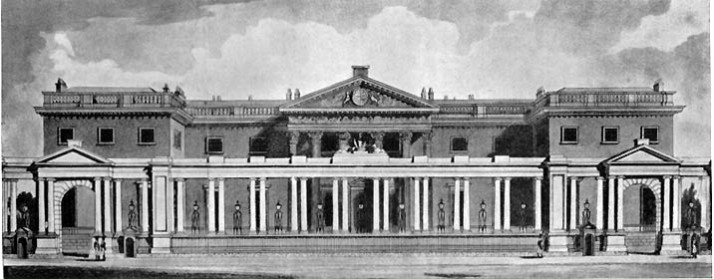
Carlton1

The frontage of Carlton House

Carlton House and the Regency

The Prince Regent’s residence at Carlton House is another place frequently mentioned in historical fiction that is no longer in existence. I had heard that it burned down, but Timbs reports the following:

Carlton House having grown dingy in its fittings, and its history prompting many disagreeable associations, the King projected the enlargement and eventually the rebuilding of Buckingham House; Carlton House was taken down in 1826; the columns of the portico have been transferred to the National Gallery. The exact site of this palace of a century is now the opening between the York Column and the foot of Regent Street.

Plan_of_Carlton_Palace_in_1821

Plan showing the main floor and the suite of reception rooms on the lower ground floor

 Origins

Carlton House, as a royal palace, existed for nearly a century, and was the scene of many important state events, as well as of much prodigality and bad taste. The house, which fronted St. Alban’s Street and St. James’s Park, was originally built by Henry Boyles, Baron Carlton, on a piece of ground leased to him by Queen Anne, in 1709, at 35l. a year; it is described as “parcel of the Royal Garden, near St. James’s Palace,” and “the wood-work and wilderness adjoining.” From Lord Carlton the house and grounds descended to his nephew, Lord Burlington, the architect: he bested it, in 1732, upon his mother, the Countess Dowager of Burlington, who, in the same year, transferred it to Frederick, Prince of Wales, father of George III. The House was a building of red brick, with wings, and was afterwards cased with stone by Sir Robert Taylor. In Lord Burlington’s time, the grounds, which ran westward as far as Marlborough House, were laid out by Kent, in imitation of Pope’s garden at Twickenham. There is a large and fine engraving of the grounds by Woollett; bowers, grottoes, and terminal busts abounding.

Under the Prince Regent (George IV)

When, in 1783, the Prince of Wales, afterwards George IV, was allowed a separate establishment, Carlton House was assigned for his residence, and Holland, the architect, was called in, and added the chief features,—the Ionic screen and the Corinthian portico, fronting Pall Mall. [Horace] Walpole writes to the Countess of Ossor, in the autumn of 1785:

We went to see the Prince’s new palace in Pall Mall; and were charmed. It will be the most perfect in Europe. There is an august simplicity that astonished me. You cannot call it magnificent: it is the taste and propriety that strike. Every ornament is at a proper distance and not one too large, but all delicate and now, with more freedom and variety than Greek ornaments… As Gobert [French architect]… designed the decorations, I expected a more tawdry assemblage of fantastic vagaries than in Mrs. Cornelys’s masquerade-rooms. [Teresa Cornelys, operatic soprano, held many fashionable gatherings at Carlisle House, had many lovers, and bore a child of Casanova.]… There are three most spacious apartments, all looking on the lovely garden, a terrace, the state apartment, and an attic. The portico, vestibule, hall, and staircase will be superb, and, to my taste, full of perspectives; the jewel of all is a small music-room, that opens into a green recess and winding walk of the garden… I forgot to tell you how admirably all the carving, stucco, and ornaments are executed; but whence the money is to come I conceive not—all the tin mines of Cornwall would not pay a quarter. How sick one shall be after this chaste palace, of Mr. Adam’s [Robert Adam, popular 18th century architect] gingerbread and sippets of embroidery!

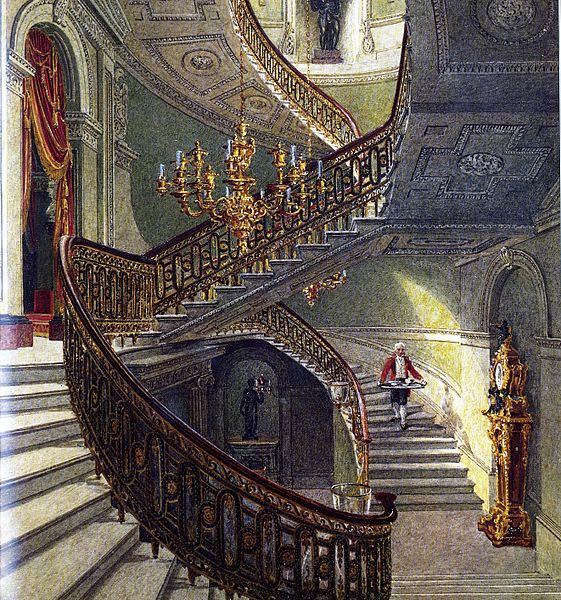
561px-CarltonStaircase

The main staircase, from Pyne’s Royal Residences (1819)

Timbs’s later assessment was not so kind. He says that the conservatory, “imitated from Henry VII’s Chapel, was a failure,” the blue velvet draperies “heavy and dark”; and the “Gothic dining-room was poor.” He found the armory to be “the most curious collection of arms in the world, [filling] four rooms.”

Here was John Hamden’s sword, said to be the work of Cellini; and a golden throne of the King of Candy was backed with a sun of diamonds and precious stones. Here, too, were arms from all nations—caps, boots, spurs, turbans, shields, bows, dresses, models of horses, helmets, sabres, swords, daggers, canopies, palanquins, guns, coats of mail, and other costly presents from all parts of the world.

In the plate-room were some fine specimens of King Charles’s plate; other plate was disposed in the centre of the room, in columns of gold and silver plates, and dishes, and drawers filled with gold and silver knives, forks, spoons, &c.…

The palace was superbly fitted for the Prince’s marriage: 26,000l. Was voted for furnishing, 28,000l. For jewels and plate, and 27,000l for the expense of the marriage. Here was born the Princess Charlotte, January 16, 1796, and the baptism took place on February 11; here, also, the Princess was married, May 2, 1816.

The Fête of June 19, 1811

The most magnificent State event of the Regency was the event given at Carlton House on June 19, 1811, being then the only experiment ever made to give a supper to 2,000 of the nobility and gentry. Covers were laid for 400 in the palace, and for 1,600 in the pavilions and gardens. The fête was attended by Louis XVIII, and the French princes then in exile; and a vast assemblage of beauty, rank, and fashion. The saloon at the foot of the staircase represented a bower with a grotto, lined with a profusion of shrubs and flowers. The grand table extended the whole length of the conservatory, and across Carlton House to the length of 200 feet. Along the centre of the table, about six inches above the surface, a canal of pure water continued flowing from a silver fountain, beautifully constructed at the head of the table. Its banks were covered with green moss and aquatic flowers; gold and silver fish swam and sported through the bubbling current, which produced a pleasing murmur where it fell, and formed a cascade at the outlet. At the head of the table, above the fountain, sat His Royal Highness the Prince Regent on a plain mahogany chair with a feather back. The most particular friends of the Prince were arranged on each side. They were attended by sixty servitors; seven waited on the Prince, besides six of the King’s, and six of the Queen’s footmen, in their state liveries, with one man in a complete suit of ancient armour.

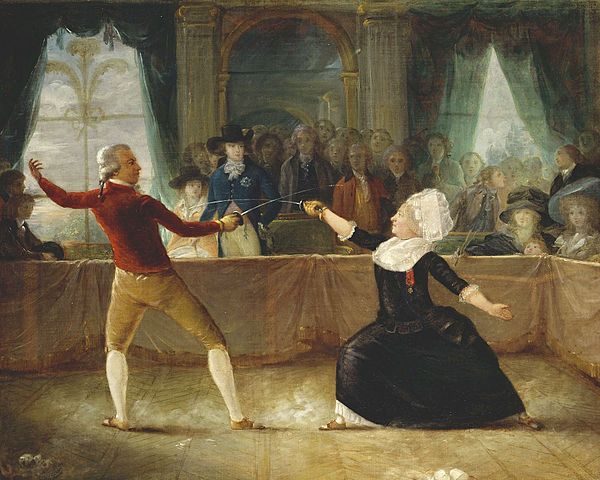
600px-Saint-George_D'Eon_Robineau

Fencing Match between Chevalier de Saint-Georges and ‘La chevalière D’Eon’ on April 9, 1787 in Carlton House, painting by Charles Jean Robineau

Historical tidbit

Timbs mentions that the portico of Carlton House was the site of the “first public application of the newly-invented lighting by gas.”

Author’s Reflections

I’m thinking the fête might come in hand for a scene in my next story—as an example of the decadence and excess of the Prince Regent. What do you think?


Romance of London Series

  1. Romance of London: The Lord Mayor’s Fool… and a Dessert
  2. Romance of London: Carlton House and the Regency
  3. Romance of London: The Championship at George IV’s Coronation
  4. Romance of London: Mrs. Cornelys at Carlisle House
  5. Romance of London: The Bottle Conjuror
  6. Romance of London: Bartholomew Fair
  7. Romance of London: The May Fair and the Strong Woman
  8. Romance of London: Nancy Dawson, the Hornpipe Dancer
  9. Romance of London: Milkmaids on May-Day
  10. Romance of London: Lord Stowell’s Love of Sight-seeing
  11. Romance of London: The Mermaid Hoax
  12. Romance of London: The Bluestocking and the Sweeps’ Holiday
  13. Romance of London: Comments on Hogarth’s “Industries and Idle Apprentices”
  14. Romance of London: The Lansdowne Family
  15. Romance of London: St. Margaret’s Painted Window at Westminster
  16. Romance of London: Montague House and the British Museum
  17. Romance of London: The Bursting of the South Sea Bubble
  18. Romance of London: The Thames Tunnel
  19. Romance of London: Sir William Petty and the Lansdowne Family
  20. Romance of London: Marlborough House and Sarah, Duchess of Marlborough
  21. Romance of London: The Duke of Newcastle’s Eccentricities
  22. Romance of London: Voltaire in London
  23. Romance of London: The Crossing Sweeper
  24. Romance of London: Nathan Mayer Rothschild’s Fear of Assassination
  25. Romance of London: Samuel Rogers, the Banker Poet
  26. Romance of London: The Eccentricities of Lord Byron
  27. Romance of London: A London Recluse

Em Brown: Master and Temptress Erotic Historical Trilogy

Who was G#?

In Book 3 of the Master and Temptress Erotic Historical trilogy, Granville Sharp makes a “cameo” appearance at a key time for the hero, Charles Gallant. Gallant is standing for Parliament, and the issue of slavery puts him between a rock and a hard place as he attempts to secure the endorsement of key figures in the community, whose support can assure him victory.

The year before, England had formally abolished the slave trade but left the institution of slavery intact in her colonies. At the time, England was the largest slave trafficker in the world. Granville Sharp played a significant role in leading the campaign to abolish the slave trade.

Born into a musical family in 1735, the son of an Archdeacon, Sharp loved to debate and discuss theology. He became active on the issue of slavery after coming across Jonathan Strong, a young black slave beaten so badly that he had to spend four months in the hospital. Sharp and his brother paid for Strong’s medical bills. Sharp started to study English law and “could not believe the law of England was really so injurious to natural rights.”

In 1772, a slave named James Somerset, who had run away from his master, asked Sharp for help. Sharp worked with Somerset’s lawyers, and the case was ruled in Somerset’s favor. The case was a pivotal one in the history of abolition because it effectively set slaves free in English territory (but not her colonies) because Lord Mansfield, the Chief Justice of the King’s Bench, wrote that English law, absent an act of Parliament, did not provide for slavery.

A few years later, Sharp was approached by Quakers, who had been active in the cause of abolition but barred from full participation in English society. The Quakers needed Anglican support, and Sharp was an obvious choice. In 1787, nine Quakers and three Anglicans formed The Society for Effecting the Abolition of the Slave Trade. Working with William Wilberforce, a young MP tapped by Pitt the Younger to lead the cause of abolition in Parliament, Sharp and the Society campaigned for 20 years before Parliament finally passed The Slave Trade Act 1807.

Sharp, who sometimes signed his name “G#”, passed away in 1813 and did not live to see the full abolition of slavery in 1833. A memorial tablet erected for Sharp can be seen in Westminster Abbey.

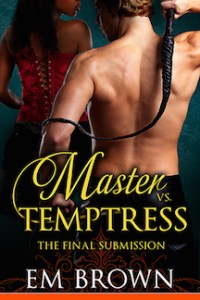
Master vs. Temptress: The Final Submission (Book 3) is available for only $0.99 until February 28th. Plus, you can now get Seducing the Master (Book 1) for FREE. Click here to get your copy today.

EmBrown_MasterVsTemptresstheFinalSubmission_200

About The Master & Temptress Trilogy

“Ravage Me.”

No man has ever resisted the charms of Miss Terrell before, but Master Gallant refuses to grant her request and have his way with her.

Miss Terrell is spoken for by Sir Arthur, a man with a dubious past but whose wealth and influence hold the key to Charles Gallant’s bid for Parliament. Without Sir Arthur’s support, Charles will not realize his lifelong ambition to win election and succeed where his father before him had failed.
But Terrell cannot quell her scorching desire for Master Gallant, whose deft hand and command of rope bondage inflame her deepest, darkest cravings. She will tempt the Master to surrender. Only love can stop her, but it will devastate them both.

READER ADVISORY: This Regency-set erotic romance contains themes of dominance and submission, BDSM elements, and other forms of wicked wantonness.

Start this epic romance for FREE with Seducing the Master. Click here to get your free ebook today.

Excerpt from Seducing the Master

He pinned her with a solemn stare. “Behave yourself, Miss Terrell, or I will remove you by force.”

“I should like nothing more than to receive your punishment, Master Gallant.”

He inhaled sharply. The saucy jade. Catching her off-guard with a quick movement, he wrapped his arm about her waist and whirled her over to the other side of the doorframe. She landed against the wall with a soft thud. Disengaging himself, he grabbed the handle of the door and pulled, intending to depart without his usual civility.

To his surprise, the door did not open. At first he thought it to be stuck, but then he noticed that the key was missing from the lock. He turned to look at Miss Terrell, whose lips curled in a slight but telling grin.

He could hardly believe the woman—the chit. Did she truly intend to hold him hostage?

“Produce the key, Miss Terrell,” he commanded.

She returned a smoldering stare. “Dominate me first. Do unto me as you had done to Mistress Scarlet.”

He felt his nostrils flare. He needed no second reminders of her, especially from Miss Terrell, who now tested his patience much like Greta had, but for wholly different purposes.

“You think impudence will gain you what you seek?” he asked.

She leaned toward him. “If my impudence displeases you, then punish me for it. Punish me…hard.”

He stared at her in disbelief. No woman had ever made such a request of him. He wanted to reiterate that she knew not what she spoke. She had witnessed but one instance of the punishment he had applied to Miss Greta.

As if guessing his thoughts, she added, “I can withstand anything you desire to do to me, Master Gallant.”

“That is a bold and foolhardy statement. You know nothing of what I am capable.”

Pressing herself back against the wall, she cupped her breasts and caressed her ribs. “Prove me wrong. I dare you to.”

He shook his head. He was done with challenges.

“I vow I can endure more than Mistress Scarlet, more than any person of either sex. I could be the most perfect submissive for you.”

“Unlikely. You have already shown a penchant for misbehavior.”

“You could correct my waywardness.”

He frowned—because the prospect did not repulse him as he would have wanted it to.

“You need have no reservation with me,” she continued. “You would be free to unleash your full strength, to test the breadth of your wicked creativeness.”

His blood pumped forcefully through his veins at her words. “Miss Terrell, this tête-à-tête serves no purpose. I bid you desist from wasting your time as well as mine.”

Stepping forward, she grabbed the lapels of his coat and pulled herself closer to him. Lust burned like anger in her eyes, calling to a primal part of him that he could not ignore. Her skirts brushed against his legs, and her corset nearly touched where his hardened length was fast becoming visible.

“Then ravage me.”

She reached for his burgeoning erection, but, dropping his articles, he grasped both her wrists and pinned them above her head to the door behind.

“Miss Terrell, I am done with this tomfoolery. Produce the key.”

She squirmed a little in his hold. “I should be happy to, Master Gallant, after you have had your way with me. You cannot deny that you desire to do so.”

He pressed his lips together in a grim line. The scent of the pomade she used in her hair wafted into his nose once more. Their bodies were far too close together for comfort. She slid her leg along his. Holding her wrists aloft with one hand, he cupped her chin with the other and lifted her gaze to meet his eyes.

“The key, Miss Terrell,” he demanded, unable to keep the vexation from his voice.

She did not blink and demanded, equally hotly, “Ravage me.

Her words rang in his ears like a song of sirens. The air between them grew thin. With a frustrated grunt, he yanked her from the door and dragged her across the room to the sideboard where he kept the ropes.

GET THIS EBOOK (PLUS 3 MORE!) FROM EM BROWN BY CLICKING HERE.

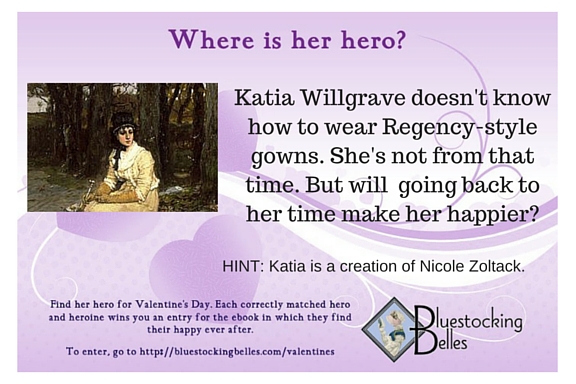
Bluestocking Belles Valentine Hunt

Find-my-valentine-768x384

Join the Bluestocking Belles Valentine hunt. Match the heroes with their heroines to be entered in a draw for their book. For entry details, see http://bluestockingbelles.com/valentines/ #BellesBrigade #Valentines #BellesInBlue

Zoltack Test of Time Katia

Zoltack MMM Stephen