Alina K. Field: The Marquess and the Midwife

Thank you, Susana, for hosting me today!

My Regency Christmas novella, The Marquess and the Midwife, tells the story of a Waterloo hero pursuing the woman he can’t forget, a woman who, by all the standards of polite society, has fallen out of his reach. After losing her position as a genteel companion in the home of a marquess, Ameline Dawes, the heroine of The Marquess and the Midwife, has taken up the practice of midwifery.

Prior to the late Georgian era, childbirth was generally the realm of women, though there were some men involved in the profession. The Chamberlen family of surgeons developed the use of obstetrical forceps and kept their family secret for 150 years. Another earlier male practitioner was a medical doctor, the Scottish physician, William Smellie. An 1876 annotated edition of Smellie’s Treatise on the Theory and Practice of Midwifery is available free on Google Books, and makes for fascinating reading if you’re researching this topic.

By the late eighteenth to early nineteenth century more and more male practitioners were invading this lucrative profession. Medical doctors or physicians did not provide hands-on care, so most of these man-midwifes or accoucheurs, were surgeons, like the man Ameline and her mentor call in to help with a difficult birth.

Ameline’s new profession has provided her with a purpose and a way of supporting her twin girls, and she doesn’t want to give it up, not even for the new marquess, the man who loved her, left her, and now is determined to win her back.

marquess-midwife-final-digital-copy

About The Marquess and the Midwife

Finding the woman he lost turned out to be easy. Winning her is another matter.

Once upon a time, the younger brother of a marquess fell in love with his sister’s companion. He was sent off to war, and she was just sent off, and they both landed in very different worlds.

Now Virgil Radcliffe has returned from his self-imposed exile on the Continent to take up his late brother’s title and discover the whereabouts of the only woman he’s ever loved.

Abandoned by her lover and dismissed by her employer, Ameline Dawes has found a respectable identity as a Waterloo widow, a new life as a midwife, and a safe, secure home for her twin girls. Called to London at Christmas to attend her benefactress’s lying-in, she finds herself confronted by an unexpected house guest–a man determined to woo her anew and win her again.

But, is loving the new Marquess of Wallingford a mistake Ameline cannot afford to repeat?

The Marquess and the Midwife is specially priced at 99 cents through December 31, 2016.

AmazonKoboiBooksBarnes & Noble

Excerpt

He released her and leaned back, and his shirt gaped around a starburst scar, corded and jagged right above his heart.

She gasped and reached to touch it, but he clasped her hand and pushed it away.

“Waterloo?” she whispered. “I’d heard you were wounded, but—”

“I survived,” he said in a tight voice.

Her lungs squeezed and her heart quickened. Had he? If so, it was just barely. He’d been stabbed or speared, or shot, and somehow, somehow, his great heart had carried on. This had been no minor wound. Virgil had suffered terribly.

“I want to see.” She pushed his hand away and grasped his collar. He grabbed for her hand, but she dodged him and ripped the fine cotton, rending the shirt down the front.

Ameline—”

“You have a trunk full of shirts. I want to see.” She knelt before him on the sofa, yanked the shirt down his arms, and studied his chest. Small cuts marked his side and his belly, but the mottled scar was the worst. It would have taken months to fully heal a wound like this from the inside out. He should have died.

Her vision blurred so she couldn’t see. But her hands, trained to examine a babe in the womb, they could see. She flattened her palms and set a course over the ridges knots, and hard ripples.

He surely had almost died. A world without Virgil, without his laughter, and his generally kind heart. He’d used her, true, as men did. It was in a man’s animal nature, wasn’t it? And she’d used him also, hadn’t she? Both of them grieving over his sister’s death, and comforting each other. And she was left with her girls, and things had turned out all right, hadn’t they?

Her hands cupped his shoulders and slipped over to his back. No scars there that she could feel. The ball, or saber, or… what else did men use to kill each other?… had not gone clean through. It had merely dredged a hole in his front and wreaked havoc inside him.

And nearly killed him.

She’d always pictured a wounded Virgil, binding up a minor slash and heading off to the Continent to charm actresses and diplomats’ wives, maybe taking a wife there himself, and bringing her back to breed pretty, cheerful children. Virgil, rich, content and happy.

How she’d wallowed in that vision.

The feel of the scarred skin melted away her resentment. Let him have that happy life with his marchioness and heirs. And perhaps, on a rare occasion, he could come down to Longview and visit his twins.

“Ameline.” Virgil’s breath touched her cheek.

Large hands cupped both of her hips.

Warmth spurted through her. Too late, she realized her error. She’d got too close again.

She pulled the sides of his shirt up, her gaze sliding over the rip and…

Right. He was fully erect. Of course he was.

Hot need shrieked inside her, and she battered it down and found her breath. “I apologize. My infernal curiosity.” She patted his shoulders and eased away.

His eyes had gone dark and feral, his lips parted like a hungry man ready to chomp down on a long-awaited meal. Inside, she melted more.

She took in a great breath. She must keep him talking. “How did the wound happen?” she asked.

His eyes shuttered and he yanked her hard against him, smashing his lips to hers.

About the Author

Alina K. Field copyAward winning author Alina K. Field earned a Bachelor of Arts Degree in English and German literature, but her true passion is the much happier world of romance fiction. Though her roots are in the Midwestern U.S., after six very, very, very cold years in Chicago, she moved to Southern California and hasn’t looked back. She shares a midcentury home with her husband, her spunky, blonde, rescued terrier, and the blue-eyed cat who conned his way in for dinner one day and decided the food was too good to leave.

She is the author of the 2014 Book Buyer’s Best winner, Rosalyn’s Ring, a 2015 RONE Award finalist, Bella’s Band, and a 2016 National Reader’s Choice Award finalist, Liliana’s Letter, as well as her latest release, The Marquess and the Midwife. She is hard at work on her next series of Regency romances, but loves to hear from readers!

Visit her at:

WebsiteFacebookTwitterGoodreads

PinterestInstagram

Christmas Romance Extravaganza

christmas-ellis-susana
To celebrate the holiday season, I’ve teamed up with more than 150 fantastic romance authors to give away a huge collection of novels, PLUS over $1,000 in prizes!
You can download A Twelfth Night Tale for free, plus books from authors like LUCINDA BRANT and MARY JO PUTNEY.
Enter the giveaway by clicking here: http://bit.ly/christmas-rom.
bigstock-christmas-festive-decoration-divider-f-108218954

Christmas Special

The Bluestocking Belles

are offering our latest joint effort, Holly and Hopeful Hearts, for a bargain price of

$0.99

for all of December. That’s $2 off the normal price!
hhh-meme

Amazon US • Amazon UK • Amazon Australia • Amazon Canada

Smashwords • Kobo • Barnes & Noble • iBooks

and

The Teatime Tattler Companion to

Holly and Hopeful Hearts

15002490_707066312776271_1891446858503214038_o

Gossip and Scandal from the Teatime Tattler and other places

about the characters in Holly and Hopeful Hearts.

Download in epub • Download in mobi

redfree

Romance of London: Eccentricities of Lord Byron

Romance of London: Strange Stories, Scenes And Remarkable Person of the Great Town in 3 Volumes

John Timbs

John Timbs (1801-1875), who also wrote as Horace Welby, was an English author and aficionado of antiquities. Born in Clerkenwell, London, he was apprenticed at 16 to a druggist and printer, where he soon showed great literary promise. At 19, he began to write for Monthly Magazine, and a year later he was made secretary to the magazine’s proprietor and there began his career as a writer, editor, and antiquarian.

This particular book is available at googlebooks for free in ebook form. Or you can pay for a print version.

George Gordon, 6th Baron Byron

George Gordon, 6th Baron Byron

Eccentricities of Lord Byron

Mr. Rogers, in his Table Talk, writes:—”Neither [Thomas] Moore nor myself had ever seen Byron, when it was settled that he should dine at my house to meet Moore; nor was he known by sight to [Thomas] Campbell, who, happening to call upon me that morning, consented to join the party.  I thought it best that I alone should be in the drawing-room when Byron entered it; and Moore and Campbell accordingly withdrew. Soon after his arrival they returned, and I introduced them to him severally, naming then as Adam named the beasts. When we sat down to dinner, I asked Byron if he would take soup? ‘No; he never took soup.’—Would he take some fish? ‘No; he never took fish.’ Presently, I asked if he would eat some mutton? ‘No’ he never ate mutton.’—I then asked if he would take a glass of wine? ‘No; he never tasted wine.’—It was now necessary to inquire what he did eat and drink’ and the answer was,—’Nothing but hard biscuits and soda-water.’ Unfortunately, neither hard biscuits nor soda-water were at hand; and he dined upon potatoes bruised down on his plate and drenched with vinegar. My guests stayed till very late, discussing the merits of Walter Scott and Joanna Baillie. Some days after, meeting Hobhouse, I said to him, ‘How long will Lord Byron persevere in his present diet?’ He replied,—’Just as long as you continue to notice it.’ I did not then know what I now know to be a fact, that Byron, after leaving my house, had gone to a club in St. James’s Street and eaten a hearty meat supper… Byron had a prodigious facility of composition. He was fond of suppers, and used often to sup at my house and eat heartily (for he had then given up the hard biscuit and soda-water diet); after going home he would throw off sixty or eighty verses, which he would send to press next morning… In those days, at least, Byron had no readiness of reply in conversation. If you happened to let fall any observation which offended him, he would say nothing at the time, but the offence would lie rankling in his mind, and, perhaps, a fortnight after, he would suddenly come out with some very cutting remarks upon you, giving them as his deliberate opinions, the results of his experience of your character.”

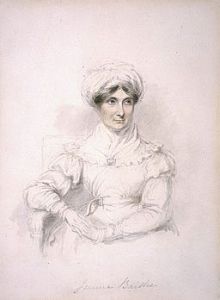
Joanna Baillie, Scottish poet and dramatist

Joanna Baillie, Scottish poet and dramatist


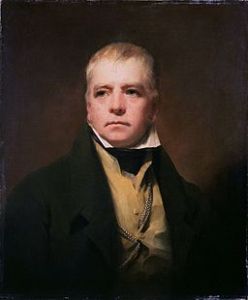
Sir Walter Scott, Scottish historical novelist, poet, and playwright

Sir Walter Scott, Scottish historical novelist, poet, and playwright


Romance of London Series

  1. Romance of London: The Lord Mayor’s Fool… and a Dessert
  2. Romance of London: Carlton House and the Regency
  3. Romance of London: The Championship at George IV’s Coronation
  4. Romance of London: Mrs. Cornelys at Carlisle House
  5. Romance of London: The Bottle Conjuror
  6. Romance of London: Bartholomew Fair
  7. Romance of London: The May Fair and the Strong Woman
  8. Romance of London: Nancy Dawson, the Hornpipe Dancer
  9. Romance of London: Milkmaids on May-Day
  10. Romance of London: Lord Stowell’s Love of Sight-seeing
  11. Romance of London: The Mermaid Hoax
  12. Romance of London: The Bluestocking and the Sweeps’ Holiday
  13. Romance of London: Comments on Hogarth’s “Industries and Idle Apprentices”
  14. Romance of London: The Lansdowne Family
  15. Romance of London: St. Margaret’s Painted Window at Westminster
  16. Romance of London: Montague House and the British Museum
  17. Romance of London: The Bursting of the South Sea Bubble
  18. Romance of London: The Thames Tunnel
  19. Romance of London: Sir William Petty and the Lansdowne Family
  20. Romance of London: Marlborough House and Sarah, Duchess of Marlborough
  21. Romance of London: The Duke of Newcastle’s Eccentricities
  22. Romance of London: Voltaire in London
  23. Romance of London: The Crossing Sweeper
  24. Romance of London: Nathan Mayer Rothschild’s Fear of Assassination
  25. Romance of London: Samuel Rogers, the Banker Poet
  26. Romance of London: The Eccentricities of Lord Byron
  27. Romance of London: A London Recluse

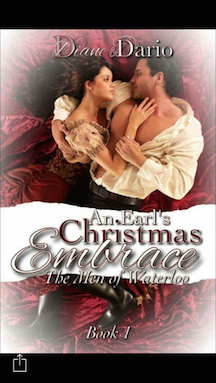
Diane Dario: An Earl’s Christmas Embrace (The Men of Waterloo)

Regency Christmas

Now that the countdown has begun for the Holiday season, it had me wondering how did they celebrate this festive season during the Regency era.

Throughout Europe, England being no exception, the custom of giving a gift on the 6 of December, in commemoration of St. Nicholas, was widespread. Eventually, however, separate customs tended to become condensed. Thus a gift was given for New Year or Twelfth Night.

Traditional decorations included holly and evergreens. The decorations of homes was not just for the gentry: poor families also brought greenery indoors to decorate their homes but not until Christmas Eve. It was considered unlucky to bring greenery into the house before then. By the late 18th century, kissing boughs and balls were popular, usually made from holly, ivy, mistletoe and rosemary. These were often also decorated with spices, apples, oranges, candles or ribbons

Once Twelfth Night was over, all the decorations were taken down and the greenery burned, or the house risked bad luck.

The Christmas holidays lasted for several weeks, due in part to the long, cold journeys undertaken to visit family for the holidays and the guests were reluctant to leave again. This put a strain on the cook and housewife alike, and a varied and full menu had to be prepared for guests, and for the possibility of those same guests being snowbound, and not being able to depart.

Christmas pudding as we now know it first appeared in the reign of King George III. It was said to have been invented especially for him by his chief, because of his inordinate love of English puddings. Before this, the pudding was more of a pottage or porridge, with all the right ingredients we attend to associate with the traditional Christmas pudding but cooked in a large cloth and rather sloppy. Which leads us to Bullet Pudding which was a family name for Christmas Pudding or should I say, the name given to a particular pudding which turned out to be as hard as a bullet.

Imagine putting on a fine ball gown decollété, floaty and clinging, leaving no room for flannel petticoats, your hair dressed in such a way that only the flimsiest scarf can protect your head from the cold night. The coach offers little protection, draughty. What you need when you arrive at the Christmas Ball is a bowl of white soup to put color in your cheeks before greeting the other guests and old acquaintances there, already glowing from their own partaking of the soup, mulled wine and the dancing.

Anyone care for a glass of Wassail?

img_0686-copy

Excerpt

Turning toward an alcove he had spotted earlier, he couldn’t stop the tension from leaking into his voice at her teasing about the “Lord of Darkness” nonsense. “Beware, Lady Emma. Do not scoff at my actions. There is darkness in my soul. A good friend and officer died in my arms during the Battle of Hougoumont, leaving behind a widow and child. I hope you never experience the despair I’ve known, that haunts me whether I am asleep or awake. Now allow me.”

Ravenstone changed topics —and directions—abruptly, before she could respond. Touching her elbow lightly, he walked her across the ballroom to an alcove, discretely screened by potted palms. He escorted her to a green velvet chaise longue, and Lady Emma smoothed a hand over her already neatly coiffed hair. He knew her reputation would be in ruins if someone from the ton should stumble upon them in such an intimate situation without benefit of a chaperone. At this moment, though, he only wanted to be with her. His thoughts went to the painting displayed in a place of honor this very night. Of course Emma couldn’t have known it was an image of the very day he had experienced his descent into hell. His thoughts must have shown on his face, for she placed her hand lightly over his.

He abruptly changed the subject, “By the way, where is Lady Lettice? Do you think you could introduce her to me?”

Lettice felt her heart skip a beat before she thought to ask, “Hasn’t my cousin, Lord Foxington, introduced you?”

Ravenstone’s chuckle cut her off abruptly.

“Ah, look what hangs above us,” he said, lifting his eyes towards the ceiling. “I believe it’s mistletoe. You know what this means don’t you? Legend says you must accept a kiss, lest you be doomed not to receive any marriage proposals for a full year, and scorned for the lack. I’m sure you wouldn’t want to invite public disdain by denying my holiday kissing privileges.”

He slowly, slowly, took her hand, turned it over, and kissed her palm. He noticed a blush staining her décolletage. Her breath caught as his eyes fixed on the rosy glow that spread upward, and he asked, “Did you ever hear about the tradition that for every berry in the mistletoe I may give you a separate kiss?”

She slowly moved her head side to side, her eyes locked on his lips. He licked his lips, loving the way her eyes dilated at the teasing motion, then continued. “I kiss you first, then I pluck off a berry. When all the berries are gone, so are the kisses.”

With that, Ravenstone lowered his head, “First kiss.”

He spoke against the softness of her skin, and planted his lips tenderly on her forehead.

Reaching up to pluck one of the white berries, “Kiss number two,” he whispered, then kissed each eyelid in turn, finally pressing his lips on her mouth. His hands wrapped tightly in her hair, holding her head at exactly the right angle for his ministrations. His body pressed her back against the upholstered arm of the chaise, and he welcomed the heat she generated. Her response was creating such amazing sensations that he simply pressed closer.            She swayed, and he swayed with her, wrapping his arms around her, intoxicated. He just wanted to hold her close. To absorb her sweetness. Light burst inside him for the first time since that fateful day in France. He had thought he’d rather face an army of Napoleon’s men than consider marriage. But when he was with Emma, anything seemed possible.

When he was with her, he never wanted to let her out of his sight. He loved how she challenged him. Unlike the other women on the marriage mart, Emma wasn’t frightened of his stern expression. He wasn’t sure when he’d started to think of her in such intimate terms, but it felt right. She didn’t pout or flutter her eyelashes ridiculously in an attempt to make him smile. She had enough joi de vivre for them both. A few curls tumbled loose from her coiffeur. He heard her breath catch, but she remained within his embrace, and her eyes fluttered open.

“What?” Ravenstone asked.

Lettice shook her head, then giggled.

***

Mad? She must be. Lettice felt as though she were losing all sense of reality. His kisses sent her into a state of bliss that she hoped would last forever. She should stop him from taking any more liberties, push him away, but her body wanted more. For once in her life, she wanted to experience what others had. Lettice had read and overheard enough to realize what could transpire between a man and a woman. This—whatever this was—was worth the consequences.

For once in her life, she wanted to break the rules. To be very naughty. Hang the gossip. Ravenstone was so much more than she’d thought. He had depths that were calling to her at some visceral level she’d never felt before. If only…

Lettice felt Ravenstone’s lips on her neck, and her heart skipped a beat when he whispered, “Kiss number two.”

An Earl’s Christmas Embrace will be released on November 23rd.

About The Author

img_0001-copyI have been reading romance novels since my aunt introduced me at the age of fourteen and I have not stopped reading them.

Regency romances are one of my all-time favorite eras (grand ballrooms, dinner parties while sitting next to a grand duke or war hero just returned from fighting against Napoleon and the French. Hey, a girl can dream, can’t she?).

When I am not reading (or writing the stories I have visions in my head and are now writing), I am enjoying the joyful moments with my growing family, the ballet and romantic movies.

Writing has always been a great passion for me, a long road of many ups and downs (and lots of online writing classes) and the years it took to get the craft right, finally, all my time and efforts paid off and now my dream of becoming a published author is going to become a reality thanks to a great opportunity of winning a first chapter Facebook contest.

It just goes to prove dreams can come true as long as you do not give up on them.

Facebook GoodreadsPinterest • Amazon Author Page

Laurie Alice Eakes: My Enemy, My Heart

A Silly War

Well, maybe most or all war is silly, and the War of 1812 has to be among the silliest. Tiny little United States, with our 18 naval vessels, not all in commission, declared war on powerful Great Britain, with its 506 naval vessels in commission. Our Army was a joke, and half the country was against the war. Yet President Madison and Congress declared war on our old enemy to prove a point. In other words, England was messing with our sailors and our trade freedom, and we didn’t like it. In two and a half years, we got a treaty with everything we wanted. Why?

That why has fascinated me since I first learned of the war way back in the dark ages. The answer ends up being pretty simple: Money.

The USA didn’t have a Navy to speak of, but we still built great sailing vessels—fast and seaworthy. We also had experienced and tough sailors. This means we ended up with a fleet of independent privateers that took so many British merchantmen prizes, the men in England with the money, the merchants, cried “Uncle” and Great Britain promised to cease impressing our sailors and stopping us from trading with France.

That GB was embroiled with Napoleon didn’t hurt either.

Despite our prowess at sea, our land battles were embarrassing losses, yet we walked away with the Northwest Territory, which includes my home state of Michigan, probably one reason for my fascination with the time period.

But another time period with which I am forever fascinated is the Regency. Hmm. The two time periods coincide, yet one rarely ever hears a mention of fighting Americans from Regency authors. This, too, has piqued my interest and set off the “What if—“ factor. From these “What ifs–?” sprang My Enemy, My Heart.

How could I set the War of 1812 in England, when the war barely touched those hallowed—at least to a Regency reader—shores? More reading and research unearthed a place called Dartmoor Prison set—yes, of course—on Dartmoor in Devonshire.

Built in 1809, the walled enclosure was intended for French prisoners. By 1812, it was crowded with the French captured at sea. Then the new war began, and the British crammed American prisoners into the damp, cold, and filthy quarters. These were barracks-like structures and prison yards, plus a marketplace.

A What?

Yes, prisoners could buy and sell goods in a yard, where the public came and went to buy and sell.

Sounds like a recipe for disaster to me, thinking from the point of view of a British guard. And it was. Prisoners escaped fairly often.

Onto an island.

Getting off that island could prove rather difficult. If he was French, he gave himself away the minute he opened his mouth. By 1812, the same went for most Americans, who had been separated from England long enough to be forming very distinct accents.

But my heroine, raised on an American merchantman that is captured, insists she will free her crew from Dartmoor and get them to safety in France. The problem is, she has married an Englishman for her protection, and freeing her crew is treason. Yet they are her family. And so are the parents and sisters of her husband, not to mention how she is beginning to feel about him.

Writing about war is not fun, heart-wrenching, and exciting because of bloody battles, but because of the people and human nature. How far do we take loyalty? Is an American truly doing something wrong to free Americans from her country of origin just because she is married to an Englishman? Yet that Englishman took a great risk with his family to marry her and rescue her from a bad situation, so does she not owe him loyalty?

We often think of war as good guys and bad guys, and often this is true; however, sometimes the lines of demarcation blur. Exploring these harder to define areas and making everything come out happily ever after in the end is the absolutely most fun about writing novels.

Thank you for reading this post. I would love your feedback. I’m not doing a traditional give-away, but have a little gift for anyone who will send me a land address through the contact form on my web site. Below is a snippet of my book. You can read the first chapter on my web site as well.

http://www.lauriealiceeakes.com

About My Enemy, My Heart

memh-large-cover-front-copy

The sea has always been Deirdre MacKenzie’s home, and the crew of her father’s Baltimore clipper is the only family she loves. She’s happier wearing breeches and climbing the rigging of the Maid of Alexandria than donning a dress and learning to curtsey. But, when the War of 1812 erupts, the ship is captured by a British privateer . With her father, the captain, dead, Deirdre sees her crew herded into the hold as prisoners-of-war. Their fate is the notorious Dartmoor prison in England. Her fate as a noncombatant prisoner is uncertain, but the one thing she knows—she must find a way to free her crew.

Kieran Ashford has caused his family one too many scandals. On his way to exile in America, he is waylaid by the declaration of war and a chance to turn privateer and make his own fortune. But he regrets his actions as soon as the rich prize is secured. Kieran figures his best chance at redeeming himself in the eyes of his family is to offer Deidre the protection of his name in marriage. He has no idea that secrets from his parents’ past and Deirdre’s determination to free her crew are on a disastrous collision course.

Love and loyalty clash, as Kieran begins to win Deirdre’s heart despite her plot to betray him and his family. While Kieran works to mend the relationship with his family, he begins to love his bride in spite of what lies between them.

Amazon

Excerpt

From My Enemy, My Heart Chapter 12

England was cold. It was wet. It reeked of too many men packed in dark, dank quarters upon the half-dozen naval vessels anchored in Plymouth Harbor along with countless brigs, schooners, and single-masted pinnaces. Garbage floated on the murky water around which bung boats steered, selling wares ranging from fresh vegetables to doxies.

Though her only coat proved inadequate to the damp chill permeating to her bone marrow, Deirdre stood amidships in the tumbling rain and watched yet one more kind of boat draw away from the Maid of Alexandria—longboats. Rowed by men in the tarred hats, striped shirts, and white duck trousers of British sailors, the two craft carried her crew toward shore, toward prison.

Tears blending with the rain, icy on her face, she waved until the boats vanished around the looming hull of a seventy-four-gun ship-of-the-line. They couldn’t wave back. Their hands and feet were shackled. Neither did they look at her.

Not one of them had looked at her in the six weeks since she had gone ashore with Kieran Ashford at St. George’s and returned two days later with his ring on her finger. She had tried to talk to Ross once.

“I did it for your sakes.” She had pleaded for Ross’s understanding.

Ross spat into the sea. “You’re lying with the enemy.”

“I’m his wife. He has a right to me.”

“And you look like you hate every minute of it.” He had walked away from her without a glance back.

With that, and with every head turned away from her, her heart had torn and her resolve to free them had hardened. All but two of them had given up their chance to escape there on Bermuda in order to rescue her and Kieran from the harbor waters. They had saved her and Kieran’s lives. Freeing them was the least she could do. Once she was settled, once she knew the lay of the land, she would get her men out of prison if it killed her. If the English didn’t hang her for treason, now that she was wed to one of their own, her conscience might.

About the Author

alice-photo“Eakes has a charming way of making her novels come to life without being over the top,” writes Romantic times of bestselling, award-winning author Laurie Alice Eakes. Since she lay in bed as a child telling herself stories, she has fulfilled her dream of becoming a published author, with more than two dozen books in print and several award wins and nominations to her credit, including winning the National Readers Choice Award for Best Regency and being chosen as a 2016 RITA®

She has recently relocated to a cold climate because she is weird enough to like snow and icy lake water. When she isn’t basking in the glory of being cold, she likes to read, visit museums, and take long walks, preferably with her husband, though the cats make her feel guilty every time she leaves the house.

WebsiteFacebookTwitter

Rachel Miles: Tempting the Earl

The backdrop of Tempting the Earl is sedition. Who is leaking government information to the press? To what end? And how can he (or she) be stopped?

In the fall of 1819, the government openly began to repress voices critical of its laws and policies. Though reforming societies had been meeting peaceably for months across the nation, magistrates in Manchester balked at the large numbers of protesters who gathered in St. Peter’s Field. On August 19th, before the speeches could begin, the yeomanry violently dispersed the peaceful group, killing almost a dozen and maiming hundreds. The action gained the derisive name the Peterloo Massacre.

By the end of November, a fearful Parliament had passed the Six Acts, a group of laws restricting large meetings, limiting the rights of the press in what could be said, and narrowing what publishers could print or sell.

The stakes were quite high for those found to be publishing works critical of the government. Fines, imprisonment, deportation, execution—all were possible punishments. As a result, it wasn’t uncommon for journalists (thought that word wasn’t in use yet) to hide behind assumed names, or for publishers to refuse to put their names on books (as John Murray did with Byron’s Don Juan), or to print a European place of publication on a book to hide its origins.

On this day in 1819, in fact, booksellers were tried for selling inappropriate materials. Here’s the story from the London Times.

Marlborough-Street. – Seditious Publications. The vestry of the parish of St. James having lately received information, that certain persons were in the habit of meeting for treasonable practices, they are using every effort to prevent such proceedings; and, fearful that the public mind or morals should be contaminated by the circulation of seditious or blasphemous publications, have instituted proceedings against some of these venders in the parish by information.

Mr. Collinson yesterday attended on the part of St. James’s parish, and suggested to the Magistrate, R. Baker, Esq., that the decision of the present case would prove of some importance to the public; the proceeding was against certain individuals who were in the habit of placarding the outside of their shop windows on the Lord’s-day, announcing that certain seditious pamphlets were sold there, which induced persons to enter and purchase them. He attended at the request of the Vestry and had witnesses to prove the act of selling the works.

Mr William Swainsley, of Pulteney-court, Golden-square, was charged under the same statute with a similar offence. In his defense he said that he did not belong to the shop; his son was a cripple, not able to work, and he set him up in the business of a newspaper-seller, to procure an honest livelihood, which he always had, but he found that the more honestly a man got his living, he was the worst treated: none but rogues were protected.

Magistrate. — That language, I suppose, you think will serve you?

Defendant. — I am under bail at present, for my son, for selling The Republican.

Magistrate. — What, for selling libels?

Defendant. — Your Worship may think it a libel; but for myself, I can see no libel in its contents

The magistrate, said he could not convict the father for the action of the son, but suggested to Mr. Collinson, if the practice was continued, to proceed against them by a fresh information; and intimated to the parties, that they would not be allowed to sell the papers on Sundays, or to have placards outside their windows.
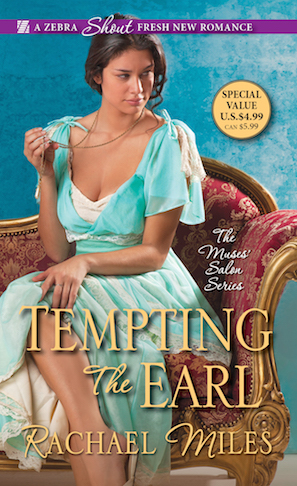
tempting-the-earl-copy

Tempting the Earl

A double life…

Olivia Walgrave is finished with being a countess. Writing under a pen name, her controversial column for the scandal sheets provides her with some income and far more excitement than managing a country estate. Besides, in the three years since the wars have ended, her dashing husband hasn’t spent one night under their roof. So Olivia has prepared a plan, and an annulment. All she needs is his consent…

Lord Harrison Walgrave let his father coerce him into marriage—but his devotion is to his Parliamentary career—and his secret work for the Home Office. Yet now, with freedom in his grasp, he finds he cannot so easily release his wife. Seeing her stirs a hunger no other woman has reached. A distraction now, when he is a breath away from revealing a ring of traitors, could be deadly. Still, wherever his investigations lead, the thought of Olivia lingers. It might be obsession. It might be treason. But the only way to escape the temptation is to succumb…

Barnes & NobleiTunesAmazonRipped Bodice

Excerpt

The man pursued her from the other side of the street, tracking her every step. Olivia had been lucky to notice him, or she would have led him straight to her next meeting. Now she needed to go somewhere—a market, a crowded shop—anywhere to give herself a chance to escape. If he hadn’t already recognized her, then all could still be well.

But the street was quiet, and the shops too small. Nowhere to hide. She looked for her pursuer in the reflection of a shop window as she passed. Still there. She forced herself not to increase her pace. If she hurried, he would know she’d seen him.

Ahead, a carriage pulled to her side of the street, and two footmen carrying packages stepped out of a shop. Footmen and packages meant women shopping.

She looked at the shop’s sign—an open book beside a stack of papers and a jar filled with quills. A bookshop and stationer. She could just read the name of the shop: The African’s Daughter.

A chance.

Olivia eyed the distance to the carriage, estimating how long it would take for the women to leave the shop and step into the coach, and for the coach to pull away. Each moment the women delayed leaving the shop became a moment gained for Olivia to reach the coach.

The footman opened the door to the shop and two women, well-dressed and laughing, stepped out. Olivia clenched her fingers on her worn reticule, holding it close to her belly. In the lining, she’d tucked the instructions for meeting her informant. Usually she memorized the complicated dance of sign and countersign, but she had told herself it wouldn’t matter, this once. But if he caught her, if he found the paper, then it would matter a great deal. And not just for herself.

More than a year had passed since she penned an essay on the struggles of returning soldiers and sent it off to the fashionable newspaper, the World. If she had believed the editor would publish it, she would have chosen a better pseudonym than “An Honest Gentleman.” She hadn’t intended to become the banner bearer for the rights of man. But her essay struck a chord with the British, weary from the wars and the ensuing poor economy. Her correspondence with the editor, a Mrs. Helena Wells, known for her deft editing of the World and her charismatic performances on the Drury Lane stage, had quickly turned to friendship. And soon her essays began appearing every week. Not long after, her former employers at the Home Office found a use for her new work. Having discovered that old enemies of England were using the periodical press to convey state secrets abroad, they asked her to pay careful attention to the path of the information that came her way. She’d almost refused, wishing to be free to advocate for political reform, but they’d assured her—and she believed them—that their aim was only to find those who wished to destroy, not mend. She’d agreed, with the promise that she would be allowed to tell the truth. From corruption in Parliament to abuse on the docks, An Honest Gentleman brought it to a public hungry for an honest voice.

Soon she was receiving correspondence from across the land, asking for her help—or rather An Honest Gentleman’s help—in revealing this or that wrong. From one informant in the London hells, she now had more than twenty across Britain. She’d become—according to Tories—the greatest threat to a peaceable England since Napoleon. But no one expected a short, softly rounded woman with a middle-class accent to wield the pen that caused MPs to shudder. She—and her old employers–had believed anonymity would be protect her. Now, she was not so sure.

She looked ahead, dismayed by the remaining distance to the carriage. The women stood outside the bookshop, their heads bowed in conversation. Keep talking, she willed them. But they moved forward, where a waiting footman handed each one up a three-stepped stool, into the carriage.

She glanced at the nearest window. He still followed. She tamped down on her welling panic. What would she do if he caught her? Him, of all people? It was crucial that An Honest Gentleman’s next essay appear before the upcoming Parliamentary session. One of her trusted correspondents had written that a bill widely supported by the conservative MPs was financed by a group of powerful criminals. But he’d refused to send the name through the mail. If she missed their first meeting, her correspondent might never agree to another.

Before her, the door to the carriage remained open, the footman still waiting. Olivia’s heart rose. Someone else was in the shop!

Instinctively she quickened her pace, then slowed. But it was too late; he had increased his pace as well. With each long step, he narrowed the distance between them. But he had not yet crossed to her side of the street. The carriage would hide her escape.

Only four more shops and she’d be there.

The footman opened the shop door again, and a young woman with a brightly colored feather in her hat moved slowly toward the open carriage door. At the carriage, the younger woman stopped before the steps, then held out her hand. The postilion placed it on his shoulder, and the woman raised her right foot slowly to the first step, bringing her left up to meet it, then repeated the deliberate action. Another time Olivia would have wondered at the young woman’s slow movements, but not today. No, all that mattered was reaching the shop. And she was almost there.

The footman opened the shop door once more, stepping back to let yet another woman out of the shop. Olivia’s eyes met his, pleading, and he held the door another fraction of a second, long enough for her to leap into the bookstore. As the door shut behind her, she heard the coachman call out to the postilion to lash the steps on tight. For another moment or two, the carriage would hide her escape.

To the right of the entrance, two kind-faced women stood at a counter, one an aristocrat, the other a shopkeeper.

“I need . . .” She saw the carriage begin to pull away from the sidewalk, and just past it, the man crossing the street to the shop. She turned back to the women, who waited expectantly. “A man is following me. Can you help?”

Neither woman looked startled. The shopkeeper spoke quickly. “Follow me.”

The aristocrat turned confident gray eyes to Olivia. “I’ll give you time. Go.”

Olivia obeyed without thinking.

“This whole row of buildings backs up to a marsh.” The bookseller spoke softly, as they hurried toward the back of the shop. “No back exit.”

Olivia felt her stomach tighten. He would find her. If she had time, she could hide the instructions in a book. But which one?

“The roof, however, connects this row of buildings almost to the tollbooth beyond the marsh.”

“The roof?” Olivia felt her throat tighten. He’d found her on a roof once before. She pushed the memory away. He’d been angry enough then. This time he had more cause.

“If you are afraid of the roof, lock the attic door behind you and hide until I return.”

“I’m not afraid.”

“Good. On the roof, you’ll find a path of sorts. Stay near the back of the buildings. That way, no one will see you from the street. At the end, climb down a series of lower roofs and balconies until you reach the ground—the descent is protected from view by the curve of the buildings. From there, you can slip into the street unnoticed. It isn’t too hard.” The woman smiled, then added, “If you have a bit of a tomboy in you.”

The shop doorbell rang. Olivia looked toward the salesroom, the woman following her eyes. “I have more than a bit. Where do I start?”

The bookseller motioned to Olivia’s right. A piece of heavy brocade pinned with dozens of broadsides covered the wall between two book cases. The bookseller pushed against it. Not a wall. A door. The woman stepped into a small office, and Olivia, with a last quick glance over her shoulder, closed the office door behind them.

“He’s here. I hear his voice.”

“Go up three flights. My rooms, then the attic, then the roof.” The bookseller opened a smaller door leading to a stairway, then held out a key. “Lock the door behind you. Leave the key on the hook beside the door.”

“How will you retrieve it?”

“I have a second key. You must hurry.” The bookseller paused, searching Olivia’s face. “If you need help again, you will find it. The African’s Daughter turns no one away. Now, you must go.”

Olivia clasped the woman’s hand gratefully, then ran up the stairs.

About the Author

rm-1-dsc_7961-copyRachael Miles writes witty, sexy romance novels set in the British Regency. Booklist describes Miles’ debut series The Muses’ Salon as “impeccably researched and beautifully crafted.” Tempting the Earl – the third standalone novel in the series – received a 4/5 stars Top Pick from RT Book Reviews. It was chosen as one of Amazon’s Editor’s Best Books for November. Compared to Jo Beverley and Mary Jo Putney, Miles is a former professor of book history and nineteenth-century literature. She lives in the woods with her indulgent husband, three rescued dogs,  an ancient cat, and a herd of deer who love her vegetable garden .

WebsiteTwitter FacebookGoodreadsPinterest • Ravelry

Romance of London: Samuel Rogers, the Banker Poet

Romance of London: Strange Stories, Scenes And Remarkable Person of the Great Town in 3 Volumes

John Timbs

John Timbs (1801-1875), who also wrote as Horace Welby, was an English author and aficionado of antiquities. Born in Clerkenwell, London, he was apprenticed at 16 to a druggist and printer, where he soon showed great literary promise. At 19, he began to write for Monthly Magazine, and a year later he was made secretary to the magazine’s proprietor and there began his career as a writer, editor, and antiquarian.

This particular book is available at googlebooks for free in ebook form. Or you can pay for a print version.

samuel_rogers_b1763npg

Samuel Rogers

From Wikipedia:

Samuel Rogers (30 July 1763 – 18 December 1855) was an English poet, during his lifetime one of the most celebrated, although his fame has long since been eclipsed by his Romantic colleagues and friends Wordsworth, Coleridge and Byron. His recollections of these and other friends such as Charles James Fox are key sources for information about London artistic and literary life, with which he was intimate, and which he used his wealth to support. He made his money as a banker and was also a discriminating art collector.

John Timbs’s Reflections

A few days after the death of Mr. Rogers, in 1855, there appeared the following interesting record of him from the practised pen of Mr. Robert Carruthers, who long enjoyed the friendship of the distinguished poet and patron of artists and men of letters.

It is not our intention to speak of the poetry of Mr. Rogers. In noticing it some time since we characterised it generally as presenting a classic and graceful beauty; with no slovenly or obscure lines; with fine cabinet pictures of soft and mellow lustre, and occasionally with trains of thought and association that awaken or recall tender and heroic feelings. No that personal interest in a living poet is withdrawn, and kindness and respect towards him are of no avail, it may be questioned whether Rogers’s poetry will maintain any prominent place in our literature. He will always be esteemed one of the purest disciples of the old classic school of Pope and Dryden—and to turn to him from the mystic ravings, tortures, and Red Indian chants of some modern poets, is like emerging from the wards of an hospital to fresh air and sunshine; but he wants vital interest, passion and strength, for universal popularity. He had not what Gray terms the “golden keys” that can unlock the gates of joy or horror, or open the “sacred source of sympathetic tears.”

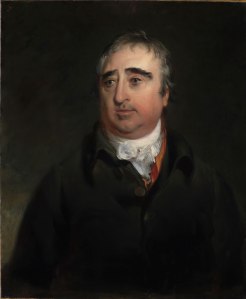
Charles James Fox

Charles James Fox

It is a man of taste and letters, as a patron of artists and authors, and as the friend of almost every illustrious man that has graced our annals for the last half century and more, that Mr. Rogers has of late years challenged public attention. He was a link between the days of Johnson, Burke, and Reynolds, and the present time. He had rambled over St. Anne’s Hill with Fox and Grattan. Sheridan addressed to him the last letter he ever wrote, begging for pecuniary assistance, that the blanket on which he was dying might not be torn from his bed by bailiffs; and Rogers answered the call with a remittance of 100 l. No man had so many books dedicated to him. Byron inscribed to him his “Giaour,” in token of “admiration of his genius, respect for his character, and gratitude for his friendship.” Moore was no less laudatory, and Moore owed substantial favours to the old poet. By his mediation his quarrel with Byron was adjusted, and when Moore fell into difficulties, the liberal hand of Rogers was opened. His benefactions in this way were almost of daily occurrence. “There is a happy and enviable poet!” said Thomas Campbell one day on leaving Rogers’s house; “he has some four or five thousand pounds a year, and he gives away fifteen hundred in charity.” And next to relieving the distress of authors and others, it was the delight of Mr. Rogers to reconcile differences and bring together men who might otherwise never meet. At his celebrated breakfast-parties persons of almost all classes and pursuits were found. He made the morning meal famous as a literary rallying point; and during the London season there was scarcely a day in which from four to six persons were not assembled at the hospitable board in St. James’s Place. There discussion as to books or pictures, anecdotes of the great of old, some racy sayings of Sheridan, Erskine, or Horne Tooke, some apt quotation or fine passage read aloud, some incident of foreign travel recounted all flowed on without restraint, and charmed the hours till mid-day. Byron has described the scene of these meetings:—

george_gordon_byron_6th_baron_byron_by_richard_westall_2“Rogers is silent, and it is said, severe. When he does talk, he talks well; and, on all subjects of taste, his delicacy of expression is pure as his poetry. If you enter his house, his drawing-room, his library, you of yourself say, this is not the dwelling of a common mind. There is not a gem, a coin, a book thrown aside on his chimney-piece, his sofa, his table, that does not bespeak an almost fastidious elegance in the possessor. But this very delicacy must be the misery of his existence. Oh, the jarrings his disposition must have encountered through life!”

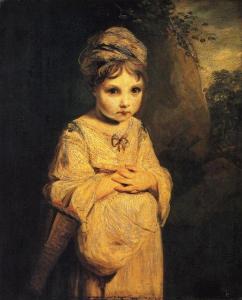
Byron’s sensitiveness coloured all he saw with his own feeling. There was none of this misery resulting from Rogers’s taste. He enjoyed life—had money, fame, honour, love, and troops of friends. His recipe for long life was “temperance, the bath, flesh-brush, and don’t fret.” But his house was really a magazine of marvels—the saloon of the Muses!—and its opening view on the garden and lawn of the Green Park in itself a picture. Paintings by Titian, Guido, Rubens, Claude, Raphael, and English artists, covered the walls. Every school, Italian and Spanish, had the representative, and not the least prized were the native landscapes of Wilson and Gainsborough, and the “Strawberry Girl” and “Puck” of Sir Joshua Reynolds. In the hall were Greek sculptures, busts, and vases, with endless articles of virtu. The library had its rare and choice editions—a drawing by Raphael, an original bust of Pope by Roubiliac, antique gems and cameos, and many precious manuscripts. Two of these he lately presented to the British Museum—Milton’s agreement with his bookseller for the copyright of “Paradise Lost” (for which he gave a hundred guineas), and Dryden’s contract with his publisher, Jacob Tonson. The whole arrangement of these rooms bespoke consummate taste and carelessness of cost. The chimney-piece of the drawing-room was of Carrera marble, sculptured with bas-reliefs and miniature statues by Flaxman; and the panels of a small library displayed the “Seven Ages of Man,” painted by Stothard. To comprehend how so much was done by one less than a noble, we must recollect Rogers’s bank, his exquisite taste, and his long life. He had written Journals of Conversations with Fox, Erskine, Horne, Tooke, and the Duke of Wellington (some of which we have seen), and those can scarcely fail to be both interesting and valuable.

Puck by Joshua Reynolds

Puck, Joshua Reynolds

The Strawberry Girl, Joshua Reynolds

The Strawberry Girl, Joshua Reynolds

Thomas Moore

Thomas Moore

The severity of remark alluded to by Byron as characteristic of his friend, was displayed in a certain quaint shrewdness and sarcasm with which his conversation abounded, though rarely taking an offensive form. He could pay compliments as pointed as his sarcasm. Moore has recorded the pleasure he derived from one of Rogers’s remarks—”What a lucky fellow you are! Surely you must have been born with a rose on your lips and a nightingale singing on the top of your bed.” These and many other sayings, pleasant and severe, will now be remembered. But higher associations, even apart from his genius, will be associated with the name of Samuel Rogers. His generosity and taste—his readiness to oblige and serve, or to encourage and reward the humblest labourer in the literary vineyard—his devotion to all intellectual and liberal pursuits—the jealousy with which he guarded the dignity and rights of literature—the example of a straight path and spotless life extended to more than ninety-two years; these are honours and distinctions which will “gather round his tomb,” and outlast his monument.

fleshbrush

Romance of London Series

  1. Romance of London: The Lord Mayor’s Fool… and a Dessert
  2. Romance of London: Carlton House and the Regency
  3. Romance of London: The Championship at George IV’s Coronation
  4. Romance of London: Mrs. Cornelys at Carlisle House
  5. Romance of London: The Bottle Conjuror
  6. Romance of London: Bartholomew Fair
  7. Romance of London: The May Fair and the Strong Woman
  8. Romance of London: Nancy Dawson, the Hornpipe Dancer
  9. Romance of London: Milkmaids on May-Day
  10. Romance of London: Lord Stowell’s Love of Sight-seeing
  11. Romance of London: The Mermaid Hoax
  12. Romance of London: The Bluestocking and the Sweeps’ Holiday
  13. Romance of London: Comments on Hogarth’s “Industries and Idle Apprentices”
  14. Romance of London: The Lansdowne Family
  15. Romance of London: St. Margaret’s Painted Window at Westminster
  16. Romance of London: Montague House and the British Museum
  17. Romance of London: The Bursting of the South Sea Bubble
  18. Romance of London: The Thames Tunnel
  19. Romance of London: Sir William Petty and the Lansdowne Family
  20. Romance of London: Marlborough House and Sarah, Duchess of Marlborough
  21. Romance of London: The Duke of Newcastle’s Eccentricities
  22. Romance of London: Voltaire in London
  23. Romance of London: The Crossing Sweeper
  24. Romance of London: Nathan Mayer Rothschild’s Fear of Assassination
  25. Romance of London: Samuel Rogers, the Banker Poet
  26. Romance of London: The Eccentricities of Lord Byron
  27. Romance of London: A London Recluse

Beppie Harrison: Two Rings for Christmas

Donegal, where my Christmas novella Two Rings for Christmas takes place, is as far north and west as you can go on the island of Ireland. It’s very beautiful but stark and harsh land there: making a living from the land has always been hard. It was hard in 1817, the time of this story, and always has been. The land is mountainous and rocky, with generous peat bogs but not much in the way of arable land. Most of those who live there now—or who lived there before the terrible Time of Hunger in the middle of the 19th century—were not there by choice. But the ancient aristocracy of Ulster, defeated in the Nine Years’ War in Ulster in 1603, escaped to the continent, hoping to rally Spanish support for the Catholic cause. They died in exile.

DSCN0086 copy

Their lands were therefore defaulted to the British government, who took the opportunity to establish their Plantation Scheme, in the course of which the Catholic Irish tenants and owners of the land were displaced and Protestant settlers, primarily from Scotland but some from England, were given their land. The Catholic Irish fled west to Donegal. Even some of the Donegal land was given as plantation land to the Protestant incomers, but they found the effort of farming there too difficult and retreated east.

The time of Two Rings for Christmas is two centuries later, but the challenge of making a living in that hard and infertile place was as difficult as ever. The time of the great Irish potato famine had not yet come—that was 30 years in the future—but even then many of the young men of Donegal were heading west across the Atlantic Ocean to find some way of earning a living in America.

Fergus, a strong young man from Donegal, emigrates to Boston with the goal of earning enough money so that he can return and marry his sweetheart, Jenny. Three long years he works, until he can pay for his passage back, has some coins in his pocket, and a golden ring for Jenny. But when he returns to Donegal for Christmas, is Jenny still waiting for him?

Pageflex Persona [document: PRS0000031_00016]

About Two Rings for Christmas

Two Rings for Christmas is the story of a young Irishman, Fergus, unable to find work in Donegal, who emigrates to Boston to make some money so he can return and marry his true love, Jenny. Three long years he works, until he can pay for his passage back, has some coins in his pocket, and has bought a golden ring for Jenny. But when he comes home to Donegal for Christmas, will Jenny still be waiting?

Amazon

Excerpt

“Could not wait for me, is that it?” His voice rang out now, a challenge.

“And how was I to know that you remembered me?” Jenny snapped.

“Did not I write you letters?”

She tossed her head, and her rich brown hair lifted and then resettled on her shoulders. “Letters. Well, yes. Three letters in three long years—and the last of them more than six months ago.”

Oh. As he remembered, there had been more, but she might have the right of it. He was not good at writing letters. Somehow all the things he wanted to say ran away from his pen before he got them down to paper.

“’Twasn’t enough, you know. Six months without a word, and me mam going on at me about how you were off to Amerikay and never would come back.”

“I’m here now.”

She closed her eyes and held her hands to her temples. “Aye, you’re here, right enough. Why could you not have written to tell me so? Why could I not have known two, three weeks ago? ‘Twas only then that Daniel Beatty came and me mam said he was my last chance and—and—”

And damned if she was not crying. Jenny crying, with the ring of Daniel Beatty around her neck. What was he to do now?

His heart went soft on him. “Jenny, sweet Jenny, I wanted to surprise you. I had a ring for you, Jenny my love.”

He pulled it out of his pocket and held it in his hand.

About the Author

BeppieHarrisonPHOTO copyBeppie Harrison had the great good sense to marry an English architect, and consequently has lived a trans-Atlantic lifestyle. They now live in Michigan between trips to the old country and Ireland (which she despaired of during the years of the Troubles) and she remains fascinated by the complicated relationship between England and Ireland. Their four children have grown up and left the nest but two indignant cats remain—as good an allegory for England and Ireland as she can imagine.

Cheryl Bolen: Ex-Spinster By Christmas (House of Haverstock, Book 4)

Interview with Cheryl Bolen

Susana: When did you know you wanted to be a writer?

Cheryl Bolen copyCheryl: When the nun who was my third grade teacher explained about paragraphs and asked us to make up one, I thought, “Wow! This is something I love to do!” I was one of those kids who spelled well and absorbed grammar and punctuation rules like some women collect shoes. Therefore, when I went to college, I decided to major in journalism so I could be paid for writing. (Until the Great Digital Disruption, it wasn’t easy to make it as a novelist in New York publishing.) I did major in journalism, with a double major in English. Then I got a master’s in education in case I ever wanted to teach. I worked for two decades as a journalist, and I also taught English for six years.

Susana: Tell us about getting The Call.

Cheryl: Sadly, I wrote seven complete novels before I got The Call 19 years ago from an editor at Harlequin Historical. I started in romantic suspense and won a lot of contests but never got a contract. Then I wrote a sweeping World War II love story which won even more contests but did not sell. It did, though, sort of get me in the back door at Harlequin because the editor judging the top three manuscripts in a contest in which it placed liked my writing and said if I wrote something that took place before 1900, she’d like to see it. The only historical genre I knew was Georgette Heyer. I’d read every one of her books; so, I sat down and began A Duke Deceived, entered the beginning in a few contests to see if it was good, and it placed in every contest I entered.  So I sent the first three chapters to that Harlequin editor, and she asked to see the complete manuscript. I sent it in and waited five months before I got The Call.

I was working as news editor of our community newspaper and came home for lunch, flipped on my answering machine, and there was a message to call the editor at Harlequin. I was shaking all over. I called my husband’s office to tell him, and he said, “Why in the heck are you calling me? Call her back.” I did, and she said they wanted to buy my book. “How does an advance of $5,000 sound to you?” she asked.  I was thrilled—and still shaking—but tried to calmly say, “That sounds fine.”

Susana: So how many books have you written now?

Cheryl: In August I received a pin from Romance Writers of America for writing 35 books. Since then, I’ve published two novellas. I’ve written for Harlequin, Kensington, Love Inspired Historical, and I’ve written one book for Montlake. It was a lighthearted, romantic contemporary mystery which I envisioned as the first book in the Stately Homes Murders, set in England. I began self-publishing in 2011 and have never been happier—and never made so much money! Of my 37 titles, all but five are Regency-set historicals.

Susana: What’s the heat level of your books?

Cheryl: My first ten years of publishing, I wrote to suit the New York publishers, and they wanted hot. Now that I’m my own boss, most of my books are sensuous with the bedroom door closed.

Susana: What’s next for you?

Cheryl: My next full-length novel will be the story of the third Birmingham brother—at readers’ request. The Birminghams, the richest bankers in England, were introduced in my Brazen Brides series. I haven’t started it and have zero plot ideas. This is a hybrid series, in that the first two (Counterfeit Countess and His Golden Ring) were written for Kensington in 2005, and I’m now continuing the series with my own imprint.

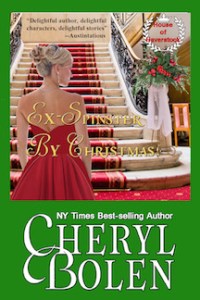
ex-spinster-by-christmas-copy

About Ex-Spinster By Christmas

“Delightful author, delightful characters, delightful stories.”—Austintatious

Ever pragmatic, Lady Caroline Ponsby has given up hope she’ll ever receive a proposal of marriage from Christopher Perry, the wealthy man she’s adored for almost two years. She is determined to be an ex-spinster by Christmas. To that end, she has invited a prospective suitor to spend Christmas with her family. She knows very well that Lord Brockton would love to get his hands on her dowry, and she’d love to be a married woman with a home and family of her own.

The very idea of his Lady Caroline throwing herself away on the likes of the vile Lord Brockton rankles Christopher Perry. A pity he cannot offer for her himself, but a duke’s daughter is too far above his touch, given his family’s humble origins. Nevertheless, Christopher attends the Duke of Aldridge’s Christmas house party with the intention of thwarting Lady Caroline’s grave misalliance with Brockton. If only he’s not too late…

AmazonBarnes & NobleiBooksKobo

Excerpt

http://www.cherylbolen.com/ex-spinster%20excerpt.htm

About Cheryl Bolen

Since being named Notable New Author for 1997, Cheryl Bolen has published more than 35 books with Kensington/Zebra, Harlequin, Love Inspired Historical, Montlake, and independently. She has broken into the top 5 on the New York Times and hit the USA Today bestseller list. Her 2005 One Golden Ring won Best Historical, Holt Medallion, and her 2011 My Lord Wicked was awarded Best Historical in the International Digital Awards, the same year her Christmas novella was chosen as Best Novella. Her books have been finalists for other awards, including the Daphne du Maurier, and have been translated into a dozen languages. She’s also been the number 1 bestselling historical romance author in Germany.

She holds a bachelor’s degree in journalism and English from the University of Texas and a master’s degree from the University of Houston. Her favorite pursuits are reading diaries of dead English women, traveling to England, and watching the Texas Longhorns play football and basketball. She and her recently retired professor husband are the parents of two sons. One is an attorney, the other a journalist.

WebsiteBlogFacebook

Jude Knight: Interview with the Marquis of Aldridge (Giveaway)

Today, we are with that renowned scion of the Grenford family, the Marquis of Aldridge. As the eldest son of the Duke of Haverford whose health is understood to be failing, he has taken over much of the business of the duchy. However, he continues a vigorous social life, and is as popular on his rare appearances in a Society ballroom as he is rumoured to be in less reputable establishments.

(LC stands for Lady Correspondent. The interviewer wishes to remain anonymous, and Aldridge has sworn not to disclose her identity.)

LC: Your lordship has recently returned from Hollystone Hall, where your mother has been holding a Yuletide house party. We are informed you arrived late and left early. Do you have a particular reason for avoiding such events?

(LC blushes. She was present at both the arrival and the departure, but her questions will be printed so she cannot say so. Beyond a twitch of his eyebrows and a quirk of his lips, Aldridge does not acknowledge her deception.)

aldridge-1Aldridge: Errands for my father and other business matters kept me in town, but Her Grace my mother knew not to expect me until Christmas Eve. I would, however, have avoided the party altogether if the duchess had not required my attendance. I find that I spend such occasions avoiding debutantes with a fancy for a ducal coronet. In any house other than my mother’s, I could have discouraged them by a blatant and scandalous pursuit of a willing widow or a straying wife.

I say pursuit… But if that is not sufficient, our behaviour once I have caught the lady who has temporarily attracted my attention tends to drive away the most title-hungry of virgins and their mamas.

You would be wise to believe that my reputation is well deserved, but it is also something of a protection against all but the most ambitious.

However, as I say, I was under my mother’s roof, so the usual avenue was not open to me.

LC: So what did you do instead?

Aldridge: In the event, I had my brother with me, and we protected one another. We even shared a bed chamber, so any blushing virgin who thought to conceal herself in my bed was as much at risk of ending up with the prodigal spare, as with the disreputable heir. (Grins)

The few days I was there proved very entertaining. The duchess’s stated aim for the fortnight was to raise money for her new charity fund, but she was playing matchmaker, of course—and very successfully.

regency-fashionLC: We understand the house party was the venue for several betrothals and a marriage.

Aldridge: Yes, the Earl and Countess of Somerton married at the local church just before Christmas.

LC: Society is aghast to learn that the Earl of Somerton married the actress, Charlotte Halfpenny.

Aldridge: A magnificent actress; possibly the finest of our generation. She will, I am sure, play the part of countess to my dear friend Somerton with as much artistry as she put into her earlier roles.

Two other weddings in those weeks were associated with the house party, though they did not take place at Hollystone Hall. Lady Sophia Belvoir wed Lord Elfingham in London in a private ceremony that received, we are told, the blessing of his dying grandfather, the Duke of Winshire. And the Stanton party were delayed (with the exception of Lady Stanton), because Lord Stanton’s little sister and Frederick Woodville wished to be married in Cumbria.

LC: There is a touch of scandal in both unions, is there not? Why was Lady Stanton not at her daughter’s wedding, and what happened on that wedding journey that caused her stepson to propose to Mr Woodville’s sister?

And Lord Elfingham was made Earl of Sutton by the death of his grandfather. Or was he? The Privileges Committee will soon decide whether the new Duke of Winshire was validly married to the Persian princess who bore his large brood of children.

Aldridge: All three couples are happy. (Aldridge looks surprisingly wistful. Perhaps his mother is not the only romantic in his family.) Our sort generally look for advantage in marriage; family links, or property, or wealth. We do not, as a rule, expect to marry someone with whom we share a deep affection. They are fortunate, Lady F-Lady Correspondent.

LC: Your brother was also hopeful of a betrothal, I believe, my lord.

Aldridge: That is so. We had intended to stay to the end of the house party, but my brother received a message that recalled him to–shall we say Eastern Europe? We have not yet heard the results. I hope that he, too, is happy.

As you mentioned, though, the house party also saw several betrothals, and part of the entertainment was watching the gentlemen and their ladies stumble their way to an understanding.

Mama can take no credit for the betrothal between Mr Durand and the lovely Miss Sedgely. Their affection was fixed prior to the house party, and their fate sealed when half of Society saw them k–. Well. Never mind.

But she was, I am certain, involved in unsnarling the misperception Lord Nicholas Lacey had conceived about Lady de Courtenay. I may have helped a little myself, although flirting outrageously with the lady did not have the intended effect.

Even Mama was uncertain which of her two suitors Lady Anna Wycliffe would choose: Lord Pershore or the Duke of Barnet. But one departed early, and the other remained to be happy.

The affection between Miss Baumann and Mr Halevy also predated the house party, but Mama is undoubtedly correct that she provided the setting for its very satisfactory outcome.

And, of course, Her Grace could hardly have expected the affair between my cousin Cedrica and the chef.

Still. Nothing makes my mother happier than a courtship successfully concluded in a love match.

L.C.: And when we might expect your own betrothal, Lord Aldridge?

Aldridge: (Laughs out loud.) Did my mother put you up to asking that? All I can say is that I do not advise holding your breath.

Giveaway

bfbcover-ebook-small
revealed-in-mist-smallThe Marquis of Aldridge appears in several of the stories in Holly and Hopeful Hearts. He is one of Jude Knight’s characters, and pops up in a number of her books, including A Baron for Becky (where he is not quite the hero) and Revealed in Mist (where he is almost a villain).

To win an ecopy of A Baron for Becky or an ARC of Revealed in Mist, put your answer to the following question in the comments below. I’ll choose a commenter at random.

What did Aldridge do to try to help Lady de Courtenay?

About Holly and Hopeful Hearts

When the Duchess of Haverford sends out invitations to a Yuletide house party and a New Year’s Eve ball at her country estate, Hollystone Hall, those who respond know that Her Grace intends to raise money for her favorite cause and promote whatever marriages she can. Eight assorted heroes and heroines set out with their pocketbooks firmly clutched and hearts in protective custody. Or are they?

Valuing Vanessa, by Susana Ellis

Facing a dim future as a spinster under her mother’s thumb, Vanessa Sedgely makes a practical decision to attach an amiable gentleman who will not try to rule her life.

A Kiss for Charity, by Sherry Ewingcover-of-holly-and-hopeful-hearts-copy-2

Young widow Grace, Lady de Courtenay, has no idea how a close encounter with a rake at a masquerade ball would make her yearn for love again. Can she learn to forgive Lord Nicholas Lacey and set aside their differences to let love into her heart?

Artemis, by Jessica Cale

Actress Charlotte Halfpenny is in trouble. Pregnant, abandoned by her lover, and out of a job, Charlotte faces eviction two weeks before Christmas. When the reclusive Earl of Somerton makes her an outrageous offer, she has no choice but to accept. Could he be the man of her dreams, or is the nightmare just beginning?

The Bluestocking and the Barbarian, by Jude Knight

James must marry to please his grandfather, the duke, and to win social acceptance for himself and his father’s other foreign-born children. But only Lady Sophia Belvoir makes his heart sing, and to win her he must invite himself to spend Christmas at the home of his father’s greatest enemy. 

Christmas Kisses, by Nicole Zoltack

Louisa Wycliff, Dowager Countess of Exeter wants only for her darling daughter, Anna, to find a man she can love and marry. Appallingly, Anna has her sights on a scoundrel of a duke who chases after every skirt he sees. Anna truly thinks the dashing duke cares for her, but her mother has her doubts. 

An Open Heart, by Caroline Warfield

Esther Baumann longs for a loving husband who will help her create a home where they will teach their children to value the traditions of their people, but she wants a man who is also open to new ideas and happy to make friends outside their narrow circle. Is it so unreasonable to ask for toe curling passion as well?

Dashing Through the Snow, by Amy Rose Bennett

Headstrong bluestocking, Miss Kate Woodville, never thought her Christmas would be spent racing across England with a viscount hell-bent on vengeance. She certainly never expected to find love…

Amazon.comAmazon UKAmazon AUS Amazon CAN

SmashwordsKoboBarnes & NobleiBooks

newlogoAbout the Bluestocking Belles

The Bluestocking Belles (the “BellesInBlue”) are seven very different writers united by a love of history and a history of writing about love. From sweet to steamy, from light-hearted fun to dark tortured tales full of angst, from London ballrooms to country cottages to the sultan’s seraglio, one or more of us will have a tale to suit your tastes and mood.

Website and Home of the Teatime Tattler

FacebookTwitterPinterestAmazon Author Page