Archives

Regency Rites: The Well-Dressed Regency Lady

gowns

By the early nineteenth century, imitation of the classical was the rage in Europe, in architecture as well as fashion. Ladies’ gowns became simpler, with low necklines and ribbons tied beneath the bust, usually white due to a mistaken belief that the white marble statues being excavated in Greece were the original color. (They weren’t; the original brightly-colored paint had worn off.) Napoleon preferred ladies in white, and even though Britain and France were at war during this time, French fashions were all the rage.

Thin fabrics were de rigueur, muslin being the most popular, followed by silks and satins. As the new century progressed into the Regency and beyond, ladies’ gowns became more ornate, with another gown worn over the classical one, either a shorter length or with the front panels open to reveal the under-dress. Trims became more and more ornate, with ribbons, bows, and furbelows everywhere; collars of Elizabethan lace took the stage. By 1815, colored and grander fabrics were back.

Wardrobe

A fashionable lady had an extensive dress wardrobe, including:

  • carriage dresses

  • court dresses

  • dinner dresses

  • evening dresses

  • full evening dresses

  • garden dresses

  • morning dresses (also called “undress”)

  • opera dresses

  • promenade dresses

  • riding dresses

  • theater dresses

  • walking dresses

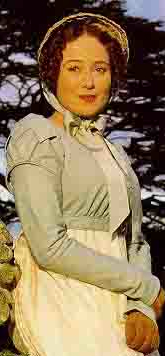
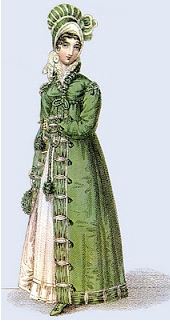
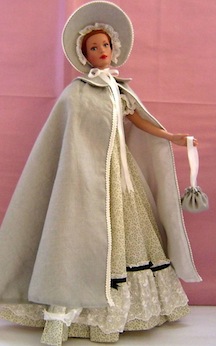
 Even in the dead of winter, many ladies would rather shiver in their flimsy gowns than be so unfashionable as to wear a heavy wrap. However, they did have shawls—Kashmir shawls had the advantage of being both light and warm—and various types of coats and jackets. A pelisse was an elegant overdress with long sleeves that buttoned down the front. A mantle was a rectangular fabric gathered at the neck. A spencer was simply a short jacket that reached the waist of the gown. Cloaks were often lined and/or trimmed with fur.

spencer
Lizzie wears a spencer over her dress.
pelisse
A pelisse à la militaire
mantle_reticule
The lady wears a mantle and carries a reticule.

For the most part, shoes in this period were “straights,” meaning there was no left or right shoe. Pumps made of embellished kid called slippers were very popular. Ladies had half-boots for walking, and stout boots for cold weather might be fur-lined. White silk hose tied at the knee (or later, the thigh) were often decorated with flowers or bowknots.

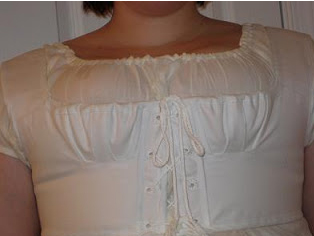
short corset common in the Regency

Under-drawers were not widely worn until after the Regency, around 1820. Short corsets with shaped cups for the breasts were common, although longer corsets were available to assist those with problem figures. A petticoat called a chemise was worn under the gown.

Hats & Accessories

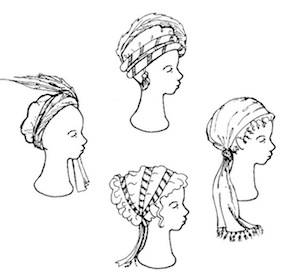
Smaller, simpler bonnets gradually became more ornate, constructed with straw, velvet, satin, and crepe, trimmed with ribbons, ostrich plumes, and fabrics. Decorated caps (undress bonnets) of lace or satin were worn indoors and outdoors in informal settings. Turbans of various styles were popular for full-dress occasions.

turbans
Various styles of turbans popular in the Regency

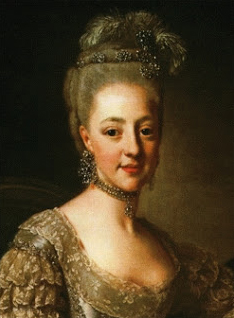
A fashionable lady had ribbons, jewels, combs, plumes, and hairpieces to dress up her hair for elegant evenings. Gone was the “big hair” of the previous century that towered so high that once a lady’s hair caught fire from the chandelier (Georgiana, Duchess of Devonshire). Classical hairstyles to match the classical gowns were “in”, and short, cropped hair, à la Titus, was popular through 1810.

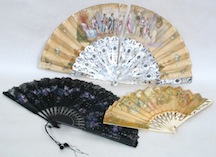
fans

Fans made of ivory with silk, gauze, or lace were another important accessory for every occasion. Every young lady learned the “language of the fan” in order to convey social messages without having to be rude. There were different fans for different occasions, and some were jeweled and hand-painted.

As for jewelry, simple gold crosses expanded to jeweled necklaces, bracelets, tiaras, and even elaborate clasps on shawls and wraps. Silk parasols, often decorated with fringe, were required during outdoor activities in order to prevent the development of freckles. A reticule, or ridicule, was a small bag often made with fabric from a gown used for carrying coins and items formerly carried in pockets.

parasol

A Lady’s Maid

A lady’s maid or abigail was necessary for such things as caring for clothing, preparing baths, dressing (gowns usually fastened in the back), and doing hair. She also accompanied her mistress while shopping and walking; young, unmarried ladies were not allowed out without chaperones, at least not while in the city.

Shopping!!!

One of my favorite scenes in Regency stories is when the ladies go shopping. After having my own Regency gown and pelisse made for me this year (by my own very talented mother), I wasn’t all that keen on the frequent fittings. And not being able to get in and out of my gown without assistance. But I LOVE feeling like a princess when I wear it!

Of course, having a gown made this way is a great deal more complicated—and expensive—than buying one in a department store. But then, the dress you end up with is uniquely yours by the time you add the trim and embellishments—you’re not likely to ever see anyone else wearing it.

Would you ever consider having a period gown made up like this? Where would you wear it?

Click here to see photos of my Regency outfit.

 The Regency Companion, Sharon Laudermilk and Theresa L. Hamlin, Garland Publishing, Inc., 1989, pp. 30-48.

The Regency Rites series

Regency Rites: The Well-Dressed Regency Lady 

Regency Rites: Presentation at Court

Regency Rites: Almack’s Assembly Rooms 

Regency Rites: The London Season

The Blue Stockings Society and Benjamin Stillingfleet

In the Regency era, a young lady who gained the reputation of being a bluestocking would likely find herself “holding up the walls” as a wallflower at a ton event, since it was not the thing for a woman to be more educated than a man. Women were to be beautiful, fashionable, eloquent yet demure, and proficient in the social graces. A typical lady’s education would include reading, writing, geography, history, embroidery, drawing, French (or at least some French phrases), music, dancing, and, of course, riding, should her family have the means for a stable.

While there were, of course, learned ladies in society, it was thought prudent to keep one’s scholarly achievements private in order to avoid the bluestocking label, particularly for a young lady on the marriage market, which most genteel young ladies were. One hint that she might have blue tendencies could ruin her reputation and her opportunities for an advantageous marriage. And for most young ladies, marriage was the decision of a lifetime. Since divorce was nearly impossible and the husband held all the cards in the relationship, a mésalliance could very well mean a lifetime of misery and regrets.

In spite of this, there did exist a smattering of ladies—even some young, unmarried ladies—who defied prudence and flaunted their academic superiority to all and sundry. Some were married already, probably to indulgent husbands or those who were scholarly themselves. Those who were unmarried typically disdained the traditional role of women and did not aspire to giving some man control over them, although presumably these, too, were blessed with indulgent families with enough wealth to support a daughter for the rest of her life. There were some, like Hannah More, who, although she eschewed the frivolity of the ton, advocated the traditional role of marriage as the ideal for women, even though she herself never married.

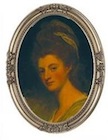
Elizabeth Montagu

In the mid-eighteenth century, Elizabeth Montagu and Elizabeth Vesey, among others, founded a women’s literary discussion group, that later came to include gentlemen as well. The society promoted education for all (including women and the poor). Several prominent members of the society, which came to be known as The Blue Stockings Society, were (at one time or another):

  • Elizabeth Montagu: social reformer, patron of the arts, salonist, literary critic, and writer who helped organize and lead the Blue Stockings Society
  • Elizabeth Vesey: a wealthy patron of the society
  • Samuel Johnson: poet, essayist, moralist, literary critic, biographer, editor and lexicographer
  • Anna Williams: poet and companion of Samuel Johnson
  • David Garrick: English author and playwright, friend of Samuel Johnson
  • Anna Laetitia Barbauld: a prominent English poet, essayist, literary critic, editor, and children’s author
  • James Beattie: Scottish poet, moralist, and philosopher
  • Frances Boscawen: literary hostess and correspondent
  • Edmund Burke: Irish statesman, author, orator, political theorist and philosopher
  • Frances Burney: novelist, diarist, and playwright
  • Elizabeth Carter: poet, classicist, writer, and translator
  • Margaret Cavendish-Harley: Duchess of Portland, and scholar/collector of natural history
  • Hester Chapone: author of conduct books for women
  • Mary Delaney: artist and letter-writer
  • Sarah Fielding: sister of Henry Fielding, novelist herself, who wrote the first children’s novel
  • Ada Lovelace: daughter of Lord Byron and his wife Annabella Millbank (who was a scholar herself), a noted mathematician and considered to be the first computer programmer
  • Catharine Macalay: historian
  • Hannah More: religious writer and philanthropost (see earlier post on this blog)
  • Sarah Scott: novelist, translator, social reformer, and sister of Elizabeth Montagu
  • Sir Joshua Reynolds: prominent portrait painter
  • Horace Walpole: art historian, man of letters, antiquarian, and Whig politician

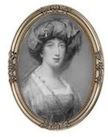
Benjamin Stillingfleet

The name of the group supposedly came from an invited guest, Benjamin Stillingfleet, a noted botanist and scholar, who wore blue worsted stockings to the meetings because he could not afford the requisite black silk ones. Since the group prided itself on valuing conversation over fashion, the term bluestocking was more of a jest than a slight in the early days of the society. It was later that it became a term of shame and derision when applied to a young lady.

Stillingfleet was the son of a physician who attended Cambridge and worked as a tutor to his young relative, William Windham. He later accompanied Windham on a Grand Tour of the Continent, where they lingered several years, doing, among other things, scientific studies of the glaciers, for which his protégé was later honored as a Fellow of the Royal Society.

A bluestocking heroine, you say?

It can be done, of course. I’ve read dozens—if not hundreds—of historicals with bluestocking heroines. But she needs a special sort of hero, doesn’t she?—one who has enough confidence in his own abilities to appreciate and desire to nurture hers. Or at least, that’s what he needs to become by the end of the story. And I think it’s also important for him to be able to draw her out of her preoccupation with academics and into the real world on occasion as well.

However, in order to become a bluestocking in the first place, a heroine would need to have been brought up in a manner that would make this possible. A rare, scholarly family, perhaps, or a negligent one that doesn’t realize how much time she spends with her brother’s tutor and is properly horrified when they discover it. Because any girl tagged as a bluestocking would become the object of much derision and gossip by the high-sticklers of society, and these high-stickers never forgot such things, even when they were proven untrue. A marriage-minded miss and her mother would be horrified at the very thought.

Donning my teacher hat

As a former teacher, I cannot help comparing this to the seeming popularity of idiocy in modern culture, at least among the youth (I was a middle school teacher). It’s always been a concern of mine that adolescents—particularly girls—play down their intelligence in pursuit of popularity. Frankly, I’ve never understood it, not even when I was that age. Why anyone should eschew their God-given intelligence in order to cater to someone else’s insecurities is beyond me. One would think that we would have evolved beyond this by now, especially with the job market being so competitive, but I’ve seen too many students of both genders fail to take advantage of their academic abilities and end up with lives on the fringes of success. And frankly, all the standardized tests in the world are not making a whit of difference in the status quo.

That’s what I think anyway. What do you think? Do you think movies like Dumb and Dumber only serve to lower the value of serious scholarship among our young people?

Blog Barrage for Treasuring Theresa

CBLSbarragebanner

CBLS Promotions is sponsoring a Blog Barrage for Treasuring Theresa today and tomorrow. Check out the stops and enter the Rafflecopter contest for my newest treasure box (including UK souvenirs) (see below).

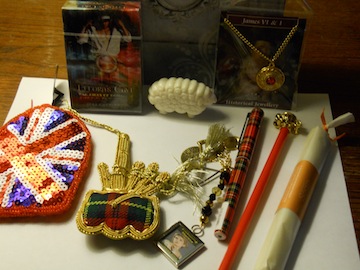
Lovely wooden box, 2013 Ellora's Cave playing cards (for adults only), sheep soap, James I and II necklace, Union Jack sequined coin purse, plaid bagpipes Christmas ornament, Treasuring Theresa key chain, plaid pen, crown pencil, fizzing bath crystals

Mark Your Calendar

fall2010

Coffeetime Romance Chat 

August 24  • 8:00-10:00 p.m. EDT

Eight Authors • Eight Giveaways

Theme: Historical Romance

Participating Authors

Aileen Fish
Shelly Munro
Lexi Post
Susana Ellis
Amy Hearst
Sasha Cottman
Sabrina York
Julie Johnstone

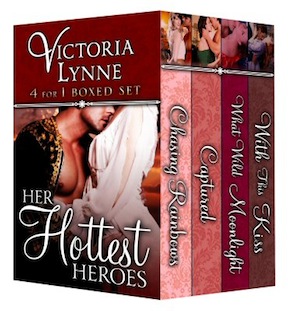
Her Hottest Heroes: 4 Historical Romances by Victoria Lynne

Warning: This title is intended for readers over the age of 18 as it contains adult sexual situations and/or adult language, and may be considered offensive to some readers.

hhhbundle-barragebanner

(Click banner for links to the other tour stops.)

Her Hottest Heroes

(Historical Romance Boxed Set)

by Victoria Lynne

Historical (Regency) Western Romance 

FOUR of Victoria Lynne’s hottest heroes brought together in one great, money-saving bundle. Each book is a full-length novel.

Warning: This title is intended for readers over the age of 18 as it contains adult sexual situations and/or adult language, and may be considered offensive to some readers.

WITH THIS KISS

An act of heroism leaves Morgan St. James, Viscount Sinclair, scarred for life. Rake turned recluse, he withdraws into his sheltered estate, away from the busy whirl of London society. There he remains until Julia Prentisse approaches him with a scandalous offer: if he marries her and protects her from her uncle, she will help him capture the arsonist who ruined his life.

“A smoldering Victorian era romance.” –Booklist

A Romantic Times “Top Pick” Nominated for their prestigious “Best Historical Romance”

WHAT WILD MOONLIGHT

When Nicholas DuVall, rakehell Earl of Barrington, witnesses Katya Alexander pick the pocket of a fellow passenger, her skill and audacity captivate him. He enlists her help to retrieve a priceless family scroll, unaware that an age-old family feud has made them mortal enemies, and that his beautiful thief has secrets to burn.

“A wild ride of an adventure romance destined to keep you reading all night. Simmering with sexual tension and the perfect amount of suspense.” –Romantic Times

CAPTURED

Treachery destroys Captain Cole McRae’s ship and most of his crew. Now he’s determined to take Devon Blake, British beauty and convicted spy, to the gallows. Her wild attempts at escape only fire his fury, until their daring race through enemy territory ignites a passion stronger than vengeance.

Nominated for two RITA Awards.

“A pure delight. Plenty of suspense, and beautifully drawn characters.” -Rendezvous

CHASING RAINBOWS

Smooth-talking gambler Jake Moran finds himself volunteering to escort the notorious Outlaw Annie, along with the ugliest cat he’s ever seen, to Cooperton, Colorado. Once Jake’s roped in and they hit the trail, nothing prepares him for the final showdown as he tries to tame the wildest woman in the west.

“Extremely well-written, faced-paced, and funny, Chasing Rainbows is a pot of gold from this talented, up-and-coming author. One for your keeper shelf.” – Romantic Times 

hhhbundle-cover

Available at

Amazon

About the Author

Victoria Lynne is the author of five historical romance novels. She’s received two RITA Award nominations, and has consistently earned Romantic Times’ “Top Pick” award. She lives in Vermont with her husband, two children, and one very playful mutt.

Contacts

Facebook • Goodreads • Amazon Author Page

Grace Eliot and “Verity’s Lie” (The Huntley Trilogy #3)

Grace will award 3 eBook copies (1 each to 3 winners) of “Verity’s Lie (The Huntley Trilogy #3)”. Contest is open internationally and ends August 7. Must be 18 years of age or older to enter.

Click banner below for the Rafflecopter to enter the contest.

verityslie-blastbanner

Verity’s Lie (The Huntley Trilogy #3)

by Grace Elliot

Historical (Regency) Romance

About Verity’s Lie

Charles Huntley, Lord Ryevale, infamous rogue…and government agent.

In unsettled times, with England at war with France, Ryevale is assigned to covertly protect a politician’s daughter, Miss Verity Verrinder. To keep Verity under his watchful eye, Ryevale plots a campaign of seduction that no woman can resist– except it seems, Miss Verrinder. In order to gain her trust Ryevale enters Verity’s world of charity meetings and bookshops…where the unexpected happens and he falls in love with his charge.

When Lord Ryevale turns his bone-melting charms on her, Verity questions his lordship’s motivation. But with her controlling father abroad, Verity wishes to explore London and reluctantly accepts Ryevale’s companionship. As the compelling attraction between them strengthens, Verity is shattered to learn her instincts are correct after all – and Ryevale is not what he seems. If Lord Ryevale can lie, then so can she…but with disastrous consequences.

Warning: This title is intended for readers over the age of 18 as it contains adult sexual situations and/or adult language, and may be considered offensive to some readers.

Excerpt

verityslie-coverRyevale alighted first, then offered up his hand to assist Verity down.  She placed her fingers lightly in his engulfing palm.  A chemical reaction fizzed between them, like acid to alkali, as warmth tracked up her arm and expanded in her chest.  Defying the urge to melt into his arms, she tipped her chin up defiantly for if he had any idea of how his touch affected her, she would be at his mercy.

As soon as her slippers touched the pavement, she shook her hand free.  “I can manage, thank you.”

“Very well.  The entrance is this way.”

Their little party waited beside a double door, outside which stood a rotund gentleman sporting a red waistcoat the same color as his nose.  He and Ryevale shook hands.

“Just the two ladies tonight, my lord?”

Verity suppressed a shocked gasp—and had that man just winked at Ryevale?  The sting of jealousy caught her by surprise as she wondered how many other women he had brought here.  She glance from one the other, but Ryevale seemed oblivious to her ire as he withdrew a metal token from his breast pocket.

“…and a shilling each for the ladies.”

Ryevale handed over the cash, plus a tip for the doorman.  “And this is for you, Annie,” he pressed a silver coin into her palm.  “Meet us back here at midnight.  Understand?”

The maid clutched the coin to her chest and nodded.

“Yes, my lord.  You want me to leave you and Miss Verity alone and meet yer here.”

“That’s the measure of it.”

“Then see you later, my lord, Miss Verrinder.”

With a provocative wiggle of the hips, Annie flounced through the doors.

The jolly man beamed and stood back.  “Have a good evening, my lord.”

Ryevale addressed Verity.  “Shall we?”

Dry-mouthed, she nodded and slid her hand through the proffered arm, touching hard muscle that made her eyes widen.

Together they entered an unlit tunnel, running through the width of the house.  There were no lanterns and, as they left the road behind, a black velvet blackness blanketed their senses.  Uncertain of her footing, Verity clung to Ryevale to guide her forward.

“Nearly there,” he said, his voice soft and intimate in the darkness.

From up ahead came the sound of a trilling bird: a lazy, sweet song as beautiful as life.

“Is that a nightingale?” she marveled.

“It is indeed.”

They edged forward, drawn on by a distant glow.  Then the drifting lilt of a waltz lifted on the breeze, and Verity couldn’t help but smile at the music.  As they approached the light even the air changed; scented with roses and ladies perfume…and another odor that puzzled her.  But at the end of the tunnel, as Ryevale pushed the gate open, she realized she smelled burning oil from hundreds, no thousands, of lamps hanging in tree lined avenues so long they disappeared in the distance.

Verity gasped as she struggled to take in the vista.

“Vauxhall Gardens.”  Ryevale stood back and grinned.

Verity clung to his arm like an anchor and drank in the sights.  Lanterns hung from tree branches, an amber glow falling on strolling couples.  She swallowed hard; her father would definitely disapprove of such shocking familiarity, but then that’s why she was here—to form her own opinion.

Available

Amazon (US) • Amazon (UK)

gelliot-authorphotoAbout the Author

Grace Elliot leads a double life as a veterinarian by day and author of historical romance by night. Grace lives near London and is passionate about history, romance and cats! She is housekeeping staff to five cats, two sons, one husband and a bearded dragon (not necessarily listed in order of importance). Verity’s Lie is Grace’s fourth novel.

Contacts

Website • Blog • Newsletter • Twitter • Facebook • Amazon Author Page

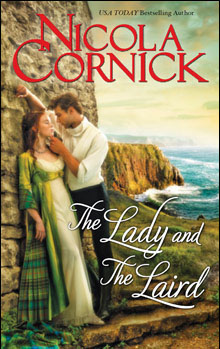
Nicola Cornick: “The Lady and the Laird”

About The Lady and the Laird

Untitled-1Lady Lucy MacMorlan may have forsworn men and marriage, but that doesn’t mean she won’t agree to profit from writing love letters for her brother’s friends – letters that become increasingly racy as her fame grows. That is, until she deliberately ruins the betrothal of a notorious laird, Robert, Marquis of Methven. 

Past centuries of bloodshed have left the Methven and MacMorlan families bitter enemies and Robert is furious that Lady Lucy’s letters have cost him the bride he needs so urgently to save his ancestral clan lands. Now he makes Lucy a shocking proposal;  in return for his silence she must become his wife and provide him with the heir he needs. It is an inconvenient marriage of convenience but can the rugged laird and the bluestocking beauty fight against the power of love?

Susana Says: Enjoyable Scottish-Set Regency, 4/5 Stars

SusanaSays3Lucy became the perfect duke’s daughter after her twin sister Alice died tragically. Overcome by a sense of misplaced guilt and fear, she has decided to remain single and devote her life to charitable enterprises. Robert, Earl of Methven, discovers that she has been writing racy letters to help her brother’s friends seduce ladies, and since one of them was his own betrothed who subsequently deserted him at the altar, he demands that Lucy take her place.

However, before these two can even begin to find a happy-ever-ending, they must both confront tragedies from the past, not to mention an unscrupulous enemy who will do anything to keep them apart.

Both Lucy and Robert are likable characters who showed great courage in helping each other face their fears of the past, and Cornick obviously knows how to tell a good story. A couple of holes in the plot keep this from being a five-star story, but Cornick’s fans will definitely want to read this and subsequent books in her Scottish Brides Trilogy.

Available

Amazon

About the Author

nicoleUSA Today bestselling author Nicola Cornick writes witty and passionate historical romance for HQN Books. Publishers Weekly has described her as a rising star of the Regency arena and her books have been nominated three times for the prestigious RITA® Award from the Romance Writers of America. She lives in the English countryside with her husband, an adorable Labrador and a crosspatch cat.

Contacts

WebsiteFacebookTwitterGoodreads

Georgie Lee and “Hero’s Redemption”

The Short and Shorter of It

by Georgie Lee

A while back, The Guardian newspaper in Britain ran an article questioning why long novels are now in vogue. The author pointed to a number of classic novels from Charles Dickens’ A Christmas Carol to Muriel Spark’s The Prime of Miss Jean Brodie (one of my favorites) and how each one only tips the scales at under 200 pages. The thrust of the article was aimed at literary fiction, but the author encouraged readers to actively look for shorter stories to read. When I read this, I jumped out of my chair and pumped my fist with excitement yelling “I like to write short!”

Now, please understand that I have nothing against long novels. The Stand (1000+ pages) and Watership Down (400 pages), are two of my favorite novels and I’ve read them both many times. I can also write longer books, as evidenced by my upcoming Harlequin Historical Engagement of Convenience. However, there have been many times in the past when I sat down to write and my word count stayed stubbornly stuck at under 60,000. My brevity can probably be blamed on my writing background. For many years I wrote poetry and screenplays. These are not high word count genres and old habits can be hard to break. My most recent release, Hero’s Redemption, despite being chocked full of blackmail, passion and angst over the past and an uncertain future, is only 34,000 words. War and Peace it is not and that’s OK. Sometimes, writing short is just the thing a writer needs.

About ten month before my contemporary novel, Labor Relations, was scheduled to release in February 2011, I had a small crisis. Here I was ready to debut a contemporary and the only novel in my backlist was a Regency romance. I needed some back list titles and I needed them fast.  However, life at the time was very busy and I didn’t have a lot of time to write (who does?). More and more e-publishers were asking for novellas and that’s when the idea hit me. I like to write short, so why not go with what I know and write to my strength. Over the next year, I wrote two contemporary novellas and one novella set in ancient Rome. At the same time, I continued working on longer novels. However, finishing and publishing the novellas gave my professional confidence a boost and allowed me to create a backlist. So, while I now focus on writing longer, I challenge you to give short a try. Sometimes it is just the thing you need to stay in the writing and publishing groove and, as I’ve discovered in my own writing, there is a lot you can pack into a little story.

About Hero’s Redemption

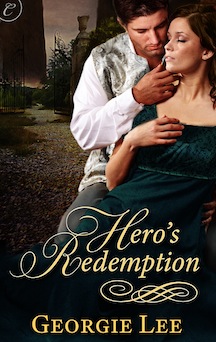
HerosRedemptionFinal (2)London, 1817

Devon, the Earl of Malton, is a hero for his deeds at the Battle of Waterloo. But he suffers terrible nightmares, and drinks himself to sleep most nights. A habit he vows to break when he awakes one morning to find a woman sharing his bed, no memory of how she got there, and her angry brother at his door.

Cathleen is mortified when her wastrel brother and his greedy wife propose a blackmail scheme involving the earl, but as a penniless war widow she’s at their mercy. She goes along with the plan and sneaks into Devon’s bed one night, and ends up comforting him through a night terror.

Charmed by her beauty and kindness, Devon determines that rather than pay the blackmail, he will offer his hand in marriage to Cathleen. Although she is deeply attracted to the stoic earl, Cathleen cannot understand why Devon would want to marry her. What she doesn’t know is that Devon owes her a debt that can never fully be repaid…

About the Author

A dedicated history and film buff, Georgie Lee loves combining her passion for Hollywood, history and storytelling through romantic fiction. She began writing professionally at a small TV station in San Diego before moving to Los Angeles to work in the interesting but strange world of the entertainment industry.

Georgie5.3-1Her first novel, Lady’s Wager, and her contemporary novella, Rock ‘n’ Roll Reunion are both available from Ellora’s Cave Blush. Labor Relations, a contemporary romance of Hollywood, and Studio Relations, a love story set in 1935 Hollywood, are currently available from Montlake Romance. Look for her Regency novella, Hero’s Redemption from Carina Press on July 29, 2013, and her Regency novel, Engagement of Convenience, from Harlequin Historical on October 1, 2013.

When not writing, Georgie enjoys reading non-fiction history and watching any movie with a costume and an accent. Please visit  www.georgie-lee.com for more information about Georgie and her novels.

Contacts

Facebook: https://www.facebook.com/pages/Georgie-Lee/259729314054846?ref=hl

Twitter: @GeorgieLeeBooks

Goodreads: http://www.goodreads.com/author/show/2985551.Georgie_Lee

Blog: http://georgielee.blogspot.com

Website: www.georgie-lee.com

Available

Carina Press • Amazon

Welcome to the History Lovers Grand Tour & Scavenger Hunt!

—International—

graphic4medweb copy

As the name implies, we’re a group of readers and authors who love both history and romance, especially when they’re combined in a delightful story. If you feel the same, you’re welcome to join us on our Facebook page and converse with us about historical romance fiction.

Below you’ll find authors of historical romances set in a wide variety of time periods. Perhaps by participating in our Grand Tour you’ll discover some new authors for your future reading pleasure. Hop around to your heart’s content, feel free to comment on the posts, hunt for answers to the authors’ questions, and perhaps you’ll be one of our 25 lucky prize winners (see contest details below)…although you’re already a winner if you find a new story to read, do you not agree?

The theme for this tour is Courting Rituals, and for my post, I’ve chosen to talk about the difficulty of finding suitable husbands for young ladies confined to the country.

The Plight of Country Ladies of Limited Means

Previous posts about the London Season and Almack’s have mentioned the most appealing attractions in London, and I’m sure these will be described by some of the other Regency authors on this tour. But what I’d like to consider here is how difficult it could be for a genteel young lady confined to the country to find a suitable husband.

All you have to do is recall the situation of the Bennet family from Pride and Prejudice to understand that it was not an easy task, even if the young lady was exceedingly pretty like Jane or appealing in other ways like Lizzie. While the Bennets possessed no wealth or aristocratic family connections to give them entrée into the elegant ballrooms of London society, they were still of sufficiently high social status to prevent them from making matches with the lower classes: farmers, tradesmen, etc. Consequently, young ladies like Lizzie Bennet and Charlotte Lucas often had to choose between a mundane marriage to a man like Mr. Collins or a life of blessed spinsterhood. Jane Austen herself chose the latter when her own Mr. Darcy failed to appear.

Genteel country families did socialize, of course. There were dinners and parties and, for those who had the means, house parties, where guests were invited to spend a week or more hobnobbing with their host family. Young people could become acquainted at local assemblies or at other community activities, such as church services or local fêtes, such as the one Theresa and Damian organized for the village of Granville in Treasuring Theresa.

However, in many places there was a dearth of eligible suitors. Well-to-do families could send their sons and daughters to London to find spouses, which reduced the number even further for young ladies like the Bennet daughters. All things considered, Mrs. Bennet’s excitement when she heard Netherfield was to be let to a young single man of means seems only natural. Such an opportunity did not come often; surely one of her girls could manage to entice him into marriage.

The Bennet family’s situation was an unenviable one also because the estate was entailed to the nearest male relative, which meant that the house and attached lands would pass to Mr. Collins upon Mr. Bennet’s death. While there would be a jointure of some sort for his widow and daughters, it wouldn’t be much, and they would have to find another place to live as well. If one of the daughters could marry well, they would be able to assist their mother and sisters when Longbourne passed to Mr. Collins.

Lady Theresa

Lady Theresa

Although she is an earl’s daughter and did have a London Season, Lady Theresa is a country girl who has always expected to marry the boy next door, Reese Bromfield, the squire’s son. But when her father loses his fortune and Reese returns from London with a fiancée, Theresa’s options are few. To make it worse, her father becomes ill and seems determined to match Theresa with his heir, a distant cousin she despises…and who returns her feelings full-force. But what other options does she have? Marriage to a Cit in search of aristocratic connections? A life of servitude as a governess or companion? What would you do in a similar situation?

The prize I am offering is a wooden gift box of goodies from London and Scotland ($50 value) and it will go to one lucky responder (chosen randomly) to the question: What would you do if you were in a situation similar to Lady Theresa’s? Be sure to include your email address with your comment.
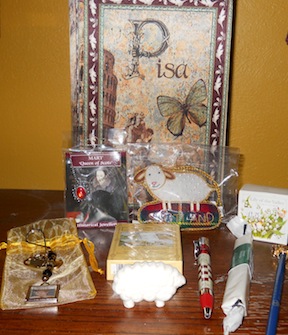
Inside the lovely wooden box: Mary Queen of Scots necklace, sheep ornament, Treasuring Theresa keychain in bag, bar of soap, bath crystals, sheep soap, pen, pencil, Castles and Palaces of Scotland playing cards

Inside the lovely wooden box: Mary Queen of Scots necklace, sheep ornament, Treasuring Theresa keychain in bag, bar of soap, bath crystals, sheep soap, pen, pencil, Castles and Palaces of Scotland playing cards

Here’s my question for the scavenger hunt: In the British system of primogeniture, titles and estates were often entailed, or required to be passed on, to what person after the death of the owner?

Click on the History Lovers Grand Tour page to fill in the answer, and you may continue on from there. Enjoy!

About Treasuring Theresa

At the betrothal ball of the man she had expected to marry herself, Lady Theresa latches on to Damian Ashby, hoping to divert attention from her own humiliating situation. Of course, she’s not seriously interested because he’s a useless London fribble, in her opinion. He is not favorably impressed with her either.

Still, she’s the daughter of an earl, and he’s the heir to her father’s title and estate, so they are destined to spend more time in each other’s company…sooner rather than later. And who knew that the two of them would develop an unlikely attraction to one another?

But can a London swell and a country lady ever make their diverse lives and interests work together?

Excerpt

The dancing had already begun when they arrived. Damian stayed close at Theresa’s side, his arm lightly around her so that his fingers pressed into the small of her back, while she introduced him to her friends and acquaintances. They shared a set of country dances, and when he returned to her side after fetching a glass of lemonade, she was chatting merrily with a cluster of her friends, so he danced a trio of sets with some of the other young ladies. He managed to get back to her in time for the supper dance, just ahead of a tall, fresh-faced youth in a poorly tied Mathematical and a waistcoat that went out of style years ago.

Damian Ashby, Lord Clinton

Damian Ashby, Lord Clinton

“When does the waltzing begin?” he whispered as they performed the elaborate steps of the country dance. “I must claim the first waltz.”

“We do not waltz here,” she whispered back. “It’s considered far too scandalous. Besides,” she added when they came back together, “we have already danced twice. A third would make us the talk of the shire.”

He chuckled. “Isn’t that what you were aiming for at the Sedgely ball? A juicy scandal to divert the gossips’ attention?”

She looked up at him in surprise. “You know,” she said, “I just realized I don’t care about that anymore. I’m glad Reese is happy with Eugenia.”

“Indeed,” he managed, wondering why he suddenly felt so relieved.

She did condescend to dance another set with him, and Damian hoped all of the old biddy gossips had noticed.

On the return trip, Mrs. Noble babbled on incessantly about gowns and stale cakes while Damian found his eyes lingering over the curvaceous form of the young lady on the seat across from him, the light of the moon being thankfully dim enough to conceal his bold appraisal.

She was silent, in a reflective mood, her head turned toward the window and the shadowed images of the scenery outside.

“Imagine that scamp Dickie Fielding enticing the Hampton chit to meet him in the garden!” Mrs. Noble exclaimed indignantly. “Why I thought her father would explode when they were discovered.” She lowered her voice. “I have it on good authority that they were embracing,” she revealed. “A dreadful scandal indeed should they not marry post-haste.”

Theresa’s head shot around to face him, and he knew she was recalling that night at the betrothal ball when she’d tried to lure him out to the terrace and he’d made a hasty escape. He rather thought now that he would enjoy a pleasant interlude alone in the moonlight with her. He would hold her against him, her head on his chest, while his hands swept over her curves. When he felt her pulse rising, he would draw her chin toward him and take her lips in a long kiss while his other hand would cup her breast, already pebbling with her desire.

Damian froze. What was he thinking? Cousin Theresa was no strumpet. The only way he could indulge in such carnal delights with her would include an obligatory wedding first. And that was out of the question.

Wasn’t it?

Available

Ellora’s Cave • Amazon • Barnes & Noble • AllRomance eBooks • Kobo • Sony

History Lovers Grand Tour Authors

Rue Allyn • Amylynn Bright  • Collette Cameron • Téa Cooper  • Beverley Eikli  • Susana Ellis • Aileen Fish • Debra Glass  • Amy Hearst • Evangeline Holland • Piper Huguley • Eliza Knight  • Kristen Koster • Cora Lee  • Georgie Lee • Suzi Love • Denise Lynn • Deborah Macgillivray  • Barbara Monajem • Shelly Munro • Ella Quinn • Eva Scott  • Shereen Vedam  • Elaine Violette

Prizes

  1. Each author will offer a prize for a contest, the specifics of which is set up entirely by her. The contest will be open to all participants, regardless of geographic location. For logistical purposes, authors may substitute a digital prize (gift card, etc.) of equal value for another prize that might prove difficult to mail to a distant location.
  2. The Grand Prize for the Scavenger Hunt will be awarded to the participant with the most correct answers to the authors’ scavenger hunt questions.  In case of a tie, the winner will be chosen randomly.
  3. The winners will be posted on the History Lovers Grand Tour page the following week.

Scavenger Hunt

  • Click on the above links to each author’s blog. The blog tour entry can be identified by the graphic in the upper right corner of the post. If it is not the top post, look for the graphic in a prominent location on the sidebar, and click on it to find the blog tour entry.
  • Read the blog post and the author’s short answer question at the end. Locate the answer to the question, then click on the link to the History Lovers Grand Tour page and type in the answer next to the author’s name. Be sure to fill in the your name and email address!
  • You may go back to same page and read more of the author’s post (excerpt, etc.) or you may click on another author’s name on the answer sheet and repeat the process.
  • When you are finished, check to make sure the spaces for your name and email address are filled in correctly, and submit your answer sheet to the tour coordinator. If you submit an incomplete answer sheet, you may come back later and make another submission with the remaining answers when you have more time.
  • Any questions about the scavenger hunt should be directed to the tour coordinator .
Regency Rites: Almack’s Assembly Rooms

What was Almack’s?

Almack’s was founded in 1765 by a Mr. McCall. The building was located on King Street just off St. James Street* and included a large ballroom, as well as supper rooms and card rooms.

Almack’s was ruled by a select committee of society matrons known as the Lady Patronesses. These ladies ruled the club with an iron hand; only the crème de la crème (about 25%) of London society were authorized to cross the threshold of this exclusive circle. Each application for membership was carefully scrutinized by the high-handed patronesses, who were not above using their power for retribution against their rivals or other personal reasons.

The food served was not of the best quality. Alcohol was not served—only tea and lemonade.The floor of the ballroom was said to be dreadful, and the rigid rules set by the patronesses could not be broken by anyone. It is said that the Duke of Wellington, the hero of the Peninsular War, was refused admission because he did not sport the proper dress—knee breeches, white neckcloth, and a long-tailed coat. The doors were locked precisely at eleven o’clock and no one was allowed in after that for any reason. There was a long list of”do’s” and “don’ts” (mostly don’ts) for the young debutantes, and any infraction could result in expulsion from the club and social censure. When the waltz was finally given the seal of approval—it was condemned for years as being scandalous due to the close proximity of the dancers’ bodies—the young ladies had to be individually approved to dance it by one of the patronesses.

Almack's Assembly Rooms

Almack’s Assembly Rooms

Almack’s balls were decidedly not anywhere near the grandest balls of the London Season, so why did the matchmaking mothers of the haut ton scramble to get their hands on those square cardboard vouchers that would gain them admittance?

One word—marriage. Almack’s was the exclusive “marriage mart” of the ton. While potential spouses for your sons and daughters could be found elsewhere, the “best” ones could ideally be found at Almack’s, where the average, everyday riffraff need not apply. Who wouldn’t want their daughter to find a wealthy, well-connected—perhaps titled—spouse to enrich the family fortunes? Matchmaking mothers everywhere yearned to have their marriageable offspring included among the exclusive company of Almack’s.

Who were the Patronesses?

The Lady Patronesses—six or seven at any one time—were:

Lady Castlereagh

Lady Castlereagh

Lady Castlereagh (Emily Anne) was a wealthy earl’s daughter who married the Viscount Castlereagh (later the 2nd Marquess of Londonderry), who held many political posts (Secretary of States for War, Secretary of State for Foreign Affairs, and leader of the House of Commons) during the period. Lady Castlereagh was the one who insisted that the door to Almack’s be closed promptly at eleven. She and Mrs. Drummond Burrell were both known for their disdainful arrogance.

Lady Jersey

Lady Jersey

Lady Jersey, “Queen Sarah,” “Silence,” or “Sally” to her close friends was the wealthy daughter of the 10th Earl of Westmoreland who married the 5th Earl of Jersey. Lady Jersey’s mother-in-law, Lady Frances Jersey, was at one time the mistress of the Prince of Wales (it was she who recommended he choose Princess Caroline for his wife), and her parents eloped to Gretna Green (quite the scandal). Lady Jersey’s younger sister married the brother of the scandalous Lady Caroline Lamb, but when the latter ridiculed her in her vengeful novel Glenarvon, Lady Jersey barred her from Almack’s forever.

Lady Sefton

Lady Sefton

Lady Sefton (Maria) assisted many a green girl to negotiate the hazards of the marriage mart. Her husband was an enthusiastic sporting man, and a member of the Four-in-Hand Club (an elite club for only the best drivers).

Lady Cowper

Lady Cowper

Lady Cowper (Emily) was the daughter of the great political hostess, Lady Melbourne, and due to her mother’s numerous affairs, her paternity was never verified. She disapproved of her sister-in-law, Lady Caroline Lamb, but was otherwise known as one of the kindest of the patronesses.

Princess Esterhazy

Princess Esterhazy

Princess Esterhazy (Thérèse) was the grand niece of Queen Charlotte and never let anyone forget it. Her husband Prince Paul Esterhazy served as the Austrian ambassador to England 1815-1842. She and the Countess Lieven demonstrated the utmost in continental sophistication.

Countess Lieven

Countess Lieven

Countess Lieven (Dorothea) was the first foreigner to serve as a patroness of Almack’s. Her husband the Count was the Russian ambassador to England from 1812 to 1834. Besides being a leader of London society, she was a significant political force in Great Britain, France and Russia.

Mrs. Drummond Burrell

Mrs. Drummond Burrell

Mrs. Drummond Burrell (Clementina) was a great heiress and daughter of an earl who later became a baroness when her husband succeeded to his father’s title. Although one of the younger patronesses, she was considered the most arrogant and haughty of them all.

Appearance was everything.

It’s interesting to note that while London society, as demonstrated by the Lady Patronesses, demanded a high degree of moral perfection, it was really the façade that counted. As long as you behaved with discretion—i.e., didn’t get caught—you could have adulterous affairs with impunity. While it was expected that wives would remain faithful to their husbands until the birth of an heir or two, after that, it was quite common for both husband and wife to indulge in affairs. It was widely known that Lady Melbourne had affairs with politically powerful men who fathered many of her children, but her the importance of her position precluded any open censure.

Most of the Lady Patronesses of Almack’s had notorious affairs. Emily Cowper, taking the advice of her mother, the above-mentioned Lady Melbourne, to be true to her lover rather than her husband, had a long affair with Lord Palmerston, who later became Prime Minister, and after her husband died, they married and lived happily ever after.

As long as it was behind closed doors—and you were wealthy and important enough—you could get away with a considerably lower standard of behavior. Of course, marriages tended to be more about property, wealth and family connections than any sort of love or affection, so perhaps such scenarios were a natural result of cold-blooded unions.

The King Street location of Almack’s is an office building now; when I was there two weeks ago, it was covered with scaffolding. Christie’s Auction House is across the street.

The Regency Rites series

Regency Rites: The Well-Dressed Regency Lady 

Regency Rites: Presentation at Court

Regency Rites: Almack’s Assembly Rooms 

Regency Rites: The London Season

Regency Rites: The London Season

The Haut Ton

The haut ton referred to the members of some three hundred families who owned large estates that supplied their primary income. Sometimes they were called “the upper ten thousand.” Not all were titled, but they were usually at least well-connected and wealthy enough to stand the enormous expenses of socializing with the crème de la crème of English society, which included:

  • owning or renting a suitable residence in a fashionable area of London (in addition to a great country home on their estate), along with the requisite servants, stables, etc.
  • extensive wardrobes in the first stare of fashion for all members of the family who participated in the Season
  • food, drink, decorations, musicians, etc. required to provide entertainment for other members of the ton in grand style
  • costs of renting theatre boxes, purchasing entrance tickets to public entertainments, such as the Vauxhall Pleasure Gardens, Astley’s Amphitheatre, etc.
  • allowance or pin money for wives, sons or daughters.

What was the London Season?

Lady Theresa

Lady Theresa

The London Season evolved from the legislative sessions of Parliament, which would run roughly from January/February to June. Generally, a peer would bring his family to London sometime after the holidays, which provided a perfect opportunity for their families to socialize and seek suitable spouses for their children. The Season didn’t heat up until spring, though, and by the end of June, most of the first families escaped the odiferous heat of London for the fresh air of their country estates or perhaps a seaside resort.

Many families would return to London in September for the “Little Season,” which was much less prestigious, but few were left in Town by the end of November.

Essentially, anyone who was anyone would participate in the London Season, even if they had to run up enormous debts to do it.

In Treasuring Theresa, an earl’s daughter such as Lady Theresa would be expected to have a London Season and make a suitable marriage. Unfortunately, however, her first Season was unsuccessful, and later, there was no money for it, so when childhood sweetheart Reese Bromfield broke her heart by betrothing himself to another, Lady Theresa’s options for marriage were limited. Incidentally, Reese Bromfield, as the son of a squire, was not highly-connected, but as the son of a wealthy member of the gentry, he would have been welcomed to participate in the ton, although not, perhaps, in the highest circles.

What did people do in the London Season?

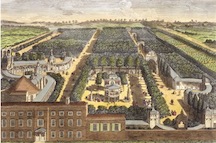
Vauxhall Pleasure Gardens

Vauxhall Pleasure Gardens

London offered—and still does to this day—an endless number of delights for visitors, regardless of status. In the early 19th century, one could walk or ride through the park (Hyde Park or Green Park were quite popular), visit the British Museum or any number of museums or galleries, attend a circus performance at Astley’s Amphitheatre, visit the Pleasure Gardens of Vauxhall with its nightly fireworks, and attend the theatre or opera. The best shopping in the world could be had on Bond Street, and for the gentlemen there was racing, boxing, gaming, and all sorts of attractions that couldn’t be found on a remote country estate.

For the haut ton, there were balls and parties, soirées, routs, musical evenings, Venetian breakfasts, al fresco teas, extravagant dinners…all sorts of opportunities to hobnob with wealthy aristocrats and politicians and make connections that could potentially lead to even higher status and prestige.

Hyde Park

Hyde Park

It was all great fun—but very expensive, especially for those who succumbed to the gambling fever. Entire fortunes were won and lost in this period—and not just by the gentlemen either. Before she died in 1806, Georgiana, the Duchess of Devonshire, had lost what amounts today to a billion dollars. (See Lady P’s insights on that here.)

What did people do the rest of the year?

Whatever they wished! Many spent the summer on their country estates, which generally sported expansive mansions with huge ballrooms that could be used for house parties, during which they would entertain their friends from other parts of England for a week or more. Sometimes gentlemen took a personal interest in their estates, but often the management was left to a steward or estate manager so that the owner was free to participate in local society, or travel to the seaside, or take the waters at a spa resort, such as Bath. Hunting and fishing were popular sports for the gentlemen.

Damian Ashby, Lord Clinton

Damian Ashby, Lord Clinton

In Treasuring Theresa, Damian Ashby was a society dandy who despised the country, except for the income it provided him. Lady Theresa despised the superficiality of the ton and preferred life on her country estate, where she counted among her friends villagers and commoners, as well as the local gentry. How will these two seemingly complete opposites manage to bear each other’s company for an extended period of time as her dying father wishes?

About Treasuring Theresa (a sweet Regency short story)

At the betrothal ball of the man she had expected to marry herself, Lady Theresa latches on to Damian Ashby, hoping to divert attention from her own humiliating situation. Of course, she’s not seriously interested because he’s a useless London fribble, in her opinion. He is not favorably impressed with her either.

Still, she’s the daughter of an earl, and he’s the heir to her father’s title and estate, so they are destined to spend more time in each other’s company…sooner rather than later. And who knew that the two of them would develop an unlikely attraction to one another?

But can a London swell and a country lady ever make their diverse lives and interests work together?

Note: Excerpts and additional reads—including an epilogue to this story—are available here.

Available

Ellora’s CaveAmazonBarnes & NobleAllRomance eBooksKobo

The Regency Rites series

Regency Rites: The Well-Dressed Regency Lady 

Regency Rites: Presentation at Court

Regency Rites: Almack’s Assembly Rooms 

Regency Rites: The London Season

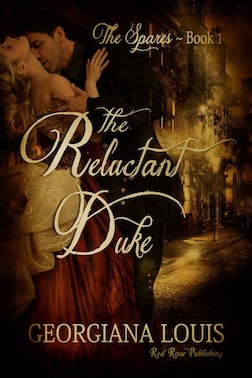
Georgiana Louis and “The Reluctant Duke” + Giveaway

Georgiana is offering a digital copy of The Ruined Marquis, the second in the Spares series, to the most original commenter.

Why I Love the Regency Period

I did an interview on an American radio station last week and the host asked me why I wrote about the Regency period, as there was no Regency period in Australia. I had to laugh, because I rarely write about things I know about. Where’s the fun in that?

Instead I write about places I dream of, times that interest me.

Ever since I picked up Sabrina Jeffries’ To Pleasure a Prince in a secondhand book store, I have been hooked on the Regency period. And it’s not because of the clothes either!

I actually find the clothes to be quite horrible, and don’t write much about them.

Instead, what I love, are the rules, the society and most of all I love the changes within society that began through that period. The way love matches within the aristocracy and gentry became more common, versus the contracted marriages of the the late 18th century.

I love the rules about how a lady must act, the ridiculous double standards for gentlemen.

The Regency period was a time when ladies became more than just a pretty society piece. Ladies who had conversation became more prized, and I think that is what totally enthralls me.

I hope you enjoy my Spares series—I loved writing it. My four, tortured heroes and the women who bring them to their knees.

About The Reluctant Duke

Colin Lyre, recently inherited 10th Duke of Lincoln, has been told his whole life that he is superfluous to his family.

When he must deal with the responsibility and stress that comes with his new title, he flounders rather badly. He is determined do his ‘duty’’ and marry an ‘appropriate Duchess.’

Life throws Colin’s plans wayward when he rescues the beautiful Annabelle from a ball. She makes him realize how much better his life could be, but he doesn’t know if he truly deserves such happiness.

Annabelle wants nothing to do with the responsibility of marrying a title. She simply wants to make a suitable match with a gentleman who can support her family.

Colin is Annabelle’s perfect prince until she realizes what life as his life would be like. However, making the rational decision to stay away from one another is much harder than either of them expects.

Available

Red Rose Publishing

Excerpt

TheReluctantDuke_LRG“Thank you so much sir. I need to get out of here before anyone sees me. Can you help me please?” She implored through her ministrations.

“Oh… of… course I can,” Colin stammered, his mind racing with the logistics of how to get her out of the grounds unseen. Why hadn’t he been thinking about that before she mentioned it? He should have been the one to offer aid.

“I can’t be found like this,” Her voice broke on the words and two fresh tears slipped down her cheeks. “No one would ever marry me.”

Colin’s heart all but broke at the pitiful look on her face, for it was indeed true. Her beauty and virginity were the two things that would be her greatest assets on the marriage mart. If people regarded her as damaged goods, no one of any consequence would marry her, no matter how beautiful she was.

“I’ll get you out of here, let’s walk towards the front of the house and you can hide whilst I get a carriage.” Colin put his arm gingerly around the angel, ushering her towards the house.

“I’m Annabelle by the way,” she sniffed as she wiped her face again with his now soaked handkerchief.

“Oh … well…” Colin stammered again, how did this beautiful woman keep flabbergasting him? He’d never been so verbally incompetent in his life.

“I think we’re past polite names do not you? After all, you have probably seen more of me tonight than any one should before marriage.”

Colin was shocked by her honest and far too accurate assessment of the situation. It occurred to him if someone saw them in her current state of ‘dress’ it would be his head on the chopping block, or in the parson’s trap as the case may be.

“I do not want to get married,” he blurted out louder than he should have, stopping her in their rather quick race to the front gate.

Annabelle chuckled at him.

“I did not mean I wanted to marry you, my lord. I just meant that considering the state you found me in and after all you have done for me tonight, the least I could do was introduce myself as Annabelle and not Miss such and such, daughter of such and such.” She sighed loudly. “I hate all that.”

Colin smiled despite himself. Was there really a marriageable female here that did not care about connections? He frowned cynically, he did not think she’d feel the same way when she was properly introduced to him.

“I’m Colin,” he smiled shyly at her. He’d never been introduced as just ‘Colin’ in his entire 26 years. What an odd, exhilarating feeling. ‘Colin’ could be anyone, do anything.

“Colin,” she said his name with a slight huskiness that sent a bolt of desire to his groin.

About the Author

all photos sept 2011 282Georgiana Louis is a chiropractor, wife and mother in the real world. However, her passion for writing could not be denied. She fell in love with romance novels at the tender age of eleven. Thousands of books have been read, absorbed and enjoyed since then. More recently, the wonderful world of Regency romance—dashing heroes and beautiful heroines in an era just beginning to accept love matches. Please join her in the fictional world, where everything ends as it should, happily ever after.

Contacts