Archives

The Exeter Road: Basingstoke, Andover and Salisbury and the Events They Witnessed

dust jacket

The following post is the eighth of a series based on information obtained from a fascinating book Susana recently obtained for research purposes. Coaching Days & Coaching Ways by W. Outram Tristram, first published in 1888, is chock full of commentary about travel and roads and social history told in an entertaining manner, along with a great many fabulous illustrations. A great find for anyone seriously interested in English history!

Basingstoke

In 1645 Cromwell took Basing House after a four-year struggle, stripped the lead off the roof of the Abbey in order to cast bullets, leaving the house in ruins. Basingstoke, however was a popular place for coaches to stop for meals.

Between Basingstoke and Andover is a “desolate country” where coaches could make good time. The White Hart in Whitchurch was a “bustling place” where coaches from London to Salisbury and Oxford to Winchester crossed each other.” (Note: it’s still there and has fifteen rooms available should you desire to stay there!)

Andover

Here Henry VII rested from his labours after suppressing the insurrection of Perkin Warbeck; but whether the miserly Tudor put up at the Star and Garter, or the everlasting White Hart, or their medieval equivalents, if there were any, is more than I can say. It was upon Andover to link another royalty with the place, that James II fell back, after the breaking-up of the camp at Salisbury. Here it was that he was deserted by Prince George [Prince of Denmark, his daughter Anne’s husband], remarkable for his impenetrable stupidity and his universal panacea for all contingencies in a catch-word. Whatever happened, “Est-il possible?” was his exclaim. He supped with the king, who was at the moment overwhelmed naturally enough with his misfortunes, said nothing during a dull meal, but directly it was over slipped out to the stable in the company of the Duke of Ormond, mounted, and rode off. James did not exhibit much surprise on learning the adventure, being used to desertion by this time. He merely remarked, “What, is ‘Est-il possible?’ gone too! A good trooper would have been a greater loss;” and left for London—I was going to say by the next coach.

Two important coaching roads diverge about a half-mile out of Andover, which was also the scene of an escaped lioness on the Exeter Mail on October 20, 1816.

Salisbury

salisbury-cathedral-whats-on-in-salisbury“One of the most picturesque towns in the south of England,” Salisbury, where the Quicksilver (which could do 175 miles in 18 hours, our author notes repeatedly) stopped to change horses, “is almost exactly half way between Exeter and London.”

The town of Salisbury, which is eighty miles seven furlongs from Hyde Park Corner, is chiefly remarkable for its cathedral; and it owes this agreeable notoriety to the north wind. This may sounds trange in the ears of those who have not, attired as shepherds, highwaymen or huntsmen, braved the elements in the surrounding plain. Those however who have enjoyed this fortune, will not be surprised to learn, that when the winds raged in the good old days of 1220 round the original church of Old Sarum, which was quite unprotected and perched upon a hill, the congregation were utterly unable to hear the priests say mass; and no doubt they were unable to hear the sermon too. This fact much exercised the good Bishop Poore; and so, a less windy site having opportunely been revealed to him in a dream by the Virgin he got a license from Pope Honorius for removal. Which done—with a medieval disregard for the safety of the local cowherd or government inspector—he aimlessly shot an arrow into the air from the ramparts of Old Sarum, and (unlike Mr. Longfellow’s hero), having marked where it fell, there laid the foundations of the existing beautiful church.

The first among the myriad of royal visitors to Salisbury was Richard II, “who was here immediately before his expedition to Ireland, where he should clearly never have gone.” Apparently the town was not at all impressed with his “amiable inclination towards charging his subjects with his outings,” considering the fact that his household consisted of “ten thousand persons, three hundred of whom were cooks” and for him they had to provide tables. The town “a short time after expressed their thanks for his visit, by, with almost indecent alacrity, espousing the cause of Henry.”

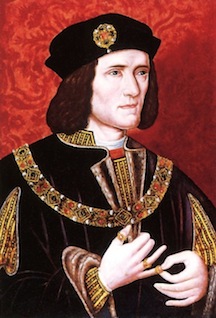
In 1484
Richard III

Richard III

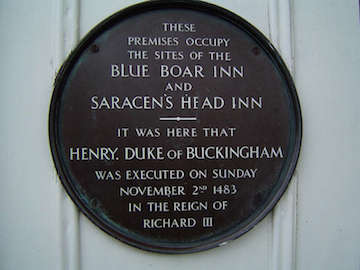
…the hunchbacked Richard honoured Salisbury with his presence; but he was not I expect in the best of tempers, for here to him was brought the Buckingham we have all read of in the play, who had just seized the fleeting opportunity to head an insurrection against the king, in an unprecedentedly wet season in Wales. The result was that he was unable to cross the Severn, and this misfortune brought him too to Salisbury, where Richard was waiting to superintend his execution at what is now the Saracen’s Head.

In the courtyard of this inn, which was then called the Blue Boar, and not “in an open space,” as Shakespeare has described it (as if he were speaking of Salisbury Plain), Buckingham had his head cut oft according to contemporary prescription. We have none of us seen the episode presented on the stage, but we have read the carpenters’ scene, which Shakespeare wrote in, to give the gentleman who originally played Buckingham a chance, and allow a few moments more preparation for Bosworth Field. And we may recollect that it consists princiapply in Buckingham asking whether King Richard will not let him speak to him, and on being told not at all, informing the general company, at some length, that it is All-Souls’ Day, and that as soon as he has been beheaded, he intends to commence “walking”.
plaque2

Although the inn has been replaced by Debenham’s, a department store, some say they have seen or experienced the Duke’s ghost, so ladies, you might want to reconsider using the dressing rooms there—just an FYI.

After Richard and Buckingham, there came to Salisbury in the way of kings, Henry VII in 1491. Henry VIII in 1535 with Ann Boleyn, already in all probability engaged in those sprightly matrimonial differences as to men and the things which culminated the year following on Tower Green. Next in order, came to Salisbury, Elizabeth, bound for Bristol, bent, as on all her royal progresses, on keeping her nobility’s incomes within bounds, and shooting tame stags that were induced to meander before her bedroom windows. After the virgin queen came James I, who liked the solitudes which surrounded the Salisbury of those days, for the two-fold reason, firstly, because they saved him in a large measure from the invasion of importunate suitors (who were afraid of having their purses taken on Salisbury Plain before they could proffer their supplications), and, secondly, because they were well stocked with all sorts of game on which he could wreak his royal and insatiable appetite for hunting. The “open” nature of the country might perhaps be added as another reason for the sporting king’s liking for the place: for James was no horseman, and as he was in no danger of meeting a hedge in an area of thirty miles, the going must have suited him down to the ground.
Sir Walter Raleigh

Sir Walter Raleigh

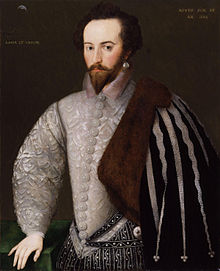
It was also hear that Sir Walter Raleigh, upon his return to England from an unsuccessful expedition to Spain, tried to gain audience with James to explain himself and beg pardon, but was forced to return to London where he was imprisoned and executed.

The merry monarch [Charles II] was here twice, but on neither occasion, I suspect was he peculiarly merry; for after the battle of Worcester, when he lay concealed near the town for a few days, and his companions used to meet at the King’s Arms in John Street, to plan his flight, the Ironsides were much too close on his track to allow opportunity for jesting; and when he came here as king in 1665, all but the most forced mirth was banished from a court which dreaded every day to be stricken by the plague.

 Index to all the posts in this series

1: The Bath Road: The (True) Legend of the Berkshire Lady

2: The Bath Road: Littlecote and Wild William Darrell

3: The Bath Road: Lacock Abbey

4: The Bath Road: The Bear Inn at Devizes and the “Pictorial Chronicler of the Regency”

5: The Exeter Road: Flying Machines, Muddy Roads and Well-Mannered Highwaymen

6: The Exeter Road: A Foolish Coachman, a Dreadful Snowstorm and a Romance

7: The Exeter Road in 1823: A Myriad of Changes in Fifty Years

8: The Exeter Road: Basingstoke, Andover and Salisbury and the Events They Witnessed

9: The Exeter Road: The Weyhill Fair, Amesbury Abbey and the Extraordinary Duchess of Queensberry

10: The Exeter Road: Stonehenge, Dorchester and the Sad Story of the Monmouth Uprising

11: The Portsmouth Road: Royal Road or Road of Assassination?

12: The Brighton Road: “The Most Nearly Perfect, and Certainly the Most Fashionable of All”

13: The Dover Road: “Rich crowds of historical figures”

14: The Dover Road: Blackheath and Dartford

15: The Dover Road: Rochester and Charles Dickens

16: The Dover Road: William Clements, Gentleman Coachman

17: The York Road: Hadley Green, Barnet

18: The York Road: Enfield Chase and the Gunpowder Treason Plot

19: The York Road: The Stamford Regent Faces the Peril of a Flood

20: The York Road: The Inns at Stilton

21: The Holyhead Road: The Gunpowder Treason Plot

22: The Holyhead Road: Three Notable Coaching Accidents

23: The Holyhead Road: Old Lal the Legless Man and His Extraordinary Flying Machine

24: The Holyhead Road: The Coachmen “More Celebrated Even Than the Most Celebrated of Their Rivals” (Part I)

25: The Holyhead Road: The Coachmen “More Celebrated Even Than the Most Celebrated of Their Rivals” (Part II)

26: Flying Machines and Waggons and What It Was Like To Travel in Them

27: “A few words on Coaching Inns” and Conclusion

The Exeter Road in 1823: A Myriad of Changes in Fifty Years

dust jacket

The following post is the seventh of a series based on information obtained from a fascinating book Susana recently obtained for research purposes. Coaching Days & Coaching Ways by W. Outram Tristram, first published in 1888, is chock full of commentary about travel and roads and social history told in an entertaining manner, along with a great many fabulous illustrations. A great find for anyone seriously interested in English history!

Fifty Years Later

Mr. Tristram, our illustrious author, wants us to know that travel has undergone a great deal of change from 1773, so he tells us the story of our hero Mirabel (see previous posts) fifty years later, when he’s in his seventies, having lived most of his life overseas and now is returning to England to take the same route to Exeter. Dressed in much the same way he did then, he waits outside the Gloucester Coffee-house for the Exeter Fly, where the young bucks stare at his old-fashioned attire.

Perhaps Mirabel looks like Mr. Bennet from P&P?

Perhaps Mirabel looks like Mr. Bennet from P&P?

The Comet

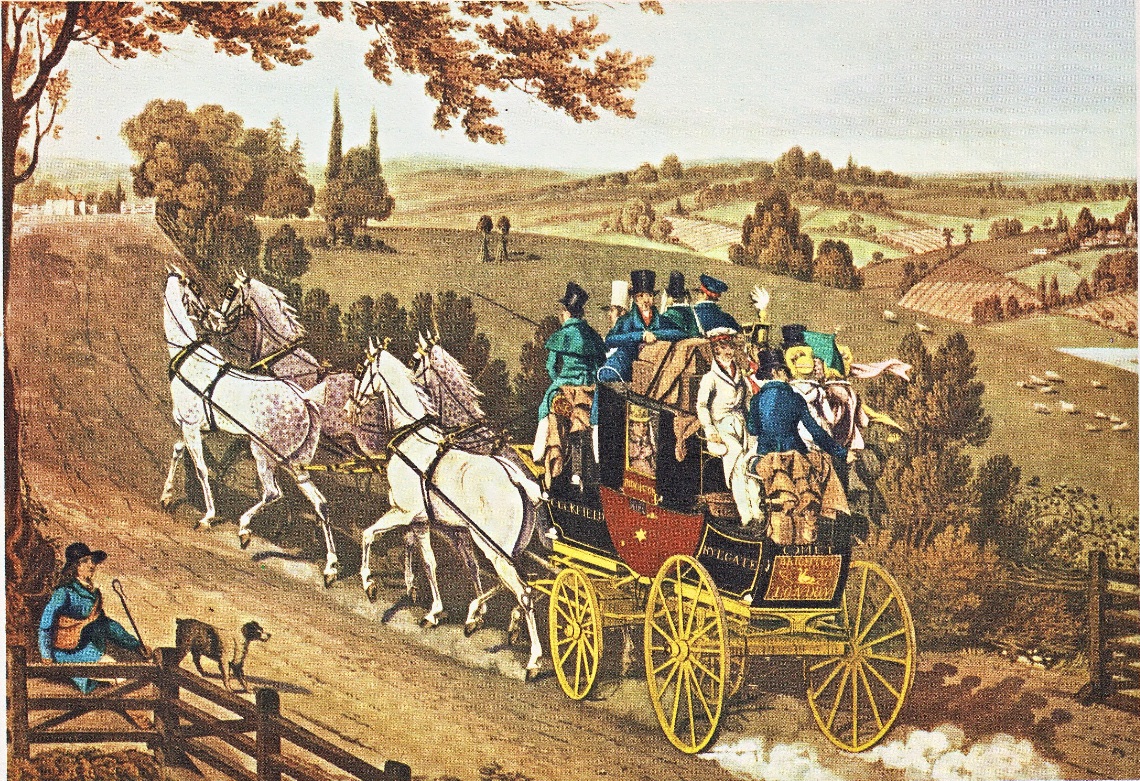
He expects to see the Exeter Fly—a trifle improved upon possibly—but still the Exeter Fly. And what does he see in its stead rapidly approaching? Why, a turn-out drawn by four spanking grays, which he takes to be a gentleman’s carriage, and which would do credit to a crowned head.

comet

The Comet on the way to Brighton

It’s called the Comet and our friend Mirabel soon learns where its name came from. He mistakes the coachman, who is well-dressed and genteel (for he is also the proprietor of the coach) for a gentleman. The Hercules Pillars at Hyde Park Corner no longer exists (recall that Apsley House replaced it soon after our last trip to Exeter), and the roads are macadamized and therefore much smoother than when they were made with stone.

The Comet travels at ten miles an hour and arrives at Hounslow fifty-five minutes after leaving Hyde Park Corner, not stopping at Brentford at all. Mirabel is eager for some breakfast since being told that the coach would change horses there.

The proprietor, smiling superior, blandly tells him that they have changed horses while he was putting on his spectacles. “Only one minute allowed for it at Hounslow, sir, and it is often done in fifty seconds by those nimble-fingered horse-keepers.”

He then proceeds to urge the horses forward in such a way as to cause the coach to rock violently and alarm our valiant Mirabel (remember when he apprehended the highway back in 1773?). In response to his concerns, the proprietor says simply: “Oh, sir, we always ‘spring them’ over these six miles.”

He looks out and sees death and destruction before his eyes, the horses going at the rate of a mile in three minutes, and the coachman in the act of taking a pinch of snuff.

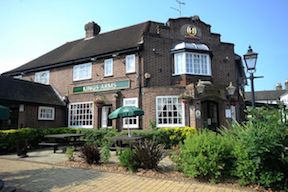
The King's Arms at Bagshot

The King’s Arms at Bagshot

At Staines, the coach takes on a fine thoroughbred “with a twitch on his nose” and Mirabel feels queasy, but the proprietor says, “Let ’em go, and take care of yourselves.” Just as Mirabel expected, the thoroughbred takes off and soon the horses are galloping and the coach rocks unmercifully, but the proprietor manages to steady them, and when Mirabel descends from the Comet at Bagshot, he is grateful to be alive and determined to find a slower and safer coach to take for the remainder of the journey.

The Regulator

Assured that the Regulator will be there in hour, Mirabel finally gets his breakfast and is ready and waiting when the Regulator draws up to the King’s Arms.

He sees…that it is a strong, well-built drag, painted chocolate, bedaubed all over with gilt letters, a bull’s head on the doors, a Saracen’s head on the hind boot, and drawn by four strapping horses.

The inside being full, Mirabel rides on the outside, and is relieved when the Regulator travels at a steady pace for the first five miles out of Bagshot. Once they reach the Hartford Bridge Flats, however, the coachman “springs ’em” to a gallop, and they go so face they catch up to the Comet. In the words of the coachman:

“He [Mirabel] was seated with his back to the horses, his arms extended to each extremity of the guard irons, his teeth set grim as death, his eyes cast down towards the ground, thinking the less he saw of his danger the better;”

and in this state he arrived at Hartford Bridge. Here he dismounted from the Regulator with the alacrity of lightning. “I will walk into Devonshire,” he cries. Then he thinks better of this, and says he will post; then he is told that posting will cost him twenty pounds; and then he says that will never do, and asks whether the landlord of The White Lion can suggest no coach to his notice that does not carry luggage on the top.

The Quicksilver Mail (the Devonshire)

The landlord advises him to take the Quicksilver mail, which travels at night, well-armed, with lamps and guards, and when asked about the speed, demurs and doesn’t mention that the Quicksilver mail (the Devonshire) is the fastest coach in England and commonly called the miracle of the road. But it doesn’t have luggage on top, at least.

Mirabel loses his head, and in spite of the assurances of the passengers that all is right, thrusts it out of the window to see where the deuce they are going to, sees nothing but dust and whirling wheels, and loses his wig.

Alas, we never find out whether or not poor old Mirabel ever got to Exeter, just that the coach reached Basingstoke, and presumably left our elderly hero there.

At least it wasn’t snowing as it did the last time!

 Index to all the posts in this series

1: The Bath Road: The (True) Legend of the Berkshire Lady

2: The Bath Road: Littlecote and Wild William Darrell

3: The Bath Road: Lacock Abbey

4: The Bath Road: The Bear Inn at Devizes and the “Pictorial Chronicler of the Regency”

5: The Exeter Road: Flying Machines, Muddy Roads and Well-Mannered Highwaymen

6: The Exeter Road: A Foolish Coachman, a Dreadful Snowstorm and a Romance

7: The Exeter Road in 1823: A Myriad of Changes in Fifty Years

8: The Exeter Road: Basingstoke, Andover and Salisbury and the Events They Witnessed

9: The Exeter Road: The Weyhill Fair, Amesbury Abbey and the Extraordinary Duchess of Queensberry

10: The Exeter Road: Stonehenge, Dorchester and the Sad Story of the Monmouth Uprising

11: The Portsmouth Road: Royal Road or Road of Assassination?

12: The Brighton Road: “The Most Nearly Perfect, and Certainly the Most Fashionable of All”

13: The Dover Road: “Rich crowds of historical figures”

14: The Dover Road: Blackheath and Dartford

15: The Dover Road: Rochester and Charles Dickens

16: The Dover Road: William Clements, Gentleman Coachman

17: The York Road: Hadley Green, Barnet

18: The York Road: Enfield Chase and the Gunpowder Treason Plot

19: The York Road: The Stamford Regent Faces the Peril of a Flood

20: The York Road: The Inns at Stilton

21: The Holyhead Road: The Gunpowder Treason Plot

22: The Holyhead Road: Three Notable Coaching Accidents

23: The Holyhead Road: Old Lal the Legless Man and His Extraordinary Flying Machine

24: The Holyhead Road: The Coachmen “More Celebrated Even Than the Most Celebrated of Their Rivals” (Part I)

25: The Holyhead Road: The Coachmen “More Celebrated Even Than the Most Celebrated of Their Rivals” (Part II)

26: Flying Machines and Waggons and What It Was Like To Travel in Them
27: “A few words on Coaching Inns” and Conclusion

Renee Reynolds and A Marquis For All Seasons

BBT_AMarquisForAllSeasons_Banner

Renee will be awarding a replica of the locket and chain worn by the heroine in the book, and a copy of A Marquis For All Seasons (choice of print or ebook; print will be autographed) to a randomly drawn commenter during the tour (US ONLY). Click here for the Rafflecopter. Click on the banner to follow the tour and increase your chances of winning.

Renee Reynolds prize giveaway bronze long necklace with locket

About A Marquis For All Seasons

Lady Miranda Leighton and the Marquis of Stafford, Roman de Courtenay, have a similar problem: their families want them to find a spouse. Together they hatch the perfect scheme: they will pretend an attachment and trick their families in their pursuit of one last season of unencumbered entertainment. Yet, in each other’s constant company, they find their ruse giving rise to some surprisingly very real feelings. What happens when you set out to fool society, but only end up fooling yourselves?
Excerpt

“Let us take each day as it comes, and decide entertainments best suited to our attendance closer to the events,” Lord Stafford suggested with a resigned air. He sighed, suddenly weary at the drastic turn his summer was taking. His time would not be his own, it seemed. At least Lady Miranda did not ask him to undertake the ridiculous, such as a trip to Tattersall’s, a gambling hell, or Almack’s. He could well manage a few parties and the occasional turn through Hyde Park. He grinned suddenly. “We shall woo our families with the idea that we woo each other,” he quipped.

Cover_A Marquis For All SeasonsMiranda groaned, rolling her eyes but grinning in response. “And we shall have the most fun possible in the process.”

“Yes, well, that remains to be seen. I suppose it depends on one’s definition of ‘fun,’” he returned as his brows drew together in thought.

“And in one’s ability to experience it. I give you leave to pay me as many pretty comments as necessary,” she teased.

“Then, I give you leave to swoon, but no more than twice, and only after conveying your raptures over the delicacy of my words.”

Miranda squeezed his arm in delight as they neared the gazebo. “I’m not ashamed to admit it: I plan to enjoy our ruse immensely.”

“While I plan to suffer all for the greater good.”

“As long as you ‘suffer all’ with a besotted air, you may suffer as much as you see fit.”

About the Author

AuthorPicAuthor Renée Reynolds grew up all over the world as the daughter of a globe-trotting Marine father and spirited and supportive mother. Their family motto was you can never learn too much, travel too much, or talk too much.

She majored in majors in college, and after obtaining a host of degrees she decided not to use any of them and instead writes about what she cannot do – go back in time to dance at balls, flirt with lords, gentlemen, and scoundrels, and gallop unfashionably down Rotten Row during the most fashionable hour.

After dodging a few Collinses and Wickhams, Renée happily snared a Darcy. Her HEA turned out to be in Texas, where she resides with “the hubs, the kiddos, a boisterous menagerie of indoor and outdoor animals, and a yard of meticulously maintained weeds.” She has happily tagged on this addendum to the family motto: you can never read too much, too often, or too late at night.

WebsiteTwitterFacebookFacebook fan page

Apsley House Celebrates the 199th Anniversary of the Victory of Waterloo

wellington

Arthur Wellesley, Duke of Wellington

Many authors of historical romance are passionate about military history and delight in studying every little detail. I have to admit that I was always bored in history class when we studied battles and dates and stuff. To me, history is the story is people and how they lived, what they thought, and how they struggled through life’s challenges. Which is why I love visiting historical homes and museums and imagining what it was like back then.

As much as Society tried to ignore the military conflicts and live their lives normally (much as we do even today), these wars—particularly the Peninsular War—directly affected them. As a Regency romance author, I don’t (or haven’t) written directly about this war with Napoleon, but it is important to know about it because my characters would have known about it, and it would no doubt have affected their thoughts and attitudes. Britain lost 15,000, the Prussians, 7,000, at Waterloo alone (Napoleon lost 25,000 and 8,000 captured). That’s not counting the losses in the previous years. And keep in mind that France was only an English Channel away, so there was a good chance Napoleon might try to invade Britain itself at some point. (It wasn’t quite like WWII where Britain was actually attacked by German warplanes, but it had to be a concern of the British people during the Regency era as well.)

For that reason alone, I embrace the study of this important battle, and why I returned to Apsley House (Wellington’s home) this weekend for the Waterloo Festival.

Jacques-Louis_David_-_The_Emperor_Napoleon_in_His_Study_at_the_Tuileries_-_Google_Art_ProjectImagine how the history of the world would have changed had Napoleon emerged the victor at Waterloo? Would he indeed have been able to conquer the world? There is no doubt that he was a military genius, but he was human and made some mistakes that contributed to his downfall. Of course, the heavy downpour the day before the battle was a contributing factor as well.

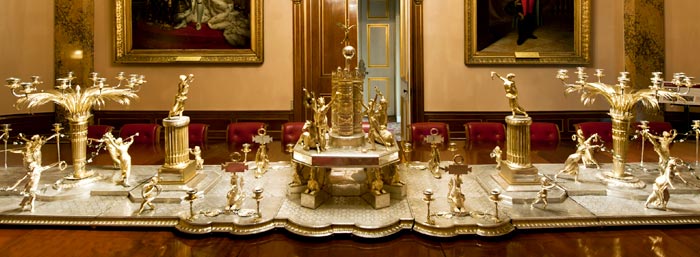
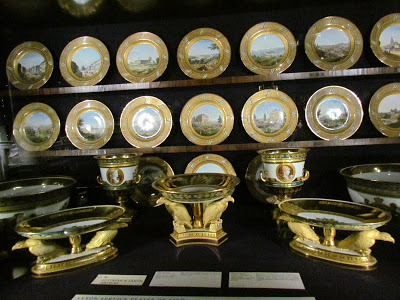
Apsley House is a beautiful home, full of portraits of Wellington and his cronies and important statesmen of the time. (Did you know he and Napoleon were born the same year?) I have a feeling Wellington actually admired Napoleon’s military acumen, in spite of his determination to thwart the man’s ambitions to rule the world. I’ve seen a lot of beautiful homes this summer, and I love to savor each and every piece, but the one thing that really impresses me about Apsley House is the numerous, extravagant gifts that were pressed upon the Iron Duke from grateful statesmen all over the world. The priceless silver pieces, the china and porcelain, the furniture, the sculptures—this extraordinary man did the world a tremendous favor by managing to stop the most cunning, determined, and ambitious man anyone of the time had ever seen.

spectacular-silver

porcelain

silver

Arthur Wellesley, the Duke of Wellington, was like a god!

The Festival

Besides visiting the house itself, during the festival included various events. For example, I enjoyed watching the demonstration of the soldiers of the 95th Rifles. See the video here. I believe they will improve with practice! Then, in the ballroom, another “soldier” gave a rundown of the battle using vegetables, fruits, and baguettes. The end of the demonstration is here.

95th Rifles

95th Rifles

For more photos of Apsley House, Wellington, and Waterloo, check out my Pinterest page here.

Next year is the bicentennial. Are you up for a trip to London in 2015?


Walking Jane Austen’s London: #2 Marylebone and Bond Street

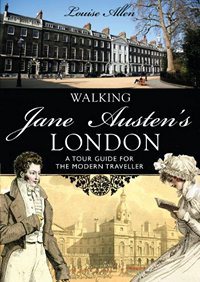
walking-jane-austens-london-by-louise-allen-2013-x-200

Today I thought I’d try one of the walks created by Louise Allen in her book Walking Jane Austen’s London. I decided to start with #2 Marylebone and Bond Street, perhaps because it’s not far from where I’m staying on Crawford Street, and I’ve already walked a bit in that area.

I took the Tube to Bond Street and first walked to Grosvenor Square, which is not on this tour, but is a place mentioned in my recently-completed time travel, and I wanted to see if I’d got it right. It was more or less what I expected, except that I didn’t realize the American Embassy was located there. I think that needs to be mentioned, since my heroine would definitely have known that.

Rant #1

And I have to say this because it’s been so disappointing to see the construction going on everywhere I go. Okay, it’s a good sign that these properties are being maintained and improved. I get that. But it seems like there’s no place I can go to avoid it, not a single park or historical building (or so it seems). It makes it really difficult to imagine the way things were in Georgian times when there are scaffolds and orange cones everywhere. So many of the buildings have been “swept away”, as Louise Allen puts it, and replaced by modern construction as it is. My selfish, spoiled brat side feels cheated that so much of what remains is covered with tarps!

Tour Beginning: Marble Arch

marblearch

To continue, I started the tour at Marble Arch, but forgot to look for Tyburn, so I’ll have to go back later. (Note: I think these tours would be easier for two people instead of just one. It’s hard to read the book and at the same time look for streets and house numbers. In many cases, the original buildings are no longer there anyway, so it’s almost impossible to imagine what it was really like.) In Jane’s day, public executions had been moved to Newgate anyway.

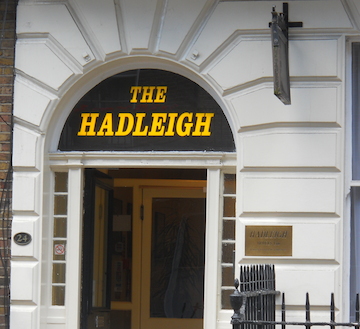
#24

I saw the Austens’ house at No. 24 Upper Berkeley Street, which is now a hotel. Jane’s sister Cassandra stayed there, but there is no indication that Jane herself did.

mews

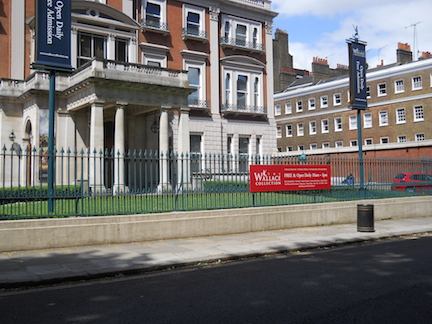
I walked down Berkeley Mews, but it was hard to imagine a mews being there, with horses and carriages and all. Then I walked around Portman Square and took a few photos. Jane dined with her aunt on Orchard Street (which turns into Baker Street) on her first recorded trip to London. I walked down Baker Street (which shows no signs of being “perhaps the handsomest street in London”) and turned into George Street to walk past The Wallace Collection in Manchester Square, which I wrote about last week.

wallacecollection

Wallace Collection, Manchester Square

Wigmore Street is where Lord and Lady Hamilton set up housekeeping together, quite close to where Captain and Mrs. Horatio Nelson were living on Cavendish Square at the same time. I didn’t stop to find Number 11, where Jane stopped at Christian & Son’s, drapers, to buy fabric. (Too many people, and no, they weren’t doing the Jane Austen tour!)

marcus

I saw Harley Street, famous for its doctors, and recalled that the first Harlequin romance I ever read, Dear Doctor Marcus by Barbara Perkins, had a doctor hero on Harley Street. (Nope, actually it was Wimpole Street. Oh well, that was a long time ago, and besides, I walked down nearby Wimpole Street too.) I read that book many, many times!

Not sure how I missed Coutts Bank on Cavendish Square. I recall that Coutts was the banker who kept lending money to Georgiana, Duchess of Devonshire, when she was desperate to find some way to pay her gambling debts. Again, the difficulty of walking and trying to read a book at the same time.

stgeorgesign

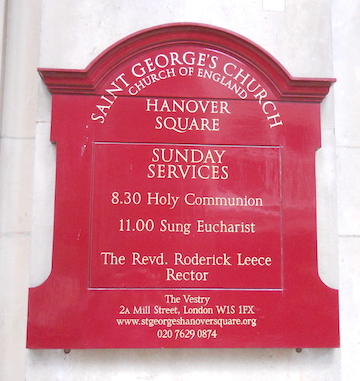
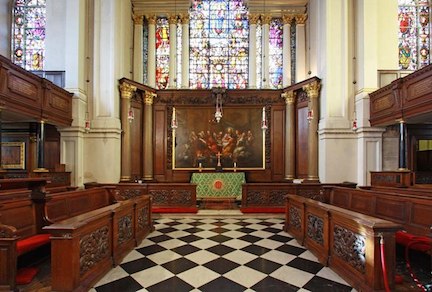
St. George’s, Hanover Square, which was the fashionable place for weddings in the Regency period, was a bit of a disappointment. The doors were closed (alas, it’s closed on Saturday!), and because of its placement on a crowded, busy street, it was hard to get a good photo of it. It also looked a bit dirty and neglected, but the inside—according to photos on the Internet—is another thing entirely! The composer Handel was a member here, and the Earl of Jersey (Sally Jersey’s better half) was a church warden in 1794.

St_George's_Church,_Hanover_Square,_London_W1_-_Chancel_-_geograph.org.uk_-_1533374

St. George’s, Hanover Square

handel

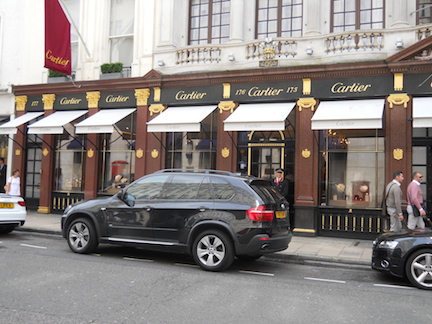
cartierThen it was on to New Bond Street, which, as then, is where you’ll find all the most exclusive shops. Talk about Rodeo Drive in Beverley Hills! Some stores had doormen dressed to the nines standing outside, presumably to only allow the most exclusive people inside. I’m pretty sure I wouldn’t qualify, even with my stylish New Orleans hat, and I didn’t want to melt my credit card, so I admired them all from the outside, as did most of the people in the street, interestingly enough. (I wonder who can afford to shop at these places!)

Building used to be the chemists Savory & Moore

Building used to be the chemists Savory & Moore

The shop opposite No. 143, now a Ralph Lauren, is the original building of chemists Savory & Moore, who included in their clientele such influential people as Wellington and Lady Hamilton, the Duke of Sussex (the brother of George IV).

On the corner of New Bond and Grafton Streets was the location of Grafton House home of high-class drapers Wilding & Kent, of which Jane wrote to her sister Cassandra: “I am sorry to tell you that I am getting very extravagant & spending all my Money; & what is worse for you, I have been spending yours too.”

burlington

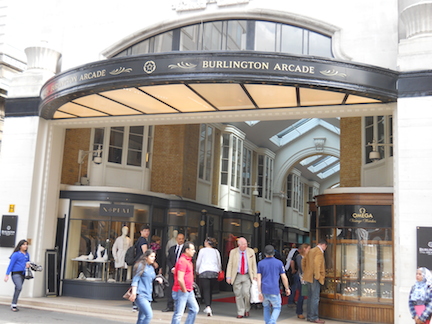
I am sorry to say that at this point I ran into the Burlington Arcade, and got distracted from the tour. Many of the small stores not only had closed doors, but locks, and since the gorgeous jewelry in the windows had no prices on them, I figured it wasn’t worthwhile to attempt to go inside. But I did have a good time admiring the sparklies, and it seemed like most of the other people did too.

Heading Home

At that point, I reached Picadilly Street and the end of the tour. I was too tired to go back to Old Bond Street, so I stopped and had some sparkling water and yogurt at a Café Nero’s. I really needed to hit Marks & Spencers for some groceries, but was too tried to go back to Oxford Street, so I headed for the Tube station, and—oh joy—there was an M & S right there! I love their prepared meals, not frozen and probably not filled with tons of preservatives. I also really like that there are so many organic foods here in England. Makes me feel the English are much more concerned with their health than we Americans. Although I do see plenty of them at McDonald’s and KFC. [Sigh]. I hate thinking that we are contaminating the world with our junk food. But then, there is plenty of English junk food too!

MS

This tour is supposed to be 2.25 miles. Adding in the trip to Grosvenor Square and several wrong turns, I’d guess I walked at least four miles. Not as much as walking to Chatsworth from Beeley last week, but still a respectable length. I was tired, but it didn’t kill me. Good to know!

All in all, it was a great day, and I’m sure I’ll do another tour quite soon. While it is disappointing to see so many Georgian buildings replaced by modern monstrosities, it’s a great way to walk the streets Jane did and frankly, become better acquainted with modern London (which is pretty cool in itself) too.

Rant #2

Crossing streets: Okay, I understand the red and green walking figures, although most Londoners don’t seem to, since they rarely wait for the green signal. But more streets don’t have them than do, so I can’t tell you how many times I’ve barely avoided being struck down by a car.

Have you ever done a walking tour like this? I’d love to hear your experiences!

Chatsworth: A Grand House, To Be Sure, But Would You Wish to Live There?

Charming Chatsworth

Since reading Amanda Foreman’s Georgiana, Duchess of Devonshire, which includes much of the infamous duchess’s letters and journal entries, I’ve been fascinated by the Devonshire family. The only thing missing among the highly dramatic history of this noble, highly-esteemed family—possibly the wealthiest in England in the Georgian era—is a happy ending. The Devonshires of this period are prime examples of failed British aristocratic marriage and family values. With a seemingly endless source of income and the highest social status, why were these people so desperately unhappy?

It also begs the question that if we all truly believe that money and possessions not only do not make us happy but tend to bring along with them worries and responsibilities to weigh us down, then why do so many of us never seem to have enough? How much is enough? A comfortable life with enough income to cover the bills sounds reasonable. But does that mean stately homes, expensive cars, and a yacht to sail around the world? If you have that, would you be satisfied, or would you yearn for even more? If the billionaires of this world were truly happy, then why do they keep going after more and more? What do you do with a billion dollars anyway, especially with tax loopholes that the ordinary citizen does not enjoy? In the end, do you get a solid gold casket or something? Do you get special privileges in heaven?

Enough preaching. I wanted to write about my Chatsworth experiences this week. Yes, there are lessons to be learned. Unfortunately, most people aren’t inclined to learn from the past, and thus we keep making the same mistakes over and over.

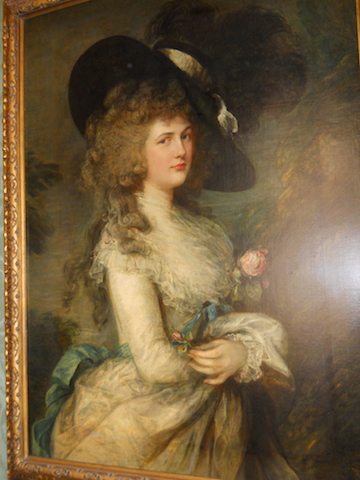
Georgiana, Duchess of Devonshire

Georgiana Cavendish, Duchess of Devonshire

Georgiana Cavendish, Duchess of Devonshire

Pronounced George-ayna, by the way. Georgiana was the oldest daughter of the First Earl Spencer and his wife, also Georgiana. The Earl and his wife were childhood sweethearts. If you visit Spencer House on St. James Place in London (see my Pinterest board here), you will be told about their great love and shown all sorts of decorative features that proclaim their love match. It truly warms the heart of a romance addict. Except that…it doesn’t ring true when you realize they subjected their beloved seventeen-year-old daughter to a loveless marriage that brought her much unhappiness. What went wrong?

Well, perhaps it wasn’t entirely their fault. Young Georgiana probably thought it was a dream come true to marry the richest man in England who also happened to be a duke (the 5th Duke of Devonshire). It must have been a shock, though, to discover that her husband had no intention of being faithful, that even at the time of their marriage, his mistress gave birth to an illegitimate daughter who was eventually brought into the Devonshire family to be raised after her mother died. Georgiana herself found it difficult to conceive and suffered miscarriages before producing three children, two daughters, and finally a son, sixteen years after her marriage.

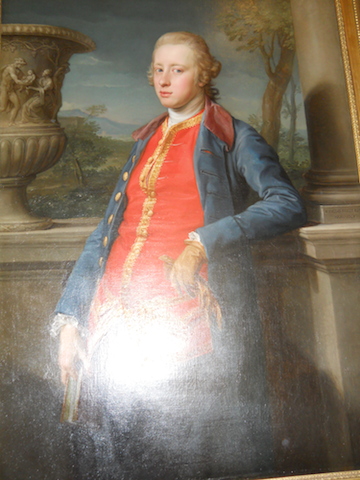
William Cavendish, 5th Duke of Devonshire

William Cavendish, 5th Duke of Devonshire

Georgiana enjoyed her life as a leading lady of fashion and politics in the ton. A friend of Queen Marie Antoinette of France, they copied each other’s fashions, including excessively tall hairstyles and large hats. Georgiana was also a leader of the Whig movement, hosting popular salons at Devonshire House in London for all the prominent Whigs of the time. (See a blog post here about her political exploits.) But with all this, she wasn’t happy. She spent lavishly, and gambled excessively (see post about her gambling exploits here), to the point where even the coffers of the richest man in England were seriously threatened. Her mother, the Countess Spencer—who also gambled beyond her means, particularly after her beloved husband died—warned her to be honest with her husband and to be more prudent in her gambling. Didn’t happen. The duke only found out the truth about her debts after her death. I guess they didn’t have Gamblers Anonymous in those days, or they’d know an addict isn’t able to manage his addiction prudently without giving it up entirely.

Georgiana seemed to have everything, and yet, she didn’t. Desperate for a close friend, when she met Lady Elizabeth Foster, who was separated from her husband and sons and seemingly destitute, Georgiana insisted she reside with them, and so began the ménage à trois. Lady Foster bore Georgiana’s husband two illegitimate children, who were brought up in the Devonshire home with their half-siblings, and Georgiana didn’t seem to mind. She and Bess were the best of friends, although many, including Lady Spencer, believed Bess to be a con-artist of the worst kind.

Charles Grey, 2nd Earl Grey and later Prime Minister

Charles Grey, 2nd Earl Grey and later Prime Minister

After the birth of her son, who later became the 6th Duke, Georgiana felt free to have love affairs of her own. She fell in love with Charles Grey, later to become an earl and a prime minister, and bore him a daughter, who was raised by the child’s paternal grandparents. Her husband was enraged and exiled Georgiana to France for three years, during which time she worried that her son would never know her. (Okay, the duke was a man of his time and perhaps not so terrible as he seems today, but punishing his wife for something he’d been doing for all their marriage just does not give a good impression of his character. Maybe it’s just me?)

Georgiana died in 1806 at 48 of a liver abscess (an eerie coincidence since I had this same affliction last fall, but am completely healed, thank heavens), and three years later, Lady Foster married the duke and became the second duchess, whereupon she admitted the paternity of her two illegitimate children and demanded that the duke provide for them as handsomely (or more so) as his legitimate children. (No, I don’t like her. Can you tell?)

Elizabeth Cavendish, second wife of the 5th Duke of Devonshire

Elizabeth Cavendish, second wife of the 5th Duke of Devonshire

The 6th Duke

Georgiana’s son was sixteen when his mother died and twenty-one when his father died and he inherited. He was active in Whig politics, but his special interest was landscaping and architecture. He had a north wing added to the house and an extensive renovation of the gardens. He spent lavishly to improve the property, which at that time included about 83,000 acres. William never married, having courted Georgiana’s sister’s daughter, Lady Caroline Ponsonby (yes, the one who went nutso over Lord Byron) and lost her to William Lamb, who undoubtedly regretted his marriage in retrospect. Perhaps His Grace realized his good fortunate in escaping a miserable marriage and couldn’t bring himself to risk it again. Certainly the marriages in his own family must have given him quite a few qualms!

The Devonshire Arms

The Devonshire Arms

The Devonshire Arms

Described as “a picturesque country pub at the heart of village life, offering the charm and character of an historic inn with a contemporary twist,” the Devonshire Arms offers comfortable rooms, superb food, and a quaint, medieval building that won’t fail to inspire any dedicated history lovers who book rooms here. Check out my Pinterest board here. And the village of Beeley is equally charming.

Chatsworth

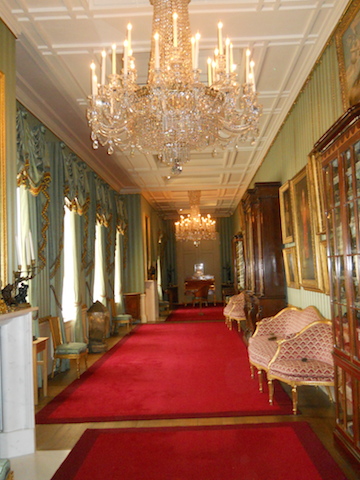
Chatsworth is such a beautiful place, filled with such priceless art and furnishings (see Pinterest board here), that one can’t quite understand how so many of its inhabitants, possessed of great wealth and just about anything they wished, were so obviously unhappy. I thought about this a great deal as I took my time touring the rooms and listening to the audioguide, and even as I walked among the rolling hills and sheep from my lodgings to the house. So much beauty and wealth, and yet, I am not envious. At this point in my life, I don’t aspire to such heavy responsibilities, no matter the grandeur and glamorous lifestyle. It is enough for me to have the privilege of seeing it and experiencing it this one time.

Lovely ceilings throughout the house

Lovely ceilings throughout the house

Sketches Room (my favorite)

Sketches Room (my favorite)

Countess Spencer, Georgiana's mother

Countess Spencer, Georgiana’s mother

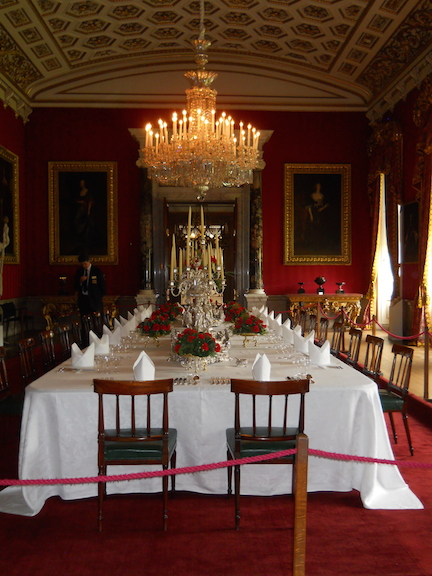
Dining Room

Dining Room

Devonshire family portraits

Devonshire family portraits

Wellington Bedroom

Wellington Bedroom

On With the New: Wall sculpture of DNA maps of current Devonshire family

On With the New: Wall sculpture of DNA maps of current Devonshire family

What do you think? Would you like to live the life of a wealthy celebrity? I’m curious to know if others feel as I do that “enough is enough”, and that happiness is not found in great wealth and possessions.

What to Wear When Saying “I Do” to Your Beau: Regency Wedding Gowns by Katherine Givens

Recently, I have been busy researching Regency weddings for one of my current manuscripts.. The simple family affairs are the prime setting for romance. From the announcement of the wedding banns to the olden churches, I have been captivated. One of my fascinations throughout my research has been for the Regency wedding gown. Who can blame me? Have you seen how beautiful these gowns are?

charlotte

The silver lace dress worn by Princess Charlotte in 1816 when she married Prince Leopold.

bonaparte

The wedding gown worn by Elizabeth Patterson Bonaparte.

Queen Victoria is accredited as having started the tradition of wearing white. However, she was not the first bride to wear a white wedding gown. She started the trend of no other color doing for wedding gowns, but contrary to belief, white was a popular choice throughout the Regency era.

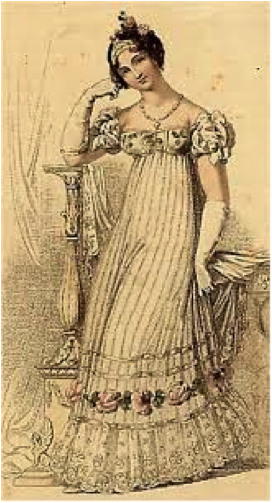
A fashion plate of a white wedding dress from the June 1816 issue of Ackerman’s Repository.

A fashion plate of a white wedding dress from the June 1816 issue of Ackerman’s Repository.

The color and shade of the wedding gown depended on the bride’s tastes. The gown could be an array of colors, but contrary to what many believe, white was a popular choice. White muslin was a fashionable choice for dresses throughout the Regency era, and so it only makes sense this favorite prevailed in wedding ceremonies. Other pale shades, such as pink and yellow, were also prevalent throughout the era.

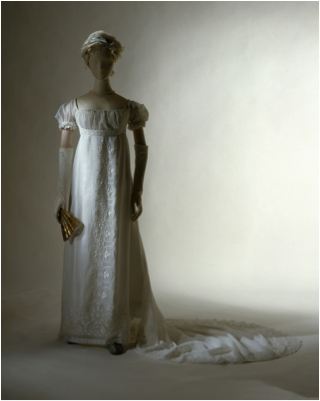
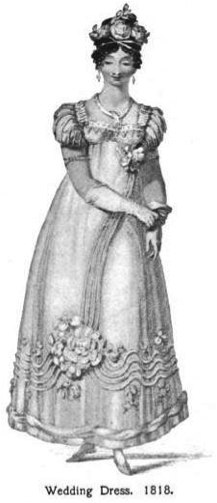
Simplicity was the rule. The shape of wedding gowns was loose fitting with high bodices. Lace, silk, and satin were particular fabrics to be used. Slippers adorned the feet, and jewelry was utilized as well. Veils did not come into popularity until later in the nineteenth century, but flowers and herbs were woven into the Regency bride’s hair. The flowers and herbs symbolized nature and beauty.

1818

A Wedding Gown from 1818. The flowers in her hair were popular for the time period.

The wedding gowns of the Regency were breathtakingly gorgeous. The silks, laces, pale hues, and whites and silvers were all a part of the simplicity celebrated in the era. Perhaps it is the beauty that comes from the simplicity that has me so fascinated with the wedding fashions? How about you?

About Katherine

Katherine Givens is a museum employee with a secret. Few know the truth of her greatest passion, but those closest to her know she loves to write historical romances… Alright, maybe more than a few people know she is a writer. Anyone who will listen to her can glean this from a conversation.

So, Katherine Givens is a museum employee who wishes she had a devilish secret or a jaw-dropping double life, but the characters in her manuscripts often do. From the withdrawn duke mesmerized by his quiet maid or the savage viking eager to ravish a Christian girl, her heroes are always bound to have a secret or two. It is often up to the headstrong heroine to unravel the mysteries surrounding the man that has captured her heart.

Katherine is a member of the Romance Writers of America and Romance Writers of America PRO. She has two novellas, one already released and another upcoming.  In Her Dreams (Harlequin Australia’s Escape Publishing) was released October 1, 2013, much to her delight! Love Amidst the Egyptian Sands (Red Sage Publishing) will be released on January 1, 2015.

Katherine loves to hear from readers! She can be found at these places:

Website • Facebook • Twitter • Pinterest


Hertford House and the Wallace Collection

One of my favorite activities is to visit beautiful, historic houses with lovely art and furnishings—even better if they are Georgian. In addition to the lovely rooms, there are so many captivating stories to remind me of the bygone era and the colorful personalities who used to live and/or socialize within them.

WallaceHouse

Hertford House is located on Manchester Square only blocks from the flat I’ve leased near Baker Street and quite close to the fabulous shops on Oxford Street as well. Because it’s small compared to other museums in London, it’s much less crowded and suitable for a leisurely visit. It is more of an art gallery than an example of a Georgian home, however, but if you enjoy both, you’re in luck!

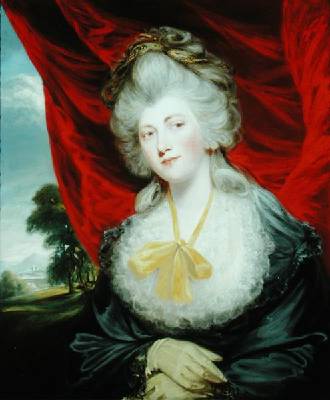
Lady Hertford, 1800

Lady Hertford, 1800

The historical gossip that I wanted to know immediately if this home had anything to do with the Marchioness of Hertford who was a longtime mistress of the Prince Regent. Yes, indeed, Lady Hertford was the wife of the 2nd Marquess, but it was the 4th Marquess who left the house and the collection to his illegitimate son, Sir Richard Wallace, whose widow left it to the nation.

Seymour-Conway was the family name of the Hertfords (think Jane Seymour, Henry VIII’s third wife), and they were close connections to the Duke of Somerset.

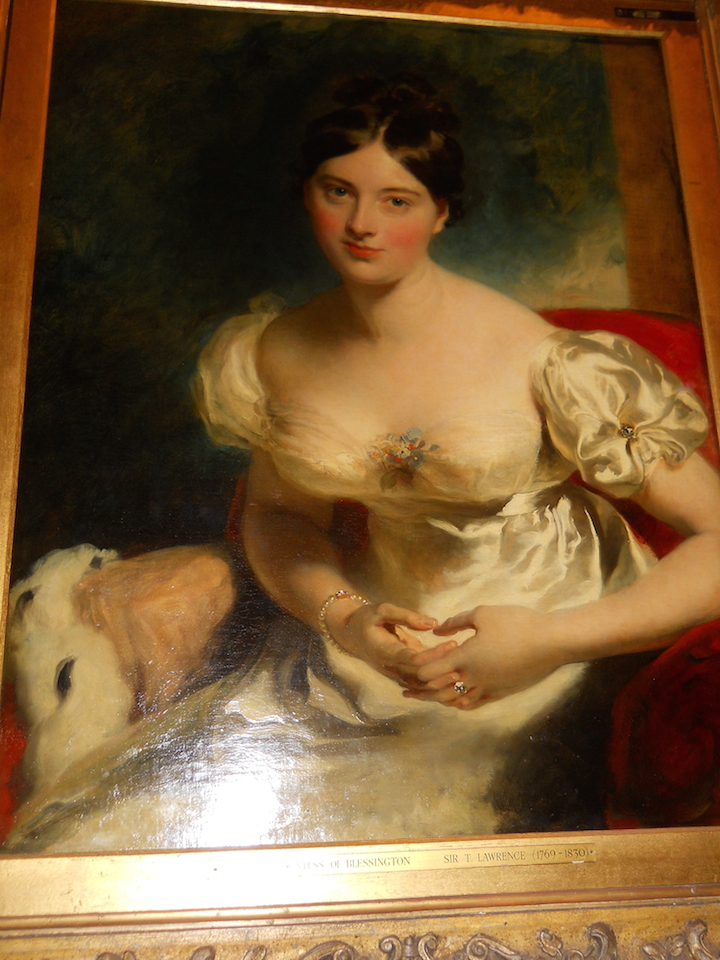
Marguerite, Countess of Blessington

Marguerite, Countess of Blessington

The house is filled with beautiful rooms and art treasures, as well as an armory. In the very first salon is a lovely painting of the Countess of Blessington by Sir Thomas Lawrence (as beautiful as she appears, it is said that she was even more ravishing in person). The countess’s beauty literally took her from rags to riches, as she rose from a sea captain’s mistress to an earl’s wife, and eventually into a ménage à trois with a young Comte d’Orsay. Besides her beauty, she was quite intelligent and held glittering salons for the crème de la crème of European society, including Lord Byron, of whom she wrote in Conversations with Lord Byron.

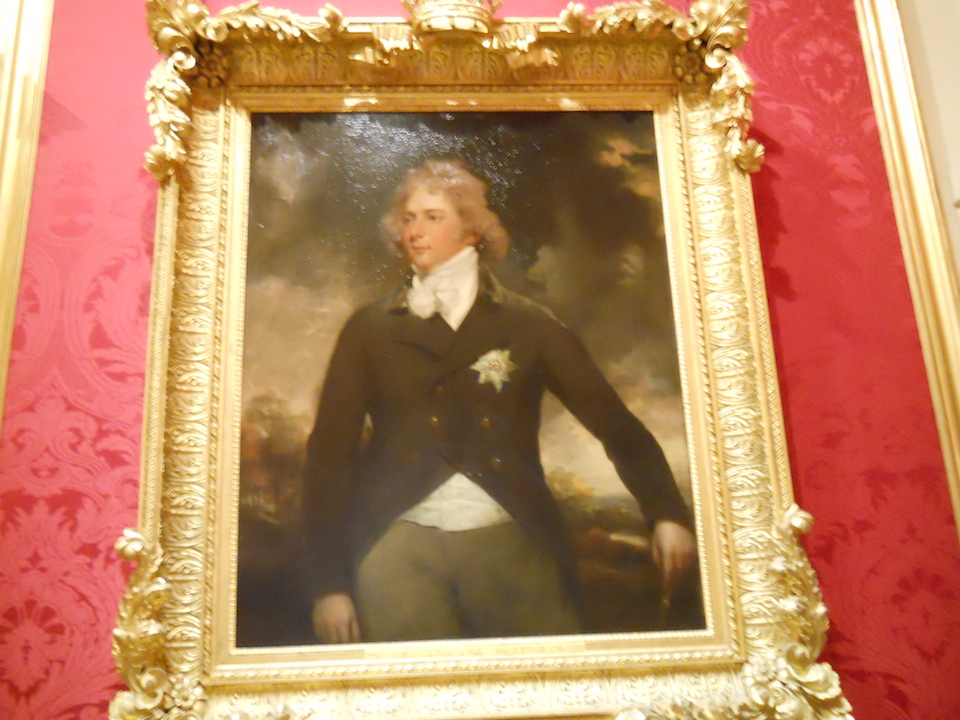
George, Prince of Wales (later George IV)

George, Prince of Wales (later George IV)

The painting of the Prince of Wales as he was in 1792) was presented to the 3rd Marquess in 1810 while his mother was the Prince’s mistress. And there’s a lovely Lawrence portrait of Emma Hamilton as well.

Emma Hamilton

Emma Hamilton

In another room is a portrait by Gainsborough of Mary Robinson, the Prince Regent’s first mistress, as Perdita in Shakespeare’s A Winter’s Tale.

Mary Robinson, as Perdita

Mary Robinson, as Perdita

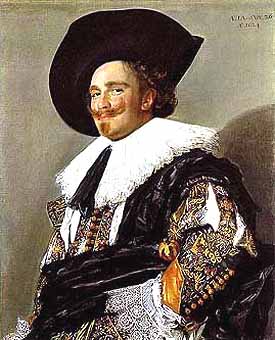
Franz Halz’s The Laughing Cavalier is here, and much, much more. Admission is free, and being so close, I can see myself returning for at least one more visit.

cavalier

Franz Hals’s The Laughing Cavalier

Be sure to put it on your list for your next trip to London!

For more photos of paintings and furnishings, check out my Pinterest board!

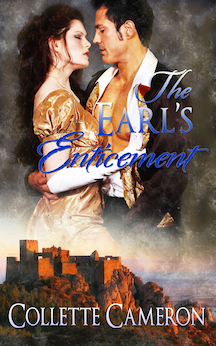
The Earl’s Enticement: Collette Cameron

TheEarlsEnticement3_850 3rd

About The Earl’s Enticement

She won’t be tamed.

A fiery, unconventional Scot, Adaira Ferguson wears breeches, swears, and has no more desire to marry than she does to follow society’s dictates of appropriate behavior. She trusts no man with the secret she desperately protects.

He can’t forget.

Haunted by his past, Roark, the Earl of Clarendon, rigidly adheres to propriety, holding himself and those around him to the highest standards, no matter the cost. Betrayed once, he’s guarded and leery of all women.

Mistaking Roark for a known spy, Adaira imprisons him. Infuriated, he vows vengeance. Realizing her error, she’s appalled and releases him, but he’s not satisfied with his freedom. Roark is determined to transform Adaira from an ill-mannered hoyden to a lady of refinement.

He succeeds only to discover, he preferred the free-spirited Scottish lass who first captured his heart.

Amazon

Excerpt

Adaira stepped around the mare and ever-so-gently touched the foal. Was the new addition a laddie or lassie? Skimming her hands over the newborn, she bent to take a peek. A colt. The sheen of his coat glistened in the muted light. Other than a white face and leg markings, he was the color of rich Turkish coffee.

“Ooh, you’re magnificent!” she breathed in awe.

“He is, indeed,” rumbled a harmonious baritone.

She whirled around. The Earl of Clarendon leaned across the stall door. His forearms rested on the top edge. He clasped a silver flask loosely in one hand. His shirtsleeves were rolled to his elbows, and he wore no waistcoat or jacket. The top of his shirt was unfastened too.

Just perfect. She wasn’t supposed to be anywhere near the earl, and here he was, in her sanctuary. She ought to be afraid, after his parting words, but she sensed something altogether different.

No, she wouldn’t stare at the crisp dark hair on his forearms or peeking from the collar of his open shirt. Bugger it. She curled her hands into fists against the oddest urge to run her fingers through the curly hair on his chest.

A bolt of unease speared her, though whether from his disquieting presence or her awareness of him as an attractive man, she couldn’t be certain.

Clearing her throat, she asked, “What are you doing here, my lord?”

About Collette Cameron

Collette CameronAward winning, Amazon best-selling, and multi-published historical romance author, Collette Cameron, has a BS in Liberal Studies and a Master’s in Teaching.  A Pacific Northwest Native, Collette’s been married for thirty years, has three amazing adult children, and five dachshunds. Collette loves a good joke, inspirational quotes, flowers, the beach, trivia, birds, shabby chic, and Cadbury Chocolate. You’ll always find dogs, birds, quirky—sometimes naughty—humor, and a dash of inspiration in her novels. Her motto for life? You can’t have too much chocolate, too many hugs, or too many flowers. She’s thinking about adding shoes to that list.

Website     Blue Rose Romance Blog   Twitter   Facebook


The Regency Gentleman’s Passion For the Turf

racecourse

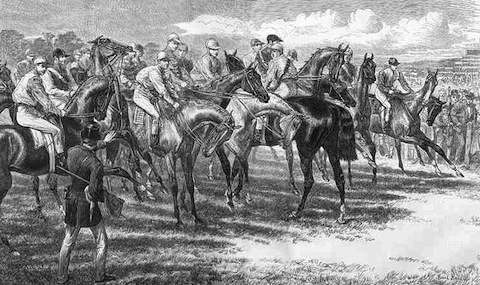
Breeding and training thoroughbreds for racing was the passion of many wealthy gentlemen of good birth. Even more participated in watching and wagering the races. Newmarket, with its network of race courses, sponsored seven race meetings a year, and a third of all the race horses in England were trained nearby. (Transporting horses was very difficult, and most horses were walked to the race course, so it was better to keep them as near as possible.)

Around 500 spectators—nearly all upper-class—gathered to watch the race on horseback, sitting on top of carriage roofs, or standing around the course at Newmarket, as there were no grandstands as there were at other courses. In 1809, the 2000 Guineas, a sweepstakes for three-year-olds was established at Rowley Mile. The 1000 Guineas, a race for three-year-old fillies was established in 1817 at the less taxing course of Ditch Mile.

newmarket

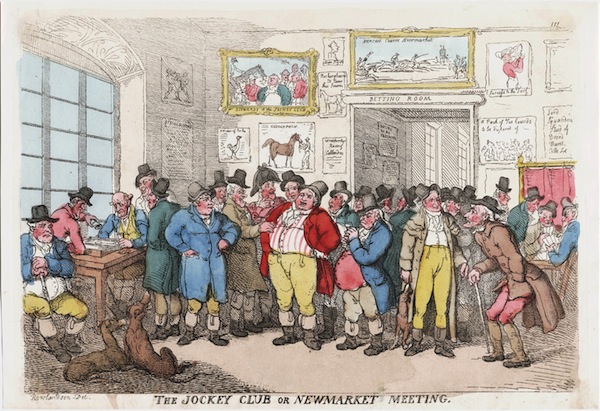
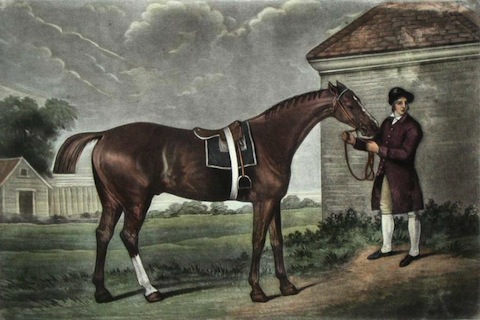
Prince George was an enthusiastic participant in racing in his younger days (1788-1791), but withdrew in a huff when the jockey of his horse Escape was involved in a dreadful scandal, and the Jockey Club—the organization that oversaw the sport—insisted that the Prince give the jockey his marching orders. What was the scandal? A matter of Escape losing a race one day, forcing the odds up for the next day, resulting in the Prince winning a large sum of money. The Prince continued to patronize the races, however. He just could not resist the lure of the excitement and gambling.

Types of Races

Horse matches were head-to-head contests where individual owners would agree on a wager, and the winner took all. Spectators would make side bets as well. In one famous match, Hambletonian vs. Diamond, almost 300,000 pounds changed hands.

Plate and cup matches, where the prize was a trophy, were quite common as well.

The sweepstakes, however, with a line-up of horses running against each other, was the most popular in the late 18th/early 19th century. The owners put up a specified sum to subscribe to the race, and the winner took everything.

Race Courses

Ascot, with its close proximity to London, became a popular venue for fashionable race fans. In 1814, popular heroes such as Blücher, Tsar Alexander, the King of Prussia and Hetnan Platov provided additional entertainment for the race-mad hordes.

epsom downs

Epsom Downs

Epsom Downs, home of the legendary horse Eclipse, drew large crowds of the fashionable on Derby Day (named after the Earl of Derby who was instrumental in its development), a one-and-a-half mile race for three-year-olds. The only permanent structure on the course was Prinny’s stand, a miniature “castle” with Gothic arches where he could sit with his cronies to enjoy the races.

Eclipse

Eclipse

Other race courses were Goodwood in Yorkshire, Newcastle, Chester, Warwick, Winchester and Doncaster. Raikes (a dandy, banker and diarist) says:

“The Prince made Brighton and Lewes the gaiest scene of the year in England. The Pavilion was full of guests; the Steyne was crowded with all the rank and fashion from London during that week; the best horses were brought from Newmarket and the North, to run at these races, on which immense sums were depending; and the course was graced by the handsomest equipages.”

The Jockey Club

The organization responsible for regulating the racing world was the Jockey Club, whose members in 1790 included the Prince Regent, the Dukes of Bedford, Cumberland, Devonshire, and Norfolk. The Jockey Club established rules for such things as record-keeping and ensured that they were followed.

Wagering

As in London clubs and gaming hells, fortunes were won and lost at race courses. Brummell, too, lost large sums on horse racing. Raikes says:

“…I was never more surprised than when, in 1816, one morning he confided to me, that he must fly the country that night and by stealth. The next day he was landed in Calais, and, as he said, without any resources. I had several letters from him, at that time written with much cleverness, in which his natural high spirits struggled manfully against his overpowering reverses; but from the first he felt confident that he should never be able to return to his own country.”

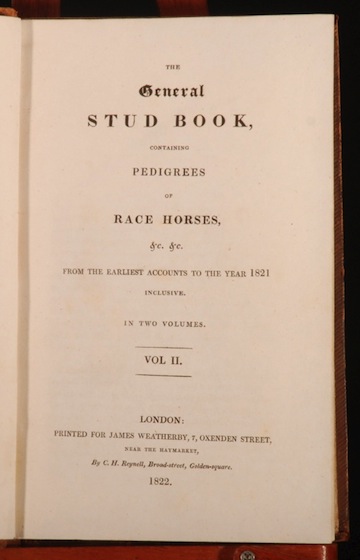
Stud Book

Stud Book

Laudermilk, Sharon H. and Hamlin, Theresa L., The Regency Companion, Garland Publishing, 1989.

The Regency Gentleman series

The Regency Gentleman: His Upbringing

The Fashionable Gentleman

The Rise and Fall of Beau Brummell 

Gentlemen’s Clubs in Regency London

Captain Who?

Gentlemen’s Sports in the Regency

The Gentleman’s Passion for Horses

Riding to the Hounds

The Regency Gentleman’s Passion for the Turf