Archives

Elyse Huntington: My Dark Duke

Elyse Huntington Interviews

the Duke and Duchess of Trent

As the clock in the hall chimes, I try not to fidget. The most famous couple in the beau monde had finally agreed to be interviewed and they had chosen me over all the other publications; most of whom had many scores more readers than my modest ladies’ magazine. I could scarce believe my good fortune. Yet the expensive furnishings in the room do much to convince me that this is in truth reality, and not just a dream.

The door opens and I leap to my feet as the Duke and Duchess of Trent enter. It is difficult not to stare. They are an extraordinarily handsome couple, both possessing dark hair and eyes, both tall and lean. The duchess smiles at me as I curtsy and waves for me to sit. Trent is more reserved; however, I detect nothing but good humour in his eyes.

We exchange greetings and after we have settled on our respective sofas, I compliment Her Grace on the magnificence of her cream-coloured silk gown which is heavily adorned with lace. She laughs. “Why, thank you. It is one of James’ favourites. It brings back a fond memory for both of us.”

Intrigued, I ask what that memory is.

“Why don’t you tell the tale, darling?” says the duchess.

Untitled“I met Alethea in a library at a ball her godfather was hosting.” The duke’s voice is a baritone, silkily rich and smooth. I could have listened to him for hours. He chuckles, surprising me. The smile softens the severity of his features, making him appear even more attractive. I am beginning to see why the duchess had married him after previously refusing six offers of marriage. “Actually,” says the duke, “it would be more accurate to say that she fell upon me as I was trying to save her.”

“He was most heroic,” teases the duchess while her husband shakes his head, looking amused.

“What was it about His Grace that attracted you?” I ask.

“Hmm . . . He is a very handsome man, as you can clearly see.”

I hear the duke clearing his throat somewhat uncomfortably and bite back a smile.

The duchess continues. “It is hard to say. There was something between us from the start, what I do not know. James has this presence that makes it difficult for you to concentrate on anything other than him. And he can be very charming. Indeed I found I could not say no to him.”

“I beg to differ,” interrupts Trent, arching an eyebrow at his wife. “You could say no, and you did.”

I can’t help but smile when the duchess sighs and gives me a look as if to say ‘men’.

“I saw that,” drawls the duke and she flashes him an impudent smile in reply. The obvious love in the look they exchange makes my heart contract.

I turn to Trent. “And you, Your Grace, what drew you to Her Grace?”

“Her independent spirit, her intelligence, her skill in fencing, her love of reading. Everything about her made me want to spend more and more time with her until I realised that I wanted nothing more than to spend every minute of the rest of my life with her at my side.”

“James,” whispers the duchess, tears in her eyes.

He takes her hand and kisses it before turning back to me. He looks faintly embarrassed. “I am not normally so expressive.”

It is enormously sweet and I feel privileged at being able to witness this intimacy between them. I remind myself to continue. “Would you care to address the rumour that you were forced to marry?”

It is the duchess who replies. “I will neither confirm nor deny that rumour, but as you can see, we are blissfully happy.”

“And what about His Grace’s past,” I venture, wondering if the duchess would even deign to answer my impertinent question. “Did that not give you pause?”

“Yes, of course it did,” she replied, surprising me with her candidness. “But I knew that James was not guilty of what he had been accused of. And I was right.”

“I see.” I wanted to ask the next question, but from the duke gives me a speaking look and I know my time with them has come to an end. As I thank them for their time and take my leave, I can’t help wondering if I will ever find the kind of love that the Dark Duke has found with his duchess.

About My Dark Duke

A steamy Georgian romance about desire, the importance of staying true to yourself and the power of the past to cast a shadow on the present.

Since his notorious wife died in mysterious circumstances, rumours about James, the handsome Duke of Trent, have scandalized society. Now, he must marry again—but finding an eligible woman willing to overlook his past won’t be easy.

Defiantly single, Lady Alethea Sinclair has already turned down six offers of marriage. She prefers living on her own terms and refuses to answer to any man. Yet when Alethea meets the seductive and enigmatic Duke she finds herself strangely drawn to him.

Intrigued by Alethea’s defiance of society’s expectations, James is instantly taken with the willful beauty and soon they are enjoying a playful flirtation. And when circumstances force them into a comprising situation, he does the honourable thing and marries her.

But adjusting to the constraints of marriage doesn’t come easily to the rebellious Alethea and, despite their growing feelings for each other, the Duke’s troubled past keeps getting in the way. Can they learn to trust each other and give love a chance before it’s too late?

AmazonKobo

Also available on iBooks and Google Play.

About the Author

OLYMPUS DIGITAL CAMERA

Elyse spent her childhood years in Borneo. She moved to Australia when she was a teenager and was an avid reader of romances. It was her love of historical romance that led her to write My Dark Duke, which finaled in the Romance Writers of Australia Emerald Award contest in 2014.

A lawyer by profession, Elyse is a self-confessed compulsive buyer of any books featuring dukes. She also loves reading stories featuring alpha billionaires—undoubtedly because they are the embodiment of modern-day dukes. Elyse spends her free time (and perhaps a little too much of her not-so-free time) fantasising about wickedly handsome heroes and the strong heroines who ultimately tame them.

Elyse loves to hear from her readers. You can contact her via:

WebsiteFacebook

Check out the bonus epilogue for My Dark Duke at her website.

Bath: a guide for readers of The Third MacPherson Sister

BTP_BathCityCentreMap_V2

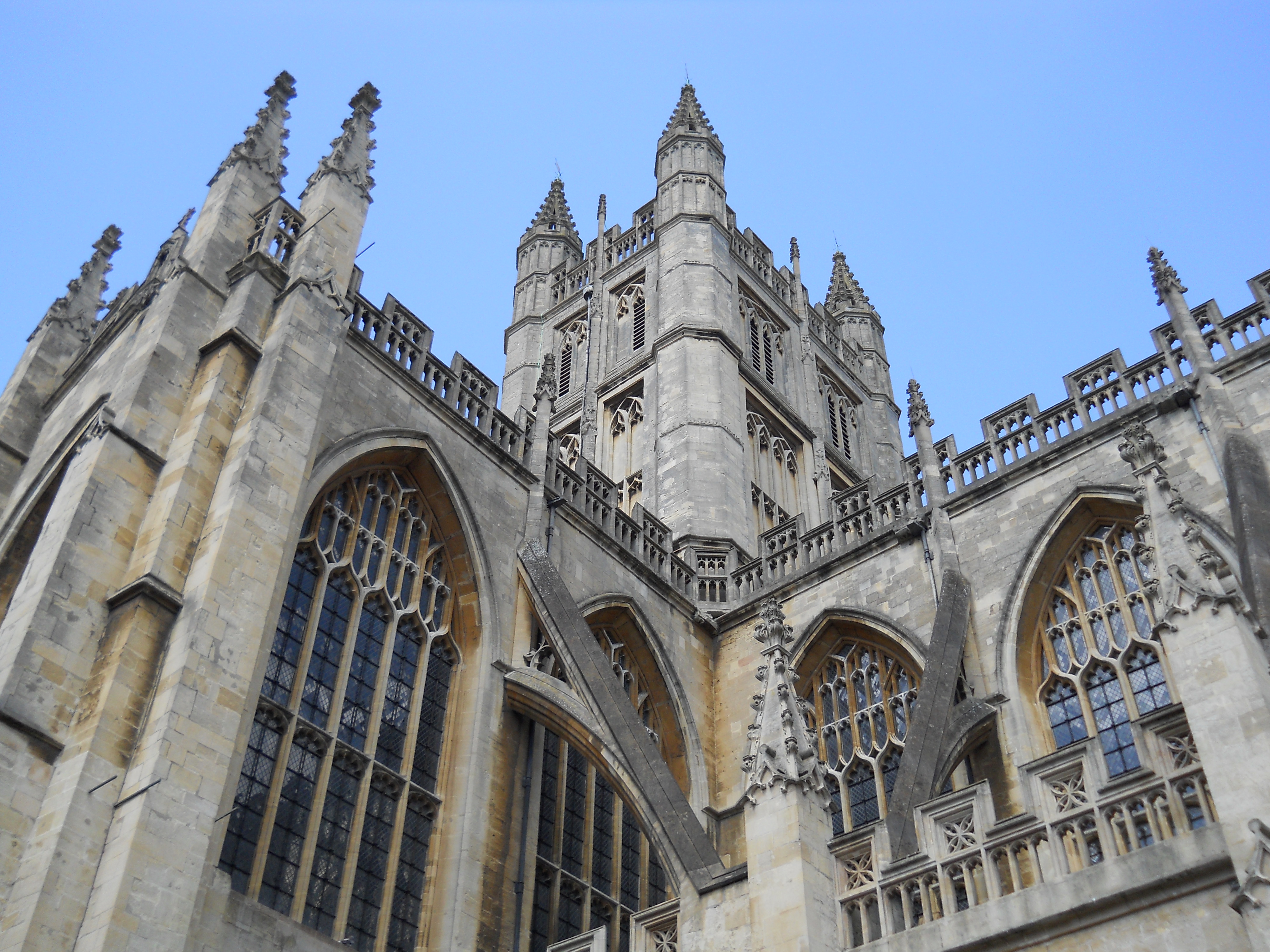
Bath Abbey

Five things to know about Bath Abbey*

  • Three different churches have occupied the site of today’s Abbey since 757 AD. First, an Anglo-Saxon monastery which was pulled down by the Norman conquerors of England; then a massive Norman cathedral which was begun about 1090 but lay in ruins by late 15th century; and finally, the present Abbey Church as we now know it.
  • The first King of all England, King Edgar was crowned on this site in 973 (as shown above). The service set the precedent for the coronation of all future Kings and Queens of England including Elizabeth II.
  • The first sight most visitors have of Bath Abbey is the West front, with its unique ladders of Angels. The story behind this is that the Bishop of Bath, Oliver King, is said to have had a dream of angels ascending and descending into heaven which inspired the design and which also inspired him to build a new Abbey church – the last great medieval cathedral to have been built in England.
  • After the dissolution of the monasteries in 1539 by order of King Henry VIII, the Abbey lay in ruins for more than 70 years. It wasn’t until 1616, that much of the building we see today was repaired and in use as a parish church and over two hundred years later, in the 1830s, that local architect George Manners added new pinnacles and flying buttresses to the exterior and inside, built a new organ on a screen over the crossing, more galleries over the choir and installed extra seating.
  • The Abbey as we know it is the work of Sir George Gilbert Scott, who from 1864 to 1874, completely transformed the inside of the Abbey to conform with his vision of Victorian Gothic architecture. His most significant contribution must surely be the replacement of the ancient wooden ceiling over the nave with the spectacular stone fan vaulting we see today.

*http://www.bathabbey.org/history

Photo by Barbara S. Andrews

Photo by Barbara S. Andrews

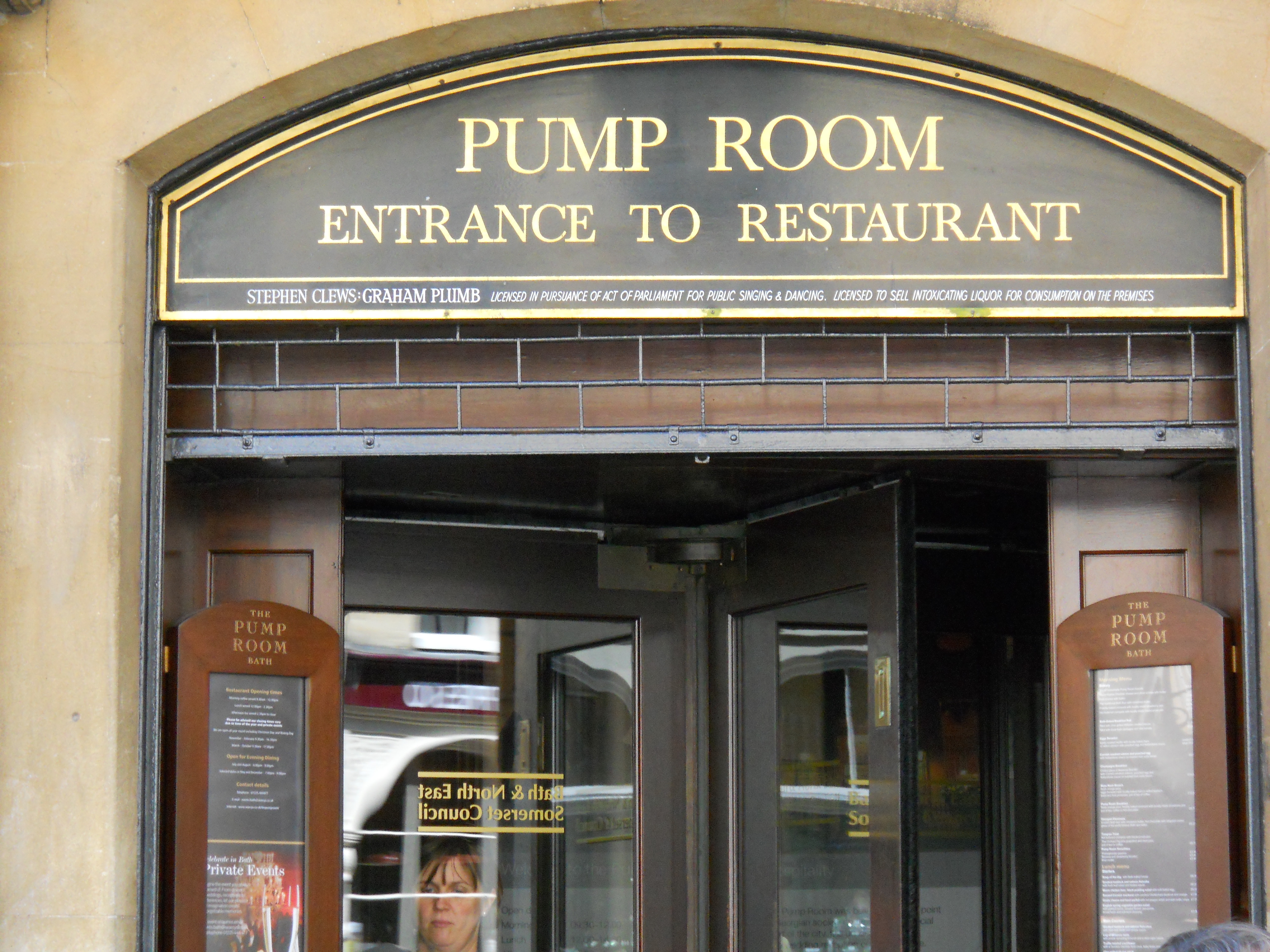
The Pump Room

Situated next to main street entrance to the Roman Baths, visitors can sample the waters from the warm spring which fills the Roman Baths. The building also houses a restaurant, where it is popular to sample the afternoon tea.

pumproomsign

Photo by Barbara S. Andrews

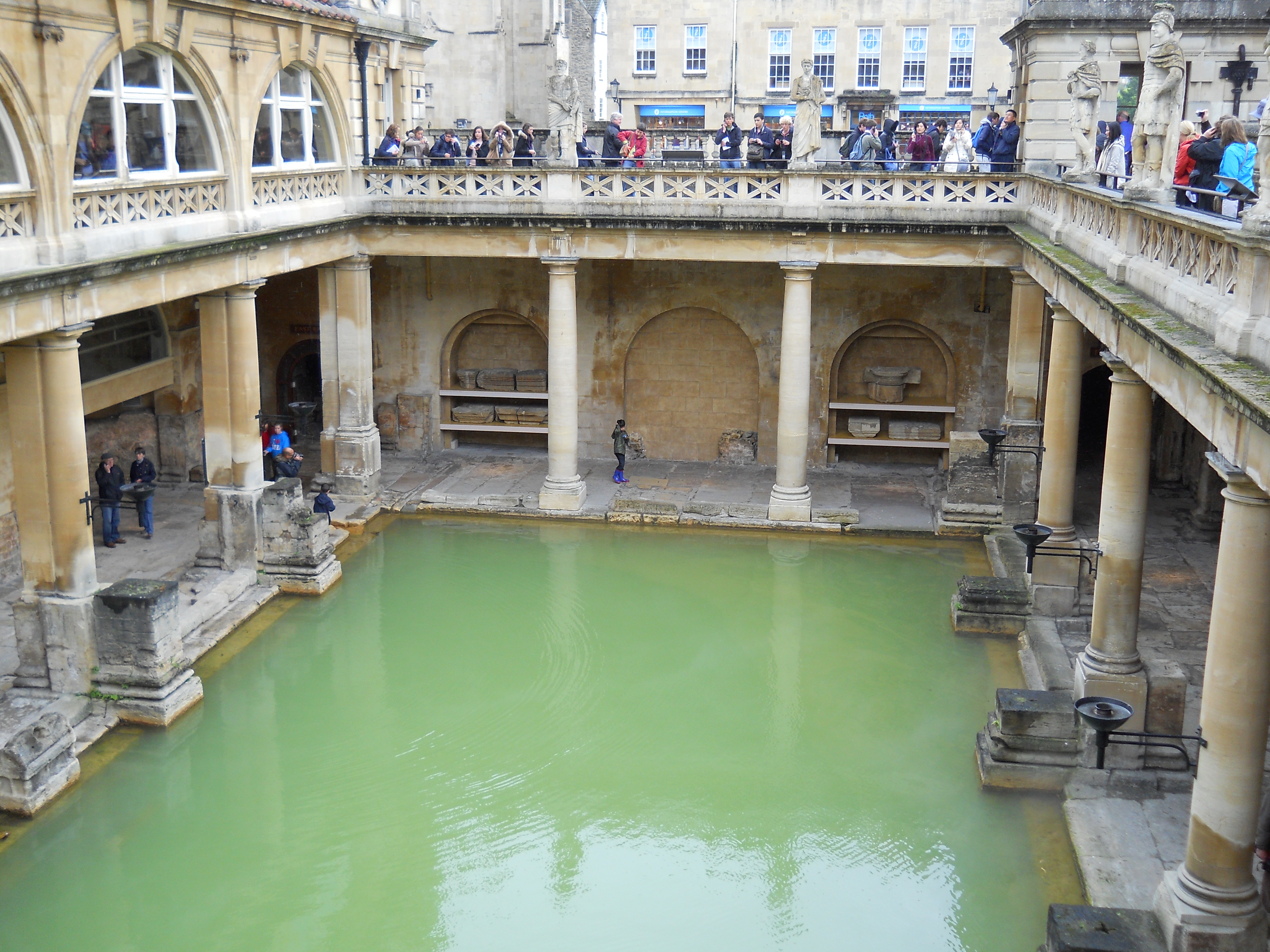
The Roman Baths

The house is a well-preserved Roman site for public bathing. The Roman Baths themselves are below the modern street level. There are four main features: the Sacred Spring, the Roman Temple, the Roman Bath House and the Museum holding finds from Roman Bath. The buildings above street level date from the 19th century.

Photo by Barbara S. Andrews

Photo by Barbara S. Andrews

The Pulteney Bridge

The bridge features two ranges of shops designed in the Palladian style c. 1770, between them forming a narrow street over the bridge. The street and buildings sit above three segmental arches of equal span.

The shops on the north side have cantilevered rear extensions. Consequently the northern external façade of the bridge is asymmetrical, much altered and of no architectural merit, whereas the southern external side clearly shows the hand of Robert Adam.

Shops on the Pulteney Bridge  By Erebus555 at English Wikipedia [CC BY-SA 3.0 (http://creativecommons.org/licenses/by-sa/3.0) or GFDL (http://www.gnu.org/copyleft/fdl.html)], via Wikimedia Commons

Shops on the Pulteney Bridge
By Erebus555 at English Wikipedia [CC BY-SA 3.0 (http://creativecommons.org/licenses/by-sa/3.0) or GFDL (http://www.gnu.org/copyleft/fdl.html)%5D, via Wikimedia Commons

Sydney Gardens (formerly Bath Vauxhall Gardens)

The Sydney Gardens are the only remaining 18th century pleasure gardens in England.

The gardens were constructed in the 1790s opening in 1795 as a commercial pleasure grounds, following the development of Bathwick by Sir William Pulteney, 5th Baronet across the River Avon from the city centre. The original plans were by Thomas Baldwin and completed by Charles Harcourt Masters who included a maze or labyrinth, grotto, sham castle and an artificial rural scene with moving figures powered by a clockwork mechanism. The gardens were illuminated by over 15,000 “variegated lamps”. Around 1810 the Kennet and Avon Canal was built through the gardens.

Sydney Gardens  By Plumbum64 (Own work) [CC BY-SA 3.0 (http://creativecommons.org/licenses/by-sa/3.0)], via Wikimedia Commons

Sydney Gardens
By Plumbum64 (Own work) [CC BY-SA 3.0 (http://creativecommons.org/licenses/by-sa/3.0)%5D, via Wikimedia Commons

The Sydney Hotel

The Sydney Hotel was built within the gardens. The original design for the hotel, prepared by Thomas Baldwin in 1794, was a two-storey building which would serve the pleasure gardens. After Baldwin was bankrupted his design for the hotel was not implemented. Instead a three-storey building was designed by Charles Harcourt Masters. The foundation stone was laid in 1796 and the building was ready by 1799. Visitors entered the gardens through the Hotel. Projecting from the rear of the building at first floor level was a conservatory and a semi-circular Orchestra with a wide covered loggia below. Two semi-circular rows of supper boxes projected from the sides of the building. The gardens were used daily for promenades and public breakfasts which were attended by Jane Austen among others. At public breakfasts tea, coffee, rolls and Sally Lunn buns were served at about midday, followed by dancing. There were generally three evening galas each summer, usually on the birthdays of George III and the Prince of Wales, and in July to coincide with the Bath races. During these galas the gardens were lit with thousands of lamps and the guests took supper accompanied by music and fireworks. Breakfasts, coffee-drinking, newspaper-reading and card-playing took place in the ground floor of the Hotel and dancing in a ballroom on the first floor. All the rooms could be hired for private parties and meetings.

The Assembly Rooms

The Assembly Rooms formed the hub of fashionable Georgian society in the city, the venue being described as “the most noble and elegant of any in the kingdom” They were originally known as the Upper Rooms as there was also a lower assembly room in the city, which closed soon after the Upper Rooms opened. They served the newly built fashionable area which included The Circus, Queen Square and the Royal Crescent.

People would gather in the rooms in the evening for balls and other public functions, or simply to play cards. Mothers and chaperones bringing their daughters to Bath for the social season, hoping to marry them off to a suitable husband, would take their charge to such events where, very quickly, one might meet all the eligible men currently in the City.

Photo by Barbara S. Andrews

Photo by Barbara S. Andrews

The Theatre Royal

The present main entrance to the Theatre Royal, in Sawclose, was built in 1720 by Thomas Greenway, and was Beau Nash’s first house. The exterior of the building, with arches, pilasters, garlands and ornaments, which is visible from Beauford Square, was designed by George Dance the Younger and erected by John Palmer.

The theatre itself was erected in 1805, replacing the Old Orchard Street Theatre which was also called the Theatre Royal, which is now a Freemason’s Hall.

The theatre is said to be haunted by The Grey Lady, who was an actress centuries ago. She has been seen watching productions in the Grey Lady Box, and she leaves the distinctive scent of Jasmine. She has been seen and scented in recent years.

Theatre Royal, Bath   By MichaelMaggs (Own work) [CC BY-SA 2.5 (http://creativecommons.org/licenses/by-sa/2.5)], via Wikimedia Commons

Theatre Royal, Bath
By MichaelMaggs (Own work) [CC BY-SA 2.5 (http://creativecommons.org/licenses/by-sa/2.5)%5D, via Wikimedia Commons

Text from Wikipedia.

About The Third MacPherson Sister (part of the Sweet Summer Kisses anthology)

TheThirdMacPhersonSister2inchAfter a disastrous fourth Season in London, Rebecca and her mother take refuge in Bath to determine their next course of action. Rebecca has always known she’ll never be able to measure up to her older sisters, the “Golden Twins,” who were the reigning queens of the ton in their day, but surely there is a gentleman somewhere capable of appreciating her finer qualities.

Miles Framingham, Duke of Aylesbury, finds himself in need a wife… although he doesn’t really want one. Burdened with the responsibilities of a dukedom from a young age, what he really yearns for is freedom. Marriage to the right woman, though, might not be such an onerous task.

When the hapless Rebecca finds herself pushed into the lap of this eminently eligible duke in the nave of Bath Abbey, a match between them seems ordained by the heavens… except for the little matter of his past history with her sisters.

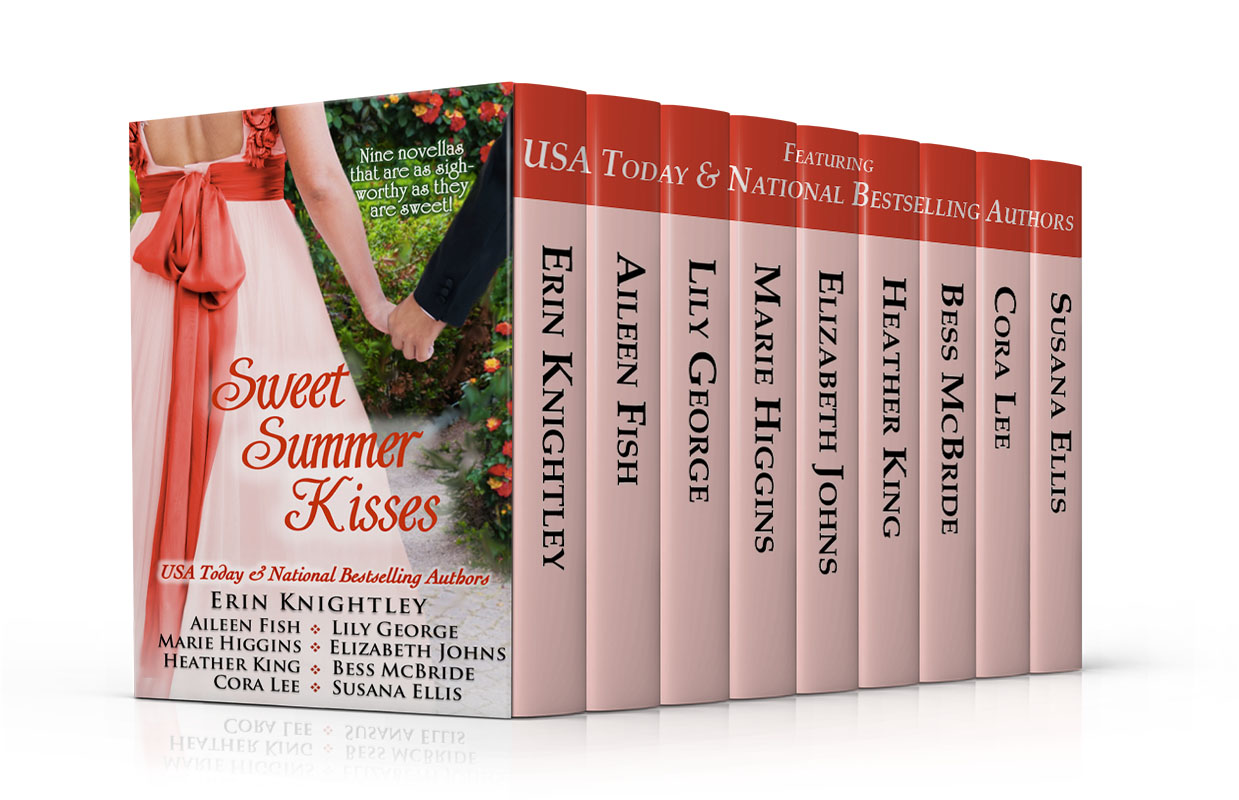
SweetSummerKisses2med

Bluestockings and wallflowers seek happily-ever-afters. Only handsome, respectable and deeply romantic persons need apply. Dukes and marquesses will be given special consideration. Apply within.  

This anthology contains nine fun, heart-tugging, and wholesomely romantic Regency novellas that are as sigh-worthy as they are sweet, brought to you by USA Today and national bestselling, award-winning authors.

AmazonBarnes & NobleKoboiBooks • Google

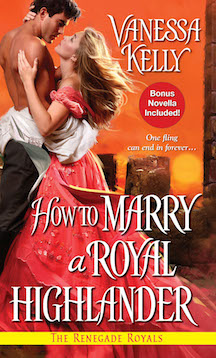
Vanessa Kelly: How to Marry a Royal Highlander

HIGHLANDER

About How to Marry a Royal Highlander

Illegitimate yet thoroughly irresistible, the Renegade Royals are leaving behind their careers as daring spies for the greatest adventure of all…

At sixteen, Alasdair Gilbride, heir to a Scottish earldom, fled the Highlands and an arranged betrothal. Ten years later, Alasdair must travel home to face his responsibilities. It’s a task that would be much easier without the distracting presence of the most enticing woman he’s ever met…

After one escapade too many, Eden Whitney has been snubbed by the ton. The solution: rusticating in the Scottish wilderness, miles from all temptation. Except, of course, for brawny, charming Alasdair. The man is so exasperating she’d likely kill him before they reach the border—if someone else weren’t trying to do just that. Now Eden and Alasdair are plunging into a scandalous affair with his life and her reputation at stake—and their hearts already irreparably lost…

SusanaSays3Susana Says

… another Renegade Royal meets his match: 5/5 stars

Alasdair Gilbride, a natural son of the Duke of Kent (who will soon become the father of the future Queen Victoria), has been avoiding his responsibilities as heir to a Scottish earldom (through his deceased mother) for the past ten years by serving his country as a spy during the war with France. The war is over, his grandfather is ailing, and he no longer has any excuse for avoiding his dilemma—an unwanted betrothal to his cousin.

At the same time, Eden Whitney finds herself needing to get out of Town for awhile. The last thing she wants to do is spend the winter in a cold castle in Scotland, but her mother insists they accept Captain Gilbride’s offer. Edie and Gilbride have always had a bickering sort of relationship, but the closer they get to the frozen tundra that Scotland is presumed to be, the more her feelings for him begin to melt her antagonism. But family honor demands that he marry another… even if breaks her heart.

Like the rest of the Renegade Royals, Alasdair harbors his share of guilt and shame for being the “cuckoo in the nest,” even though he was the innocent party, and even though he does legitimately carry the blood of the earl his grandfather, through his mother. Eventually that’s what causes him to abandon the family and seek honor through service to his country. But does that mean he can get away with breaking a betrothal and wreaking havoc in the clan without a pang of conscience?

The relationship between Alec and Eden was amusing to watch, as it was easy to see how they felt about each other even before they could admit it to themselves. Mrs. Whitney took a bit longer to warm up to, but even she proved to be a worthy opponent to the crotchety old earl. How to Marry a Royal Highlander was a truly enjoyable read, and I highly recommend it—whether or not you’ve read any of the other books in the series.

About the Author

IMG_0031 copyVanessa Kelly is an award-winning author who was named by Booklist, the review journal of the American Library Association, as one of the “New Stars of Historical Romance.” Her sensual, Regency-set historical romances have been nominated for awards in a number of contests, and her second book, Sex and The Single Earl, won the prestigious Maggie Medallion for Best Historical Romance. Her third book, My Favorite Countess, was nominated for an RT Reviewers’ Choice Award for Best Regency Historical Romance.

Vanessa’s current series, The Renegade Royals, is a national bestseller. The first book in the series, Secrets for Seducing a Royal Bodyguard, received a starred review from Publishers Weekly.

When she’s not dreaming up plots for her next Regency historical novel, Vanessa is writing USA Today Bestselling contemporary romance with her husband under the pen name of V.K. Sykes. The first book in their forthcoming Seashell Bay Series will be released by Grand Central in February, 2015.

You can find Vanessa at www.vanessakellyauthor.com or at www.vksykes.com. She’s also a member of The Jaunty Quills, a group of bestselling authors like Kristan Higgins, Shana Galen, and Jesse Hayworth. You can visit The Jaunty Quills at www.jauntyquills.com.

Vauxhall Gardens: Jonathan Tyers— “The Master Builder of Delight”

vauxhallbook

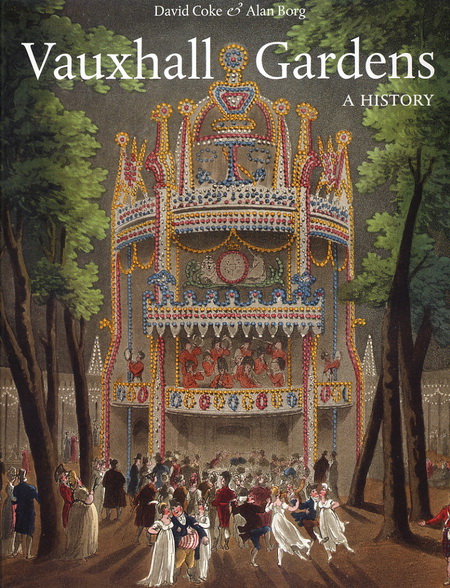
Vauxhall Gardens: A History

David Coke & Alan Borg

The Vauxhall Pleasure Gardens is one of the places I’d love to slip back in time to visit, just to catch a glimpse of what it was like. After recently splurging to buy this lovely coffee-table book, I thought it might make a wonderful subject for a new blog series. But do buy the book too, if you can! The photos are fabulous!

“The Master Builder of Delight”

In 1729, the site of the “Vauxhall Spring-Gardens was leased to a twenty-seven-year-old entrepreneur called Jonathan Tyers, whose goal was to transform it from a sort of seedy rural tavern to a respectable venue for all social classes.

A fellmonger (dealer in animal hides or skins) by trade, Jonathan was not content to continue the family business, successful though it was. Driven by a desire to raise his family’s status—and improve the world as he did so—Tyers believed that culture and pleasurable entertainments should not be the sole prerogative of the upper classes, but that the middle and lower classes deserved to find some enjoyment in their lives as well.

tyers family

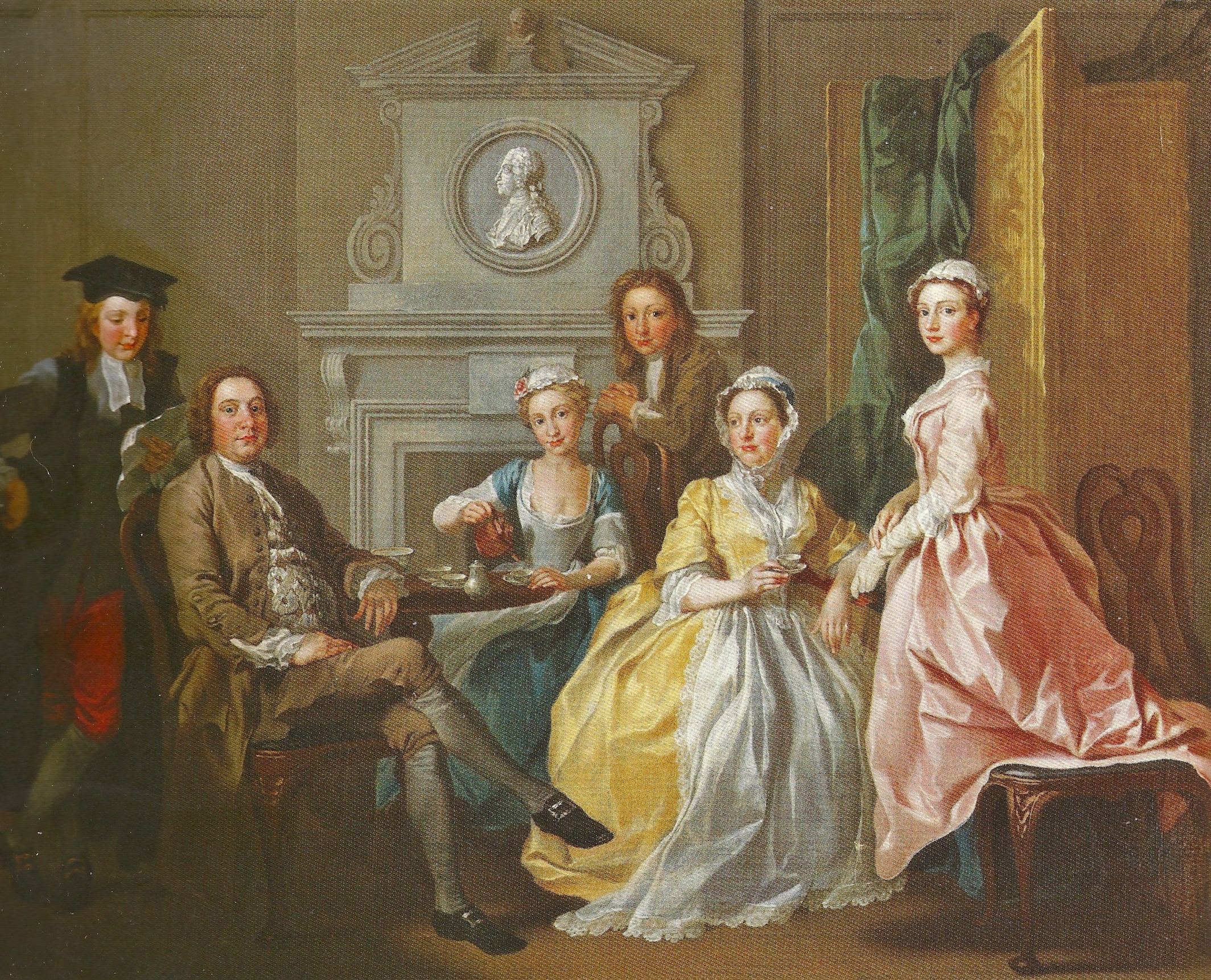
Family portrait by Francis Hayman, Jonathan Tyers and his Family, 1740. Left to right: Elder son Thomas, Jonathan, daughter Elizabeth, son Jonathan, wife Elizabeth, daughter Margaret.

Jonathan Tyers was a very complex character, with more than his fair share of contradictions and eccentricities. Upright, intelligent and self-assured, he also exhibited strains of arrogance and ambition. However, his ambitions were clearly projected chiefly upon his business rather than himself, while his personal aspirations were driven by a wish to raise his own status and that of his family to gentry, an object in which he succeeded at a remarkably early age. (p.35)

Through his association with The Wits’ Club, a social club for freethinkers, scholars, libertarians, and writers, Tyers became good friends with Charles Burney, Henry Fielding, William Hogarth, Harry Hatsell, Edward Moore, Thomas Cooke, Richard Dawson, and Leonard Howard. The club first met at Vauxhall Gardens later moved to a nearby tavern. Many of the ideas behind his development of the gardens came from the discussions at this club.

Although he never managed to mix with fashionable society in his lifetime, he was held in great respect and admiration by his peers, so much so that he was elected to the Royal Society of Arts in 1757, where he would have met many other prominent people, including Benjamin Franklin, when he visited London.

He and his creation were even featured in his friend Henry Fielding’s work of fiction, Amelia (1751).

The extreme Beauty and Elegance of this Place is well known to almost every one of my Readers; and happy is it for me that it is so; since to give an adequate Idea of it, would exceed my Power of Description. To delineate the particular Beauties of these Gardens, would, indeed, require as much pains and as much Paper too, as to rehearse all the good Actions of their Master [Tyers], whose Life proves the Truth of an Observation which I have read in some Ethic Writer, that a truly elegant Taste is generally accompanied with an Excellency of Heart; or in other Words, that true Virtue is, indeed, nothing else but true Taste.

The_Works_of_Henry_Fielding_Amelia_v2_1000373134

Tyers’s Mission

Besides his goal of cleaning up the gardens’ reputation, Tyers hoped to use the venue to improve people’s lives “through contact beauty and quality.” In other words, he planned to provide the lower orders with both art and beauty, and also expose them to “polite society,” who would educate them by example.

His influence on the manners and morals of eighteenth-century society was to be far-reaching, and his patronage of artists and designers would change the face of British art. But it was his ideological beliefs and priorities, his egalitarianism and his conviction that the pursuit of pleasure was a basic human right, and a vital element of the balanced life, that would really motivate his proprietorship of Vauxhall Gardens.

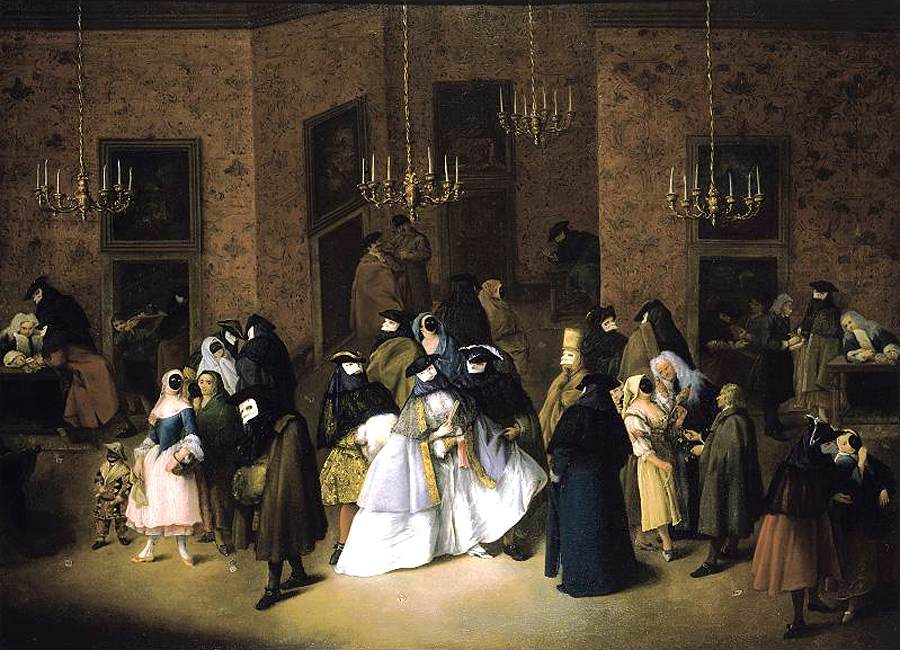
The Ridotto al Fresco

Tyers’s first event at Vauxhall was a masquerade ball in the manner of the Italian carnival in the spring of 1731. Not much is known of this event, except that there was outdoor dancing in masquerade costume and was restricted to the upper classes.

The Ridotto in Venice, Pietro Longhi, 1750's

The Ridotto in Venice, Pietro Longhi, 1750’s

By contrast, his second event in April of 1732, was attended by the poorer class of people, including “an oyster girl, a barber’s apprentice, a lawyer, an army captain, a doctor, a vicar and a number of prostitutes…”

The third event, considered to be the opening ceremony of Tyers’s Vauxhall Gardens, took place on 7 June 1732 and included the presence of Frederick, Prince of Wales. Under the guidance of John James Heidegger, Tyers created an extraordinary event that was talked about for years. A hundred armed soldiers were employed for the security of the distinguished guests, and he “hired the Westminster and Lambeth ferrymen for the whole night to carry his guests across the river and back.” Even with an admission fee of a guinea—which only the wealthy could afford—“between three and four hundred people actually attended the ridotto.” Besides the Prince of Wales’s entourage, the guests included politicians and their friends, “lawyers, bankers, printers, brewers, churchmen, military men and aristocrats.” The party broke up at around four in the morning. “The principal entertainments…were dancing and feasting, combined with the social intercourse between masked guests.”

The Ridotto in Venice, Pietro Longhi, 1750's

The Ridotto in Venice, Pietro Longhi, 1750’s

While by most accounts—particularly in the view of the Prince of Wales—this event was a great success, other accounts indicate that there was a distinct theme of preaching and moralizing via buildings set up to show the misery and pain that result from excessive self-indulgence that may have not gone over too well with the party-minded guests.

In any case, his final ridotto, which was held two weeks later on 21 June, likely at the request of the Prince, who was having the time of his life, was attended by only half as many, which, considering his expenses, would likely have completely wiped out any profits from the four events. No doubt this is the reason Tyers held no such events during 1733 or 1734, although the gardens themselves likely continued to be open to the public.

Susana’s Vauxhall Blog Post Series

  1. Vauxhall Gardens: A History
  2. Vauxhall Gardens: Jonathan Tyers—“The Master Builder of Delight” 
  3. Vauxhall Gardens: A New Direction
  4. Vauxhall Gardens: The Orchestra and the Supper-Boxes 
  5. Vauxhall Gardens: The Organ, the Turkish Tent, and the Rotunda
  6. Vauxhall Gardens: Three Piazzas of Supper-Boxes
  7. Vauxhall Gardens: “whither every body must go or appear a sort of Monster in polite Company”
  8. Vauxhall Gardens: The Competition
  9. Vauxhall Gardens: The Artwork, Part I
  10. Vauxhall Gardens: The Artwork, Part II
  11. Vauxhall Gardens: The Music, 1732-1859
  12. Vauxhall Gardens: The Business Side
  13. Vauxhall Gardens: Developments from 1751-1786
  14. Vauxhall Gardens: Thomas Rowlandson’s Painting (1785)
  15. ‎Vauxhall Gardens: The Third Generation of the Tyers Family and the Jubilee of 1786
  16. Vauxhall Gardens: An Era of Change (1786-1822), Part I
  17. Vauxhall Gardens: An Era of Change (1786-1822), Part II
  18. Vauxhall Gardens: An Era of Change (1786-1822), Part III
  19. Vauxhall Gardens: The Final Years, Part I
  20. Vauxhall Gardens: The Final Years, Part II
  21. Vauxhall Gardens: The Final Years, Part III
  22. Vauxhall Gardens: The Final Years, Part IV
  23. Vauxhall Gardens: Farewell, for ever

Cynthia Ripley Miller: On the Edge of Sunrise

Interview with Cynthia Ripley Miller

Susana: Tell us something about the time period you’ve chosen for your first novel.

Cynthia: The few years I taught history, and my travels abroad created my desire to choose a world somewhat familiar to me. I decided that ancient Rome would become my setting, but I wanted a turbulent and exciting time span that would cross cultures and usher in the Medieval Age. From a writer’s perspective, late Rome in the fifth century AD, and the Germanic barbarian Franks—who later became the French Merovingians—filled the niche for drama, intrigue and a fresh era. It beckoned me.

Susana: What inspired your title?

C.Ripley Miller copyCynthia: On the Edge of Sunrise earned its title through a meditative moment and the strength and transformation of the characters and their personal redemptions. My heroine, Arria, and hero, Garic, are nobility in their own culture. Arria’s a Roman senator’s daughter and Garic is a tribal counselor. Arria is raised unconventionally and carries the title of Roman Envoy. Garic mirrors this distinction as a highly regarded warrior, honored for his wisdom as First Counsel to his tribal chieftain. Their ‘love at first sight’ desires force them to cross cultural boundaries; however, both are torn by responsibility and duty to their countries and families. And against the odds, the hidden secret each carries with him.

Susana: What author or authors have inspired your writing?

Cynthia: As an undergraduate student of literature, I eagerly consumed classic fiction. Authors such as Hardy, Dickens, Tolstoy and Steinbeck awakened me to worlds and insights beyond my personal experience, but another side of me loved a historical novel with an adventurous plot. When I wrote, one might say I leaned toward the dark side—genre fiction. Anne Rice’s vampires brought historical settings to life and demonstrated a diversity of human traits despite their undead status. Diana Gabaldon and her Outlander series captured my attention with her vibrant characters, Scottish history, and splash of fantasy. From these influences, I determined to write a historical and adventurous love story.

Susana: What flavor is your writing?

Cynthia: The combination of a chocolate energy bar with a pinch of cayenne might best describe my novel’s flavor. My story is fast-paced with more dialogue than narrative (although there is enough narrative for imagery and internal dialogue). I like action and conflict to keep the story fresh and some red-hot spice to make the plot tantalizing.

Susana: What is your favorite scene in On the Edge of Sunrise?

Cynthia: My favorite scene involves my heroine, Arria, being accompanied to Cambria, a Roman fort town, by the hero, Garic, a Frank warrior noble who has just saved her from a renegade group of barbarians. As they enter the city gates, they come upon a slave auction. Arria sees that in order to help save a mother and her child from slavery, she must buy them. Garic, encourages her and offers his help. The attraction between Arria and Garic has grown throughout the journey, and they share some tender moments. But just as they express their love, the commander of the Roman fort, Arria’s betrothed, interrupts them.

Susana: What books do you have in your TBR pile?

Cynthia: Angelopolis by Danielle Trussoni and Roma by Steven Saylor.

Susana: What is something unusual that most people don’t know?

Cynthia: Many people don’t know that when I was in middle school I was ‘pen pals’ with Katie Kubrick, the director Stanley Kubrick’s daughter.

Susana: What are you working on now?

Cynthia: I’m working on book two in my Long-Hair Saga series, a romantic historical with strong elements of mystery and suspense.

About On the Edge of Sunrise

When love commands, destiny must obey. Against an epic background and torn between duty and passion, Arria Felix, a Roman senator’s daughter, must choose between Rome’s decadent world and her forbidden love—Garic, a Frank barbarian noble.

ontheedgehr copyThe year is AD 450. The Roman Empire wanes as the Medieval Age awakens. Attila the Hun and his horde conquer their way across Europe into Gaul. Caught between Rome’s tottering empire and Attila’s threat are the Frankish tribes and their ‘Long-Hair’ chiefs, northern pagans in a Roman Christian world, and a people history will call the Merovingians.

A young widow, Arria longs for a purpose and a challenge. She is as well versed in politics and diplomacy as any man … but with special skills of her own.

The Emperor Valentinian, determined to gain allies to help stop the Huns, sends a remarkable envoy, a woman, to the Assembly of Warriors in Gaul. Arria will persuade the Franks to stand with Rome against Attila.

When barbarian raiders abduct Arria, the Frank blue-eyed warrior, Garic, rescues her. Alarmed by the instant and passionate attraction she feels, Arria is torn between duty and desire. Her arranged betrothal to the ambitious tribune, Drusus, her secret enlistment by Valentinian as a courier to Attila the Hun, and a mysterious riddle—threaten their love and propel them into adventure, intrigue, and Attila’s camp. Rebels in a falling empire, Arria and Garic must find the strength to defy tradition and possess the love prophesied as their destiny.

About the Author

Cynthia Ripley Miller is a first generation Italian-American writer with a love for history, languages and books. She has lived, worked, and travelled in Europe, Africa, North America and the Caribbean. As a girl, she often wondered what it would be like to journey through time (she still does), yet knew, it could only be through the imagination and words of writers and their stories. Today, she writes to bring the past to life.

Cynthia holds a master’s degree and has taught history and teaches English. Her short fiction has appeared in the anthology Summer Tapestry, at Orchard Press Mysteries.com and The Scriptor. She has reviewed for UNRV Roman History, and writes a blog, Historical Happenings and Oddities: A Distant Focus.

Cynthia has four children and lives with her husband, twin cats, Romulus and Remus, and Jessie, a German Shepherd, in a suburb of Chicago. On the Edge of Sunrise is the first in the Long-Hair Sagas; a series set in late ancient Rome and France and published by Knox Robinson Publishing.

WebsiteTwitter Facebook 


Vauxhall Gardens: A History

vauxhallbook

Vauxhall Gardens: A History

David Coke & Alan Borg

The Vauxhall Pleasure Gardens is one of the places I’d love to slip back in time to visit, just to catch a glimpse of what it was like. After recently splurging to buy this lovely coffee-table book, I thought it might make a wonderful subject for a new blog series. But do buy the book too, if you can. The photos are fabulous!

newspringgardensmap

Public Gardens

Royal Parks, such as St. James and Hyde Park, began to open up to the public in the seventeenth century. The first “Spring Garden” was located near St. James Park. Amenities in 1614 included a bathing pond, water fountains, graveled paths and fruit trees, a butt for archery, and a tiltyard. A bowling green was added by Charles II. It also became known for excessive drinking, quarrels, and hopeful prostitutes.

Samuel Pepys and the “Old” and “New” Spring Gardens

But there were also “Spring Gardens” at Vauxhall during the early seventeenth century, and after the Restoration, two of them, one “Old” and one “New” which has caused much confusion over the years. The “Old Spring Garden” was a pleasant place to walk with trees and flowers, with food available that Samuel Pepys spoke of as too “dear”, causing him and his family to eat at a nearby house instead after they had also visited the “New Spring Garden.” The word “New” was used to indicate that it was re-opened after the Restoration. Before 1750, when Westminster Bridge was opened, most visitors arrived by boat.

Taking water for vauxhall - Be careful, my love, don't expose your leg

TAKING WATER FOR VAUXHALL – Be careful, my Love, don’t expose your Leg

An early visitor, Balthasar de Monconys, described it:

We took a boat to the other side of the Thames to see two gardens, where everyone can go and walk, have something to eat in the restaurants or in the cabins in the garden. They are called Spring Gardens, that is to say Jardin du Printemps, and the new one is more beautiful than the old. I admired the beauty of the grassy walks and the niceness of the sanded ones. It is divided into a large number of plots twenty or thirty yards square, enclosed by gooseberry hedges, and these plots are also planted with raspberry bushes, roses, and other shrubs, as well as herbs and vegetables, such as peas, beans, asparagus, strawberries and so on. The walks are bordered with jonquils, gilliflowers or lilies. We returned after we had eaten and went again to Longacre.

Samuel_Pepys

Samuel Pepys

Samuel Pepys

Samuel Pepys was a frequent visitor to the gardens, mentioning it twenty-three times in his Diary from 1662 to July 1668. On one of his earlier visits, he mentions “boys doing tumbling tricks”. In 1665 when the plague began to take hold, he mentions “the ayre and pleasure of the garden, was a great refreshment to me, and methinks, that which we ought to Joy ourselves in.” A month later, he writes:

I to Fox-hall, where to the Spring-garden; but I do not see one guest there, the town being so empty of anybody to come thither. Only, while I was there, a poor woman came to scold with the master of the house that a kinswoman, I think, of hers, that was newly dead of the plague, might be buried in the church-yard; for, for her part, she should not be buried in the Commons, as they said she should.

A year later, Pepys describes visiting the park with a friend and having a sexual encounter with some prostitutes in a private arbor. He also mentions bird (particularly nightingale) and animal calls, an entertainment which was to become customary at Vauxhall. From his writings, one can infer that entrance to the gardens was free, but that food and drink were not. One entry describes a situation where ladies were stalked by drunken men. Pepys says this:

… at last, the ladies did get off out of the house and took boat and away. I was troubled to see them abused so; and could have found my heart, as little desire of fighting as I have, to have protected the ladies.

Another time, when he visited with his wife, he was again troubled by these young rapscallions:

So over the water with my wife and Deb and Mercer to Spring-garden, and there eat and walked, and observe how rude some of the young gallants of the town are become, to go into people’s arbors where there are not men, and almost force the women—which troubled me, to see the confidence of the vice of the age: and so we away by water, with much pleasure home.

Food and Drink at the Spring Gardens

Restoration literature mentions waiters. The food served was usually cold: the very thin ham shavings that Vauxhall was known for, chicken served with salad, and occasionally beef and lobster. Strawberries and cream were popular, the fruit grown in local market gardens. Beverages were wine, beer, and rack punch (a drink from India containing arrack—distilled from coconut sap—hot water, limes, sugar, and spice).

The Great Walk

Tom Brown mentions the Great Walk—the central feature of the gardens—in Amusements, published in 1700.

The ladies that have an inclination to be private take delight in the close walks of Spring Gardens, where both sexes meet and mutually serve one another as guides to lose their way; the windings and turnings in the little wilderness are so intricate that the most experienced mothers have often lost themselves in looking for their daughters.

Much mention is made of intrigues and sexual encounters in the “Spring Gardens,” although it is hinted that such is of a somewhat higher class there than in other public venues. Sir Roger de Coverley complained to the mistress of the house “that he should be a better customer to her garden if there were more nightingales and fewer strumpets” after he was accosted by a “wanton baggage” there.

An escape from the city

The Spring Gardens, although not really the countryside, were far enough away from the dirt and smells of the city that its widely diverse visitors could—at least for a short while—escape their troubles. The following anonymous verses were published in the Gentleman’s Magazine of June 1732:

At Vauxhall Stairs they land, their Passage pay,

And to Spring Gardens, tread the beck’ning way.

‘Hail pleasing Shades! O hail thou secret Grove!

The blest Retreat of Liberty and Love.

All hail, ye Bow’rs! Ye beaut’ous Silvan Scenes,

Ye Grotts, and Mazes of fresh blooming Greens;

Here dwells no Care, no matrimonial Strife,

The peevish Husband, nor the bawling Wife;

Here’s no Restraint to make our Pleasures cloy,

We part at will, and as we please enjoy

See how the Birds by Nature taught to rove,

How sweet they sing, and how like us they love.

With careless Ease they hop from Tree to Tree,

And are as Merry, and as blest as we.

Thrice happy State! Each am’rous Trulla says,

And baits with Poison all the various ways;

The Walks are fill’d with Throngs of different Sort,

From Fleet Street, Drury, and incog., from Court.

To these fair Shades, see Belles and Beaus advance,

Some sigh, some sing, some whistle, and some dance.

Susana’s Vauxhall Blog Post Series

  1. Vauxhall Gardens: A History
  2. Vauxhall Gardens: Jonathan Tyers—“The Master Builder of Delight” 
  3. Vauxhall Gardens: A New Direction
  4. Vauxhall Gardens: The Orchestra and the Supper-Boxes 
  5. Vauxhall Gardens: The Organ, the Turkish Tent, and the Rotunda
  6. Vauxhall Gardens: Three Piazzas of Supper-Boxes
  7. Vauxhall Gardens: “whither every body must go or appear a sort of Monster in polite Company”
  8. Vauxhall Gardens: The Competition
  9. Vauxhall Gardens: The Artwork, Part I
  10. Vauxhall Gardens: The Artwork, Part II
  11. Vauxhall Gardens: The Music, 1732-1859
  12. Vauxhall Gardens: The Business Side
  13. Vauxhall Gardens: Developments from 1751-1786
  14. Vauxhall Gardens: Thomas Rowlandson’s Painting (1785)
  15. ‎Vauxhall Gardens: The Third Generation of the Tyers Family and the Jubilee of 1786
  16. Vauxhall Gardens: An Era of Change (1786-1822), Part I
  17. Vauxhall Gardens: An Era of Change (1786-1822), Part II
  18. Vauxhall Gardens: An Era of Change (1786-1822), Part III
  19. Vauxhall Gardens: The Final Years, Part I
  20. Vauxhall Gardens: The Final Years, Part II
  21. Vauxhall Gardens: The Final Years, Part III
  22. Vauxhall Gardens: The Final Years, Part IV
  23. Vauxhall Gardens: Farewell, for ever


Becca St. John: An Independent Miss

Depravity of the Novel, Oh My!

Becca St. John
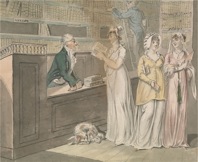
Untitled1What is so wrong with the 18th century circulating library to provoke Jane Austen to pen, “Mr. Collins readily assented, and a book was produced; but, on beholding it (for everything announced it to be from a circulating library), he started back, and begging pardon, protested that he never read novels.” (Pride and Prejudice)

Ye Gads! It’s not the Lending Library at fault, but The Novel! Worse, novels read by women and, dare I say (fist to mouth) romance novels! Moral panic descends.

“Women, of every age, of every condition, contract and retain a taste for novels […T]he depravity is universal. … the mistress of a family losing hours over a novel in the parlour.” (Sylph no. 5, October 6, 1796: 36-37)
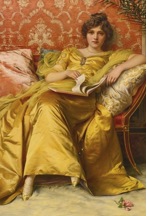
Untitled2How many hours have we all lost in the parlor on the sofa? Too many, in my case, and delightfully so. But is it really a feminine preoccupation? According to an article in The Huffington Post , women still read more novels than men. Which, my dear reader, makes sense if you look to the babe in swaddling.

Studies reaffirm what every mother, who has held a squirming baby boy, knows. Boys twist and stretch to see everything, fascinated by thingamabobs and motion. While their baby sisters focus on faces, captivated by each flitter of expression, intricate nuance of mood. Defined differences before anyone has a chance to teach them they’re different.

And thus, the male of the species are expected to understand the workings of the world, leaving the mystery of emotion to their counterparts. Sexist you say? Most certainly was back in 1760, when George Colman wrote about the notorious effects of reading novels:

” … a man might as well turn his Daughter loose in Covent-garden, as trust the cultivation of her mind to a CIRCULATING LIBRARY.” (Polly Honeycombe by George Colman)

We’ve come a long way baby, or have we?

Do you think women are, by nature, more prone to romance? Or are men just wary of being seen as fools? Leave your opinion in the comments below and be eligible to have a book and a character, in my next novel, dedicated to you. Warning ~ you never know which character that might be, lord, lady or villain.

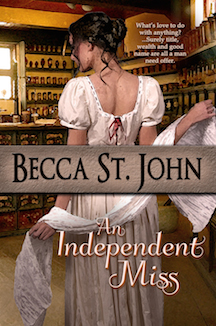
Below are two characters, a romantic woman and a not-so-romantic man, from my latest novel, An Independent Miss.

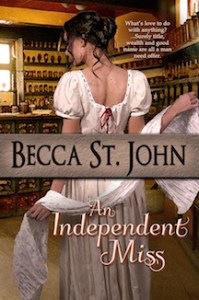
About An Independent Miss

What’s love to do with anything?

Immersed in her herbal laboratory, Lady Felicity secretly yearns for a dashing, romantic love straight from a gothic novel. So when her brother’s houseguest, Lord Andover, presses her hands to his chest, and proposes, she is too stunned to take in his words of undying love. Words he surely spoke. Didn’t he? Oh, drat, she should have listened…

Victims of misguided and inept medical men, Lord Andover’s father and brothers are in their graves, his mother lost to the apothecary’s opium. Desperate to save his mother, give her a will to live, he sets three goals: marry a sweet, soothing young lady, produce an heir and free his homes of herbalists and quacks. In return, he offers all that he is, all that he owns, except his beleaguered heart.

Title, wealth, and good name are all a man need offer.

Amazon.com
AN INDEPENDENT MISS - Front Cover(2) copy 2

Excerpt

Felicity picked at her dress, wide enough to accommodate hips decidedly wider than her waist. “These current styles don’t suit me.”

Caro threw up her hands. “That’s because you have a figure. Mother has always said some women look better undressed.”

“Undressed?”

Caro snickered, wickedly.

Felicity gave her a shove and moaned. “That doesn’t help. It only makes me more nervous.”

“Delicious. Felicity as a mortal, and a wet-behind-the-ears fledgling mortal at that.” Caro chuckled.

Too distracted to listen, Felicity merely agreed “Perhaps,” frowning as she realized what she had just said.

They stood quietly in the hallway.

“Is he proposing?”

Felicity’s head snapped up as she tamped down girlish notions. “No.” It was impossible, a foolish dream. “Of course not. He is committed to Lady Jane.” She shook her head as if words weren’t enough. “I’m sure of it.” She shook her head again, feeling a bit woozy. “No,” she repeated.

She’d assumed he sought her company because she was the only quiet one in a boisterous family and on this, his first step out of mourning, he would need peace. The Redmond household was not a gentle first step.

Caro was right, she just had to go in there and see what he wanted. It didn’t matter what she wore. No one would call her an incomparable, nor did he expect to see her as one. Hesitating in a doorway would not change that.

With a deep breath she stepped off a veritable cliff, into the room, her stomach roiling as self-assurance plummeted, her confident self swept away in the fall, revealing an unfamiliar shy, vulnerable girl she never thought to be.

“Lord Andover?”

He turned to her, fit and handsome in buff trousers and a superfine jacket a rich shade of cobalt. His neatly knotted cravat, secured with a sapphire pin, complemented the coat. A glint of sun highlighted the ebony dark of his hair, perfect foil to cerulean eyes. Not that she could see those eyes with the sun at his back. But she knew them.

“Lady Felicity.” He reached out both hands, naked of gloves, as were hers.

Did he mean for her to take them? To touch, flesh to flesh? So casually? Heat blossomed in her cheeks as she crossed the room, hands clutched at her waist, uncertain of his intention in reaching for her like that. Jarred by that uncertainty.

“Allow me this liberty.” He took her hands, eased them open, pressed them against his chest as he spoke in that deep, comforting voice of his. It poured over her, a warm waterfall of sound, as she stared, enthralled by the sight of her hands caught between the warmth of his body and the hardness of his palms.

A thrilling, foreign intimacy, the steady thump of his heart, the vibration of his baritone. A language of the senses.

Earthy heat radiated through his shirt, carried the scent of his cologne. She inhaled the spicy exotic fragrance and swallowed, afraid she might melt, right there, into a puddle at his feet. Grappling for security, she reminded herself she was a pragmatic, intelligent young lady, vastly more mature than most women her age and far beyond being carried away by bare skin. She knew the feel of flesh in a clinical, detached sort of way.

But not like this. Nothing like this.

Silence.

Startled, she looked up. He finished whatever he was saying, watched her with a small smile.

Oh Lord, she should have paid attention.

“Will you?” He finally asked again, for she was certain he had already asked her once. “Will you do me the honor of marrying me?”

She blinked, stunned. “Me?”

His chuckle washed over her, as he freed one hand to brush a finger across her cheek. “Yes, you.”

She swallowed again, just to be certain she could, as she tried to reign in the tumult of thoughts his words provoked.

“Is this a prank?” She looked about for her brothers. Thomas for certain, possibly Edward, even Annabel, though a bit young, would be up to this sort of game. No one popped out from behind a settee. No suspicious lumps or toes peeked from where the curtains were gathered.

“A prank?” He bent enough to look in her eyes. “This is no jest. Your father and I have been discussing the details all week.”

And no one told her? As if she were some silly schoolgirl?

“You are not here to visit Thomas?”

Still clasped, Andover let their hands fall down between them, his thumb absently caressing her knuckles. It rippled through her into dark private places.

“I arrived for a small house party with no particular aim other than friendly amusement.” He looked out toward the window before returning to her gaze. “Then I found you. Did you not notice my attention?”

“You’ve been kind and polite.” And attentive.

She never dared presume it meant anything to him, other than friendly camaraderie. He was to marry Lady Jane Townsend. Lady Jane herself had assured the whole of Easton Academy for Young Women that one day she would be Lady Andover. With Caro still at Easton, surely they would have heard the high drama if those expectations failed to reach fruition.

Then again, there had been no mention of Lady Jane in the whole of Andover’s visit. Not even from Lord Upton, Andover’s closest friend and Lady Jane’s brother. He was visiting, as well, and one would expect him to say something if a betrothal was on the boards.

“Would you like time to think about it?” he offered, his smile replaced with a knotted brow.

No, she didn’t need time, not that she would tell him that. “You have taken me by surprise.”

Marriage. To Lord Andover.

Oh Lord, oh Lord, oh Lord.

She fought for a serene smile while her insides rioted. He proposed to her, Felicity, not some vivacious other girl. Not to some terribly regal miss. He saw beyond her reticence, accepted her unfashionably educated mind, and chose her rather than a social bully like Lady Jane.

The flurry of excitement stalled. Lady Jane’s infamous temper was a very real obstacle. Felicity had been the brunt of it far too often to dismiss it easily.

“Have I surprised you in a bad way?”

“No, not at all. I’m just beyond words.”

“I see.”

Did he? This was no surprise to him, or to her father or to, well, how many others? Did everybody know, and if so, how could that be without her the least bit aware?

Yet here he stood, near enough she felt the starch of his shirt, smelled the intoxicating hint of cologne. As close as in her dreams.

Baldly, she burst out, “Are you quite certain?”

Relief billowed on his laugh, reigniting her excitement. “Yes, Lady Felicity. I am certain. What about you? Could you see to marrying this poor soul?”

Pour soul indeed. Lord Richard Henry Albert Carmichael, Marquis of Andover, Earl of Sutton, Viscount St. John. Good God—he was a Marquis, and a comfortably placed one at that.

Not that such things mattered. She would marry him if he were a poor parson’s son.

“Will you marry me?”

What mattered was the warmth in his eyes, the tilt of his chin when they chatted after dinner. The furrow of his brow during games of chess. The way he chuckled at her younger siblings, rather than rebuking them for their rudeness.

The way he guided her, however unknowingly, into normality. She was not a source for what ailed him, but a woman. A flesh and blood woman whose heart fluttered at the sound of his voice. Whose breath sighed at the touch of his hand.

She never dreamt this day possible. Collected the memories instead, little vignettes of his visit, their quiet talks, silent walks. Secret reminiscences to hold dear after he married Lady Jane.

“Lady Felicity?”

But it was possible, unless this moment was the dream.

Too dazed to utter a single word, she nodded and sighed, as he raised her hands to his lips.

“You will not be sorry, Lady Felicity, I promise you I will be a good husband.” His words whispered across her fingers, clear through to her toes, and then his lips pressed against the bare skin of her wrist.

You will not be sorry, but she would be, if his proposal lacked words of love. If that beat of his heart had not been for her. She did not want a marriage of convenience. She did not want to wed because they ‘suited one another.’ There were alternatives to marriage for her, alternatives that were not fashionable, but would please her, nonetheless.

She had her studies, after all. Could spend her life immersed in them. Make a living from them.

If she were to marry, she wanted a love to match the novels hidden under her bed. Novels her mother forbade. Wonderful, sensational stories of dramatic emotions, wrenching passion and love. Most important of all, love.

Andover could have promised all those things while she dumbly stared at their hands. She desperately needed to know if he had.

Oh Lord, she should have listened…

About the Author

Untitled3Becca St. John ~ An Accidental Writer ~

Writing was a tool, not a toy, until a stay in a haunted hotel and creaking floors sent Becca to a bookcase full of dog-eared romances. The Candlelight Regency, Lord Stephen’s Lady, by Janette Radcliffe her first taste of the genre, Becca was hooked. She read old romances, new romances, both sexy and sweet, until her own tales begged to be written.

Living in Florida, Becca divides her time between dreaming up stories, diving deep into history, kayaking, and swimming. Her husband gives her the space she needs by fishing mangroves and waterways, or watching football (the English sort) with his British buddies. Becca and her hubby break the routine with adventure travel; though, at heart, Becca is a homebody believing there is no greater playground than inside the mind.

Website • Facebook • Twitter

Amazon Author Page
 

“A few words on Coaching Inns” and Conclusion

dust jacket

The following post is the twenty-seventh and final of a series based on information obtained from a fascinating book Susana obtained for research purposes. Coaching Days & Coaching Ways by W. Outram Tristram, first published in 1888, is replete with commentary about travel and roads and social history told in an entertaining manner, along with a great many fabulous illustrations. A great find for anyone seriously interested in English history!

“…And now a few words on the Coaching Inns”

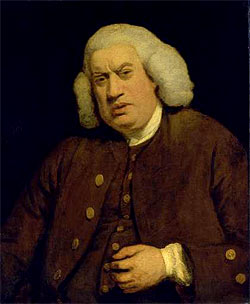
Dr. Samuel Johnson

Dr. Samuel Johnson

“There is no private house,” said Johnson—it was in the Old Chapel House inn in Oxfordshire, on the Birmingham Road, that he gave vent to the profundity—“there is no place,” he said, at which people can enjoy themselves as well as at a capital tavern like this. Let there be ever so great a plenty of good things, ever so much grandeur, ever so much elegance, ever so much desire that every guest should be easy, in the nature of things it cannot be. There must always be some degree of care and anxiety. The master of the house is anxious to entertain his friends; these in their turn are anxious to be agreeable to him, and to no one but a very impudent dog can as freely command what is in another man’s house as if it were his own. Whereas at a tavern there is a general freedom from anxiety. You are sure you are welcome, and the more noise you make the more trouble you give, the more good things you call for, the welcomer you are. No servants will attend you with the alacrity which waiters do, who are incited by the prospect of an immediate reward in proportion as they please. No, sir; there is nothing which has been contrived by man by which so much happiness is produced as by a good tavern or inn.”

Lamenting the loss of the “finest examples of this hospitable sort of architecture”

Hear, hear! say I; but while on the subject of inns may remark that I have been much disappointed in my ramblings; in truth began some six years too late from this point of view. For in that interval the country has been deprived of many of its finest examples of this hospitable sort of architecture. Of those fine examples—few and far between—which still remain, many are now sinking into a state of irremediable disrepair—witness the great inn at Stilton for one—and will in the near fulness of time doubtless be improved altogether off the face of the earth.

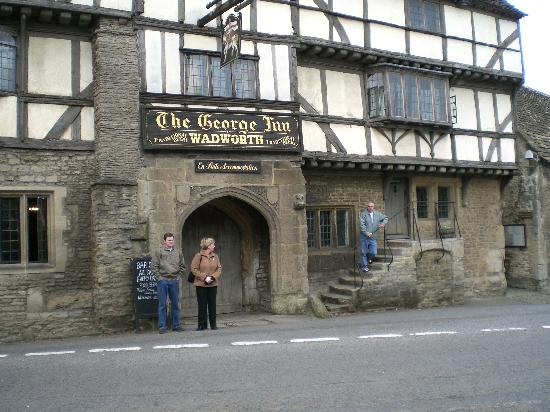
george inn norton st philip

The George Inn, Norton St. Philip (near Bath)

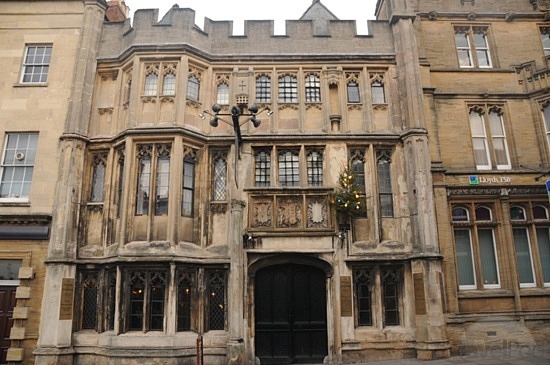
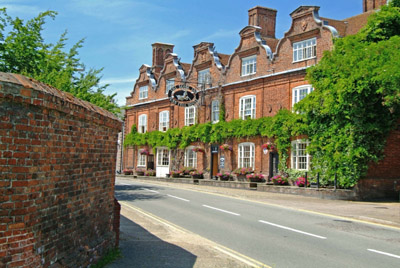
At Norton St. Philip, then, in Somersetshire, seven miles south-east of Bath, there still stands in the George Inn, a half-timbered, fifteenth century house, of the finest possible type. Monmouth passed the night of June 26th, 1685 at this George…At Glastonbury, in the same county, an inn of the same name—the George—with front one splendid mass of panelling, pierced where necessary for windows, the finest piece of domestic work in one of the most entrancing towns in England from an antiquary’s point of view, dates from the fourth Edward; while, to go further afield for a fine specimen of a different period, at Scole in Suffolk, the White Hart, erected in 1655 by John Peck, merchant, of Norwich, still retains some fine carving, and had till the end of the last century an enormous sign containing many figures—Diana and Actaeon, Charon, Cerberus, and sundry other worthies, carved in wood by Fairchild, at a cost of 1057 pounds.

george-pilgrims-hotel-1492-glastonbury-n1-st-fillans

The George & Pilgrim Hotel, Glastonbury

Conclusion

If a minor measure of success attends my enterprize I shall be content—content, that is to say, if I have caught some flavour of the romance of the Great Roads of England from the time when the Flying Machine of Charles the Second’s age lumbered out of the Belle Savage Yard, up to the day when the Holyhead Mail via Shrewsbury, timed at eleven miles an hour, was our fathers’ wonder, and the pride of this perfect road— “Mr. Bicknell’s spicy team of greys.”

scole-scole-inn-5279

The Scole Inn, Suffolk (formerly White Hart)

scole_inn_stairs

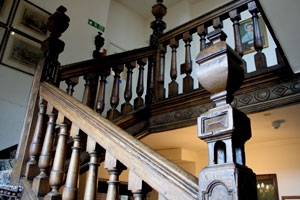
Stairs at the Scole Inn


 Index to all the posts in this series

1: The Bath Road: The (True) Legend of the Berkshire Lady

2: The Bath Road: Littlecote and Wild William Darrell

3: The Bath Road: Lacock Abbey

4: The Bath Road: The Bear Inn at Devizes and the “Pictorial Chronicler of the Regency”

5: The Exeter Road: Flying Machines, Muddy Roads and Well-Mannered Highwaymen

6: The Exeter Road: A Foolish Coachman, a Dreadful Snowstorm and a Romance

7: The Exeter Road in 1823: A Myriad of Changes in Fifty Years

8: The Exeter Road: Basingstoke, Andover and Salisbury and the Events They Witnessed

9: The Exeter Road: The Weyhill Fair, Amesbury Abbey and the Extraordinary Duchess of Queensberry

10: The Exeter Road: Stonehenge, Dorchester and the Sad Story of the Monmouth Uprising

11: The Portsmouth Road: Royal Road or Road of Assassination?

12: The Brighton Road: “The Most Nearly Perfect, and Certainly the Most Fashionable of All”

13: The Dover Road: “Rich crowds of historical figures”

14: The Dover Road: Blackheath and Dartford

15: The Dover Road: Rochester and Charles Dickens

16: The Dover Road: William Clements, Gentleman Coachman

17: The York Road: Hadley Green, Barnet

18: The York Road: Enfield Chase and the Gunpowder Treason Plot

19: The York Road: The Stamford Regent Faces the Peril of a Flood

20: The York Road: The Inns at Stilton

21: The Holyhead Road: The Gunpowder Treason Plot

22: The Holyhead Road: Three Notable Coaching Accidents

23: The Holyhead Road: Old Lal the Legless Man and His Extraordinary Flying Machine

24: The Holyhead Road: The Coachmen “More Celebrated Even Than the Most Celebrated of Their Rivals” (Part I)

25: The Holyhead Road: The Coachmen “More Celebrated Even Than the Most Celebrated of Their Rivals” (Part II)

26: Flying Machines and Waggons and What It Was Like To Travel in Them

27: “A few words on Coaching Inns” and Conclusion

Mariana Gabrielle: La Déesse Noire (Giveaway)

Bluestocking-Belles-logo-01

A Hearty Welcome to Fellow Bluestocking Belle

 Mariana Gabrielle

Susana: How long have you been writing?

Mariana: I’ve been a professional writer almost twenty-five years, writing fiction since 2009.

Susana: What advice would you give to writers just starting out?

MarianaGabrielle copyMariana: Write. Write some more. Keep writing.

Susana: Do you ever suffer from writer’s block? If so, what do you do about it?

Mariana: I tend not to get writer’s block, because I am well-used to switching among projects and formats and genres. On the rare occasions when I do, I typically switch to marketing work for a while.

Susana: What comes first: the plot or the characters?

Mariana: Characters, with plot not far behind. The first draft is almost always the characters filling me in on the story, before I fictionalize [what they think are] their nonfiction accounts.

Susana: Are you a plotter or a pantser?

Mariana: Panster. Full stop. Even in nonfiction, I almost never start with a plan, and if I do, it gets tossed out the window very early. The work evolves.

Susana: Tell us something about your newest release that is NOT in the blurb.

Mariana: There are two heroes, three villains, and two sidekicks in this short novel. I am told I managed to pull it off.

Susana: Are you working on something at present that you would like to tell us about?

Mariana: I am working on a series of three prequel novellas connected to my first novel, Royal Regard, the first of which will appear in the Bluestocking Belles’ holiday box set. In ‘Tis Her Season, Charlotte and Alexander start their life together; in Shipmate, readers will learn how Bella ended up with her first husband; and in the unnamed third book, Bella’s brother, John, meets his wife, Rose.

Susana: What did you want to be when you grew up?

Mariana: I wanted to be a musical theatre star.

Susana: What is one thing your readers would be most surprised to learn about you?

Mariana: I am not—in the least—a romantic (not even a little bit).

Susana: What would we find under your bed?

Mariana: Dust. (Cats, if there are other people in the house.)

Susana: Do you write in multiple genres or just one? If just one, would you consider straying outside your genre?

Mariana: Thus far, I have only published Regency romance, but next year, I will release Blind Tribute, a mainstream historical about a Civil War newspaper reporter with divided loyalties. I am currently working in non-fiction on a marketing book, and I have already released a book-length epic poem about the Mayan underworld. As far as fiction, though, I don’t foresee straying from some form of historical.

Susana: What is something you’d like to accomplish in your writing career next year?

Mariana: I’d like to release all three Royal Regard prequel novellas, and I would like Blind Tribute to be on the verge of publication by this time next year. I wouldn’t mind having a good start on Book One of my Regency family series.

Susana: When was the moment that you knew you had to be a writer

Mariana: During the same week, in my third year of college (the first time around), I was offered an internship at the Denver Post, and was also approached by the Music Department chair to try for an audition at the National Musical Theater Conservatory. I decided writing was a more stable career path. Largely, I was correct.

Susana: Describe the “perfect hero.” What about the “perfect hero” for you?

Mariana: I am the perfect hero (and heroine) for me.

Rafflecopter contest May 15 – June 9

Print

Facebook Launch Party: June 10, 12:00 noon – 8 p.m. EDT

About La Déesse Noire

Sired by a British peer, born of a paramour to Indian royalty, Kali Matai has been destined from birth to enthrall England’s most powerful noblemen—though she hadn’t counted on becoming their pawn. Finding herself under the control of ruthless men, who will not be moved by her legendary allure, she has no choice but to use her beauty toward their malicious and clandestine ends.

When those she holds most dear are placed in peril by backroom political dealings, she enlists some of the most formidable lords in England to thwart her enemies. But even with the help of the prominent gentlemen she has captivated, securing Kali’s freedom, her family, and the man she loves, will require her protectors stop at nothing to fulfill her desires.

Amazon.comAmazon.ukBarnes and NobleKobo

iTunesAll Romance eBooksSmashwordsGoodreads

Excerpt

Mayuri had done her no favors, preparing her for the worst. Fitz had no reason to be gentle, she had been warned, no cause to concern himself with her wishes, desires, or fears. No matter how handsome, how charming, how solicitous in the drawing room, Mayuri had said, there was every possibility he would be driven entirely by his own lust, disregarding even the most basic courtesies. And no matter what he did, Kali was to pretend she had never been more excited by anything in her life.

She turned away to stare into the corner of the garish red-and-gold room, wishing it felt less like a cheap brothel, fingers tripping over the buttons of her dress, trying to speed things up to be finished that much faster.

She couldn’t help glancing at the bed, with a frame as large as a farm wagon. Piles of pillows in shades of rose, bed curtains of garish silk velvet, and a red satin eiderdown quilt nearly as thick as the feather-filled mattress. As comfortable as it all must be, she glared like it concealed a hungry crocodile.

He tugged the shirttail from his waistband and unbuttoned it over his broad chest, then came to her and held her hands motionless, kissing her fingertips.

“I will not hurt you, my sweet, I promise. No more than a pinprick, as with any woman’s first time. Mayuri explained?”

She nodded again, trying to bring her voice back under her own control. “Yes, my lord.” She’d known exactly what to expect for at least ten years.

“My name is Fitz,” he said, recalling her attention to his face, “not ‘my lord.’ I cannot bear such formality from you, Kali. Can you indulge me?”

“Yes, Si—Fitz.”

“Much better,” he said, kissing her cheek, then her earlobe, murmuring, “Now then, I prefer a woman who would invite me to her bed for the enjoyment, so I plan to ensure it. May I bring you pleasure, sweeting? Will you allow it?”

She had no right to deny him anything he wanted in bed, nor anywhere else, truth be told, and she probably knew more than he—theoretically—about the pleasures of the flesh. That he was asking her agreement and treating her as an innocent predisposed her to look past her fear.

“It is my fondest desire to please you in all things, my lor…” She trailed off when she saw his frustration at the pat response. She struggled to salvage the moment, but had no untutored words. She tried to explain this inadequacy with her eyes as she offered, grasping his hands more tightly, “Perhaps I might dance? Or indulge your… more exotic pleasures.”

She had been trained to expect anything and to use every part of her body, her mind, her wardrobe, and myriad implements to enhance any sexual act he chose. She had been told of every possibility before she was fourteen, then experienced all but the final act of coition at the hands of another, older tawaif, or the castrati who staffed Mayuri’s house of male delights.

She had not been trained in how to explain she was frightened, that she couldn’t remember how to put either of them at ease, that she was afraid of what he might ask if he kept her, but petrified he would find her wanting and send her away. It would be much simpler if he threw her across the bed and took his pleasure like a rutting dog. If, in the morning, she could remain indifferent.

About the Author

Mariana Gabrielle is a pseudonym of Mari Christie, a professional writer, editor, and designer with almost twenty-five years’ experience. Published in dozens of nonfiction and poetry periodicals since 1989, she began writing mainstream historical fiction in 2009 and Regency romance in 2013. In all genres, she creates deeply scarred characters in uncommon circumstances who overcome self-imposed barriers to reach their full potential. She is a member of the Bluestocking Belles, the Writing Wenches, and the Rocky Mountain Fiction Writers. Her first Regency romance, Royal Regard, was released in November 2014.

 Website/BlogFacebookTwitter

PinterestAmazon Author Page Goodreads

Flying Machines and Waggons and What It Was Like To Travel in Them

dust jacket

The following post is the twenty-sixth of a series based on information obtained from a fascinating book Susana obtained for research purposes. Coaching Days & Coaching Ways by W. Outram Tristram, first published in 1888, is replete with commentary about travel and roads and social history told in an entertaining manner, along with a great many fabulous illustrations. A great find for anyone seriously interested in English history!

Portrait of a Flying Machine

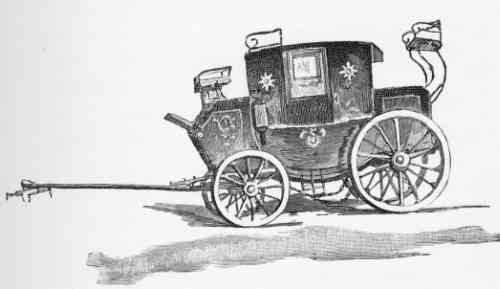
…they were principally composed of a dull black leather, thickly studded by way of ornament with broad black-headed nails, tracing out the panels in the upper tier of which were four oval windows, with heavy red wooden frames, or leather curtains. Upon the doors were displayed in large characters the names of the places whence the coach started, and where it was going to—another matter. The shape of the Flying Machine was a matter left much open to choice. You could ride in one shaped like a diving bell; or in one the exact representation of a distiller’s vat, hung equally balanced between immense back and front springs; or in one made after the pattern of a violoncello case—past all comparison the most fashionable shape. If my readers are tempted to cry why this thusness, I can only say because these violoncello-like Flying Machines hung in a more graceful posture—namely, inclining on to the back springs—and gave those who sat within it “the appearance of a stiff Guy Fawkes uneasily seated.” But this is a satiric touch, surely. To get on to the roofs, however. These generally rose into a swelling curve, which was sometimes surrounded by a high iron guard, after the manner of our more modern four-wheeled cabs. The coachman and the guard (who always held his carbine ready cocked upon his knee—an attitude which must have made inside passengers wish they had insured their lives) then sat together over a very long and narrow boot which passed under a large spreading hammercloth hanging down on all sides, and furnished with a most luxuriant fringe. Behind the coach was the immense basket, stretching far and wide beyond the body in which it was attached by long iron bars or supports passing beneath it. I am not surprised to learn that these baskets were never very great favourites, though their difference of price caused them to be frequently filled—but another proof of needs must when the devil drives—. And as for the notion of these Flying coaches when well on the road, it was “as a ship rocking or beating against a heavy sea’ straining all her timbers, with a low moaning sound as she drives over the contending waves.” With which extraordinary simile we may leave Flying Machines behind us—and any description of their successors too. For are not the models of the crack coaches in coaching’s primest age to be seen every day in Piccadilly? They are—and some very delightful rides can be had in them too.

old English flying mail coach

old English flying mail coach

The experience of “travelling in one of these perfected turn-outs”

Not that travelling in these perfected turn-outs was always like riding on a bed of roses, as I have had occasion frequently to point out, which consideration brings me to the inevitable comparison of the advantages of rail versus road. On which great subject much can be said on both sides, as a celebrated Attorney-General for Honolulu once remarked. De Quincey, for instance, may talk of the “fine fluent motion of the Bristol Mail,” and call up recollections in our minds of the modern Bristol Mail’s motion as anything but fluent; he may glorify “the absolute perfection of all the appointments about the carriage and the harness, their strength, their brilliant cleanliness, their beautiful simplicity, the royal magnificence of the horses; “but here is another side to the picture. I quote from Hone’s Table-books, an extract in the style of Jingle, and worthy of him.

HONE'S BOOK

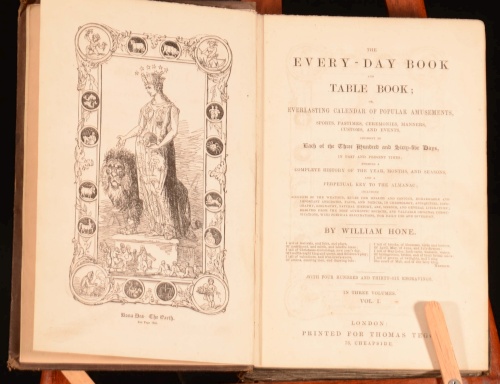
Hone’s Every-Day Book and Table Book

“STAGE COACH ADVENTURES.

“INSIDE.—Crammed full of passengers—three fat fusty old men—a young Mother and sick child—a cross old maid—a poll parrot—a bag of red herrings—double-barrelled gun (which you are afraid is loaded)—and a snarling lap dog in addition to yourself. Awake out of a sound nap with the cramp in one leg and the other in a lady’s bandbox—pay the damage (four or five shillings) for gallantry’s sake—getting out in the dark at the half-way house, in the hurry stepping into the return coach and finding yourself next morning at the very spot you had started from the evening before—not a breath of air—asthmatic old woman and child with the measles—window closed in consequence—unpleasant smell—shoes filled with warm water—look up and find it’s the child—obliged to bear it—no appeal—shut your eyes and scold the dog—pretend sleep and pinch the child—mistake—pinch the dog and get bit.—Execrate the child in return—black looks—no gentleman—pay the Coachman and drop a piece of gold in the straw—not to be found—fell through a crevice—Coachman says ‘He’ll find it.’—Can’t—get out yourself—gone—picked up by the Ostler—no time for blowing up—Coach off for next stage—lose your money—get in—lose your seat—stuck in the middle—get laughed at—lose your temper—turn sulky—and turned over in a horse-pond.

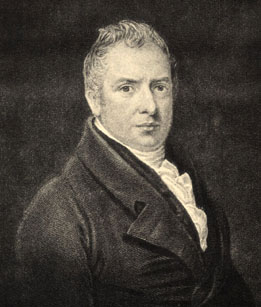
William Hone

William Hone

“OUTSIDE.—Your eye cut out by the lash of a clumsy Coachman’s whip—hat blown off into a pond by a sudden gust of wind—seated between two apprehended murderers and a noticed sheep-stealer in irons—who are being conveyed to gaol—a drunken fellow half asleep falls off the Coach—and in attempting to save himself drags you along with him into the mud—musical guard, and driver horn mad—turned over.—One leg under a bale of cotton—the other under the Coach—hands in breeches pockets—head in hamper of wine—lots of broken bottles versus broken heads.—Cut and run—send for surgeons—wounds dressed—lotion and lint four dollars—take post-chaise—get home—lay down—and laid up.”

coach

stage coach and mail

Stage coach and mail


Mail coach

Mail coach


 Index to all the posts in this series

1: The Bath Road: The (True) Legend of the Berkshire Lady

2: The Bath Road: Littlecote and Wild William Darrell

3: The Bath Road: Lacock Abbey

4: The Bath Road: The Bear Inn at Devizes and the “Pictorial Chronicler of the Regency”

5: The Exeter Road: Flying Machines, Muddy Roads and Well-Mannered Highwaymen

6: The Exeter Road: A Foolish Coachman, a Dreadful Snowstorm and a Romance

7: The Exeter Road in 1823: A Myriad of Changes in Fifty Years

8: The Exeter Road: Basingstoke, Andover and Salisbury and the Events They Witnessed

9: The Exeter Road: The Weyhill Fair, Amesbury Abbey and the Extraordinary Duchess of Queensberry

10: The Exeter Road: Stonehenge, Dorchester and the Sad Story of the Monmouth Uprising

11: The Portsmouth Road: Royal Road or Road of Assassination?

12: The Brighton Road: “The Most Nearly Perfect, and Certainly the Most Fashionable of All”

13: The Dover Road: “Rich crowds of historical figures”

14: The Dover Road: Blackheath and Dartford

15: The Dover Road: Rochester and Charles Dickens

16: The Dover Road: William Clements, Gentleman Coachman

17: The York Road: Hadley Green, Barnet

18: The York Road: Enfield Chase and the Gunpowder Treason Plot

19: The York Road: The Stamford Regent Faces the Peril of a Flood

20: The York Road: The Inns at Stilton

21: The Holyhead Road: The Gunpowder Treason Plot

22: The Holyhead Road: Three Notable Coaching Accidents

23: The Holyhead Road: Old Lal the Legless Man and His Extraordinary Flying Machine

24: The Holyhead Road: The Coachmen “More Celebrated Even Than the Most Celebrated of Their Rivals” (Part I)

25: The Holyhead Road: The Coachmen “More Celebrated Even Than the Most Celebrated of Their Rivals” (Part II)

26: Flying Machines and Waggons and What It Was Like To Travel in Them

27: “A few words on Coaching Inns” and Conclusion