Archives

Romance of London: Eccentricities of Lord Byron

Romance of London: Strange Stories, Scenes And Remarkable Person of the Great Town in 3 Volumes

John Timbs

John Timbs (1801-1875), who also wrote as Horace Welby, was an English author and aficionado of antiquities. Born in Clerkenwell, London, he was apprenticed at 16 to a druggist and printer, where he soon showed great literary promise. At 19, he began to write for Monthly Magazine, and a year later he was made secretary to the magazine’s proprietor and there began his career as a writer, editor, and antiquarian.

This particular book is available at googlebooks for free in ebook form. Or you can pay for a print version.

George Gordon, 6th Baron Byron

George Gordon, 6th Baron Byron

Eccentricities of Lord Byron

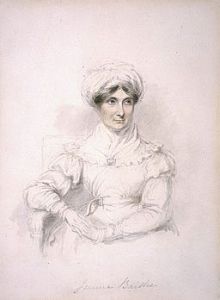
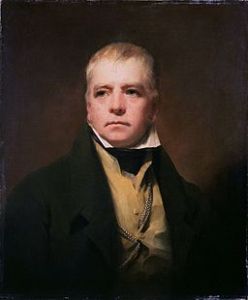
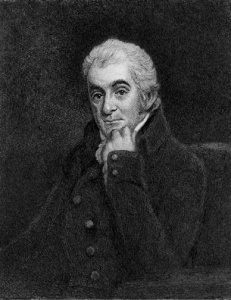
Mr. Rogers, in his Table Talk, writes:—”Neither [Thomas] Moore nor myself had ever seen Byron, when it was settled that he should dine at my house to meet Moore; nor was he known by sight to [Thomas] Campbell, who, happening to call upon me that morning, consented to join the party.  I thought it best that I alone should be in the drawing-room when Byron entered it; and Moore and Campbell accordingly withdrew. Soon after his arrival they returned, and I introduced them to him severally, naming then as Adam named the beasts. When we sat down to dinner, I asked Byron if he would take soup? ‘No; he never took soup.’—Would he take some fish? ‘No; he never took fish.’ Presently, I asked if he would eat some mutton? ‘No’ he never ate mutton.’—I then asked if he would take a glass of wine? ‘No; he never tasted wine.’—It was now necessary to inquire what he did eat and drink’ and the answer was,—’Nothing but hard biscuits and soda-water.’ Unfortunately, neither hard biscuits nor soda-water were at hand; and he dined upon potatoes bruised down on his plate and drenched with vinegar. My guests stayed till very late, discussing the merits of Walter Scott and Joanna Baillie. Some days after, meeting Hobhouse, I said to him, ‘How long will Lord Byron persevere in his present diet?’ He replied,—’Just as long as you continue to notice it.’ I did not then know what I now know to be a fact, that Byron, after leaving my house, had gone to a club in St. James’s Street and eaten a hearty meat supper… Byron had a prodigious facility of composition. He was fond of suppers, and used often to sup at my house and eat heartily (for he had then given up the hard biscuit and soda-water diet); after going home he would throw off sixty or eighty verses, which he would send to press next morning… In those days, at least, Byron had no readiness of reply in conversation. If you happened to let fall any observation which offended him, he would say nothing at the time, but the offence would lie rankling in his mind, and, perhaps, a fortnight after, he would suddenly come out with some very cutting remarks upon you, giving them as his deliberate opinions, the results of his experience of your character.”

Joanna Baillie, Scottish poet and dramatist

Joanna Baillie, Scottish poet and dramatist


Sir Walter Scott, Scottish historical novelist, poet, and playwright

Sir Walter Scott, Scottish historical novelist, poet, and playwright


Romance of London Series

  1. Romance of London: The Lord Mayor’s Fool… and a Dessert
  2. Romance of London: Carlton House and the Regency
  3. Romance of London: The Championship at George IV’s Coronation
  4. Romance of London: Mrs. Cornelys at Carlisle House
  5. Romance of London: The Bottle Conjuror
  6. Romance of London: Bartholomew Fair
  7. Romance of London: The May Fair and the Strong Woman
  8. Romance of London: Nancy Dawson, the Hornpipe Dancer
  9. Romance of London: Milkmaids on May-Day
  10. Romance of London: Lord Stowell’s Love of Sight-seeing
  11. Romance of London: The Mermaid Hoax
  12. Romance of London: The Bluestocking and the Sweeps’ Holiday
  13. Romance of London: Comments on Hogarth’s “Industries and Idle Apprentices”
  14. Romance of London: The Lansdowne Family
  15. Romance of London: St. Margaret’s Painted Window at Westminster
  16. Romance of London: Montague House and the British Museum
  17. Romance of London: The Bursting of the South Sea Bubble
  18. Romance of London: The Thames Tunnel
  19. Romance of London: Sir William Petty and the Lansdowne Family
  20. Romance of London: Marlborough House and Sarah, Duchess of Marlborough
  21. Romance of London: The Duke of Newcastle’s Eccentricities
  22. Romance of London: Voltaire in London
  23. Romance of London: The Crossing Sweeper
  24. Romance of London: Nathan Mayer Rothschild’s Fear of Assassination
  25. Romance of London: Samuel Rogers, the Banker Poet
  26. Romance of London: The Eccentricities of Lord Byron
  27. Romance of London: A London Recluse

Romance of London: Samuel Rogers, the Banker Poet

Romance of London: Strange Stories, Scenes And Remarkable Person of the Great Town in 3 Volumes

John Timbs

John Timbs (1801-1875), who also wrote as Horace Welby, was an English author and aficionado of antiquities. Born in Clerkenwell, London, he was apprenticed at 16 to a druggist and printer, where he soon showed great literary promise. At 19, he began to write for Monthly Magazine, and a year later he was made secretary to the magazine’s proprietor and there began his career as a writer, editor, and antiquarian.

This particular book is available at googlebooks for free in ebook form. Or you can pay for a print version.

samuel_rogers_b1763npg

Samuel Rogers

From Wikipedia:

Samuel Rogers (30 July 1763 – 18 December 1855) was an English poet, during his lifetime one of the most celebrated, although his fame has long since been eclipsed by his Romantic colleagues and friends Wordsworth, Coleridge and Byron. His recollections of these and other friends such as Charles James Fox are key sources for information about London artistic and literary life, with which he was intimate, and which he used his wealth to support. He made his money as a banker and was also a discriminating art collector.

John Timbs’s Reflections

A few days after the death of Mr. Rogers, in 1855, there appeared the following interesting record of him from the practised pen of Mr. Robert Carruthers, who long enjoyed the friendship of the distinguished poet and patron of artists and men of letters.

It is not our intention to speak of the poetry of Mr. Rogers. In noticing it some time since we characterised it generally as presenting a classic and graceful beauty; with no slovenly or obscure lines; with fine cabinet pictures of soft and mellow lustre, and occasionally with trains of thought and association that awaken or recall tender and heroic feelings. No that personal interest in a living poet is withdrawn, and kindness and respect towards him are of no avail, it may be questioned whether Rogers’s poetry will maintain any prominent place in our literature. He will always be esteemed one of the purest disciples of the old classic school of Pope and Dryden—and to turn to him from the mystic ravings, tortures, and Red Indian chants of some modern poets, is like emerging from the wards of an hospital to fresh air and sunshine; but he wants vital interest, passion and strength, for universal popularity. He had not what Gray terms the “golden keys” that can unlock the gates of joy or horror, or open the “sacred source of sympathetic tears.”

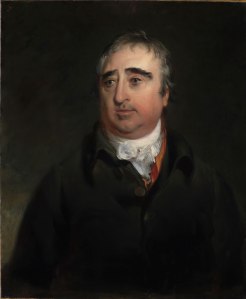
Charles James Fox

Charles James Fox

It is a man of taste and letters, as a patron of artists and authors, and as the friend of almost every illustrious man that has graced our annals for the last half century and more, that Mr. Rogers has of late years challenged public attention. He was a link between the days of Johnson, Burke, and Reynolds, and the present time. He had rambled over St. Anne’s Hill with Fox and Grattan. Sheridan addressed to him the last letter he ever wrote, begging for pecuniary assistance, that the blanket on which he was dying might not be torn from his bed by bailiffs; and Rogers answered the call with a remittance of 100 l. No man had so many books dedicated to him. Byron inscribed to him his “Giaour,” in token of “admiration of his genius, respect for his character, and gratitude for his friendship.” Moore was no less laudatory, and Moore owed substantial favours to the old poet. By his mediation his quarrel with Byron was adjusted, and when Moore fell into difficulties, the liberal hand of Rogers was opened. His benefactions in this way were almost of daily occurrence. “There is a happy and enviable poet!” said Thomas Campbell one day on leaving Rogers’s house; “he has some four or five thousand pounds a year, and he gives away fifteen hundred in charity.” And next to relieving the distress of authors and others, it was the delight of Mr. Rogers to reconcile differences and bring together men who might otherwise never meet. At his celebrated breakfast-parties persons of almost all classes and pursuits were found. He made the morning meal famous as a literary rallying point; and during the London season there was scarcely a day in which from four to six persons were not assembled at the hospitable board in St. James’s Place. There discussion as to books or pictures, anecdotes of the great of old, some racy sayings of Sheridan, Erskine, or Horne Tooke, some apt quotation or fine passage read aloud, some incident of foreign travel recounted all flowed on without restraint, and charmed the hours till mid-day. Byron has described the scene of these meetings:—

george_gordon_byron_6th_baron_byron_by_richard_westall_2“Rogers is silent, and it is said, severe. When he does talk, he talks well; and, on all subjects of taste, his delicacy of expression is pure as his poetry. If you enter his house, his drawing-room, his library, you of yourself say, this is not the dwelling of a common mind. There is not a gem, a coin, a book thrown aside on his chimney-piece, his sofa, his table, that does not bespeak an almost fastidious elegance in the possessor. But this very delicacy must be the misery of his existence. Oh, the jarrings his disposition must have encountered through life!”

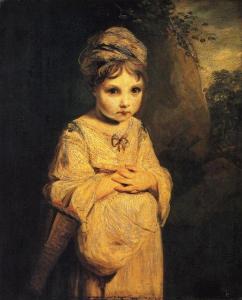
Byron’s sensitiveness coloured all he saw with his own feeling. There was none of this misery resulting from Rogers’s taste. He enjoyed life—had money, fame, honour, love, and troops of friends. His recipe for long life was “temperance, the bath, flesh-brush, and don’t fret.” But his house was really a magazine of marvels—the saloon of the Muses!—and its opening view on the garden and lawn of the Green Park in itself a picture. Paintings by Titian, Guido, Rubens, Claude, Raphael, and English artists, covered the walls. Every school, Italian and Spanish, had the representative, and not the least prized were the native landscapes of Wilson and Gainsborough, and the “Strawberry Girl” and “Puck” of Sir Joshua Reynolds. In the hall were Greek sculptures, busts, and vases, with endless articles of virtu. The library had its rare and choice editions—a drawing by Raphael, an original bust of Pope by Roubiliac, antique gems and cameos, and many precious manuscripts. Two of these he lately presented to the British Museum—Milton’s agreement with his bookseller for the copyright of “Paradise Lost” (for which he gave a hundred guineas), and Dryden’s contract with his publisher, Jacob Tonson. The whole arrangement of these rooms bespoke consummate taste and carelessness of cost. The chimney-piece of the drawing-room was of Carrera marble, sculptured with bas-reliefs and miniature statues by Flaxman; and the panels of a small library displayed the “Seven Ages of Man,” painted by Stothard. To comprehend how so much was done by one less than a noble, we must recollect Rogers’s bank, his exquisite taste, and his long life. He had written Journals of Conversations with Fox, Erskine, Horne, Tooke, and the Duke of Wellington (some of which we have seen), and those can scarcely fail to be both interesting and valuable.

Puck by Joshua Reynolds

Puck, Joshua Reynolds

The Strawberry Girl, Joshua Reynolds

The Strawberry Girl, Joshua Reynolds

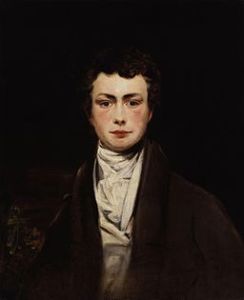
Thomas Moore

Thomas Moore

The severity of remark alluded to by Byron as characteristic of his friend, was displayed in a certain quaint shrewdness and sarcasm with which his conversation abounded, though rarely taking an offensive form. He could pay compliments as pointed as his sarcasm. Moore has recorded the pleasure he derived from one of Rogers’s remarks—”What a lucky fellow you are! Surely you must have been born with a rose on your lips and a nightingale singing on the top of your bed.” These and many other sayings, pleasant and severe, will now be remembered. But higher associations, even apart from his genius, will be associated with the name of Samuel Rogers. His generosity and taste—his readiness to oblige and serve, or to encourage and reward the humblest labourer in the literary vineyard—his devotion to all intellectual and liberal pursuits—the jealousy with which he guarded the dignity and rights of literature—the example of a straight path and spotless life extended to more than ninety-two years; these are honours and distinctions which will “gather round his tomb,” and outlast his monument.

fleshbrush

Romance of London Series

  1. Romance of London: The Lord Mayor’s Fool… and a Dessert
  2. Romance of London: Carlton House and the Regency
  3. Romance of London: The Championship at George IV’s Coronation
  4. Romance of London: Mrs. Cornelys at Carlisle House
  5. Romance of London: The Bottle Conjuror
  6. Romance of London: Bartholomew Fair
  7. Romance of London: The May Fair and the Strong Woman
  8. Romance of London: Nancy Dawson, the Hornpipe Dancer
  9. Romance of London: Milkmaids on May-Day
  10. Romance of London: Lord Stowell’s Love of Sight-seeing
  11. Romance of London: The Mermaid Hoax
  12. Romance of London: The Bluestocking and the Sweeps’ Holiday
  13. Romance of London: Comments on Hogarth’s “Industries and Idle Apprentices”
  14. Romance of London: The Lansdowne Family
  15. Romance of London: St. Margaret’s Painted Window at Westminster
  16. Romance of London: Montague House and the British Museum
  17. Romance of London: The Bursting of the South Sea Bubble
  18. Romance of London: The Thames Tunnel
  19. Romance of London: Sir William Petty and the Lansdowne Family
  20. Romance of London: Marlborough House and Sarah, Duchess of Marlborough
  21. Romance of London: The Duke of Newcastle’s Eccentricities
  22. Romance of London: Voltaire in London
  23. Romance of London: The Crossing Sweeper
  24. Romance of London: Nathan Mayer Rothschild’s Fear of Assassination
  25. Romance of London: Samuel Rogers, the Banker Poet
  26. Romance of London: The Eccentricities of Lord Byron
  27. Romance of London: A London Recluse

Romance of London: Nathan Mayer Rothschild’s Fear of Assassination

Why does anyone want to be a billionaire?

I’m not sure why the opening line of the passage below spoke to me. Perhaps because I am two days away from my annual migration south for the winter and I’m worried about leaving something essential that I will need. Not to mention the limits of the space in the car, which I also have to share with my parents’ stuff. But it has occurred to me periodically in my life that possessions are a burden, even though I cannot get myself to give enough of them away to relieve the burden.

In these moments, I find myself exceedingly grateful not to be a billionaire. Or in the case of the subject of today’s post—a millionaire. I can’t think of anyone who would want to kill me for my possessions, at least. It does happen, though, so perhaps Mr. Rothschild had good reason for his fears. In our time, I’m thinking of Bison Dele, former NBA player who was murdered for his money by his own brother. And the homeless Abraham Shakespeare who won the lottery, but ended up murdered by someone he trusted to help him manage his money. (Yes, I am addicted to the ID Discovery Channel.)

The Penalties of Avarice

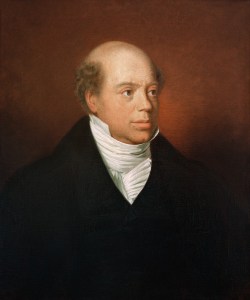
Nathan Mayer Rothschild

Nathan Mayer Rothschild

Possession naturally brings apprehension as to the power of retaining it. There were periods in the career of Rothschild, the millionaire, when his gigantic capital seemed likely to be scattered to the four quarters of the globe. He had also other sources of apprehension. Threats of murder were not unfrequent. On one occasion he was waited on by a stranger, who informed him that a plot had been formed to take his life; that the loans which he had made Austria, and his connection with Governments adverse to the liberties of Europe, marked him for assassination; and that the mode by which he was to lose his life was arranged. But though Rothschild smiled outwardly at those and similar threats, they said who knew him best, that his mind was always troubled by these remembrances, and that they haunted him at moments when he would willingly have forgotten them. Occasionally his fears took a ludicrous form. Two tall moustachioed men were once shown into his counting-house. Mr. Rothschild bowed; the visitors bowed; and their hands wandered first in one pocket and then in another. To the anxious eye of the millionaire, they assumed the form of persons searching for deadly weapons. No time seemed allowed for thought; a ledger, without a moment’s warning, was hurled at the intruders; and in a paroxysm of fear he called for assistance to drive out two customers, who were only feeling in their pockets for letters of introduction. There is no doubt that he dreaded assassination greatly. “You must be a happy man, Mr. Rothschild,” said a gentleman who was sharing the hospitality of his splendid home, as he glanced at the superb apartments of the mansion. “Happy—I happy!” was the reply. “What! happy, when just as you are going to dine, you have a letter placed in your hand, saying, ‘If you do not send 500l I will blow your brains out?’ Happy—I happy!” And the fact that he frequently slept with loaded pistols by his side is an indirect evidence of a constant excitement on the subject.*

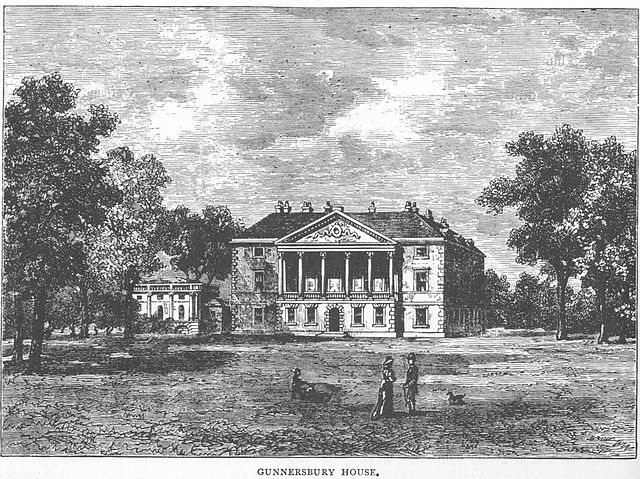
Gunnersbury House, near Acton (home of the Rothschild family)

Gunnersbury House, near Acton (home of the Rothschild family)

The late Nathan Meyer Rothschild was the most famous foreign exchange broker in London. “He never hesitated for a moment in fixing a rate, either as a drawer or purchaser of a foreign bill of exchange on any part of the world; and his memory was so retentive that, notwithstanding the multifarious transactions in which he was engaged on every foreign post-day on the Royal Exchange, he never took a note of them; but on his return to his office could dictate to his clerks the whole of the bargains he had made, with the various rates of exchange, and the names of the several parties with whom he had dealt, and the most perfect exactness.”

*Characters of the Stock Exchange


Romance of London Series

  1. Romance of London: The Lord Mayor’s Fool… and a Dessert
  2. Romance of London: Carlton House and the Regency
  3. Romance of London: The Championship at George IV’s Coronation
  4. Romance of London: Mrs. Cornelys at Carlisle House
  5. Romance of London: The Bottle Conjuror
  6. Romance of London: Bartholomew Fair
  7. Romance of London: The May Fair and the Strong Woman
  8. Romance of London: Nancy Dawson, the Hornpipe Dancer
  9. Romance of London: Milkmaids on May-Day
  10. Romance of London: Lord Stowell’s Love of Sight-seeing
  11. Romance of London: The Mermaid Hoax
  12. Romance of London: The Bluestocking and the Sweeps’ Holiday
  13. Romance of London: Comments on Hogarth’s “Industries and Idle Apprentices”
  14. Romance of London: The Lansdowne Family
  15. Romance of London: St. Margaret’s Painted Window at Westminster
  16. Romance of London: Montague House and the British Museum
  17. Romance of London: The Bursting of the South Sea Bubble
  18. Romance of London: The Thames Tunnel
  19. Romance of London: Sir William Petty and the Lansdowne Family
  20. Romance of London: Marlborough House and Sarah, Duchess of Marlborough
  21. Romance of London: The Duke of Newcastle’s Eccentricities
  22. Romance of London: Voltaire in London
  23. Romance of London: The Crossing Sweeper
  24. Romance of London: Nathan Mayer Rothschild’s Fear of Assassination
  25. Romance of London: Samuel Rogers, the Banker Poet
  26. Romance of London: The Eccentricities of Lord Byron
  27. Romance of London: A London Recluse

Caroline Warfield: The Renegade Wife (Giveaway)

Lieutenant-Colonel John By, Royal Engineers, 1779-1836

John By [Source: By, John, 1832. Unknown Artist, Kingston Picture Collection, Queen’s University Archives, accession number V23 P-58]

John By [Source: By, John, 1832. Unknown Artist, Kingston Picture Collection, Queen’s University Archives, accession number V23 P-58]

After a modestly successful military career, John By was given an assignment the he might well have believed would bring him promotion and renown. He came from modest origins and, while competent, had never achieved the heights of success. He is in some ways a typical professional soldier of the Napoleonic Era. He died in obscurity. So why is he remembered today?

He was assigned to design an entirely navigable waterway to serve as a supply line between Montreal and Kingston using the Rideau and Ottawa rivers. It was to be cut 126 miles through a wilderness of forest, swamps, and rocky terrain far enough removed from the Saint Lawrence River to be easily defended in case of invasion by the Americans to the south. For By, it didn’t work out as he hoped. For Canada, By’s canal is a treasure.

Born at Lambeth in 1779, to a family of watermen, By entered the Royal Military Academy, Woolrich, in 1797 and was commissioned two years later. Initially commissioned to the artillery, he transferred to the Royal Engineers later that year. He served in Plymouth for two years before being sent to Canada in 1802 where he worked on the first small locks on the Saint Lawrence and on the citadel at Quebec. Beginning in late 1810 he served under Wellington in the Peninsula but was recalled in 1812 when the Inspector General of Fortifications, Lt. General Gother Mann, appointed him commanding engineer of the new Royal Gunpowder Mills. After Waterloo, the need for engineers lessened, and By retired.

First Camp at Bytown By John By [Public domain], via Wikimedia Commons

First Camp at Bytown By John By [Public domain], via Wikimedia Commons

John By was 47 when he was called out of retirement to build the canal. There’s every reason to believe he jumped at it. The Duke of Wellington is said to have chosen him specifically, but the orders came from General Mann who had also been his commanding officer during his previous stay in Canada. Both men had confidence with him at the beginning.

Never one to take the easy or obvious way, By began making controversial decisions almost immediately upon arrival in 1826. Instead of setting up housekeeping in Kingston, which already boasted not only a fort and navy base, but also a growing town, he moved his family and set up at the mouth of the Ottawa where there were at most a half dozen households. Even as the Royal Engineers began laying out the plans for the waterway, By laid out plans for a town to be called Bytown to house his headquarters, his home, barracks, and housing for workers. His town is now called Ottawa and is the capital of Canada.

There had been earlier surveys of the country, and some recommendations for much more modest plans than those ultimately carried out. By resurveyed and determined to lay out the waterway using the Rideau River and lakes, canalizing the route where needed, building locks and dams along the way. Contract labor began clearing land that winter.

Entrance of the Rideau Canal at Bytown, 1839, By Ainslie, Henry Francis 1803-1879 [Public domain], via Wikimedia Commons

Entrance of the Rideau Canal at Bytown, 1839, By Ainslie, Henry Francis 1803-1879 [Public domain], via Wikimedia Commons

The single most important decision was to build the locks and canals wide and deep enough to handle the new naval steamships. The original, narrower plans were designed for typical river craft such as Durham boats. In spite of opposition in London, a compromise plan dictated only slightly smaller construction. Building for steam power is typical of By’s far-sighted approach.

In six years By, the engineers, and the contractors had managed the project, with most of the work done by hand by primarily Irish and French workers. They built approximately 50 dams, 47 locks, and blockhouses for defense. The Stone Dam at Jones Falls was the third largest dam in the world when it was built. The eight massive locks at Bytown are still a wonder, and, yes, it accommodated navel steamships. An estimated 1000 men died in the process. By himself contracted malaria, probably as a result of his insistence on inspecting work camps himself. He demanded money for a hospital and housing, and his requests were not always well received.

Lt. Colonel By statue overlooking the locks in Ottawa (my own photo)

Lt. Colonel By statue overlooking the locks in Ottawa (my own photo)

In May 1832 John By was able to sail through the locks by steamship, his work essentially finished. It appears he planned to settle permanently in Bytown, but it was not to be. Precisely at the time of his great triumph, a move was underfoot in London to remove him. He received notice in August:

My Lords further desire that Colonel By may be forthwith ordered to return to this country, that he may be called upon to afford such explanation as My Lords may consider necessary upon this important subject.

The “important subject” was cost overruns and questionable permissions. The committee that examined him grudgingly allowed that the work had been done with care and that most of the cost was unavoidable, but in the end they issued a reprimand for allegedly unauthorized expenditures, which he denied. Instead of the commendations he expected, By was forced out. He struggled to clear his name unsuccessfully. In failing health, he retired to his home in Sussex. Even as he lay ill, his wife continued to write to people begging for help removing the stigma which she believe contributed to his decline. He died, probably of malaria, in 1836.
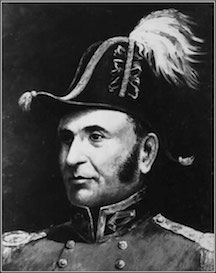
John By artist unknown (not from life)

John By artist unknown (not from life)

And the canal? It never served the military purpose for which it was intended, but it opened Ontario to settlement and served as a commercial highway throughout the nineteenth century. It is now a UNESCO World Heritage Site, largely used for recreation, and those pesky Americans are welcome to come up and enjoy the still functioning locks and canals.

Want to know more? Try these.

The Virtual Museum of Canada http://bit.ly/2ej9lzX

The Rideau Canal World Heritage Site http://www.rideau-info.com/canal/tales/bye-by.html

The Bytown Museum http://www.bytownmuseum.com/en/engr.html

Robert Passfield, Military Paternalism. https://books.google.com/books?id=CSTSAQAAQBAJ

Giveaway

To celebrate the launch, Caroline will give a copy of one of her Dangerous Series books to one randomly selected person who comments. The winner can choose from the books found here:

http://www.carolinewarfield.com/bookshelf/

About The Renegade Wife

therenegadewifeBetrayed by his cousin and the woman he loved, Rand Wheatly fled England, his dreams of a loving family shattered. He clings to his solitude in an isolated cabin in Upper Canada. Returning from a business trip to find a widow and two children squatting in his house, he flies into a rage. He wants her gone, but her children are sick and injured, and his heart is not as hard as he likes to pretend.

Meggy Blair harbors a secret, and she’ll do whatever it takes to keep her children safe. She’d hopes to hide with her Ojibwa grandmother, if she can find the woman and her people. She doesn’t expect to find shelter with a quiet, solitary man, a man who lowers his defensive walls enough to let Meggy and her children in.

Their idyllic interlude is shattered when Meggy’s brutal husband appears to claim his children. She isn’t a widow, but a wife, a woman who betrayed the man she was supposed to love, just as Rand’s sweetheart betrayed him. He soon discovers why Meggy is on the run, but time is running out. To save them all, Rand must return and face his demons.

Amazon

Excerpt

“Let go of her, Blair, or I’ll shoot you like the dog you are. God knows you deserve it.” For untold minutes all Rand heard was the wind in the trees, and Lena’s whimper behind Pratt’s back. Even Meggy seemed to hold her breath.

Blair let go of her arm so suddenly she stumbled before running back to her children. “The slut and her children are mine, Wheatly, and that makes you a thief.”

“Get on your horse, Blair, and get out of here before I change my mind and shoot you anyway. You too, Pratt.”

Rand kept his pistol aimed at Blair while the men mounted and turn their horses to the lane. Pratt and Martin galloped up the hill and into the woods, but Blair turned half way up and pointed back at Meggy hugging the children in Rand’s doorway.

“They’re mine, Wheatly. I have a writ. I’ll be back with the magistrate and the deputy to have you jailed for resisting. Won’t your fancy relatives like that?” He turned and galloped off.

Rand eased back the hammer of his pistol, when the men cleared the trees. He slid it into a holster, jumped down, and ran to Meggy and the children, pulling all of them into an embrace. Meggy began to weep almost as soon as his hand came around her back, pulling her close with Lena between them and Drew in the crook of his arm.

“You might have killed him, and then where would we be?” she sobbed.

“You would be safe from him.”

“And you would be in jail or worse.”

He didn’t deny it. He kissed the top of her head and down her cheek.

About the Author

Carol Roddy - Author

Award winning author Caroline Warfield has been many things: traveler, librarian, poet, raiser of children, bird watcher, Internet and Web services manager, conference speaker, indexer, tech writer, genealogist—even a nun. She reckons she is on at least her third act, happily working in an office surrounded by windows while she lets her characters lead her to adventures in England and the far-flung corners of the British Empire. She nudges them to explore the riskiest territory of all, the human heart.

Website & BlogFacebookTwitter

Goodreads • Renegade Wife Pinterest Board

Subscribe to Caroline’s Newsletter

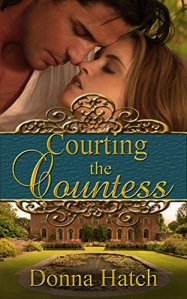
Donna Hatch: Courting the Countess

In England, dueling was part of a long-standing code of honor, far beyond mere tradition. Gentlemen took their dueling very seriously; they would rather die than be dishonored. Does your heart go pitter patter just at the sound of that? I admit, at time, mine does. How many men that honorable do you know? Okay, maybe we’d call it misplaced pride, or an overdeveloped sense of vengeance, but hey, that was a different world with a different set of rules. And yeah, I’m glad they don’t do it these days.

pistols

By the Regency era, dueling was outlawed. However, duels still happened more frequently than many people knew. The problem was, because courts were made up of peers, they were reluctant to charge another peer with murder as a result of a duel. There is a case where one nobleman was charged with murder and tried, but used the defense that his behavior was gentlemanly and honorable, meaning that he acted within the proper code of conduct. He was acquitted by his peers.

If they were socially equal, or at least similar, the gentleman who was offended would tell the man who’d wronged him that he should choose his “second,” a close friend or family member who would look out for his best interests. If he was really incensed, he might slap him with his glove, but that was considered extreme and beneath gentlemanly behavior, as it was the ultimate insult and probably resulted in a fight then and there.

The procedure for issuing a challenge was very specific. A gentleman never challenged a social inferior. For instance, a gentleman of significance with ties to the aristocracy or nobility would never challenge a commoner, such as a blacksmith or a farmer. Also, if there was a significant age difference, the duel would not be extended.

shooting

After the verbal challenge–or perhaps warning would be a better word–was issued, depending on the severity of the offense, the other might have a choice; he could either apologize, or he could accept. Sometimes, the apology would not be accepted, often if there were a third person who’d been wronged such as a lady’s honor. (Okay, call me crazy but that almost makes me want to swoon.)

The next day, supposedly after heads had cooled, the wronged man who wished to duel would send his “second” with a written letter challenging the duel. The other may chose to apologize or accept the challenge. If accepted, he would choose swords or pistols and name the time and the place. In my humble opinion, swords was a more more gentlemanly way to duel. If they used pistols, they only used one shot which seems too much like cold-blooded murder. I’m sure they didn’t always shoot to kill, but there was some unwritten rule about the shot purposely going wide and that being bad form. *shrug*

When the allotted day arrived, they met, probably in a remote place where they wouldn’t be caught by the law, and the seconds inspected the weapons to be used. A final opportunity for an apology could be given. If not, the seconds decided if the duel should be fought to (a) first blood, or (b) until one can no longer stand, or (c) to the death. Once that was decided, the opponents dueled and the seconds watched to insure that nothing dishonorable happened.

If during a duel fought by swords, one of the duelers becomes too injured to continue, occasionally the second would step in and duel. Sometimes, the seconds were hot-headed or very angry (loyal?) and ended up dueling each other as well. To my knowledge, this never happened if the duel were fought with pistols.

3

As horrible as it sounds to our modern selves, these gentlemen took their honor very seriously, and considered death preferable to living with the label of a coward, a label that would follow them and their families for years.

And, maybe it’s me, but there a certain romance about a gentleman brave enough and protective enough to be willing to risk death defending my honor from another man who’d besmirched it?

A duel is what leads to all the trouble for my hero in my Regency Romance novel, “Courting the Countess” and causes events he wishes desperately he could change, especially when the duel goes awry and causes pain to an entire family.

I’m sure glad my husband isn’t likely to try dueling…

51fds6xfkcl

Available for pre-order on Amazon

About Courting the Countess

When charming rake Tristan Barrett sweeps Lady Elizabeth off her feet, stealing both her heart and a kiss in a secluded garden, her brother challenges Tristan to a duel. The only way to save her brother and Tristan from harm—not to mention preserve her reputation—is to get married. But her father, the Duke of Pemberton, refuses to allow his daughter to marry anyone but a titled lord. The duke demands that Elizabeth marry Tristan’s older brother, Richard, the Earl of Averston. Now Elizabeth must give up Tristan to marry a man who despises her, a man who loves another, a man she’ll never love.

Richard fears Elizabeth is as untrustworthy as his mother, who ran off with another man. However, to protect his brother from a duel and their family name from further scandal, he agrees to the wedding, certain his new bride will betray him. Yet when Elizabeth turns his house upside down and worms her way into his reluctant heart, Richard suspects he can’t live without his new countess. Will she stay with him or is it too little, too late?

Pre-order now on Amazon for Kindle.

About the Author

donna-2013-copyDonna Hatch, author of the best-selling “Rogue Hearts Series,” is a hopeless romantic and adventurer at heart, the force behind driving her to write and publish seventeen titles, to date. She is a multi-award winner, a sought-after workshop presenter, and juggles multiple volunteer positions as well as her six children. Also music lover, she sings and plays the harp. Though a native of Arizona, she and her family recently transplanted to the Pacific Northwest where she and her husband of over twenty years are living proof that there really is a happily ever after.

Susana’s Adventures in England: Syon House

syonpark

If you’re looking for a stately home to visit in or near London, Syon House is a great choice. Located on the Thames across from Kew Gardens, you can get there by Underground (take the District line toward Richmond, get off at Gunnarsbury) and bus, (take the 237 or 267 bus to Brentlea). The pedestrian entrance is on your right when you get off the bus).

Syon House history

Syon began as an abbey, founded in 1415 by Henry V and closed in 1539 by the Dissolution of the Monasteries. Catherine Howard, fifth wife of Henry VIII, was imprisoned here prior to her execution in 1542. The 1st Duke of Somerset acquired it and had it renovated in Italian Renaissance style. In 1594, the 9th Earl of Northumberland acquired it and has owned it ever since.

A Royal Row

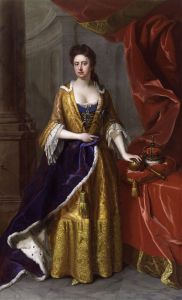
Queen Anne (1705)

Queen Anne (1705)

(from Wikipedia)

In the late 17th century, Syon was in the possession of Charles Seymour, 6th Duke of Somerset, through his wife, Elizabeth Seymour (née Percy). After the future Queen Anne had a disagreement with her sister, Mary II (wife of William III, also known as William of Orange), over her friendship with Sarah Churchill, Countess of Marlborough, she was evicted from her court residence at the Palace of Whitehall and stayed at Syon with her close friends, the Somersets, in 1692. Anne gave birth to a stillborn child there. Shortly after the birth, Mary came to visit her, again demanding that Anne dismiss the Countess of Marlborough and stormed out again when Anne flatly refused.

Mary II, 1685

Mary II, 1685

In the 18th century, Hugh Percy, 1st Duke of Northumberland, commissioned architect and interior designer Robert Adam and landscape designer Lancelot “Capability” Brown to redesign the house and estate. Work began on the interior reconstruction project in 1762. Five large rooms on the west, south and east sides of the House, were completed before work ceased in 1769. A central rotunda, which Adams had intended for the interior courtyard space, was not implemented, due to cost.

Robert Adam!

Robert Adam's plan for Syon House

Robert Adam’s plan for Syon House

from Wikipedia:

Syon House’s exterior was erected in 1547 while under the ownership of the 1st Duke of Somerset. Syon’s current interior was designed by Robert Adam in 1762 under the commission of the 1st Duke and Duchess of Northumberland.

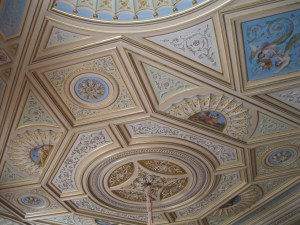
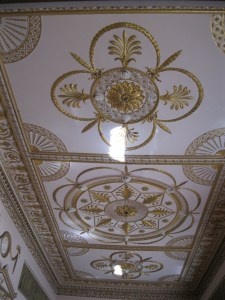
coloredceilingcornerThe well known “Adam style” is said to have begun with Syon House. It was commissioned to be built in the Neo-classical style, which was fulfilled, but Adam’s eclectic style doesn’t end there. Syon is filled with multiple styles and inspirations including a huge influence of Roman antiquity, highly visible Romantic, Picturesque, Baroque and Mannerist styles and a dash of Gothic. There is also evidence in his decorative motifs of his influence by Pompeii that he received while studying in Italy. Adam’s plan of Syon House included a complete set of rooms on the main floor, a domed rotunda with a circular inner colonnade meant for the main courtyard (‘meant for’ meaning that this rotunda was not built due to a lack of funds), five main rooms on the west, east and south side of the building, a pillared ante-room famous for its colour, a Great Hall, a grand staircase (though not built as grand as originally designed) and a Long Gallery stretching 136 feet long. Adam’s most famous addition is the suite of state rooms and as such they remain exactly as they were built.

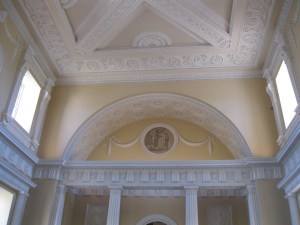
geometricceiling2More specific to the interior of Adam’s rooms is where the elaborate detail and colour shines through. Adam added detailed marble chimneypieces, shuttering doors and doorways in the Drawing Room, along with fluted columns with Corinthian capitals. The long gallery, which is about 14 feet high and 14 feet wide, contains many recesses and niches into the thick wall for books along with rich and light decoration and stucco-covered walls and ceiling. At the end of the gallery is a closet with a domed circle supported by eight columns; halfway through the columns is a doorway imitating a niche.

More photos on my Syon Park Pinterest Page: https://www.pinterest.com/susanaauthor/syon-park/

ceilingalcove

corner3

goldturquoisecorner

librarybooks&portraits

beautifulvase

delicategoldceiling

Regina Jeffers: Angel Comes to the Devil’s Keep (Giveaway)

English Titles & Peerages

Many of the minor plot lines in my latest Regency romantic suspense concern who could inherit a title. There is the matter of the Marquess of Malvern’s losing his memory. Should the Duke of Devilfoard declare his eldest son incompetent and petition for his second son to assume control of the dukedom? Was such even legal? And what of the missing Earl of Sandahl? The original earl falls overboard on his “honeymoon” and cannot be found. Should he be declared dead? If so, who inherits? The logical answer is the second son, but that solution is not what it seems.

So, what do we know of peerages? When reading historical fiction/historical romance there are many misconceptions about titles. First thing a reader must know is not all titles are created equal. For example, a baronet may pass on his title to his heir, but he is not considered part of the Peerage in the United Kingdom. There are some 800+ peers in modern day England whose titles may be inherited. Peers include Dukes/Duchesses, Marquesses/Marchionesses, Earls/Countesses, Viscounts/Viscountesses, and Barons/Baronesses. The law that applies to a particular British title depends upon when it was bestowed upon the family and the method of its creation.

Peerages of England, Great Britain, and the United Kingdom follow English law; the difference between them is that Peerages of England were created before the Act of Union 1707, Peerages of Great Britain between 1707 and the Union with Ireland in 1800, and Peerages of the United Kingdom since 1800. Irish Peerages follow the law of the Kingdom of Ireland, which is very like English law, except no Irish peers have been created since 1898, and they have no part in the present governance of the United Kingdom. Scottish Peerage law is generally similar to English law, but differs in innumerable points of detail, often being more similar to medieval practice.” (Burke’s Guide to British Titles: Courtesy Titles. Burke’s Peerage and Gentry. 2005)

A title may be created by a writ of summons, which means that a person is summoned to Parliament. A writ of summons is a document calling Members of the House of Lords to Parliament. Members of the Lords may not take their seats until they have obtained their writ of summons. Writs of summons are issued by direction of the Lord Chancellor from the office of the Clerk of the Crown in Chancery. New writs are issued before the meeting of each Parliament to all Lords Spiritual and Temporal who have a right to seats in the House. (Francis Palgrave (1788-1861), Parliamentary Writs and Writs of Military Summons (2 volumes, 1827 and 1834) Writs of summons set out the titles of the Sovereign and the recipient of the writ. They state the reason for Parliament’s calling upon the individual.

When the Earl of Berkley died, his oldest son applied for a writ of summons to the House of Lords. The Committee on Privilege turned him down and said he and the other brothers born before 1795 were illegitimate and that the earldom had fallen to the sixteen-year-old born in 1796. The boy was too young to do anything about the matter and his oldest brother and mother ran things. When he came of age, he never put forth a claim to the earldom However, he was, by right and law, the earl so anything requiring the signature of the earl had to be signed by him. He signed responsibility over to his oldest brother, but the title itself went dormant until he died.

Titles may also be created by letters of patent. This method sets out a created peerage and names the person in question. It may limit the course of descent to the male line, with only legitimate children having a right to the title. (Scottish titles permit the “legitimacy” to be determined by a marriage, not simply a marriage at time of the birth.) Traditionally, only the peer sits in the House of Lords, but from the time of Edward IV, an heir to the title (who also held additional titles) could sit in the HOL as one of his father’s subsidiary dignities. This is possible through a writ of acceleration.

Letters patent granting the Dukedom of Marlborough to Sir John Churchill were later amended by Parliament (via Wikipedia)

Letters patent granting the Dukedom of Marlborough to Sir John Churchill were later amended by Parliament (via Wikipedia)

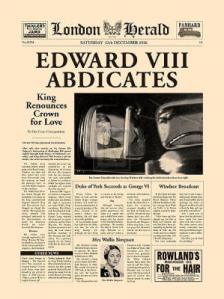
Letters Patent can be amended by Act of Parliament. Likely, the two most famous examples of amending Letters were the Dukedom of Marlborough in 1706 and the Duke of Windsor in 1936.

A person who is a possible heir to a peerage is said to be “in remainder.” A title becomes extinct (opposite to extant, which means alive) when all possible heirs (as provided by the letters patent) have died out, i.e., there is nobody in remainder at the death of the holder. A title becomes dormant if nobody has claimed the title or if no claim has been satisfactorily proven. A title goes into abeyance if there is more than one person equally entitled to be the holder.

In the past, peerages were sometimes forfeit or attainted under Acts of Parliament, most often as the result of treason on the part of the holder. The blood of an attainted peer was considered “corrupted,” consequently his or her descendants could not inherit the title. If all descendants of the attainted peer were to die out, however, then an heir from another branch of the family not affected by the attainder could take the title. The Forfeiture Act 1870 abolished corruption of blood; instead of losing the peerage, a peer convicted of treason would be disqualified from sitting in Parliament for the period of imprisonment.

London Herald (Edward VIII’s Abdicates)

London Herald (Edward VIII’s Abdicates)

Nothing prevents a British peerage from being held by a foreign citizen (although such peers cannot sit in the House of Lords). Several descendants of George III were British peers and German subjects; the Lords Fairfax of Cameron were American citizens for several generations.

“Hereditary peers do not have the automatic right to a writ of summons to the House. Irish peerages may not be disclaimed. A peer who disclaims the peerage loses all titles, rights and privileges associated with the peerage; his wife or her husband is similarly affected. No further hereditary peerages may be conferred upon the person, but life peerages may be. The peerage remains without a holder until the death of the peer making the disclaimer, when it descends normally.” (Hereditary Peers) https://en.wikipedia.org/wiki/Hereditary_peer

So what can a person do if he does not wish to accept the title? He could simply refuse to take up the title or touch the money. Technically he’d still be the title’s holder, but to have the full title and honors he must be confirmed before Parliament, and all the legal stuff has to be done to ensure he is the correct heir. He can simply not claim the title and not style himself by the title, but it remains it place at his disposal. The person does not need to send in the writ of summons to the House of Lords, and he can refuse to use the title, but someone must care for the property, and no one else may claim the title while he is alive. He can also do something drastic, such as commit treason, in which case he and his family would be stripped of the title, but no one would recommend such a step. It would be easier simply not to claim the title.

Like it or not, the heir cannot be disinherited to prevent his assuming the title. If there is a living person and the lawful successor to a title, he cannot be displaced unless convicted of a crime. During the Regency there was no way to disclaim a peerage except by not using it and not sending in a request for a seat in the House of Lords.

AngelCover copy

About Angel Comes to the Devil’s Keep

Huntington McLaughlin, the Marquess of Malvern, wakes in a farmhouse, after a head injury, being tended by an ethereal “angel,” who claims to be his wife. However, reality is often deceptive, and Angelica Lovelace is far from innocent in Hunt’s difficulties. Yet, there is something about the woman that calls to him as no other ever has. When she attends his mother’s annual summer house party, their lives are intertwined in a series of mistaken identities, assaults, kidnappings, overlapping relations, and murders, which will either bring them together forever or tear them irretrievably apart. As Hunt attempts to right his world from problems caused by the head injury that has robbed him of parts of his memory, his best friend, the Earl of Remmington, makes it clear that he intends to claim Angelica as his wife. Hunt must decide whether to permit her to align herself with the earldom or claim the only woman who stirs his heart–and if he does the latter, can he still serve the dukedom with a hoydenish American heiress at his side?

An early review

Angel Comes to Devil’s Keep is a well-written tale of courage and sacrifice and what women went through in order to marry well in Regency England. The author did her homework and it shows in an authenticity that we don’t often see in Regency romances.

Pre-orders available now

NookKobo • SmashwordsBlack Opal Books

Available everywhere on August 6, 2016

Giveaway

Leave a comment below to be eligible for an eBook copy of Angel Comes to the Devils Keep (Book 1 of the TwinsTrilogy). The giveaway ends at midnight EDT, August 7, 2016.

About the Author

author photoRegina Jeffers, a public classroom teacher for thirty-nine years, considers herself a Jane Austen enthusiast. She is the author of several Austen-inspired novels, including Darcy’s Passions, Darcy’s Temptation, Vampire Darcy’s Desire, Captain Wentworth’s Persuasion, The Phantom of Pemberley, Christmas at Pemberley, The Disappearance of Georgiana Darcy, Honor and Hope, and The Mysterious Death of Mr. Darcy. She also writes Regency romances: The Scandal of Lady Eleanor, A Touch of Velvet, A Touch of Cashémere, A Touch of Grace, A Touch of Mercy, A Touch of Love, and The First Wives’ Club. A Time Warner Star Teacher and Martha Holden Jennings Scholar, Jeffers often serves as a consultant in language arts and media literacy. Currently living outside Charlotte, North Carolina, she spends her time with her writing, gardening, and her adorable grandchildren.

WebsiteBlog  • AustenAuthorsTwitterFacebook

Romance of London: Voltaire in London

Romance of London: Strange Stories, Scenes And Remarkable Person of the Great Town in 3 Volumes

John Timbs

John Timbs (1801-1875), who also wrote as Horace Welby, was an English author and aficionado of antiquities. Born in Clerkenwell, London, he was apprenticed at 16 to a druggist and printer, where he soon showed great literary promise. At 19, he began to write for Monthly Magazine, and a year later he was made secretary to the magazine’s proprietor and there began his career as a writer, editor, and antiquarian.

This particular book is available at googlebooks for free in ebook form. Or you can pay for a print version.

Voltaire in London

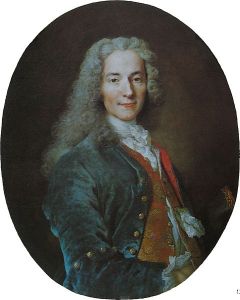
François-Marie Arouet, otherwise known as Voltaire, 1724-5

François-Marie Arouet, otherwise known as Voltaire, 1724-5

Voltaire lodged at the sign of the White Peruke, a fashionable French perruquier’s, in Maiden Lane, Covent Garden. In Swift’s Works (vol. xx of the duodecimo edition, p. 294), there is a letter to him, in English, by Voltaire, and dated from this house. The English seems a little too perfect. There is another following it which looks more authentic. But there is no doubt that Voltaire, while in England, made himself such a master of the language, as to be able to write in it with singular correctness for a foreigner. He was then young. He had been imprisoned in the Bastile for a libel; came over here, on his release; procured many subscriptions for the “Henriade;” published in English “An Essay on Epic Poetry,” and remained some years, during which he became acquainted with the principal men of letters—Pope, Congreve, and Young. He is said to have talked so indecently at Pope’s table (probably no more than was thought decent by the belles in France), that the good old lady, the poet’s mother was obliged to retire. Objecting, at Lord Chesterfield’s table, to the allegories of Milton, Young is said to have accosted him in the well-known couplet:—
Thou art so witty, profligate, and thin,

Thou seem’st a Milton, with his Death and Sin.

But this story has been doubted. Voltaire left England with such a mass of subscriptions for his Henriade as laid the foundation of his fortunes, and with great admiration of English talent and genius, particularly that of Newton and Locke, which, with all his insinuations against our poetry, he took warm pains to extend, and never gave up. He was fond to the last of showing he had not forgotten his English. Somebody telling him that Johnson had spoken well of his talents, he said, in English, “He is a clever fellow;” but the gentleman observing that the doctor did not think well of his religion, he added, “a superstitious dog.”

During his residence in Maiden Lane, there is a story of Voltaire’s having been beset, in one of his walks, by the people, who ridiculed him as a Frenchman. He got upon the steps of a door-way and harangued them in their own language in praise of English liberty and the nation; upon which, the story adds, they hailed him as a fine fellow, and carried him to his lodgings on their shoulders.—Leigh Hunt’s Town.

La Henriade

From Wikipedia:

323px-HenriadeVoltaire

La Henriade is an epic poem of 1723 written by the French Enlightenment writer and philosopher Voltaire. According to Voltaire himself, the poem concerns and was written in honour of the life of Henry IV of France, and is a celebration of his life. The ostensible subject is the siege of Paris in 1589 by Henry III in consort with Henry of Navarre, soon to be Henry IV, but its themes are the twin evils of religious fanaticism and civil discord. It also concerns the political state of France. Voltaire aimed to be the French Virgil, outdoing the master by preserving Aristotelian unity of place—a property of classical tragedy rather than epic—”by keeping the human action confined between Paris and Ivry. It was first printed (under the title La Ligue) in 1723, and reprinted dozens of times within Voltaire’s lifetime.

Voltaire in Great Britain

From Wikipedia:

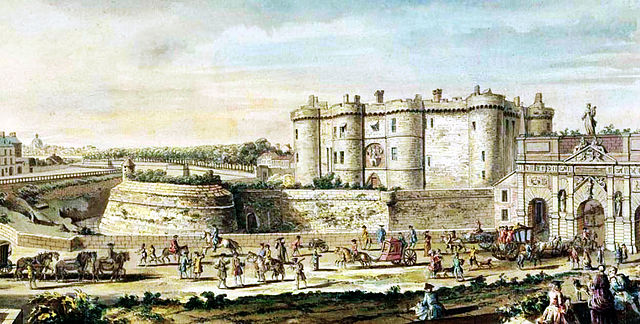
The Bastille, 1715

The Bastille, 1715

In early 1726, a young French nobleman, the chevalier de Rohan-Chabot, taunted Voltaire about his change of name, and Voltaire retorted that his name would be honoured while de Rohan would dishonour his. Infuriated, de Rohan arranged for Voltaire to be beaten up by thugs a few days later. Seeking compensation, redress, or revenge, Voltaire challenged de Rohan to a duel, but the aristocratic de Rohan family arranged for Voltaire to be arrested and imprisoned in the Bastille on 17 April 1726 without a trial or an opportunity to defend himself. Fearing an indefinite prison sentence, Voltaire suggested that he be exiled to England as an alternative punishment, which the French authorities accepted. On 2 May, he was escorted from the Bastille to Calais, where he was to embark for Britain.

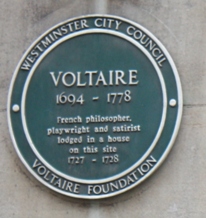
maiden-lane 061-plakette-5In England, Voltaire lived largely in Wandsworth with acquaintances including Everard Fawkener. From December 1727 to June 1728 he lodged at Maiden Lane, Covent Garden, now commemorated by a plaque, to be nearer to his British publisher. Voltaire circulated throughout English high society, meeting Alexander Pope, John Gay, Jonathan Swift, Lady Mary Wortley Montagu, Sarah, Duchess of Marlborough, and many other members of the nobility and royalty. Voltaire’s exile in Great Britain greatly influenced his thinking. He was intrigued by Britain’s constitutional monarchy in contrast to French absolutism, and by the country’s greater support of the freedoms of speech and religion. He was influenced by the writers of the age, and developed an interest in earlier English literature, especially the works of Shakespeare, still relatively unknown in continental Europe. Despite pointing out his deviations from neoclassical standards, Voltaire saw Shakespeare as an example that French writers might emulate, since French drama, despite being more polished, lacked on-stage action. Later, however, as Shakespeare’s influence began growing in France, Voltaire tried to set a contrary example with his own plays, decrying what he considered Shakespeare’s barbarities. Voltaire may have been present at the funeral of Isaac Newton and met Newton’s niece, Catherine Conduitt. In 1727 he published two essays in English, Upon the Civil Wars of France, Extracted from Curious Manuscripts, and Upon Epic Poetry of the European Nations, from Homer Down to Milton.

After two and a half years in exile, Voltaire returned to France, and after a few months living in Dieppe, the authorities permitted him to return to Paris. At a dinner, French mathematician Charles Marie de La Condamine proposed buying up the lottery that was organized by the French government to pay off its debts, and Voltaire joined the consortium, earning perhaps a million livres. He invested the money cleverly and on this basis managed to convince the Court of Finances that he was of good conduct and so was able to take control of a capital inheritance from his father that had hitherto been tied up in trust. He was now indisputably rich.

Further success followed, in 1732, with his play Zaïre, which when published in 1733 carried a dedication to Fawkener that praised English liberty and commerce. At this time he published his views on British attitudes toward government, literature, religion and science in a collection of essays in letter form entitled Letters Concerning the English Nation (London, 1733). In 1734, they were published in French as Lettres philosophiques in Rouen. Because the publisher released the book without the approval of the royal censor and Voltaire regarded the British constitutional monarchy as more developed and more respectful of human rights (particularly religious tolerance) than its French counterpart, the French publication of Letters caused a huge scandal; the book was publicly burnt and banned, and Voltaire was forced again to flee Paris.
Romance of London Series

  1. Romance of London: The Lord Mayor’s Fool… and a Dessert
  2. Romance of London: Carlton House and the Regency
  3. Romance of London: The Championship at George IV’s Coronation
  4. Romance of London: Mrs. Cornelys at Carlisle House
  5. Romance of London: The Bottle Conjuror
  6. Romance of London: Bartholomew Fair
  7. Romance of London: The May Fair and the Strong Woman
  8. Romance of London: Nancy Dawson, the Hornpipe Dancer
  9. Romance of London: Milkmaids on May-Day
  10. Romance of London: Lord Stowell’s Love of Sight-seeing
  11. Romance of London: The Mermaid Hoax
  12. Romance of London: The Bluestocking and the Sweeps’ Holiday
  13. Romance of London: Comments on Hogarth’s “Industries and Idle Apprentices”
  14. Romance of London: The Lansdowne Family
  15. Romance of London: St. Margaret’s Painted Window at Westminster
  16. Romance of London: Montague House and the British Museum
  17. Romance of London: The Bursting of the South Sea Bubble
  18. Romance of London: The Thames Tunnel
  19. Romance of London: Sir William Petty and the Lansdowne Family
  20. Romance of London: Marlborough House and Sarah, Duchess of Marlborough
  21. Romance of London: The Duke of Newcastle’s Eccentricities
  22. Romance of London: Voltaire in London
  23. Romance of London: The Crossing Sweeper
  24. Romance of London: Nathan Mayer Rothschild’s Fear of Assassination
  25. Romance of London: Samuel Rogers, the Banker Poet
  26. Romance of London: The Eccentricities of Lord Byron
  27. Romance of London: A London Recluse

Romance of London: The Duke of Newcastle’s Eccentricities

John Timbs (1801-1875), who also wrote as Horace Welby, was an English author and aficionado of antiquities. Born in Clerkenwell, London, he was apprenticed at 16 to a druggist and printer, where he soon showed great literary promise. At 19, he began to write for Monthly Magazine, and a year later he was made secretary to the magazine’s proprietor and there began his career as a writer, editor, and antiquarian.

This particular book is available at googlebooks for free in ebook form. Or you can pay for a print version.

From Wikipedia:

512px-1stDukeOfNewcastleOld

Thomas Pelham-Holles, 1st Duke of Newcastle

Thomas Pelham-Holles, 1st Duke of Newcastle upon Tyne and 1st Duke of Newcastle-under-Lyne KG PC (21 July 1693 – 17 November 1768) was a British Whig statesman, whose official life extended throughout the Whig supremacy of the 18th century. He is commonly known as the Duke of Newcastle.

A protégé of Sir Robert Walpole, he served under him for more than twenty years, until 1742. He held power with his brother, Henry Pelham (the Prime Minister of Great Britain), until 1754. He had at this point served as a Secretary of State continuously for thirty years—dominating British foreign policy.

Walpole gladly welcomed the young Newcastle into his coterie, firstly because he believed he could easily control him, and secondly because it would strengthen his hand against the rival Whig factions. Newcastle joined with Walpole because he, correctly, believed that he was going to dominate British politics for a generation.

Robert Walpole, 1st Earl of Orford

Robert Walpole, 1st Earl of Orford

After Henry’s death the Duke held his late brother’s position for six years, in two separate periods. While his first premiership was not particularly notable, Newcastle precipitated the Seven Years’ War, which would cause his resignation from his high position. After his second term as Prime Minister, he served for a short while in Lord Rockingham’s ministry, before retiring from government. Few politicians in British history matched his skills and industry in using patronage to maintain power over long stretches of time. He was most effective, however, as a deputy to a leader of greater ability, such as Walpole, his brother, or Pitt.

Historian Harry Dickinson says that he became:

notorious for his fussiness and fretfulness, his petty jealousies, his reluctance to accept responsibility for his actions, and his inability to pursue any political objective to his own satisfaction or to the nations profit…. Many modern historians have depicted him as the epitome of unredeemed mediocrity and as a veritable buffoon in office.

The Duke of Newcastle’s Eccentricities

Horace Walpole

Horace Walpole

There is scarcely any public man in our history of whose manners and conversation so many particulars have been preserved, as of the Duke of Newcastle, the well-known leader in the Pelham Administration under George II. Single stories may be unfounded or exaggerated. But all the stories about him, whether told by people who were perpetually seeing him in Parliament, and attending his levées in Lincoln’s Inn Fields, or by Grub Street writers who had never more than a glimpse of his star through the windows of his gilded coach, are of the same character. Horace Walpole and Smollett differed in their tastes and opinions as much as two human beings could differ. They quite different society. Walpole played at cards with countesses, and corresponded with ambassadors. Smollett passed his life surrounded by printers’ devils and famished scribblers. Yet, Walpole’s Duke and Smollett’s Duke are as like as if they were both from one hand. Smollett’s Newcastle runs out of his dressing-room, with his face covered with soap-suds, to embrace the Moorish envoy. Walpole’s Newcastle pushes his way into the Duke of Grafton’s sick-room to kiss the old nobleman’s plasters. No man was so unmercifully satirised. But in truth he was himself a satire ready made. All that the art of the satirist does for other men, nature had done for him. Whatever was absurd about him, stood out with grotesque prominence from the rest of the character. He was a living, moving, talkng caricature. His gait was a shuffling trot; his utterance a rapid stutter; he was always in a hurry; he was never in time; he abounded in fulsome caresses and hysterical tears. His oratory resembled that of Justice Shallow. It was nonsense effervescent with animal spirits and impertinence. Of his ignorance many anecdotes remain, some well authenticated, some probably invented at coffee-houses, but all exquisitely characteristic:—”Oh—yes—yes—to be sure—Annapolis must be defended—troops must be sent to Annapolis—Pray where is Annapolis?”—”Cape Breton an island! wonderful!—show it me in the map. So it is, sure enough. My dear sir, you always bring us good news. I must go and tell the King that Great Britain is an island.”

And this man was, during near thirty years, Secretary of State, and during near ten years, First Lord of the Treasury! His large fortune, his strong hereditary connections, his great parliamentary interest, will not alone explain this extraordinary fact. His success is a signal instance of what may be effected by a man who devotes his whole heart and soul, without reserve, to one object. He was eaten up by ambition. He was greedy after power with a greediness all his own. He was jealous of all his colleagues, and even of his own brother. Under the disguise of levity he was false eyond all example of political falsehood. All the able of men of his time ridiculed him as a dunce, a driveller, a child who never knew his own mind for an hour together; and he overreached them all round.—Lord Macaulay, on Walpole’s Letters.

Romance of London Series

  1. Romance of London: The Lord Mayor’s Fool… and a Dessert
  2. Romance of London: Carlton House and the Regency
  3. Romance of London: The Championship at George IV’s Coronation
  4. Romance of London: Mrs. Cornelys at Carlisle House
  5. Romance of London: The Bottle Conjuror
  6. Romance of London: Bartholomew Fair
  7. Romance of London: The May Fair and the Strong Woman
  8. Romance of London: Nancy Dawson, the Hornpipe Dancer
  9. Romance of London: Milkmaids on May-Day
  10. Romance of London: Lord Stowell’s Love of Sight-seeing
  11. Romance of London: The Mermaid Hoax
  12. Romance of London: The Bluestocking and the Sweeps’ Holiday
  13. Romance of London: Comments on Hogarth’s “Industries and Idle Apprentices”
  14. Romance of London: The Lansdowne Family
  15. Romance of London: St. Margaret’s Painted Window at Westminster
  16. Romance of London: Montague House and the British Museum
  17. Romance of London: The Bursting of the South Sea Bubble
  18. Romance of London: The Thames Tunnel
  19. Romance of London: Sir William Petty and the Lansdowne Family
  20. Romance of London: Marlborough House and Sarah, Duchess of Marlborough
  21. Romance of London: The Duke of Newcastle’s Eccentricities
  22. Romance of London: Voltaire in London
  23. Romance of London: The Crossing Sweeper
  24. Romance of London: Nathan Mayer Rothschild’s Fear of Assassination
  25. Romance of London: Samuel Rogers, the Banker Poet
  26. Romance of London: The Eccentricities of Lord Byron
  27. Romance of London: A London Recluse

Romance of London: Marlborough House and Sarah, Duchess of Marlborough

Romance of London: Strange Stories, Scenes And Remarkable Person of the Great Town in 3 Volumes

John Timbs

John Timbs (1801-1875), who also wrote as Horace Welby, was an English author and aficionado of antiquities. Born in Clerkenwell, London, he was apprenticed at 16 to a druggist and printer, where he soon showed great literary promise. At 19, he began to write for Monthly Magazine, and a year later he was made secretary to the magazine’s proprietor and there began his career as a writer, editor, and antiquarian.

This particular book is available at googlebooks for free in ebook form. Or you can pay for a print version.

About the Churchills

John_Churchill_in_his_thirties

John Churchill, 1st Duke of Marlborough, was a great military hero who reaped many honors and financial rewards from his service to five English monarchs. His wife Sarah was an intimate friend of Queen Anne… until Sarah’s hot temper and conceit earned her dismissal from court. For more about Sarah, Duchess of Marlborough, check out this article in Wikipedia.

Queen Anne (1705)

Queen Anne (1705)

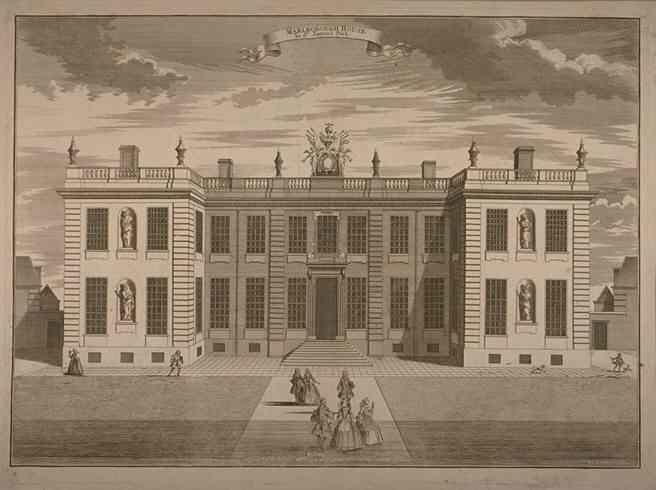
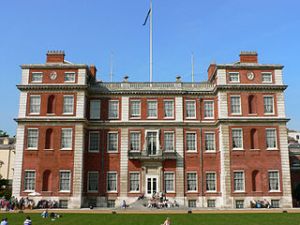
Marlborough House

Marlborough_House_-_superior_version

Little can be said, architecturally, of Marlborough House, notwithstanding it was designed by Sir Christopher Wren, who was employed, not because he was preferred, but that Vanbrugh might be vexed. Respecting Marlborough House, Pennant says

To the east of St. James’s Palace, in the reign of Queen Anne, was built Marlborough House, at the expense of the public. It appears by one of the views of St. James’s, published before the existence of this house, that it was built in part of the Royal Gardens, granted for that purpose by her Majesty. The present Duke [Pennant writes in 1793] added an upper story, and improved the ground floor, which originally wanted a great room. This national compliment cost no less than 40,000l.

As regards the site, Pennant’s account is corroborated by other authorities, who say that the mansion of the famous John Churchill was built on ground “which had been used for keeping pheasants, guinea-hens, partridges, and other fowl, and on that piece of ground taken out of St. James’s Park, then in possession of Henry Boyle, one of her Majesty’s principal Secretaries of State.”

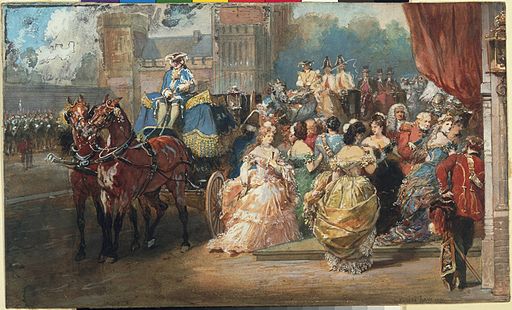
Entry to a Drawing Room at Marlborough House (1871)

Entry to a Drawing Room at Marlborough House (1871)

The Duchess both experienced and caused great mortifications here. She used to speak of the King in the adjacent palace as her “neighbor George.” The entrance to the house from Pall Mall was, as it still is, a crooked and inconvenient one. To remedy this defect, she intended to purchase some houses… for the purpose of pulling them down and constructing a more commodious entry to the mansion; but Sir Robert Walpole [whom she considered to be her greatest enemy], with no more dignified motive than mere spite, secured the houses and ground, and erected buildings [there], which… blocked in the front of the Duchess’ mansion. She was subjected to a more temporary, but as inconvenient blockade, when the preparations for the wedding of the imperious Princess Anne [does Timbs mean Mary?] and her ugly husband, the Prince of Orange, was going on. Among other preparations, a boarded gallery, through which the nuptial procession was to pass, was built up close against the Duchess’ windows, completely darkening her rooms. As the boards remained there during the postponement of the ceremony, the Duchess used to look at them with the remark, “I wish the Princess would oblige me by taking away her ‘orange chest!'”*

320px-Marlborough_House

Note: Currently the home of the Commonwealth Secretariat, the house is usually open to the public for Open House Weekend each September.

The Character of the Duchess

Sarah, Duchess of Marlborough

Sarah, Duchess of Marlborough

From the Memoirs of Mrs. Delany:

The conversation turned upon the famous Duchess of Marlborough: among others, one striking anecdote, that though she appeared affected in the highest degree at the death of her grand-daughter, the Duchess of Bedford, she sent the day after she died for the jewels she had given her, saying ‘she had only lent them;’ the answer was that she ‘had said she would never demand those jewels again except she danced at court;‘ her answer was ‘then she would be —- if she would not dance at court,’ &c. … She used to say that she was very certain she should go to heaven, and as her ambition went even beyond the grave, that she knew she should have one of the highest seats.

A few of the Duchess’ eccentricities and extravagancies have been put together somewhat in the humorous manner of our early story-books, as follows:

This is the woman who wrote the characters of her contemporaries with a pen dipped in gall and wormwood. This is the Duchess who gave 10,000l to Mr. Pitt for his noble defense of the constitution of his country! … This is the Duchess who, in her old age, used to feign asleep after dinner, and say bitter things at table pat and appropriate, but as if she was not aware of what was going on! This is the lady who drew that beautiful distinction that it was wrong to wish Sir Robert Walpole dead, but only common justice to wish him well hanged. This is the Duchess who tumbled her thoughts out as they arose, and wrote like the wife of the Great Duke Marlborough. This is the lady who quarreled with a wit upon paper (Sir John Vanbrugh), and actually got the better of him in the long run; who shut out the architect of Blenheim from seeing his own edifice, and made him dangle his time away at an inn while his friends were shown the house of the eccentric Sarah.

This is the Duchess who, ever proud and ever malignant, was persuaded to offer her favorite grand-daughter, Lady Diana Spencer, afterwards Duchess of Bedford, to the Prince of Wales, with a fortune of a hundred thousand pounds. He accepted the proposal and the day was fixed for their being secretly married at the Duchess’ Lodge, in the Great Park, at Windsor. Sir Robert Walpole got intelligence of the project, prevented it, and the secret was buried in silence.

This is the Duchess—The wisest fool much time has ever made—who refused the proffered hand of the proud Duke of Somerset, for the sole and sufficient reason that no one should share her heart with the great Duke of Marlborough.

This is the illustrious lady who superintended the building of Blenheim, examined contracts and tenders, talked with carpenters and masons, and thinking sevenpence-halfpenny a bushel for lime too much by a farthing, waged a war to the knife on so small a matter.

This is the celebrated Sarah, who, at the age of eighty-four, when she was told she must either submit to be blistered or die, exclaimed in anger, and with a start in bed, “I won’t be blistered, and I won’t die!”

The Duchess died, notwithstanding what she said, at Marlborough House, in 1774.

*Dr. Doran’s Queens of England—House of Hanover


Romance of London Series

  1. Romance of London: The Lord Mayor’s Fool… and a Dessert
  2. Romance of London: Carlton House and the Regency
  3. Romance of London: The Championship at George IV’s Coronation
  4. Romance of London: Mrs. Cornelys at Carlisle House
  5. Romance of London: The Bottle Conjuror
  6. Romance of London: Bartholomew Fair
  7. Romance of London: The May Fair and the Strong Woman
  8. Romance of London: Nancy Dawson, the Hornpipe Dancer
  9. Romance of London: Milkmaids on May-Day
  10. Romance of London: Lord Stowell’s Love of Sight-seeing
  11. Romance of London: The Mermaid Hoax
  12. Romance of London: The Bluestocking and the Sweeps’ Holiday
  13. Romance of London: Comments on Hogarth’s “Industries and Idle Apprentices”
  14. Romance of London: The Lansdowne Family
  15. Romance of London: St. Margaret’s Painted Window at Westminster
  16. Romance of London: Montague House and the British Museum
  17. Romance of London: The Bursting of the South Sea Bubble
  18. Romance of London: The Thames Tunnel
  19. Romance of London: Sir William Petty and the Lansdowne Family
  20. Romance of London: Marlborough House and Sarah, Duchess of Marlborough
  21. Romance of London: The Duke of Newcastle’s Eccentricities
  22. Romance of London: Voltaire in London
  23. Romance of London: The Crossing Sweeper
  24. Romance of London: Nathan Mayer Rothschild’s Fear of Assassination
  25. Romance of London: Samuel Rogers, the Banker Poet
  26. Romance of London: The Eccentricities of Lord Byron
  27. Romance of London: A London Recluse