Archives

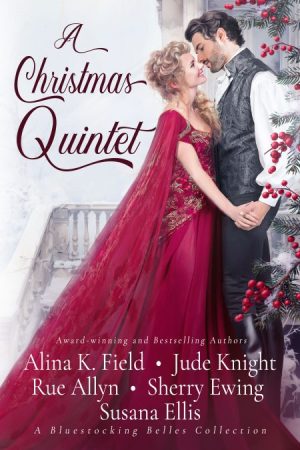
A Christmas Quintet: A Bluestocking Belles Collection + Giveaway

The Bluestocking Belles have produced a new set of Christmas stories for your holiday enjoyment! They include:

  • Friends to Lovers—The farmer’s daughter, the viscount’s son, and the estate manager reunite as adults. Della is starry-eyed for the viscount’s son, but is he really the one for her? (Regency, Christmas)
  • Fake Relationship—When the pressure to marry is overwhelming, can a plan put in place at a Christmas house party turn into a love that will last forever? (Regency, Christmas)
  • Second-Chance Love—An accident leaves the modiste burned, blinded and in despair until the physician offers hope and stirs memories. (Regency, Christmas)
  • Country Mouse and Marriage-Shy Duke—Invited at the last minute to make up the numbers, she expects to be an interested observer. The duke has other ideas. (Georgian, Twelfth Night)
  • Two Spies, One Secret—Trapped in a deserted wilderness, will they set aside secrets and past betrayals to rekindle their love and ring in the New Year together? (Medieval, Hogmanay)

Away From the Holiday Crowd by Sherry Ewing

When the pressure to marry is overwhelming, can one Christmas house party provide a love that will last forever?

David Chadwick, Marquis of Lockhart feels burdened by his title’s responsibilities. Heir to a duchy, he knows he must marry but seeks a genuine connection beyond wealth and status.  A chance encounter by the lake with his neighbor’s eldest daughter opens his eyes to the possibilities that might blossom between them.

Lady Elinor Lacey has yet to find a man she would consider for her husband. But time is running out when her father demands she pick an eligible lord by Christmas. When the Marquis of Lockhart shows up at the edge of their property, she sees him in an entirely new light, giving her hope.

Their conversation becomes easier the longer they converse. David and Elinor begin concocting a plan to give them more time to find their perfect match. What could possibly go wrong? But as love begins to enter the picture, can the two of them go beyond their original plan and let love into their hearts?

Should Auld Acquaintance Be Forgot? by Alina K. Field

Dreading meeting an old enemy at a Yuletide house party, Madame Marie La Fanelle, an acclaimed London modiste, has a clumsy encounter with a lamp that leaves her burned, blinded, and in terror of the future. 

But then a kind German physician appears, offering a hopeful diagnosis, and stirring memories of the man she once loved. Can the magic of the holidays heal Marie’s blindness and soften the hardened hearts of two prideful lovers?

Maryann and the Twelfth Knight by Jude Knight

Maryanne is only at the house party as chaperone for her half-sister. She is far too old and insignificant to attract the attention of a duke. Or, at least, if he is pursuing her it cannot be for honorable purposes.

Dell knows it is time to take a wife, but the offerings of the marriage mart bore him to tears. The only lady of interest at his sister’s house party is the spinster chaperone. But she isn’t eligible, is she?

Her Hogmanay Spy by Rue Allyn

In the winter of 1296, can a Scottish Lady and an English knight survive shipwreck, winter in the wilderness, and a betrayal that could break hearts to bring in the new year with a love for all time?

Excerpt: Della’s Christmas Gift by Susana Ellis

Paget House

Ibstock, Leicestershire

15 September 1801

“LAUD’S HEIR RETURNS FROM GRAND TOUR. In search of wife, says reputable source.”

Della’s brother threw down the latest copy of The Teatime Tattler and snickered. “Poor sod’s too young for a leg-shackle. Doubtless Lady Laud’s pressing for grandchildren. Mothers!”

Their father lifted an eyebrow. “If your mother were still alive, you’d be wed by now, Thomas. I suppose I’ve been negligent on that front. You’re what, thirty now? Ought to be settled down.”

Thomas’s fork clattered when it hit his plate. “And who would I marry? Some farm girl like Della here? If I were a banker’s son I could look higher.”

Della winced and her father’s face turned red. “THOMAS! Apologize to your sister this instant!”

“Sorry,” he mumbled. But Della could tell he wasn’t sincere, even before he added, “But dammit, she should be wed by now too. But what choices does she have, as a farmer’s daughter? We should all be better off if we sold out and went into banking.”

Thomas Sr. pounded the table hard enough to rattle his plate. “ENOUGH!”

Both of his offspring stiffened and stared at him incredulously. Their father rarely lost his temper, and never at the breakfast table. But there had been more than a few arguments recently, Della mused. 

“This farm has provided you an easy life, Thomas. You’ve been handed everything you need and want, even a chance for a superior education at Cambridge, which you squandered by neglecting your studies in favor of—er—” he swallowed as he glanced at Della  “studies of a different sort.”

Della snorted and promptly looked down at her lap when her father gave her a stern look. Well really. She was twenty years old, the same age as Thomas when he returned home from Cambridge in disgrace. Did they really believe she hadn’t heard all the stories about his misdeeds there? Rumors had been rife at the time, and although she might not have understand exactly what they meant at the age of ten, she had since apprehended them more clearly.

“I’m inclined to believe that this self-indulgent lifestyle you’ve embarked on can be attributed to the influence of the useless young lords with whom you caroused first at Harrow and then at Cambridge.” He shook his head. “Your mother would be ashamed, Thomas.”

His son had the decency to drop his chin. 

And well he should, thought Della. He’d had the good fortune to have had a mother, at least. She’d never had that opportunity, her mother having died at Della’s birth.

Their father pushed back his chair and rose from table. “Thomas, your jaunts to London and York and all points in between are now cancelled. Henceforth, you will spend your time at Paget & Sons, employed in furthering the interests of our sheep and cattle.” 

Folding his arms in front him, he glared at his son. “In case you’ve forgotten all you’ve been taught over the years, I’ll put the lad in charge to refresh your memory.”

With that, he marched out of the room.

Della giggled. The image of Thomas being bear-led around the farm by the much-younger estate manager seemed dubious at best.

He slapped the table. “It’s not funny! I don’t care a jot about sheep and cattle, and you all know it! Besides, I have a shooting party next week. It’s almost the end of the grouse season.”

Della’s hands curled up. “You should care. This farm will be yours someday! It’s in your own best interests to ensure its prosperity.”

Thomas’s lips curled. “It’s been losing money for years. By the time it comes down to me, it’ll be worth a pittance. Best to sell out now and put the capital where it can do some good.”

Tilting his head, he studied her with a gleam in his eye.

“If I’m not mistaken, you are out there with the cattle every day. And Kit too. Now there’s a match for you—the rustic farm girl and the penniless estate manager.”

Della tossed the remainder of her sausage at him. “You are horrid, Thomas.”

“And you’re a twit,” he threw back as he exited the room.

Della heaved a sigh. It wasn’t that she didn’t like Kit. He’d been one of her best friends forever. But as for marriage, she had something else in mind. 

Reaching for the Teatime Tattler, she smoothed her fingers over the headline. Toby was looking for a wife, was he? Well, she intended that he look no further than the neighboring estate.

Release Date: December 1, 2024

Preorder:

A Christmas Quintet Celebration Giveway

Mystery Box
8-1/2 x 6 x 2
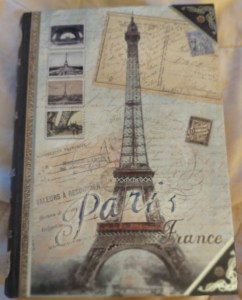
What’s in the box? Hints:
• something Christmas-connected
• something tea-connected
• 2 somethings France-connected
• 2 somethings writing-connected
And, of course, the box is a prize in itself!


Post your guesses here: https://www.facebook.com/susana.ellis.5/posts/pfbid0diGAkyzVa6nK42DAqRRDFqkgYGz6hQkU3q4wnacSCJVLaptZG6FroLdj1AfQeUql

Contest ends December 1, 2024. The entry with the most correct answers will win the prize. In the event of a tie, the winner will be chosen randomly.

About the Bluestocking Belles

The Bluestocking Belles (the “BellesInBlue”) are eight very different writers united by a love of history and a history of writing about love. From sweet to steamy, from light-hearted fun to dark tortured tales full of angst, from London ballrooms to country cottages to the sultan’s seraglio, one or more of us will have a tale to suit your tastes and mood.

Website: www.BluestockingBelles.net/

Newsletter: http://eepurl.com/dAJU_9

Teatime Tattler twice-weekly gossip magazine: https://bluestockingbelles.net/category/teatime-tattler/

Free books: https://bluestockingbelles.net/teatime-tattler-free-books/

Find buy links and story blurbs for all the following books on our website at https://bluestockingbelles.net/belles-joint-projects/
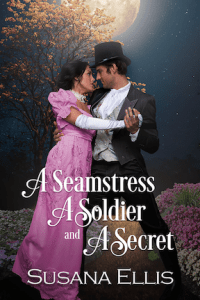
What’s a Pandora Doll? A Seamstress, A Soldier, and A Secret

Susana and her sisters have just discovered that they are going to participate in the Season in York, and they are excitedly planning how to manage wardrobes for the seven older girls when they have scarcely enough money for one. Thankfully, Susana is a quasi-professional dressmaker, and she can help them create a wardrobe that all can share with enough clever disguises.

“You know, Susana, I think there are some gowns and things of Mama’s up in the attic. Perhaps from our stepmothers as well, although I believe Martin removed his mother’s things for Chloe.”

“Well, he can just bring them right back, since our stepsister is to be presented too.” They knew Chloe well; she’d lived with them until her mother’s death, when her brother Martin and their guardian, their mother’s brother, took her in. She visited her half-sisters Emma and Merri occasionally. And Martin, relieved to have Patience take on Chloe’s presentation, had eagerly provided funds to pay for the ball. And her wardrobe, so that was one sister Susana did not have to clothe.

“Let’s take a look.”

It had been years since she had perused her mother’s things. Nine years since her death, when the maids had packed up her possessions and banished them to the attic. And fortunate indeed that they had made their way to Starbrook after the family had been exiled from the main house. No doubt the newest Lady Seahaven would have organized a bonfire for all of her predecessors’ belongings.

Not a nice thought, she chided herself. But it was hard to think well of the usurping Seaheavens, who had inherited and dislodged them from the home they had known all their lives.

Mama, she thought as they opened one of the chests that held her things. You were the same age as Barbara when you left us. How I wish you were still here.

The Lady Seahavens hadn’t moved much in society, as their thoughtless husband saw no need to take them along when he traveled to London, for Parliament, and other things. His ladies had no need of extravagant gowns. But they did socialize with the local gentry, so Doro and Susana did find a few of their mother’s evening gowns. Of course, they were nine years out of fashion, but Susana thought she could make them work with a few alterations. The trims were a bit worse for wear, but there might be a way to revive them.

“Oh, look at this!” 

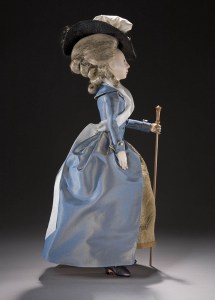
Doro held out a doll, about sixteen inches long, wrapped in delicate tissue paper. The head and body were carved of a single piece of wood; the legs were of wood too but separately attached to the torso. The upper arms were formed of stuffed linen, also attached to the torso, wooden lower arms and hands attached to those.

“I remember this!” cried Susana. “Mama showed it to me once and said it was made to resemble the Duchess of Devonshire. See the hairstyle and the wide bonnet! She has all the undergarments too! And the sash: she’s dressed for the 1784 election campaign. Mama said her grandfather had it made for her. It wasn’t a toy, though. It’s a Pandora. A fashion doll. That’s why she wouldn’t let me play with it.”

“It’s beautiful,” said Doro wistfully. “It shouldn’t be left in old trunk.”

“If we put it out somewhere, we’ll have to be sure Emma and Merri don’t get their hands on it.”

“And Jane,” Doro added absent-mindedly. “Look at the quality of the material—the stockings, the chemise, the petticoats. And there’s a corset too—looks exactly like the real thing!”

Susana ran her finger along the blue silk overdress. “The silk is very fine. I would say French, coming from that era.” She turned to the reverse side and gasped. “It’s English. It’s stamped Macclesfield Silks.”

Macclesfield Silks. Where Blaise had gone to work. With a man called Thomas Pemberton.

“Doro,” she said slowly. “What was our mother’s birth name?”

Doro squeezed her eyes shut. “We never met them, for some reason. Mama never spoke of them. I suppose they disapproved of her marriage, although most people would be over the clouds happy for their daughter to marry an earl.” She grabbed Susana’s arm. “Pemberton! Her name was Maryann Pemberton!”

Susana’s mouth fell open. Could it be true? She and Doro and Barbara related to the Thomas Pemberton of Macclesfield Silks?

“A cup of tea,” she said. “I need a cup of tea.”

Pandora Dolls

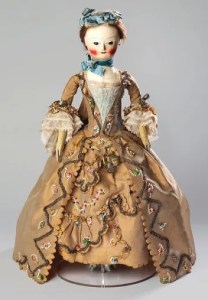
Many of you know that I collect fashion prints. I have a ton of them and love them all. But in the time prior to fashion prints, there were fashion dolls. One of them was called a Pandora.

How on earth was a fashionable lady in the 18th century able to keep up with the latest trends? The answer was the Pandora, or miniature dolls dressed up in the latest modes. Keep in mind, this was long before magazines were invented—and the first ones were incredibly rare and expensive, as they were hand-painted by groups of (probably shockingly underpaid) little girls and young women! Clothing was also far more expensive than it is today, so it was important to know all the details of the cut, colour and fabric that you wanted.

In 1712, when Britain and France were at war with each other, Pandora dolls were exempt from the ban on enemy imports, and even received a military escort! Marie-Antoinette, when preparing to go over to France from Austria, got sent a host of these dolls in different fabrics and fashions.

https://thatmuse.com/2019/11/08

Today, fashion victims use fashion magazines, shows etc. to become informed about fashion news. But what sources did they use in the 18 th century to catch the latest trends when none of these media existed? Long before the first Barbie appeared, there already existed a doll that wore lavish wardrobe and matching accessories but didn’t function as a toy at all. This paper examines how a doll called Pandora was sent abroad by French dressmakers to promote and sell Parisian fashion around the world. First, Pandora had to conquer the royal houses in Europe. Then, she made her way into the department stores and finally into the bourgeois home. Interestingly, her triumphal procession did not stop there: By the middle of the 18th century she had even crossed the Atlantic to be exhibited in Boston and New York….

The doll’s body and head were carved by hand from one piece of wood, which had been turned on a lathe. The legs were made separately and attached at the hips and knees to the Pandora’s body. The lower arms and hands were also crafted of wood; in contrast the upper arms were ‘[…] made of either soft linen fabric or kid leather, attached to the torso’. Most dolls had painted eyes, but some of them had sparkling glass eyes, which was more labour-intensive because for this purpose the doll maker had to carve diamond-shaped holes into the head and then inserted blown glass balls….

Furthermore, the fashion dolls all had either painted hair or wore wigs made of flax or wool. The hair of the dolls was designed to be worn in the popular style of the time because it was absolutely essential that besides wearing the right clothes, the Pandora had the latest hairstyle as well as accessories that matched her wardrobe. Interestingly, although most 18 th century dolls represented women or girls, there also existed male, boy and even infant dolls. Unfortunately, the vast majority of these fashion figures of the late 17 th and early 18 th century have not withstood the test of time. This is due to two reasons: Firstly, the unwieldy size of the dolls and secondly, the material that was used to make them….

An English 18th –century fashion doll in the Fashion Gallery at the V&A. There are 6 fashion dolls in the same room.

Intended as advertisement for the French fashion and the dressmakers, the dolls functioned as mannequins and were dressed in a petite-size version of everything a fashionable woman needed to wear, including the proper foundation garments, which meant that the Pandoras were outfitted head to toe and displayed the latest fashions concerning clothes and hairstyle. ‘By the seventeenth century, when these French figures were known as “Pandora,“the dressing of the head and hair was as important as the garment’. The doll’s outer garment was a dress made of highest quality cloth: linen, cotton, wool brocade or silk, followed by a petticoat or multiple layers of petticoats, which gave the dress or skirt the desired fashionable shape. The hoop petticoat or wicker, also known as panier, was part of the women’s underwear and consisted of a basket. ‘They [the petticoats] could get as wide as 18 feet (5 metres), and satirists talked of hoops of 7 or 8 yards (6 or 7 metres) wide’. The extremely wide framework of the hoop made it difficult for women to walk through the doors, sit down on a chair or in a coach. Some even wore a stomacher, which was in fashion throughout the 17 th and 18 th century in Europe and North America. The stomacher was a v-shaped piece of fabric made either of the same material as the dress or of contrasting materials. It was worn across the chest and stomach and embroidered or decorated with pearls or other gemstones. Other key characteristics of women’s clothing that were also part of the fashion dolls’ outfit were corsets and linen shifts. Knitted stockings, shoes, a muslin cap and jewellery often completed the outfit.

Another question is: who were the potential buyers of the fashion dolls? First, the dressmakers and tailors purchased the fashion doll. Above all the Pandoras functioned as display and show items. Since fashion was extremely expensive, the rich costumers wanted to have a look at what they were going to spend their money on….

The French doll makers received orders from all over the world, since almost every British women of that time wanted to have their one little mannequin to keep abreast with the latest Parisian fashion trends. In the Augustan Age it was very common not only to adopt the French customs, etiquette, lifestyle and manners but also the clothing fashions. It is remarkable how widely the dolls were distributed geographically in the 18 th century. They were not only dispatched throughout Europe but were also shipped across the Atlantic. Travelling around the world in the name of fashion, the Pandoras took over two functions: on the one hand, they were the ideal advertising vehicle for French fashion; on the other hand, they served as a kind of diplomatic representation of France. The fashion doll became one of the most important and popular French export goods.

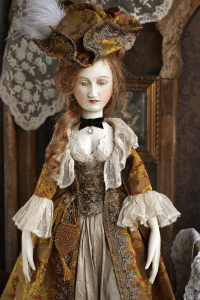
“New” Fashion Dolls on Etsy

And then I discovered that newly-created French court fashion dolls can be purchased on Etsy. You might have to sell your family heirlooms to buy them, but one can dream!


Desperate Daughters gets another daughter

Susana Bigglesworth finally gets her Happy-Ever-After with Blaise Arquette

“So, tell me the reason for this meeting,” began Susana as they all gathered around the fire in the small drawing room. “Any suitors in tow? Anyone deathly ill? I did wonder about it, you know, when I received your letter, Patience.”

She had unpacked her satchel in Doro’s (who mostly resided at the Hampton Hotel in Harrogate where she worked) and Josefina’s room, had a bit of a wash, and snacked on a plate of bread and cheese and tea prepared by their housekeeper, the loyal Mrs. Crewe.

“Oh dear!” cried her stepmother. “I didn’t mean to worry you, Susana. I made sure to post your letter early, as you were so far away.”

“I suspected as much,” Susana said easily. “And it gave me time to make arrangements for my absence.” She pushed away a twinge of regret for those she left behind. One person in particular. Who would be leaving himself on the morrow.

“I’m glad you are doing so well there,” said her stepmother with a satisfied sigh. “But I could have given you a hint of this meeting’s purpose to prevent you from unnecessary worry.”

“We’ve had no hint either,” protested Josefina, who at nineteen filled the median position between the older and the younger sisters. The latter group echoed her objection. “Why all the secrecy?” “Are we getting a stepfather?” “Tell us now, Mother!”

“Now that’s a novelty,” commented Barbara, who predated Susana by two years. “We’ve had four stepmothers (some of us), but never even one stepfather. Do tell us, Stepmother Number Five.”

Patience rolled her eyes. “Don’t be silly. I shan’t marry again. You girls are my family now, and I can’t conceive of any man taking on a woman with ten children.”

“You’re young yet, Patience. Same age as Doro and younger than Barbara, Susana, and me,” disputed Bess. “We shan’t be on your hands forever.”

“Certainly not.” “Of course not.” Her sisters echoed, followed by a silence characterized by the fidgeting of body parts, the biting of lips, the clasping of hands together, and the clearing of throats. Where are the suitors? There are no suitors. Susana thought the words were echoing through the minds of all present. No one wanted to say such a thing; they were managing to support themselves with the efforts of all who were capable, but it wasn’t suitable for a permanent situation. Susana, for one, wished to marry and have children of her own, and she was certain her other sisters did as well. But who wanted to marry penniless, essentially dowerless women, titled though they were?

“We shall see,” Patience hinted, deliberately raising her eyebrows. “I do have a lovely surprise for all of you, but you won’t persuade me to reveal it until tomorrow.”

Waves of moans and objections filled the room. “Why not?” “Tell us now, Mama.” “I won’t sleep a wink imagining what it might be.”

“Be it as it may, tomorrow, Twelfth Day, is the appointed time, and you will all be told in the morning. After breakfast.”

More groans and moans.

“Your sisters are exhausted, Dorothy from working at the hotel all day, and Susana from traveling from Leeds. We must all be refreshed and ready to take on a new and exciting challenge.”

Doro and Susana objected, but Patience was firm. “Tomorrow will be soon enough. However,” she said, turning to Susana, “we are all eager to hear about your experiences in Leeds. Your letters indicate that the dressmaking is going well, is that not right?”

Susana blushed. “Yes, it is, rather. I just completed a large project, an entire trousseau, which meant we had to start a waiting list for other customers.”

“Of course,” remarked Iris, loyally. “You make the best gowns anywhere.”

“No doubt about it,” added her twin Ivy, followed by a chorus of like sentiments around the room.

“A very useful skill indeed,” pondered their stepmother.

This story was written for the readers of the original version of Desperate Daughters who expressed concern over the absence of Susana’s story, since she played a key part in the other sisters’ stories.

Her story deserves to be told.

If you have yet to purchase Desperate Daughters, you can find it here:

Books2Read: https://books2read.com/u/bMwL17

After January 1, 2024:

To update your Kindle book version, go to Manage Your Content and Devices. Search for Desperate Daughters. If available, select Update Available, then select Update.)

Susana Ellis is a retired teacher, part-time caregiver, sewist, cook, and fashion print collector. Lifelong reading and a fascination with history led her to writing historical romances. She is one of the original Bluestocking Belles and is a member of the Regency Fiction Writers and the Maumee Valley Romance Authors Inc.

Susana’s 2019 Adventure in England: Day One

May 7-8: Travel and Preparations

I like the cubicle near the windows. So much more private there!

In my experience, the first and second days sort of meld together. Those lost six hours from Chicago to London make you feel out of whack for awhile, no matter whether you travel economy or first class. I’ve never done first class, but if I can accumulate enough miles on my British Airways card to go business class, it’s definitely preferable to being squashed together like sardines in economy. In business class you can stretch out your legs (if you’re 5’6″ or under) and enjoy a bit of privacy in your own little cubicle. I don’t really sleep much, though. The arm rest gets in the way, especially if you try to sleep on your side. I end up tossing and turning and hoping I’m not disturbing the passenger on the other side of the divider. STILL beats coach travel out of the water, though. Even better, you get out sooner than everyone else and you fast-track through security and immigration. THAT little perk is worth its weight in platinum—I’ve spent two hours waiting to get through immigration when everyone is tired and cranky, hoping my taxi driver will still be there waiting for me when I get through.

I want to say a few words extolling the Airbus a380. This amazing plane has two boarding levels, which cuts boarding time in half. Those of us on the top level filed in through the top door; the bottom level had its own door. The lavatories are significantly larger than the tiny cubicles on most planes, and even have a little padded bench for changing baby diapers. I wonder how mothers managed to do it before now. Must have been pretty miserable.

Another perk of traveling business class is the airline lounge. You can go there and enjoy snacks, drinks, and a meal while you wait for your flight. Also television and wifi out of the madding crowds of the massive airport. And they’ll announce when your flight is boarding so you don’t risk missing it.

British Airways Business Class Lounge Chicago O’Hare Airport

So, getting through immigration was a whiz, and eventually my driver found me. (How it took him so long I’ll never understand. He was supposed to look for the lady with the pink and white hair. I was the ONLY one!) Turned out he’s the same Sri Lankan driver I had last year. Still wants to match me up with a Sri Lankan. He doesn’t quite “get” that some women prefer being single. But I enjoy listening to people’s opinions, and he certainly has a lot of them.

Once I got into my flat on Crawford Street (near Baker Street in Marylebone), I fell into bed for a couple of hours. Turned on the TV and caught Prince Harry and Meghan showing off their sweet baby. Cutie pie! But I was hungry and there was no food in the flat. Also, I needed to replace the SIM card in my UK phone so I’d have a phone to use when necessary. Walked down to Oxford Street to Selfridge’s, but the Carphone Warehouse is no longer there, so I had to walk a few more blocks to find a place who could do it. While I was waiting, some customers walked off with some merchandise from the store. Something small. But it reminded me that there are pickpockets everywhere on Oxford Street. It pays to be aware of what’s going on around you.

The Bond Street Tube Station was nearby, so I took the Tube to Baker Street—after a frappuccino from Starbuck’s. I was feeling weak from hunger, and that really helped. Interestingly enough, after I got onto a train, a young man sitting in a priority seat got up and let me have his seat. Wasn’t that sweet? He said he was getting off at the next stop, but so was I. It reminded me that wherever there are thieves and villains, there are also very nice people who will give you the shirt of their back (or at least their seat on the subway).

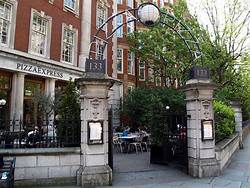
Upon leaving Baker Street Station, I crossed the street and had some cannelloni at the Pizza Express, one of my regular places. Then I purchased some food at the Tesco Express and returned to my flat. Where the construction crew was still pounding and sawing outside my window and generally making a nuisance of themselves. Oh well. It’s not the first time I’ve had to deal with that at this flat. Do you believe this is the SIXTH time I’ve stayed here in six years?


At one point during the day I got soaked from rain, a few other times was sprinkled on, but most of the time it was pretty decent. A bit windy and chilly, but hey, it RAINS in England! No big deal.


Turning in early tonight. Sorry I won’t make it today’s tea party. Next week for sure!

New Release: The Marriage Obligation

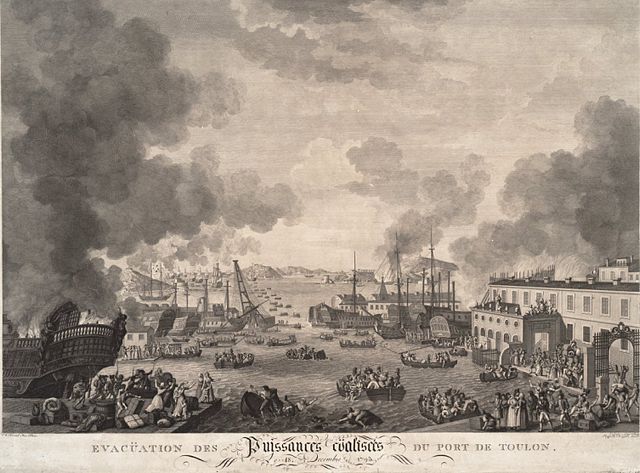
Admiral Cornelius Hardcastle met his future wife Léonie at the Siege of Toulon. Their daughter Cornelia is the heroine of The Marriage Obligation.

The fictional character of Admiral Hardcastle is based on Admiral Sir Benjamin Hallowell Carew, whose ship, the HMS Leviathan, took part in the evacuation of allied troops and royalist civilians being persuaded by the Republican army.

Siège_de_Toulon

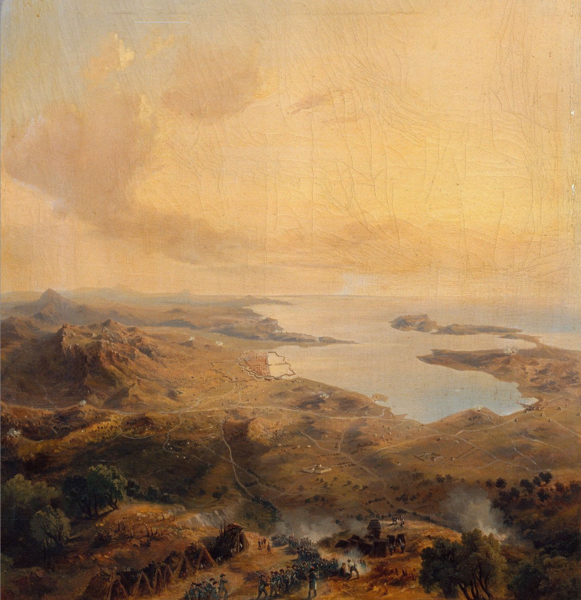
The Siege of Toulon

The Siege of Toulon (29 August – 19 December 1793) was a military operation by Republican forces against a Royalist rebellion in the southern French city of Toulon.

After a series of insurrections against the Republicans within the French cities of Lyon, Avignon, Nîmes, and Marseille, Republicans managed to recapture Marseille and punish them with severe reprisals. Upon hearing this, Toulon, which was currently in the hands of Royalist forces, called for aid from the Anglo-Spanish fleet.  On 28 August, Admiral Sir Samuel Hood of the Royal Navy and Admiral Juan de Lángara of the Spanish Navy, committed a force of 13,000 British, Spanish, Neapolitan and Piedmontese troops to the French Royalists’ cause. This was a serious blow to the Republicans, since Toulon had a key naval arsenal and was the base for 26 ships (about a third of the French navy). On 1 October, Baron d’Imbert proclaimed the young Louis XVII to be king of France, and hoisted the French Royalist flag of the fleur de lys, delivering the town of Toulon to the British navy.

Les_coalises_evacuent_Toulon_en_decembre_1793

By 16 December, however, the Republicans (among them a young Bonaparte), managed to push past the Allied troops toward the waterfront. At that point, Lángara gave the order to destroy the French ships. While that was going on, Hood had ordered HMS Robust under Captain George Elphinstone and HMS Leviathan under Captain Benjamin Hallowell Carew to evacuate the allied troops from the waterfront. In addition to the soldiery, the British squadron and their boats took on board thousands of French Royalist refugees, who had flocked to the waterfront when it became clear that the city would fall to the Republicans. Robust, the last to leave, carried more than 3,000 civilians from the harbour and another 4,000 were recorded on board Princess Royal out in the roads. In total the British fleet rescued 14,877 Toulonnais from the city; witnesses on board the retreating ships reported scenes of panic on the waterfront as stampeding civilians were crushed or drowned in their haste to escape the advancing Republican soldiers, who fired indiscriminately into the fleeing populace.

Wikipedia

Author’s Note: I’ve advanced Cornelia’s age five years for the purpose of this story. An author’s prerogative!

About The Marriage Obligation

Cornelia Hardcastle has been determined never to marry since she was eighteen and discovered an ugly family secret. Now that she’s twenty-four, however, her parents want to see her settled so they can move to Canada for her father’s prestigious new government post. Not a chance!

The second son of a viscount, Preston Warrington is more than happy to leave the viscount business to his brother so he can travel the world in search of adventure. His recent stint as a spy for the British in the War with the French has come to an end, and he’s getting pressured to marry and settle down. Hell no!

How could the notorious Marriage Maker from Inverness all the way in Scotland possibly know that these two marriage-averse individuals are perfect for each other?

Excerpt

Note: At this point in the story, Cornelia has confessed her terrible secret to Preston, her husband-in-name-only.

He took her hand and led her back to the folly. “There, you got it out. That wasn’t so bad, was it?”

She tilted her head to look at him. “You’re not—shocked? Disgusted?”

He squeezed her hand and looked directly into her eyes. “Surprised, yes, certainly. Disgusted? I don’t quite understand your meaning, Cornelia.” His eyes widened. “Unless you are thinking—surely not—that I should be disgusted by you!”

She burst into tears. He pulled her trembling body into his arms and held her against him until her body quieted and the tears slowed, eventually turning into occasional hiccups. When she raised her head from his chest, he handed her his handkerchief. “Shall we sit down? When you are ready, you can tell me what it is that has you so distressed.”

Dabbing at her eyes, she nodded and allowed him to guide her back to the stone seat. 

“I must look a mess,” she said finally, in a shaky voice.

“You look beautiful,” he said, his hand making gentle circles on the surface of her back.

She made a face. “Liar. I’ve seen my face in this condition before. Red eyes, splotchy cheeks, shiny nose. Definitely not a good look for me.”

In response, he reached over and turned her face toward his before capturing her lips with his for a tender kiss. Her sweet response tempted him to deepen it into something more passionate, but he sensed she was not ready for that and reined in his desire.

“Do you still believe I was lying, my dear?” he said as their kiss ended.

She swallowed. “Perhaps you were just being kind.”

Well, then. If she did indeed need more convincing, he would be more than pleased to deliver it.

He took her face in his hands again and kissed her again, this time with more pressure, then pulling away slightly to tease her lips with his tongue, before probing between them with his tongue. Her eyes widened with surprise, but far from protesting, she pressed closer to him, her arms floating to his shoulders. She smelled of violets and tasted like a combination of innocence and passion. His hands drifted to her hair, where his gentle caresses caught on pins and sent dark locks spilling down her back. When her eyes widened, he took her lips again, this time plunging his tongue between her teeth and coercing a timid response from hers.  His hands floated down her back, lightly touching the side of her breasts before settling possessively at her waist. 

Mine. My woman. This woman was made for me. She has to know it too.

When they finally pulled apart, she looked down, flushed and breathing hard.

“Well?” he said when he found himself able to talk again. “Was that a ‘just being kind’ kiss, do you think?”

She looked up at him, her eyes lit with a mischievous glow. “You’ve proved your point. There was nothing ‘kind’ about it. I must allow that you are a magnificent kisser, Preston.”

His breath quickened. “There is nothing I would like better than to kiss you like that every day. Several times, in fact. I am convinced that we could have an exemplary partnership, my dear, if we were to make our marriage a real one.”

Amazon


Authors in Bloom Blog Hop

Dianne Venetta_AIB Logo_2015

Are Succulents Really Brown Thumb-Proof?

I suppose I’ve always been somewhat of an indifferent gardener, which may seem like an odd thing for a farmer’s daughter to say. When I did, I was more a vegetable gardener, since growing your own seems the only way to get decent tomatoes. But when my garden became contaminated with some nasty tomato disease, I gave up the garden altogether. In recent years, I’ve even turned over the landscaping to a private company. The only gardening I still do myself is the border around the tree in front of my house and some containers on the porch. They do need watering, however, which is problematic when I’m traveling for long periods of time.

So in January when I saw the lovely succulent plants on QVC and learned that they rarely require watering and are so hardy they can be left out on the porch in the box until time for planting, I was intrigued. Seemed like a no-brainer. I’m a Florida snowbird until mid-May. My two boxes of succulents were mailed to Toledo last week. Will they still be alive when I return? The QVC host practically guaranteed it. I did notice quite a few complaints about them on the website, though. So we’ll see. If not, I will get my money back.

What’s a Succulent?

From thespruce.com:

There are over 10,000 succulent plants, which include cacti. Many are native to South Africa and Madagascar and the Caribbean. Succulent plants have thick, fleshy leaves, stems or roots. This is one of the ways they have adapted to dry conditions by taking advantage of whatever water is available and holding onto it for later use. When full of water, the leaves can appear swollen. When they are becoming depleted, the leaves will begin to look puckered.

Other water conserving features you may find in succulents are narrow leaves, waxy leaves, a covering of hairs or needles, reduced pores, or stomata, and ribbed leaves and stems, that can expand water holding capacity. Their functioning is fascinating, but most are also quite attractive, too. They are perfect for dry climates and periods of drought anywhere, but many are not cold hardy below USDA Zone 9. Even so, they can be grown as annuals or over-wintered indoors. Several make great houseplants. Grow them all year in containers and you can just move the whole thing in when the temperature drops.

My Giveaways

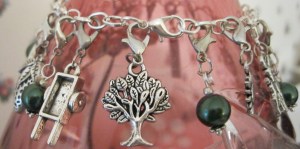
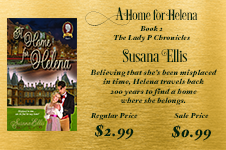
1 random commenter will win this lovely garden-themed charm bracelet and another will win a signed print copy of The Ultimate Escape, Book 1 in my Lady P Chronicles. Book 2, A Home for Helena, turns one year old on March 29, and Lady P and I are celebrating by reducing the price and offering a Rafflecopter contest. All of my contests are international.

A Home for Helena

Believing that she has been misplaced in time, Helena Lloyd travels back two hundred years in an attempt to find out where she belongs.

Widowed father James Walker has no intention of remarrying until he makes the acquaintance of his daughter’s lovely new governess.

Lady Pendleton, a time-traveling Regency lady herself, suspects that these two belong together. First, however, she must help Helena discover her true origins—and hopefully, a home where she belongs.

AmazoniBooks • KoboBarnes & Noble

The Blog Hop

To be eligible for the Grand Prizes (e-reader and gift card), you must comment on each and every post in the hop. Be sure to include your email address in the comment.

Click here to return to the list of blog hop participants.

About Susana

Susana Ellis has always had stories in her head waiting to come out, especially when she learned to read and her imagination began to soar.

A former teacher, Susana lives in Toledo, Ohio in the summer and Florida in the winter. She is a member of the Central Florida Romance Writers and the Beau Monde chapters of RWA, Maumee Valley Romance Inc., and is a member of the infamous Bluestocking Belles.

Website: http://www.SusanaEllis.com

Facebook: https://www.facebook.com/Susana.Ellis.5

Twitter: https://twitter.com/SusanaAuthor

Pinterest: http://www.pinterest.com/SusanaAuthor/

Goodreads: https://www.goodreads.com/author/show/6589812.Susana_Ellis

Amazon author page: https://www.amazon.com/Susana-Ellis/e/B00AYS3E10

Newsletter Sign Up: http://eepurl.com/u5u3X

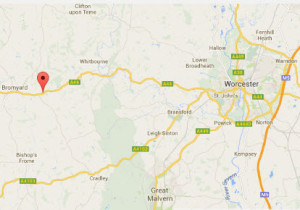
Susana’s Adventures in England: Brockhampton Estate

Much thanks to Heather King for providing transportation and companionship, as well as the infamous super dog Roxy, and not least, to Cora Lee, who formed the fourth part of our party.

map

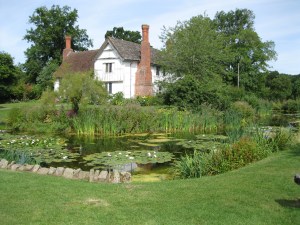
housepond

Lower Brockhampton is a timber-framed manor house dating back to the 14th century. The manor house is surrounded by a moat and entered by a newly-restored gatehouse. The estate includes 1000 acres of farmland and 700 acres of woodland. The ruins of a Norman church are also located on the property.

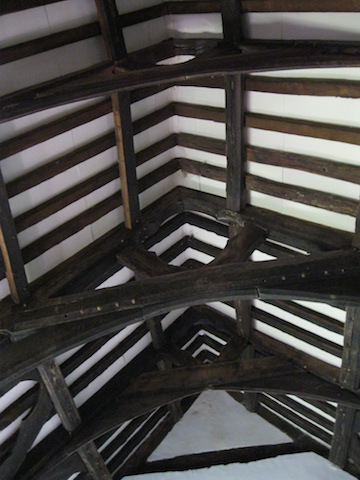
ceiling-copy

The manor house was probably built from timber sourced from the estate itself, and the history of the house is intimately connected to the rich wooded landscape that it sits within.

chairweird-copy

Making good use of the estate’s productivity was the secret to the continued wealth of the family that lived here. We know from ancient seeds and pollen found during archaeological excavations that in medieval times cereal crops were grown near the manor house, to the north of the moat.

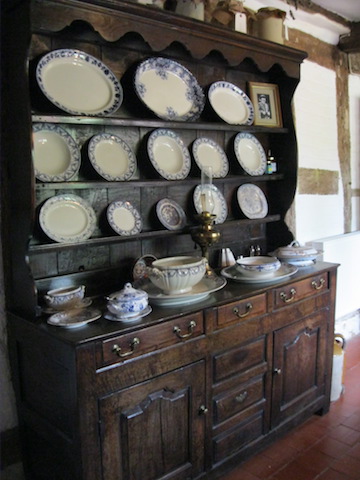
chinacabinet-copyOver the years the house was adapted by each successive generation that lived here, the original medieval great hall had an upper floor inserted into it by the Barneby family, in order to accommodate their many children.

bed2-copy

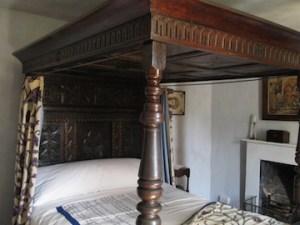
As society changed it became more important for the owning family to live separately from their servants and estate workers. Eventually in the Georgian period, and under the care of Bartholomew Barneby, the owning family moved out from the ancient timber framed building and into a grander mansion house at the top of the estate.

spinningwheel

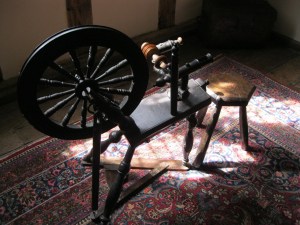
From the eighteenth century onwards the timber framed manor house was home to estate workers such as Joseph Cureton and his family. Joseph was the estate wagoner in the nineteenth century. He cared for the horses that carried out much of the heavy work on the farms and woodland that makes up Brockhampton estate.

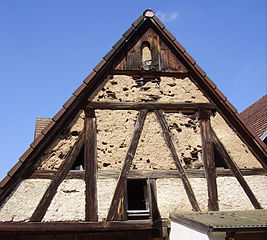
In 2010, the National Trust undertook a major restoration project to the house using traditional wattle and daub building methods.

example of wattle and daub

example of wattle and daub

The site of the medieval village of Studmarsh is thought to be located in the estate. In 2012, an archaeological dig unearthed the foundations of two buildings that may have been part of the village.

normanchurch4-copy

Rolling green parklands and ancient woods surround the charming Brockhampton Estate. Situated on 687 hectars (1,700 acres), Brockhampton has been a farming estate for nearly 1,000 years. At the heart of the estate lies the romantic timber-framed manor house dating back to the late 14th century, and the ruined Norman chapel. To arrive here one must first cross the picturesque moat and enterer via the gatehouse, built in 1530-40. Today, Brockhampton Estate is not only a time capsule for visitors, but the grounds also provide an idyllic setting for 40 residential houses and cottages.

Gate

Gate

The grounds of Brockhampton Estate feature ancient trees, the picturesque Lawn Pool, and numerous sculptures depicting of the history of Brockhampton and the local area. Native wildlife is bountiful on the Estate, and every effort has been made to preserve and enhance habitats. This is particularly apparent in the ancient woods, where less common species can be found by the patient observer, including the scarce lesser spotted woodpecker and noctule bat.

brockhampton-3The Estate runs traditional livestock breeds, such as Hereford cattle and Ryeland sheep. However the main point of sustainability lies in the conservation and preservation of the traditional orchards. The Estate boasts some magnificent orchards, some of the most extensive in the National Trust’s care. Over 50 hectares (124 acres) is dedicated to trees bearing cherries, apples, pears, damsons and quince. The orchards are rich in bird, mammal and insect life, and provide habitats and forage for many important species. Two rare species have made the orchards their home, the mistletoe weevil and the noble chafer beetle. The orchards are part of an ongoing restoration project, and over the winter of 2011 a further 75 fruit trees were planted.

brockhampton-1

Keeping true to the history and spirit of Brockhampton Estate, a monthly farmers’ market is held on the grounds. All produce sold is produced in the local district. The Estate also hosts an annual “pick your own” event in early September where visitors can bring a bag to fill with treats from the orchard.

https://en.wikipedia.org/wiki/Brockhampton_Estate

https://www.nationaltrust.org.uk/brockhampton-estate/features/600-years-of-history-revealed-in-brockhampton-moated-manor-house

https://intofarms.org/brockhampton-estate/

Author Cora Lee coming up the stairs of the gatehouse

Author Cora Lee coming up the stairs of the gatehouse

More photos on my Pinterest board.

Christmas Romance Extravaganza

christmas-ellis-susana
To celebrate the holiday season, I’ve teamed up with more than 150 fantastic romance authors to give away a huge collection of novels, PLUS over $1,000 in prizes!
You can download A Twelfth Night Tale for free, plus books from authors like LUCINDA BRANT and MARY JO PUTNEY.
Enter the giveaway by clicking here: http://bit.ly/christmas-rom.
bigstock-christmas-festive-decoration-divider-f-108218954

Christmas Special

The Bluestocking Belles

are offering our latest joint effort, Holly and Hopeful Hearts, for a bargain price of

$0.99

for all of December. That’s $2 off the normal price!
hhh-meme

Amazon US • Amazon UK • Amazon Australia • Amazon Canada

Smashwords • Kobo • Barnes & Noble • iBooks

and

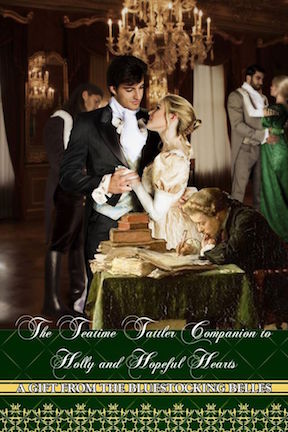
The Teatime Tattler Companion to

Holly and Hopeful Hearts

15002490_707066312776271_1891446858503214038_o

Gossip and Scandal from the Teatime Tattler and other places

about the characters in Holly and Hopeful Hearts.

Download in epub • Download in mobi

redfree

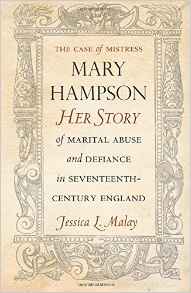
Mary Hampson: A Story of Domestic Violence

book

Mary Hampson

Her Story of Marital Abuse and Defiance

in Seventeenth-Century England

by Jessica L. Malay

Amazon

A video interview of Ms. Malay

video-undefined-1c7ee72700000578-97_636x358

The legal state of coverture

According to English law, after marriage, a woman was “covered” by the legal identity of her husband, meaning that everything she owned belonged to him. An independent wife was seen as a threat to marital harmony; therefore, it was better for the entire family if her rights and assets were entrusted to him. While the intent of this law was to ensure marital harmony, it often had the opposite effect if a marriage turned bad.

The early years

Mary Wingfield was seventeen when she married Robert Hampson, a twenty-nine-year-old lawyer from a prominent family who seemed to have a bright future. Mary’s late father had left her a jointure, a sort of “insurance policy” for the future, that was specifically designed to be hers and not transferred to her husband after marriage.

Robert Hampson’s father had invested heavily in the purchase of fenlands in East Anglia, which was expected to pay off handsomely after the lands were drained and the rich farmlands uncovered. Before his death, he directed Robert to sign an agreement to pay his sisters two thousand pounds as their share of the bonanza. Unfortunately, there were no rich farmlands uncovered, but Robert was still on the hook for two thousand pounds, which he did not have.

This situation—and Robert’s inability to get control of Mary’s jointure—was the inciting incident of the troubles between the two.

The marriage appeared to be satisfactory for the first few years. It wasn’t until Robert’s sisters started clamoring for their inheritance that things went wrong. Robert convinced Mary that she must sign her jointure over to him in order to keep him out of jail. She was only nineteen, though, and the judge refused to do it. Robert brought in a merchant who was willing to accept the deal, along with a signed statement from Mary, which she gave him, believing she was keeping her husband out of jail. Her maternal uncle, however, insisted that Robert give her another jointure—of fenlands and the house they lived in—so that Mary would still have an “insurance policy” of sorts.

The violence begins

As Robert’s financial woes continued, Mary eventually discovered the truth, and took him to task for his deceptions. He responded by putting her in lodgings with very little financial support and disappearing for weeks at a time on his legal circuit. A very pregnant Mary had to beg assistance from her mother, and wasn’t shy about protesting this treatment when Robert returned. She states in her pamphlet that he struck her on the breast, and then abandoned her until the child was born.

Soon after, Mary decided to go to France, upon a recommendation from a doctor. Robert agreed to give her thirty pounds for six months, which was a pittance, but Mary did have her family jewels. Until Robert demanded the jewels and the deed of her new jointure. She refused. He waylaid her trunk trying to find them, unsuccessfully, since she had them on her person, but he did get the deed. Once she was gone, he told everyone she had deserted him.

Upon her return to England, Robert’s first reaction was to throw her out of his residence. Then began a series of attempts to get her to sign away or sell some of her property. When she refused, her locked her in the home and tried to starve her until she would accede to his demands. Then he tried to throw her out so that he could charge her with abandonment. When she stood her ground, he put a pistol to her throat. A day or so later, he beat her so badly some folks from outside came to the door to protest.

Mary’s life was a misery. She discovered that her maid was being bribed by Robert to tell her lies about her mother’s health, so she dismissed her and hired a new one. After her mother’s death, Robert sent someone to her mother’s house to collect everything he could, saying that Mary had no right to anything. Mary got away with a few things, but not her mother’s will, which left her everything. It disappeared. Her mother’s maid testified falsely that the will she witnessed left everything to her son-in-law Robert.

After Mary’s mother’s death in 1669, Robert started selling her mother’s property and moved out of the house, abandoning his wife. Mary, afraid to leave for fear of being locked out, tasked her maid with selling some of the household goods for money to live on. Upon discovering this, Robert charged the maid with theft (since he owned everything), and the maid went to prison.

The legal battle begins

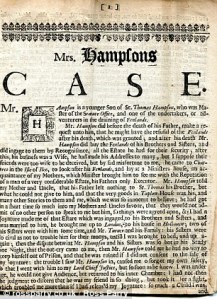
Mary’s pleas to the church leaders were decided in her favor. Robert was excommunicated and ordered to give her five pounds a week, which he never did. Mary’s attempts to seek justice from the legal system were long and drawn-out, at least partly because of Robert’s connections. According to her, he bribed judges and paid witnesses to counter her claims and besmirch her reputation. In the end, Mary resorted to writing her story and having it printed in a pamphlet that made the rounds of London and won her a handful of supporters.

pamphlet2

The courts eventually agreed that the marriage was over, and the couple better off separated, and awarded Mary alimony of a hundred pounds of year, which meant that the struggle between them was doomed to continue, as Robert would go to extreme lengths not to pay it, forcing her to find allies to help her make him pay. Mary went to live in France to try to escape from it all, but Robert made use of that by telling everyone she was dead and trying to steal her inheritance from her uncle, supposedly for her daughters.

Mary’s losses

Mary’s daughters—unsurprisingly since they had resided almost entirely with their father—sided with him, along with Elizabeth’s husband Charles Bill, in these legal battles. Their relationship never recovered, not even when Robert died in 1688, because Mary refused to give up her efforts to regain her inheritance from her uncle.

Although Mary gained the support of some influential people, including Mary and William Montagu, her reputation as a gentlewoman was irretrievably lost. No doubt that is why she chose to live on the continent at various points in her life—Europeans were much more sympathetic to an Englishwoman’s plight, and marital separations were not considered scandalous.

In the end, she chose to live with a mother and daughter, Mary Opaven and her daughter Mary, in the parish of St. Brides, London. Even after her death in 1698, the legal battles continued, as Mary bequeathed her property to the Opavens, and her daughters contested the will.

The other side of the story

The existence of a boatload of court documents filed on behalf of Mary and Robert, as well as their daughters and son-in-law, enables us to consider these events with more than just Mary’s assertions. Robert admitted to beating Mary, taking her property, keeping her children from her, throwing her out of the house, and refusing to pay maintenance for her, although he had his own version of the events to tell. But did he try to kill her? Did he hire a spy (Everard) to make false accusations of her conduct when she lived abroad? The evidence is inconclusive.

Through these legal documents we are given one final glimpse into Mary Hampson’s life, so often filled with conflict, poverty, and at times real danger. Her estrangement from her daughters and the loss of her social position reveal the inability of social institutions to protect women in troubled marriages. The actions of Robert Hampson, Charles Bill, Edmund Everard, and even William Baker illustrate how men could use legal and state institutions to protect their own interests at the expense of the vulnerable, especially women. There is little to respect or admire in the stories of any of these men, at least in their behavior toward Mary Hampson.

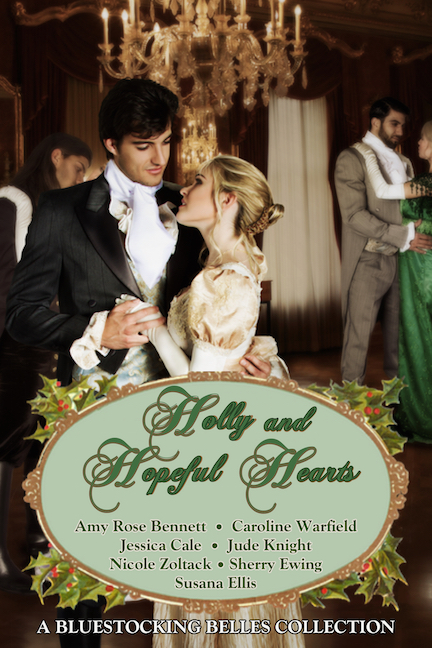
Cover Reveal: Holly and Hopeful Hearts by the Bluestocking Belles

cover-of-holly-and-hopeful-hearts-copy

About Holly and Hopeful Hearts

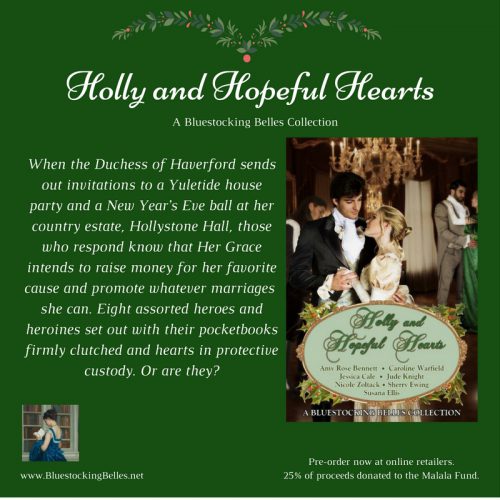
When the Duchess of Haverford sends out invitations to a Yuletide house party and a New Year’s Eve ball at her country estate, Hollystone Hall, those who respond know that Her Grace intends to raise money for her favorite cause and promote whatever marriages she can. Eight assorted heroes and heroines set out with their pocketbooks firmly clutched and hearts in protective custody. Or are they?

A Suitable Husband, by Jude Knight

As the Duchess of Haverford’s companion, Cedrica Grenford is not treated as a poor relation and is encouraged to mingle with Her Grace’s guests. Surely she can find a suitable husband amongst the gentlemen gathered for the duchess’s house party. Above stairs or possibly below.

Valuing Vanessa, by Susana Ellis

Facing a dim future as a spinster under her mother’s thumb, Vanessa Sedgely makes a practical decision to attach an amiable gentleman who will not try to rule her life.

A Kiss for Charity, by Sherry Ewing

Young widow Grace, Lady de Courtenay, has no idea how a close encounter with a rake at a masquerade ball would make her yearn for love again. Can she learn to forgive Lord Nicholas Lacey and set aside their differences to let love into her heart?

Excerpt

Artemis, by Jessica Cale

Actress Charlotte Halfpenny is in trouble. Pregnant, abandoned by her lover, and out of a job, Charlotte faces eviction two weeks before Christmas. When the reclusive Earl of Somerton makes her an outrageous offer, she has no choice but to accept. Could he be the man of her dreams, or is the nightmare just beginning?

Excerpt

The Bluestocking and the Barbarian, by Jude Knight

James must marry to please his grandfather, the duke, and to win social acceptance for himself and his father’s other foreign-born children. But only Lady Sophia Belvoir makes his heart sing, and to win her he must invite himself to spend Christmas at the home of his father’s greatest enemy.

Excerpt

Christmas Kisses, by Nicole Zoltack

Louisa Wycliff, Dowager Countess of Exeter wants only for her darling daughter, Anna, to find a man she can love and marry. Appallingly, Anna has her sights on a scoundrel of a duke who chases after every skirt he sees. Anna truly thinks the dashing duke cares for her, but her mother has her doubts.

Excerpt

An Open Heart, by Caroline Warfield

Esther Baumann longs for a loving husband who will help her create a home where they will teach their children to value the traditions of their people, but she wants a man who is also open to new ideas and happy to make friends outside their narrow circle. Is it so unreasonable to ask for toe curling passion as well?

Excerpt

Dashing Through the Snow, by Amy Rose Bennett

Headstrong bluestocking, Miss Kate Woodville, never thought her Christmas would be spent racing across England with a viscount hell-bent on vengeance. She certainly never expected to find love…

Excerpt

Coming November 8.

Eight original stories, 578 pages of diverse characters,  complex relationships, and happily-ever-afters for $2.99.

Pre-order Now!

Amazon.comAmazon UKAmazon AustraliaAmazon Canada

Kobo Smashwords

Excerpt from Valuing Vanessa

“Are you certain it is not an imposition, Miss Sedgely? Because I shouldn’t mind showing the ladies around myself, in Mrs. Seavers’s absence.”

Vanessa’s chin rose as she directed a firm gaze at the institution’s housekeeper. “I assure you there is no imposition whatsoever, Mrs. Barnes. I shall be pleased to guide the ladies on their tour this morning, as Matron directed.”

Mrs. Barnes flushed. Obviously she considered the task her own prerogative, but Vanessa had not taken the trouble to get the hospital matron out of town just to be foiled by the housekeeper.

“But what about your class, Miss Sedgely? The children do so look forward to them! Why, they will be exceedingly disappointed to miss them today.” She leaned in closer, her eyes gleaming. “I hear that little Willie had prepared a special passage to read for you. He is quite partial to you, you know.”

Vanessa refused to allow herself to be diverted, in spite of the tiny twinge of guilt she felt deep inside. “My maid has agreed to take my classes for today. She has assisted me previously, you know, and thus is well-known to the children.”

She gave a curt nod to the housekeeper, who took it as the dismissal it was meant to be, and walked out of the room.

The Board of Governors were conducting a meeting in a quarter hour’s time, and Vanessa had taken great pains to find a reason to be lingering in the foyer as the gentlemen arrived. It was Mr. George Durand she wished to encounter, of course. During the week since the masquerade at Vauxhall, she had unearthed a great deal of information about the attractive gentleman.

George William Durand was the grandson of a viscount, his late father being the younger son, who had made law his profession. Durand’s cousin William had become the 4th Viscount Faringdon five years ago following his father’s death, and he had four healthy sons to follow him, which meant the title was unlikely to fall to George. George had followed his father into the law profession, although interestingly, he had briefly studied landscape gardening with one of Capability Brown’s former associates. That ended after his marriage, however, when young George set himself to becoming a successful solicitor like his father. His wife, Geneviève d’Aumale, was a French émigrée, the daughter of a comte who had lost his head on the Place de la Concorde at the hands of revolutionaries. She, her sister Juliette, and their mother the comtesse had lost their lives in a carriage accident which had arisen from an attack of highwaymen.

So dreadful. Life was so ephemeral. In a matter of minutes, three ladies’ lives had been snuffed out in such a horrific manner, leaving their husbands to bear the loss as best they could. And their adolescent daughters, of course. Both Durand and Lord Nicholas had daughters, approximately the same age. And perhaps not surprisingly, both had been residing with relatives since the tragedy. Men were notoriously helpless when it came to their maturing daughters. But in retrospect, Vanessa thought it rather pitiable that the girls had effectively lost both parents in that one disastrous moment.

One thing was certain, however. A well-off gentleman with a near-grown daughter was clearly in need of a wife. And Vanessa thought she might suit this one very well indeed.