Archives

Nicola Cornick: “The Lady and the Laird”

About The Lady and the Laird

Untitled-1Lady Lucy MacMorlan may have forsworn men and marriage, but that doesn’t mean she won’t agree to profit from writing love letters for her brother’s friends – letters that become increasingly racy as her fame grows. That is, until she deliberately ruins the betrothal of a notorious laird, Robert, Marquis of Methven. 

Past centuries of bloodshed have left the Methven and MacMorlan families bitter enemies and Robert is furious that Lady Lucy’s letters have cost him the bride he needs so urgently to save his ancestral clan lands. Now he makes Lucy a shocking proposal;  in return for his silence she must become his wife and provide him with the heir he needs. It is an inconvenient marriage of convenience but can the rugged laird and the bluestocking beauty fight against the power of love?

Susana Says: Enjoyable Scottish-Set Regency, 4/5 Stars

SusanaSays3Lucy became the perfect duke’s daughter after her twin sister Alice died tragically. Overcome by a sense of misplaced guilt and fear, she has decided to remain single and devote her life to charitable enterprises. Robert, Earl of Methven, discovers that she has been writing racy letters to help her brother’s friends seduce ladies, and since one of them was his own betrothed who subsequently deserted him at the altar, he demands that Lucy take her place.

However, before these two can even begin to find a happy-ever-ending, they must both confront tragedies from the past, not to mention an unscrupulous enemy who will do anything to keep them apart.

Both Lucy and Robert are likable characters who showed great courage in helping each other face their fears of the past, and Cornick obviously knows how to tell a good story. A couple of holes in the plot keep this from being a five-star story, but Cornick’s fans will definitely want to read this and subsequent books in her Scottish Brides Trilogy.

Available

Amazon

About the Author

nicoleUSA Today bestselling author Nicola Cornick writes witty and passionate historical romance for HQN Books. Publishers Weekly has described her as a rising star of the Regency arena and her books have been nominated three times for the prestigious RITA® Award from the Romance Writers of America. She lives in the English countryside with her husband, an adorable Labrador and a crosspatch cat.

Contacts

WebsiteFacebookTwitterGoodreads

Georgie Lee and “Hero’s Redemption”

The Short and Shorter of It

by Georgie Lee

A while back, The Guardian newspaper in Britain ran an article questioning why long novels are now in vogue. The author pointed to a number of classic novels from Charles Dickens’ A Christmas Carol to Muriel Spark’s The Prime of Miss Jean Brodie (one of my favorites) and how each one only tips the scales at under 200 pages. The thrust of the article was aimed at literary fiction, but the author encouraged readers to actively look for shorter stories to read. When I read this, I jumped out of my chair and pumped my fist with excitement yelling “I like to write short!”

Now, please understand that I have nothing against long novels. The Stand (1000+ pages) and Watership Down (400 pages), are two of my favorite novels and I’ve read them both many times. I can also write longer books, as evidenced by my upcoming Harlequin Historical Engagement of Convenience. However, there have been many times in the past when I sat down to write and my word count stayed stubbornly stuck at under 60,000. My brevity can probably be blamed on my writing background. For many years I wrote poetry and screenplays. These are not high word count genres and old habits can be hard to break. My most recent release, Hero’s Redemption, despite being chocked full of blackmail, passion and angst over the past and an uncertain future, is only 34,000 words. War and Peace it is not and that’s OK. Sometimes, writing short is just the thing a writer needs.

About ten month before my contemporary novel, Labor Relations, was scheduled to release in February 2011, I had a small crisis. Here I was ready to debut a contemporary and the only novel in my backlist was a Regency romance. I needed some back list titles and I needed them fast.  However, life at the time was very busy and I didn’t have a lot of time to write (who does?). More and more e-publishers were asking for novellas and that’s when the idea hit me. I like to write short, so why not go with what I know and write to my strength. Over the next year, I wrote two contemporary novellas and one novella set in ancient Rome. At the same time, I continued working on longer novels. However, finishing and publishing the novellas gave my professional confidence a boost and allowed me to create a backlist. So, while I now focus on writing longer, I challenge you to give short a try. Sometimes it is just the thing you need to stay in the writing and publishing groove and, as I’ve discovered in my own writing, there is a lot you can pack into a little story.

About Hero’s Redemption

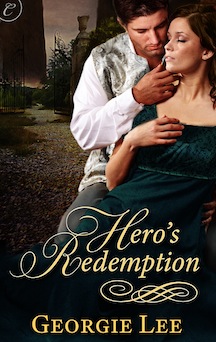
HerosRedemptionFinal (2)London, 1817

Devon, the Earl of Malton, is a hero for his deeds at the Battle of Waterloo. But he suffers terrible nightmares, and drinks himself to sleep most nights. A habit he vows to break when he awakes one morning to find a woman sharing his bed, no memory of how she got there, and her angry brother at his door.

Cathleen is mortified when her wastrel brother and his greedy wife propose a blackmail scheme involving the earl, but as a penniless war widow she’s at their mercy. She goes along with the plan and sneaks into Devon’s bed one night, and ends up comforting him through a night terror.

Charmed by her beauty and kindness, Devon determines that rather than pay the blackmail, he will offer his hand in marriage to Cathleen. Although she is deeply attracted to the stoic earl, Cathleen cannot understand why Devon would want to marry her. What she doesn’t know is that Devon owes her a debt that can never fully be repaid…

About the Author

A dedicated history and film buff, Georgie Lee loves combining her passion for Hollywood, history and storytelling through romantic fiction. She began writing professionally at a small TV station in San Diego before moving to Los Angeles to work in the interesting but strange world of the entertainment industry.

Georgie5.3-1Her first novel, Lady’s Wager, and her contemporary novella, Rock ‘n’ Roll Reunion are both available from Ellora’s Cave Blush. Labor Relations, a contemporary romance of Hollywood, and Studio Relations, a love story set in 1935 Hollywood, are currently available from Montlake Romance. Look for her Regency novella, Hero’s Redemption from Carina Press on July 29, 2013, and her Regency novel, Engagement of Convenience, from Harlequin Historical on October 1, 2013.

When not writing, Georgie enjoys reading non-fiction history and watching any movie with a costume and an accent. Please visit  www.georgie-lee.com for more information about Georgie and her novels.

Contacts

Facebook: https://www.facebook.com/pages/Georgie-Lee/259729314054846?ref=hl

Twitter: @GeorgieLeeBooks

Goodreads: http://www.goodreads.com/author/show/2985551.Georgie_Lee

Blog: http://georgielee.blogspot.com

Website: www.georgie-lee.com

Available

Carina Press • Amazon

Historical Romance Deal Breaker #5: Unattractive or Drop-Dead Gorgeous Heroines

Blast From the Past: Susana has been busy traveling in Scotland and attending the RWA Conference this month, and she thought some of you might enjoy revisiting some of her previous posts on Susana’s Parlour.

Decades of reading historical romances have led me to develop strong opinions of what defines a truly satisfying story, so the other day I set about making a list of characteristics that turn a potential five-star read into a one- or two-star. Admittedly, there are some skillful authors who manage to successfully incorporate one or more of these scenarios in their books; however, I have run across quite a few more who in my opinion haven’t quite managed it.

These are what I call “deal breakers”—characteristics that make a book a wall-banger. Not surprisingly, many involve character, particularly, the character of the hero and heroine. They have to be likable. They have to be three-dimensional, i.e., well-drawn-out characters with flaws, not fairy princesses. And they have to be able to fall in love, convincingly, the head-over-heels kind of love.

Overview of Susana’s Historical Romance Deal-Breakers

  1. Reluctant Heroes
  2. Adultery
  3. Anachronistic Behavior and Historical Inaccuracies
  4. Cliffhanger Endings
  5. Unattractive or Drop-Dead Gorgeous Heroines
  6. Heroes With Mistresses or Who Sleep With Servants
  7. Drop-Dead Gorgeous Heroes
  8. Promiscuous Heroines
  9. Contrived Endings
  10. Waifs and Silly Heroines
  11. Long Separations
  12. Excessively Cruel Heroes and Heroines
  13. Breaking the Rules: Why Some Authors Get Away With It


Historical Romance Deal Breaker #5: Unattractive or Drop-Dead Gorgeous Heroines

  • Heroines who are fat and/or described as “plain” or unattractive

Like the majority of readers, I am not the most attractive person out there. I’m middle-aged, struggle with weight issues, and use artificial means to enhance my hair and facial features. I consider myself “average.”

Also like the majority of readers, I like to fantasize about being more attractive and irresistible than I am. When I read, I’m picturing myself as the heroine; her experiences are mine, right up to the HEA at the end.

It just doesn’t do it for me when the heroine seems to have virtually *no* physical attractions. Especially when this is paired with too many psychological issues stemming from her doubts about her physical appearance. A little of this goes a long way, for me. I want the story to be about the characters falling in love. If I wanted to read a story that is more psychological drama than romance, I wouldn’t read romance.

While the heroine does not have to be drop-dead gorgeous (see below), she absolutely must have some attractive qualities. She might have mousy brown hair, but her figure should be unobjectionable and she might have the most intriguing grey eyes.  Maybe her breasts aren’t voluminous, but she has a small waist and neat ankles (whatever that is). She may be considered plain by many, but we get to see from the beginning that the hero finds some things about her attractive, which become even more appealing once he becomes better acquainted with her.

You get the drift.

Considering the growing number of books featuring fat and unattractive heroines—and the readers who seem to rave over them—I wonder if I’m in the minority here.

However, I also have a problem with:

  • Heroines who are so beautiful and sweet that everyone falls in love with them (even birds and wild animals)

I also find it difficult to identify with heroines who are too perfect. (Actually, I want to slap them silly.)

In a romance it is important to create three-dimensional characters because the characters are the story. If the main characters in your story are too good to be believed, you risk your story becoming a Disney movie, with its happy cartoon characters sailing off into the sunset. Even if you enjoy cartoons, surely you have to wonder if Cinderella and her prince really did live happily ever after without ever once clashing over raising the children or the price of glass slippers. You don’t have to be diabetic to suffer from the effects of consuming too much sugar.

A heroine can be beautiful, but she has to have some flaws too. Perhaps she perceives her nose is too long. Or she’s too tall or too short. Or her hair is too dark to be the current trend.

Her flaws can also be emotional. Perhaps she fears that people only like her because of her physical attractions. (I had a roommate like that once; I never thought she was that beautiful. Oh well.) Or she’s plagued with shyness. Or she blurts out things better left unsaid. Or she thinks she is unworthy because of her birth or social class or a past indiscretion.

adore a good HEA. I feel cheated if I don’t get one. But I want them to seem at least somewhat realistic. I want to be convinced that my hero and heroine love each other enough—have survived enough challenges as their romance developed and matured in the story—that their relationship is strong enough to survive the uncertainties of the future.

Am I the only one who feels this way? Have you run across any five-star reads with extremely ugly or extremely attractive heroines? Do tell!


Welcome to the History Lovers Grand Tour & Scavenger Hunt!

—International—

graphic4medweb copy

As the name implies, we’re a group of readers and authors who love both history and romance, especially when they’re combined in a delightful story. If you feel the same, you’re welcome to join us on our Facebook page and converse with us about historical romance fiction.

Below you’ll find authors of historical romances set in a wide variety of time periods. Perhaps by participating in our Grand Tour you’ll discover some new authors for your future reading pleasure. Hop around to your heart’s content, feel free to comment on the posts, hunt for answers to the authors’ questions, and perhaps you’ll be one of our 25 lucky prize winners (see contest details below)…although you’re already a winner if you find a new story to read, do you not agree?

The theme for this tour is Courting Rituals, and for my post, I’ve chosen to talk about the difficulty of finding suitable husbands for young ladies confined to the country.

The Plight of Country Ladies of Limited Means

Previous posts about the London Season and Almack’s have mentioned the most appealing attractions in London, and I’m sure these will be described by some of the other Regency authors on this tour. But what I’d like to consider here is how difficult it could be for a genteel young lady confined to the country to find a suitable husband.

All you have to do is recall the situation of the Bennet family from Pride and Prejudice to understand that it was not an easy task, even if the young lady was exceedingly pretty like Jane or appealing in other ways like Lizzie. While the Bennets possessed no wealth or aristocratic family connections to give them entrée into the elegant ballrooms of London society, they were still of sufficiently high social status to prevent them from making matches with the lower classes: farmers, tradesmen, etc. Consequently, young ladies like Lizzie Bennet and Charlotte Lucas often had to choose between a mundane marriage to a man like Mr. Collins or a life of blessed spinsterhood. Jane Austen herself chose the latter when her own Mr. Darcy failed to appear.

Genteel country families did socialize, of course. There were dinners and parties and, for those who had the means, house parties, where guests were invited to spend a week or more hobnobbing with their host family. Young people could become acquainted at local assemblies or at other community activities, such as church services or local fêtes, such as the one Theresa and Damian organized for the village of Granville in Treasuring Theresa.

However, in many places there was a dearth of eligible suitors. Well-to-do families could send their sons and daughters to London to find spouses, which reduced the number even further for young ladies like the Bennet daughters. All things considered, Mrs. Bennet’s excitement when she heard Netherfield was to be let to a young single man of means seems only natural. Such an opportunity did not come often; surely one of her girls could manage to entice him into marriage.

The Bennet family’s situation was an unenviable one also because the estate was entailed to the nearest male relative, which meant that the house and attached lands would pass to Mr. Collins upon Mr. Bennet’s death. While there would be a jointure of some sort for his widow and daughters, it wouldn’t be much, and they would have to find another place to live as well. If one of the daughters could marry well, they would be able to assist their mother and sisters when Longbourne passed to Mr. Collins.

Lady Theresa

Lady Theresa

Although she is an earl’s daughter and did have a London Season, Lady Theresa is a country girl who has always expected to marry the boy next door, Reese Bromfield, the squire’s son. But when her father loses his fortune and Reese returns from London with a fiancée, Theresa’s options are few. To make it worse, her father becomes ill and seems determined to match Theresa with his heir, a distant cousin she despises…and who returns her feelings full-force. But what other options does she have? Marriage to a Cit in search of aristocratic connections? A life of servitude as a governess or companion? What would you do in a similar situation?

The prize I am offering is a wooden gift box of goodies from London and Scotland ($50 value) and it will go to one lucky responder (chosen randomly) to the question: What would you do if you were in a situation similar to Lady Theresa’s? Be sure to include your email address with your comment.
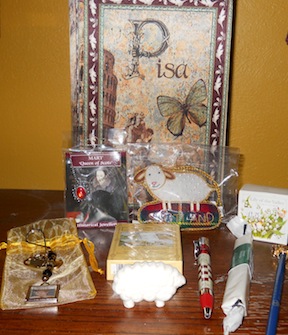
Inside the lovely wooden box: Mary Queen of Scots necklace, sheep ornament, Treasuring Theresa keychain in bag, bar of soap, bath crystals, sheep soap, pen, pencil, Castles and Palaces of Scotland playing cards

Inside the lovely wooden box: Mary Queen of Scots necklace, sheep ornament, Treasuring Theresa keychain in bag, bar of soap, bath crystals, sheep soap, pen, pencil, Castles and Palaces of Scotland playing cards

Here’s my question for the scavenger hunt: In the British system of primogeniture, titles and estates were often entailed, or required to be passed on, to what person after the death of the owner?

Click on the History Lovers Grand Tour page to fill in the answer, and you may continue on from there. Enjoy!

About Treasuring Theresa

At the betrothal ball of the man she had expected to marry herself, Lady Theresa latches on to Damian Ashby, hoping to divert attention from her own humiliating situation. Of course, she’s not seriously interested because he’s a useless London fribble, in her opinion. He is not favorably impressed with her either.

Still, she’s the daughter of an earl, and he’s the heir to her father’s title and estate, so they are destined to spend more time in each other’s company…sooner rather than later. And who knew that the two of them would develop an unlikely attraction to one another?

But can a London swell and a country lady ever make their diverse lives and interests work together?

Excerpt

The dancing had already begun when they arrived. Damian stayed close at Theresa’s side, his arm lightly around her so that his fingers pressed into the small of her back, while she introduced him to her friends and acquaintances. They shared a set of country dances, and when he returned to her side after fetching a glass of lemonade, she was chatting merrily with a cluster of her friends, so he danced a trio of sets with some of the other young ladies. He managed to get back to her in time for the supper dance, just ahead of a tall, fresh-faced youth in a poorly tied Mathematical and a waistcoat that went out of style years ago.

Damian Ashby, Lord Clinton

Damian Ashby, Lord Clinton

“When does the waltzing begin?” he whispered as they performed the elaborate steps of the country dance. “I must claim the first waltz.”

“We do not waltz here,” she whispered back. “It’s considered far too scandalous. Besides,” she added when they came back together, “we have already danced twice. A third would make us the talk of the shire.”

He chuckled. “Isn’t that what you were aiming for at the Sedgely ball? A juicy scandal to divert the gossips’ attention?”

She looked up at him in surprise. “You know,” she said, “I just realized I don’t care about that anymore. I’m glad Reese is happy with Eugenia.”

“Indeed,” he managed, wondering why he suddenly felt so relieved.

She did condescend to dance another set with him, and Damian hoped all of the old biddy gossips had noticed.

On the return trip, Mrs. Noble babbled on incessantly about gowns and stale cakes while Damian found his eyes lingering over the curvaceous form of the young lady on the seat across from him, the light of the moon being thankfully dim enough to conceal his bold appraisal.

She was silent, in a reflective mood, her head turned toward the window and the shadowed images of the scenery outside.

“Imagine that scamp Dickie Fielding enticing the Hampton chit to meet him in the garden!” Mrs. Noble exclaimed indignantly. “Why I thought her father would explode when they were discovered.” She lowered her voice. “I have it on good authority that they were embracing,” she revealed. “A dreadful scandal indeed should they not marry post-haste.”

Theresa’s head shot around to face him, and he knew she was recalling that night at the betrothal ball when she’d tried to lure him out to the terrace and he’d made a hasty escape. He rather thought now that he would enjoy a pleasant interlude alone in the moonlight with her. He would hold her against him, her head on his chest, while his hands swept over her curves. When he felt her pulse rising, he would draw her chin toward him and take her lips in a long kiss while his other hand would cup her breast, already pebbling with her desire.

Damian froze. What was he thinking? Cousin Theresa was no strumpet. The only way he could indulge in such carnal delights with her would include an obligatory wedding first. And that was out of the question.

Wasn’t it?

Available

Ellora’s Cave • Amazon • Barnes & Noble • AllRomance eBooks • Kobo • Sony

History Lovers Grand Tour Authors

Rue Allyn • Amylynn Bright  • Collette Cameron • Téa Cooper  • Beverley Eikli  • Susana Ellis • Aileen Fish • Debra Glass  • Amy Hearst • Evangeline Holland • Piper Huguley • Eliza Knight  • Kristen Koster • Cora Lee  • Georgie Lee • Suzi Love • Denise Lynn • Deborah Macgillivray  • Barbara Monajem • Shelly Munro • Ella Quinn • Eva Scott  • Shereen Vedam  • Elaine Violette

Prizes

  1. Each author will offer a prize for a contest, the specifics of which is set up entirely by her. The contest will be open to all participants, regardless of geographic location. For logistical purposes, authors may substitute a digital prize (gift card, etc.) of equal value for another prize that might prove difficult to mail to a distant location.
  2. The Grand Prize for the Scavenger Hunt will be awarded to the participant with the most correct answers to the authors’ scavenger hunt questions.  In case of a tie, the winner will be chosen randomly.
  3. The winners will be posted on the History Lovers Grand Tour page the following week.

Scavenger Hunt

  • Click on the above links to each author’s blog. The blog tour entry can be identified by the graphic in the upper right corner of the post. If it is not the top post, look for the graphic in a prominent location on the sidebar, and click on it to find the blog tour entry.
  • Read the blog post and the author’s short answer question at the end. Locate the answer to the question, then click on the link to the History Lovers Grand Tour page and type in the answer next to the author’s name. Be sure to fill in the your name and email address!
  • You may go back to same page and read more of the author’s post (excerpt, etc.) or you may click on another author’s name on the answer sheet and repeat the process.
  • When you are finished, check to make sure the spaces for your name and email address are filled in correctly, and submit your answer sheet to the tour coordinator. If you submit an incomplete answer sheet, you may come back later and make another submission with the remaining answers when you have more time.
  • Any questions about the scavenger hunt should be directed to the tour coordinator .
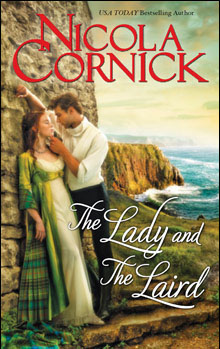
Rue Allyn: Photography in the Old West + GIVEAWAY

Rue is offering two chances to win a free digital copy of One Night’s Desire. See contest details below.

Susana, thank you very much for inviting me to visit with your followers today to tell them a little about my newest release, One Night’s Desire, and some factoids about nature photography in the late nineteenth century.

A visit to Yellowstone and Grand Teton National Parks in 2008 with a friend who is a superior photographer inspired an important detail of One Night’s Desire. Because I began to share my friend’s interest in photography (although I lack her skill) I started to look into the source of many of iconic images associated with the parks. I discovered that the expeditionary force responsible for mapping and recording the details of the Yellowstone area included a photographer by the name of William Henry Jackson. His pictures are the first of the area and are the foundation for many of those iconic images. You can read about his adventures and see copies of his photographs in Bob Blair’s compilation “The Pioneer Photographer.” The difficulties of transporting photographic equipment to remote locations and the complexities of timing exposures for just the right light, are just two of the small struggles Jackson dealt with in addition to the rigors of a years long expedition in country where survival was risky at best. One story in particular about Jackson balancing his equipment on a cliff side to capture an especially compelling image of a waterfall was especially inspiring. I was so moved that I repeated as much of the action of that story as I could in One Night’s Desire. With digital cameras, we don’t have half the struggle to create photographs that Jackson had. His efforts were truly heroic and contributed greatly to the creation of Yellowstone as a national park. I owe him not only for the inspiration he gave to my story but for the images and places that he preserved.

Giveaway: Two Chances to Win a Free Download of One Night’s Desire.

  1. Leave a comment about this post, photography, the national parks, or any topic you prefer and/or
  2. Leave a review of one of my currently available books at Amazon. Just check my author page for book details.

I’ll be collecting entries throughout the entire One Night’s Desire release tour (June 13 – July 29, the  schedule of appearances can be found here. The winner will be announced July 31st on my blog.

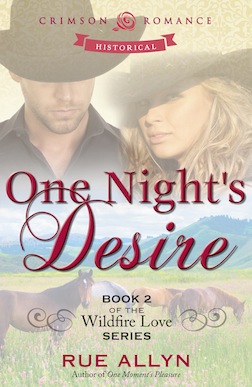
About One Night’s Desire

roses2A WOMAN ON THE RUN: Rustlers, claim jumpers and fire, nothing will stop Kiera Alden from reuniting her family. But an accusation of murder threatens her dreams and sets Marshall Evrett Quinn on her trail. She may be able to escape prison bars and eventually prove her innocence, but she can’t escape Quinn’s love.

A LAWMAN IN HOT PURSUIT: Marshall Evrett Quinn is relentless in pursuit of law-breakers, and pretty Kiera Alden is no exception. Clever and courageous, she evades him until a chance encounter turns the tables. Finally he has this elusive desperado under arrest, but success is bittersweet when she captures his heart.

Excerpt

http://rueallyn.com/2c2ONDexcerpt.html

Available

Amazon

One Night’s Desire and its sister book One Moment’s Pleasure are heavily discounted at Amazon for the entire month of July.

About the Author

????????????Author of historical, contemporary, and erotic romances, Rue Allyn fell in love with happily ever after the day she heard her first story. She is deliriously married to her sweetheart of many years and loves to hear from readers about their favorite books and real life adventures.  Learn more about Rue and her books at http://RueAllyn.com.

Contacts

Website • Facebook  • Twitter • Goodreads • Amazon • Blog

Regency Rites: The London Season

The Haut Ton

The haut ton referred to the members of some three hundred families who owned large estates that supplied their primary income. Sometimes they were called “the upper ten thousand.” Not all were titled, but they were usually at least well-connected and wealthy enough to stand the enormous expenses of socializing with the crème de la crème of English society, which included:

  • owning or renting a suitable residence in a fashionable area of London (in addition to a great country home on their estate), along with the requisite servants, stables, etc.
  • extensive wardrobes in the first stare of fashion for all members of the family who participated in the Season
  • food, drink, decorations, musicians, etc. required to provide entertainment for other members of the ton in grand style
  • costs of renting theatre boxes, purchasing entrance tickets to public entertainments, such as the Vauxhall Pleasure Gardens, Astley’s Amphitheatre, etc.
  • allowance or pin money for wives, sons or daughters.

What was the London Season?

Lady Theresa

Lady Theresa

The London Season evolved from the legislative sessions of Parliament, which would run roughly from January/February to June. Generally, a peer would bring his family to London sometime after the holidays, which provided a perfect opportunity for their families to socialize and seek suitable spouses for their children. The Season didn’t heat up until spring, though, and by the end of June, most of the first families escaped the odiferous heat of London for the fresh air of their country estates or perhaps a seaside resort.

Many families would return to London in September for the “Little Season,” which was much less prestigious, but few were left in Town by the end of November.

Essentially, anyone who was anyone would participate in the London Season, even if they had to run up enormous debts to do it.

In Treasuring Theresa, an earl’s daughter such as Lady Theresa would be expected to have a London Season and make a suitable marriage. Unfortunately, however, her first Season was unsuccessful, and later, there was no money for it, so when childhood sweetheart Reese Bromfield broke her heart by betrothing himself to another, Lady Theresa’s options for marriage were limited. Incidentally, Reese Bromfield, as the son of a squire, was not highly-connected, but as the son of a wealthy member of the gentry, he would have been welcomed to participate in the ton, although not, perhaps, in the highest circles.

What did people do in the London Season?

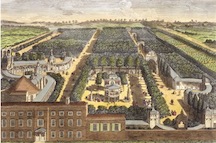
Vauxhall Pleasure Gardens

Vauxhall Pleasure Gardens

London offered—and still does to this day—an endless number of delights for visitors, regardless of status. In the early 19th century, one could walk or ride through the park (Hyde Park or Green Park were quite popular), visit the British Museum or any number of museums or galleries, attend a circus performance at Astley’s Amphitheatre, visit the Pleasure Gardens of Vauxhall with its nightly fireworks, and attend the theatre or opera. The best shopping in the world could be had on Bond Street, and for the gentlemen there was racing, boxing, gaming, and all sorts of attractions that couldn’t be found on a remote country estate.

For the haut ton, there were balls and parties, soirées, routs, musical evenings, Venetian breakfasts, al fresco teas, extravagant dinners…all sorts of opportunities to hobnob with wealthy aristocrats and politicians and make connections that could potentially lead to even higher status and prestige.

Hyde Park

Hyde Park

It was all great fun—but very expensive, especially for those who succumbed to the gambling fever. Entire fortunes were won and lost in this period—and not just by the gentlemen either. Before she died in 1806, Georgiana, the Duchess of Devonshire, had lost what amounts today to a billion dollars. (See Lady P’s insights on that here.)

What did people do the rest of the year?

Whatever they wished! Many spent the summer on their country estates, which generally sported expansive mansions with huge ballrooms that could be used for house parties, during which they would entertain their friends from other parts of England for a week or more. Sometimes gentlemen took a personal interest in their estates, but often the management was left to a steward or estate manager so that the owner was free to participate in local society, or travel to the seaside, or take the waters at a spa resort, such as Bath. Hunting and fishing were popular sports for the gentlemen.

Damian Ashby, Lord Clinton

Damian Ashby, Lord Clinton

In Treasuring Theresa, Damian Ashby was a society dandy who despised the country, except for the income it provided him. Lady Theresa despised the superficiality of the ton and preferred life on her country estate, where she counted among her friends villagers and commoners, as well as the local gentry. How will these two seemingly complete opposites manage to bear each other’s company for an extended period of time as her dying father wishes?

About Treasuring Theresa (a sweet Regency short story)

At the betrothal ball of the man she had expected to marry herself, Lady Theresa latches on to Damian Ashby, hoping to divert attention from her own humiliating situation. Of course, she’s not seriously interested because he’s a useless London fribble, in her opinion. He is not favorably impressed with her either.

Still, she’s the daughter of an earl, and he’s the heir to her father’s title and estate, so they are destined to spend more time in each other’s company…sooner rather than later. And who knew that the two of them would develop an unlikely attraction to one another?

But can a London swell and a country lady ever make their diverse lives and interests work together?

Note: Excerpts and additional reads—including an epilogue to this story—are available here.

Available

Ellora’s CaveAmazonBarnes & NobleAllRomance eBooksKobo

The Regency Rites series

Regency Rites: The Well-Dressed Regency Lady 

Regency Rites: Presentation at Court

Regency Rites: Almack’s Assembly Rooms 

Regency Rites: The London Season

Historical Romance Deal Breaker #4: Cliffhanger Endings

Blast From the Past: Susana just got back from traveling in Scotland and she thought some of you might enjoy revisiting some of her previous posts on Susana’s Parlour.

Decades of reading historical romances have led me to develop strong opinions of what defines a truly satisfying story, so the other day I set about making a list of characteristics that turn a potential five-star read into a one- or two-star. Admittedly, there are some skillful authors who manage to successfully incorporate one or more of these scenarios in their books; however, I have run across quite a few more who in my opinion haven’t quite managed it.

These are what I call “deal breakers”—characteristics that make a book a wall-banger. Not surprisingly, many involve character, particularly, the character of the hero and heroine. They have to be likable. They have to be three-dimensional, i.e., well-drawn-out characters with flaws, not fairy princesses. And they have to be able to fall in love, convincingly, the head-over-heels kind of love.

Overview of Susana’s Historical Romance Deal-Breakers

  1. Reluctant Heroes
  2. Adultery
  3. Anachronistic Behavior and Historical Inaccuracies
  4. Cliffhanger Endings
  5. Unattractive or Drop-Dead Gorgeous Heroines
  6. Heroes With Mistresses or Who Sleep With Servants
  7. Drop-Dead Gorgeous Heroes
  8. Promiscuous Heroines
  9. Contrived Endings
  10. Waifs and Silly Heroines
  11. Long Separations
  12. Excessively Cruel Heroes and Heroines
  13. Breaking the Rules: Why Some Authors Get Away With It

The fourth deal breaker is cliffhanger endings.

There’s nothing more annoying than to get to the last chapter of a book and discover that it’s not the end. That you have to buy another book to find out how your protagonists fared.

If I really care about the characters, I may buy the sequel. But I am seething inside, and any chance I will ever trust that author again is virtually gone. Even if it’s a favorite author.

If the sequel isn’t even available yet, there is no chance I will buy it. Because months later, I won’t likely care about those characters anymore.

Why do authors cheat their readers this way? If it’s meant as a technique to promote books, it’s a misguided one indeed. Nobody likes to be teased or manipulated. Eventually, readers will get disgusted and move on.

I adore a good romance series, with cameo appearances by protagonists from previous books. I love it when secondary characters from a previous book become the protagonists in the sequel. If the books aren’t spaced too far apart (i.e., I haven’t had time to forget all about them), I will buy all of them just to make sure my old friends are still doing well.

But if there’s no satisfactory HEA at the end of the book—if I discover that instead of being rewarded for their suffering, my hero and heroine have more tribulations in store for them in the next book—I’m seriously wanting my money—and my time—back.

What do you think? Are there some authors who can get away with teasing their readers with cliffhangers?

Historical Romance Deal Breaker #3: Anachronistic Behavior and Historical Inaccuracies

Blast From the Past: Susana is traveling in Scotland this week and she thought some of you might enjoy revisiting some of her previous posts on Susana’s Parlour.

Decades of reading historical romances have led me to develop strong opinions of what defines a truly satisfying story, so the other day I set about making a list of characteristics that turn a potential five-star read into a one- or two-star. Admittedly, there are some skillful authors who manage to successfully incorporate one or more of these scenarios in their books; however, I have run across quite a few more who in my opinion haven’t quite managed it.

These are what I call “deal breakers”—characteristics that make a book a wall-banger. Not surprisingly, many involve character, particularly, the character of the hero and heroine. They have to be likable. They have to be three-dimensional, i.e., well-drawn-out characters with flaws, not fairy princesses. And they have to be able to fall in love, convincingly, the head-over-heels kind of love.

Overview of Susana’s Historical Romance Deal Breakers

  1. Reluctant Heroes
  2. Adultery
  3. Anachronistic Behavior and Historical Inaccuracies
  4. Cliffhanger Endings
  5. Unattractive or Drop-Dead Gorgeous Heroines
  6. Heroes With Mistresses or Who Sleep With Servants
  7. Drop-Dead Gorgeous Heroes
  8. Promiscuous Heroines
  9. Contrived Endings
  10. Waifs and Silly Heroines
  11. Long Separations
  12. Excessively Cruel Heroes and Heroines
  13. Breaking the Rules: Why Some Authors Get Away With It

Deal breaker #3 is: anachronistic behavior and historical inaccuracies.

So many of the newer historical authors seem to be turning out what I consider contemporary stories in historical settings, and it seems as though many readers don’t care. The curvy girl on the cover wears a beautiful gown, and the novel is full of balls and handsome dukes, and if the girl sneaks out to the garden and engages in steamy sex with someone, reviewers praise it to the heavens for being “hot.” Am I the only one who questions the assumption that a gently-born young woman would be allowed to accompany a gentleman on the terrace for more than five minutes without her chaperone coming to look for her?

While I have to acknowledge that readers new to this genre may not recognize these problems, too many indications of the author’s ignorance of the time period can ruin a book for those of us who know better. And it may well be that the author doesn’t care. If all she is looking for are a few extra dollars and some temporary éclat, the ease of self-publishing can give her the platform, and her devoted friends and family can shower her work with favorable reviews until she moves on with her life.

Unfortunately, it’s not just the self-published stories that feature egregious historical inaccuracies. It seems as though the editors—if they still exist—are also unfamiliar with the time periods of the books they handle. Either that or they are so over-worked they hope the readers will be too engrossed in the story to balk at a few “minor” issues. And it’s true: I find I can ignore a problem or two in an otherwise wonderful read. However, if there are too many, or if the entire plot is dependent upon some unlikely scenario, that’s when the book ceases to be a pleasurable experience and becomes a wall-banger for me.

Here are some anachronisms and historical inaccuracies I have encountered just within the past five months in books considered historical romances (not erotica*), all involving young, innocent heroines:

  • The heroine is allowed to leave her home and walk around London without any sort of chaperone, in some cases even going to call on a single gentleman alone.
  • The heroine attends a house party hosted by a gentleman known for his scandalous house parties—which is enough in itself to ruin her reputation—but she is so loosely chaperoned that she and her lover can easily sneak into each other’s rooms at night.
  • In a medieval, the hero and heroine cannot marry because their siblings are married to each other, which by church law makes them siblings as well. So they run off and pretend to be married. Really? While our 21st century wisdom tells us this law is ridiculous, these characters lived with medieval cultural and religious mores; the guilt over time would eventually take its toll, even if their deception were never uncovered. NOT a satisfactory HEA.
  • The heroine attends a ball and inadvertently has sex with a stranger in a library so dark they cannot see each other’s faces.
  • The heroine’s father wants her to marry an old lecher and tells her to allow him whatever liberties he wants.
  • The heroine is allowed to remain alone in the family home with no supervision.
  • The heroine is allowed to host her brother’s scandalous house parties.
  • The heroine goes shopping for a gown to wear at a ball that very evening. (I suppose she dropped in at Harrod’s to look through the dresses on the rack?)
  • Waffles are served for breakfast.
  • The heroine is allowed to entertain gentleman callers and ride in a closed carriage with a gentleman with no supervision.
  • The hero is a male prostitute in a brothel where aristocrats bring their daughters to be “breached” prior to the wedding night. (!!!)
  • The author doesn’t understand British titles and refers to a young girl as Lady Davenport instead of Lady Camilla. (HINT: before writing a historical novel set in England, read up on the proper use of titles. It’s really not something you can just guess at.)
  • An illegitimate son is the heir to his legitimate half-brother’s title and estate.
  • A man is allowed to marry his father’s or brother’s widow, or a woman is allowed to marry her deceased sister’s widower.

What anachronisms and historical inaccuracies make a book a wall-banger for you?


Historical Romance Deal Breaker #2: Adultery

Blast From the Past: Susana is traveling in Scotland this week and she thought some of you might enjoy revisiting some of her previous posts on Susana’s Parlour.

Decades of reading historical romances have led me to develop strong opinions of what defines a truly satisfying story, so the other day I set about making a list of characteristics that turn a potential five-star read into a one- or two-star. Admittedly, there are some skillful authors who manage to successfully incorporate one or more of these scenarios in their books; however, I have run across quite a few more who in my opinion haven’t quite managed it.

These are what I call “deal breakers”—characteristics that make a book a wall-banger. Not surprisingly, many involve character, particularly, the character of the hero and heroine. They have to be likable. They have to be three-dimensional, i.e., well-drawn-out characters with flaws, not fairy princesses. And they have to be able to fall in love, convincingly, the head-over-heels kind of love.

Overview of Susana’s Historical Romance Deal Breakers

  1. Reluctant Heroes
  2. Adultery
  3. Anachronistic Behavior and Historical Inaccuracies
  4. Cliffhanger Endings
  5. Unattractive or Drop-Dead Gorgeous Heroines
  6. Heroes With Mistresses or Who Sleep With Servants
  7. Drop-Dead Gorgeous Heroes
  8. Promiscuous Heroines
  9. Contrived Endings
  10. Waifs and Silly Heroines
  11. Long Separations
  12. Excessively Cruel Heroes and Heroines
  13. Breaking the Rules: Why Some Authors Get Away With It

The second one is adultery involving the hero or heroine.

I’ve seen scenarios where the non-hero husband is cruel and abusive, even threatening to kill the heroine (especially in medievals), but I don’t find that a good enough excuse for adultery. I wouldn’t tell a 21st century abused woman that she either has to go back to her husband or go to a nunnery (perhaps the closest thing to a medieval equivalent of a shelter for battered women), but in medieval times there weren’t many other options. In one story I read recently, the abused wife ran away to a distant town with her lover and they pretended to be married. But the guilt of their deceit had already started to tarnish their relationship before the book’s conclusion, leaving the reader with a very unsatisfactory HEA. (In fact, the story was set up in such a way as to make a satisfactory HEA impossible.) I know this isn’t fair by 21st century standards, but you really should not write a novel set in medieval times and then proceed to ignore the social and religious mores of the time. Less knowledgeable readers might not notice, but those of us who have read widely in the genre will recognize an amateur when we see it. [Historical inaccuracy, another deal breaker, will be discussed in a later post.]

What about a spouse who is ill, disabled, or confined to a mental institution? Or a spouse who has run off with another person and disappeared? While I do not expect a hero to remain celibate forever under these circumstances, I cannot like the heroine to be his mistress. Remember Jane Eyre? She knew she couldn’t have a proper HEA with Edward while his wife was living, even if she was a lunatic. I mean, how can you justify stigmatizing your children with the label “bastard”? Somehow, the HEA has to include a legal marriage, and I can’t believe a heroine who starts out as a mistress can have that much confidence that her husband/protector won’t eventually deceive her as well.

Oh, and the plots where the sterile husband invites his best friend to impregnate his wife? NO! Forget it! It doesn’t matter if the husband is good or evil, the whole adultery/deception angle opens up a Pandora’s box of guilt and fear that always manages to tarnish the HEA in some way.

What about you? Do find adultery in a historical romance acceptable in some situations?


Historical Romance Deal Breaker #1: Reluctant Heroes

Blast From the Past: Susana is traveling in Scotland this week and she thought some of you might enjoy revisiting some of her previous posts on Susana’s Parlour.

Decades of reading historical romances have led me to develop strong opinions of what defines a truly satisfying story, so the other day I set about making a list of characteristics that turn a potential five-star read into a one- or two-star. Admittedly, there are some skillful authors who manage to successfully incorporate one or more of these scenarios in their books; however, I have run across quite a few more who in my opinion haven’t quite managed it.

Overview of Susana’s Historical Romance Deal Breakers

  1. Reluctant Heroes
  2. Adultery
  3. Anachronistic Behavior and Historical Inaccuracies
  4. Cliffhanger Endings
  5. Unattractive or Drop-Dead Gorgeous Heroines
  6. Heroes With Mistresses or Who Sleep With Servants
  7. Drop-Dead Gorgeous Heroes
  8. Promiscuous Heroines
  9. Contrived Endings
  10. Waifs and Silly Heroines
  11. Long Separations
  12. Excessively Cruel Heroes and Heroines
  13. Breaking the Rules: Why Some Authors Get Away With It

These are what I call “deal breakers”—characteristics that make a book a wall-banger. Not surprisingly, many involve character, particularly the character of the hero and heroine. They have to be likable. They have to be three-dimensional, i.e., well-drawn-out characters with flaws, not fairy princesses. And they have to be able to fall in love, convincingly, the head-over-heels kind of love.

The first deal breaker for me is the reluctant hero.

Nothing is guaranteed to turn me off a book so much as a hero who denies his feelings until the very last chapter. Certainly some initial reluctance is expected; what Regency buck is eager to tie himself down to a leg-shackle before he has sown his wild oats? But the attraction needs to happen fairly soon after he meets the heroine; there must be indications early on that he enjoys her presence, resents it when other men pay her attention, etc. Which doesn’t mean that love at first sight is de rigueur. Instant attractions can be quite wonderful, but ultimately, the feelings between them must be based on something other than physical characteristics.

Below are some examples of reluctant heroes I have encountered recently:

  • The hero was so in love with his deceased wife that he cannot imagine ever risking his heart again, so when he starts falling for the heroine (poor thing), he determines to marry another young lady he doesn’t care as much for instead. Heroes cannot be idiots.
  • The hero recognizes his soulmate, but continually spurns her because childhood traumas make him feel unworthy. Heroes cannot be whiners.
  • The hero is damaged from his experiences in the war, but not too much to fall into bed with his deceased best friend’s sister. When events come to the point where her reputation will be ruined, he refuses point-blank to marry her. Heroes cannot use the heroine and then abandon her.
  • The hero is a notorious rake who has determined never to marry, and when faced with the love of his life, he runs away with another woman, forcing her to marry another man, who abuses her cruelly. Heroes cannot be jerks.
  • The hero and the heroine share a kiss in a moonlit garden and arrange several more meetings. When the heroine, who is being pressured to marry a wealthy old man, begs the hero to marry her, he confesses that he is already married (how could he forget?), and abandons her to a miserable marriage. Heroes cannot be cowardly or adulterers.

Of course, the above cases are extreme; many times the reluctant hero is simply…reluctant. Not mean or cruel or particularly stupid. . . just there. While he may not get my dander up, he’s also…boring. And frankly, heroes cannot be boring either.

What do you think? Can you add some examples of reluctant heroes that you have encountered lately? Or can you think of stories where an initially reluctant hero successfully makes the transition into delightfully besotted hero? I’d love to hear about them!