Archives

The Exeter Road: The Weyhill Fair, Amesbury Abbey and the Extraordinary Duchess of Queensberry

dust jacket

The following post is the ninth of a series based on information obtained from a fascinating book Susana recently obtained for research purposes. Coaching Days & Coaching Ways by W. Outram Tristram, first published in 1888, is chock full of commentary about travel and roads and social history told in an entertaining manner, along with a great many fabulous illustrations. A great find for anyone seriously interested in English history!
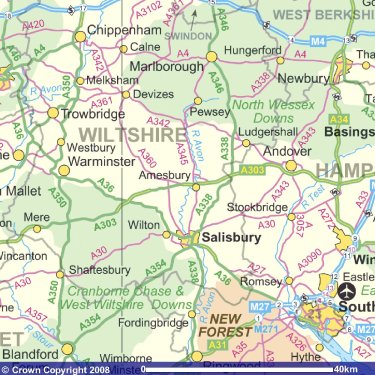
map

The Weyhill Fair

The Telegraph, rival of the Quicksilver which our author repeatedly states can do 175 miles in eighteen hours, used to pass through Weyhill, which was famous for its annual fair, “which would make those people who have never seen one stare.”

This festivity, which is indeed quite an un-English and out-of-the-way sight, begins on October 10th (Michaelmas Eve) and goes on for six days, during which all the country-side seems to have broken loose, and high junketings are to be seen. Besides junketings (which prevail chiefly on the last day of the fair in connection with peep-shows of the most blood-curdling description, whirligigs, merry-go-rounds, rifle galleries, and gingerbread) are also to be seen wonderful shows of sheep, magnificent cheeses, the finest hops in England displayed in the Farnham Row, great exhibits of machinery and enormous carthorses, and, enveloping all, a Babel indescribable.

Amesbury and the Abbey

Amesbury is where Guinevere arrived “somewhat late at night, after a ride across the Plain” after her affair with Lancelot was discovered.

“…hither came Queen Elfrida in 980…after her murder of her stepson Edward at Corfe; and, bent like all medieval murderesses suffering from a temporary mental depression, on building a church. When she came to the point however, and had interviewed the architect and the abbot, she went the whole hog and built an abbey.”

Amesbury Abbey (the church)

Amesbury Abbey (the church)

Prior to Henry VIII’s dissolution, the abbey played host, when “the Exeter road at that time was but a medieval cart-track, and a very bad one too,” to Eleanor of Brittany, sister of Prince Arthur and Mary, sixth daughter of Edward I. “Eleanor, Queen of Henry III, died here, and Katharine of Aragon stayed for a while here on her first arrival in England in 1501.”

Following the dissolution, “the abbey of Amesbury became Amesbury Abbey and passed from the Earl of Somerset, to whom it was granted by Henry VIII, into the respective hands of the Aylesburys, Boyles, and Queensberrys…”

The Abbey eventually became the parish church, and the nearby mansion of the same name built by Inigo Jones is now part of a group by the same name that operates nursing and retirement homes in the area.
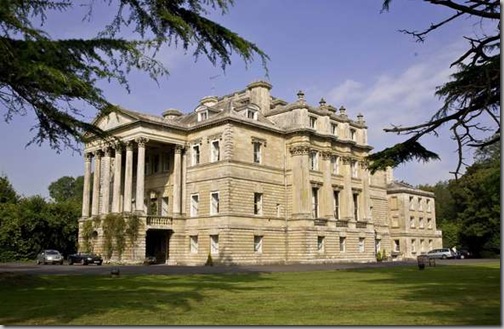
Amesbury Abbey_thumb

Amesbury Abbey (the stately home)

This is where Kitty, “the charming Duchess of Queensberry played the Lady Bountiful in the place, and by entertaining Prior and Gay the Abbey graced the quaint old Wiltshire town with the memories of two of the not least celebrated of the English humorists.”

The Duchess of Queensberry

According to the Douglas family history, Catherine Douglas, née Hyde, was an outspoken, rather eccentric woman who “loved walking, avoided alcohol and was an enthusiastic planter of trees at her husband’s estates.” She’d grown up “in a household frequented by literary celebrities,” and it was she about whom Prior wrote the poem “The Female Phaeton: Upon Lady Kitty’s First Appearing in Public” when she was sixteen.

Catherine Douglas, Duchess of Queensberry

Catherine Douglas, Duchess of Queensberry

Following her marriage to Charles Douglas, 3rd duke of Queensberry, the acclaimed beauty Kitty became an avid patron of the arts, to the point of being exiled from court when her defense of the playwright John Gay offended King George II. Gay spent the last years of his life at the Abbey, where he wrote the Beggar’s Opera, and was given a lavish funeral at his death in 1732.

The Douglas family history fails to mention the fascinating story of Julius Soubise, a Negro slave from the West Indies who was given to the duchess in 1764 when he was ten years old. She gave him a privileged life, treating him as her own son, and he became a noted fencing and riding master, a member of the most exclusive clubs, and quite popular among upper-class social circles. A violinist and singer, he trained in oratory with the actor David Garrick. At times he claimed to be African royalty, calling himself “Prince Ana-Ana-maboe” or the “Black Prince.” It was rumored that the duchess and her protégé had a sexual relationship, so perhaps that is the reason Soubise was left out of the family history. Is it only coincidence that the duchess died two days after Soubise sailed for India?

julius-soubise

Julius Soubise

One reason I love delving into these family histories is the interesting things you find. The 3rd Duke of Queensberry, it turns out, succeeded his father “due to special remainder,” when his older brother James was declared insane. Both of the 3rd duke’s sons predeceased him and the title passed to a distant cousin, William Douglas, who later became a friend of the Prince of Wales.

The Duchess of Queensberry Rules

Actually, it was the 9th Marquess of Queensberry to whom the  1867 code on which modern boxing is based can be attributed (although he was not the author, merely the endorser). This code, meant for both amateur and professional matches, is and was the first to mention the use of gloves for boxing. The dear duchess had nothing to do with it, having passed on ninety years earlier.

 Index to all the posts in this series

1: The Bath Road: The (True) Legend of the Berkshire Lady

2: The Bath Road: Littlecote and Wild William Darrell

3: The Bath Road: Lacock Abbey

4: The Bath Road: The Bear Inn at Devizes and the “Pictorial Chronicler of the Regency”

5: The Exeter Road: Flying Machines, Muddy Roads and Well-Mannered Highwaymen

6: The Exeter Road: A Foolish Coachman, a Dreadful Snowstorm and a Romance

7: The Exeter Road in 1823: A Myriad of Changes in Fifty Years

8: The Exeter Road: Basingstoke, Andover and Salisbury and the Events They Witnessed

9: The Exeter Road: The Weyhill Fair, Amesbury Abbey and the Extraordinary Duchess of Queensberry

10: The Exeter Road: Stonehenge, Dorchester and the Sad Story of the Monmouth Uprising

11: The Portsmouth Road: Royal Road or Road of Assassination?

12: The Brighton Road: “The Most Nearly Perfect, and Certainly the Most Fashionable of All”

13: The Dover Road: “Rich crowds of historical figures”

14: The Dover Road: Blackheath and Dartford

15: The Dover Road: Rochester and Charles Dickens

16: The Dover Road: William Clements, Gentleman Coachman

17: The York Road: Hadley Green, Barnet

18: The York Road: Enfield Chase and the Gunpowder Treason Plot

19: The York Road: The Stamford Regent Faces the Peril of a Flood

20: The York Road: The Inns at Stilton

21: The Holyhead Road: The Gunpowder Treason Plot

22: The Holyhead Road: Three Notable Coaching Accidents

23: The Holyhead Road: Old Lal the Legless Man and His Extraordinary Flying Machine

24: The Holyhead Road: The Coachmen “More Celebrated Even Than the Most Celebrated of Their Rivals” (Part I)

25: The Holyhead Road: The Coachmen “More Celebrated Even Than the Most Celebrated of Their Rivals” (Part II)

26: Flying Machines and Waggons and What It Was Like To Travel in Them

27: “A few words on Coaching Inns” and Conclusion

Beth Trissel: Traitor’s Legacy

SBB_TraitorsLegacy_Banner copy

Beth will be awarding a $35 Amazon gift card to a randomly drawn winner via Rafflecopter during the tour. Click here for the Rafflecopter. Click the banner above to follow the tour and increase your chances of winning.

About Traitor’s Legacy

1781. On opposite sides of the War of Independence, British Captain Jacob Vaughan and Claire Monroe find themselves thrust together by chance and expediency.

Captain Vaughan comes to a stately North Carolina manor to catch a spy. Instead, he finds himself in bedlam: the head of the household is an old man ravaged by madness, the one sane male of the family is the very man he is hunting, and the household is overseen by his beguiling sister Claire.

Torn between duty, love, and allegiances, yearning desperately for peace, will Captain Vaughan and Claire Monroe forge a peace of their own against the vagaries of war and the betrayal of false friends?

Excerpt

Cover_TraitorsLegacy copyShe fixed those wonderful eyes on him, more lethal than a backwoods rifleman. “Shall I lead the way, Captain?”

“Certainly.” He’d be tempted to follow her anywhere. A most unsettling thought.

Nothing about this fetching young lady struck Vaughan as calculating, but for the sake of her adored brother and sacred revolution he strongly suspected she’d try to deceive him. He’d hate to have to make her arrest. In fact, he should loathe it to his core. And he’d only just met her.

Why did she have such a potent effect on him, and why did it seem his fate to encounter beguiling females on the wrong side of this infernal conflict? If they weren’t Rebels to begin with, they inevitably adopted the cause.

Could he persuade Miss Monroe of her duty to the king, to him, and win her allegiance? Perhaps. She’d conducted herself splendidly thus far, and for such a prize he was willing to give his all.

About the Author

Author Beth Trissel copyMarried to my high school sweetheart, I live on a farm in the Shenandoah Valley of Virginia surrounded by my children, grandbabies, and assorted animals. An avid gardener, my love of herbs and heirloom plants figures into my work. The rich history of Virginia, the Native Americans and the people who journeyed here from far beyond her borders are at the heart of my inspiration. In addition to American settings, I also write historical and time travel romances set in the British Isles, and nonfiction about gardening, herbal lore, and country life.

 FacebookBlogTwitter Amazon Author PageBarnes & Noble Page

The Exeter Road: Basingstoke, Andover and Salisbury and the Events They Witnessed

dust jacket

The following post is the eighth of a series based on information obtained from a fascinating book Susana recently obtained for research purposes. Coaching Days & Coaching Ways by W. Outram Tristram, first published in 1888, is chock full of commentary about travel and roads and social history told in an entertaining manner, along with a great many fabulous illustrations. A great find for anyone seriously interested in English history!

Basingstoke

In 1645 Cromwell took Basing House after a four-year struggle, stripped the lead off the roof of the Abbey in order to cast bullets, leaving the house in ruins. Basingstoke, however was a popular place for coaches to stop for meals.

Between Basingstoke and Andover is a “desolate country” where coaches could make good time. The White Hart in Whitchurch was a “bustling place” where coaches from London to Salisbury and Oxford to Winchester crossed each other.” (Note: it’s still there and has fifteen rooms available should you desire to stay there!)

Andover

Here Henry VII rested from his labours after suppressing the insurrection of Perkin Warbeck; but whether the miserly Tudor put up at the Star and Garter, or the everlasting White Hart, or their medieval equivalents, if there were any, is more than I can say. It was upon Andover to link another royalty with the place, that James II fell back, after the breaking-up of the camp at Salisbury. Here it was that he was deserted by Prince George [Prince of Denmark, his daughter Anne’s husband], remarkable for his impenetrable stupidity and his universal panacea for all contingencies in a catch-word. Whatever happened, “Est-il possible?” was his exclaim. He supped with the king, who was at the moment overwhelmed naturally enough with his misfortunes, said nothing during a dull meal, but directly it was over slipped out to the stable in the company of the Duke of Ormond, mounted, and rode off. James did not exhibit much surprise on learning the adventure, being used to desertion by this time. He merely remarked, “What, is ‘Est-il possible?’ gone too! A good trooper would have been a greater loss;” and left for London—I was going to say by the next coach.

Two important coaching roads diverge about a half-mile out of Andover, which was also the scene of an escaped lioness on the Exeter Mail on October 20, 1816.

Salisbury

salisbury-cathedral-whats-on-in-salisbury“One of the most picturesque towns in the south of England,” Salisbury, where the Quicksilver (which could do 175 miles in 18 hours, our author notes repeatedly) stopped to change horses, “is almost exactly half way between Exeter and London.”

The town of Salisbury, which is eighty miles seven furlongs from Hyde Park Corner, is chiefly remarkable for its cathedral; and it owes this agreeable notoriety to the north wind. This may sounds trange in the ears of those who have not, attired as shepherds, highwaymen or huntsmen, braved the elements in the surrounding plain. Those however who have enjoyed this fortune, will not be surprised to learn, that when the winds raged in the good old days of 1220 round the original church of Old Sarum, which was quite unprotected and perched upon a hill, the congregation were utterly unable to hear the priests say mass; and no doubt they were unable to hear the sermon too. This fact much exercised the good Bishop Poore; and so, a less windy site having opportunely been revealed to him in a dream by the Virgin he got a license from Pope Honorius for removal. Which done—with a medieval disregard for the safety of the local cowherd or government inspector—he aimlessly shot an arrow into the air from the ramparts of Old Sarum, and (unlike Mr. Longfellow’s hero), having marked where it fell, there laid the foundations of the existing beautiful church.

The first among the myriad of royal visitors to Salisbury was Richard II, “who was here immediately before his expedition to Ireland, where he should clearly never have gone.” Apparently the town was not at all impressed with his “amiable inclination towards charging his subjects with his outings,” considering the fact that his household consisted of “ten thousand persons, three hundred of whom were cooks” and for him they had to provide tables. The town “a short time after expressed their thanks for his visit, by, with almost indecent alacrity, espousing the cause of Henry.”

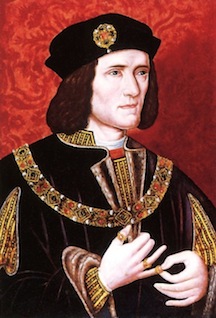
In 1484

Richard III

Richard III

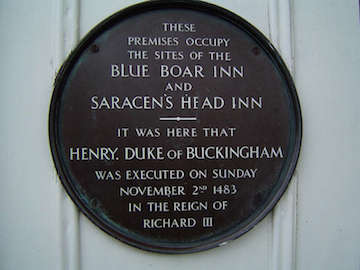
…the hunchbacked Richard honoured Salisbury with his presence; but he was not I expect in the best of tempers, for here to him was brought the Buckingham we have all read of in the play, who had just seized the fleeting opportunity to head an insurrection against the king, in an unprecedentedly wet season in Wales. The result was that he was unable to cross the Severn, and this misfortune brought him too to Salisbury, where Richard was waiting to superintend his execution at what is now the Saracen’s Head.

In the courtyard of this inn, which was then called the Blue Boar, and not “in an open space,” as Shakespeare has described it (as if he were speaking of Salisbury Plain), Buckingham had his head cut oft according to contemporary prescription. We have none of us seen the episode presented on the stage, but we have read the carpenters’ scene, which Shakespeare wrote in, to give the gentleman who originally played Buckingham a chance, and allow a few moments more preparation for Bosworth Field. And we may recollect that it consists princiapply in Buckingham asking whether King Richard will not let him speak to him, and on being told not at all, informing the general company, at some length, that it is All-Souls’ Day, and that as soon as he has been beheaded, he intends to commence “walking”.

plaque2

Although the inn has been replaced by Debenham’s, a department store, some say they have seen or experienced the Duke’s ghost, so ladies, you might want to reconsider using the dressing rooms there—just an FYI.

After Richard and Buckingham, there came to Salisbury in the way of kings, Henry VII in 1491. Henry VIII in 1535 with Ann Boleyn, already in all probability engaged in those sprightly matrimonial differences as to men and the things which culminated the year following on Tower Green. Next in order, came to Salisbury, Elizabeth, bound for Bristol, bent, as on all her royal progresses, on keeping her nobility’s incomes within bounds, and shooting tame stags that were induced to meander before her bedroom windows. After the virgin queen came James I, who liked the solitudes which surrounded the Salisbury of those days, for the two-fold reason, firstly, because they saved him in a large measure from the invasion of importunate suitors (who were afraid of having their purses taken on Salisbury Plain before they could proffer their supplications), and, secondly, because they were well stocked with all sorts of game on which he could wreak his royal and insatiable appetite for hunting. The “open” nature of the country might perhaps be added as another reason for the sporting king’s liking for the place: for James was no horseman, and as he was in no danger of meeting a hedge in an area of thirty miles, the going must have suited him down to the ground.

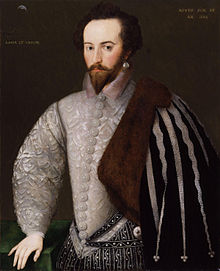
Sir Walter Raleigh

Sir Walter Raleigh

It was also hear that Sir Walter Raleigh, upon his return to England from an unsuccessful expedition to Spain, tried to gain audience with James to explain himself and beg pardon, but was forced to return to London where he was imprisoned and executed.

The merry monarch [Charles II] was here twice, but on neither occasion, I suspect was he peculiarly merry; for after the battle of Worcester, when he lay concealed near the town for a few days, and his companions used to meet at the King’s Arms in John Street, to plan his flight, the Ironsides were much too close on his track to allow opportunity for jesting; and when he came here as king in 1665, all but the most forced mirth was banished from a court which dreaded every day to be stricken by the plague.

 Index to all the posts in this series

1: The Bath Road: The (True) Legend of the Berkshire Lady

2: The Bath Road: Littlecote and Wild William Darrell

3: The Bath Road: Lacock Abbey

4: The Bath Road: The Bear Inn at Devizes and the “Pictorial Chronicler of the Regency”

5: The Exeter Road: Flying Machines, Muddy Roads and Well-Mannered Highwaymen

6: The Exeter Road: A Foolish Coachman, a Dreadful Snowstorm and a Romance

7: The Exeter Road in 1823: A Myriad of Changes in Fifty Years

8: The Exeter Road: Basingstoke, Andover and Salisbury and the Events They Witnessed

9: The Exeter Road: The Weyhill Fair, Amesbury Abbey and the Extraordinary Duchess of Queensberry

10: The Exeter Road: Stonehenge, Dorchester and the Sad Story of the Monmouth Uprising

11: The Portsmouth Road: Royal Road or Road of Assassination?

12: The Brighton Road: “The Most Nearly Perfect, and Certainly the Most Fashionable of All”

13: The Dover Road: “Rich crowds of historical figures”

14: The Dover Road: Blackheath and Dartford

15: The Dover Road: Rochester and Charles Dickens

16: The Dover Road: William Clements, Gentleman Coachman

17: The York Road: Hadley Green, Barnet

18: The York Road: Enfield Chase and the Gunpowder Treason Plot

19: The York Road: The Stamford Regent Faces the Peril of a Flood

20: The York Road: The Inns at Stilton

21: The Holyhead Road: The Gunpowder Treason Plot

22: The Holyhead Road: Three Notable Coaching Accidents

23: The Holyhead Road: Old Lal the Legless Man and His Extraordinary Flying Machine

24: The Holyhead Road: The Coachmen “More Celebrated Even Than the Most Celebrated of Their Rivals” (Part I)

25: The Holyhead Road: The Coachmen “More Celebrated Even Than the Most Celebrated of Their Rivals” (Part II)

26: Flying Machines and Waggons and What It Was Like To Travel in Them

27: “A few words on Coaching Inns” and Conclusion

The Exeter Road in 1823: A Myriad of Changes in Fifty Years

dust jacket

The following post is the seventh of a series based on information obtained from a fascinating book Susana recently obtained for research purposes. Coaching Days & Coaching Ways by W. Outram Tristram, first published in 1888, is chock full of commentary about travel and roads and social history told in an entertaining manner, along with a great many fabulous illustrations. A great find for anyone seriously interested in English history!

Fifty Years Later

Mr. Tristram, our illustrious author, wants us to know that travel has undergone a great deal of change from 1773, so he tells us the story of our hero Mirabel (see previous posts) fifty years later, when he’s in his seventies, having lived most of his life overseas and now is returning to England to take the same route to Exeter. Dressed in much the same way he did then, he waits outside the Gloucester Coffee-house for the Exeter Fly, where the young bucks stare at his old-fashioned attire.

Perhaps Mirabel looks like Mr. Bennet from P&P?

Perhaps Mirabel looks like Mr. Bennet from P&P?

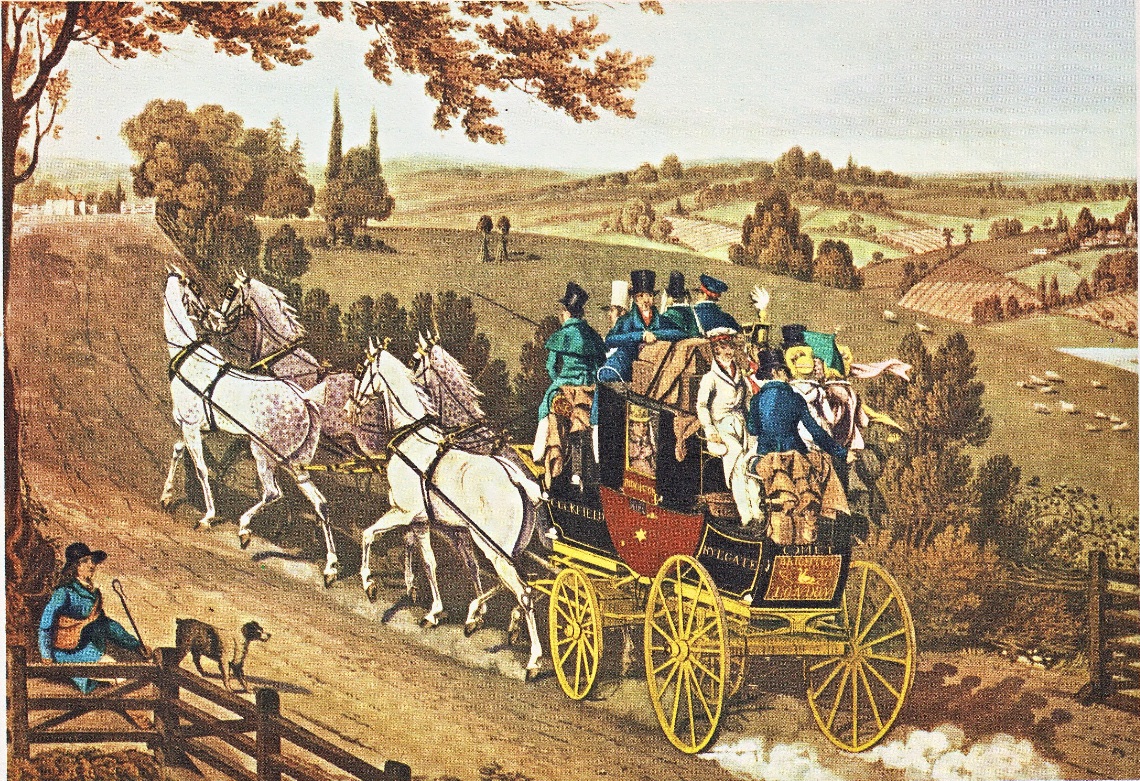
The Comet

He expects to see the Exeter Fly—a trifle improved upon possibly—but still the Exeter Fly. And what does he see in its stead rapidly approaching? Why, a turn-out drawn by four spanking grays, which he takes to be a gentleman’s carriage, and which would do credit to a crowned head.

comet

The Comet on the way to Brighton

It’s called the Comet and our friend Mirabel soon learns where its name came from. He mistakes the coachman, who is well-dressed and genteel (for he is also the proprietor of the coach) for a gentleman. The Hercules Pillars at Hyde Park Corner no longer exists (recall that Apsley House replaced it soon after our last trip to Exeter), and the roads are macadamized and therefore much smoother than when they were made with stone.

The Comet travels at ten miles an hour and arrives at Hounslow fifty-five minutes after leaving Hyde Park Corner, not stopping at Brentford at all. Mirabel is eager for some breakfast since being told that the coach would change horses there.

The proprietor, smiling superior, blandly tells him that they have changed horses while he was putting on his spectacles. “Only one minute allowed for it at Hounslow, sir, and it is often done in fifty seconds by those nimble-fingered horse-keepers.”

He then proceeds to urge the horses forward in such a way as to cause the coach to rock violently and alarm our valiant Mirabel (remember when he apprehended the highway back in 1773?). In response to his concerns, the proprietor says simply: “Oh, sir, we always ‘spring them’ over these six miles.”

He looks out and sees death and destruction before his eyes, the horses going at the rate of a mile in three minutes, and the coachman in the act of taking a pinch of snuff.

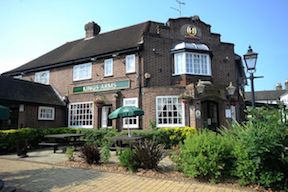
The King's Arms at Bagshot

The King’s Arms at Bagshot

At Staines, the coach takes on a fine thoroughbred “with a twitch on his nose” and Mirabel feels queasy, but the proprietor says, “Let ’em go, and take care of yourselves.” Just as Mirabel expected, the thoroughbred takes off and soon the horses are galloping and the coach rocks unmercifully, but the proprietor manages to steady them, and when Mirabel descends from the Comet at Bagshot, he is grateful to be alive and determined to find a slower and safer coach to take for the remainder of the journey.

The Regulator

Assured that the Regulator will be there in hour, Mirabel finally gets his breakfast and is ready and waiting when the Regulator draws up to the King’s Arms.

He sees…that it is a strong, well-built drag, painted chocolate, bedaubed all over with gilt letters, a bull’s head on the doors, a Saracen’s head on the hind boot, and drawn by four strapping horses.

The inside being full, Mirabel rides on the outside, and is relieved when the Regulator travels at a steady pace for the first five miles out of Bagshot. Once they reach the Hartford Bridge Flats, however, the coachman “springs ’em” to a gallop, and they go so face they catch up to the Comet. In the words of the coachman:

“He [Mirabel] was seated with his back to the horses, his arms extended to each extremity of the guard irons, his teeth set grim as death, his eyes cast down towards the ground, thinking the less he saw of his danger the better;”

and in this state he arrived at Hartford Bridge. Here he dismounted from the Regulator with the alacrity of lightning. “I will walk into Devonshire,” he cries. Then he thinks better of this, and says he will post; then he is told that posting will cost him twenty pounds; and then he says that will never do, and asks whether the landlord of The White Lion can suggest no coach to his notice that does not carry luggage on the top.

The Quicksilver Mail (the Devonshire)

The landlord advises him to take the Quicksilver mail, which travels at night, well-armed, with lamps and guards, and when asked about the speed, demurs and doesn’t mention that the Quicksilver mail (the Devonshire) is the fastest coach in England and commonly called the miracle of the road. But it doesn’t have luggage on top, at least.

Mirabel loses his head, and in spite of the assurances of the passengers that all is right, thrusts it out of the window to see where the deuce they are going to, sees nothing but dust and whirling wheels, and loses his wig.

Alas, we never find out whether or not poor old Mirabel ever got to Exeter, just that the coach reached Basingstoke, and presumably left our elderly hero there.

At least it wasn’t snowing as it did the last time!

 Index to all the posts in this series

1: The Bath Road: The (True) Legend of the Berkshire Lady

2: The Bath Road: Littlecote and Wild William Darrell

3: The Bath Road: Lacock Abbey

4: The Bath Road: The Bear Inn at Devizes and the “Pictorial Chronicler of the Regency”

5: The Exeter Road: Flying Machines, Muddy Roads and Well-Mannered Highwaymen

6: The Exeter Road: A Foolish Coachman, a Dreadful Snowstorm and a Romance

7: The Exeter Road in 1823: A Myriad of Changes in Fifty Years

8: The Exeter Road: Basingstoke, Andover and Salisbury and the Events They Witnessed

9: The Exeter Road: The Weyhill Fair, Amesbury Abbey and the Extraordinary Duchess of Queensberry

10: The Exeter Road: Stonehenge, Dorchester and the Sad Story of the Monmouth Uprising

11: The Portsmouth Road: Royal Road or Road of Assassination?

12: The Brighton Road: “The Most Nearly Perfect, and Certainly the Most Fashionable of All”

13: The Dover Road: “Rich crowds of historical figures”

14: The Dover Road: Blackheath and Dartford

15: The Dover Road: Rochester and Charles Dickens

16: The Dover Road: William Clements, Gentleman Coachman

17: The York Road: Hadley Green, Barnet

18: The York Road: Enfield Chase and the Gunpowder Treason Plot

19: The York Road: The Stamford Regent Faces the Peril of a Flood

20: The York Road: The Inns at Stilton

21: The Holyhead Road: The Gunpowder Treason Plot

22: The Holyhead Road: Three Notable Coaching Accidents

23: The Holyhead Road: Old Lal the Legless Man and His Extraordinary Flying Machine

24: The Holyhead Road: The Coachmen “More Celebrated Even Than the Most Celebrated of Their Rivals” (Part I)

25: The Holyhead Road: The Coachmen “More Celebrated Even Than the Most Celebrated of Their Rivals” (Part II)

26: Flying Machines and Waggons and What It Was Like To Travel in Them

27: “A few words on Coaching Inns” and Conclusion

Five Random Things About Me: Authors After Dark

I’m Susana Ellis and I’m a Featured Author at the Authors After Dark conference in Charlotte, NC this coming week. I’m SO looking forward to meeting you all at the AAD!

I write Regency romance since I’m a complete nut about history and romance (not in that order). My mom made me a spectacular Regency gown and pelisse that I plan to wear for the book signing. I have two blogs—Susana’s Parlour for historical readers, and Susana’s Morning Room for all types of romance. I brought back a number of treasures for giveaways from my recent trip to London, and hope you’ll enter the contest (see photo at right). But even if you don’t win that one, I’ll have some great prizes to give away Friday for my parlor game at the AAD.

Five Random Things About Me

  1. I’m a lifelong resident of Ohio, but I recently became a snowbird (just in time to miss last year’s nasty winter). I live in Toledo from May through October and Eustis, Florida from November through April. It wouldn’t bother me if I never saw snow again!
  2. One of my sisters has eleven children (ages 20 to 11 months). The first two are National Merit Scholars, and it looks like the third might be one too. They are entirely home-schooled until they go to college.
  3. I really hate housework, especially dusting. Why bother, since it’ll just get dusty again anyway? My floors are usually pretty clean, though, since I have Roomba robot vacuum cleaners (Romeo I and Romeo II) in both of my residences. Now why can’t they invent a robot to dust and clean toilets?
  4. I’m completely obsessed with anything Outlander. I paid $600 in an auction to have lunch with Diana Gabaldon last October in Phoenix. I signed up for STARZ just to watch the new show, and after seeing the first episode, I’m certain it’s going to be a huge hit!
  5. I buy almost all my clothes from QVC. It’s just…simpler. My favorite hosts are Lisa Robertson, Antonella Nestor, Leah Williams, Jayne Brown, David Venable and Mary Beth Roe. I love Philosophy and Mally Cosmetics and, well, lots of other stuff too!

hat

I’ll probably wear my black floral hat a lot in Charlotte, so stop by and chat with me about yourself and what books and authors you prefer. I read lots of sub-genres and heat levels and am always looking for great new reads!

Web site • Email • Facebook • Twitter • Linked In • Pinterest • Google+

Susana’s Parlour

Susana’s Morning Room

Other AAD Authors To Check Out

Julie Morgan • Candace Blevins • Kerry Adrienne • Bethany Lopez

Mina Khan JoLynne Valerie • Colette Saucier

Sabrina York: Defiant (Noble Passions Book Five)

About Defiant

When rakish Ned falls in with the wrong crowd, his brother decides to send him to the Continent for “seasoning”. For Sophia, this just won’t do. She’s loved Ned for ages—and also longed for adventure. She runs away from her boring suitors and disguises herself as a cabin boy on the Defiant, the ship sailing Ned to Italy.

Ned knows he’s not good enough for Sophia, but once they’re on the Defiant, he can’t stop himself from touching her, tasting her, loving her. Not when a wild tempest and a band of ruthless pirates threaten them. Not when every look from her gives him such pleasure. And certainly not when she comes, warm and wild and willing, to his bed.

If they survive their voyage, Sophia’s brother might kill him, but it will have been worth every moment and every hot, sweet kiss.

A Romantica® Regency historical erotic romance from Ellora’s Cave

Ellora’s Cave • Amazon

Excerpt

Sophia stood on the bow of the boat in the dark as the wind and rain lashed her face. She loved it. Loved it. Not only was the storm elemental and fierce, it hid her tears.

Surely she hadn’t expected Ned to greet her with open arms. Not when she had barged in on his adventure as she had. But she certainly hadn’t expected him to be so horrid. His expression had devastated her.

defiant copyFoolish girl, it said.

But then, her heart agreed.

She was foolish.

Foolish to ever think that he—

“You’re soaked.”

She whirled around, though she knew what she’d see. More glowering.

She was right.

“What the hell do you think you’re doing?”

“I’m reveling.” She thrust out her chin, in case he didn’t believe her.

He gaped at her. “Reveling?”

“Yes.” She didn’t mean to shout, but his wintry demeanor annoyed her tremendously. She threw out her arms. “Look at this!”

“It’s a storm.”

“It’s beautiful. The waves are wild, untamed—”

“You could be swept overboard.”

“The wind is howling and the rain is savage. It’s glorious.”

“It’s freezing. Come inside.”

“It’s not freezing. It’s summer.”

I’m cold.”

“Then you go inside.”

“Sophia Fiona—”

“Don’t call me that.”

“It’s your name.”

“You sound like Ewan.”

“I’m starting to think Ewan is a saint.”

She glared at him. “What a beastly thing to say.” She hated that her chin wobbled a little. Hated that he winced.

“I’m sorry, Sophia. This has been trying for me.” He sluiced the water from his face. “Won’t you please come inside?”

“All right. Fine.”

“You will?”

“You did say please.”

He blew out a breath and offered her his arm. She frowned at it. “I’m a cabin boy, remember? You don’t offer a cabin boy your arm.” When he didn’t lower it, she smacked it. “Someone will see.”

That caught his attention and he slowly lowered his arm. “Right then. Come inside.” He followed her back to the cabin, his stride decidedly unsteady. If anyone was tipping overboard, it was most likely him.

When she once again stood in his chambers, she realized the folly of her actions. She hadn’t brought a change of clothes and she was drenched. So was he. Without a word, he relit the lamp and then opened his trunk and pulled out several shirts, two of which he tossed to her. “Change.”

That was it. One word. Just “change” and then he presented her with his back. She huffed a breath, but did as he asked because she was really rather cold. The feel of the cloth falling over her chilled flesh warmed her. Because it was his shirt. It had touched his skin. She wasn’t sure why the thought sent heat scudding through her belly.

“Use the other shirt to dry your hair,” he suggested, as he began toweling off as well.

She huffed a laugh. “All of your clothes will be wet.”

“They’ll dry. Are you clothed?”

“Yes.”

He turned. And froze. His gaze locked onto her bare legs. “I-I thought you said you were clothed.” A squawk.

“I am.” But the intensity of his stare made her self-conscious, so she slipped into the bed.

“Close your eyes,” he said as he unbuttoned the damp linen clinging to his chest.

“Why?”

“I need to change as well. I’m f-freezing.”

“Okay.” She did. But she peeked.

He ripped off his wet shirt and her breath caught at the sight of his broad back. Muscles rippled as he moved and she swallowed. He was beautiful. He tugged the fresh shirt over his head and she nearly whimpered as that magnificent vision disappeared. But then, he unfastened his trousers.

All pretense of not peeking evaporated.

He sat and took a moment to work off his boots. And then he stood. His trousers were tight, as was the fashion, and he had to peel them off. As he bent, she caught a flash of his bare behind.

She must have made a noise because he whirled around. His cheek bunched when he saw her watching. “You’re supposed to have your eyes closed.”

She hunkered in the covers, as though that would disguise the fact that her eyes were open wide.

“Sophia…”

It was probably wrong to grin at him, but she couldn’t help it.

“Sophia Fiona!”

“Stop calling me that. It always makes me think I’m in trouble.”

“You are in trouble. You have no idea how much trouble you’re in.”

She tipped her head to the side. “We both know Ewan will be so relieved to see me, he’ll forget how angry he is—”

Ned stilled and fixed her with a dark glare. “What makes you think I’m talking about Ewan?”

“I… ah…”

“I’ve a mind to bend you over my knee.”

Why a shiver rippled through her, she had no idea. She’d been spanked once or twice as a child and she hadn’t cared for it in the slightest. But something dark and domineering in Ned’s tone made her womb warm.

“You-you wouldn’t.”

“Wouldn’t I? Now, look away. Your brother would skewer me if I gave you the education you’re about to have.”

She attempted not to snort. Ned—and everyone—thought her a prim and innocent miss on account of the polish she’d acquired at Lady Satterlee’s. Nothing could be further from the truth. As a child, before Ewan had made his fortune, they’d lived a hand-to-mouth existence in the slums of Perth. She’d seen more than one couple rutting against a wall in a dingy alleyway. And at one point, she and her brother had taken refuge in a bordello. She’d been only seven, but if she’d had an education, she got it there. She could probably teach Ned a few things.

Still, because he seemed to expect it, she squeezed her eyes tight and didn’t hardly peek at all as he finished changing. Besides which, the spot she was interested in was mostly shadows.

With a great huff, he threw himself back into the chair. “Now, go to sleep.”

“Don’t you want me to put out the light?”

“No. I want to be able to see where you are.”

“I’m not leaving again tonight.” Probably. Unless her despair overcame her once more.

“Leave it on.” A grunt, and not a very nice one at that. Why he had call to be annoyed, she couldn’t fathom.

Blast and damn, he was an annoying man. Sophia grunted as well and rolled over, facing the wall of the cabin. She studied the patterns the swinging lamp made for a long while, listening as he shifted one way and then the other.

It was really unfair for him to have to sleep in the chair. This was his room. But he would never share her bed. She grimaced at the way the words came out, but it was true. He wouldn’t. Unless…

She rolled over again and watched him twist in the chair. He caught her eye and frowned.

“Ned?”

An impatient groan. “Yes, Sophia?”

“Ned, I’m cold.”

He stilled. Then barked, “Put on another blanket.”

“There aren’t any more.” She faked a shiver. She wasn’t cold in the slightest. She never was. Ewan said she ran hot. “Brr. My teeth are chattering.”

His glower became a frown.

“I hope I don’t get ill.”

He paled. “You shouldn’t have gone out in the rain. Why did you go out in the rain?”

She sneezed. Or something like it. “I don’t know.”

“Sophia?”

“Am I running a fever?” She put her palm to her forehead. “I think I’m running a fever.”

His brow wrinkled. He stood and made his way across the tiny chamber as though on his death march. He set the backs of his fingers to her cheeks. His frown darkened. “You are warm.”

“No. I’m cold.” She shivered and peered up at him, her eyes as wide as she could make them. “Won’t you warm me?”

He wrenched his hand away as though she’d burned him. “What?”

“Lie here beside me and warm me up?”

“There’s not enough room for both of us.”

“I’m small.”

“Sophia.” She’d never heard her name in such a strangled voice, not even when Ewan was at his wit’s end.

“Just for a bit? You can be on top of the covers. Surely that is decent.”

The muscle in his cheek bunched again, as though he were grinding his teeth.

“Please?”

He gusted a sigh. “All right, Sophia. Scoot over and make room.”

She did. With alacrity.

“And roll over, facing the wall.”

She frowned at him “Why?”

“Just do it. Please.”

“Oh, all right.” But only because he said please. And because, when she was facing the other way, he couldn’t see her grin.

He settled in behind her and a shiver rocked her. He was warm. And he smelled delicious. Not fishy in the slightest. It was delightful, lying here with him. She closed her eyes and imagined he wanted this as much as she.

If only. If only.

Check out the other books in the Noble Passions Series from Sabrina York


Follow the decadent exploits of friends and enemies as they find love and passion in the glittering world of the Regency—and its dark underbelly.

folly_msr (final) copyBook 1: Folly

2014 EPIC eBook Award Finalist

2013 Passionate Plume Finalist

Widowed and threatened with penury by her heartless in-laws, Eleanor–Lady Ulster–hatches a plot to save herself. Determined to produce the Ulster “heir”, she seduces a stranger at a tawdry masquerade. Little does she know, this magnificent masked lover is none other than her husband’s greatest nemesis. And God knows Ulster had plenty.

Ethan Pennington is mortified to arrive at a house party and discover Lady Ulster in attendance. He has wanted her and hated wanting her–his enemy’s bride–for years. When he overhears Eleanor’s predicament and her plans to place a cuckoo in the Ulster nest, he is more than willing to oblige. The opportunity to finally claim her–while taking the revenge he craves–is more than he can resist. Ethan strikes a bargain with Eleanor, promising to provide her with the heir she so desperately needs…if she will meet his needs in return. Every decadent one of them.

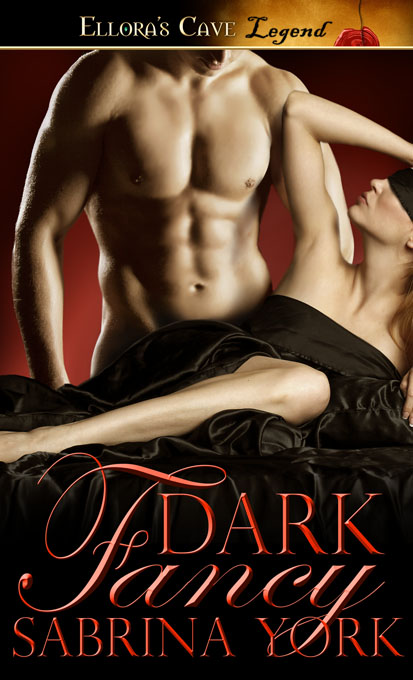
darkduke_msrBook 2: Dark Fancy

The sizzling prequel to Folly

2014 Winner of the Carolyn Readers’ Choice Award

When Lady Helena Simpson flees an unwanted marriage to a revolting lord, she finds refuge with James, a charming, handsome man unlike any she’s ever known. Helena concocts the perfect solution to her problem. She asks—begs—James to ruin her. Surely her betrothed will repudiate her if she is no longer pure. And if all her efforts fail and she still ends up married to a horrid man until the end of her days, she will at least once have known true passion.

But James is not all he seems. He is, in fact, a wicked lord with a dark fancy. When Helena awakens his desire, he becomes determined to take everything she has to offer and more. No matter the cost.

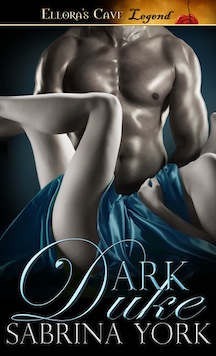
darkfancy_msrBook 3: Dark Duke

Edward Wyeth, the Dark Duke of Moncrieff’s life has been turned on its end. His well-ordered home has been invaded. By destitute relatives. From Scotland. How on earth can he write Lord Hedon’s salacious novels with hellions battling in the garden and starting fires in the library? But with the onslaught has come a delicious diversion. His cousin’s companion, the surprisingly intriguing Kaitlin MacAllister. He is determined to seduce her. Using her desperate need for funds and her talents as an artist, he convinces her to draw naughty pictures for his naughtier books…and he draws her into his decadent web.

But Kaitlin has a secret. She’s fled Scotland—and a very determined betrothed. When Edward’s cousin is kidnapped and held in her stead, Kaitlin is honor-bound to return to her homeland and rescue her—much to Edward’s chagrin.

Because suddenly he can’t bear the thought of Kaitlin marrying another man. He can’t bear the thought of losing her at all.

brigand_msrBook 4: Brigand

Kidnapped and held prisoner by menacing Scottish brigand, the notorious McCloud, Violet Wyeth does her best to persevere…and resist his rakish charms. But when she realizes The McCloud is really Ewan St. Andrews, the boy who once saved her life, the boy who once kissed her and made her heart flutter, she is lost.

Ewan has every intention of marrying Lady Kaitlin MacAllister. He desperately needs the entrée into the ton this bride can provide. But when his bride is delivered—bound and gagged—it’s not Kaitlin. It’s Violet Wyeth—the girl who betrayed him and ruined his life when he was a boy. He keeps her, determined to punish her for her sins. But when he discovers the truth about what really happened so long ago, and seething passion rises between them, he can no longer hold on to his rusty grudge. By the time he realizes how much he loves Violet—that he always has—he’s lost her.

All he can do is follow her. Follow her into the bowels of hell—and partake in the torment of the glittering London Season, where the harpies are far more dangerous than a Scottish brigand.

About Sabrina York

Sabrina_head_smHer Royal Hotness, Sabrina York is the award winning author of over 20 hot, humorous stories for smart and sexy readers. Her titles range from sweet & sexy erotic romance to scorching BDSM. Connect with her on twitter @sabrina_york, on Facebook or on Pintrest. Check out Sabrina’s books and read an excerpt on Amazon or wherever e-books are sold. Visit her webpage at www.sabrinayork.com to check out her books, excerpts and contests.

Free Teaser Book: http://sabrinayork.com/home-2/sabrina-yorks-teaser-book/ And don’t forget to enter to win the royal tiara!

The Bath Road: Lacock Abbey

The following post is the third of a series based on information obtained from a fascinating book Susana recently obtained for research purposes. Coaching Days & Coaching Ways by W. Outram Tristram, first published in 1888, is chock full of commentary about travel and roads and social history told in an entertaining manner, along with a great many fabulous illustrations. A great find for anyone seriously interested in English history!

dust jacket

Lacock Abbey and Romance

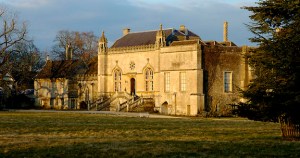
While I’ve visited the village of Lacock, wandering through the charming little town which was filmed as Meriton in the 1995 BBC version of Pride and Prejudice on two occasions, both were group tours not allowing enough time to visit the Abbey. All I could do was peer longingly through the iron gates and vow someday to return. Next time.

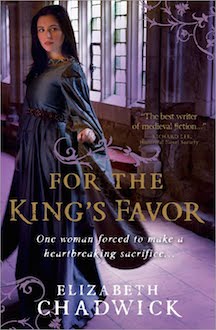
For the Kings Favor by Elizabeth Chadwick - CoverIt was on one of the tours that I learned the connection between Lacock Abbey and a book I had recently read by Elizabeth Chadwick, For the King’s Favor. Highly recommended for any fan of British history! It’s the story of a former mistress of Henry II who is torn away from her son and married off to another. A small part in the story is played by the illegitimate son, William Longespée, brought up in the king’s household. It turns out that William married Ela, 3rd Countess of Salisbury and became the 3rd Earl of Salisbury. (Yep, a title that could be inherited by a female, believe or not!)

It must have been a happy marriage, not only because they had at least eight children (not that unusual in those days), but because when he died, his widow founded an abbey in his honor, endowing it with rich farmlands which returned large profits from wool. The inscription on her tombstone indicates that she was a very well-loved lady:

Below lie buried the bones of the venerable Ela, who gave this sacred house as a home for the nuns. She also had lived here as holy abbess and Countess of Salisbury, full of good works.

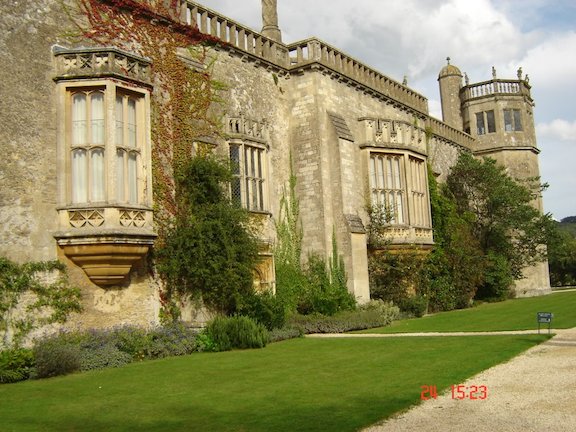
In the sixteenth century during Henry VIII’s Dissolution of the Monasteries, Lacock Abbey was fortunate to escape destruction when it was sold to Sir William Sharington for 783 pounds, and he turned it into a private residence, demolishing the church and making extensive renovations, apparently showing quite good taste. His tastes were expensive, however, and later on he was convicted of embezzling from the Bristol Mint.

abbey

lacock-abbey

http://uktripper.com/visits/lacock-abbey Lacock Abbey photo – Copyright: Andrew Cox 2010

A Famous Elopement (Don’t try this at home!)

From Coaching Days and Coaching Ways:

Here [Lacock] there is an Abbey with a romance attached to it, which tells how a young lady, discoursing one night to her lover from the battlements of the Abbey church, though strictly forbidden to do so by her papa, remarked “I will leap down to you” (which was surely very unwise), and leapt. The wind came to the rescue and “got under her coates” (the ulster I presume of the 16th century) and thus assisted, the young lady, whose name was Sherington [sic], flopped into the arms of the young man, whose name was Talbot, and killed him to all appearances fatally dead on the spot, at which she sat down and wept. Upon this the defunct Talbot, who had been only temporarily deprived of breath, came to life again, and at the same moment the lady’s father, with a fine instinct for a melodramatic situation, jumped out of a bush and observed that “as his daughter had made such a leap to him she should e’en marry him,” meaning Talbot, which was rather obscure, but exactly what the young lady wanted, and married she was to Talbot, whose Christian name was John, brought him the Abbey as a dowry, and lived happily ever after.”

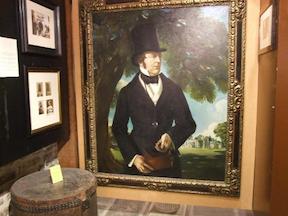
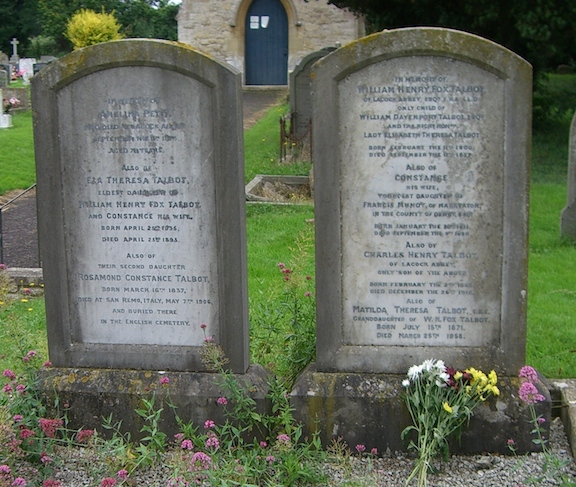
As much as I enjoy Mr. Tristram’s turn of phrase, there are times when I have doubts about the accuracy of his statements. While it is true that a Sharington owned Lacock Abbey, I cannot find that he ever had any children. Nonetheless, it is true that Lacock Abbey was owned by Talbots in its later years, including the famous William Henry Fox Talbot, who is credited with the invention of the calotype process, a precursor of photographic processes of the 19th and 20th centuries. I even saw his grave at the Lacock cemetery just outside the village. So…who knows? It might be true!

William Henry Fox Talbot

William Henry Fox Talbot

Fox_Talbot_grave

Visiting Lacock, Lacock Abbey, and the Fox Talbot Museum

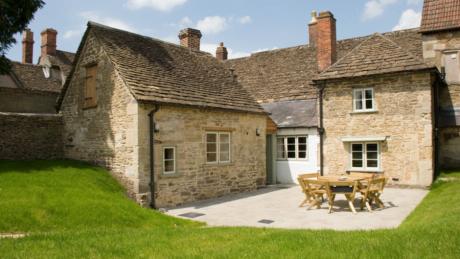
cottageWhile you’re there, why not stay in a timber-framed cottage located right in the heart of the village? A bit pricey, perhaps, but it has four bedrooms and sleeps six, and what better way to relive the past than to live in a charming cottage in a quaint little town for a couple of days! (You might also check out the bed and breakfast establishments available in the village.)

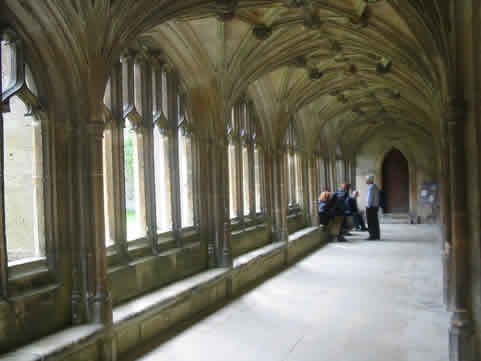
Anybody recognize the cloisters from a famous movie?

Anybody recognize the cloisters from a famous movie?

Update: Lacock Abbey stumbled upon this post and informed me that the young lady who accidentally “killed” her lover was Olive Sharington, daughter of Henry Sharington, who inherited the Abbey from his brother William, who had no children. Mystery solved!

 Index to all the posts in this series

1: The Bath Road: The (True) Legend of the Berkshire Lady

2: The Bath Road: Littlecote and Wild William Darrell

3: The Bath Road: Lacock Abbey

4: The Bath Road: The Bear Inn at Devizes and the “Pictorial Chronicler of the Regency”

5: The Exeter Road: Flying Machines, Muddy Roads and Well-Mannered Highwaymen

6: The Exeter Road: A Foolish Coachman, a Dreadful Snowstorm and a Romance

7: The Exeter Road in 1823: A Myriad of Changes in Fifty Years

8: The Exeter Road: Basingstoke, Andover and Salisbury and the Events They Witnessed

9: The Exeter Road: The Weyhill Fair, Amesbury Abbey and the Extraordinary Duchess of Queensberry

10: The Exeter Road: Stonehenge, Dorchester and the Sad Story of the Monmouth Uprising

11: The Portsmouth Road: Royal Road or Road of Assassination?

12: The Brighton Road: “The Most Nearly Perfect, and Certainly the Most Fashionable of All”

13: The Dover Road: “Rich crowds of historical figures”

14: The Dover Road: Blackheath and Dartford

15: The Dover Road: Rochester and Charles Dickens

16: The Dover Road: William Clements, Gentleman Coachman

17: The York Road: Hadley Green, Barnet

18: The York Road: Enfield Chase and the Gunpowder Treason Plot

19: The York Road: The Stamford Regent Faces the Peril of a Flood

20: The York Road: The Inns at Stilton

21: The Holyhead Road: The Gunpowder Treason Plot

22: The Holyhead Road: Three Notable Coaching Accidents

23: The Holyhead Road: Old Lal the Legless Man and His Extraordinary Flying Machine

24: The Holyhead Road: The Coachmen “More Celebrated Even Than the Most Celebrated of Their Rivals” (Part I)

25: The Holyhead Road: The Coachmen “More Celebrated Even Than the Most Celebrated of Their Rivals” (Part II)

26: Flying Machines and Waggons and What It Was Like To Travel in Them

27: “A few words on Coaching Inns” and Conclusion

Piper Huguley: The Lawyer’s Luck (Home To Mitford College Series)

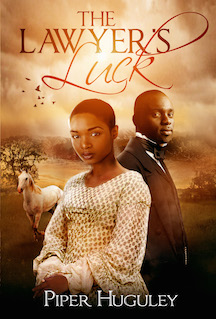
Lawyer copy

About The Lawyer’s Luck

Oberlin, Ohio – 1844

Lawrence Stewart is a rare man. Raised with his grandmother’s Miami Indian tribe, he’s a Negro with brown skin, and has consistently walked between two worlds most of his life. He devotes his time and study to becoming a lawyer, fully intending to obtain justice for the ousted Miami Indians. No Negro man has accomplished these things before, but he is not daunted. His life is perfectly set until one June day….

Aurelia “Realie” Baxter made her way from enslavement in Georgia to the free land Lake Huron in Ohio. Far from happy as a slave doing the bidding of a woman cooped up in a house all day, Realie is a bona fide tomboy with a special gift with horses. Now, she is so close to freedom in Canada, she can smell it, but her plans are interrupted when Lawrence shoots her…by mistake….

AmazonBarnes & NobleKobo

About the Author

piper-huguley-rigginsPiper G Huguley is the author of “Migrations of the Heart,” a five-book series of inspirational historical romances set in the early 20th century featuring African American characters.  Book one in the series, A Virtuous Ruby won the Golden Rose contest in Historical Romance in 2013 and is a Golden Heart finalist in 2014.  Book four in the series, A Champion’s Heart, was a Golden Heart finalist in 2013.

On release, the prequel novella to the “Home To Milford College” series, The Lawyer’s Luck reached #1 Amazon Bestseller status on the African American Christian Fiction charts.

She blogs about the history behind her novels at http://piperhuguley.com. She lives in Atlanta, Georgia with her husband and son.

The Bath Road: Littlecote and Wild William Darrell

The following post is the second of a series based on information obtained from a fascinating book Susana recently obtained for research purposes. Coaching Days & Coaching Ways by W. Outram Tristram, first published in 1888, is chock full of commentary about travel and roads and social history told in an entertaining manner, along with a great many fabulous illustrations. A great find for anyone seriously interested in English history!

058

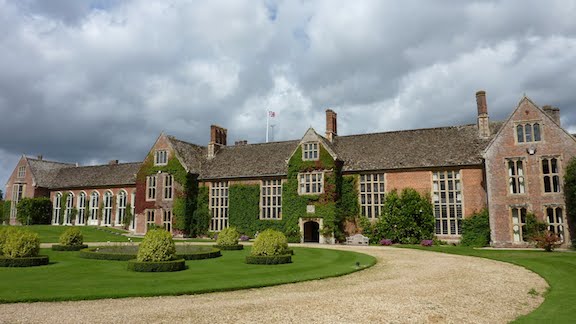
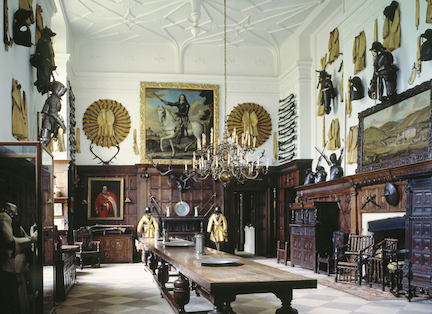
Littlecote House

Littlecote House

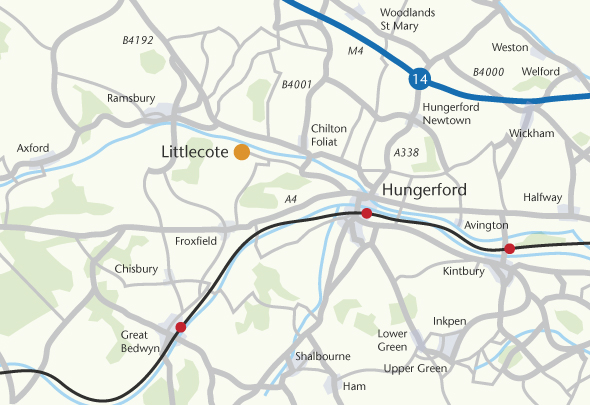
Littlecote House, near Ramsbury, Wiltshire, was first a medieval mansion, built around 1290 by the de Calstone family. It fell into the hands of William Darrell in 1415 when he married Elizabeth de Calstone. The Tudor mansion was built in the mid-sixteenth century. Henry VIII courted his third wife Jane Seymour here; her grandmother was a Darrell. Elizabeth I, James I, Charles II and William of Orange stayed here.

map

Wild William Darrell (1539-89)

The last Darrell at Littlecote is best remembered for his contentiousness and scandals. His father having left Littlecote to his mistress, Mary Fortescue (who liked to call herself Lady Darrell), William set in motion a series of lawsuits to wrest it away from her. This was the first of countless lawsuits filed in his lifetime, which ended by draining him of his fortune and forcing him to mortgage or sell most of the 25 manors inherited from his father. Litigation with his mother’s family over one such manor lasted 20 years!

Not the sort of man you’d want as a neighbor!

Darrell was also known for his amorous exploits. The most famous was his affair with the wife of Sir Walter Hungerford, who was subsequently abandoned by her husband when she wrote this to Darrell:

“I, by the oath I have sworn upon the holy evangelist, do acknowledge that if Sir Walter Hungerford, my husband now living, do depart out of this life … I will take you to my husband.”

An Elizabethan Horror Story

Enjoy Mr. Tristram’s dramatic narration in Coaching Days & Coaching Ways:

The whole story would pass before us under a ghostly, shimmering, ghoul-like glamour: the midwife at Shefford, a village seven miles off, waked in the dead of night, with a promise of high pay for her office on condition that she should be blindfolded! the headlong ride through the wild weather behind the silent serving man! the arrival at a large house which was strange to her! the mounting of the long stairs, which the woman, shadowed already with some grim foreboding, counted carefully as she passed up them! the delivery in a gloomy, richly furnished room of a masked lady! the entrance of a tall man “of ferocious aspect”, who seized the newborn child, thrust it into the fire that was blazing on the hearth, ground it under his heavy boot till it was cinders! then the trembling departure of the pale spectator of the hideous scene, blindfolded as she had come, aghast, speechless, carrying a heavy bribe with her as the price of guilty silence, but carrying also a piece of the curtain which she had cut out of the bed—all this scene of horror how the author of The Dragon Volant would have described it for us! And all this horror is history!

The original deposition made on her death-bed by the midwife, whose name was Mrs. Barnes, and committed to writing by Mr. Bridges, magistrate of Great Shefford, is in existence to this day, and is proof beyond cavil. It is from this point that rumour begins. That rumour, backed in my opinion by damning circumstance, has for two hundred years connected the tragedy with Littlecote House and William Darrell, commonly called Wild Darrell, then its proprietor. It is alleged that the midwife’s depositions set justice on the murderer’s track, and that the fitting of the piece of curtain which Mrs. Barnes had taken away with her into a rent found in the curtain of the Haunted Room at Littlecote, marked the scene of the murder. Wild Darrell was tried for his life, it is said, but escaped by bribing the officers of the law with the reversion of his large estates. But—so runs the rumour—the memory of his crime pursued him. He was haunted by ghastly spectres which he tried to forget in wild excesses, but which no seas of claret would lay. Finally as he was riding recklessly down the steep downs, with the scene of his atrocity in sight, at headlong speed, the reins loose, his body swaying in the saddle, pale, wild-eyed, unkempt, the very picture of debauched and guilty recklessness, tearing from the Furies of the past, that past confronted him. The apparition of a babe burning in a flame barred his path. The horse reared violently at the supernatural sight. Darrell was violently thrown, and the wicked neck, which had escaped the halter by a bribe, was broken at last as it deserved to be.

Wild Darrell is remembered but as a name now, and as a name for all that is wicked. (Coaching Days & Coaching Ways, pp. 38-41)

Sir Walter Scott recounted this story in the notes to his narrative poem, Rokeby. (Free on Google, check out p. 400).

Littlecote House Hotel

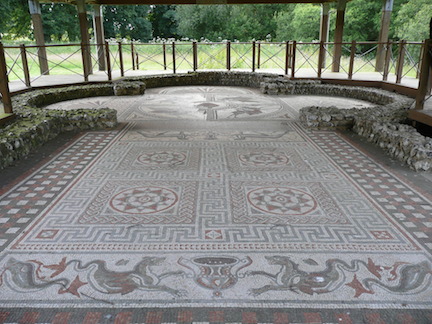
Guess what? Not only can you visit Littlecote House, but you can stay overnight in the Tudor mansion, as Susana did recently at Chatsworth, Hever Castle, and Leeds Castle! Besides the house and gardens (and ghosts, perhaps?), there are remains of a Roman villa and a lovely mosaic as well. Check it out!

The Great Hall

The Great Hall

The garden of Littlecote House Hotel in Wiltshire

The gardens

Roman mosaic

Roman mosaic

Ruins of Roman Villa

Ruins of Roman Villa


 Index to all the posts in this series

1: The Bath Road: The (True) Legend of the Berkshire Lady

2: The Bath Road: Littlecote and Wild William Darrell

3: The Bath Road: Lacock Abbey

4: The Bath Road: The Bear Inn at Devizes and the “Pictorial Chronicler of the Regency”

5: The Exeter Road: Flying Machines, Muddy Roads and Well-Mannered Highwaymen

6: The Exeter Road: A Foolish Coachman, a Dreadful Snowstorm and a Romance

7: The Exeter Road in 1823: A Myriad of Changes in Fifty Years

8: The Exeter Road: Basingstoke, Andover and Salisbury and the Events They Witnessed

9: The Exeter Road: The Weyhill Fair, Amesbury Abbey and the Extraordinary Duchess of Queensberry

10: The Exeter Road: Stonehenge, Dorchester and the Sad Story of the Monmouth Uprising

11: The Portsmouth Road: Royal Road or Road of Assassination?

12: The Brighton Road: “The Most Nearly Perfect, and Certainly the Most Fashionable of All”

13: The Dover Road: “Rich crowds of historical figures”

14: The Dover Road: Blackheath and Dartford

15: The Dover Road: Rochester and Charles Dickens

16: The Dover Road: William Clements, Gentleman Coachman

17: The York Road: Hadley Green, Barnet

18: The York Road: Enfield Chase and the Gunpowder Treason Plot

19: The York Road: The Stamford Regent Faces the Peril of a Flood

20: The York Road: The Inns at Stilton

21: The Holyhead Road: The Gunpowder Treason Plot

22: The Holyhead Road: Three Notable Coaching Accidents

23: The Holyhead Road: Old Lal the Legless Man and His Extraordinary Flying Machine

24: The Holyhead Road: The Coachmen “More Celebrated Even Than the Most Celebrated of Their Rivals” (Part I)

25: The Holyhead Road: The Coachmen “More Celebrated Even Than the Most Celebrated of Their Rivals” (Part II)

26: Flying Machines and Waggons and What It Was Like To Travel in Them
27: “A few words on Coaching Inns” and Conclusion

The Bath Road: The (True) Legend of the Berkshire Lady

The following post is the first of a series based on information obtained from a fascinating book Susana recently obtained for research purposes. Coaching Days & Coaching Ways by W. Outram Tristram, first published in 1888, is chock full of commentary about travel and roads and social history told in an entertaining manner, along with a great many fabulous illustrations. A wonderful find for anyone seriously interested in English history!

dust jacket

Frances Kendrick: The Berkshire Lady

map

As we follow the Bath Road, Tristram recounts the story of Frances Kendrick, a nineteen-year-old young lady who is fortunate to be not only beautiful and gracious, but also very wealthy and, atypical for the time, retains full control of her life and her fortune. Not surprisingly, nearly every young man she meets falls in love with her and offers her marriage. Many of them are exceedingly eligible, but she turns them all down because she doesn’t reciprocate their feelings. Most young ladies would have felt under pressure to choose one, but Frances has no parents and thus no reason to do so.

Eventually, the rejected suitors get together and start a rumor that Miss Kendrick deliberately leads them on so that she can enjoy their misery when she refuses their offers of marriage. It is all nonsense done out of spite, of course, but it has the effect of nearly ruining her chance of finding true love.

Benjamin Child, Esq. is a workaholic, poverty-stricken barrister who also happens to be unpretentious and quite good-looking himself. Like all the rest, he is instantly attracted to the lovely heiress, and she to him, to the point where her rejected suitors decide to put a spanner in the works by taking him aside and telling him that Miss Kendrick is a soulless thief of hearts. Benjamin doesn’t like the idea of being considered a fortune-hunter anyway, so he takes off for London and tries unsuccessfully to forget about Frances Kendrick.

Poor Frances is heartbroken. She has finally found the gentleman of her dreams, and he doesn’t seem to share her feelings. After discovering the rumors being circulated about her, she is desperate to find a way to prove to him that her character has been unfairly tarnished and that she truly loves him. But how can she do that when he won’t come near her?

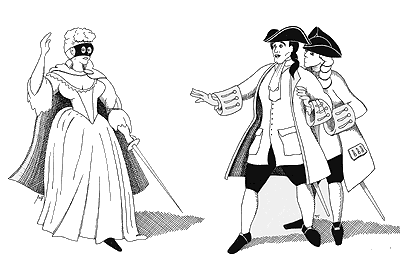
berkslady

Fight me or marry me!

What she does sounds like a scenario in a historical romance, but it really did happen! Frances issues a challenge to Mr. Child to fight a mortal duel in Calcott Park (part of her estate). Despite the fact that the challenge gives no pretext for the duel, Mr. Child shows up and finds himself facing a masked, cloaked young lady with a sword who tells him in no uncertain terms that he can either fight her or marry her. By this time, he has discerned her identity and, pleased to find that she returns his feelings, agrees to marry her with a special license in St. Mary’s Church, Walgrave.

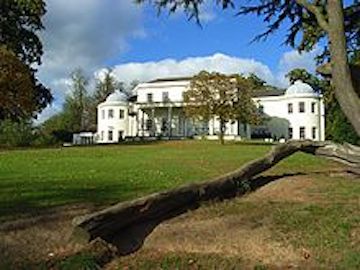
Prospect Park, the site of the famous (non) duel

Prospect Park, the site of the famous (non) duel

I love a good legend, and what a treat to discover it really did happen!

Frances Kendrick and Benjamin Child were married March 28, 1707 at St. Mary’s Church in Wargrave, as you can see for yourself in the parish register. When Frances died in 1722, her eccentric husband had her placed in a lead coffin shaped to follow exactly the lines of her body, which was laid to rest in the Kendrick family vault at St. Mary’s Church in Reading. (The coffin was found and examined in 1820.)

Benjamin sold Calcott House (although he later refused to move out of it and the new owner had to destroy the house to get him out of it), and later moved to a farm on the estate that he remodeled and became what is now known as Prospect House. It is here where the ghost of the Berkshire Lady is said to roam, seeking her true love.

Prospect Park Mansion House

Prospect Park Mansion House

You can read the famous ballad of the Berkshire Lady here. Even better, you can read an 1879 fictionalized version of the story by Katherine Sarah MacQuoid on Google here. (I heartily recommend it!) More details about the story behind the legend are here.

Through the tollgate: an example of the illustrations

Through the tollgate: an example of the illustrations in the book

 Index to all the posts in this series

1: The Bath Road: The (True) Legend of the Berkshire Lady

2: The Bath Road: Littlecote and Wild William Darrell

3: The Bath Road: Lacock Abbey

4: The Bath Road: The Bear Inn at Devizes and the “Pictorial Chronicler of the Regency”

5: The Exeter Road: Flying Machines, Muddy Roads and Well-Mannered Highwaymen

6: The Exeter Road: A Foolish Coachman, a Dreadful Snowstorm and a Romance

7: The Exeter Road in 1823: A Myriad of Changes in Fifty Years

8: The Exeter Road: Basingstoke, Andover and Salisbury and the Events They Witnessed

9: The Exeter Road: The Weyhill Fair, Amesbury Abbey and the Extraordinary Duchess of Queensberry

10: The Exeter Road: Stonehenge, Dorchester and the Sad Story of the Monmouth Uprising

11: The Portsmouth Road: Royal Road or Road of Assassination?

12: The Brighton Road: “The Most Nearly Perfect, and Certainly the Most Fashionable of All”

13: The Dover Road: “Rich crowds of historical figures”

14: The Dover Road: Blackheath and Dartford

15: The Dover Road: Rochester and Charles Dickens

16: The Dover Road: William Clements, Gentleman Coachman

17: The York Road: Hadley Green, Barnet

18: The York Road: Enfield Chase and the Gunpowder Treason Plot

19: The York Road: The Stamford Regent Faces the Peril of a Flood

20: The York Road: The Inns at Stilton

21: The Holyhead Road: The Gunpowder Treason Plot

22: The Holyhead Road: Three Notable Coaching Accidents

23: The Holyhead Road: Old Lal the Legless Man and His Extraordinary Flying Machine

24: The Holyhead Road: The Coachmen “More Celebrated Even Than the Most Celebrated of Their Rivals” (Part I)

25: The Holyhead Road: The Coachmen “More Celebrated Even Than the Most Celebrated of Their Rivals” (Part II)

26: Flying Machines and Waggons and What It Was Like To Travel in Them
27: “A few words on Coaching Inns” and Conclusion