Archives

Beppie Harrison: Two Rings for Christmas

DSCN0086 copy

I don’t know exactly why I fell in love with County Donegal.

Well, I don’t know why I fell in love with Ireland! I’m married to an Englishman, and during a considerable part of the recent Troubles we were living in Ireland, and both sides, using religion to cudgel each other, exasperated and irritated me. It all seemed so medieval to be battling—actually killing each other—over what brand of Christianity you preferred.

It wasn’t until much later that I came to Ireland and found that I loved the place. For one thing, it is so green. That’s what everyone says, but the amazing part is that it’s true. Look around you and a seemingly endless variety of greens are there. Bright, fresh new greens and weathered, comfortable greens that have been there for generations. And the people! Probably what you notice first is that they love to talk about anything—mainly in that most Irish of institutions, the pub. The pub is sort of the family room of Ireland. That’s where you go to meet your friends and family, from silent old geezers with bulbous noses testifying of years of cheerful drinking to families with young children who bounce around the pub meeting friends and chattering, the young mothers with babes in arms, young men and girls eyeing each other. All are welcome. The food is usually plain and good, served on thick pottery plates. Most memorable of all are the stories. If you look as if you have time, you’ll hear the stories. So sit down, pull up a chair or a stool, be at your ease, and wait for the stories to start.

Pageflex Persona [document: PRS0000031_00016]

My stories are set in various parts of Ireland, but my Christmas novella, Two Rings for Christmas, is set in Donegal, which I think now is my favorite bit of Ireland. It is the far northwest piece of the Republic. Donegal, which had always been part of Ulster, was not included with the six counties who chose to remain part of Great Britain, but its narrow connection to the Republic of Ireland is at one point only five miles wide, the Atlantic Ocean to the west and Northern Ireland to the east. Donegal is a beautiful stretch of Ireland, with a spectacular Atlantic coastline and stark mountains. The people make their lives in valleys with more peat bogs and hills than fertile ground. The people of Donegal are a tough and stubborn population who have lived in the country they’ve loved for generations, even if the land was never really suitable for growing much besides potatoes and oats and no great quantities of them. They don’t give up easily, and like many people who have lived on the edge of subsistence for generations, they have astounding generosity in sharing what they do have.

Amazon

Excerpt

Jenny was soft and fragrant, so close to him. Fergus had known that fragrance before, but only distantly. Even that day when he had held her in his arms for the first time they stood on the quay it had not been like this. The smells of the sea and of the wet wood of the ship and the dock and the jumbled cargo being carried aboard had nearly masked the scent of Jenny, but he had known it was there. Now it was overpowering.

“What are we to do?” he asked.

She pulled away from him, slowly and reluctantly. “Things are as they are.”

“But this cannot be!”

“It is. We can share the blame alike. You did not write to me and I lost faith. So here we are. I am to be the wife of Daniel Beatty. It is as it is.”

“You cannot.”

They were standing separate now, facing each other. “What else can I do? I agreed. I took his ring.”

About the Author

BeppieHarrisonPHOTO copyBeppie’s books are on the warm and friendly side, although they deal with all the pain and anger that existed over the long centuries—almost a thousand years—when Ireland was ruled by England. But the people there, both the Irish and the English, had their moments of reaching across the gulf and being confronted with its reality. Beppie writes about those moments.

WebsiteFacebookTwitter

Other books by Beppie Harrison:

The Heart Trilogy

The Defiant Heart


Amy Quinton: What the Marquess Sees

Thanks, Susana, for having me on your site today.

And hello, dear Readers. Thanks for helping me celebrate my latest release, What the Marquess Sees, and for tuning in to my silliness. I cannot believe the day has come! I never thought it would be quite so long between books 1 and 2. I don’t plan to allow quite so much time between books 2 and 3.

What the Marquess Sees is the second book in my Agents of Change series and tells the story of love and intrigue for two very different, yet very interesting characters, Lady Beatryce Beckett and Clifford Ross, 7th Marquess of Dansbury. Both characters appeared in the first book of the Agents of Change series, What the Duke Wants. In What the Duke Wants, Dansbury was quite the charmer and best friend to my main character, the Duke of Stonebridge. Lady Beatryce – was the duke’s betrothed and definitely not nice… and she tried everything in her power to see that she, and only she, would be marrying the Duke of Stonebridge.

Needless to say, her efforts did not play out as she’d hoped. However, I doubt now that she’s sorry she lost now…

Here’s a quick summary of what book 2, What the Marquess Sees, is about:

England 1814: He is a marquess with a woman to protect and an assassin to thwart. She is…not nice.
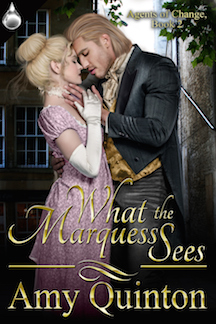
hrwhatthemarquesseesThe Marquess of Dansbury is a strong, charismatic man living a charmed life as an agent for the crown. His past isn’t without tragedy, but he is too amiable to allow misfortune to mar his positive outlook on life. Until now…when he finds himself tasked with protecting the one woman in the world he actively disdains, Lady Beatryce Beckett.

Lady Beatryce Beckett is mean. She ruins other women on purpose. She lies. She cheats. She even steals. And she takes particular pleasure in provoking a certain marquess. In short, she’ll do anything to get what she wants: freedom from her abusive father. But she is strong (she’s had to be), worthy (who’d have thought it), and in love… Wait, what?

It will take a special man to see the true woman beneath the surface…and a strong woman to allow him that glimpse. Is the Marquess of Dansbury up to the task?

Recently, I was able to catch up with Lady Beatryce and Dansbury and ask them some questions about their story and their life. Here’s what they had to say:

Amy Quinton, author: Lady Beatryce, Dansbury – it’s great to see you…. It’s been a while.

Lady Beatryce: Thank you.

Dansbury: It’s a pleasure to see you again. How are you?

Amy Quinton, author: Still the charmer, I see. I’m fine Dansbury. Working with a couple of your friends on my next story, Book 3 of the Agents of Change series.

Dansbury: Excellent. Can you give us some hints?

Lady Beatryce: D… Let her ask her questions…

Amy Quinton, author: Thanks Lady Beatryce. So Lady Beatryce, Dansbury – tell us about the first time you met.

An uncomfortable silence ensues. Dansbury clears his throat, no longer quite at ease.

Lady Beatryce: It’s rather a sore topic of conversation.

Lady Beatryce looks over at D who is still ill at ease and then turns back to me. She folds her hands and lifts her chin. Confidence is her forte.

Lady Beatryce: It was a black moment in my life. He caught me at a low point. I had just ruined a girl, on purpose, you see… I don’t regret my actions; I had my reasons, but there it is…

Dansbury: I must admit, for a moment there, I questioned your decision to throw us together, Mrs. Quinton… though I’m glad you did, of course.

Lady Beatryce: He hated me.

Dansbury: Actually, that wasn’t my very first reaction, my urges where far more, er… base, but then when I overheard you and Lord Middlebury…

Dansbury’s hands turn white as he clenches them into fists. His voice takes on a rough edge.

… then, yes, I did hate – well, I’ll admit to strongly disliked – her.

Lady Beatryce just raises her brow in question…

…right, then. Yes, I hated her.

He looks at Beatryce…

…But you were exactly who I needed you to be…

Dansbury reaches over to Lady Beatryce and squeezes her hands. My God, he loves that woman.

Amy Quinton, author: Honestly, I didn’t like her either. Sorry, Lady Beatryce. But I began to learn (while working on the Stonebridge’s story (What the Duke Wants)) that she was more than the mask she presented to the world. And I realized that of everyone, you, Dansbury, were the one man capable of seeing the woman beneath the surface…. So it was inevitable. And truthfully, you were simply too charming to fail.

Dansbury: Aw, Mrs. Quinton, if you’re not careful you’ll make me blush.

Amy Quinton, author: *laughing* I won’t tell. I admit I was also surprised that your story turned out to be so much more… erotic… and used far more adult… um language, if you will, than my first book.

Dansbury: Now I am blushing. But we aren’t anything like Grace and Stonebridge, are we? We’re both very passionate people and we genuinely hated each other… but then you threw us together, on the run from a madman, no less – against our expressed wishes – so, things were bound to be explosive.

Lady Beatryce: La, that is certainly true.

Amy Quinton, author: Lady Beatryce, we learn early on in this story that you have quite a sense of humor lurking beneath the surface. And you’re awfully good at impersonations – you’re especially good at impersonating Dansbury here. Care to give us a demonstration?

Dansbury: Wait… when did this happen?

Amy Quinton, author: Chapter 1 – didn’t you read the book?

Silence…

Amy Quinton, author: I’ll take that as a no. But I’m surprised, Dansbury. It’s your story. Why wouldn’t you want to read it?

Dansbury: I lived it – I don’t need to read it. And perhaps I don’t honestly wish to relive those early days. I admit that I could have been a touch nicer to Bea.

He looks over at Beatryce and cracks a smile.

Amy Quinton, author: OK – now that’s sweet. That’s fine, we’ll skip the impersonations for now… hopefully our readers will enjoy reading them in the story.

Lady Beatryce, in the first book, you took your cousin’s journal, something very personal and important to her, and threw it in the fire. Right in front of her. I admit, that’s cold. Now, knowing everything you do, do you regret that?

Lady Beatryce: No

Amy Quinton, author: Wow, no hesitation there. And I see Dansbury is tensing up again…

Lady Beatryce: La, how could I possibly express regret – even now? Everything I’ve done – good or bad—has lead me to where I am now. It brought me to you, Dansbury. I would not rewrite a single moment of my past for fear that I would lose you in the process.

Amy Quinton, author: Wow that is saying something. Dansbury you are a fortunate man. She loves you very much.

One side of his mouth quirks up in a very charming way, the result a shy but charismatic grin.

Dansbury: I know it.

Of course, he isn’t looking at me when he speaks – he only has eyes for Lady Beatryce. But I’m not pulling my punches either.

Amy Quinton, author: Dansbury. Why did you ask Miss Grace Radclyffe to marry you?

And Lady Beatryce looks like she’s going to kill me now, but I’m just going to ignore her for the moment.

Dansbury: Mrs. Quinton you like to live dangerously. Let me see. I respected her, Grace, that is. And it was the only thing I could think to do at the time to protect her from the fallout of Stonebridge’s idiotic behavior. I do know, now, it would have been a dreadful mistake. Fortunately, Grace is smarter than I and refused me.

Amy Quinton, author: Thanks, Dansbury. That reminds me, you know your actions nearly had you stealing the show in book 1… I had reader after reader tell me how much they liked you… it was very naughty of you.

Dansbury: *laughing* Stonebridge expects no less from me.

Amy Quinton, author: I’m sure. I need to start wrapping this up, so let’s get a few more quick questions in… Lady Beatryce have you come to terms with your past? Have you forgiven yourself?

Lady Beatryce: I lapse from time to time, still. Old habits are difficult to break, but I try my best.

Amy Quinton, author: I turn to look at Dansbury… Plans for the future? What about the investigation?

Beatryce: We cannot discuss it at this time.

Amy Quinton, author: Lady Beatryce, I’m surprised by your response –really, by the fact that you responded. Are you going to take a more active role moving forward?

Lady Beatryce: Possibly… we will simply have to wait and see, shall we?

Amy Quinton, author: Interesting… Lady Beatryce, in the blurb, it mentions that you lie, you cheat, you even steal… Is this an accurate description of your character?

Lady Beatryce: Perhaps…

Amy Quinton, author: And Steal? I don’t recall you stealing anything in the book, per se… So can you tell us more? What have you stolen? Inquiring minds want to know…

Lady Beatryce: Hmmm all of them – er… all of the things I’ve stolen?

Amy Quinton, author: So it’s happened more than once? I see. Um, no just give us a “for instance”.

Lady Beatryce: La, let me think… I’ve stolen the odd bobble and ribbon from one of my sisters, of course, but that hardly signifies. We were siblings.

Look. Let’s just say I have stolen some valuable things from other people in the aristocracy. The reasons are many and various. I’m not sure it’s a good idea to divulge the details, but I can say that no one has unreasonably suffered due to my thieving. And I refuse to say more.

Amy Quinton, author: All right, fair enough. Now, Beatryce, in the story, we learn that you are a runner. And while exercise as it pertains to engaging in a physical activity dates back to the 17th century, it’s not very common for woman during your time. What or who turned you on to running and working your muscles for relieving stress?

Lady Beatryce: No one really. I just ran a lot as a child and realized that I always felt better afterwards… so I simply never stopped. And it came in very useful when I became a woman… I needed it… the release. I never realized just how much it would help me later in life; I’m thankful I never stopped.

Amy Quinton, author: So any plans for the future you’d like to share?

Lady Beatryce: For the moment, the investigation is our only priority.

Amy Quinton, author: Dansbury, are you going to allow her to continue working on the case?

Dansbury: Do you think I’d even try to stop her? You should know my wife better than that… so, no, not a chance.

Amy Quinton, author: Good. How about we give the readers an excerpt from the story now?

Lady Beatryce, Dansbury: Sure.

Amy Quinton, author: How about the Goat Scene?

Dansbury: Absolutely not.

Amy Quinton, author: What are you worried about – it’s hysterical and they’re going to read it eventually.

Dansbury: Yes, but not while I’m present for the reading.

Amy Quinton, author: All right. I’ve got one. It’s personal and deep – and Dansbury, you’re not being too much of a dummy.

Dansbury: Thanks?

Ah, the beast awakens.

“For the sake of your life, I am going to pretend you didn’t just ask me that question.” His eyes narrowed. “But I’m thinking you’re doing it on purpose?” He looked deep and peeked into her soul. He was the only one who might be capable. The only one who’d ever tried.

“Are you, Beatryce? Are you intentionally being disgusting and low simply to infuriate me?”

“Oh, Dansbury,” she laughed in an attempt to distract him from looking too close, “you do think highly of yourself, don’t you? Besides, I can’t imagine why I would want to do a silly thing like that.”

If anything, he leaned closer. “Can’t you, Lady Beatryce?” He placed one hand at the base of her neck and slid up until he cupped her chin in the palm of his hand. “Truly, Bea? Perhaps…Hmmm…” He closed his eyes and inhaled a long, drawn-out breath, and when he opened his eyes, she nearly drowned in their brown and gold-flecked depths. She unconsciously leaned into him. “Perhaps it’s you who is scared.” His voice was a whisper now. “Perhaps you yearn…to trust…me…”

He was far too close to the truth, damn his perceptive eyes. She shook off whatever magic spell he wove over her analytical mind. It wasn’t easy.

“Dansbury, I couldn’t even trust my own father. My. Own. Father! The one person in the world I should have been able to trust. Everyone else was…dead. So, no. I will never be able to trust you, or anyone else for that matter. Because when it comes down to it, we’re all just looking out for ourselves.”

His eyes softened, a response she could not have predicted.

“Can you not see that your past is coloring your perceptions of everything and everyone around you?”

“Of course it does, I am my past. I cannot divorce myself from it.”

“Sure, sure, but you can choose to not let it define your future. You can choose to look for the good in others.”

“That’s easy for you to say.”

“This isn’t about me. Somehow, someway you are going to have to learn to put your past behind you if you ever want to have a future with any remote chance of happiness.”

“But I don’t know how to be any other way! My father abused me. Abused. Me.” She slammed her fist into her chest to drive home the point. “His own daughter. And he allowed others to do so as well. How in the hell could I possibly trust anyone besides myself?”

“Oh, Bea…”

“No! Don’t ‘Oh, Bea’ me. Don’t pity me. And you sure as hell better not trust me.”

“Oh, I definitely don’t pity you. But I am frustrated to see the pain reflected in your eyes. To see the hint of doubt in yourself.”

“I will never doubt myself.”

He didn’t swallow the lie. “You say you are strong. You act like you are strong.

Now, you must believe it too! What is this if not doubt in yourself?”

“I never doubted myself before I met you!”

“Never?”

Slap.

Amy Quinton, author: Well, I suppose you deserved that one, Dansbury.

Dansbury: Indeed.

Amy Quinton, author: Well, thank you Lady Beatryce, Dansbury, for giving our dear readers a chance to hear you guys speak about your story, and for being so honest with some of my more probing questions.

Dansbury: The pleasure is all ours.

Lady Beatryce: It was good to see you again, Mrs. Quinton. Let us not wait so long between visits, yes?

Amy Quinton, author: Definitely. I’m sure we’ll talk from time to time while I work through Alaistair MacLeod’s story.

Lady Beatryce: Indeed.

*˜*

Dear Readers, thank you so much for considering reading What the Marquess Sees. I have additional excerpts and buy links on my website at www.amyquinton.net if you are interested.

I hope you enjoy reading What the Marquess Sees, and I look forward to hearing what you thought about the Lady Beatryce and Dansbury’s story.

Amazon • Barnes & Noble • Kobo

About the Author

AuthorPhoto_WhatTheDukeWants copyAmy Quinton is an author and full time mom living in Summerville, SC. She enjoys writing (and reading!) sexy, historical romances. She lives with her English husband, two boys, and two cats. In her spare time, she likes to go camping, hiking, and canoeing/kayaking… And did she mention reading? When she’s not reading, cleaning, or traveling, she likes to make jewelry, sew, knit, and crochet (Yay for Ravelry!).

Amy has lived in or around the Charleston, SC area her entire life. When she’s not home, at the beach (weather permitting), or camping in and around the Great Smoky Mountains (Check out Mile High Campground and Devils Fork State Park!), she loves to visit the United Kingdom. She loves the history, the culture, and the people—hence her love for Scottish and Regency Romances. She especially loves to visit the Isle of Skye—in the Highlands of Scotland—where the scenery is both rugged and breathtaking.

Amy graduated from the College of Charleston, a liberal arts college located in beautiful, historic Charleston, SC. She worked 10 years in the computer industry as a software designer before becoming a full time mom and now, a full time novelist.

WebsiteFacebookTwitter


Bronwen Evans: A Whisper of Desire (Giveaway)

I’m so excited to be in Susana’s Parlour today. My new Regency romance, A Whisper of Desire, released this week. It’s book #4 in my Disgraced Lord series but it can be read as a standalone. I thought I’d take the opportunity to interview my heroine, Lady Marisa Hawkestone. We ladies like to chat, but as I live in New Zealand I don’t get the opportunity to visit England very often.

About A Whisper of Desire

Sensual heat melts the ice in the new Disgraced Lords novel from USA Today bestselling author Bronwen Evans, as a marriage of convenience leads to delightful pleasure—and mortal danger.

A Whisper of Desire_200x267 copyLady Marisa Hawkestone’s nightmare is just beginning when she wakes up naked, with no memory of the night before, lying next to Maitland Spencer, the Duke of Lyttleton—a man so aloof and rational he’s nicknamed “the Cold Duke.” A scandal ensues, in which Marisa’s beloved beau deserts her. As a compromised woman, Marisa agrees to marry Maitland. But on her wedding night, Marisa discovers the one place the duke shows emotion: in the bedroom, where the man positively scorches the sheets.

Taught from a young age to take duty seriously, Maitland cannot understand his new wife’s demands on his love and affection. Marisa’s hot-blooded spirit, however, does have its attractions—especially at night. In retrospect, it seems quite silly that he didn’t marry sooner. But being one of the Libertine Scholars requires constant vigilance, even more so when the enemy with a grudge against his closest friends targets Marisa. Now Maitland must save the woman who sets his heart aflame—or die trying.

Interview

Bron: Welcome, Marisa. Tell us a little about yourself.

Marisa: Good afternoon. Thank you for visiting with me today. Would you like some tea? (Me: yes, I’m a big tea drinker. Thank you). Hmmm, what shall I reveal?

I’m the eldest daughter of the late Marquis of Coldhurst. Both my parents are dead. They died in a carriage accident when I was young, and Sebastian, my elder brother, is now the Marquis, brought us up. I have a younger sister Helen.

Bron: Did you have a happy childhood?

Marisa: (sigh) No, not really. I had Helen. She’s only eighteen months younger than me but my brother is ten years older and he was rarely around. He was the lucky one. He could escape.

Bron: Escape what?

Marisa: My parent’s terrible altercations and even physical fights. You see, their marriage was a ‘supposed’ love match. The were both of them consumed with jealousy, accusing each other of infidelity. The fights were awful. Helen and I used to hide in our rooms.

Bron: That must have had a dreadful affect on you?

Marisa: It did. If this was love I wanted nothing to do with it.

Bron: You’re married now­—you had to marry. Is that still the case?

Marisa: (shakes her head) No. When Sebastian married Beatrice (Book #2 A Promise of More), I learned what true love means. It’s about trust, friendship, loyalty, real love doesn’t hurt. I thought I’d found that with Lord Rutherford but he was a liar and manipulator and I’m so thankful that my husband, the Duke of Lyttleton was set up to compromise me.

Bron: Do you love your husband?

Marisa: With every breath I take. He’s taught me about all those things I mentioned – loyalty, friendship and trust.

Bron: Does he love you?

Marisa: (gives a big smile) Unconditionally. If you read the book you’ll learn why, to me, his love for me is such a blessing.

Bron: Thank you for opening up your personal life to us. I look forward to hearing more of your story in the follow up books to A Whisper of Desire.

AmazonAmazonUKBarnes & NobleiBooksKoboGoogle Play

Excerpt

Maitland had hero-worshipped Marisa’s brother for many years. He’d been able to repay Sebastian, and the other Libertine Scholars, with his uncanny investment ability. Numbers had always made more sense to him than people. Numbers didn’t lie. They were logical, rational, and impossible to manipulate, if you were smart.

“I will agree that you can ask Rutherford if he will still marry you, even though you’re now compromised.” He looked at Marisa. Really looked. “Shall we make a pact to be friends? Regardless of the outcome of your talk with Rutherford, I shall count you as my good friend as I would Sebastian.”

“If you were my friend you’d tell me what you know about Rutherford. I bet you’ll tell Sebastian.”

She was right. If he were her friend he would tell her. He was certainly going to tell Sebastian. “I knew you were intelligent. I’ve walked right into your trap.”

She rolled onto her side, facing him, and the quilt dropped dangerously low. He could almost see one nipple as his eyes roamed over the swell of her breast. Her eyes twinkled and her smile tugged a reluctant upturn of his lips in return.

“As your friend, tell me.”

He pushed a stray piece of hair behind her ear, the urge to touch her too strong. “I don’t want to hurt you. Rutherford should be man enough to tell you himself, but as I know he’s deceiving you, I doubt the boy knows what the word ‘truthful’ means.” She pulled her bottom lip between her teeth and began to chew on it. At her silence, he looked her in the eye and told her what he knew. “He was in the garden tonight while I was smoking a cheroot and he was not alone.”

He watched her swallow back a curse.

“He was with a woman?”

Maitland nodded.

One lucky commenter will win a digital copy of one of Bronwen’s backlist.

Bronwen is giving away a gift basket full of surprises, along with a Kindle Fire. Click here for the Rafflecopter.

About the Author

Bron_300x421-2 copyUSA Today bestselling author, Bronwen Evans grew up loving books. She writes both historical and contemporary sexy romances for the modern woman who likes intelligent, spirited heroines, and compassionate alpha heroes. Evans is a three-time winner of the RomCon Readers’ Crown and has been nominated for an RT Reviewers’ Choice Award. She lives in Hawkes Bay, New Zealand with her dogs Brandy and Duke.

EmailWebsiteFacebookTwitter


Jude Knight: Gingerbread Bride (Mistletoe, Marriage, and Mayhem)

Jude: Today, I’m here in Susana’s Parlour with Mary Pritchard, the heroine of Gingerbread Bride, which is my novella in the Bluestocking Belles’ holiday collection Mistletoe, Marriage, and Mayhem.

Jude: Mary, you have had an unusual upbringing. Can you tell us little about where you grew up?

Mary Pritchard

Mary Pritchard

Mary: Pretty much everywhere, Jude. May I call you ‘Jude’? I do not wish to be disrespectful, but I feel that I know you well. I travelled with my father’s fleet wherever he was posted, so I grew up with the wide world on my doorstep.

Jude: It is surely not common for a lady of gentle birth to be raised by her father aboard ship.

Mary: Many people do not know how common it is for families to travel aboard with their fathers and husbands. Merchant captains often take their wives with them, at least until they have children of age for schooling, and many respectable women also travel with the navy, even though Admiralty Regulations frown on them being taken to sea.

Papa had just been made captain when he married Mama, and he and his new ship were posted almost immediately to South Africa. He did not wish to leave his new bride, so he simply took her with him. He thought, I imagine, that she would go home to live with his sisters, or her own, when she was with child.

I have heard the tale from him many times about how she refused point-blank to leave him, and so I was born aboard, and my father’s ship was my nursery and my playground. Mama died when I was small, along with my little brother. Perhaps another man would have sent me home then, but Papa could not bear to be parted from me, and so that is how I came to grow up with an entire shipload of sailors for my nursemaids and guardians.

Jude: You had an unusual education, then.

Mary: I did, indeed. Not only did I grow up learning geography and botany at first hand, as it were. My father also placed no foolish restrictions on the subjects I learned, in deference to some fable about the ‘female mind’. My succession of nursemaids, hired from the countries we visited, taught me the languages of the towns in which my father took lodgings. I learned mathematics and navigation along with the midshipmen. And various governesses saw to it that I studied the so-called ladylike accomplishments.

Jude: How restrictive London must have seemed when you arrived, Mary.

Mary: London Society is restrictive. So many rules! I suspect they are designed purely to pick out those who defy them or do not know them, so that the gossips and scandalmongers can enjoy their favourite sport of tearing apart other people’s reputation.

I am a great disappointment to my aunt. I would rather read and go to the museums than waste an afternoon at a fashionable event where the only entertainment is seeing and being seen. I enjoy pretty clothes, but I have no desire to spend my entire life dressing and undressing, or shopping for something new when I have a wardrobe full of perfectly suitable garments. And, above all, I will not marry her son, Viscount Bosville. I cannot like the man, and I am fairly certain that he does not like me, either.

Knight - Gingerbread Bride - Rick Redepenning3

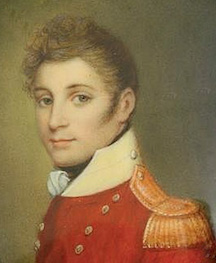
Lieutenant Richard Redepenning

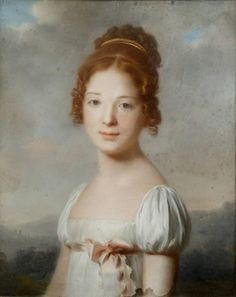
Jude: You like Lieutenant Richard Redepenning, I say to Mary, and she flushes and presses her lips together. At first, I think she is not going to answer, but she takes a deep breath and shakes her head, so vigorously that her copper-coloured curls bounce.

Mary: The Lieutenant was my friend when we were children. One would think, would one not, that a friend could call upon another when they were in the same town? But he has been in London this two months, I have had no word from him.

At first, he was confined to bed. He was invalided home, you understand, after being injured by a falling spar. I wanted to go and see him at his sister’s, but my aunt would not allow it. The Rules, you know.

Then he began to go out in Society, and I thought ‘surely he will come to visit’. [She shakes her head again, and shifts in her seat to straighten her spine.] It would be more true to say, Jude, that I liked Lieutenant Redepenning once. I no longer know him.

12318096_536641193152118_2006443492_o

About Gingerbread Bride

Travelling with her father’s fleet has not prepared Mary Pritchard for London Society. When she strikes out on her own, she finds adventure, trouble, and her girlhood hero, riding once more to her rescue.

Naval Lieutenant Rick Redepenning has been saving his admiral’s intrepid daughter from danger since she was nine and he was fourteen. Today’s greatest danger is to his heart. How can he convince her to see him as a suitor, and not just a childhood friend?

Mistletoe, Marriage, and Mayhem: A Bluestocking Belles Collection

In this collection of novellas, the Bluestocking Belles bring you seven runaway Regency brides resisting and romancing their holiday heroes under the mistletoe. Whether scampering away or dashing toward their destinies, avoiding a rogue or chasing after a scoundrel, these ladies and their gentlemen leave miles of mayhem behind them on the slippery road to a happy-ever-after.

Amazon • Amazon UK • Amazon Australia • Barnes & Noble • iBooks • Kobo

***All proceeds benefit the Malala Fund.***

Excerpt

Whatever those two were up to, it was time to stop it. Mary, with some effort, managed to push out the ornamental trellis that blocked the window. As it crashed to the ground, Rick stopped in his tracks, looked up at the tower, then turned and went hurrying back towards the house.

Bother. Was she going to have to rescue herself? But as she thought that, the top legs of a ladder appeared. Looking over the side of the tower, she saw Rick holding the ladder steady.

“Your stair awaits, fair princess,” he joked.

Dressed, or rather undressed, as she was? She looked back at the inside wall. Perhaps she could climb back down, and he could let her out. But she’d only just made the climb and her arms were still trembling; she wasn’t sure she could get back.

Rick was looking anxious. “Is there a problem?”

“Shut your eyes, please?”

His face cleared. “Of course.” And he screwed his eyes shut, rather more dramatically than she thought necessary.

The ladder made the descent easy, and she breathed a sigh of relief as first one foot, then the other, reached the ground. She stopped breathing altogether when Rick’s arms came round her waist.

“Do you have any idea what it does to me to see you clambering around a roof, Mary Pritchard?” he asked, holding her so tight she squeaked. He didn’t release her, but instead, bent his head to rub his cheek on her hair. “I’m confident you had an excellent reason, but I swear, I’ve aged ten years in the last five minutes.”

She had had a reason, but for the moment it escaped her. “Rick?” she asked.

He let her go, stepping backwards. “I beg your pardon. For a moment I… I take it you didn’t send the note your nasty cousin gave me?”

About the Author

Jude Knight copyJude Knight has been telling stories all her life: making up serial tales to amuse her friends and children, imagining sequels to books that have moved her and left her wanting more, occasionally submitting short stories to magazines and the radio, starting more than a dozen novels set in different times and places.

She has devoted most of the last forty years to a career in commercial writing and raising a large family. She wrote and published her first historical romance in 2014, and now has the wind in her sails and a head full of strong determined heroines, heroes with the sense to appreciate them, and villains you’ll love to loathe.

Website and Blog • Facebook • Twitter • Pinterest

Vauxhall Gardens: An Era of Change (1786-1822), Part II

vauxhallbook

Vauxhall Gardens: A History

David Coke & Alan Borg

The Vauxhall Pleasure Gardens is one of the places I’d love to slip back in time to visit, just to catch a glimpse of what it was like. After recently splurging to buy this lovely coffee-table book, I thought it might make a wonderful subject for a new blog series. But do buy the book too, if you can!

Grand Military Fetes and Displays

The first record of a military fete was on 30 May 1786, the day after the Jubilee, when transparencies of British men-of-war by the marine painter John Thomas Serres (1759-1825) were presented with other decorations, including a representation of the British lion trampling the Spanish flag. The newly formed Duke of York’s Band played military airs and was to perform regularly in the gardens until 1816. This period saw an increasing presence of soldiers and military bands, theoretically in response to the threat of invasion from France, but more directly in an attempt to rival the jingoistic displays to be seen at Astley’s. In 1787 the Cascade, the most famous of Vauxhall attractions in the eighteenth century, included marching soldiers. These military displays gradually expanded and needed more space, so from 1816 the Cascade site was used by Madame Saqui’s rope-dancing troupe.

Eventually, grand military fetes to celebrate actual events involved firework displays.

On 11 June 1810, Mizra Abul Hassan Khan wrote about his visit to the Gardens for the Grand Oriental Fete in honour of the Persian Ambassador:

The avenues were lighted by rows of tall candelabra and by lanterns hung from trees. In one place there were fireworks: when they did not rise high enough, everyone laughed and said ‘Shocking!’ The fireworks ended with the name of the Qibleh of the Universe written in Persian letters! Everyone appreciated this display and clapped their hands together. From there we went to a large covered place, beautifully lighted and decorated, like a theatre in the city. It was built to accommodate 5000 people in case of rain. After the fireworks, some people sat down to eat; later they danced.

American Samuel Morse, inventor of the Morse code, visiting on 17 September 1811:

A few evenings since I visited the celebrated Vauxhall Gardens, of which you have doubtless often heard. I must say they far exceeded my expectations; I never before had an idea of such splendor. The moment I went in I was almost struck blind with the blaze of light proceeding from thousands of lamps and those of every color. […] All is gayety throughout the gardens; every one is in motion, and care, that bane of human happiness, for a time seems to have lost her dominion over the human heart. Had the Eastern sage, who was in search of the land of happiness, at this moment been introduced into Vauxhall, I think his ost exalted conceptions of happiness would have been surpassed, and he would rest contented in having at last found the object of his wishes. […] The music and this course of dancing continue till about four o’clock in the morning, when the lights are extinguished and the company disperses. On this evening, which was by now means considered as a full night, the company consisted of perhaps three thousand persons.

vauxhall-pleasure-gardens-00364-800

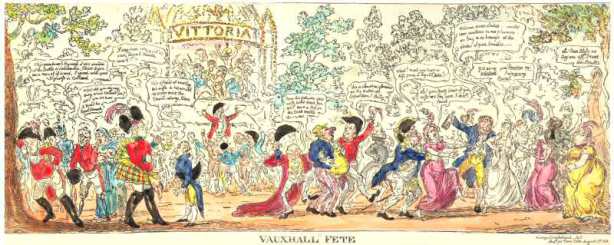
George Cruikshank, Vauxhall Fete, engraving, 1813 (British Museum, London., 1862.1217.309). This satirical print shows many of the leading figures who attended the Grand Festival in honor of the Battle of Vittoria. On the left the Duke of York vomits against a tree; other notables include the Duke of Sussex in Highland uniform, the Duke of Clarence dressed as an Admiral, the Lord Mayor of London and Lord Castlereigh. On the far right a fat lady exclaims ‘They’re all drunk, the Brutes.’

Grand Festival of the Battle of Vittoria

On 20 July 1813, a Grand Festival of the Battle of Vittoria was held in honor of the then Marquess Wellesley, who attended. “The festival was ‘perhaps the most superb and costly entertainment ever given in England’ and such was its popularity that ‘the limited number’ of tickets ‘was exceeded and, in consequence, from ten to fifteen pounds was offered for a ticket’”. Byron noted:

There is to be a thing on Tuesday ycleped a national fete. The Regent and *** are to be there, and everybody else, who has shillings enough for what was once a guinea. Vauxhall is the scene—there are six tickets issued for the modest women, and it is supposed that there will be three to spare. The passports for the lax are beyond my arithmetic.

At a dinner for twelve hundred people in the Rotunda, the VIPs sat at a crescent-shaped, raised table. There was also

a row of crimson steps covered with massive pieces of ornamental gold and silver plate, with the bust of the Lord Wellington on the summit. At the foot, and leaning against a silver vase of exquisite workmanship, was the Marshal’s staff taken in the battle. Two trumpeters in their state liveries and with silver trumpets, stood forward from the pile, and between them a grenadier of the Guards held the standard of the 100th French regiment of the line.

Neither George III nor the Prince of Wales attended (in spite of Byron’s expectation), but otherwise, the list of attendees was quite impressive. Wellesley arrived late for the dinner and found his seat of honor occupied, but presumably that was quickly dealt with. The ladies joined the party at 9 p.m., and at 11 p.m., the Princess of Wales arrived. She

was conducted around the chief promenade several times by his Royal Highness the Duke of Gloucester and Col St Leger. The Princess was hailed repeatedly with loud greeting, and repaid the attentions of the company in the most courteous manner. She was dressed ina white satin train with a dark vet and ornaments, richly embroidered. On her head-dress she wore a green wreath, with diamonds.

Even later, “many of the nobility came from the Opera House after the conclusion of the ballet.”

In the course of the evening a new air called The plains of Vitoria was performed by the orchestra, while military bands, including those of the Foot and Life Guards, the Duke of Kent’s Regiment, and the 7th Hussars, played and marched up and down the Walks. ‘The appearance of some of these bands in the forest part of the garden was extremely picturesque, and presented some idea, at times, of soldiers in a campaign regaling and reposing themselves under the shade. The fireworks were set off in three sessions, at 11 p.m. and at 1 and 2 a.m. These were devised and directed by ‘Colonel Congreve’, the inventor of the Congreve Rocket, which was much used in the Napoleonic wars.

Other Military Fetes at Vauxhall

More fabulous military fetes were held in the following year, one of 13 June 1814 to celebrate the Treaty of Paris, and in August, a mock sea battle (Grand Mechanical Naumachia). Although there were fireworks on 15 August 1815 following Napoleon’s surrender at Waterloo, there were no specific events to mark the occasion until 18 June 1817. This became an annual celebration, eventually involving a reconstruction of the battle on the southeast side of the old Grand Walk, which became known as the Waterloo Ground.

View of Vauxhall, Lady's magazine

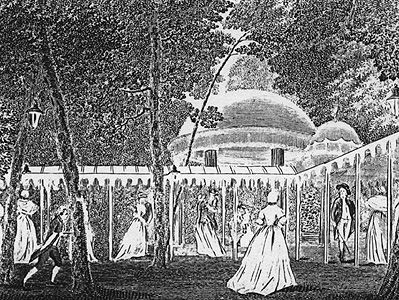
Anon., View of Vauxhall Gardens, engraving (Lambeth Landmark 1260) from the Lady’s Magazine, XXX (1799), supplement. The walks were covered to counter the rains which proverbially started when the Vauxhall season opened; they were extended all round the Grove in 1810.


Susana’s Vauxhall Blog Post Series

Catherine Lloyd: Death Comes To Kurland Hall (Giveaway)

I have the great pleasure of writing Regency-set historical mysteries for Kensington Publishing under the Catherine Lloyd name and book three of The Kurland St. Mary mysteries Death Comes To Kurland Hall just came out. They are quite different to write than my romances, move at a slower pace and require a lot more upfront plotting than I am used to.

It is nice to write Major Robert Kurland, a less romantic and more realistic heroic kind of hero who has a bad temper, is an invalid after the Battle of Waterloo and a bit of an all round grump. Likewise, my heroine Miss Lucy Harrington is neither beautiful nor malleable, and is rather too strong-willed to settle for a lifetime in service to the men in her family.

I grew up in England so I also get a great deal of pleasure in writing about places I am familiar with including London, my home town, Brighton, Bath and various local villages. On a trip back for a wedding this summer I had a lovely time jotting down the names of various villages we passed through on our way through Suffolk for future reference.

Even more thrilling, for a history nerd was the chance to actually sit down and eat lunch (gammon, eggs, chips and peas) in the actual inn The Swan in Thaxted that appears in my third book! I always try and use the real pub names because an amazing amount of them have survived for centuries.

So if you enjoy cozy Regency mysteries, give the Kurland St. Mary series a try. As an incentive, I’ll be giving away 3 copies, (print or digital) of Book One, Death Comes to the Village.

What’s your favorite place to visit in England?

DEATHCOMESTOKURLAND copy

About Death at Kurland Hall

As wedding bells chime in Kurland St. Mary, a motley group of visitors descends on the village—and with a murderer on the prowl, some of them may not be returning home…

Lucy Harrington has returned to Kurland St. Mary to help with her friend Sophia Giffin’s wedding. But her homecoming is made disagreeable by the presence of Major Robert Kurland, whose bungled proposal has ruffled Lucy’s composure, and a meddling widow who has designs on her father, the village rector.

Wary of the cloying Mrs. Chingford from the start, Lucy has doubts about the busybody’s intentions with her father. But everyone else seems to think they make an ideal match—until the courtship is curtailed when Mrs. Chingford is found dead at the bottom of a staircase. It’s clear that it wasn’t an accident, and in hopes of finding the culprit, Lucy and Robert call a truce and begin scrutinizing the wedding guests.

But the widow left behind plenty of enemies, and when one of them is the next to turn up dead, Lucy and Robert discover that the truth is far more scandalous than anyone could have imagined…

Amazon • Barnes & Noble • Kobo

About the Author

IMG_1504 copyCatherine Lloyd was born just outside London, England into a large family of dreamers, artists and history lovers. She completed her education with a master’s degree in history at the University College of Wales, Aberystwyth, and currently lives in Hawaii with her husband and fourth child.

Website FacebookNewsletter


Louisa Cornell: Christmas Revels II (Giveaway)

How to Survive a Regency Family Christmas

With Christmas a little over a month away, the thoughts of any lady of the house must turn to…

“Who invited all of these people and how will I keep them entertained?”

There are all sorts of possibilities available to the discerning hostess of today. Many guests simply require a place to plug in their phone or their laptop. A television and a stack of Christmas DVD’s can provide hours of amusement to guests of all ages. Video games, board games, bowl games, and music to suit every ear and every pair of dancing feet can be provided at the mere touch of a button. And let us not forget, if all else fails, a nice Christmas punch laced with a suitable spike can keep those hard to please guests quiet if not entertained.

Think of the dilemma faced by the mistress of the house in England two hundred years ago. Unpredictable weather, no electronic options, and each and every friend, acquaintance, and relation looking to be fed, housed, and amused. What is a Regency era lady of the manor to do? Fortunately there are a number of Regency Christmas traditions designed to keep the guests occupied and the lady’s reputation as the consummate hostess secure.

As many Christmas gatherings might last as long as a month (from St. Nicholas Day to Epiphany or Twelfth Night,) a good hostess had to provide a bounty of entertainment for her guests. Trapped in a house, no matter how large and stately, with friends and relatives for an entire month could be trying at best and akin to a wartime siege at worst. In addition to the usual Regency party games – charades and whist, here are a few sources of entertainment common to a Regency Christmas.

On St. Nicholas Day (December 6th) small gifts were exchanged among friends. This marked the official beginning of the Christmas season. After this the rounds of Christmas balls, parties and visits ensued.

While Christmas carols might be sung around the piano by friends and family, caroling as we know it was not something members of the ton did, save perhaps a group of young people out for a lark.

However, while there were no Christmas carolers in Regency England, there were wassail groups who would go from house to house singing begging songs in the hope of receiving food, drink, and money. Wassail was a mixture of beer, wine and brandy and was usually served to the singers at each house.

The house was not decorated for Christmas until Christmas Eve. To do so earlier was thought to bring bad luck. Whilst servants often “brought in the greens,” as it was called, a more creative hostess might send her guests, especially the younger ones, to make up a party and go out into the estate’s forests and woodlands in search of greenery to festoon the manor. The guests enjoyed a bit of fresh air and exercise and there were many opportunities for young men and women to end up under the mistletoe for a surreptitious kiss as they cut it for kissing boughs to be hung in each open doorway and out of the way corner for later “accidental” meetings. Men had the opportunity to show off for the ladies as they dragged the yule log into the house to be lit from a stub from last year’s log and burnt in the hearth until Twelfth Night.

Another source of entertainment were troupes of players called mummers, a tradition dating back to the medieval era. These varied from professional players to groups of lower class men who went from door to door asking if mummers were wanted. A good hostess might even hire a specific troupe to stop and entertain her guests. They were dressed in elaborate costumes with high paper caps – gilded and spangled, and ribbons of every color tied to their clothes. The characters of St. George and the Prince were also armed with ten swords. Their performance was called a “mysterie,” a very specific sort of play, which ended with a song and the collection of funds from those who had enjoyed the performance.

It is thought these mummers’ plays were the forerunners of a Regency tradition still alive today in England – the Christmas pantomime. It usually opened on Boxing Day (December 26th) and was performed in local theatres. Drury Lane hosted one in London and even Astley’s Amphitheatre held a special Christmas spectacular.

Another Boxing Day activity for the men in attendance, and some of the more adventurous ladies, was fox hunting. The Boxing Day Hunt was a long standing tradition, one I observed when I lived in England as a child.

Under the heading of a Regency version of “Hey y’all, watch this!” comes the Christmas game of Snapdragon. Raisins were soaked in brandy in a large shallow bowl. The lights were snuffed out, and the brandy lit. People had to try and grasp a raisin and eat it without burning themselves. I think you’d have to soak me in brandy to get me to try it!

A more tame version of the game was called bullet pudding and is described here in a letter from Jane Austen’s niece, Fanny Knight, to a friend.

Godmersham Park, 17 January 1804

…I was surprised to hear that you did not know what a Bullet Pudding is, but as you don’t I will endeavour to describe it as follows:

You must have a large pewter dish filled with flour which you must pile up into a sort of pudding with a peek at top. You must then lay a bullet at top and everybody cuts a slice of it, and the person that is cutting it when it falls must poke about with their noses and chins till they find it and then take it out with their mouths of which makes them strange figures all covered with flour but the worst is that you must not laugh for fear of the flour getting up your nose and mouth and choking you: You must not use your hands in taking the Bullet out.

I think this might be a successful game even today. It sounds like a great deal of fun.

Christmas trees were not prevalent during the Regency, although some houses were known to put up small ones bedecked with small gifts. They were made more popular in England by Queen Victoria and Prince Albert in the middle of the 19th century. However, on Epiphany Eve, men would gather round a tree, usually in an orchard, with cider and guns. In an ancient ceremony, they would drink to the tree and fire the guns to drive away evil spirits and promote the vigor of the trees. Horn-blowing was an alternative to firing guns. One would hope the lady had a physician in attendance, just in case.

A more ambitious hostess might engage her guests in performing their own Christmas play. With a month to write and rehearse it, some of these plays were quite elaborate. And on Twelfth Night (the official end of the Christmas season) gifts were exchanged again and a masquerade party was held. To add to the fun, guests sometimes had to search the house for elements of their costumes. Sometimes they would draw names of characters they were to play throughout the party. The characters’ names usually described the sort of person the guest was to portray. Mrs. Candor – a lady who always speaks with perfect frankness. Miss Tittletattle, who speaks nothing but gossip. Lord Bumblefoot, who trods on ladies’ toes when dancing. The character must be maintained throughout the party.

Once the Twelfth Night festivities were over it was time to take your leave until next year. As you can see, a lack of electronic devices did not hinder the ladies and gentlemen of the Regency era from celebrating Christmas with a great deal of laughter, joy, friendship, and love. Exactly what I wish for each of you during this most wonderful of seasons!

Do you have any unique Christmas traditions or forms of entertainment enjoyed by your friends and family? Tell us about them! A random commenter will receive an e-copy of either Christmas Revels or Christmas Revels II – winner’s choice.

CR - ebook cover copy

About Christmas Revels II

Let the Revels begin—again! Four new stories with four distinctive voices:

The Vicar’s Christmas by Anna D. Allen

Margaret Trent never needs anything or anyone, but when two London solicitors show up on her doorstep, she needs a hero. Enter Henry Ogden, mild-mannered village vicar. Hardly the stuff of heroes . . . until adversity brings out unexpected talents.

A Christmas Equation by Hannah Meredith

A chance meeting between a reluctant viscount and a self-effacing companion revives memories of their shared past—a time when they were very different people. With secrets to keep, Sarah Clendenin wishes Benjamin Radcliff gone . . . but he’s making calculations of his own.

Crimson Snow by Kate Parker

A trail of blood drops leads Jane Merrywether to a wounded stranger—the only person standing in the way of her wicked guardian becoming an earl. John Rexford, long-thought dead, has returned to claim his inheritance and his promised bride . . . if he can survive a murderous Christmas.

A Perfectly Unregimented Christmas by Louisa Cornell

After years at war, Viscount Pennyworth returns to his ancestral home to find some peace and quiet and to avoid the holiday he loathes. But four naughty boys, a bonnet-wearing goat, a one-eyed cat, a family secret, and one Annabelle Winters, governess, make this a Christmas he’ll never forget.

AmazonBarnes & Noble iBooks • Kobo


Excerpt

A Perfectly Unregimented Christmas

“And what of Christmas, my lord? Are the boys to have no part of the holiday?”

“I have not celebrated Christmas in twenty years, Mrs. Winters. Soldiers seldom have much chance on the battlefield.”

“This is not a battlefield, my lord. This is your home. And theirs while they remain.”

He crossed the room to where she sat. Putting one hand on the table and the other on the back of her chair, he leaned over her. The scent of soap, leather, and cloves made her want to move closer, but she did not dare.

“I have been pelted with snow-covered potatoes, knocked down the stairs, attacked by some unidentified one-eyed creature—”

“Attila. He’s a cat.”

“By what right does that thing call himself a cat? I have had my breakfast poisoned, my patience tried, and my sanity called into question. What would you call it, if not a battlefield? There will be no Christmas in this house.” He blinked. Slowly removed his hands. And took a step back. With a brief nod he turned to go.

“We’ll just see about that,” Belle muttered.

“Do not go to war with me, madam. I have years of experience and tricks you cannot begin to imagine.” He threw open the parlor door and stalked down the corridor, his boots delivering a ringing celebration of his temper.

“So do I, Colonel Miserington. So. Do. I.”


About the Author

100_0239[1] (3) Revise2 copyLouisa Cornell read her first historical romance novel, Jane Austen’s Pride and Prejudice, at the age of nine. This inspired her to spend the next three years writing the most horrible historical romance novel ever created. Fortunately, it has yet to see the light of day. As Louisa spent those three years living in a little English village in Suffolk (thanks to her father’s Air Force career), it is no surprise she developed a lifelong love of all things British, especially British history and Regency-set romance novels. (And Earl Grey tea!)

During those same three years, Louisa’s vocal talent was discovered. Her study of music began at the London College of Music and continued once she returned to the States. After four music degrees and a year of study at the Mozarteum in Salzburg, Austria, Louisa was fortunate enough to embark on a singing career in opera houses in Germany, Austria, and most of Eastern Europe. As a traveling diva, Louisa discovered playing a role costumed in lingerie in March can be a chilling experience, and in most Romanian B&B’s hot water is strictly a matter of opinion.

Now retired from an active career in opera, Louisa has returned to her first love— writing Regency-set historical romance. Her publishing debut, A PERFECTLY DREADFUL CHRISTMAS (from the anthology Christmas Revels,) won the 2015 Holt Medallion for Best Romance Novella.

Two time Golden Heart finalist, three time Daphne du Maurier winner, and three time Royal Ascot winner, Louisa lives in LA (Lower Alabama) with Frodo, a Chihuahua so grouchy he has been banned from six veterinary clinics, several perfectly amiable small dogs, one large, goofy dog named Duke, and a cat who terminates vermin with extreme prejudice.

WebsiteFacebookTwitter


Vauxhall Gardens: An Era of Change (1786-1822), Part I

vauxhallbook

Vauxhall Gardens: A History

David Coke & Alan Borg

The Vauxhall Pleasure Gardens is one of the places I’d love to slip back in time to visit, just to catch a glimpse of what it was like. After recently splurging to buy this lovely coffee-table book, I thought it might make a wonderful subject for a new blog series. But do buy the book too, if you can! The photos are fabulous!

While the years from 1732 to 1786 were the undoubtedly the heyday of Vauxhall, the years following the Jubilee continued to attract large numbers of visitors and was the most popular outdoor entertainment for many years. Charles Burney’s daughter Sarah wrote in 1807:

You should quit your Devonshire Shades were it only to share in the universal rage there is for going to Vauxhall. I never knew anything like it. The whole London World seems to be seized with a fit of the fool.

Vauxhall fashions

Vauxhall Fashions, engraving (David Coke’s collection) from La Belle Assemblée no. 7 (August 1806). Many dressmakers and retailers advertised their wares as representing the latest fashions seen at Vauxhall.

Scenes from Vauxhall were presented on stage, authors such as John Keats, Pierce Egan, and William Thackeray wrote about it, and others tried to copy it, in London and elsewhere. Bath’s Sydney Gardens, opened in 1795 and much visited by Jane Austen, was modeled on Vauxhall in London, as was Tivoli in Copenhagen. Vauxhalls started appearing everywhere.

Exif_JPEG_PICTURE

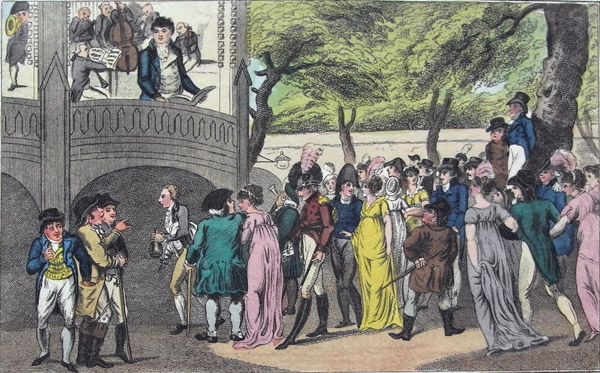
One half of the world don’t know how t’other lives, Sung by Mr. Dignum in Vauxhall Gardens, etching, 1805 (British Museum, London, 1861.0518.1087). A very popular tenor at the gardens, Dignum also gave the farewell address at the end of several seasons.

A change in clientele

In the early nineteenth century, however, with England’s middle and working classes rapidly expanding due to the Industrial Revolution and the rapid growth of London’s population, Vauxhall’s clientele began to change as well.

The social balance was changing too; the old aristocracy watched nervously as France spiralled into revolutionary chaos, and several of the great families decided to move back to the country, to avoid the potential dangers of urban unrest… In addition, social circles were becoming more restricted and inward-looking; the London aristocracy was being rapidly overtaken in terms of numbers by the professional middle classes of industrialists, businessmen, doctors and lawyers. To support them, huge numbers of labourers, tradesmen and servants moved to the capital.

Because of this influx, houses began to pop up in and around Vauxhall, which meant that the Kennington Street area was no longer a country hamlet, but a part of the city itself, and the residents didn’t always appreciate all the racket coming from Vauxhall in the early hours of the morning.

Picturesque Elevation of the Iron Bridge created over the Thames at Vauxhall, engraving, 1816 (David Coke's collection). Designed by the engineer James Walker, the new bridge greatly shortened the land journey from London to Vauxhall Gardens.

Picturesque Elevation of the Iron Bridge created over the Thames at Vauxhall, engraving, 1816 (David Coke’s collection). Designed by the engineer James Walker, the new bridge greatly shortened the land journey from London to Vauxhall Gardens.

A significant advantage was the completion of the new Vauxhall Bridge in August 1816, which shortened considerably the route from the West End.

The bridge remained open all night, both for pedestrians and for coaches, catering for those revellers who stayed on into the small hours, to the annoyance of the local residents who were trying to sleep.

A change of attractions

The form of the entertainments at Vauxhall remained traditional to the end of the eighteenth century. Various new attractions were introduced only gradually and these were directly in response to new forms of popular entertainment that had sprung up elsewhere in London.

One of these was Philip Astley’s enormously popular shows, with “daring displays of horsemanship”, as well as jugglers, tight-rope walkers, and great pageants of historical events. See my post of Astley’s Amphitheatre here.

Vauxhall had always promoted patriotic songs and military bands, and later added battle reconstructions and victory celebrations, after Astley’s model. The Battle of Waterloo was considered to be the “most spectacular event ever staged at Vauxhall.”

Boat races on the Thames was another innovation, which including a rowing race for watermen and a sailing match for ‘gentlemen’s pleasure sailing boats’. Which was followed by a grand gala in the gardens, of course. In 1812, the contest was called the Vauxhall Grand Regatta.

Vauxhall Sailing Match, engraving, 1800 (Minet Library, London, Lambeth Archives Department, V. fo. 57). This appears to be the only surviving image of one of the Vauxhall sailing matches.

Vauxhall Sailing Match, engraving, 1800 (Minet Library, London, Lambeth Archives Department, V. fo. 57). This appears to be the only surviving image of one of the Vauxhall sailing matches.

Advances in science and technology brought ballooning to the gardens, the first balloon ascension beginning in 1802, but not becoming a regular feature until the 1820’s. André Jacques Garnerin, the first Vauxhall aeronaut, experimented with making parachute jumps from balloons. One of his flights included releasing a cat from a height of 600 feet, who descended safely into some resident’s garden. George Colman the younger, a playwright, wrote

Poor Puss in a grand parachute
Was sent to sail down through the air
Plump’d into a garden of fruit,
And played up old Gooseberry there:
The gardener transpiring with fear,
Stared just like a hundred struck hogs;
And swore, tho’ the sky was quite clear,
‘Twas beginning to rain cats and dogs.

Fireworks, first introduced in 1783, were limited to special occasions at first, but pyrotechnic displays did not become standard until 1798.

When it was time for the fireworks to start, a bell was rung and everyone went to the firework ground at the far eastern end of the gardens. The hours varied, displays being advertised at 9, 10 and 11 p.m.; on gala nights there was often more than one show.

Changes in proprietors and prices

Jonathan Tyers the younger’s son-in-law, Bryant Barrett, managed the gardens until his death in 1809, when his sons Jonathan Tyers Barrett and George Rogers Barrett inherited. Jonathan Barrett became sole owner in 1818. In 1821, the gardens were leased to relatives and business partners Thomas Bish and Frederick Gye, later joined by Richard Hughes, “and the trio used their option to buy the property in 1825 for £30,000.”

In 1792, the price of admission was raised to 2 shillings for regular nights and 3 shillings for the Grand Galas (masquerades), which involved elaborate fancy dress.


Susana’s Vauxhall Blog Post Series

Vauxhall Gardens: The Third Generation of the Tyers Family and the Jubilee of 1786

vauxhallbook

Vauxhall Gardens: A History

David Coke & Alan Borg

The Vauxhall Pleasure Gardens is one of the places I’d love to slip back in time to visit, just to catch a glimpse of what it was like. After recently splurging to buy this lovely coffee-table book, I thought it might make a wonderful subject for a new blog series. But do buy the book too, if you can! The photos are fabulous!

Following Jonathan Tyers’s death in 1767, his son Jonathan Tyers the younger managed the gardens, along with the assistance of his sister Elizabeth Wood and other family members, until 1786. At that time, the responsibility for the park was passed on to Bryant Barrett, who was Tyers the younger’s son-in-law, married to his only daughter, Elizabeth.

Barrett was a wax chandler by trade, which was a fortunate coincidence, since Vauxhall Gardens must have been spending a fortune on candles and lighting fixtures.

The most visible aspect of Barrett’s initiative appears in the start of regular newspaper advertisements giving details of the musical programmes for each evening; but it was also at this time that proprietors began to sponsor sailing matches on the Thames.

Lean years at Vauxhall

The 1770’s and early 1780’s had been lean ones for Vauxhall, partly because of the increase in crime and vandalism within its walks; but bad behaviour was clearly not the proprietors’ only problem. …quite apart from financial depression in the early 1770’s and grim news from the American colonies, the appalling weather of the summers of 1775-7 had cost the Tyers family a great deal. …

Samuel Arnold finally had to close Marylebone Gardens in 1778… No clear reason is given for this, but the complaints of local residents, especially about the fireworks, are bound to have been a contributor factor. Ironically, Marylebone’s initial advantage in being so close to London had become its eventual downfall.

The Jubilee of 1786

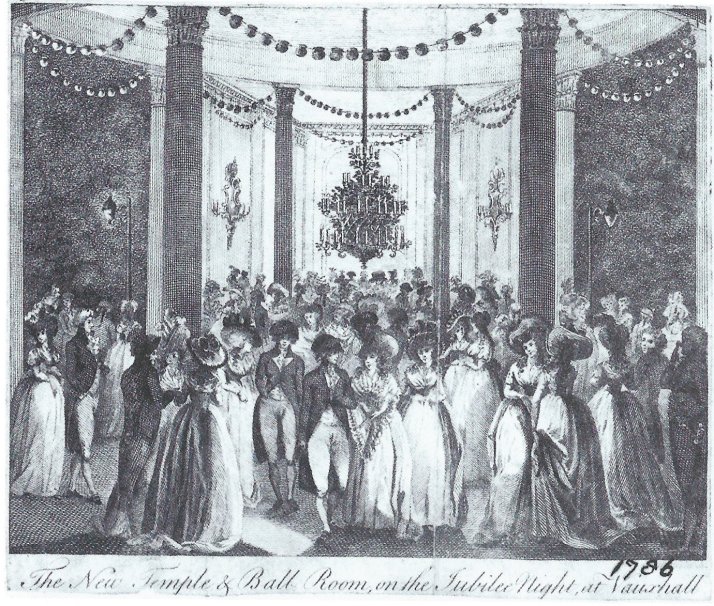
J. Wooding, The New Temple & Ball Room, on the Jubilee Night, at Vauxhall, engraving, c. 1786. The circular Grand Temple at the junction of the Grand South Walk and the Centre Cross Walk, with the temporary ballrooms added to its north and south. The artist was keen to show all the different forms of lighting in use.

J. Wooding, The New Temple & Ball Room, on the Jubilee Night, at Vauxhall, engraving, c. 1786. The circular Grand Temple at the junction of the Grand South Walk and the Centre Cross Walk, with the temporary ballrooms added to its north and south. The artist was keen to show all the different forms of lighting in use.

The approach of the half-century mark of the opening of Vauxhall Gardens “must have come as a godsend to Barrett at the start of his proprietorship.”

The last great fashionable event had been the hugely successful Ridotto al Fresco of 1769. In a conscious attempt to remind people of the ‘good old days’, when the gardens had last been patronised by fashionable society, the design of the ticket for the vent of the event of seventeen years earlier was adapted for the 1786 Jubilee.

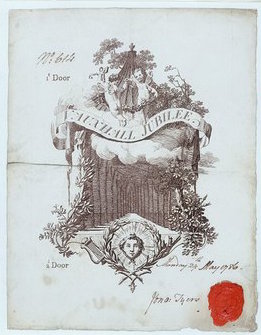
Ticket for the Vauxhall Jubilee, 29 May, engraving. Signed, dated and sealed by Jonathan Tyers the younger, although the management of the park was now in the hands of his son-in-law, Bryant Barrett.

Ticket for the Vauxhall Jubilee, 29 May, engraving. Signed, dated and sealed by Jonathan Tyers the younger, although the management of the park was now in the hands of his son-in-law, Bryant Barrett.

In preparation for the event, which took place on 29 May 1786, the following renovations were completed:

  1. The buildings around the Grove were painted in an elegant pale blue and white livery, and flowering shrubs were planted to appeal to the modern taste in gardening.
  2.  The Rotunda’s interior decoration was completely renewed, with modern mirrors, and the Ionic columns of the Pillared Saloon were renewed with a rich deep pink scagliola. Window frames were replaced and draped with tasselled crimson and silver fabric, and the Rotunda Orchestra was filled with evergreen plants under a decorated ceiling. In the other recess (where the original Rotunda Orchestra had been housed), the large transparent painting of George, Prince of Wales (later the Prince Regent and George IV) in a noble classical pose was replaced with another transparency depicting an amphitheatre of the Corinthian order, through which could be seen a perspective view of a garden. (Apparently, the original transparency was criticized by some as having nothing in common with the Prince’s true character.)
  3. 14,000 coloured lights and wreaths of artificial flowers were draped around the pillars and in festoons around the cornices of the Covered Walks.
  4. A circular Grand Temple was set up at the crossing of the Grand South Walk and the Centre Cross Walk, “little more than a dome on eight classical columns.”
  5. The Centre Cross Walk was partly built over to give more dancing space in two temporary ballrooms, attached to the Grand Temple on the north and south. “The walls of these ballrooms were painted with Arcadian pastoral scenes beyond a range of Ionic columns decorated with wreaths of flowers, while the ceiling showed a sky filled with ‘tender variegated clouds.’” …In each of the ballrooms was an alcove for the musicians, and others for tables stocked with lemonade, capillaire, and orgeat (soft drinks flavoured with orange flower or almond syrup.) The whole strucutre was of course illuminated with thousands of coloured lamps ‘producing a refugency of light that dazzles and surprises.’
  6. On the site of the former Prince’s Pavilion (built for George III’s father), a new room was created for Prince George and his party.
  7. The entrance to the gardens on Kennington Lane was renewed and enlarged, soon becoming the main coach-entrance, later to be expanded with cloakrooms, waiting-rooms, and other public facilities.
handbill

Handbill for the Vauxhall Jubilee, 1786. A very plain and understated piece of printing, designed only to impart information about the event.

The Jubilee was attended by somewhere between five and six thousand people, most in fashionable and elegant costume, a few in fancy dress, which in this period meant smart dress with added details, such as feathers, flowers, ribbons, ruffs, etc., not character costumes.

There were last night above 6000 persons present, and among them some of the first people in the kingdom, but as is always the case at Vauxhall, it was a mélange; the cit and the courtier jostled each other with the usual familiarity; the half guinea was no repellent to the middling order; John Bull loves to shoulder his superiors in rank, his betters he’ll not allow them to be; and where he pays as much for admission, he never considers them to be more than his equals.

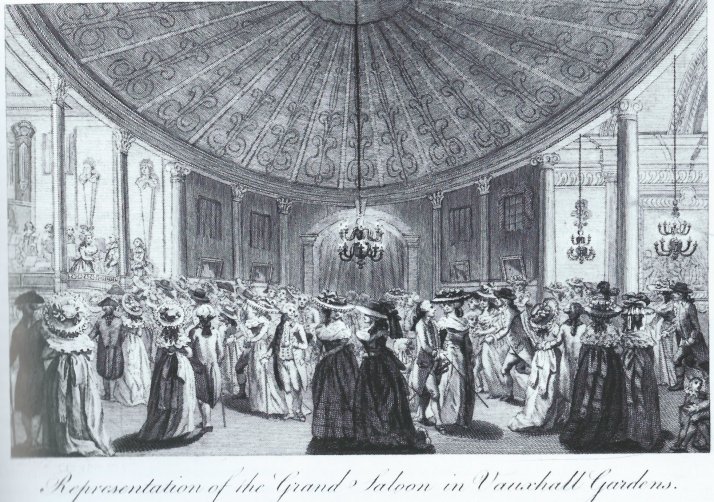
Anon., Representation of the Grand Saloon in Vauxhall Gardens, engraving, after 1786. An unusual view of the renovated Rotunda interior, taken from the entrance off the Grand Walk. The Rotunda Orchestra is on the left, and one of Hayman's paintings from his Seven-Years War series is visible in the Pillared Saloon on the right.

Anon., Representation of the Grand Saloon in Vauxhall Gardens, engraving, after 1786. An unusual view of the renovated Rotunda interior, taken from the entrance off the Grand Walk. The Rotunda Orchestra is on the left, and one of Hayman’s paintings from his Seven-Years War series is visible in the Pillared Saloon on the right.

On the following day, the gardens were opened to four thousand people who were not able to get tickets after those for the first event were sold out.

A successful season

Barrett took advantage of the popular trend of holding military fetes to honor the huge numbers of soldiers coming home from North America by promoting a patriotic tone to this one, with large transparencies framed by martial and naval motifs.

Later that year, when George III escaped a “rather pathetic assassination” by a housemaid with a knife outside St. James’s Palace, Vauxhall celebrated the king’s survival with a new patriotic song by James Hook and an organ concerto with variations on God Save the King.

Barrett’s first season at the helm “once more confirmed Vauxhall as a popular and respectable venue for fashionable society during the 1780’s. However,

…the public attitude towards the gardens was beginning to undergo a fundamental change. The largely unquestioning indulgence was now a thing of the past, and questions were being asked as to whether a pleasure garden was more of a nuisance than a benefit. The establishment’s opposition to public entertainment was strengthening.

Neighbors who had complained for years about the disruption caused by those returning home in the early hours of the morning, were starting to be heard.


Susana’s Vauxhall Blog Post Series

  1. Vauxhall Gardens: A History
  2. Vauxhall Gardens: Jonathan Tyers—“The Master Builder of Delight” 
  3. Vauxhall Gardens: A New Direction
  4. Vauxhall Gardens: The Orchestra and the Supper-Boxes 
  5. Vauxhall Gardens: The Organ, the Turkish Tent, and the Rotunda
  6. Vauxhall Gardens: Three Piazzas of Supper-Boxes
  7. Vauxhall Gardens: “whither every body must go or appear a sort of Monster in polite Company”
  8. Vauxhall Gardens: The Competition
  9. Vauxhall Gardens: The Artwork, Part I
  10. Vauxhall Gardens: The Artwork, Part II
  11. Vauxhall Gardens: The Music, 1732-1859
  12. Vauxhall Gardens: The Business Side
  13. Vauxhall Gardens: Developments from 1751-1786
  14. Vauxhall Gardens: Thomas Rowlandson’s Painting (1785)
  15. ‎Vauxhall Gardens: The Third Generation of the Tyers Family and the Jubilee of 1786
  16. Vauxhall Gardens: An Era of Change (1786-1822), Part I
  17. Vauxhall Gardens: An Era of Change (1786-1822), Part II
  18. Vauxhall Gardens: An Era of Change (1786-1822), Part III
  19. Vauxhall Gardens: The Final Years, Part I
  20. Vauxhall Gardens: The Final Years, Part II
  21. Vauxhall Gardens: The Final Years, Part III
  22. Vauxhall Gardens: The Final Years, Part IV
  23. Vauxhall Gardens: Farewell, for ever

Piper G. Huguley: A Treasure of Gold (Book 3, Migrations of the Heart)

A word from Susana

Piper Huguley and I first met in November 2012 when we were placed in a historical NANO group together by Savvy Authors. Although the four of us all wrote from different historical contexts—I was the only Regency author—we decided to continue our association and formed a Facebook group to help keep in touch. An offshoot of that is our History Lovers page.

We agreed to beta-read for one another, and Piper sent me her draft of A Champion’s Heart in December just prior to the entry deadline for the 2013 Golden Heart competition (which this story finaled in, by the way).

I was blown away.

Frankly, it’s not likely I would have picked up this book on my own. I prefer the Regency era, while I might read earlier Georgian or later Victorian, but I wouldn’t have expected to enjoy an African-American, depression-era, inspirational romance set in the South. I mean, if reading is a sort of escape from the negativity of the world, why would I choose to read a story that’s bound to be depressing?

But that’s not how Piper’s characters see things. Yes, there are some serious topics raised. But these characters learn to rise above them, depending on their faith, resilience, and determination to survive in a world that is biased against them.

And yes, there is a happy-ever-after. Piper does write romances, after all.

And you might just discover that multicultural romance can be just as satisfying and enjoyable as the ones you normally read… and that you really can identify with a heroine of another race or culture after all.

Susana’s Challenge

Multicultural romance comes in a wide variety of colors. Have you ever read one of Jeannie Lin’s Asian romances? Other highly-rated multicultural authors are: Zena Wynn, Sienna Mynx, Latrivia Nelson, Delilah Hunt, Ruthie Robinson, Mallory Monroe, Lena Matthews, and Theodora Taylor.

If you’re like me, you probably have dozens or hundreds of unread books on your Kindle and may not be in the market for another book at this point. But I’d like to challenge every reader here to set a goal to read at least one multicultural romance per month, and then come back here next December to report back.

Which books/authors did you enjoy the most?

What did you learn (about yourself, about other races/cultures, anything)?

Do you think you will continue to seek out multicultural romances in the future? Why or why not?

I’ve created a Susana’s Challenge Facebook page so that we can all interact in the next year.

Are you game? Like my Susana’s Challenge page and let’s get started!

treasure

When you follow your heart, never count the cost.

Migrations of the Heart, Book 3

Trusting in the One who orders her steps, Nettie Bledsoe is determined not to deviate from her route to the charity kitchen. Don’t stop for anything, her sisters say. Pittsburgh isn’t like Georgia, they warn.

Yet when low moans of unholy suffering drift from an alley, she can’t help but investigate. It’s a man. The most beautiful man she’s ever seen. Despite his scandalous reputation, something within her responds to his sinfully rich voice.

Jay Evans is trying hard to stay on the straight and narrow, and doesn’t want help from any church do-gooder. But until his wound heals, he needs help caring for his young daughter, Goldie. Especially since Nettie saw fit to fire Goldie’s barely competent nanny.

Despite their mismatched backgrounds, Nettie and Jay fight a losing battle against their growing attraction. But it’s only when Nettie is kidnapped that Jay realizes that if he doesn’t get her back safe and sound, his heart will shatter into uncountable pieces.

Warning: Contains a single father with a photographic memory for numbers, and a country girl out of her element in the city. It all adds up to a heart-winning tale.

AmazonBarnes & NobleKobo

About the Author

piper-huguley-rigginsPiper G Huguley is the author of the “Home to Milford College” series. The series traces the love stories at a small “Teachers and Preachers” college in Georgia over time, beginning with the love story of the founders. Book one in the series, The Preacher’s Promise, was a semi-finalist in Harlequin’s So You Think You Can Write contest,and a quarter-finalist in the 2014 Amazon Breakthrough Novel Award contest. The Representative’s Revolt will be published in the Spring of 2016.

Huguley is also the author of “Migrations of the Heart,” a five-book series of inspirational historical romances set in the early 20th century featuring African American characters. Book one in the series, A Virtuous Ruby won the Golden Rose contest in Historical Romance in 2013 and is a Golden Heart finalist in 2014. Book four in the series, A Champion’s Heart, was a Golden Heart finalist in 2013. A Virtuous Ruby was published by Samhain in July 2015.

Piper Huguley blogs about the history behind her novels at http://piperhuguley.com. She lives in Atlanta, Georgia with her husband and son.

Other books by Piper Huguley

A Virtuous Ruby (Book 1 of Migrations of the Heart)

A Most Precious Pearl (Book 2 of Migrations of the Heart)

The Lawyer’s Luck (prequel to A Home to Milford College)

The Preacher’s Promise (Book 1 of A Home to Milford College)

The Mayor’s Mission (Book 2 of A Home to Milford College)

The Brightest Day (A Juneteenth Historical Romance Anthology)