Tag Archive | Jonathan Tyers

Vauxhall Gardens: The Orchestra and the Supper-Boxes

vauxhallbook

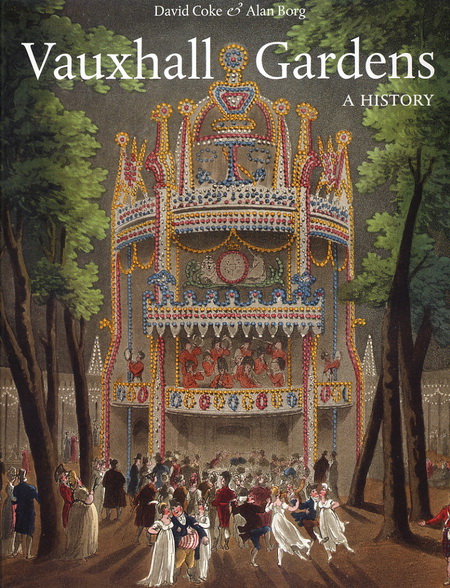
Vauxhall Gardens: A History

David Coke & Alan Borg

The Vauxhall Pleasure Gardens is one of the places I’d love to slip back in time to visit, just to catch a glimpse of what it was like. After recently splurging to buy this lovely coffee-table book, I thought it might make a wonderful subject for a new blog series. But do buy the book too, if you can! The photos are fabulous!

The Orchestra

Across from the Prince’s Pavilion, mentioned in last week’s post, stood the open-air bandstand known as the Orchestra, which opened on 3 June 1735.

There is built in the Grove of the Spring-Gardens at Vaux-Hall, an Octagon Temple, intended to serve as an Orchestra, for a Band of our finest Instrumental Performers; who will play (beginning at Five every Evening during the Summer-Season) the compositions of Mr. Handel, and other celebrated Masters. Upon Trial, the Concert had a wonderful Effect, the Sounds spreading through every Part of this delightful Garden; so that Gentlemen and Ladies, whether walking, or sitting in the Alcoves, may hear it to the greatest Advantage. Though there has not yet been any Thing of this kind exhibited among us, and the Master of the Gardens has put himself to a considerable Expence upon this Occasion, yet nothing will be requir’d for this innocent and elegant additional Entertainment, which will begin Tomorrow at the Hour above-mentioned.

This building, with a base of large blocks of roughened masonry, supported an upper floor, an octagonal room enclosed by eight arches illuminated by a central chandelier. The outer area of the first (second) floor was bounded by a low balustrade.

Although the opening night was plagued with poor weather, a good audience was in attendance.

Yesterday being so rainy, little no Company was expected in the Spring-Gardens at Vaux-Hall, for which reason the Concert was to have been put off till this Evening; but a great Number of Coaches and Persons of the best Fashion coming in, the Concert was open’d; several very fine musical Compositions were perform’d, to the great Satisfaction of the Hearers, and especially of the Judges of Musick, many of whom were present on this Occasion. The Gardens, tho’ so very pleasant in themselves, were yet greatly improv’d by the Harmony, which had different Effects (but all delightful) in the various parts of the Garden; so that all the elegant Company seem’d very desirous of encouraging this rural kind of Opera, which pleas’d no less from the Execution than from the Novelty of it.

As popular as the orchestra music became, it was soon clear that the large number of trees were a detriment to the acoustics. Tyers lost no time in removing “a great Number of Trees… from the Thicket joyning to the Orchestra,” and placing “several Tables and Seats fixed at proper Distances, in the Openings” so that visitors could enjoy refreshments while listening to the music.

The Orchestra itself was able to accommodate, on its upper level, as many as thirty seated and standing musicians. The building’s actual dimensions… judging from the numerous visual sources… measured over 20 feet in diameter and about 25 feet in height to the tip of the conical slated roof—quite a small building, but certainly large enough for its purpose.

bars003

From a satirical pamphet “A Trip to Vaux-hall (1737): Notice the bar in the lower left where waiters went to collect food orders for the visitors. Also, the roof terrace above where Tyers could keep an eye on everything.

The Supper-Boxes

Between September of 1735 and April 1736, during the off-season, more improvements were made.

The Improvements in the Spring-Gardens at Vaux Hall (which have employ’d upwards of 100 Hands ever since last August) being now finish’d, and a Band, consisting of above thirty of the ablest Performers provided, the Musical Assembly will be open’d next Wednesday [19 May]. The Grove, which is considerably enlarged and finely laid out in Gravel Walks, is embellish’d with a great Number of Colonades [the supper-boxes]; and in the Centre is an Edifice, in the Form of a Temple, for the Band, who will play the favourite Pieces of the most eminent Masters. The whole is so advantageously dispos’d, that 3000 Persons may sit at ease, and see one another during the Entertainment. In the Grove, above 300 Glass Lights are set up, all which are illuminated in half a Minute, and have a beautiful Effect on the Verdure. For the better Conveniency of the Company, a great Number of Waiters, &c., are provided; and in order that this innocent and agreeable Entertainment may be conducted with such a Decency, as many induce the politest Persons, and those of the most serious Character to honour it with their Presence, a proper Guard will attend to keep out all lewd and disorderly Persons. —Notwithstanding the very great Expence the Master has been, and must necessarily be at, during the Season, yet it was his intention to have admitted all Persons into his Gardens in the same Manner as last Summer; but as Numbers resorted thither who were no ways qualify’d to intermix with Persons of better Fashion; for this Reason he has been persuaded to let none enter but with Tickets (to be given out at the Door) at One Shilling each, which Ticket will be afterwards taken at the Entertainment in the Gardens, as One Shilling, if desir’d.

The old arbors and rickety supper-boxes in existence before Tyers came upon the scene were tossed away in favor of new and orderly ones arranged outside of the Orchestra. The Vauxhall Fan, which was produced and sold for three consecutive years (1736-8) as new features were introduced (only the first of which still exists) shows the view from the entrance, looking down the Grand Walk, with the Orchestra building on the right.

Many of the trees carry a globe lamp on a bracket, and more lamps hang on lamp-posts and from the ceiling of each supper-box. The edition of 1737 added the organ building behind the Orchestra, and in 1738 Roubiliac’s new statue of Handel was included.

The Vauxhall Fan (1736)

The Vauxhall Fan (1736)

In such a manner,Tyers made use of the popularity and intriguing “language” of the fan as a clever marketing tool.

The north and south ranges of supper-boxes… made up of more than twenty boxes each, were almost 300 feet long and about six to eight feet deep. A shorter range of eight boxes on the far side of the Grove between the two parallel walks, was around 100 feet long, making each box about 12 feet wide. The boxes themselves were initially open on all sides, with only a rail dividing adjacent supper parties from each other, leading to unwonted intimacies between friends and strangers alike. From 1741 or ’42 solid walls divided every box from its neighbour, and each one was roofed with waxed cloth and had a fixed bench around three sides of its table.

The layout of the Grove was remarkably formal and austere, like an ancient Greek agora. Through his arrangement of the boxes Tyers discouraged overtly immoral or intemperate behavior by providing a setting where there were no hidden corners and where the privacy enjoyed by Pepys and his contemporaries was difficult to achieve.

The exact number of supper-boxes in the years before 1751 is difficult to estimate, but it must have been around fifty-five. This rose sharply to over 130 in 1751, reaching a maximum of about 140 around 1800, before falling back to about 90 in the 1840’s.

The many additions to the number of boxes demonstrate that dining space was always at a premium, and that Tyers was under constant pressure to provide additional seating for his visitors wherever he could. This not only boosted his profits from food sales, but also helped his staff earn additional tips by finding more private seating for parties of visitors.

Susana’s Vauxhall Blog Post Series

  1. Vauxhall Gardens: A History
  2. Vauxhall Gardens: Jonathan Tyers—“The Master Builder of Delight” 
  3. Vauxhall Gardens: A New Direction
  4. Vauxhall Gardens: The Orchestra and the Supper-Boxes 
  5. Vauxhall Gardens: The Organ, the Turkish Tent, and the Rotunda
  6. Vauxhall Gardens: Three Piazzas of Supper-Boxes
  7. Vauxhall Gardens: “whither every body must go or appear a sort of Monster in polite Company”
  8. Vauxhall Gardens: The Competition
  9. Vauxhall Gardens: The Artwork, Part I
  10. Vauxhall Gardens: The Artwork, Part II
  11. Vauxhall Gardens: The Music, 1732-1859
  12. Vauxhall Gardens: The Business Side
  13. Vauxhall Gardens: Developments from 1751-1786
  14. Vauxhall Gardens: Thomas Rowlandson’s Painting (1785)
  15. ‎Vauxhall Gardens: The Third Generation of the Tyers Family and the Jubilee of 1786
  16. Vauxhall Gardens: An Era of Change (1786-1822), Part I
  17. Vauxhall Gardens: An Era of Change (1786-1822), Part II
  18. Vauxhall Gardens: An Era of Change (1786-1822), Part III
  19. Vauxhall Gardens: The Final Years, Part I
  20. Vauxhall Gardens: The Final Years, Part II
  21. Vauxhall Gardens: The Final Years, Part III
  22. Vauxhall Gardens: The Final Years, Part IV
  23. Vauxhall Gardens: Farewell, for ever

Vauxhall Gardens: A New Direction

vauxhallbook

Vauxhall Gardens: A History

David Coke & Alan Borg

The Vauxhall Pleasure Gardens is one of the places I’d love to slip back in time to visit, just to catch a glimpse of what it was like. After recently splurging to buy this lovely coffee-table book, I thought it might make a wonderful subject for a new blog series. But do buy the book too, if you can! The photos are fabulous!

William Hogarth Comes to the Rescue

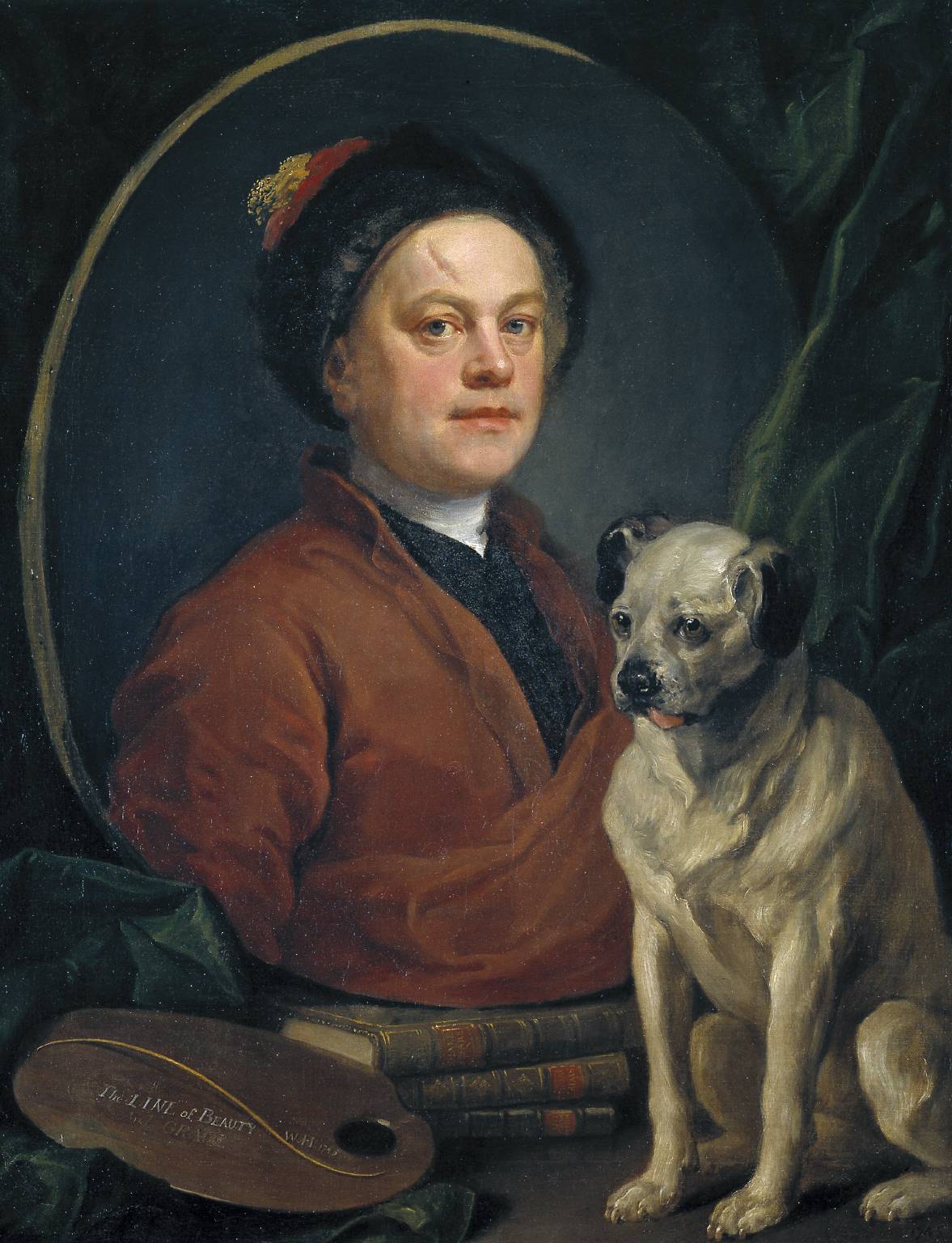
The Painter and his Pug 1745 William Hogarth 1697-1764 Purchased 1824 http://www.tate.org.uk/art/work/N00112

The Painter and his Pug 1745 William Hogarth

In our last installment, Vauxhall mastermind Jonathan Tyers was facing financial ruin when his most recent event wiped away all the profits of his other three. The story goes that his good friend William Hogarth, who still lived nearby, saw Tyers looking very dejected and asked what was the matter. Tyers replied that he was just trying to decide whether hanging himself or drowning was a better way to kill himself. Hogarth convinced him to wait until the following day, when he would share some ideas that might help. It can’t be known for certain what those ideas were, but it is clear that Hogarth was responsible for turning around the situation at Vauxhall.

In 1733 Tyers presented his friend William Hogarth with a solid gold pass to the gardens, giving free entry in perpetuity to a coach full of people. This unique and generous gift was accompanied by something even more precious, a small portrait of Tyers himself, painted when he was a young man visiting Paris, a gesture made in recognition of Hogarth’s many past favours.

hogarth pass

One of Hogarth’s ideas undoubtedly had to do with including contemporary English art, as he was always looking for places to display his own work and that of friends and students. Hogarth also persuaded Tyers to tone down his old-fashioned moralizing and use pleasure and enjoyment as his educational tools.

Early Design and Layout

When Jonathan Tyers took on Vauxhall Gardens, the site was more like a densely wooded park than a garden, and was basically a rectangle of mixed deciduous woodland, mainly elm, lime and sycamore, cut through by a grid of several long walks at approximate right angles to each other.

There were in the public areas no bodies of water or fountains, no angles other than right angles, no formal flower beds, no mound, no topiary, no serpentine walks, nor the mazes or grottos…

Sophisticated landscape design played little part in Tyers’s Vauxhall, which was intended to accommodate as many people as possible with seeming overcrowded, while at the same time never appearing too sparsely populated.

The Proprietor’s House: the Entrance to the Gardens

prop001

The Proprietor’s House (right) which served as the entrance to the gardens (Vauxhall is written upon the doorway). The left side may have been the residence of the Tyers family.

The interior of the Proprietor’s House was described in the 1830’s by a writer who called himself the ‘tame cat’ of the gardens. On some of the ceilings ‘there were dim paintings, which the proprietor averred were the works of William Hogarth’. The house also boasted a large ballroom and ten bedrooms on the second floor. On the ground floor, above extensive cellars, there were:

Two handsome Parlours, with Dove and Marble Chimney Pieces, and Folding Doors, with Communication into the Pavilion Supper Rooms, and Private Entrance from the Lane, with Noble Light Staircase, Manager’s Office, and Public Entrance, called the Water Gate, with Money Takers’ Officers; Housekeeper’s Room, with Presses; Spacious Bar fronting the Gardens; Bread Room; Store Room; Pantry; China Room; Chicken Pantry; Glass Room; Punch Room; Pastry Room, with Tiled Bottom, and Confectionary, with Two excellent Ovens, Stewing Stoves, and Dressers, a capital large Paved Kitchen, with Dresser and Shelves; Scullery, with Pump of fine Water; and Yard, with detached Servants’ Dining Room; Pantry; Larder; Boiling House; Ham Room; Shed; and Servants’ Office.

Entering the gardens through this substantial house, at least for the first-time visitor, would have been a thrilling experience. After the discomfort of the journey, the modest entrance door, and the gloomy passage through the house, the first sight of the gardens, with their confusion of noise, colour, smell and movement, would have been breathtaking, like the raising of a curtain in a theatre, immediately transporting the visitor to another world.

The Prince’s Pavilion and Great Room

prince002

Situated adjacent to the Proprietor’s House, and accessible from it, [the Prince’s Pavilion] was a Kentian, classically inspired rectangular building with a portico of four Doric columns, set up on a basement storey, and accessed by a double flight of seven steps over a low arch… At the back of the portico, through a central door, was a single large drawing-room.

The name ‘Prince’s Pavilion’ refers specifically to the broad open-fronted portico at the front of the building… The attached Great Room or Salon was reached through the rusticated central doorway at the back of the portico. This room was richly decorated… It was fitted with fine mirrors, a grand chandelier, and a series of busts of modern worthies, including Isaac Newton, Alexander Pope and Abraham de Moivre.

Regular news reports attest to the prince’s frequent use of the pavilion and the Great Room behind it. On a typical occasion in 1737, a Saturday evening early in the season, the prince and his party, including the Earl of Darnley and the Earl of Crawford, Lord and Lady Torrington, Lady Irwin and Lord Baltimore, danced and supped in the Great Room from seven until midnight, after which their river journey back to Whitehall was accompanied by trumpets and French horns.

Susana’s Vauxhall Blog Post Series

  1. Vauxhall Gardens: A History
  2. Vauxhall Gardens: Jonathan Tyers—“The Master Builder of Delight” 
  3. Vauxhall Gardens: A New Direction
  4. Vauxhall Gardens: The Orchestra and the Supper-Boxes 
  5. Vauxhall Gardens: The Organ, the Turkish Tent, and the Rotunda
  6. Vauxhall Gardens: Three Piazzas of Supper-Boxes
  7. Vauxhall Gardens: “whither every body must go or appear a sort of Monster in polite Company”
  8. Vauxhall Gardens: The Competition
  9. Vauxhall Gardens: The Artwork, Part I
  10. Vauxhall Gardens: The Artwork, Part II
  11. Vauxhall Gardens: The Music, 1732-1859
  12. Vauxhall Gardens: The Business Side
  13. Vauxhall Gardens: Developments from 1751-1786
  14. Vauxhall Gardens: Thomas Rowlandson’s Painting (1785)
  15. ‎Vauxhall Gardens: The Third Generation of the Tyers Family and the Jubilee of 1786
  16. Vauxhall Gardens: An Era of Change (1786-1822), Part I
  17. Vauxhall Gardens: An Era of Change (1786-1822), Part II
  18. Vauxhall Gardens: An Era of Change (1786-1822), Part III
  19. Vauxhall Gardens: The Final Years, Part I
  20. Vauxhall Gardens: The Final Years, Part II
  21. Vauxhall Gardens: The Final Years, Part III
  22. Vauxhall Gardens: The Final Years, Part IV
  23. Vauxhall Gardens: Farewell, for ever

Vauxhall Gardens: Jonathan Tyers— “The Master Builder of Delight”

vauxhallbook

Vauxhall Gardens: A History

David Coke & Alan Borg

The Vauxhall Pleasure Gardens is one of the places I’d love to slip back in time to visit, just to catch a glimpse of what it was like. After recently splurging to buy this lovely coffee-table book, I thought it might make a wonderful subject for a new blog series. But do buy the book too, if you can! The photos are fabulous!

“The Master Builder of Delight”

In 1729, the site of the “Vauxhall Spring-Gardens was leased to a twenty-seven-year-old entrepreneur called Jonathan Tyers, whose goal was to transform it from a sort of seedy rural tavern to a respectable venue for all social classes.

A fellmonger (dealer in animal hides or skins) by trade, Jonathan was not content to continue the family business, successful though it was. Driven by a desire to raise his family’s status—and improve the world as he did so—Tyers believed that culture and pleasurable entertainments should not be the sole prerogative of the upper classes, but that the middle and lower classes deserved to find some enjoyment in their lives as well.

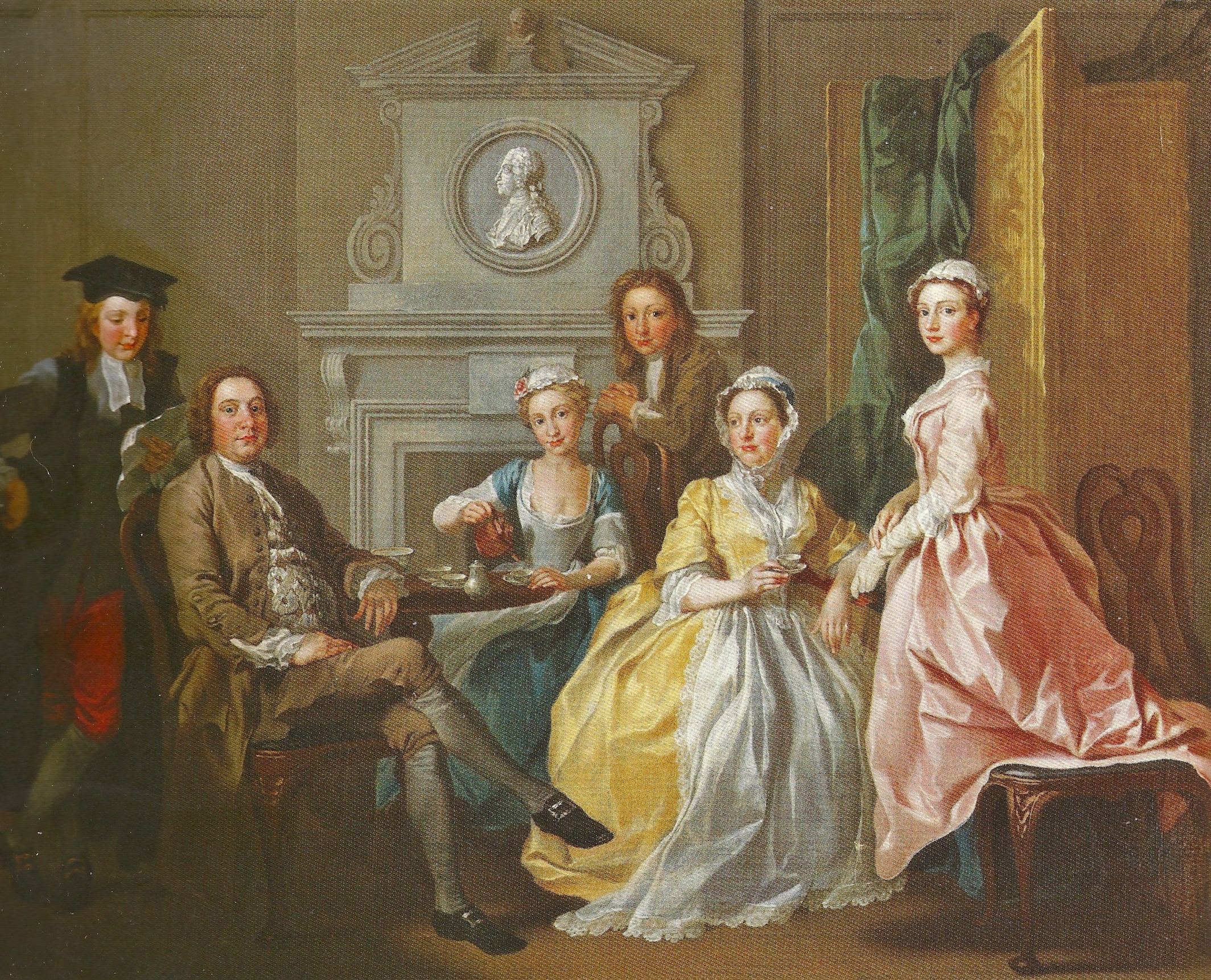
tyers family

Family portrait by Francis Hayman, Jonathan Tyers and his Family, 1740. Left to right: Elder son Thomas, Jonathan, daughter Elizabeth, son Jonathan, wife Elizabeth, daughter Margaret.

Jonathan Tyers was a very complex character, with more than his fair share of contradictions and eccentricities. Upright, intelligent and self-assured, he also exhibited strains of arrogance and ambition. However, his ambitions were clearly projected chiefly upon his business rather than himself, while his personal aspirations were driven by a wish to raise his own status and that of his family to gentry, an object in which he succeeded at a remarkably early age. (p.35)

Through his association with The Wits’ Club, a social club for freethinkers, scholars, libertarians, and writers, Tyers became good friends with Charles Burney, Henry Fielding, William Hogarth, Harry Hatsell, Edward Moore, Thomas Cooke, Richard Dawson, and Leonard Howard. The club first met at Vauxhall Gardens later moved to a nearby tavern. Many of the ideas behind his development of the gardens came from the discussions at this club.

Although he never managed to mix with fashionable society in his lifetime, he was held in great respect and admiration by his peers, so much so that he was elected to the Royal Society of Arts in 1757, where he would have met many other prominent people, including Benjamin Franklin, when he visited London.

He and his creation were even featured in his friend Henry Fielding’s work of fiction, Amelia (1751).

The extreme Beauty and Elegance of this Place is well known to almost every one of my Readers; and happy is it for me that it is so; since to give an adequate Idea of it, would exceed my Power of Description. To delineate the particular Beauties of these Gardens, would, indeed, require as much pains and as much Paper too, as to rehearse all the good Actions of their Master [Tyers], whose Life proves the Truth of an Observation which I have read in some Ethic Writer, that a truly elegant Taste is generally accompanied with an Excellency of Heart; or in other Words, that true Virtue is, indeed, nothing else but true Taste.

The_Works_of_Henry_Fielding_Amelia_v2_1000373134

Tyers’s Mission

Besides his goal of cleaning up the gardens’ reputation, Tyers hoped to use the venue to improve people’s lives “through contact beauty and quality.” In other words, he planned to provide the lower orders with both art and beauty, and also expose them to “polite society,” who would educate them by example.

His influence on the manners and morals of eighteenth-century society was to be far-reaching, and his patronage of artists and designers would change the face of British art. But it was his ideological beliefs and priorities, his egalitarianism and his conviction that the pursuit of pleasure was a basic human right, and a vital element of the balanced life, that would really motivate his proprietorship of Vauxhall Gardens.

The Ridotto al Fresco

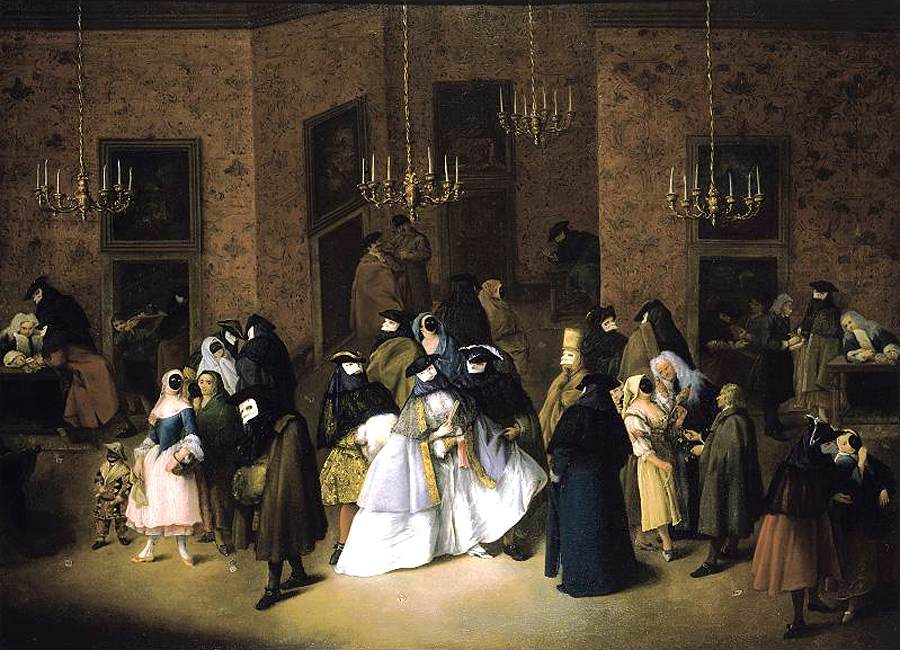
Tyers’s first event at Vauxhall was a masquerade ball in the manner of the Italian carnival in the spring of 1731. Not much is known of this event, except that there was outdoor dancing in masquerade costume and was restricted to the upper classes.

The Ridotto in Venice, Pietro Longhi, 1750's

The Ridotto in Venice, Pietro Longhi, 1750’s

By contrast, his second event in April of 1732, was attended by the poorer class of people, including “an oyster girl, a barber’s apprentice, a lawyer, an army captain, a doctor, a vicar and a number of prostitutes…”

The third event, considered to be the opening ceremony of Tyers’s Vauxhall Gardens, took place on 7 June 1732 and included the presence of Frederick, Prince of Wales. Under the guidance of John James Heidegger, Tyers created an extraordinary event that was talked about for years. A hundred armed soldiers were employed for the security of the distinguished guests, and he “hired the Westminster and Lambeth ferrymen for the whole night to carry his guests across the river and back.” Even with an admission fee of a guinea—which only the wealthy could afford—“between three and four hundred people actually attended the ridotto.” Besides the Prince of Wales’s entourage, the guests included politicians and their friends, “lawyers, bankers, printers, brewers, churchmen, military men and aristocrats.” The party broke up at around four in the morning. “The principal entertainments…were dancing and feasting, combined with the social intercourse between masked guests.”

The Ridotto in Venice, Pietro Longhi, 1750's

The Ridotto in Venice, Pietro Longhi, 1750’s

While by most accounts—particularly in the view of the Prince of Wales—this event was a great success, other accounts indicate that there was a distinct theme of preaching and moralizing via buildings set up to show the misery and pain that result from excessive self-indulgence that may have not gone over too well with the party-minded guests.

In any case, his final ridotto, which was held two weeks later on 21 June, likely at the request of the Prince, who was having the time of his life, was attended by only half as many, which, considering his expenses, would likely have completely wiped out any profits from the four events. No doubt this is the reason Tyers held no such events during 1733 or 1734, although the gardens themselves likely continued to be open to the public.

Susana’s Vauxhall Blog Post Series

  1. Vauxhall Gardens: A History
  2. Vauxhall Gardens: Jonathan Tyers—“The Master Builder of Delight” 
  3. Vauxhall Gardens: A New Direction
  4. Vauxhall Gardens: The Orchestra and the Supper-Boxes 
  5. Vauxhall Gardens: The Organ, the Turkish Tent, and the Rotunda
  6. Vauxhall Gardens: Three Piazzas of Supper-Boxes
  7. Vauxhall Gardens: “whither every body must go or appear a sort of Monster in polite Company”
  8. Vauxhall Gardens: The Competition
  9. Vauxhall Gardens: The Artwork, Part I
  10. Vauxhall Gardens: The Artwork, Part II
  11. Vauxhall Gardens: The Music, 1732-1859
  12. Vauxhall Gardens: The Business Side
  13. Vauxhall Gardens: Developments from 1751-1786
  14. Vauxhall Gardens: Thomas Rowlandson’s Painting (1785)
  15. ‎Vauxhall Gardens: The Third Generation of the Tyers Family and the Jubilee of 1786
  16. Vauxhall Gardens: An Era of Change (1786-1822), Part I
  17. Vauxhall Gardens: An Era of Change (1786-1822), Part II
  18. Vauxhall Gardens: An Era of Change (1786-1822), Part III
  19. Vauxhall Gardens: The Final Years, Part I
  20. Vauxhall Gardens: The Final Years, Part II
  21. Vauxhall Gardens: The Final Years, Part III
  22. Vauxhall Gardens: The Final Years, Part IV
  23. Vauxhall Gardens: Farewell, for ever