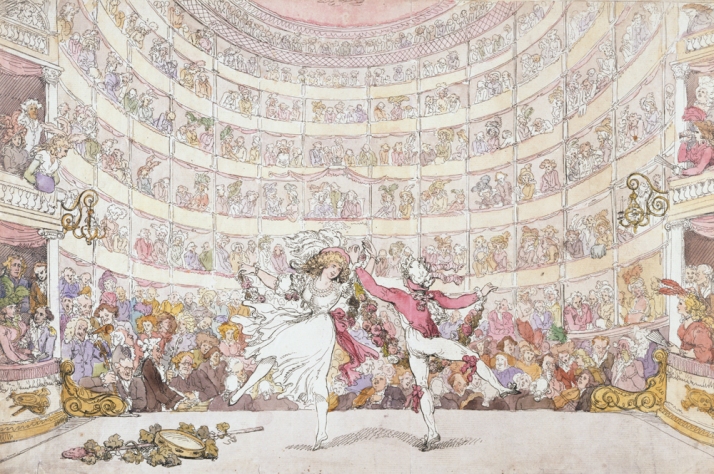
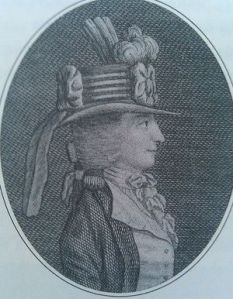
Tag Archive | John Timbs

Romance of London: The Bursting of the South Sea Bubble

Romance of London: Strange Stories, Scenes And Remarkable Person of the Great Town in 3 Volumes

John Timbs

John Timbs (1801-1875), who also wrote as Horace Welby, was an English author and aficionado of antiquities. Born in Clerkenwell, London, he was apprenticed at 16 to a druggist and printer, where he soon showed great literary promise. At 19, he began to write for Monthly Magazine, and a year later he was made secretary to the magazine’s proprietor and there began his career as a writer, editor, and antiquarian.

This particular book is available at googlebooks for free in ebook form. Or you can pay for a print version.

The word “Bubble” as applied to any ruinous speculation, was first applied to the transactions of the South Sea Company, in the disastrous year 1720. It originated in the exaggerated representations of the sudden riches to be realized by the opening of new branches of trade to the South Sea, the monopoly of which was to be secured to the South Sea Company, upon their pretext of paying off the National Debt. The Company was to become the richest the world ever saw, and each hundred pounds of their stock would produce hundreds per annum to the holder. By this means the stock was raised to near 400; it then fluctuated, and settled at 330.
512px-South_Sea_Bubble

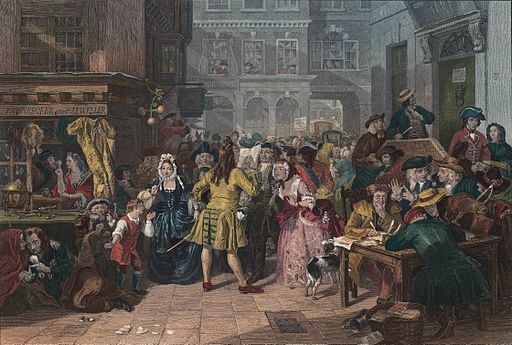
E.M. Ward, “‘Change Alley during the South Sea Bubble.”

Exchange Alley was the seat of the gambling fever;* it was blocked up every day by crowds, as were Cornhill and Lombard Street with carriages.  In the words of the ballads of the day:—

There is a gulf where thousands fell,

There all the bold adventurers came;

A narrow sound, though deep as hell,

‘Change Alley is the dreadful name.—Swift

Then stars and garters did appear

Among the meaner rabble;

To buy and sell, to see and hear

The Jews and Gentiles squabble.

The greatest ladies thither came,

And plied in chariots daily,

Or pawned their jewels for a sum

To venture in the Alley.

Innumerable bubble companies soon started up, by which one million and a half sterling was won and lost in a very short time. The absurdity of the schemes was monstrous: one was “a company for carrying on an undertaking of great advantage, but nobody to know where it is.” In all these bubbles, persons of both sexes alike engaged; the men meeting their brokers at taverns and coffee-houses, and the ladies at the shops of milliners and haberdashers; and in Exchange Alley, shares in the same bubble were sold, at the same instant, then per cent. Higher at one end of the Alley than the other. Meanwhile, the Minister warmed the nation, and the King declared such projects unlawful, and trafficking brokers were liable to 5,000l penalty. The companies were dissolved, but others as soon sprung up. The folly was satirized in caricatures and “stock-jobbing cards.” When Sir Isaac Newton was asked about the continuance of the rising of the South Sea stock, he answered that he could not calculate the madness of the people…

Among the victims was Gay, the poet [author of The Beggar’s Opera], who having had some South Sea Stock presented to him, supposed himself to be the master of 20,000l: his friends importuned him to sell, but he refused, and profit and principal were lost. The ministers grew more alarmed, the directors were insulted in the streets, and riots were apprehended; a run commenced upon the most eminent goldsmiths and bankers, some of whom absconded.

The Committee of Secrecy reported to Parliament the results of their enquiry, showing how false and fictitious entries had been made in the books, erasures and alterations made, and leaves torn out; and some of the most important books had been destroyed altogether. The properties of many thousands of persons, amounting to many millions of money, had been away with. Fictitious stock had been distributed among members of the Government, by way of bribe, to facilitate the passing of the Bill. One of the Secretaries to the Treasury had received 250,000l, as the difference in the price of some stock, and the account of the Chancellor of the Exchequer showed 794,451l. He proved the greatest criminal, and was expelled the House, all his estate seized, and he was committed a close prisoner to the Tower of London. Next day Sir George Casual, of a firm of jobbers who had implicated in the business, was expelled the House, committed to the Tower, and ordered to refund 250,000l. Mr. Craggs the elder died the day before his examination was to have come on. He left a fortune of a million and a half, which was confiscated for the benefit of the sufferers. Every director was mulcted [fined], and two millions and fourteen thousand pounds were confiscated, each director being allowed a small residue to begin the world anew.

The history of the Bubble and other speculations contemporaneously with the South Sea scheme is well narrated in Charles Mackay’s Memoirs of Extraordinary Popular Delusions, vol. i. Pp. 45-84.

The Night Singer of Shares

The Night Singer of Shares

It was about the year 1688 that the world ‘stock-jobber’ was first heard in London. In the short space of four years a crowd of companies, every one of which confidently held out to subscribers the hope of immense gains, sprang into existence: the Insurance Company, the Paper Company, the Lutestring Company, the Pearl Fishery Company, the Glass Bottle Company, the Alum Company, the Blythe Coal Company, the Sword-blade Company. There was a Tapestry Company, which would soon furnish pretty hangings for all the parlours of the middle class, and for all the bed-chambers of the higher.

Others included in Mackay’s publication were:

  • The Copper Company
  • The Diving Company (to investigate shipwrecks), which put on an impressive show of their advanced diving equipment on the Thames for fine gentlemen and ladies eager to be a part of such thrilling treasure-hunting
  • The Greenland Fishing Company
  • The Tanning Company
  • The Royal Academy Company, which would educate 2000 winners of a lottery in Latin, Greek, Hebrew, French, Spanish, conic sections, trigonometry, heraldry, japanning, fortification, bookkeeping, and the art of playing the theorbo.

Some of these companies took large mansions and printed their advertisements in gilded letters. Others, less ostentatious, were content with ink, and met at coffee-houses in the neighbourhood of the Royal Exchange. Jonathan’s and Garraway’s were in a constant ferment with brokers, buyers, sellers, meetings of directors, meetings of proprietors. Time-bargains soon came into fashion. Extensive combinations were formed, and monstrous fables were circulated, for the purpose of raising or depressing the price of shares.
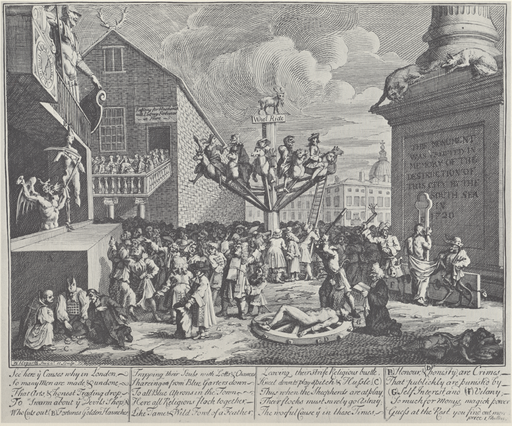
William Hogarth, Emblematical Print on the South Sea Scheme (1721). In the bottom left corner are Protestant, Catholic, and Jewish figures gambling, while in the middle there is a huge machine, like a merry-go-round, which people are boarding. At the top is a goat, written below which is "Who'l Ride". The people are scattered around the picture with a sense of disorder, while the progress of the well-dressed people towards the ride in the middle represents the foolishness of the crowd in buying stock in the South Sea Company, which spent more time issuing stock than anything else.

William Hogarth, Emblematical Print on the South Sea Scheme (1721). In the bottom left corner are Protestant, Catholic, and Jewish figures gambling, while in the middle there is a huge machine, like a merry-go-round, which people are boarding. At the top is a goat, written below which is “Who’l Ride”. The people are scattered around the picture with a sense of disorder, while the progress of the well-dressed people towards the ride in the middle represents the foolishness of the crowd in buying stock in the South Sea Company, which spent more time issuing stock than anything else.

Our country witnessed for the first time those phenomena for which a long experience has made us familiar—a mania, of which the symptoms were essentially the same with those of the mania of 1721, of the mania of 1825, of the mania of 1845, seized the public mind. An impatience to be rich, a contempt for those slow but sure gains which are the proper reward of industry, patience and thrift, spread through society. The spirit of the cogging dicers of Whitefriars took possession of the grave senators of the City, wardens of trades, deputies, aldermen. It was much easier and much more lucrative to put forth a lying prospectus, announcing a new stock, to persuade ignorant people that the dividends could not fall short of twenty per cent., and to part with 5,000l of this imaginary wealth for ten thousand sold guineas, than to load a ship with well-chosen cargo for Virginia or the Levant. Every day a new bubble was puffed into existence, rose buoyant, shone bright, burst, and was forgotten.

*Mr. E.M. Ward, R.A., has painted, with wonderful effect, “‘Change Alley during the South Sea Bubble,” a picture very properly placed in our National Gallery. [Currently Tate]

Susana’s remarks

Plus ça change, plus c’est la même chose.

The more things change, the more they stay the same. 

  • You aren’t going to win a big lottery prize. Or the Publishers’ Clearing House Sweepstakes. Or find buried treasure in your backyard.
  • When someone—even if it’s the Pope himself—offers you something that’s too good to be true, it really is too good to be true. Don’t be fooled.
  • Don’t be greedy. Be satisfied with “slow but sure gains” that are the reward of industry, patience and thrift.”


Romance of London Series

  1. Romance of London: The Lord Mayor’s Fool… and a Dessert
  2. Romance of London: Carlton House and the Regency
  3. Romance of London: The Championship at George IV’s Coronation
  4. Romance of London: Mrs. Cornelys at Carlisle House
  5. Romance of London: The Bottle Conjuror
  6. Romance of London: Bartholomew Fair
  7. Romance of London: The May Fair and the Strong Woman
  8. Romance of London: Nancy Dawson, the Hornpipe Dancer
  9. Romance of London: Milkmaids on May-Day
  10. Romance of London: Lord Stowell’s Love of Sight-seeing
  11. Romance of London: The Mermaid Hoax
  12. Romance of London: The Bluestocking and the Sweeps’ Holiday
  13. Romance of London: Comments on Hogarth’s “Industries and Idle Apprentices”
  14. Romance of London: The Lansdowne Family
  15. Romance of London: St. Margaret’s Painted Window at Westminster
  16. Romance of London: Montague House and the British Museum
  17. Romance of London: The Bursting of the South Sea Bubble
  18. Romance of London: The Thames Tunnel
  19. Romance of London: Sir William Petty and the Lansdowne Family
  20. Romance of London: Marlborough House and Sarah, Duchess of Marlborough
  21. Romance of London: The Duke of Newcastle’s Eccentricities
  22. Romance of London: Voltaire in London
  23. Romance of London: The Crossing Sweeper
  24. Romance of London: Nathan Mayer Rothschild’s Fear of Assassination
  25. Romance of London: Samuel Rogers, the Banker Poet
  26. Romance of London: The Eccentricities of Lord Byron
  27. Romance of London: A London Recluse

Romance of London: Montague House and the British Museum

Romance of London: Strange Stories, Scenes And Remarkable Person of the Great Town in 3 Volumes

John Timbs

John Timbs (1801-1875), who also wrote as Horace Welby, was an English author and aficionado of antiquities. Born in Clerkenwell, London, he was apprenticed at 16 to a druggist and printer, where he soon showed great literary promise. At 19, he began to write for Monthly Magazine, and a year later he was made secretary to the magazine’s proprietor and there began his career as a writer, editor, and antiquarian.

This particular book is available at googlebooks for free in ebook form. Or you can pay for a print version.

The Burning of Montague House

This noble mansion, situated on the north side of Great Russell Street, Bloomsbury, was first built about 1674, by Ralph Montague, Esq., afterwards Baron Montague of Boughton, and Duke of Montague, Keeper of the Wardrobe to Charles II., and who was subsequently in high favor with King William and Queen Anne. The house was erected in the manner of a French palace, from the design of Robert Hooke, the celebrated mathematician, and the inventor of spring-clocks and pocket-watches, and much employed in the rebuilding of London after the Great Fire; he was also Curator of the Royal Society, in the year 1678.

Within ten years this superb mansion was burned down by accident, or rather, by the carelessness of a servant. John Evelyn records in his Diary:—“Jan. 19. 1686.—This night was burnt to the ground my Lord Montague’s palace in Bloomsbery, than which, for paintings and furniture, there was nothing more glorious in England. This happened by the neglect of a servant airing, as they call it, some goods by the fire, in a moist season; indeed, so wet and mild a season had scarce been seen in man’s memory.”

The house was at this time in the occupation of the Earl of Devonshire, to whom Lord Montague had let it, for the sum of 500 guineas by the year. Of its destruction we find another entry:—

Whitehall, the 21st Jan. 1685-6.

“On Wednesday, at one in the morning, a sad fire happened at Montague House, in Bloomsbury, occasioned by the steward’s airing some hangings, &c., in expectation of my Lord Montague’s return home; and sending afterwards a woman to see that the fire-pans with charcoal were removed, which she told me she had done, though she never came there. The loss that my Lord Montague has sustained by this accident is estimated at 40,000l., besides 6,000l. In plate; and my Lord Devonshire’s loss in pictures, hangings, and other furniture is very considerable.”

The North Prospect of Mountague House by James Simonic, 1715

The North Prospect of Mountague House by James Simonic, 1715

Montague House is rebuilt

Lord Montague’s large income was again placed in requisition for the reconstruction of his palace; and though executed by French artists, the plan (that of the hotels of the nobility at Paris) was the same, the new structure being raised upon the foundations and burnt walls of the old one. The architect now employed was one Peter Poughet, a native of Marseilles, who was assisted in the decoration by Charles de la Fosse, Jaques Rousseau, and Jean Baptist Monoyer…  This exclusive employment of French artists in the new house gave rise to the popular but improbable tale, that Montague House was rebuilt at the expense of Louis XIV., to whose court Lord Montague had twice been sent as ambassador.

The second Montague House was finished about 1687; and the eccentric but munificent owner, who in 1705, was created Marquis of Monthermer and Duke of Montague, resided in it till after his death, which took place March 9, 1709. He was succeeded in his titles and estates by his son John, second Duke of Montague, who quitted the vicinity of St. Giles’s for the more courtly region of Whitehall. While a new mansion was being erected for him there, he, however, continued to reside in one of the wings of Montague House. After his removal to Whitehall, the house in Great Russell Street remained unoccupied, until it was purchased, by Act of Parliament, of Lord Halifax, for 10,250l., in the spring of 1754, for “the British Museum.”

Montagu House drawing by Nicholas Sutton, published in 1754

Montagu House drawing by Nicholas Sutton, published in 1754

The British Museum

The building must have been in a very dilapidated condition, for the repairs cost more than the purchase, and, with furniture, &c., amounted to the large sum of 29,736l. 10s. 10d.

In plan, the old Museum resembled a French hotel of the first class: consisting of a large and lofty pile, with two sides built for offices, and a high front wall, with an arched doorway, and above it an octangular turret, surmounted by a cupola and vane; this was the principal entrance, and was known as “Montague Great Gate;” and at each extremity of the wall was a square turret.

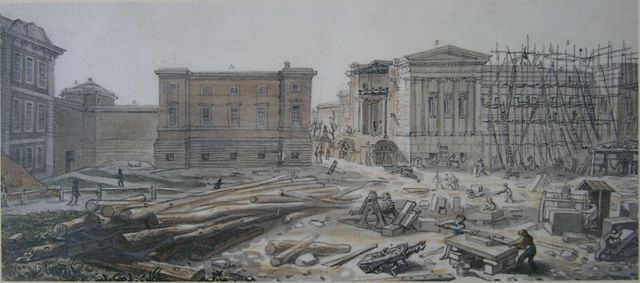
Left to Right: Montagu House, Towny Gallery, and Sir Robert Smirkes' West Wing Under Construction, July 1828

Left to Right: Montagu House, Towny Gallery, and Sir Robert Smirkes’ West Wing Under Construction, July 1828

To the original building additions were made from time to time, as the collection increased, until 1820, when the rebuilding of the Museum was commenced; the plan bordering three sides of the spacious area formerly occupied by the gardens of Montague House, behind the original mansion. By this means, the collection was removed from the old into the new building as the latter progressed, without any inconvenience to the public. In like manner, the principal front took the place of the old Montague House façade, which was removed piecemeal; and strange it was to see the lofty pitched roof, balustraded attic, and large windowed front of “the French manner,” giving way to the Grecian architecture of Sir Robert Smirke’s new design. The octangular and not unpicturesque apartment over the great gateway lingered for some time after, and was the last to disappear of old Montague House. The materials were sold by auction; and curious was it to see such pieces of the painted walls and ceilings as could be removed entire, bringing a few shillings—one of La Fosse’s deities for half-a-crown, or a bunch of Monoyer’s flowers for 1s. 6d.

The Waddesdon Bequest

This has nothing to do with Montague House, but is just something interesting I came across while researching this blog post. Last summer I visited Waddesdon Manor in Aylesbury, which is where Baron Ferdinand de Rothschild displayed the treasures he acquired from his travels to the Continent and beyond. Baron Rothschild is quite the romantic figure. He fell in love and married his second cousin Evelina, only to lose her in childbirth eighteen months later. He never married again, but spent his life in the acquisition and admiration of beautiful objects. Click here to take a look at my Pinterest board for Waddesdon Manor.

In 1898 he bequeathed the contents of his New Smoking Room at Waddesdon Manor to the British Museum.

This consisted of almost 300 pieces of objets d’art et de vertu which included exquisite examples of jewellery, plate, enamel, carvings, glass and maiolica, among them the Holy Thorn Reliquary, probably created in the 1390s in Paris for John, Duke of Berry. The collection was in the tradition of a schatzkammer or treasure house such as those formed by the Renaissance princes of Europe. Baron Ferdinand’s will was most specific, and failure to observe the terms would make it void, the collection should be

placed in a special room to be called the Waddesdon Bequest Room separate and apart from the other contents of the Museum and thenceforth for ever thereafter, keep the same in such room or in some other room to be substituted for it

The Waddesdon Bequest

The Waddesdon Bequest

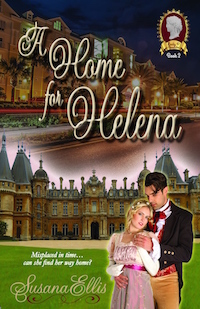
As a footnote, the cover of my time travel, A Home for Helena, includes a photograph of Waddesdon Manor taken last September at the time of my visit.

Home for Helena Cover 200x309

Amazon

Romance of London Series

  1. Romance of London: The Lord Mayor’s Fool… and a Dessert
  2. Romance of London: Carlton House and the Regency
  3. Romance of London: The Championship at George IV’s Coronation
  4. Romance of London: Mrs. Cornelys at Carlisle House
  5. Romance of London: The Bottle Conjuror
  6. Romance of London: Bartholomew Fair
  7. Romance of London: The May Fair and the Strong Woman
  8. Romance of London: Nancy Dawson, the Hornpipe Dancer
  9. Romance of London: Milkmaids on May-Day
  10. Romance of London: Lord Stowell’s Love of Sight-seeing
  11. Romance of London: The Mermaid Hoax
  12. Romance of London: The Bluestocking and the Sweeps’ Holiday
  13. Romance of London: Comments on Hogarth’s “Industries and Idle Apprentices”
  14. Romance of London: The Lansdowne Family
  15. Romance of London: St. Margaret’s Painted Window at Westminster
  16. Romance of London: Montague House and the British Museum
  17. Romance of London: The Bursting of the South Sea Bubble
  18. Romance of London: The Thames Tunnel
  19. Romance of London: Sir William Petty and the Lansdowne Family
  20. Romance of London: Marlborough House and Sarah, Duchess of Marlborough
  21. Romance of London: The Duke of Newcastle’s Eccentricities
  22. Romance of London: Voltaire in London
  23. Romance of London: The Crossing Sweeper
  24. Romance of London: Nathan Mayer Rothschild’s Fear of Assassination
  25. Romance of London: Samuel Rogers, the Banker Poet
  26. Romance of London: The Eccentricities of Lord Byron
  27. Romance of London: A London Recluse
Romance of London: St. Margaret’s Painted Window at Westminster

Romance of London: Strange Stories, Scenes And Remarkable Person of the Great Town in 3 Volumes

John Timbs

John Timbs (1801-1875), who also wrote as Horace Welby, was an English author and aficionado of antiquities. Born in Clerkenwell, London, he was apprenticed at 16 to a druggist and printer, where he soon showed great literary promise. At 19, he began to write for Monthly Magazine, and a year later he was made secretary to the magazine’s proprietor and there began his career as a writer, editor, and antiquarian.

This particular book is available at googlebooks for free in ebook form. Or you can buy a print version.

YES

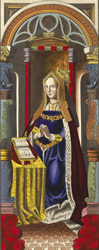
The history of the painted glass cinquecento Window, which, in 1758, was placed in the chancel, over the altar of St. Margaret’s Church, is truly romantic.

Elizabeth of York

Elizabeth of York

This beautiful window (said to have been executed at Gouda, in Holland, and to have occupied five years in the making) was originally intended by the magistrates of Dort as a present to Henry VII., by whom it was intended for his Chapel at Westminster; or as some say, it was ordered by Ferdinand and Isabella on the occasion of Prince Arthur being affianced, in 1499, to the Princess Catherine of Arragon, their portraits being procured for the purpose.

The three middle compartments represent the Crucifixion, with the usual accompaniments of angels receiving in a chalice the blood which drops from the wounds of the Saviour. Over the good thief an angel is represented wafting his soul to Paradise; and over the wicked, the devil in the shape of a dragon carrying his soul to a place of punishment. In the six upper compartments are six angels holding the emblems of crucifixion: the cross, the sponge, the crown of thorns, the hammer, the rods and nails. In the right hand lower compartment is Arthur, Prince of Wales (eldest son of Henry VII); and in the companion or left side, Catherine of Arragon, his bride (afterwards married to his brother Henry VIII., and divorced by him). Over the head of Prince Arthur is a full-length figure of St. George, with the red and white roses of England; and over Catherine of Arragon, a full-length figure of St. Catherine, with the bursting pomegranate, the emblem of the kingdom of Granada.

Prince Arthur died before the window was finished; the King himself before it could be erected. Succeeding events—the marriage of Henry VIII. To the bride or widow of his brother, with the subsequent divorce of Catherine—rendered the window wholly unfit for the place for which it was intended.

The window through the ages

  1. Catherine of Aragon

    Catherine of Aragon

    Henry VIII gave it to Waltham Abbey, Essex.

  2. At the Dissolution, Robert Fuller, the last Abbot, sent it to his private chapel at New Hall, also in Essex.
  3. It was later acquired by the father of Anne Boleyn.
  4. Queen Elizabeth I gave it to Thomas Ratcliff, Earl of Sussex, who was living at New Hall.
  5. It was purchased by Villiers, Duke of Buckingham, favorite of James I.
  6. Its next owner was Oliver Cromwell.
  7. At the Restoration, it reverted to the second Duke of Buckingham.
  8. It was purchased, along with New Hall, to General Monk, Duke of Albermarle. The duke buried it underground to keep it from the Puritans. After the Restoration he returned it to his chapel at New Hall.
  9. After he died and his son as well, the hall became the property of the duchess, and fell into ruin and decay.
  10. John Olmius, Esq., purchased the property and demolished the chapel, preserving the window.
  11. Eventually it was purchased by Mr. Conyers, of Copt Hall, Essex, for 50 guineas, for his own chapel.
  12. Conyers’ son, Mr. John Conyers sold the window in 1758 to the churchwardens of St. Margaret’s Westminster for 400 guineas.
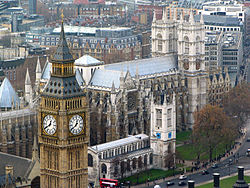
St. Margaret's Church (background)

St. Margaret’s Church (background)

“It is worth the walk”

It is worth a walk to St. Margaret’s to see this window. The late Mr. Winston, the great authority upon glass-painting, says of it: “Though at present much begrimed with London smoke and soot, it may be cited as an example of the pictorial excellence attainable in a glass-painting without any violation of the fundamental rules and conditions of the art. The harmonious arrangement of the coloring is worthy of attention. It is the most beautiful work in this respect that I am acquainted with.”

The church has been in our time, as it was centuries ago in Stow’s time, “in danger of pulling down;” which, if carried into effect, would add another leaf to the history of the St. Margaret’s Painted Window.

Thankfully, this last threat to the location of this window have not come to pass. I’m definitely putting St. Margaret’s on my list for this year’s trip, in August.

St. Margaret's Church from the London Eye

St. Margaret’s Church from the London Eye


Romance of London Series

  1. Romance of London: The Lord Mayor’s Fool… and a Dessert
  2. Romance of London: Carlton House and the Regency
  3. Romance of London: The Championship at George IV’s Coronation
  4. Romance of London: Mrs. Cornelys at Carlisle House
  5. Romance of London: The Bottle Conjuror
  6. Romance of London: Bartholomew Fair
  7. Romance of London: The May Fair and the Strong Woman
  8. Romance of London: Nancy Dawson, the Hornpipe Dancer
  9. Romance of London: Milkmaids on May-Day
  10. Romance of London: Lord Stowell’s Love of Sight-seeing
  11. Romance of London: The Mermaid Hoax
  12. Romance of London: The Bluestocking and the Sweeps’ Holiday
  13. Romance of London: Comments on Hogarth’s “Industries and Idle Apprentices”
  14. Romance of London: The Lansdowne Family
  15. Romance of London: St. Margaret’s Painted Window at Westminster
  16. Romance of London: Montague House and the British Museum
  17. Romance of London: The Bursting of the South Sea Bubble
  18. Romance of London: The Thames Tunnel
  19. Romance of London: Sir William Petty and the Lansdowne Family
  20. Romance of London: Marlborough House and Sarah, Duchess of Marlborough
  21. Romance of London: The Duke of Newcastle’s Eccentricities
  22. Romance of London: Voltaire in London
  23. Romance of London: The Crossing Sweeper
  24. Romance of London: Nathan Mayer Rothschild’s Fear of Assassination
  25. Romance of London: Samuel Rogers, the Banker Poet
  26. Romance of London: The Eccentricities of Lord Byron
  27. Romance of London: A London Recluse

Romance of London: The Lansdowne Family

Romance of London: Strange Stories, Scenes And Remarkable Person of the Great Town in 3 Volumes

John Timbs

John Timbs (1801-1875), who also wrote as Horace Welby, was an English author and aficionado of antiquities. Born in Clerkenwell, London, he was apprenticed at 16 to a druggist and printer, where he soon showed great literary promise. At 19, he began to write for Monthly Magazine, and a year later he was made secretary to the magazine’s proprietor and there began his career as a writer, editor, and antiquarian.

This particular book is available at googlebooks for free in ebook form. Or you can pay for a print version.

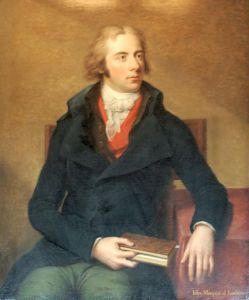
William Petty, 1st Marquis Lansdowne

William Petty, 1st Marquis Lansdowne

In 1805 died the second Marquis of Landsdowne, having by this time passed very much out of popular notice, and the principal cause of public regret for his demise was that only a fortnight before his death he had declared his knowledge of the Junius secret [see below], and yet among his papers was to be found no indication that could lead to its discovery. He was succeeded by his eldest son, the Earl of Wycombe, whose first act on coming into possession was to sell almost all of the literary and artistic treasures which his father had accumulated with so much love and labour. The greater part of these were dispersed under the hammer of the auctioneer, many of the pictures going to enrich the Grosvenor, the National, and other galleries; only the Lansdowne MSS. Were kept together, being purchased by the British Museum; while the gallery of antique marbles was the sole portion of the collection for which the Marquis showed any appreciation—his opinion being expressed in the fact that he purchased it from his father’s executors for 6,000l. If, however, this nobleman did not show much respect to his father’s cultivated tastes, he was not without a certain ancestral pride; for he tried to build a vessel on the principle of Sir William Petty’s double-bottomed ship that was to sail against wind and tide—a model of which was then, and is perhaps still, exhibited in the Council-room of the Royal Society. Of nautical habits, he also built near the Southampton Water a marine villa, in which, from dining-hall and private bower to kitchen and scullery, all was utter Gothic, while the gardens belonging to the castle were laid out at Romsey, some ten or twelve miles distant, on a site which formed the original estate of the Petty family.

John Petty, 2nd Marquis of Lansdowne

John Petty, 2nd Marquis of Lansdowne

Here, if not in his yacht voyaging to Ireland or the Continent, he spent most of his time. In London he was a marked man—remarkable for his disregard of dress, and for the pride which he took in appearing on the coldest days in winter without a greatcoat and without gloves. He died in November 1809, and was succeeded by his half-brother, the fourth [third] Marquis, whose first care was to purchase the antique marbles from his sister-in-law, and there at Landsdowne House they may now be seen—some of them, as the youthful Hercules and the Mercury, justly considered the finest statues of the kind that have found their way to this country. As for the pictures, when the Marquis succeeded to the title, in 1809, there was not one in this splendid mansion, with the exception of a few family portraits; but Lord Lansdowne set himself to the formation of a gallery which now comprises nearly 200 pictures of rare interest and value, but miscellaneous in their character, no school nor master predominating unless it be Sir Joshua Reynolds. Some of the portraits in this collection are of great interest. There is the celebrated portrait of Pope by Jervas; Reynolds’s wonderful portrait of Sterne; one of Franklin, by Gainsborough; a beautiful one of Peg Woffington, by Hogarth; Lady Hamilton appears twice—as a bacchante and a gipsy, from the pencil of Romney; Horner, the old college friend of Lord Lansdowne, is not forgotten; but, most interesting of all, there is the lovely portrait of Mrs. Sheridan, as St. Cecilia, painted by Reynolds.

mrs. sheridan

Mrs. Richard Brinsley Sheridan, by Gainsborough

It may recall with some vividness the fashion of those times if we record a little incident connected with this portrait. During the short-lived Ministery of “All the Talents,” the Whig leaders celebrated their return to power by a continual found of festivities, in which Sheridan outside all his colleagues. One Sunday (25th of May 1806) he gave a grand dinner; on the Monday following a supper and ball, at which the dancing was prolonged to past eight o’clock next morning; on the Tuesday, a christening, a masque, and another ball, the Prince being present on each occasion, and the Lord Chancellor Erskine and the young Chanceller of the Exchequer, Henry Petty, being conspicuous among the dancers. On the occasion of the dinner, the portrait of Mrs. Sheridan was redeemed for one night only from the pawnbroker’s, and exhibited in its place in the dining-room; when poor Sheridan died, it was still in possession of the pawnbroker; it then fell into the hands of Sheridan’s solicitor, and from him it was purchased for 600l. By Lord Lansdowne. In this little incident we get some glimpses of that conviviality for which the Whigs were distinguished. “Le Whig est la femme de votre Gouvernement,” says Balzac, and the truth of the remark is especially illustrated in that social influence which the Whigs have always cultivated more than the Tories.*

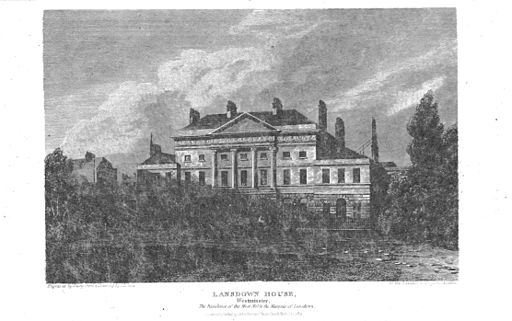
Lansdowne House (1820)

Lansdowne House (1820)

Lansdowne House was built by Robert Adam for the Marquis of Bute, when minister to George III, and sold by the Marquis before completion to Lord Shelburne, afterwards Marquis of Lansdowne, for 22,000l., which was supposed to be 3,000l. Less than it cost. There is, also, a piece of political scandal—that Lansdowne House was constructed by one Peace (Lord Bute’s, in 1762), and paid for by another (Lord Shelburne’s, in 1783).

*From The Times journal

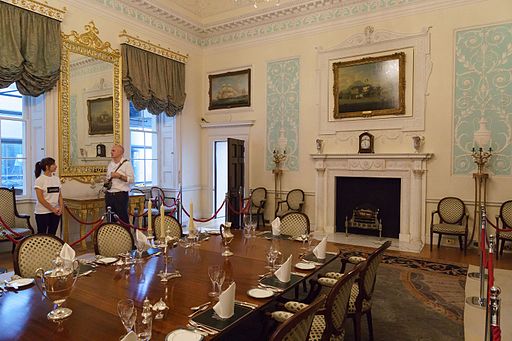
Lansdowne House was partially demolished in the 1930’s to make room for a new road, and some of its noted interiors located elsewhere.

The dining room from Landsdowne House, now located at the Lloyd's Building

The dining room from Landsdowne House, now located at the Lloyd’s Building


A drawing room now found at the Philadelphia Museum of Art

A drawing room now found at the Philadelphia Museum of Art


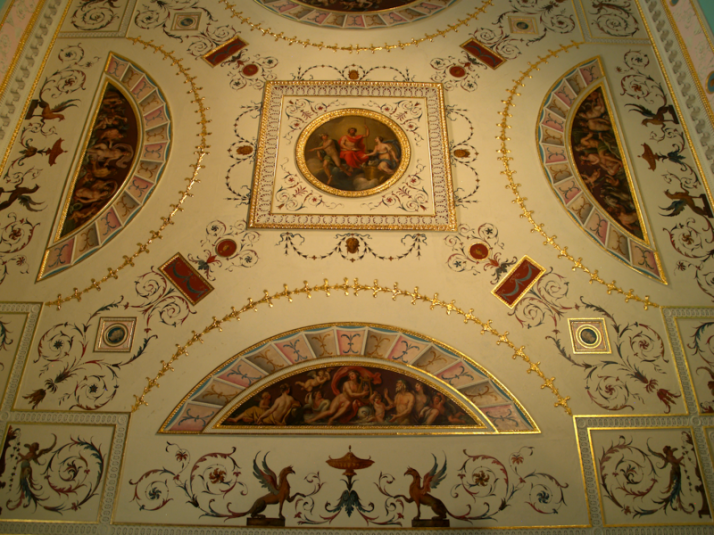
Lansdowne House ceiling (Robert Adam)

Lansdowne House ceiling (Robert Adam)


*The Junius Secret

Junius was the pseudonym of a man who wrote letters exposing corruption in government from 1768 to 1772. His identity has never been discovered, but was the source of much speculation. If Lord Lansdowne indeed knew it, he died without revealing the secret.

More information on Wikipedia.

The Secret Revealed of the Authorship of Junius’s Letters

Romance of London: Comments on Hogarth’s “Industrious and Idle Apprentices”

Romance of London: Strange Stories, Scenes And Remarkable Person of the Great Town in 3 Volumes

John Timbs

John Timbs (1801-1875), who also wrote as Horace Welby, was an English author and aficionado of antiquities. Born in Clerkenwell, London, he was apprenticed at 16 to a druggist and printer, where he soon showed great literary promise. At 19, he began to write for Monthly Magazine, and a year later he was made secretary to the magazine’s proprietor and there began his career as a writer, editor, and antiquarian.

This particular book is available at googlebooks for free in ebook form. Or you can pay for a print version.

Comments on Hogarth’s “Industrious and Idle Apprentices”

William Makepeace Thackeray

William Makepeace Thackeray

Mr. Thackeray, in his Lectures on the English Humorists, thus vividly paints the scenes of Hogarth’s masterpieces; at the same time he very ingeniously contrasts the past with the present—one of the more immediate benefits of the Lecture: the past is generally interesting, but it chiefly becomes instructive when brought under the powerful focus of the present. His account of Hogarth’s “Apprentices” is a masterpiece in this way:

1William_Hogarth_-_Industry_and_Idleness,_Plate_1;_The_Fellow_'Prentices_at_their_Looms

William_Hogarth-Industry and Idleness, Plate 1; The Fellow ‘Prentices at their Looms

Fair-haired Frank Goodchild smiles at his work, whilst naughty Tom Idle snores over his loom. Frank reads the edifying ballads of Whittington and the London ‘Prentice: whilst that reprobate Tom Idle prefers Moll Flanders, and drinks hugely of beer.

2william_hogarth_-_industry_and_idleness_plate_2_the_industrious_prentice_performing_the_duty_of_a_christian.png

William Hogarth-industry and idleness plate 2 the industrious prentice_performing the duty of a Christian

Frank goes to church on a Sunday, and warbles hymns from the gallery; while Tom lies on a tomb-stone outside playing at halfpenny-under-the-hat, and with street blackguards, and deservedly caned by the beadle.

william_hogarth_-_industry_and_idleness_plate_3_the_idle_prentice_at_play_in_the_church_yard_during_divine_service

william hogarth -industry and idleness plate 3 the idle prentice at play in the church yard during divine service

Frank is made overseer of the business; whilst Tom is sent to sea.

4William_Hogarth_-_Industry_and_Idleness,_Plate_4;_The_Industrious_'Prentice_a_Favourite,_and_entrusted_by_his_Master

William_Hogarth Industry and Idleness, Plate 4; The Industrious ‘Prentice a Favourite, and entrusted by his Master


william_hogarth_-_industry_and_idleness_plate_5_the_idle_prentice_turnd_away_and_sent_to_sea

william hogarth – industry and idleness plate 5 the idle prentice turnd away and sent to sea

Frank is taken into partnership, and marries his master’s daughter, sends out broken victuals to the poor, and listens in his night-cap and gown with the lovely Mrs. Goodchild by his side, to the nuptial music of the city bands and the marrow-bones and cleavers; whilst idle Tom, returned from sea, shudders in a garret lest the officers are coming to take him for picking pockets.

william_hogarth_-_industry_and_idleness_plate_6_the_industrious_prentice_out_of_his_time__married_to_his_masters_daughter

william hogarth – industry and idleness plate 6 the industrious prentice out of his time married to his masters daughter

william_hogarth_-_industry_and_idleness_plate_7_the_idle_prentice_returnd_from_sea__in_a_garret_with_common_prostitute

william hogarth – industry and idleness plate 7 the idle prentice returnd from sea in a garret with common prostitute

The Worshipful Francis Goodchild, Esq., becomes Sheriff of London, and partakes of the most splendid dinners which money can purchase or alderman devour; whilst poor Tom is taken up in a night cellar, with that one-eyed and disreputable accomplice who first taught him to play chuck-farthing on a Sunday.

william_hogarth_-_industry_and_idleness_plate_8_the_industrious_prentice_grown_right__sheriff_of_london

william hogarth – industry and idleness plate 8 the industrious prentice grown right sheriff of london

What happens next? Tom is brought up before the justice of his county, in the person of Mr. Alderman Goodchild, who weeps as he recognizes his old brother ‘prentice, as Tom’s one-eyed friend peaches on him, as the clerk makes out the poor rogue’s ticket for Newgate.

william_hogarth_-_industry_and_idleness_plate_9_the_idle_prentice_betrayed_and_taken_in_a_night-cellar_with_his_accomplice

william hogarth – industry and idleness plate 9 the idle prentice betrayed and taken in a night-cellar with his accomplice


william_hogarth_-_industry_and_idleness_plate_10_the_industrious_prentice_alderman_of_london_the_idle_on_brought_before_him__impreachd_by_his_accomplice

william hogarth -industry and idleness plate 10 the industrious prentice alderman of_london the idle on brought before him impreachd by his accomplice

Then the end comes. Tom goes to Tyburn in a cart with a coffin in it; whilst the right Honorable Francis Goodchild, Lord Mayor of London, proceeds to his Mansion House, in his gilt coach, with four footmen and a sword-bearer, whilst the companies of London march in the august procession, whilst the train-bands of the city fire their pieces and get drunk in his honor; and oh, crowning delight and glory of all, whilst his majesty the king looks out of his royal balcony, with his ribbon on his breast, and his queen and his star by his side at the corner house of St. Paul’s Church-yard, where the toy-shop is now.

william_hogarth_-_industry_and_idleness_plate_11_the_idle_prentice_executed_at_tyburn

william_hogarth- industry and idleness plate 11 the idle prentice executed at tyburn


william_hogarth_-_industry_and_idleness_plate_12_the_industrious_prentice_lord-mayor_of_london

william_hogarth -industry and idleness plate 12 the industrious prentice ord-mayor of london

How the times have changed! The new Post-office now not disadvantageously occupies that spot where the scaffolding is on the picture, where the tipsy trainband-man is lurching against the post, with his wig over one eye, and the ‘prentice-boy is trying to kiss the pretty girl in the gallery. Past away ‘prentice boy and pretty girl! Past away tipsy trainband-man with wig and bandolier! On the spot where Tom Idle (for whom I have an unaffected pity) made his exit from this wicked world, and where you see the hangman smoking his pipe, as he reclines on the gibbet, and views the hills of Harrow on Hampstead beyond—a splendid marble arch, a vast and modern city—clean, airy, painted drab, populous with nursery-maids and children, the abodes of wealth and comfort—the elegant, the prosperous, the polite Tyburnia rises, the most respectable district in the habitable globe!

In that last plate of the London Apprentices, in which the apotheosis of the Right Honorable Francis Goodchild is drawn, a ragged fellow is represented in the corner of the simple kindly piece, offering for sale a broadside, purporting to contain an account of the appearance of the ghost of Tom Idle, executed at Tyburn. Could Tom’s ghost have made its appearance in 1847, and not in 1747, what changes would have been remarked by that astonished escaped criminal! Over that road which the hangman used to travel constantly, and the Oxford stage twice a week, go ten thousand carriages every day; over yonder road, by which Dick Turpin fled to Windsor, and Squire Western journeyed into town, when he came to take up his quarters at the Hercules Pillars not he outskirts of London, what a rush of civilization and order flows now! What armies of gentlemen with umbrellas march to banks, and chambers, and counting-houses! What regiments of nursery-maids and pretty infantry: what peaceful processions of policemen, what light broughams and what gay carriages, what swarms of busy apprentices and artificers, riding on omnibus-roofs, pass daily and hourly! Tom Idle’s times are quite changed; many of the institutions gone into disuse which were admired in his day. There’s more pity and kindness, and a better chance for poor Tom’s successors now than at that simpler period, when Fielding hanged him, and Hogarth drew him.

One hundred and fifty years after Thackeray’s assertions that the world is a kinder place toward kids like Idle Tom, I’m not so certain I can say the same. As a former teacher, it seems to me that the system is still stacked against kids who “dance to a different drum” or who are raised in poverty and/or by indifferent parents. And I’ll be damned if I know how to change that. What do you think?


Romance of London Series

  1. Romance of London: The Lord Mayor’s Fool… and a Dessert
  2. Romance of London: Carlton House and the Regency
  3. Romance of London: The Championship at George IV’s Coronation
  4. Romance of London: Mrs. Cornelys at Carlisle House
  5. Romance of London: The Bottle Conjuror
  6. Romance of London: Bartholomew Fair
  7. Romance of London: The May Fair and the Strong Woman
  8. Romance of London: Nancy Dawson, the Hornpipe Dancer
  9. Romance of London: Milkmaids on May-Day
  10. Romance of London: Lord Stowell’s Love of Sight-seeing
  11. Romance of London: The Mermaid Hoax
  12. Romance of London: The Bluestocking and the Sweeps’ Holiday
  13. Romance of London: Comments on Hogarth’s “Industries and Idle Apprentices”
  14. Romance of London: The Lansdowne Family
  15. Romance of London: St. Margaret’s Painted Window at Westminster
  16. Romance of London: Montague House and the British Museum
  17. Romance of London: The Bursting of the South Sea Bubble
  18. Romance of London: The Thames Tunnel
  19. Romance of London: Sir William Petty and the Lansdowne Family
  20. Romance of London: Marlborough House and Sarah, Duchess of Marlborough
  21. Romance of London: The Duke of Newcastle’s Eccentricities
  22. Romance of London: Voltaire in London
  23. Romance of London: The Crossing Sweeper
  24. Romance of London: Nathan Mayer Rothschild’s Fear of Assassination
  25. Romance of London: Samuel Rogers, the Banker Poet
  26. Romance of London: The Eccentricities of Lord Byron
  27. Romance of London: A London Recluse
Romance of London: The Bluestocking and the Sweeps’ Holiday

Romance of London: Strange Stories, Scenes And Remarkable Person of the Great Town in 3 Volumes

John Timbs

John Timbs (1801-1875), who also wrote as Horace Welby, was an English author and aficionado of antiquities. Born in Clerkenwell, London, he was apprenticed at 16 to a druggist and printer, where he soon showed great literary promise. At 19, he began to write for Monthly Magazine, and a year later he was made secretary to the magazine’s proprietor and there began his career as a writer, editor, and antiquarian.

This particular book is available at googlebooks for free in ebook form. Or you can pay for a print version.

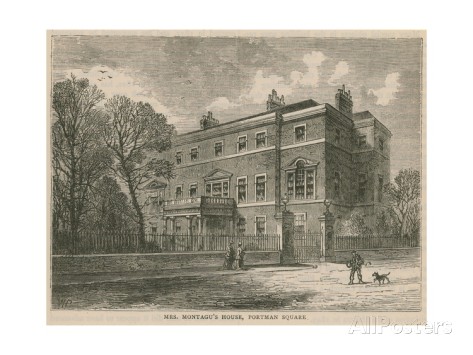
Montague House, Portman Square

Montague House, Portman Square

Elizabeth Montague’s Bluestocking Parties

At the north-west angle of Portman Square is Montague House, built for Mrs. Elizabeth Montague, authoress of the Vindication of Shakespeare against Voltaire. She had often been a guest at the second Lord Oxford’s, the resort of Pope and his contemporaries; she was the intimate friend of Pulteney and Littleton; and she survived to entertain Johnson, Goldsmith, Burke, and Reynolds, to their respective deaths. Dr. Beattie was among her visitors; and Mrs. Carter, the translator of Epictetus, was her intimate friend, correspondent, and visitor. At Montague House Mrs. Montague had her blue stocking parties; and here she gave on the first of May, “Sweeps’ Holiday,” which originated in the discovery among the fraternity of chimney-sweeps, of the eccentric Edward Wortley Montague, ‘son of the famous Lady Mary Wortley Montague, by her husband, Edward Wortley.’

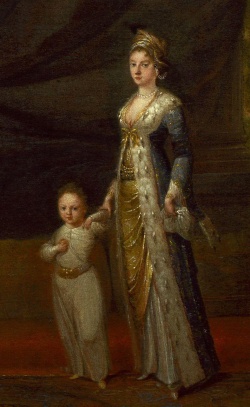
Lady Mary Wortley Montagu with Her Son Edward. Lady Mary was the first to bring smallpox inoculation to Western medicine after her experiences in the Ottoman Empire.

Lady Mary Wortley Montagu with Her Son Edward. Lady Mary was the first to bring smallpox inoculation to Western medicine after her experiences in the Ottoman Empire.

Edward Wortley Montague

This hopeful boy was born at Wharncliffe Lodge, in Yorkshire, about the year 1714; he was sent to Westminster School, whence he ran away, and was more than a year apprentice to a fisherman at Blackwall; he was sent back to Westminster, again ran away, and bound himself to the master of an Oporto vessel, a Quaker, from whom he escaped immediately on landing. In one of these flights, he changed clothes with a chimney-sweep, and for some time followed that occupation. After a long and anxious search, he was discovered by his friends, and restored to his parents, on the first of May, at the family mansion in Portman Square.

800px-Edward_Wortley_Montagu_by_Matthew_William_Peters

A 1775 portrait of Edward Wortley Montagu by Matthew William Peters

He had also served an apprenticeship among a traveling troop of showmen, who were distinguished by their skill in horsemanship; then worked in the fields in Holland as a day-laborer; next hired himself as a postillion; he then assumed the attire of an abbot, and passed for one at Rome. He next then passed for a Lutheran preacher at Hamburg, and was universally popular! He subsequently embraced the Mahomedan religion, and conformed to all Turkish habits, even to chewing opium and sitting cross-legged on the floor! With the Hebrew, Arabic, the Persian, and the Chadic he was as well acquainted as his native tongue. He at one time returned to England, and acted more comformably to his rank, and was returned as a member in two successive parliaments… But Montague’s profuse expenses soon compelled him to quit his native country, and he again assumed his wandering habits, and eventually died at Padua, at the age of sixty-two years.

The First of May: A Day for Chimney Sweeps

CHIMNEY SWEEP. A chimney sweep and his young helper. Line engraving, English, 18th century.

CHIMNEY SWEEP. A chimney sweep and his young helper. Line engraving, English, 18th century.

To commemorate the restoration of the truant to his family, in the grounds attached to Montague House, his relative, Mrs. Elizabeth Montague, for many years feasted the chimney-sweeps of London, on the first of May, with roast-beef and plum-pudding, “so that they might enjoy one happy day in the year.” And this special treat is said to have given rise to the general sweeps’ holiday. Mrs. Montague died in the year 1800, in her 80th year.

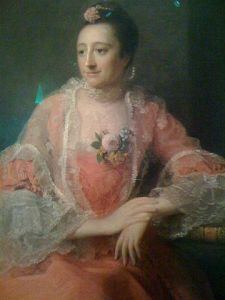
Portrait of Elizabeth_Montagu (1718-1800) by Allan Ramsay (1713-1784) in 1762

Portrait of Elizabeth Montagu (1718-1800) by Allan Ramsay (1713-1784) in 1762


Incidentally, chimney sweeps’ cancer is the first industrially-related cancer to be found (1775).

sweepsholiday

In honor of Sweeps’ Holiday:

Name any works of art, literature, movies, etc. that prominently feature chimney sweeps.


Romance of London Series

  1. Romance of London: The Lord Mayor’s Fool… and a Dessert
  2. Romance of London: Carlton House and the Regency
  3. Romance of London: The Championship at George IV’s Coronation
  4. Romance of London: Mrs. Cornelys at Carlisle House
  5. Romance of London: The Bottle Conjuror
  6. Romance of London: Bartholomew Fair
  7. Romance of London: The May Fair and the Strong Woman
  8. Romance of London: Nancy Dawson, the Hornpipe Dancer
  9. Romance of London: Milkmaids on May-Day
  10. Romance of London: Lord Stowell’s Love of Sight-seeing
  11. Romance of London: The Mermaid Hoax
  12. Romance of London: The Bluestocking and the Sweeps’ Holiday
  13. Romance of London: Comments on Hogarth’s “Industries and Idle Apprentices”
  14. Romance of London: The Lansdowne Family
  15. Romance of London: St. Margaret’s Painted Window at Westminster
  16. Romance of London: Montague House and the British Museum
  17. Romance of London: The Bursting of the South Sea Bubble
  18. Romance of London: The Thames Tunnel
  19. Romance of London: Sir William Petty and the Lansdowne Family
  20. Romance of London: Marlborough House and Sarah, Duchess of Marlborough
  21. Romance of London: The Duke of Newcastle’s Eccentricities
  22. Romance of London: Voltaire in London
  23. Romance of London: The Crossing Sweeper
  24. Romance of London: Nathan Mayer Rothschild’s Fear of Assassination
  25. Romance of London: Samuel Rogers, the Banker Poet
  26. Romance of London: The Eccentricities of Lord Byron
  27. Romance of London: A London Recluse

Romance of London: The Mermaid Hoax

Romance of London: Strange Stories, Scenes And Remarkable Person of the Great Town in 3 Volumes

John Timbs

John Timbs (1801-1875), who also wrote as Horace Welby, was an English author and aficionado of antiquities. Born in Clerkenwell, London, he was apprenticed at 16 to a druggist and printer, where he soon showed great literary promise. At 19, he began to write for Monthly Magazine, and a year later he was made secretary to the magazine’s proprietor and there began his career as a writer, editor, and antiquarian.

This particular book is available at googlebooks for free in ebook form. Or you can pay for a print version.

The Mermaid Hoax

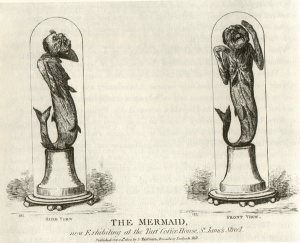
The absurd notion, that there are “Mermen and Mermaids, half man or woman and the remainder fish,” has long been exploded; but, little more than 40 years ago since (in 1822) thousands of dupes were attracted to the Egyptian Hall, in Piccadilly, to see a pretended Mermaid, when 300 or 400 persons paid daily one shilling each for the indulgence of their credulity! The imposture was, however, too gross to last long; and it was ascertained to be the dried skin of the head and shoulders of a monkey, attached very neatly to the dried skin of a fish of the salmon kind, with the head cut off; the compounds figure being stuffed and highly varnished, the better to deceive the eye. This grotesque object was taken by a Dutch vessel from on board a native Malacca boat; and from the reverence shown to it by the sailors, it is supposed to have represented the incarnation of one of the idol-gods of the Molucca Islands.

The mermaid

This impudent hoax upon the good people of London was the work of a Japanese fisherman, who seems to have displayed ingenuity for the mere purpose of making money by his countrymen’s passion for everything odd and strange. He contrived to unite the upper half of the monkey to the lower half of the fish so successfully as to defy ordinary inspection. He then gave out that he had caught the creature alive in his net, but that it had died shortly after being taken out of the water; and he derived considerably pecuniary profit from his cunning in more ways than one. The exhibition of the sea-monster to Japanese curiosity paid well; but yet more productive was the assertion that the half-human fish, having spoken during the few minutes it existed out of its native element, had predicted a certain number of years of wonderful fertility, and a fatal epidemic, the only remedy for which would be the possession of the marine prophet’s likeness. The sale of these pictured mermaids was immense. Either the composite animal, or another, the offspring of the success of the first, was sold to the Dutch factory, and transmitted to Batavia, where it fell into the hands of speculation American, who brought it to Europe, and here, in the years 1822-23, exhibited his purchase as a real mermaid in every capital, to the admiration of the ignorant, the perplexity of some affectedly learned, and the filling of his own purse.

…Still, the creature must have been so unsightly as to reduce Dryden’s definition of a mermaid—a fine woman ending in a fish’s tail—to a witty fancy.

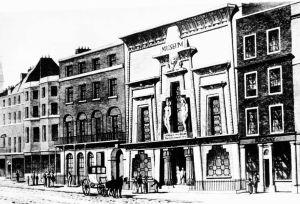
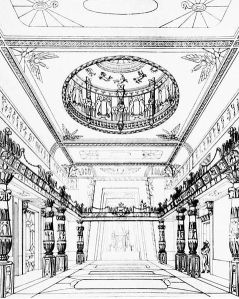
The Egyptian Hall in Piccadilly

The Egyptian Hall was commissioned by William Bullock to house his collection of curiosities and completed in 1812—the first building in England to be influenced by the Egyptian style. Before opening the hall (also called the London Museum or Bullock’s Museum), Bullock displayed his collection in Sheffield and Liverpool. He made money from selling tickets for various spectaculars. Bullock made £35,000 from exhibiting Napoleonic era artifacts, including Napoleon’s carriage from Waterloo. In 1819, the Hall became a major venue for exhibiting art, particularly very large pieces. Admission was usually one shilling.

Egyptian_Hall,_Piccadilly_1815_edited

478px-Egyptian_Hall_redesigned_by_JB_Papworth

Romance of London Series

  1. Romance of London: The Lord Mayor’s Fool… and a Dessert
  2. Romance of London: Carlton House and the Regency
  3. Romance of London: The Championship at George IV’s Coronation
  4. Romance of London: Mrs. Cornelys at Carlisle House
  5. Romance of London: The Bottle Conjuror
  6. Romance of London: Bartholomew Fair
  7. Romance of London: The May Fair and the Strong Woman
  8. Romance of London: Nancy Dawson, the Hornpipe Dancer
  9. Romance of London: Milkmaids on May-Day
  10. Romance of London: Lord Stowell’s Love of Sight-seeing
  11. Romance of London: The Mermaid Hoax
  12. Romance of London: The Bluestocking and the Sweeps’ Holiday
  13. Romance of London: Comments on Hogarth’s “Industries and Idle Apprentices”
  14. Romance of London: The Lansdowne Family
  15. Romance of London: St. Margaret’s Painted Window at Westminster
  16. Romance of London: Montague House and the British Museum
  17. Romance of London: The Bursting of the South Sea Bubble
  18. Romance of London: The Thames Tunnel
  19. Romance of London: Sir William Petty and the Lansdowne Family
  20. Romance of London: Marlborough House and Sarah, Duchess of Marlborough
  21. Romance of London: The Duke of Newcastle’s Eccentricities
  22. Romance of London: Voltaire in London
  23. Romance of London: The Crossing Sweeper
  24. Romance of London: Nathan Mayer Rothschild’s Fear of Assassination
  25. Romance of London: Samuel Rogers, the Banker Poet
  26. Romance of London: The Eccentricities of Lord Byron
  27. Romance of London: A London Recluse

Romance of London: Lord Stowell’s Love of Sight-seeing

Romance of London: Strange Stories, Scenes And Remarkable Person of the Great Town in 3 Volumes

John Timbs

John Timbs (1801-1875), who also wrote as Horace Welby, was an English author and aficionado of antiquities. Born in Clerkenwell, London, he was apprenticed at 16 to a druggist and printer, where he soon showed great literary promise. At 19, he began to write for Monthly Magazine, and a year later he was made secretary to the magazine’s proprietor and there began his career as a writer, editor, and antiquarian.

This particular book is available at googlebooks for free in ebook form. Or you can pay for a print version.

William Scott, First (and only) Lord Stowell

William Scott (1745-1836) was born in Northumberland to a father who was in the business of transporting coal. Both William and his brother John became successful jurists, William becoming a judge of the high court of admiralty and elected a Fellow of the Royal Society, and John eventually becoming Earl of Eldon and Lord Chancellor of England. William was raised to the peerage as a baron following the coronation of George IV in 1821. William was twice married, but as the only one of his four children was a female, the title became extinct after his death at age 90.

More information at Wikipedia.

https://commons.wikimedia.org/wiki/File%3AWilliam_Scott%2C_1st_Baron_Stowell_(1745-1836)%2C_by_William_Owen_(1769-1825).jpg

William Scott, 1st Baron Stowell (1745-1836, Wikimedia Commons

Lord Stowell’s Love of Sightseeing

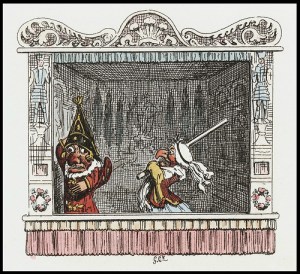
Punch & Judy by Cruikshank, 1828

Punch & Judy by Cruikshank, 1828

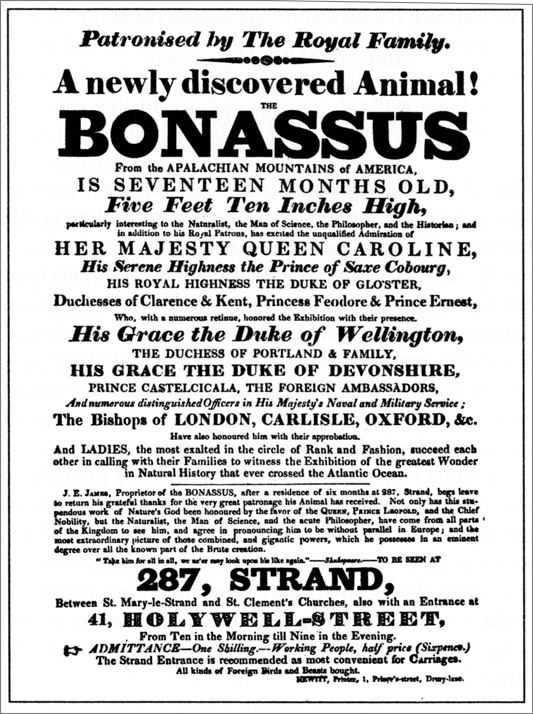
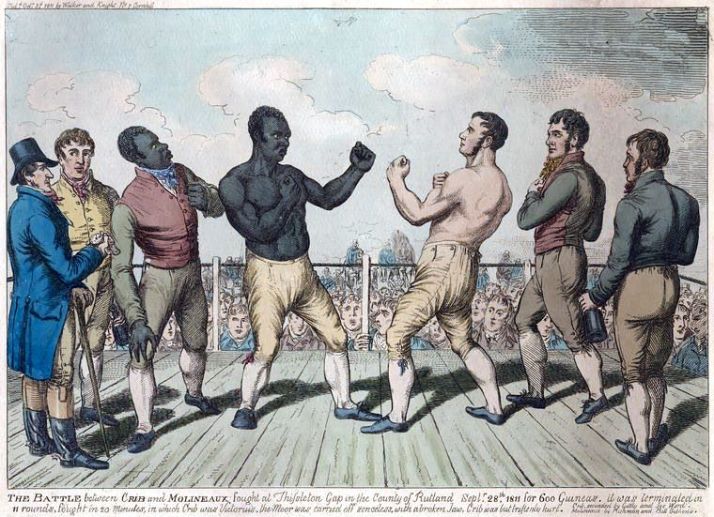
Lord Stowell loved manly sports, and was not above being pleased with the most rude and simple diversions. He gloried in Punch and Judy—their fun stirred his mirth without, as in Goldsmith’s case, provoking spleen. He made a boast on one occasion that there was not a puppet-show in London he had not visited, and when turned fourscore, was caught watching one at a distance with children of less growth in high glee.  He has been known to make a party with Wyndham to visit Cribb’s, and to have attended the “fives court” as a favourite resort. “There were curious characters,” he observed, “to be seen at these places.” He was the most indefatigable sight-seer in London. Whatever show could be visited for a shilling, or less, was visited by Lord Stowell. In the western end of London there was a room generally let for exhibitions. At the entrance, as it is said, Lord Stowell presented himself, eager to see “the green monster serpent,” which had lately issued cards of invitation to the public. As he was pulling out his purse to pay for his admission, a sharp but honest north-country lad, whose business it was to take the money, recognized him as an old customer, and knowing his name, thus addressed him: “We can’t take your shilling, my lord; ’tis the old serpent which you have seen twice before in other colors; but ye shall go in and see her.” He entered, saved his money, and enjoyed his third visit to the painted beauty. This love of “seeing sights” was, on another occasion, productive of a whimsical incident. Some forty years ago, an animal, called a “Bonassus,” was exhibited in the Strand. On Lord Stowell’s paying it a second visit, the keeper very courteously told his lordship that he was welcome to come, gratuitously, as often as he pleased. Within a day or two after this, however, there appeared, under the bills of the exhibition, in conspicuous characters, “Under the patronage of the Right Hon. Lord Stowell;” an announcement of which the noble and learned lord’s friends availed themselves, by passing many a joke upon him; all which he took with the greatest good humor.

bonassus

The Bonassus…proved to be a troublesome neighbour—a constant annoyance. The following letter was intended to have been sent to the “Annoyance Jury,” by the occupier of the house in the Strand (nearly opposite Norfolk-street) adjoining that in which the “Bonassus” was exhibited:—

March 28, 1822

“Gentlemen,—I Am sorry to trouble you but I Am so Anoyd By next Door Neighbour the Bonassus and with Beasts, that I cannot live in my House—for the stench of the Beast is So Great And their is only A Slight petition Betwixt the houses and the Beast are continually Breaking through in to my Different Rooms And I am always loosing my lodgers in Consequence of the Beast first A Monkey made Its way in My Bedroom next the Jackall came in to the Yard and this last week the people in My Second floor have been Alarmed in the Dead of the Night By Monkey Breaking through into the Closet and are Going to leave in Consequence this being the third lodgers I have lost on account of the Beast And I have been letting my Second Floor at Half the Rent—And those men of Mr. James are Bawling the whole Day Against My Window—and continually taking peoples attention from My Window—And I am quite pestered with Rats and I Am Confident they came from the Exhebition—And in Short the Injury and Nuisance is So Great as almost Impossible to Describe But to be so Anoyd By such an Imposter I think is Very Hard—Gentlemen your Early inquiry will oblige your Servant—T.W.—.

N.B. And if I mention anything to Mr. James He only Abuses me with the Most Uncouth Language.”

Susana’s note: Apologies to English teachers everywhere, who have no doubt suffered through many such essays in their noble careers.

Lord Stowell enjoyed attending boxing matches at Cribb's, especially in his later years

Lord Stowell enjoyed attending boxing matches at Cribb’s, especially in his later years


Romance of London Series

  1. Romance of London: The Lord Mayor’s Fool… and a Dessert
  2. Romance of London: Carlton House and the Regency
  3. Romance of London: The Championship at George IV’s Coronation
  4. Romance of London: Mrs. Cornelys at Carlisle House
  5. Romance of London: The Bottle Conjuror
  6. Romance of London: Bartholomew Fair
  7. Romance of London: The May Fair and the Strong Woman
  8. Romance of London: Nancy Dawson, the Hornpipe Dancer
  9. Romance of London: Milkmaids on May-Day
  10. Romance of London: Lord Stowell’s Love of Sight-seeing
  11. Romance of London: The Mermaid Hoax
  12. Romance of London: The Bluestocking and the Sweeps’ Holiday
  13. Romance of London: Comments on Hogarth’s “Industries and Idle Apprentices”
  14. Romance of London: The Lansdowne Family
  15. Romance of London: St. Margaret’s Painted Window at Westminster
  16. Romance of London: Montague House and the British Museum
  17. Romance of London: The Bursting of the South Sea Bubble
  18. Romance of London: The Thames Tunnel
  19. Romance of London: Sir William Petty and the Lansdowne Family
  20. Romance of London: Marlborough House and Sarah, Duchess of Marlborough
  21. Romance of London: The Duke of Newcastle’s Eccentricities
  22. Romance of London: Voltaire in London
  23. Romance of London: The Crossing Sweeper
  24. Romance of London: Nathan Mayer Rothschild’s Fear of Assassination
  25. Romance of London: Samuel Rogers, the Banker Poet
  26. Romance of London: The Eccentricities of Lord Byron
  27. Romance of London: A London Recluse
Romance of London: Milkmaids on May-Day

Romance of London: Strange Stories, Scenes And Remarkable Person of the Great Town in 3 Volumes

John Timbs

John Timbs (1801-1875), who also wrote as Horace Welby, was an English author and aficionado of antiquities. Born in Clerkenwell, London, he was apprenticed at 16 to a druggist and printer, where he soon showed great literary promise. At 19, he began to write for Monthly Magazine, and a year later he was made secretary to the magazine’s proprietor and there began his career as a writer, editor, and antiquarian.

This particular book is available at googlebooks for free in ebook form. Or you can pay for a print version.

Milkmaids on May-Day

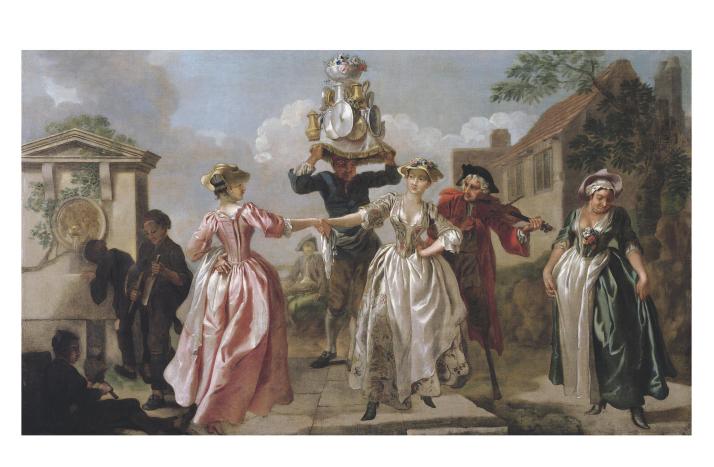
On this gay festival, the Londoners of the present century have seen little. J.T. Smith, in his amusing Book for a Rainy Day, describes the carnival of nearly a century since, May 1771: “The gaiety during the merry month of May (says Smith) was to me most delightful; my feet, though I know nothing of the positions, kept pace with those of the blooming milkmaids, who danced round their garlands of massive plate, hired from the silversmiths, to the amount of several hundreds of pounds, for the purpose of placing round an obelisk, covered with silk, fixed upon a chairman’s horse. The most showy flowers of the season were arranged so as to fill up the openings between the dishes, plates, butter-boats, cream-jugs, and tankards. The obelisk was carried by two chairmen, in gold-laced hats, six or more handsome milkmaids in pink and blue gowns, drawn through the pocket-holes, for they had one on either side; yellow or scarlet petticoats, neatly quilted; high-heeled shoes; mob-caps, with lappets of lace resting on their shoulders; nosegays in their bosoms; and flat Woffington hats, covered with ribbons of every color. A magnificent silver tea-urn surmounted the obelisk, the stand of which was profusely decorated with scarlet tulips. A smart, slender fellow of a fiddler, in a sky-blue coat, wit his hat covered with ribbons, attended; and the master of the group was accompanied by a constable, to protect the plate from too close a pressure of the crowd, when the maids were dancing.”

One of Hayman’s paintings in Vauxhall Gardens, was the Milkmaids on May-day: here the garland of plate was carried by a man on his head; the milkmaids, who danced to the music of a wooden-legged fiddler, were very elegant. They had ruffled cuffs; their hats were flat, but not Woffingtons, but more resembled those of the Billingsgate fish-women. In Larcom’s Cries of London, published by Tempest, there is “a Merry Milkmaid;” she is dancing with a small garland of plate upon her head; and her dress is of the latter part of King William the Third’s reign, or the commencement of the reign of Queen Anne.

Francis Hayman’s May Day (Supper-box) Painting

From the V & A:

One of the ancient customs observed on May Day that persisted until the early 19th century was the ‘Milkmaid’s Garland.’ The milkmaids would dress in their best clothes and dance in the streets for their customers. A donation from the customers and from passers-by was expected. A ‘garland’ – a pyramid of borrowed silver tankards, plates and flagons decorated with flowers – was paraded by the milkmaids or carried, as in this painting, by a porter. Francis Hayman also included another May Day custom in his picture: that of the young chimney-sweeps noisily beating their brushes and shovels.

©Victoria and Albert Museum, London

Francis Hayman, Vauxhall Gardens, supper-box painting, ©Victoria and Albert Museum, London

See more about May-Day here. 

So… what’s a Woffington hat?

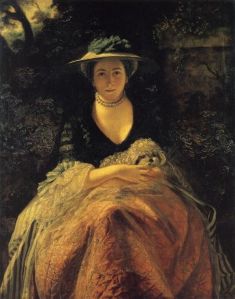
Here’s a portrait of famous courtesan Nelly O’Brien wearing what is described as a “Woffington hat” in Great Portraits Seen and Described by Great Writers. 

Actress and courtesan Nelly O'Brien in a Woffington hat

Actress and courtesan Nelly O’Brien in a Woffington hat

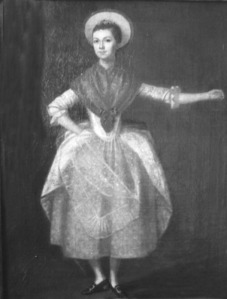
Apparently, this flat style of hat was named after Peg Woffington, Irish actress and lover of David Garrick in Georgian England.

Irish actress Peg Woffington

Irish actress Peg Woffington

Oh, and about Billingsgate fish-women…

In the 18th century, fishwives frequently appeared in satires as fearsome scourges of fops and foreigners. Their vigorous and decisive mien was contrasted with that of politicians who were, by contrast, portrayed as vacillating and weak. For example, in Isaac Cruikshank’s A New Catamaran Expedition!!!, a fleet of Billingsgate fishwives sails across the English Channel to terrorise the French and shame the British Prime Minister Pitt for his inaction.

By Isaac Cruikshank (publisher- Willm. Holland, London) [Public domain], via Wikimedia Commons

By Isaac Cruikshank (publisher- Willm. Holland, London) [Public domain], via Wikimedia Commons

Romance of London Series

  1. Romance of London: The Lord Mayor’s Fool… and a Dessert
  2. Romance of London: Carlton House and the Regency
  3. Romance of London: The Championship at George IV’s Coronation
  4. Romance of London: Mrs. Cornelys at Carlisle House
  5. Romance of London: The Bottle Conjuror
  6. Romance of London: Bartholomew Fair
  7. Romance of London: The May Fair and the Strong Woman
  8. Romance of London: Nancy Dawson, the Hornpipe Dancer
  9. Romance of London: Milkmaids on May-Day
  10. Romance of London: Lord Stowell’s Love of Sight-seeing
  11. Romance of London: The Mermaid Hoax
  12. Romance of London: The Bluestocking and the Sweeps’ Holiday
  13. Romance of London: Comments on Hogarth’s “Industries and Idle Apprentices”
  14. Romance of London: The Lansdowne Family
  15. Romance of London: St. Margaret’s Painted Window at Westminster
  16. Romance of London: Montague House and the British Museum
  17. Romance of London: The Bursting of the South Sea Bubble
  18. Romance of London: The Thames Tunnel
  19. Romance of London: Sir William Petty and the Lansdowne Family
  20. Romance of London: Marlborough House and Sarah, Duchess of Marlborough
  21. Romance of London: The Duke of Newcastle’s Eccentricities
  22. Romance of London: Voltaire in London
  23. Romance of London: The Crossing Sweeper
  24. Romance of London: Nathan Mayer Rothschild’s Fear of Assassination
  25. Romance of London: Samuel Rogers, the Banker Poet
  26. Romance of London: The Eccentricities of Lord Byron
  27. Romance of London: A London Recluse

Romance of London: Nancy Dawson the Hornpipe-Dancer

Romance of London: Strange Stories, Scenes And Remarkable Person of the Great Town in 3 Volumes

John Timbs

John Timbs (1801-1875), who also wrote as Horace Welby, was an English author and aficionado of antiquities. Born in Clerkenwell, London, he was apprenticed at 16 to a druggist and printer, where he soon showed great literary promise. At 19, he began to write for Monthly Magazine, and a year later he was made secretary to the magazine’s proprietor and there began his career as a writer, editor, and antiquarian.

This particular book is available at googlebooks for free in ebook form. Or you can pay for a print version.

Nancy Dawson

nancy dawson portraitNancy Dawson, the famous hornpipe-dancer, of Covent Garden Theatre, in the last century, when a girl, set up the skittles [a form of bowling] at a tavern in High Street, Marylebone. She next, according to Sir William Musgrave’s Adversaria, in the British Museum, became the wife of a publican near Kelso, on the borders of Scotland. She became so popular a dancer that every verse of a song in praise of her declared the poet to be dying in love for Nancy Dawson; and its tune is so lively as that of Sir Roger de Coverley. In 1760, she transferred her services from Covent Garden Theatre to that other house [Drury Lane]. On the 23rd of September, in that year, the Beggar’s Opera was performed at Drury Lane, when the playbill thus announced her: “In Act iii, a Hornpipe by Miss Dawson, her first appearance here.” It seems that she was engaged to oppose Mrs. Vernon in the same exhibition at the rival house, and there is a full-length print of her in the character. There is also a portrait of her in the Garrick Club collection.
Nancy died in Hampstead, on the 27th of May 1767; she was buried behind the Foundling Hospital, in the ground belonging to St. George the Martyr, where is a tombstone to her memory, simply inscribed “Here lies Nancy Dawson.”

From Wikipedia:

Nancy Dawson was the stage name of Ann Newton (c.1728-1767), a famous London dancer and actress. She rose to fame performing a solo rendition of a hornpipe between acts in The Beggar’s Opera at Covent Garden Theatre in 1759.

Her early life is unclear; she may have been born at Axminster, Devon. At sixteen she joined the company of a certain Griffin, a puppet-showman, who taught her to dance; and a figure dancer of Sadler’s Wells, seeing her performance, found her a place at his own theatre. As the story goes, her figure, novelty and technical excellence made her career.

In her second summer season at Sadler’s Wells Nancy Dawson was promoted to the part of Columbine, and in the following winter she made her first appearance at Covent Garden Theatre under Edward Shuter, in The Prophetess by Thomas Betterton. On 22 April 1758 the Merry Wives of Windsor was played for her benefit. In October 1759, during the run of The Beggar’s Opera, the man who danced the hornpipe among the thieves fell ill, and his place was taken by Nancy Dawson. From that moment she became a celebrity. The production enjoyed an unusually long run, and the house was crowded nightly.

Nancy Dawson was induced by an increase of salary to move to Drury Lane, where she appeared for the first time on 23 September 1760 in The Beggar’s Opera. Here for the next three years she dance in its frequent revivals, and in a variety of Christmas entertainments, such as ‘Harlequin’s Invasion,’ ‘Fortunatus,’ and the ‘Enchanter’ in which there also appeared Joseph Grimaldi and the Miss Baker who succeeded Nancy Dawson in popular favour as a dancer. On Christmas Eve 1763 a pantomime called the ‘Rites of Hecate’ was produced at Drury Lane, and on that day and the 26th of the month Nancy Dawson appeared; but her name is absent from the bills of subsequent representations.

The Hornpipe

From Sonny Watson’s Sweetswing.com:

tbhp_M2The lively Hornpipe is really very characteristic of the English in nature and is a very old Celtic solo dance that is very much based on the sailor’s abilities during the dancing with the sailors originally performing it with folded arms. The steps are clearly ship wise such as hauling in the anchor, climbing or rigging ropes etc. The Sailor’s Hornpipe was most popular during the 16th to 18th Centuries but the original (Hornpipe) goes much farther back and was originally done by men only.

It is said that the English sailing ship and Royal Navy Captain James Cook (1728-1779) thought dancing was most useful to keep his men in good health during a voyage. When it was calm, and the sailors had consequently nothing to do, he made them dance —

Sailors’ hornpipe: https://www.youtube.com/watch?v=kBU0z3xdC0o

2006AN9345_rowlandson_ballet_etching

The Ballad of Nancy Dawson*

Of all the girls in our town,

The red, the black, the fair, the brown,

That dance and prance it up and down,

There’s none like Nancy Dawson.


300px-Dawson2Her easy mien, her shape so neat,

She foots, she trips, she looks so sweet;

Her every motion’s so complete,

I die for Nancy Dawson.


See how she comes to give surprise,

With joy and pleasure in her eyes:

To give delight she always tries,

So means my Nancy Dawson.


Was there no task, t’obstruct the way,

No shutter old, no house so gay,

A bet of fifty pounds I’d lay,

That I gained Nancy Dawson.


See how the opera takes a run

Exceeding Hamlet, Lear and Lun

Though in it there would be no fun,

Was’t not for Nancy Dawson.


Lithograph of Nancy Dawson c 1760Though beard and brent charm ev’ry night

And female peachum’s justly right,

And filch and lockit please the sight,

‘Tis kept by Nancy Dawson.


See little davey strut and puff,

‘Confound the opera and such stuff,

My house is never full enough,

A curse on Nancy Dawson”.


Though G[arric]k he had has his day

And forced the town his laws t’obey,

With Jonny Rich is come in play,

With the help of Nancy Dawson.


*Lyrics attributed to George Alexander Stevens. Tune attributed to Thomas Arne

Hear it performed here: https://www.youtube.com/watch?v=YTan2rliiKU


Romance of London Series

  1. Romance of London: The Lord Mayor’s Fool… and a Dessert
  2. Romance of London: Carlton House and the Regency
  3. Romance of London: The Championship at George IV’s Coronation
  4. Romance of London: Mrs. Cornelys at Carlisle House
  5. Romance of London: The Bottle Conjuror
  6. Romance of London: Bartholomew Fair
  7. Romance of London: The May Fair and the Strong Woman
  8. Romance of London: Nancy Dawson, the Hornpipe Dancer
  9. Romance of London: Milkmaids on May-Day
  10. Romance of London: Lord Stowell’s Love of Sight-seeing
  11. Romance of London: The Mermaid Hoax
  12. Romance of London: The Bluestocking and the Sweeps’ Holiday
  13. Romance of London: Comments on Hogarth’s “Industries and Idle Apprentices”
  14. Romance of London: The Lansdowne Family
  15. Romance of London: St. Margaret’s Painted Window at Westminster
  16. Romance of London: Montague House and the British Museum
  17. Romance of London: The Bursting of the South Sea Bubble
  18. Romance of London: The Thames Tunnel
  19. Romance of London: Sir William Petty and the Lansdowne Family
  20. Romance of London: Marlborough House and Sarah, Duchess of Marlborough
  21. Romance of London: The Duke of Newcastle’s Eccentricities
  22. Romance of London: Voltaire in London
  23. Romance of London: The Crossing Sweeper
  24. Romance of London: Nathan Mayer Rothschild’s Fear of Assassination
  25. Romance of London: Samuel Rogers, the Banker Poet
  26. Romance of London: The Eccentricities of Lord Byron
  27. Romance of London: A London Recluse