Guest Author: Shelter Somerset

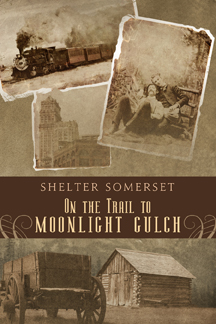
Today, my guest is Shelter Somerset, who is here to talk about his historical gay romance, On the Trail to Moonlight Gulch. Welcome, Shelter! 

The first word in my historical gay romance On the Trail to Moonlight Gulch is “Love.” But love is described as a powerful force, even violent. With the ability to smack one in the kisser like a prize fighter. Love, like greedy bandits and loneliness, can cause unrelenting pain. Until honesty and self discovery allow for it to settle softly at one’s feet.

Moonlight Gulch seemed to write itself. The concept of the “mail-order bride” magazine came to me when I placed myself in the boots of the protagonist, Torsten Pilkvist. If I were living in 1886, where would I find same-sex love, not fleeting sexual encounters? I’d turn to the same means lonely men use today—anonymous social networks. In the 21st century, we have Internet chat rooms. One hundred fifty years ago, they had Matrimonial News, a well-known matchmaker periodical that brought together forlorn frontiersmen with women around the world. We can only guess that “gay” men might have satiated their dreams through those pages, as well.

Moonlight Gulch ventures beyond same-sex loneliness in an age when it seemed impossible to find. There is another universal and ageless theme I explore. Insatiable greed. Torsten’s pen pal and unsuspecting love interest, Franklin Ausmus, refuses to pan the gold on his homestead, but local prospectors, having long depleted most of the gold from the Black Hills years before, plot to take possession of Franklin’s land. It’s the age-old tale of the individual versus the ravenous mob.

I hope readers will gain from Moonlight Gulch that which I’d learned while researching and writing it. For one, we humans have transformed little throughout the generations. Only technology has really changed. We still seek love, and use whatever means available to us to find it. In Torsten’s day it was matchmaker magazines. Today it’s the Internet. I also hope readers come away from the novel questioning their own value structure. Strength in ideals comes from holding them up to the light for inspection. That is how Torsten learns the true power of love.
OnTrailMoonlightGultchFSsmAbout Moonlight Gulch

Nineteen-year-old Torsten Pilkvist, American-born son of Swedish immigrants, is searching for same-sex love in the hustle and bustle of 1886 Chicago. Frustrated and forlorn, Tory peruses a “mail-order bride” magazine and is captivated by an advertisement by a lonely bachelor living in the Wild West. Tory and wounded Civil War veteran Franklin Ausmus begin an innocent correspondence–or as innocent as can be, considering Tory keeps his true gender hidden. When Tory’s parents discover the letters, he’s forced out of his home and, with nowhere else to go, he boards the train to the Black Hills and the one place he feels he belongs—Franklin’s homestead, Moonlight Gulch. Can a genuine romance develop once Franklin hires Tory as his ranch hand—all while Tory desperately tries to keep Franklin from discovering his secret?

Amazon

Dreamspinner Press

Excerpt

He splashed limewater on his chest, dressed in a crisp white shirt, gray pinstripe suit, blue cravat, and felt derby, and jumped on the electric streetcar to go from State Street to the 35th Street cabaret secretly known as a watering hole for men like him. Love was not his aim—he knew that was far from his grasp at a place like the cabaret. He wanted only company, affection, the fleeting kind that might lessen his grief and loneliness, like the way some used alcohol.

The instant Tory stepped inside the cabaret, the usual stares burned holes into him. He disliked the scene, yet he knew of no other place like it in Chicago. Many of the young men, both Negroes and whites, came for “business.” They congregated at the bar and the small standing tables, some selling, others buying. The regulars recognized him as one who seldom interacted with the locals, especially those known as “renters.” A few of the renters dressed as women, which Tory found both entertaining and distasteful. The older men from out of town ogled him. They often mistook him for a renter. He avoided eye contact to communicate his disinterest.

A player piano rolled out tunes in the corner. Some of his favorites, “Oh, Dem Old Golden Slippers” and “American Patrol,” lightened his mood. The cabaret, less crowded than usual for a Monday evening, ebbed and flowed with a sluggish apathy. Since it was the day after Easter, most of the regulars who often stopped by after work for drinks had likely remained at home with their wives and children. Not many out-of-towners had scheduled trips away from their families during the holiday.

The two bouncers appeared more relaxed than usual. Tory never learned if they were like the men who patronized the cabaret. They seemed disinterested in the goings-on, their eyes always narrowed with vigilance.

A boy of about fifteen, the cabaret owners’ youngest son, served drinks behind the bar. With a thin cigar clenched between yellowing crooked teeth, he poured and poured, his face lined with labor. The slightest spill of the liquor and his father, Mr. Levitzki, the stony-faced proprietor with the cannon-like voice, who roamed the cabaret like a grizzly bear, would slap the back of his head. The father’s temper was enough for Tory to want to leave the place, but there was no establishment as safe when looking for companionship.

Tory found an empty bench against the far wall. He kept his derby on, for it gave him the extra furtiveness he liked while at the cabaret. With his hands balled in his lap, he peered around under the short brim, taking note of anyone who resembled a gentleman. Weekdays were often more rowdy than weekends. During the week, drunken construction and railroad workers would come in to make “dates” with some of the younger men. The owners tolerated the flood of teamsters until their pockets came up empty. Afterward, Mr. Levitzki would give a subtle sign—two fingers tickling under his chin—and the bouncers would dispatch to their duties and herd the rowdies like cattle and toss them out the door.

Tonight, the holiday kept most of the heavy drinkers away. Tory enjoyed the dim calmness. Disorderly crowds and obnoxious noise were not what he searched for. Light from the setting sun oozed through the stained glass above the bar. A reddish blue hue, mixed with the pipe and cigar smoke, floated around the establishment. A Negro boy in women’s clothing swaggered by him. The bustle on his skirt protruded clownishly. Not even a stage actress would paint herself with so much makeup, Tory imagined. His contemptuous smirk brought a grunt from the faux woman, and he strutted off.

Some of the patrons held hands and nuzzled while sipping their drinks. Mostly they were renters and buyers. Another couple danced cheek to cheek to the high-pitched music streaming from the player piano. Tory watched, fascinated, as a couple kissed passionately in a dark corner. Even to him, overt displays of romantic affection between men in public seemed shocking.

A man walked into the bar. From across the dimly lit cabaret, Tory saw that he held his breath when he glanced around. He appeared as out of place as Tory felt, but his Panama skimmer and bamboo walking stick gave him a debonair quality. Clearly an out-of-towner on Chicago business. Men like him filled Chicago during the week, working all day, playing all night, looking for brief companionship. Tory watched as the two renters who had been sitting at the bar, including the Negro with the caricature-like bustle, circled him. They could spot an out-of-towner with money like an alley cat sniffing out fish carcasses. The competing boys grimaced at each other, their eyebrows arched high. The white boy nudged out his shoulder, indicating he was willing to fight. The renter in women’s clothing appeared ready to counter, but then his painted face fell. Slump-shouldered, he trudged back to the bar.

As if relishing his victory, the white boy grinned and rubbed against the man, flirting like the coquettish females in burlesque shows. Curious, Tory took mental notes of the out-of-towner’s reaction to the renter. Were his initial perceptions of the dark-featured man with rounded spectacles accurate? The man’s gaze remained fixed on the dartboard along the far wall. Suddenly the man turned to the boy. His lips moved. A second later, the boy’s smile transformed into a scowl, and he stomped off to stand next to his companion by the bar. Inwardly, Tory smiled. He had been right. He was a gentleman. But a married gentleman, no doubt. And a nervous one, at that.

158smAbout the Author

Shelter Somerset’s home base is Chicago, Illinois. He enjoys writing about the lives of people who live off the land, whether they be the Amish, nineteenth-century pioneers, or modern-day idealists seeking to live apart from the crowd. Shelter’s fascination with the rustic, aesthetic lifestyle began as a child with family camping trips into the Blue Ridge Mountains. His “brand” is anything from historicals, mysteries, thrillers, and contemporaries, all with individualistic themes. When not back home in Illinois writing, Shelter continues to explore America’s expansive backcountry and rural communities. His philosophy is best summed up by the actor John Wayne: “Courage is being scared to death but saddling up anyway.”


Guest Interview: Georgie Lee

heartsmHappy Valentine’s Day!

Today my guest is Georgie Lee, author of Studio Relations, a story set in the Hollywood of 1935. Welcome to Susana’s Parlour, Georgie! 

What inspired you to start writing?

I can’t say any one thing inspired me to be a writer. I grew up writing many different things including poetry, short stories and screenplays. I wrote a short story for a contest in sixth grade. At the time, I was fascinated by Greek mythology so I created a myth about the Greek gods and the creation of the silver swan constellation. The story won first prize.

My professional writing career began at a small cable TV station in San Diego where I wrote marketing videos and public service announcements. I’d always dreamed of being a screenwriter, so I moved to Los Angeles and earned my MA in screenwriting. Despite my best efforts, screenwriting success proved a little elusive (OK, a LOT elusive). I’d always read romance novels and so I thought to myself, heck, I can write a romance novel. So I did. The first draft wasn’t pretty, but I learned a lot during the revision process. That story went on to become Lady’s Wager, a Regency romance and my first published novel.

Lee_smHow long have you been writing?

Some days, it feels like forever.

What advice would you give writers just starting out?

Keep trying and don’t give up. There were many years where I was writing and nothing was being published and then all of a sudden, one day, all the hard work began to pay off.  It’s a long-term career so you can’t let setbacks make you give up.

Do you ever suffer from writer’s block? If so, what do you do about it?

I do suffer from writer’s block. To overcome it, I either go back and edit until I find my groove again, or I do research. Sometimes a historical fact can inspire a scene and snap me out of the block.

What comes first, the plot or the characters?

Characters. I usually start with a specific scene involving two characters and then build the story out from there.

Tell us something about your newest release that is NOT in the blurb.

In Studio Relations, I pay homage to my favorite film Gone with the Wind. The film the heroine directs is a Civil War movie, and I drew on my knowledge of Gone with the Wind’s production to help me make the scenes dealing with the film’s production authentic to the time period.

Are you working on something at present you would like to tell us about?

I’m currently working on a couple of Regency romances for Harlequin. I also have a Regency-set novella coming out from Carina Press in July.

What are you reading now?

I’m always reading more than one book at a time, usually a mix of historical non-fiction and romance. The non-fiction book I’m reading right now is Twilight Over Burma: My Life as a Shan Princess by Inge Sargent. The fiction book I’m reading is A Night To Surrender by Tessa Dare.

What books or authors have most influenced your own writing?

There are so many great books which have influenced me but the first was Watership Down. It was the first adult book I read and I loved it so much that I read it more than once. I enjoy post-apocalyptic stories and this one has such great characters and such a different kind of post-apocalyptic sense about it that I was drawn in and it has never let go.

What is your work schedule like when writing?

I’m a stay-at-home mom, so when my little one is awake, I’m not usually writing. I write first thing in the morning when the distractions are at a minimum and I am, for the most part, awake. I will write during nap time and, if I have the energy, in the evenings.

What did you want to be when you grew up?

I wanted to be a screenwriter, and a whale trainer at Sea World.

What is your favorite food? Least favorite? Why?

Chocolate is my favorite food. Bell peppers are my least favorite. When I was growing up, my mom used to make stuffed bell peppers. It was one of those dishes with nothing to like about it and everything to hate. It turned me off peppers to the point that I can’t even stand the smell of them (sorry, mom).

Are you a plotter or a pantser?

I used to be a pantser, but now I really have to sit down and write a summary and work on my characters before I get too far into a story. Having a summary really helps me make the best use of my limited writing time.

What is one thing your readers would be most surprised to learn about you?

I once took classes in how to read and speak ancient Egyptian. For a time, I could read some hieroglyphics, but I’ve since forgotten most of what I learned.

Is there a writer you idolize? If so, who?

I’ve been inspired by so many great authors, it’s hard to pick just one. I’m going to go with a few classics, Oscar Wilde for sharp witty dialogue, W. Somerset Maugham for great insight into characters and D.H. Lawrence for well developed internal monologue.

What would we find under your bed?

Plastic storage bins, dust bunnies and the random flip flop.

Do you have a favorite quote or saying?

“After all, tomorrow is another day.”

Do you write in multiple genres or just one? If just one, do you ever consider straying outside your genre?

I write both contemporary and historical and my historicals are set in many different time periods. I have one Regency and three contemporary romances currently available, and a novella set in ancient Rome. In the future, I’ll be focusing on the Regency.

What is something you’d like to accomplish in your writing career next year?

I’d like to get faster with my writing. I also wouldn’t mind hitting some kind of best-seller list, either one of the big ones, or even just one small one.

About Studio Relations

Vivien Howard hasn’t forgiven Weston Holmes for almost derailing her career five years ago. Female directors in 1930s Hollywood are few and far between, and a man who coasts by on his good looks and family connections can’t possibly appreciate what it took for her to get to where she is. But when the studio head puts Weston in charge of overseeing Vivien’s ambitious Civil War film, she realizes she has a choice: make nice with her charismatic new boss or watch a replacement director destroy her dream.

Weston Holmes doesn’t know much about making movies, but he knows plenty about money. And thanks to the Depression, ticket sales are dangerously low. The studio can’t afford a flop—or bad press, which is exactly what threatens to unfold when an innocent encounter between Weston and Vivien is misconstrued by the gossip rags. The only solution? A marriage of convenience that will force the bickering duo into an unlikely alliance—and guide them to their own happy Hollywood ending.

Studio Relations Excerpt

Hollywood 1935

Vivien Howard marched into Earl Holmes’s office and threw the script on his desk. “Storm of the South. This is it. This is the picture I want to direct next.”

Earl picked up the script and flipped through it, unfazed. “The Civil War? It’s been done, and badly.”

“Not the way I’m going to do it.”

“I read the script a couple of months back. It’s a war movie. A woman can’t direct a war movie.” He tossed the script onto his large mahogany desk and leaned back in his leather chair, his hands clasped over his round belly, his graying eyebrows knitted as his eyes bored into her. Earl’s imposing attitude would have cowed a lesser director, but Vivien had played this game too many times with the old studio head to be scared off now.

“It’s a love story set during a war.”

“The Civil War.”

“I know exactly how I’m going to shoot it.” She sat down on Earl’s plush leather sofa, pushing back her shoulder- length curly brown hair. She crossed her legs, thankful Miss Hepburn’s popularity had made wearing trousers respectable. Even if the Women’s Decency League proclaimed pants the ruin of womankind, Vivien preferred them to skirts and always made sure they were femininely tailored to complement her dark hair and eyes. Being one of only a few female directors in Hollywood, she played a man’s game, but she was always careful to remain a lady. Her career depended on this tightrope walk.

Earl leaned back in his chair and studied her. She knew he was intrigued, but she also knew he hated to let directors think they were getting their way, even if they were.

“The boys in New York won’t like the idea of a woman directing a war movie,” he replied, selecting a cigar from the humidor on his desk.

“If you pitch it right, they’ll love this project.”

“But I’ve got to love it first.” He clipped off the end of the cigar and placed it between his lips. Vivien picked up the large silver lighter from his desk, popped open the cap, sparked the flame, and held it out to him across the desk.

“You love the money my films make. You also love how good my successful films make you look to the boys in New York.”

Earl leaned forward and lit his cigar, then sat back in his chair, slowly drawing in the smoke. Vivien knew she had him. She smiled, waiting for him to make the next move.

“Who’d you have in mind for the lead?” he asked.

“Peter Davies. He’s perfect.”

“He’s a supporting actor. You need a leading man with box office draw, someone like Gary Roth.”

Vivien perched on the edge of his desk. “Peter has leading man potential. All he needs is the right role, and this is it. ”

“And the fact that you two are dating?”

“Has nothing to do with it.” Vivien was on shaky ground, and she knew it.

“The boys in New York are going to insist on a big star, especially when they get wind that I’m letting you direct a war movie,” Earl protested.

Vivien fixed him with a serious look. “It’s a love story, and you know it. It’s also the best script to come across my desk in years, and I’m the best director to do it.”

“We still need a star to headline it.”

“And we’ll have one when I cast the female lead.”

Earl chewed on the end of his cigar, eyeing her. “Fine. You can do it. Start tomorrow.”

“I’ll start today.” Vivien jumped to her feet. She’d been planning the film on the sly for weeks and relished the chance to finally work on it out in the open.

Earl shook his head, snatching the black phone off the receiver. “I don’t let any of my stars push me around half as much as you do.”

Vivien smiled over her shoulder as she made her way to the door. “That’s because no one makes as much money for you as I do.”

“Don’t make me regret this, Vivien,” Earl called out after her.

“You won’t, I promise.” She winked, then slipped out the door.

Available at Montlake Romance

Amazon

GeorgiesmAbout the Author

A dedicated history and film buff, Georgie Lee loves combining her passion for Hollywood, history and storytelling through romantic fiction. She began writing professionally at a small TV station in San Diego before moving to Los Angeles to work in the interesting but strange world of the entertainment industry.

Her traditional Regency, Lady’s Wager and her contemporary novella Rock ‘n Roll Reunion are both available from Ellora’s Cave Blush. Labor Relations, a contemporary romance of Hollywood is currently available from Avalon Books. Mask of the Gladiator, a novella of ancient Rome is now available from Carina Press.

When not writing, Georgie enjoys reading non-fiction history and watching any movie with a costume and an accent. Please visit  www.georgie-lee.com for more information about Georgie and her novels.

Contacts

Facebook: http://www.facebook.com/georgie.lee.96

Twitter: @GeorgieLeeBooks

Goodreads: http://www.goodreads.com/author/show/2985551.Georgie_Lee

Blog: http://georgielee.blogspot.com

Episode #7: The Political Exploits of Lady P and the Duchess of Devonshire

Lady Pendleton, Damian Ashby’s eccentric aunt (see the epilogue to Treasuring Theresa on Susana’s web site), is visiting Susana from the early 19th century. She’s intrigued by life in 21st century Toledo, Ohio, and, of course, Susana is thrilled to have the opportunity to pick her brain about life in Regency England. It certainly gives her a great deal to write about in Susana’s Parlour!

red_3smLady P: I’m afraid you find me alone this morning, since Susana is so occupied with her accounts that she begged me to talk to you on my own. Of course, I did tell her that it isn’t strictly necessary to pay the tradesmen’s bills on time; mine are often several months in arrears—due to my demanding schedule, you know—but the merchants with whom I do business have no concerns about being paid eventually. [Sigh] But she insists that there are dreadful penalties for tardiness in meeting one’s obligations, such as one’s credit rating being lowered, whatever that means, so I graciously agreed to serve in her stead once again.

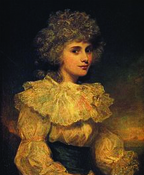
devonshireShe just finished reading a biography written about my good friend Georgiana, the Duchess of Devonshire, and she said she thought her readers would enjoy hearing about Georgiana’s political exploits, and mine too, of course, since I did campaign with her on several occasions.

Well, I suppose I must first mention the brilliant salons at Devonshire House where all the important players in the Whig Party used to meet and have the most intriguing discussions. I was able to attend only a handful of times when Pendleton was out of town—he would never countenance that sort of thing, you know, being a Tory from way back, although I did try at first to explain to him that politics is not something that can be inherited like money or a house—but when I did I was simply fascinated. Georgiana was astonishingly intelligent, you know. If she hadn’t been a female, I’m sure she would have risen to Prime Minister, and I can assure you that if she had, the country would have fared ever so much better than it did at the hands of the men! Not to mention her sense of fashion.

cjfoxBut…no, those of the female sex were not even allowed to vote, so it was quite a scandal when Georgiana and her sister and several other prominent women marched in favor of Charles James Fox in the early days. Charles was a distant cousin, you see, and they were quite cozy with one another. It was really quite something to see, Georgiana leading the women, all carrying signs, through the streets as the onlookers cheered. She had such a presence, you know. I believe she could have convinced them to vote for a monkey and they’d have done so quite happily.

Why, I’ll never forget the day an Irish dustman approached her as she was descending from her carriage and said, “Love and bless you, my lady, and let me light my pipe in your eyes.” [Chuckle] She was forever saying that “After the dustman’s compliment, all others are insipid.”

But Devonshire put his foot down after someone started a rumor that she was selling kisses for votes—how ridiculous that was, but people will believe the most ridiculous things when they see those scandalous prints that make the rounds. So she had to restrict her political activities to less public venues, although everyone knew she still had the ear of all the prominent Whigs of the time.

Georgiana had a great many faults, of course, but I do give her credit for her role in opening the door for the female sex in the political arena. Why, at the time I really expected that women’s suffrage was right around the corner; how shocked and disappointed I was to learn afterward that it was a good hundred years before women were allowed the right to vote. [Shaking her head] That daughter of Kent’s—what was her name?—Victoria—has a lot to answer for, I vow, for her part in setting the cause of women back for so many decades!

Lady P: Oh dear, Susana says I have neglected to mention that the Whigs—or at least the modern Whigs of my day—supported changes in government and society, giving more rights and power to the middle and lower classes and less to the wealthy aristocrats. Why, Georgiana and Fox both supported the American Revolution, and were called traitors by the Tories for it on many an occasion, even after the war was lost. And Georgiana did support the French Revolution at first, even being a particular friend of Marie-Antoinette, until she saw firsthand what was happening there with the guillotine and all. No, she always used to tell me that she hoped that dealing with the situation with the lower classes before it got to the breaking point would stave off the occurrence of such a horrific uprising here in England.

Because really, even if there are as many as ten thousand of us in the ton, we are greatly outnumbered by the common folk, and one can only press them so far before someone draws their attention to the strength of their numbers and leads them into an uprising. [Shuddering] That’s why Pendleton and the Tories opposed education for the masses. Ignorance makes them more malleable, of course. What would he say if he were here to know that Damian’s wife Theresa supports a free school for the common folk in Granville and Letchworth? Thankfully, he passed on to his reward long before. I miss him dreadfully, of course, but he could be so obstinate at times. I always attributed it to that Scottish great-grandmother of his…

And, as always, please do comment if you have any questions you’d like to ask Lady P about the late Georgian/Regency era. She does love to chat!

The Lady P Series

Episode #1: Susana’s Adventures With Lady P: The Introduction

Episode #2: Lady P Talks About… Pride and Prejudice?

Episode #3: Lady P and the Duchess Who Lost a Billion Dollars

Episode #4: Lady P and the Face On the $100 Bill

Episode #5: In Which Lady P Discovers Sparkly Fabrics and Ponders Violating the Prime Directive

Episode #6: Lady P Dishes the Dirt on the Duchess of Devonshire

Episode #7: The Political Exploits of Lady P and the Duchess of Devonshire

Episode #8: Lady P and the Prince Regent’s Illicit Marriage

Episode #9: In Which Lady P Depletes the Cooking Sherry During Her Discussion of Caroline of Brunswick

Episode #10: Lord Byron: Mad, Bad, and Dangerous to Know

Episode #11: In Which Lady P Talks About Hannah More and the Rights of Women

Episode #12: Lady P’s Revelations Regarding George III and His Peculiar Progeny

Episode #13: Lady P Discusses the Luddite Uprising, the Assassination of Spencer Perceval, and the General Unfairness of Life

Episode #14: In Which Leticia, Lady Beauchamp, Pops In For an Interview On Her Personal Acquaintance With Princess Charlotte of Wales

Episode #15: Lady P On Assignment in 1814 Kent

Lady P Quizzes Jane Livingston, the Hero’s Sister From “A Twelfth Night Tale”

Susana Welcomes the Heartbreaker Blog Hop!

Heartbreaker ButtonsmDamian Ashby, Lord Clinton

Why is Lord Clinton the target of marriage-minded misses and their ambitious mothers?

  • He’s a viscount and the heir to an earldom.
  • He’s wealthy.
  • He’s considered to be “exceedingly well-favored.”
  • His exceptional fashion sense makes him one of the most imitated gentlemen of the ton.
  • He’s single.
  • He’s also intelligent, well-educated, does not gamble excessively or live beyond his means.

????????????????????????????????????????What’s not to like? Well…

  • He’s surrounded by sycophants and admirers, has no close family to rein him in, and he’s become arrogant.
  • He is intolerant of the faults of others and his set-downs have sent more than one young girl home in tears.
  • He looks down on country folks as being uncivilized.

On meeting Lady Theresa, he dismisses her as a mannerless country chit. One with amazing blue eyes, but still…he’d never consider marrying a girl like her. Even if he were thinking of marriage, which he definitely is not. No, when he takes on a leg-shackle—years into the future—it will be a well-bred society lady who is eminently suitable to become his countess.

theresa2.5webBut Lady Theresa is more than what she appears at first. And Damian, too, has depths to him that have been sadly neglected in recent years. But she is a country lady, first and foremost, and he is one of the top Corinthians in London. A marriage between them would be a disaster. Wouldn’t it?

Do you think a match between two completely opposite people is a good idea? Why or why not?

Treasuring Theresa is a Regency short story available at Ellora’s Cave, Amazon, Barnes & Noble, Kobo, Sony, Google Play, All Romance E-books, and Bookstrand.

http://www.susanaellis.com

Facebook: susana.ellis.5

Twitter: @susanaauthor

Pinterest: http://pinterest.com/susanaauthor/

The Heartbreaker Blog Hop Prizes

1st Grand Prize: A Kindle Fire or Nook Tablet

2nd Grand Prize: A $100 Amazon or B&N Gift Card

3rd Grand Prize: A Swag Pack that contains paperbacks, ebooks, 50+ bookmarks, cover flats, magnets, pens, coffee cozies, and more!

To be eligible for the grand prizes, comment on the blog post, making sure to leave your email address. Be sure to answer the question at the end of the post before moving on to the Rafflecopter contest (below).

Win a $20 Amazon Gift Card

and/or a

Treasuring Theresa Coffee Mug

amazon$20mug2medsmTo earn entries in the Treasuring Theresa February Giveaway, click on the Treasuring Theresa cover on the right side of this page to enter the Rafflecopter contest. The winners will be chosen at midnight on February 12, 2013.

Click here to visit more blogs on the Heartbreaker Blog Hop!

Berengaria Brown Presents Her “Elinor’s Stronghold” Series

Last week, Berengaria presented her Regency series, Virgins No More. Today she’s focusing on her medieval series, Elinor’s Stronghold. Welcome back, Berengaria.

  • What inspired you to write the “Elinor’s Stronghold” series?

I’ve always loved historical romance and have published half a dozen Regency-set romances. But then I got to thinking about castles, women in flowing gowns, and half-naked warriors with long swords. What’s not to like about medieval days? It all started as the story of a young woman who’s left alone to care for her people when her father and two brothers are killed in battle. Then another woman arrived on the scene, the villain refused to be defeated, and, just when I thought the series was finished, I remembered my love of Robin Hood stories and realized one hero still didn’t have his happily-ever-after.

Of course, I was named after Richard the Lionheart’s wife, Berengaria of Navarre, so I’ve had a link to medieval history ever since I was born.

  • Which element of story creation is your favorite and why?

When the ideas flow, the characters are talking to me, and I can’t type fast enough for all I want to say.

  • What is your writing process?

I don’t begin writing until the characters are clear in my head and I know what they want. I need a beginning and an end, and some midpoints to reach on the way through. Then I begin typing.

  • What do you enjoy the most about writing?

When the book is finished and I know I’ve done my best.

  • Is there a certain type of character or theme that you find yourself coming back to again and again?

Summer, vacations, and water seem to recur in my books. Even in the middle of winter in the “Elinor’s Stronghold” series, the river has its part to play in the plot.

  • What’s the first book you remember loving?

My father taught me to read before I started school and I always loved my books but I don’t know the first book. I do know that it was Georgette Heyer who addicted me to romance, when I was a young teenager.

  • Do you read the same genre that you write?

Yes and no. I read anything and everything, and I write across multiple genres: contemporary, paranormal, historical. When I’m actually in the midst of writing a book, I only read nonfiction because I don’t want to lose my train of thought.

  • What’s your advice to new writers?

Never give up. Keep reading, keep writing, keep polishing your craft.

  • What do you enjoy doing when you’re not writing?

Reading, hanging out with friends, eating chocolate.

Berengaria’s Bio:

Berengaria is a multi-published author of erotic romance: contemporary, paranormal (magic, ghosts, vampires, fairies, dragons, and werewolves), futuristic, medieval, and Regency-set historical. She loves to read all different kinds of romance so that is what she writes: one man/one woman; two women; two men; two men/one woman; three men, two women/one man, three men/one woman…. Whatever the characters need for their very hot happily-ever-after, Berengaria makes sure they get it.

The Elinor’s Stronghold series: medieval historical MMF and MFM.

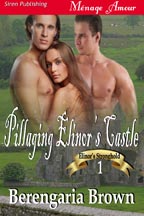
Book 1: Pillaging Elinor’s Castle

Lady Elinor’s father and two brothers are killed in battle, and Lord Rhys loses his demesne. To protect her people Elinor decides she will marry Lord Rhys, but only if he agrees the Captain of the Guard, Hammond, will share their bed and the decision-making from now on. They agree and seal their contract in blood. Rhys and his people move into the stronghold.

After the wedding they begin to plan for how to survive the attack that will inevitably come. The stronghold is a wealthy one, and many will consider it an easy target with its lord and his sons dead. They also have to blend the two households together and prepare for the coming winter. At night Hammond and Rhys work hard in bed, learning to share Elinor, finding out what pleases her best, and arousing each other to new heights along the way.

Buy link: http://www.bookstrand.com/pillaging-elinors-castle

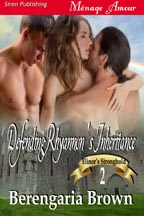
Book 2: Defending Rhyannon’s Inheritance

Hated and incompetent Lord Jeffrey wants to marry Rhyannon, and her bad-tempered cousin, Coll, wants to steal her jewels. She needs a good protector.

Alistair has loved her faithfully for years, but he has no assets and can’t support them both. Lord Devon is a suitable husband, but does he even like Rhyannon? It’s a big challenge, but maybe together Alistair and Lord Devon can protect her and her jewels from Lord Jeffrey and Cousin Coll.

Meanwhile, winter is settling on the stronghold and Lord Jeffrey is attacking the people once again. And Cousin Coll is determined to get her jewels any way he can. Surviving the winter is hard enough to do without all these other things happening as well. Everyone in the stronghold is living on a knife edge. Alistair and Lord Devon focus on Rhyannon. They’ll love her and protect her—and each other as well.

Buy Link: http://www.bookstrand.com/defending-rhyannons-inheritance

Book 3: Restoring Garnet’s Heart

Tragically widowed, Garnet is loved by two men. If a noble lady can have two men, why can’t a mere sewing woman? Garnet decides she’ll marry them both! Then she adopts two orphaned, starving little girls.

Garnet, Byram, and Carlysle are sent to repair the demesne. Can they achieve this huge task before the harvest is gathered in? First, a high stone wall needs to be built to protect them from attackers. The buildings must be cleaned and repaired, the crops sown, weeded, cared for, and hopefully reaped. Is it possible to complete such a huge undertaking before the next vicious winter arrives? Will the peasants help them?

Meanwhile, Lady Elinor gives birth to the heir of the stronghold, and Lord Rhys and Lady Rhyannon, with Alistair and Lord Devon, go to court to sort out her inheritance.

And what about Garnet’s threesome relationship? Will that be successful?

Buy link: http://www.bookstrand.com/restoring-garnets-heart

Book 4: Bringing Home Claire

A year ago, Paul took his sister Claire away to escape Lord Jeffrey’s attacks on the hamlets. Mitchell and Claire were in love, but Mitchell hadn’t asked her to marry him before she left. Now he aches for her, and goes in search of her to bring her back to his home as his bride. But no one has seen or heard of her, and the hamlet where she was to go is empty.

Finally Mitchell meets Ivan, who takes him into the forest where Claire and Paul, and Ivan himself, have been living for the past year. But Ivan loves Claire, too, and Claire owes him her life. Mitchell suggests he and Ivan share Claire. Can this possibly work—two men with no tie to each other and the one woman they both love? And can they survive a dangerous journey home?

Buy Link: http://www.bookstrand.com/bringing-claire-home

Excerpt from Restoring Garnet’s Heart

Lady Elinor stared at the two children in front of her. One, a girl, looked to be about six years old and dragged a cooking pot with a few possessions inside it. Her arms and legs were stick-thin, her hair was falling out in clumps, and her belly was swollen.

The child had been eating bark and leaves to try to stem her hunger, and her belly was full of air, assumed Garnet, who was standing beside Lady Elinor among the other sewing women of the castle.

The younger child, which could be either a girl or boy, and was maybe three years old, clutched the older one’s tunic in one hand, and sucked hard on its other thumb. It, too, was painfully thin, though less bloated by starvation.

“You wish to become my slave?” Lady Elinor’s voice was even and mild, but Garnet knew she was shocked. Peasant men from the smallest of uncaring Lord Jeffrey’s hamlets had begged to become slaves of the castle in return for food during this terrible winter, but few females, and no one as young as this little child.

“Yes, Lady Elinor. I can scare birds from the crops when they’re planted, and clean for you. Ysabel will stay with me. I’ve always looked after her since Ma died, and she won’t touch the seedlings. She’s a good girl, and no trouble at all. And I will grow big, and learn to fight for you and Lord Rhys, and then I’ll kill the men who murdered our Pa and took all our hamlet’s food,” the child finished fiercely, almost in a shout.

Garnet felt her eyebrows rise and forced her face not to break into a grin. It was plain this tiny, starved child had the heart of a warrior indeed.

Lady Elinor rested her hand on her huge belly. It was almost time for the heir to the stronghold to be born.

“Well then, Nerida is already learning warrior skills, and if the heir to the stronghold is a girl, she will be a warrior, too. I see no reason why you can’t also be a warrior, if that is your desire. What is your name, and where are the other people from your hamlet?”

“I’m Ava, lady, and I promise to serve you forever. Most of the people left after the soldiers came raiding. Some have tried to help Ysabel and me, but I’d rather work for my food.”

Garnet watched Ava’s thin, little shoulders straighten as she spoke. At her age, Garnet would never have dared to approach the Lady of the Castle, and Garnet had never been a shy child. But this girl was truly a warrior born. She was that rare being who combined the ability to think of a solution to a problem with the courage to step outside any rules of society and do it, no matter what the consequences may turn out to be.

Without stopping to think, Garnet moved to stand where Lady Elinor could see her. “The two girls may share my room, lady, and I will supervise their activities.”

“It is decided then, Ava. You and Ysabel may join the stronghold. We will feed you, and you will work. You will obey Garnet in all things. Do you understand?”

“Yes, lady, thank you.”

Ava dropped to her knees and pressed her face to Lady Elinor’s feet. Ysabel copied her.

Garnet’s eyes flooded with tears. Peasants always died when there was trouble in the land, especially the very old and the very young. They weren’t strong enough to fight back or fast enough to run away. But this child deserved to live.

Garnet’s husband, Roldan, had been one of Lord Rhys’s soldiers, and was killed in the battle that took the lives of Lady Elinor’s father and brothers and caused Lord Rhys to lose his demesne to Lord Jeffrey. They had been married only six months, not long enough for her to worry about not getting pregnant, but now he was dead, the parents of these children were dead, and Ava was a daughter any woman would be proud to call her own.

Berengaria Brown

http://berengariasblog.blogspot.com/

http://berengariabrown.com/

Friend me on Facebook: https://www.facebook.com/berengaria.brown#!/berengaria.brown?v=info

Follow me on Twitter:  https://twitter.com/#!/BerengariaBrown

bb-es-pillagingsmbb-es-rhyannon-smbb-es-garnets-smbb-es-bringingclairesm

Guest Author: Patricia Kiyono

A hearty welcome to our guest author today, Patricia Kiyono, who has a new book out called The Samurai’s Garden.

My grandfather, Zenya Seino, arrived in the United States from Japan almost a hundred years ago. He was one of a handful of Asians admitted to the U.S. that year. According to records at Ellis Island, he came with the intention of staying for only a few months. But he stayed the rest of his life.

I never met Grandpa, because he died before I was born. But I’ve seen pictures of him and remember things my dad and grandmother told me. Apparently, he was an extremely talented artist as well as a musician. I’d like to think that if he were still here he would approve of my choices of careers—both as a music teacher and an author.

Grandpa was born about twenty years after the end of the samurai era. He wouldn’t have known people like Hiro Tanaka, the main character in The Samurai’s Garden. But having learned a little bit about his background, I like to think he was raised with the same code of ethics, known as the bushido. He came to a strange country at a time when very few Asians lived here. Most Asians had difficulty finding work because it was felt they took work away from Americans. Fortunately, Grandpa already had a position—Stickly Brothers Furniture hired him to head their art department. He painted elaborate Asian-inspired designs on wood furniture.

Despite their problems, my grandparents assimilated into this new and strange society and made it theirs. I know they faced a lot of hostility and discrimination, especially during the second world war. But they became Americans because they persevered. This little family formed friendships and bonds that have lasted several generations. And this is the sort of character trait that inspired the story of The Samurai’s Garden.

kiyono_smAbout The Samurai’s Garden

Hiro Tanaka prepared for a life as a samurai warrior. But his world changed when Japan’s feudal system was abolished by the Emperor. Now, he must find a new vocation. Disillusioned with fighting and violence, he travels alone, going north to the island of Hokkaido.  Many other samurai wander through the country and are known as ronin. Some have forsaken their honorable way to prey on the less fortunate.

Hanako Shimizu experienced firsthand the devastation caused by these disreputable wanderers.  The previous winter, they raided her farm and killed her husband. Now, she needs to rebuild but has no money and no prospects—except for the dubious intentions of the town merchant.

When Hiro, tired of his wandering, encounters Hanako in the market, arguing with the merchant, he poses as her late husband’s cousin then offers to help her on the farm in exchange for a place to stay.  Working on the land, Hiro finally finds the peace he has been seeking. But the reappearance of the rogue ronin, led by an unscrupulous leader from Hiro’s past, forces him to take up his swords again. But now, the stakes are higher.

This time, he’s fighting from the heart.

kyouto Nara032_2smAbout the Author

During her first career, Patricia Kiyono taught elementary music, computer classes, elementary classrooms, and junior high social studies. She now teaches music education at the university level.

She lives in southwest Michigan with her husband, not far from her children and grandchildren. Current interests, aside from writing, include sewing, crocheting, scrapbooking, and music. A love of travel and an interest in faraway people inspires her to create stories about different cultures.

The Samurai’s Garden is available at Astraea PressAmazon, and Barnes and Noble.

Patricia Kiyono can be found at her websiteblogfacebook, and on Twitter (@PatriciaKiyono)

Note: To be eligible to win a copy of The Samurai’s Garden, mention in your comment about an ancestor of yours that you would like to meet.

Guest Interview: Berengaria Brown

Today my guest is Berengaria Brown, who writes in many sub-genres of romance, although today she’ll be discussing her Regency series. Welcome to Susana’s Parlour, Berengaria!

  • What is your favorite historical period or region and why? Did you enjoy history while you were in school or was it frankly boring? How would you suggest we teach history to kids now—(i.e.) can fiction maybe be a tool here? Do you think we can and should learn from the past or is it now irrelevant to modern times and issues?

I loved history in school and have always enjoyed reading history textbooks, and biographies as well as historical fiction. Likely my favorite era is Regency England, thanks to an addiction to Georgette Heyer developed in my early teenage years, but I also enjoy medieval. One of the first biographies I read was of Queen Elizabeth I of England and I developed, and have maintained, a great deal of admiration for her.

People and what motivates them don’t change, but the means by which they achieve their ambitions may change. I think kids enjoy history more when they hear the stories of the people. Learning the dates of battles may be boring but hearing about the people who lived through those battles is more engaging.

  • Do you think historical accuracy is important in fiction? How about the use of modern speech and politically correct ideas instead of those that faithfully portray the period? Do you find this good, bad, a necessary evil or something you shun?

Factual accuracy is essential. People didn’t know about germs, microscopes and antibiotics had not been invented. They would never have sterilized the wounds. But your hero can fall into a river and wash off the dirt that way. Politically correct is a bit different. You do need to be correct to the ideas of the times. For example “bloody” was not used as a swear word as it was considered a reference to menstruation—something that was never discussed. The further back in history you go though, the more difficult it is to use the correct language as we have lost the words or their meanings have changed. But I consider it very important not to use a concept that was not yet understood. No psychology in medieval times, but you heroine may be considered mad or a witch.

  • Can you share a favorite author and title that perhaps inspired you to write in the historical genre?

Georgette Heyer. Any of her Regencies. She is the epitome of the era for me.

  • If there were such a thing as a time machine, where would be the first place you would go once you had a ticket to ride? Do you think you’d want to stay or just look around and then come right back to today?

I would like to go to the Court of Queen Elizabeth I of England. It was a very exciting time historically and she was an incredibly powerful ruler.

But I would likely miss not having bathrooms and heating or air conditioning, and the Internet, and come home after a little while—in winter if not before.

  • Please give us a bit of information about the book or books you’re sharing today.

The Virgins No More series consists of three MF erotic Regency-set historical books featuring the Arnott family.

The Vicar’s Virgin is Georgina’s story, Almost a Virgin is Theodora’s story, and A Promising Virgin is Sapphira’s story.

Book 1: The Vicar’s Virgin

The Reverend Mr. Ridley needs a wife so he focuses his attentions on Georgina Arnott, a sensible, intelligent, yet attractive woman.

On their wedding night he’s relieved to discover she enjoys the pleasures of the bed, and, after a slow start, their evenings are full of passion and joy for both of them.

Unfortunately, when she takes an interest in his parish, it seems to involve filling his house with noisy people tramping muddy boots through the hallways, and filling his kitchen with dirty children.

He loves his wife. But can this marriage work?

Buy link: http://www.evernightpublishing.com/the-vicars-virgin-by-berengaria-brown/

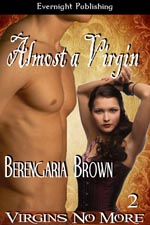
Book 2: Almost a Virgin

Theodora has loved John Smith ever since she was a little girl. But he’s very wealthy and she is only a vicar’s daughter and sister.

John had been waiting for Theodora to grow up. When he kisses Theodora in the garden at the ball, lust roars through him and he takes her there in the garden, fully dressed, only a few yards away from a hundred people. She’s warm and more than willing in his arms, and it’s not until the deed is done that he realizes he’s just dishonored his best friend’s sister.

Theodora doesn’t regret what she’s done. She enjoyed it and wants more of him. Even though he’s only marrying her because he dishonored her, she doesn’t care. She’ll make him so happy in bed and in his home he’ll stay with her even though he may never love her.

Buy link: http://www.evernightpublishing.com/almost-a-virgin-by-berengaria-brown/

Book 3: A Promising Virgin

Zethan, Earl of Mitcham, decides, after careful thought, that the stunningly beautiful Miss Sapphira Arnott will make him the perfect wife. It’s only when she declines his oh-so-flattering offer, that he realizes how rude and arrogant he’d been to her and her brother, and how much he loves her. The only solution is to woo her properly.

Meanwhile Simeon Arnott is in love with Miss Anne Smith. But she’s incredibly rich and he’s a mere baronet. Fortunately her brother and she herself accept his proposal and they have an extremely successful wedding night. Their ball, however, is almost less than successful thanks to the “help” of the three youngest Arnotts and their plans to go one better than a recent much-talked-about society event.

The Season is almost over. Can Zethan win his lady’s trust?

Buy link: http://www.evernightpublishing.com/a-promising-virgin-by-berengaria-brown/

STORY EXCERPT

The earl was standing at the window, his back to her. He was a very good-looking man—tall, with broad shoulders, and muscled arms and legs. She knew he rode well and played all sorts of manly pursuits. And, of course, he was rich and titled. Simeon was right. She wouldn’t get a better offer than this one from him. And she did like him. She enjoyed his company. He was always a considerate dance partner and his conversation was intelligent and witty. Her heart always beat faster when he held her in his arms for a waltz. She’d known herself very jealous of other women if he danced the waltz with them. Did that mean she loved him? She looked at his taut ass in his tight breeches. His body looked mighty fine and being older than her he’d know well how to please a woman. Her belly clenched at the thought of a man’s hands in all her secret places. She rather thought she’d enjoy the marriage bed. Especially with a well-built, good-looking man like Mitcham.

“Have you finished looking at me, Sapphira? Shall we have the wedding one month from today? In the cathedral of course. No other church will be big enough for all the guests I’ll need to invite.”

Sapphira took a step back in surprise. “You haven’t asked me yet.”

Mitcham stared at her then came closer and took her hands in his. “Dear Miss Arnott, please accept my offer to unite my house with yours in holy matrimony.”

“Do you care for me at all?” she asked hesitantly.

“You’re beautiful. Your wealth and lineage are adequate. You suit me well enough. I’ve never proposed to anyone before, if that’s what you mean. Now, I’ll send my man of affairs to the Bank of England to my lockbox to retrieve the diamond and ruby ring. You can go to Rundell and Bridge tomorrow so they can alter it to fit your finger properly. Then—”

She pulled her hands out of his grasp. “But you don’t care for me as a person. I’d always hoped to marry a man who cared for me at least a little.”

“Of course I care for you. I’m about to spend a monkey altering a family heirloom ring to fit your finger.”

“That’s not what I mean. My mama and papa loved and respected each other. They had a happy marriage. Georgina and Barnabas have found happiness together. They too love each other. I want to marry a man I can love and who loves me in return.”

“Love is for peasants, not for people of our class. You can love our son when he’s born. I will provide you with everything you can possibly need.”

“No. No you can’t. Because what I need is to be loved. I’m sorry, my lord, but I cannot accept your very flattering offer.” Sapphira turned and ran out of the room.

  • Where can our readers find out more about you and your writing? Please share your web site, social network pages, blogs or any other contact areas you maintain

Berengaria is a multi-published author of erotic romance: contemporary, paranormal (magic, ghosts, vampires, fairies, dragons, and werewolves), futuristic, medieval, and Regency-set historical. She loves to read all different kinds of romance so that is what she writes: one man/one woman; two women; two men; two men/one woman; three men, two women/one man, three men/one woman…. Whatever the characters need for their very hot happily-ever-after, Berengaria makes sure they get it.

I update my blog several times a week: http://berengariasblog.blogspot.com/

Website: http://berengariabrown.com/

Friend me on Facebook, follow me on Twitter

Susana, thank you so much for inviting me into your parlour today.

Berengaria

AlmostAVirgin_BsmTheVicarsVirgin_smAPromisingVirginsm

Episode #6: Lady P Dishes the Dirt on the Duchess of Devonshire

Lady Pendleton, Damian Ashby’s eccentric aunt (see the epilogue to Treasuring Theresa on Susana’s web site), is visiting Susana from the early 19th century. She’s intrigued by life in 21st century Toledo, Ohio, and, of course, Susana is thrilled to have the opportunity to pick her brain about life in Regency England. It certainly gives her a great deal to write about in Susana’s Parlour!

Susana (To the Reader): I’ve always been fascinated by what I’ve heard about Georgiana, the Duchess of Devonshire, who was a great-great-great aunt of the late Diana, Princess of Wales, and who counts among her descendents (through her illegitimate daughter, Eliza Courtenay) Sarah Ferguson, Duchess of York. Lady P discussed her problem with gambling in Episode #3, but seeing as she and the Duchess were contemporaries—Lady P is two years older—I’ve asked her to tell us a bit about the infamous Duchess’s life.

carolinelambLady P: Lady Caroline Lamb, that silly woman who chased after Lord Byron even after he cast her off, was the daughter of Georgiana’s sister Harriet…if you recall, Harriet was the one who had to be bailed out of the Fleet for debt. Truly, there is something seriously not right about that Caroline. I suppose it’s not to be surprised at, since Bessborough, her father, was such a brute that Harriet and Caroline departed his house and lived with the Devonshires. Caroline grew up there, along with Georgiana’s children, and, of course, the illegitimates.

Susana: Illegitimates?

Lady P: Well, that is the polite term for them. I’ve heard them called worse, let me tell you. First, there was the duke’s daughter by the maid, Charlotte, I believe was her name. Georgiana took her in after her mother died…at the Duke’s request.

Susana: That was generous of her. There were more, you say?

eliz.fosterLady P: Indeed. Georgiana became great friends with a woman estranged from her husband, one with a shady past, if you ask me. That was Lady Elizabeth Foster, and dear Georgiana took pity on her and invited her to stay with them until her situation improved. No money, you see, and no home either.

Susana: The Duchess seems a very kind person indeed.

Lady P: Harrumph! I told her on many an occasion that she was far too kindhearted for her own good. Why, everyone saw through that conniver, Bess Foster, except for Georgiana. And the Duke, of course. She lived with them for twenty-five years, mind!

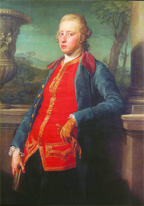
devonshire_dukeSusana: She was friendly with the Duke as well?

Lady P: Oh, very. She gave birth to two illegitimate children by him!

Susana: Goodness! And Georgiana knew this was going on?

Lady P: Of course she did. Everyone knew. Not that she was happy about it, mind. But by that time, she was far too dependent on Bess to cast her aside. It’s not like she and the Duke were a love match, you know. And Bess helped her deal with her creditors too; I don’t think she could have managed without her.

Susana: This blows my mind. So the Devonshires lived in a ménage à trois surrounded by illegitimate children for twenty-five years, and yet Georgiana was an acclaimed leader of the ton?

devonshireLady P: Indeed. You see, Georgiana’s personality was such that she made it the fashion to be different. You should have seen the hats she wore…some of them scraped the ceiling and one nearly caught fire when it brushed against a chandelier! She was a great friend of Marie-Antoinette, you know, before the Revolution. Georgiana ruled the French court as well, when she was in France. Everyone sought to imitate her.

Susana: Including her lifestyle?

Lady P: Dear Susana, you mustn’t assume that the leaders of the ton actually practiced the morals they espoused for others. No, indeed. Society was full of rakes and drunkards and wife beaters even then. People whispered about the Devonshires, of course, and perhaps even spoke of them openly, but it didn’t stop them from worshipping her. Not even when she fled to France to give birth to her own illegitimate daughter.

Susana: No, really?

Lady P: Georgiana was no paragon, you know. She had love affairs of her own. She fell in love with Charles Grey, who was seven or eight years younger than she, and would have run away to live with him had the Duke not threatened to keep her children from her. As it was, the Duke banished her to France to have Grey’s daughter, and Eliza was raised by Grey’s parents as their own daughter.

Susana: So Georgiana had to give her daughter up while the Duke’s illegitimate children lived in the household with his legitimate children? How hypocritical!

Lady P: That is the way of things where I come from. The men rule—or think they do—and their wives or daughters have little recourse but to become beggars or do as I did, and become an expert at diversion.

Susana: Diversion?

Lady P: Well, I certainly never told Pendleton I had become a Whig follower. He was a Tory through and through, and he would never have allowed me to join Georgiana in her marches for Charles Fox. No indeed. So I never mentioned it, and whenever he asked me what I had done on those days, I simply told him I was at the milliner’s and began chattering away about lace and ribbons and the latest fashions until he changed the subject or stalked off. Of course, now that I am widowed, I can do as I please. Of course, I do miss my dear Pendleton, but I must confess, the freedom of widowhood is much to be desired.

Susana (To the Reader): Our time is up for today, but I’ve asked Lady P to continue her memories of the Duchess, particularly her political activities, in our next episode. Thanks for dropping by.

And, as always, please do comment if you have any questions you’d like to ask Lady P about the late Georgian/Regency era. She does love to chat!

The Lady P Series

Episode #1: Susana’s Adventures With Lady P: The Introduction

Episode #2: Lady P Talks About… Pride and Prejudice?

Episode #3: Lady P and the Duchess Who Lost a Billion Dollars

Episode #4: Lady P and the Face On the $100 Bill

Episode #5: In Which Lady P Discovers Sparkly Fabrics and Ponders Violating the Prime Directive

Episode #6: Lady P Dishes the Dirt on the Duchess of Devonshire

Episode #7: The Political Exploits of Lady P and the Duchess of Devonshire

Episode #8: Lady P and the Prince Regent’s Illicit Marriage

Episode #9: In Which Lady P Depletes the Cooking Sherry During Her Discussion of Caroline of Brunswick

Episode #10: Lord Byron: Mad, Bad, and Dangerous to Know

Episode #11: In Which Lady P Talks About Hannah More and the Rights of Women

Episode #12: Lady P’s Revelations Regarding George III and His Peculiar Progeny

Episode #13: Lady P Discusses the Luddite Uprising, the Assassination of Spencer Perceval, and the General Unfairness of Life

Episode #14: In Which Leticia, Lady Beauchamp, Pops In For an Interview On Her Personal Acquaintance With Princess Charlotte of Wales

Episode #15: Lady P On Assignment in 1814 Kent

Lady P Quizzes Jane Livingston, the Hero’s Sister From “A Twelfth Night Tale”

A Treatise On Lady Theresa

romancehop2013smOne might expect an earl’s daughter to have been raised with every conceivable luxury—with the finest wardrobe and jewels money can buy, along with her own personal lady’s maid and a host of servants to do her bidding. Young ladies of the nobility would naturally be expected to attend balls and routs and a host of society events in order to attract a suitable parti for marriage. A charmed life indeed, by the standards of the day.

Not, however, by Lady Theresa’s.

Oh, Lady Theresa had her come-out, made her curtsy to the Queen, danced with eligible gentlemen, swallowed dry cakes at Almack’s, like every other aristocratic young lady. Unlike the majority, however, she did not enjoy it. In fact, she disliked it excessively.

Because Lady Theresa, despite her lofty title, despised the superficiality of the London ton. The dandified gentlemen with their pretentious manners and outrageous clothing who would stare through their quizzing glasses at unfortunate young ladies judged to be defective in some way or another. Lady Theresa herself ran afoul of them on more than one occasion, but only because she went out of her way to “rescue” the victims of these tormenters, these useless fribbles, who seemingly had everyone in the ton kowtowing to them. They disgusted her.

She preferred living in the real world. The country—specifically the Granville estate and the village where she had grown up all her life. Where people worked for a living, producing food for themselves and the rest of the country, yes, even for the indolent upper crust of society who scorned them. Where people lived—really lived—their lives and cared for their neighbors in times of need. These people—the tenants, the villagers, the families of the neighboring estates—were her family every bit as much as her father was, social status notwithstanding.

treasuringtheresa_1.75So Lady Theresa was one young lady who did not wish for a brilliant marriage and the whirl of London society. She’d rather stay in the country and marry the boy next door who also happened to be her best friend, and bring her children up among those she cared about. Was that really too much to ask?

She didn’t mind that much that someday her father’s estate would go to his distant cousin and heir, Damian Ashby. Titles and entailed property passed to the closest male heir. It wasn’t fair, of course. But that was the way of things. She’d be long married to Reese Bromfield, her childhood sweetheart, by then. By all accounts, Ashby was a London swell who would probably never spend more than a week at Granville Manor, so she’d probably see him only on rare occasions. So much the better.

But Lady Theresa’s life was about to take an unexpected turn. Not even an earl’s daughter can stop the hand of fate as it weaves its way through people’s lives. Will she have the courage to endure the afflictions heading her way and find an alternate route to happiness? Or is she doomed to a life of bitterness and misery?

Treasuring Theresa, a sweet Regency short story, is available on Amazon, Barnes & Noble, AllRomance eBooks, Ellora’s Cave, Sony, Kobo and Bookstrand.

Win a $20 Amazon Gift Card

To celebrate the release of Treasuring Theresa, I am offering contests each week of January. Winners will be chosen on January 9, 16, 23, and 31. You can’t win if you don’t enter, so enter now, by clicking below or the Treasuring Theresa cover at right.

theresa_banner

To return to the TRR Romance Madness Blog Hop, click here.

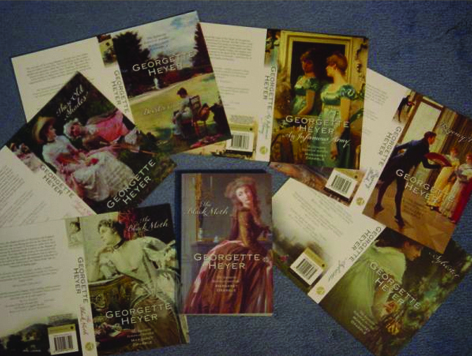
Georgette Heyer: The Grande Dame of Regency Romance

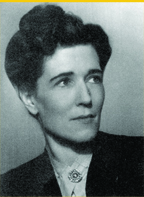
georgetteI suppose you could say that Jane Austen was actually the first, but while she simply wrote about life in the time in which she lived, Heyer had to do so from a distance of a hundred years.

Heyer took pride in the historical authenticity of her novels, which was possible only as a result of a great deal of research on such things as daily living, fashion, transportation, famous personages, and the language that was used at the time. While critics complained that her books included too much detail of daily life at the time, in reality, this was necessary because Heyer’s readers needed it in order to understand the historical setting. And in Heyer’s stories, the setting is nearly as important as the plot!

Heyer’s first novel, The Black Moth, was written in serial form to entertain her brother in his sickbed. Her father liked it so much that he sought to have it published, which it was, in 1921. In 1935, the first of her Regency romances, Regency Buck, was published, and even though she also wrote thrillers and a few contemporary pieces, her Regency romances far outsold them. In spite of the fact that she refused to do anything to promote them.

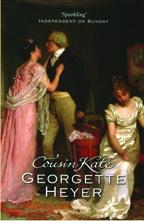
cousinkateI think the first Heyer Regency I read was Cousin Kate, which had come out only a couple of years before. I was a freshman in high school and had won a $25 gift certificate (for being the top Spanish student) to the local college bookstore. I think my teacher expected me to buy a dictionary or something, but instead, I found the romance section and loaded up. (I think most of the books were 75¢ or less, so I had quite a bagful when I left the store.)

And that was how it all started. After reading all of Heyer’s Regencies—more than once, mind—I moved on to other authors. Historicals were always my favorite, but the Regency time period has always had a special place in my heart. Why? I’m not sure I can pin it down. I did make a stab at it in a recent blog post for The Romance Reviews, though.

“…the Regency was also a time of elegant manners, fabulous balls, and glittering aristocratic lifestyles. The traditional Regency romance, à la Georgette Heyer, involves dashing heroes, spunky heroines, witty dialogue, and an unexpected, “sweet” romance.”

What’s not to like?

If you haven’t discovered Georgette Heyer’s Regencies yet, don’t wait any longer! And if you find yourself as crazy about them as I am, you might want to buy the whole lot of them. Last year, all of her books were made available for $2.99 each during the month of August, Heyer’s birthday. Make a note in your calendar and stock up!

Which of Georgette Heyer’s books is your favorite? What do you like most about her stories?

theseoldshadesUntitled-1heyerbooks