Romance of London: Nathan Mayer Rothschild’s Fear of Assassination

Why does anyone want to be a billionaire?

I’m not sure why the opening line of the passage below spoke to me. Perhaps because I am two days away from my annual migration south for the winter and I’m worried about leaving something essential that I will need. Not to mention the limits of the space in the car, which I also have to share with my parents’ stuff. But it has occurred to me periodically in my life that possessions are a burden, even though I cannot get myself to give enough of them away to relieve the burden.

In these moments, I find myself exceedingly grateful not to be a billionaire. Or in the case of the subject of today’s post—a millionaire. I can’t think of anyone who would want to kill me for my possessions, at least. It does happen, though, so perhaps Mr. Rothschild had good reason for his fears. In our time, I’m thinking of Bison Dele, former NBA player who was murdered for his money by his own brother. And the homeless Abraham Shakespeare who won the lottery, but ended up murdered by someone he trusted to help him manage his money. (Yes, I am addicted to the ID Discovery Channel.)

The Penalties of Avarice

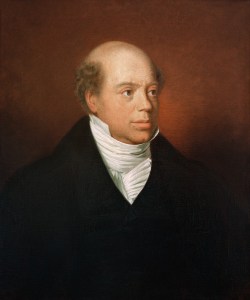
Nathan Mayer Rothschild

Nathan Mayer Rothschild

Possession naturally brings apprehension as to the power of retaining it. There were periods in the career of Rothschild, the millionaire, when his gigantic capital seemed likely to be scattered to the four quarters of the globe. He had also other sources of apprehension. Threats of murder were not unfrequent. On one occasion he was waited on by a stranger, who informed him that a plot had been formed to take his life; that the loans which he had made Austria, and his connection with Governments adverse to the liberties of Europe, marked him for assassination; and that the mode by which he was to lose his life was arranged. But though Rothschild smiled outwardly at those and similar threats, they said who knew him best, that his mind was always troubled by these remembrances, and that they haunted him at moments when he would willingly have forgotten them. Occasionally his fears took a ludicrous form. Two tall moustachioed men were once shown into his counting-house. Mr. Rothschild bowed; the visitors bowed; and their hands wandered first in one pocket and then in another. To the anxious eye of the millionaire, they assumed the form of persons searching for deadly weapons. No time seemed allowed for thought; a ledger, without a moment’s warning, was hurled at the intruders; and in a paroxysm of fear he called for assistance to drive out two customers, who were only feeling in their pockets for letters of introduction. There is no doubt that he dreaded assassination greatly. “You must be a happy man, Mr. Rothschild,” said a gentleman who was sharing the hospitality of his splendid home, as he glanced at the superb apartments of the mansion. “Happy—I happy!” was the reply. “What! happy, when just as you are going to dine, you have a letter placed in your hand, saying, ‘If you do not send 500l I will blow your brains out?’ Happy—I happy!” And the fact that he frequently slept with loaded pistols by his side is an indirect evidence of a constant excitement on the subject.*

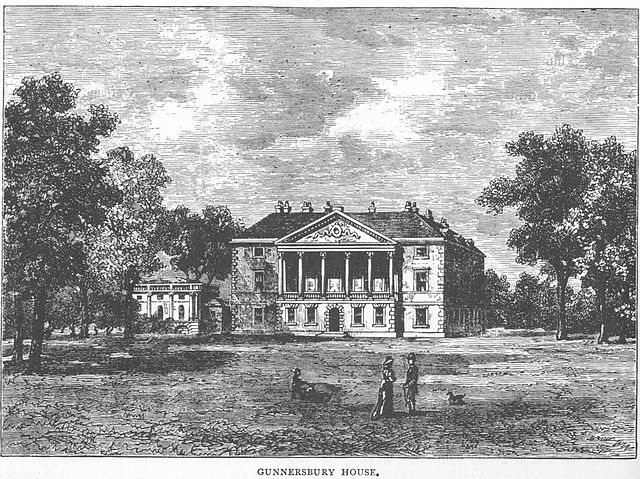
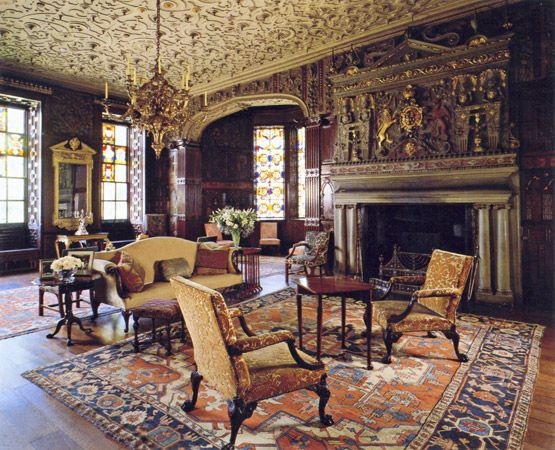
Gunnersbury House, near Acton (home of the Rothschild family)

Gunnersbury House, near Acton (home of the Rothschild family)

The late Nathan Meyer Rothschild was the most famous foreign exchange broker in London. “He never hesitated for a moment in fixing a rate, either as a drawer or purchaser of a foreign bill of exchange on any part of the world; and his memory was so retentive that, notwithstanding the multifarious transactions in which he was engaged on every foreign post-day on the Royal Exchange, he never took a note of them; but on his return to his office could dictate to his clerks the whole of the bargains he had made, with the various rates of exchange, and the names of the several parties with whom he had dealt, and the most perfect exactness.”

*Characters of the Stock Exchange


Romance of London Series

  1. Romance of London: The Lord Mayor’s Fool… and a Dessert
  2. Romance of London: Carlton House and the Regency
  3. Romance of London: The Championship at George IV’s Coronation
  4. Romance of London: Mrs. Cornelys at Carlisle House
  5. Romance of London: The Bottle Conjuror
  6. Romance of London: Bartholomew Fair
  7. Romance of London: The May Fair and the Strong Woman
  8. Romance of London: Nancy Dawson, the Hornpipe Dancer
  9. Romance of London: Milkmaids on May-Day
  10. Romance of London: Lord Stowell’s Love of Sight-seeing
  11. Romance of London: The Mermaid Hoax
  12. Romance of London: The Bluestocking and the Sweeps’ Holiday
  13. Romance of London: Comments on Hogarth’s “Industries and Idle Apprentices”
  14. Romance of London: The Lansdowne Family
  15. Romance of London: St. Margaret’s Painted Window at Westminster
  16. Romance of London: Montague House and the British Museum
  17. Romance of London: The Bursting of the South Sea Bubble
  18. Romance of London: The Thames Tunnel
  19. Romance of London: Sir William Petty and the Lansdowne Family
  20. Romance of London: Marlborough House and Sarah, Duchess of Marlborough
  21. Romance of London: The Duke of Newcastle’s Eccentricities
  22. Romance of London: Voltaire in London
  23. Romance of London: The Crossing Sweeper
  24. Romance of London: Nathan Mayer Rothschild’s Fear of Assassination
  25. Romance of London: Samuel Rogers, the Banker Poet
  26. Romance of London: The Eccentricities of Lord Byron
  27. Romance of London: A London Recluse

Caroline Warfield: The Renegade Wife (Giveaway)

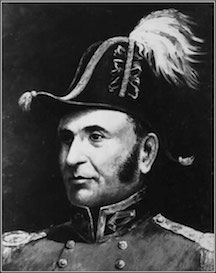
Lieutenant-Colonel John By, Royal Engineers, 1779-1836

John By [Source: By, John, 1832. Unknown Artist, Kingston Picture Collection, Queen’s University Archives, accession number V23 P-58]

John By [Source: By, John, 1832. Unknown Artist, Kingston Picture Collection, Queen’s University Archives, accession number V23 P-58]

After a modestly successful military career, John By was given an assignment the he might well have believed would bring him promotion and renown. He came from modest origins and, while competent, had never achieved the heights of success. He is in some ways a typical professional soldier of the Napoleonic Era. He died in obscurity. So why is he remembered today?

He was assigned to design an entirely navigable waterway to serve as a supply line between Montreal and Kingston using the Rideau and Ottawa rivers. It was to be cut 126 miles through a wilderness of forest, swamps, and rocky terrain far enough removed from the Saint Lawrence River to be easily defended in case of invasion by the Americans to the south. For By, it didn’t work out as he hoped. For Canada, By’s canal is a treasure.

Born at Lambeth in 1779, to a family of watermen, By entered the Royal Military Academy, Woolrich, in 1797 and was commissioned two years later. Initially commissioned to the artillery, he transferred to the Royal Engineers later that year. He served in Plymouth for two years before being sent to Canada in 1802 where he worked on the first small locks on the Saint Lawrence and on the citadel at Quebec. Beginning in late 1810 he served under Wellington in the Peninsula but was recalled in 1812 when the Inspector General of Fortifications, Lt. General Gother Mann, appointed him commanding engineer of the new Royal Gunpowder Mills. After Waterloo, the need for engineers lessened, and By retired.

First Camp at Bytown By John By [Public domain], via Wikimedia Commons

First Camp at Bytown By John By [Public domain], via Wikimedia Commons

John By was 47 when he was called out of retirement to build the canal. There’s every reason to believe he jumped at it. The Duke of Wellington is said to have chosen him specifically, but the orders came from General Mann who had also been his commanding officer during his previous stay in Canada. Both men had confidence with him at the beginning.

Never one to take the easy or obvious way, By began making controversial decisions almost immediately upon arrival in 1826. Instead of setting up housekeeping in Kingston, which already boasted not only a fort and navy base, but also a growing town, he moved his family and set up at the mouth of the Ottawa where there were at most a half dozen households. Even as the Royal Engineers began laying out the plans for the waterway, By laid out plans for a town to be called Bytown to house his headquarters, his home, barracks, and housing for workers. His town is now called Ottawa and is the capital of Canada.

There had been earlier surveys of the country, and some recommendations for much more modest plans than those ultimately carried out. By resurveyed and determined to lay out the waterway using the Rideau River and lakes, canalizing the route where needed, building locks and dams along the way. Contract labor began clearing land that winter.

Entrance of the Rideau Canal at Bytown, 1839, By Ainslie, Henry Francis 1803-1879 [Public domain], via Wikimedia Commons

Entrance of the Rideau Canal at Bytown, 1839, By Ainslie, Henry Francis 1803-1879 [Public domain], via Wikimedia Commons

The single most important decision was to build the locks and canals wide and deep enough to handle the new naval steamships. The original, narrower plans were designed for typical river craft such as Durham boats. In spite of opposition in London, a compromise plan dictated only slightly smaller construction. Building for steam power is typical of By’s far-sighted approach.

In six years By, the engineers, and the contractors had managed the project, with most of the work done by hand by primarily Irish and French workers. They built approximately 50 dams, 47 locks, and blockhouses for defense. The Stone Dam at Jones Falls was the third largest dam in the world when it was built. The eight massive locks at Bytown are still a wonder, and, yes, it accommodated navel steamships. An estimated 1000 men died in the process. By himself contracted malaria, probably as a result of his insistence on inspecting work camps himself. He demanded money for a hospital and housing, and his requests were not always well received.

Lt. Colonel By statue overlooking the locks in Ottawa (my own photo)

Lt. Colonel By statue overlooking the locks in Ottawa (my own photo)

In May 1832 John By was able to sail through the locks by steamship, his work essentially finished. It appears he planned to settle permanently in Bytown, but it was not to be. Precisely at the time of his great triumph, a move was underfoot in London to remove him. He received notice in August:

My Lords further desire that Colonel By may be forthwith ordered to return to this country, that he may be called upon to afford such explanation as My Lords may consider necessary upon this important subject.

The “important subject” was cost overruns and questionable permissions. The committee that examined him grudgingly allowed that the work had been done with care and that most of the cost was unavoidable, but in the end they issued a reprimand for allegedly unauthorized expenditures, which he denied. Instead of the commendations he expected, By was forced out. He struggled to clear his name unsuccessfully. In failing health, he retired to his home in Sussex. Even as he lay ill, his wife continued to write to people begging for help removing the stigma which she believe contributed to his decline. He died, probably of malaria, in 1836.

John By artist unknown (not from life)

John By artist unknown (not from life)

And the canal? It never served the military purpose for which it was intended, but it opened Ontario to settlement and served as a commercial highway throughout the nineteenth century. It is now a UNESCO World Heritage Site, largely used for recreation, and those pesky Americans are welcome to come up and enjoy the still functioning locks and canals.

Want to know more? Try these.

The Virtual Museum of Canada http://bit.ly/2ej9lzX

The Rideau Canal World Heritage Site http://www.rideau-info.com/canal/tales/bye-by.html

The Bytown Museum http://www.bytownmuseum.com/en/engr.html

Robert Passfield, Military Paternalism. https://books.google.com/books?id=CSTSAQAAQBAJ

Giveaway

To celebrate the launch, Caroline will give a copy of one of her Dangerous Series books to one randomly selected person who comments. The winner can choose from the books found here:

http://www.carolinewarfield.com/bookshelf/

About The Renegade Wife

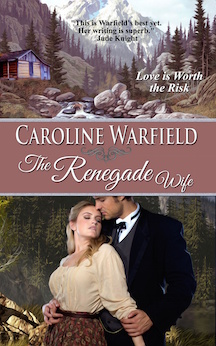
therenegadewifeBetrayed by his cousin and the woman he loved, Rand Wheatly fled England, his dreams of a loving family shattered. He clings to his solitude in an isolated cabin in Upper Canada. Returning from a business trip to find a widow and two children squatting in his house, he flies into a rage. He wants her gone, but her children are sick and injured, and his heart is not as hard as he likes to pretend.

Meggy Blair harbors a secret, and she’ll do whatever it takes to keep her children safe. She’d hopes to hide with her Ojibwa grandmother, if she can find the woman and her people. She doesn’t expect to find shelter with a quiet, solitary man, a man who lowers his defensive walls enough to let Meggy and her children in.

Their idyllic interlude is shattered when Meggy’s brutal husband appears to claim his children. She isn’t a widow, but a wife, a woman who betrayed the man she was supposed to love, just as Rand’s sweetheart betrayed him. He soon discovers why Meggy is on the run, but time is running out. To save them all, Rand must return and face his demons.

Amazon

Excerpt

“Let go of her, Blair, or I’ll shoot you like the dog you are. God knows you deserve it.” For untold minutes all Rand heard was the wind in the trees, and Lena’s whimper behind Pratt’s back. Even Meggy seemed to hold her breath.

Blair let go of her arm so suddenly she stumbled before running back to her children. “The slut and her children are mine, Wheatly, and that makes you a thief.”

“Get on your horse, Blair, and get out of here before I change my mind and shoot you anyway. You too, Pratt.”

Rand kept his pistol aimed at Blair while the men mounted and turn their horses to the lane. Pratt and Martin galloped up the hill and into the woods, but Blair turned half way up and pointed back at Meggy hugging the children in Rand’s doorway.

“They’re mine, Wheatly. I have a writ. I’ll be back with the magistrate and the deputy to have you jailed for resisting. Won’t your fancy relatives like that?” He turned and galloped off.

Rand eased back the hammer of his pistol, when the men cleared the trees. He slid it into a holster, jumped down, and ran to Meggy and the children, pulling all of them into an embrace. Meggy began to weep almost as soon as his hand came around her back, pulling her close with Lena between them and Drew in the crook of his arm.

“You might have killed him, and then where would we be?” she sobbed.

“You would be safe from him.”

“And you would be in jail or worse.”

He didn’t deny it. He kissed the top of her head and down her cheek.

About the Author

Carol Roddy - Author

Award winning author Caroline Warfield has been many things: traveler, librarian, poet, raiser of children, bird watcher, Internet and Web services manager, conference speaker, indexer, tech writer, genealogist—even a nun. She reckons she is on at least her third act, happily working in an office surrounded by windows while she lets her characters lead her to adventures in England and the far-flung corners of the British Empire. She nudges them to explore the riskiest territory of all, the human heart.

Website & BlogFacebookTwitter

Goodreads • Renegade Wife Pinterest Board

Subscribe to Caroline’s Newsletter

Sandra Masters: The Duke’s Magnificent Bastard

Interview with Sandra Masters

Susana: Why did you decide to write Regency romance?

Sandra_2014 50 percent pictureA (3) copySandra: I was an only child whose parents both worked. Before and after school, I was alone, and the only reading materials my parents had was the book Heidi and The Encyclopedia Britannica. You can imagine that the Encyclopedia was dry reading. History intrigued me, particularly the historical period of the Regency era. At the age of thirteen, after a brief stint in a convent in New Jersey, I accepted that the life of a novice nun was not my calling. Interestingly, when I arrived there in Morristown, the convent was an old historical mansion with parquet floors and grand staircases, not mention a soaring ceiling, usually found in Regency mansions.

Visions of dukes, duchesses, viscounts, earls, danced in my head. So I kept on writing. I sometimes think that in another life, I was born during the Regency period. I’ve never created a duke I couldn’t love.

Online classes, seminars, conferencing, monthly meetings, networking, etc. over the past five years made me realize I had to study the craft. Decades later, when I decided that to see my name in print was a goal before I left the planet, I broke through the ceiling. My debut novel was Once Upon a Duke, released July 14, 2015. I’ve been on a marvelous journey ever since, with my fourth book in The Duke Series whose release date is November 4, 2016, The Duke’s Magnificent Bastard.

Susana: When do you write?

Sandra: Writing to me is not a pastime or a way to make money, it is an obsession. I write twelve to thirteen hours a day, every day, and then I read in the wee time of a morning, which doesn’t leave too much time to clean the house. The dust puppies will always be there.

Susana: What is the genre of your new story The Duke’s Magnificent Bastard?

Sandra: This novel is a multi-cultural Regency romance story of a seventeen-year-old Anglo-West Indian bastard, Thorn Wick, now acknowledged by his father, The Duke of Althorn, who was never made aware of his birth. Our hero admires the ward of his father from afar, an aristocratic flirtatious English lady, Alicia, who has designs on him until the reality of loving Thorn too much almost destroys her. Throw in our noble Duke, an evil witch doctor, a Barbados tribal chieftain intent on redemption, horse racing for the Regent, amazing “heavenly” Argamak Turkmen horses, a conspiracy to bring down the monarchy, and our plot thickens. Lust, desire, passion all conflict to epic proportions. Honor, truth, and justice test his values. Just when he starts to believe in fairy tales, another obstacle looms to thwart his plans. And then there’s love!

Susana: Where did you get the idea for this story?

Sandra: Ever since I can remember, the subject of bastardy fascinated. I read John Jakes eight-book series that spanned generations and centuries and decided I wanted to create a ‘magnificent’ bastard of my own.

Susana: How does Thorn react to the stigma?

Sandra: In 1820 Regency England, there is the stigma attached to our hero, Thorn Wick. Yanked from the West Indies, the half-breed, is transported to London, England where he is considered illegitimate. Can anyone imagine the emotions that consumed him? Except for the noble duke’s recognition and that of the family who supports him, acceptance is difficult. Thorn fights against all the odds.

Prepare to be transported from island life in Barbados to aristocratic England and then back to Barbados where stunning revelations wrack our hero’s world.

Susana: What stunning revelations?

Sandra: Without spoiling the story for readers, all I can say is that there is a native uprising against foreign plantation owners, the discovery of the truth about Thorn’s mother’s death, and a flight to save his life as he swims out to a waiting ship bound for England and a bad storm.

Susana: Thank you for allowing me to be a part of Susana’s Parlour.

Now, for the readers, I’d love to ask them what they like to see in a Regency romance!

untitled

About The Duke’s Magnificent Bastard

After three years in England, Thorn Wick, the duke’s bastard son, perfectly flawed, still fights for acceptance in his father’s world as a renowned golden horse trainer. Just when he starts to believe in fairy tales, another obstacle looms to thwart his plans.

Alicia Montgomery, ward of the duke, is in love with Thorn. Strong willed and adventurous, she determines she can convince him to admit his feelings until the reality of loving Thorn too much almost destroyed her.

On a dangerous mission to Barbados at the request of his father, Thorn is stunned when secrets are revealed about his mother. Will Thorn extract revenge for the foul deed?

Can Alicia quell Thorn’s demons and prove to him love can pave the way to their happiness?

Can Thorn relinquish his past because he now has a present and a future? Will he accept the man he has become? Will he return to his father and Alicia and fulfill their destiny?

Coming November 4th, 2016, available for pre-order now at Amazon.

Amazon | Kobo | BN | Apple iBookstore

About the Author

From a humble beginning in Newark, NJ, retired business executive Sandra Masters had a short stay at a convent in Morristown, NJ, to the board rooms of NYC to the ballrooms of the Regency period. Spicy Sensual Seduction with Swagger.

Website • Facebook

Susana’s Adventures in England: Lyme Park

lyme_park_2

Lyme Park has been in the possession of the Legh family for 550 years. The manor was granted to the first Piers Legh and his wife Margaret in 1398 by Richard II, son of the Black Prince, as a reward for the heroic deeds in battle of her grandfather, Sir Thomas Danyers. The Leghs themselves campaigned in many 15th and 16th century battles.

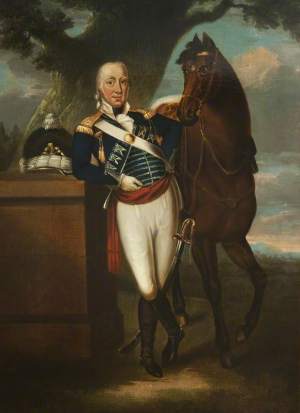
Colonel Thomas Peter Legh

Craik; Colonel Thomas Peter Legh (1753-1797) of Lyme Park; Duke of Lancaster's Own Yeomanry Museum; http://www.artuk.org/artworks/colonel-thomas-peter-legh-17531797-of-lyme-park-150355

Colonel Thomas Peter Legh (1753-1797) of Lyme Park

From Lyme Park House & Garden, a National Trust Publication:

He was best known for having raised six troops of cavalry in fourteen days in 1794—following Pitt’s call to arms in the face of increasing trouble in Europe—and for having sired seven children by seven different women, none of whom was his wife.

He left the estate to his oldest natural son, Thomas.

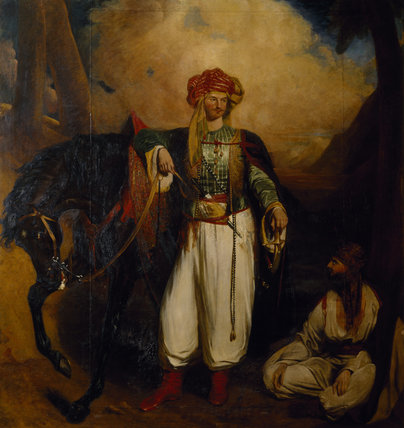
Thomas Legh

Thomas Legh

Thomas Legh

Thomas Legh, who inherited Lyme in 1797, was one of the most remarkable members of the family. By the time he came of age in 1814 he had already followed the Nile into parts of Nubia previously unexplored by Europeans, and the following year he was present at the Battle of Waterloo. He also became a well-known Egyptologist and collector of antiquities, modernised the estate farms, exploited the industrial potential of his Lancashire lands and had Lyme itself restored and extensively, but sympathetically, altered by Lewis Wyatt.

The House

The Stag Parlour

The Stag Parlour

The Leghs were notoriously fond of hunting the red deer indigenous to Lyme Park, which is no doubt the reason they made it their primary home from the late 16th century on.

The architectural style of the house varies from Elizabethan-Jacobean to Italian Palladian and baroque.

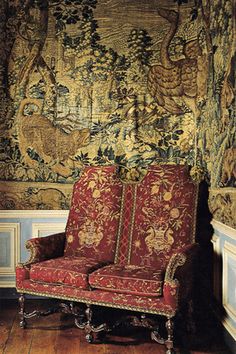
Unusual settee in the Yellow Bedroom

Unusual settee in the Yellow Bedroom

The exterior of the house was used as Pemberley in the 1995 BBC adaptation of Pride and Prejudice.

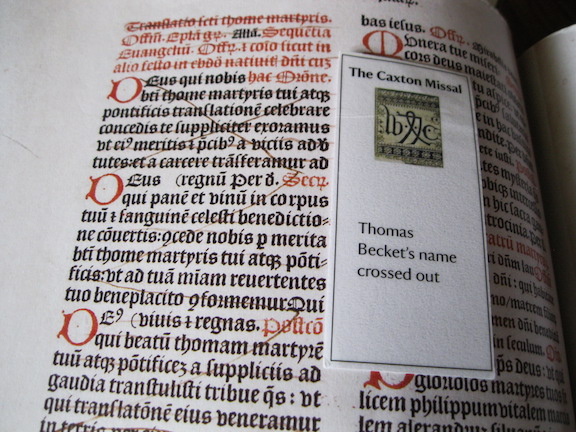
The Lyme Caxton Missal

caxtonmissal-copy

The Leghs were Roman Catholic supporters of the Stuarts in the 18th century. The missal they owned was an early printed book containing the liturgy of the mass according to the Sarum Rite, published by William Caxton in 1487. It is the only nearly complete surviving copy of its earliest known edition.

Drawing Room

Drawing Room


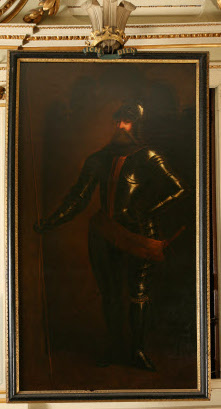
Prince Edward, Prince of Wales, `The Black Prince

Prince Edward, Prince of Wales, ‘The Black Prince’


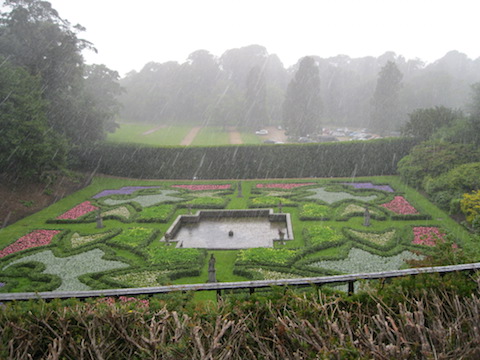
The Dutch Garden in the rain

The Dutch Garden in the rain


See more photos on my Lyme Park Pinterest page.

K.C. Bateman: A Raven’s Heart (Giveaway)

Interview with Kate Bateman

Susana: What inspired you to start writing?

kate-bateman-author-pic-copyKate: I’ve always been an avid reader, especially of historical romance, but I never considered writing a book myself until around five years ago, when my husband and I moved from England to the US (with his work.)

I’d spent twelve years as an antiques appraiser, running with my own auction house in the UK and I also appearing on several British antiques-related TV shows as an on-screen expert, but since there’s not much use for my auctioneering skills in central Illinois, and with three small kids at home, it was a natural sidestep to use my knowledge to write historical romance.

One day I threw a very badly-written historical across the room in frustration and complained to my husband that I could have done a better job of writing it. He bet me a dollar I wouldn’t even finish a manuscript. I bet HIM a dollar I would. I’d studied English at university, so I knew I could put a coherent sentence together, and I figured well, if they can get published, why shouldn’t I have a go. . . ? At least my historical facts will be accurate. So I made the leap from avid reader to writer.

Susana: How long have you been writing?

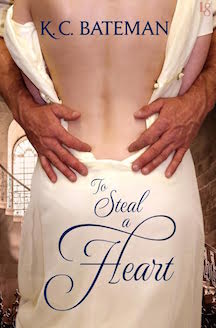
Kate: Well, my first attempt at a historical romance (about five years ago) was set in the Italian Renaissance, which is—according to most of the publishers I approached—a tough time period to sell. So I received numerous rejections, (ouch!) but took on board the fact that editors liked my writing and kept suggesting that I write a regency romance to appeal to a larger readership. So I wrote a regency – the first book in my ‘Secrets and Spies’ series: To Steal A Heart.

I entered a couple of RWA contests, finalled in several, and from that I got a full MS request from my now-editor at Random House, and was subsequently offered a three- book deal. That was in 2015. My first book, To Steal A Heart, came out in February 2016. Book two in the series – A Raven’s Heart—is out this month, on 18th October, and book three, A Counterfeit Heart will be out in May next year.

Susana: What advice would you give to writers just starting out?

Write the books you want to read, and don’t try to copy someone else’s style because you think it will sell—it will come across as forced. I love reading about capable, intelligent heroines, so I to write about ‘historical girls with cool skills’. I also like to highlight the fact that Regency-era romances don’t all have to be set in London ballrooms. There’s a whole world of interesting places out there and many of my ideas come from real-life historical people and events.

My heroines are always feisty, witty, and more than a match for the men in their lives. Unofficially, I describe them as ‘bad-asses in bodices’ or ‘kick-asses in corsets’! To Steal A Heart, features a tightrope-walking thief and the French / British double agent who needs her skills for a prison-break heist. A Raven’s Heart has a code-breaking heroine and the cynical spy assigned to keep her safe. Book three, A Counterfeit Heart, (out next year) has a forger heroine with a dubious moral compass and a suitcase full of fake money… You get the idea!

And I’d also say to new writers: you can always improve your writing. The best thing I ever did was join my local RWA (Romance Writers of America) local chapter and attend conferences and writer events. It helped me connect with other authors whose support, encouragement, teaching, and constructive criticism have been invaluable. I’m always looking for new ways to better my craft.

Susana: Are you a plotter or a pantser?

Kate: I’m a little bit of both, but my natural inclination is pantser. I hate plotting. As my engineer-husband will tell you, I hate organizing, timetables, and planning, but I know it’s just asking for trouble to start writing a book with no idea of your overall story arc, or major plot points. So every time I come to plot a new book I pretend to myself that I’m just ‘jotting down ideas’. I keep a notebook and write down a couple of key scenes, character traits, or snatches of dialogue. I type them up. I work out the order they have to go in to make sense. I work out what scenes I need to slot in between the big scenes to join them together. And hey-presto! It’s turned into an outline / plot without me noticing! By the time I’ve turned all my scribbled notes into actual, readable sentences, the book’s almost half done.

Susana: Tell us something about your new release that’s not in the blurb:

Kate: OK, here are a few fun facts about A Raven’s Heart:

First, one of the themes I play with in A Raven’s Heart concerns internal and external scars. Heloise has a scar on her face which she believes makes her unattractive. Raven’s scars are all on the inside. He thinks he’s too emotionally damaged to love. In this respect they’re opposites—and perfect for one another; they both see past the damage and find something to love underneath.

In one of my favorite scenes Raven lets slip how much he cares for Heloise by referring to the ancient Japanese art of Kinstukuroi. It’s the use of gold to repair a broken piece of pottery, with the understanding that the piece is more beautiful for having been broken and lovingly repaired. I thought that was such a romantic idea that I had to include it in a book. Ostensibly Raven’s discussing his mother’s favorite piece of porcelain, but we know he’s really talking about Heloise.
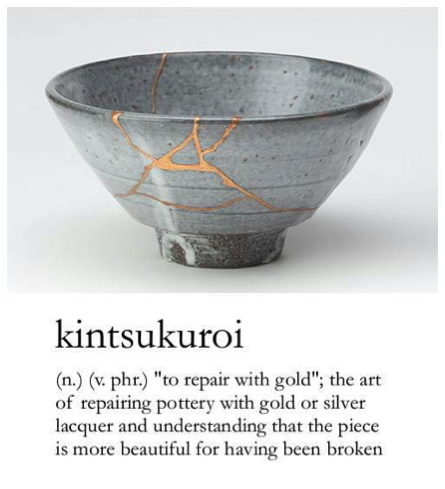
bowl

Secondly, A Raven’s Heart is set mainly in Spain and the descriptions of the landscape and architecture all come from personal experience. I love traveling, and I was lucky enough to have spent quite a bit of time in Spain as a child. The descriptions of the taste of carobs and pomegranates come from experience! I hope my affection for the country shines through and gives those who’ve never been there a hint of what it’s like. I make Pinterest boards for all my books, so if readers are interested in seeing where I get my inspiration they can take a look: https://www.pinterest.com/kcbateman1/a-ravens-heart-raven-and-heloise-spanish-peninsula/

In the story Heloise goes to visit some prehistoric cave art in the caves near the Spanish village of Altamira. These really exist and the only artistic license I took with the story is that the caves weren’t ‘officially’ discovered or made public until a few years later than 1816. I like to think that the locals could have been aware of the existence of the caves, and the art, but might have been unaware of the importance of them from an anthropological standpoint. There’s no reason to suppose they wouldn’t have shown interested, if eccentric, foreigners like Heloise their local treasure. . .

Here’s an image of the wonderful prehistoric / Neolithic art that can be found in the Altamira caves:

cave

And here is a link to the Wikipedia page:

https://en.wikipedia.org/wiki/Cave_of_Altamira

Thirdly, lots of events in my stories have a basis in real, historical events. For example, A Raven’s Heart features a proposed prisoner swap between the French and the English. In my research, I found evidence for this surprising – if unusual – wartime practice; In 1813, Soult and Wellington agreed to an exchange of three Frenchmen for one Englishman and two Spaniards, a plan agreed by Napoleon.

Fourthly, the heroine in A Raven’s Heart, Heloise, is a talented codebreaker for the British, and in the book she and Raven get to meet her codebreaking idol, George Scovell. Major Scovell, later General Scovell, was is real historical person, and he played a crucial role in cracking the French codes and ensuring a victory for Wellington and his troops in the Peninsular campaign.

Here he is:
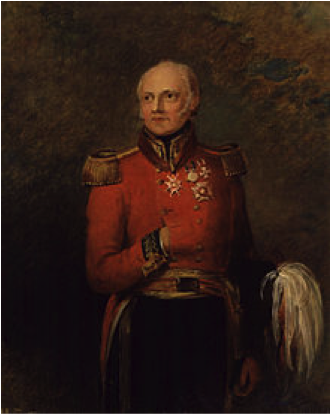
soldier

For those who would like to learn more about this interesting man and his achievements, his Wikipedia entry is fascinating! Sometimes truth is even greater than fiction. https://en.wikipedia.org/wiki/George_Scovell

Susana: What are you currently working on?

Kate: I’m finishing up book three in this Secrets and Spies trilogy, A Counterfeit Heart, which and will be out early next year (May 2017). The heroine, Sabine de la Tour, is also known as ‘Philippe Lacorte,’ the elusive, brilliant French forger. She meets her match in aristocratic spy Richard Hampden—Heloise’s eldest brother.

I’m having a lot of fun with these two. Sabine arrives in England with a suitcase full of counterfeit money. An honest woman would simply destroy the evidence of her crimes. An honest woman would never blackmail her handsome pursuer into paying for her co-operation. But Sabine’s never been all that good at being good…

Sabine can counterfeit anything, but can she tell the difference between what’s real and what’s fake when it comes to something as important as her heart?

Susana: What are you reading now?

Kate: I’m re-reading a couple of my favorite authors on my keepers shelf to remind me what good writing looks like – as inspiration! I’ve just finished the delightful As You Desire by Connie Brockway, whose unusual Egyptian setting I love, and the Medieval / Renaissance historical Shadowheart by Laura Kinsale. I’m now currently half way through Susan Elizabeth Phillips’s funny contemporary It had to be You…

Susana: What is your work schedule when writing?

Kate: I write for several hours every day during the week. I have three small kids, so a good day is when I drop them off at school and manage a solid block of writing before pickup. But I also think it’s really important to keep a work-life balance. You can’t stay slumped over a hot computer monitor all day, so I don’t let myself feel guilty for having lunch out with my girlfriends or meeting up for coffee. I don’t watch a lot of TV, so I sometimes get a couple of extra hours of writing done when the kids are all in bed – accompanied by just one small glass of wine…

Susana: What is one thing your readers would be most surprised to learn about you?

Kate: A lot of people in the UK know me for my antiques-show TV work, as an appraiser, so they’re quite surprised to learn that I also write historical romance. But I have lots of not-so-well-kept secrets. For example, I almost became a ballerina, and took ballet classes for eighteen years, until I decided it was too uncertain a career and went into antiques and writing instead!

Also, I once kissed the policeman on duty outside Number 10 Downing Street after attending a reception with the British Prime Minister. And I can’t touch dry cotton wool. No, really. Even thinking about it puts my teeth on edge, like nails scraping down a blackboard!

Susana: If your publisher offered to fly you anywhere in the world for a research project, where would you go and why?

Kate: Definitely Italy. The landscape! The food! The wine! The art! I’d choose to go stay in a massive crumbling Italian castle perched on the edge of a cliff with a view of the Amalfi Coast and a lovely garden scattered with good-looking Italian groundsmen and gardeners, of course! The fact that I don’t speak Italian would only be a minor inconvenience. I’d go and wander round all my favorite Tuscan haunts, like Siena and Florence, looking for antiques, then I’d watch the film A Room with a View, accompanied by a fabulous coffee and a decadent dessert like tiramisu.

Susana: What do you want people to take away from reading your books?

Kate: That not all Regency-era romances are set in London ballrooms and country houses! There’s a whole world out there to explore – even if it’s only within the pages of a book as an armchair traveler – and lots of fascinating chapters of history to discover. My heroines are intelligent, witty, independent women who are more than a match for their men. Hopefully readers will continue to enjoy the worlds and characters I create and want to read more!

Susana: What has been your biggest adventure to date?

Kate: That’s a tough question! Having my three kids has certainly been an adventure – the little monsters definitely keep me on my toes.

I also love traveling and I’ve been lucky enough to have had several amazing adventures in that respect. I’ve watched the stars from a Touareg tent in the middle of the Morroccan desert, I’ve survived white water rafting on the mighty Zambezi river in Zimbabwe, and trekked to huge reclining buddhas in Thailand. I’ve done some epic road trips across America with my family since moving here, including the Grand Canyon, the Rockies, Yosemite, Death Valley, and the Utah national parks.

But I think my biggest adventure has to be leaving behind my first career — as an antiques appraiser and auctioneer in England — and finding another career I love just as much; that of historical romance author. My path to publication has been one huge adventure, sometimes frustrating, disappointing and nerve-wracking, but also fun, fascinating and exhilarating. I’ve met some wonderful people, made some lifelong friends, and learned so much. I hope to keep writing and to stay in the wonderful world of romance for a very long time!

Susana: Who gave you the writing advice that sticks with you to this day?

Kate: I always remember the Nora Roberts quote about the importance of having a central conflict in your stories. She said something like ‘If your hero’s a fire investigator, your heroine had better be an arsonist!’

Also, and I don’t know who said it, but I have a post-it note taped above my computer with the fundamental ABC’s of writing: Apply Butt to Chair!

Susana: What one modern convenience you could not live without?

Kate: A kettle and teabags. Life’s just not worth living without a nice cup of tea!

About A Raven’s Heart

August 1815. The war with France is officially over, Napoleon’s an exile on St Helena, but Europe is still a very dangerous place to be. . .
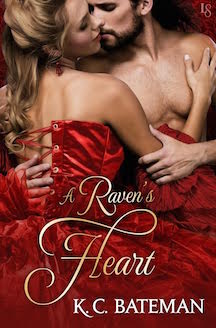
a-ravens-heart-final-cover-copyKidnapped and held for ransom at nineteen, ducal heir William Ravenwood knows the only person he can rely on is himself. Now part of a spy ring that includes his friends Nicolas and Richard Hampden, he’s the smuggler known as The Raven, a ruthless agent who specializes in rescuing hostages and prisoners of war from captivity. Raven longs to discover the fate of his colleague, Christopher ‘Kit’ Carlisle, who’s been missing, presumed dead, for over two years. He’s also equally determined to stay away from the one thing he knows is dangerous to his health—the bane of his life, his best friends’ infuriating little sister, Heloise.

Heloise is a brilliant code breaker, one of the English government’s most valuable assets. She’s loved Raven for years, but considering that he rejected her at sixteen, before her face was scarred rescuing her brother from an icy river, she’s certain he doesn’t want her now, despite his outrageous flirting.

But when Heloise decodes a message that proves Kit is alive and a prisoner in Spain, Raven realizes she’s in grave danger. With French agents determined to silence her, he’ll do whatever it takes to keep her safe, even if that means taking her to Spain with him as an unwilling hostage.

As they face French deserters and Spanish freedom fighters, Raven and Heloise try to ignore the simmering attraction that’s been building between them for eight long years. Heloise might be scarred outwardly, but Raven’s wounds are all on the inside. He knows he’s not worthy of her love—a shadowed Hades pining for sun-kissed Persephone—but he’s not above showing her passion for the short time they’re together. Protecting her from danger will be a challenge; protecting her from desire will be pure agony…

AmazonBarnes & NobleiBooks • KoboGoogle Play • ARe

Excerpt

Chapter 1

England, June 1816

“I’m a spy, not a bloody nursemaid!”

William de l’Isle, Viscount Ravenwood, glared across the desk at his mentor, Lord Castlereagh.

The older man shook his head, supremely unmoved by his outburst. “Miss Hampden needs immediate protection. Someone’s targeting my code breakers and whoever killed Edward could also have discovered her identity. I can’t afford to lose her, too.”

Raven narrowed his eyes. “Use another agent.”

Castlereagh gave him one of those level, penetrating looks he so excelled at. “Who? Neither of her brothers are here; Nic’s in Paris, and Richard’s following a lead on that French forger he’s been after for months. Who else is left?” He pinched the bridge of his nose. “We’ve lost too many good men. First Tony got himself killed in France, then Kit disappeared. There’s been no news of him for months.”

Raven frowned. He refused to consider the distasteful probability that his friend was dead. Kit was like him, a master of survival. He could be deep undercover. But with every week that went by with no word it became harder and harder to stay positive.

“And now another good man, Edward Lamb, had been murdered,” Castlereagh sighed. “I don’t want Miss Hampden to be next.”

The older man was a master of applying just the right amount of pressure and guilt. He hadn’t made it to head of the Foreign Office without knowing how to manipulate people.

“You think I should entrust her to a less competent operative?” Castlereagh mused softly. “You’re not burdened by false modesty, Ravenwood. You know you’re the best I have. I was hoping you’d use your exceptional talent for survival to keep Miss Hampden alive, too.”

Raven sighed, well aware he was being backed into a corner. If it had been anyone else he wouldn’t have hesitated. But Heloise Hampden was the fly in his ointment. The spoke in his wheel.

A total bloody menace.

Hellcat Hampden had been the subject of his guilty daydreams for years. What had started out as adolescent musings had matured into fevered erotic fantasies that showed absolutely no sign of abating. He’d told himself the attraction was because she was forbidden, tried to lose himself in other, far more available women. Nothing had worked. And while he’d rarely paid much attention to the monotonous sermons preached by the clergy, he was fairly sure there was something in the bible that said “thou shalt not covet thy best friend’s little sister.” Or words to that effect.

He was the last person she should be entrusted to. He’d sworn to stay away from her. Had avoided her quite successfully—give or take a few blessedly brief skirmishes—for the past six years. Hell, he’d traveled to the far corners of war torn Europe to try to forget her.

And now here he was, drawn back to her by some malevolent twist of fate.

As if his life wasn’t cursed enough already.

Over the past few years they’d settled into an uneasy, albeit barbed, truce; it was a sad reflection on his twisted nature that he preferred sparring with her to holding a reasonable conversation with anyone else.

His blood thrummed at the prospect of seeing her again and he smiled in self-directed mockery. Few things increased his heartbeat anymore. In combat he was a master of his emotions, sleek and deadly and efficient. Fighting barely elevated his pulse. He could kill a man without breaking a sweat. But put him ten paces away from that slip of a girl and a furious drummer took up residence in his chest, battering away against his ribs.

He shook his head. Being near her was a torture he both craved and abhorred, but he had a duty to keep her safe. A duty to her family, to Castlereagh, to the whole damn country. Much as he’d like someone else to deal with her, he didn’t trust anyone else. She was his to torment.

Castlereagh, the old devil, smiled, as if he already sensed Raven’s grudging acceptance. “That’s settled, then. She’s safe at home right now. You can go over and get her in the morning.”

He rose and strode to the door of the study, then flashed an amused glance at Raven’s immaculate evening attire and the mask resting on the desk. “I apologize for interrupting your evening, Ravenwood. I’ll leave you to your entertainments.”

Link to longer excerpt from A Raven’s Heart:

http://www.kcbateman.com/books/sneak-peeks/

In A Raven’s Heart, I hint that Raven and Heloise are like the Greek gods Hades and Persephone – Hades kidnaps Persephone and takes her down to the Underworld, but the two end up falling in love and learning to compromise.

My question to readers is: If you could host a dinner party and include any couple—they can be real historical or fictional/mythological, who would you choose? Anthony and Cleopatra? Elizabeth and Darcy? Cathy and Heathcliff? 

Three random commenters will win a free ebook download of To Steal a Heart, Book 1 in my Secrets & Spies series.
to-steal-a-heart-final-cover-image-copy

About the Author

Kate Bateman (writing as K. C. Bateman) wrote her first historical romance in response to a $1 bet with her husband who rashly claimed she’d ‘never finish the thing.’ She gleefully proved him wrong with a historical set in the Italian Renaissance. Now writing for Random House Loveswept, her latest Secrets & Spies Regency-era trilogy features her trademark feisty, intelligent heroines, wickedly inappropriate banter, and heroes you want to alternately strangle and kiss—all mixed up in the intrigue and turmoil of the Napoleonic wars.

When not traveling to exotic locations ‘for research’, Kate leads a double life as a fine art appraiser and on-screen antiques expert for several TV shows in the UK. She splits her time between Illinois and her native England and writes despite three inexhaustible children and a husband who has flatly refused to read any of her books ‘unless she hits the NY Times Bestseller list.’ It is—naturally—her fervent desire to force the semi-illiterate, number-loving cynic to do so. He still owes her that dollar.

Kate loves to hear from readers.

WebsiteFacebook Twitter

AmazonGoodreadsPinterest

Amy Rose Bennett: The Ice Duchess (Scandalous Regency Widows, Book 2)

In The Ice Duchess, my heroine, Georgiana, the widowed Duchess of Darby, prides herself on her ability to be a brilliant piquet player. Because of her past history—she suffered tremendous heartbreak at the hands of a scoundrel when she was a debutante—she became an adept player. She uses piquet as both a shield and a weapon during ton social events. In her mind, her fearsome card-playing reputation is a way to keep men, especially rakehells, at bay. Rather than converse, or worse still, flirt, she can just play cards. And it feels good to trounce the other player, particularly if he is a man!

Piquet was a popular card game during the Regency era and was often played at home, society events and even at the gaming table. A trick-taking game played by two players, it has quite a complicated scoring system. My hero, Lord Markham, and Georgie play several games during the story and as an author, it was quite a challenge to first of all, come to grips with the rules, and secondly, write the card playing scenes in a way that would be both entertaining and further the plot. I hope readers get a sense of the great strategy involved during the course of play as well as enjoy the banter between Georgie and Markham as both try to gain the ‘upper-hand’. And if any piquet experts out there read my story and find I haven’t got it quite right, I hope they’ll forgive me—it is a very tricky game to say the least!

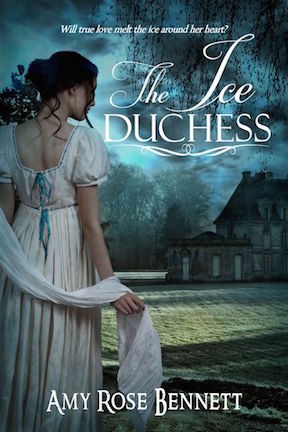
theiceduchess_med-copy-2

About The Ice Duchess

Georgiana Dudley, the ‘Ice Duchess’, has just emerged from mourning after a nine-year marriage of convenience to the Duke of Darby, her twin brother’s lover. Deeply hurt by a scoundrel a decade ago, Georgie swore she would never turn her head for any man, let alone another rakehell. But then she encounters the wickedly handsome and all too charming Rafe Landsbury, the Earl of Markham and against her better judgment, her interest is reluctantly aroused. An affair may be impossible to resist but dare she trust Lord Markham with her most intimate secrets… and her heart?

Society believes Rafe to be a diplomat but for many years he has been working on the Continent as a spy for the Crown. Leaving the shadowy world of espionage behind, he returns to London with the intention of finding a wife. When he is paired with the frosty yet fascinating Duchess of Darby at the piquet table during a ton ball, he is intrigued. Do-or-die man that he is, he’s certainly not going to let her cool demeanor dissuade him from pursuing her.

When Rafe’s dark past returns to endanger Georgie, he is determined to protect her at all costs, even if that means hiding who he once was. With the stakes so high, both Georgie and Rafe must decide if love is a risk worth taking…

Heat Level: Steamy to hot. This story is a Regency romance with open-door love-making scenes and frank language is used.

Amazon

Excerpt

To give you an idea of the game, I thought I’d share an excerpt from The Ice Duchess. In this scene, Georgie, and Rafe, Lord Markham, are engaging in a piquet re-match at the end of a dinner party. Both are skilled players and both are equally determined to put the other off their game by flirting, which is quite a novel thing for Georgie…

Whilst she shuffled, he deliberately raked her with an appreciative gaze, his eyes shamelessly lingering on her face, her delicious mouth and then her breasts. As he’d anticipated, color immediately rose to her cheeks. She glanced away from him, suddenly very interested in the cards in her hands.

Leaning forward a little, he drew her gaze to him again. “Because the rest of the company are otherwise engaged and we are still somewhat… alone,” he said in a low voice, “I thought I should take this opportunity to tell you how beautiful you look this evening, Your Grace.”

She affected a little laugh before she placed the cards on the table. Something hot and bright flashed beneath the cool blue of her eyes. Anger or desire, he couldn’t tell. “Heavens, you are full of compliments this evening, Lord Markham,” she said. Although she sounded a little breathless, she arched an eyebrow. “But you must realize by now that flattery will get you nowhere when it comes to playing. Only strategy will.”

Cutting the cards with a decided flip, she revealed the seven of clubs. Not good by any means. Her lips flattened, her displeasure clear.

“It would seem a modicum of good luck doesn’t go astray either,” Markham ventured with a wicked grin. He took his turn to shuffle and added, “I don’t know about you, Your Grace, but I’m feeling rather lucky tonight.” His cut revealed the knave of hearts. Although he wouldn’t have first choice from the talon in this first round, the advantage would be his in the sixth and final round of the partie. “I shall be the younger hand to begin with.”

“Of course. I wouldn’t have expected anything less.” The duchess observed him from beneath her eyelashes as he started dealing. “Playing with you again will be quite a romp I should expect, regardless of the outcome.”

The seductress was back. He couldn’t help but play the rake. “I can think of no lovelier woman to romp with than you, Duchess.”

This time, when she blushed, it was to the roots of her hair. There could be no mistaking what he meant by romp. He was a devil, but if she wanted to play with fire, she should expect to get a little burned.

Join Amy’s Release Day Party!

Friday, September 30, 2016 • 6:00 – 10:00 p.m. EDT

Guest Authors • Fun • Books • Prizes

https://www.facebook.com/events/944693238989915/

6-6:20pm EST- Amy Rose Bennett – Author
6:20-6:40pm EST- Susana Ellis
6:40-7pm EST- Jessica Cale
7-7:20pm EST- Nicole Zoltack
7:20-7:40pm EST- Jude Knight
7:40-8pm EST- Elizabeth Ellen Carter – Author
8-8:20pm EST- Sherry Ewing
8:20-8:40pm EST- Cerise DeLand
8:40-9pm EST- Amanda Mariel
9-9:20pm EST- Aurrora St. James
9:20-9:40pm EST- Gina Conkle, Writer
9:40-10pm EST- Amy Quinton

About the Author

AuthorPic copyAmy Rose Bennett has always wanted to be a writer for as long as she can remember. An avid reader with a particular love for historical romance, it seemed only natural to write stories in her favorite genre. She has a passion for creating emotion-packed—and sometimes a little racy—stories set in the Georgian and Regency periods. Of course, her strong-willed heroines and rakish heroes always find their happily ever after.

Amy is happily married to her own Alpha male hero, has two beautiful daughters, and a rather loopy Rhodesian Ridgeback. She has been a speech pathologist for many years but is currently devoting her time to her one other true calling—writing romance.

Website/BlogFacebook TwitterPinterest

Susana’s Adventures in England: Arundel Castle

castle-copy

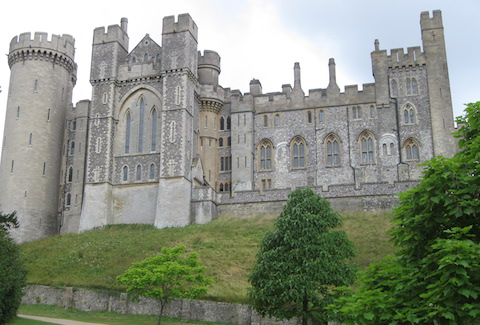
Arundel Castle was established by Roger de Montgomery, a cousin of William the Conqueror, on Christmas Day in 1067 after he was given one-fifth of Sussex and the title of Earl of Arundel in return for his agreement to defend it. The castle was damaged in the English Civil War and restored in the 18th and 19th centuries. It has been the principal seat of the Dukes of Norfolk for almost 400 years.

keep001

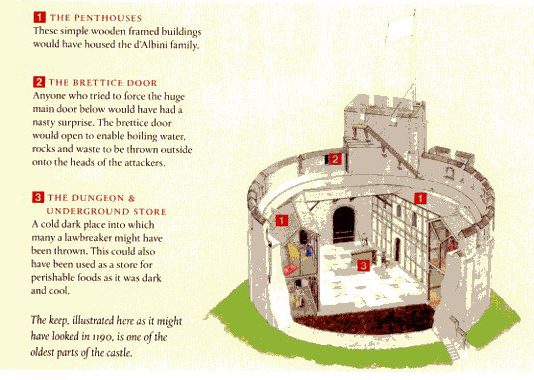
Stone apartments constructed for the Empress Matilda’s visit in 1139 still exist today.

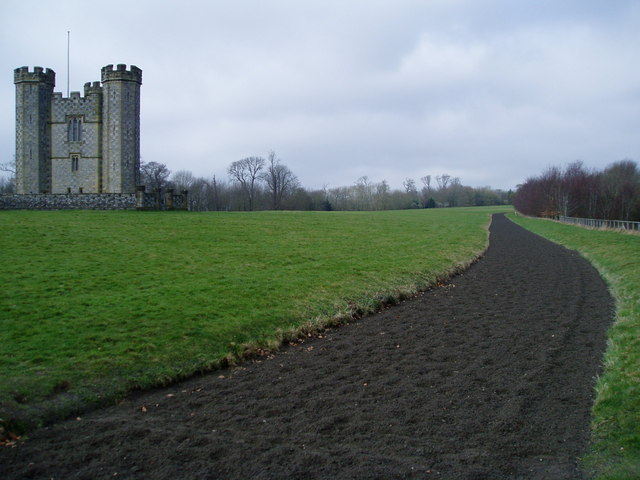
The 11th Duke of Norfolk held a large party at Arundel in 1815 to celebrate the 600th anniversary of the signing of the Magna Carta. Architect Frances Hiorne built a folly on the hill above Swanbourne Lake.

Hiorne's Tower (Folly)

Hiorne’s Tower (Folly)

Queen Victoria, when she and Prince Albert visited on 1 December 1846, did not appreciate the 11th Duke’s attempts at renovations, calling it “bad architecture.” Consequently, the 15th Duke, upon his inheritance of the Castle, carried on a “massive and scholarly renovation” of the entire house between 1875 and 1900, except for the library. This included carefully restoring the remains of the Norman castle.

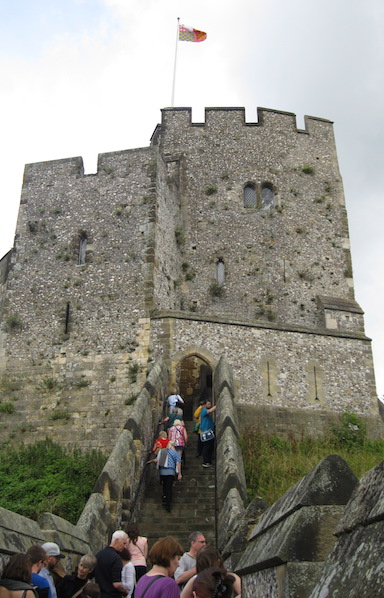
The Keep

The Keep

During the second world war, the Castle was occupied by British, American, and Commonwealth troops right up to the 1944 D-Day landings.

The present 18th Duke lives in a private wing with his family. He had his wife, along with the Castle Trustees, have restored and redecorated the whole interior to its Victorian magnificence, as well as improved the visitor facilities. The gardens have been upgraded to match the historic authenticity of the Castle.

garden14

garden17-copy

On exhibit at the Castle are nearly all of the family’s collection of art and historic archives, including many brought from Worksop and Norfolk House.

For more photos of Arundel Castle, check out my Pinterest Page.

Valuing Vanessa: Griswold Finds a Home (Giveaway)

cover-of-holly-and-hopeful-hearts-copy-2

Holly and Hopeful Hearts

When the Duchess of Haverford sends out invitations to a Yuletide house party and a New Year’s Eve ball at her country estate, Hollystone Hall, those who respond know that Her Grace intends to raise money for her favorite cause and promote whatever marriages she can. Eight assorted heroes and heroines set out with their pocketbooks firmly clutched and hearts in protective custody. Or are they?

Amazon.comAmazon UKAmazon AusAmazon CA

KoboSmashwords

Griswold’s Story

from Valuing Vanessa

The second morning of their visit dawned sunny and unseasonably warm, so Louise and Blanche and her cousins Alice and Celia decided to explore the extensive grounds. Miss Grenford recommended that they stay within view of the house for the morning, but that the head groom should be able to provide mounts for them in the afternoon if they wished to go beyond.

There really was much to explore, Louise discovered. The fountains were drained for the winter, but the classic statuary was much to be admired.

“Mee-ouw!”

Louise stopped in her tracks, finding herself underneath a large beech tree.

“Mee-ouw!”

Casting about for the source of the sound, her eyes finally made out the presence of a small gray and white kitten on a branch about ten feet off the ground.

“Meee-ouww!” The kitten seemed to be demanding to be rescued.

“You’ve quite a shrill voice for such a tiny creature,” said Louise. “Not very sensible, are you? You might have thought you were brilliant to have managed to climb so high, but what now? Too afraid to come down again, are you?”

“Meee-ouww!”

“I believe that kitten is screaming at you,” said Blanche, as she reached Louise’s side.

Louise grinned. “I believe you are right,” she said, “a cheeky bit of fur, don’t you think?”

“There are half a dozen or so kittens running around the house and gardens,” said Alice. “I wonder if Papa will let me have one.”

“Well, you can’t have this one,” Louise said, at the same time tying up her skirts between her legs. “He found me, and I’m keeping him, so long as the duchess allows it.”

“She’s going to climb the tree!” said Celia. “I hope she doesn’t get stuck up there with the silly kitten,” she added with a chuckle.

Louise pulled herself up to the lowest branch, and carefully got to her feet while clutching the upper branch where the kitten was perched with her hands.

“Here, kitty.”

griswold2The kitten didn’t budge, but stared at her with its clear gray eyes.

“Well! You asked to be rescued, didn’t you? Here I am.”

“Mee-ouw!”

“What a silly fellow you are!” Louise reached over and carefully plucked the kitten off the branch. But as soon as she brought him close to her chest, he dug his claws into her coat, which was not quite thick enough to absorb them.

“Ouch!” she complained. “You are going to have to learn some manners, you know. Scratching someone upon first acquaintance is quite improper.”

One hand firmly supporting the kitten, she leaned her back against the trunk of the tree and slowly slid down to a sitting position on the lower branch, then hopped down to the ground.

“Now, let’s have a look at you. What a pretty little fellow you are!”

On top he was charcoal gray with striped ears and legs and a white throat and underbelly.

He seemed to be content to rest in her arms and look up at her with his curious eyes.

“I think he likes you,” said Alice.

“Of course he does. She just rescued him,” said Blanche. “Are you really going to keep him, Louise? I wonder I could have one too. Let’s go back to the house and find the rest of them.”

“I want one too,” said Celia.

“Don’t be silly,” chided her sister. “You have two cats at home.”

“Not in London. And they aren’t kittens anymore either.”

Duke’s daughters, thought Louise, shaking her head as she walked across the lawn with her kitten in her arms.

“Griswold,” she said. “His name is Griswold.”

“Are you sure it’s a boy?”

Louise frowned and turned the kitten over to check its white underbelly. “How can you tell?”

Blanche ran her finger down the kitten’s nether regions. “It’s a boy,” she pronounced. “Hello Griswold. Pleased to meet you.”

And for the remainder of the house party, Louise and Griswold were inseparable.

valuingvanessa-twitter-jpg

Valuing Vanessa

Facing a dim future as a spinster under her mother’s thumb, Vanessa Sedgely makes a practical decision to attach an amiable gentleman who will not try to rule her life.

The last thing widower George Durand thinks he wants is another wife, but his difficult daughter is proving difficult to handle. In any case, the admirable Miss Sedgely is far too young for him.

A love match is not even a remote consideration for these two. Or is it?

Kitten Giveaway

Griswold’s twin is looking for a home. Check out the Rafflecopter link to enter the contest to be his new human.

Update: Griswold’s giveaway is now closed. Winner will be announced at the Book Launch Party on November 13th. However, his siblings will also be in search of new homes in the weeks to come.

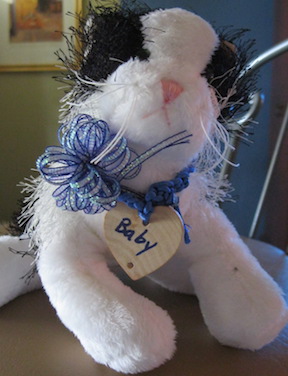
Baby: Jessica Cale

http://ow.ly/fHgp304KCfl

baby2

Donna Hatch: Courting the Countess

In England, dueling was part of a long-standing code of honor, far beyond mere tradition. Gentlemen took their dueling very seriously; they would rather die than be dishonored. Does your heart go pitter patter just at the sound of that? I admit, at time, mine does. How many men that honorable do you know? Okay, maybe we’d call it misplaced pride, or an overdeveloped sense of vengeance, but hey, that was a different world with a different set of rules. And yeah, I’m glad they don’t do it these days.

pistols

By the Regency era, dueling was outlawed. However, duels still happened more frequently than many people knew. The problem was, because courts were made up of peers, they were reluctant to charge another peer with murder as a result of a duel. There is a case where one nobleman was charged with murder and tried, but used the defense that his behavior was gentlemanly and honorable, meaning that he acted within the proper code of conduct. He was acquitted by his peers.

If they were socially equal, or at least similar, the gentleman who was offended would tell the man who’d wronged him that he should choose his “second,” a close friend or family member who would look out for his best interests. If he was really incensed, he might slap him with his glove, but that was considered extreme and beneath gentlemanly behavior, as it was the ultimate insult and probably resulted in a fight then and there.

The procedure for issuing a challenge was very specific. A gentleman never challenged a social inferior. For instance, a gentleman of significance with ties to the aristocracy or nobility would never challenge a commoner, such as a blacksmith or a farmer. Also, if there was a significant age difference, the duel would not be extended.

shooting

After the verbal challenge–or perhaps warning would be a better word–was issued, depending on the severity of the offense, the other might have a choice; he could either apologize, or he could accept. Sometimes, the apology would not be accepted, often if there were a third person who’d been wronged such as a lady’s honor. (Okay, call me crazy but that almost makes me want to swoon.)

The next day, supposedly after heads had cooled, the wronged man who wished to duel would send his “second” with a written letter challenging the duel. The other may chose to apologize or accept the challenge. If accepted, he would choose swords or pistols and name the time and the place. In my humble opinion, swords was a more more gentlemanly way to duel. If they used pistols, they only used one shot which seems too much like cold-blooded murder. I’m sure they didn’t always shoot to kill, but there was some unwritten rule about the shot purposely going wide and that being bad form. *shrug*

When the allotted day arrived, they met, probably in a remote place where they wouldn’t be caught by the law, and the seconds inspected the weapons to be used. A final opportunity for an apology could be given. If not, the seconds decided if the duel should be fought to (a) first blood, or (b) until one can no longer stand, or (c) to the death. Once that was decided, the opponents dueled and the seconds watched to insure that nothing dishonorable happened.

If during a duel fought by swords, one of the duelers becomes too injured to continue, occasionally the second would step in and duel. Sometimes, the seconds were hot-headed or very angry (loyal?) and ended up dueling each other as well. To my knowledge, this never happened if the duel were fought with pistols.

3

As horrible as it sounds to our modern selves, these gentlemen took their honor very seriously, and considered death preferable to living with the label of a coward, a label that would follow them and their families for years.

And, maybe it’s me, but there a certain romance about a gentleman brave enough and protective enough to be willing to risk death defending my honor from another man who’d besmirched it?

A duel is what leads to all the trouble for my hero in my Regency Romance novel, “Courting the Countess” and causes events he wishes desperately he could change, especially when the duel goes awry and causes pain to an entire family.

I’m sure glad my husband isn’t likely to try dueling…

51fds6xfkcl

Available for pre-order on Amazon

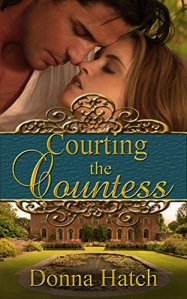
About Courting the Countess

When charming rake Tristan Barrett sweeps Lady Elizabeth off her feet, stealing both her heart and a kiss in a secluded garden, her brother challenges Tristan to a duel. The only way to save her brother and Tristan from harm—not to mention preserve her reputation—is to get married. But her father, the Duke of Pemberton, refuses to allow his daughter to marry anyone but a titled lord. The duke demands that Elizabeth marry Tristan’s older brother, Richard, the Earl of Averston. Now Elizabeth must give up Tristan to marry a man who despises her, a man who loves another, a man she’ll never love.

Richard fears Elizabeth is as untrustworthy as his mother, who ran off with another man. However, to protect his brother from a duel and their family name from further scandal, he agrees to the wedding, certain his new bride will betray him. Yet when Elizabeth turns his house upside down and worms her way into his reluctant heart, Richard suspects he can’t live without his new countess. Will she stay with him or is it too little, too late?

Pre-order now on Amazon for Kindle.

About the Author

donna-2013-copyDonna Hatch, author of the best-selling “Rogue Hearts Series,” is a hopeless romantic and adventurer at heart, the force behind driving her to write and publish seventeen titles, to date. She is a multi-award winner, a sought-after workshop presenter, and juggles multiple volunteer positions as well as her six children. Also music lover, she sings and plays the harp. Though a native of Arizona, she and her family recently transplanted to the Pacific Northwest where she and her husband of over twenty years are living proof that there really is a happily ever after.

Mary Hampson: A Story of Domestic Violence

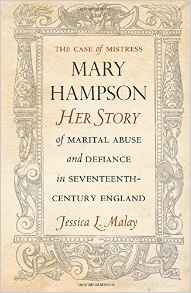
book

Mary Hampson

Her Story of Marital Abuse and Defiance

in Seventeenth-Century England

by Jessica L. Malay

Amazon

A video interview of Ms. Malay

video-undefined-1c7ee72700000578-97_636x358

The legal state of coverture

According to English law, after marriage, a woman was “covered” by the legal identity of her husband, meaning that everything she owned belonged to him. An independent wife was seen as a threat to marital harmony; therefore, it was better for the entire family if her rights and assets were entrusted to him. While the intent of this law was to ensure marital harmony, it often had the opposite effect if a marriage turned bad.

The early years

Mary Wingfield was seventeen when she married Robert Hampson, a twenty-nine-year-old lawyer from a prominent family who seemed to have a bright future. Mary’s late father had left her a jointure, a sort of “insurance policy” for the future, that was specifically designed to be hers and not transferred to her husband after marriage.

Robert Hampson’s father had invested heavily in the purchase of fenlands in East Anglia, which was expected to pay off handsomely after the lands were drained and the rich farmlands uncovered. Before his death, he directed Robert to sign an agreement to pay his sisters two thousand pounds as their share of the bonanza. Unfortunately, there were no rich farmlands uncovered, but Robert was still on the hook for two thousand pounds, which he did not have.

This situation—and Robert’s inability to get control of Mary’s jointure—was the inciting incident of the troubles between the two.

The marriage appeared to be satisfactory for the first few years. It wasn’t until Robert’s sisters started clamoring for their inheritance that things went wrong. Robert convinced Mary that she must sign her jointure over to him in order to keep him out of jail. She was only nineteen, though, and the judge refused to do it. Robert brought in a merchant who was willing to accept the deal, along with a signed statement from Mary, which she gave him, believing she was keeping her husband out of jail. Her maternal uncle, however, insisted that Robert give her another jointure—of fenlands and the house they lived in—so that Mary would still have an “insurance policy” of sorts.

The violence begins

As Robert’s financial woes continued, Mary eventually discovered the truth, and took him to task for his deceptions. He responded by putting her in lodgings with very little financial support and disappearing for weeks at a time on his legal circuit. A very pregnant Mary had to beg assistance from her mother, and wasn’t shy about protesting this treatment when Robert returned. She states in her pamphlet that he struck her on the breast, and then abandoned her until the child was born.

Soon after, Mary decided to go to France, upon a recommendation from a doctor. Robert agreed to give her thirty pounds for six months, which was a pittance, but Mary did have her family jewels. Until Robert demanded the jewels and the deed of her new jointure. She refused. He waylaid her trunk trying to find them, unsuccessfully, since she had them on her person, but he did get the deed. Once she was gone, he told everyone she had deserted him.

Upon her return to England, Robert’s first reaction was to throw her out of his residence. Then began a series of attempts to get her to sign away or sell some of her property. When she refused, her locked her in the home and tried to starve her until she would accede to his demands. Then he tried to throw her out so that he could charge her with abandonment. When she stood her ground, he put a pistol to her throat. A day or so later, he beat her so badly some folks from outside came to the door to protest.

Mary’s life was a misery. She discovered that her maid was being bribed by Robert to tell her lies about her mother’s health, so she dismissed her and hired a new one. After her mother’s death, Robert sent someone to her mother’s house to collect everything he could, saying that Mary had no right to anything. Mary got away with a few things, but not her mother’s will, which left her everything. It disappeared. Her mother’s maid testified falsely that the will she witnessed left everything to her son-in-law Robert.

After Mary’s mother’s death in 1669, Robert started selling her mother’s property and moved out of the house, abandoning his wife. Mary, afraid to leave for fear of being locked out, tasked her maid with selling some of the household goods for money to live on. Upon discovering this, Robert charged the maid with theft (since he owned everything), and the maid went to prison.

The legal battle begins

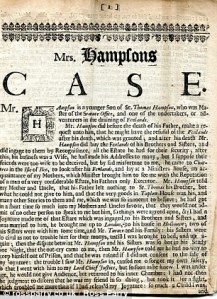
Mary’s pleas to the church leaders were decided in her favor. Robert was excommunicated and ordered to give her five pounds a week, which he never did. Mary’s attempts to seek justice from the legal system were long and drawn-out, at least partly because of Robert’s connections. According to her, he bribed judges and paid witnesses to counter her claims and besmirch her reputation. In the end, Mary resorted to writing her story and having it printed in a pamphlet that made the rounds of London and won her a handful of supporters.

pamphlet2

The courts eventually agreed that the marriage was over, and the couple better off separated, and awarded Mary alimony of a hundred pounds of year, which meant that the struggle between them was doomed to continue, as Robert would go to extreme lengths not to pay it, forcing her to find allies to help her make him pay. Mary went to live in France to try to escape from it all, but Robert made use of that by telling everyone she was dead and trying to steal her inheritance from her uncle, supposedly for her daughters.

Mary’s losses

Mary’s daughters—unsurprisingly since they had resided almost entirely with their father—sided with him, along with Elizabeth’s husband Charles Bill, in these legal battles. Their relationship never recovered, not even when Robert died in 1688, because Mary refused to give up her efforts to regain her inheritance from her uncle.

Although Mary gained the support of some influential people, including Mary and William Montagu, her reputation as a gentlewoman was irretrievably lost. No doubt that is why she chose to live on the continent at various points in her life—Europeans were much more sympathetic to an Englishwoman’s plight, and marital separations were not considered scandalous.

In the end, she chose to live with a mother and daughter, Mary Opaven and her daughter Mary, in the parish of St. Brides, London. Even after her death in 1698, the legal battles continued, as Mary bequeathed her property to the Opavens, and her daughters contested the will.

The other side of the story

The existence of a boatload of court documents filed on behalf of Mary and Robert, as well as their daughters and son-in-law, enables us to consider these events with more than just Mary’s assertions. Robert admitted to beating Mary, taking her property, keeping her children from her, throwing her out of the house, and refusing to pay maintenance for her, although he had his own version of the events to tell. But did he try to kill her? Did he hire a spy (Everard) to make false accusations of her conduct when she lived abroad? The evidence is inconclusive.

Through these legal documents we are given one final glimpse into Mary Hampson’s life, so often filled with conflict, poverty, and at times real danger. Her estrangement from her daughters and the loss of her social position reveal the inability of social institutions to protect women in troubled marriages. The actions of Robert Hampson, Charles Bill, Edmund Everard, and even William Baker illustrate how men could use legal and state institutions to protect their own interests at the expense of the vulnerable, especially women. There is little to respect or admire in the stories of any of these men, at least in their behavior toward Mary Hampson.