Archives

A Regency Gentleman: His Upbringing

Privileged children were born at home, typically with the aid of a midwife, and immediately handed over to a wet nurse, since upper class ladies did not nurse their own children. Brought up by servants or dependent relatives, children saw their parents rarely, always accompanied by servants.

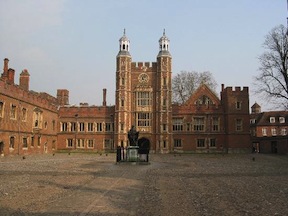
Later, a young gentleman might be tutored by a local clergyman or by a hired tutor or governess. When he could read and write, he would be sent off to public school, such as Eton, Rugby, Harrow, Westminster, Winchester and Charterhouse. The course of study centered on the classics, the French language (used often in polite society when servants were present), drawing and fencing. However, life at public schools could be traumatic.

Eton

Eton

In spite of the outlandish fees charged by these exclusive schools, the accommodations were abominable. Sleeping chambers were cold and damp, food barely edible and scant, and the older boys bullied the younger ones unmercifully. The older—and bigger—boys forced the younger ones as servants—a system known as fagging—and often such treatment resulted in revenge against a headmaster who allowed such brutal bullying to occur. Headmasters, too, were known to cane a boy’s bare buttocks until it bled.

The idea was that a boy who could survive public school and learned the meaning of obedience could be trusted to command—servants or regiments— or succeed in whatever place in Regency society he was fated to take.

Following public school, our young man could go on to Oxford or Cambridge, although he could devote himself to other pleasures—eating, drinking and wenching—as well. Most university students did a fair amount of both.

On the Town

Prior to the Napoleonic Wars, a young man would go on a tour of Europe with a tutor (“bear-leader”) to sample the pleasures of Europe. During the Regency, a young man was more likely to take up a commission in the army (particularly if he was a younger son) or simply learn his way around London, therefore earning his “town bronze.”

A young gentleman was expected to be skilled in fighting with fists, swords, and firearms, as well as gaming. Coolness, courage, and a “stiff, upper lip” were essential for a young man about town. He was also expected to be stylish enough to be accepted into gentlemen’s clubs and ballrooms, including Almack’s Assembly Rooms. Gentlemen, too, were scrutinized by the patronesses before being issued the coveted vouchers.

Other frequent amusements by young bucks might be parading up and down Bond Street and “accidentally” tripping people with their canes, catching the edge of a lace gown with their spurs, or quizzing people with their quizzing glasses. These young men “raising Cain” were the scourge of the night watchmen with their tricks on unwary passers-by.

And then there were their “bits of muslin” or wenches. A young man was expected to marry for money or connections, make sure his heir was his, and then proceed to find passion with a series of mistresses. While discretion was expected, most of society turned a blind eye to these foibles, at least on the part of gentlemen. Ladies’ behavior was much more closely scrutinized.

Laudermilk, Sharon H. and Hamlin, Theresa L., The Regency Companion, Garland Publishing, 1989.

The Regency Gentleman series

The Regency Gentleman: His Upbringing

The Fashionable Gentleman

The Rise and Fall of Beau Brummell 

Gentlemen’s Clubs in Regency London

Captain Who?

Gentlemen’s Sports in the Regency

The Gentleman’s Passion for Horses

Riding to the Hounds

The Regency Gentleman’s Passion for the Turf

Philip Astley: Equestrian, Showman and Entrepreneur

Philip Astley: Equestrian, Showman and Entrepreneur

Philip-Astley

Philip Astley: Early Life

Philip Astley was born in Staffordshire (about 150 miles from London) on January 8, 1742. When he was around eleven years old, his family moved to London, where his father had a carpentry shop near Westminster Bridge. In 1759, he went to be trained in horsemanship in Wilton at Lord Pembroke’s estate, where he showed extraordinary promise. Soon after, in search of excitement, he left his family and joined a regiment of light dragoons called Eliot’s Light Horse, later the 15th Light Hussars.

Astley’s Military Service

Astley was assigned to care for and train the horses to be “bomb-proof”, i.e., not to take off in fear at the sound of gunshot. His unit was soon shipped off to Hamburg, Germany to assist the Prussians in fighting the French in the Seven Years’ War. The 15th distinguished itself by being instrumental in capturing sixteen colors (flags) from the French, and one of them was taken by Philip Astley. Losing one such flag would be considered a disaster, so losing sixteen of them was humiliating for the French. The tactics and riding skills of the 15th were too much for the French to overcome. The 15th was awarded the country’s first ever Battle Honor and nicknamed “The Fighting Fifteenth.”

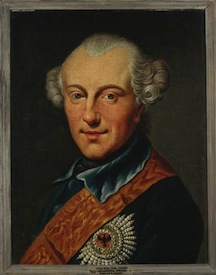
That same year, Astley earned the lifelong gratitude of royalty when he single-handedly rode through enemy lines to rescue Karl Wilhelm Ferdinand, the Duke of Brunswick. A prince of the Holy Roman Empire, the duke was married to George II’s daughter and was the father of Princess Caroline, who would become the wife of George IV.

duke of brunswick

Karl Wilhelm Ferdinand, Duke of Brunswick

Astley continued to prove himself throughout the remainder of the Seven Years’ War. In 1766, he was discharged from the army and given a white charger called Gibraltar as a token of appreciation from his commander. Having married and become the father of John Philip Conway Astley, he took a job at a nearby riding school that demonstrated tricks as well as teaching riding skills. After a year, Astley obtained some property and started his own establishment.

Astley’s Amphitheatre: The Beginning

It was around 1768 when people would come around to watch Astley and his pupils perform equestrian tricks. A collection bucket was sent around, money started to pour in, and Astley began to hire musicians. He’d stand on his head on the back of a horse, straddle two cantering and jumping horses, and often be joined by his wife Patty, also a talented performer. Even at this early stage, Astley knew that variety was the best way to keep his audience happy, and he was never satisfied to keep performing the same tricks over and over again.

Mr. Astley, Sergeant-Major in His Majesty’s Royal Regiment of Light Dragoons. Nearly twenty different attitudes will be performed on one, two, and three horses, every evening during the summer, at his riding school. Doors to be open at four, and he will mount at five. Seats, one shilling; standing places, sixpence.

amphitheatre

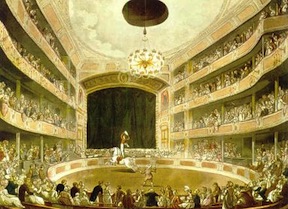
It wasn’t long before Astley mysteriously found a diamond ring on Westminster Bridge and was able to lease (and then acquire) a piece of property south of the bridge. He cut down the timber and constructed the first Astley’s Amphitheatre, although it was first called The British Riding School. The fenced-in compound was in open-air, but had a covered standing area for visitors and a central viewing platform. Eventually, a dome-shaped roof covered the entire ring, and there was a room above the horses’ stables where wealthy visitors could sit.

The Licensing Act of 1737

Censorship was alive and well in England for more than two centuries due to this law that gave the Lord Chamberlain the power to approve or ban public performances. The only two theaters authorized to perform plays were Covent Garden and Drury Lane. Any other performances could get raided and their employees thrown into prison. Astley fought public officials trying to shut him down for many years, often using his upstanding military background and royal connections to keep his business going. At one point, George III himself came to his defense, perhaps because a dozen years earlier Astley had saved him from injury on Westminster Bridge when a horse pulling his carriage became uncontrollable. It didn’t hurt that Astley celebrated the King’s birthday on June 4th every year with a fireworks demonstration over the Thames either.

Astley’s Goes on Tour

As other performers—jugglers, rope-walkers, tumblers, clowns, etc.—were added, Astley’s role became more producer, artistic director, marketer, and business manager.

In the autumn, Astley used his army training to take his show on tour, where he would perform at fairs and gardens, in fields, and borrowed theaters, with staging and fencing loaded on wagons, as far away as Edinburgh.

It was, perhaps, inevitable that he would conquer the French with his extraordinary show. He charmed Marie-Antoinette, who called him “le plus bel homme d’Europe”, and in 1802, during a brief period of peace with the French, he achieved an audience with Napoleon and was granted reparations for the theater that was appropriated by the republican army during the revolution. Brussels, Vienna, and Belgrade were among the European capitals he captivated prior to the French Revolution

Astley’s After Astley

Rendell, Mike. Astley's Circus: The Story of an English Hussar. 2014
Rendell, Mike. Astley’s Circus: The Story of an English Hussar. 2014. Amazon

Following Philip Astley’s death in 1814, his son John managed the circus. After he died in 1821, Andrew Ducrow, son of the “Flemish Hercules” took over management of the Amphitheatre. Ducrow was the first performer to ride six horses at once. After Ducrow died (following a devastating fire—the third in its history—the property was rebuilt by William Batty. After Batty came a long a long line of new owners, but by the second half of Queen Victoria’s reign, Astley’s was long-since its prime. It was closed in 1893 and demolished two years later.

Astley’s Accomplishments

  • The first ringmaster. Astley went around in military costume announcing the acts in his booming voice, cracking the whip, and generally serving as Master of Ceremonies.
  • Pioneered the idea of the circus parade to create enthusiasm for his performances
  • Astley propagated the idea of a ring with a diameter of 42 feet as the optimal for circus acts.
  • Although he is often called the “Father of the Modern Circus,” he never called his venue a circus.

“…everything was delightful, splendid, and surprising!”

Charles Dickens, Master Humphrey’s Clock

For a detailed list of some of the “attitudes” offered in Astley’s performances, click here.

Regan Walker and “The Twelfth Night Wager”

VBT The Twelfth Night Wager Banner copy

Regan will be awarding a copy of three (3) of her books, Racing with the Wind, The Holly and the Thistle and The Shamrock and the Rose to one randomly drawn commenter during the tour. Click on the banner above to follow the tour and increase your chances of winning.

Interview with Regan Walker

Your new novella, The Twelfth Night Wager, begins as two men in White’s, one of the men’s clubs in Regency England, are discussing marriage (“the leg shackled state”). Then one of them challenges the other to a wager, that he must seduce, bed and leave a certain unnamed lady (and she is a lady) by Twelfth Night, or January 5th. I found this intriguing…how did you conceive of this?

Well, in my research about the lives of men and women during that period in England’s history (from 1811-1820) when the Prince Regent reigned, I discovered they loved to wager. About almost anything. And in some clubs, such as White’s (a very old club) they kept a book where the wagers were entered. Such occurred the evening my story begins: two men drinking at White’s and one, a bit bored, agrees to an outrageous wager. He’s a rake after all, known for his conquests. How difficult could it be to seduce one widow? Seemed like an interesting beginning to me, and apparently it did to Christopher St. Ives, Viscount Eustace, too.

Is this your first holiday themed story?

No, actually I have three—all set in the same year, 1818. First is The Shamrock & The Rose, a short story that takes place around Valentine’s and St. Patrick’s Day (with an Irish hero). Then there’s the novella, The Twelfth Night Wager, that begins in October and extends through the New Year, capturing the fall season of house parties, fox hunting, pheasant shooting, Christmas and, of course, Twelfth Night. And on the tale of that comes The Holly & The Thistle, a short story that features Lady Emily Picton, introduced in the novella, and a Scot hero. All three have as a character Muriel, the Dowager Countess of Claremont, an infamous matchmaker.

What are you working on now?

Having finished the third in my Agents of the Crown trilogy, Wind Raven (which should be released early spring), I turned back to a project I started a few years ago, a medieval titled The Red Wolf’s Prize. It’s set in England just after William the Conqueror claimed the land for his own. I’m about mid way through the novel and deep into a siege scene at the moment when William faced the rebellious English at Exeter in 1068. Researching is a love of mine but going all the way back to the 11th century is a huge challenge, I must say.
 
What are you reading now?

I have a blog for lovers of historical romance, Regan’s Romance Reviews, and January is Viking month. So, I’m deep into some Viking romances that I’ll be reviewing for an update of my Best Viking Romances list. I love a good Viking raid, don’t you? All those handsome, conquering hunks towering over the fair maidens. Ah yes…at least in fiction it can end happily, no?

What author or authors have most influenced your writing?

It would be the classic romance authors I still read and re-read today. All have been featured on my blog. Their books (along with those of some newer authors) can be found on my “best lists.” But my short list would be Penelope Williamson, Elizabeth Stuart, Jan Cox Speas, Virginia Henley, Shirlee Busbee, Heather Graham (aka Shannon Drake), Meagan McKinney, Kathleen Woodiwiss and Marsha Canham to name a few. They tell sweeping sagas based on solid research for a great love story. And they are the ones I want my work to be like. I want to sweep the reader away and I want her to feel like she knows the characters, like she’s traveled with them. And, in the end, I want the reader to enjoy the happily ever after.

If your publisher offered to fly you anywhere in the world to do research on an upcoming project, where 
would you mostly likely want to go? Why?

I’m thinking Istanbul. It has a fascinating history and I can so see a romance set there. And though I’ve been to 40 countries, including Turkey (more than once), I’ve never been to Istanbul. I would love it. Yet I must add that after I finish my medieval, I’m going to write the prequel to my trilogy, To Tame the Wind, and that novel begins in France in the late 18th century. So, while I’ve been to Paris, a trip to northern France would not go amiss.

What’s your social media of choice and why?

It would have to be Facebook. I love the pictures, the conversations I strike up with my Facebook friends and the general sharing we indulge in. It’s the way I connect with readers most of the time, though some contact me via my blog, too. I spend at least an hour each day on FB and love it when my friends tell me my posts meant much to them or a particular picture I posted inspired them. I love to get new friends, too, so I encourage your followers to find me on Facebook (see below).

About The Twelfth Night Wager

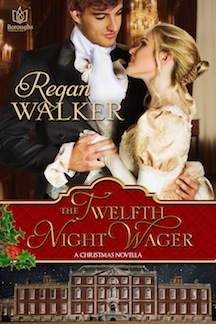
On a dull day at White’s, the Redheaded Rake agreed to a wager: seduce and abandon the lovely Lady Leisterfield by Twelfth Night. After one taste of her virtue, he will stop at nothing less than complete possession.

Available

AmazonBarnes & Noble

Excerpt

MEDIA KIT Book CoverSoon he was escorted into the gilded green dining room and to his place. The other guests had already been seated. Across from him sat Alvanley and Lady Ormond, and on either side of him a lady new to him. Neither, he reflected sadly, was the beautiful blonde who occupied his thoughts.

A few places down the table he saw her sitting next to Ormond. There was a gallant on her other side with whom she was conversing. The shimmering coral gown she wore embraced her curves, modestly revealing the creamy mounds of her full breasts. Would that she was close enough he could speak to her. Close enough he could inhale her delicate scent. Memories of their morning ride assailed him—

Perhaps it was just as well she was not so close. His fervent interest in the lady might be too apparent, which would not do.

Lord Ormond, seeing the direction of Christopher’s gaze, raised an eyebrow. Christopher forced a smile and dipped his head in greeting, just as Lady Ormond sitting across from him drew his attention.

“Good eve to you, Lord Eustace.”

“And to you, my lady. And you, Alvanley.”

Introducing himself briefly to the two brunettes on either side of him, Christopher attempted to keep the conversation moving along through dinner. One was the daughter of a fellow Whig and companion of the other, who was young and apparently unattached by the way she was flirting with him. Carrying on with many women while desiring only one was proving to be exhausting. Generally he took women on one at a time. Not so this game. He was forced to at least appear to pursue several at once.

About the Author

MEDIA KIT Author PhotoAs a child Regan Walker loved to write stories, particularly about adventure-loving girls, but by the time she got to college more serious pursuits took priority. One of her professors thought her suited to the profession of law, and Regan realized it would be better to be a hammer than a nail. Years of serving clients in private practice and several stints in high levels of government gave her a love of international travel and a feel for the demands of the “Crown” on its subjects. Hence her romance novels often involve a demanding Prince Regent who thinks of his subjects as his private talent pool.

Contacts

WebsiteBlogTwitter • Facebook

Lady P and Hyde Park

LadyP2Lady P is back! She stayed a bit longer with her grandchildren than expected, but hey, who wouldn’t want to spend Christmas with the little ones? But she became weary of cold English winters and couldn’t resist the temptation of spending the winter with Susana here in central Florida. Mrs. Barlow, who came for an interview in a previous post, had already spoken enthusiastically of the palm trees and alligators and orange trees, so she arrived post-haste this morning—Twelfth Day—following a lovely Twelfth Night celebration with her family in the 19th century.

Over a quick breakfast of coffee from Susana’s new Keurig (which fascinates her), yogurt and boiled eggs, they discussed the new story Susana is working on, which features Lady P herself and her daughter’s family. It’s a bit out of the usual thing for Susana, being a time travel with a heroine who travels back to the 19th century to find her family, and Lady P’s advice has been invaluable. For one thing, the heroine lands in 1817 Hyde Park, and right from the beginning Susana ran into problems trying to find out what Hyde Park looked like in 1817. For example, the Marble Arch wasn’t built until 1827.

Lady P: No rose garden either. Although that does seem a nice touch. I must mention it when next I encounter His Royal Highness.

Susana [sighing]: No, I’m going to have rewrite the entire first scene! I’m thinking she’ll have to land somewhere near Hyde Park Corner and the Rotten Row.

Lady P: Be sure to keep her well out of the way of the horses and carriages, then. Tattersall’s is there too, you know.

SandHillCrane.180184808_std

Susana: What about Sister Ignatia? Would a religious reformer be hanging about in Hyde Park, do you think?

Lady P: Generally, you don’t see the riffraff there. Hyde Park is primarily for the upper classes. But there are exceptions…servants who accompany their masters and mistresses, and there are Tattersall’s employees, of course. I have seen a few do-gooders handing out tracts from time to time.

Susana: Is it likely an unaccompanied young lady might be attacked by ruffians there?

Lady P [frowning]: An unaccompanied young lady might be attacked by ruffians anywhere, Susana! I regret to say that even gentlemen might try to take advantage. It’s not common, but crime in Hyde Park is not completely unknown.

Susana: Ah, so I won’t have to change the scene completely, then.

Lady P [peering out the window]: Are those ostriches out there? Do let us go for a stroll, Susana. And oh, what are those funny little vehicles with the canvas roofs? Can we ride in one?

Susana: Golf carts. People use them here to get around the park. I don’t have one myself, but I’m sure the neighbors will give you a ride. Oh, and the birds are sand hill cranes. Aren’t they pretty?

Regency Rites: Hyde Park

hyde-park-london-running-route-serpentine-rcOriginally, the Manor of Hyde was part of the Roman estate of Eia, and included what is now Green’s Park and Kensington Park. About 600 acres until the establishment of Kensington Park, it was given to Geoffrey de Mandeville by William the Conqueror. De Mandeville left it to the Holy Fathers of Westminster Abbey, where it remained for five centuries until Henry VIII dissolved the monasteries.

It was a great hunting ground, rich in deer, boar, hare, otter, wildfowl, and game birds.

Under Charles II, the route was called “the Ring” or “the Tour”. A French visitor said:

They take their rides in a coach in an open field where there is a circle, not very large, enclosed by rails. There, the coaches drive slowly round, some in one direction, others the opposite way, which, seen from a distance, produces as rather pretty effect, and proves clearly that they only come there in order to see and be seen.”

Paintings by pissarro3

Painting by Pissarro

Samuel Pepys wrote (of Charles II):

After dinner to Hyde Park. At the Park was the King and in another coach my lady Castlemaine , they greeting one another every turn:”

William II bought the manor at Kensington and Kensington house grew into Kensington Palace, and the western end of Hyde Park was taken for the Palace estate, which would one day become Kensington Gardens.

William III and Queen Mary used to drive along the road, and it became known as La Route du Roi, which became corrupted into Rotten Row.

For showing off coaches and their teams, Hyde Park remained the place to be.”

In 1730, George II laid down a radius of paths and his wife Queen Caroline had the Serpentine constructed by widening the Westbourne brook and draining its pools.

Hyde Park was also a popular location for duels, military floggings, and suicides (drownings). The gallows at nearby Tyburn was used for hangings until 1783, when it was moved to Newgate.

George-Leslie-Hunter-xx-Rotten-Row-Hyde-Park-xx-Private-collection

Painting by George Leslie Hunter

There were soldiers’ camps and military parades, and in 1814, 12,000 men marched past the Prince Regent, the Duke of York, the King of Prussia, the Emperor of Russia, General Blücher, and Lords Beresford and Hill. A reenactment of the Battle of Trafalgar was performed on the Serpentine.

In 1821, Hyde Park was the scene of an elaborate celebration of George IV’s coronation. There were Chinese lanterns, clowns, conjurors, swords swallowers, fire-eaters, acrobats, swings, roundabouts, fireworks, military bands, boat races, elephants, and dancing donkeys and dwarfs.

After John Loudon McAdam improved roads with stone broken small enough to make a hard smooth surface, all sorts of carriages appeared in Hyde Park, and being a good whip became a mark of social distinction. George IV was known to be an excellent whip, as was his daughter, Princess Charlotte of Wales. The Four-in-Hand Club made its appearance, with only the very best whipsters allowed as members.

Horse & Carriage: The Pageant of Hyde Park, J.N.P. Watson, London: The Sportsman’s Press, 1990.

Belles-and-beaus

Painting by William Heath

Short and Sweet Holiday Treats

If you’re looking for a quick HEA fix for the holiday season, here are some suggestions. Not all are holiday-related and not all are sweet, heat-wise, but all are bargains and great reading!

A Holiday Anthology, Vol. 1 by Rose Anderson

holiday anthologyA Holiday Anthology, Vol. 1 is a  FREE collection of short Christmas stories By Exquisite Quills Authors and Friends. It has been written for adults who love romance stories but is family friendly. Each story is unique and is meant to give a sampling of the writing of that author. From contemporary to historical, the Exquisite Quills authors and friends wish you a happy holiday filled with wonderful books.

  • Christmas Knight by Victoria Adams
  • Star of Wonder by Rose Anderson
  • The Kissing Ball by E. Ayers
  • The Christmas Risk by Beverley Bateman
  • Fallen in Love by Helena Fairfax
  • Snow Job by J.D. Faver
  • Christmas Miracle by Jennifer Garcia
  • Highland Hogmanay by Romy Gemmell
  • Almost Christmas by Vonnie Hughes
  • The Unexpected Christmas Gift by Susan Jaymes
  • Shooting Star Holiday Express by Gemma Juliana
  • The Christmas Gift by Jean Lamb
  • A Faery’s Wish by Jane Leopold Quinn
  • Joyeux Noel by Zanna Mackenzie
  • Gifts to Treasure by Kaye Spencer

Free download on Smashwords.

**********

A Grosvenor Square Christmas by Shana Galen, Vanessa Kelly, Anna Campbell, and Kate Noble

Four breathtakingly romantic tales of a Regency Christmas from four bestselling romance authors.

Down through the years, enchantment touches a tall gray house in Grosvenor Square. The legend of Lady Winterson’s Christmas ball promises true love and happiness to one lucky couple. Who will feel the magic this winter?

1803 – The Seduction of a Duchess by Shana Galen

Rowena Harcourt, the Duchess of Valère, never forgot the handsome footman who helped her escape the French Revolution. For fourteen years, Gabriel Lamarque has loved Rowena—now at Lady Winterson’s Christmas ball, has fate finally delivered a chance to win her hand?

1818 – One Kiss for Christmas by Vanessa Kelly

Nigel Dash is London’s most reliable gentleman, a reputation he never minded until he fell in love with beautiful Amelia Easton. Unfortunately, Amelia sees Nigel as a dependable friend, not a dashing suitor. At Lady Winterson’s famous Christmas ball, Nigel vows to change Amelia’s mind—by sweeping her off her feet.

1825 – His Christmas Cinderella by Anna Campbell

At the season’s most glittering ball, a girl who has never dared to dream of forever after discovers a Christmas miracle.

1830 – The Last First Kiss by Kate Noble

Susannah Westforth has always loved Sebastian Beckett – but he’s only ever seen her as a friend. When Sebastian takes his Grand Tour, Susannah transforms herself into a woman he’ll notice. Now Sebastian is back, just in time for Lady Winterson’s Christmas ball – but the last thing he expects to see is his little Susie, all grown up…

You’re invited to join the whirling dance at Lady Winterson’s sparkling Christmas ball, where miracles happen and true love shines forever. How can you resist?

**********

Mischief and Mistletoe by Tanya Anne Crosby

Suspecting he can never be the man Emma Peters wishes him to be, Lucien Morgen, the fifth duke of Willyngham, decides to break off their long-standing engagement… only to discover the innocent fiancé he set aside for years has unexpectedly blossomed into a passionate, irresistible woman.

As the family counts down to Christmas, everyone else seems to realize Lucien and Emma are truly meant to be–except the oblivious couple. With the help of some very mischievous children, Emma and Lucien are about to discover that a little mischief beneath the mistletoe might just open their hearts to love.

**********

Christmas Roses: Love Blooms in Winter by Mary Jo Putney, Patricia Rice and Susan King

Love Blooms in Winter. Three rare, historical romance novellas by acclaimed writers Patricia Rice, Mary Jo Putney, and Susan King are collected together here for the first time in this exclusive eBook, Christmas Roses. “The Snow Rose”, “The Black Beast of Belleterre”, and “The Kissing Bough” weave tales of the joy of unexpected Love, at a special time of year, Christmas – as only these talented writers can. Discovery in the midst of a clash of clans, hidden desires from an unexpected suitor, and a love once lost and found combine for a truly romantic journey through history. This tantalizing collection of historical romances also includes all-new introductions and recipes to add to the delight of the season.

**********

The Gladiator’s Girl by Amy Hearst

Rue, a slave girl in an ancient Roman ludus, has been searching for love all her life. Her mistress often gives her to victorious gladiators for pleasure at their school as a reward for competence in the arena.But Rue has only experienced cruelty from men until she meets Ducius,a muscled and handsome gladiator who relishes their love and revives Rue’s wilting spirit. He treats her gently and nurtures her, and Rue begins to believe in the future again.Their relationship grows ever deeper each time they come together. But the shadow of death haunts them whenever Ducius sets foot upon the sands of the arena, and Rue is certain she will never escape the bonds of slavery. They both search for a path to permanent happiness, a path that can only be determined by their master.

**********

A Winning Streak by Téa Cooper

Will the path of true love incur the wrath of the virgin Goddess Artemis?

Abandoned at birth, Atalante, protege of the goddess Artemis, is forced into an untenable position by her estranged father, the King of Arcadia—renege on her vow of virginity or condemn her suitors to a sacrificial death. The aristocratic courtier, Melanion, cannot believe anyone would be foolish enough to put their life on the line for the dirty little predator whose reputation for speed and cruelty is legendary. That is until he falls under Atalante’s spell.

Consumed by desire and jealousy, Melanion is determined to win Atalante’s hand or die trying. He calls upon Aphrodite to assist him, little realizing that her noisome brat, Eros, has the pair of them in his sights and is determined to inject a little spice into their lives. Spice that will devastate the path of true love and incur the wrath of the virgin Goddess Artemis.

**********

Kisses, She Wrote: A Christmas Romance by Katharine Ashe

Christmas in town has never been so steamy . . .

Handsome as sin and scandalously rakish, Cam Westfall, the Earl of Bedwyr, is every young lady’s wickedest dream. Shy wallflower Princess Jacqueline of Sensaire knows this better than anyone, because her dreams are full of the breathtaking earl’s kisses. And not only her dreams—her diary, too.

But when Cam discovers the maiden’s not-so-maidenly diary, will her wildest Christmas wishes be fulfilled in its pages . . . or in his arms?

**********

Her New Year’s Knight by Selene Grace Silver

The holidays are a time for family. So what if Darla doesn’t have one. She’s a trained psychologist and well-versed in all the dangers of inflating the importance of one week of the year. Besides, she has her clients who need her. Unfortunately, one of them seems to have a dangerous obsession for her. She doesn’t need Santa to bring her a family. What she really needs to find under the tree is a strong protector.

This novella runs 110 pages. It contains explicit descriptions of sex. Recommended for mature (17+) readers only.

**********

All That’s Unspoken by Constance Phillips

After eight years, Hailey is back in Caseville, Michigan. Just months after her mother’s death, her siblings want to put their father in a nursing home and rent out the family farm. If that wasn’t enough, the prospective tenant is Nate, the high school crush she left behind the day after they acted on their mutual attraction.

After high school, Nate Jenkins planned to leave small town behind, but life dealt him a different hand of cards. He’s now back in Caseville, raising his daughter and running his family’s diner. His daughter’s speech disorder has been improved by therapeutic horse riding and if he can lease the old Lambert farm, he can get her a horse of her own. The only thing standing in the way is Hailey, the same woman who left him eight years ago without even saying goodbye.

Can they get over all that’s unspoken between them?

**********

Council Courtship by Constance Phillips

When Tristan Ipsly becomes eligible to fill a vacated Council seat, he thinks his chances are non-existent. Especially since he is the sole member to a house the fell to the revolution and his contender Edwin Vettore is an elder from a house that adheres to Canon teachings.

If fairykind has a chance at survival, it will come on Tristan’s wings of change. Or so Quinn Vettore believes. But voicing her support for Tristan will anger her grandfather, and he’s the one man who can stand in the way of a courtship between Quinn and Tristan.

Will Edwin successfully keep both Quinn and the position out Tristan’s grasp, or will the Council yield to change?

**********

Twelfth Night Wager by Regan Walker

THE REDHEADED RAKE
It was a dull day at White’s the day he agreed to the wager: seduce, bed and walk away from the lovely Lady Leisterfield, all by Twelfth Night. But this holiday season, Christopher St. Ives, Viscount Eustace, planned to give himself a gift.

THE VIRTUOUS WIDOW
She was too proper by half—or so was the accusation of her friends, which was why her father had found her a husband. But Lord Leisterfield was now gone a year, and Grace was at last shedding the drab colors of mourning. The house felt empty, more so during the coming Christmastide, and so tonight would begin with a scandalous piece of theater. The play would attract rogues, or so promised her friend the dowager countess. Rogues, indeed. The night would preface the greatest danger—and the greatest happiness—that Grace had ever known.

**********

The Holly and the Thistle by Regan Walker

A chance meeting at Berry’s wine shop, a misunderstanding and Christmastide all come together to allow the most handsome Scot in London to give Lady Emily Picton the best Christmas gift ever: a marriage not of convenience, but of love.

**********

Three Timeless Loves by Claire Delacroix, Terri Brisbin, Eliza Knight

Not short, but a great deal, especially if you like Scottish time travels!

**********

The Christmas Cuckoo by Mary Jo Putney

Major Jack Howard, a weary veteran of the Peninsular Wars, has just returned to England and intends to travel to an unwelcoming family home for Christmas. But when a pompous secretary gives him too many orders, Jack hops on the next stagecoach leaving the London inn, not caring where it’s going. Too much whisky to stave off freezing leaves him sleeping it off in a different inn, and when an attractive young woman asks if he’s Jack Howard, he happily goes home with her.

Despite vile weather, Meg Lambert drives to the local inn to collect her brother’s friend Jack Howard, but since she’s never met the man, she doesn’t realize that she’s brought home the wrong Jack Howard. Jack realizes her mistake when he awakes the next morning with an aching head—but he finds a warmth and welcome with Meg and her family that he’s yearned for all his life. He can’t bring himself to admit that he’s a cuckoo in her nest—but what will happen when Meg’s brother and the right Jack Howard turn up for Christmas???

**********

A Lass For Christmas by Jane Charles

Lady Madeline Trent had grand plans for her future until she learned her family’s awful secret. When a fall through an icy lake lands her in the arms of a handsome Scot, her future is more unsure than ever.

Lachlan Grant, the Marquess of Brachton, may hold an English title, but he’s a Scot through and through. He’s bound and determined to marry a lass just as Scottish as he is, at least until his fate is altered one snowy night.

A Lass for Christmas is a novella of approximately 27,000 words and the fourth story in the Tenacious Trents series.

**********

Mistletoe and Magic by Katie Rose

SusanaSays3SUSANA SAYS: A delightful holiday romance: 4/5 stars

Penelope Appleton has an unusual gift—that of seeing visions of the future. Among other things, she foresaw both of her older sisters’ love matches, and then, finally, she sees her own.

When she and Jared Marton clasp eyes on each other at the Christmas Ball, they both know they are destined for each other. Unfortunately, Penelope sees something else as well—a newspaper headline proclaiming Jared’s death on Christmas Eve.

In an attempt to protect her heart from the devastating blow of losing her true love, Penelope determines to avoid Jared. But the smitten attorney doesn’t give up easily. No matter what Penelope contrives to discourage him, he manages to find a way to counteract it. And Penelope finds herself falling for him in spite of herself.

Mistletoe+and+Magic+(Novella)But Penelope’s visions have always come true, so she can’t help becoming more and more anxious as Christmas Eve approaches.

This novella is a sequel to Rose’s “Courting Trouble” and “A Hint of Mischief.” “Mistletoe and Magic” stands by itself, however, which I can verify since I have not read either of the preceding novels.

“Mistletoe and Magic” is a delightful Christmas read that will no doubt spur other readers on to obtain the first two stories and discover how Penelope’s sisters met their matches.

Available

AmazonBarnes & NobleKobo

**********

Cotillion Christmas Traditions series

cotillionchristmastraditions                    printbook copy2

This series of eight sweet Regency novellas has previously been featured on this blog. These stories are also available in two print volumes: Cotillion Christmas Traditions and Cotillion Christmas Celebrations.

**********

A Regency Christmas Collection by Hetty St. James

Three Regency Christmas stories available in digital form as well as print and large print. Previously featured on this blog.

The Yule Log: #MistletoeHop

 Merry-Mistletoe-Hop-300x300

Click banner above to return to the other stops on the Mistletoe Hop!

Yule Log

As a former French teacher, the term “Yule Log” tends to bring to mind the tasty Bûche de Noël, a sponge cake rolled with cream and decorated with chocolate icing and marzipan mushrooms. The Bûche de Noël originated in France and Belgium and has spread to the UK and other places as well.

5-fireplace copy

The tradition of the Yule log is not an ancient custom in Britain, but is considered to have been imported from Flanders in Belgium (from an ancient Nordic pagan tradition). The idea was to find the largest log possible (usually oak) and to keep it burning throughout the entire Twelve Days of Christmas. A remnant of the log was kept in the house for the next year to bring prosperity and protection from evil spirits…and to use in lighting the next year’s Yule Log.

The Yule log would be cut down and dragged by horses or oxen as people walked along and sang merry songs. Often it would be decorated with greenery and sprinkled with grain or cider before being lit. The first attempt at lighting the log had to be successful in order to avoid bad luck during the coming year. And the person lighting it had to have clean hands; dirty hands would be disrespectful. While log burned, people would drink cider and tell ghost and other tales and watch the walls for shadows. A headless shadow foretold the death of the person casting the shadow in the next year. People could burn offerings to represent their personal faults and mistakes to wipe the slate clean and start the year afresh.

Originally, the log was an entire tree, one end of which would be inserted into the hearth and the rest jutting out into the room. Burning an entire tree is not practical today with central heating and all.

In Cornwall, barrelmakers (coopers) would donate old trees unsuitable for making barrels to people for Yule logs. In Devon and Somerset, people used very large bungles of ash twigs, due to the legend that it was very cold in the stable where Mary and Joseph were staying and the shepherds collected twigs for them.

By the Regency-era, most people did not have large enough hearths to burn entire trees, but they could burn a large log for at least twelve hours on Christmas day.

A random commenter on this post will win a Twelfth Night Tale Christmas charm bracelet.

bracelet2

Büche de Noël recipe

Martha Stewart recipe

About A Twelfth Night Tale

A wounded soldier and the girl next door find peace and love amidst a backdrop of rural Christmas traditions.

Without dowries and the opportunity to meet eligible gentlemen, the five Barlow sisters stand little chance of making advantageous marriages. But when the eldest attracts the attention of a wealthy viscount, suddenly it seems as though Fate is smiling upon them.

Lucy knows that she owes it to her younger sisters to encourage Lord Bexley’s attentions, since marriage to a peer will secure their futures as well as hers. The man of her dreams has always looked like Andrew Livingston, her best friend’s brother. But he’s always treated her like a child, and, in any case, is betrothed to another. Perhaps the time has come to put away childhood dreams and accept reality…and Lord Bexley.

Andrew has returned from the Peninsula with more emotional scars to deal with than just the lame arm. Surprisingly, it’s his sister’s friend “Little Lucy” who shows him the way out of his melancholy. He can’t help noticing that Lucy’s grown up into a lovely young woman, but with an eligible viscount courting her, he’ll need a little Christmas magic to win her for himself.

Available

Ellora’s CaveAmazonBarnes & NobleKoboSonyARe

Mary’s Merry Christmas and Birthday Giveaway Hop

blog hop button

Happy Birthday, Mary!

Merry Christmas, Everybody!

Click on the above banner to follow the tour and increase your chances of winning one of the fabulous prizes! Click here for the Rafflecopter!

Christmas in Regency Times

Celebrated since medieval times, the Twelve Days of Christmas was a time of celebration, feasting and dancing that began on December 26 and ended on January 6 (which much later become known as Epiphany). (Christmas Day is not part of the Twelve Days because it is considered a holy day and meant for solemn reflection instead of wild partying.)

Where did the Twelve Days come from? Apparently it took the Three Kings twelve days to find the Christ Child…and the twelfth day—January 6th—is when they gave Him their gifts. In Hispanic countries, January 6—el Día de los Reyes Magos—is when people exchange gifts, not on December 25th.

During the Twelve Days, neighbors would visit each other and share traditional holiday foods such as mince pie and wassail, and entertain themselves with games and songs. Other than caring for livestock, farm laborers and peasants took this time off as well to celebrate with their families and friends.

Many Christmas traditions were pagan in origin, however.  Wassail, which was an ale-based drink with spices and honey, was used in a ceremony to sprinkle on the roots of apple trees to ensure a good crop. People would shoot off guns and make a lot of noise to scare away the demons and wake up the tree spirit. A pretty girl was selected to place cider-soaked pieces of toast in the tree branches. Then everyone would chant and sing traditional wassail songs. Although this is still practiced today in some areas, wassailing in the Regency had evolved into more of a “caroling”-type event, which you will see in my novella, A Twelfth Night Tale.

Regency Christmases tended to be more laid-back and relationship-oriented than our Christmases today. Decorations of holly and greenery, candles, roaring fires, the smells of Christmas goose and pudding, games of hoodman blind and charades, singing carols around the pianoforte, King Cake, helping others less fortunate, and engaging in lots of interaction with family and friends were the heart of Regency Christmas traditions.

No frenzied shopping, constant pressure to outdo everyone else, wearing oneself out so as to be too exhausted to enjoy the actual event. Also no Christmas trees or stockings (German traditions that came to England much later) or Christmas cards.

Wouldn’t it be great if Christmas were to return to the relaxed, people-oriented celebration it once was instead of the commercial hustle-bustle that causes stress and, eventually, credit-card shock? Or do you think it’s too late for that?

A random commenter on this post will win a Twelfth Night Tale Christmas charm bracelet.

bracelet2

About A Twelfth Night Tale

A wounded soldier and the girl next door find peace and love amidst a backdrop of rural Christmas traditions

Without dowries and the opportunity to meet eligible gentlemen, the five Barlow sisters stand little chance of making advantageous marriages. But when the eldest attracts the attention of a wealthy viscount, suddenly it seems as though Fate is smiling upon them.

twelfthnighttale_4inchLucy knows that she owes it to her younger sisters to encourage Lord Bexley’s attentions, since marriage to a peer will secure their futures as well as hers. The man of her dreams has always looked like Andrew Livingston, her best friend’s brother. But he’s always treated her like a child, and, in any case, is betrothed to another. Perhaps the time has come to put away childhood dreams and accept reality…and Lord Bexley.

Andrew has returned from the Peninsula with more emotional scars to deal with than just the lame arm. Surprisingly, it’s his sister’s friend “Little Lucy” who shows him the way out of his melancholy. He can’t help noticing that Lucy’s grown up into a lovely young woman, but with an eligible viscount courting her, he’ll need a little Christmas magic to win her for himself.

Available

Ellora’s CaveAmazonBarnes & NobleKoboSonyARe

Elizabeth Bailey and “Adoring Isadora”

Don’t put your daughter on the stage, Mrs Worthington.

When Noel Coward wrote that song, the profession of acting had acquired a certain cachet of glamour. Actresses, however, were still not respectable, and the stage-door Johnnies could still hope for the ultimate reward if they wined and dined their favourites.

Society had become much more integrated by then, but the middle classes were offended by theatrical morals and the bohemian lifestyle. This attitude did not much affect the male of the species, of course, although the well-born young man about town would encounter strong opposition if he attempted to take to the stage. An actor, however, might be accepted into exclusive circles, where his female counterpart would be firmly kept out.

Even when I trod the boards in the late sixties and seventies, there was a faint whiff of disapproval and suspicion. I remember my grandmother, on hearing I was an actress, saying to me, “But wouldn’t you rather be a secretary?” to which the short answer was “No!” What she meant was that I really ought to be doing something rather more respectable.

As the 19th century wore on, some actresses made the successful jump from stage to respectability, burying the past as “Lady” Someone or Other, but these were few and far between.

However, in the 18th century, my historical period, any female who set foot on the boards could kiss goodbye to any hope of respectability. All actresses then either got married or assumed married names, because that gave them a slight advantage and room for doubt. Sarah Siddons was probably one of the few actresses who were genuinely respectable and did not fall victim to “vice”.

To be honest, Society was not really to be blamed. The acting lifestyle provided endless opportunities for dalliance, secret assignations, intimate moments and the opportunity to enrich oneself at the expense of a generous protector. The temptation to stray was endemic, as the famous Perdita Robinson bore witness with her affair with the Prince of Wales, later Prince Regent.

Adoring Isadora3a reduced 700 x 500My heroine from Adoring Isadora knows full well what it would mean to plunge into a theatrical career, but this does not prevent her from hankering after the professional stage and making secret plans to take up a theatrical career. Isadora is hopelessly naïve, however, for she has no real idea of what such a life would mean, weaving dreams of success as a tragedienne taking the Ton by storm.

When the new head of the family, Viscount Roborough, appears, she is brought swiftly down to earth. Not that Isadora gives up easily. But questions concerning the probable earnings of an actress daunt her; nor can she ignore the potential for scandal that would come back on the family should she carry out her design.

I have to wonder if the taint of wickedness has an appeal in terms of glamour. Despite all these disadvantages, ever since women were at last allowed to appear in the theatre, replacing the young boys who had played female roles in Shakespeare’s time, the lure of the stage has always drawn the naïve, the reckless, the rebellious and the ambitious, as well as the genuinely talented.

About Adoring Isadora

Isadora’s secret plan to save her family is frustrated by the arrival of the Errant Heir, with plans of his own. As Isadora prepares to thwart him, Lord Roborough’s friendliness and warmth undermines her determination—until she discovers he is a hardened gamester.

As Roborough struggles to recover a wasted inheritance and counter Isadora’s attempts at sabotage, he is both intrigued and infuriated by her mercurial temperament. Bitterly hurt by her lack of trust, he despairs of a happy outcome.

Will the truth serve to effect a reconciliation? Or will Isadora’s outrageous plot signal the end of all hope?

Available

Amazon

About the Author

Elizabeth Bailey close-up reducedElizabeth Bailey grew up in Africa with unconventional parents, where she loved reading and drama. On returning to England, she developed her career in acting, theatre directing and finally writing. Elizabeth has 18 novels published by Harlequin Mills & Boon and recently began a Georgian historical crime series of which the first two books were published by Berkley (Penguin US). But since she still loves romance, Elizabeth is delighted with the opportunity to publish her work independently.

Contacts

Website • Facebook • Twitter • Blog

Susana Interviews Mrs. Barlow, the Mother of the Heroine of “A Twelfth Night Tale”

Susana is going all out to celebrate the release of A Twelfth Night Tale!

giant_treasure

Besides the Grand Prize—a Giant Treasure Box—she is giving away a Twelfth Night Tale Christmas charm bracelet (silver-plated) for one random commenter on each of the twelve stops of the tour.

Click here for the Rafflecopter for the Giant Treasure Box!

A Twelfth Night Tale Giant Treasure Box*

  • lovely gift box
  • A Twelfth Night Tale Christmas charm bracelet (silver-plated)
  • Father Christmas figurine
  • Three Wise Men figurine
  • Thomas Kinkade photo collage
  • Treasuring Theresa mug
  • Treasuring Theresa necklace
  • Treasuring Theresa keychain
  • two Christmas ornaments from Scotland (Mary Queen of Scots and fleur-de-lys)
  • two decks of Ellora’s Cave playing cards
  • two perfumed soaps from Scotland
  • fizzing bath salts from Scotland
  • Celtic pen from Scotland
  • “jeweled” soap
  • nail clipper keychain from London
  • stuffed toy bear

*In lieu of the treasure box, a winner from outside the U.S. will receive a gift card from the book retailer of their choice.

My time-traveling Regency lady, Lady Pendleton, came down with a stomach ailment and was unable to travel to Oxfordshire to complete the series of interviews she agreed to before returning to the 21st century. (Prior to that, however, she did manage to interview Jane Livingston, the hero’s sister, while they were both enjoying the Little Season in London.) And she somehow contrived to send Mrs. Barlow, Lucy’s mother, to me at my winter home in Florida for a brief interview. Someday I’m going to get her to tell me how she does these things. (And get her to take her back to Regency England with her—wouldn’t that be a historical researcher’s dream?)

Susana: Welcome to Florida, Mrs. Barlow. I hope you enjoy your stay. May I offer you some refreshments?

Mrs. Barlow: [looking around her in wonder] No thank you, Miss Ellis. My stomach is still a bit queasy from the journey.

Susana: Oh dear, I hope you are not coming down with the same ailment that has sidelined my friend Lady Pendleton.

Mrs. Barlow: Lady Pendleton? Oh yes, the…uh…woman who sent me here. She’s a bit…eccentric, is she not?

Susana: [hiding a smile] Indeed she is, Mrs. Barlow. But kindhearted and quite harmless, really.

Mrs. Barlow: [looking relieved] I’m glad to hear it, Miss Ellis. This is all quite a shock, you know. She said you wished to inquire about my daughter Lucy?

Susana: Er, yes. It’s research for a story I’m writing. I understand you have five daughters?

Mrs. Barlow: [Sighing] Indeed I do. Five daughters to marry off and no sons.

Susana: And Lucy is the eldest?

Mrs. Barlow: Yes, she is already eight and ten years of age and of an age to make her bow to Society, but unfortunately, her father and I have not the means to stake her. [Shaking her head] A house in London with servants is enormously expensive. We cannot even stand the cost of providing her with a suitable wardrobe. [Sighing] It is very sad, really. Lucy is a delightful girl who would be a splendid wife, but there are few eligible gentlemen here in Charlbury.

Susana: I understand the young man next door recently returned from service in the Peninsula. Livingston, I believe. Andrew Livingston. Could he be a prospect, do you think?

Mrs. Barlow: [Sighing deeply] No, unfortunately he’s betrothed to some London chit. Since before he took up his colors two years ago. I suppose they’ll be marrying posthoste now that he’s returned. A shame really, because Lucy has always had a tendre for him. The Livingstons are an unexceptionable family and quite well-to-heel, and it would be a great thing if Lucy were to be settled so near—but no, he’s never seen Lucy as anything but a child, and besides, he’s spoken for.

Susana: What a conundrum! Are there no other ways for young ladies to meet eligible gentlemen in the country?

Mrs. Barlow: Occasionally, someone’s cousin or nephew comes to town for a visit, but there are few eligibles in that lot. There are assemblies, of course. Oh, that reminds me. [Perking up] There was a quite agreeable viscount at the last assembly who seemed quite taken with Lucy. He danced twice with her. Perhaps he will come to call soon. Oh my, that would be a marvelous thing for my girls! To have their sister a viscountess who can sponsor them in London when the time comes! I must urge Lucy to encourage him!

Susana: Was she equally taken with him, then?

Mrs. Barlow: [shrugging] These things resolve themselves over time. I don’t believe she was repulsed by him. He looked well enough, for an older gentleman, and his manners were unexceptionable. It is said that he was a considerate husband to his late wife, and seems to be devoted to his three daughters.

Susana: Oh, he’s a widower. No doubt looking for a mother for his daughters.

Mrs. Barlow: And an heir, of course. He still needs a son to inherit, and Lucy is young enough to manage that.

Susana: [Doubtfully] I suppose so, and yet…one could wish a love match for her.

Mrs. Barlow: [Stiffening] Lucy is a practical girl, and not at all the sort to waste time dreaming of the impossible. She will make a wonderful wife and mother and take great pleasure in using her elevated circumstances to assist her sisters.

Susana: I’m sure she will, Mrs. Barlow. I did not mean to imply otherwise. Please forgive me if I offended you.

Mrs. Barlow: [Relaxing] Of course. I’m afraid this is a topic about which Mr. Barlow and I frequently cross swords. He says Lucy is still young and will find her own way. But he’s never been the most practical man, and I suspect he’d be just as glad to have all of them at home with us forever.

Susana: An indulgent father then. [Glances at the clock]. Oh dear, it’s almost time for our visit to end. I wonder if you’d like to take a walk around the park, Mrs. Barlow. It’s such a lovely day, and you might enjoy the flora and fauna here in central Florida. Perhaps we’ll even see an alligator in the lake.

Mrs. Barlow: An alligator! Goodness!

Susana: From a distance, of course. But there are palm trees and snake birds, and plenty of sun to warm you before you go back to chilly England

Mrs. Barlow: [shivering] Chilly indeed! The weather has been exceptionally cold this year. By all means, let us walk a bit in the sunshine.

And so ends the interview. It may interest you to know that the winter of 1813-1814, when A Twelfth Night Tale takes place, was one of the coldest on record, so much so that in February the Thames froze and a frost fair was held for four days, during which an elephant was led across the river under Blackfriars Bridge. 

About A Twelfth Night Tale
twelfthnighttale_4inchA wounded soldier and the girl next door find peace and love amidst a backdrop of rural Christmas traditions.

Without dowries and the opportunity to meet eligible gentlemen, the five Barlow sisters stand little chance of making advantageous marriages. But when the eldest attracts the attention of a wealthy viscount, suddenly it seems as though Fate is smiling upon them.

Lucy knows that she owes it to her younger sisters to encourage Lord Bexley’s attentions, since marriage to a peer will secure their futures as well as hers. The man of her dreams has always looked like Andrew Livingston, her best friend’s brother. But he’s always treated her like a child, and, in any case, is betrothed to another. Perhaps the time has come to put away childhood dreams and accept reality…and Lord Bexley.

Andrew has returned from the Peninsula with more emotional scars to deal with than just the lame arm. Surprisingly, it’s his sister’s friend “Little Lucy” who shows him the way out of his melancholy. He can’t help noticing that Lucy’s grown up into a lovely young woman, but with an eligible viscount courting her, he’ll need a little Christmas magic to win her for himself.

Available

Ellora’s CaveAmazonBarnes & NobleKobo

Excerpt

Jane was chatty as usual, prattling on about the wedding, her latest letter from Theodore and the coming events for the Christmas holidays.

“We are expecting you all at our house for Christmas dinner as usual,” Lucy broke in. “Mama has a new recipe for plum pudding and she’s anxious to see what you think of it.”

The Livingstons had been guests of the Barlows for every Christmas dinner since Mrs. Livingston’s death. Jane and Andrew’s mother had been a wonderful hostess and a great advocate for the Yuletide traditions, and after she had passed away,

Mrs. Barlow had begun the practice of sharing the family Christmas with their good friends and neighbors. There was never a dull moment in a household with five such lively daughters as the Barlow girls, and the Livingstons were not allowed the luxury of brooding over the past during a time of year meant to be joyful.

“Yes indeed,” piped up Mr. Livingston. “Your mother sets a fine table and it’s always a pleasure to be among so many pretty young lasses, is it not, Andrew?”

“Most assuredly,” said Andrew, with an appreciative smile at Lucy. “If Miss Barlow here is any indication, the Barlow girls must be growing up quite agreeably.”

Lucy flushed. “You must come to the church tomorrow night for the Christmas Eve pageant,” she put forward. “My sisters and I are all in the play, and Jane will need an escort.”

Andrew raised his eyebrows. “You are all five in the play? I don’t recall so many females involved in the nativity.”

Lucy laughed. “I’m the director,” she said. “Laura plays the part of Mary, Lydia is one of the wise men, Louisa is a shepherd, and Lila is a camel.” She grinned. “The script originally called for domestic animals, but Lila being Lila, refused to settle for anything so mundane.”

“Who, then, is the Christ Child?” inquired Andrew after the laughter had subsided.

“Louisa’s cat, Beau,” Lucy told him. “We meant to use the Tadsens’ baby in the beginning, but he wouldn’t stay still and kept crying, so we tried several dogs and cats for the part, and Beau was the most cooperative.”

More smiles circled the table, and Andrew agreed that he would be pleased to escort Jane to the pageant.

“How could I possibly refuse? This production is certain to be the highlight of the county. You should accompany us, Papa,” he said, turning to his father.

“Perhaps I shall,” said Mr. Livingston.

Jane and Lucy excused themselves, leaving the two gentlemen to their port.

“Oh Lucy!” Jane said when they reached the drawing room. “I’ve had the most marvelous idea! Well, it was your doing, really.”

“Me? What did I do?” Lucy was mystified.

“You invited Andrew to the pageant! Brilliant thinking! He’s been holed up in his bedchamber like a grumpy bear for weeks now, even before Cecilia jilted him. We need to get him out of the house. Encourage him to meet other people and stop feeling sorry for himself.”

She gave Lucy a speculative look. “And now that I think about it, you would be the best person to do it. Cheer him up, I mean. I haven’t seen Andrew in such a lively frame of mind since…well, before he went off to war.”

Lucy was horrified…and hopeful. “You want me to be in charge of cheering up Andrew? Why not you? You are his sister.”

“I’ve tried everything I know, and it’s no use. You are with him for an hour and he’s laughed twice!” She grasped Lucy’s shoulder. “Look, I’m not asking you to marry Andrew or anything like that. All you have to do is come for visits, bring your sisters, persuade him to get out of the house, things like that. You can do that, can’t you? For my sake?”

“Well…” said Lucy doubtfully.

“You do like Andrew, don’t you? Want him to regain his spirits?”

“Of course.” That was the problem. She liked him far too much. It wouldn’t do to get her hopes up and then have them dashed to pieces.

“Then it’s settled.”

And in spite of everything, Lucy was glad that it was.

Contacts

Web site • Email • Facebook • Twitter • Linked In • Pinterest • Google+Goodreads

Susana’s Parlour (Regency Blog) • Susana’s Morning Room (Romance Blog)
Cotillion Christmas Traditions: Kate Dolan and “Sense of the Season”

Christmas Traditions is the theme of this year’s Ellora’s Cave Blush Cotillion Christmas series. Eight stories focusing on Christmas traditions during the Regency will be released digitally, and then in print version as two anthologies.

The eight stories in the series are:

10/10/13: Twelve Days of Christmas, Barbara Miller

10/17/13: A Christmas Caroline, Christa Paige and Vivien Jackson

10/24/13: Festive Persuasion, Charlene Roberts

10/31/13: Lydia’s Christmas Charade, Saralee Etter

11/7/13: Snug in a Snowstorm, Cynthia Moore

11/14/13: Helena’s Christmas Beau, Aileen Fish

11/21/13: A Twelfth Night Tale, Susana Ellis

11/28/13: Sense of the Season, Kate Dolan

The inspiration for this story came from searching for a place to stay in England for the first night of our summer trip. Looking for someplace not far from Dover, I found a B&B called “Centuries” in the town of Hythe, right on the coast. It’s situated in an old ragstone building that served as an almshouse from the 13th Century up until the 20th Century. The pictures on the website looked so cool that knew I just had to stay there. Fortunately the rates were quite reasonable, they had vacancy (since this was several months in advance) and the owners love history as much (or more) than I do. Even though I hadn’t set foot in the place yet, I knew I wanted to use the building as the setting for a story.

It didn’t  fit my original idea for a “Christmas Traditions” story, so I picked a different tradition—giving alms to the poor.  Of course, then I had to write the story and submit it before I actually had the pleasure of staying at “Centuries,” but I knew I would have the chance to make some revisions before publication to add details about the place. I also used another historic home about ten miles away, Godinton House, and I incorporated as characters some members of the family who lived there at the time the story was set. And then during revisions, I decided I needed another site in the northern part of the county and was able to use another really cool house (with it’s own moat and clock tower) Igtham Mote.

senseoftheseason_msr low resBefore this trip, it had been over 20 years since I’d been to England, and it might be another 20 before I get to go again, so I was trying to soak up every detail and visit as many historic houses as I could to use in future tales. I can’t tell you how many times I made my husband stop the car so I could take a picture of something that caught my eye. Eventually I just started taking pictures through the windshield. They’re not exactly frame-worthy, but they will help me remember potentially useful details.

I would love to set another story in Hythe at an earlier period when the town was in its heyday as a medieval  port. Many pilgrims from the Continent landed at Hythe on their way to Canterbury Cathedral. Maybe someday I’ll write my version of Canterbury Tales. Who knows?

To learn more about “Centuries” including the archaeology work done on the site, visit http://www.hythekentarchaeology.com/.

About Sense of the Season

There are many people William Fletcher would prefer to never again encounter in life, but if forced to rank them, he just might put Matilda Blakethorn at the top of the list. She humiliated him at the age of nine, and truth be told, scared the wits out of him for years after.

So now, waking up after a night of heavy drinking to find her looming over him is a bit of an unpleasant surprise. Especially since he has no place else to go.

Matty Blakethorn doesn’t recognize the bedraggled stranger sleeping on the floor of the St. Bartholomew’s Almshouse. But when he unwittingly ends up staying to help with repairs, the old acquaintance is renewed.  And while neither Matty or William is anxious to admit the troubles that have driven them to such a humble place, Christmas is a time of sharing and giving and reconciliation. When William finally reveals his greatest failing, Matty must decide whether she can again face the demon that already destroyed her life once before.

Available

Ellora’s Cave • Barnes & Noble AmazonKobo

About the Author

headshotgoldjackethairstickingoutKate Dolan was a terrible lawyer, so her decision to turn her back on the corporate world was a great relief to everyone, especially those in the corporate world. Since leaving the rat race, she has worked as a newspaper columnist, preschool teacher, bookkeeper and jump rope coach. A self-proclaimed “history nut,” she volunteers as a living history interpreter at historical sites near her home outside Baltimore and loves to share facts about the past, especially the gross ones.  When she grows up, she hopes to become a professional roller coaster rider with her daughter. She writes historical fiction and romance under her own name and contemporary Christian mysteries and children’s books under the name K.D. Hays.  Connect with her on Facebook  or at www.katedolan.com.