Archives

Vauxhall Gardens: A New Direction

vauxhallbook

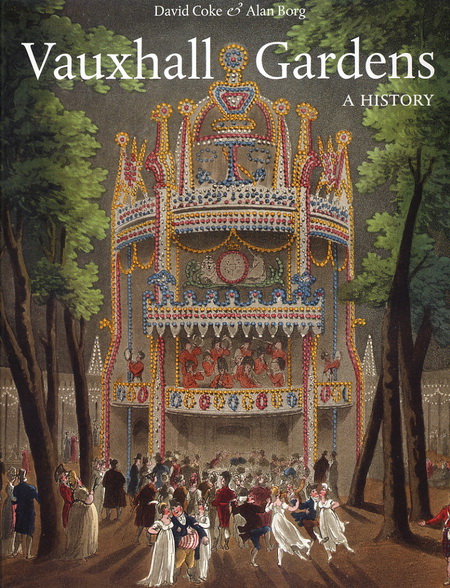
Vauxhall Gardens: A History

David Coke & Alan Borg

The Vauxhall Pleasure Gardens is one of the places I’d love to slip back in time to visit, just to catch a glimpse of what it was like. After recently splurging to buy this lovely coffee-table book, I thought it might make a wonderful subject for a new blog series. But do buy the book too, if you can! The photos are fabulous!

William Hogarth Comes to the Rescue

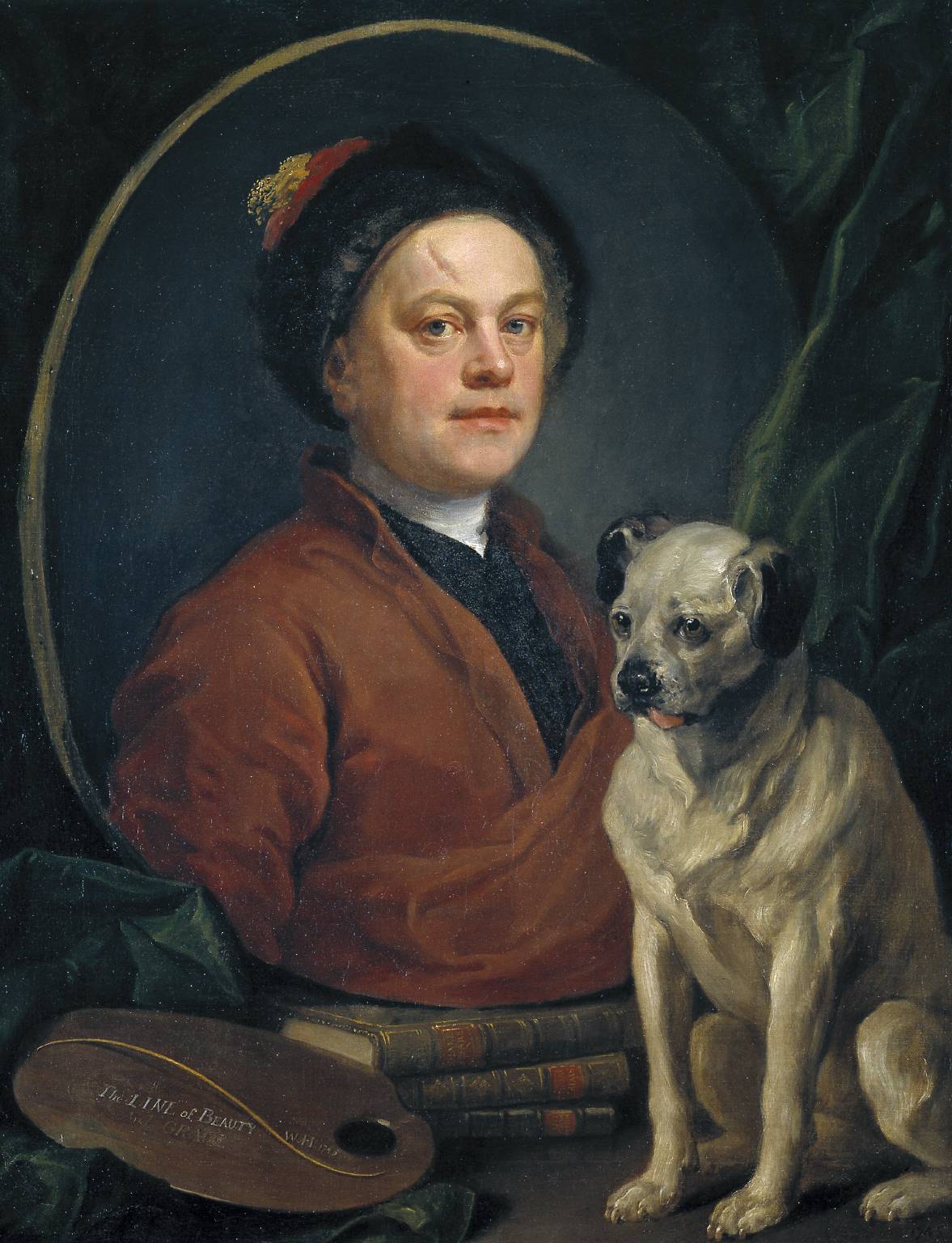
The Painter and his Pug 1745 William Hogarth 1697-1764 Purchased 1824 http://www.tate.org.uk/art/work/N00112

The Painter and his Pug 1745 William Hogarth

In our last installment, Vauxhall mastermind Jonathan Tyers was facing financial ruin when his most recent event wiped away all the profits of his other three. The story goes that his good friend William Hogarth, who still lived nearby, saw Tyers looking very dejected and asked what was the matter. Tyers replied that he was just trying to decide whether hanging himself or drowning was a better way to kill himself. Hogarth convinced him to wait until the following day, when he would share some ideas that might help. It can’t be known for certain what those ideas were, but it is clear that Hogarth was responsible for turning around the situation at Vauxhall.

In 1733 Tyers presented his friend William Hogarth with a solid gold pass to the gardens, giving free entry in perpetuity to a coach full of people. This unique and generous gift was accompanied by something even more precious, a small portrait of Tyers himself, painted when he was a young man visiting Paris, a gesture made in recognition of Hogarth’s many past favours.

hogarth pass

One of Hogarth’s ideas undoubtedly had to do with including contemporary English art, as he was always looking for places to display his own work and that of friends and students. Hogarth also persuaded Tyers to tone down his old-fashioned moralizing and use pleasure and enjoyment as his educational tools.

Early Design and Layout

When Jonathan Tyers took on Vauxhall Gardens, the site was more like a densely wooded park than a garden, and was basically a rectangle of mixed deciduous woodland, mainly elm, lime and sycamore, cut through by a grid of several long walks at approximate right angles to each other.

There were in the public areas no bodies of water or fountains, no angles other than right angles, no formal flower beds, no mound, no topiary, no serpentine walks, nor the mazes or grottos…

Sophisticated landscape design played little part in Tyers’s Vauxhall, which was intended to accommodate as many people as possible with seeming overcrowded, while at the same time never appearing too sparsely populated.

The Proprietor’s House: the Entrance to the Gardens

prop001

The Proprietor’s House (right) which served as the entrance to the gardens (Vauxhall is written upon the doorway). The left side may have been the residence of the Tyers family.

The interior of the Proprietor’s House was described in the 1830’s by a writer who called himself the ‘tame cat’ of the gardens. On some of the ceilings ‘there were dim paintings, which the proprietor averred were the works of William Hogarth’. The house also boasted a large ballroom and ten bedrooms on the second floor. On the ground floor, above extensive cellars, there were:

Two handsome Parlours, with Dove and Marble Chimney Pieces, and Folding Doors, with Communication into the Pavilion Supper Rooms, and Private Entrance from the Lane, with Noble Light Staircase, Manager’s Office, and Public Entrance, called the Water Gate, with Money Takers’ Officers; Housekeeper’s Room, with Presses; Spacious Bar fronting the Gardens; Bread Room; Store Room; Pantry; China Room; Chicken Pantry; Glass Room; Punch Room; Pastry Room, with Tiled Bottom, and Confectionary, with Two excellent Ovens, Stewing Stoves, and Dressers, a capital large Paved Kitchen, with Dresser and Shelves; Scullery, with Pump of fine Water; and Yard, with detached Servants’ Dining Room; Pantry; Larder; Boiling House; Ham Room; Shed; and Servants’ Office.

Entering the gardens through this substantial house, at least for the first-time visitor, would have been a thrilling experience. After the discomfort of the journey, the modest entrance door, and the gloomy passage through the house, the first sight of the gardens, with their confusion of noise, colour, smell and movement, would have been breathtaking, like the raising of a curtain in a theatre, immediately transporting the visitor to another world.

The Prince’s Pavilion and Great Room

prince002

Situated adjacent to the Proprietor’s House, and accessible from it, [the Prince’s Pavilion] was a Kentian, classically inspired rectangular building with a portico of four Doric columns, set up on a basement storey, and accessed by a double flight of seven steps over a low arch… At the back of the portico, through a central door, was a single large drawing-room.

The name ‘Prince’s Pavilion’ refers specifically to the broad open-fronted portico at the front of the building… The attached Great Room or Salon was reached through the rusticated central doorway at the back of the portico. This room was richly decorated… It was fitted with fine mirrors, a grand chandelier, and a series of busts of modern worthies, including Isaac Newton, Alexander Pope and Abraham de Moivre.

Regular news reports attest to the prince’s frequent use of the pavilion and the Great Room behind it. On a typical occasion in 1737, a Saturday evening early in the season, the prince and his party, including the Earl of Darnley and the Earl of Crawford, Lord and Lady Torrington, Lady Irwin and Lord Baltimore, danced and supped in the Great Room from seven until midnight, after which their river journey back to Whitehall was accompanied by trumpets and French horns.

Susana’s Vauxhall Blog Post Series

  1. Vauxhall Gardens: A History
  2. Vauxhall Gardens: Jonathan Tyers—“The Master Builder of Delight” 
  3. Vauxhall Gardens: A New Direction
  4. Vauxhall Gardens: The Orchestra and the Supper-Boxes 
  5. Vauxhall Gardens: The Organ, the Turkish Tent, and the Rotunda
  6. Vauxhall Gardens: Three Piazzas of Supper-Boxes
  7. Vauxhall Gardens: “whither every body must go or appear a sort of Monster in polite Company”
  8. Vauxhall Gardens: The Competition
  9. Vauxhall Gardens: The Artwork, Part I
  10. Vauxhall Gardens: The Artwork, Part II
  11. Vauxhall Gardens: The Music, 1732-1859
  12. Vauxhall Gardens: The Business Side
  13. Vauxhall Gardens: Developments from 1751-1786
  14. Vauxhall Gardens: Thomas Rowlandson’s Painting (1785)
  15. ‎Vauxhall Gardens: The Third Generation of the Tyers Family and the Jubilee of 1786
  16. Vauxhall Gardens: An Era of Change (1786-1822), Part I
  17. Vauxhall Gardens: An Era of Change (1786-1822), Part II
  18. Vauxhall Gardens: An Era of Change (1786-1822), Part III
  19. Vauxhall Gardens: The Final Years, Part I
  20. Vauxhall Gardens: The Final Years, Part II
  21. Vauxhall Gardens: The Final Years, Part III
  22. Vauxhall Gardens: The Final Years, Part IV
  23. Vauxhall Gardens: Farewell, for ever

Vauxhall Gardens: Jonathan Tyers— “The Master Builder of Delight”

vauxhallbook

Vauxhall Gardens: A History

David Coke & Alan Borg

The Vauxhall Pleasure Gardens is one of the places I’d love to slip back in time to visit, just to catch a glimpse of what it was like. After recently splurging to buy this lovely coffee-table book, I thought it might make a wonderful subject for a new blog series. But do buy the book too, if you can! The photos are fabulous!

“The Master Builder of Delight”

In 1729, the site of the “Vauxhall Spring-Gardens was leased to a twenty-seven-year-old entrepreneur called Jonathan Tyers, whose goal was to transform it from a sort of seedy rural tavern to a respectable venue for all social classes.

A fellmonger (dealer in animal hides or skins) by trade, Jonathan was not content to continue the family business, successful though it was. Driven by a desire to raise his family’s status—and improve the world as he did so—Tyers believed that culture and pleasurable entertainments should not be the sole prerogative of the upper classes, but that the middle and lower classes deserved to find some enjoyment in their lives as well.

tyers family

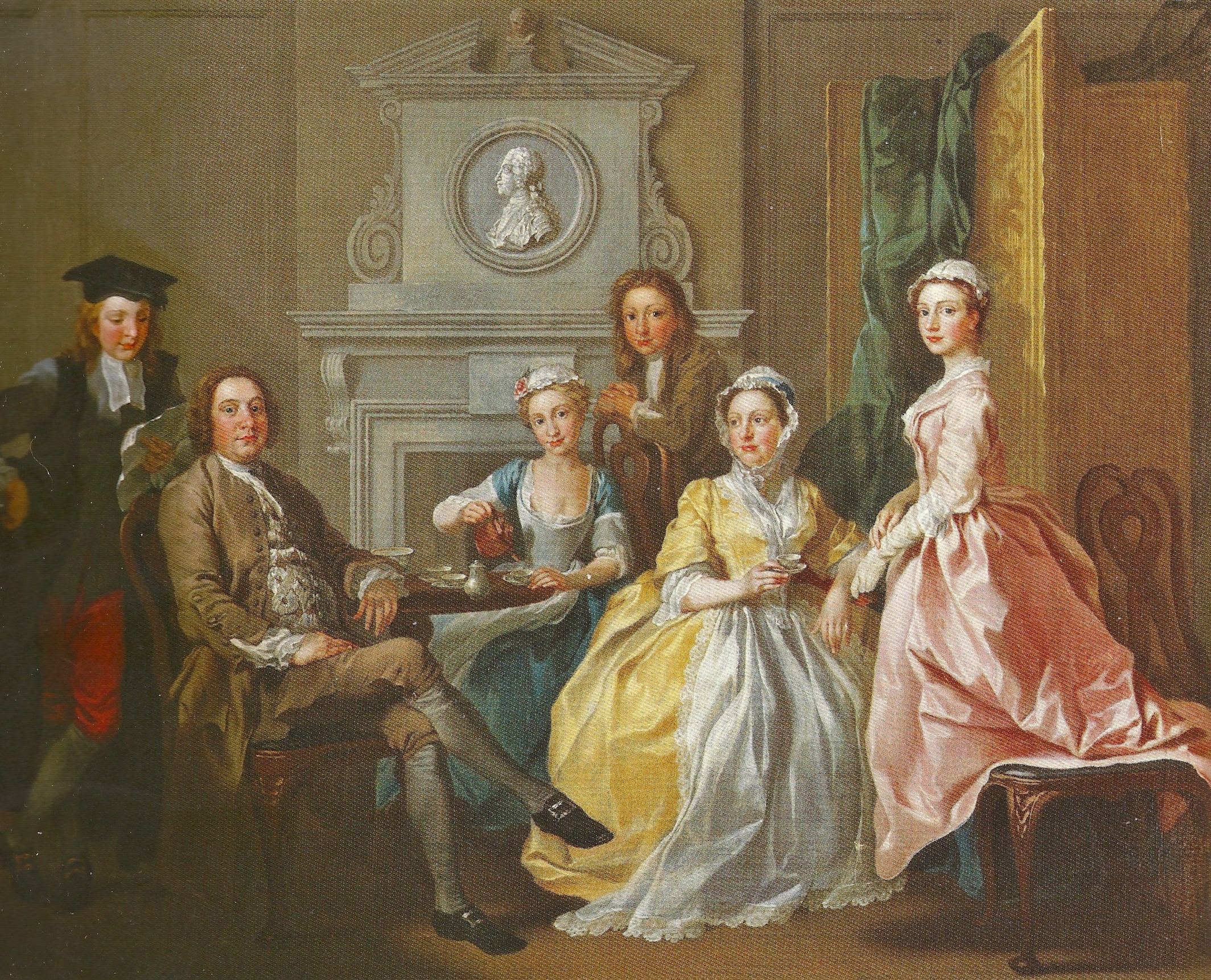
Family portrait by Francis Hayman, Jonathan Tyers and his Family, 1740. Left to right: Elder son Thomas, Jonathan, daughter Elizabeth, son Jonathan, wife Elizabeth, daughter Margaret.

Jonathan Tyers was a very complex character, with more than his fair share of contradictions and eccentricities. Upright, intelligent and self-assured, he also exhibited strains of arrogance and ambition. However, his ambitions were clearly projected chiefly upon his business rather than himself, while his personal aspirations were driven by a wish to raise his own status and that of his family to gentry, an object in which he succeeded at a remarkably early age. (p.35)

Through his association with The Wits’ Club, a social club for freethinkers, scholars, libertarians, and writers, Tyers became good friends with Charles Burney, Henry Fielding, William Hogarth, Harry Hatsell, Edward Moore, Thomas Cooke, Richard Dawson, and Leonard Howard. The club first met at Vauxhall Gardens later moved to a nearby tavern. Many of the ideas behind his development of the gardens came from the discussions at this club.

Although he never managed to mix with fashionable society in his lifetime, he was held in great respect and admiration by his peers, so much so that he was elected to the Royal Society of Arts in 1757, where he would have met many other prominent people, including Benjamin Franklin, when he visited London.

He and his creation were even featured in his friend Henry Fielding’s work of fiction, Amelia (1751).

The extreme Beauty and Elegance of this Place is well known to almost every one of my Readers; and happy is it for me that it is so; since to give an adequate Idea of it, would exceed my Power of Description. To delineate the particular Beauties of these Gardens, would, indeed, require as much pains and as much Paper too, as to rehearse all the good Actions of their Master [Tyers], whose Life proves the Truth of an Observation which I have read in some Ethic Writer, that a truly elegant Taste is generally accompanied with an Excellency of Heart; or in other Words, that true Virtue is, indeed, nothing else but true Taste.

The_Works_of_Henry_Fielding_Amelia_v2_1000373134

Tyers’s Mission

Besides his goal of cleaning up the gardens’ reputation, Tyers hoped to use the venue to improve people’s lives “through contact beauty and quality.” In other words, he planned to provide the lower orders with both art and beauty, and also expose them to “polite society,” who would educate them by example.

His influence on the manners and morals of eighteenth-century society was to be far-reaching, and his patronage of artists and designers would change the face of British art. But it was his ideological beliefs and priorities, his egalitarianism and his conviction that the pursuit of pleasure was a basic human right, and a vital element of the balanced life, that would really motivate his proprietorship of Vauxhall Gardens.

The Ridotto al Fresco

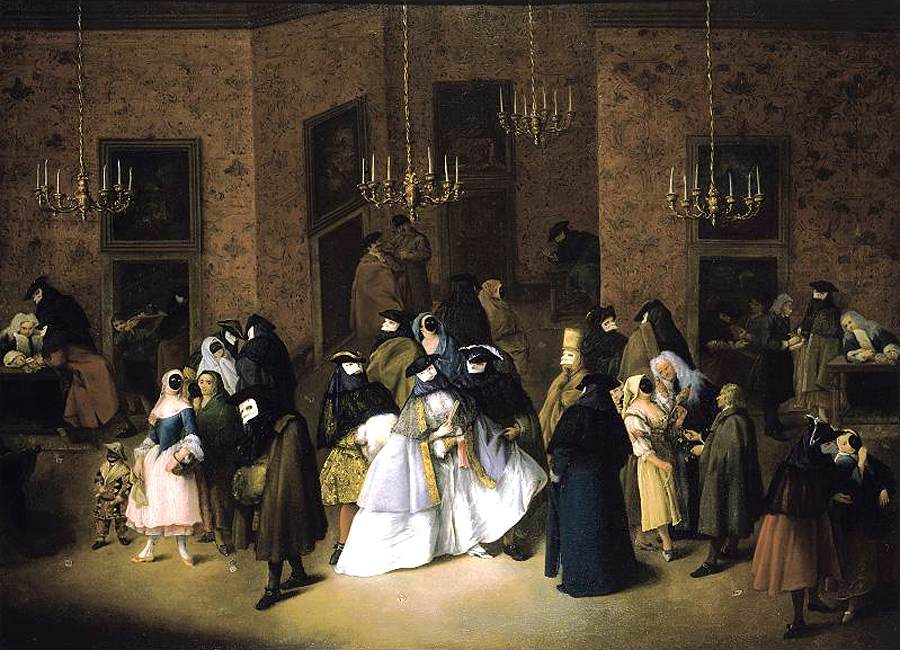
Tyers’s first event at Vauxhall was a masquerade ball in the manner of the Italian carnival in the spring of 1731. Not much is known of this event, except that there was outdoor dancing in masquerade costume and was restricted to the upper classes.

The Ridotto in Venice, Pietro Longhi, 1750's

The Ridotto in Venice, Pietro Longhi, 1750’s

By contrast, his second event in April of 1732, was attended by the poorer class of people, including “an oyster girl, a barber’s apprentice, a lawyer, an army captain, a doctor, a vicar and a number of prostitutes…”

The third event, considered to be the opening ceremony of Tyers’s Vauxhall Gardens, took place on 7 June 1732 and included the presence of Frederick, Prince of Wales. Under the guidance of John James Heidegger, Tyers created an extraordinary event that was talked about for years. A hundred armed soldiers were employed for the security of the distinguished guests, and he “hired the Westminster and Lambeth ferrymen for the whole night to carry his guests across the river and back.” Even with an admission fee of a guinea—which only the wealthy could afford—“between three and four hundred people actually attended the ridotto.” Besides the Prince of Wales’s entourage, the guests included politicians and their friends, “lawyers, bankers, printers, brewers, churchmen, military men and aristocrats.” The party broke up at around four in the morning. “The principal entertainments…were dancing and feasting, combined with the social intercourse between masked guests.”

The Ridotto in Venice, Pietro Longhi, 1750's

The Ridotto in Venice, Pietro Longhi, 1750’s

While by most accounts—particularly in the view of the Prince of Wales—this event was a great success, other accounts indicate that there was a distinct theme of preaching and moralizing via buildings set up to show the misery and pain that result from excessive self-indulgence that may have not gone over too well with the party-minded guests.

In any case, his final ridotto, which was held two weeks later on 21 June, likely at the request of the Prince, who was having the time of his life, was attended by only half as many, which, considering his expenses, would likely have completely wiped out any profits from the four events. No doubt this is the reason Tyers held no such events during 1733 or 1734, although the gardens themselves likely continued to be open to the public.

Susana’s Vauxhall Blog Post Series

  1. Vauxhall Gardens: A History
  2. Vauxhall Gardens: Jonathan Tyers—“The Master Builder of Delight” 
  3. Vauxhall Gardens: A New Direction
  4. Vauxhall Gardens: The Orchestra and the Supper-Boxes 
  5. Vauxhall Gardens: The Organ, the Turkish Tent, and the Rotunda
  6. Vauxhall Gardens: Three Piazzas of Supper-Boxes
  7. Vauxhall Gardens: “whither every body must go or appear a sort of Monster in polite Company”
  8. Vauxhall Gardens: The Competition
  9. Vauxhall Gardens: The Artwork, Part I
  10. Vauxhall Gardens: The Artwork, Part II
  11. Vauxhall Gardens: The Music, 1732-1859
  12. Vauxhall Gardens: The Business Side
  13. Vauxhall Gardens: Developments from 1751-1786
  14. Vauxhall Gardens: Thomas Rowlandson’s Painting (1785)
  15. ‎Vauxhall Gardens: The Third Generation of the Tyers Family and the Jubilee of 1786
  16. Vauxhall Gardens: An Era of Change (1786-1822), Part I
  17. Vauxhall Gardens: An Era of Change (1786-1822), Part II
  18. Vauxhall Gardens: An Era of Change (1786-1822), Part III
  19. Vauxhall Gardens: The Final Years, Part I
  20. Vauxhall Gardens: The Final Years, Part II
  21. Vauxhall Gardens: The Final Years, Part III
  22. Vauxhall Gardens: The Final Years, Part IV
  23. Vauxhall Gardens: Farewell, for ever

Vauxhall Gardens: A History

vauxhallbook

Vauxhall Gardens: A History

David Coke & Alan Borg

The Vauxhall Pleasure Gardens is one of the places I’d love to slip back in time to visit, just to catch a glimpse of what it was like. After recently splurging to buy this lovely coffee-table book, I thought it might make a wonderful subject for a new blog series. But do buy the book too, if you can. The photos are fabulous!

newspringgardensmap

Public Gardens

Royal Parks, such as St. James and Hyde Park, began to open up to the public in the seventeenth century. The first “Spring Garden” was located near St. James Park. Amenities in 1614 included a bathing pond, water fountains, graveled paths and fruit trees, a butt for archery, and a tiltyard. A bowling green was added by Charles II. It also became known for excessive drinking, quarrels, and hopeful prostitutes.

Samuel Pepys and the “Old” and “New” Spring Gardens

But there were also “Spring Gardens” at Vauxhall during the early seventeenth century, and after the Restoration, two of them, one “Old” and one “New” which has caused much confusion over the years. The “Old Spring Garden” was a pleasant place to walk with trees and flowers, with food available that Samuel Pepys spoke of as too “dear”, causing him and his family to eat at a nearby house instead after they had also visited the “New Spring Garden.” The word “New” was used to indicate that it was re-opened after the Restoration. Before 1750, when Westminster Bridge was opened, most visitors arrived by boat.

Taking water for vauxhall - Be careful, my love, don't expose your leg

TAKING WATER FOR VAUXHALL – Be careful, my Love, don’t expose your Leg

An early visitor, Balthasar de Monconys, described it:

We took a boat to the other side of the Thames to see two gardens, where everyone can go and walk, have something to eat in the restaurants or in the cabins in the garden. They are called Spring Gardens, that is to say Jardin du Printemps, and the new one is more beautiful than the old. I admired the beauty of the grassy walks and the niceness of the sanded ones. It is divided into a large number of plots twenty or thirty yards square, enclosed by gooseberry hedges, and these plots are also planted with raspberry bushes, roses, and other shrubs, as well as herbs and vegetables, such as peas, beans, asparagus, strawberries and so on. The walks are bordered with jonquils, gilliflowers or lilies. We returned after we had eaten and went again to Longacre.

Samuel_Pepys

Samuel Pepys

Samuel Pepys

Samuel Pepys was a frequent visitor to the gardens, mentioning it twenty-three times in his Diary from 1662 to July 1668. On one of his earlier visits, he mentions “boys doing tumbling tricks”. In 1665 when the plague began to take hold, he mentions “the ayre and pleasure of the garden, was a great refreshment to me, and methinks, that which we ought to Joy ourselves in.” A month later, he writes:

I to Fox-hall, where to the Spring-garden; but I do not see one guest there, the town being so empty of anybody to come thither. Only, while I was there, a poor woman came to scold with the master of the house that a kinswoman, I think, of hers, that was newly dead of the plague, might be buried in the church-yard; for, for her part, she should not be buried in the Commons, as they said she should.

A year later, Pepys describes visiting the park with a friend and having a sexual encounter with some prostitutes in a private arbor. He also mentions bird (particularly nightingale) and animal calls, an entertainment which was to become customary at Vauxhall. From his writings, one can infer that entrance to the gardens was free, but that food and drink were not. One entry describes a situation where ladies were stalked by drunken men. Pepys says this:

… at last, the ladies did get off out of the house and took boat and away. I was troubled to see them abused so; and could have found my heart, as little desire of fighting as I have, to have protected the ladies.

Another time, when he visited with his wife, he was again troubled by these young rapscallions:

So over the water with my wife and Deb and Mercer to Spring-garden, and there eat and walked, and observe how rude some of the young gallants of the town are become, to go into people’s arbors where there are not men, and almost force the women—which troubled me, to see the confidence of the vice of the age: and so we away by water, with much pleasure home.

Food and Drink at the Spring Gardens

Restoration literature mentions waiters. The food served was usually cold: the very thin ham shavings that Vauxhall was known for, chicken served with salad, and occasionally beef and lobster. Strawberries and cream were popular, the fruit grown in local market gardens. Beverages were wine, beer, and rack punch (a drink from India containing arrack—distilled from coconut sap—hot water, limes, sugar, and spice).

The Great Walk

Tom Brown mentions the Great Walk—the central feature of the gardens—in Amusements, published in 1700.

The ladies that have an inclination to be private take delight in the close walks of Spring Gardens, where both sexes meet and mutually serve one another as guides to lose their way; the windings and turnings in the little wilderness are so intricate that the most experienced mothers have often lost themselves in looking for their daughters.

Much mention is made of intrigues and sexual encounters in the “Spring Gardens,” although it is hinted that such is of a somewhat higher class there than in other public venues. Sir Roger de Coverley complained to the mistress of the house “that he should be a better customer to her garden if there were more nightingales and fewer strumpets” after he was accosted by a “wanton baggage” there.

An escape from the city

The Spring Gardens, although not really the countryside, were far enough away from the dirt and smells of the city that its widely diverse visitors could—at least for a short while—escape their troubles. The following anonymous verses were published in the Gentleman’s Magazine of June 1732:

At Vauxhall Stairs they land, their Passage pay,

And to Spring Gardens, tread the beck’ning way.

‘Hail pleasing Shades! O hail thou secret Grove!

The blest Retreat of Liberty and Love.

All hail, ye Bow’rs! Ye beaut’ous Silvan Scenes,

Ye Grotts, and Mazes of fresh blooming Greens;

Here dwells no Care, no matrimonial Strife,

The peevish Husband, nor the bawling Wife;

Here’s no Restraint to make our Pleasures cloy,

We part at will, and as we please enjoy

See how the Birds by Nature taught to rove,

How sweet they sing, and how like us they love.

With careless Ease they hop from Tree to Tree,

And are as Merry, and as blest as we.

Thrice happy State! Each am’rous Trulla says,

And baits with Poison all the various ways;

The Walks are fill’d with Throngs of different Sort,

From Fleet Street, Drury, and incog., from Court.

To these fair Shades, see Belles and Beaus advance,

Some sigh, some sing, some whistle, and some dance.

Susana’s Vauxhall Blog Post Series

  1. Vauxhall Gardens: A History
  2. Vauxhall Gardens: Jonathan Tyers—“The Master Builder of Delight” 
  3. Vauxhall Gardens: A New Direction
  4. Vauxhall Gardens: The Orchestra and the Supper-Boxes 
  5. Vauxhall Gardens: The Organ, the Turkish Tent, and the Rotunda
  6. Vauxhall Gardens: Three Piazzas of Supper-Boxes
  7. Vauxhall Gardens: “whither every body must go or appear a sort of Monster in polite Company”
  8. Vauxhall Gardens: The Competition
  9. Vauxhall Gardens: The Artwork, Part I
  10. Vauxhall Gardens: The Artwork, Part II
  11. Vauxhall Gardens: The Music, 1732-1859
  12. Vauxhall Gardens: The Business Side
  13. Vauxhall Gardens: Developments from 1751-1786
  14. Vauxhall Gardens: Thomas Rowlandson’s Painting (1785)
  15. ‎Vauxhall Gardens: The Third Generation of the Tyers Family and the Jubilee of 1786
  16. Vauxhall Gardens: An Era of Change (1786-1822), Part I
  17. Vauxhall Gardens: An Era of Change (1786-1822), Part II
  18. Vauxhall Gardens: An Era of Change (1786-1822), Part III
  19. Vauxhall Gardens: The Final Years, Part I
  20. Vauxhall Gardens: The Final Years, Part II
  21. Vauxhall Gardens: The Final Years, Part III
  22. Vauxhall Gardens: The Final Years, Part IV
  23. Vauxhall Gardens: Farewell, for ever


A Celebration of Waterloo: The Prince of Orange

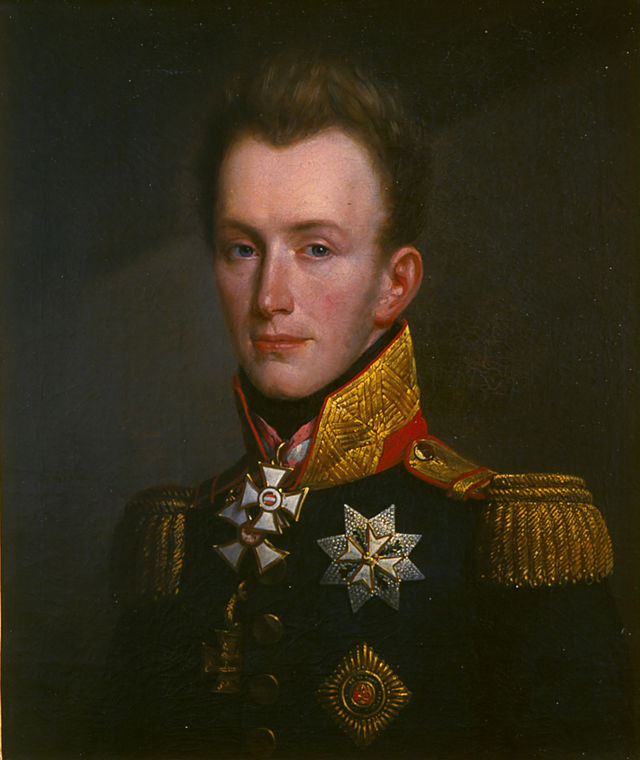
The young Prince of Orange

The young Prince of Orange

About the Prince

William Frederick George Louis was the son of William I of the Netherlands and Wilhelmina of Prussia. When his father proclaimed himself king in 1815 (16 March), he became Prince of Orange. After his father’s abdication in 1840, he became King William II of the Netherlands.

Avid readers of Regency historical fiction might recognize him as the rejected suitor of Princess Charlotte. The Prince Regent arranged the match, but his estranged wife opposed it, and when Charlotte finally met him, she did as well. Whether the problem lay with his personal qualities or the necessity of having to live in the Netherlands or both, the young princess eventually had her way, and married Prince Leopold of Saxe-Coburg-Saalfield (later King of Belgium) in 1816.

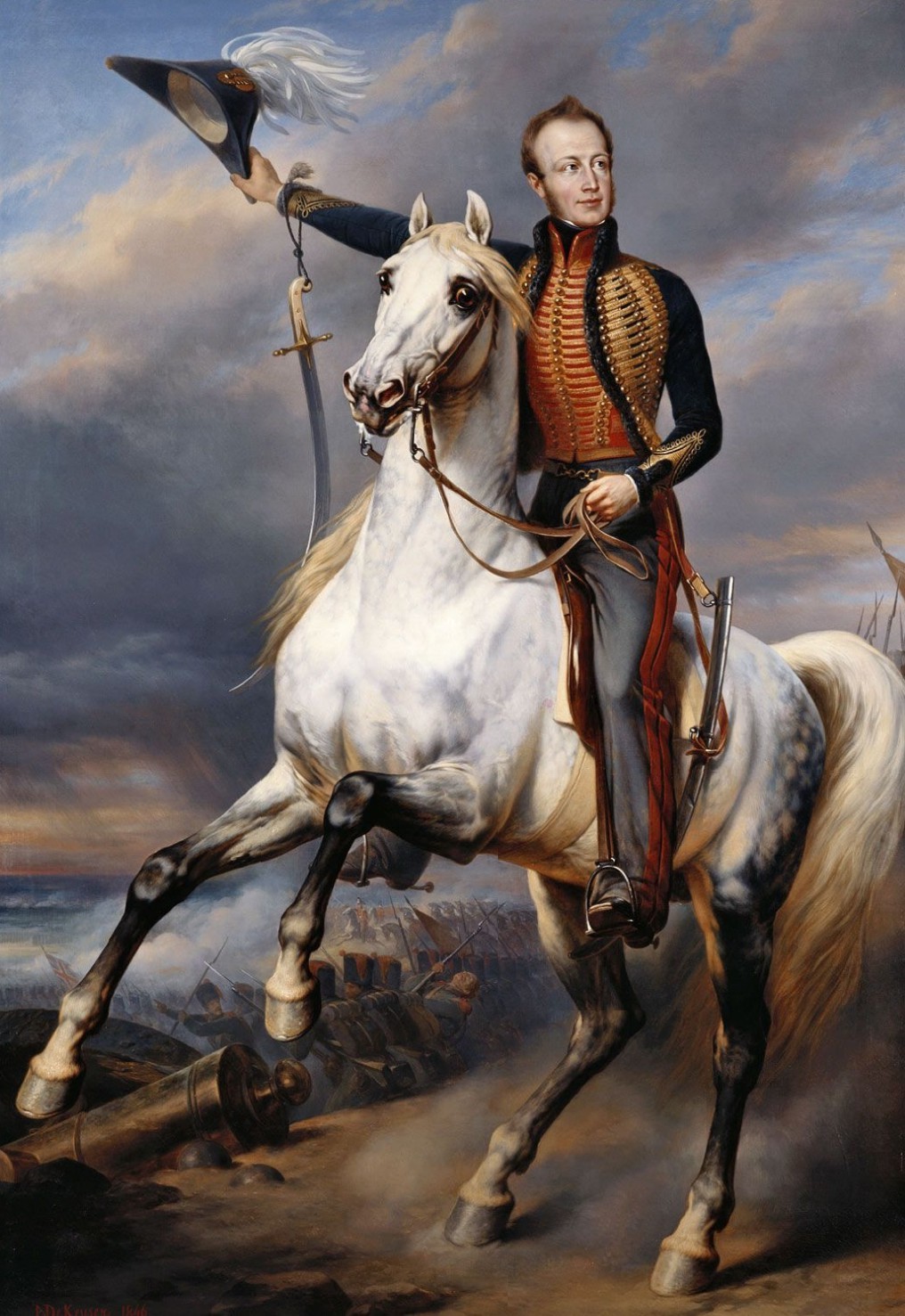
PRINCE OF ORANGE ON HORSEAt the age of two, William fled with his family from the French to Prussia, where he had a military education and served in the Prussian army. Then he studied at the University of Oxford, where he was quite popular and nicknamed “Slender Billy” by the English public. As a result of his ex-patriot upbringing, there were complaints when he eventually returned to the Netherlands that he seemed more foreign than Dutch.

William joined the British army and became aide-de-camp to Wellington in the Peninsular War in 1811 when he was only nineteen years old. In 1815 he joined the Allied Coalition for the final confrontation with Napoleon at Waterloo, where he commanded the I Allied Corps, which was a conglomeration of armies from Britain, Hanover, the Netherlands, Nassau, and Belgium.

This mishmash included many Belgian soldiers who had formerly fought in Napoleon’s Grand Armée—some of whom wore the same uniforms. A source of confusion? Indeed yes, but what was worse was that some allegiance to France still remained, as well as a very real fear of fighting against their former emperor. Communication between all these nationalities was also a problem. Wellington knew he had a problem there, but with rumors abounding of the swelling numbers of Napoleon’s troops, he couldn’t afford to be too selective as he was hastily assembling his own forces.

The Controversy

At 23, the Prince was considered by many to be too young to have the rank of Major-General and given an entire Corps to command. It was said that he was assigned this position because Wellington desperately needed the 30,000 Dutch-Belgian troops and that his son’s promotion was the price of the Dutch king’s cooperation.

The traditional (i.e., British) view was that 200 of the Dutch-Belgian troops took off in the opposite direction when faced by the French. Non-British sources protest, however, that newly-arrived British infantrymen, confused by the similarity of the French and Dutch uniforms, opened fire on them both, causing the Dutch-Belgians to lose a large number of horses, which caused these unmounted soldiers to fall back and not be available for active duty.

From The Cowards at Waterloo (a Dutch account of the battle: http://www.napolun.com/mirror/napoleonistyka.atspace.com/Waterloo_Cowards.html)

Unfortunately most of the British accounts have tended to magnify out of all proportion the accomplishments of the very modest numbers of British soldiers. These authors are unashamedly biased, their troops are super-human, the Duke practically a deity. Below is a fragment of hugely popular in English speaking countries book “Waterloo” by Cornwell (the adventures of super-soldier Major Sharpe). The readers are fed with some colorful descriptions of Belgian cowardice and ‘Dutch courage’. The Belgians and Dutch flee without fight, their commander Prince Orange is “little Dutch boy” etc. In contrast the British soldiers are all-conquering heroes, and their commanders are either tough as a nail or geniuses (or both).

Where does the truth lie? Probably somewhere in the middle. The Prince of Orange acquitted himself well in the Peninsula as aide-de-camp to Wellington, and he was certainly not the first young man his age to have such a high rank. The language problem throughout the conflict was not limited to his troops, and wasn’t his fault. Prejudice on both sides had to be a factor as well. Just as there are some who say the Prussians under Ziethen did come through in the end and should be given some credit for the victory. It’s hardly surprising that the British accounts give the British the lion’s share, but at the same time it’s advisable to take some conclusions with a grain of salt.

Lost and Found Lady

With that in mind, I had just read Bernard Cornwell’s Waterloo prior to writing this story, so my portrayal of the Prince of Orange and the Dutch-Belgian troops conforms to the traditional views. So keep in mind when you read it that the Prince was likely not a cartoon-character of a man at all, in spite of the way he has been characterized over the years.

waterloo_cover_best web

Our Stories

Jillian Chantal: Jeremiah’s Charge

Emmaline Rothesay has her eye on Jeremiah Denby as a potential suitor. When Captain Denby experiences a life-altering incident during the course of events surrounding the Battle of Waterloo, it throws a damper on Emmaline’s plans.

Téa Cooper: The Caper Merchant

The moon in Gemini is a fertile field of dreams, ideas and adventure and Pandora Wellingham is more than ready to spread her wings. When Monsieur Cagneaux, caper merchant to the rich and famous, introduces her to the handsome dragoon she believes her stars have aligned.

Susana Ellis: Lost and Found Lady

Catalina and Rupert fell in love in Spain in the aftermath of a battle, only to be separated by circumstances. Years later, they find each other again, just as another battle is brewing, but is it too late?

Aileen Fish: Captain Lumley’s Angel

Charged with the duty of keeping his friend’s widow safe, Captain Sam Lumley watches over Ellen Staverton as she recovers from her loss, growing fonder of her as each month passes. When Ellen takes a position as a companion, Sam must confront his feelings before she’s completely gone from his life.

Victoria Hinshaw: Folie Bleue

On the night of the 30th Anniversary of the Battle of Waterloo, Aimée, Lady Prescott, reminisces about meeting her husband in Bruxelles on the eve of the fighting. She had avoided the dashing scarlet-clad British officers, but she could not resist the tempting smile and spellbinding charm of Captain Robert Prescott of the 16th Light Dragoons who— dangerously to Aimée— wore blue.

Heather King: Copenhagen’s Last Charge

When Meg Lacy finds herself riding through the streets of Brussels only hours after the Battle of Waterloo, romance is the last thing on her mind, especially with surly Lieutenant James Cooper. However, their bickering uncovers a strange empathy – until, that is, the lieutenant makes a grave error of judgment that jeopardizes their budding friendship…

Christa Paige: One Last Kiss

The moment Colin held Beatrice in his arms he wanted one last kiss to take with him into battle and an uncertain future. Despite the threat of a soldier’s death, he must survive, for he promises to return to her because one kiss from Beatrice would never be enough.

Sophia Strathmore: A Soldier Lay Dying

Amelia and Anne Evans find themselves orphaned when their father, General Evans, dies. With no other options available, Amelia accepts the deathbed proposal of Oliver Brighton, Earl of Montford, a long time family friend. When Lord Montford recovers from his battle wounds, can the two find lasting love?

David W. Wilkin: Not a Close Run Thing at All

Years, a decade. And now, Robert had come back into her life. Shortly before battle was to bring together more than three hundred thousand soldiers. They had but moments after all those years, and now, would they have any more after?

About Lost and Found Lady

On April 24, 1794, a girl child was born to an unknown Frenchwoman in a convent in Salamanca, Spain. Alas, her mother died in childbirth, and the little girl—Catalina—was given to a childless couple to raise.

Eighteen years later…the Peninsular War between the British and the French wages on, now perilously near Catalina’s home. After an afternoon yearning for adventure in her life, Catalina comes across a wounded British soldier in need of rescue. Voilà! An adventure! The sparks between them ignite, and before he returns to his post, Rupert promises to return for her.

But will he? Catalina’s grandmother warns her that some men make promises easily, but fail to carry them out. Catalina doesn’t believe Rupert is that sort, but what does she know? All she can do is wait…and pray.

But Fate has a few surprises in store for both Catalina and Rupert. When they meet again, it will be in another place where another battle is brewing, and their circumstances have been considerably altered. Will their love stand the test of time? And how will their lives be affected by the outcome of the conflict between the Iron Duke and the Emperor of the French?

Amazon.comiBooksKoboBarnes & Noble

Amazon.uk Amazon.caAmazon.au

Amazon Print

Beaux, Ballrooms, and Battles: Jillian Chantal and Jeremiah’s Last Charge

Thanks, Susana, for allowing me to come by and share a little about my story for the Beaux, Ballrooms, and Battles anthology. When I first started thinking about what I wanted to focus on in my style, I knew I wanted a sassy, feisty heroine because they are always fun to write. Of course, when I chose such a heroine, I knew she would have to get in some kind of trouble and what better scandal than to make a spectacle of herself at Lady Richmond’s ball?

I also wanted a hero who could bring balance to the heroine’s life. Jeremiah is a strong, silent type but I think they go well together. She takes him out of his comfort zone and he reins her in. Well, no, not really. He doesn’t. Ha ha.

One of the things I’ve always found intriguing about the run up to the battle is the fact that Lady Richmond had this gala right on the eve of the engagement and Wellington was encouraging her to go forward. Of course, today, we know he was doing that so people wouldn’t panic and try to evacuate thus clogging the roads and holding up the troops. Jeremiah wonders about the Duke’s motive in allowing the ball to occur in this story. He thinks they should be readying for battle, not flirting and dancing but he’d never question his commanding officer.

About Jeremiah’s Last Charge

A chance encounter during the battle of Quatre Bras changes Captain Jeremiah Denby’s life forever. A member of Wellington’s staff, he fulfills his duties to king and country through the surrender of Boney at Waterloo but then must decide how to reconcile his new life with his old.

Emmaline Rothesay has a battle of her own to fight. To her lady mother’s dismay, Emmaline has had her eye on Captain Denby as a potential suitor. Now that his changed circumstances after Waterloo could cause a scandal, Lady Rothesay is even more set against any relationship her daughter desires with the man. Emmaline finds herself at war with her mother and maybe even the captain himself.

Amazon.com • Kobo • iBooks • Barnes & Noble

Amazon.ca • Amazon.au • Amazon.uk

Excerpt

“Napoleon is on the march. He’s outside the city. The Prince of Orange has already left—before supper even—and the rest of the men will be reporting to their units soon.”

Emmaline gasped. “Outside the city?” Her gut clenched. This was way too close. Being this near to a battle site was horrifying. Her eyes darted around the room until they found Captain Denby. She turned her gaze to the others standing beside her. “I’ll be right back.”

She strode off with Lydia behind her asking, “Where are you going?”

Not responding to her friend, Emmaline made a beeline toward where Jeremiah stood with two other officers in the same regimental uniform as he. Once she reached him, she touched the sleeve of his coat. “May I speak to you for a moment?”

“I’m sorry, Miss Rothesay, I’m on my way out.”

“It’ll just take a second.”

He turned to his companions. “Excuse me.”

Leaving Lydia behind, Emmaline pulled Jeremiah to one side and once they stood close to the wall she pulled her lace-edged hanky from her where she’d tucked it in the end of her sleeve and tried to hand it to him.

“What’s this?” He stared at it as it hung in the air between them held up by her index finger and thumb.

“Back in the middle ages and in the time of Henry VIII, a knight asked a lady for her colors to wear into the joust. For good luck, you know. I’d like you to wear mine in the battle ahead.”

“Do you think it proper? We hardly know one another.”

“Proper or not, I’m offering this to you as a token of good will and my hope that you will survive the next days. Surely you won’t turn me down?” Tears welled in her eyes, blurring her vision. Had she misunderstood the way he’d looked at her? Did he hold her in no regard at all?

Jeremiah’s face turned red. Emmaline couldn’t tell if it was from embarrassment or anger. A little intimidated, she took a half step back and almost collided with one of Lady Richmond’s friends.

AuthorPicAbout the Author

Jillian Chantal is multi-published in the romance genre. She’s a lawyer by day and writer, amateur photographer and history buff by night. Jillian lives on the beautiful gulf coast of Florida and loves her little slice of paradise. But not too much to enjoy world-wide travel every chance she gets. After all, a writer and photographer needs new and exciting places to go and capture in order to stay fresh, right? And there’s nothing quite like seeing historical places in person, is there?

Jillian loves to hear from readers.

 WebsiteFacebook Twitter

Her books are available at

AmazonBarnes & NobleAllRomance eBooks 

Beaux, Ballrooms, and Battles:

A Celebration of Waterloo

waterloo_cover_best web

June 18, 1815 was the day Napoleon Bonaparte’s Grande Armée was definitively routed by the ragtag band of soldiers from the Duke of Wellington’s Allied Army in a little Belgian town called Waterloo. The cost in men’s lives was high—22,000 dead or wounded for the Allied Army and 24,000 for the French. But the war with Napoleon that had dragged on for a dozen years was over for good, and the British people once more felt secure on their island shores.

The bicentenary of the famous battle seemed like an excellent opportunity to use that setting for a story, and before we knew it, we had nine authors eager to join in, and on April 1, 2015 our Waterloo-themed anthology was released to the world.

You are all invited to

Our Stories

Jillian Chantal: Jeremiah’s Charge

Emmaline Rothesay has her eye on Jeremiah Denby as a potential suitor. When Captain Denby experiences a life-altering incident during the course of events surrounding the Battle of Waterloo, it throws a damper on Emmaline’s plans.

Téa Cooper: The Caper Merchant

The moon in Gemini is a fertile field of dreams, ideas and adventure and Pandora Wellingham is more than ready to spread her wings. When Monsieur Cagneaux, caper merchant to the rich and famous, introduces her to the handsome dragoon she believes her stars have aligned.

Susana Ellis: Lost and Found Lady

Catalina and Rupert fell in love in Spain in the aftermath of a battle, only to be separated by circumstances. Years later, they find each other again, just as another battle is brewing, but is it too late?

Aileen Fish: Captain Lumley’s Angel

Charged with the duty of keeping his friend’s widow safe, Captain Sam Lumley watches over Ellen Staverton as she recovers from her loss, growing fonder of her as each month passes. When Ellen takes a position as a companion, Sam must confront his feelings before she’s completely gone from his life.

Victoria Hinshaw: Folie Bleue

On the night of the 30th Anniversary of the Battle of Waterloo, Aimée, Lady Prescott, reminisces about meeting her husband in Bruxelles on the eve of the fighting. She had avoided the dashing scarlet-clad British officers, but she could not resist the tempting smile and spellbinding charm of Captain Robert Prescott of the 16th Light Dragoons who— dangerously to Aimée— wore blue.

Heather King: Copenhagen’s Last Charge

When Meg Lacy finds herself riding through the streets of Brussels only hours after the Battle of Waterloo, romance is the last thing on her mind, especially with surly Lieutenant James Cooper. However, their bickering uncovers a strange empathy – until, that is, the lieutenant makes a grave error of judgment that jeopardizes their budding friendship…

Christa Paige: One Last Kiss

The moment Colin held Beatrice in his arms he wanted one last kiss to take with him into battle and an uncertain future. Despite the threat of a soldier’s death, he must survive, for he promises to return to her because one kiss from Beatrice would never be enough.

Sophia Strathmore: A Soldier Lay Dying

Amelia and Anne Evans find themselves orphaned when their father, General Evans, dies. With no other options available, Amelia accepts the deathbed proposal of Oliver Brighton, Earl of Montford, a long time family friend. When Lord Montford recovers from his battle wounds, can the two find lasting love?

David W. Wilkin: Not a Close Run Thing at All

Years, a decade. And now, Robert had come back into her life. Shortly before battle was to bring together more than three hundred thousand soldiers. They had but moments after all those years, and now, would they have any more after?

Amazon • Barnes & Noble • Kobo • iBooks

Beaux, Ballrooms, and Battles: Heather King and Copenhagen’s Last Charge

Copenhagen. The very name of the Danish capital conjures exotic images of a bustling, modern city with an infamous red light district; a centuries-old port, evolved from a fortification built in 1167 to protect a ferry crossing; battles on the high seas and an international political centre.

It was also the name of a horse.

That horse was not just any old horse, though. He was the famed mount of a revered general. He was the war horse of no less a personage than the Duke of Wellington and carried his master throughout the whole of the Battle of Waterloo.

Copenhagen’s story begins at the siege of the city which gave him his name. His dam was the half-bred mare, Lady Catherine, bred by Thomas Grosvenor and, it is believed, ridden by him during that conflict. Lady Catherine’s dam was by the Rutland Arabian, ‘out of a hunting mare not thorough-bred’ according to The General Stud Book and was put to the successful racehorse and stallion, John Bull. This meant that although John Bull was full Thoroughbred and Copenhagen was sired by Meteor, second in the Derby of 1786 and son of the legendary Eclipse, Copenhagen was not eligible for the General Stud Book because of his grand-dam’s hunter blood. Lady Catherine is the only half-bred mare included in the stud book ‒ in deference to his honourable military career.

Meteor was tiny by today’s standards, measuring about fourteen hands, but Copenhagen took after his grandsire in colour, height and temperament. Foaled in 1808, he was chestnut (as was his father), stood about fifteen hands high (a hand is four inches, a horse being measured to the base of the neck where it joins the body) and could be bad-tempered, being prone to lashing out with a hind leg. He is described as being muscular and compact, having two white heels, a hollow back and poor shoulders… and, conversely, as being a handsome horse. He was painted by Thomas Lawrence and Samuel Spode as a rich, dark chestnut, but with dissimilar white leg markings. In the Spode painting, he has one white sock on his near (left) hind leg. There are no obvious white markings on his legs in the Lawrence depiction and in a painting of the pair at Waterloo by Robert Hillingford, he would appear to have four white socks. We shall never know, now, which is the most accurate, but one thing is certain. The stallion had a quality which drew the eye and fired the imagination.

In all three paintings, he is a striking individual, his proud bearing, fine legs and sturdy conformation clearly reflecting his Arabian bloodlines. The qualities of the ‘Oriental’ horse were appreciated by the knowledgeable cavalry soldier, for on campaign, horses may receive little in the way of fodder while enduring the harshest of conditions. Toughness was a prime requisite. Wellington is quoted as saying of his famous horse: ‘There may have been many faster horses, no doubt many handsomer, but for bottom and endurance I never saw his fellow.’ Such stamina is the hallmark, not only of the Thoroughbred, but of the three Arab stallions from whom the breed evolved.

However, the Duke of Wellington and his illustrious horse had yet to meet. Despite his lack of a full pedigree, Thomas Grosvenor had bred Copenhagen to race, but although a quick colt, he had not inherited either Meteor’s or Eclipse’s speed. He did not run as a two-year-old and his two seasons were undistinguished at best, resulting in only two wins. He retired from racing in 1812, at the end of his four-year-old season and was sold to Sir Charles Stewart, (later the Marquis of Londonderry) who took the stallion to the Peninsula.

Not a favourite of the future Duke of Wellington, Sir Charles fell foul of the Field Marshal on several occasions, finally, so the story goes, being reduced to tears for remarks made in the Morning Chronicle. Soon after, Stewart was offered a post as Minister to Prussia – possibly through the good offices of his half-brother and Foreign Secretary, Lord Castlereagh. However that may be, towards the end of 1813, Sir Charles, being short of funds and no longer in need of a stable of horses, sold Copenhagen and one other to Colonel Charles Wood (or Colonel Alexander Gordon) on behalf of one Arthur Wellesley.

When Copenhagen arrived in the Marquis’ stables (Wellington was not made a duke until 1814) he caused no small amount of concern. Not only was his temperament uncertain, he had a particularly unusual idiosyncrasy. All horses will lie down in their stable, given that the bed is deep enough and they are comfortable in their surroundings. However, they eat standing up; hay from a hay rack or net, feed from a manger or bucket. Copenhagen had a hearty appetite, for corn feed especially, but he would eat it whilst lying down. Until they determined that there was nothing wrong with their expensive new charge, he no doubt gave the Marquis’ grooms many a sleepless night!

A true horseman, Wellington quickly realized that his chestnut charger needed plenty of occupation. He already maintained his own pack of hounds as well as a pair of hunters for his leisure hours in the Peninsula, since his battle horses were not suitable for the sport. Copenhagen, on the other hand, revelled in the work and the freedom from his stable. The discipline of standing quietly and then galloping when hounds set off developed the five-year-old’s fitness and hardened his legs and tendons. Days in the field developed a relationship between horse and rider which was to be indispensable. The two seasons Copenhagen had spent on the race courses of England had accustomed him to noise and clamour. The pieces of the jigsaw were fitting together to create a legend; a horse whose name would go down in history.

In her diary, Lady Frances Shelley states that: ‘On the day before the battle, the Duke rode Copenhagen to the Prussian headquarters, to ascertain whether he might depend on old Blücher’s co-operation.’ This belief is also reflected by the Reverend Charles Young, who was staying with the Rt. Hon. Henry Pierrepoint in 1833 when the Duke himself apparently related the tale. The Duke is reported to have said, ‘Before ten o’clock I got on Copenhagen’s back… I never drew bit, and he never had a morsel in his mouth, till 8pm, when Fitzroy Somerset came to tell me dinner was ready in the little neighbouring village – Waterloo.’ He went on to claim that he sent Fitzroy Somerset off on an errand, ‘ordered Copenhagen to be re-saddled’ and himself rode out some fourteen miles and back to confirm how matters stood. Some modern historians believe this tale to be a fabrication and that an aide-de-camp made the journey and returned with the message promising assistance from the Prussians. It is a more likely version of events, but if not… the possibility of having carried his master another twenty-eight miles on top of his day’s work and then be ridden the following day during the battle itself, adds to Copenhagen’s considerable lustre and reputation for bottomless endurance.

What is irrefutable fact, however, is that while Napoleon rode probably three or four horses during the battle and covered considerably less ground, the cranky chestnut stallion was Wellington’s sole mount for the whole of that long, momentous day – a stretch of almost eighteen hours. Calm and composed amidst the smoke and mayhem of the battlefield, the very sight of the powerful horse and his rider cheered the Allied forces into greater endeavours and helped them stand firm when the odds were against them. It is little wonder that the illustrious pair were fêted by all and sundry when they finally arrived home victorious.

In due course, the Duke moved to Paris and thence to Chambrai in his role as Commander-in-Chief of the Army of Occupation, taking Copenhagen with him. He rented a house in Mont St. Martin and took his old friend hunting when his duties permitted. Wellington held house parties, mock battles and military ceremonials, and both man and horse enjoyed the attentions of the ladies, both English and French.

This continued when the army at last returned to England, the Duke acquiring Apsley House from his brother. Wellington kept and rode Copenhagen in London until he became too busy, when he sent him to his Hampshire home, Stratfield Saye.

Copenhagen enjoyed a peaceful retirement and was finally laid to rest with full military honours in his paddock near the Ice House. Mrs. Apostles, the Duke’s housekeeper, planted the Turkey Oak which now casts shade over the stallion’s grave. The marble stone was laid some years following the Duke’s death, by the second Duke.

I will be telling Copenhagen’s story in more detail on my Blog A Regency Reticule, later in the year. http://regencywriter-hking.blogspot.co.uk
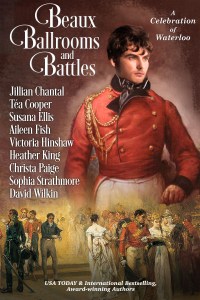
waterloo_cover_best web

June 18, 1815 was the day Napoleon Bonaparte’s Grande Armée was definitively routed by the ragtag band of soldiers from the Duke of Wellington’s Allied Army in a little Belgian town called Waterloo. The cost in men’s lives was high—22,000 dead or wounded for the Allied Army and 24,000 for the French. But the war with Napoleon that had dragged on for a dozen years was over for good, and the British people once more felt secure on their island shores.

The bicentenary of the famous battle seemed like an excellent opportunity to use that setting for a story, and before we knew it, we had nine authors eager to join in, and on April 1, 2015 our Waterloo-themed anthology was released to the world.

You are all invited to

About Copenhagen’s Last Charge

When Meg Lacy meets a broodingly handsome Light Dragoon at the Duchess of Richmond’s grand ball, she little expects that in the early hours of June 19th she will be accompanying him around the streets of Brussels after the Duke of Wellington’s horse, Copenhagen.

Lieutenant James Cooper is surly and unhelpful, but Meg senses the Dragoon will need her help to catch the valuable horse before he injures himself. As they bicker their way around the narrow streets in Copenhagen’s wake, a strange empathy develops as gradually glimpses of the man beneath start to be revealed. Meg finds herself drawn to that person, but when they finally return the horse to the Duke and Cooper assumes the credit, Meg is so incensed she vows to have nothing further to do with him.

Fate, it seems, has other ideas…

Amazon.com • Kobo • iBooks • Barnes & Noble

Amazon.ca • Amazon.au • Amazon.uk

Excerpt

Something was about to unfold, Meg thought, barely suppressing a shiver of apprehension. All these handsome, jolly young men were dancing, drinking and enjoying themselves with a new fervour which was almost a desperation… She must make sure to tell Papa how much she loved him.

“Georgy, my dear. Why are you not dancing?” Wellington, spotting them, had come forward, a charming smile curving his lean lips. In an aside over his shoulder, he said to Richmond, “If you could lay hands on that map, I should be obliged.”

“Oh, your Grace, please allow me to present to you my good friend, Miss Margaret Lacy.”

Heart pounding, Meg sank into a deep curtsey, but was both surprised and reassured to perceive a twinkle in the Duke’s eye when he helped her to rise and then carried her hand to his lips. She felt the burn of his swift appraisal bloom in her cheeks.

“I am charmed, Miss Lacy. Would you be related to Major-General Sir Vincent Lacy?”

“He is my father, sir.”

“Ah. A fine officer and a gentleman.”

Meg dipped her head. “Thank you, your Grace.”

Wellington wagged his finger jovially. “No need for ceremony, my dear young lady. I have every respect for your father. He is also a consummate horseman.”

Georgy took Meg’s arm, infinitesimally drawing her closer to the Duke.

“Meg – Miss Lacy – has inherited her papa’s skill, sir. She has a high regard for Copenhagen. Might we be allowed to visit him in the stables?”

One of the family’s black-liveried footmen appeared at the Duke’s elbow and bowed, presenting a piece of folded paper on a silver salver.

“Excuse me, ladies.” Wellington took the missive and glanced at its contents. “And risk dirtying your pretty gowns? I shall not hear of it.” He nodded to the man. “Have someone send to the stables. I wish my horse brought up at once.”

The Field Marshal was a particularly imposing gentleman, Meg decided, considering him from the corner of her eye while he paused to comment in the ear of one of his aides. It was more than just his proud bearing and handsome features; he possessed an air of invincibility and self-belief which to some probably appeared to be arrogance. To her, it was more the attitude of a man – a general – who knew what he had to do and was determined to do it. If anyone could stop Napoleon Bonaparte, then surely it was he.

They paused at the top of the steps at the main entrance. Meg had noticed a considerable number of the guests slipping away; certainly the company in the ballroom had thinned. Unbidden, a thought for the brooding Hussar popped into her head and she offered a silent prayer for all those who were about to fight. The image of the dark-visaged young man lingered… and then she realized he was real.

Standing in the road at the bottom of the steps, he held Wellington’s famous war horse, Copenhagen, by the bridle. The near-thoroughbred, chestnut stallion was equally as imposing as his master. He stood just over fifteen hands at the base of his neck, but with his head held high and ears pricked in a state of readiness, he seemed far bigger. A trumpet sounded in the distance and he neighed, an ear-splitting vibration of notes that had Georgy covering her ears. Even the horse was challenging the French Emperor. Copenhagen skipped sideways, his iron-shod hoofs clattering on the cobbles. The young man, who was now clad in a navy coat with buff facings, cursed and pulled at the reins, his boots clutching ineffectively for a purchase on the uneven surface…

Our Stories

Jillian Chantal: Jeremiah’s Charge

Emmaline Rothesay has her eye on Jeremiah Denby as a potential suitor. When Captain Denby experiences a life-altering incident during the course of events surrounding the Battle of Waterloo, it throws a damper on Emmaline’s plans.

Téa Cooper: The Caper Merchant

The moon in Gemini is a fertile field of dreams, ideas and adventure and Pandora Wellingham is more than ready to spread her wings. When Monsieur Cagneaux, caper merchant to the rich and famous, introduces her to the handsome dragoon she believes her stars have aligned.

Susana Ellis: Lost and Found Lady

Catalina and Rupert fell in love in Spain in the aftermath of a battle, only to be separated by circumstances. Years later, they find each other again, just as another battle is brewing, but is it too late?

Aileen Fish: Captain Lumley’s Angel

Charged with the duty of keeping his friend’s widow safe, Captain Sam Lumley watches over Ellen Staverton as she recovers from her loss, growing fonder of her as each month passes. When Ellen takes a position as a companion, Sam must confront his feelings before she’s completely gone from his life.

Victoria Hinshaw: Folie Bleue

On the night of the 30th Anniversary of the Battle of Waterloo, Aimée, Lady Prescott, reminisces about meeting her husband in Bruxelles on the eve of the fighting. She had avoided the dashing scarlet-clad British officers, but she could not resist the tempting smile and spellbinding charm of Captain Robert Prescott of the 16th Light Dragoons who— dangerously to Aimée— wore blue.

Heather King: Copenhagen’s Last Charge

When Meg Lacy finds herself riding through the streets of Brussels only hours after the Battle of Waterloo, romance is the last thing on her mind, especially with surly Lieutenant James Cooper. However, their bickering uncovers a strange empathy – until, that is, the lieutenant makes a grave error of judgment that jeopardizes their budding friendship…

Christa Paige: One Last Kiss

The moment Colin held Beatrice in his arms he wanted one last kiss to take with him into battle and an uncertain future. Despite the threat of a soldier’s death, he must survive, for he promises to return to her because one kiss from Beatrice would never be enough.

Sophia Strathmore: A Soldier Lay Dying

Amelia and Anne Evans find themselves orphaned when their father, General Evans, dies. With no other options available, Amelia accepts the deathbed proposal of Oliver Brighton, Earl of Montford, a long time family friend. When Lord Montford recovers from his battle wounds, can the two find lasting love?

David W. Wilkin: Not a Close Run Thing at All

Years, a decade. And now, Robert had come back into her life. Shortly before battle was to bring together more than three hundred thousand soldiers. They had but moments after all those years, and now, would they have anymore after?

About the Author
Heather King newHeather has always been a dreamer, going off for hours into a make-believe world peopled by imaginary characters. From the age of about seven, when she won a third prize for a story written at school, she has enjoyed writing almost as much as reading. Devouring a book in one sitting is nothing new to her. Already keen on history, when she read her first Georgette Heyer Regency novel in her teens, she was at once hooked on the era and the genre.

Nowadays she divides her time between her animals, beta reading/critiquing for other authors, writing historical romantic fiction and short stories for magazines. Writing as Vandalia Black, she has recently released a collection of Vampire Romance short stories which includes a novella set in the English Civil War.

Website • Facebook • Goodreads

Amazon Author Page

Other Releases

An Improper Marriage

Marriage to dull ironmaster Jeremiah Knight would be awful enough, but when Eleanor Honeybourne discovers an injured man at a ball, she uncovers a web of intrigue that puts her own and her stepfather’s lives at risk. Meeting again her childhood hero, Charles Ribblesford, she is forced into a situation which could well spell her ruin, unless they can solve the mystery and unmask the villain.

 Amazon.ukAmazon.com

The Middle Of The Day

Lottie Morgan loves all things Regency, but would she like to live in the early nineteenth century, married to a baron? A strange thing happens while she is visiting Berrington Hall; she finds herself confronting George, Lord Rodney and she is a newly-wed!

 Amazon.ukAmazon.com

Writing as Vandalia Black:

Vampires Don’t Drink Coffee And Other Stories

This collection of fourteen tales brings together irresistible heroes and memorable heroines who battle against demons, muggers, lost loves, loneliness and unholy thirst to find their true loves. Tortured and honourable vampire heroes and one lady for whom the search for her mortal love has lasted centuries, will sweep you away into a paranormal world where eternal love means exactly that.

 Amazon.ukAmazon.com

Beaux, Ballrooms, and Battles: Téa Cooper and The Caper Merchant

Truth is Often Stranger Than Fiction

I have to admit to being in two minds about the Beaux, Battles & Ballrooms project when Susana asked me if I would like become involved. Not because I have anything against Regency romances or the Duke of Wellington for that matter. Generally I write Australian historical romances – oz-itoricals as they are sometimes called. This would be very different.

Apart from anything else I didn’t even know if there had been any Australians at the Battle of Waterloo and I wanted a link to Australia. I knew that many Waterloo veterans had settled in Australia after the battle but had any Australians fought at Waterloo?

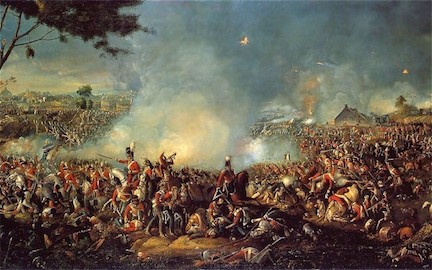
teawaterloo2_2672458b copy

Battle of Waterloo

I started digging around and imagine my delight when I discovered that there was one, and only one Australian at the Battle of Waterloo.

His name was Andrew Douglas White. He didn’t become the hero of my story, The Caper Merchant, but I felt it gave me license to involve an Australian.

And so the fictitious Samuel Blue, the hero of The Caper Merchant, was born. He inherited some of the irreverent, larrikin aspects of the Australians I have come to know and love.

But let’s leave fiction for a moment and let me tell you about Andrew because, as always, truth is stranger than fiction!

Andrew Douglas White was born in Sydney Cove in 1793 when the Australian colony was only five years old, the bastard son of a convict mother. His father, John White was chief surgeon on the expedition to establish the convict settlement at Botany Bay. His mother a convict, Rachel Turner, sentenced to seven years transportation for the theft of some clothing. She arrived in Sydney Cove in 1790 and served her sentence as Surgeon White’s housekeeper.

Sydney 1796

Sydney 1796

In 1794 the married John White returned to England but continued to support Rachel and his Australian son. In 1800 Andrew, then aged six and a half, was sent to England to join his father, step-mother and half-siblings.

Andrew was educated in England and joined the Royal Engineers as a second lieutenant in 1812. He went to Flanders in late 1813 as part of the British force and remained there serving as a junior officer on the Royal Engineer Staff at Waterloo. He survived the battle unscathed and returned to England to receive his Waterloo medal in 1816.

But the story doesn’t end there.

In 1823 Andrew returned Sydney and to the mother he could barely remember. The reunion was obviously a successful one, as he gave her his most prized possession, his Waterloo medal. She treasured it until her death.

Needless to say Andrew’s story set my mind racing and I’m currently working on a story called The Great Platypus Hoax—nothing to do with the Battle of Waterloo but it seemed such a shame to waste all the wonderful stories I had unearthed.

And Susana, thank you for your invitation to join in this great project. It’s been a fascinating ride!

Photos: WIKIMEDIA COMMONS


waterloo_cover_best web

June 18, 1815 was the day Napoleon Bonaparte’s Grande Armée was definitively routed by the ragtag band of soldiers from the Duke of Wellington’s Allied Army in a little Belgian town called Waterloo. The cost in men’s lives was high—22,000 dead or wounded for the Allied Army and 24,000 for the French. But the war with Napoleon that had dragged on for a dozen years was over for good, and the British people once more felt secure on their island shores.

The bicentenary of the famous battle seemed like an excellent opportunity to use that setting for a story, and before we knew it, we had nine authors eager to join in, and on April 1, 2015 our Waterloo-themed anthology was released to the world.

You are all invited to

About The Caper Merchant

The moon in Gemini is a fertile field of dreams, ideas and adventure but when the Dark Lady wanes into solitude and looks to the shadows life can take an unexpected turn.

For Pandora Wellingham the astrological predictions couldn’t be more fortuitous, especially if they enable her to spread her wings and escape the domineering control of her godparents. When Monsieur Cagneaux, caper merchant to the rich and famous, introduces her to the handsome dragoon, she believes her stars have aligned.

Career soldier Samuel Blue has lived much of his life in the shadows embroiled in the cloak and dagger world of ciphers and intelligence. It is during such a mission on behalf of his country that he meets the beautiful Pandora and inadvertently compromises her. But no matter how much he yearns to remain longer to secure the affections of the stargazing girl who has captivated his heart, Samuel has no time to dream of love and happy endings. He has information to deliver that may prove vital in the upcoming confrontation in Belgium.

Samuel’s journey takes him from the ballrooms of Grosvenor Square to the battlefield of Waterloo, with the sinister caper merchant dancing hot on his heels to prevent him from completing his mission. The stakes are high, and now that Pandora is in the picture, they’ve mounted even higher.

Amazon.com • Kobo • iBooks • Barnes & Noble

Amazon.ca • Amazon.au • Amazon.uk

Excerpt

The evening of Thursday, 8th June 1815

Grosvenor Square, London

“Dora, are you touched or simply playing the fool?”

Pan-dora. My name is Pandora.

“I believe you are doing this on purpose. Since your father’s death you have done everything in your power to make my life a misery.” Aunt Audra’s reddened nose disappeared behind a pathetic scrap of lace. “What are we to do?” The peacock feathers attached to her over structured hair wilted in sympathy. “Everyone saw you. It is scandalous, simply scandalous.”

“Just a dance,” Pandora muttered under her breath. A waltz—nothing more than a waltz. It wasn’t as though they were the only couple on the dance floor.

A muted squawk of horror burst from Aunt Audra. “You hadn’t been introduced.”

In actual fact they had, although not in the manner Aunt Audra would have preferred. From all the fuss and commotion it appeared no one knew very much about Captain Samuel Blue other than the obvious. Tall, exceptionally good looking with his loose black curls and startling blue eyes, and from his dress uniform and the easy length of the body inhabiting it, a cavalry officer.

“When I suggested you enter the marriage mart I did not, in my remotest dreams, imagine you would disgrace yourself with the nearest available young man.”

Stifling a yawn, Pandora moved to the window and gazed out onto the terrace and the gardens where couples strolled along arm in arm. The sky, an inky velvet cape, arched above the vista. Soon the moon would rise. The new moon in Gemini. Her moon. A time of promise and rebirth.

Not if Aunt Audra had any say in the matter. “I have no idea what we are going to do.” She wrung her hands performing an admirable impersonation of Lady Macbeth.

Pandora clenched hers and restrained the desire to cover her ears. She knew what she would like to do. Somehow now didn’t seem the best moment to suggest repeating the entire waltz all over again. The dizzying sensation when he’d put his arm around her waist and drawn her to him before sweeping her across the room still made her pulse pound. Distinctly more scintillating than any of the dance lessons she’d received from the odious Monsieur Cagneaux.

With a crack like gunshot the door flew open. “What is all this nonsense?” Her uncle rested his vast bulk against the timber panels, preventing interruption.

Pandora sucked in a steadying breath. No one would be coming to her rescue. An entire battalion would find it difficult to dislodge him.

“I hope, young lady, you are feeling suitably ashamed.”

She swallowed back an honest response and bowed her head. Aunt Audra’s tears were an almost daily occurrence and easily ignored. However her godfather, the esteemed Lord Harold Smotherington, in full flight, commanded her full attention.

“Well?”

She lifted her shoulders and offered a conciliatory smile.

“Don’t you shrug at me, you silly little chit. Whatever possessed you?”

Aunt Audra emitted another strangled sob and dabbed ineffectually with her sodden handkerchief.

“For goodness sake, Audra, pull yourself together. I have made arrangements. Someone must institute recompense.”

Made arrangements? Recompense? What in heaven’s name had happened?

Our Stories

Jillian Chantal: Jeremiah’s Charge

Emmaline Rothesay has her eye on Jeremiah Denby as a potential suitor. When Captain Denby experiences a life-altering incident during the course of events surrounding the Battle of Waterloo, it throws a damper on Emmaline’s plans.

Téa Cooper: The Caper Merchant

The moon in Gemini is a fertile field of dreams, ideas and adventure and Pandora Wellingham is more than ready to spread her wings. When Monsieur Cagneaux, caper merchant to the rich and famous, introduces her to the handsome dragoon she believes her stars have aligned.

Susana Ellis: Lost and Found Lady

Catalina and Rupert fell in love in Spain in the aftermath of a battle, only to be separated by circumstances. Years later, they find each other again, just as another battle is brewing, but is it too late?

Aileen Fish: Captain Lumley’s Angel

Charged with the duty of keeping his friend’s widow safe, Captain Sam Lumley watches over Ellen Staverton as she recovers from her loss, growing fonder of her as each month passes. When Ellen takes a position as a companion, Sam must confront his feelings before she’s completely gone from his life.

Victoria Hinshaw: Folie Bleue

On the night of the 30th Anniversary of the Battle of Waterloo, Aimée, Lady Prescott, reminisces about meeting her husband in Bruxelles on the eve of the fighting. She had avoided the dashing scarlet-clad British officers, but she could not resist the tempting smile and spellbinding charm of Captain Robert Prescott of the 16th Light Dragoons who— dangerously to Aimée— wore blue.

Heather King: Copenhagen’s Last Charge

When Meg Lacy finds herself riding through the streets of Brussels only hours after the Battle of Waterloo, romance is the last thing on her mind, especially with surly Lieutenant James Cooper. However, their bickering uncovers a strange empathy – until, that is, the lieutenant makes a grave error of judgment that jeopardizes their budding friendship…

Christa Paige: One Last Kiss

The moment Colin held Beatrice in his arms he wanted one last kiss to take with him into battle and an uncertain future. Despite the threat of a soldier’s death, he must survive, for he promises to return to her because one kiss from Beatrice would never be enough.

Sophia Strathmore: A Soldier Lay Dying

Amelia and Anne Evans find themselves orphaned when their father, General Evans, dies. With no other options available, Amelia accepts the deathbed proposal of Oliver Brighton, Earl of Montford, a long time family friend. When Lord Montford recovers from his battle wounds, can the two find lasting love?

David W. Wilkin: Not a Close Run Thing at All

Years, a decade. And now, Robert had come back into her life. Shortly before battle was to bring together more than three hundred thousand soldiers. They had but moments after all those years, and now, would they have anymore after?

About the Author

TeaCoopersmall copyBest-selling Australian author Téa Cooper lives in a stone cottage on one hundred acres of bushland, just outside the time-warp village of Wollombi, New South Wales. Although Téa was born and raised in England the majority of her books, both contemporary and historical, are set in Australia, the country she now calls home. When she isn’t writing Téa can usually be found haunting the local museum or chatting to the locals, who provide her with a never-ending source of inspiration. She is a member of Romance Writers Australia and Hunter Romance Writers and is a 2014 finalist in the Australian Romance Readers Awards for her historical romance, Jazz Baby.

Website • Facebook • Twitter

Beaux, Ballrooms, and Battles: Victoria Hinshaw and Folie Bleue

Last summer I stood in the Duke of Wellington’s home, Apsley House, in London, and gazed at the painting of his annual Waterloo Banquet. Held each year on the anniversary, June 18th, it was attended by his officers and other luminaries including, from time to time, the Regent or King and the Prime Minister.

I thought about the all-male event and of all the wives who would remain at home, but who were every bit as much concerned with the battle. What would they do as they recalled the time of the battle in 1815?

Waterloo Banquet by William Salter, 1836, Apsley House

Waterloo Banquet by William Salter, 1836, Apsley House

About Folie Bleue

On the night of the 30th Anniversary of the Battle of Waterloo, , Lady Prescott, reminisces about meeting her husband in Bruxelles on the eve of the fighting. She had avoided the dashing scarlet-clad British officers, but she could not resist the tempting smile and spellbinding charm of Captain Robert Prescott of the 16th Light Dragoons who— dangerously to Aimée— wore blue.

Amazon.com • Kobo • iBooks • Barnes & Noble

Amazon.ca • Amazon.au • Amazon.uk

Excerpt

Aimée is conversing with a British officer, Captain Robert Prescott. They have just been introduced by her cousin, a cavalry officer in the Service of the Prince of Orange.

…I don’t know how long we sat there, but other strolling couples seemed to be heading back to the parade ground when I became aware of my surroundings again.

He noticed too. “I should return you to your family, for I am sure they wonder if I have carried you off.”

“Oh, yes. Tante will worry. “

“Your aunt would never have allowed you to accompany me if she knew I was English, I assume.”

I agreed.

“May I call upon you tomorrow?”

“I would be honored,” I replied. “But I think it would be preferable if we met in the park, as if by chance. My aunt might not approve of your call, but I would very much like to see you again.”
“She does not like the British?”

“She is like so many in Bruxelles, not taken with the new nation they are part of, and not really eager for Napoleon’s return either. Most are as placid as can be with any future that comes along. But I also fear she they would not approve of my associating with the Englishmen.”

“Even if I were to become an aide-de-camp to the Duke, I suppose?”

“Especially then, they would disapprove. Or perhaps not, for I know they are curious about him and might ply you with questions.”

“Well, no chance of that. My cavalry regiment has an Englishman with a Dutch-sounding name as our commander. General Vandeleur. They might like that fellow’s name.”

“Or perhaps not. Many here are not warm to the Dutch. They are very opinionated you know. They like no one but themselves. They have been ruled by this one and that one – the French, the Austrians, and none have cared for the benefit of the local people. Napoleon viewed them as sources of money and men for his wars. And still will, when and if he gets here. In the interim, they don’t like being ruled by the House of Orange either.”

“What a mess your Empereur has made of Europe. Or am I stamping on your toes there? Perhaps you agree with your aunt?”

About the Author

portrait copyVictoria Hinshaw lives in the Regency. Really. Most of the year, her residence is high above the shore of Lake Michigan in the Regency House in Wisconsin though she spends the winters in Naples, Florida. Her novels, formerly published with Kensington Zebra, are now available also as e-books. She is an eager traveler, especially to England, though she loved her last trip to France where she visited Josphine Bonaparte’s estate, Malmaison, outside Paris. The house is now a museum and has wonderful gardens full of roses, though whether any of them are descendants of her originals we cannot tell.

WebsiteBlogFacebookTwitter

Amazon Author Page

Paris.2 009 copy

Paris.2 115 copy


Beaux, Ballrooms, and Battles: 

A Celebration of Waterloo

waterloo_cover_best web

June 18, 1815 was the day Napoleon Bonaparte’s Grande Armée was definitively routed by the ragtag band of soldiers from the Duke of Wellington’s Allied Army in a little Belgian town called Waterloo. The cost in men’s lives was high—22,000 dead or wounded for the Allied Army and 24,000 for the French. But the war with Napoleon that had dragged on for a dozen years was over for good, and the British people once more felt secure on their island shores.

The bicentenary of the famous battle seemed like an excellent opportunity to use that setting for a story, and before we knew it, we had nine authors eager to join in, and on April 1, 2015 our Waterloo-themed anthology was released to the world.

You are all invited to

Our Stories

Jillian Chantal: Jeremiah’s Charge

Emmaline Rothesay has her eye on Jeremiah Denby as a potential suitor. When Captain Denby experiences a life-altering incident during the course of events surrounding the Battle of Waterloo, it throws a damper on Emmaline’s plans.

Téa Cooper: The Caper Merchant

The moon in Gemini is a fertile field of dreams, ideas and adventure and Pandora Wellingham is more than ready to spread her wings. When Monsieur Cagneaux, caper merchant to the rich and famous, introduces her to the handsome dragoon she believes her stars have aligned.

Susana Ellis: Lost and Found Lady

Catalina and Rupert fell in love in Spain in the aftermath of a battle, only to be separated by circumstances. Years later, they find each other again, just as another battle is brewing, but is it too late?

Aileen Fish: Captain Lumley’s Angel

Charged with the duty of keeping his friend’s widow safe, Captain Sam Lumley watches over Ellen Staverton as she recovers from her loss, growing fonder of her as each month passes. When Ellen takes a position as a companion, Sam must confront his feelings before she’s completely gone from his life.

Victoria Hinshaw: Folie Bleue

On the night of the 30th Anniversary of the Battle of Waterloo, Aimée, Lady Prescott, reminisces about meeting her husband in Bruxelles on the eve of the fighting. She had avoided the dashing scarlet-clad British officers, but she could not resist the tempting smile and spellbinding charm of Captain Robert Prescott of the 16th Light Dragoons who— dangerously to Aimée— wore blue.

Heather King: Copenhagen’s Last Charge

When Meg Lacy finds herself riding through the streets of Brussels only hours after the Battle of Waterloo, romance is the last thing on her mind, especially with surly Lieutenant James Cooper. However, their bickering uncovers a strange empathy – until, that is, the lieutenant makes a grave error of judgment that jeopardizes their budding friendship…

Christa Paige: One Last Kiss

The moment Colin held Beatrice in his arms he wanted one last kiss to take with him into battle and an uncertain future. Despite the threat of a soldier’s death, he must survive, for he promises to return to her because one kiss from Beatrice would never be enough.

Sophia Strathmore: A Soldier Lay Dying

Amelia and Anne Evans find themselves orphaned when their father, General Evans, dies. With no other options available, Amelia accepts the deathbed proposal of Oliver Brighton, Earl of Montford, a long time family friend. When Lord Montford recovers from his battle wounds, can the two find lasting love?

David W. Wilkin: Not a Close Run Thing at All

Years, a decade. And now, Robert had come back into her life. Shortly before battle was to bring together more than three hundred thousand soldiers. They had but moments after all those years, and now, would they have any more after?

Beaux, Ballrooms, and Battles: Sophia Strathmore and A Soldier Lay Dying

waterloo_cover_best web

June 18, 1815 was the day Napoleon Bonaparte’s Grande Armée was definitively routed by the ragtag band of soldiers from the Duke of Wellington’s Allied Army in a little Belgian town called Waterloo. The cost in men’s lives was high—22,000 dead or wounded for the Allied Army and 24,000 for the French. But the war with Napoleon that had dragged on for a dozen years was over for good, and the British people once more felt secure on their island shores.

The bicentenary of the famous battle seemed like an excellent opportunity to use that setting for a story, and before we knew it, we had nine authors eager to join in, and on April 1, 2015 our Waterloo-themed anthology was released to the world.

You are all invited to

About A Soldier Lay Dying

Amelia Evans finds herself with nowhere else to turn after the death of her father except to Lt. Colonel Oliver Brighton, the Earl of Montford. Lord Montford had been a good friend and protégé of her father and he pledges her his assistance when they return to England from Belgium.

Mortally injured during the battle of Waterloo, Lord Montford marries Amelia to give her his name and to protect Amelia and her sister Anne from their evil uncle and would be guardian the Earl of Wembley. When Lord Montford doesn’t die and returns to Montford Manor, can he and Amelia find true and lasting love?

Amazon.com • Kobo • iBooks • Barnes & Noble

Amazon.ca • Amazon.au • Amazon.uk

Our Stories

Jillian Chantal: Jeremiah’s Charge

Emmaline Rothesay has her eye on Jeremiah Denby as a potential suitor. When Captain Denby experiences a life-altering incident during the course of events surrounding the Battle of Waterloo, it throws a damper on Emmaline’s plans.

Téa Cooper: The Caper Merchant

The moon in Gemini is a fertile field of dreams, ideas and adventure and Pandora Wellingham is more than ready to spread her wings. When Monsieur Cagneaux, caper merchant to the rich and famous, introduces her to the handsome dragoon she believes her stars have aligned.

Susana Ellis: Lost and Found Lady

Catalina and Rupert fell in love in Spain in the aftermath of a battle, only to be separated by circumstances. Years later, they find each other again, just as another battle is brewing, but is it too late?

Aileen Fish: Captain Lumley’s Angel

Charged with the duty of keeping his friend’s widow safe, Captain Sam Lumley watches over Ellen Staverton as she recovers from her loss, growing fonder of her as each month passes. When Ellen takes a position as a companion, Sam must confront his feelings before she’s completely gone from his life.

Victoria Hinshaw: Folie Bleue

On the night of the 30th Anniversary of the Battle of Waterloo, Aimée, Lady Prescott, reminisces about meeting her husband in Bruxelles on the eve of the fighting. She had avoided the dashing scarlet-clad British officers, but she could not resist the tempting smile and spellbinding charm of Captain Robert Prescott of the 16th Light Dragoons who— dangerously to Aimée— wore blue.

Heather King: Copenhagen’s Last Charge

When Meg Lacy finds herself riding through the streets of Brussels only hours after the Battle of Waterloo, romance is the last thing on her mind, especially with surly Lieutenant James Cooper. However, their bickering uncovers a strange empathy – until, that is, the lieutenant makes a grave error of judgment that jeopardizes their budding friendship…

Christa Paige: One Last Kiss

The moment Colin held Beatrice in his arms he wanted one last kiss to take with him into battle and an uncertain future. Despite the threat of a soldier’s death, he must survive, for he promises to return to her because one kiss from Beatrice would never be enough.

Sophia Strathmore: A Soldier Lay Dying

Amelia and Anne Evans find themselves orphaned when their father, General Evans, dies. With no other options available, Amelia accepts the deathbed proposal of Oliver Brighton, Earl of Montford, a long time family friend. When Lord Montford recovers from his battle wounds, can the two find lasting love?

David W. Wilkin: Not a Close Run Thing at All

Years, a decade. And now, Robert had come back into her life. Shortly before battle was to bring together more than three hundred thousand soldiers. They had but moments after all those years, and now, would they have anymore after?

sophioAbout the Author

Sophia Strathmore lives in Northwest Ohio with her husband Valentino and her daughter Elle.  When Sophia is not writing, she enjoys attending Elle’s diving meets and her cheerleading competitions.  Sophia and Valentino are both graduates of the University of Toledo, College of Engineering.  Having met at Technorama, the engineering school’s showcase for high school students, they are what Elle calls “nerds”.  In her free time, Sophia mentors on a local First Robotics team and enjoys bicycling and traveling.

Website • Facebook

Beaux, Ballrooms, and Battles: Christa Paige and One Last Kiss

waterloo_cover_best web

June 18, 1815 was the day Napoleon Bonaparte’s Grande Armée was definitively routed by the ragtag band of soldiers from the Duke of Wellington’s Allied Army in a little Belgian town called Waterloo. The cost in men’s lives was high—22,000 dead or wounded for the Allied Army and 24,000 for the French. But the war with Napoleon that had dragged on for a dozen years was over for good, and the British people once more felt secure on their island shores.

The bicentenary of the famous battle seemed like an excellent opportunity to use that setting for a story, and before we knew it, we had nine authors eager to join in, and on April 1, 2015 our Waterloo-themed anthology was released to the world.

You are all invited to

About One Last Kiss

War is coming and Colin is ready for it, except when he thinks about the possibility that he could well and truly die without ever kissing Miss Beatrice Ainsley. When a horrible tragedy happens on the battlefield, Wellington entrusts him with a great obligation. Colin must turn to his duties, putting aside all thought of the woman who has plagued his dreams and driven him to distraction.

Beatrice has lived the simple life as the ward of her uncle, a powerful titled lord. She’s watched from afar as her cousins lived the high life. Napoleon’s unexpected advance interrupts her idle pursuits and the devilish Lieutenant-Colonel Sir Colin Scoville’s departure brings great upheaval.

Amidst the horrors of battle and the ensuing turmoil, Colin and Beatrice long to be reunited. Yet, Colin must journey to Charleroi and an uncertain future upon the battlefield. He promises to come back to her.

She holds onto his promise to return.

He must… because he took her heart with him to Waterloo.

Amazon.com • Kobo • iBooks • Barnes & Noble

Amazon.ca • Amazon.au • Amazon.uk

Our Stories

Jillian Chantal: Jeremiah’s Charge

Emmaline Rothesay has her eye on Jeremiah Denby as a potential suitor. When Captain Denby experiences a life-altering incident during the course of events surrounding the Battle of Waterloo, it throws a damper on Emmaline’s plans.

Téa Cooper: The Caper Merchant

The moon in Gemini is a fertile field of dreams, ideas and adventure and Pandora Wellingham is more than ready to spread her wings. When Monsieur Cagneaux, caper merchant to the rich and famous, introduces her to the handsome dragoon she believes her stars have aligned.

Susana Ellis: Lost and Found Lady

Catalina and Rupert fell in love in Spain in the aftermath of a battle, only to be separated by circumstances. Years later, they find each other again, just as another battle is brewing, but is it too late?

Aileen Fish: Captain Lumley’s Angel

Charged with the duty of keeping his friend’s widow safe, Captain Sam Lumley watches over Ellen Staverton as she recovers from her loss, growing fonder of her as each month passes. When Ellen takes a position as a companion, Sam must confront his feelings before she’s completely gone from his life.

Victoria Hinshaw: Folie Bleue

On the night of the 30th Anniversary of the Battle of Waterloo, Aimée, Lady Prescott, reminisces about meeting her husband in Bruxelles on the eve of the fighting. She had avoided the dashing scarlet-clad British officers, but she could not resist the tempting smile and spellbinding charm of Captain Robert Prescott of the 16th Light Dragoons who— dangerously to Aimée— wore blue.

Heather King: Copenhagen’s Last Charge

When Meg Lacy finds herself riding through the streets of Brussels only hours after the Battle of Waterloo, romance is the last thing on her mind, especially with surly Lieutenant James Cooper. However, their bickering uncovers a strange empathy – until, that is, the lieutenant makes a grave error of judgment that jeopardizes their budding friendship…

Christa Paige: One Last Kiss

The moment Colin held Beatrice in his arms he wanted one last kiss to take with him into battle and an uncertain future. Despite the threat of a soldier’s death, he must survive, for he promises to return to her because one kiss from Beatrice would never be enough.

Sophia Strathmore: A Soldier Lay Dying

Amelia and Anne Evans find themselves orphaned when their father, General Evans, dies. With no other options available, Amelia accepts the deathbed proposal of Oliver Brighton, Earl of Montford, a long time family friend. When Lord Montford recovers from his battle wounds, can the two find lasting love?

David W. Wilkin: Not a Close Run Thing at All

Years, a decade. And now, Robert had come back into her life. Shortly before battle was to bring together more than three hundred thousand soldiers. They had but moments after all those years, and now, would they have anymore after?

About the Author

Strict professor by day. Romance author by night. Lover of all things alpha-male twenty-four hours a day. Christa Paige is a multi-published author in several genres. Her passion for love stories spans many tropes. She writes sensual, romantic tales and sweet love stories. In her free time, Christa, along with her family, often go RVing. They spend the brisk Southern California winters dirt biking at the desert. When summer comes, she can usually be found floating on a lounger at the lake. She has a love/hate relationship with running but can’t turn down a themed 5k race. Her beagle babies are her running partners. She never tires of watching a Star Wars marathon or rereading Lord of the Rings. There’s a special place in her heart for the Regency Romance.