Archives

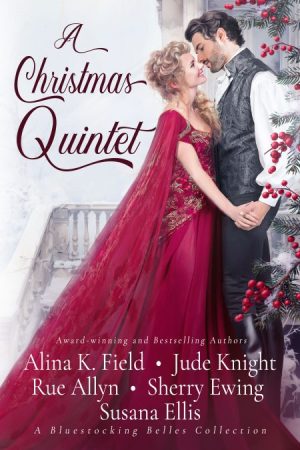
A Christmas Quintet: A Bluestocking Belles Collection + Giveaway

The Bluestocking Belles have produced a new set of Christmas stories for your holiday enjoyment! They include:

  • Friends to Lovers—The farmer’s daughter, the viscount’s son, and the estate manager reunite as adults. Della is starry-eyed for the viscount’s son, but is he really the one for her? (Regency, Christmas)
  • Fake Relationship—When the pressure to marry is overwhelming, can a plan put in place at a Christmas house party turn into a love that will last forever? (Regency, Christmas)
  • Second-Chance Love—An accident leaves the modiste burned, blinded and in despair until the physician offers hope and stirs memories. (Regency, Christmas)
  • Country Mouse and Marriage-Shy Duke—Invited at the last minute to make up the numbers, she expects to be an interested observer. The duke has other ideas. (Georgian, Twelfth Night)
  • Two Spies, One Secret—Trapped in a deserted wilderness, will they set aside secrets and past betrayals to rekindle their love and ring in the New Year together? (Medieval, Hogmanay)

Away From the Holiday Crowd by Sherry Ewing

When the pressure to marry is overwhelming, can one Christmas house party provide a love that will last forever?

David Chadwick, Marquis of Lockhart feels burdened by his title’s responsibilities. Heir to a duchy, he knows he must marry but seeks a genuine connection beyond wealth and status.  A chance encounter by the lake with his neighbor’s eldest daughter opens his eyes to the possibilities that might blossom between them.

Lady Elinor Lacey has yet to find a man she would consider for her husband. But time is running out when her father demands she pick an eligible lord by Christmas. When the Marquis of Lockhart shows up at the edge of their property, she sees him in an entirely new light, giving her hope.

Their conversation becomes easier the longer they converse. David and Elinor begin concocting a plan to give them more time to find their perfect match. What could possibly go wrong? But as love begins to enter the picture, can the two of them go beyond their original plan and let love into their hearts?

Should Auld Acquaintance Be Forgot? by Alina K. Field

Dreading meeting an old enemy at a Yuletide house party, Madame Marie La Fanelle, an acclaimed London modiste, has a clumsy encounter with a lamp that leaves her burned, blinded, and in terror of the future. 

But then a kind German physician appears, offering a hopeful diagnosis, and stirring memories of the man she once loved. Can the magic of the holidays heal Marie’s blindness and soften the hardened hearts of two prideful lovers?

Maryann and the Twelfth Knight by Jude Knight

Maryanne is only at the house party as chaperone for her half-sister. She is far too old and insignificant to attract the attention of a duke. Or, at least, if he is pursuing her it cannot be for honorable purposes.

Dell knows it is time to take a wife, but the offerings of the marriage mart bore him to tears. The only lady of interest at his sister’s house party is the spinster chaperone. But she isn’t eligible, is she?

Her Hogmanay Spy by Rue Allyn

In the winter of 1296, can a Scottish Lady and an English knight survive shipwreck, winter in the wilderness, and a betrayal that could break hearts to bring in the new year with a love for all time?

Excerpt: Della’s Christmas Gift by Susana Ellis

Paget House

Ibstock, Leicestershire

15 September 1801

“LAUD’S HEIR RETURNS FROM GRAND TOUR. In search of wife, says reputable source.”

Della’s brother threw down the latest copy of The Teatime Tattler and snickered. “Poor sod’s too young for a leg-shackle. Doubtless Lady Laud’s pressing for grandchildren. Mothers!”

Their father lifted an eyebrow. “If your mother were still alive, you’d be wed by now, Thomas. I suppose I’ve been negligent on that front. You’re what, thirty now? Ought to be settled down.”

Thomas’s fork clattered when it hit his plate. “And who would I marry? Some farm girl like Della here? If I were a banker’s son I could look higher.”

Della winced and her father’s face turned red. “THOMAS! Apologize to your sister this instant!”

“Sorry,” he mumbled. But Della could tell he wasn’t sincere, even before he added, “But dammit, she should be wed by now too. But what choices does she have, as a farmer’s daughter? We should all be better off if we sold out and went into banking.”

Thomas Sr. pounded the table hard enough to rattle his plate. “ENOUGH!”

Both of his offspring stiffened and stared at him incredulously. Their father rarely lost his temper, and never at the breakfast table. But there had been more than a few arguments recently, Della mused. 

“This farm has provided you an easy life, Thomas. You’ve been handed everything you need and want, even a chance for a superior education at Cambridge, which you squandered by neglecting your studies in favor of—er—” he swallowed as he glanced at Della  “studies of a different sort.”

Della snorted and promptly looked down at her lap when her father gave her a stern look. Well really. She was twenty years old, the same age as Thomas when he returned home from Cambridge in disgrace. Did they really believe she hadn’t heard all the stories about his misdeeds there? Rumors had been rife at the time, and although she might not have understand exactly what they meant at the age of ten, she had since apprehended them more clearly.

“I’m inclined to believe that this self-indulgent lifestyle you’ve embarked on can be attributed to the influence of the useless young lords with whom you caroused first at Harrow and then at Cambridge.” He shook his head. “Your mother would be ashamed, Thomas.”

His son had the decency to drop his chin. 

And well he should, thought Della. He’d had the good fortune to have had a mother, at least. She’d never had that opportunity, her mother having died at Della’s birth.

Their father pushed back his chair and rose from table. “Thomas, your jaunts to London and York and all points in between are now cancelled. Henceforth, you will spend your time at Paget & Sons, employed in furthering the interests of our sheep and cattle.” 

Folding his arms in front him, he glared at his son. “In case you’ve forgotten all you’ve been taught over the years, I’ll put the lad in charge to refresh your memory.”

With that, he marched out of the room.

Della giggled. The image of Thomas being bear-led around the farm by the much-younger estate manager seemed dubious at best.

He slapped the table. “It’s not funny! I don’t care a jot about sheep and cattle, and you all know it! Besides, I have a shooting party next week. It’s almost the end of the grouse season.”

Della’s hands curled up. “You should care. This farm will be yours someday! It’s in your own best interests to ensure its prosperity.”

Thomas’s lips curled. “It’s been losing money for years. By the time it comes down to me, it’ll be worth a pittance. Best to sell out now and put the capital where it can do some good.”

Tilting his head, he studied her with a gleam in his eye.

“If I’m not mistaken, you are out there with the cattle every day. And Kit too. Now there’s a match for you—the rustic farm girl and the penniless estate manager.”

Della tossed the remainder of her sausage at him. “You are horrid, Thomas.”

“And you’re a twit,” he threw back as he exited the room.

Della heaved a sigh. It wasn’t that she didn’t like Kit. He’d been one of her best friends forever. But as for marriage, she had something else in mind. 

Reaching for the Teatime Tattler, she smoothed her fingers over the headline. Toby was looking for a wife, was he? Well, she intended that he look no further than the neighboring estate.

Release Date: December 1, 2024

Preorder:

A Christmas Quintet Celebration Giveway

Mystery Box
8-1/2 x 6 x 2
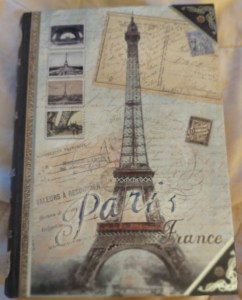
What’s in the box? Hints:
• something Christmas-connected
• something tea-connected
• 2 somethings France-connected
• 2 somethings writing-connected
And, of course, the box is a prize in itself!


Post your guesses here: https://www.facebook.com/susana.ellis.5/posts/pfbid0diGAkyzVa6nK42DAqRRDFqkgYGz6hQkU3q4wnacSCJVLaptZG6FroLdj1AfQeUql

Contest ends December 1, 2024. The entry with the most correct answers will win the prize. In the event of a tie, the winner will be chosen randomly.

About the Bluestocking Belles

The Bluestocking Belles (the “BellesInBlue”) are eight very different writers united by a love of history and a history of writing about love. From sweet to steamy, from light-hearted fun to dark tortured tales full of angst, from London ballrooms to country cottages to the sultan’s seraglio, one or more of us will have a tale to suit your tastes and mood.

Website: www.BluestockingBelles.net/

Newsletter: http://eepurl.com/dAJU_9

Teatime Tattler twice-weekly gossip magazine: https://bluestockingbelles.net/category/teatime-tattler/

Free books: https://bluestockingbelles.net/teatime-tattler-free-books/

Find buy links and story blurbs for all the following books on our website at https://bluestockingbelles.net/belles-joint-projects/
What’s a Pandora Doll? A Seamstress, A Soldier, and A Secret

Susana and her sisters have just discovered that they are going to participate in the Season in York, and they are excitedly planning how to manage wardrobes for the seven older girls when they have scarcely enough money for one. Thankfully, Susana is a quasi-professional dressmaker, and she can help them create a wardrobe that all can share with enough clever disguises.

“You know, Susana, I think there are some gowns and things of Mama’s up in the attic. Perhaps from our stepmothers as well, although I believe Martin removed his mother’s things for Chloe.”

“Well, he can just bring them right back, since our stepsister is to be presented too.” They knew Chloe well; she’d lived with them until her mother’s death, when her brother Martin and their guardian, their mother’s brother, took her in. She visited her half-sisters Emma and Merri occasionally. And Martin, relieved to have Patience take on Chloe’s presentation, had eagerly provided funds to pay for the ball. And her wardrobe, so that was one sister Susana did not have to clothe.

“Let’s take a look.”

It had been years since she had perused her mother’s things. Nine years since her death, when the maids had packed up her possessions and banished them to the attic. And fortunate indeed that they had made their way to Starbrook after the family had been exiled from the main house. No doubt the newest Lady Seahaven would have organized a bonfire for all of her predecessors’ belongings.

Not a nice thought, she chided herself. But it was hard to think well of the usurping Seaheavens, who had inherited and dislodged them from the home they had known all their lives.

Mama, she thought as they opened one of the chests that held her things. You were the same age as Barbara when you left us. How I wish you were still here.

The Lady Seahavens hadn’t moved much in society, as their thoughtless husband saw no need to take them along when he traveled to London, for Parliament, and other things. His ladies had no need of extravagant gowns. But they did socialize with the local gentry, so Doro and Susana did find a few of their mother’s evening gowns. Of course, they were nine years out of fashion, but Susana thought she could make them work with a few alterations. The trims were a bit worse for wear, but there might be a way to revive them.

“Oh, look at this!” 

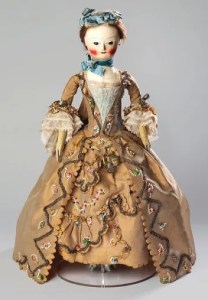
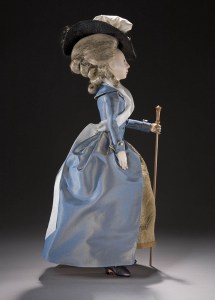
Doro held out a doll, about sixteen inches long, wrapped in delicate tissue paper. The head and body were carved of a single piece of wood; the legs were of wood too but separately attached to the torso. The upper arms were formed of stuffed linen, also attached to the torso, wooden lower arms and hands attached to those.

“I remember this!” cried Susana. “Mama showed it to me once and said it was made to resemble the Duchess of Devonshire. See the hairstyle and the wide bonnet! She has all the undergarments too! And the sash: she’s dressed for the 1784 election campaign. Mama said her grandfather had it made for her. It wasn’t a toy, though. It’s a Pandora. A fashion doll. That’s why she wouldn’t let me play with it.”

“It’s beautiful,” said Doro wistfully. “It shouldn’t be left in old trunk.”

“If we put it out somewhere, we’ll have to be sure Emma and Merri don’t get their hands on it.”

“And Jane,” Doro added absent-mindedly. “Look at the quality of the material—the stockings, the chemise, the petticoats. And there’s a corset too—looks exactly like the real thing!”

Susana ran her finger along the blue silk overdress. “The silk is very fine. I would say French, coming from that era.” She turned to the reverse side and gasped. “It’s English. It’s stamped Macclesfield Silks.”

Macclesfield Silks. Where Blaise had gone to work. With a man called Thomas Pemberton.

“Doro,” she said slowly. “What was our mother’s birth name?”

Doro squeezed her eyes shut. “We never met them, for some reason. Mama never spoke of them. I suppose they disapproved of her marriage, although most people would be over the clouds happy for their daughter to marry an earl.” She grabbed Susana’s arm. “Pemberton! Her name was Maryann Pemberton!”

Susana’s mouth fell open. Could it be true? She and Doro and Barbara related to the Thomas Pemberton of Macclesfield Silks?

“A cup of tea,” she said. “I need a cup of tea.”

Pandora Dolls

Many of you know that I collect fashion prints. I have a ton of them and love them all. But in the time prior to fashion prints, there were fashion dolls. One of them was called a Pandora.

How on earth was a fashionable lady in the 18th century able to keep up with the latest trends? The answer was the Pandora, or miniature dolls dressed up in the latest modes. Keep in mind, this was long before magazines were invented—and the first ones were incredibly rare and expensive, as they were hand-painted by groups of (probably shockingly underpaid) little girls and young women! Clothing was also far more expensive than it is today, so it was important to know all the details of the cut, colour and fabric that you wanted.

In 1712, when Britain and France were at war with each other, Pandora dolls were exempt from the ban on enemy imports, and even received a military escort! Marie-Antoinette, when preparing to go over to France from Austria, got sent a host of these dolls in different fabrics and fashions.

https://thatmuse.com/2019/11/08

Today, fashion victims use fashion magazines, shows etc. to become informed about fashion news. But what sources did they use in the 18 th century to catch the latest trends when none of these media existed? Long before the first Barbie appeared, there already existed a doll that wore lavish wardrobe and matching accessories but didn’t function as a toy at all. This paper examines how a doll called Pandora was sent abroad by French dressmakers to promote and sell Parisian fashion around the world. First, Pandora had to conquer the royal houses in Europe. Then, she made her way into the department stores and finally into the bourgeois home. Interestingly, her triumphal procession did not stop there: By the middle of the 18th century she had even crossed the Atlantic to be exhibited in Boston and New York….

The doll’s body and head were carved by hand from one piece of wood, which had been turned on a lathe. The legs were made separately and attached at the hips and knees to the Pandora’s body. The lower arms and hands were also crafted of wood; in contrast the upper arms were ‘[…] made of either soft linen fabric or kid leather, attached to the torso’. Most dolls had painted eyes, but some of them had sparkling glass eyes, which was more labour-intensive because for this purpose the doll maker had to carve diamond-shaped holes into the head and then inserted blown glass balls….

Furthermore, the fashion dolls all had either painted hair or wore wigs made of flax or wool. The hair of the dolls was designed to be worn in the popular style of the time because it was absolutely essential that besides wearing the right clothes, the Pandora had the latest hairstyle as well as accessories that matched her wardrobe. Interestingly, although most 18 th century dolls represented women or girls, there also existed male, boy and even infant dolls. Unfortunately, the vast majority of these fashion figures of the late 17 th and early 18 th century have not withstood the test of time. This is due to two reasons: Firstly, the unwieldy size of the dolls and secondly, the material that was used to make them….

An English 18th –century fashion doll in the Fashion Gallery at the V&A. There are 6 fashion dolls in the same room.

Intended as advertisement for the French fashion and the dressmakers, the dolls functioned as mannequins and were dressed in a petite-size version of everything a fashionable woman needed to wear, including the proper foundation garments, which meant that the Pandoras were outfitted head to toe and displayed the latest fashions concerning clothes and hairstyle. ‘By the seventeenth century, when these French figures were known as “Pandora,“the dressing of the head and hair was as important as the garment’. The doll’s outer garment was a dress made of highest quality cloth: linen, cotton, wool brocade or silk, followed by a petticoat or multiple layers of petticoats, which gave the dress or skirt the desired fashionable shape. The hoop petticoat or wicker, also known as panier, was part of the women’s underwear and consisted of a basket. ‘They [the petticoats] could get as wide as 18 feet (5 metres), and satirists talked of hoops of 7 or 8 yards (6 or 7 metres) wide’. The extremely wide framework of the hoop made it difficult for women to walk through the doors, sit down on a chair or in a coach. Some even wore a stomacher, which was in fashion throughout the 17 th and 18 th century in Europe and North America. The stomacher was a v-shaped piece of fabric made either of the same material as the dress or of contrasting materials. It was worn across the chest and stomach and embroidered or decorated with pearls or other gemstones. Other key characteristics of women’s clothing that were also part of the fashion dolls’ outfit were corsets and linen shifts. Knitted stockings, shoes, a muslin cap and jewellery often completed the outfit.

Another question is: who were the potential buyers of the fashion dolls? First, the dressmakers and tailors purchased the fashion doll. Above all the Pandoras functioned as display and show items. Since fashion was extremely expensive, the rich costumers wanted to have a look at what they were going to spend their money on….

The French doll makers received orders from all over the world, since almost every British women of that time wanted to have their one little mannequin to keep abreast with the latest Parisian fashion trends. In the Augustan Age it was very common not only to adopt the French customs, etiquette, lifestyle and manners but also the clothing fashions. It is remarkable how widely the dolls were distributed geographically in the 18 th century. They were not only dispatched throughout Europe but were also shipped across the Atlantic. Travelling around the world in the name of fashion, the Pandoras took over two functions: on the one hand, they were the ideal advertising vehicle for French fashion; on the other hand, they served as a kind of diplomatic representation of France. The fashion doll became one of the most important and popular French export goods.

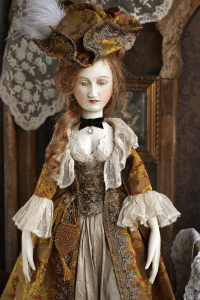
“New” Fashion Dolls on Etsy

And then I discovered that newly-created French court fashion dolls can be purchased on Etsy. You might have to sell your family heirlooms to buy them, but one can dream!


A Seamstress, A Soldier, and A Secret: Visiting a Historic Silk Mill in Macclesfield

When the Bluestocking Belles’ 2022 Desperate Daughters was published, it was missing a story by one of the strategic sisters. Readers noticed and expressed their concern about Lady Susana’s future. (Yes, she was named after me because I was the one who failed to write the story.) This situation made me very sad and last fall I finally wrote Susana’s story and we added it to the Belles’ original book. If you own it and haven’t read the story, you can go into your Kindle library and update it so that Susana’s story is included.  If you haven’t purchased that book yet, you can do so at any time and read all of the connected stories.

As of July 1, 2024, however, you can purchase A Seamstress, a Soldier, and a Secret separately from the original book, both digitally and in print.

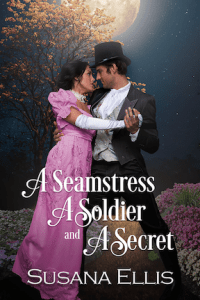
A Seamstress, a Soldier, and a Secret

As a gifted seamstress, Lady Susana Bigglesworth contributes to her family’s livelihood by working as a modiste in a haberdashery shop in Leeds, far away enough from her home in Harrogate to prevent tongues from wagging about an earl’s daughter being “in trade.”

Blaise Arquette returns from nearly two decades of fighting the French to discover a pretty young lady seamstress working in his brother’s haberdashery shop. Perhaps it’s a good thing she’s leaving for Harrogate and a Season in York, because, sadly, he has nothing to offer her.

A Trip to Macclesfield to Visit The Silk Museum

The city of Macclesfield, Cheshire and the silk industry play an important part in Susana’s story, so when I was in the UK this past May, I paid them a visit. Fascinating!

History of the Silk Industry in Macclesfield

Macclesfield was once the world’s biggest producer of finished silk. A domestic button industry had been established in the town by the mid-16th century, although the first mention of silk buttons is not until 1649. In the mid-18th century, when metal buttons became fashionable, the silk-button industry transitioned to silk manufacture in mills. Macclesfield’s first silk mill was founded by Charles Roe in 1743 or 1744. The mills were initially powered by water, and later by steam. There were 71 silk mills operating in 1832, employing 10,000 people, but a crash occurred in 1851 and many mill-workers emigrated to the American silk town of Paterson, New Jersey. (Wikipedia)

Paradise Mill and the Silk Museum

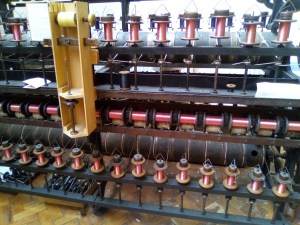
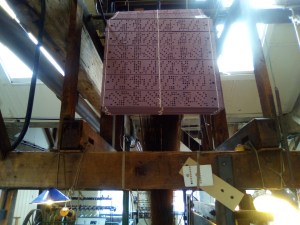
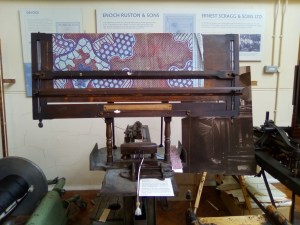
The Museum was great, but the guided tour of Paradise Mill next door was the best part of the excursion. Our tour guide showed us through the factory, from the spinning and winding machines to the looms and the (surprisingly) automated jacquard machines. Not only does she operate the looms and other machines, but she is also painstakingly refitting the machines that are currently inoperable.

Winding machine

These are the cards punched with holes that automate the design process of the jacquard silk

Jacquard designs

The hole punching machine used to create the cards for making jacquard silk

“Macclesfield Silks”

So now I can visualize the silk mill owned by the fictional Thomas Pemberton in A Seamstress, a Soldier, and a Secret. I might have to write more stories about silk and seamstresses and soldiers. We’ll see!

Regarding the Distribution of Regency Fashion Prints

Ladies’ publications such as La Belle Assemblée, Ladies Monthly Museum, Lady’s Magazine, etc. were not merely fashion-oriented. Each issue had one or two fashion prints, a portrait engraving of some celebrated person (usually a woman) and perhaps other illustrations. Ackermann’s Repository, which was for ladies and gentlemen both, also had prints of furniture, homes, inventions, etc. The remainder of the publication consisted of articles.

I am not aware of any publication that consisted only of fashion prints, although people could remove the fashion prints and have them bound up together. I have one of these myself.

Correction: The Journal des Dames et des Modes was a weekly publication and thus there were around 5-6 fashion prints per MONTH.

More commonly, people would collect individual issues and have them bound together. I have quite a few of those, occasionally with an issue or two missing. (Somebody’s dog probably ate it or something.) If these were in a Regency home, however, they would be up to a year old, which is a long time in terms of fashion.

It may seem nit-picky, but I twinge when I read a story where a lady picks up Ackermann’s and pages through the latest fashions. The latest Ackermann’s would have TWO fashion prints.

Just a friendly FYI.

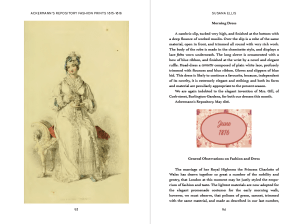
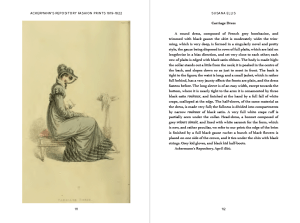
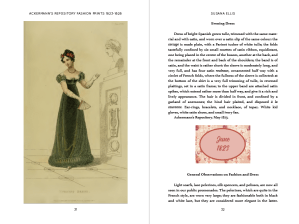
New Release: Ackermann’s Repository Fashion Prints: 1809-1828

It all started last winter when I decided to begin collecting fashion prints. Not just images of fashion prints on Pinterest, but real antique fashion prints. The images are pretty, but the thought of having the real piece of paper printed and hand-colored by people two hundred years ago gives me a thrill. I feel as though touching it makes me a part of history (although so far I haven’t been whisked back in time, unfortunately).

As more and more little packages began arriving from England, France, Australia, and the U.S., I started to lose track of which prints I already had, causing me to have a few duplicates. Scrivener, an application I use for writing projects, seemed an obvious choice for organizing my fashion prints. I simply grouped the scanned images into chapters by year, thus making it simple to refer to when considering the purchase of new prints.

But what I really wanted was some sort of reference book with all the prints and descriptions to use in my writing projects. Those I purchased online were beautiful and extremely well done, but they didn’t include them all. I wanted a book with them all. I didn’t realize at the time how large a book that would be, or that it was probably an impossible task. It didn’t matter. I wasn’t thinking of publishing a book or anything. I just wanted to have them on hand.

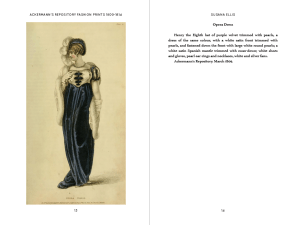
So I started with Ackermann’s Repository, because I knew where to download issues from all of its twenty years. It was tedious going, but it gave me something to do in the afternoons when Dad and I were watching TV (I’m a caregiver in the winter), and I had to be able to switch my attention off and on when he needed something. I went through every issue and screenshot the two prints from each issue as well as the descriptions and fashion commentary. And a few other things I found of interest there. (Someday I want to go through and read some of the other articles and stories as well.) I kept everything in folders by month and year, and eventually I started typing out the text and organizing it all in another Scrivener project. It turned out to be a HUGE project: 480 fashion prints and over 200,000 words. (Fortunately, I am a very fast typist.)

About halfway through, I began to think perhaps other authors might benefit from having this information. It wouldn’t take much to format it as an e-book. It didn’t occur to me to put it up for sale until later, when several authors assured me they would love to purchase it. And frankly, the process of formatting so many images and text turned out to be extremely time-consuming, even when my plan was for an e-book only. Charging a few dollars for such a comprehensive project seemed reasonable enough. Little did I know how large the book was going to be. 1462 pages, to be precise. Amazon warned me it was a big file. I hope the buyers don’t have problems with it.

Eventually I mentioned it at a Facebook party, and everyone kept asking if it was going to be in print. Well, I hadn’t thought of doing that right away, but as long as I had all the files, I thought I might as well look into it. And when I did, I had some surprises coming.

First of all, Createspace won’t print a 1462-page book. In fact, Createspace’s limit is 480 pages. So I had to break the book down into four parts: 1809-1814, 1815-1818, 1819-1822, 1823-1828. Four books, in addition to the original monstrously huge e-book. Four books is four times the amount of work, but oh well. I plugged away.

That leads to the second surprise. Color books of 300-400 pages are very expensive. The lowest price Createspace would allow me to set was $46+, with zero royalties. That pretty much floored me. Who’s going to pay $200 for four books? But hey, they were already done. I couldn’t stop now.

However, it occurred to me that many potential purchasers might not be that interested in the fashion commentary. What if I put together a print book with only the fashion prints? Since there were 480 prints alone, the minimum number of pages I needed was 492. Createspace only does a maximum of 480. So I decided to check out Ingram Spark. Ingram will publish a wider range of sizes and pages than Createspace, so I initiated the process. Ingram will do an e-book for the same price as a print book, so that’s how I ended up with another e-book (with the prints only) as well as another print book.

Seven. That’s seven versions in all. Does that sound excessive? Of course it does. But through it all, I learned so much. I hope historical fashion connoisseurs will find at least one of them useful.

And now… I think I better get back to writing stories.

P.S. I also created a Regency fashion print Facebook group. Here’s the link if you are interested: https://www.facebook.com/groups/2216340281934103.

Also, today at 4 p.m. EDT, I’m hosting a release party for my Ackermann books. If you’d like to attend, you must first join the group above, and then you’ll have access to the event. Guest authors include: Ella Quinn, Heather King, Caroline Warfield, Jude Knight, Louisa Cornell, Bluestocking Belles, Cora Lee, Cerise DeLand, Collette Cameron, Rue Allyn, Lizzi Tremayne, Victoria Vane, Elizabeth Ellen Carter, Aileen Fish, and Sherry Ewing. Will I see you there?

Fashion Prints with Commentary

Digital

ISBN: 978-1-945503-02-3

$7.99

AmazonKoboiBooks

Print

ISBN: 978-1-945503-03-0

$49.99 (374 pp)

Ackermann’s Fashion Prints 1809-1814 (Vol. 1)

ISBN: 978-1-945503-04-7

$49.99 (360 pp)

Ackermann’s Fashion Prints 1815-1818 (Vol. 2)

ISBN: 978-1-945503-05-4

$49.99 (364 pp)

Ackermann’s Fashion Prints 1819-1822 (Vol. 3)

ISBN: 978-1-945503-06-1

$52.99 (408 pp)

Ackermann’s Fashion Prints 1823-1828 (Vol. 4)

Fashion Prints without Commentary

Digital

ISBN: 978-1-945503-08-5

$7.99

Amazon • B&N • iBooks • Kobo

Print

ISBN: 978-1-945503-07-8

$34.99 (496 pp)

Amazon Barnes & Noble


Chatsworth: A Grand House, To Be Sure, But Would You Wish to Live There?

Charming Chatsworth

Since reading Amanda Foreman’s Georgiana, Duchess of Devonshire, which includes much of the infamous duchess’s letters and journal entries, I’ve been fascinated by the Devonshire family. The only thing missing among the highly dramatic history of this noble, highly-esteemed family—possibly the wealthiest in England in the Georgian era—is a happy ending. The Devonshires of this period are prime examples of failed British aristocratic marriage and family values. With a seemingly endless source of income and the highest social status, why were these people so desperately unhappy?

It also begs the question that if we all truly believe that money and possessions not only do not make us happy but tend to bring along with them worries and responsibilities to weigh us down, then why do so many of us never seem to have enough? How much is enough? A comfortable life with enough income to cover the bills sounds reasonable. But does that mean stately homes, expensive cars, and a yacht to sail around the world? If you have that, would you be satisfied, or would you yearn for even more? If the billionaires of this world were truly happy, then why do they keep going after more and more? What do you do with a billion dollars anyway, especially with tax loopholes that the ordinary citizen does not enjoy? In the end, do you get a solid gold casket or something? Do you get special privileges in heaven?

Enough preaching. I wanted to write about my Chatsworth experiences this week. Yes, there are lessons to be learned. Unfortunately, most people aren’t inclined to learn from the past, and thus we keep making the same mistakes over and over.

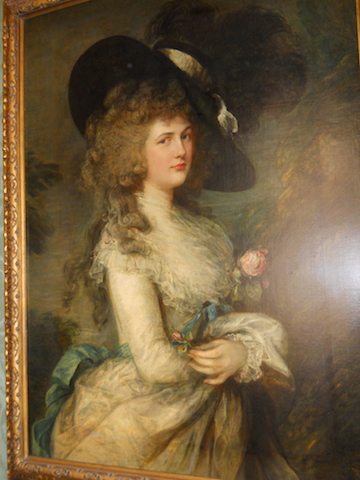
Georgiana, Duchess of Devonshire

Georgiana Cavendish, Duchess of Devonshire

Georgiana Cavendish, Duchess of Devonshire

Pronounced George-ayna, by the way. Georgiana was the oldest daughter of the First Earl Spencer and his wife, also Georgiana. The Earl and his wife were childhood sweethearts. If you visit Spencer House on St. James Place in London (see my Pinterest board here), you will be told about their great love and shown all sorts of decorative features that proclaim their love match. It truly warms the heart of a romance addict. Except that…it doesn’t ring true when you realize they subjected their beloved seventeen-year-old daughter to a loveless marriage that brought her much unhappiness. What went wrong?

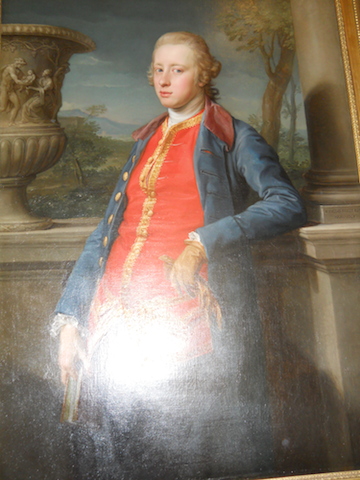
Well, perhaps it wasn’t entirely their fault. Young Georgiana probably thought it was a dream come true to marry the richest man in England who also happened to be a duke (the 5th Duke of Devonshire). It must have been a shock, though, to discover that her husband had no intention of being faithful, that even at the time of their marriage, his mistress gave birth to an illegitimate daughter who was eventually brought into the Devonshire family to be raised after her mother died. Georgiana herself found it difficult to conceive and suffered miscarriages before producing three children, two daughters, and finally a son, sixteen years after her marriage.

William Cavendish, 5th Duke of Devonshire

William Cavendish, 5th Duke of Devonshire

Georgiana enjoyed her life as a leading lady of fashion and politics in the ton. A friend of Queen Marie Antoinette of France, they copied each other’s fashions, including excessively tall hairstyles and large hats. Georgiana was also a leader of the Whig movement, hosting popular salons at Devonshire House in London for all the prominent Whigs of the time. (See a blog post here about her political exploits.) But with all this, she wasn’t happy. She spent lavishly, and gambled excessively (see post about her gambling exploits here), to the point where even the coffers of the richest man in England were seriously threatened. Her mother, the Countess Spencer—who also gambled beyond her means, particularly after her beloved husband died—warned her to be honest with her husband and to be more prudent in her gambling. Didn’t happen. The duke only found out the truth about her debts after her death. I guess they didn’t have Gamblers Anonymous in those days, or they’d know an addict isn’t able to manage his addiction prudently without giving it up entirely.

Georgiana seemed to have everything, and yet, she didn’t. Desperate for a close friend, when she met Lady Elizabeth Foster, who was separated from her husband and sons and seemingly destitute, Georgiana insisted she reside with them, and so began the ménage à trois. Lady Foster bore Georgiana’s husband two illegitimate children, who were brought up in the Devonshire home with their half-siblings, and Georgiana didn’t seem to mind. She and Bess were the best of friends, although many, including Lady Spencer, believed Bess to be a con-artist of the worst kind.

Charles Grey, 2nd Earl Grey and later Prime Minister

Charles Grey, 2nd Earl Grey and later Prime Minister

After the birth of her son, who later became the 6th Duke, Georgiana felt free to have love affairs of her own. She fell in love with Charles Grey, later to become an earl and a prime minister, and bore him a daughter, who was raised by the child’s paternal grandparents. Her husband was enraged and exiled Georgiana to France for three years, during which time she worried that her son would never know her. (Okay, the duke was a man of his time and perhaps not so terrible as he seems today, but punishing his wife for something he’d been doing for all their marriage just does not give a good impression of his character. Maybe it’s just me?)

Georgiana died in 1806 at 48 of a liver abscess (an eerie coincidence since I had this same affliction last fall, but am completely healed, thank heavens), and three years later, Lady Foster married the duke and became the second duchess, whereupon she admitted the paternity of her two illegitimate children and demanded that the duke provide for them as handsomely (or more so) as his legitimate children. (No, I don’t like her. Can you tell?)

Elizabeth Cavendish, second wife of the 5th Duke of Devonshire

Elizabeth Cavendish, second wife of the 5th Duke of Devonshire

The 6th Duke

Georgiana’s son was sixteen when his mother died and twenty-one when his father died and he inherited. He was active in Whig politics, but his special interest was landscaping and architecture. He had a north wing added to the house and an extensive renovation of the gardens. He spent lavishly to improve the property, which at that time included about 83,000 acres. William never married, having courted Georgiana’s sister’s daughter, Lady Caroline Ponsonby (yes, the one who went nutso over Lord Byron) and lost her to William Lamb, who undoubtedly regretted his marriage in retrospect. Perhaps His Grace realized his good fortunate in escaping a miserable marriage and couldn’t bring himself to risk it again. Certainly the marriages in his own family must have given him quite a few qualms!

The Devonshire Arms

The Devonshire Arms

The Devonshire Arms

Described as “a picturesque country pub at the heart of village life, offering the charm and character of an historic inn with a contemporary twist,” the Devonshire Arms offers comfortable rooms, superb food, and a quaint, medieval building that won’t fail to inspire any dedicated history lovers who book rooms here. Check out my Pinterest board here. And the village of Beeley is equally charming.

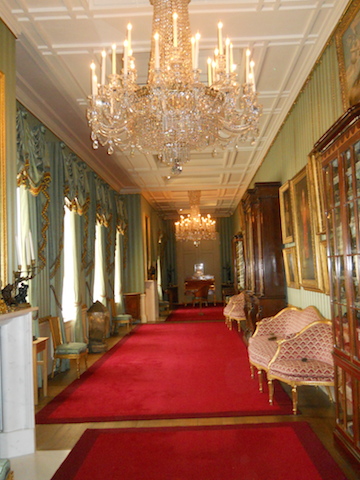
Chatsworth

Chatsworth is such a beautiful place, filled with such priceless art and furnishings (see Pinterest board here), that one can’t quite understand how so many of its inhabitants, possessed of great wealth and just about anything they wished, were so obviously unhappy. I thought about this a great deal as I took my time touring the rooms and listening to the audioguide, and even as I walked among the rolling hills and sheep from my lodgings to the house. So much beauty and wealth, and yet, I am not envious. At this point in my life, I don’t aspire to such heavy responsibilities, no matter the grandeur and glamorous lifestyle. It is enough for me to have the privilege of seeing it and experiencing it this one time.

Lovely ceilings throughout the house

Lovely ceilings throughout the house

Sketches Room (my favorite)

Sketches Room (my favorite)

Countess Spencer, Georgiana's mother

Countess Spencer, Georgiana’s mother

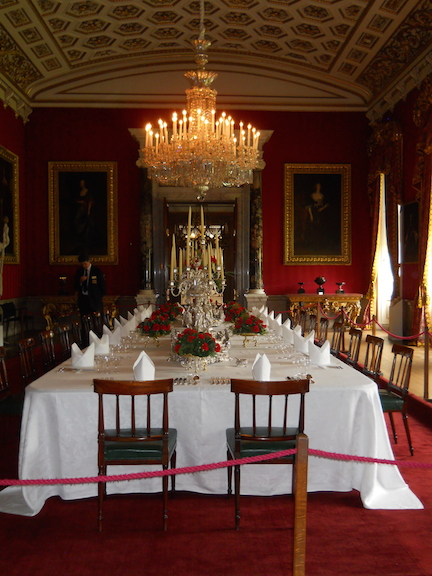
Dining Room

Dining Room

Devonshire family portraits

Devonshire family portraits

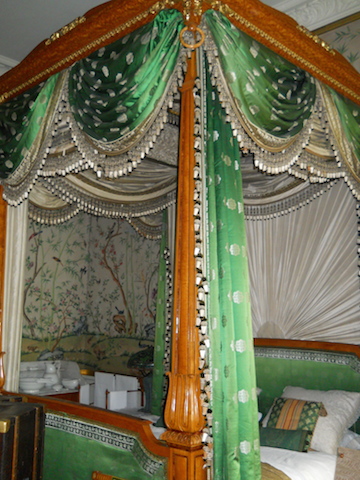
Wellington Bedroom

Wellington Bedroom

On With the New: Wall sculpture of DNA maps of current Devonshire family

On With the New: Wall sculpture of DNA maps of current Devonshire family

What do you think? Would you like to live the life of a wealthy celebrity? I’m curious to know if others feel as I do that “enough is enough”, and that happiness is not found in great wealth and possessions.

The Rise and Fall of Beau Brummell

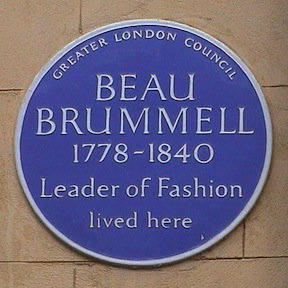
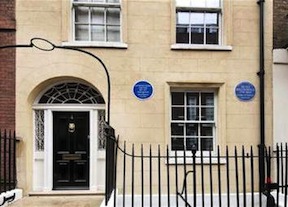
The epitome of a Regency dandy was a young man by the name of George Brummell. George did not grow up in the lap of luxury—his grandfather was rumored to be a personal servant—but his father was secretary to Lord North, and he was sent to Eton at the age of twelve in 1790, where he became very popular. Because of his attention to fashion and grooming, it wasn’t long before he became a great friend of the Prince Regent, who, in 1794, gave him a commission in his own regiment, the 10th Hussars. Brummell, nicknamed “Buck” by his intimates, spent most of his time on military leave, until he inherited 30,000 pounds and resigned, setting up his own household in 1798 at No. 4 Chesterfield Street.

BEAUBRUMMELL copy

Brummell decreed that cut and fit in a gentleman’s clothing were more important than elaborate fabrics. His insistence on cleanliness had the effect of pulling English gentlemen out of the stables and into the baths, and then poured into closely-fitting, well-cut clothing, including snow-white neckcloths tied into elaborate knots, smoothly shaved faces, and hair that required three hairdressers—one for the front, one for the sides and one for the back.

“The Beau” was known for his audacious wit and his condescending comments centering on the bad taste of others, men and women alike. A set-down from him could ruin a young person’s reputation and send them running from London in shame. Brummell and his dandies made it unfashionable to show emotion or any concern for the consequences of their actions. Although he had no social standing of his own, he had even the highest-ranked gentlemen admiring and copying his dress and behavior. Along with Lord Alvanley, Henry Pierpont and Henry Mildmay, he was part of the “Dandy Club” of Watier’s.

Unfortunately, Brummell’s extravagance, gambling and sharp tongue also led to his downfall. In 1813 at a party, the Prince Regent snubbed Brummell and Mildmay, staring them in the face while refusing to speak to them. Brummell quipped to Alvanley, “Who is your fat friend?” and that was the beginning of the end for Brummell.

In 1816 he fled to Calais where he lived in poverty until his death of syphilis in 1840.

londonrem

#4 chesterfield st.

No. 4 Chesterfield Street

Laudermilk, Sharon H. and Hamlin, Theresa L., The Regency Companion, Garland Publishing, 1989.

The Regency Gentleman series

The Regency Gentleman: His Upbringing

The Fashionable Gentleman

The Rise and Fall of Beau Brummell 

Gentlemen’s Clubs in Regency London

Captain Who?

Gentlemen’s Sports in the Regency

The Gentleman’s Passion for Horses

Riding to the Hounds

The Regency Gentleman’s Passion for the Turf

The Fashionable Gentleman

complete

Regency gentlemen had a serious obsession with fashion, especially after Beau Brummell arrived on the London scene. More about him next week.

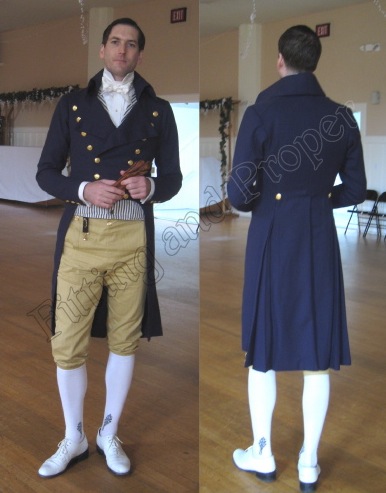
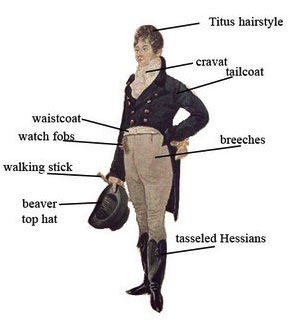
During the Regency, knee breeches gave rise to trousers, although it was a good long time before trousers were accepted at Almack’s Assembly Rooms. By 1816, after Brummell’s flight to the continent, trousers became all the rage, with breeches reserved for very formal occasions (except for older gentlemen who did not adapt well to change).

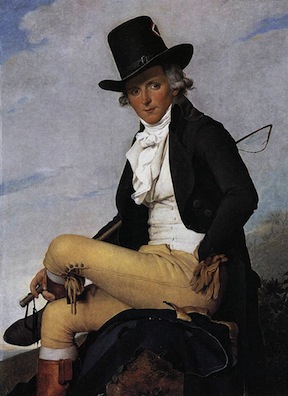
Pantaloons and trousers were made of light colors, such as buff or yellow, and clung tightly to the body. Pantaloons had side slits with buttons to keep them tight, and straps under the instep to keep them in place.

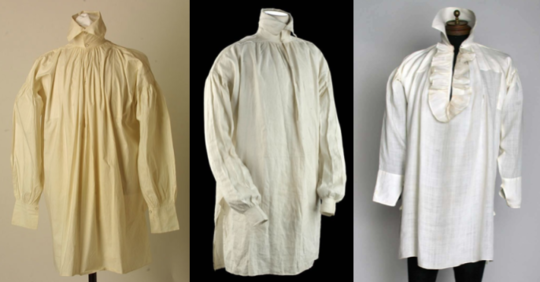
shirts

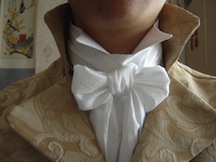
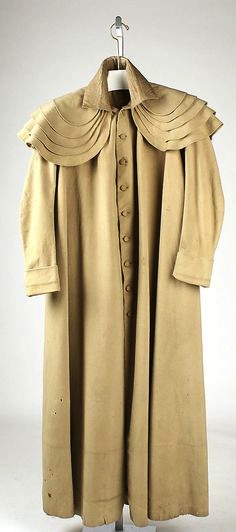
A gentleman’s shirt tended to be long, shapeless, and white. Over the shirt would go the waistcoat (white for evening wear, colorful and eye-catching for day wear). An elaborately-tied cravat would spill over the shirt and waistcoat. Over that would be a dress coat with tails—cut in a straight line from the waist down), or a morning coat or riding coat, which also sported tails, but was cut away in front. Following Waterloo, a frock coat with a military design became popular for informal occasions. Over all of this would be a great coat, worn all year round, often with capes of various lengths along the top.

cravat

greatcoat

greatcoat

morning coat or riding coat

morning coat or riding coat

Black boots were the daytime shoes of choice for a Regency gentleman, particularly Hessians, which were knee boots that sported a tassle in front. Hessians were worn over the trousers, but at the end of the Regency, Wellington boots, which were worn under breeches, which were tied at the foot, became popular. For evening wear, black pumps—perhaps made of the new patent leather—and silk stockings were worn. Hoby was the bootmaker of choice.

Regency gentlemen wore top hats of various shapes and sizes, and hats made of beaver were quite popular. Lock’s was the hatter of choice for the exclusive Regency gentleman. Gloves, jewelry (cravat pins, rings, and fobs), snuff boxes, quizzing glasses, and scents were also important to a gentleman’s toilette. Thanks to Beau Brummell’s fastidious cleanliness, bathing also become de rigueur in the Regency.

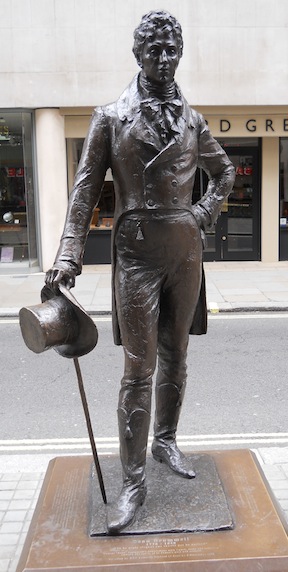
Beau Brummell

Beau Brummell

Just as Regency ladies required a personal maid or abigail to assist them with dressing and care for their wardrobe, gentlemen required the services of a valet.

For further information:

Kristen Koster

Laudermilk, Sharon H. and Hamlin, Theresa L., The Regency Companion, Garland Publishing, 1989.

The Regency Gentleman series

The Regency Gentleman: His Upbringing

The Fashionable Gentleman

The Rise and Fall of Beau Brummell 

Gentlemen’s Clubs in Regency London

Captain Who?

Gentlemen’s Sports in the Regency

The Gentleman’s Passion for Horses

Riding to the Hounds

The Regency Gentleman’s Passion for the Turf

Regency Rites: The Well-Dressed Regency Lady

gowns

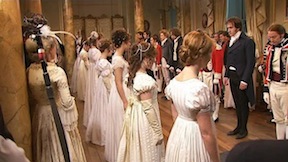
By the early nineteenth century, imitation of the classical was the rage in Europe, in architecture as well as fashion. Ladies’ gowns became simpler, with low necklines and ribbons tied beneath the bust, usually white due to a mistaken belief that the white marble statues being excavated in Greece were the original color. (They weren’t; the original brightly-colored paint had worn off.) Napoleon preferred ladies in white, and even though Britain and France were at war during this time, French fashions were all the rage.

Thin fabrics were de rigueur, muslin being the most popular, followed by silks and satins. As the new century progressed into the Regency and beyond, ladies’ gowns became more ornate, with another gown worn over the classical one, either a shorter length or with the front panels open to reveal the under-dress. Trims became more and more ornate, with ribbons, bows, and furbelows everywhere; collars of Elizabethan lace took the stage. By 1815, colored and grander fabrics were back.

Wardrobe

A fashionable lady had an extensive dress wardrobe, including:

  • carriage dresses

  • court dresses

  • dinner dresses

  • evening dresses

  • full evening dresses

  • garden dresses

  • morning dresses (also called “undress”)

  • opera dresses

  • promenade dresses

  • riding dresses

  • theater dresses

  • walking dresses

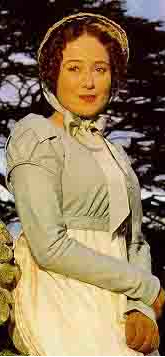
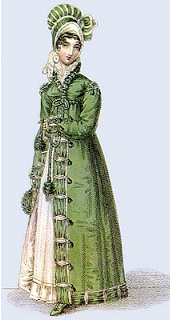
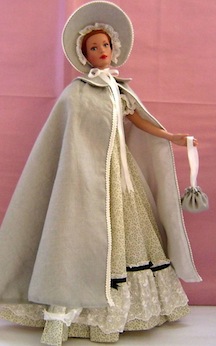
 Even in the dead of winter, many ladies would rather shiver in their flimsy gowns than be so unfashionable as to wear a heavy wrap. However, they did have shawls—Kashmir shawls had the advantage of being both light and warm—and various types of coats and jackets. A pelisse was an elegant overdress with long sleeves that buttoned down the front. A mantle was a rectangular fabric gathered at the neck. A spencer was simply a short jacket that reached the waist of the gown. Cloaks were often lined and/or trimmed with fur.

spencer
Lizzie wears a spencer over her dress.
pelisse
A pelisse à la militaire
mantle_reticule
The lady wears a mantle and carries a reticule.

For the most part, shoes in this period were “straights,” meaning there was no left or right shoe. Pumps made of embellished kid called slippers were very popular. Ladies had half-boots for walking, and stout boots for cold weather might be fur-lined. White silk hose tied at the knee (or later, the thigh) were often decorated with flowers or bowknots.

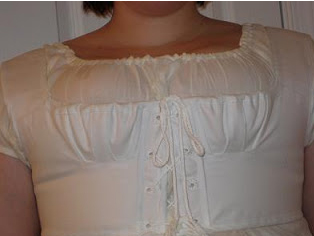
short corset common in the Regency

Under-drawers were not widely worn until after the Regency, around 1820. Short corsets with shaped cups for the breasts were common, although longer corsets were available to assist those with problem figures. A petticoat called a chemise was worn under the gown.

Hats & Accessories

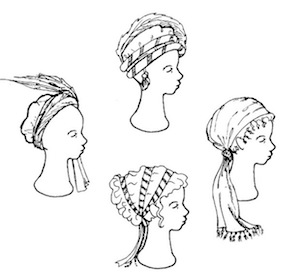
Smaller, simpler bonnets gradually became more ornate, constructed with straw, velvet, satin, and crepe, trimmed with ribbons, ostrich plumes, and fabrics. Decorated caps (undress bonnets) of lace or satin were worn indoors and outdoors in informal settings. Turbans of various styles were popular for full-dress occasions.

turbans
Various styles of turbans popular in the Regency

A fashionable lady had ribbons, jewels, combs, plumes, and hairpieces to dress up her hair for elegant evenings. Gone was the “big hair” of the previous century that towered so high that once a lady’s hair caught fire from the chandelier (Georgiana, Duchess of Devonshire). Classical hairstyles to match the classical gowns were “in”, and short, cropped hair, à la Titus, was popular through 1810.

fans

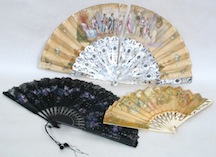
Fans made of ivory with silk, gauze, or lace were another important accessory for every occasion. Every young lady learned the “language of the fan” in order to convey social messages without having to be rude. There were different fans for different occasions, and some were jeweled and hand-painted.

As for jewelry, simple gold crosses expanded to jeweled necklaces, bracelets, tiaras, and even elaborate clasps on shawls and wraps. Silk parasols, often decorated with fringe, were required during outdoor activities in order to prevent the development of freckles. A reticule, or ridicule, was a small bag often made with fabric from a gown used for carrying coins and items formerly carried in pockets.

parasol

A Lady’s Maid

A lady’s maid or abigail was necessary for such things as caring for clothing, preparing baths, dressing (gowns usually fastened in the back), and doing hair. She also accompanied her mistress while shopping and walking; young, unmarried ladies were not allowed out without chaperones, at least not while in the city.

Shopping!!!

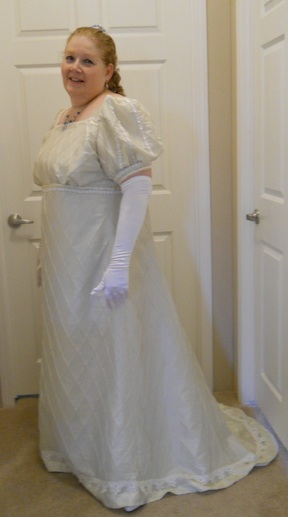
One of my favorite scenes in Regency stories is when the ladies go shopping. After having my own Regency gown and pelisse made for me this year (by my own very talented mother), I wasn’t all that keen on the frequent fittings. And not being able to get in and out of my gown without assistance. But I LOVE feeling like a princess when I wear it!

Of course, having a gown made this way is a great deal more complicated—and expensive—than buying one in a department store. But then, the dress you end up with is uniquely yours by the time you add the trim and embellishments—you’re not likely to ever see anyone else wearing it.

Would you ever consider having a period gown made up like this? Where would you wear it?

Click here to see photos of my Regency outfit.

 The Regency Companion, Sharon Laudermilk and Theresa L. Hamlin, Garland Publishing, Inc., 1989, pp. 30-48.

The Regency Rites series

Regency Rites: The Well-Dressed Regency Lady 

Regency Rites: Presentation at Court

Regency Rites: Almack’s Assembly Rooms 

Regency Rites: The London Season

The Dress: Episode #3

In Kansas City at the Romantic Times Convention!

We did it!

The dress and coat are both done, no thanks to me since I got sick the last couple of days and couldn’t even help with the handwork. The best I could do was show up for fittings, pose for pictures, and eventually, pack up the car for the 1200-mile trip from the Florida retirement community to Kansas City. I still feel a bit like the wicked stepsister, taking off for the ball while leaving Cinderella at home to prepare two houses (mine and hers) for the summer while we head back to Ohio. I seriously owe you, Mom!

gown427-4My mom’s a genius! Not only did she do a fantastic job on both garments, but she sewed on hanger loops and outfitted me with a needle and thread in case something goes wrong. She really deserves to be here at RT on Wednesday night when I wear it to the Ellora’s Cave disco party (not going to do any disco dancing, however) and the 30th Anniversary Ball on Thursday. I’ve promised photos, and they’ll be posted here as well.

Observations on the entire process

  • This is not a project for an amateur. I could never have done this myself, and I do have some sewing experience. The fitted bodice required a LOT of pattern alterations, since we couldn’t use any sort of stretchy fabric and still remain anywhere close to authentic.
  • The gown my sister had made had two separate drawstrings in the bodice to make it more fitted, since she was not available for fittings. That turned out well, but I’m not sure that would have worked well with the pattern we used.
  • We had to fudge on the back closings, since we could not get the eyehole punch to work through two layers of fabric and interfacing. In the end, we used hooks and eyes and snaps, and yes, I do need a lady’s maid to help me into it. (Any volunteers?)

How much did I spend on this project?

  • As to that, I’m not sure I really want to know. The most costly trip to Jo-Ann’s was $143, and that was mostly for the fabric and lining (for both the gown and the coat). The price for the trim and lace was another $100 or so (and totally worth it, I think you will agree), and there were several other trips to Jo-Ann’s in various towns for things like interfacing and other sewing notions. A few things (like the eyehole punch) got returned too, so I can’t tell you the final cost. But I would guess it was at least $350, and that does NOT include the hours and hours my mother put into it. But that’s not all! I also invested a considerable sum in accessories, including:
  • Regency slippers with “diamond” clips, plus clockwork stockings, from American Duchess
  • ringlet hairpiece
  • three different tiaras (couldn’t make up my mind)
  • long white gloves
  • brooch to wear with the coat
  • special “undies” (not authentic, but who’s going to know?)

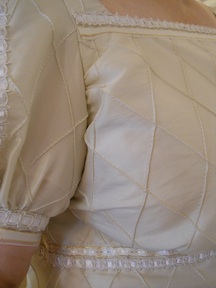
gown_detailBut it’s not about the money.

It’s never been about the money.

It started with my friend Ellen’s idea for promoting Susana Ellis the author at conferences like this one (although I suspect that I will not be the only one in costume here.) But it became so much more than that. I never could have guessed how much my mother and I bonded during this process—from the first days of discussing the project to the difficult decisions about fabric choice (would you believe we originally intended the blue satin to be the gown and the cream pintuck taffeta to be the coat?) and many setbacks (like when the sleeve had to be redone and then we had to abandon the project for a few days to head north for a funeral) and wondering if it was possible to finish both garments in time for the conference.

Surprisingly, even my father became invested in this project. During the times when he seemed to have some health setbacks himself and Mom started worrying about having to head north earlier than planned and not being able to finish the coat, he told her to quit worrying about him and just finish it! He wanted to see the final product as much as we did, and thus, he started working harder at his physical therapy exercises (he has Parkinson’s).

Today’s the day!

I’m writing this on Wednesday, so by the time this goes live, the first event (the Ellora’s Cave disco party) will be over and hopefully I will have some photos to post. I’m planning to wear the gown for a Club RT appearance at 3:30, and then comes the stage walk with the Ellora’s Cave caveman. Oh yeah!

Click here for the video of the walk across the stage!

coat427-3On Thursday I’ll be wearing it for the Expo from 4-6 and then the RT ball in the evening. On Friday morning I have another appearance at Club RT. By then I’m sure it’ll be ready for the dry cleaner’s and the next opportunity, probably the RWA Conference in Atlanta.

If you are going to be at any of these events, please come up and chat with me and check out the gown in person. I’m looking forward to making lots of reader-author friends while I’m here, and I do hope you will be one of them! Warning: don’t be surprised if I ask you to be “lady’s maid” for me! Regency ball gowns were generally worn by well-off young ladies with abigails to assist them in dressing, and unfortunately, my first choice in lady’s maids—my sister Gloria—had to stay home with her cat. Where is a hunky Ellora’s Cave caveman when you need one?

Oh, and in case you’re wondering: Mom is NOT interested in taking this up as a profession or a hobby. Being retired in itself is a very time-consuming activity. Once is enough…and I’m the lucky one!

The Dress: Episode #1

The Dress: Episode #2