Archives

Susana’s Adventures in England: Lyme Park

lyme_park_2

Lyme Park has been in the possession of the Legh family for 550 years. The manor was granted to the first Piers Legh and his wife Margaret in 1398 by Richard II, son of the Black Prince, as a reward for the heroic deeds in battle of her grandfather, Sir Thomas Danyers. The Leghs themselves campaigned in many 15th and 16th century battles.

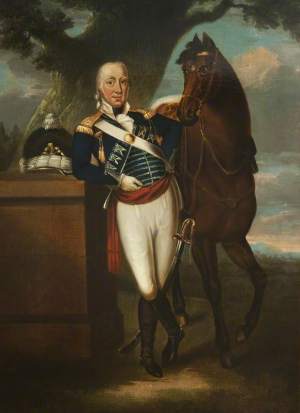
Colonel Thomas Peter Legh

Craik; Colonel Thomas Peter Legh (1753-1797) of Lyme Park; Duke of Lancaster's Own Yeomanry Museum; http://www.artuk.org/artworks/colonel-thomas-peter-legh-17531797-of-lyme-park-150355

Colonel Thomas Peter Legh (1753-1797) of Lyme Park

From Lyme Park House & Garden, a National Trust Publication:

He was best known for having raised six troops of cavalry in fourteen days in 1794—following Pitt’s call to arms in the face of increasing trouble in Europe—and for having sired seven children by seven different women, none of whom was his wife.

He left the estate to his oldest natural son, Thomas.

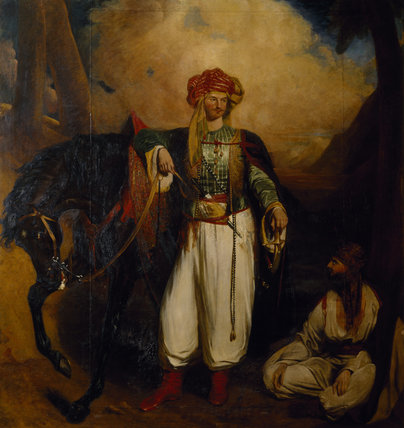
Thomas Legh

Thomas Legh

Thomas Legh

Thomas Legh, who inherited Lyme in 1797, was one of the most remarkable members of the family. By the time he came of age in 1814 he had already followed the Nile into parts of Nubia previously unexplored by Europeans, and the following year he was present at the Battle of Waterloo. He also became a well-known Egyptologist and collector of antiquities, modernised the estate farms, exploited the industrial potential of his Lancashire lands and had Lyme itself restored and extensively, but sympathetically, altered by Lewis Wyatt.

The House

The Stag Parlour

The Stag Parlour

The Leghs were notoriously fond of hunting the red deer indigenous to Lyme Park, which is no doubt the reason they made it their primary home from the late 16th century on.

The architectural style of the house varies from Elizabethan-Jacobean to Italian Palladian and baroque.

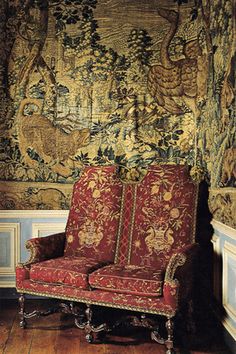
Unusual settee in the Yellow Bedroom

Unusual settee in the Yellow Bedroom

The exterior of the house was used as Pemberley in the 1995 BBC adaptation of Pride and Prejudice.

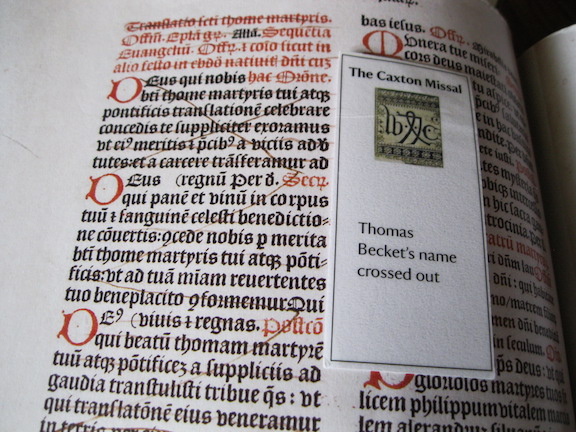
The Lyme Caxton Missal

caxtonmissal-copy

The Leghs were Roman Catholic supporters of the Stuarts in the 18th century. The missal they owned was an early printed book containing the liturgy of the mass according to the Sarum Rite, published by William Caxton in 1487. It is the only nearly complete surviving copy of its earliest known edition.

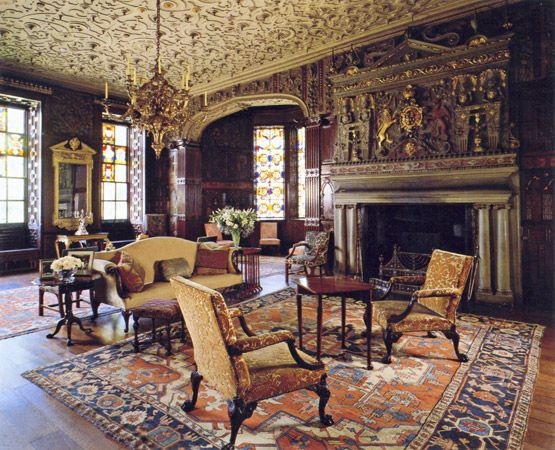
Drawing Room

Drawing Room


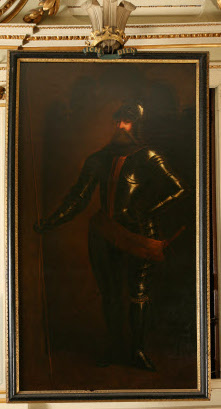
Prince Edward, Prince of Wales, `The Black Prince

Prince Edward, Prince of Wales, ‘The Black Prince’


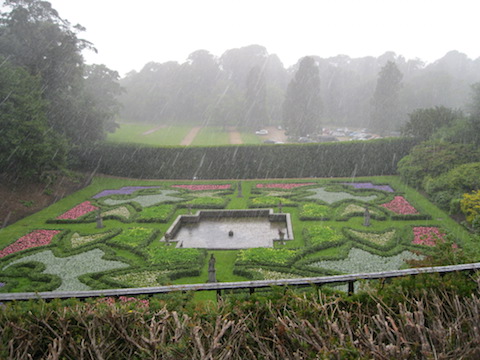
The Dutch Garden in the rain

The Dutch Garden in the rain


See more photos on my Lyme Park Pinterest page.

K.C. Bateman: A Raven’s Heart (Giveaway)

Interview with Kate Bateman

Susana: What inspired you to start writing?

kate-bateman-author-pic-copyKate: I’ve always been an avid reader, especially of historical romance, but I never considered writing a book myself until around five years ago, when my husband and I moved from England to the US (with his work.)

I’d spent twelve years as an antiques appraiser, running with my own auction house in the UK and I also appearing on several British antiques-related TV shows as an on-screen expert, but since there’s not much use for my auctioneering skills in central Illinois, and with three small kids at home, it was a natural sidestep to use my knowledge to write historical romance.

One day I threw a very badly-written historical across the room in frustration and complained to my husband that I could have done a better job of writing it. He bet me a dollar I wouldn’t even finish a manuscript. I bet HIM a dollar I would. I’d studied English at university, so I knew I could put a coherent sentence together, and I figured well, if they can get published, why shouldn’t I have a go. . . ? At least my historical facts will be accurate. So I made the leap from avid reader to writer.

Susana: How long have you been writing?

Kate: Well, my first attempt at a historical romance (about five years ago) was set in the Italian Renaissance, which is—according to most of the publishers I approached—a tough time period to sell. So I received numerous rejections, (ouch!) but took on board the fact that editors liked my writing and kept suggesting that I write a regency romance to appeal to a larger readership. So I wrote a regency – the first book in my ‘Secrets and Spies’ series: To Steal A Heart.

I entered a couple of RWA contests, finalled in several, and from that I got a full MS request from my now-editor at Random House, and was subsequently offered a three- book deal. That was in 2015. My first book, To Steal A Heart, came out in February 2016. Book two in the series – A Raven’s Heart—is out this month, on 18th October, and book three, A Counterfeit Heart will be out in May next year.

Susana: What advice would you give to writers just starting out?

Write the books you want to read, and don’t try to copy someone else’s style because you think it will sell—it will come across as forced. I love reading about capable, intelligent heroines, so I to write about ‘historical girls with cool skills’. I also like to highlight the fact that Regency-era romances don’t all have to be set in London ballrooms. There’s a whole world of interesting places out there and many of my ideas come from real-life historical people and events.

My heroines are always feisty, witty, and more than a match for the men in their lives. Unofficially, I describe them as ‘bad-asses in bodices’ or ‘kick-asses in corsets’! To Steal A Heart, features a tightrope-walking thief and the French / British double agent who needs her skills for a prison-break heist. A Raven’s Heart has a code-breaking heroine and the cynical spy assigned to keep her safe. Book three, A Counterfeit Heart, (out next year) has a forger heroine with a dubious moral compass and a suitcase full of fake money… You get the idea!

And I’d also say to new writers: you can always improve your writing. The best thing I ever did was join my local RWA (Romance Writers of America) local chapter and attend conferences and writer events. It helped me connect with other authors whose support, encouragement, teaching, and constructive criticism have been invaluable. I’m always looking for new ways to better my craft.

Susana: Are you a plotter or a pantser?

Kate: I’m a little bit of both, but my natural inclination is pantser. I hate plotting. As my engineer-husband will tell you, I hate organizing, timetables, and planning, but I know it’s just asking for trouble to start writing a book with no idea of your overall story arc, or major plot points. So every time I come to plot a new book I pretend to myself that I’m just ‘jotting down ideas’. I keep a notebook and write down a couple of key scenes, character traits, or snatches of dialogue. I type them up. I work out the order they have to go in to make sense. I work out what scenes I need to slot in between the big scenes to join them together. And hey-presto! It’s turned into an outline / plot without me noticing! By the time I’ve turned all my scribbled notes into actual, readable sentences, the book’s almost half done.

Susana: Tell us something about your new release that’s not in the blurb:

Kate: OK, here are a few fun facts about A Raven’s Heart:

First, one of the themes I play with in A Raven’s Heart concerns internal and external scars. Heloise has a scar on her face which she believes makes her unattractive. Raven’s scars are all on the inside. He thinks he’s too emotionally damaged to love. In this respect they’re opposites—and perfect for one another; they both see past the damage and find something to love underneath.

In one of my favorite scenes Raven lets slip how much he cares for Heloise by referring to the ancient Japanese art of Kinstukuroi. It’s the use of gold to repair a broken piece of pottery, with the understanding that the piece is more beautiful for having been broken and lovingly repaired. I thought that was such a romantic idea that I had to include it in a book. Ostensibly Raven’s discussing his mother’s favorite piece of porcelain, but we know he’s really talking about Heloise.
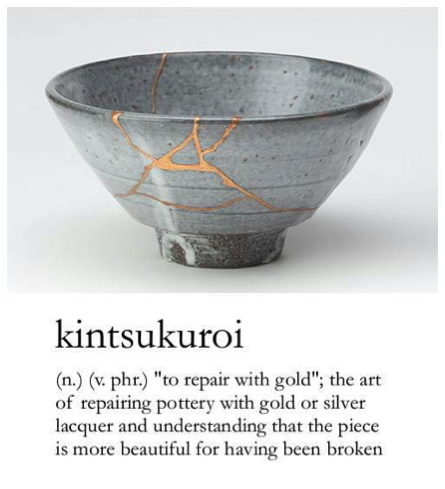
bowl

Secondly, A Raven’s Heart is set mainly in Spain and the descriptions of the landscape and architecture all come from personal experience. I love traveling, and I was lucky enough to have spent quite a bit of time in Spain as a child. The descriptions of the taste of carobs and pomegranates come from experience! I hope my affection for the country shines through and gives those who’ve never been there a hint of what it’s like. I make Pinterest boards for all my books, so if readers are interested in seeing where I get my inspiration they can take a look: https://www.pinterest.com/kcbateman1/a-ravens-heart-raven-and-heloise-spanish-peninsula/

In the story Heloise goes to visit some prehistoric cave art in the caves near the Spanish village of Altamira. These really exist and the only artistic license I took with the story is that the caves weren’t ‘officially’ discovered or made public until a few years later than 1816. I like to think that the locals could have been aware of the existence of the caves, and the art, but might have been unaware of the importance of them from an anthropological standpoint. There’s no reason to suppose they wouldn’t have shown interested, if eccentric, foreigners like Heloise their local treasure. . .

Here’s an image of the wonderful prehistoric / Neolithic art that can be found in the Altamira caves:
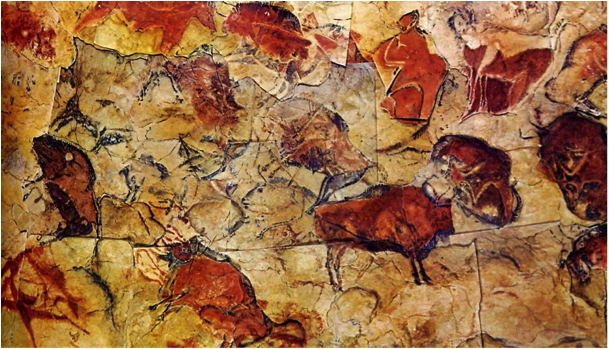
cave

And here is a link to the Wikipedia page:

https://en.wikipedia.org/wiki/Cave_of_Altamira

Thirdly, lots of events in my stories have a basis in real, historical events. For example, A Raven’s Heart features a proposed prisoner swap between the French and the English. In my research, I found evidence for this surprising – if unusual – wartime practice; In 1813, Soult and Wellington agreed to an exchange of three Frenchmen for one Englishman and two Spaniards, a plan agreed by Napoleon.

Fourthly, the heroine in A Raven’s Heart, Heloise, is a talented codebreaker for the British, and in the book she and Raven get to meet her codebreaking idol, George Scovell. Major Scovell, later General Scovell, was is real historical person, and he played a crucial role in cracking the French codes and ensuring a victory for Wellington and his troops in the Peninsular campaign.

Here he is:
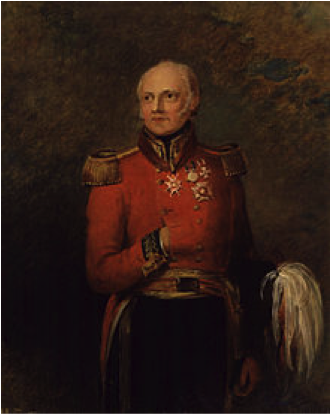
soldier

For those who would like to learn more about this interesting man and his achievements, his Wikipedia entry is fascinating! Sometimes truth is even greater than fiction. https://en.wikipedia.org/wiki/George_Scovell

Susana: What are you currently working on?

Kate: I’m finishing up book three in this Secrets and Spies trilogy, A Counterfeit Heart, which and will be out early next year (May 2017). The heroine, Sabine de la Tour, is also known as ‘Philippe Lacorte,’ the elusive, brilliant French forger. She meets her match in aristocratic spy Richard Hampden—Heloise’s eldest brother.

I’m having a lot of fun with these two. Sabine arrives in England with a suitcase full of counterfeit money. An honest woman would simply destroy the evidence of her crimes. An honest woman would never blackmail her handsome pursuer into paying for her co-operation. But Sabine’s never been all that good at being good…

Sabine can counterfeit anything, but can she tell the difference between what’s real and what’s fake when it comes to something as important as her heart?

Susana: What are you reading now?

Kate: I’m re-reading a couple of my favorite authors on my keepers shelf to remind me what good writing looks like – as inspiration! I’ve just finished the delightful As You Desire by Connie Brockway, whose unusual Egyptian setting I love, and the Medieval / Renaissance historical Shadowheart by Laura Kinsale. I’m now currently half way through Susan Elizabeth Phillips’s funny contemporary It had to be You…

Susana: What is your work schedule when writing?

Kate: I write for several hours every day during the week. I have three small kids, so a good day is when I drop them off at school and manage a solid block of writing before pickup. But I also think it’s really important to keep a work-life balance. You can’t stay slumped over a hot computer monitor all day, so I don’t let myself feel guilty for having lunch out with my girlfriends or meeting up for coffee. I don’t watch a lot of TV, so I sometimes get a couple of extra hours of writing done when the kids are all in bed – accompanied by just one small glass of wine…

Susana: What is one thing your readers would be most surprised to learn about you?

Kate: A lot of people in the UK know me for my antiques-show TV work, as an appraiser, so they’re quite surprised to learn that I also write historical romance. But I have lots of not-so-well-kept secrets. For example, I almost became a ballerina, and took ballet classes for eighteen years, until I decided it was too uncertain a career and went into antiques and writing instead!

Also, I once kissed the policeman on duty outside Number 10 Downing Street after attending a reception with the British Prime Minister. And I can’t touch dry cotton wool. No, really. Even thinking about it puts my teeth on edge, like nails scraping down a blackboard!

Susana: If your publisher offered to fly you anywhere in the world for a research project, where would you go and why?

Kate: Definitely Italy. The landscape! The food! The wine! The art! I’d choose to go stay in a massive crumbling Italian castle perched on the edge of a cliff with a view of the Amalfi Coast and a lovely garden scattered with good-looking Italian groundsmen and gardeners, of course! The fact that I don’t speak Italian would only be a minor inconvenience. I’d go and wander round all my favorite Tuscan haunts, like Siena and Florence, looking for antiques, then I’d watch the film A Room with a View, accompanied by a fabulous coffee and a decadent dessert like tiramisu.

Susana: What do you want people to take away from reading your books?

Kate: That not all Regency-era romances are set in London ballrooms and country houses! There’s a whole world out there to explore – even if it’s only within the pages of a book as an armchair traveler – and lots of fascinating chapters of history to discover. My heroines are intelligent, witty, independent women who are more than a match for their men. Hopefully readers will continue to enjoy the worlds and characters I create and want to read more!

Susana: What has been your biggest adventure to date?

Kate: That’s a tough question! Having my three kids has certainly been an adventure – the little monsters definitely keep me on my toes.

I also love traveling and I’ve been lucky enough to have had several amazing adventures in that respect. I’ve watched the stars from a Touareg tent in the middle of the Morroccan desert, I’ve survived white water rafting on the mighty Zambezi river in Zimbabwe, and trekked to huge reclining buddhas in Thailand. I’ve done some epic road trips across America with my family since moving here, including the Grand Canyon, the Rockies, Yosemite, Death Valley, and the Utah national parks.

But I think my biggest adventure has to be leaving behind my first career — as an antiques appraiser and auctioneer in England — and finding another career I love just as much; that of historical romance author. My path to publication has been one huge adventure, sometimes frustrating, disappointing and nerve-wracking, but also fun, fascinating and exhilarating. I’ve met some wonderful people, made some lifelong friends, and learned so much. I hope to keep writing and to stay in the wonderful world of romance for a very long time!

Susana: Who gave you the writing advice that sticks with you to this day?

Kate: I always remember the Nora Roberts quote about the importance of having a central conflict in your stories. She said something like ‘If your hero’s a fire investigator, your heroine had better be an arsonist!’

Also, and I don’t know who said it, but I have a post-it note taped above my computer with the fundamental ABC’s of writing: Apply Butt to Chair!

Susana: What one modern convenience you could not live without?

Kate: A kettle and teabags. Life’s just not worth living without a nice cup of tea!

About A Raven’s Heart

August 1815. The war with France is officially over, Napoleon’s an exile on St Helena, but Europe is still a very dangerous place to be. . .
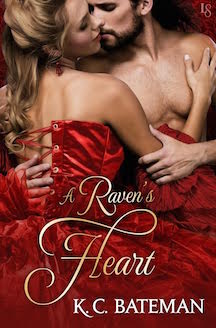
a-ravens-heart-final-cover-copyKidnapped and held for ransom at nineteen, ducal heir William Ravenwood knows the only person he can rely on is himself. Now part of a spy ring that includes his friends Nicolas and Richard Hampden, he’s the smuggler known as The Raven, a ruthless agent who specializes in rescuing hostages and prisoners of war from captivity. Raven longs to discover the fate of his colleague, Christopher ‘Kit’ Carlisle, who’s been missing, presumed dead, for over two years. He’s also equally determined to stay away from the one thing he knows is dangerous to his health—the bane of his life, his best friends’ infuriating little sister, Heloise.

Heloise is a brilliant code breaker, one of the English government’s most valuable assets. She’s loved Raven for years, but considering that he rejected her at sixteen, before her face was scarred rescuing her brother from an icy river, she’s certain he doesn’t want her now, despite his outrageous flirting.

But when Heloise decodes a message that proves Kit is alive and a prisoner in Spain, Raven realizes she’s in grave danger. With French agents determined to silence her, he’ll do whatever it takes to keep her safe, even if that means taking her to Spain with him as an unwilling hostage.

As they face French deserters and Spanish freedom fighters, Raven and Heloise try to ignore the simmering attraction that’s been building between them for eight long years. Heloise might be scarred outwardly, but Raven’s wounds are all on the inside. He knows he’s not worthy of her love—a shadowed Hades pining for sun-kissed Persephone—but he’s not above showing her passion for the short time they’re together. Protecting her from danger will be a challenge; protecting her from desire will be pure agony…

AmazonBarnes & NobleiBooks • KoboGoogle Play • ARe

Excerpt

Chapter 1

England, June 1816

“I’m a spy, not a bloody nursemaid!”

William de l’Isle, Viscount Ravenwood, glared across the desk at his mentor, Lord Castlereagh.

The older man shook his head, supremely unmoved by his outburst. “Miss Hampden needs immediate protection. Someone’s targeting my code breakers and whoever killed Edward could also have discovered her identity. I can’t afford to lose her, too.”

Raven narrowed his eyes. “Use another agent.”

Castlereagh gave him one of those level, penetrating looks he so excelled at. “Who? Neither of her brothers are here; Nic’s in Paris, and Richard’s following a lead on that French forger he’s been after for months. Who else is left?” He pinched the bridge of his nose. “We’ve lost too many good men. First Tony got himself killed in France, then Kit disappeared. There’s been no news of him for months.”

Raven frowned. He refused to consider the distasteful probability that his friend was dead. Kit was like him, a master of survival. He could be deep undercover. But with every week that went by with no word it became harder and harder to stay positive.

“And now another good man, Edward Lamb, had been murdered,” Castlereagh sighed. “I don’t want Miss Hampden to be next.”

The older man was a master of applying just the right amount of pressure and guilt. He hadn’t made it to head of the Foreign Office without knowing how to manipulate people.

“You think I should entrust her to a less competent operative?” Castlereagh mused softly. “You’re not burdened by false modesty, Ravenwood. You know you’re the best I have. I was hoping you’d use your exceptional talent for survival to keep Miss Hampden alive, too.”

Raven sighed, well aware he was being backed into a corner. If it had been anyone else he wouldn’t have hesitated. But Heloise Hampden was the fly in his ointment. The spoke in his wheel.

A total bloody menace.

Hellcat Hampden had been the subject of his guilty daydreams for years. What had started out as adolescent musings had matured into fevered erotic fantasies that showed absolutely no sign of abating. He’d told himself the attraction was because she was forbidden, tried to lose himself in other, far more available women. Nothing had worked. And while he’d rarely paid much attention to the monotonous sermons preached by the clergy, he was fairly sure there was something in the bible that said “thou shalt not covet thy best friend’s little sister.” Or words to that effect.

He was the last person she should be entrusted to. He’d sworn to stay away from her. Had avoided her quite successfully—give or take a few blessedly brief skirmishes—for the past six years. Hell, he’d traveled to the far corners of war torn Europe to try to forget her.

And now here he was, drawn back to her by some malevolent twist of fate.

As if his life wasn’t cursed enough already.

Over the past few years they’d settled into an uneasy, albeit barbed, truce; it was a sad reflection on his twisted nature that he preferred sparring with her to holding a reasonable conversation with anyone else.

His blood thrummed at the prospect of seeing her again and he smiled in self-directed mockery. Few things increased his heartbeat anymore. In combat he was a master of his emotions, sleek and deadly and efficient. Fighting barely elevated his pulse. He could kill a man without breaking a sweat. But put him ten paces away from that slip of a girl and a furious drummer took up residence in his chest, battering away against his ribs.

He shook his head. Being near her was a torture he both craved and abhorred, but he had a duty to keep her safe. A duty to her family, to Castlereagh, to the whole damn country. Much as he’d like someone else to deal with her, he didn’t trust anyone else. She was his to torment.

Castlereagh, the old devil, smiled, as if he already sensed Raven’s grudging acceptance. “That’s settled, then. She’s safe at home right now. You can go over and get her in the morning.”

He rose and strode to the door of the study, then flashed an amused glance at Raven’s immaculate evening attire and the mask resting on the desk. “I apologize for interrupting your evening, Ravenwood. I’ll leave you to your entertainments.”

Link to longer excerpt from A Raven’s Heart:

http://www.kcbateman.com/books/sneak-peeks/

In A Raven’s Heart, I hint that Raven and Heloise are like the Greek gods Hades and Persephone – Hades kidnaps Persephone and takes her down to the Underworld, but the two end up falling in love and learning to compromise.

My question to readers is: If you could host a dinner party and include any couple—they can be real historical or fictional/mythological, who would you choose? Anthony and Cleopatra? Elizabeth and Darcy? Cathy and Heathcliff? 

Three random commenters will win a free ebook download of To Steal a Heart, Book 1 in my Secrets & Spies series.
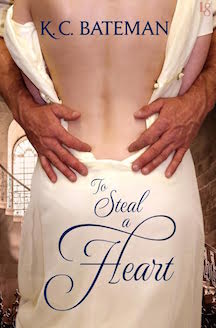
to-steal-a-heart-final-cover-image-copy

About the Author

Kate Bateman (writing as K. C. Bateman) wrote her first historical romance in response to a $1 bet with her husband who rashly claimed she’d ‘never finish the thing.’ She gleefully proved him wrong with a historical set in the Italian Renaissance. Now writing for Random House Loveswept, her latest Secrets & Spies Regency-era trilogy features her trademark feisty, intelligent heroines, wickedly inappropriate banter, and heroes you want to alternately strangle and kiss—all mixed up in the intrigue and turmoil of the Napoleonic wars.

When not traveling to exotic locations ‘for research’, Kate leads a double life as a fine art appraiser and on-screen antiques expert for several TV shows in the UK. She splits her time between Illinois and her native England and writes despite three inexhaustible children and a husband who has flatly refused to read any of her books ‘unless she hits the NY Times Bestseller list.’ It is—naturally—her fervent desire to force the semi-illiterate, number-loving cynic to do so. He still owes her that dollar.

Kate loves to hear from readers.

WebsiteFacebook Twitter

AmazonGoodreadsPinterest

Amy Rose Bennett: The Ice Duchess (Scandalous Regency Widows, Book 2)

In The Ice Duchess, my heroine, Georgiana, the widowed Duchess of Darby, prides herself on her ability to be a brilliant piquet player. Because of her past history—she suffered tremendous heartbreak at the hands of a scoundrel when she was a debutante—she became an adept player. She uses piquet as both a shield and a weapon during ton social events. In her mind, her fearsome card-playing reputation is a way to keep men, especially rakehells, at bay. Rather than converse, or worse still, flirt, she can just play cards. And it feels good to trounce the other player, particularly if he is a man!

Piquet was a popular card game during the Regency era and was often played at home, society events and even at the gaming table. A trick-taking game played by two players, it has quite a complicated scoring system. My hero, Lord Markham, and Georgie play several games during the story and as an author, it was quite a challenge to first of all, come to grips with the rules, and secondly, write the card playing scenes in a way that would be both entertaining and further the plot. I hope readers get a sense of the great strategy involved during the course of play as well as enjoy the banter between Georgie and Markham as both try to gain the ‘upper-hand’. And if any piquet experts out there read my story and find I haven’t got it quite right, I hope they’ll forgive me—it is a very tricky game to say the least!

theiceduchess_med-copy-2

About The Ice Duchess

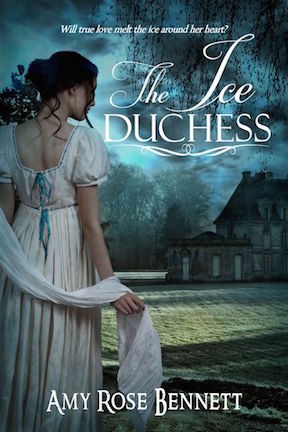
Georgiana Dudley, the ‘Ice Duchess’, has just emerged from mourning after a nine-year marriage of convenience to the Duke of Darby, her twin brother’s lover. Deeply hurt by a scoundrel a decade ago, Georgie swore she would never turn her head for any man, let alone another rakehell. But then she encounters the wickedly handsome and all too charming Rafe Landsbury, the Earl of Markham and against her better judgment, her interest is reluctantly aroused. An affair may be impossible to resist but dare she trust Lord Markham with her most intimate secrets… and her heart?

Society believes Rafe to be a diplomat but for many years he has been working on the Continent as a spy for the Crown. Leaving the shadowy world of espionage behind, he returns to London with the intention of finding a wife. When he is paired with the frosty yet fascinating Duchess of Darby at the piquet table during a ton ball, he is intrigued. Do-or-die man that he is, he’s certainly not going to let her cool demeanor dissuade him from pursuing her.

When Rafe’s dark past returns to endanger Georgie, he is determined to protect her at all costs, even if that means hiding who he once was. With the stakes so high, both Georgie and Rafe must decide if love is a risk worth taking…

Heat Level: Steamy to hot. This story is a Regency romance with open-door love-making scenes and frank language is used.

Amazon

Excerpt

To give you an idea of the game, I thought I’d share an excerpt from The Ice Duchess. In this scene, Georgie, and Rafe, Lord Markham, are engaging in a piquet re-match at the end of a dinner party. Both are skilled players and both are equally determined to put the other off their game by flirting, which is quite a novel thing for Georgie…

Whilst she shuffled, he deliberately raked her with an appreciative gaze, his eyes shamelessly lingering on her face, her delicious mouth and then her breasts. As he’d anticipated, color immediately rose to her cheeks. She glanced away from him, suddenly very interested in the cards in her hands.

Leaning forward a little, he drew her gaze to him again. “Because the rest of the company are otherwise engaged and we are still somewhat… alone,” he said in a low voice, “I thought I should take this opportunity to tell you how beautiful you look this evening, Your Grace.”

She affected a little laugh before she placed the cards on the table. Something hot and bright flashed beneath the cool blue of her eyes. Anger or desire, he couldn’t tell. “Heavens, you are full of compliments this evening, Lord Markham,” she said. Although she sounded a little breathless, she arched an eyebrow. “But you must realize by now that flattery will get you nowhere when it comes to playing. Only strategy will.”

Cutting the cards with a decided flip, she revealed the seven of clubs. Not good by any means. Her lips flattened, her displeasure clear.

“It would seem a modicum of good luck doesn’t go astray either,” Markham ventured with a wicked grin. He took his turn to shuffle and added, “I don’t know about you, Your Grace, but I’m feeling rather lucky tonight.” His cut revealed the knave of hearts. Although he wouldn’t have first choice from the talon in this first round, the advantage would be his in the sixth and final round of the partie. “I shall be the younger hand to begin with.”

“Of course. I wouldn’t have expected anything less.” The duchess observed him from beneath her eyelashes as he started dealing. “Playing with you again will be quite a romp I should expect, regardless of the outcome.”

The seductress was back. He couldn’t help but play the rake. “I can think of no lovelier woman to romp with than you, Duchess.”

This time, when she blushed, it was to the roots of her hair. There could be no mistaking what he meant by romp. He was a devil, but if she wanted to play with fire, she should expect to get a little burned.

Join Amy’s Release Day Party!

Friday, September 30, 2016 • 6:00 – 10:00 p.m. EDT

Guest Authors • Fun • Books • Prizes

https://www.facebook.com/events/944693238989915/

6-6:20pm EST- Amy Rose Bennett – Author
6:20-6:40pm EST- Susana Ellis
6:40-7pm EST- Jessica Cale
7-7:20pm EST- Nicole Zoltack
7:20-7:40pm EST- Jude Knight
7:40-8pm EST- Elizabeth Ellen Carter – Author
8-8:20pm EST- Sherry Ewing
8:20-8:40pm EST- Cerise DeLand
8:40-9pm EST- Amanda Mariel
9-9:20pm EST- Aurrora St. James
9:20-9:40pm EST- Gina Conkle, Writer
9:40-10pm EST- Amy Quinton

About the Author

AuthorPic copyAmy Rose Bennett has always wanted to be a writer for as long as she can remember. An avid reader with a particular love for historical romance, it seemed only natural to write stories in her favorite genre. She has a passion for creating emotion-packed—and sometimes a little racy—stories set in the Georgian and Regency periods. Of course, her strong-willed heroines and rakish heroes always find their happily ever after.

Amy is happily married to her own Alpha male hero, has two beautiful daughters, and a rather loopy Rhodesian Ridgeback. She has been a speech pathologist for many years but is currently devoting her time to her one other true calling—writing romance.

Website/BlogFacebook TwitterPinterest

Donna Hatch: Courting the Countess

In England, dueling was part of a long-standing code of honor, far beyond mere tradition. Gentlemen took their dueling very seriously; they would rather die than be dishonored. Does your heart go pitter patter just at the sound of that? I admit, at time, mine does. How many men that honorable do you know? Okay, maybe we’d call it misplaced pride, or an overdeveloped sense of vengeance, but hey, that was a different world with a different set of rules. And yeah, I’m glad they don’t do it these days.

pistols

By the Regency era, dueling was outlawed. However, duels still happened more frequently than many people knew. The problem was, because courts were made up of peers, they were reluctant to charge another peer with murder as a result of a duel. There is a case where one nobleman was charged with murder and tried, but used the defense that his behavior was gentlemanly and honorable, meaning that he acted within the proper code of conduct. He was acquitted by his peers.

If they were socially equal, or at least similar, the gentleman who was offended would tell the man who’d wronged him that he should choose his “second,” a close friend or family member who would look out for his best interests. If he was really incensed, he might slap him with his glove, but that was considered extreme and beneath gentlemanly behavior, as it was the ultimate insult and probably resulted in a fight then and there.

The procedure for issuing a challenge was very specific. A gentleman never challenged a social inferior. For instance, a gentleman of significance with ties to the aristocracy or nobility would never challenge a commoner, such as a blacksmith or a farmer. Also, if there was a significant age difference, the duel would not be extended.

shooting

After the verbal challenge–or perhaps warning would be a better word–was issued, depending on the severity of the offense, the other might have a choice; he could either apologize, or he could accept. Sometimes, the apology would not be accepted, often if there were a third person who’d been wronged such as a lady’s honor. (Okay, call me crazy but that almost makes me want to swoon.)

The next day, supposedly after heads had cooled, the wronged man who wished to duel would send his “second” with a written letter challenging the duel. The other may chose to apologize or accept the challenge. If accepted, he would choose swords or pistols and name the time and the place. In my humble opinion, swords was a more more gentlemanly way to duel. If they used pistols, they only used one shot which seems too much like cold-blooded murder. I’m sure they didn’t always shoot to kill, but there was some unwritten rule about the shot purposely going wide and that being bad form. *shrug*

When the allotted day arrived, they met, probably in a remote place where they wouldn’t be caught by the law, and the seconds inspected the weapons to be used. A final opportunity for an apology could be given. If not, the seconds decided if the duel should be fought to (a) first blood, or (b) until one can no longer stand, or (c) to the death. Once that was decided, the opponents dueled and the seconds watched to insure that nothing dishonorable happened.

If during a duel fought by swords, one of the duelers becomes too injured to continue, occasionally the second would step in and duel. Sometimes, the seconds were hot-headed or very angry (loyal?) and ended up dueling each other as well. To my knowledge, this never happened if the duel were fought with pistols.

3

As horrible as it sounds to our modern selves, these gentlemen took their honor very seriously, and considered death preferable to living with the label of a coward, a label that would follow them and their families for years.

And, maybe it’s me, but there a certain romance about a gentleman brave enough and protective enough to be willing to risk death defending my honor from another man who’d besmirched it?

A duel is what leads to all the trouble for my hero in my Regency Romance novel, “Courting the Countess” and causes events he wishes desperately he could change, especially when the duel goes awry and causes pain to an entire family.

I’m sure glad my husband isn’t likely to try dueling…

51fds6xfkcl

Available for pre-order on Amazon

About Courting the Countess

When charming rake Tristan Barrett sweeps Lady Elizabeth off her feet, stealing both her heart and a kiss in a secluded garden, her brother challenges Tristan to a duel. The only way to save her brother and Tristan from harm—not to mention preserve her reputation—is to get married. But her father, the Duke of Pemberton, refuses to allow his daughter to marry anyone but a titled lord. The duke demands that Elizabeth marry Tristan’s older brother, Richard, the Earl of Averston. Now Elizabeth must give up Tristan to marry a man who despises her, a man who loves another, a man she’ll never love.

Richard fears Elizabeth is as untrustworthy as his mother, who ran off with another man. However, to protect his brother from a duel and their family name from further scandal, he agrees to the wedding, certain his new bride will betray him. Yet when Elizabeth turns his house upside down and worms her way into his reluctant heart, Richard suspects he can’t live without his new countess. Will she stay with him or is it too little, too late?

Pre-order now on Amazon for Kindle.

About the Author

donna-2013-copyDonna Hatch, author of the best-selling “Rogue Hearts Series,” is a hopeless romantic and adventurer at heart, the force behind driving her to write and publish seventeen titles, to date. She is a multi-award winner, a sought-after workshop presenter, and juggles multiple volunteer positions as well as her six children. Also music lover, she sings and plays the harp. Though a native of Arizona, she and her family recently transplanted to the Pacific Northwest where she and her husband of over twenty years are living proof that there really is a happily ever after.

Cover Reveal: Holly and Hopeful Hearts by the Bluestocking Belles

cover-of-holly-and-hopeful-hearts-copy

About Holly and Hopeful Hearts

When the Duchess of Haverford sends out invitations to a Yuletide house party and a New Year’s Eve ball at her country estate, Hollystone Hall, those who respond know that Her Grace intends to raise money for her favorite cause and promote whatever marriages she can. Eight assorted heroes and heroines set out with their pocketbooks firmly clutched and hearts in protective custody. Or are they?

A Suitable Husband, by Jude Knight

As the Duchess of Haverford’s companion, Cedrica Grenford is not treated as a poor relation and is encouraged to mingle with Her Grace’s guests. Surely she can find a suitable husband amongst the gentlemen gathered for the duchess’s house party. Above stairs or possibly below.

Valuing Vanessa, by Susana Ellis

Facing a dim future as a spinster under her mother’s thumb, Vanessa Sedgely makes a practical decision to attach an amiable gentleman who will not try to rule her life.

A Kiss for Charity, by Sherry Ewing

Young widow Grace, Lady de Courtenay, has no idea how a close encounter with a rake at a masquerade ball would make her yearn for love again. Can she learn to forgive Lord Nicholas Lacey and set aside their differences to let love into her heart?

Excerpt

Artemis, by Jessica Cale

Actress Charlotte Halfpenny is in trouble. Pregnant, abandoned by her lover, and out of a job, Charlotte faces eviction two weeks before Christmas. When the reclusive Earl of Somerton makes her an outrageous offer, she has no choice but to accept. Could he be the man of her dreams, or is the nightmare just beginning?

Excerpt

The Bluestocking and the Barbarian, by Jude Knight

James must marry to please his grandfather, the duke, and to win social acceptance for himself and his father’s other foreign-born children. But only Lady Sophia Belvoir makes his heart sing, and to win her he must invite himself to spend Christmas at the home of his father’s greatest enemy.

Excerpt

Christmas Kisses, by Nicole Zoltack

Louisa Wycliff, Dowager Countess of Exeter wants only for her darling daughter, Anna, to find a man she can love and marry. Appallingly, Anna has her sights on a scoundrel of a duke who chases after every skirt he sees. Anna truly thinks the dashing duke cares for her, but her mother has her doubts.

Excerpt

An Open Heart, by Caroline Warfield

Esther Baumann longs for a loving husband who will help her create a home where they will teach their children to value the traditions of their people, but she wants a man who is also open to new ideas and happy to make friends outside their narrow circle. Is it so unreasonable to ask for toe curling passion as well?

Excerpt

Dashing Through the Snow, by Amy Rose Bennett

Headstrong bluestocking, Miss Kate Woodville, never thought her Christmas would be spent racing across England with a viscount hell-bent on vengeance. She certainly never expected to find love…

Excerpt

Coming November 8.

Eight original stories, 578 pages of diverse characters,  complex relationships, and happily-ever-afters for $2.99.

Pre-order Now!

Amazon.comAmazon UKAmazon AustraliaAmazon Canada

Kobo Smashwords

Excerpt from Valuing Vanessa

“Are you certain it is not an imposition, Miss Sedgely? Because I shouldn’t mind showing the ladies around myself, in Mrs. Seavers’s absence.”

Vanessa’s chin rose as she directed a firm gaze at the institution’s housekeeper. “I assure you there is no imposition whatsoever, Mrs. Barnes. I shall be pleased to guide the ladies on their tour this morning, as Matron directed.”

Mrs. Barnes flushed. Obviously she considered the task her own prerogative, but Vanessa had not taken the trouble to get the hospital matron out of town just to be foiled by the housekeeper.

“But what about your class, Miss Sedgely? The children do so look forward to them! Why, they will be exceedingly disappointed to miss them today.” She leaned in closer, her eyes gleaming. “I hear that little Willie had prepared a special passage to read for you. He is quite partial to you, you know.”

Vanessa refused to allow herself to be diverted, in spite of the tiny twinge of guilt she felt deep inside. “My maid has agreed to take my classes for today. She has assisted me previously, you know, and thus is well-known to the children.”

She gave a curt nod to the housekeeper, who took it as the dismissal it was meant to be, and walked out of the room.

The Board of Governors were conducting a meeting in a quarter hour’s time, and Vanessa had taken great pains to find a reason to be lingering in the foyer as the gentlemen arrived. It was Mr. George Durand she wished to encounter, of course. During the week since the masquerade at Vauxhall, she had unearthed a great deal of information about the attractive gentleman.

George William Durand was the grandson of a viscount, his late father being the younger son, who had made law his profession. Durand’s cousin William had become the 4th Viscount Faringdon five years ago following his father’s death, and he had four healthy sons to follow him, which meant the title was unlikely to fall to George. George had followed his father into the law profession, although interestingly, he had briefly studied landscape gardening with one of Capability Brown’s former associates. That ended after his marriage, however, when young George set himself to becoming a successful solicitor like his father. His wife, Geneviève d’Aumale, was a French émigrée, the daughter of a comte who had lost his head on the Place de la Concorde at the hands of revolutionaries. She, her sister Juliette, and their mother the comtesse had lost their lives in a carriage accident which had arisen from an attack of highwaymen.

So dreadful. Life was so ephemeral. In a matter of minutes, three ladies’ lives had been snuffed out in such a horrific manner, leaving their husbands to bear the loss as best they could. And their adolescent daughters, of course. Both Durand and Lord Nicholas had daughters, approximately the same age. And perhaps not surprisingly, both had been residing with relatives since the tragedy. Men were notoriously helpless when it came to their maturing daughters. But in retrospect, Vanessa thought it rather pitiable that the girls had effectively lost both parents in that one disastrous moment.

One thing was certain, however. A well-off gentleman with a near-grown daughter was clearly in need of a wife. And Vanessa thought she might suit this one very well indeed.

Alina K. Field: Bella’s Band (Giveaway)

Thank you, Susana, for hosting me today! This month I’m celebrating the second anniversary of the release of my Regency novel, Bella’s Band. This tale is romance and adventure in almost equal measures, with a murder mystery thrown into the mix. I’m giving away a Kindle copy of the book to one lucky commenter.

One of the pivotal scenes in Bella’s Band takes place during a perilous journey by coach through the English countryside, and the need for more information about Regency travel led me to an amazing work of nonfiction, English Country Life 1780-1830, by E. W. Bovill. I opened the book and plunged head first into the research rabbit hole: hunting, turnpikes, enclosures, highwaymen, servants, house parties, poaching, rioting and the birth of rail—there is much detail in this book to please both authors and readers of Regency romance!

For example, those familiar with travel in this era know about postilions, or postboys, the men who “steer” traveling chaises from one posting inn to the next by riding them. Bovill tells us that at a large inn, there would be one postboy to every four horses, and the postboys paid the inn’s horsekeeper, as much as eighteen pence a week each. Bovill says, “The postboy, who was seldom young and often a rather decrepit old man, had usually started life in a gentleman’s stables and come down in the world.” That certainly clashes with my image of a boy, perhaps a teenager, riding post.

As it turned out, my heroine, Annabelle Harris, has no need for postboys. She flees from the hero in a wealthy friend’s private coach with a coachman, a maid, and two little boys, on a perilous Christmas Eve journey. When the coachman falls ill at a stop, a new man steps in and her troubles begin.

Or perhaps I should say, begin anew! An earlier carriage ride, this one in London, is also fraught with peril for Annabelle (see excerpt below).

A random commenter will win an e-copy of one of Alina’s books.

bellas-band-final-med-copy-copy

About Bella’s Band

Bullets, blades, and incendiary bombs—Major Steven Beauverde, the latest Earl of Hackwell, belongs in that world, and is determined to get back to it. His brother’s murder has forced Steven into a new and completely unwanted role, and worse, he has no idea how to salvage his family’s depleted estate. A rumor that his brother had a son by a woman who may be a) the murderer, and b) his brother’s secret wife, sets Steven on a mission to find her, the boy, and—Steven ardently hopes—the proof of a marriage that will set him free.

Confirmed spinster Annabelle Harris is a country heiress with a penchant for taking in orphans and helping the downtrodden. Her philanthropy hides her desperate search for her disgraced sister, the mistress to the Earl of Hackwell. When the Earl is murdered, her sister thrusts her child into Annabelle’s care and disappears. Now, with suspicion pointing at the sister, Annabelle has begun a new quest, to find the woman, and clear her name.

When their paths converge, the reluctant Earl and the independent spinster find themselves rethinking their goals, and battling the real murderer together.

Amazon

Excerpt

Surprise pinned Annabelle to the cracked leather seat of the carriage and finally her heart restarted and picked up its pounding.

“Good evening, my lady.” Lord Hackwell flashed her a wide, easy smile that made his face glow like a boy who had pulled a very fast one.

The shock eased. She realized she felt not one whit of fear.

“Is this an abduction, Lord Hackwell? I have never been abducted before. Shall I scream with alarm? Do you mean to harm me?”

His smile disappeared and his face grew too serious. “I mean to protect you, Miss Harris. This is an escort. I mean to see that you return home unharmed.”

“I see. Unharmed, except for the besmirching of my reputation. Shall we appear in the scandal sheets tomorrow, do you suppose?”

“In this bourgeois neighborhood? I think not. Unless, the man who helped you into the hackney is someone of interest?”

Oh, he was prying, and she was so tempted to lead him on. But of course, she had Robby to think about. “Very much so. He is my solicitor. He asked me to dinner to counterbalance his wife’s inquisitive aunt who is visiting from the country, and curious about all things criminal, political, and financial. The poor man has difficulty balancing his client’s confidentiality with his need to be polite to his children’s future benefactress. She is wealthy, I believe.”

“So he set her on you. And how did you maintain your secrets, Miss Harris?”

“We spoke of my home.”

“Which is?”

A ribbon of sensation uncurled in her secret places. The space between her and Lord Hackwell had shrunk, and his dark eyes showed more than an interest in her pedigree. Her nerves tingled with the anticipated pleasure of a repeat of the earlier kiss.

I must not.

“Yorkshire,” she said, as blandly as possible. “I grew up on a good-sized estate there.”

“Do you plan to take Robby there?”

Sudden tears pricked her eyes and she turned quickly to the window. Robby and Thomas would have loved Ryeland. With acres and acres of freedom and kind neighbors, they could have played for hours and had adventures that didn’t involve cutpurses and the Watch.

“Miss Harris?”

“No, Lord Hackwell. My family home was entailed. The cousin who inherited, I’ve only met once, at my father’s funeral.” And his invitation to linger had been merely perfunctory. Besides, staying in the district of her childhood would beg questions about Veronica.

“So you had no brothers. Is your mother living?”

He hadn’t asked about sisters. That was curious. Perhaps he suspected her relationship with Miss Miller was more than a friendship, and was coming to the question, inch by torturing inch.

“You are dancing again, Lord Hackwell. It is ever so tiresome. Let us get you to the facts. I am the eldest surviving child of Edward Harris, who died two years ago. I had a brother, who died many years before. I have a younger sister who has found a position and made a life with a distant cousin in Scotland. My mother has been gone since I was eighteen. I am twenty-seven years old now. I never had a coming out, because my father took ill, and needed me to manage the estate.”

His eyes widened and he went very still, examining her. The air around them seemed charged with a kind of explosive tension.

Oh heavens. He was finding fault with the country spinster. The gown was from her mourning two years previous, outdated of course, and she felt her hair slipping again, and she’d never been one to effect powders and pigments. “Yes. Well—”

You managed an estate?”

“Astonishing, isn’t it?” She waved a gloved hand in the air, and he captured it.

He dropped a kiss on her knuckle. “And you managed the household also?”

“Yes, of course.”

“And you don’t care for dancing?”

“I enjoy dancing very much, though my experience is limited to our local assembly. I have not been to a ball in so many ages, and never a town ball.”

“No Almack’s.”

She could only laugh at that and shake her head. She receive a voucher for Almack’s? Ridiculous.

“No waltzing, Miss Harris?” His manner remained intense.

“Sadly, no, Lord Hackwell, I have never waltzed.”

He straightened in his seat and his eyes looked ahead. “But you have counted ploughs,” he said thoughtfully.

Tears pricked again, suddenly and unexpectedly. What a dismal woman she was. Too plain, too proper, too practical. Alone in a closed hackney with a devastatingly handsome man, and they were talking about farm equipment.

Never had she felt more desire to be younger, prettier, more daring. This must have been how Veronica had felt.

Her heart filled with compassion and grief. “Ye—yes. Ploughs. Very important they’re correctly deployed. Fate of the tenants’ crops and the estate’s income depends upon them.” She sniffed.

“What’s this?” His large ungloved hand covered her smaller ones, enveloping her in his warmth. “I’ve distressed you?”

She shook her head and tried to compose herself.

“Of course I have, my dear. I’ve reminded you of your lost home.”

“It is fine, sir. My current home is—is not the best, but it is mine, and I can afford to move to something better if the neighborhood deteriorates further. You needn’t worry about Robby. I will give him a good life. Not, perhaps, an aristocratic one, but—”

“Shall I tell you about myself, Miss Harris? Yes. I believe I must.” He cocked his leg on the seat so he sat sideways, and extended his hand to caress the back of her neck. The other remained squarely over her folded hands. “I am twenty-nine. The younger son of the Earl of Hackwell. The very, as it has turned out, needful spare. My mother was the second of two wives. She died not long after I was born. My father sent me off to be fostered, then off to Eton, and then to university for a very short while. I’m not much of a scholar. I landed in the army, where I found I could do something of worth.”

His mouth had grown taut and his hand had tightened over hers, so that she could feel his tension.

“Thomas, the late, great, Lord Hackwell, aside from one lengthy grand tour, was kept close under the paternal wing and learned the business of managing the earldom, standing in the House of Lords, and immersing himself in society. From the state of the accounts, it was the last activity that drew most of his interest.”

He let his fingers caress her neck, distractedly, as though the gesture comforted him, like petting a favorite hound.

Comforting to him; deliciously unsettling to her. Pleasure rippled through her at each touch. She held her breath, lest his fingers pause too long in his search for his next words.

“I can bow properly and make reasonably polite conversation, but I was never much good in a ballroom or drawing room, Miss Harris. Still, like every gentleman with a purse, I had my share of immersing myself in pleasure. Here, and on the continent.” He lapsed into a momentary dark silence. “Not so much since my return.”

“You fought at Waterloo?”

“Yes. And before, on the peninsula.”

And before that too, at every step of his motherless, fatherless life, she’d warrant. As in the children’s game she played with the boys, Annabelle drew out a hand from the pile and pressed his between hers.

And her heart skipped with a realization. Lord Hackwell had no family except Robby.

She felt his eyes fixed on her. He drew her head closer and she could smell his woodsy clean scent, so intensely male. The carriage passed by a street lamp and into a dark stretch, and she could no longer discern the outline of his face.

Her heart tingled and her breath came in short little huffs of anticipated pleasure.

“Annabelle,” he whispered. “What do they call you? Anna? Belle?”

She tensed remembering her chat with Lady Rosalyn.

“It is Belle. How very appropriate.” He kissed her hand.

“Bella,” she whispered. “And not appropriate at all. How did you learn my name?”

“Bella.” He breathed her name in a brandy-laced murmur. “The maid at the Harley Street house gave me your last name. And by the way, she worships you.”

Dear Trish. Annabelle pushed at the seat and squirmed, with no success. He still held her fast.

“I’ve found that servants know everything and talk prodigiously.” He dropped a kiss on her nose.

Annabelle bit back a disagreement and stilled. In a properly run household, gossip was squashed. The poor man had never lived in a properly run household.

His lips hovered over her and she waited. He’d kissed her nose. Perhaps he’d been aiming for her mouth and missed. She wanted one more kiss. She would be safe. In a carriage on a public street, he wouldn’t attempt to take more.

***

Steven held himself an inch away from her lips. Her nose had been cold, but heat radiated between them, holding them in a warm cocoon. She smelled of plain soap and faint lavender. There was nothing cloying about Miss Harris. He’d breached a line of defense with the use of the pet name. Bella. She wanted him to kiss her.

Not yet. Not yet. She was lovely, and innocent, and perfect. He was known for his quick thinking under duress, and he’d made up his mind. He would do this honorably. He was not his brother. It would not be a seduction.

“Bella, you are right that we should dispense with the dance. You are right that we should speak to the point, and so I will. I think you and I, we should wed.”

What?” She jumped a full inch from the seat before settling back.

About the Author

Alina K. Field copyAward winning author Alina K. Field earned a Bachelor of Arts Degree in English and German literature, but she found her true passion in reading and writing romance. Though her roots are in the Midwest, after six very, very, very cold years in Chicago, she moved to Southern California and hasn’t looked back. She shares a midcentury home with her husband and a blue-eyed cat who conned his way in for dinner one day and decided the food was too good to leave.

She is the author of the 2014 Book Buyer’s Best winner in the novella category, Rosalyn’s Ring, a Regency novella, the novel-length sequel, a 2015 RONE Award finalist, Bella’s Band, both Soul Mate Publishing releases, and a prequel novella, Liliana’s Letter, a 2016 National Reader’s Choice Award finalist.

WebsiteFacebookTwitter GoodreadsPinterest Instagram


Elizabeth Boyce: Valor Under Siege (Giveaway)

Kissing and Voting in the Regency Era

by Elizabeth Boyce

In election years, I frequently become misty-eyed about the work of suffragettes whose valiant efforts finally culminated in women being granted the right to vote in the UK in 1918, and in the USA in 1920.

It’s easy to imagine that prior to having the franchise, women were not involved in politics. It’s particularly easy to imagine Regency-era ladies were too constrained by social etiquette and gender roles to hold a political opinion, much less express one, but friend, we would be wrong. So very, very wrong.

Women did not have the right to vote in the UK during the Regency era, but they played a vital role in the political life of the nation. Lady Holland was an ardent supporter of the Whig party in the during the Regency, and her home, Holland House, became unofficial headquarters for the Whigs. She and other political hostesses worked on behalf of their favored party by hosting suppers and salons for politicians after Parliament had let out for the day. Debates continued over a meal and caucuses were held in drawing rooms. Women were expected to be present at such events; in fact, a political evening only attended by men—a “man dinner,” it was uningeniously called—was quite a letdown for guests.

But the political work of women during the Regency was not contained to the domestic sphere. The female family members of a man running for political office were expected to help get him elected. Women canvassed their communities, going door to door to speak to voters and, maybe more importantly, those voters’ wives. You see, even though only men could vote, his vote was often regarded as the common property of his household, and wives could absolutely influence how that vote was cast (Remember, this was before secret ballots; a husband who voted against his family’s wishes might have had to answer for it at home!).

This canvassing was not limited to voters of their own class. During an election, ladies of the upper echelons mingled with the public of all social orders. It wasn’t unheard of for a duchess to call upon a butcher in an effort to win his vote.

In addition to knocking on doors, women bestowed little gifts upon the electorate, such as preserves, candles, or lengths of fabric. Such treating was not seen as bribery at that time. Regency-era voters expected to be wooed!

Speaking of wooing, sometimes canvassing became a little more… personal… than jams and ribbons. Remember the duchess and the butcher I mentioned a moment ago? In the election of 1784, the Duchess of Devonshire, while canvassing on behalf of James Fox, a Whig, was said to have kissed voters to win their support—including a butcher. The incident was the subject of political cartoons, and Fox’s Tory opponents attempted to smear Fox through his association with the duchess, but the Whigs were unfazed by the scandal. The party called upon the duchess to continue her work, and Fox retained his seat in Parliament.

My latest release, Valor Under Siege (The Honorables, book 3), features a small town Parliamentary election. It was lots of fun to pit my Whig hero, Norman Wynford-Scott, against Lady Elsa Fay, a former Tory political hostess who runs circles around Norman when it comes to canvassing. It was wonderful, too, to learn about the political system of the era I enjoy so much, and gain a greater appreciation for women’s roles in that world.

Giveaway: To win an e-book copy of Honor Among Thieves (The Honorables, book 1), please leave a comment sharing your own thoughts or memories about women getting involved in a man’s world–be it politics, the workplace, academia, etc. Contest closes 11:59 PM EDT on Wednesday, September 14, 2016. One winner will be chosen at random from all eligible commenters.

valorundersiege-copy

About Valor Under Siege

All’s fair in love and politics . . .

When ambitious solicitor Norman Wynford-Scott is ousted from his legal studies due to a holiday revel spun out of control, he adapts a new plan of running for the Parliament seat of a local village. Only trouble is, the same irresistible woman who ruined his good name is thwarting his campaign at every turn.

Widowed and drink-addicted, Lady Elsa Fay has retreated to the family village of Fleck to regain her sobriety. She’s distracting herself from her troubles – and her memories of the one passionate night she shared with Norman – by organizing the Parliament campaign of her husband’s cousin. Until Norman arrives intent on winning the seat for himself.

Shamed and determined, Elsa will do all she can to send her former friend and now adversary packing – even if it means breaking her own heart in the process.

Amazon

About the Author

eb-author-shot-copyElizabeth Boyce’s first taste of writing glory was when she won a gift basket in the local newspaper’s Mother’s Day “Why my Mom is the Best” essay competition at age eight. From that moment, she knew she was destined for bigger and better gift baskets. With visions of hard salamis and tiny crackers dancing in her head, she has authored seven Regency novels and novellas, resulting, thus far, in two gift baskets from adoring fans (AKA amazing friends).

Elizabeth lives in South Carolina and shares her artisanal cheeses with her husband and three children. She sneaks some to the cat when no one else is looking.

Facebook Twitter


Romance of London: The Crossing Sweeper

Romance of London: Strange Stories, Scenes And Remarkable Person of the Great Town in 3 Volumes

John Timbs

John Timbs (1801-1875), who also wrote as Horace Welby, was an English author and aficionado of antiquities. Born in Clerkenwell, London, he was apprenticed at 16 to a druggist and printer, where he soon showed great literary promise. At 19, he began to write for Monthly Magazine, and a year later he was made secretary to the magazine’s proprietor and there began his career as a writer, editor, and antiquarian.

This particular book is available at googlebooks for free in ebook form. Or you can pay for a print version.

article

What is a Crossing Sweeper?

From Wikipedia:

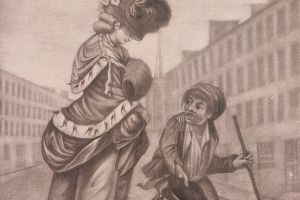
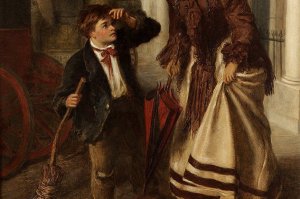
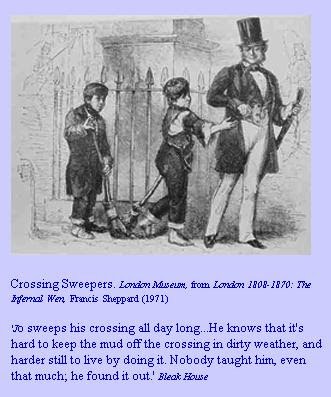
Crossing sweepers were a common sight on the streets of large cities during much of the 19th century. The predominance of horse-drawn vehicles—and the general uncleanliness of urban streets—entailed certain difficulties in crossing intersections. For example, the long dresses of many elite women might easily be soiled by horse droppings (among other forms of refuse). Crossing sweepers, by sweeping the pavement ahead of a person crossing the street and creating a path that was referred to as a “broom walk,” thus offered a service, particularly to the more affluent.

A-crossing-sweeper-clearing-the-street-for-a-fashionably-dressed-woman

A Remarkable Tale

The Rev. Samuel Bache, Minister of the New Meeting House, Birmingham, received the following very remarkable story from a venerable friend, one of the principal members of his congregation, some five-and-twenty years hence.

child sweeper

The late Mr. Simcox, of Harbourne, near Birmingham, who was largely engaged in the nail trade, in one of his visits to London, on business, was suddenly overtaken by a heavy shower of rain, from which he sought shelter under an archway: the rain continued for a long time with unabated violence, and he was, consequently, obliged to remain his place of shelter. He was soon agreeably surprised by a footman approaching with an umbrella, with his master’s compliments, and that he had observed the gentleman standing so long under the archway, that he feared he might take cold, and therefore would be glad if he would come and take shelter in his house—an invitation which Mr. Simcox gladly accepted. He was ushered into a drawing-room, where the master of the house was sitting, and he received from him a friendly welcome.

crossing+sweepers

Scarcely, however, had Mr. Simcox set eyes on his host, than he was struck with a vague remembrance of having seen him before; but where, or under what circumstances, he was altogether unable to call to mind. “You seem, sir,” said he, “to look at me as though you had seen me before.” Mr. Simcox acknowledged that his host was right in his conjectures, but confessed his entire inability to recall the occasion. “You are right, sir,” said the old gentleman; “and if you will pledge your word as a man of honour to keep my secret, and not to disclosed to anyone what I am now going to tell you until you have seen the notice of my death in the London papers, I have no objection to remind you where and how you have known me.”

In St. James’s Park, near Spring Gardens, you may pass every day an old man, who sweeps a crossing there, and whose begging is attended by this strange peculiarity—that whatever be the amount of the alms bestowed on him, he will retain only a halfpenny, and scrupulously return to the donor all the rest. Such an unusual proceeding naturally excites the curiosity of those who hear of it; and anyone who has himself made the experiment, when he happens to be walking by with a friend, is almost sure to say to him, ‘Do you see that old fellow there? He is the strangest beggar you ever saw in your life. If you give him sixpence, he will be sure to give you fivepence-halfpenny back again.’ Of course, his friend makes the experiment, which turns out as predicted; and as crowds of people are constantly passing, there are numbers of persons every day who make the same trial; and thus the old man gets many a halfpenny from the curiosity of the passers by, in addition to what he obtains from their compassion.”

“I, sir,” continued the old gentleman, “am that beggar. Many years ago, I first hit upon the expedient for the relief of my then pressing necessities; for I was at that time utterly destitute; but finding the scheme answer beyond my expectations, I was induced to carry it on until I had at last, and with the aid of profitable investment, realized a handsome fortune, enabling me to live in the comfort in which you find me this day. And now, sir, such is the force of habit, that, thought I am no longer under any necessity for continuing this plan, I find myself quite unable to give it up; and, accordingly, every morning I leave home, apparently for business purposes, and go to a room, where I put on my old beggar’s clothes, and continue sweeping my crossing in the park till a certain hour in the afternoon, when I go back to my room, resume my usual dress, and return home in time for dinner, as you see me this day.”

Mr. Simcox, as a gentleman and a man of honour, scrupulously fulfilled his pledge; but having seen in the London papers the announcement of the beggar’s death, he then communicated this strange story. The name of this eccentric person is not known; but the incidents are recollected by more than one narrator.

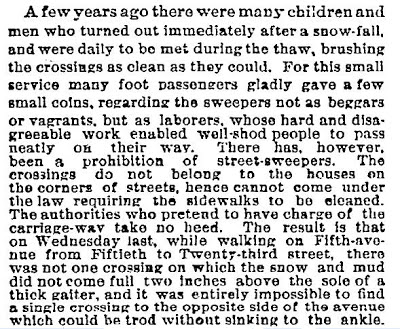
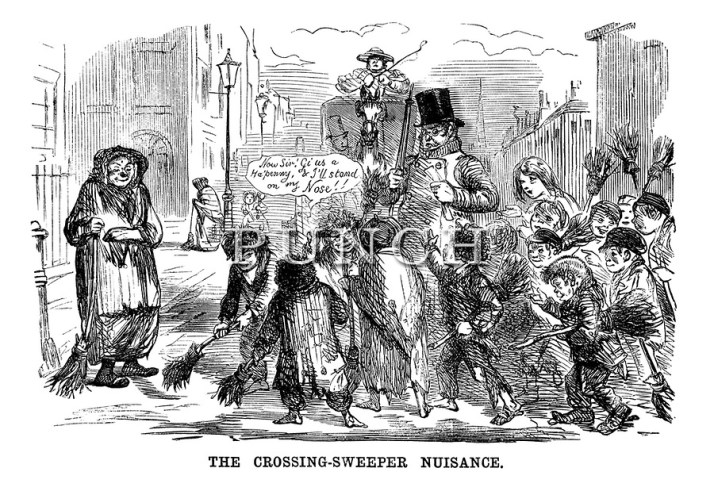
The crossing-sweeper nuisance.

Crossing-sweeping as a Career Choice?

Apparently some sweepers, even without gimmicks, made a good living from it.

The produce of a street crossing in London is sometimes considerable. At an inquest held on the body of a crossing sweeper, who had died suddenly, Mr. Wakley, the coroner, said that the sweeper of a crossing sold his interest in it for 40l. A juror observed that crosswings were freehold, by which many proprietors amassed, in former days, sums of 500l, 1,000l, 4,000l. Another juror alluded to the sweeper of the crossing at Bridge Street, Blackfriars, who bequeathed a large sum to Miss Waithman (daughter of the alderman) in gratitude for her benevolence in giving him his dinner every Sunday; and another gentleman said that the sweeper of a crossing near Hyde Park bequeathed 1,000l to a gentleman who was in the habit of giving him 6d whenever he passed his crossing.

Romance of London Series

  1. Romance of London: The Lord Mayor’s Fool… and a Dessert
  2. Romance of London: Carlton House and the Regency
  3. Romance of London: The Championship at George IV’s Coronation
  4. Romance of London: Mrs. Cornelys at Carlisle House
  5. Romance of London: The Bottle Conjuror
  6. Romance of London: Bartholomew Fair
  7. Romance of London: The May Fair and the Strong Woman
  8. Romance of London: Nancy Dawson, the Hornpipe Dancer
  9. Romance of London: Milkmaids on May-Day
  10. Romance of London: Lord Stowell’s Love of Sight-seeing
  11. Romance of London: The Mermaid Hoax
  12. Romance of London: The Bluestocking and the Sweeps’ Holiday
  13. Romance of London: Comments on Hogarth’s “Industries and Idle Apprentices”
  14. Romance of London: The Lansdowne Family
  15. Romance of London: St. Margaret’s Painted Window at Westminster
  16. Romance of London: Montague House and the British Museum
  17. Romance of London: The Bursting of the South Sea Bubble
  18. Romance of London: The Thames Tunnel
  19. Romance of London: Sir William Petty and the Lansdowne Family
  20. Romance of London: Marlborough House and Sarah, Duchess of Marlborough
  21. Romance of London: The Duke of Newcastle’s Eccentricities
  22. Romance of London: Voltaire in London
  23. Romance of London: The Crossing Sweeper
  24. Romance of London: Nathan Mayer Rothschild’s Fear of Assassination
  25. Romance of London: Samuel Rogers, the Banker Poet
  26. Romance of London: The Eccentricities of Lord Byron
  27. Romance of London: A London Recluse

Vanessa Kelly: My Fair Princess (Giveaway)

My Fair Princess 2 copy

Thanks so much for hosting me on your blog today—it’s a pleasure to be here with you and your readers, Susana!

With My Fair Princess, I’m thrilled to be introducing a new historical romance series called The Improper Princesses. It’s Regency-set, and it’s a spin-off from my previous series, The Renegade Royals. Both are grounded in a specific historical element—the rather outrageous love lives of the sons of King George III.

The term “Regency rake” could very well have been coined for the Prince Regent and his royal brothers. They lived large (literally and figuratively), gambling, drinking, and engaging in numerous sexual affairs. The Prince Regent, later George IV, took several mistresses, which included actresses (one of whom he secretly married), and possibly fathered up to four illegitimate children.

The Duke of York also had several by-blows, perhaps as many as five, and the Duke of Clarence (later William IV) sired ten children with his mistress, Mrs. Jordan. I could go on, but you get the picture! As you can see, in developing a series based on this topic I had plenty of material to work with. Even better, very little—if anything—was known about many of these children, which left plenty of leeway in creating my fictional characters.

In The Renegade Royals I featured heroes who were the illegitimate sons of England’s princes. The Improper Princesses, however, features the illegitimate daughters in the starring roles. As challenging as the “stain” of illegitimacy was for male children, just imagine what it would have been like for females born of illicit relationships during that era. Plenty of room for drama and conflict in their stories!

The heroine of My Fair Princess is Gillian Dryden, the product of a relationship between the notorious Duke of Cumberland and a young widow. Gillian was basically raised in exile in Sicily, where she grew up as a tomboy. She’s a crack shot, a terrific rider, and carries knives in her boots. Gillian also developed the unfortunate hobby of hunting bandits who terrorized the countryside and were responsible for the death of her beloved stepfather.

Because of this risky avocation, Gillian’s family deems it time for her to return home to England, where she can learn to be a proper lady and find a respectable husband. The man tasked with this challenge is Charles Penley, the Duke of Leverton, who happens to be the most polite and sophisticated man in London.

Let’s just say that Charles has his work cut out for him, and let’s also say that Gillian’s training and transformation don’t go exactly as planned!

I had great fun writing this book, and I really enjoyed grounding the story in a small part of the lives of England’s princes. In this case, the truth was definitely more outrageous than fiction!

Are you a fan of real-life historical characters in your historical romance? Can there be too much history in romance? Two people who comment will win signed, print copies of How to Marry a Royal Highlander, the 4th book in The Renegade Royals Series.

About My Fair Princess

First, Vanessa Kelly brought readers The Renegade Royals. Now, in a delightfully witty new series, she introduces The Improper Princesses—three young women descended from royalty, each bound for her own thrilling adventure . . .

Despite being the illegitimate daughter of a prince, Gillian Dryden is happily ignorant of all social graces. After growing up wild in Italy, Gillian has been ordered home to England to find a suitable husband. And Charles Valentine Penley, the excessively proper, distractingly handsome Duke of Leverton, has agreed to help transform her from a willful tomboy to a blushing debutante.

Powerful and sophisticated, Charles can make or break reputations with a well-placed word. But his new protégée, with her habit of hunting bandits and punching earls, is a walking scandal. The ton is aghast . . . but Charles is thoroughly intrigued. Tasked with taking the hoyden in hand, he longs to take her in his arms instead. Can such an outrageous attraction possibly lead to a fairytale ending?

AmazonBarnes & NobleKoboiBooks

IndieBoundThe Book Depository

Excerpt

http://www.vanessakellyauthor.com/books/my-fair-princess/excerpt-my-fair-princess/

About the Author

IMG_0031 copyVanessa Kelly is an award-winning author who was named by Booklist, the review journal of the American Library Association, as one of the “New Stars of Historical Romance.”  Her Regency-set historical romances have been nominated for awards in a number of contests, and her second book, Sex and The Single Earl, won the prestigious Maggie Medallion for Best Historical Romance. The Renegade Royals, her last series, was a national bestseller. Vanessa also writes contemporary romance with her husband as VK Sykes.

BlogWebsiteTwitterFacebook

Ella Quinn: When a Marquis Chooses a Bride (The Worthingtons, Book 2)

I’m so glad to be back visiting Susana and all of you!

I’m here today to tell you about When a Marquis Chooses a Bride, Book #2 in The Worthingtons.

For those of you who read Three Weeks to Wed, the first book in the series, you might recall Charlotte bemoaning that her dearest friend, Dotty Stern could not come out with her. In typical Worthington fashion they figured out a way to give Dotty her Season, and that’s when the fun begins.

Note: Ella is giving a signed copy of When a Marquis Chooses a Bride to one random commenter.

About When a Marquis Chooses a Bride

Thanks to their large extended family and unconventional courtship, The Worthingtons have seen their share of scandal and excitement. But nothing has prepared them for this… 

When a Marquis Chooses a Bride copy

The Dowager Lady Worthington isn’t quite sure what to make of country-girl Dorothea Stern. As the granddaughter of the Duke of Bristol, Dotty is schooled in the ways and means of the nobility. But her sharp wit and outspoken nature has everyone in a tizzy. Especially their cousin, Dominic, the Marquis of Merton.

Prematurely stuffy, Dom was raised by his cheerless uncle to be wary of a host of things, including innovation, waltzing, and most perilous of all: true love. Still, there’s something about Dotty, beyond her beauty, that Dom cannot resist. But the odds are against him if he intends to win her as his bride. Will he choose loyalty to his family—or risk everything for the one woman he believes is his perfect match…

Amazon KindleAmazon Print • Amazon CanadaBarnes & Noble

BAMiBooksKobo

Excerpt

Early afternoon sun poured through the windows of the large airy schoolroom in Stern Manor. The space was filled with bookcases, four desks, two sofas, and sundry toys.

Miss Dorothea Stern sat on the larger of the much-used sofas, threading a strand of rose silk through her embroidery needle. She had one more Damask rose to complete before the slippers she was making for her mother were completed.

But no matter how hard she tried, she could not escape the fact that the neighborhood was sadly flat now that her best friend, Lady Charlotte Carpenter, was gone. For years, they had planned to come out together, just as they had done everything else since they were in leading strings.

In the meantime, there was a great deal to keep Dotty busy. Since her mother’s accident, she had taken up Mama’s duties. Dotty enjoyed visiting their tenants, talking to the children and their mothers, and finding ways to help them.

“Dotty,” her six-year-old sister, Martha, whined, “Scruffy won’t stay still.”

Scruffy, a three-legged dog Dotty had saved from a hunter’s trap, was resisting Martha’s efforts to tie a ribbon on him. “Sweetie, boys don’t like frills. Put it on your doll instead.”

Fifteen-year-old Henrietta glanced up from the book she was reading. “She took it off the doll.”

“Henny,” Dotty asked, “aren’t you supposed to be practicing your harp?”

Her sister stuck her tongue out. “No, I’m supposed to be reading Ovid in Greek.”

Their father, Sir Henry, was a classical scholar and had been a rector before his older brother’s death a few years ago. Much to Henny’s dismay, he had decided to teach all the children Latin and Greek.

Dotty took in the book her sister held. The marble cover was a trademark of the Minerva Press novels. “That is not Ovid.”

Puffing out a breath of air, Henny rolled her eyes. “Aren’t ladies supposed to be fashionably stupid?”

“No, they are supposed to appear stupid,” Dotty replied tartly. “Which is completely ridiculous. I refuse to marry a gentleman who thinks women should not have brains.”

“If that’s the case, you may become a spinster,” Henny shot back.

“Lord Worthington likes that Grace is clever.” Dotty resisted a smug smile. “I’m sure there must be other gentlemen who believe as he does.”

Charlotte’s older sister, Grace, was now the Countess of Worthington. She had taken all five of the younger children with her to London for Charlotte’s come out. Shortly after arriving in Town, Grace had met and fallen in love with Mattheus, Earl of Worthington. They had wed three weeks later.

Not long ago, Grace and her new husband had returned to Stanwood Hall for a few days so that Lord Worthington, who was now guardian to her brothers and sisters, as well as his own sisters, could inspect the property.

Before Henny could retort, the door opened. “Miss”—Dotty’s maid, Polly, glanced around the room, her gaze settling on Dotty—“Her ladyship asked me to come fetch you.”

Dotty pulled the thread through, secured the needle, and set the slipper down. “Is she all right?”

“Oh yes, miss.” Polly bounced from foot to foot. “She got a letter from London and sent for you straightaway.”

Dotty hurried to the door. “I hope everything is all right.” There was nothing wonderful in receiving a letter from London. Practically everyone they knew was in Town for the Season. Mama and Dotty should have been there as well, yet the day before their planned departure her mother slipped and broke her leg.

“No, miss,” the maid said as she hurried after her. “Her ladyship was smiling.”

“Well, I suppose the sooner I get to her, the sooner I shall find out what she wants.” A minute later, she knocked on the door to her mother’s parlor and entered. “Mama, what is it?”

Waving a sheet of paper in her hand, her mother smiled broadly. “Unexpected and wonderful news. You shall have your Season after all!”

Dotty’s jaw dropped. She snapped it shut and made her way over to a chair next to her mother. “I don’t understand. I thought Grandmamma Bristol couldn’t sponsor me because of Aunt Mary’s confinement.”

This”—Mama waved the letter through the air again—“is from Grace.”

About the Author

Ella QuinnBestselling author Ella Quinn’s studies and other jobs have always been on the serious side. Reading historical romances, especially Regencies, were her escape. Eventually her love of historical novels led her to start writing them. She has just finished her first series, The Marriage Game, and her new series, The Worthingtons began in April 2016.

She is married to her wonderful husband of over thirty years. They have a son, two granddaughters, and a dog. After living in the South Pacific, Central America, North Africa, England and Europe, she and her husband decided to make their dreams come true and are now living on a sailboat cruising the Caribbean and North America.

She loves having readers connect with her.

WebsiteFacebookTwitter