Archives

The Holyhead Road: The Gunpowder Treason Plot

dust jacket

The following post is the twenty-first of a series based on information obtained from a fascinating book Susana recently obtained for research purposes. Coaching Days & Coaching Ways by W. Outram Tristram, first published in 1888, is replete with commentary about travel and roads and social history told in an entertaining manner, along with a great many fabulous illustrations. A great find for anyone seriously interested in English history!

Mr. Ambrose Rookwood

…in November, 1605, roads as we now understand them did not exist; but this same route, or at all events tracks across un-inclosed heaths; even then connected the above-mentioned places [St. Albans, Redbourn, Dunstable, Brick-hill, Towcester, Dunchurch, Coventry, Birmingham, and Shrewsbury] with each other and the capital, and marked the shortest way for those riding post to reach Northamptonshire, or the Counties beyond its borders.

Map: St. Albans – Dunstable – Towcester – Daventry

Mr. Ambrose Rookwood

Mr. Ambrose Rookwood

Early then in the November of 1605, certain elaborate preparations which had been made for rapid travelling between London and Dunchurch, 80 miles down in Warwickshire was the common talk of ostlers and loafers at the chief posting-houses at St. Albans, Dunstable, Towcester, and Daventry. At each of these places, a Mr. Ambrose Rookwood, a young Catholic gentleman of fortune, well known on the road for his splendid horses, had placed heavy relays. The heaviness of these relays excited continual discussion. The confused rumour of the tap-room, fed by chance travellers on the road, decreed presently that these heavy relays were to carry Mr. Ambrose Rookwood down to a great hunting party, to be shortly assembled at Dunsmoor. But when this hunting party was to take place, no one seemed to know, or why the young Catholic gentleman should have made such elaborate preparations to reach it so hurriedly.

An Aura of Fear Pervades London

And so the few intervening days passed till the 5th of November, 1605, dawned grayly over London—amidst torrents of driving rain and wild gusts of a west wind which had gathered strength as the night waned, and by daylight had grown into a hurricane—dawned on a city distracted. Narrow streets were already crowded with excited groups, who whispered, gesticulated at street corners. Some men but half dressed rushed from their houses as if the rumour of some monstrous imminent doom had startled them suddenly from sleep. Others with drawn swords in their hands counselled all men to arm in one breath, and, as now and again a woman’s shriek rose above the press everywhere,—but no fixed rumour prevailed. Only each man eyed his neighbour suspiciously, only a vague feeling as of some nightmare had seized upon London that the past darkness had brought forth a portent.

Mr. Ambrose Rookwood and Mr. Thomas Winter Join the Fray
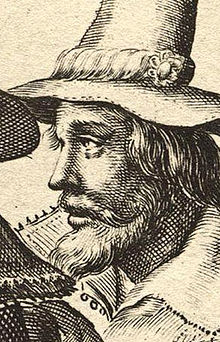
thomas winter

Mr. Thomas Winter

In the dim twilight of that November dawn Mr. Ambrose Rookwood, the young Catholic gentleman, whose relays of fine horses had excited such discussion on the North-western Road—came out into these distracted streets, in company with a friend—one Mr. Thomas Winter. The two gentlemen walked aimlessly here and there for some time, listening attentively to all that was said on all sides, now joining themselves to a group and adding questions on their own part, to the sort of universal interrogatory which prevailed—now shuddering and passing, on their way wuickly as the unformed phantom of the people’s fear began to grow gradually into defined shape. Then as if fearful any longer of uncertainty, they made with extraordinary coolness towards the Parliament House.

The sun had not yet risen; but in the middle of King Street, Westminster, the two found a guard standing. Permission to pass was peremptorily refused. Then as Mr. Rookwood’s friend stood parleying with the guard a white-faced citizen passed by hurriedly, exclaiming in panic-stricken tones, “There is treason discovered! And the king and lords should have been blown up.”

Flight of the Conspirators

The two gentlemen turned without a word, and made for their horses. The heavy relays on the North-western Road were now to be put to their proper use. But great caution had to be exercised. The appalling news had circulated in the city with the rapidity of poison. Barricades were being hastily erected at the ends of the streets; passengers were being stopped and questioned; any appearance of hurry would have led to instant arrest. It was eleven o’clock therefore before the two gentlemen got clear of London—and they were but just in time; for rumours were already in the air of a proclamation forbidding anybody to leave the town for three days. Once clear of London they rode desperately.
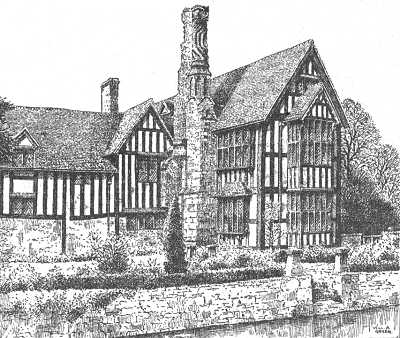
Huddington Court, Worcester

Huddington Court, Worcester

Few incidents I think in history seize the imagination so forcibly as that wild flight of the Gunpowder Conspirators northward. Thomas Winter made for his brother’s house at Huddington in Worcestershire; but Rookwood rode fiercely down the North-western Road to bear the fatal news to the conspirators already assembling on Dunsmoor. Catesby, Piercy, John and Christopher Wright were he knew on the road in front. But the relays already placed for him, and the desperate fear which urged him forwards enabled Rookwood to overtake the others as they were rising the ascent at Brickhill.

In a few words he told them what had happened in London—that Fawkes had been arrested and lodged in the Tower—that at any moment torture might make him give up their names—that the whole scheme had fallen through, and that their only chance of safety lay in instantly joining their friends. From this moment the flight became a stampede. “They devoured the ground,” shouting as they rode through startled towns and villages that they were carrying despatches from the King to Northampton, flinging off their large cloaks, heavy with the rain that still poured remorselessly, that they might add wings even to their precipitate flight. Rookwood rode thirty miles in two hours on one horse. At six in the evening the fugitives arrived at Catesby’s house at Ashby St. Ledgers, about three miles from Daventry. They had ridden the eighty miles from London in seven hours.

Map: Ashby St. Ledgers – Gayhurst
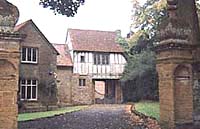
The gatehouse occupied by the Catesbys

The gatehouse occupied by the Catesbys

Here after a brief consultation with Robert Winter, who was staying in the house (it still stands in all its gloomy suggestiveness, this home of England’s most desperate conspirator), they rode off hastily on the same tired horses to join Sir Everard Digby and the pretended hunting gathering on Dunsmoor Heath which the direct road to Holyhead still crosses at the eighty-fifth mile-stone from London.

Sir Everard Digby, knighted by the king three years before he plotted to kill him

Sir Everard Digby, knighted by the king three years before he plotted to kill him

Their further wild course through Warwickshire to Holbeach on the Staffordshire border calls here for no telling, as it is no longer associated with the Road. But so intimately associated with the Gunpowder Treason does the way to Holyhead seem that thought its history is closed so far as the directest route is concerned, the earlier route by Chester has another link to add to its story. A short distance from Newport Pagnell (fifty-one miles from London), stands Gayhurst,the fine Elizabethan house once the home of Sir Everard Digby. Of him a sympathetic historian writes, “His youth, his personal graces, the constancy which he had exhibited whilst he believed himself a martyr in a good cause, the deep sorrow which he testified on becoming sensible of his error, seem to have moved all hearts with pity and even admiration; and if so detestable a villainy as the Gunpowder Plot may be permitted to have its hero Everard Digby was undoubtedly the man.”

Gayhurst House

Gayhurst House

The gray walls of his beautiful Buckinghamshire house were indeed witnesses at all events of some of the most suggestive incidents in the heart-quaking scheme. Fawkes was a frequent guest here—meditating through the prolonged rains which heralded the approach of the destined day, on the state of the powder, by now safely placed under the Parliament House; riding to and fro frequently from London; often an unexpected, always a welcome guest. From Gayhurst, besides, set out that Pilgrimage to St. Winifred’s well, in Flintshire, the motive of which was so much discussed after the discovery of the Conspiracy.

St. Winefride's Well: site of the conspirators' meetings?

St. Winefride’s Well: site of the conspirators’ meetings?

Motives apart however, what is mort important from my point of view is that the company of about thirty persons—all relations of the conspirators; some of the actual conspirators among these, travelled in coaches—proceeded by Daventry to John Grant’s house at Norbrook, a fine melancholy, moated manor once (where is it now?), thence to Robert Winters, at Huddington, and so to Flintshire by Shrewsbury.

holbeche

Holbeche House: where the surviving conspirators were captured


 Index to all the posts in this series

1: The Bath Road: The (True) Legend of the Berkshire Lady

2: The Bath Road: Littlecote and Wild William Darrell

3: The Bath Road: Lacock Abbey

4: The Bath Road: The Bear Inn at Devizes and the “Pictorial Chronicler of the Regency”

5: The Exeter Road: Flying Machines, Muddy Roads and Well-Mannered Highwaymen

6: The Exeter Road: A Foolish Coachman, a Dreadful Snowstorm and a Romance

7: The Exeter Road in 1823: A Myriad of Changes in Fifty Years

8: The Exeter Road: Basingstoke, Andover and Salisbury and the Events They Witnessed

9: The Exeter Road: The Weyhill Fair, Amesbury Abbey and the Extraordinary Duchess of Queensberry

10: The Exeter Road: Stonehenge, Dorchester and the Sad Story of the Monmouth Uprising

11: The Portsmouth Road: Royal Road or Road of Assassination?

12: The Brighton Road: “The Most Nearly Perfect, and Certainly the Most Fashionable of All”

13: The Dover Road: “Rich crowds of historical figures”

14: The Dover Road: Blackheath and Dartford

15: The Dover Road: Rochester and Charles Dickens

16: The Dover Road: William Clements, Gentleman Coachman

17: The York Road: Hadley Green, Barnet

18: The York Road: Enfield Chase and the Gunpowder Treason Plot

19: The York Road: The Stamford Regent Faces the Peril of a Flood

20: The York Road: The Inns at Stilton

21: The Holyhead Road: The Gunpowder Treason Plot

22: The Holyhead Road: Three Notable Coaching Accidents

23: The Holyhead Road: Old Lal the Legless Man and His Extraordinary Flying Machine

24: The Holyhead Road: The Coachmen “More Celebrated Even Than the Most Celebrated of Their Rivals” (Part I)

25: The Holyhead Road: The Coachmen “More Celebrated Even Than the Most Celebrated of Their Rivals” (Part II)

26: Flying Machines and Waggons and What It Was Like To Travel in Them

27: “A few words on Coaching Inns” and Conclusion
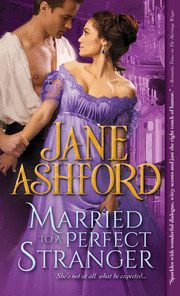
Jane Ashford: Married to a Perfect Stranger

Interview with Jane Ashford

Susana: What inspired you to start writing?

Jane: My mother. She was a reader, a writer, and a firm believer in her children’s talents.

Susana: What comes first: the plot or the characters?

JaneAshford copyJane: I’d have to say they develop together. The personalities of the characters determine where the story can go.

Susana: Are you a plotter or a pantser?

Jane: I begin with a rough outline and let it change as I write.

Susana: Tell us something about your newest release that is NOT in the blurb.

Jane: There’s a monkey.

Susana: What is your favorite food? Least favorite?

Jane: I’m a sucker for cookies or pastries, with a nice pot of English Breakfast tea. I’ve never been able to like liver.

Susana: What would we find under your bed?

Jane: I live in a small house. The space under my bed is filled with storage bins.

Susana: If your publisher offered to fly you anywhere in the world to do research on an upcoming project, where would you mostly likely want to go? Why?

Jane: A Polynesian island, Tuvalu. The heroine of one book in my upcoming series grew up there.

Susana: Do you have a favorite quote or saying?

Jane: As a lover of words, I’m always being struck by good quotes. One I saw recently that I really like is: “Worrying is using your imagination to create something you don’t want.”

Susana: What is something you’d like to accomplish in your writing career next year?

Jane: Meet all deadlines! : )

Susana: What has been your biggest adventure to date?

Jane: I spent some time alone in the mountains in Montana. An amazing experience.

Susana: What is the one modern convenience you can’t do without?

Jane: Electricity, I think. I’m kind of addicted to writing on the computer.

Susana: Are you working on something at present that you would like to tell us about?

Jane: I’m having fun with a new series called The Duke’s Sons. It tells the love stories of the brothers introduced in The Bargain.

One reader who leaves a comment about what they like about series books wins a copy of The Bargain.

Married to a Perfect Stranger-m copy

About Marriage to a Perfect Stranger

Time and distance have changed them both. Quiet and obliging, Mary Fleming and John Bexley married to please their families. Almost immediately, John was sent on a two-year diplomatic mission to China. Now John is back, and everything they thought they knew about each other seems to be wrong… It’s disconcerting, irritating, and somehow very exciting.

AmazonBarnes & Noble

IndieboundBooks a Million • Indigo

About the Author

Jane Ashford discovered Georgette Heyer in junior high school and was entranced by the glittering world and witty language of Regency England. That delight was part of what led her to study English literature and travel widely in Britain and Europe. Jane’s historical romances have been published in Sweden, Italy, England, Denmark, France, Russia, Latvia, the Czech Republic, Slovakia, and Spain, as well as the U.S. She has been nominated for a Career Achievement Award by RT Book Reviews.

WebsiteFacebook

Elizabeth Bailey: Regency Quintet

Regency Quintet Box Set_LARGE EBOOK 700x500 copy

How does a gathering of British Regency authors all together in a box set come about? Well, we’re all members of the Romantic Novelists’ Association, which meets several times a year. We’ve known each other for years, and enjoyed reading each other’s books.

It’s fun to share, and we thought it would be of interest to our respective readers to try other authors writing in the same genre. What better way than by putting together a collection of our own favourite stories? Dukes, lords, gentlemen and spirited ladies. Adventures, improbable matches and witty repartee. What more could a Regency afficionado desire?

About Regency Quintet

Amazon Amazon.uk

A Gallant Defender by Fenella J Miller, in which the resourceful Eliza Fox joins forces with Mr Fletcher Reed to save her family from villainous Lord Wydale.

The Silverton Scandal by Amanda Grange, a rip-roaring adventure with spirited heroine, blackmailer and a lord masquerading as a highwayman.

At the Duke’s Discretion by Wendy Soliman. Surely there can be no future for Amos, who is a duke’s heir, and Cristobel, a nobody with a criminal past?

Dance for a Diamond by Melinda Hammond, award-winning romance:   autocratic Sir Laurence Oakford crosses swords with dance academy owner Miss Antonia Venn.

Fated Folly by Elizabeth Bailey, the sweet and poignant tale of the ogre and the minx in a marriage of convenience.

About the Authors

 Fenella J Miller was born in the Isle of Man. Her father was a Yorkshire man and her mother the daughter of a Rajah. She writes Regency romantic adventures, Jane Austen variations and WW2 historical novels. She lives in a pretty, riverside village in Essex with her husband.

WebsiteFacebook

Amanda Grange is the bestselling author of 25 Regency novels including her series of Jane Austen retellings which look at events from the heroes’ point of view (Mr Darcy’s Diary, etc.)

Website

Wendy Soliman is a British author, now dividing her time between Andorra and Florida. She adores everything to do with the Regency and spends her days dreaming up inventive new ways to get her heroes and heroines into all sorts of trouble!

Website

Melinda Hammond is an award-winning author with more than twenty historical romantic novels published. She was born in England, in the West Country, but now lives in an old farmhouse on the Yorkshire Pennines.

Website

Elizabeth Bailey writes Regency and Georgian historical romance, Georgian mysteries and contemporary fiction with a supernatural edge. She lives in Sussex and spends far too much time reading novels on her kindle instead of writing them!

Amazon Author Page

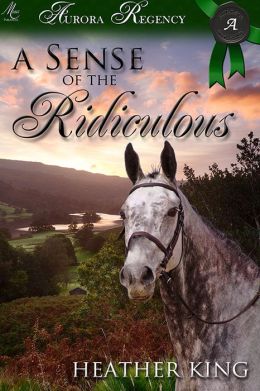
Heather King: A Sense of the Ridiculous

2940148144618_p0_v1_s260x420

About A Sense of the Ridiculous

When a prank goes wrong, headstrong squire’s daughter Jocasta Stanyon wakes up in the bedchamber of an inn with no memory of who she is. The inn is owned by widow Meg Cowley and her handsome son, Richard, who proves to be more than a match for the unconventional Miss Stanyon. Initial attraction leads, through various scrapes and indiscretions, to love, but their stations in life are far removed from each other and fate tears them apart with a cruel hand. Forbidden by her father to have any contact with Richard for six months, Jocasta is horrified when she is then summoned to receive the addresses of a fashionable stranger…

Amazon • Barnes & Noble

SusanaSays3Susana Says

… a new favorite Regency author: 5/5 stars

The first time I read anything by Ms. King was a few weeks ago when I was copy-editing her story, Copenhagen’s Last Charge, for a Waterloo anthology we are both involved in*. I kept telling myself to slow down, since I was supposed to reading slowly and carefully to find errors. But I found myself so immersed in the story that I couldn’t seem to slow down. (Disclaimer: Copenhagen’s Last Charge was copy-edited by another person as well, so if anything was missed, it isn’t entirely my fault. However, the story itself is so compelling that not even the most draconian proofreader could fail to be captivated.)

A Sense of the Ridiculous had the same effect on me. This time, of course, I wasn’t copy-editing, since it was already published, but I have to admit I was hooked from the moment I met Miss Jocasta Stanyon. A more delightful hoyden heroine was never before invented, well, that I can remember, that is. She’s just as horse-mad as her creator (hi, Heather!), but is just as comfortable in a ballroom, and can sew her own clothes as well!

She has her faults. She’s stubborn, impulsive,a bit spoiled by her adoring father, and she doesn’t always tell the truth, although her untruths are more faults of omission than outright lies.Hey, she’s human.You can’t help liking her. She’s also daring, witty, and… ahem… sometimes wears men’s clothes.

Richard Cowley, the hero, is a cut or two above the average innkeeper. Well, at least half a dozen. Most of the innkeepers I’ve run into in my experience reading historical romances have definitely not been young, handsome, good-natured, fun-loving, and still loves his mother. And his grandparents too. No wonder our heroine takes a few liberties with the truth so that she can hang around a bit longer with the fascinating Mr. Cowley and his delightful family.

Read this story immediately. You’ll want to know

  • if the squire’s daughter ends up becoming an innkeeper’s wife
  • if the innkeeper decides to let convention hang and fly off to Gretna Green with his beloved
  • if the squire’s daughter decides to get even with her father by running off with the stable boy
  • if the squire’s son ever feels guilty about putting his passion for sport ahead of his responsibility for his sister

That’s all I’m going to say. You’ll have to read the story to find out if any of those things happen, and you’ll probably be laughing all the way through it.

*Beaux, Ballrooms, and Battles, to be released April 1, 2015, in celebration of the Waterloo bicentenary (June 18, 1815 – June 18, 2015). You are cordially invited to attend our Cover Reveal party on March 18th, from 12:00 noon – 9:00 p.m. EST. Prizes and fun to be had by all!

About the Author

I am an author with a passion for history and in particular the Regency. I love to write warm, flowing and light-hearted stories, following with tiny steps in the magnificent wake of Georgette Heyer.

I live in a beautiful rural part of the UK and share my home with various life forms, including two ponies, three cats and a bouncy dog. When I am not writing, I enjoy reading, walking my dog, horses and music, as well as creative crafts. I also love watching costume dramas on the television.

From being small, I have loved to write—and dream. In my bedroom I had a wallpaper with flower-edged squares—just perfect for writing my ‘news’. I don’t think my mother was overly impressed, although I don’t recall any major repercussions.

I discovered Georgette Heyer in my early teens and in my opinion, there is still nobody in the modern era who can match her in the Regency genre. At this stage my writing career took a back seat when my passion for horses led me off in another direction.

Website • Facebook • Goodreads

Amazon Author Page

Just Released: An Improper Marriage

improper-marriage-e1422916352924When her stepfather suggests she should marry ironmaster Jeremiah Knight, Eleanor Honeybourne knows a lifetime of dullness awaits her, but at the annual glass-maker’s ball, the discovery of an injured man in a summer-house and an overheard conversation lead her to suspect Mr. Knight is not all that he appears. With both her own and Robert’s life at risk, Eleanor sees only one way out of the fix… and when she meets her childhood hero, she is forced into a situation which could well spell her ruin…

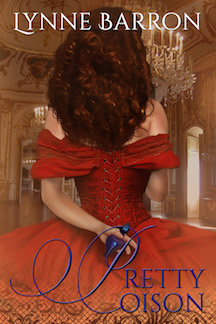
Lynne Barron: Pretty Poison

BBT_TourBanner_PrettyPoison copy

Lynne will be awarding a $25 Amazon or B/N GC to a randomly drawn winner via Rafflecopter during the tour. Click here for the Rafflecopter. Click the banner above to follow the tour and increase your chances of winning.

About Pretty Poison

What’s an American heiress to do when a pair of britches, a plunge into a pond in the dead of winter and a broken betrothal force her to set sail across the ocean to an arranged marriage with a fortune hunting Englishman?

With her hopes and dreams sinking to the bottom of the sea like so much lost treasure, Emily Calvert falls into the pretty poison she finds in a little blue bottle.

Can Nicholas Avery, a charming aristocrat with a faulty memory for names and a family in dire need of financial salvation, convince the wounded lady that the blessed oblivion she finds in his arms is sweeter than opium?

AmazonBarnes & Noble

Excerpt

Emily took an unsteady step back, then another. Nicholas dropped his hands to his thighs, leaned his head back against the tree and closed his eyes. His chest rose and fell, his panting breath sawing in and out through his open mouth.

BookCover_PrettyPoison copy“You don’t know my name,” she accused.

Nicholas opened his eyes and looked at her the very same way her brother Charlie looked at her when he knew he’d been found out in some mischief. “You never told me.”

“You never asked,” she countered.

“A gentleman does not ask a lady her given name.”

“Oh, are we pretending you are a gentleman?”

He had the grace to look abashed, but only barely.

“Did my aunt never tell you?”

“Yes, I’m sure she did.”

“You forgot? We were nearly betrothed to be married and you could not be bothered to remember my name? Why did you not ask your father or your brother? Surely they…” her words faded away when he slowly shook his head.

“I kept thinking someone would say it eventually. Then it became something of a family joke…” It was his turn to allow his words to wither away.

“A family joke,” she repeated.

“No, not a joke precisely, more a humorous game,” he amended.

“But when you followed me into the stables, surely you could have asked me then?”

He looked away from her intent gaze. “I didn’t recognize you.”

“You didn’t recognize me?” she repeated as realization dawned. “When you kissed me, who did you think you were kissing?”

Nicholas cringed at the question.

“Who?” she demanded desperately.

“The stable master’s daughter,” he admitted with a wry shrug.

Emily opened her mouth, snapped it shut again. There were no words. No words for the ridiculousness of the situation in which she found herself.

“What’s your name?” he finally inquired with what she supposed was meant to be a charming, self-deprecating smile.

But Emily didn’t feel like being charmed and she wasn’t for a moment fooled by his attempt at boyish humility.

“Good Lord, you really are a stallion in search of a mare,” she finally said, amazement lacing the words.

“No.” He lurched away from the tree trunk, tripped over a gnarled root, righted himself. But Emily was already turning away from him, turning toward the path that would lead her back to her aunt’s house, back to face his family, who had made her into a joke.

“Wait, Miss Calvert,” he called as he ran to catch up to her.

He laid a hand on her arm as if to halt her. She shrugged his hand away and picked up her pace.

“Please, just let me explain,” he said as he fell into step beside her.

“There’s nothing to explain, I understand perfectly,” she said, proud of how calm and controlled her voice sounded. “You are in need of a broad mare and any lady will do. And while you are making up your mind, you will kiss whomever you please.”

About the Author

Write About What You Know.

Every creative writing teacher and college professor said these words to Lynne Barron in one form or another. But what did she know?

She knew she enjoyed the guilty pleasure of reading romance novels whenever she could find time between studying, working and raising her son as a single mother.

She knew quite a bit about women’s lives in the Regency and Victorian era from years spent bouncing back and forth between European History and English Literature as a major in college.

She knew precious little about romance except to know that it was more than the cliché card and a dozen red roses on Valentine’s Day.

Then she met her wonderfully romantic husband and finally she knew.

Passion, Love and Romance.

And she began to write.

WebsiteFacebookTwitter

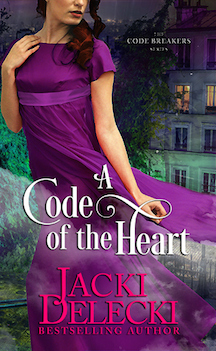
Jacki Delecki: A Code of the Heart

 The Three Most Interesting Historical Factoids I Discovered While Researching A Code of the Heart

 by Jacki Delecki

One of the things I love most about being a Regency romantic mystery author is research. Just when I think there is nothing new to be learned, I discover some intriguing fact that I simply must use in a story. If it doesn’t fit the current plot, well, there’s always the next book waiting to be written.

While developing the story for my current release, A Code of the Heart, I encountered several fascinating facts related to Regency fashion, etiquette and maritime war strategies. I thought it would be fun to share my top three favorite facts.

  1. Smuggling of fabrics and the import of French fashion continued throughout the war, despite blockades. Fashion dolls, which were used to showcase designs and styles, were of such importance that even during times of hostility between England and France, concessions were made to allow the continued exchange of fashion dolls.
  1. Aristocrats (including spouses) never called each other by their first names. TheyJ used family names or titles. In my book, I took a literary liberty and had my hero ask the heroine to call him by his first name.
  1. During the French and British conflict, the French planned to win the war by sea. Napoleon accumulated battle ships in Boulogne. The secret weapon referenced in A Code of the Heart was an actual device and was part of the English attempt to attack French ships.

It is this rich historic detail that makes Regency romance so much fun to write and read. What fascinating facts have you discovered in your favorite Regency novels?

A Code of the Heart copy

About A Code of the Heart

Miss Amelia Bonnington has been in love with her childhood hero since she was eleven years old… or so she thought until a not-so proper impassioned and unyielding kiss from the not-so honorable and equally disreputable Lord Derrick Brinsley, gave her reason to question the feelings of the heart.

Lord Brinsley, shunned from society for running off with his brother’s fiancée, hasn’t cared about or questioned his lack of acceptance until meeting the beguiling Amelia Bonnington. One passionate moment with the fiery Miss Bonnington has him more than willing to play by society’s rules to possess the breathtaking, red-haired woman.

Amelia unwittingly becomes embroiled in espionage when she stumbles upon a smuggling ring in the modiste shop of her good friend. To prove her French friend’s innocence, she dangerously jumps into the fray, jeopardizing more than her life.

On undercover assignment to prevent the French from stealing the Royal Navy’s deadly weapon, Derrick must fight to protect British secrets from falling into the hands of foreign agents, and the chance at love with the only woman capable of redeeming him.

AmazonBarnes & NobleiBooksKobo • GooglePlay

Excerpt

Prologue

 Edworth House Party

Christmas Eve, 1802

Amelia Bonnington braced herself as the crowd bumped and pushed, straining to get close to His Highness. The crème of society shoved and elbowed, politely-of-course, since one would never want to be accused of bad manners.

The Prince Regent stood on a small platform elaborately decorated with heavy boughs of greenery and red velvet, matching the Christmas décor of the massive ballroom. Hundreds of beeswax candles burned. No expense had been spared for the house party celebrating his royal visit.

Amelia had no desire to be part of the prince’s circle; they were a ghastly group who were only interested in themselves and their own pleasure.

She sucked in the little air left in the room and pushed, courteously-of-course, toward the door. The crowd and the heat were unbearable. She wasn’t one to swoon, but with the thick mix of perfume and the hot bodies, she felt tonight might be her first. She, one of the steadiest women, felt unsteady and unsafe. The last days of upheaval must have had a greater effect on her than she had wanted to believe.

Her whole world had been turned upside down and twisted sideways at this house party. In the last two days, her friends had been poisoned and kidnapped, and she had been ensnared in the French villain’s trap. But the deadly crisis had to be kept secret. Nothing must look out of the ordinary. No one outside the intelligence world ever know about the enemy’s threat to the Prince Regent’s life. The ball must go on.

Amelia looked over her shoulder for the closest exit, but the throng pushed her forward. She needed to escape from the packed room.

A gentleman used the chaos in the crowded room, to crash into her, to take liberties with her person. After spending the last four years in congested ballrooms, she fully recognized the scoundrel’s ploy. His heavy eyelids didn’t conceal his hungry eyes, focused down her décolletage. As his eyes remained fixated on her breasts, he grabbed her elbow, pretending to help her when in fact he intended to pull her close against his hefty, malodorous body.

His reek of stale alcohol and sour sweat constricted her stomach and burned her throat. She pulled her arm away from his grasp, repulsed by the wetness seeping through his gloves. “Sir, release me this instant.”

She was about to dig her heel into the supposed gentleman’s fat toe when suddenly a space opened around her and a smell of fresh lime soap surrounded her.

The perspiring man stared behind her. His slack mouth and his blood-shot eyes widened in fear.

She recognized Lord Brinsley’s scent without needing to turn; he was an impossibly difficult, yet irresistibly appealing man. His deep, velvety voice flitted down her skin like a caress. “Miss Amelia, may I escort you away from this mob?”

Relief and something much more potent buzzed all her nerve endings. She turned quickly and found herself pressed against the broad chest of the man she had been forced to conspire with to save her friends.

She hastily straightened herself. “I never thought I’d be happy to see you.” She refused to be like all the other women who fawned for his slightest glance.

He lifted an eyebrow and the corner of his mouth in that sardonic way she always found irritating. He was too big, too handsome, and too confident for her to find him irresistible. She’d never let him have the satisfaction of knowing she found him…almost irresistible.

About the Author

Descended from a long line of storytellers, Jacki spins adventures filled with mystery, healing and romance.

HeadShot_Small copyJacki’s love affair with the arts began at a young age and inspired her to train as a jazz singer and dancer. She has performed many acting roles with Seattle Opera Company and Pacific Northwest Ballet. Her travels to London and Paris ignited a deep-seated passion to write the Regency Code Breaker Series. Jacki is certain she spent at least one lifetime dancing in the Moulin Rouge.

Jacki has set her Grayce Walters Mystery Series in Seattle, her long-time home. The city’s unique and colorful locations are a backdrop for her thrilling romantic suspense. Although writing now fills much of her day, she continues to volunteer for Seattle’s Ballet and Opera Companies and leads children’s tours of Pike Street Market. Her volunteer work with Seattle’s homeless shelters influenced one of her main characters in An Inner Fire and Women Under Fire.

Jacki’s two Golden Labs, Gus and Talley, were her constant companions. Their years of devotion and intuition inspired her to write dogs as main characters alongside her strong heroines. A geek at heart, Jacki loves superhero movies—a hero’s battle against insurmountable odds. But her heroines don’t have to wear a unitard to fight injustice and battle for the underdog.

Look for more heart-pounding adventure, intrigue, and romance in Jacki’s Code Breakers Series. A Code of Love is the first book in the series. A Christmas CodeA Regency Novella, is now available at all retail sites. A Code of the Heart will be released on Valentine’s Day 2015.

To learn more about Jacki and her books and to be the first to hear about contests and giveaways join her newsletter found on her website.

WebsiteFacebookTwitter

Alicia Quigley: An Honest Deception/An Indecent Charade

All About Alicia Quigley

The first thing that readers may want to know about me, is that “I” am a pseudonym for two sisters living in central Michigan who find writing to be the thing they most enjoy doing together. We actually started writing together quite a long time ago, but since the road to publication for authors mired in a “flyover” state was long and difficult at the time, our work was never published. With the advent of e-books and indie publishing, we decided recently that the time had come to try again, and we published our first pair of books, A Duchess Enraged and A Most Unusual Situation, almost exactly a year ago. We’ve been thrilled with the good reception our books have gotten, so this guest blog post is a chance to celebrate our first year as authors, as well as discuss our newest pair of books, An Honest Deception and An Indecent Charade.

Why do I say, “pair of books”? Well, in most cases we publish two versions of each book! One version we refer to as a Traditional (close those bedroom doors!) version, and the other as an After Dark (take the bedroom doors off the hinges!) version. We decided to do this because we enjoy writers like Georgette Heyer, who barely even hinted that characters had a sex life, as well as the work of authors such as Lisa Kleypas, Jo Beverley and Madeleine Hunter, who make it very clear that they do. This made us feel that we’d like to offer something to readers of both types!

We have released three pairs of books as well as a Christmas novella, The Yuletide Countess, that was written as a Traditional only, and a full length novel, Sense and Sensuality, which is only After Dark. These books are both sequels: The Yuletide Countess to The Secret Bluestocking/A Lady of Passion and Sense and Sensuality to A Duchess Enraged/A Most Unusual Situation. In these books, the decision to do only one version was driven by the personality of the characters, their motivations and the decision to include descriptions of sexual encounters or not (Harriet, the heroine of The Yuletide Countess, would have fainted from embarrassment if we wrote her into a sex scene, poor dear!).

An Honest Deception/An Indecent Charade are also sequels to The Secret Bluestocking/A Lady of Passion. Like these two books and The Yuletide Countess, the plot is driven by the way societal constraints on women’s actions and their personalities and life situations affect their ability to control their own lives. In it, a secondary character Letitia, Lady Morgan, has been newly widowed when her wastrel husband dies in a riding accident. To reach her own HEA, she struggles to overcome the very difficult financial straits that this leaves her in, along with the efforts of her relations to push her into a distasteful second marriage. I find Letitia a very sympathetic heroine; she has a sweet personality, but is smart and fun. She’s the kind of girlfriend you’d enjoy having a coffee with and you want her to win out!

I think that acknowledging and respecting the heavy limitations on women that are a fact of history while creating a plot and characters that the modern reader will enjoy is one of the major challenges in writing a historical romance. We try to look at the legal, historical and cultural framework to find actual events, social trends, writers and other period-relevant situations that allow characters and plots that are appealing today to be realistic as well. For example, the works of Mary Wollstonecraft play a large role in the decision of the unmarried heroine of A Lady of Passion to have an affair. But widows like Caroline, the heroine of Sense and Sensuality, or Letitia in An Indecent Charade were considered at the time to be relatively free to do the same without risk of scandal. Given such a breath of freedom, I enjoy watching both women find themselves and their power (as well as some very entertaining sex).

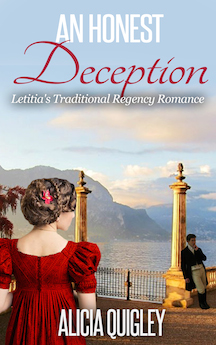
About An Honest Deception

Will love rescue her long-suffering heart or will she be doomed to a loveless arranged marriage?

After the death of her wastrel husband, Alfred, Lady Letitia Morgan wants nothing more than to settle into the peaceful life of a widow. Her limited finances are enough to provide Letty and her two children that simple life.

However, her well-meaning cousin demands that she remarry as soon as is proper; indeed, he feels it to be her duty as a woman and to her family. To that end, he moves to arrange her marriage to the Bishop of Mainwaring, someone for whom Letty has no feelings whatsoever.

In the meantime, Phillip Masham, Marquess of Eynsford and long-time friend of Francis, Lord Exencour, has found himself very much interested in Letty. Unfortunately for him, Letty’s opinion of titled gentry was quite soured by the late Baron Morgan. Not one to give up, the creative Marquess becomes Mr. Phillip Markham, a solicitor in the Inner Temple, in hopes that Letty will get to know him for who his is, beyond his title.

The two form a friendship that may deepen into love, but will it survive the truth?

Letty Trad v2 copy

Amazon

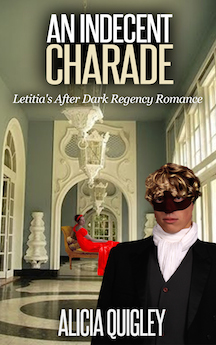
About An Indecent Charade: Letitia’s After Dark Regency Romance

Will passion revive her long-suffering heart or will she be doomed to a loveless arranged marriage?

After the death of her wastrel husband, Alfred, Lady Letitia Morgan wants nothing more than to settle into the peaceful life of a widow. Her limited finances are enough to provide Letty and her two children that simple life.

Phillip Masham, Marquess of Eynsford and long-time friend of Francis, Lord Exencour, finds himself very much interested in Letty. Unfortunately for him, Letty’s opinion of titled gentry was quite soured by the late Baron Morgan. Not one to give up, the creative Marquess becomes Mr. Phillip Markham, a solicitor in the Inner Temple, in hopes that Letty will get to know him for who his is, beyond his title.

However, her well-meaning cousin demands that she remarry as soon as is proper; indeed, he feels it to be her duty as a woman and to her family. To that end, he moves to arrange her marriage to the Bishop of Mainwaring, someone for whom Letty has no feelings whatsoever.

Letty and Phillip embark upon an affair that may deepen into love, but will it survive the truth?

Letty AD v2 copy

Amazon

Excerpt

About the Author

I am a lifelong lover of romance novels, who fell in love with Jane Austen in grade school, and Georgette Heyer in junior high.  I made up games with playing cards using the face cards for Heyer characters, and sewed regency gowns (walking dresses, riding habits and bonnets that even Lydia Bennett wouldn’t have touched) for my Barbie.  In spite of a terrible science and engineering addiction, I remain a devotee of the romance, and enjoy turning hand to their production as well as their consumption.

WebsiteFacebook • TwitterPinterestNewsletter

Regan Walker: The Shamrock and the Rose

Theatre Choices for Valentine’s Day in Regency London

By Regan Walker

 Today, we have a lot of choices for theaters (“theatre” in England) if we’re looking for one for Valentine’s Day, but you might be surprised to know how many theatres Londoners had to choose from during the Regency period.

In researching London theatres in England during the Regency period (1811-1820) for my Valentine’s Day story The Shamrock & The Rose I was amazed to discover the numerous choices that Londoners had on any given night. Many more than we have today in many of America’s cities if we are talking live theatre. From the variety of choices Londoners had, it would seem they frequently enjoyed an evening at the theatre with as many as 20,000 attending on any given evening.

One could see a drama, perhaps one of Shakespeare’s plays, a light comedy or an opera, as well as ballet, pantomimes and skits—even a clown! And some of these offerings might be combined in a single theatre in a single night.

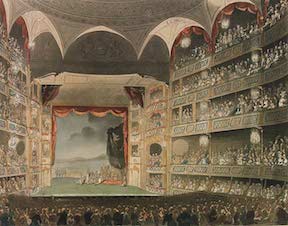
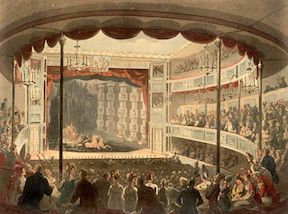
As you can see from the pictures, while the theatres had boxes on the sides for those who could afford them, the majority of people stood in the central area. The theatres were lit mostly by candlelight from a score of chandeliers, and while this might seem romantic, it also presented some issues. First, since this light was not dimmed as the entertainment began, you could see everyone in the audience as well as the actors on stage and they could see you! So whatever activities you might think to engage in while in your private box, they had best be discreet. Second, the use of candlelight also posed a fire hazard, as evidenced by the fact several of the theatres burned down and had to be replaced.

More than one theatre had Letters Patent from the Crown, and could, therefore, claim the name “Theatre-Royal.” In addition to those, there were more specialized theatres and smaller playhouses as well. Here are some of the choices they had:

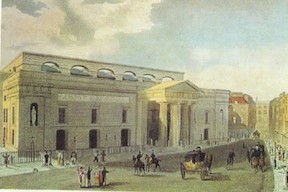
The Theatre-Royal, Covent Garden (now the Royal Opera House) was rebuilt in 1809 after a fire destroyed it the year before. Holding crowds exceeding 3,000, it became, perhaps, the leading theatre of the time. Several of the actresses and singers who performed on this stage married into the peerage, including Mary Bolton, Lady Thurlow, mentioned in my story.

Theatre Royal Covent Garden copy

The Theatre-Royal Covent Garden

The Theatre-Royal, Drury Lane (mentioned in my Christmas short story, The Holly & The Thistle in reference to its holiday entertainment), was redesigned in 1812 after a fire destroyed it in 1809. That was the fourth theatre to be on the site, the first having been constructed in 1663, pursuant to Letters Patent from Charles II. This was the first theatre to be entirely lit by gaslight in 1817.

The Theatre-Royal Drury Lane

The Theatre-Royal Drury Lane

The Theatre-Royal, Hay-Market (also known as Haymarket Theatre or the Little Theatre) dates to 1720. (My Valentine’s Day short story, The Shamrock & The Rose opens with a scene set in this theatre.) It was relocated and redesigned in 1820 and the new theatre, while in many ways a reflection of the old one with flat sidewalls, tiers of boxes, a back gallery and the pit, was much more opulent with colors of pink, crimson and gold, and a circular vestibule “almost lined” with mirrors. It was the last theatre to be lit by gaslight (in 1843).

The Theatre-Royal Hay-Market

The Theatre-Royal Hay-Market

The Sadler’s Wells Theatre in the London Borough of Islington during the Regency featured famous actors, including Edmund Kean and Joseph Grimaldi, who was best remembered for his character “Joey the Clown” with white face and rouge half-moons on each cheek. Sadler’s Wells (also known as “The Aquatic Theatre“) was used to stage sensational naval melodramas, including a recreation of Nelson’s victory at the Nile called Naval Pillars, and a recreation of the Franco-Spanish siege of Gibraltar, which included water and replicas of the fleet of ships, using a one inch to one foot scale, and working miniature cannon.

Sadler Wells Theatre

Sadler’s Wells Theatre

In addition to the major theatres holding thousands, there were many other options for the theatregoer in the Regency:

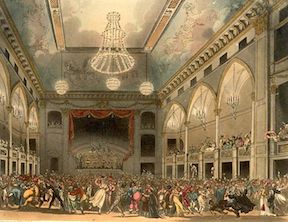
The Pantheon, constructed on Oxford Street in 1772, was originally designed for balls and masquerades before becoming an opera house in 1791. It was converted to a theatre 1811-12, but its role in the theatres of London was short lived. Damaged by fire and troubled financially owing to irregularities in its license, it was replaced in 1814 by the Pantheon Bazaar.

The Pantheon Theatre

The Pantheon Theatre

The Haymarket (King’s Theatre) Opera House was originally built by the architect and playwright Sir John Vanbrugh in 1705. Destroyed by fire in 1789, it was rebuilt and used extensively for opera.

The Lyceum Theatre first became a “licensed” house in 1809 and was rebuilt in 1816, and renamed The English Opera House. It was famous for being the first theatre in London to feature some gas lighting (1817), and for hosting the London première of Mozart’s Italian opera Così fan tutte.

The Adelphi Theatre was constructed in 1806 by merchant John Scott to showcase his daughter’s theatrical talents, and was given a new facade and redecorated in 1814. It reopened in 1819 as the Adelphi, named after the area of West London built by the brothers Adam from 1768. Among the actors who appeared on its stage was the comedian Charles Matthews, whose work was so admired by young Charles Dickens.

The Olympic Theatre was a playhouse built from the timbers of the French warship “Ville de Paris” (the former deck serving as the stage). It opened as the “Olympic Pavilion” in 1806. After financial losses, in 1813, it was sold to Robert William Elliston, who refurbished the interior and renamed it the “Little Drury Lane” by virtue of its proximity to the more established patent theatre.

The Royalty Theatre was opened in 1787 by the actor John Palmer in defiance of the 1737 patent monopoly act and featured as its first production As You Like It. Without a proper license, however, it was forced to close, and Palmer was arrested. Under the management of William Macready, the Royalty continued on, struggling with pantomimes and burlettas (comic opera). In 1816, it was renamed the “East End Theatre,” and continued to offer entertainment until it was burned down ten years later.

About The Shamrock and the Rose

A stint playing Portia at the Theatre-Royal at Haymarket in London, a dropped valentine and a dangerous desire lead gentle-born Rose Collingwood into the arms of a handsome Irish barrister whose love will hazard all she is.

Amazon

Excerpt

“Who chooseth me must give and hazard all he hath.”

—from The Merchant of Venice by William Shakespeare

London, February 1818

Morgan O’Connell hardly noticed Sophie as she turned her attention from the stage and artfully tossed her head of dark curls, smiling at him from behind her lace-covered fan. He was tired of his companion’s feigned shyness and coquettish glances, just as he was tired of the play they would be seeing. The Merchant of Venice, though just beginning, held little interest for him. Once a favorite, he supposed he’d seen too many bad productions for it to remain so. Still, he liked the ambience of the Theatre-Royal at Haymarket, which seemed the place he most often sought entertainment now that he lived in London. Sophie seemed to be enjoying it, too.

ReganWalker The Shamrock & The Rose-small copyHis gaze drifted to the stage where appeared the three chests from which Portia’s suitors must choose, her dead father having left a puzzle to determine which man would gain both his daughter and his wealth. Gold, silver and lead; only one held the prize. And the cost to hazard a guess was high, for those who failed must vow never to wed.

As the play unfolded, Morgan’s eyes soon diverted from the chests to the woman acting the part of Portia. She was beautiful and young, somewhere between nineteen and twenty-one. Though he couldn’t tell if that luxurious long brown hair was the actress’s own, the sixteenth-century gown was most becoming to her curves. Her acting was extraordinary, holding him enraptured and sweeping him into a story he’d thought no longer held any allure. Small movements of her eyes, facial expressions and gestures conveyed much that Shakespeare’s lines did not. If she’d never spoken a word, he would have known Portia’s true heart. When she did speak, he believed in a real Portia of long ago.

Ignoring his female companion, Morgan leaned forward. “A superb Portia, Roger, would you not agree?”

“She’s captured my attention,” his friend whispered, likely so Judith Seaton sitting next to him would not hear. Judith was a new love interest, and Roger had been trying to impress her. “I’ve heard she is fresh to the stage but already drawing many compliments.”

“Remind me who she is,” Morgan said in a voice too low for Sophie to hear.

“Lily Underwood, as I recall the playbill.”

Morgan nodded and sat back, relieved that Sophie had again taken up her study of the audience below. It was clear she was more a follower of the haut ton than a devotee of Shakespeare.

From his box above the stage, Morgan could see well the actors moving about below. His eyes lingered on the woman portraying Portia, the one he now knew as Miss Underwood. She had a compelling voice, one that deepened as the character she portrayed donned the guise of a man to adroitly argue the points of law that would save her lover’s friend while cleverly entrapping the moneylender who demanded Antonio’s flesh.

Leaning forward, he listened as she spoke the lines that were his favorites:

“The quality of mercy is not strain’d.
It droppeth as the gentle rain from heaven
Upon the place beneath. It is twice blest:
It blesseth him that gives and him that takes.”

Portia was the kind of woman Morgan wanted: brave, forthright and intelligent, a woman whose spirit was equal to his own. Unfortunately, these were not qualities he’d find in an English actress, however comely. And though he might consider a tryst with such an actress, his Irish family would only be satisfied with an Irish bride.

About the Author

Regan Walker profile pic 2014 copyBestselling author Regan Walker loved to write stories as a child, particularly those about adventure-loving girls, but by the time she got to college more serious pursuits took priority. One of her professors encouraged her to pursue the profession of law, which she did. Years of serving clients in private practice and several stints in high levels of government gave her a love of international travel and a feel for the demands of the “Crown” on its subjects. Hence her romance novels often involve a demanding sovereign who taps his subjects for “special assignments.” In each of her novels, there is always real history and real historic figures.

Regan lives in San Diego with her golden retriever, Link, whom she says inspires her every day to relax and smell the roses.

Website BlogTwitterFacebook • Goodreads

Marisa Dillon: The Lady of the Garter

IMG_4235.JPG

HAPPY BIRTHDAY, MARISA!

VBT_TourBanner_TheLadyOfTheGarter copy

Marisa Dillon will be awarding a $25 Amazon or Barnes and Noble GC to a randomly drawn winner via Rafflecopter during the tour. Click here for the Rafflecopter. Click on the banner above to follow the tour and increase your chances of winning.

Interview with Marisa Dillon

Susana: How did you come up with the idea for this book?

Marisa Riding copyMarisa: The inspiration for the story came to me after a trip I took back in time one autumn afternoon. I live in Ohio, and we have one of the largest and most authentic Renaissance Festivals in the country.

I even dressed the part and took a ride on a warhorse. I was inspired by what I saw. The jousting reenactments, danger, romance, chivalry, comedy, comradery. It was all there and I wanted to write a story about that world.

Susana: Tell us more about the real history in this story?

Marisa: I love the idea of chivalry and romance mingling together. In the late 15th century, the notion of the knight in shining armor was not a fantasy, but a reality (if history doesn’t lie).  And as a lover of history and romance, I couldn’t resist researching and then writing about a group of knights who have been revered and served the English monarchy for generations. The Most Noble Order of the Garter was founded by King Edward III in 1348, holds the highest order of chivalry, and is the most prestigious group in service to England.

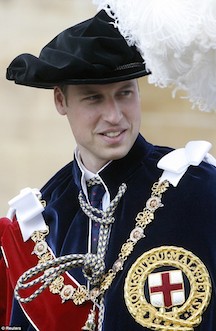
Price William Orde of the Garter copyEven Prince William, Duke of Cambridge, serves as a Garter Knight today.

As a homage to King Edward, I named the squire, who becomes a knight in my story, after the Garter’s founder, but there’s more to my squire than meets the eye.

Susana:  Many readers enjoy a historical romances. What kind of research did you do?

Marisa: Well, as much as I like to think watching jousting matches at the Ren Fair would help me write a story that featured knights in tournaments, I realized early on, that I’d need to do something more in-depth.

Knights at Tournament copyI was surprised to find that the Ren Fair had a book kiosk and stumbled upon a book called “Knights at Tournament,” by Christopher Gravatt.

This resource was indispensable. I also interviewed a man who travels the country working as a jousting knight on the Ren Fair circuit and on the TV show, “Full Metal Jousting.”

He told me what it felt like to be struck by a lance and how it impacted his body, liking putting him bed for a few days to recover after one brutal hit.

Full-metal-jousting copy

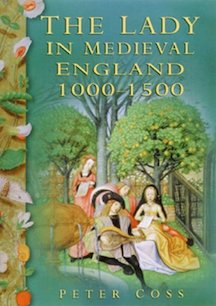
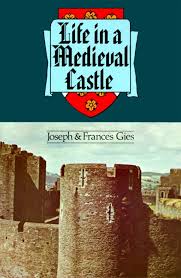
Also, when it came to getting details about the 15th Century. I had these three books at my fingertips. These resources helped me paint my pictures of medieval life and they also ensured my descriptions were accurate.

Research book

The Lady in Medieval England 1000-1500 copy

Life in a Medieval Castle

Words like bailey, porticus were imperative for the story to describe places in the castle. I also needed to know what period items of clothing were called in that era. A hauberk of chain mail and a houppelande gown, were items I described my characters wearing, helping to provide authenticity and provoke visual imagines for the reader.

About The Lady of the Garter

When Henry VII takes the throne, not all are loyal to the new king. Garter knight, Sir James, is charged with bringing dissenters to justice. Determined to fulfill his vows, he’s unprepared for Lady Elena, a girl from his past he’s never forgotten.

Lady Elena defies her family and disguises herself as a squire to reunite with the man she’s always loved. She might be able to wield a sword, but she still possesses a woman’s heart.

Thrust into a world of danger and family rivalry, James and Elena face the ultimate test.

Can James avenge his father’s death and find passion, or will his Garter oaths hold him to a life of service without love?

Amazon

Excerpt

Cover_TheLadyOfTheGarter copyElena had prayed that James would rescue her, but not at the price he paid. How would she ever make this right? First, she’d lost his trust. Now he lost Dragon because of her carelessness. She fully expected to be escorted back to Warwickshire after they returned to Nunnery. She hoped it would be with anyone but James or she wouldn’t survive it.

“God’s blood, woman, who do you think you are?” His deep, powerful voice made her cringe.

She couldn’t answer.

He sighed, steering the horse underneath some trees. Then he turned so abruptly, she thought he’d strike her.

“Are you daft, woman?”

She covered her face with both hands.

“You’re not ready to be a knight, Elena. Look at me.” He drew her hands away. “You’ve sworn allegiance to me, but you constantly disobey.” His eyebrows knit together. “You’ve begged for guidance, yet refuse to follow my instructions.” He shook his head. “You speak of courage, yet don’t show any. Did you not consider the consequences when you lied your way into my life? You’re selfish and don’t consider the future. The ability to sacrifice for the good of others is what qualifies a man for knighthood. Your heart is unworthy.”

But her heart was worthy. Perhaps not for knighthood, but for love. His love. And that seemed more important to her now. Although his criticism hurt, she knew he cared about her. His eyes showed it. She kissed him, her quivering lips met his. It was the only answer she could give. She needed to sate her unbridled passion. She wanted him. She wanted this. It might be her only chance before he came to his senses.

He responded, embracing her.

When he finally released her, she whimpered and leaned into him, wanting more.

He gazed into her eyes. Why had he stopped?

About the Author

With a degree in journalism, Marisa has spent many years writing for the television industry. As an award-winning producer/director/marketer, she has worked on commercial production, show creation, product branding and social media.

Marisa’s passion for writing began when her first-grade teacher read her poem aloud and posted it on the classroom wall. She soon followed up by writing plays for her neighborhood friends and hosting the productions in her garage.

Marisa has always enjoyed reading romance novels and now realizes a dream come true, writing romantic adventures. She lives in Kettering, Ohio, with her first love and knight in shining armor, James.

You can visit Marisa at: www.marisadillon.com. And you can connect with Marisa on Facebook.com/pages/Marisa-Dillon and Twitter.com/marisadillon.

Ann Lethbridge: Captured Countess (a Beresford Abbey story)

Interview with Ann Lethbridge

Susana: What inspired you to start writing?

Ann: The first time I got my fingers on a typewriter keyboard at the age of about eight in a friend’s house, I wanted to write. I was trying to write poetry, because the typewriter allowed you to put the lines on the page in interesting shapes.

AnnLethbridge Photo copyI enjoyed writing what we called composition at school but I never actually dreamed of being “a writer.” In all of my 9-5 jobs I was required to write reports, and to brainstorm in meetings. I think the experience gave me a great appreciation and some skill in the presentation of ideas in a logical matter, and using my imagination, although it wasn’t fiction. Or shouldn’t have been, anyway. It wasn’t until much later that I attempted a novel during a period of utter enforced boredom and I won’t bore you with the details.

Having finished the first book, not a book anyone would actually want to read mind you, I was hooked.

Susana: How long have you been writing?

Ann: I began that first novel in the year 2000. Was it something about a new millennium that compelled me to start in a completely different direction? I have often wondered if it was karma or fate, or just plain luck.  Needless to say my first baby was a bit of an ugly duckling, but I persevered. Since then I have published fourteen full length novels and fourteen short stories, most of them with Harlequin Historicals. My first book came out in 2006 and all but two of the books I wrote between 2000 and now are in print.

Susana: What advice would you give to writers just starting out?

Ann: My advice would be to finish the first book, write THE END, no matter how many doubts you have. And once finished, and while you are revising and polishing, start the next one and the next.

If you receive feedback from critique partners or contests, take it under advisement, see if it works for you, but never forget that writing is a creative art and that what works for one may not work for another. It is your book. I do not advise that, however, if you land a contract and an editor. Editors are to be listened to.

While you are writing, and submitting finished books to agents and editors, or hiring editors for your story, you should also be attending conferences and writing workshops that work for your particular genre. I would also advise that it is a very bad idea to revise and revise one book over a period of years rather than moving on to something new. That sort of revision will suck the life out of a creative work, though you will need to polish each work more than once before it is ready to be shown to the world.

A writer should continue to attend writing workshops no matter how many books they have published.

For independent publishing you will need to hire a concept editor and a copy editor when your book is finished. You will need to follow their advice with respect the to manuscript, which means you need to select them carefully and trust their judgement.

Above all, persevere, not with the same book, but with the learning and the writing, and more writing.

Susana: What comes first: the plot or the characters? Are you a plotter or a pantser?

Ann: The two questions combine for me. I am a pantser, which is a horrible process because it involves many incorrect pathways and dead ends, but if I try anything else, I become bored. So I don’t.

Plot or characters: I always start with a first scene. It comes to me fully formed and rarely changes. It is almost set in stone.

I just finished a Christmas novella. I lay down on the couch and thought “Christmas…” and a scene played out in my head. It came with characters and a situation. If I try to redirect it, then it turns right back around and starts where it had before. I think this relates back to being a pantser.

Then I learn about the characters. Why they are there? What is wrong? What is right? Who they are and why they are who they are? The scene rolls out like a movie and leaves me wandering along behind trying to pick up the threads. As I said. Horrible. And it is always the same. Yuck.

Susana: Tell us something about your newest release that is NOT in the blurb.

Ann: I found this amazing bit of information—Beau Brummell played cricket for the County of Hampshire against the newly formed England team. A bit like a home team taking on the Olympic team in some sports today.

Now as we all know, The Beau does not get hot and sweaty. E.v.e.r. But he did play cricket in a pretty famous game at Lord’s Cricket Ground and he batted exceedingly well, twenty-three runs before he was caught out. And of all the luck, my heroine is French, so it gave me a bit of a chance to explain the game without it sounding stilted.  I could not resist. And nor could she. The hero, of course, managed to catch a wild ball before it hit the spectators. Well he is the hero.

Susana: What are you reading now?

Ann: I read a great deal, inside and outside my genre. I have a thing going for Grace Burrowes, Nalini Singh and Diana Gabaldon at the moment as well as fantasy writer Brandon Sanderson. Why oh why can’t these folks write faster? Honestly I love books and if the writer hooks me, I read everything they have. I love all genres, but always go back to my historical romances for my real fix.

Right now I have just finished a binge with Grace and since I am about to start a new book, likely I will be on hiatus from reading anything until I have the few first chapters down. I do not like to let another writer in my head when I am at the beginning of a book.

Susana: What is your work schedule like when writing?

Ann: I think my schedule is pretty well like most writers. I get up at around 7:30, read email, knowing I shouldn’t be reading email (it’s a procrastination tactic). After coffee and getting dressed I start work. I work on the story until noon if things are going well, naturally interrupting myself with email, to procrastinate. Afternoons are spent on the promoting side of things, errands, housework and procrastinating with email.

Susana: What did you want to be when you grew up?

Ann: A princess.

Susana: What is the funniest thing that ever happened to you as a writer?

Ann: Before I was published and I was working full time, I would write every chance I got, in the car, at a hockey game, in bed with one of those little pen lights.  One day when we were driving my daughter back to university, I spent the whole drive in the backseat writing. I know lots of people cannot do this, but reading in a car has never bothered me.

Anyway, it was a three-hour drive and I got heaps done. A whole scene of a book, now published as The Gamekeeper’s Lady. On the way home, I offered to read the scene, a sex scene, to my husband to keep him entertained, the well having dried by that time. It was dark but I had the reading light on.

He cheerfully agreed. So I read about my hero getting it on with his rather evil mistress, before he said goodbye to her. I hope I am not shocking you. After about half an hour, my dearly beloved slowed down and was looking mystified. “What is wrong,” I asked. “I haven’t a clue where we are,” he answered.

So you see it really is true, a guy’s brain moves location when he gets to thinking about you know what.  It took us at least half an hour of driving around to get us unlost and back on the right road. Thinking back, I should have claimed this as a tax-deductible expense for research.

Susana: LOL!

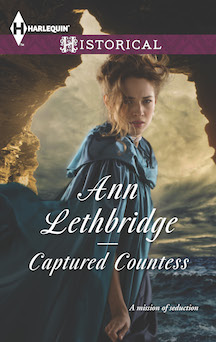
About Captive Countess

Never trust a spy! 

Captured Countess copyNicoletta, the Countess Vilandry, is on a dangerous mission—to lure fellow spy Gabriel D’Arcy into bed and into revealing his true loyalties. With such sensual games at play and such strong sensations awakened, suddenly Nicky’s dangerously close to exposing her real identity.

Gabe knows that the countess has been sent to seduce him. The only question is to what end? He’s never met such a captivating woman—and he’s determined to enjoy every seductive second she spends as his very willing captive!

iBooksAmazonUS • AmazonCABarnes & Noble

HarlequinChapters Indigo

Excerpt

About the Author

An army brat born in England, Ann lived all over the UK in her youth. She grew up loving history, but majored in business with history on the side. Now living in Canada, she has a husband and two lovely daughters and a Maltese Terrier called Teaser, who likes to sit on a chair beside the computer while she creates her award winning Regency historical romances.

During her successful career as an administrator, the call of the past and the stories in her imagination brought her to a fork in the road. After her first book was published in 2006, she decided to write full time and hasn’t looked back. She has given talks on the various aspects of publishing as well as workshops on the craft of writing. She blogs regularly about her research on her Regency Ramble Blog.

Over the years several of her books have won awards including an honorable mention by Foreword Magazine. She is particularly proud of her 2009 win of the Daphne DuMaurier Award for Excellence in Mystery/Suspense for The Rake’s Inherited Courtesan. Recently She finaled in the Booksellers Best and the Golden Quill.

She loves the Georgian era, and within that, the period known as the long Regency. She also adores happy endings. You will find her print books in bookstores in the month of issue, as well as on line where you will also find her e-books.

Website Blog • FacebookTwitter