Archives

Beaux, Ballrooms, and Battles: David W. Wilkin

Thanks for having me at the Parlour and putting togeher this anthology centered around the anniversary of the victory at Waterloo. Should the allied forces have lost there, Napoleon defeating them in detail, then perhaps we would be celebrating the 200th anniverary of the end of the Napoleonic wars in 2018 or later. Had Napoleon succeeded on the day it would have bought him time, but the revolution had too many other issues working against it to succeed.

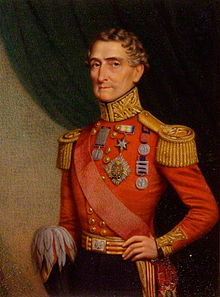
I found it interesting as the project evolved that I was the only man in the group. There are several other men who write not only in the period, but with some dabbling in the romantic aspect of a Regency era novel. And when able to write about such a battle as Waterloo, that the result would cause a historical change (though the revolution had to fail and Bonaparte doomed to lose, when and how cause streams in the way history resolves itself). Waterloo has been a battle that one might think of many heroic moments that come and go. But the day was a shoving match by the French with their numerous charges and the British standing stolidly defiant that the French would not break them. The Prince of Orange and his troops leaving the field early in the battle. My first thought was to take the example of the heroism of the defenders in La Haye Sainte, but I changed my mind (Baring, who commanded the defense there was a Hanoverian and I wanted to have my hero be completely British) and decided to tell the story of the men under Sir Frederick Adam, with some embellishments. It was one of the regiments in his brigade, that put the nail in the coffin of Napoleon’s efforts and finished the battle.

two peas in a podEstablishing what part of the battle I was going to focus on, gave me my base to then meld in my romance. The officers of the army had at this time been fighting for a number of years, many of the leaders under Wellington had been in Egypt defeating Napoleon then when the served under Ralph Abercrombie. That is a long time at war and I saw in that a parallel to Jane Austen’s Persuasion. These men who now were generals, colonels, had not been so 15 years before that. Then they had not the promotions, titles, or wealth that they had at Waterloo. And so my story developed with love denied to love united, but with a giant, horrible, deadly, battle between.

shattered mirrorIn other works, I have explored some other issues with the Battle of Waterloo. In my Two Peas in a Pod, identical brothers serve at the battle in the opening chapter, to then return to London in the months after and consider their futures, and being identical, their love lives which revolve around their exchanging their identities. In The Shattered Mirror I explore a different hero of the Napoleonic Wars, a sea captain who has returned home to England, his last ship when engaged against the enemy took damage and his leg, shattered so that he walks with a limp, but hidden by his trousers is the disfigured limb. One that he is sure would prevent the love of a woman from ever accepting.

 BlogAmazon Author Page

 http://www.davidsbooks.regencyassemblypress.com

http://www.regencyassemblypress.com/Home.html

Beaux, Ballrooms, and Battles: 

A Celebration of Waterloo

waterloo_cover_best web

June 18, 1815 was the day Napoleon Bonaparte’s Grande Armée was definitively routed by the ragtag band of soldiers from the Duke of Wellington’s Allied Army in a little Belgian town called Waterloo. The cost in men’s lives was high—22,000 dead or wounded for the Allied Army and 24,000 for the French. But the war with Napoleon that had dragged on for a dozen years was over for good, and the British people once more felt secure on their island shores.

The bicentenary of the famous battle seemed like an excellent opportunity to use that setting for a story, and before we knew it, we had nine authors eager to join in, and on April 1, 2015 our Waterloo-themed anthology was released to the world.

Amazon.com • Kobo • iBooks • Barnes & Noble

Amazon.ca • Amazon.au • Amazon.uk

You are all invited to

Our Stories

Jillian Chantal: Jeremiah’s Charge

Emmaline Rothesay has her eye on Jeremiah Denby as a potential suitor. When Captain Denby experiences a life-altering incident during the course of events surrounding the Battle of Waterloo, it throws a damper on Emmaline’s plans.

Téa Cooper: The Caper Merchant

The moon in Gemini is a fertile field of dreams, ideas and adventure and Pandora Wellingham is more than ready to spread her wings. When Monsieur Cagneaux, caper merchant to the rich and famous, introduces her to the handsome dragoon she believes her stars have aligned.

Susana Ellis: Lost and Found Lady

Catalina and Rupert fell in love in Spain in the aftermath of a battle, only to be separated by circumstances. Years later, they find each other again, just as another battle is brewing, but is it too late?

Aileen Fish: Captain Lumley’s Angel

Charged with the duty of keeping his friend’s widow safe, Captain Sam Lumley watches over Ellen Staverton as she recovers from her loss, growing fonder of her as each month passes. When Ellen takes a position as a companion, Sam must confront his feelings before she’s completely gone from his life.

Victoria Hinshaw: Folie Bleue

On the night of the 30th Anniversary of the Battle of Waterloo, Aimée, Lady Prescott, reminisces about meeting her husband in Bruxelles on the eve of the fighting. She had avoided the dashing scarlet-clad British officers, but she could not resist the tempting smile and spellbinding charm of Captain Robert Prescott of the 16th Light Dragoons who— dangerously to Aimée— wore blue.

Heather King: Copenhagen’s Last Charge

When Meg Lacy finds herself riding through the streets of Brussels only hours after the Battle of Waterloo, romance is the last thing on her mind, especially with surly Lieutenant James Cooper. However, their bickering uncovers a strange empathy – until, that is, the lieutenant makes a grave error of judgment that jeopardizes their budding friendship…

Christa Paige: One Last Kiss

The moment Colin held Beatrice in his arms he wanted one last kiss to take with him into battle and an uncertain future. Despite the threat of a soldier’s death, he must survive, for he promises to return to her because one kiss from Beatrice would never be enough.

Sophia Strathmore: A Soldier Lay Dying

Amelia and Anne Evans find themselves orphaned when their father, General Evans, dies. With no other options available, Amelia accepts the deathbed proposal of Oliver Brighton, Earl of Montford, a long time family friend. When Lord Montford recovers from his battle wounds, can the two find lasting love?

David W. Wilkin: Not a Close Run Thing at All

Years, a decade. And now, Robert had come back into her life. Shortly before battle was to bring together more than three hundred thousand soldiers. They had but moments after all those years, and now, would they have any more after?

About Not a Close Run Thing at All

Samantha, Lady Worcester had thought love was over for her, much like the war should have been. The Bastille had fallen shortly after she had been born. Her entire life the French and their Revolution had affected her and all whom she knew. Even to having determined who she married, though her husband now had been dead and buried these eight years.

Yet now Robert Barnes, a major-general in command of one of Wellington’s brigades, had appeared before her, years since he had been forgotten and dismissed. The man she had once loved, but because he had only been a captain with no fortune, her father had shown him the door.

With a battle at hand, she could not let down the defenses that surrounded her heart. Could she? As her father’s hostess, she had travelled with him to Brussels where he served with the British delegation. Duty had taken her that night to the Duchess of Richmond’s ball. The last man she ever expected to see was Robert, who as a young captain of few prospects, had offered for her, only to be turned out by her father so that she could make an alliance with a much older, and better positioned (wealthy), aristocrat.Now, their forces were sure to engage Napoleon and the resurgent Grande Armée. Meeting Robert again just before he was to be pulled into such a horrific maelstrom surely was Fate’s cruelest trick ever. A fate her heart could not possibly withstand.

About the Author

David3An award winning author, Mr. Wilkin is a graduate in history. He has been writing in various genres for thirty years. Extensive study of premodern civilizations, including years as a re-enactor of medieval, renaissance and regency times has given Mr. Wilkin an insight into such antiquated cultures.

Trained in fighting forms as well as his background in history lends his fantasy work to encompass mores beyond simple hero quests to add the depth of the world and political forms to his tales.

Throughout his involvement with various periods of long ago days, he has also learned the dances of those times. Not only becoming proficient at them but also teaching thousands how to do them as well.

Mr. Wilkin regularly posts about Regency history at his blog (see below), and as a member of English Historical Fiction Authors. You can read that blog at http://englishhistoryauthors.blogspot.com/ His very first article was published while in college, and though that magazine is defunct, he still waits patiently for the few dollars the publisher owes him for the piece.

Mr. Wilkin is also the author of several Regency romances, and including a sequel to the epic Pride and Prejudice by Jane Austen. His recent work, Beggars Can’t Be Choosier, has won the prestigious Outstanding Historical Romance award from Romance Reviews Magazine.

Beaux, Ballrooms, and Battles: Aileen Fish and Captain Lumley’s Angel

waterloo_cover_best web

June 18, 1815 was the day Napoleon Bonaparte’s Grande Armée was definitively routed by the ragtag band of soldiers from the Duke of Wellington’s Allied Army in a little Belgian town called Waterloo. The cost in men’s lives was high—22,000 dead or wounded for the Allied Army and 24,000 for the French. But the war with Napoleon that had dragged on for a dozen years was over for good, and the British people once more felt secure on their island shores.

The bicentenary of the famous battle seemed like an excellent opportunity to use that setting for a story, and before we knew it, we had nine authors eager to join in, and on April 1, 2015 our Waterloo-themed anthology was released to the world.

You are all invited to

About Captain Lumley’s Angel

Captain Samuel Lumley is proud to follow in his cousin’s footsteps and serve king and country in the cavalry. Wounded in the Battle of Waterloo, he is cared for by an angel in the form of his lieutenant’s wife. A promise to his dying comrade leaves Sam with the responsibility of seeing to the safety of the lieutenant’s widow, Mrs. Ellen Staverton.

Upon their return to England, Ellen finds herself homeless and in need of employment. When Sam’s mother offers her a temporary home with the family, Ellen quickly grows too fond of them and Sam in particular. She must find a position before she falls for him, which would dishonor the memory of her dead husband.

Amazon.comKoboiBooksBarnes & Noble

Amazon.caAmazon.auAmazon.uk

Our Stories

Jillian Chantal: Jeremiah’s Charge

Emmaline Rothesay has her eye on Jeremiah Denby as a potential suitor. When Captain Denby experiences a life-altering incident during the course of events surrounding the Battle of Waterloo, it throws a damper on Emmaline’s plans.

Téa Cooper: The Caper Merchant

The moon in Gemini is a fertile field of dreams, ideas and adventure and Pandora Wellingham is more than ready to spread her wings. When Monsieur Cagneaux, caper merchant to the rich and famous, introduces her to the handsome dragoon she believes her stars have aligned.

Susana Ellis: Lost and Found Lady

Catalina and Rupert fell in love in Spain in the aftermath of a battle, only to be separated by circumstances. Years later, they find each other again, just as another battle is brewing, but is it too late?

Aileen Fish: Captain Lumley’s Angel

Charged with the duty of keeping his friend’s widow safe, Captain Sam Lumley watches over Ellen Staverton as she recovers from her loss, growing fonder of her as each month passes. When Ellen takes a position as a companion, Sam must confront his feelings before she’s completely gone from his life.

Victoria Hinshaw: Folie Bleue

On the night of the 30th Anniversary of the Battle of Waterloo, Aimée, Lady Prescott, reminisces about meeting her husband in Bruxelles on the eve of the fighting. She had avoided the dashing scarlet-clad British officers, but she could not resist the tempting smile and spellbinding charm of Captain Robert Prescott of the 16th Light Dragoons who— dangerously to Aimée— wore blue.

Heather King: Copenhagen’s Last Charge

When Meg Lacy finds herself riding through the streets of Brussels only hours after the Battle of Waterloo, romance is the last thing on her mind, especially with surly Lieutenant James Cooper. However, their bickering uncovers a strange empathy – until, that is, the lieutenant makes a grave error of judgment that jeopardizes their budding friendship…

Christa Paige: One Last Kiss

The moment Colin held Beatrice in his arms he wanted one last kiss to take with him into battle and an uncertain future. Despite the threat of a soldier’s death, he must survive, for he promises to return to her because one kiss from Beatrice would never be enough.

Sophia Strathmore: A Soldier Lay Dying

Amelia and Anne Evans find themselves orphaned when their father, General Evans, dies. With no other options available, Amelia accepts the deathbed proposal of Oliver Brighton, Earl of Montford, a long time family friend. When Lord Montford recovers from his battle wounds, can the two find lasting love?

David W. Wilkin: Not a Close Run Thing at All

Years, a decade. And now, Robert had come back into her life. Shortly before battle was to bring together more than three hundred thousand soldiers. They had but moments after all those years, and now, would they have any more after?

About the Author

USA Today Bestselling Author Aileen Fish is an avid quilter and auto racing fan who finds there aren’t enough hours in a day/week/lifetime to stay up with her “to do” list. There is always another quilt or story begging to steal away attention from the others. When she has a spare moment she enjoys spending time with her two daughters and their families, and her fairy princess granddaughter. Her books include The Bridgethorpe Brides series and the Small Town Sweethearts series.

Website • Facebook

Beaux, Ballrooms, and Battles: Release Day!

waterloo_cover_best webBeaux, Ballrooms, and Battles:

A Celebration of Waterloo

June 18, 1815 was the day Napoleon Bonaparte’s Grande Armée was definitively routed by the ragtag band of soldiers from the Duke of Wellington’s Allied Army in a little Belgian town called Waterloo. The cost in men’s lives was high—22,000 dead or wounded for the Allied Army and 24,000 for the French. But the war with Napoleon that had dragged on for a dozen years was over for good, and the British people once more felt secure on their island shores.

The bicentenary of the famous battle seemed like an excellent opportunity to use that setting for a story, and before I knew it, I had eight other authors eager to join me,and to make a long story short, today our Waterloo-themed anthology has been released to the world.

You are all invited to:

Our Stories

Jillian Chantal: Jeremiah’s Last Charge

Emmaline Rothesay has her eye on Jeremiah Denby as a potential suitor. When Captain Denby experiences a life-altering incident during the course of events surrounding the Battle of Waterloo, it throws a damper on Emmaline’s plans.

Téa Cooper: The Caper Merchant

The moon in Gemini is a fertile field of dreams, ideas and adventure and Pandora Wellingham is more than ready to spread her wings. When Monsieur Cagneaux, caper merchant to the rich and famous, introduces her to the handsome dragoon she believes her stars have aligned.

Susana Ellis: Lost and Found Lady

Catalina and Rupert fell in love in Spain in the aftermath of a battle, only to be separated by circumstances. Years later, they find each other again, just as another battle is brewing, but is it too late?

Aileen Fish: Captain Lumley’s Angel

Charged with the duty of keeping his friend’s widow safe, Captain Sam Lumley watches over Ellen Staverton as she recovers from her loss, growing fonder of her as each month passes. When Ellen takes a position as a companion, Sam must confront his feelings before she’s completely gone from his life.

Victoria Hinshaw: Folie Bleue

On the night of the 30th Anniversary of the Battle of Waterloo, Aimée, Lady Prescott, reminisces about meeting her husband in Bruxelles on the eve of the fighting. She had avoided the dashing scarlet-clad British officers, but she could not resist the tempting smile and spellbinding charm of Captain Robert Prescott of the 16th Light Dragoons who— dangerously to Aimée— wore blue.

Heather King: Copenhagen’s Last Charge

When Meg Lacy finds herself riding through the streets of Brussels only hours after the Battle of Waterloo, romance is the last thing on her mind, especially with surly Lieutenant James Cooper. However, their bickering uncovers a strange empathy—until, that is, the lieutenant makes a grave error of judgment that jeopardizes their budding friendship…

Christa Paige: One Last Kiss

The moment Colin held Beatrice in his arms he wanted one last kiss to take with him into battle and an uncertain future. Despite the threat of a soldier’s death, he must survive, for he promises to return to her because one kiss from Beatrice would never be enough.

Sophia Strathmore: A Soldier Lay Dying

Amelia and Anne Evans find themselves orphaned when their father, General Evans, dies. With no other options available, Amelia accepts the deathbed proposal of Oliver Brighton, Earl of Montford, a long time family friend. When Lord Montford recovers from his battle wounds, can the two find lasting love?

David W. Wilkin: Not a Close Run Thing At All

Years, a decade. And now, Robert had come back into her life. Shortly before battle was to bring together more than three hundred thousand soldiers. They had but moments after all those years, and now, would they have any more after?

About Lost and Found Lady

On April 24, 1794, a girl child was born to an unknown Frenchwoman in a convent in Salamanca, Spain. Alas, her mother died in childbirth, and the little girl—Catalina—was given to a childless couple to raise.

Eighteen years later…the Peninsular War between the British and the French wages on, now perilously near Catalina’s home. After an afternoon yearning for adventure in her life, Catalina comes across a wounded British soldier in need of rescue. Voilà! An adventure! The sparks between them ignite, and before he returns to his post, Rupert promises to return for her.

But will he? Catalina’s grandmother warns her that some men make promises easily, but fail to carry them out. Catalina doesn’t believe Rupert is that sort, but what does she know? All she can do is wait…and pray.

But Fate has a few surprises in store for both Catalina and Rupert. When they meet again, it will be in another place where another battle is brewing, and their circumstances have been considerably altered. Will their love stand the test of time? And how will their lives be affected by the outcome of the conflict between the Iron Duke and the Emperor of the French?

Amazon.com • Amazon.uk • Amazon.ca • Amazon.au

 Barnes & Noble • iBooks • Kobo

Excerpt

September 14, 1793

A beach near Dieppe, France

“I don’t like the look of those clouds, monsieur,” Tobias McIntosh said in fluent French to the gray-bearded old man in a sailor hat waiting impatiently near the rowboat that was beginning to bob more sharply with each swell of the waves. “Are you sure your vessel can make it safely all the way to Newhaven in these choppy seas?”

The old man waved a hand over the horizon. “La tempête, it is not a threat, if we leave immédiatement. Plus tard…” He shrugged. “Je ne sais pas.”

“Please, mon amour,” pleaded the small woman wrapped in a hooded gray cloak standing at his side. “Allow me to stay with you. I don’t want to go to England. I promise I will be prudent.”

A strong gust of wind caught her hood and forced it down, revealing her mop of shiny dark locks. Tobias felt like seizing her hand and pulling her away from the ominous waves to a place of safety where she and their unborn child could stay until the senseless Terreur was over.

“Justine, ma chère, we have discussed this endlessly. There is no place in France safe enough for you if your identity as the daughter of the Comte d’Audet is discovered.” He shivered. “I could not bear it if you were to suffer the same fate at the hands of the revolutionaries as your parents did when I failed to save them.”

She threw her arms around him, the top of her head barely reaching his chin. “Non, mon amour, it was not your fault. You could not have saved them. It was miraculeux that you saved me. I should have died with them.”

She looked up to catch his gaze, her face ashen. “Instead, we met and have had three merveilleux months together. If it is my time to die, I wish to die at your side.”

Tobias felt like his heart was going to break. His very soul demanded that the two of them remain together and yet… there was a price on both their heads, and the family of the Vicomte Lefebre was waiting for him in Amiens, the revolutionaries expected to reach them before midday. It was a dangerous work he was involved in—rescuing imperiled French nobility from bloodthirsty, vengeful mobs—but he had pledged himself to the cause and honor demanded that he carry on. And besides, there was now someone else to consider.

“The child,” he said with more firmness than he felt. “We have our child to consider, now, Justine ma chère. The next Earl of Dumfries. He must live to grow up and make his way in the world.”

Not to mention the fact that Tobias was human enough to wish to leave a child to mark his legacy in the world—his and Justine’s. He felt a heaviness in his heart that he might not live long enough to know this child he and Justine had created together. He could not allow his personal wishes to undermine his conviction. Justine and the child must survive.

Justine’s blue eyes filled with tears. “But I cannot! I will die without you, mon cher mari. You cannot ask it of me!”

“Justine,” he said, pushing away from her to clasp her shoulders and look her directly in the eye. “You are a brave woman, the strongest I have ever known. You have survived many hardships and you can survive this. Take this letter to my brother in London, and he will see to your safety until the time comes that I can join you. My comrades in Newhaven will see that you are properly escorted.”

He handed over a letter and a bag of coins. “This should be enough to get you to London.”

After she had reluctantly accepted and pocketed the items beneath her cloak, he squeezed her hands.

“Be sure to eat well, ma chère. You are so thin and my son must be born healthy.”

She gave him a feigned smile. “Our daughter is the one responsible for my sickness in the mornings… I do not believe she wishes me to even look at food.”

She looked apprehensively at the increasingly angry waves as they tossed the small boat moored rather loosely to a rock on the shore and her hands impulsively went to her stomach.

“Make haste, monsieur,” the old sailor called as he peered anxiously at the darkening clouds. “We must depart now if we are to escape the storm. Bid your chère-amie adieu maintenant or wait for another day. I must return to the bateau.”

“Tobias,” she said, her voice shaking.

He wondered if he would ever again hear her say his name with that adorable French inflection that had drawn him from their first meeting.

“Go, Justine. Go to my family and keep our child safe. I promise I will join you soon.”

He scooped her up in his arms and carried her toward the dinghy, trying to ignore her tears. The old sailor held the boat as still as he could while Tobias placed her on the seat and kissed her hard before striding back to the shore, each footstep heavier than the last.

He studied the darkening sky as the sailor climbed in the boat. “You are sure it is safe?”

“La Chasseresse, she is très robuste. A few waves will not topple her, monsieur.”

“Je t’aime, mon amour,” she said to him plaintively, her chin trembling.

“Au revoir, ma chère,” he said, trying to smile, although his vision was blurring from tears.

Will I ever see her again?

He stood watching as the dinghy made its way slowly through the choppy sea to the larger ship anchored in the distance, grief-stricken and unable to concentrate on anything but his pain. When the ship finally sailed off into the horizon, he fell to his knees and prayed as he had never done before for the safety of his beloved. He remained in that position until drops of rain on his face reminded him of the Lefebre family waiting for him in Amiens.

With a deep breath, he rose and made his way to the nearby forest, where his horse waited, tied to a tree.

“Come, my friend. We have a long, wet journey ahead of us.”

Setting foot in the stirrup, he swung his leg over the saddle and urged the horse to a gallop, feeling his heart rip into pieces with every step away from his beloved.

Jude Knight: Farewell to Kindness

Bluestocking-Belles-logo-01

A Hearty Welcome to Fellow Bluestocking Belle

Jude Knight

A short history of invalid chairs

resized_image2_85fb99c4cad443bb0bf7a55a8aefe5fc copy

One of the many things I love about writing historical romance is the odd bits of knowledge I need to research.

In Farewell to Kindness, I needed a way for my hero’s cousin, an injured soldier, to get around the house under his own steam, which led me to invalid chairs, and ultimately to my little novella, Candle’s Christmas Chair.

Wheels on chairs for invalids go back a very long way. We have documentary evidence of them in a Chinese print reliably dated to AD 525, but human ingenuity quite possibly put chairs and wheels together long before that.

It’s likely, though, that only the rich had such chairs. Certainly, once wheeled chairs for invalids begin to regularly pop up in the documentary record, the posteriors seated in them belonged to the rich and the noble.

King Phillip's chair

King Phillip’s chair

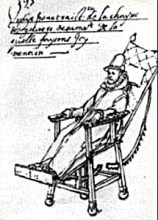
In 1595, King Philip II of Spain was sketched sitting in a reclining chair with wheels on each leg. It was clunky and heavy, and he needed to be pushed around by a servant, but – hey – king, right?

Self-propelling chairs arrived remarkably quickly after that, unsurprisingly developed by someone who was himself in need of a chair. In 1655, Stephen Farfler, a paraplegic watchmaker, moved himself around in a chair with three wheels. He moved around by turning handles that worked on the geared front wheel.

Most of the sites I looked at when researching wheelchairs jump from Farfler to John Dawson of Bath. But wheelchairs – both ordinary chairs with wheels and more advanced chairs designed specifically to have wheels – continued right through.

And, in any case,  the Bath chair was invented around 1750 by James Heath.  Bath was becoming popular as a spa town, but it was not designed to easily get around in a carriage, and ordinary wheelchairs really only worked well on a flat surface such as inside the house.

Ad for the Bath Chair

The Bath chair was designed to take invalids out and about; primarily down to the Roman Baths for the treatment, and then back home again. Until then, invalids used the sedan chair, which required two attendants to carry. The Bath chair just needed one person at the back pushing. Furthermore, the occupant of the chair had the steering stick and could therefore directly control the direction of travel. I can see that would be appealing to the average wealthy dowager!

You can see from the advertisement that Heath also sold wheelchairs. The example shown appears to have wheels at the front and stabilising legs at the rear, so no doubt the attendant lifted slightly when he pushed.

The Merlin chair

The Merlin chair

But the self-propelling chair had not gone away. John Joseph Merlin, a Belgian inventor and watchmaker (and, perhaps not incidentally the inventor of the in-line skate) created a successful chair that became the model for others. Keith Armstrong, in A very short history of the bicycle and wheelchair, says:

In the mid 1770’s he invented roller-skates and presented his new creation by arriving at a London party playing his violin whilst gliding around the room. Merlin received rapacious applause and an encore, the party-goers demanded that he repeated his act, during the second attempt, he quickly discovered that he didn’t known how to stop and he had a major accident. The next we read about him is of the invention of a new type of self-propelled wheelchair… His design was so successful that 120 years later, a London catalogue of medical equipment was able to boast nine different ‘Merlin’ wheelchairs available on their books. Merlin died in 1803.

As far as I can tell, the Merlin chair had small handles on its arms. But the name “Merlin chair” was retained for later chairs where the occupant was able to turn the large rear wheels to get around, and – by the late 19th century – the smaller propelling wheel had arrived, to help people keep their hands clean.

Meanwhile, back at the end of the 18th century, let’s not forget John Dawson. The most prominent Bath chair maker of his time, his chairs outsold everyone else’s. Since, by all accounts, they were not very comfortable, we must assume that the others were worse!

About Farewell to Kindness

farewell to kindness RGB2 copyFor three years, Rede has been searching for those who ordered the murders of his wife and children. Now close to end of his quest, he travels to his country estate to be close to the investigation.

He is fascinated by the lovely widow who lives in one of the cottages he owns. A widow who pays no rent. A widow, moreover, with a small daughter whose distinctive eyes mark her as as the child of his predecessor as Earl.

Six years ago, Anne blackmailed Rede’s predecessor at arrow-point for an income and a place to livein hiding from her guardian’s sinister plans for her and her sisters. He no longer has legal rights over her, but the youngest sister is still only 18. He cannot be allowed to find her.

Rede is everything she has learned not to trust: a man, a peer, a Redepenning. If he discovers who she is, she may lose everything.

To build a future together, Rede and Anne must be prepared to face their pasts.

Regency noir

US99c to 8 April 2015; USD3.49 from 9 April 2015

KoboiBooksBarnes & Noble • SmashwordsAmazon

Excerpt

George was drunk. But not nearly drunk enough. He still saw his young friend’s dying eyes everywhere. In half-caught glimpses of strangers reflected in windows along Bond Street, under the hats of coachmen that passed him along the silent streets to Bedford Square, in the flickering lamps that shone pallidly against the cold London dawn as he stumbled up the steps to his front door.

They followed his every waking hour: hot, angry, hate-filled eyes that had once been warm with admiration.

He drank to forget, but all he could do was remember.

One more flight of stairs, then through the half open door to his private sitting room, already reaching for the waiting decanter of brandy as he crossed the floor.

He had a glass of oblivion halfway to his lips before he noticed the painting.

It stood on an easel, lit by a carefully arranged tree of candles. George’s own face was illuminated—the golden shades of his hair, his intensely blue eyes. The artist had captured his high cheekbones and sculpted jaw. “One of London’s most beautiful men,” he’d been called.

He stalked to the easel, moving with great care to avoid spilling his drink.

Yes. The artist had talent. Who could have given him such a thing?

As he bent forward to look at it more closely, something whipped past his face. With a solid thunk, an arrow struck the painting, to stand quivering between the painted eyes.

Read the first three chapters here.

About the Author

Jude Knight copyJude Knight writes strong determined heroines, heroes who can appreciate a clever capable woman, villains you’ll love to loathe, and all with a leavening of humour.

TwitterFacebookBlog GoodreadsNewsletter


Caroline Warfield: Dangerous Secrets

Bluestocking-Belles-logo-01

A Hearty Welcome to Fellow Bluestocking Belle

Caroline Warfield

DangerousSecrets_600x900 copy

Giveaway!

Win the right to name characters in an as yet unwritten novella plus an Amazon gift card. Dangerous Secrets Blog Tour 2015 

About Dangerous Secrets

Rome 1820

Major Lord James Heyworth fled to Rome. Behind him lie disgrace, shame, and secrets he is desperate to keep even from powerful friends in London. He accepts employment as an interpreter just to have money to eat. Nora Haley, his employer, is a widow. She came to Rome to help her dying brother and protect his daughter. She can’t trust any man who drinks. She had enough of that in her marriage. She fears deception will destroy everything she desires. Either one, however, will dare anything for the tiny girl in their care. They will even enter a sham marriage to protect her. Will love—and the truth—bind them both together?

Jamie Quizzes His Employer

Early in DANGEROUS SECRETS Jamie Heyworth finds himself curious about the energetic little woman who has hired him to be her interpreter. He is happy to let her buy lunch, (he hasn’t eaten regularly in recent weeks) but he’s puzzled. He can’t figure out why the fool woman is alone in a foreign country to begin with. A little food loosens his tongue and he startles her by speaking into an uncomfortably long silence.

corotstbartbridge182528 copy

Saint Bartholomew Bridge, 1825, by Jean-Baptiste Corot (Wikipedia Commons)

 Excerpt

“You are alone here.” His sudden words proved her wrong. He hadn’t forgotten.

“Aside from Robert.”

“Robert?” he asked.

“My brother.”

“I’m confused. If your brother is here, why can’t he interpret for you?”

“Robert is ill, in the hospital. I have to act for him,” she explained.

“But you came here on your own. Your father permitted such a thing?” he probed.

He reached for another roll. When did this impertinent man eat last?

“My father couldn’t—no, wouldn’t—come when Robert wrote asking for help,” she explained. “He sent me as his surrogate.”

“So he ordered you to come a thousand miles alone to lecture his son on the error of his ways?” the major asked in between bites.

“Not ordered! Permitted. He has his parish to shepherd. Who could have come with me?” Her father actually tried to stop her, but she left for Rome on her own. The memory made her temper snap. “I’m no schoolroom miss. I can take care of myself,” she insisted.

“You’ve managed without difficulty?” The major looked skeptical.

“Yes!” Nora knew she answered too quickly.

The major raised an eyebrow, and she felt her face warm. My troubles with the ship and the sailors are none of his business. I managed them.

“Language is a barrier,” she admitted, but he knew that much already. “That’s why I hired you. Difficulties have been trivial. Robert’s man of business found me rooms and managed to convey me there with signs and gestures. The landlady . . .” She hesitated.

“Landlady?” he prompted.

“Speaks broken English. She tried to make me uneasy. She claimed there were men lurking at the door, but I think she just wanted me to hire a relative as a guide. I refused.”

His deep brown eyes widened when she mentioned lurking strangers, but he said only, “Wise. You wouldn’t want a guide you don’t understand. Didn’t your father think you would need protection?”

“He assumes my virtue to be its own shield! His widowed daughter—plain and practical Eleanora—wouldn’t need protection.” The words tasted as bitter in her mouth as the Italian coffee.

The major, to his credit, ignored that outburst. Instead he asked, “Wasn’t he concerned about his granddaughter?”

Nora felt her heart stutter. She took a deep breath before answering. “He doesn’t know about her.”

The major looked puzzled, waiting for more. Desire to protect Robert’s privacy warred with urge to confide in someone. As her interpreter, he would find out soon enough.

“My niece is Italian,” she began, “and Catholic. Robert kept his marriage secret.”

The shabby major appeared to think that over. “What will your father do with an Italian granddaughter?” he asked at last.

“Deny her. Force conversion. God knows, but it wouldn’t be pleasant. Robert must protect her from that.”

“Does your brother wish her to live in England?”

“Not in Dorset, not near Father. Perhaps in Italy, but he wishes more for her than the convent school.” Nora knew that much with certainty.

“And her Italian relatives?” he asked.

Nora shrugged. “I don’t know. My late, heretofore unknown sister-in-law was an orphan but from a large extended family.” Robert had once implied there was more, but Nora didn’t know any names or places. “What they wish is unknown to me,” she said.

“Would they take the child in? That would solve your problems,” he suggested.

“Robert seems reluctant about that. He hasn’t said why. I think he wants to make sure someone he trusts will see that she is loved, as well as cared for.” When Robert first told her about the girl, Nora had warmed at the thought of having a child to care for. Now she vacillated between hope and fear, neither of which accomplished anything useful. This shabby major doesn’t need to know my pathetic hopes.

The major’s thick brown lashes veiled his eyes as well as he veiled his thoughts. “Are your brother’s wishes in writing?” he asked.

“I don’t know. He pressed a scrap of foolscap into my hand the first day.” She rummaged in her reticule. “It has an Italian name on it. He said that if he died I should contact this man.” She held out the foolscap for him to see.

“Putting you at the mercy of another Italian,” he mumbled, taking the foolscap. The major looked at the name and cursed softly. “And a high class one at that.”

AmazonAmazon.ukAmazon.caAmazon.de

About the Author

Carol Roddy - AuthorCaroline Warfield has at various times been an army brat, a librarian, a poet, a raiser of children, a nun, a bird watcher, an Internet and Web services manager, a conference speaker, an indexer, a tech writer, a genealogist, and, of course, a romantic. She has sailed through the English channel while it was still mined from WWII, stood on the walls of Troy, searched Scotland for the location of an entirely fictional castle (and found it), climbed the steps to the Parthenon, floated down the Thames from the Tower to Greenwich, shopped in the Ginza, lost herself in the Louvre, gone on a night safari at the Singapore zoo, walked in the Black Forest, and explored the underground cistern of Istanbul. By far the biggest adventure has been life-long marriage to a prince among men.

She sits in front of a keyboard at a desk surrounded by windows, looks out at the trees and imagines. Her greatest joy is when one of those imaginings comes to life on the page and in the imagination of her readers.

 WebsiteFacebookTwitterEmail

LibraryThingAmazon AuthorGoodreadsPinterest

Bluestocking Belles

A Celebration of Waterloo: The Battle of Salamanca

map_sm

July 22, 1812

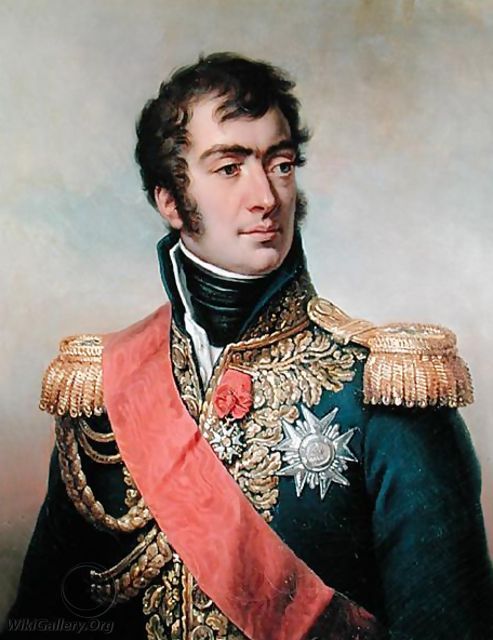
Both armies were just outside Salamanca. It was hot and humid, particularly after a heavy thunderstorm the night before. Wellington, aware that French reinforcements were expected, was planning to retreat back to Ciudad Rodrigo. Marmont, the French commander, was eager to do battle before the arrival of the reinforcements so that he could claim all the credit for defeating Wellington.

Auguste de Marmont

Auguste Marmont

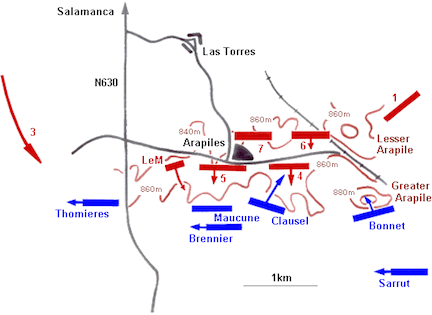
However, Wellington received reports (no doubt from his Exploring Officers) that French troops were taking up positions on the slopes of two steep hills, the Arapiles (south of Salamanca). Wellington saw the danger immediately and ordered the French repulsed, sending two infantry divisions to take position below the ridge of the closer hill. Having seen the dust in the distance from the supply wagons on their way to Ciudad Rodrigo and believing that the British were in retreat, Marmont didn’t realize that most of Wellington’s troops were still hidden behind the ridge. Wellington ordered up two more divisions from Salamanca.

Cartoon - alava

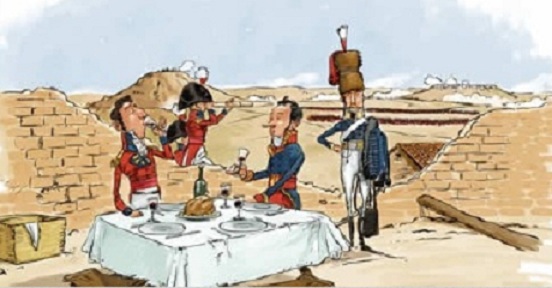
At midday, Wellington descended the near hill and joined his senior staff for a very late breakfast at a nearby farm where they had a good view of the area. Because of bullets flying from nearby skirmishes, the meal had to be moved to a safer place. Wellington paced the wall of the farmyard, scanning the area with his spyglass. When finally persuaded to eat some bread and part of a roast chicken, he grabbed one of the chicken legs and ate it with one hand while continuing to study the area between the two ridges with his spyglass.

At 2:00, he rose from the table with a whoop of delight, throwing the chicken leg over his shoulder and shouting, “By God! That will do!” and ran to his horse, ordering his men to follow him.

French troops were marching through the gap of the two ridges—exactly what he had been hoping to see. Turning to his Spanish aide-de-camp, Miguel Ricardo de Alava y Esquivel, he remarked, “Mon cher Alava, Marmont est perdu!” (My dear Alava, Marmont is lost!)

Marmont had made a fatal error in judgment and Wellington knew he was in a perfect position to crush the French.

Wellington struck hard and fast, taking the French by surprise. Marmont was badly wounded by an exploding shell and carried to the rear. Other French senior officers were killed or severely wounded, and the French had no chance to re-group.

FrenchchargingasquareThe main battle took less than an hour. It was later said that Wellington had “defeated 40,000 men in 40 minutes.” Wellington himself took a ball in the thigh, but his holster took most of the hit, leaving him with a minor wound.

Unfortunately, most of the remaining French army managed to escape across the Tormes River, due to a failure of the Spanish commander abandoning his post against orders.

The night after the battle, the residents of Salamanca, having seen most of the conflict, came out onto the battlefield with provisions for the men, who had gone without eating and drinking for nearly a day while fighting a battle under the grueling Spanish sun.

Two imperial eagles snatched from the French during the Battle of Salamanca

Two imperial eagles snatched from the French during the Battle of Salamanca

Lost and Found Lady

Catalina lives near the battlefield outside a town called Las Torres. After the battle, she finds a wounded British soldier on the road and takes him to a place of safety where she can tend to his head wound. The British soldier is Rupert Ellsworth, one of Wellington’s Exploring Officers. The pair are immediately drawn to each other, but Rupert knows there’s no future for them, having promised his father he would marry a suitable English girl. A devout Catholic, Catalina is not a whore to be loved and abandoned. Still, Rupert cannot help but wish he could sweep her away from her disagreeable family. After he returns to his company, they both wonder if they will ever see each other again.

waterloo_cover_best web

Amazon.com • Amazon.uk • Amazon.ca • Amazon.au

 Barnes & Noble • iBooks • Kobo

Beaux, Ballrooms, and Battles

Release Day Party: April 1, 2015, 11 a.m. – 11 p.m. EDT

Rafflecopter: ends April 18

Website: www.beauxballroomsandbattles.com

Facebook Page

Jillian Chantal: Jeremiah’s Charge

Emmaline Rothesay has her eye on Jeremiah Denby as a potential suitor. When Captain Denby experiences a life-altering incident during the course of events surrounding the Battle of Waterloo, it throws a damper on Emmaline’s plans.

Téa Cooper: The Caper Merchant

The moon in Gemini is a fertile field of dreams, ideas and adventure and Pandora Wellingham is more than ready to spread her wings. When Monsieur Cagneaux, caper merchant to the rich and famous, introduces her to the handsome dragoon she believes her stars have aligned.

Susana Ellis: Lost and Found Lady

Catalina and Rupert fell in love in Spain in the aftermath of a battle, only to be separated by circumstances. Years later, they find each other again, just as another battle is brewing, but is it too late?

Aileen Fish: Captain Lumley’s Angel

Charged with the duty of keeping his friend’s widow safe, Captain Sam Lumley watches over Ellen Staverton as she recovers from her loss, growing fonder of her as each month passes. When Ellen takes a position as a companion, Sam must confront his feelings before she’s completely gone from his life.

Victoria Hinshaw: Folie Bleue

On the night of the 30th Anniversary of the Battle of Waterloo, Aimée, Lady Prescott, reminisces about meeting her husband in Bruxelles on the eve of the fighting. She had avoided the dashing scarlet-clad British officers, but she could not resist the tempting smile and spellbinding charm of Captain Robert Prescott of the 16th Light Dragoons who—dangerously to Aimée—wore blue.

Heather King: Copenhagen’s Last Charge

When Meg Lacy finds herself riding through the streets of Brussels only hours after the Battle of Waterloo, romance is the last thing on her mind, especially with surly Lieutenant James Cooper. However, their bickering uncovers a strange empathy—until, that is, the lieutenant makes a grave error of judgment that jeopardizes their budding friendship…

Christa Paige: One Last Kiss

The moment Colin held Beatrice in his arms he wanted one last kiss to take with him into battle and an uncertain future. Despite the threat of a soldier’s death, he must survive, for he promises to return to her because one kiss from Beatrice would never be enough.

Sophia Strathmore: A Soldier Lay Dying

Amelia and Anne Evans find themselves orphaned when their father, General Evans, dies. With no other options available, Amelia accepts the deathbed proposal of Oliver Brighton, Earl of Montford, a long time family friend. When Lord Montford recovers from his battle wounds, can the two find lasting love?

David W. Wilkin: Not a Close Run Thing at All

Years, a decade. And now, Robert had come back into her life. Shortly before battle was to bring together more than three hundred thousand soldiers. They had but moments after all those years, and now, would they have any more after?

A Celebration of Waterloo: Wellington’s Exploring Officers

All the business of war and indeed all the business of life, is to endeavor to find out what you don’t know by what you do: that’s what I call ‘guessing what was on the other side of the hill.’

Arthur Wellesley, 1st Duke of Wellington

 The Business of Spying

Up until the early 19th century, spying was considered an odious and ungentlemanly occupation and few officers would agree to do it.

But by the time the 19th century rolled around, with the spreading of Napoleon’s empire on the continent, General Brownrigg, the Quartermaster-General of the British Army, went to the Commander-in-Chief, Frederick, the Duke of York, to propose that army develop a unit called the Depot of Military Intelligence, and it was done. The problem was—nobody wanted to do it.

Wellington’s Exploring Officers

peninsular war map

When General Wellesley arrived in Portugal, he couldn’t find an accurate map of the country and had to write to his brother-in-law to send him one. Realizing that his lack of information about the movements of the enemy, as well as the terrain and countryside, Wellington established a corps of “Exploring Officers.”

Exploring officers had to be fine horsemen, skilled linguists, and able to express themselves in sketching and writing in the most concise terms. With the assistance of local inhabitants, they would map the countryside four miles to the inch. That done, they would move behind enemy lines, learn troop movements and strategic information, and return to disclose this information to Wellington.

Sir John Waters

Sir John Waters of the Royal Scots

John Waters of the Royal Scots was known as a wily and capable man behind enemy lines. However, he was caught by the French and given up for dead by his regiment. When a man dies, his personal possessions are generally auctioned off to his comrades, but Wellington forbade this, saying that “Waters should be back and would want his things.” And he was right. Waters did come back and supposedly did want his things back.

Most exploring officers wore their uniforms, since soldiers caught behind enemy lines out of uniform was immediately shot as a spy. John Grant was one of the few who went in disguise. He became very friendly with the Portuguese people and adopted their local dress, much to the horror of his fellow officers. After the war, instead of being lauded for their risk-taking, these courageous men were shunned by their former regiments as “gadabouts” who were not really engaged in the business of war.

Colquhoun Grant

From Wikipedia:

Colquhoun Grant, Gentleman Spy

Colquhoun Grant, Gentleman Spy

The youngest of eight brothers in a family from the Scots aristocracy, Grant was commissioned into the 11th Foot in 1795. In 1809 he was posted to the Iberian Peninsula under the command of Arthur Wellesley, who in 1810 appointed him to his personal staff as an exploring officer in the Peninsula Corps of Guides, a special reconnaissance unit who spoke the local languages.

Grant was captured by French forces on 16 April 1812. As he was in uniform he was treated as an officer and gentleman by his captors, who offered him parole, which Grant accepted. Grant was invited to dine with Marshal Marmont who hoped to find out more about Wellington, and who was angered by Grant’s reticence. Marmont had good reason to remain suspicious of Grant, as the latter managed to send and receive secret messages while in captivity.

marmont

Auguste de Marmont

Marmont sent Grant to Paris for interrogation. It is clear from Marmont’s correspondence that he had no intention of exchanging Grant for a prisoner of equal rank among the British, as was the custom of the time, considering him to be a spy. Grant, on seeing a copy of Marmont’s letter, decided that it invalidated his agreement to parole and left him free to escape.

Grant was able to avoid recapture by passing himself off as an American officer, and spent some weeks at liberty in the streets and salons of Paris, sending intelligence reports to Wellington. He then escaped to England, rejoining Wellington in early 1814. Promoted to lieutenant-colonel he was appointed commanding officer of the Corps of Guides and Head of Intelligence for the Peninsular Army.

During the Hundred Days Campaign, Grant was working as intelligence officer in France when Wellington put him in charge of his own intelligence operations. Grant sent in a steady stream of reports regarding the build-up of French troops along the border and returned to Brussels in time to take part in the Battle of Waterloo on 18 June.

Lost and Found Lady

Rupert Ellsworth, the hero in story in the Beaux, Ballrooms, and Battles anthology, is an exploring officer in Wellington’s army in 1812 when he decides to disguise himself as a French soldier following the Battle of Salamanca. Unfortunately, he’s not the greatest horseman and falls off the untrained French horse and hits his head on a rock. Fortunately he is discovered soon after by Catalina, a local girl, who takes it upon herself to nurse him back to health. One thing leads to another and it isn’t long before the pair fall in love. But Catalina is not a whore and Rupert has promised his father to marry a “suitable English girl,” so the future for them looks grim. Between one thing and another, the two are separated… to be reunited several years later in Belgium just as another war is brewing. Circumstances for both of them have drastically changed, and Rupert is bound for the battlefield. Will there be a future for them or is it too late?

waterloo_cover_best web

Amazon.com • Amazon.uk • Amazon.ca • Amazon.au

 Barnes & Noble • iBooks • Kobo

Beaux, Ballrooms, and Battles

Release Day Party: April 1, 2015, 11 a.m. – 11 p.m. EDT

Rafflecopter: ends April 18

Website: www.beauxballroomsandbattles.com

Facebook Page

Jillian Chantal: Jeremiah’s Charge

Emmaline Rothesay has her eye on Jeremiah Denby as a potential suitor. When Captain Denby experiences a life-altering incident during the course of events surrounding the Battle of Waterloo, it throws a damper on Emmaline’s plans.

Téa Cooper: The Caper Merchant

The moon in Gemini is a fertile field of dreams, ideas and adventure and Pandora Wellingham is more than ready to spread her wings. When Monsieur Cagneaux, caper merchant to the rich and famous, introduces her to the handsome dragoon she believes her stars have aligned.

Susana Ellis: Lost and Found Lady

Catalina and Rupert fell in love in Spain in the aftermath of a battle, only to be separated by circumstances. Years later, they find each other again, just as another battle is brewing, but is it too late?

Aileen Fish: Captain Lumley’s Angel

Charged with the duty of keeping his friend’s widow safe, Captain Sam Lumley watches over Ellen Staverton as she recovers from her loss, growing fonder of her as each month passes. When Ellen takes a position as a companion, Sam must confront his feelings before she’s completely gone from his life.

Victoria Hinshaw: Folie Bleue

On the night of the 30th Anniversary of the Battle of Waterloo, Aimée, Lady Prescott, reminisces about meeting her husband in Bruxelles on the eve of the fighting. She had avoided the dashing scarlet-clad British officers, but she could not resist the tempting smile and spellbinding charm of Captain Robert Prescott of the 16th Light Dragoons who—dangerously to Aimée—wore blue.

Heather King: Copenhagen’s Last Charge

When Meg Lacy finds herself riding through the streets of Brussels only hours after the Battle of Waterloo, romance is the last thing on her mind, especially with surly Lieutenant James Cooper. However, their bickering uncovers a strange empathy—until, that is, the lieutenant makes a grave error of judgment that jeopardizes their budding friendship…

Christa Paige: One Last Kiss

The moment Colin held Beatrice in his arms he wanted one last kiss to take with him into battle and an uncertain future. Despite the threat of a soldier’s death, he must survive, for he promises to return to her because one kiss from Beatrice would never be enough.

Sophia Strathmore: A Soldier Lay Dying

Amelia and Anne Evans find themselves orphaned when their father, General Evans, dies. With no other options available, Amelia accepts the deathbed proposal of Oliver Brighton, Earl of Montford, a long time family friend. When Lord Montford recovers from his battle wounds, can the two find lasting love?

David W. Wilkin: Not a Close Run Thing at All

Years, a decade. And now, Robert had come back into her life. Shortly before battle was to bring together more than three hundred thousand soldiers. They had but moments after all those years, and now, would they have any more after?

Alanna Lucas: When We Dance

Interview with Alanna Lucas

Susana: What advice would you give to writers just starting out?

Alanna: Learn your craft, know your genre, and most important, join organizations. After I joined RWA and discovered my local chapter, everything seemed to fall into place. The support and encouragement from my fellow chapter mates has been an amazing part of this journey.

Susana: Do you ever suffer from writer’s block?

author pic copyAlanna: A change of scenery is always helpful. Whenever I am struggling, I try not to dwell on the negative. Instead, I might go for a walk, play a game with my kids, read a book, or listen to music. My current favorite is Imagine Dragons.

Distractions are just as annoying as writer’s block. When my kids are a little too rambunctious and I can’t concentrate, I start blaring classical music. FYI, Beethoven’s 5th is rumbling through the house as I write this.

Susana: What comes first: the plot or the characters?

Alanna: It usually begins with characters and a scene, and then I build the story around them.

Susana: Are you a plotter or a panster?

Alanna: I am a panster who was learning to be a plotter. After taking several classes and reading numerous books, I have learned to accept and embrace the fact that I am an organized panster!

Susana: In which genre do you prefer to write and why?

Alanna:  I write historical romance. I have always enjoyed researching and learning about different time periods. It seemed only natural to write what I enjoy. There is one downside—it is far too easy to get wrapped up in research and forget what I am supposed to be writing.

Susana: What is one thing your readers would be most surprised to learn about you?

Alanna: Besides the fact that I like to vacuum?

When I am frustrated, I like to rearrange furniture. No, not just rearrange, I pull out the portable drafting table and create scaled floor plans. Time of day does not matter, once I get an idea…watch out! I have even been known to rearrange furniture in the middle of the night.

Susana: What is your favorite food? Least favorite?

Alanna: I love Italian food—all of it! If I had to choose one dish, it would be linguine with seafood.

My least favorite food would have to be chutney. Let’s just say it involves a flight and a lot of turbulence 😦

Susana: Do you have a favorite quote or saying?

Alanna: The world is a book, and those who do not travel read only a page.

Saint Augustine

Susana: What is your biggest adventure to date?

Alanna: Motherhood

Susana: What is the one modern convenience you can’t do without?

Alanna: You can have the Internet. You can have the TV. But the one thing I don’t want to live without is a bathroom (with indoor plumbing!).

Susana: What would we find under your bed?

Alanna: Nothing! 🙂

Susana: If your publisher offered to fly you anywhere in the world to do research on an upcoming project, where would you mostly likely want to go? Why?

Alanna: This was an easy question—England! I want to visit every museum, every grand estate, have tea, and shop!

Do you believe in love at first sight? 

Alanna will give away one e-copy of Face to Face to a commenter answering the question above.

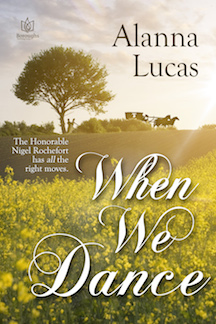
About When We Dance

Nigel Rochefort succeeds at everything he attempts, but burying his family in scandal and breaking up a wedding while seducing the bride is not quite what he had in mind. Nor was finding true love.

Step by step…

Miss Artemisia Germayne is used to gossip. She is far from the ton’s version of an ideal beauty. Worse still, she cannot dance. But when she finds herself in the uncomfortable predicament of abandonment on her wedding day, embarrassed and humiliated she retreats to the country.

Nigel Rochefort, second son of the Earl of Monfort, has always taken his good fortune for granted, so when the woman for whom he has a secret tendre is about to marry his friend, the only logical thing to do is break up the wedding. But that scandal is only the start. The bride’s sister has also disappeared, and Nigel must first clear his name to assure Artemisia’s affections. As he gives chase, many truths are yet to be learned. This is no simple country dance or game of seduction but an unstoppable waltz of desire—and true love.

Boroughs PublishingAmazonBarnes & Noble

Excerpt

She actually struck him. Nigel could not believe what had just happened. A woman had just struck him. Not just any woman or casual acquaintance, but Artemisia. Not a delicate slap, but a hard punch full of pent up anger. That had never happened to him before. He just sat there…stunned. Did she suspect?

When We Dance_FINAL copyBefore he had the opportunity to reflect further on the question, Lord Germayne made an announcement and swarms of guests brushed past him, giving him curious looks as they filed out of the chapel. His first thought was to stay put and wait for everyone to leave. He was in no mood for inquisitive gossipmongers, but he did not want to be trapped, surrounded by the same gossips in question.

Following the herd of bright dresses and fanciful hats out of the chapel, whispered theories swirled around him as to the whereabouts of Mr. Chartwick. The general consensus was that the groom had cold feet. Nigel knew otherwise.

Nigel was within earshot when Lady Lamden began to weave one of her vicious tales. “…and this is not the only scandal facing Lord and Lady Germayne. Did you notice that Miss Philippa Germayne was not in attendance?”

The pair of gossips stopped walking, and huddled together, too deep in tittle-tattle to notice that anyone was eavesdropping.

Ducking behind a large urn of flowers, Nigel strained to hear the conversation.

“I have it on the best authority that the young lady in question is not indisposed, but has disappeared altogether.”

“Disappeared?”

“She has not been seen since yesterday when she was discovered alone in the park with a certain notorious rake.”

Nigel’s stomach lurched with guilt. He was the notorious rake they spoke of.

About the Author

Alanna Lucas grew up in Southern California. From an early age, she took an interest in travel, incorporating those experiences into her writing. When she is not daydreaming of her next travel destination Alanna can be found researching, spending time with family, or going for long walks. Alanna Lucas is a member of the Romance Writers of America, East Valley Authors, The Beau Monde, and Celtic Hearts Romance Writers.

Website FacebookTwitterGoodreads

A Celebration of Waterloo: The Romance of Harry and Juana Smith

Beaux, Ballrooms, and Battles:

A Celebration of Waterloo

June 18, 1815 was the day Napoleon Bonaparte’s Grande Armée was definitively routed by the ragtag band of soldiers from the Duke of Wellington’s Allied Army in a little Belgian town called Waterloo. The cost in men’s lives was high—22,000 dead or wounded for the Allied Army and 24,000 for the French. But the war with Napoleon that had dragged on for a dozen years was over for good, and the British people once more felt secure on their island shores.

The bicentenary of the famous battle seemed like an excellent opportunity to use that setting for a story, and before I knew it, I had eight other authors eager to join me,and to make a long story short, in a bit over two weeks our anthology of nine Waterloo-themed stories will be released to the world.

You are all invited to:

The Inspiration for Lost and Found Lady

In my preparatory reading for this project, I discovered the real-life romance of Harry Smith and his wife Juana while reading Georgette Heyer’s The Spanish Bride. Add to that my deep affection for Spain and the Spanish language, and the result is a story of a romance between an injured British soldier and the extraordinary young peasant girl who rescued him after the Battle of Salamanca.

spain_Cadiz_hervas_map

Henry (Harry) George Wakelyn Smith (1787-1860)

220px-Sir_Harry_Smith

Harry was born in Whittlesey, Cambridgeshire, the son of a surgeon. He entered the army in 1805 and saw action in South America (1806-7), but it was his service in the Peninsular War with the 95th Rifles as a scout that brought him into prominence, and that’s where he met his wife. Prior to Waterloo, he served in the United States (witnessed the burning of the capitol in 1814), and after Waterloo, South Africa and India.

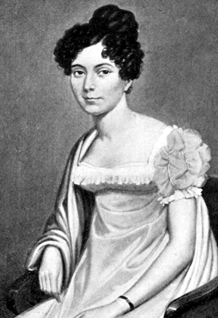
Juana María de los Dolores de León Smith (1798-1872)

juanasmith

A descendent of Ponce de León, Juana was orphaned at fourteen and, deprived of all family property after the siege of Badajoz in April of 1812, she and her older sister approached the British Army for protection during the atrocious massacre (indiscriminate looting, killing, and raping of Spanish civilians by British and Portuguese soldiers following the heat of battle). It was love at first sight. Despite her youth (and marriage at that age was not uncommon in Spain at the time), Juana and Harry were married four days later, and remained devoted to each other the rest of their lives.

Despite her convent upbringing, Juana insisted on remaining with Harry throughout the war, bearing the privations of army life so cheerfully that she became the darling of the 95th Rifles. Wellington himself familiarly called her “Juanita”.

From The Autobiography of Lieutenant-General Sir Harry Smith

Now comes a scene of horror I would willingly bury in oblivion. The atrocities committed by our soldiers on the poor innocent and defenceless inhabitants of the city, no words suffice to depict. Civilized man, when let loose and the bonds of morality relaxed, is a far greater beast than the savage, more refined in his cruelty, more fiend-like in every act; and oh, too truly did our heretofore noble soldiers disgrace themselves, though the officers exerted themselves to the utmost to repress it, many who had escaped the enemy being wounded in their merciful attempts! Yet this scene of debauchery, however cruel to many, to me as been the solace and the whole happiness of my life for thirty-three years. A poor defenceless maiden of thirteen years was thrown upon my generous nature through her sister, as described so ably in Johnny Kincaid’s book, of which this in an extract—

kincaid“I was conversing with a friend the day after, at the door of his tent, when we observed two ladies coming from the city, who made directly towards us; they seemed both young, and when they came near, the elder of the two threw back her mantilla to address us, showing a remarkably handsome figure, with fine features; but her sallow, sun-burnt, and careworn, though still youthful, countenance showed that in her ‘the time for tender thoughts and soft endearments had fled away and gone.’

“She at once addressed us in that confident, heroic manner so characteristic of the high-bred Spanish maiden, told us who they were—the last of an ancient and honourable house—and referred to an officer high in rank in our army, who had been quartered there in the days of her prosperity, for the truth of her tale.

“Her husband, she said, was a Spanish officer in a distant part of the kingdom; he might, or he might not, still be living. But yesterday she and this her young sister were able to live in affluence and in a handsome house; to-day they knew not where to lay their heads, where to get a change of raiment or a morsel of bread. Her house, she said, was a wreck; and, to show the indignities to which they had been subjected, she pointed to where the blood was still trickling down their necks, caused by the wrenching of their ear-rings through the flesh by the hands of worse than savages, who would not take the trouble to unclasp them!

“For herself, she said, she cared not; but for the agitated and almost unconscious maiden by her side, whom she had but lately received over from the hands of her conventual instructresses, she was in despair, and knew not what to do; and that, in the rapine and ruin which was at that moment desolating the city, she saw no security for her but the seemingly indelicate one she had adopted—of coming to the camp and throwing themselves upon the protection of any British officer who would afford it; and so great, she said, was her faith in our national character, that she knew the appeal would not be made in vain, nor the confidence abused. Nor was it made in vain! Nor could it be abused, for she stood by the side of an angel! A being more transcendingly lovely I had never before seen—one more amiable I have never yet known!

“Fourteen summers had not yet passed over her youthful countenance, which was of a delicate freshness—more English than Spanish; her face, though not perhaps rigidly beautiful, was nevertheless so remarkably handsome, and so irresistibly attractive, surmounting a figure cast in nature’s fairest mould, that to look at her was to love her; and I did love her, but I never told my love, and int the mean time another and a more impudent fellow stepped in and won her! But yet I was happy, for in him she found such a one as her loveliness and her misfortunes claimed—a man of honour, and a husband in every way worthy of her!”

“That a being so young, so lovely, and so interesting, just emancipated from the gloom of a convent, unknowing of the world and to the world unknown, should thus have been wrecked on a sea of troubles, and thrown on the mercy of strangers under circumstances so dreadful, so uncontrollable, and not have sunk to rise no more, must be the wonder of every one. Yet from the moment she was thrown on her own resources, her star was in the ascendant.”

“Guided by a just sense of rectitude, an innate purity of mind, a singleness of purpose which defied malice, and a soul that soared above circumstances, she became alike the adored of the camp and of the drawing-room, and eventually the admired associate of princes. She yet lives, in the affections of her gallant husband, in an elevated situation in life, a pattern to her sex, and everybody’s beau ideal of what a wife should be.”

I confess myself to be the “more impudent fellow,” and if any reward is due to a soldier, never was one so honoured and distinguished as I have been by the possession of this dear child (for she was little more than a child at this moment), one with a sense of honour no knight ever exceeded in the most romantic days of chivalry, an understanding superior to her years, a masculine mind with a force of character no consideration could turn from her own just sense of rectitude, and all encased in a frame of Nature’s fairest and most delicate moulding, the figure of an angel, with an eye of light and an expression which then inspired me with a maddening love which, from that period to this (now thirty-three years), has never abated under many and the most trying circumstances. Thus, as good may come out of evil, this scene of devastation and spoil yielded to me a treasure invaluable; to me who, among so many dear friends, had escaped all dangers; to me, a wild youth not meriting such reward, and, however desirous, never able to express half his gratitude to God Almighty for such signal marks of His blessing shown to so young and so thoughtless a being. From that day to this she has been my guardian angel. She has shared with me the dangers and privations, the hardships and fatigues, of a restless life of war in every quarter of the globe. No murmur has ever escaped her. Bereft of every relative, of every tie to her country but the recollection of it, united to a man of different though Christian religion, yet that man has been and is her all…”

The Protagonists of Lost and Found Lady

Rupert Ellsworth, like Harry Smith is an explorer scout with the British Army in Spain. Also like Harry, he’s a younger son seeking to make his own way in life. He might have become a career soldier as Harry did, had his life not taken a different turn in 1812. When he meets Catalina, he’s not looking for love or marriage, and if he were, it certainly wouldn’t be to a penniless Spanish Catholic!

Catalina’s upbringing wasn’t at all like Juana Smith’s. Orphaned at birth, she is taken in by a couple who treat her as an unpaid servant. Her eagerness to learn attracts the attention of a local priest, who takes it upon himself to give her an education comparable to that of an elite gentleman. When she meets Rupert, she is reflecting on her limited options for the future and wondering if she could escape her humdrum life by becoming a nun. At eighteen when she meets Rupert, she’s older than Juana, but, like Harry’s wife, she’s reached a turning point in her life.

What happens when these two meet after the Battle of Salamanca? Hmm…

waterloo_cover_best web

Amazon.comAmazon.uk Amazon.caAmazon.au

 Barnes & Noble • iBooks • Kobo

Beaux, Ballrooms, and Battles

Release Day Party: April 1, 2015, 11 a.m. – 11 p.m. EDT

Rafflecopter: ends April 18

Website: www.beauxballroomsandbattles.com

Facebook Page

Jillian Chantal: Jeremiah’s Charge

Emmaline Rothesay has her eye on Jeremiah Denby as a potential suitor. When Captain Denby experiences a life-altering incident during the course of events surrounding the Battle of Waterloo, it throws a damper on Emmaline’s plans.

Téa Cooper: The Caper Merchant

The moon in Gemini is a fertile field of dreams, ideas and adventure and Pandora Wellingham is more than ready to spread her wings. When Monsieur Cagneaux, caper merchant to the rich and famous, introduces her to the handsome dragoon she believes her stars have aligned.

Susana Ellis: Lost and Found Lady

Catalina and Rupert fell in love in Spain in the aftermath of a battle, only to be separated by circumstances. Years later, they find each other again, just as another battle is brewing, but is it too late?

Aileen Fish: Captain Lumley’s Angel

Charged with the duty of keeping his friend’s widow safe, Captain Sam Lumley watches over Ellen Staverton as she recovers from her loss, growing fonder of her as each month passes. When Ellen takes a position as a companion, Sam must confront his feelings before she’s completely gone from his life.

Victoria Hinshaw: Folie Bleue

On the night of the 30th Anniversary of the Battle of Waterloo, Aimée, Lady Prescott, reminisces about meeting her husband in Bruxelles on the eve of the fighting. She had avoided the dashing scarlet-clad British officers, but she could not resist the tempting smile and spellbinding charm of Captain Robert Prescott of the 16th Light Dragoons who—dangerously to Aimée—wore blue.

Heather King: Copenhagen’s Last Charge

When Meg Lacy finds herself riding through the streets of Brussels only hours after the Battle of Waterloo, romance is the last thing on her mind, especially with surly Lieutenant James Cooper. However, their bickering uncovers a strange empathy—until, that is, the lieutenant makes a grave error of judgment that jeopardizes their budding friendship…

Christa Paige: One Last Kiss

The moment Colin held Beatrice in his arms he wanted one last kiss to take with him into battle and an uncertain future. Despite the threat of a soldier’s death, he must survive, for he promises to return to her because one kiss from Beatrice would never be enough.

Sophia Strathmore: A Soldier Lay Dying

Amelia and Anne Evans find themselves orphaned when their father, General Evans, dies. With no other options available, Amelia accepts the deathbed proposal of Oliver Brighton, Earl of Montford, a long time family friend. When Lord Montford recovers from his battle wounds, can the two find lasting love?

David W. Wilkin: Not a Close Run Thing at All

Years, a decade. And now, Robert had come back into her life. Shortly before battle was to bring together more than three hundred thousand soldiers. They had but moments after all those years, and now, would they have any more after?

Holly Bush: Contract to Wed

BBT_TourBanner_ContractToWed copy

Holly will be awarding a $25 Amazon or B/N GC to a randomly drawn winner via Rafflecopter during the tour. Click here for the Rafflecopter. Click the banner above to follow the tour and increase your chances of winning.

About Contract to Wed

1891… Jolene Crawford Crenshaw, heiress and Boston socialite, went from her family home directly to Landonmore upon her marriage, the mansion she shared with her handsome and charismatic husband. She’d never in her life worried in the slightest over anything as crass as the dollars required to maintain that home or the lifestyle she’d been born to. Her extensive yearly wardrobe, the stables and the prime horseflesh within it, even the solid silver forks and knifes that graced her table, were expected and required to maintain the social standing that she’d cultivated over the years. But suddenly she was a widow with little money and just her pride and her secrets to keep her upright.

Max Shelby made his fortune in oil wells and cattle, but lost the love of his life the day his wife died. Now, his happy, carefree daughter needs instruction and guidance as she grows into a young lady and his dream of becoming a Senator from his adopted state of Texas seems out of reach with few political or social connections. The right wife would solve both problems. As it happens, his sister knows of a woman, a recent widow, charming, beautiful and socially astute, but in reduced circumstances, who may want to begin again. Max signed the wedding contract sight unseen.

Will Jolene be able to shed her sorrows, anger and fears to begin anew away from the censure and hidden tragedy that marred her life? Is her new husband, confident, strong and capable Max Shelby, the man, the only man, to see past her masks to find the woman beneath?

Amazon

Excerpt

“Settle down, everybody,” Zeb shouted over the din. “The boss has an announcement to make.”

Max looked around the room at his staff, more than forty of them, without the men working straight through at the wells. Most were like family to him, and many had sons or brothers or wives working here as well. The room quieted.

BookCover_ContractToWed copy“I know most of you are aching to get to the dining room and see what Maria is serving us today,” Max said. “But I wanted to let you know that I have gotten married. My bride…”

The room erupted in shouts and yahoos. The women stood to hug him and kiss his cheek, and the men lined up to shake his hand.

“When is the wedding meal to be held?” Maria asked. “I’ve got much to prepare for.”

Max asked for quiet. “This isn’t exactly that type of marriage. Let me tell you…”

“What do you mean?” Pete, the head ranch hand, asked. “I didn’t know there were different kinds of marriage! Hey, Maria, what type of marriage do we have?”

“The kind where you do as I tell you to, si amor,” she replied with a saucy swish of her skirts.

Max waited till the laughter died down. “My bride is from Boston. She’ll be arriving this Monday on the train and bringing her maid.”

“How’d you meet her, Boss?” someone asked.

“Boston?” someone else said.

Zeb came up behind him and whispered. “Maybe we didn’t think this all through to the end.”

“When did you go to Boston, Boss?

“I didn’t go to Boston,” he said.

“Then how’d you meet her?”

Max pulled off his hat and scratched his head. “Well,” he started

Zeb stepped in front of him. “Doesn’t matter how Mr. Shelby met her, and it’s nobody else’s business. Mrs. Shelby is coming here Monday, and, no doubt, this will be a big change for her. Make sure you’re on your best behavior for her arrival,” Zeb said and turned to Maria. “Let’s you and I have a talk about what needs to be done to accommodate both women.” He looked back across the silent room of workers. “Okay. Let’s eat.”

About the Author

AuthorPhoto_ContractToWed copyHolly Bush writes historical romance set on the American Prairie, in Victorian England, and recently released her first Women’s Fiction title. Her books are described as emotional, with heartfelt, sexy romance. She makes her home with her husband in Lancaster County, Pennsylvania.

 WebsiteFacebookTwitter