Archives

Jackie Delecki: A Code of the Heart

The making of a book trailer

by Jackie Delecki

I don’t usually create video trailers for my books, but I did create trailers for both of my audiobooks. Why, you ask? With the addition of sound, video is another way to add dimension to this engaging book promotion technique. Here is a look at the creative process that ultimately provides readers with a visual and audio “book blurb.”

Developing a book trailer starts with a script. This can be the book cover copy (also called the book blurb or book summary), an excerpt from the book, or something entirely different. For A Code of the Heart, we used a brief excerpt that reflected the storyline, plus the tag line for the Code Breakers series. The script can either be narrated or added as text.

The next step in the process is to assemble the graphic and audio components. This can be a challenge, as you must comply with copyright laws. You must have permission or be authorized to use the content in your trailer. To avoid any problems, we either use images owned by myself or the author, or stock art/music that has been purchased. You can also use material under a Creative Commons license.

Finding licensed images for Regency romance can sometimes be a challenge. One of the images we considered using for this book trailer was discarded when we realized the male model–posed in a classic historical romance cover embrace–was wearing a gold chain necklace. We didn’t want any readers complaining about the historical inaccuracy of such an image so we selected a different graphic. Another way to solve the problem of limited Regency England images is to look for photos that reflect the story elements without specifically portraying them. For example, in this book trailer, the “spilled” tea cup represents the poisoning, danger and betrayal incidents in the story, while the British flag was selected to signify the intrigue and danger to the British monarch.

The audio and video elements are crafted into a final product using Windows Movie Maker and an audio “mixing” program called Audacity.

Below are links to book trailers for my two historical romantic suspense books available as audiobooks:

A Code of Love

https://vimeo.com/101116158

A Code of the Heart

https://vimeo.com/132840807

For an audio sample of my new audiobook, listen HERE.

I hope you enjoyed learning about what goes into creating a book trailer and that it has made you curious to learn more about my Regency romantic suspense! If you’d like more information about my audiobooks, you can find A Code of Love and A Code of the Heart on Audible, Amazon and iTunes.

Giveaway!

Tell me what you enjoy most about audiobooks for a chance to win a copy of my new audiobook release, A Code of the Heart.

A Code of the Heart_1000 copy

About A Code of the Heart

Miss Amelia Bonnington has been in love with her childhood hero since she was eleven years old… or so she thought until a not-so proper impassioned and unyielding kiss from the not-so honorable and equally disreputable Lord Derrick Brinsley, gave her reason to question the feelings of the heart.

Lord Brinsley, shunned from society for running off with his brother’s fiancée, hasn’t cared about or questioned his lack of acceptance until meeting the beguiling Amelia Bonnington. One passionate moment with the fiery Miss Bonnington has him more than willing to play by society’s rules to possess the breathtaking, red-haired woman.

Amelia unwittingly becomes embroiled in espionage when she stumbles upon a smuggling ring in the modiste shop of her good friend. To prove her French friend’s innocence, she dangerously jumps into the fray, jeopardizing more than her life.

On undercover assignment to prevent the French from stealing the Royal Navy’s deadly weapon, Derrick must fight to protect British secrets from falling into the hands of foreign agents, and the chance at love with the only woman capable of redeeming him.

AmazonBarnes & NobleKobo

About the Author

Headshot 150Jacki Delecki is a bestselling romantic suspense writer. Delecki’s Grayce Walters Series, which chronicles the adventures of a Seattle animal acupuncturist, was an editor’s selection by USA Today. Delecki’s Romantic Regency The Code Breaker Series hit number one on Amazon. Both acclaimed series are available for purchase at http://www.JackiDelecki.com. To learn more about Jacki and her books and to be the first to hear about giveaways join her newsletter found on her website. Follow her on FB—Jacki Delecki; Twitter @jackidelecki.

WebsiteFacebookTwitter

Susana’s 2015 English Adventure: Week 3

house copy

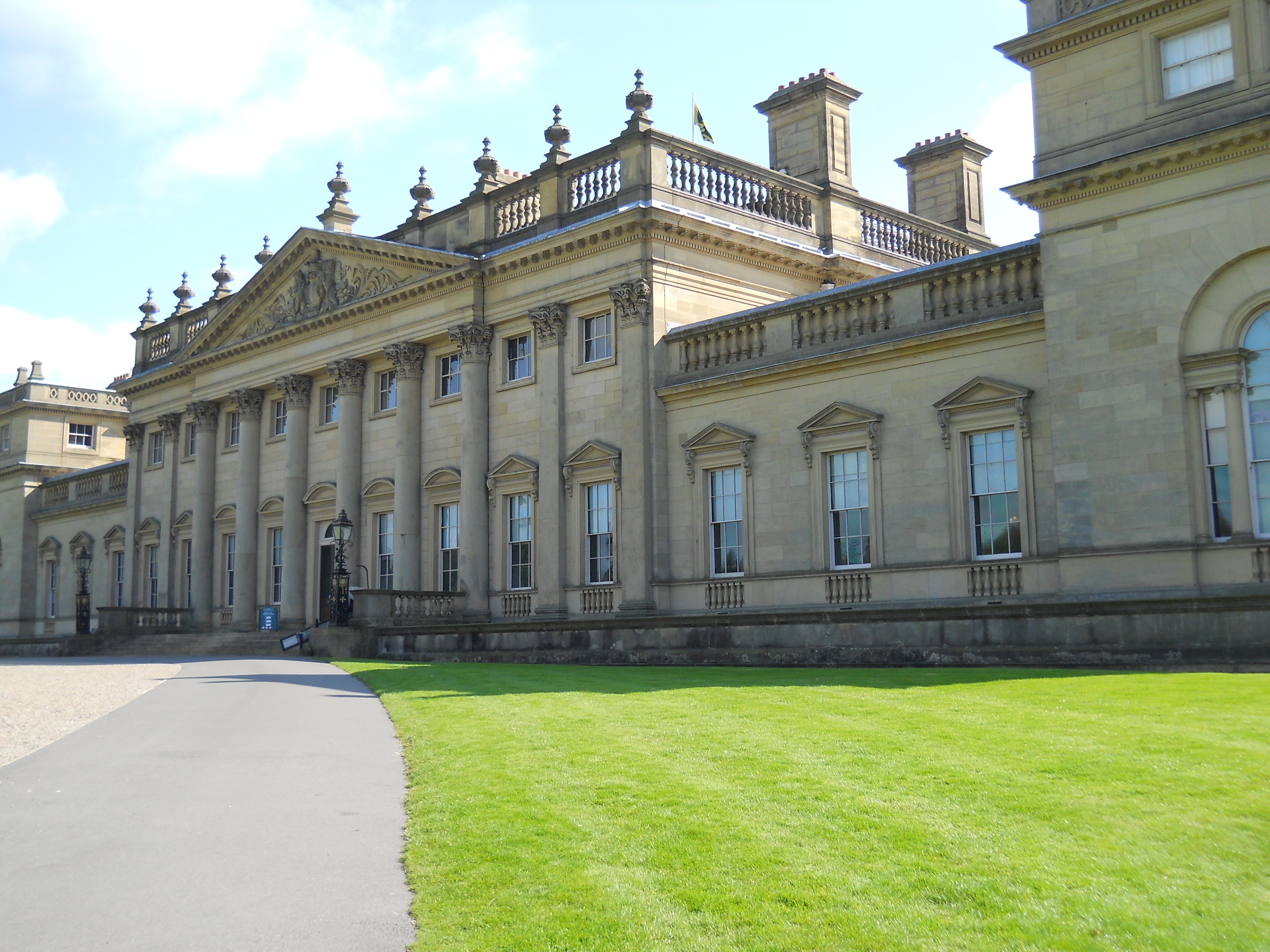
Harewood House

Harewood

On Monday I took an early train north to York, left my suitcase at the hotel, and headed off to Harewood (which can be pronounced either hairwood or hahrwood, depending on the person with whom you are speaking).

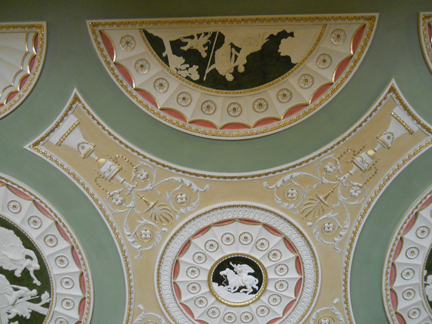
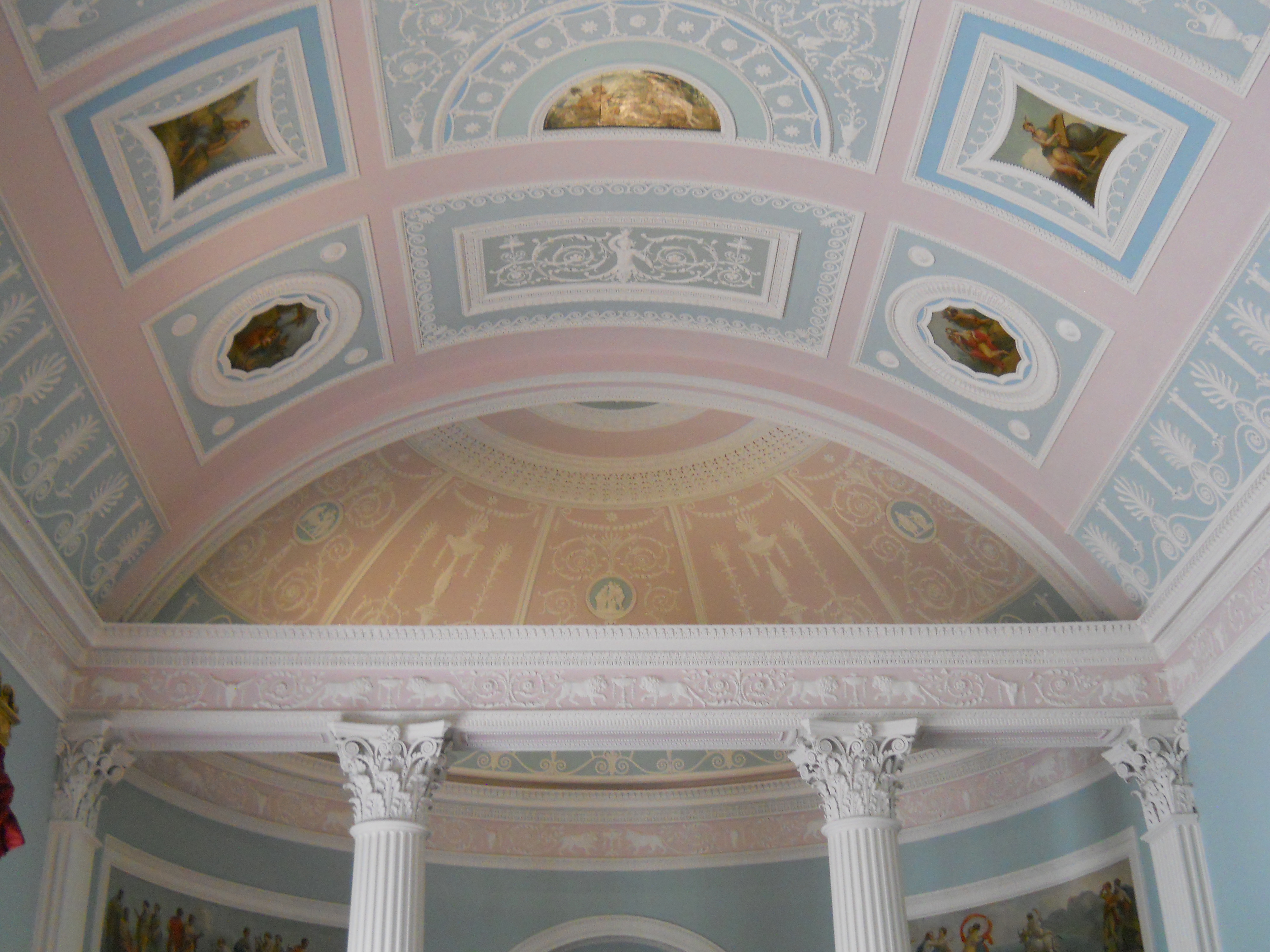
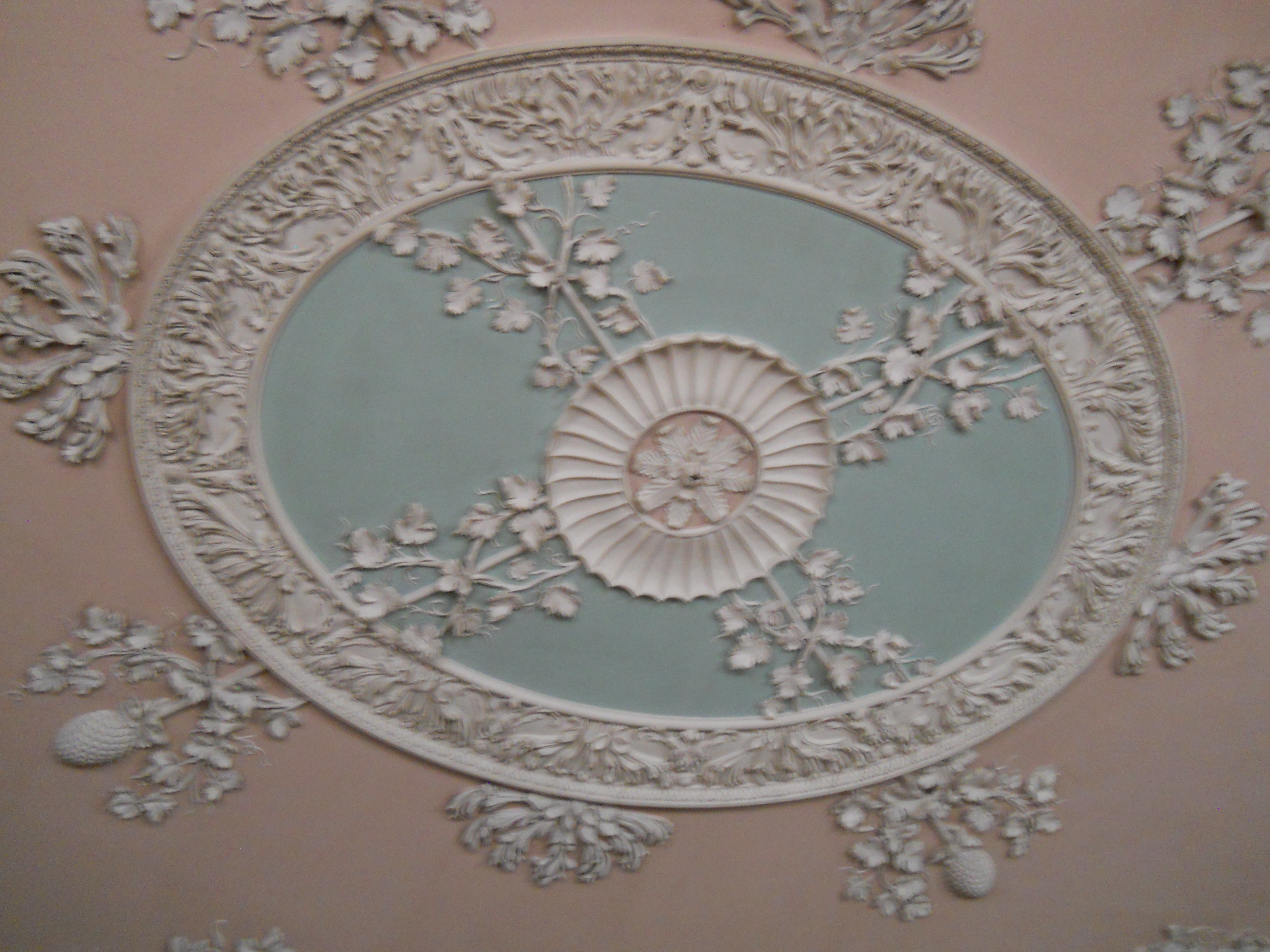
My overall reaction to Harewood is… Robert Adam! I don’t know how the man got around to accomplishing so much in England’s great houses in one lifetime, but from now on I will judge all of the ones I visit by the quality of their Robert Adam touches (or lack of it).

ceiling5 copy

Oh yes, I suppose I should mention the excellent work by Charles Barry and the Chippendale furniture too. Utterly fabulous!

In later years, Harewood was the home of Queen Elizabeth’s aunt, the Princess Mary, after she married the sixth Earl of Harewood, Henry Lascelles, who served in the First World War.

Photos of Harewood

Castle Howard

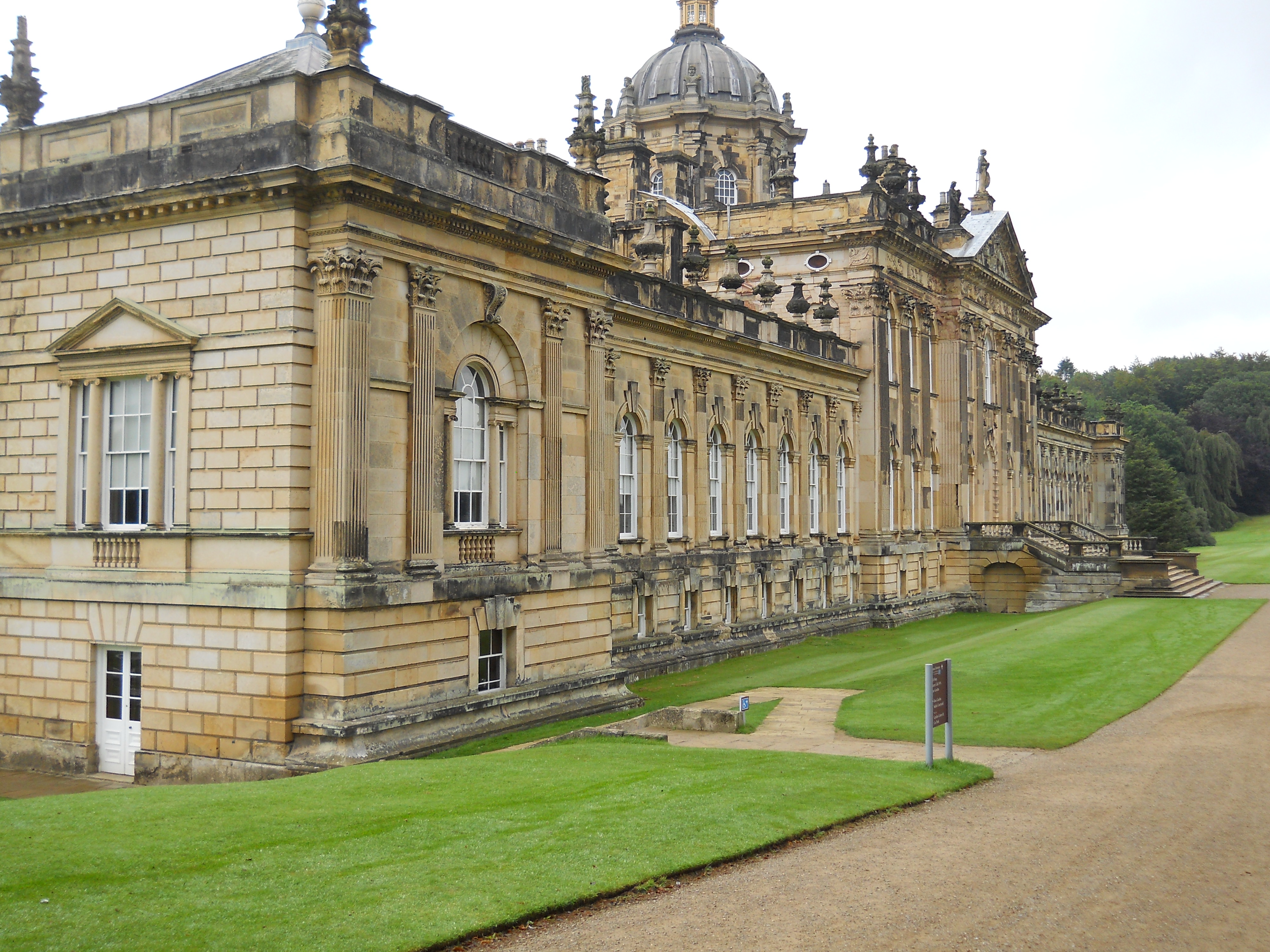
Castle Howard was originally built in 1700 by the 3rd Earl of Carlisle, who was a younger son of the Duke of Norfolk. Yes, Catherine Howard, unfortunate fifth wife of Henry VIII, was of the same family, but she predated the house. John Vanbrugh, the architect, was also the architect for Blenheim Palace, which is spectacular in itself.

The 4th and 5th earls traveled widely on the continent and were great collectors. The current earl lives at another house, and this one is owned by a private trust, headed by Carlisle family members.

CastleHoward2 copy

Castle Howard is well-known for being the setting of the popular Brideshead Revisited television series.

The 6th countess was the eldest daughter of the 5th Duke of Devonshire and his wife Georgiana. She became the mother of 12 children, and you can see her bedroom in the photos.

Photos of Castle Howard

Haworth

One of my favorite books of all time is Jane Eyre, and I loved Wuthering Heights as well. So visiting the parsonage where the Brontë family lived with their vicar father was a significant milestone. Very different from the magnificent houses I’ve been visiting on this trip! Startling to hear that nearly half of all children born at this time died before the age of six, and poor Rev. Brontë saw his wife and all his children die before he did.

paintingbyBranwell

Photos of Haworth

The Foundling Museum

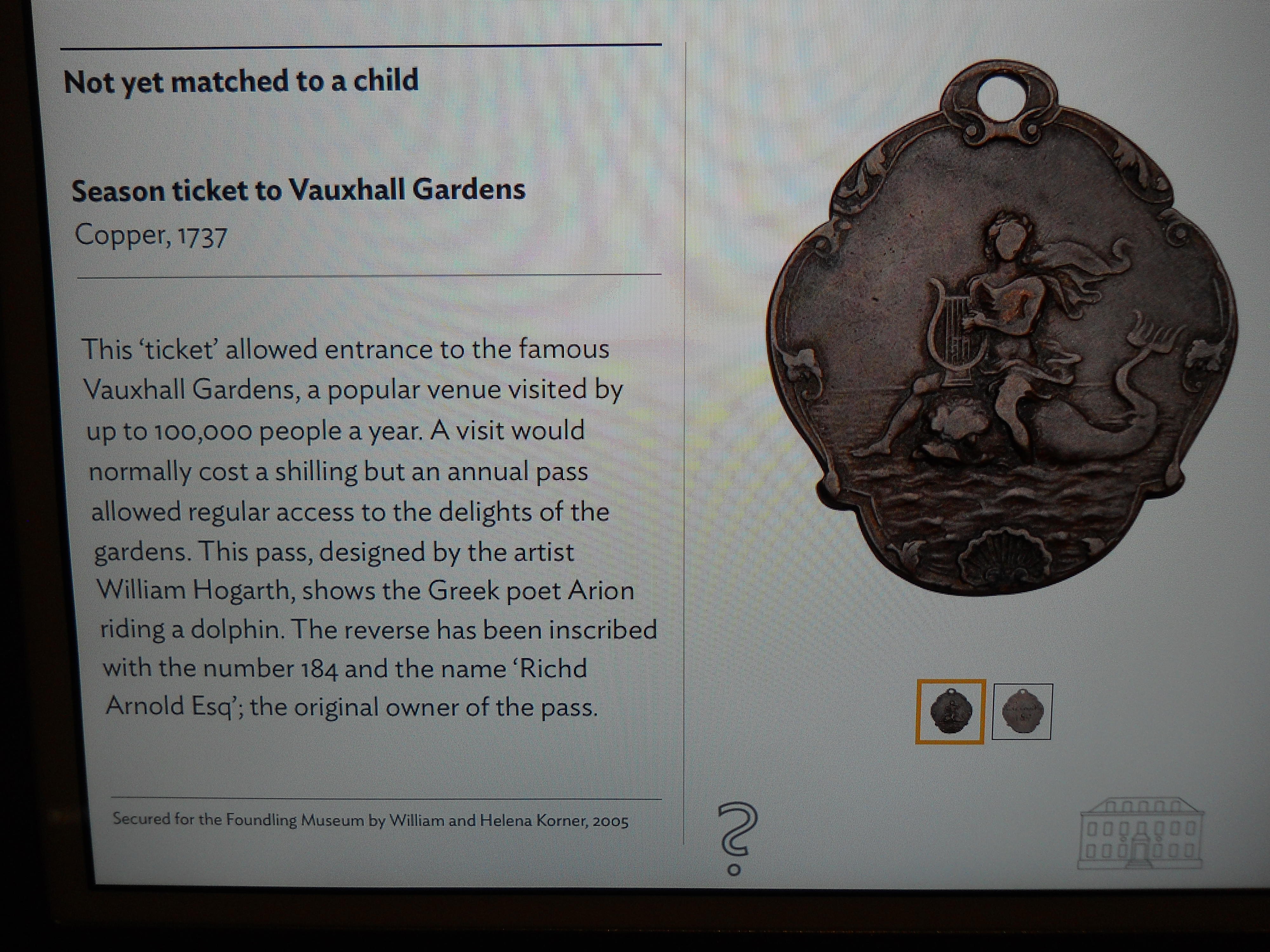
If you ever wondered what happened to England’s abandoned children, this museum tells the sobering story of the Foundling Hospital, Britain’s first home for abandoned children. Mothers who left their children there also left tokens (buttons, jewelry, coins, or whatever they had) to identify their children in case their circumstances changed and they could claim them someday. Unfortunately, most of the children were never claimed. At the ages of 9-14, children were sent away to be apprentices or servants. It wasn’t an ideal situation, but at least the children were fed and clothed and educated up to a point, which was certainly better than being left to die in the streets, which was a common practice in some areas. Sadly, much of society shunned the offspring of prostitutes or unmarried couples and really didn’t consider it a great loss if they died.

One mother left a Vauxhall season pass as a token for her child

One mother left a Vauxhall season pass as a token for her child

Another focus of the museum is the founder, Thomas Coram, as well as supporters William Hogarth and George Frideric Handel and a large collection of paintings donated to the hospital that were used to entice potential contributors to come to the hospital.

Squidgeworth found a friend!

Squidgeworth found a friend!

See photos here.

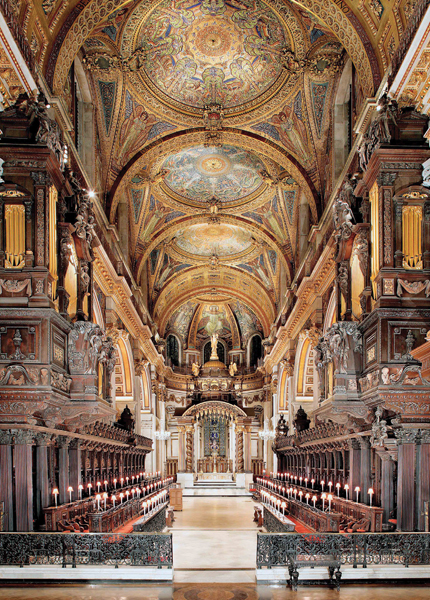
St. Paul’s Cathedral

Beautiful and impressive. Admiral Lord Nelson and the Duke of Wellington are buried in the crypt.

GTO 225 London.qxp:Regional Update.qxd

See photos here.

York

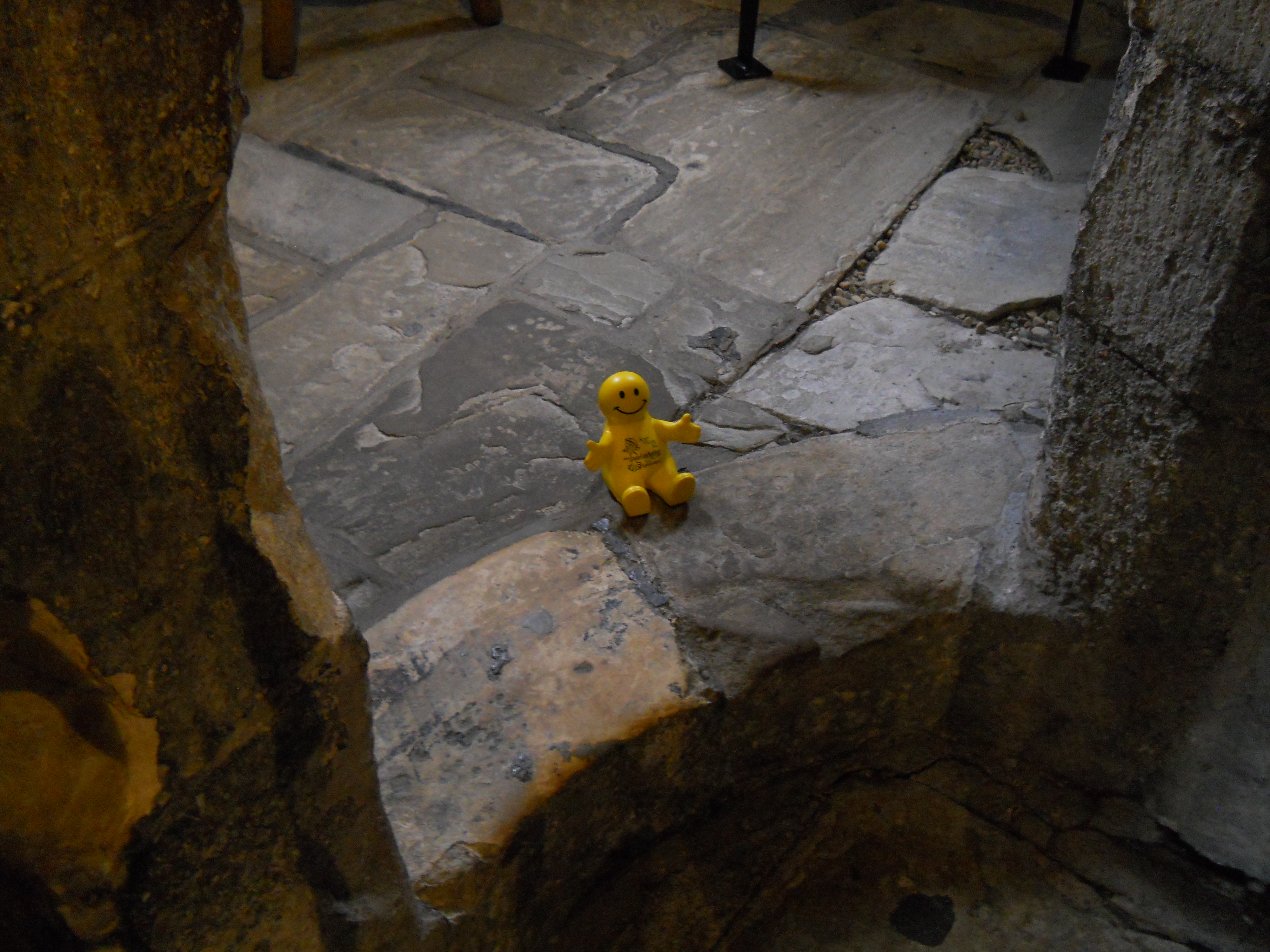
Spent a day walking around York and shopping. Did the Richard III Experience and Squidgeworth got put in jail for a short time, but he smiled all the way through it. Nothing gets him down, not even getting shut up in that tiny cell.

yorkprison

See photos here.


Sadly, less than a week remains before Squidgeworth and I fly back across the pond.

So much to see, so little time!

The Bluestocking Belles: Mistletoe, Marriage & Mayhem

box set 2

The first joint volume of the Bluestocking Belles—seven Christmas novellas about runaway brides—will be released on November 1, 2015. We’re excited! It’s currently running #12 on Amazon’s Hot New Releases, and if you order it now, you’ll have it on your device by November 1 at only 99¢.

100% of royalties go to the Malala Fund. Find out more here.

About Mistletoe, Marriage & Mayhem

All She Wants for Christmas

Amy Rose Bennett

A frosty bluestocking and a hot-blooded rake. A stolen kiss and a Yuletide wedding. Sparks fly, but will hearts melt this Christmas?

The Ultimate Escape

Susana Ellis

Abandoned on his wedding day, Oliver must choose between losing his bride forever or crossing over two hundred years to find her and win her back.

‘Tis Her Season

Mariana Gabrielle

Charlotte Amberly returns a Christmas gift from her intended—the ring—then hares off to London to take husband-hunting into her own hands. Will she let herself be caught?

Gingerbread Bride

Jude Knight

Travelling with her father’s fleet has not prepared Mary Pritchard for London. When she strikes out on her own, she finds adventure, trouble, and her girlhood hero, riding once more to her rescue.

A Dangerous Nativity

Caroline Warfield

With Christmas coming, can the Earl of Chadbourn repair his widowed sister’s damaged estate, and far more damaged family? Dare he hope for love in the bargain?

Joy to the World

Nicole Zoltack

Eliza Berkeley discovers she is marrying the wrong man—on her wedding day. When the real duke turns up, will her chance at marital bliss be spoiled?

Under the Mistletoe

Sherry Ewing

Margaret Templeton will settle for Captain Morledge’s hand in marriage, until she sees the man she once loved at the Christmas party she presides over for her would-be betrothed.

Available now for pre-order price of 99¢

Amazon.comAmazon.caAmazon.uk Amazon.au

KoboiBooks

About the Bluestocking Belles

The Bluestocking Belles’ books carry you into the past for your happy-ever-after. When you have turned the last page of our novels and novellas, keep up with us (and other historical romance authors) in the Teatime Tattler, a Regency scandal sheet, and join in with the characters you love for impromptu storytelling in the Bluestocking Bookshop on Facebook. Also, look for online games and contests and monthly book chats, and find us at BellesInBlue on Facebook, Twitter, and Pinterest. Come visit at http://www.BluestockingBelles.com and kick up your bluestockinged heels!

Website FacebookTwitterPinterest • Newsletter

Check out our recent publication:

The Bluestocking Belles’ Guide to a Good Time

gamebooktoshare

  • games and puzzles related to historical romance
  • excerpts from some of the Belles’ books
  • information about the Malala Fund, to which all profits from our joint projects are committed

Free download here or purchase here for $4.99

Susana’s 2015 English Adventure: Week 2

Hatfield House

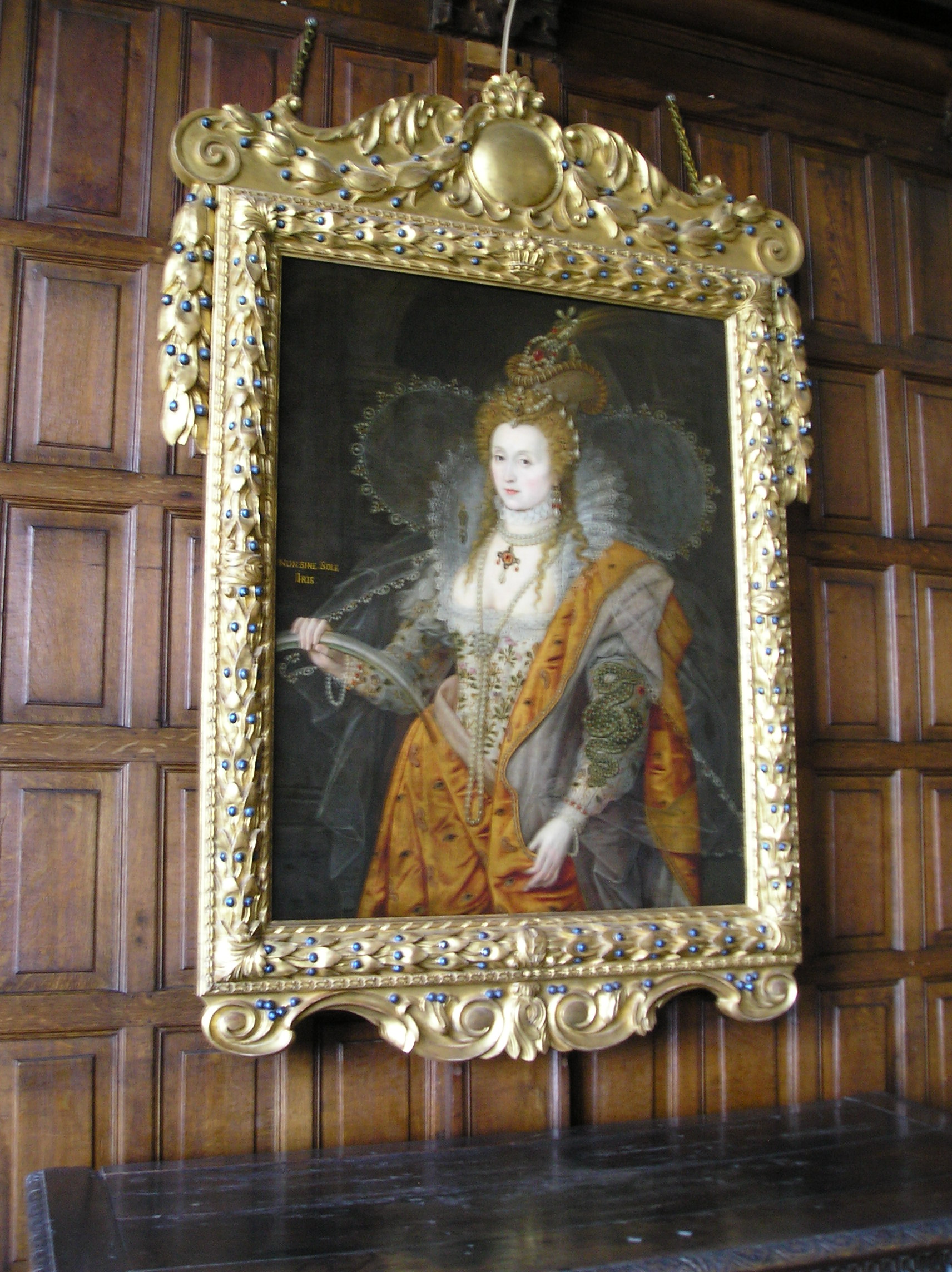
Hatfield House is a Jacobean manor built by Robert Cecil, the son of William Cecil, the most trusted advisor of Elizabeth I. Robert succeeded his father as Elizabeth’s advisor, eventually becoming an advisor of James I as well. Robert Cecil is the one who discovered the plot of Guy Fawkes and others to blow up the House of Lords. A later Cecil (James) was made Marquis of Salisbury, and the Salisburys still own and live at Hatfield House more than 500 years later.

Hatfield Palace, which stood nearby (of which only a banquet room remains) was where all of Henry VIII’s children (Mary, Elizabeth, and Edward) were raised. It was here where Elizabeth learned that she was queen after the death of her sister Mary.

OLYMPUS DIGITAL CAMERA

Elizabeth I

Photos of Hatfield House

Kenwood House

William Murray, 1st Earl of Mansfield, bought the house in 1754 and commissioned Robert Adam to remodel it, which he did from 1764-1779. The library is a masterpiece of Robert Adam genius, but the rest of the house is equally splendid. It is a pity that most of the original Adam-designed furniture was dispersed long ago, but a later owner, a Lord Iveagh, purchased the house in 1925 and displayed his fabulous collection of paintings there before leaving the house and its contents to the nation in 1927.

LIBRARY3

Lord Mansfield and his wife never had children of their own, but they did take in two young daughters of nephews: Lady Elizabeth Murray and Dido Belle, who was a mixed-race daughter of an enslaved West Indian woman. Dido Belle was the subject of a recent film, Belle.

Dido Belle and Elizabeth Murray

Dido Belle and Elizabeth Murray

Pictures of Kenwood House

Buckingham Palace

Buckingham Palace needs no introduction from me. I scheduled my trip this year so that I could visit, since it’s only open to visitors when the Queen is on holiday in Scotland (August and September). No photographs allowed, so I pinned these from other people’s Pinterest boards.

Here’s Squidgeworth ready to enjoy a coffee and scone with me after the tour.

SNACKATBUCKINGHAM

Pictures of Buckingham Palace

Osterley Park

Built by Sir Thomas Gresham, financial advisor of Elizabeth I, Osterley Park was later purchased by Robert Child, a wealthy banker, who left it (and his entire fortune) to his granddaughter, Sarah Fane, who married George Villiers and became Lady Jersey (yes, Sally Jersey, one of the patronesses at Almack’s during the Regency period) a year later. But the house has been little used, as the Jerseys preferred spending their time at other properties. Here you will see not only the Robert Adam touches, but also nearly all of the original furniture, including the room where Adam worked and some of his drawings.

PINK:BLUECEILING

Pictures of Osterley Park

Devizes & the Bear Hotel

BEARHOTEL

The Bear Inn was once owned by the father of a young Thomas Lawrence, who used to charm the clientele by reciting poetry and drawing likenesses. He was quite good, and was eventually knighted for his portrait painting. See my blog post here.

Pictures of Devizes

Bath

Squidgeworth and I had a very enjoyable two days in Bath, staying at the Brooks Guesthouse, where I stayed three years ago on my Rick Steves tour. Here I visited No. 1 Royal Crescent, the Jane Austen Centre, the Victoria Art Gallery, the Holburne Museum, the Assembly Rooms and Fashion Museum (second visit), and Sally Lunn’s.

Here’s Squidgeworth saying goodbye to Bath.

SquidgeBrooks

Pictures of Bath

Judith Laik: The Lady Protests

Terriers in Great Britain during the Regency period

by Judith Laik

The British Isles have been the flowering place for a disproportionate number of breeds that we know today. Even given the US ties to Britain, which might have predisposed early settlers to favor dogs from there, as the years have gone on and more breeds have been introduced from once-exotic places, it must be noted that the cluster of islands off the northwest coast of Europe has proven to be especially rich soil for the development of dogs.

This is especially true for the group of dogs known as Terriers. Among the thirty breeds currently recognized by the American Kennel Club, only four have an origin other than the British Isles!

That means that as writers who set our novels in England, Scotland, Wales, and Ireland, we have a wide selection of dog breeds to use. However, one caution: until around the middle of the nineteenth century, people did not think of specific breeds of dogs in the same way we do today. Previous to and during the Regency, dogs were bred more for function that to maintain a pure strain.

Though a number of breeds had been bred “true” – to a conformation and behavioral type – these were more likely to be dogs whose function benefited the aristocracy, such as Foxhounds, Greyhounds, and Sporting or Gun dogs. Paintings of the time show that these dogs could easily be compared with their counterparts today.

However, the more lowly, working breeds, such as herding dogs, were not uniform in type until later in the century. Terriers also ranked mostly as “dogs of the people.” People of all ranks owned Terriers. They were literally the “in the trenches” fighters against the most populous and harmful of humankind’s enemies. And they were the “dog of all work” – guarding the homestead, tending flocks, hunting rabbits and other small game – for the family who couldn’t afford to keep a separate dog for every purpose. As well, the larger landholder frequently used Terriers as an adjunct to his other dogs. They accompanied the Foxhounds on the hunt, Gundogs on a shoot.

And a few lucky terriers did end up becoming pampered pets. Because of their smaller size, they could be easily fitted into a house and live a life of leisure, their only work to serve as companions to their masters and mistresses.

So, when I needed my secondary heroine to adopt a stray dog in my story, The Lady Protests, a Terrier seemed to be a perfect choice. I could easily see it having gotten lost from a careless, or perhaps even abusive master, and it wasn’t too large to conveniently (or not so conveniently, in this case!) travel with the heroine in a coach. But, I never named his breed in the story, only describing his brown coat color and shagginess.

Here’s an image of what Rags might look like:
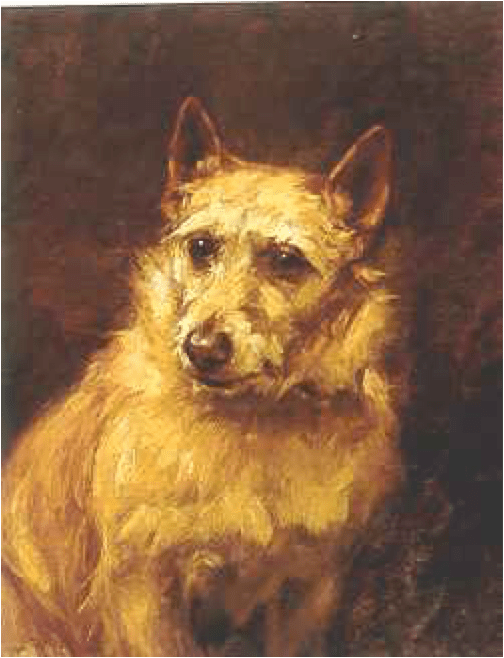
No.1

Image from A BREED APART: The Art Collections of the American Kennel Club and the American Kennel Club Museum of the Dog, William Secord, 1988; the painting is by Maud Earl, a famous late-nineteenth century dog artist

And, yes, this painting came from well past our era. It’s hard to find images of Terriers earlier in the century. What follows are some from the late eighteenth century to around 1830.

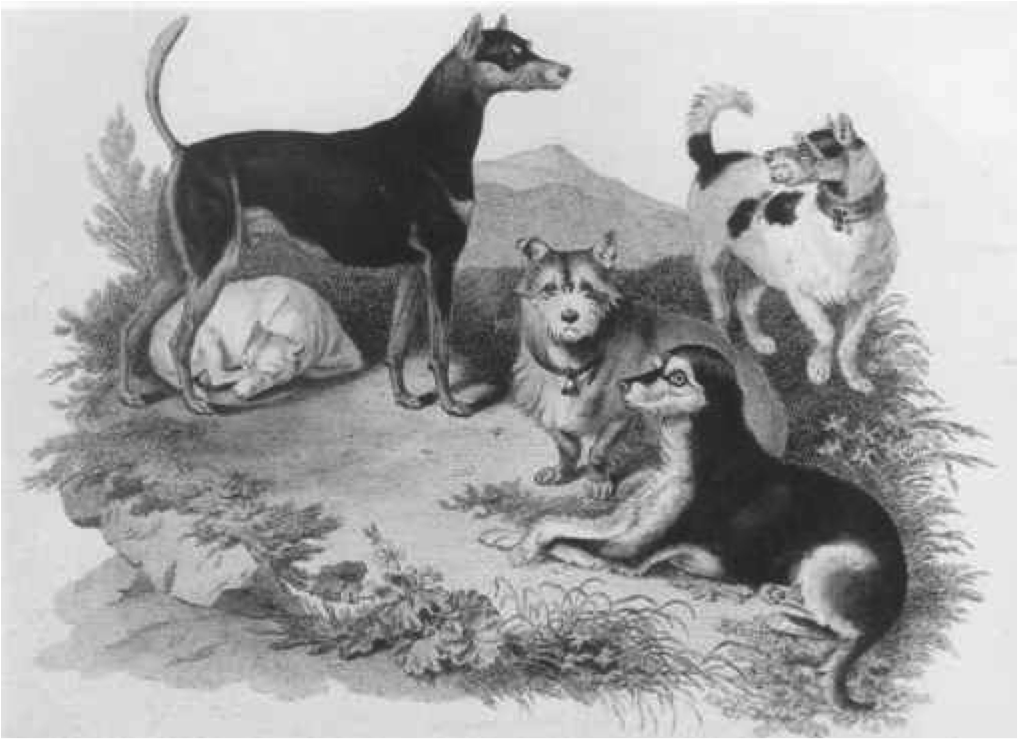
One of the best sources for the history of dogs in the British Isles is the Cynographia Britannia, published in several parts from 1799-1805. The image below is of the Terrier group, by Sydenham Edwards. From Collection American Kennel Club. Photography by Dave King. DOG PAINTING, 1840-1940 by William Secord, 1992*:
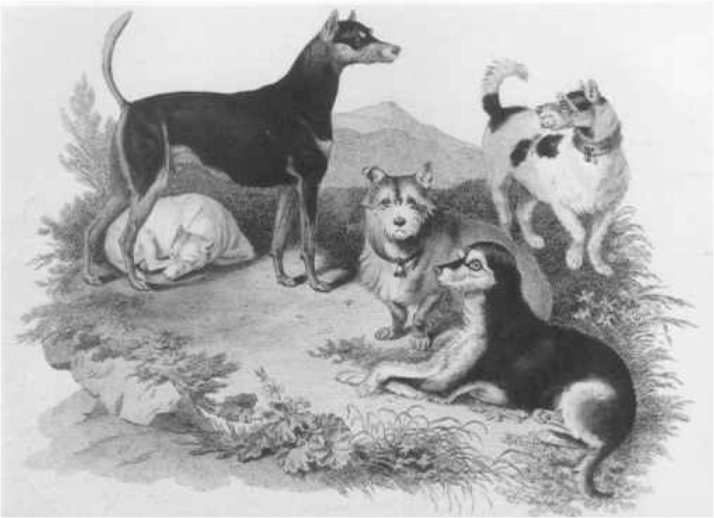
No.2

This is a good representation of Terrier breeds one could have seen early in the nineteenth century. The smooth-coated dog on the left was a Smooth Black-and-Tan Terrier. The breed name was later changed to Manchester Terrier; it also became an ancestor in other breeds. Sleeping underneath him is a White English Terrier, which also was an important ingredient in several breeds, but which is now extinct. In the center, by my guess, is an example of the old Scotch Terrier, from which all the Scottish terrier breeds descended; or it could be an early Norwich Terrier. At back on the right, I believe, is an early Wire Fox Terrier. And in the foreground is a Wire Black-and-Tan Terrier, or early Welsh Terrier.

Warning: some of the following paintings may offend our modern-day sensibilities!

Billy, the rat-killing terrier. Coloured engraving from The Kennel Club’s Art Collection Catalogue. Note: The Kennel Club is the English equivalent of the American Kennel Club, the chief registry for purebred dogs in the country.
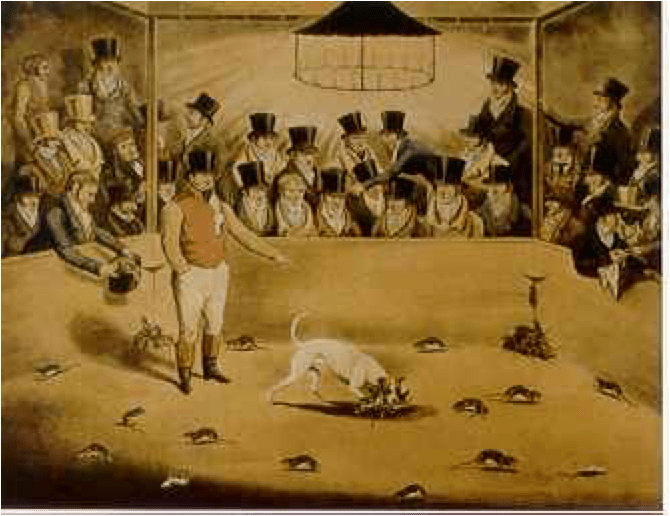
No.4

The caption states: “The Phenomenon of the Canine Race, and Superior Vermin killer of his day having killed nearly 4,000 rats in about Seven Hours.” From a broadsheet for the Westminster Pit in March 1825.

Here’s another image, also described as a rat terrier, which illustrates that in this time a “breed” was what its function was, not what it looked like:
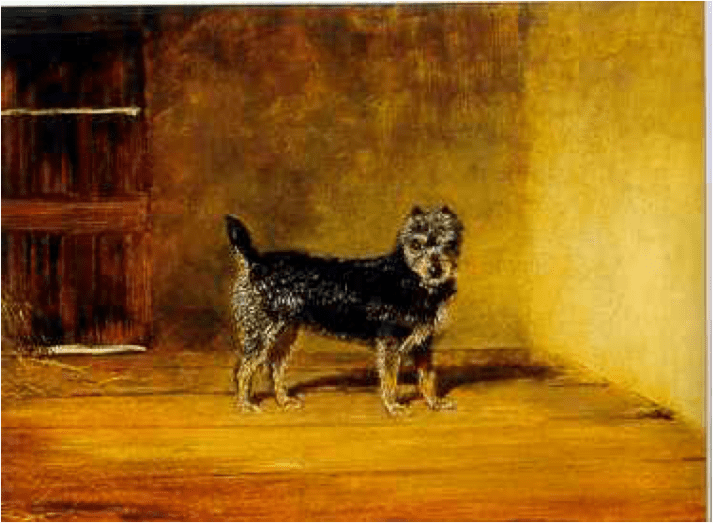
NO.5

Rat Terrier in an Interior, 19th Century, English School. Oil on panel. Private Collection. DOG PAINTING: The European Breeds, William Secord, 2000.

Secord says: Many of the early Terriers evolved from what was known as the English Black-and-tan Terrier (now called the English Toy Terrier), a rough-coated little dog noted for its ability to catch vermin. This one is depicted in a barn-like interior, where his abilities would have been very much needed.

Here’s an image of a very young Princess (later Queen) Victoria. It’s not the best quality, and the little black dog at the left is hard to see, but it’s from not much past our time. Victoria was an avid lover of dogs, and owned many breeds in her lifetime, often leading to a huge bump in the popularity of a particular breed.
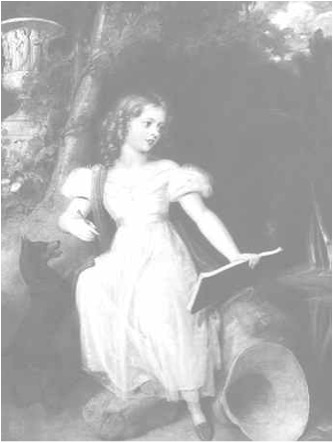
Young Victoria With Nellie, Her Black and Tan Terrier, 1830, Richard Westall. Oil on canvas. Collection: Her Majesty the Queen. DOG PAINTING, 1840-1940, William Secord, 1992.

Young Victoria With Nellie, Her Black and Tan Terrier, 1830, Richard Westall. Oil on canvas. Collection: Her Majesty the Queen. DOG PAINTING, 1840-1940, William Secord, 1992.

Later in the century, this breed would be renamed the Manchester Terrier, with standard and toy varieties. Secord notes that Westall was known mostly as a watercolourist and book illustrator who exhibited actively at the Royal Academy, and the drawing master to Princess Victoria. Nellie was one of Victoria’s first dogs; she showed her love of animals early.
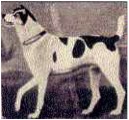
Viper, by Sartorius, 1796. Catalogue, temporary exhibit of The Kennel Club Art Gallery.

Viper, by Sartorius, 1796. Catalogue, temporary exhibit of The Kennel Club Art Gallery.

A very early image of a Smooth Fox Terrier. The painting may not be that anatomically correct; the head looks very small for the size of its body.
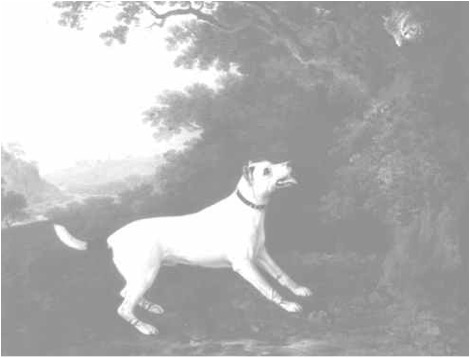
Smooth Fox Terrier, c. 1790, John Boultbee. Oil on canvas. Private Collection. Photography by Grant Taylor. DOG PAINTING, 1840-1940, William Secord, 1992.

Smooth Fox Terrier, c. 1790, John Boultbee. Oil on canvas. Private Collection. Photography by Grant Taylor. DOG PAINTING, 1840-1940, William Secord, 1992.

Secord says: Reputed to be the first known painting of a Smooth Fox Terrier, this painting is typical of the work of Boultbee. Influenced by the paintings of George Stubbs, Boultbee was known as a horse and animal painter with a highly finished, polished style.

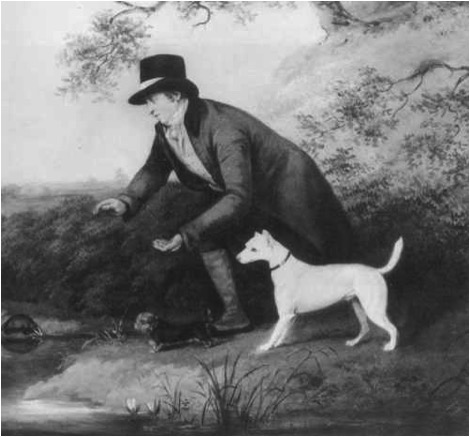
Compare with the dog below, listed as a White English Terrier:

No.9

Secord’s caption reads: The now extinct White English Terrier and other early Terriers were often used to catch foxes and badgers, the latter being seen in the left middleground of this painting. Notice the small size of the little dog at the sportsman’s foot, a Terrier of unknown origin.

I think the smaller dog in the painting could be a Waterside Terrier, an early ancestor of the Yorkshire Terrier, or a small rough-coated Black-and-Tan.
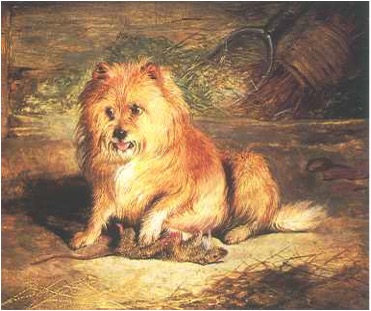
Vixen, 1824, Edwin Henry Landseer. Oil on panel. Collection Ruth Havemeyer Norwood. DOG PAINTING: The European Breeds, William Secord, 2000.

Vixen, 1824, Edwin Henry Landseer. Oil on panel. Collection Ruth Havemeyer Norwood. DOG PAINTING: The European Breeds, William Secord, 2000.

About this painting, Secord says: Described as a ‘thorough-bred Scotch Terrier’, a pet of Mrs. W.W. Simpson, this painting was published in 1824 in a sporting magazine with twenty lines of descriptive text. It was later etched by Jessica Landseer, the artist’s sister. Very small in scale, the painting was completed when the artist was only twenty-two years old.

Landseer was a noted painter of dogs, a favorite artist of Queen Victoria, painting many of her pets through the years. Note that, although the caption says Vixen is a pet, it still is living up to the terrier reputation as a killer of vermin.

The following information about the history of the Scottish breeds came from the West Highland White Terrier Club of America, which I found there when I was researching for a class on dog breeds in the Regency in 2005. Unfortunately they have considerably changed their site and the history of the Westie now is very brief. Here’s the older entry, as I think it is informative:

The short-legged terriers of Scotland are now recognized as the Scottish, Skye, Cairn, Dandie Dinmont, and West Highland White Terriers. All undoubtedly descend from the same roots. All of these dogs were valued as intrepid hunters of small game. Originally, their coat colors ranged from black to red to cream or white.

There does not seem to be any consensus as to how the five breeds evolved. Information I found led me around in a circle.

Here is an image of two more dogs described as Scotch Terriers:

Terriers Fighting Over a Rabbit, Martin T. Ward (1799-1874), oil on canvas. Collection AKC. A BREED APART: The Art Collections of the American Kennel Club and the American Kennel Club Museum of the Dog, William Secord, 1988.

Terriers Fighting Over a Rabbit, Martin T. Ward (1799-1874), oil on canvas. Collection AKC. A BREED APART: The Art Collections of the American Kennel Club and the American Kennel Club Museum of the Dog, William Secord, 1988.

Secord, in the text near this painting, says: While the terriers are certainly cleaned up, with none of the dirt or burrs in their coats that one would expect, they are nevertheless depicted as working terriers, rather than pets. The West Highland White Terrier-type dog with the cropped ears, for instance, is shown with a wild, determined expression, his teeth firmly planted in the black and tan terrier’s ear. The object of their attention lies dead beneath them, his eyes lifeless and blood trickling from his nose on to the ground.

I don’t have any early images of these breeds, but Wire Fox Terriers, and the Wire or Rough Black and Tan Terrier would have been in existence early in the century.

This is information I found on the Border Terrier club in 2005, which was removed when I looked again a few years later:

The BT is one of several working terrier breeds to emerge along the borders of England and Scotland where terriers have been used to hunt fox, otter, and vermin for centuries. The Border, the Bedlington, and the Dandie Dinmont are thought to have a common ancestor. A soft top knot, characteristic of the Bedlington and the Dandie Dinmont, is seen sometimes in the Border along with white on the chest and the occasional white on the foot. The Border has rarely been sought out for his appearance. However, his plain brown coat and self-effacing manners in public disguise a cheerful and sensible companion for those who enjoy a terrier bred to think for himself.

Note that this contradicts what I quoted above as the ancestry of the Dandie Dinmont Terrier, which grouped it with the other Scottish breeds. I don’t know what the truth is in this case.

The BT can be identified in hunting scenes painted in the eighteenth century, bringing up the rear behind horses and the hounds, obviously determined to get there on his sturdy legs in time to help with the action.

I haven’t found any of those hunting scenes in my research.

The Lakeland Terrier originated in the Lake District of Cumberland, England near the Scottish border in the 1800’s. He is related to several terrier breeds and is one of the oldest working terrier breeds still in use today. His diverse ancestors include the now extinct Old English Black and Tan terrier, the early Dandi Dinmont, Bedlington and Border Terriers. He probably existed in extremely early form, if at all, in the first years of the century.

Sealyham Terriers were developed in mid-19th century in Wales by a Capt. John Edwards, so wouldn’t have been around during the Regency. And the Airedale Terrier developed too late to use one of our books. If you find a silhouette of each breed, you can see that the body and head type of the Airedale, Lakeland, Fox (both smooth and wire), Irish, and Welsh Terriers is very similar. Early types of some of these breeds would have existed.

My evidence suggests Staffordshire Terriers and Bull Terriers, although in the Terrier group now, would still be considered “crossbreeds” during the Regency. The Parson Russell Terriers and Russell Terriers have a fascinating story, but their development, as an offshoot of Fox Terriers, was in the mid-19th century.

DNA testing would probably settle the questions about how the various breeds developed. I haven’t come across any information that suggests such testing has been done. For our purposes as writers, it suffices to get some idea of whether the various breeds would have existed in our time, and how they looked.

* William Secord was the founding director of the AKC’s Museum of the Dog, and owns a gallery in New York City specializing in dog and other animal art. He is considered “the recognized expert on 19th century dog paintings.”

Most of the images in this article, except the two from a catalogue of an exhibit of art by The Kennel Club, are from one of three gorgeous coffee-table books, authored by Secord, with fantastic illustrations and a great deal of information about the dogs, the art, and the artists. They are a rich source of images of the dogs of the past:

A BREED APART: The Art Collections of the American Kennel Club and the American Kennel Club Museum of the Dog, by William Secord, Antique Collectors’ Club ltd, Woodbridge, Suffolk, England, ©2001, ISBN 1-85149-400-6

DOG PAINTING, 1840-1940, A Social History of the Dog in Art, by William Secord, Antique Collectors’ Club, ©1992, ISBN 1-85149-139-2

DOG PAINTING: The European Breeds, by William Secord, Antique Collectors’ Club, ©2000, ISBN 1-85149-238-0

About The Lady Protests (Coming Soon)

Book Three in the Unsuitable Brides series

Pageflex Persona [document: PRS0000038_00074]

A Lady in Charge

Since the death of her musician stepfather, Beatrice Foxworth has struggled to hold her remaining family together: her innocent, head-in-the-clouds stepsister, Arietta; and her devastated mother. When Arietta is abducted, Beatrice must save her from ruin – or worse

A Pleasure-seeking Gentleman

Philip Hollesley carelessly promised a friend to oversee his naïve younger brother’s first essay into London bachelorhood. When Jasper Linton elopes with an unsuitable young woman, the last thing Philip wants to do is become involved. But he gave his word, so it’s up to him to chase down the young fool before he can tie the knot in Gretna Green.

Adversaries Turned Reluctant Allies

But there never was so strange a pursuit. Beatrice and Philip, chaperoned by her devious mother, discover an odd assortment of humanity is also tracking them: a rejected suitor, a debauched lord, an aging demimondaine and her aristocratic lover, a group of rowdy young bucks, and a mysterious man.

The Lady Protests

Beatrice and Philip can’t agree on anything – except the necessity to overtake Jasper and Arietta – and to fight their inconvenient attraction to each other.

Excerpt

Jasper Linton’s mistaken assumption about the beautiful musician Arietta Foxworth’s lack of virtue forces him to insist that they must be married. He’s not swayed by her insistence that she doesn’t want to marry him, and they find themselves on the road to Gretna Green, where a series of misadventures leaves them with no traveling money. Now he has to depend on her ability to make money by singing and playing her violin in the public squares of the towns on their way. In Mansfield, she adopts a starving, abused little dog, who takes violent exception to their attempt to clean him up with a nice bath and runs away again. The story picks up the next morning as a broken-hearted Arietta prepares to continue their journey:

Listlessly, Arietta prepared to travel to Chesterfield, and entertain the good folk after they arrived there. She donned her new gown and bonnet, and decided she looked more like her usual style than she had at any time since Jasper had carried her off. Except for the dark marks under her eyes, and the skin still slightly mottled from crying.

Her new gown didn’t give her spirits a lift, however. What she really wished for was to stay in bed with Jasper’s arms around her, and never have to face such a cruel world again.

Descending to breakfast in the common room at the inn with him, she made an indifferent meal despite his coaxing. His worried gaze followed her, and when he at last gave up and asked if she were ready to travel, she apathetically agreed.

They walked out of the inn and crossed the courtyard to where their coach stood waiting. Just as Jasper gave her a hand to step up into the carriage, a small form darted from the shadows and leaped at her.

She gave a small scream, and then recognized the little dog from the day before. Clasping him to her breast, she sobbed, “Oh, Rags, you’ve come back to me!” and buried her face in his still matted, still damp, not-too-clean ruff. He twisted about in her arms, trying to lick her face, as enthusiastic and happy as she.

“‘Rags?’” Jasper queried.

“Yes, I had decided yesterday that is the name I would give him, but when he ran away it hardly seemed worth mentioning.” She sniffed, but felt a huge grin splitting her face at the same time.

“No doubt he realized his best chance of getting his next meal was to wait in hopes you’d come back outside.”

“Oh! Yes, I’m very sure he is starving! Jasper, please go back to the pie lady and buy more pies for Rags!”

“Oh, very well,” he said, pretending annoyance, but he had a huge smile on his face as well. “You get in the carriage and hold on to him, especially when I come back. If he runs off again, we’re not staying in town to look for him.”

While she clutched the dog to her, Jasper boosted her into the carriage and slammed the door behind her. Rags began wriggling to get free, and she spoke soothingly to him, but he kept up the struggles. She needed a leash, but where could she procure one?

Knowing it would take Jasper several minutes to reach the pie stall and return again, she let Rags free. The ribbons on her new bonnet flopped forward as she set him on the carriage floor, which gave her an idea. Pulling off the hat, she tore the ribbons loose and tied them together, then fastened the joined ribbon around the dog’s neck. He didn’t care for that either, but she placed him on the seat beside her and stroked him, speaking in a consoling voice, and he quieted.

To ensure he didn’t pull his improvised leash out of her hands, she tied the loose end to her own wrist. Now all she had to worry about was whether the ribbon was strong enough to hold when Rags pulled on it.

She was about to find out. Apparently, the process of getting the ribbons off her hat and onto Rags had taken longer than she realized, because Jasper’s voice came to her from immediately outside the carriage. “I’m back. Hold on to the dog.” A small pause, and he opened the door.

Rags barked and growled fiercely and threw himself at Jasper, who reflexively stepped back, leaving a gap between him and the door. The dog’s leap took him to full extension of the ribbons and they parted.

By this time, however, Rags had caught the scent of pies, and instead of escaping, he leaped at Jasper again, trying to procure a pie. Arietta caught the little dog, Jasper entered the carriage, and gave Rags one of the pies as he closed the door.

“If he’s been starving, we don’t want to feed him too much at once or he’ll become ill. I have six, and we’ll parcel them out during the day,” he said, sitting across from Arietta.

Rags had other ideas, though. He bolted down the pie, lunged for the nearest in Jasper’s hands, and proceeded to make short work of it also.

Arietta and Jasper both laughed at the dog’s eagerness. Jasper said, “I shall have to place the rest out of his reach.” Keeping a firm grip on the remaining pies, he called out to Cobleigh, “Hand me my portmanteau.” When the coachman obliged, Jasper tucked the pies away securely inside and handed the case to Cobleigh to stow. “My clothes will smell like beef pies, but that can’t be helped.”

He looked at the broken-apart ribbons and said, “The ribbons didn’t tear; they just came untied. They should work as a leash with a better knot.” He refastened them and ordered Cobleigh to proceed. Arietta heard the coachman give orders to the post boys, and the carriage moved off. Rags whined and jumped at the window, but she petted and soothed him, and he settled down again in her lap and went to sleep.

By the time Arietta and Jasper arrived in Chesterfield, they had fed Rags two more meat pies in an attempt to keep him quiet. Jasper and Arietta finished off the other two pies themselves.

Rags, although still disgracefully matted and dirty, appeared to have already filled out, his abdomen bulging with food. To Arietta’s eyes, his ribs seemed to stick out noticeably less, although she could not be sure whether that was wishful thinking on her part.

After the fourth pie, he finally curled up on the seat next to her and snoozed. He roused when the coach arrived in Chesterfield, jumping up with his front paws on the window edge and peered out.

The coach pulled into the yard of yet another inn. Jasper stepped down and made arrangements for the carriage to remain there while he and Arietta performed in the Market Place, although he seemed not to feel it necessary to inform the landlord of their purpose.

When he tried to leave Rags in the care of Cobleigh, however, his coachman and Arietta both protested quite vocally. Cobleigh didn’t wish to be saddled with the pup, and Arietta refused to be parted from him.

So, with Arietta holding the blue ribbon attaching her to the dog and Jasper carrying her violin case, they made their way to the Market Place.

“Maybe we should see if there’s another pie seller here before we set up to entertain. Rags will want more pies, and I will be hungry again when I finish.”

“Good idea,” Jasper nodded, and they began a tour of the stalls in the market. An hour later, they had found the pie seller and stocked up on pies.

Finally, they found a good place for Arietta to sing. Jasper handed her the violin and took Rags’ leash so she could concentrate on playing.

She set to tuning the violin. With the first notes, Rags yelped loudly and sat, tearing at his right ear with the back paw. Arietta stopped, and the dog cast an offended look her way. She hurried over to pet Rags, but the hurt expression in his eyes did not offer absolution for Arietta’s crime.

“What am I to do?” she asked, turning her attention to Jasper. “I have to play. We need the money.”

“Keep going. He’ll get used to the sound. Dogs have sensitive ears.”

Doubtfully, Arietta picked up the violin again and continued tuning it.

Rags lay on the ground, a pitiful series of groans and growls issuing forth, while it appeared he tried to cover his ears with his front paws.

To top Arietta’s humiliation, a crowd began to gather, laughing and pointing at Rags.

“Start playing a tune,” Jasper suggested. “He’ll like that better. Most people don’t much care for the sound of tuning an instrument either.”

She launched into a soft melody.

Rags did not like it any better.

The crowd grew, along with the laughter.

Nearly crying now, Arietta bravely kept playing.

Rags continued making pathetic sounds as if he were being tortured. “Ow-wow-wow-grrrrr-uff-ow-grr-wow-wow-grrrrr-uff!” He apparently had not found a way to cover both ears with his paws at the same time, so he twisted from side to side, placing a paw over his left ear, then the right.

Arietta brought the song to a premature end. “I cannot do this.”

“Try just singing with no accompaniment,” Jasper suggested.

Arietta set the violin aside, and Rags quieted, although his eyes still held accusation. Arietta began to sing, starting out softly, “‘The water is wide, I can-not cross o’er. And neither have I the wings to fly.’”

Fortunately, Rags did not seem to mind her voice quite so much. Although he turned her back to Arietta and lay in a position that indicated disapproval, he at least did not express it vocally.

Arietta sang more strongly, noticing gratefully that the crowd lingered, even without the hilarious sight and sound of the music-critic dog. “While there’s breath in my body, he’s the one that I love still,” she finished, looking at Jasper.

She sang a few more songs, although having to ignore shouts from the audience to “play the violin again!” Eventually she felt obliged to answer them. “I would not be so cruel to my poor little dog, or to you, as to play my instrument again!”

She took some comfort from the fact that her voice had returned to normal, all trace of her cold gone. And even more that it seemed despite what she felt was the ruin of her performance by Rags’ adamant displeasure, it appeared a good many people had contributed to the pile of coins in the violin case. Jasper again put them into his purse, packed the violin away, and gave an arm to her to leave the square.

About the Author

I live on a mini-farm near Seattle with my husband, daughter, some horses (only two are ours), two cats, and a number of Collies — we’re a dog show family.

Our vintage farmhouse needs constant upkeep, which we can barely keep up with, since it always needs new paint or new fences or…Luckily the most recent thing we repaired is the plumbing, so that’s working pretty well these days. With us living out in the country, we experience frequent power outages. There’s nothing more romantic than huddling under blankets in front of a cozy fire in the fireplace, with more blankets blocking the drafts from the other rooms in the house. The downside is that without power the well doesn’t work, either.

My husband and I like to get away as often as we can, taking off for a few days at the ocean or the lake. I usually bring my laptop with me on these excursions, working on whatever my current writing project is. I love to travel to more faraway places also. Our big adventure this year was a family trip to my husband’s birthplace, Estonia with all three of our children and two of the grandchildren. We visited beautiful places all around the country and had a couple of gatherings of relatives. We received the most amazing welcome from them. I know now what it’s like to be treated like royalty!

My favorite destination, though, is England. My most recent trips there, in 2003 and 2005, were with groups equally fascinated with the Regency period, and we visited many sites with associations to that time. Heaven! There’s nothing like actually seeing the locations where my stories took place, even if altered to varying degrees by the 200-some years since those events happened. As a bonus, the gift shops at many of the museums and historic sites have more lovely books that I would never have come across at home!

Susana’s 2015 English Adventure: Week 1

eastbourne map

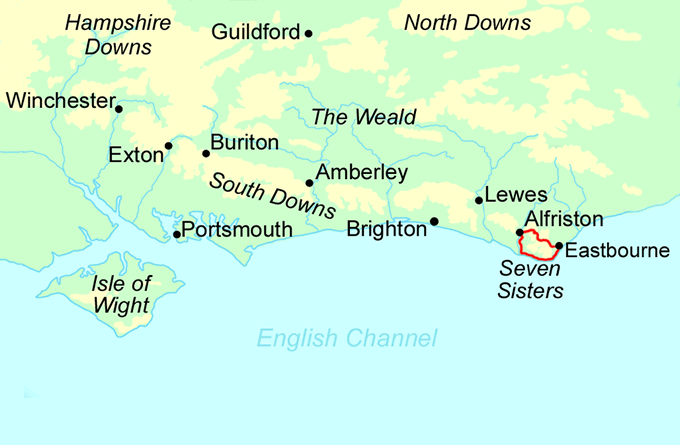
For the first three days, Squidgeworth and I were the guests of Jay Dixon, a friend of mine who lives in Eastbourne. She was kind enough to take us around to visit some historical places of interest in the area, including the Redoubt Fortress, a quaint little town called Alfriston, Firle Place, and Chartwell.

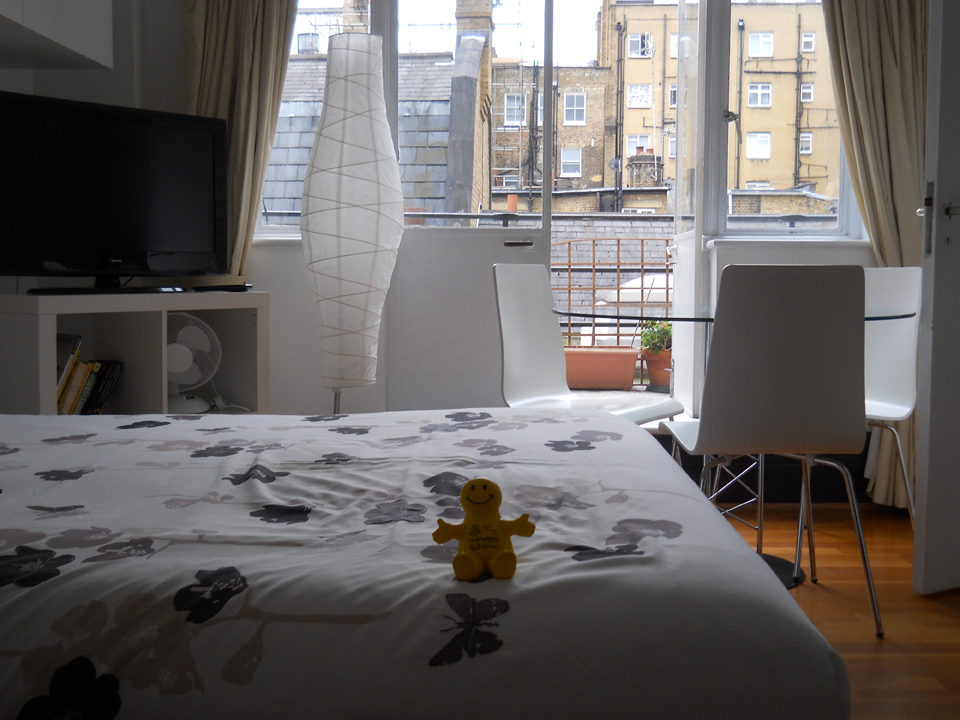
Unfortunately, I could not get my laptop to work with her Wifi system, so I had to go cold turkey from the Internet, which was instrumental later on when I arrived in London at my rental flat. It turns out that the previous renters of the flat I was scheduled for had trashed the place, and the company had switched me to another one, but I didn’t get the message because of my Internet blackout. It was a bit harrowing at first, but I was delighted that the flat they switched me to was the one I stayed in last year, near Baker Street, so I already knew the ropes. (I wanted this one, but at the time I was booking, it was already taken. There must have been a cancellation.)

Squidgeworth makes himself at home at our rental flat near Baker Street

Squidgeworth makes himself at home at our rental flat near Baker Street

Eastbourne: The Redoubt

The Redoubt is a circular military fortress that was built in 1804 when it was rumored that Napoleon had plans to invade England.

REDOUBT MODEL VILLAGE

Wikipedia

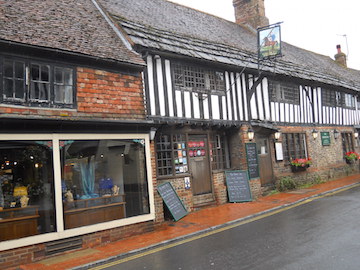
The Village of Alfriston

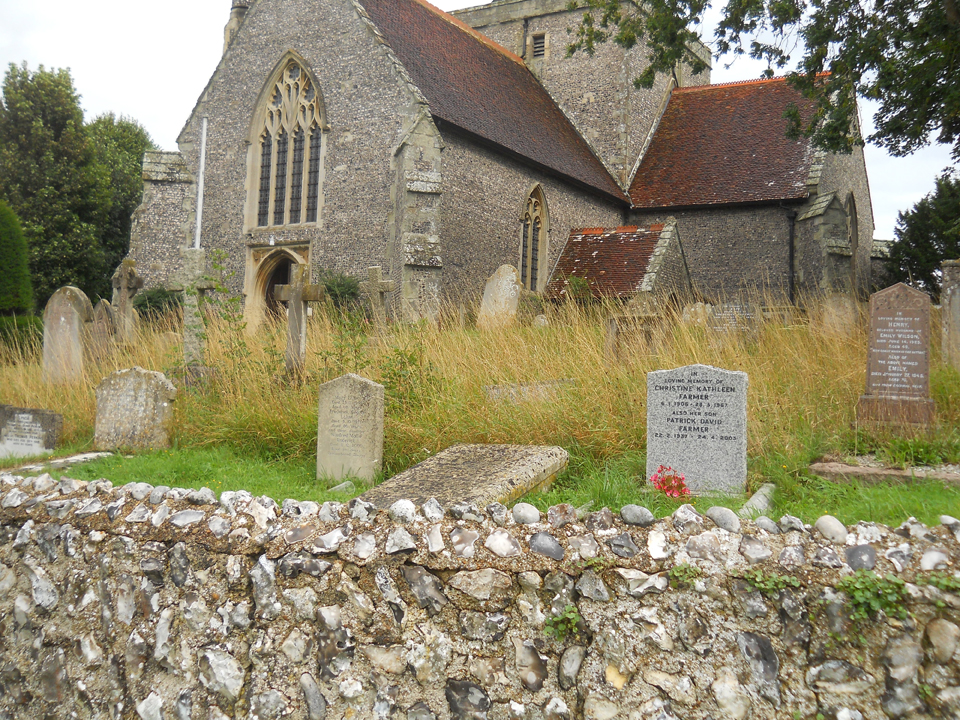
On Thursday we visited this quaint little village not far from Eastbourne. In addition to the historic buildings, a highlight was St. Andrew’s Church. The Clergy House was the first property purchased by the National Trust. Unfortunately, it was closed, but I did get photos of the outside.

The Clergy House

The Clergy House

St. Andrew's Church & Cemetery, Alfriston

St. Andrew’s Church & Cemetery, Alfriston


GEORGE INN copy

The George Inn, Alfriston


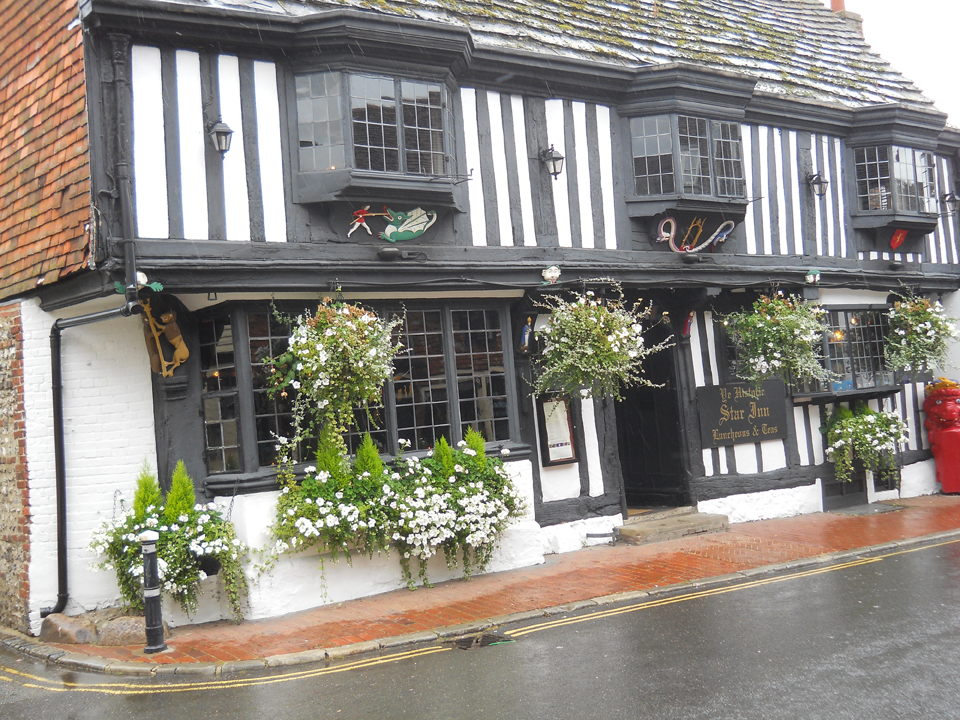
The Star Inn, Alfriston

The Star Inn, Alfriston


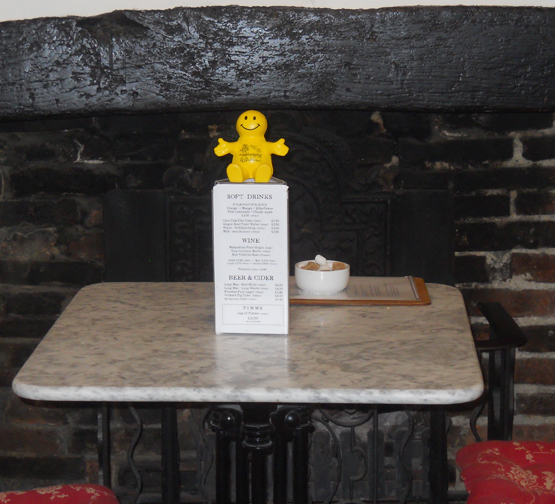
Squidge at a The Apiary Café in Alfriston

Squidge at a The Apiary Café in Alfriston

Wikipedia

Firle Place

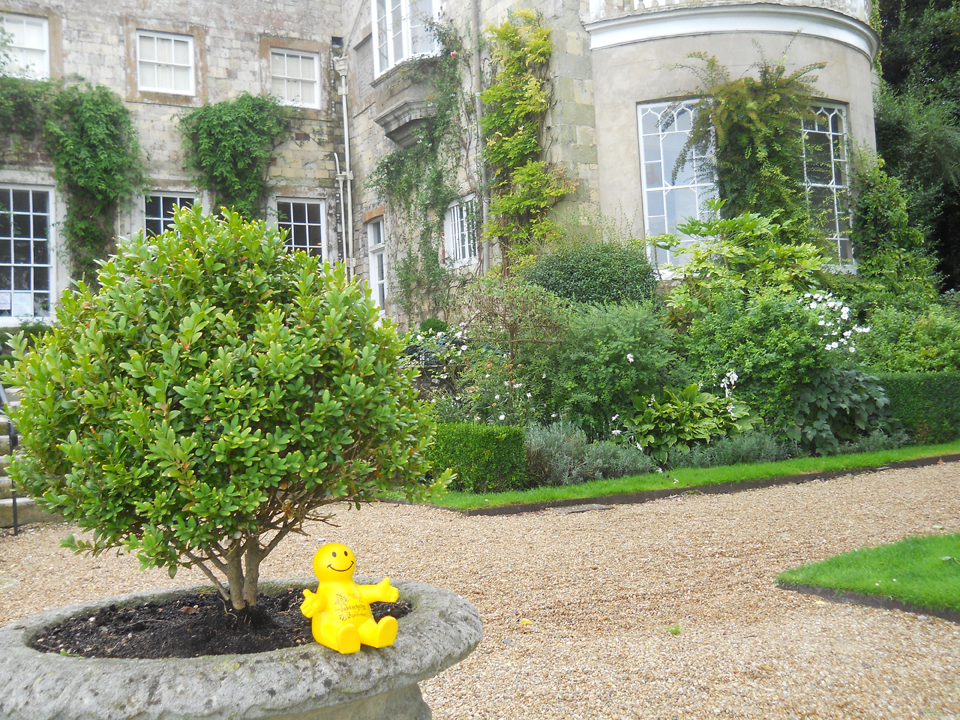
Firle Place is the family seat of the Gages, the current owner being Nicholas Gage, the 8th Viscount Gage. The manor house has been in the family for over 500 years, and the estate includes a village among its 6000 acres of land. Sir John Gage was the executor of Henry VIII’s will. General Thomas Gage was at one time commander-in-chief of the British Army during the American Revolution, but was replaced after the disaster of Bunker Hill.

Squidgeworth at Firle Place

Squidgeworth at Firle Place


Firle Place

Firle Place

Wikipedia

Chartwell

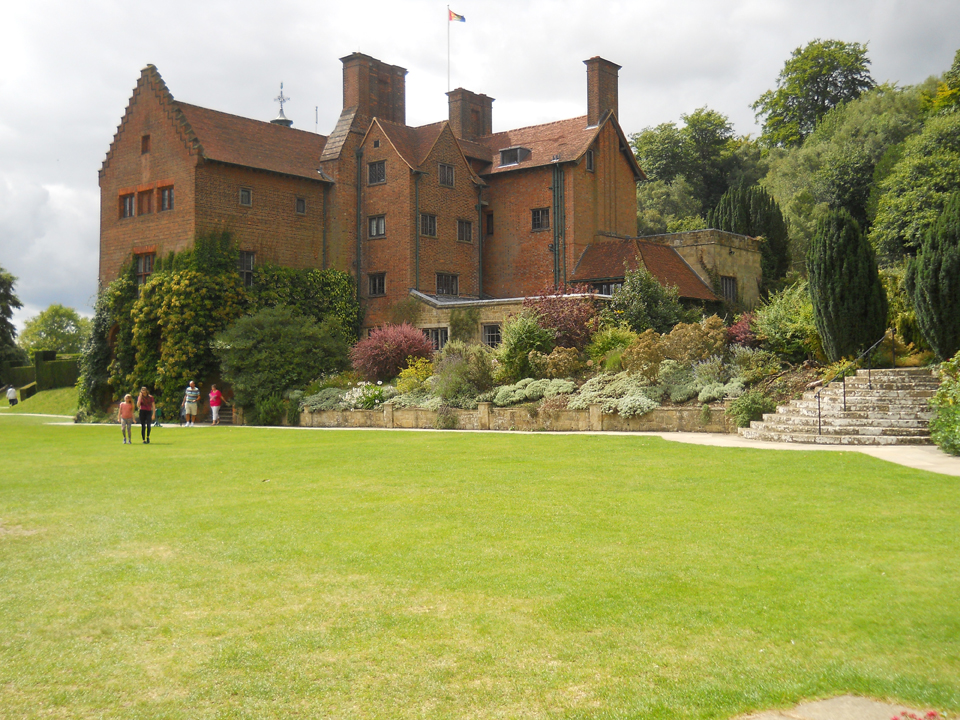
Chartwell, in Kent, was the principal residence of Winston Churchill, in his adult life. Henry VIII is believed to have stayed here during his courtship of Anne Boleyn, who lived at nearby Hever Castle.

The Churchills extensively renovated the house and gardens. Winston actually became a licensed brick layer and was noted for his wall building.

Chartwell

Chartwell


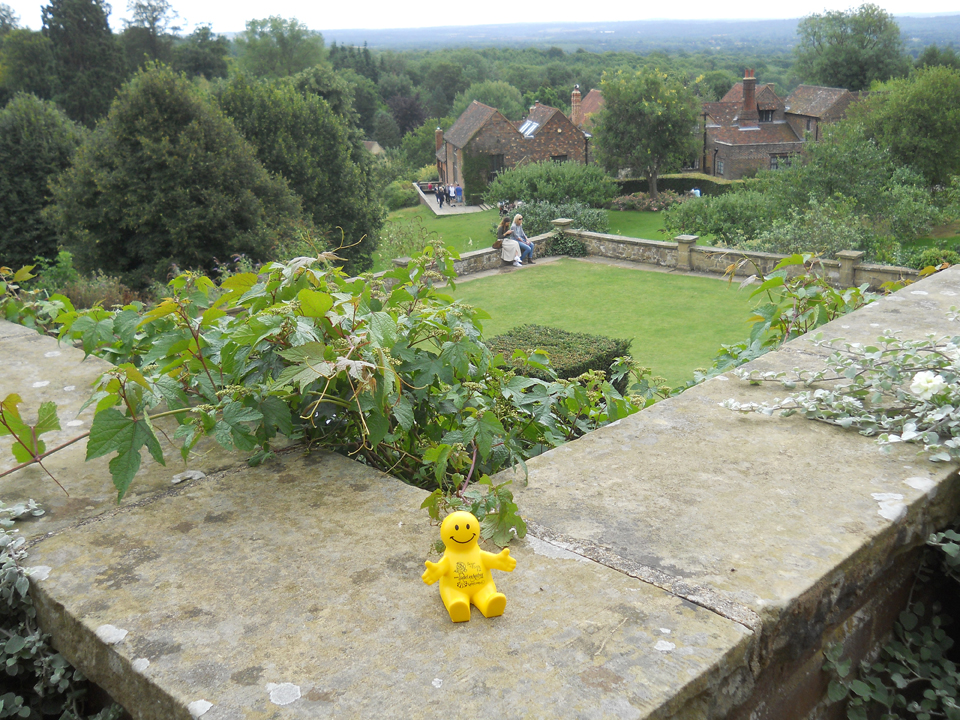
Squidgeworth at Chartwell

Squidgeworth at Chartwell

Wikipedia

The Victoria & Albert Museum

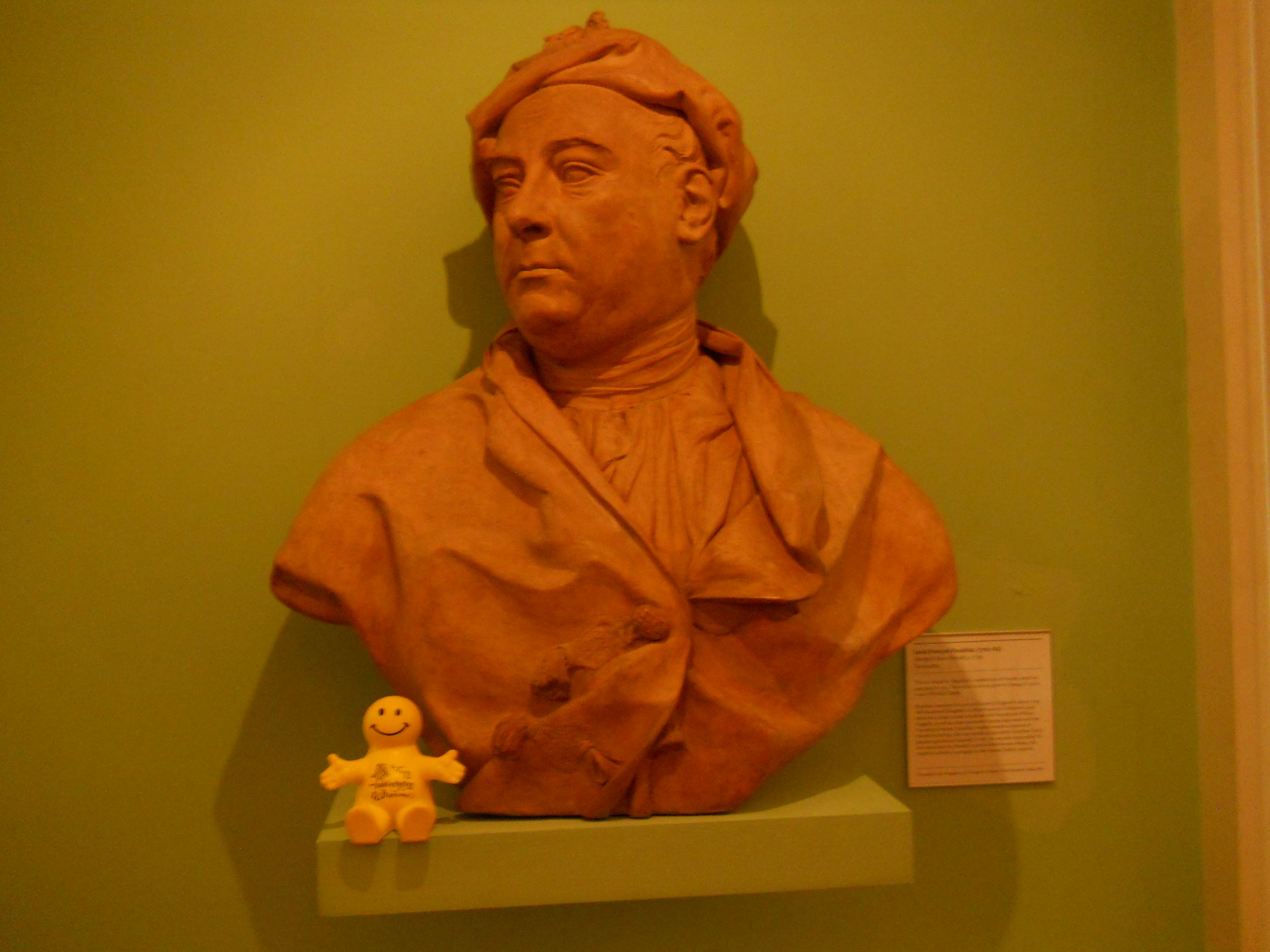
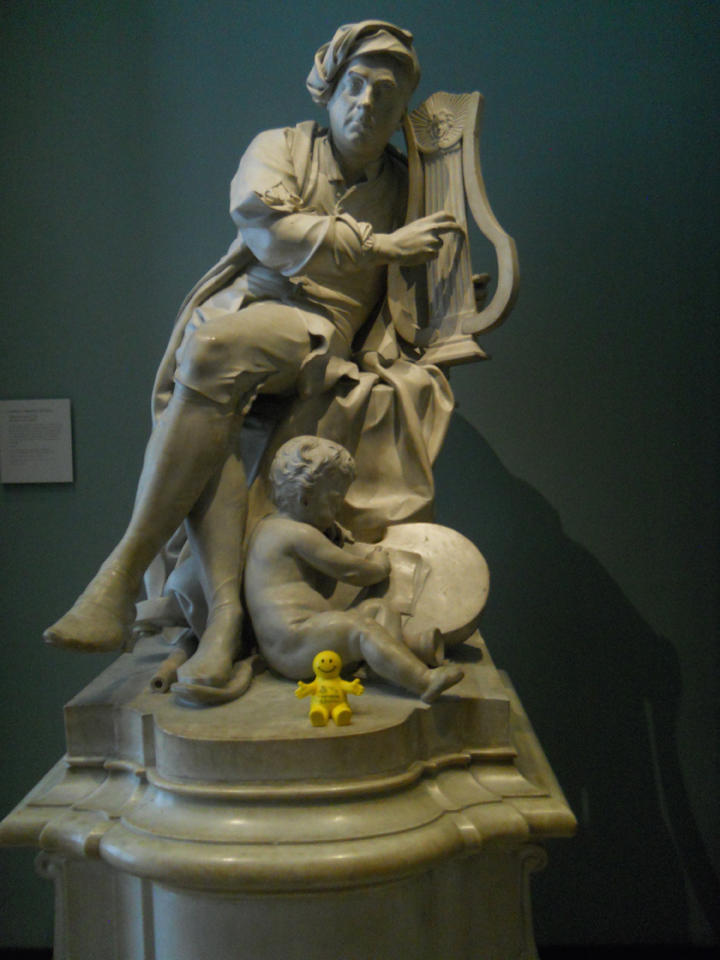
A visit to the V & A is a must for every trip to London. On this trip, my focus was Vauxhall, as the Handel statue is here, as well as three of the supper-box paintings. Unfortunately, it was difficult to get good photos of the paintings and other pictures due to the darkness of the room (which is true of many other things I tried to photograph). No doubt the low light is an attempt to preserve the aged items as long as possible. But I did get a good photo of the Handel statue, with Squidgeworth getting in on the action, as usual.

Squidgeworth and the Handel statue that used to sit in Vauxhall Gardens

Squidgeworth and the Handel statue that used to sit in Vauxhall Gardens

My Vauxhall Gardens board on Pinterest is a work in progress, but you can see there two videos about Vauxhall Gardens, one of which I photographed at the V & A and another I found on YouTube. I’ll be adding more photos as I find the time.

Susana’s Vauxhall Gardens Pinterest Board

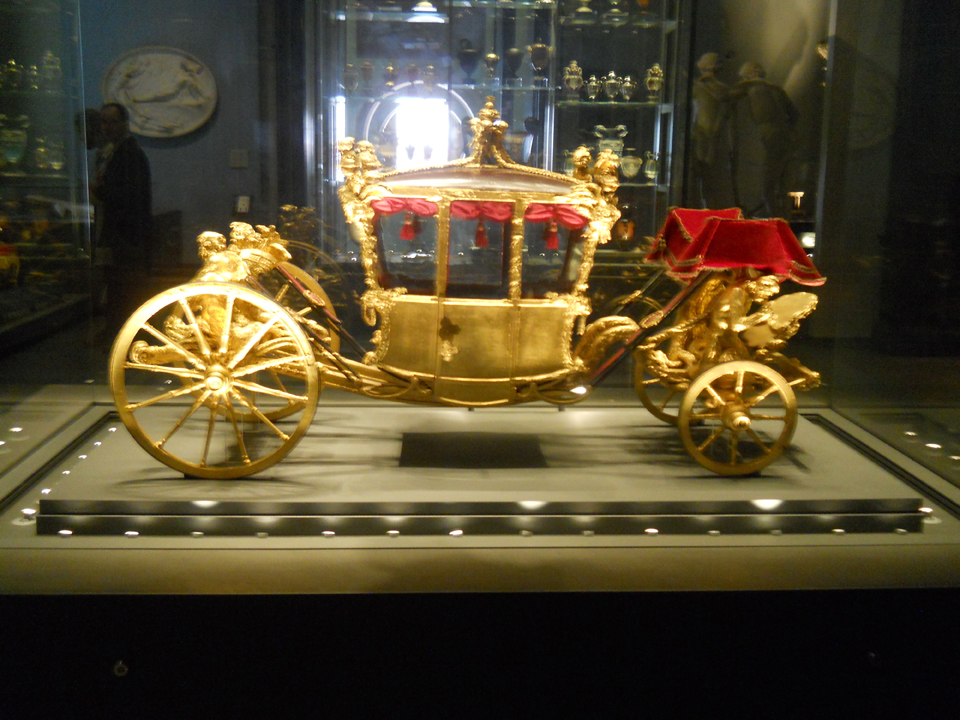
Coach at the V

Coach at the V & A Museum


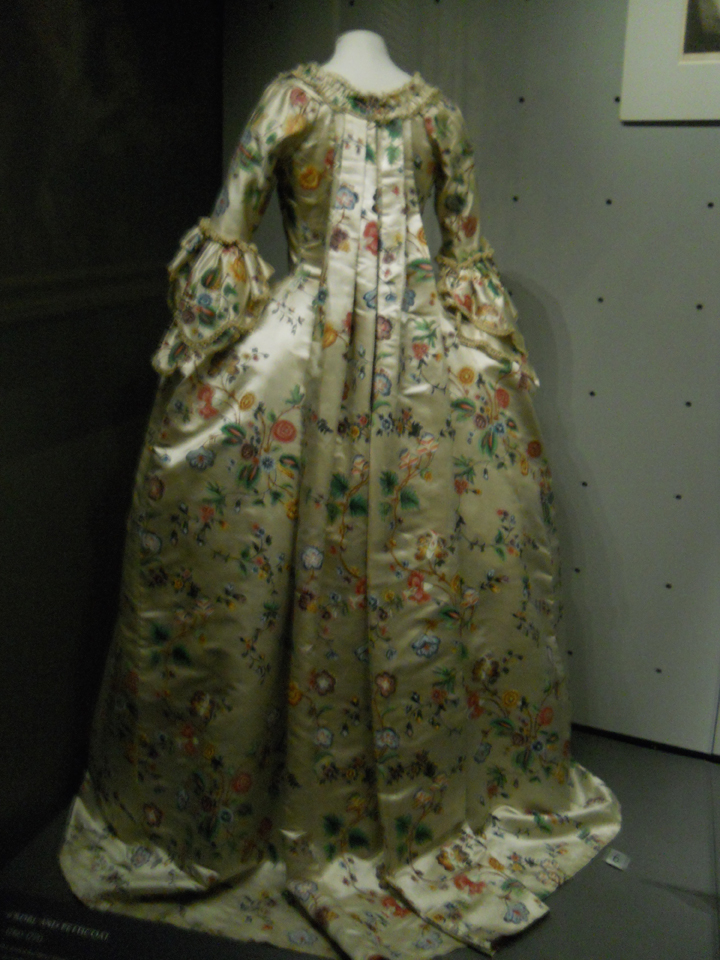
Painted silk gown

Painted silk gown at the V & A Museum

Sasha Cottman: The Duke’s Daughter

From the Regency Kitchen

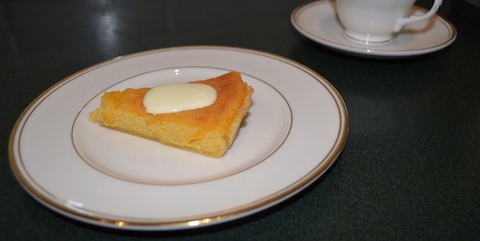
Lemon Cheesecake

DSC_0876 (800x402) copy

This lemon cheesecake recipe dates all the way back to Hannah Glasse’s The Art of Cookery Made Plain & Easy, published in 1747.

Ingredients

  • 2 lemons
  • 12 eggs (12 egg yolks and 6 egg whites will be used in the custard part of the recipe)
  • 225 g brown caster sugar (I used raw caster sugar instead).
  • 6 tablespoons of cream (save a little for serving with the lemon cheese cake)
  • 225g butter
  • Shortcrust pastry sheets (or, you can make it, see below).

Method

  1. Preheat the oven to 190C/374F.
  2. Grate the lemon zest. Put the zest and the juice of 1 lemon into a mixing bowl. Add the caster sugar and mix with a wooden spoon. Beat the egg yolks and add them to the mix.
  3. Beat the egg whites until they are frothy. This must have been a hard task in the 18th century when it would have to have been done by hand! Fortunately I could reach for my trusty electric beater. Add the frothy egg whites to the rest of the cheesecake mix.
  4. Combine the butter and cream and over a low heat, until the butter is melted. Add the butter and cream to the rest of the cake mix and beat it for a minute.
  5. Pour combined mixtures into a medium sized saucepan and heat over a medium heat, stirring until the custard is thick enough to coat the back of a wooden spoon. This takes about 8 minutes on my stovetop.
  6. Place the pastry sheet over a flan pan (or pie dish), making sure the pastry covers the sides of the pan (there is quite a lot of custard mix).
  7. Take the mix off the heat and pour over the pastry base. You may have some left, so feel free to pour this into a bowl and eat it before anyone else notices.
  8. Bake the lemon cheese cake for 30 mins or until the filling has set. In my oven it takes about 35 minutes. Cool and serve with cream.

Shortcrust pastry (if you want to make from scratch) 

  • 1 egg yolk
  • 225 g chilled butter
  • 1 1/3 cups of plain flour

Method

  1. Process flour and butter in a food processor. Add the egg yolk and 2 tsps. of cold water.
  2. Once mix is worked through, take it out of the bowl and knead it on a board. Roll into a ball and let rest in the fridge for 30 mins. Then roll out flat when preparing to use it in the pie.

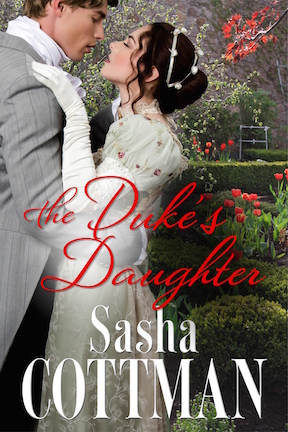
The Duke's Daughter - hi res cover copy

About The Duke’s Daughter

When handsome army officer Avery Fox unexpectedly inherits a fortune, he instantly becomes one of the season’s most eligible bachelors. More accustomed to the battlefield, he has no patience with the naive debutantes who fill the ballrooms of London.

Honest and impetuous Lady Lucy Radley is a breath of fresh air, guiding him through the season and helping him to avoid any traps. So when Avery is left with little option but to marry Lucy, he can’t help but feel he’s been manipulated. Nor can he shake the feeling that a duke’s daughter should be out of his reach.

From the wildly beautiful Scottish Highlands to the elegant soirees of Paris, Avery and Lucy go on a journey that is full of surprises for them both.  But will their feelings for each other be strong enough to overcome the circumstances of their marriage and survive the ghosts of Avery’s past?

Amazon • Kobo • Amazon.auAmazon.caAmazon.uk

The Duke of Strathmore Series:

Letter from a Rake

An Unsuitable Match

The Duke’s Daughter

Excerpt

Chapter One

By every measure of her own behaviour, Lady Lucy Radley knew this was the worst.

‘You reckless fool,’ she muttered under her breath as she headed back inside and into the grand ballroom.

The room was a crush of London’s social elite. Every few steps she had to stop and make small talk with friends or acquaintances. A comment here and there about someone’s gown or promising a social call made for slow going.

Finally she spied her cousin, Eve. She fixed a smile to her face as Eve approached.

‘Where have you been, Lucy? I’ve been searching everywhere for you.’

‘I was just outside admiring the flowers on the terrace.’

Eve frowned, but the lie held.

Another night, another ball in one of London’s high-society homes. In one respect Lucy would be happy when the London social season ended in a few weeks; then she would be free to travel to her family home in Scotland and go tramping across the valleys and mountain paths, the chill wind ruffling her hair.

She puffed out her cheeks. With the impending close of the season came an overwhelming sense of failure. Her two older brothers, David and Alex, had taken wives. Perfect, love-filled unions with delightful girls, each of whom Lucy was happy to now call sister.

Her newest sister-in-law, Earl Langham’s daughter Clarice, was already in a delicate condition, and Lucy suspected it was only a matter of time before her brother Alex and his wife Millie shared some good news.

For herself, this season had been an unmitigated disaster on the husband-hunting front. The pickings were slim at best. Having refused both an earl and a viscount the previous season, she suspected other suitable gentlemen now viewed her as too fussy. No gentleman worth his boots wanted a difficult wife. Only the usual group of fortune-hunters, intent on getting their hands on her substantial dowry, were lining up at this stage of the season to ask her to dance. Maintaining her pride as the daughter of a duke, she refused them all.

Somewhere in the collective gentry of England there must be a man worthy of her love. She just had to find him.

What a mess.

‘You are keeping something from me,’ Eve said, poking a finger gently into Lucy’s arm.

Lucy shook her head. ‘It’s nothing. I suspect I am suffering from a touch of ennui. These balls all begin to look the same after a while. All the same people, sharing the same gossip.’

‘Oh dear, and I thought I was having a bad day,’ Eve replied.

‘Sorry, I was being selfish. You are the one who needs a friend to cheer her up,’ Lucy replied. She kissed her cousin gently on the cheek.

Eve’s brother William had left London earlier that day to return to his home in Paris, and she knew her cousin was taking his departure hard.

‘Yes, well, I knew I could sit at home and cry, or I could put on a happy face and try to find something to smile about,’ Eve replied.

Eve’s father had tried without success to convince his son to return permanently to England. With the war now over and Napoleon toppled from power, everyone expected William Saunders to come home immediately, but it had taken two years for him to make the journey back to London.

‘Perhaps once he gets back to France and starts to miss us all again, he shall have a change of heart,’ Lucy said.

‘One can only hope. Now, let’s go and find a nice quiet spot and you can tell me what you were really doing out in the garden. Charles Ashton came in the door not a minute before you, and he had a face like thunder. As I happened to see the two of you head out into the garden at the same time a little while ago, I doubt Charles’ foul temper was because he found the flowers not to his liking,’ Eve replied.

It was late when Lucy and her parents finally returned home to Strathmore House. The Duke and Duchess of Strathmore’s family home was one of the largest houses in the elegant West End of London. It was close to the peaceful greenery of Hyde Park, and Lucy couldn’t imagine living anywhere else.

As they came through the grand entrance to Strathmore House she was greeted by the sight of her eldest brother David seated on a low couch outside their father’s study. He was clad in a heavy black greatcoat and his hat was in his hand.

‘Hello, David; bit late for a visit this evening. I hope nothing is wrong,’ said Lord Strathmore.

‘Clarice?’ asked Lady Caroline.

‘She’s fine, sleeping soundly at home,’ he replied.

Lucy sensed the pride and love for his wife in her brother’s voice. He had found his true soulmate in Lord Langham’s daughter.

David stood and came over. When he reached them, he greeted his mother and sister with a kiss. His dark hair was a stark contrast to both Lady Caroline’s and Lucy’s fair complexions.

He turned to his father. ‘Lord Langham’s missing heir has been found, and the news is grave. My father-in-law asked that I come and inform you before it becomes public knowledge. A rather horrid business, by all accounts.’

‘I see. Ladies, would you please excuse us? This demands my immediate attention,’ Lord Strathmore said.

As Lucy and Lady Caroline headed up the grand staircase, he and David retired to his study. As soon as the door was closed behind them, David shared the news.

‘The remains of Thaxter Fox were retrieved from the River Fleet a few hours ago. His brother Avery, whom you met at my wedding ball a few weeks ago, has formally identified the body. Lord Langham is currently making funeral arrangements,’ David said.

His father shook his head. It was not an unexpected outcome of the search for the missing Thaxter Fox.

He wandered over to a small table and poured two glasses of whisky. He handed one to David.

‘Well, that makes for a new and interesting development. I don’t expect Avery Fox had ever entertained the notion before today that he would one day be Earl Langham,’ Lord Strathmore replied, before downing his drink.

‘Perhaps, but he had to know the likelihood of finding his brother in one piece was slim at best. From our enquiries, it was obvious Thaxter had a great many enemies,’ David replied.

‘Including you,’ said the duke.

David looked down at his gold wedding ring. It still bore the newlywed gleam, which made him smile.

‘He and I had come to a certain understanding. If he stayed away from Langham House and Clarice, I would not flay the skin off his back. No, someone else decided to make Thaxter pay for his evil ways.’

The Langham and Radley families held little affection for the recently deceased heir to the Langham title. After Thaxter had made an attempt to seize Clarice’s dowry through a forced marriage, both families had severed all ties. Thaxter had disappeared not long after.

David would do everything in his power to protect Clarice. With a baby on the way, he was fully prepared to stare down the rest of the town if it meant keeping his wife safe. As the illegitimate, but acknowledged, son of the duke, David had overcome many of society’s prejudices in order to successfully woo and wed Lord Langham’s only daughter.

‘Unkind as it sounds, I doubt many at Langham House will be mourning the demise of the eldest Mr Fox,’ his father replied.

‘No.’

About the Author

sasha cottman author pic copyBorn in England, but raised in Australia, Sasha has a love for both countries. Having her heart in two places has created a love for travel, which at last count was to over 55 countries. A travel guide is always on her pile of new books to read.

Her first published novel, Letter from a Rake, was a finalist for the 2014 Romantic Book of the Year. 

Sasha lives with her husband, teenage daughter and a cat who demands a starring role in the next book. She has found new hiding spots for her secret chocolate stash. On the weekends Sasha loves walking on the beach while trying to deal with her bad knee and current Fitbit obsession.

WebsiteBlogTwitterFacebook • Goodreads • Pinterest


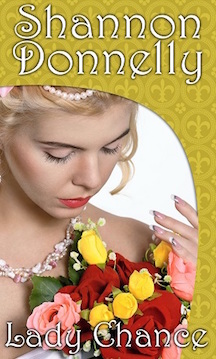
Shannon Donnelly: Lady Chance

palaisroay1600

Researching the Palais Royal

One of the fun things about writing—for me, at least—is the research. I love to dig into history; in particular, I love to look for just the right setting to help a scene come alive. Lady Chance, the follow-up book to Lady Scandal, comes out this August; it’s set in Paris of 1814, and since gambling and cards are in the book, that meant I could use the Palais Royal.

The palace was originally designed by Jacques Lemercier and construction started 1628 for the infamous Cardinal Richelieu. It was originally known as the Palais Cardinal, but became a royal palace after the cardinal bequeathed the building to Louis XIII.

Louis handed the palace to the Queen Mother, Anne of Austria, and then Henrietta Maria and her daughter Henrietta Anne Stuart, who had escaped from the English civil war, took up residence. Henrietta Anne later married Phillipe de France, duc d’Orléans, and the palace became known as the House of Orléans. The duchesse was the one who created the ornamental garden of the palace.

Louis XIV was succeeded by his great-grandson, and the duc d’Orléans became regent of young Louis XV. The Palais Royal was then opened so the public could view the Orléans art collection, and that began the palace’s more public life.

Louis Philippe II held the royal palace from 1780 until his death. He renovated the building, and the garden was now surrounded by a mall of shops, cafes, salons, refreshment stands and bookstores.

At that time, the Palais Royal became a meeting ground for revolutionaries. Its owner, Philippe d’Orléans sided with the revolutionaries. He changed his name to Philippe Égalité and his house became the Palais de l’Égalité. He opened the gardens to the public and enclosed them with colonnades lined with shops.

palaisroyal-demimonde

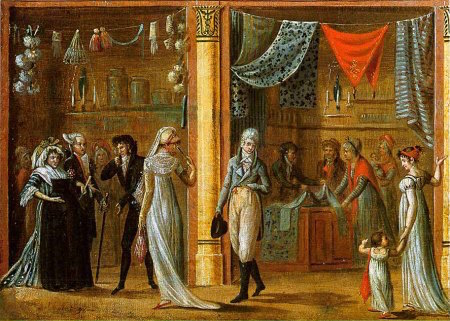
On the ground floor shops sold “perfume, musical instruments, toys, eyeglasses, candy, gloves, and dozens of other goods. Artists painted portraits, and small stands offered waffles.” The demi-monde could also parade their wares—themselves—and often had rooms on the upper floors for their customers’ convenience.

By 1807, the Palais Royal boasted “twenty-four jewelers, twenty shops of luxury furniture, fifteen restaurants, twenty-nine cafes and seventeen billiards parlors.”

palais-royal-10 copy

While the more elegant restaurants were open on the arcade level to those with the money to afford good food and wine, the basement of the Palais Royal offered cafés with cheap drinks, food and entertainment for the masses, such as at the Café des Aveugles.

palisroyal

Upon the death of the duc, the palace’s ownership reverted to the state, and for a time it was known as Palais du Tribunat. After the Bourbon restoration to power in 1814, the duc d’Orléans took back his title and the Palais Royal took back its name, but kept its reputation for a fashionable meeting place. And that is when Lady Chance is set.

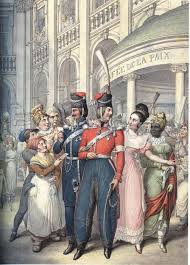
In 1814, Paris was under occupation by the allied forces that had defeated Napoleon. Russian cuirassiers, Prussian lancers, Hungarian hussars, Cossacks, and French soldiers all rubbed shoulders—and were not always in harmony with each other. But it was said of the Palais Royal that “You can see everything, hear everything, know everyone who wants to be found.”

paris_russians

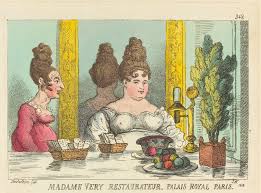
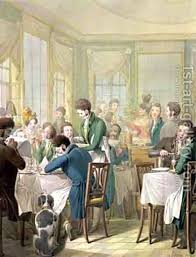
Véry Frères in the Palais Royal was accounted the most expensive restaurant in Paris, and one could dine with “brilliantly lit salons, granite tables, gilt bronze candelabra and mirror-lined walls.” Trois Frères Provençaux was famous for poulet à la Marengo—Chicken Marengo, said to be the dish served Napoleon’s victory at Marengo. In Paris Between Empires, Philip Mansel talks of dining at Le Caveau, or at the royalist Café de Foy. While Café des Mille Colonnes on the first floor of arcade provided its patrons, “Mirrored salons, hung with ‘magnificent chandeliers’ and supported by Corinthian columns of green marble.” The building was also home to the fashionable resturant Le Grand Véfour.

palaisroyalresturant

On the second floor, elegant card rooms offered deep gaming—these are the salons featured in Lady Chance.

About Lady Chance

Can an English lady find love and common ground with a French soldier?

In Paris of 1814, as Bourbon king again takes the throne, and the Black Cabinet—a shadowy group of agents employed by the British—is sent to unmask dangerous men and stop assassinations. When Diana, Lady Chauncey—known as Lady Chance—is recruited by her cousin to use her skill at cards to help him delve into these plots, she meets up with a man she thought dead. Diana finds herself swept into adventure and intrigue, and once again into the arms of the French officer she tangled with ten years ago. But she is no longer an impulsive girl, and he may not be the man she once thought was honorable and good.

After the recent defeat of his country, Giles Taliaris wants nothing more than a return to his family’s vineyards in Burgundy. But his younger brother seems involved in dangerous plots to return France to a republic. To get his family through these troubles, Giles can only tread warily. When he again meets meet the English girl he once knew and thought lost to him, he finds himself torn between duty and desire. Can he find his way through this tangle—and if he does, how can he convince his Diana to give up everything for him?

Amazon

Excerpt

Diana blinked twice and let her stare travel the room once more. “I rather thought the gaming rooms of the Palais Royal would be more…”

“Degenerate? Depraved? Decayed?” Jules asked.

“Grand, actually. Oh, the colonnade outside is charming, but this…” She fluttered a kid glove at their surroundings—at the draped windows, the high vaulted room with its plaster ceiling, the discreet décor with respectable landscapes hung over a tasteful, floral wallpaper. Chandeliers glittered overhead. Around them, dozens of uniformed gentlemen lounged or indulged in intense card play or watched the gaming with elegant women on their arms.

Lady Chance 01_sm copyShe had seen Russian Cossacks in the streets, distinct with their heavy boots, loose black trousers and red jackets. Inside this room, above the closed shops of the Palais Royal, officers from the Army of Silesia leaned against the walls, their uniforms as precise as their actions. Sullen French officers lurked at the edges of the room, unhappy with the foreign soldiers who had so recently beaten them. Accents and languages tumbled around her—a hint of Dutch, a dash of French, guttural Germanic phrases. Perfumes and a hint of smoky tallow from the candles scented the air. Diana gave Jules a sideways glance. “This almost looks more like the engravings I’ve seen of London clubs.”

Or like affairs of the London season, she thought. She’d had only two seasons and had not wanted a third. The play in London had always been dull or had been filled with women whose eyes glittered too brightly and gentlemen who bet too rashly. Here in the Palais Royal, just as with any notable event in London, music drifted through the rooms. A quartet was playing, she thought. Skilled enough to take on Mozart’s music and do the lively tune some justice.

Turning to her, Jules leaned closer. “The Bourbons may be back on the throne, but the Parisians look to good English coin to return prosperity. Hence this emulation of London with the rather French addition of the demi-monde in attendance. However, do not mistake matters. There are those who would have their emperor back.”

Stepping behind her, he helped her off with her cloak. He left that and his hat and cane with the porter. He wore his customary black coat, along with formal evening breeches, a white shirt, and a pale yellow waistcoat. He looked stark and properly British. She had worn gold to compliment his dress. A clinging silk that almost left her feeling a girl again with ruffles at her ankles and a daringly low Parisian neckline. They stepped into the club and Jules found them glasses of champagne. She walked the room beside him, watching him nod to acquaintances.

She had been to the Palais Royal during the day to visit the shops on the ground floor. Perfume could be had, along with toys, candy, gloves, waffles from stands, or portraits from struggling artists. But at night, the shops closed and the Palais Royal transformed itself. Véry Frères, the most expensive restaurant in Paris she had heard, offered brilliantly lit salons, granite tables, gilt-bronze candelabra and mirror-lined walls, as well as fabulous meals. In the basements of the Palais Royal, one could find establishments offering drink, food or entertainment such as at the Café des Aveugles, renowned for its orchestra of blind musicians.

They were blind for a reason for the galleries were where ladies of all shapes and colors and sizes offered themselves for sale.

This establishment—above the streets and the closed shops and below the rented rooms of those girls looking for customers—seemed designed to cater to patrons with money. There would be few enough Frenchmen who fit that description just now, Diana knew.

She had glimpsed the poverty on the journey to Paris.

The crossing to France had been long, taking fourteen hours to Boulogne with a fitful, unfriendly wind. The carriage ride to Paris had been even longer. And quite sad. This was not the country she knew from ten years ago. Old men, women, and thin boys populated the villages, for the young men had all gone to war. She had glimpsed far too many skinny cows and poorly worked fields. They had been cheered in some towns—the English liberators who had helped free France from an oppressive empire. In other towns, the French watched them pass with suspicion in their eyes. Not everyone welcomed back the rightful French king. And the destruction on the outskirts of Paris marked where battle had raged less than a fortnight ago. No wonder so many of these Frenchmen appeared so gloomy with defeat a sore and recent memory.

All that seemed put aside, however, in the pleasure houses of the Palais Royal. After a sip of champagne with bubbles that tickled her nose, Diana asked, “Just why am I being paraded?”

“A small introduction only. Making you a familiar face that will be welcomed when you deem to grace one of the tables.”

She eyed the women with their painted faces who clung to the officers’ arms. Very few sons of France seemed to be able to compete with the dashing foreigners. She glanced at Jules and kept her voice dry. “I can see the last of my respectability vanishing on the horizon.”

“Cousin, this is Paris. You may rub elbows with these delightful creatures who hire out their most intimate charms and still be free to dance with dukes and true ladies the next evening. The French understand these things.”

“It is good someone does. Now that I am decked out in the finest Paris has to offer, and have your grandmama’s emeralds hanging about my neck—I do hope your mother did not object to such a loan—what exactly is it that I am here to do?”

They had spent the journey to Paris discussing recent events, political situations, and the gossip of who was who in Paris. All of it a prelude to this—or so she guessed. To own the truth, she had simply wanted to enjoy going somewhere. Anywhere. Now she glanced around the room, a flutter in her stomach. What was she doing here? She wasn’t up to this sort of intrigue.

She forced a smile and lifted an eyebrow at Jules.

He gave her a small, approving nod. “You are doing all you must. You look a likely widow in need of amusement. Soon you shall find a spot at a select table. Win a bit. Lose more. After the drink has flowed and the hour grows late, I shall make a few introductions. Those gentlemen will lose heavily to you, I expect.”

She gave a small shrug. She had learned young how easy it was to lose at any game. Growing up, her older cousins—Jules included—had pounded home that lesson. They had never let her succeed at anything unless she deserved the win. And of her marriage—well, the less said there, the better, she thought. She twirled her fan. “Am I to keep their funds? Press them for something other than coins to clear their debts of honor to me?”

Jules’ smile did not falter, but Diana thought something hard appeared in his eyes. “Cousin, in cards, one never reveals one’s hand until all play is done. Let us say for now it is good to have certain pockets empty. It takes money to make mischief.”

She huffed out a breath. “Why do simple answers always sound only part of the truth? And chess is your game. You always plan at least seven moves ahead. So what are you not yet telling me?”

He patted her hand. “Enough for now, other than that I count on your shocking, unpredictable whims to keep us all on our toes.”

Diana shook her head and drained her champagne. “In chess, in Paris, or merely as a gamester?”

“You said it yourself—you must be an adventuress.”

Pulling in a breath, she pushed back her shoulders. “Yes, I did say so. Well, adventuring we go. Where do I begin? And I hope all this…this whatever is for a good cause.”

“Good may depend upon one’s views. Our view is to safeguard England’s interests. If certain rumors are true, a good man’s life may be at stake. However, Paris is rife just now with stories of everything from a dozen pretenders to the throne—the lost Bourbon prince returned from God knows where—to schemes that might bring back that dangerous fellow we were just discussing.”

“Ah, poor Louis-Charles, the dauphin.” She shook her head. “I would rather meet him than the former emperor.” A chill touched her back. She had met Bonaparte once. Seen him briefly, really. Before he had crowned himself emperor, and long before his recent surrender. At the time of her encounter he’d had another man’s wife on his arm, stolen from one of his generals. She still thought that a petty thing to do. She had also thought him short, fascinating in a way, and not much of a gentleman. He had once brought order to the French Revolution, but he had gone on to set Europe ablaze. And his command of a decade ago to arrest all the English in France had sent her running from Paris. That still rankled. She had been having such fun at the time. And if that had not happened, then she would not…

Ah, but this trip—and Jules—would give her better memories. She would focus on that.

It certainly took little effort to do as Jules bade her. He guided her to a table where gallant young gentlemen played—two French officers, an English gentleman in evening wear, and a Hungarian Hussar in a dashing uniform with excessive braid who at once offered her his seat. She played as Jules had asked, winning a little, losing a bit more. Jules had offered to stand the nonsense so she had no worries about emptying her purse. She found the play a touch tame. The Palais Royal was not living up to its reputation for vice. Given the circumstances, she only sipped at her wine and watched the cards fall with mild interest.

Jules soon introduced a fellow to her—a young Frenchman whose fair windswept hair and high shirt points spoke of his dandy ambitions. He joined the table, and Diana took up the cards. Jules gave her a nod and a direct stare, and she knew he wanted her to stop being careless.

She had barely dealt out the cards when a name came to her that she had never expected to hear again. A card tumbled from suddenly numb hands. Forcing a smile, Diana begged pardon. She finished the deal with stiff fingers and swept the room with a glance. It could not be, she thought, her heart beating too quick and her breath short and fast. He had died on a battlefield years ago. Someone must have only mentioned his name, that was all. But she had to look anyway. She had to be certain.

She scanned the faces nearest the entrance, seeking anything familiar—a profile, a glimpse of a captain’s uniform, a face that she could still recall from so long ago. And there—across the room in the foyer—he stood, far too solid to be a ghost.

About the Author

Shannon Donnelly’s writing has won numerous awards, including a nomination for Romance Writer’s of America’s RITA award, the Grand Prize in the “Minute Maid Sensational Romance Writer” contest, judged by Nora Roberts, and others. Her writing has repeatedly earned 4½ Star Top Pick reviews from Romantic Times magazine, as well as praise from Booklist and other reviewers, who note: “simply superb”…”wonderfully uplifting”….and “beautifully written.”

In addition to her Regency romances, she is the author of the Mackenzie Solomon, Demon/Warders Urban Fantasy series, Burn Baby Burn and Riding in on a Burning Tire, and the SF/Paranormal, Edge Walkers. Her work has been on the top seller list of Amazon.com and includes the historical romances, The Cardros Ruby and Paths of Desire.

She is the author of several young adult horror stories, and has also written computer games and offers editing and writing workshops. She lives in New Mexico with two horses, two donkeys, two dogs, and the one love of her life. Shannon can be found online at shannondonnelly.com, facebook.com/sdwriter, and twitter.

Vauxhall Gardens: The Artwork, Part I

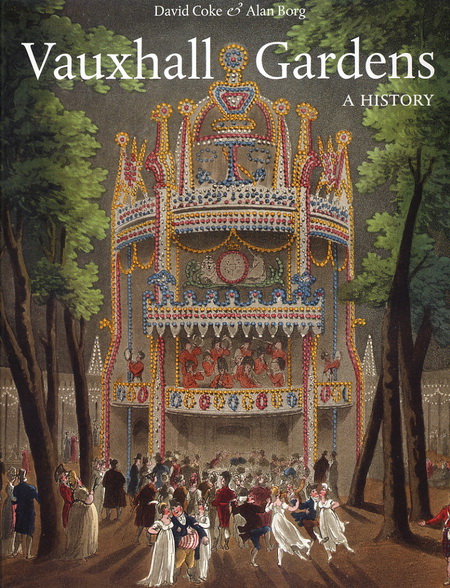
vauxhallbook

Vauxhall Gardens: A History

David Coke & Alan Borg

The Vauxhall Pleasure Gardens is one of the places I’d love to slip back in time to visit, just to catch a glimpse of what it was like. After recently splurging to buy this lovely coffee-table book, I thought it might make a wonderful subject for a new blog series. But do buy the book too, if you can! The photos are fabulous!

A Statue for the Greatest Composer of English Music (1738)

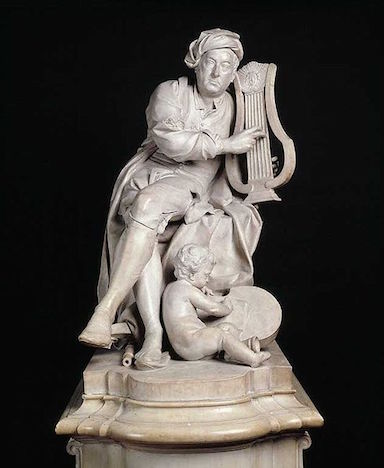
The life-sized sculpture of George Frideric Handel by Louis François Roubiliac (1702-62) was

the most important of Tyers’s early series of artistic commissions for the gardens. This work epitomised the explosive moment of the English Rococo style, not for any inclusion of outwardly Rococo motifs, but for the new spirit of playfulness and informality that it embodied, and it came to personify Vauxhall Gardens.

handel statue

There is now near finished a Statue of the justly celebrated Mr. Handel, exquisitely done by the ingenious Mr. Raubillac, of St. Martin’s-Lane, Statuary, out of one entire Block of white Marble, which is to be placed in a grand Nich, erected on Purpose in the great Grove at Vaux-hall Gardens.

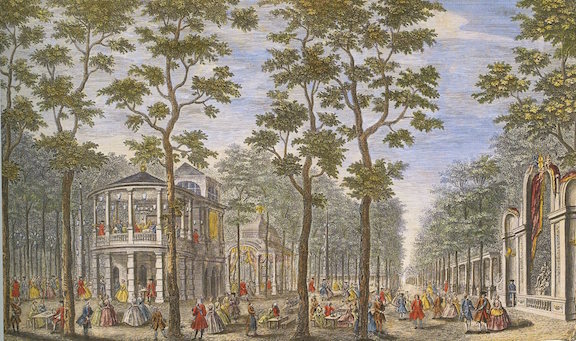
alcove1

Note the Handel statue in its “Grand Nich” (original placement) at right

The “Grand Nich” or “Grand Alcove” was demolished after a decade to make room for more supper-boxes, and the statue was left free-standing until 1762, when it was arranged under a Doric portico similar in size to the “Grand Nich.” In 1786, following the Vauxhall Jubilee celebrations, it was removed to the back of the Orchestra. Before it was removed from the gardens in 1818, it held court in the New Supper Room built in 1791, and then, in 1813, “to its own small circular domed temple behind the Orchestra.”

Victoria and Albert Museum

The Handel statue can be seen today at the Victoria and Albert Museum in London, along with a group of the original supper-box paintings and Roubiliac’s terracotta model for the portrait bust of Jonathan Tyers.

In spite of many years’ exposure to the elements, to vandalism, accidental damage, relocations and restorations, the surface of the sculpture still bears the sculptor’s marks and finished, evidence of his high degree of skill and craftsmanship, equally of his mastery and love of the material.

“A mass audience for contemporary art”

Francis Hayman by Sir Thomas Lawrence

Francis Hayman by Sir Thomas Lawrence, 1760’s

Artwork was an important element in Jonathan Tyers’ vision of capturing his visitors’ emotions and induce them “to enjoy themselves, to refresh their spirits and to spend their money.” In order to do this, Tyers formed an alliance with his friend William Hogarth’s nearby academy to produce the work he needed, which included buildings, paintings, sculptures, furnitures, tableware, glass, interiors, and lighting. This arrangement benefitted both parties, providing Tyers with the high-quality artisans he needed at a reasonable cost, and an opportunity for Hogarth’s students’ work to be displayed to the public in a way not seen before. The person chosen to manage the project was the theatrical scene-painter, Francis Hayman (1708-76).

Francis Hayman and studio, The Milkmaids' Garland, oil on canvas, c. 1740 (Victoria and Albert Museum, London)

Francis Hayman and studio, The Milkmaids’ Garland, oil on canvas, c. 1740 (Victoria and Albert Museum, London)

The Supper-Box Paintings

To add color and enhance the visitor’s mood, the back upper wall of each supper-box in the 1730’s and 40’s was decorated by an eight foot by five painting, designed by Francis Hayman and H.F. Gravelot and painted by the students at St. Martin’s Lane Academy. These paintings

represent people from all sectors of society, from villagers, peasant children and milkmaids to aristocratic and fashionable ladies and gentlemen. Painted on a large scale, some of the figures are nearly life-sized and close enough to the picture plane for the viewer to discern their expressions and interrelationships.

Francis Hayman and stuido, Country Dancers round the Maypole, oil on canvas, late 1730's (Victoria and Albert Museum, London)

Francis Hayman and stuido, Country Dancers round the Maypole, oil on canvas, late 1730’s (Victoria and Albert Museum, London)

The pictures depicted scenes of theatre, daily life and rustic amusements. A Toupee letter (see post here) of 28 June 1739 states that, when the paintings were revealed,

the eye is relieved by the agreeable surprise of some of the most favoured fancies of our poets in the most remarkable scenes of our comedies, some of the celebrated dancers, &c. in their most remarkable attitudes, several of the childish diversions, and other whims that are well enough liked by most people at a time they are disposed to smile, and every thing of a light kind, and tending to unbend the thoughts, has an effect desired before it is felt.

Francis Hayman and studio, The Play of See-saw, oil on canvas, 1740-43 (Tate, London)

Francis Hayman and studio, The Play of See-saw, oil on canvas, 1740-43 (Tate, London)

The Display of the Paintings

In the 1730’s the supper-boxes were open on all sides during daylight hours, to allow visitors to enjoy the views over the neighbouring countryside. However, as dusk fell, Tyers had created two extraordinary surprises for his guests. The first was the almost magical instantaneous illumination of the gardens with oil lamps. This wonder was swiftly followed by a second spectacular special effect, namely:

a master piece of machinery, by which all the English ladys and delicate gentlemen are in a moment screend from the damps of the night air. […] When the clock strikes nine, there is heard a third sound of the whistle, and immediately there rises, as out of the earth, a vast number of rollers, which unfolding themselves as they rise, cover all the boxes in three of their sides, and fasten themselves in the extremitys of each box. All these coverings are painted with elegant designs, in lively colours, so that each box is enclosed by three large pictures, and at the same time that they completely protect the company from the injurys of the air, present a numerous collection of grand and pleasing paintings.

By 1741, all the paintings were fixed in position on the back or side wall of the boxes… Tyers had introduced further improvements and the supper-boxes had been adapted to make them more weatherproof, more robust and more firmly divided from each other.

Francis Hayman and studio, Bird-catching, by a Decoy with a Whistle and Net, oil on canvas, c. 1740 (Victoria and Albert Museum, London)

Francis Hayman and studio, Bird-catching, by a Decoy with a Whistle and Net, oil on canvas, c. 1740 (Victoria and Albert Museum, London)

In spite of all the damage inflicted on these paintings by their exposure to the weather, the proximity of food, wine, candles, and oil lamps—not to mention the early days of being rolled up and down on a nightly basis—many of these paintings remained at Vauxhall for a hundred years.


Susana’s Vauxhall Blog Post Series

  1. Vauxhall Gardens: A History
  2. Vauxhall Gardens: Jonathan Tyers—“The Master Builder of Delight” 
  3. Vauxhall Gardens: A New Direction
  4. Vauxhall Gardens: The Orchestra and the Supper-Boxes 
  5. Vauxhall Gardens: The Organ, the Turkish Tent, and the Rotunda
  6. Vauxhall Gardens: Three Piazzas of Supper-Boxes
  7. Vauxhall Gardens: “whither every body must go or appear a sort of Monster in polite Company”
  8. Vauxhall Gardens: The Competition
  9. Vauxhall Gardens: The Artwork, Part I
  10. Vauxhall Gardens: The Artwork, Part II
  11. Vauxhall Gardens: The Music, 1732-1859
  12. Vauxhall Gardens: The Business Side
  13. Vauxhall Gardens: Developments from 1751-1786
  14. Vauxhall Gardens: Thomas Rowlandson’s Painting (1785)
  15. ‎Vauxhall Gardens: The Third Generation of the Tyers Family and the Jubilee of 1786
  16. Vauxhall Gardens: An Era of Change (1786-1822), Part I
  17. Vauxhall Gardens: An Era of Change (1786-1822), Part II
  18. Vauxhall Gardens: An Era of Change (1786-1822), Part III
  19. Vauxhall Gardens: The Final Years, Part I
  20. Vauxhall Gardens: The Final Years, Part II
  21. Vauxhall Gardens: The Final Years, Part III
  22. Vauxhall Gardens: The Final Years, Part IV
  23. Vauxhall Gardens: Farewell, for ever

Jude Knight: A Baron for Becky

BfB cover final small copy

Aldridge Interviews His Creator

by Jude Knight

In the rush to launch A Baron for Becky, this past month I’ve given the study no more than a flick with a duster and a lick and a promise from the vacuum. Every surface is covered with papers and books. The Marquis of Aldridge looks out of place, prowling the limited space between the clutter, the two computer stations, the stack of printers, and the bookshelves.

I can’t mistake him, though. This invention of my overactive mind is actually here, in the 21st century, in my work room, tipping his head to read the book spines, and picking up the pair of copper seals on the window ledge.

Aldridge

Anthony Grenville, Marquis of Aldridge

He is such a peacock, with his highly embroidered waistcoat, the jewelled pin placed just so in a cravat knot of his own devising, the pantaloons and coat fitting so tightly to to every muscled inch of him that my mouth goes dry. I have been happily married for forty-three and a half years, but I am neither blind nor dead, and anyone can admire the conformation of a fine thoroughbred.

What is he doing here? One of my friends had a similar visit when she offended a character by not knowing how to pronounce his name, and I must admit to providing Aldridge with plenty of reason to be annoyed with me.

“Good morning, Aldridge.”

He quirks one corner of his mouth, the signature half-grin I’ve seen so many times in my imagination. “So this is where you make us all,” he says.

“Here, on the way to and from the office, sitting up in bed, out in the lounge,” I tell him. I write all my first drafts on the iPad, which goes everywhere with me. And even when I’m not writing I’m often thinking about little bits of dialogue or ways to solve plot issues, or details of character background.

He nods as if I’ve said all that aloud. “We never leave you alone, do we?” His warm voice is sympathetic.

“Take a seat, Aldridge,” I suggest, but he shakes his head.

“There is only the one chair, ma’am,” he points out. True. I work at a standing desk and the room is small, so the only chair is the one my husband uses at his workstation. And Aldridge, whose manners are impeccable, would never sit while I remain standing.

“Fetch a chair from the next room,” I tell him, and he brings in a dining room chair, which he turns back on to the seat I’ve now taken and straddles, resting his elbows on the curved wooden top rail.

I return to his question. “You never do,” I agree. “You, in particular, Aldridge. This latest book was not on my publication schedule, but you insisted.” I have around 40 plots roughly sketched covering 20 years in the fictional world that Aldridge inhabits, and A Baron for Becky was not one of them.

He dismisses my complaint with a casual wave. “You are pleased with this book,” he reminds me. “And it is not my book, anyway. It is very much Becky’s book.”

This is true, but it was Aldridge who bothered me until I began writing. And his presence in the book is not inconsiderable.

“Is there something I can do for you, Aldridge?” I asked.

He widens his eyes, cocks his head to one side, and straightens his lips to look sincere. “I thought it would be nice to visit.” His guileless look wouldn’t fool me even if I had not made him. I raised six children. I know when someone is trying to feed me a line.

“You have some questions?” I ask.

I see the calculation in his eyes as he considers, and the moment when he decides to come clean; the relaxation of tiny muscles around the eyes and mouth, the sudden warmth in the gold flecks that lighten the brown of his eyes.

“How long do I have to wait?”

I know what he is asking, but I’m not sure what I can safely answer. It wouldn’t do to give him information he could use to avoid the stories to come. I had better find out what he already knows. “What year are you in, Aldridge?”

“1810, ma’am. The wedding was last week.”

Edward Archer by Andrew Plimer, 1815 copy

Anthony Grenville, Marquis of Aldridge

Ah. It will be a while then. In 1810, Aldridge’s happy ending was still four years in the future.

“I’m sorry, Aldridge. You will have to be patient. But trust me. I do believe in happy endings, you know.”

He stands abruptly, tipping the chair then catching it with a casual hand before pacing again—two paces to the paper store, two paces back to the bookshelf. With his back to me, he combs the fingers of one hand through his hair, a dearly familiar gesture that ripples the muscles of his shoulder in interesting ways.

When he turns again, his face is calm, set in its usual amused lines though the twinkle is missing from his eyes.

“I have no choice but to trust you, ma’am.” Then, suddenly wistful, “You will see us happy, will you not? As you did Rede and Anne, and their friends Candle and Min? A real marriage, with friendship and mutual respect as well as passion?” His brows draw together, and his voice is stern. “You are not always so kind to your characters, ma’am.”

I remember what happened to John, and am silent. Aldridge is right, but so am I. To be fair to my readers means being unfair to my characters, and happy endings for some may involve unhappy endings for others.

Aldridge will have his happy ending. I cannot promise him that, since his future must remain a mystery to him, but I know it. He has some trials to come, poor bedevilled rake that he is, but he will have his happy ending.

Perhaps he sees the truth in my eyes, because he leans over and kisses my cheek. “I know you will do your best,” he says. “I will talk to you soon.”

He fades from view, as if someone slid a transparency control, leaving nothing behind but the lingering scent of bergamot and wintergreen.

I have no doubt I’ll be hearing from him again; perhaps not in person, but certainly at 1.30am when I wake with his voice in my ears, telling me more of his personal story. Yes. Aldridge will certainly have his happy ending. In time.

A random commenter will receive a digital copy of A Baron for Becky.

About A Baron for Becky

Becky is the envy of the courtesans of the demi-monde—the indulged mistress of the wealthy and charismatic Marquis of Aldridge. But she dreams of a normal life; one in which her daughter can have a future that does not depend on beauty, sex, and the whims of a man.

Finding herself with child, she hesitates to tell Aldridge. Will he cast her off, send her away, or keep her and condemn another child to this uncertain shadow world?

The devil-may-care face Hugh shows to the world hides a desperate sorrow; a sorrow he tries to drown with drink and riotous living. His years at war haunt him, but even more, he doesn’t want to think about the illness that robbed him of the ability to father a son. When he dies, his barony will die with him. His title will fall into abeyance, and his estate will be scooped up by the Crown.

When Aldridge surprises them both with a daring proposition, they do not expect love to be part of the bargain.

Amazon • Amazon UK  • Amazon Aus

Smashwords • Barnes & Noble • iBooks • Kobo

Excerpt

The maid must have added a fresh log to the fire just before they arrived. The top was still uncharred, but flames licked up from the bed of hot embers. A twig that jutted from one side suddenly flared, turned black, and shrivelled. The bottom of the log began to glow red.

The duchess spoke again, startling Becky out of her flame-induced trance.

“What do you want for your daughter, Mrs Darling?”

“A better life,” Becky said, suddenly fierce. “A chance to be respectable. A life that does not depend on the whims of a man.”

“The first two may be achievable,” the duchess said, dryly. “The third is unlikely in the extreme. And you expect my son to help you to this goal, I take it.”

Becky was suddenly tired of polite circling. “I was saving so that I could leave this life; start again in another place under another name. But my last protector cheated me and stole from me.

“I do what I must, Your Grace. Should I have killed myself when I was disgraced? I had no skills anyone wanted to buy. I could play the piano, a little; sew, but others were faster and better; paint, but indifferently; parse a Latin sentence, but not well. Should I have starved in the gutter where they threw me?

“Well, I wasn’t given that choice. Those who took me from the gutter knew precisely what I had that others would pay for. As soon as I could, I began selling it for myself, and I Will. Not. Be. Ashamed.”

Her vehemence did not ruffle the duchess’s calm. “We all do what we must, my dear. I am not judging you. Men have the power in this world, and we women of the gentry are raised to depend on them for our survival. But you must know that Aldridge cannot offer marriage to a woman with your history.”

About the Author

Jude Knight copyJude Knight writes strong determined heroines, heroes who can appreciate a clever capable woman, villains you’ll love to loathe, and all with a leavening of humour.

Jude Knight is the pen name of Judy Knighton. After a career in commercial writing, editing, and publishing, Jude is returning to her first love, fiction. Her novella, Candle’s Christmas Chair, was released in December 2014, and is in the top ten on several Amazon bestseller lists in the US and UK. Her first novel Farewell to Kindness, was released on 1 April, and is first in a series: The Golden Redepennings.

Website • Facebook • Twitter

Newsletter • Blog • Goodreads