Archives

Vauxhall Gardens: The Business Side

vauxhallbook

Vauxhall Gardens: A History

David Coke & Alan Borg

The Vauxhall Pleasure Gardens is one of the places I’d love to slip back in time to visit, just to catch a glimpse of what it was like. After recently splurging to buy this lovely coffee-table book, I thought it might make a wonderful subject for a new blog series. But do buy the book too, if you can! The photos are fabulous!

Vauxhall’s huge success after Jonathan Tyers’s acquisition of the property, which had been in existence for seventy years as the “New Spring Gardens”, can be attributed to the man’s perception that his idealistic dream must be counter-balanced by sound financial practices. An essential element of this was publicity, and of this, Tyers proved to be a master. How did he do this?

Promoting Vauxhall

He promoted the gardens as a sort of “heaven on earth,” a magical sort of place to lift one’s spirits after a hard day in the real world.

[T]his was achieved through stories in literature and the printed media, through popular songs and through the artworks and music he commissioned. The second was the flattery of his audience; he consistently treated his visitors as special people, always referring to them as persons of quality, ladies and gentlemen, patriots, libertarians, educated people who appreciated fine things and good music. And the last was the simple dissemination of factual information about Vauxhall, its history, its current attractions, and how this pleasure garden should be enjoyed, by means of articles in newspapers and periodicals, of histories and guidebooks and of topographical and satirical engravings.

John Lockman, Publicist

John Lockman, Publicist

In truth, of course, Vauxhall fell short of perfection, and that’s where John Lockman came in. He was a sort of early publicist, who wrote poems and songs designed to “underscore Tyers’s transformation of a notorious gathering place for drunks, gamblers and prostitutes into a civilised pleasure garden where anyone could enjoy a decorous evening’s entertainment without risk to their reputation.”
Lockman’s assistance was necessary because it was impossible to exclude troublemakers, particularly if they were respectably dressed. “[I]t was easier to sell an enhanced image of the place to a persuadable public.

Tyers was always careful to make everybody in his clientele feel good about themselves, and in particular about their patronage of Vauxhall. In his press announcements, for instance, he would often start by thanking his visitors for their support, especially if the weather had been bad, and would repeatedly finish by pledging to keep out of his gardens anyone not worthy of their company.

Another tactic was to use magazines and newspapers. Newspapers, of course, were a no-brainer. Letters such as the “S. Toupee” articles published in Scots Magazine may or may not have been instigated by Tyers, but they certainly proved valuable in driving up excitement for Vauxhall. “Of the Luxury of the English; and a Description of Ranelagh Gardens and Vaux-hall, in a Letter from a Foreigner to his Friend at Paris,” supposedly written by Henry Fielding (a friend of Tyers) and commissioned by Tyers, piled on the praise for Vauxhall in comparison to Ranelagh Gardens.

A female audience was enticed to Vauxhall by published songs and by scenes in novels set in Vauxhall Gardens. And then there were the Love at First Sight articles, or “Lonely Hearts” columns, which may or may not have been genuine. Here’s one from the London Chronicle in August 1758:

A young Lady who was at Vauxhall on Thursday night last, in company with two gentlemen, could not but observe a young gentleman in blue and a gold-laced hat, who, being near her by the orchestra during the performance, especially the last song, gazed upon her with the utmost attention. He earnestly hopes (if unmarried) she will favour him with a line directed to A.D. at the bar of the Temple Exchange Coffee-house, Temple-bar, to inform him whether fortune, family, and character, may not entitle him upon a further knowledge, to hope an interest in her heart.

Another marketing tactic was to engage actors dressed as gentlemen to patronize coffee-houses to express their intention to go to Vauxhall and entreat others to meet them there.

Tyers’s Management Style

It goes without saying that if one wishes to have customers return, one has to ensure that their first time is as pleasant and enjoyable as possible. If you knew Jonathan Tyers—and you probably wouldn’t because it was never himself he wanted to promote and therefore took pains to remain in the background—you could see him in the kitchens working as hard as his employees to get the food out to the customers.

Waiters, or “drawers” were freelance employees, who were constrained to work hard in order to earn tips and keep their posts. Since in other venues, “drawers” were known to steal from their employers, “Vauxhall waiters were required to pay for the food on collection from the kitchens, and themselves ran the risk of defaulting customers, especially if they had not been sufficiently polite or efficient in their service.”

Although he had to maintain a strict discipline among his employees, he was a thoughtful employer. When two of his waiters married two of his barmaids, he provided wedding rings and an elaborate dinner at his home in Denbies, with fifty of his staff as guests.

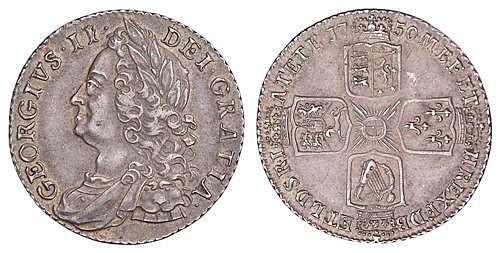
one shilling coin

Vauxhall Tickets

Up until 1736, the admission cost was sixpence, but afterward, the price was doubled to one shilling. Considering the expense of maintaining and improving the gardens and contriving new entertainments, this seems modest indeed; however, there was more to be made from the food and drink once the visitors were admitted. For the visitors, there was also the cost of dressing respectably and the cost of transportation. The one shilling price was fixed until 1792, when it was doubled to two shillings.

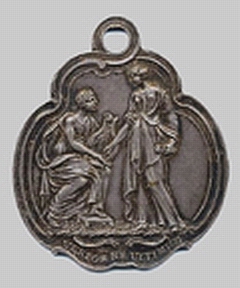
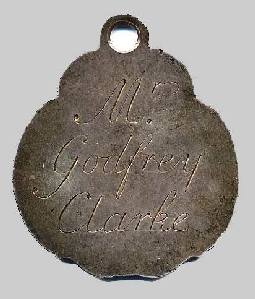
Season Ticket greySeason Ticket grey reverse

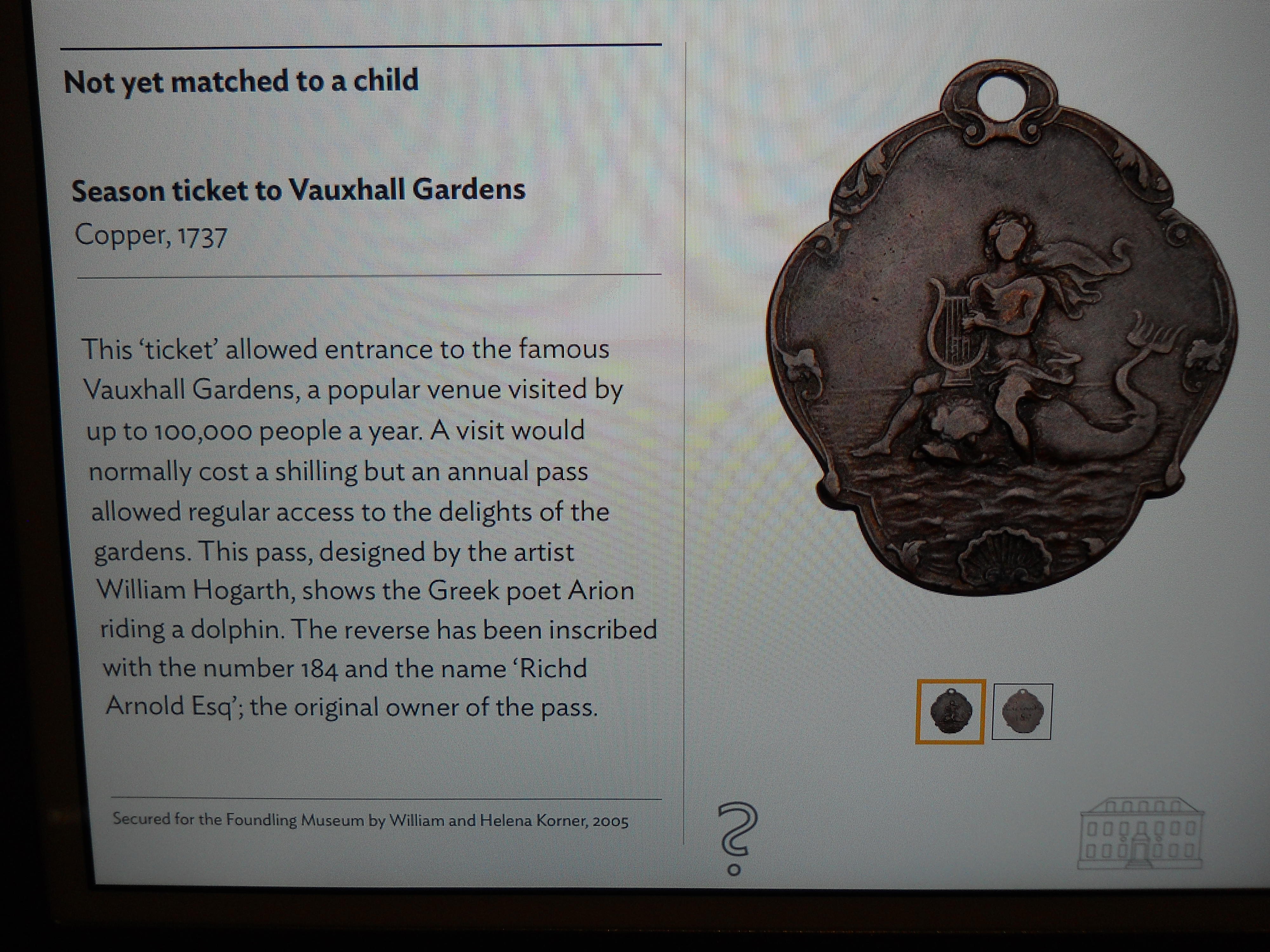
In 1737 Tyers initiated a subscription price, or season ticket. The metal tickets were issued to a thousand people at a guinea each, and would admit two people to the gardens for the entire season. Not only did this ensure repeat visits by two thousand people, it provided him with funds upfront to use for maintenance and improvement.

The relief on the obverse usually represented, through classical imagery, a particular aspect of Vauxhall Gardens, often associated with the music. On the reverse was engraved the subscriber’s name, accompanied… by the ticket’s number.

silver ticket

silver ticket

In 1738, the tickets were made of silver and the price rose by three shillings. In 1741, the price was raised to two guineas.

As a comparison, a season ticket for two to the Great Room in Soho was five guineas, while individual concerts were ten and a half shillings, the same price as Handel’s fundraising concert at the Foundling Hospital in 1749. Almack’s (founded in 1765) charged ten guineas for a once-weekly ball over twelve weeks, so Vauxhall tickets were considered quite a bargain.

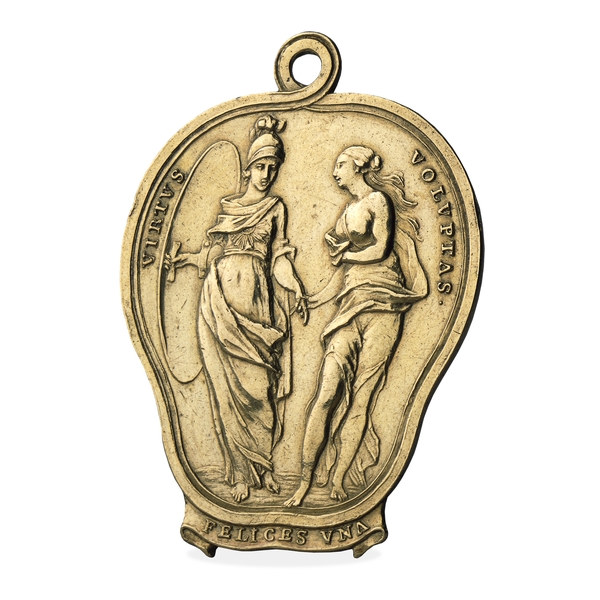
Hogarth's gold "perpetual" ticket

Hogarth’s gold “perpetual” ticket

Attendance

“S. Toupee” in his letters in Scots Magazine estimated that “not less than one thousand shillings are received each evening of performance during the season,” not including season ticket holders. Special events, such as the rehearsal of Handel’s Music for the Royal Fireworks, drew several thousand spectators. Opening and closing nights and royal birthdays also drew large crowds.

The opening night of the 1769 season, for instance, was a remarkably fine evening for the time of year, and it was estimated that ‘there were upwards of twenty thousand of the first nobility present.’

Crime and Disorder

Even though it suffered occasional lean times, there can be little doubt that eighteenth-century Vauxhall Gardens became the most popular single visitor attraction for London… With these numbers of people coming together, especially to a place where alcohol was available, crime, vandalism and disorder were inevitable.

Nor was it just pickpockets and prostitutes his police force (initiated in 1732) had to deal with. While Tyers encouraged his waiters to restrict alcohol consumption, it was difficult for them or even him to police the mischievous London Bucks, who were of a class higher than his. Tyers and his staff managed these problems themselves, even if it meant “eating” the cost of vandalism, not wanting to involve courts, which would draw bad publicity. “S. Toupee,” in one of his letters in 1739, “pointed out that there was ‘a man in the posture of a Constable, to protect the Ladies from any insult, &c.’ at the end of each walk.

Besides the half-dozen or so constables, he employed up to eight men to guard the route from the river and led a (possibly regular) blitz against the pickpockets.

Refreshments

Anyone who has worked in the restaurant industry can tell you how difficult a task it is to prepare food for crowds of people, but how many restaurants have to cater for 500-1000 or more hungry people? This is a logistical nightmare that Tyers managed with aplomb.

Consistent with his insistence on featuring English art and music, the food at Vauxhall was simple and English. There were complaints about the prices, of course. Here are some prices from one of the “S. Toupee” letters in 1739:

  • one bottle of French claret: 5 shillings
  • one cold chicken: 2-1/2 shillings
  • one quarter of cyder: 1 shilling
  • one quart of small-beer: 4 pence
  • one slice of bread: 2 pence
  • one slice of cheese: 4 pence
  • dish of ham or beef: 1 shilling, salad, an extra pence
  • sweet pastries: 1 shilling
  • custards and cheesecakes: 4 pence
  • heart cakes and Shrewsbury cakes: 2 pence
  • one bottle of champagne and arrack: 8 shillings
  • two pounds of ice: sixpence
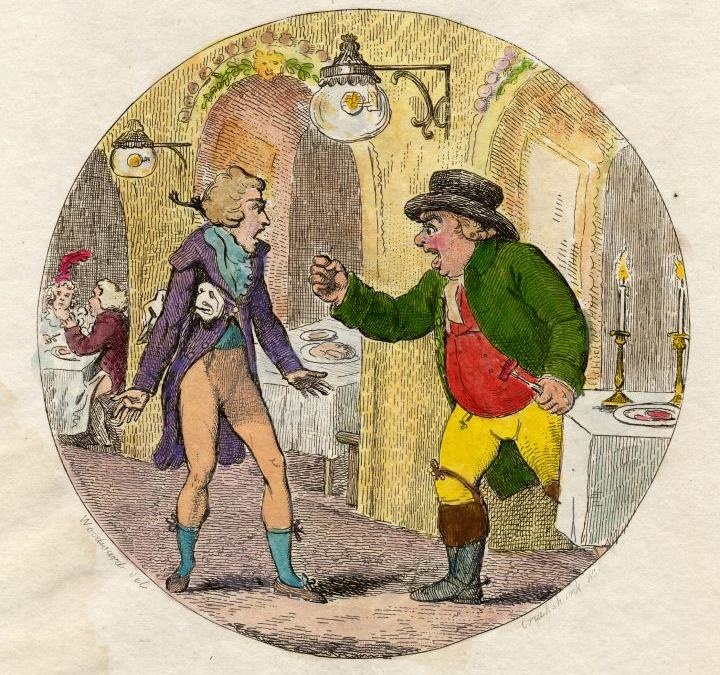
Isaac Cruikshank, A Country Farmer & Waiter at Vauxhall. A farmer in country dress, on his first visit to Vauxhall, has ordered ham in expectation of a plateful of English gammon. When the waiter brings him the notoriously thin slices that were Vauxhall ham, the farmer is furious.

Isaac Cruikshank, A Country Farmer & Waiter at Vauxhall. A farmer in country dress, on his first visit to Vauxhall, has ordered ham in expectation of a plateful of English gammon. When the waiter brings him the notoriously thin slices that were Vauxhall ham, the farmer is furious.

Even a devoted fan such as “S. Toupee” confessed that the food was expensive. The sliced meats were thin, especially the ham. “This was all part of the fun of the evening—a great joke on fashionable society who were happy to play along.” A well-known verse alluding to this:

Never trouble Ham House, or its inmates at all,

For a ghost, that may be but a sham,

But seek in a sandwich that’s cut at Vauxhall,

For the true apparition of Ham.’

Note:

The cost of the food did not alter significantly over the whole period from Tyers’s re-launch until the gardens’ final closure; the prices of wines and spirits, however, were a different matter, rising sharply in the nineteenth century.

Susana’s Vauxhall Blog Post Series

  1. Vauxhall Gardens: A History
  2. Vauxhall Gardens: Jonathan Tyers—“The Master Builder of Delight” 
  3. Vauxhall Gardens: A New Direction
  4. Vauxhall Gardens: The Orchestra and the Supper-Boxes 
  5. Vauxhall Gardens: The Organ, the Turkish Tent, and the Rotunda
  6. Vauxhall Gardens: Three Piazzas of Supper-Boxes
  7. Vauxhall Gardens: “whither every body must go or appear a sort of Monster in polite Company”
  8. Vauxhall Gardens: The Competition
  9. Vauxhall Gardens: The Artwork, Part I
  10. Vauxhall Gardens: The Artwork, Part II
  11. Vauxhall Gardens: The Music, 1732-1859
  12. Vauxhall Gardens: The Business Side
  13. Vauxhall Gardens: Developments from 1751-1786
  14. Vauxhall Gardens: Thomas Rowlandson’s Painting (1785)
  15. ‎Vauxhall Gardens: The Third Generation of the Tyers Family and the Jubilee of 1786
  16. Vauxhall Gardens: An Era of Change (1786-1822), Part I
  17. Vauxhall Gardens: An Era of Change (1786-1822), Part II
  18. Vauxhall Gardens: An Era of Change (1786-1822), Part III
  19. Vauxhall Gardens: The Final Years, Part I
  20. Vauxhall Gardens: The Final Years, Part II
  21. Vauxhall Gardens: The Final Years, Part III
  22. Vauxhall Gardens: The Final Years, Part IV
  23. Vauxhall Gardens: Farewell, for ever

Strange happenings in Hyde Park: a Bluestocking Belles cross-post

Today on Susana’s Parlour, Jude Knight and I have something special: a stand-alone short story with two characters from the Bluestocking Belles’ holiday box set, Mistletoe, Marriage, and Mayhem. Mary, the heroine of Jude’s story, Gingerbread Bride, meets Agatha Tate, Lady Pendleton, the mother of Julia Tate, the heroine of my story, The Ultimate Escape. In this episode, Lady Pendleton is just returning from a two-week journey into the twentieth century. Yes, she is a time-traveling Regency lady (who has appeared on this blog on several occasions in the past).

Pissarro_Hyde_Park

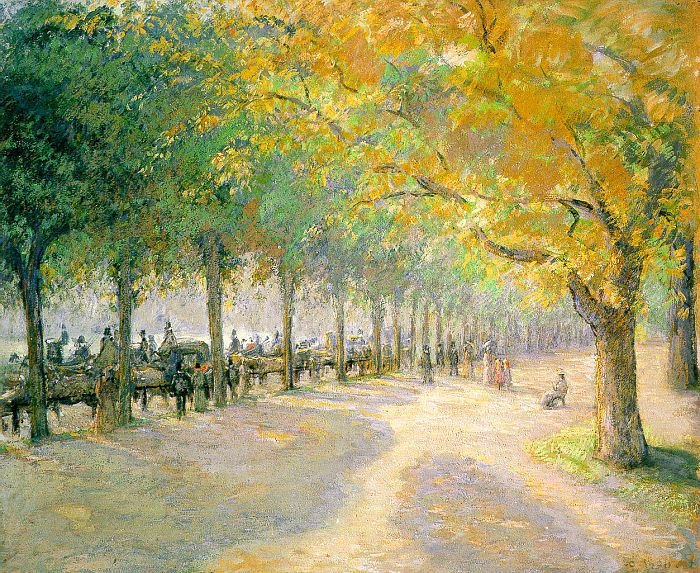
Agatha Tate staggered backwards as her feet touched the ground until, unable to reclaim her balance, she toppled over onto the soft grass at Hyde Park.

“Wh-at?” She put a hand to her aching temple and tried to regain her bearings. “Where am I?”

Agatha Tate, Lady Pendleton

Agatha Tate, Lady Pendleton

She opened her eyes and could see a vague image of a young girl in front of her. A girl who had likely seen her materialize out of nowhere, she realized as her wits were restored to her. Good heavens! How was she going to explain something was… well… unexplainable?

The girl—a young woman really, Agatha could see as her vision cleared—stepped forward, blinking rapidly. “May I help you?”

“Uh… who are you?” Agatha asked, her head still throbbing. “How long have you been there?”

Agatha pulled herself up into a sitting position and cast about for her shopping bag, which had landed in a nearby bush. “Oh my, can you get that for me, my dear? I need to change my attire before anyone sees me.”

She was still wearing her animal print leather jeans and denim jacket, which was certain to startle an inhabitant of London in 1799. Of course, she should have changed to her original clothing prior to leaving the twentieth century, but she’d been so stricken by the need to see her family again that she’d collected her bag, pulled out the stone, and uttered the gypsy’s spell before the thought could occur to her.

“Well, before anyone ELSE sees me. I shouldn’t want to cause a scandal.”

Mary Pritchard

Mary Pritchard

The bemused young lady fetched the bag and handed it to her. Agatha could see that her bright red hair was tousled and she seemed to be short of breath.

“Mary Pritchard, ma’am, at your service.” The young lady curtseyed politely.

“A pleasure to meet you, Miss Pritchard. Please allow me to introduce myself. I am not usually so rag-mannered, but since we have met in such unconventional circumstances…. Oh dear, there I go again! I am Lady Pendleton. My husband is Lord Pendleton, of Wittersham.”

“I am pleased to make your acquaintance, my lady.” She glanced at their surroundings, and returned her gaze toward Agatha with a reassuring smile. “We are hidden here, I think. I will keep a lookout un case Viscount B… in case anyone comes this way while you are changing.”

Agatha smiled, feeling a bit sheepish. “How very kind of you, Miss Pritchard. I was just about to ask if you would do me that small favor.”

She took the bag behind a bush and began to tug at the tight leather jeans. “Oh, I know I shouldn’t have had that last Big Mac,” she groaned.

Upon seeing the look of bewilderment on Miss Pritchard’s face, Agatha rolled her eyes. She already had a great deal to explain to the kind young woman. She’d better watch her tongue from her on in.

She coughed. “I’m afraid I’ve been over-indulging during the past fortnight. I hope my old clothes will still fit.”

“Have you traveled far?” Miss Pritchard asked politely.

Agatha grinned. “You could say that, I suppose.”

A crashing further back in the woods startled them, particularly Miss Pritchard, whose hand went to her chest as she turned toward the origin of the sound. She appeared frightened out of her skin.

Lady Pendleton pulled her yellow morning gown over her head. “Are you well, my child?”

I’m the one who has traveled 200 years and she’s the one who looks white enough to be a ghost.

“I… ah… you must wondering, ma’am, at my being here without an escort. That sound is, I think, my escort. If he finds me, would you be kind enough to say I am with you?”

The poor girl was trembling! Agatha stepped out from behind the bush and folded the girl into her embrace. Why she looked to be only a year or two older than her own daughter Julia!

“Your escort… attacked you? How did that happen?”

After a brief moment, Mary returned her embrace. She was a brave one—or perhaps foolish—to trust a complete stranger, particularly under these circumstances.

“I refused his proposal, and he thought to force me. I… ah… punched him in… ah… I distracted him and ran.”

What are Miss Pritchard’s parents thinking to allow her to be escorted by such a villain?

Miss Pritchard bit her lip. “I do not know what to do. If I tell my aunt, she will say that we must marry, and I would rather throw myself into the Thames than marry a man who only wants my money.” She sighed. “Actually, I would rather throw him into the Thames.”

Agatha straightened up. “This… this… Boswell won’t harm you as long as I’m here, my child.” She grinned. “The Serpentine is a great deal closer. Will that do instead, do you think?”

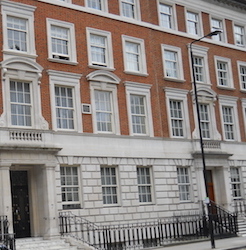
No. 42, Grosvenor Square, the Pendletons' London home

No. 42, Grosvenor Square, the Pendletons’ London home

She turned her back. “Hurry, do me up and we’ll away from here. I live in Grosvenor Square; it’s not too far.”

The girl chuckled and hastened to oblige. Agatha gathered her discarded clothing and stuffed them into the bag, realizing she would have to keep on her twentieth century boots since she had left the old ones behind.

“Ma’am, I could not help but notice the manner of your arrival and your attire. Would you think me impertinent if I asked where you came from?”

Agatha swallowed. What to say? Perhaps she could avoid the question… a little while longer.

“It’s a long story. What concerns me most at the moment is what your parents could have been thinking to leave you alone with such a rogue.”

Miss Pritchard sighed. “I came to live with my aunt when my papa died. The rogue is her son, I am afraid. She is as keen to have the inheritance my papa left me as her son is.”

Agatha’s nostrils flared. “How disgraceful! Clearly, she is not a fit guardian. Is there no one else who can offer you protection, my dear?” She pressed her lips together. “My husband and I don’t hold with arranged marriages. Not for our three daughters, or for anyone else, if it can possibly be helped.”

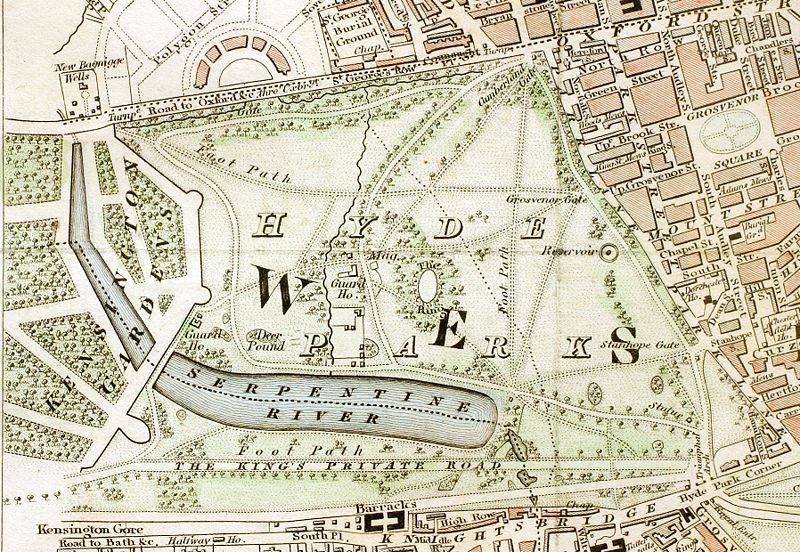
800px-Hyde_Park_London_from_1833_Schmollinger_map

She set a fast pace toward the Grosvenor Gate. She wasn’t about to allow this scoundrel to make off with Miss Pritchard under any circumstances, but it would be best if they avoid a direct confrontation.

“He doesn’t even want me,” her young charge burst out. “I heard him tell his friends that he would park me in the country while spent my lovely money!”

As they approached the gate, Agatha paused and looked cautiously behind her for any sign of a pursuer and sighed with relief at not seeing one. Followed by a moment of uncertainty. The more she thought about her own family and how they must have worried about her disappearance, the more eager she was to hurry home and beg their forgiveness. On the other hand, she wasn’t sure she was quite ready to confront them—particularly not her husband George. In any case, she couldn’t abandon this poor little dove to her mercenary aunt and odious cousin. What to do? What to do?

“I’ve got it,” she said. “Tea!”

“Tea would be very welcome,” said Mary. “I have no wish to go home until I decide what to do about beastly Bosville.”

Agatha knew of a delightful little bookshop on Mount Street that served tea, which frankly she had not enjoyed half so well during her travels into the future.

“Let us have a brief respite at my friend Mrs. Marlowe’s bookshop,” she suggested. “She is very cordial and serves the best tea and biscuits in Town.”

Mary’s face brightened. “I know it!” Mary said. “She has an excellent range of books.”

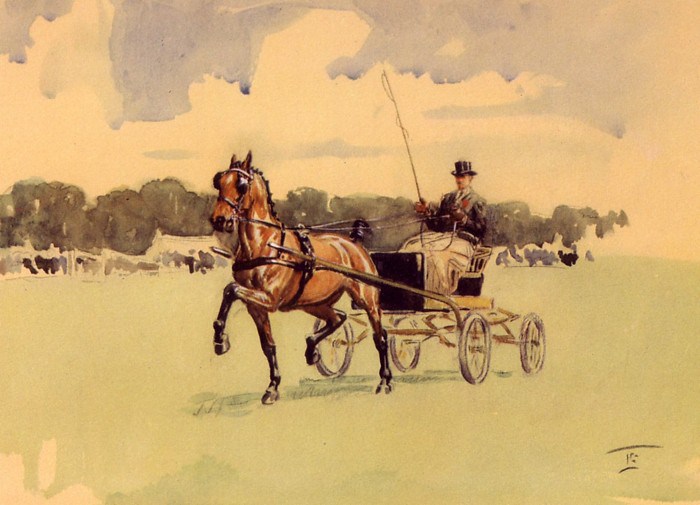
Suddenly she moved to one side, putting Agatha between her and the carriageway, where a dark-haired dandy was driving a phaeton at a furious pace out of the gate and into the street beyond.

1948-TROTTING-HACKNEY-CARRIAGE-HORSE-PRINT_700_600_QVBO

“Forgive me,” she said, “I am not usually so nervous, but that was my cousin, and I would rather he did not see me at present. Although,” she added, “I suppose it is silly of me, for what could he do in all this crowd? And I will take care not to be alone with him again, you may be sure.”

Agatha shook her head. “He looked very angry. It’s best to avoid a confrontation. Let’s away to Mount Street and refresh ourselves while we plan our strategy.” She was thinking “strategies”, because she had to come up with one for her own situation as well.

The bookshop was as busy as ever, with several customers waiting their turn at the counter. Mary led them up the stairs to the tearoom, where little tables invited friendly conversation.

tea table

“Lady Pendleton, I hope you do not think me rude, but I could not help but notice your attire when you—er—arrived. And—it cannot be true, can it? You seemed to appear out of nowhere!”

Agatha blanched. A more prudent woman would not have considered confiding her situation—as strange as it was—to a young girl such as Mary, but then, Agatha had never been known for her prudence.

“I’ll have a cup of Bohea,” she told the waiter. “And some strawberry tarts if you have them. What would you like, my dear?”

“Souchong, please,” Mary said. “And strawberry tarts sound wonderful.”

After the waiter had departed, Agatha turned to Mary. She might as well get it over with. “When you saw me earlier today, I was wearing clothing from the twentieth century. I-uh- was visiting there for the past two weeks. I suppose you might call me—a sort of time traveler.”

Agatha’s hands were clammy. It sounded so ridiculous to say such a thing, and she wouldn’t have believed it herself if she hadn’t experienced it firsthand. But she was going to have to say it again—soon—to her husband, so she’d best get over her fears now rather than later

Mary opened her mouth and closed it again. “How marvelous,” she said at last. “I have traveled much of the world, but to travel in time? How wonderful!” She sat up straight in her chair, her eyes widened.

“Marvelous, yes, it is at that,” Agatha agreed. “Quite fascinating. An amusing and rather unconventional manner of escaping one’s problems. But now… I find myself having to face them after all.”

Mary nodded. “Running away does not solve things. Though it can win you time to find a solution.”

Their conversation was interrupted by the arrival of the tea. Agatha poured for both of them.

teapot

“You are wise for your age,” she commented as she passed her the plate of tarts.

Mary smiled. “Thank you, ma’am. I am on my own, you see, and must think for myself. And I am of age, though I know I look younger. My youth is a great disadvantage. Were I older, I could move to my own residence, and no one would be in the least scandalized.” She sighed.

Agatha leaned in and lightly stroked Mary’s arm. “I have three daughters at home. Julia, my eldest, is fourteen. I have missed them all so much, and my husband most of all. But I needed time to reflect on my situation, and knew my mother and aunts would only tell me to go back to my husband.”

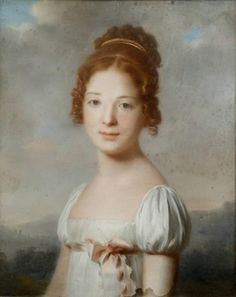
Lady Julia Tate (at age 27)

Lady Julia Tate (at age 27)

She shook her head. “Marriage is not something to be rushed into. My George and I married for affection and fell in love later. And for the most part, we have rubbed along very well. I never thought he would turn into a—despot.” She winced, knowing in her heart that George was not a despot. Someone had wounded his pride. That holier-than-thou William Wilberforce, who despised some of her political friends because he disapproved of their morals.

Mary grimaced. “But are you going home now?”

Agatha’s mouth went dry and she took another sip of her tea.

“I am,” she said. “I must. I cannot abandon my daughters. Or my husband.”

“Of course not,” Mary agreed.

“But George must know that I won’t have a despot for a husband. While women do not have the sort of freedoms in this century that they will have in the future,”—she saw Mary’s eyes widen in surprised—“we do have options, and he must surely know I would not hesitate to take some of them, undesirable though they would be.”

She licked her lips with cautious hope. “If I know my George, though, he has long ago forgotten his anger amidst his concern for my absence.” She smiled as she imagined a tender reconciliation between them. She felt a sense of calm.

Taking the last sip of tea, she set her cup down. “It appears that my path is quite clear. I must return home and have a serious discussion with my husband. As for you, my dear, I wonder if you haven’t any other relatives you could appeal to, since clearly these Bosvilles are not suitable.”

Mary’s face brightened. “I wonder that I did not think of that! Yes, indeed! I have three more aunts, though I have not met them. Papa said I was to come to London. He thought Aunt Bosville might help me to find a husband.” Her color deepened, her fair skin showing her embarrassment. “I find I am not in the fashionable mode, however. Being raised on a naval ship does not prepare one to talk nonsense, and faint, and be ridiculously frilly and the like. And then…” she gestured at her bright red hair and freckles, “there is how I look.”

Agatha raised an eyebrow. “I see nothing amiss with your appearance. Your coloring may not be the fashion this year, but it does not prevent you from having an appeal of your own. Indeed, my eldest daughter is flame-haired and freckled, and I am quite certain she will grow into her own beauty when she past the tomboy phase.” She grinned. “Red hair is quite popular in the twentieth century. I observed that many of the younger ladies had deliberately colored their hair red, or at least a portion of it.” She frowned. “Of course, there were also shades of blue and green that I could not like at all, but that was the way of things—or will be, I should say. Society is so much more liberated in the future.”

Mary leaned forward. “Lady Pendleton, do you think… Could you tell me how you came to travel through time? Could I do it?”

Agatha wrinkled her brow. “Oh no, my dear! I think it would be quite ill-advised for someone so young to venture off into a completely different world. You may be certain I will not breathe a word of it to any of my daughters, at least not until they are old enough to have learned to resolve their problems rather than try to avoid them. No indeed, dear Mary, we must find a rather more conventional solution to your dilemma.”

“I am familiar with adventures, Lady Pendleton. I have been in a number of tight spots in many parts of the world. Though I have needed rescue from time to time, and I suppose I cannot expect Rick—Lieutenant Redepenning—to follow me two hundred years into the future.”

Now this was a promising development. “This Rick-er-Lieutenant Redepenning… you say he has come to your rescue in the past? Sounds like a delightful young man. The two of you appear to have a great deal in common. Is he eligible, do you think?” She winked. “I must confess that I would like to see my daughter Julia make a match with Oliver, who lives next door to us in Wittersham. They have been close friends forever.” She sighed. “Although it remains to be seen how well they deal with each other as adults.”

“Things can certainly change when one grows up, Mary sighed. “We were good friends when we were younger, but now… Lady Pendleton, a friend would visit a friend, would he not? If he were in London, and she were in London? A lady cannot call upon a gentleman, after all. Aunt would not even allow me to send a note! At first he was recovering from his injury, but he has been seen about Town these past six weeks and has not been to see me.” She sighed again, more deeply this time. “No, eligible or not, Rick the Rogue is not interested in plain Mary Pritchard.”

Then she brightened. “I will go to my aunts in Haslemere, Lady Pendleton. I will make the arrangements today.”

“Do you need a place to stay before you leave, Miss Pritchard?” Agatha patted her hand. “You would be welcome, if you think your return to Lady Bosville’s house would put you at risk.”

Mary shook her head. “I am quite sure that is not necessary, my lady. My cousin is unlikely to dare anything further. If he should return home, that is. He often stays away for days at a time.”

“I do hope that is the case, dear. However,” she added in a maternal tone, “Do not neglect to hire a post chaise, and your own outriders. You have a maid who can accompany you, I take it?”

“The public coach goes straight through to Haslemere, where my aunts live. Yes, I do believe it is the perfect solution. Thank you for your counsel, Lady Pendleton. And best of luck with your own reunion. I am certain your family will be over-the-top excited to have you back again!”

I hope so too, Agatha thought. In any case, it was time she found out. She rose from her seat and reached for Mary’s hand.

“It was a great pleasure to meet you, Miss Pritchard. My sincere thanks for your assistance in the park earlier. I can trust on your discretion, I suppose?”

At Mary’s nod, she clasped Mary’s shoulder. “I wish you well on your journey. And if you need any further assistance, please send for me at Grosvenor Square. Number forty-two.”

And the two of them departed the bookshop to face their own separate destinies.

Click here to read the story from Mary Pritchard’s point of view.

Click here for more information about Mistletoe, Marriage, and Mayhem.

Join us on Facebook for our launch of Mistletoe, Marriage and Mayhem on November 1, 2015.

Our Christmas Party Box Rafflecopter is here.

Celebrate with us!

Close-up-of-explosion-of-champagne-bottle-cork2

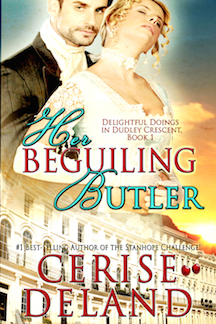
Cerise DeLand: Her Beguiling Butler (Giveaway)

About Historical Accuracy…

$_57 copy

With your romance, do you crave accurate history? A sense of time and place? Cerise tells all about Her Beguiling Butler!

Say you like historicals and you often wonder what’s true and what isn’t?

I can’t speak for other authors, but I do desperately try to bring you The Real Stuff.

For example, what’s real in Her Beguiling Butler?

You see a date at the beginning of the book, January 17, 1820. Why?

Because when I plotted the book, I wanted to note precisely when George III (he of the American Revolution!) died and what happened.

So I had to work backwards from that.

Yes. You need to read the book to learn how and when the news reached London!

The Prince of Wales is not considered a fine fellow by most people in the novel. Is that true?

Yes. Prinny, by the time of his ascent to his father’s throne (not official by the way until a year later at his coronation) was considered a spendthrift and profligate. He’d had so many mistresses and appealed to Parliament to spend so much on his homes and his clothes (as well as other debts), many in the Realm were not happy.

In fact, they rather liked old George, his father.

Lady Ranford is being considered by the courts to assume a title on her own. Is that possible for a woman to inherit a title in her own right?

Yes. And hopefully you’ll read the book to learn how that’s done!

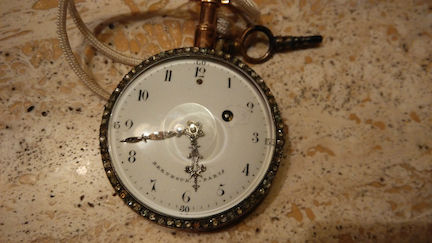
The chiming watch piece that Finnley carries around with him to make certain the house runs on time was a real time piece. I did not invent it.

It was delicately made by Ferdinand Berthoud. His work was very popular, aside from being very expensive.

The mourning practices for King George III that most noblemen observed did indeed happen.

What sorts of observances did they have to employ?

Ah. Do read the book for a description!

Does Dudley Crescent exist?

No. I made it up!  I also made up the man who was given the land by Charles II!

So what is the picture on the front cover of the novel?

What do you think it is? Comment here and win a digital copy of Her Beguiling Butler!

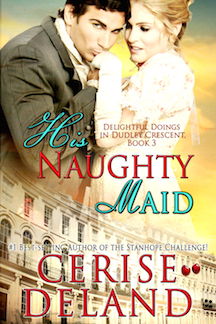
Do look for #2 and #3 in series when I give you a governess and a maid who are more than they appear to be!

giveaway

One lucky commenter wins a swag pack containing a Susana Ellis mug and other goodies!

Her Beguiling Butler by Cerise DeLand copy

About Her Beguiling Butler

The lovely widow at No. 10 Dudley Crescent hopes to lead a merry life without any husband to replace the elderly one she recently buried. Yet Lady Ranford finds herself in a pickle. Her new butler, Finnley, is not only the most obstinate man she’s ever met, but he’s a virile enigma.

She’s never been lured to naughtiness with a man. Heaven knows, she certainly shouldn’t fantasize about the tall, dark, scowling creature who runs her household like a finely tuned clock.

But she can’t help herself. She needs to taste him—or dismiss him.
Finnley, poor fellow, has a few risqué dreams of his own about how he’d like to handle the delectable widow. Alone in his rooms, he resolves to deny how her humor riddles his mind and how her beauty steals his breath away.

None of his solutions are proper.

All of his desires are quite…dear me…scandalous.
But what’s a butler to do when the very life of his beloved employer is at stake? And he cannot control his need to protect her and…ahem…bed her?

AMAZON  • ARe  • NOOK  • KOBO

About the Author

Cerise DeLand is #1 bestselling author of Regency romances! And a top selling author of contemporaries too!

WebsiteTwitterNewsletter

His Naughty Maid by Cerise DeLand copy

His Tempting Governess by Cerise DeLand copy

Vauxhall Gardens: The Music, 1732-1859

vauxhallbook

Vauxhall Gardens: A History

David Coke & Alan Borg

The Vauxhall Pleasure Gardens is one of the places I’d love to slip back in time to visit, just to catch a glimpse of what it was like. After recently splurging to buy this lovely coffee-table book, I thought it might make a wonderful subject for a new blog series. But do buy the book too, if you can! The photos are fabulous!

Before Vauxhall, professional, high quality music was expensive and therefore restricted to the wealthy. Because it was usually performed in private drawing rooms or concert halls, the concept of performing it in the open air was also a novelty. At a time when music from past masters was popular, Tyers introduced music by contemporary English or London-based composers. Oftentimes, the music (and the musicians) were the same as those performing in London theaters during the winter.

Tyers exposed a substantially larger audience to serious music than had ever been possible or even conceivable before. The fact that he did so in a setting where the audience could choose to listen or not, and could choose where to listen from, fundamentally transformed the public’s experience of musical performance, and led to a much wider and easier acceptance of the concert as a public entertainment.

Instrumental Music

Following the construction of the Orchestra building, which resolved several acoustical issues from performing in the open air, in 1735, music became

the crucial ingredient in setting the tone for an evening at Vauxhall. It promoted relaxed enjoyment, and its rational elegance was a catalyst for good behaviour and conversation among the company.

The unusual experience of listening to music in the open air and, after dark… held a very special allure for the audience. There is no doubt that music heard from a distant point of the garden… would have been attractive, providing a good excuse to lure members of the opposite sex away from the crowded Grove… On her eventful visit to Vauxhall, Fanny Burney’s heroine Evelina was particularly impressed by its al fresco music, if not seduced by its freedoms… Despite the disagreeable company, she recounts that

There was a concert, in the course of which, a hautbois concerto was so charmingly played that I could have thought myself upon enchanted ground, had I had spirits more gentle to associate with. The Hautboy in the open air is heavenly.

Click here for a previous post about the Orchestra.

The construction of the Organ building, and the installation of the massive organ, resolved the problem of volume, since its range could reach throughout the gardens, and even beyond. Click here for a previous post about the Organ.

Handel and Vauxhall

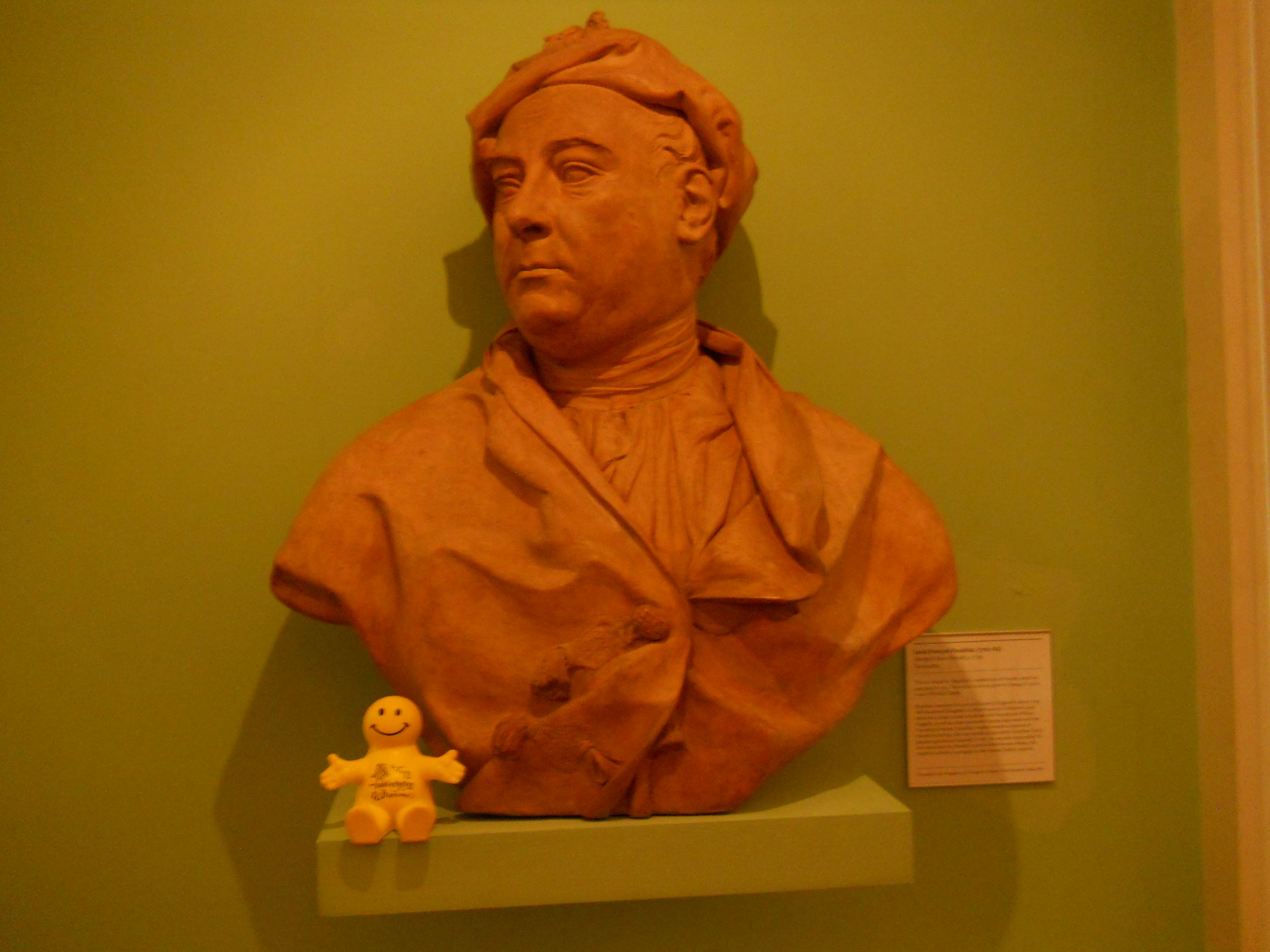
Squidgeworth found a friend!

Squidgeworth found a friend at the Foundling Museum

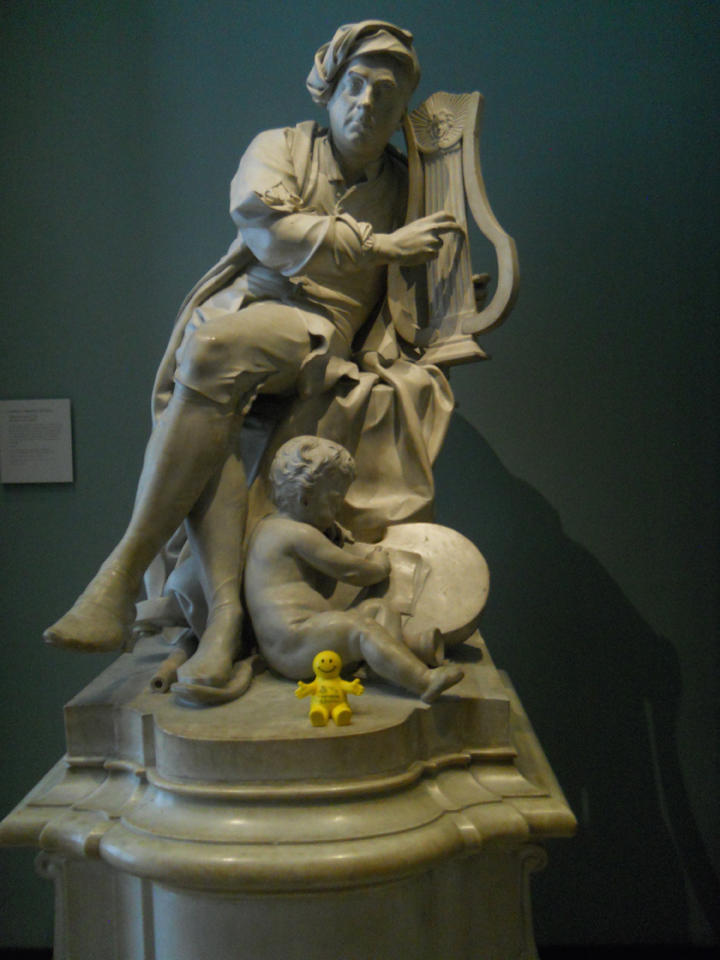
Just as Handel’s statue dominated the Grove, his music dominated Vauxhall’s repertory for a hundred years. Handel and Tyers had a mutually beneficial relationship that likely developed into close friendship. Tyers’s press articles tended to focus only on Handel’s music, and the promotion of his music before the crowds of Vauxhall helped him rise to popular fame.

Vocal Music

Due to a concern for propriety, Tyers resisted song at Vauxhall for at least a dozen years. By this time, Vauxhall was being criticized for “the absence of song on the grounds that, without lyrics, music ‘lacked interpretation,’ and was therefore less conducive to good humour among the audience.”

Soon after, Cecilia Young, a soprano who later married Vauxhall’s music director, Thomas Arne, was engaged, and the “introduction of song as a regular element of the programme launched the most perennial popular feature of the Vauxhall evening.”

Thomas_Augustine_Arne_portrait_by_Zoffany

Thomas Arne

Thomas Arne’s ballads “were, from 1745, regularly performed at the gardens to huge applause, and they were published in the first Vauxhall songbook, Lyric Harmony, which appeared in September of that year.” Arne’s songs, which were lighthearted and natural, appealed to a wide array of people, and thus fit in with Tyers’s own philosophy to make the arts available to all.

The lyrics of Vauxhall songs… are basically in the pastoral and romantic ballad style that evolved in the late seventeenth century from a long tradition of popular song… Over the next few decades, ballads absorbed influences from other popular music forms, particularly Italian opera, to become the genre known as the Vauxhall song.

rule_britannia_01a

Thomas Arne’s version of “God Save the King” was first performed at Drury Lane in 1745. He also wrote, “Rule Britannia,” another patriotic song. Click here to hear the latter song on the BBC website. I’m sure you will find it familiar.

A second genre that was to become popular with Vauxhall audiences was the patriotic song, one of the earliest types to be regularly heard at the gardens. Exploiting topical events as they did, they highlighted the link between the dutiful virtus of victorious military action and the pleasurable voluptas enjoyed by Vauxhall’s visitors, fully complementing the ideals behind Tyers’s management.

The songs regularly sung at Vauxhall and the other gardens enjoyed a wide currency. They were published not only as songsheets and in songbooks, but also in periodicals, particularly women’s magazines. Among the moral tales, romances, fashion hints, poetry, recipes and other items thought suitable for female consumption, editors of magazines such as the Ladies Complete Pocket Book or the Universal Magazine would often slip in the ‘favourite new songs’ being featured at the pleasure gardens in the current season, to be enjoyed by Vauxhall’s many “armchair” visitors around the country.

Besides the salary paid by Tyers and passes to allow them to come and go as they wished, “well-loved singers were rewarded by the audience who threw money at their feet.”

A thirty-two-year-old Oliver Goldsmith described a visit to the gardens around 1760, full of praise for the singers and the band.

The satisfaction which I received the first night I went there was greater than my expectations; I went in company of several friends of both sexes, whose virtues I regard and judgments I esteem. The music, the entertainments, but particularly the singing, diffused that good humour among us which constitutes the true happiness of Society.

Music after Jonathan Tyers’s death

After 1761, ownership was taken over by Tyers’s son, Jonathan Tyers the younger, and very little changed at first, until the early 1780’s, when strolling bands were introduced, possibly as an economic gesture, and the quality of music declined.

The introduction of Haydn’s compositions in 1783 marked the faltering start of a new era at Vauxhall. Haydn soon gained a wide following, even toppling Handel from his long-running supremacy.

Regular press advertisements detailing the evening’s program appeared in 1786, when Bryant Barrett, Jonathan Tyers the younger’s son-in-law, took over management of the gardens. Apparently he believed the audience to be more sophisticated about music and thus more interested in knowing beforehand what would be included.

James Hook

James Hook

James Hook, Vauxhall’s music director from the early 1770s until 1821, composed over two thousand songs specifically for Vauxhall and performed an organ concerto every evening at closing time.

…each season introduced an entirely new crop of songs, numbering between thirty and forty-five, with no repeats from previous years; the most popular songs received as many as fifty performances through the season… Most of the half dozen or so singers employed each year appeared every evening, Monday to Saturday, from mid-May to late August. This represented around eighty-five evenings out of a hundred—a tough programme for any performer, especially when singing out of doors.

The Vauxhall Effect

As a music promoter, Tyers was unusual at the time in not being a professional musician himself; it was his judgement and business sense that determined his visitors’ experience, and dictated the selection of people he employed to take his vision forward. The renown of his performers was less important than their ability to express a particular house style.

Performers at Vauxhall

For a list of performers at Vauxhall (musical and otherwise), check this website: Vauxhall Gardens: 1661-1859.


Susana’s Vauxhall Blog Post Series

  1. Vauxhall Gardens: A History
  2. Vauxhall Gardens: Jonathan Tyers—“The Master Builder of Delight” 
  3. Vauxhall Gardens: A New Direction
  4. Vauxhall Gardens: The Orchestra and the Supper-Boxes 
  5. Vauxhall Gardens: The Organ, the Turkish Tent, and the Rotunda
  6. Vauxhall Gardens: Three Piazzas of Supper-Boxes
  7. Vauxhall Gardens: “whither every body must go or appear a sort of Monster in polite Company”
  8. Vauxhall Gardens: The Competition
  9. Vauxhall Gardens: The Artwork, Part I
  10. Vauxhall Gardens: The Artwork, Part II
  11. Vauxhall Gardens: The Music, 1732-1859
  12. Vauxhall Gardens: The Business Side
  13. Vauxhall Gardens: Developments from 1751-1786
  14. Vauxhall Gardens: Thomas Rowlandson’s Painting (1785)
  15. ‎Vauxhall Gardens: The Third Generation of the Tyers Family and the Jubilee of 1786
  16. Vauxhall Gardens: An Era of Change (1786-1822), Part I
  17. Vauxhall Gardens: An Era of Change (1786-1822), Part II
  18. Vauxhall Gardens: An Era of Change (1786-1822), Part III
  19. Vauxhall Gardens: The Final Years, Part I
  20. Vauxhall Gardens: The Final Years, Part II
  21. Vauxhall Gardens: The Final Years, Part III
  22. Vauxhall Gardens: The Final Years, Part IV
  23. Vauxhall Gardens: Farewell, for ever

Sheri Cobb South: Dinner Most Deadly (Giveaway)

Five Star author photo copy

Dinner Most Deadly is the fourth book in my series of Regency-set mysteries featuring Bow Street Runner John Pickett, and in some ways it’s the riskiest. I call it my Empire Strikes Back book, because I still remember how appalled we all were when that movie came out in 1980, and the ending left us hanging: Han Solo frozen in carbonite? Luke’s dead (or so we thought) father, the Jedi hero, is Darth Vader??? And we were going to have to wait three years to find out what happened next?

In the case of Dinner Most Deadly, the cliffhanger involves the Scottish marriage by declaration which was accidentally contracted by John Pickett and Julia, Lady Fieldhurst, in Family Plot. When Julia returns from Scotland restless and out of sorts, her friend Lady Dunnington decides what Julia needs is a lover—and arranges a dinner party with half a dozen male guests from whom Julia may take her pick. But one of the men is murdered, and when John Pickett is summoned from Bow Street, he must not only find the killer, but break the news of their “marriage” to Julia. As with the other books, the mystery is solved, but the romance is more unresolved than ever as the couple must go about seeking an annulment—a process far messier than most romance novels lead readers to believe.

I’ll admit, I was more than a bit nervous about how readers would react. I had braced myself for a big outcry against “sequel-bait,” but to my relief, it hasn’t happened. I hope that’s because readers understand that, because of the enormous social gulf between them, Julia’s mind is not going to leap immediately to marriage. She is, however, appalled at what the annulment process is going to demand of poor John: the only grounds available to them are inability to consummate, and since she was married for six years—during which any such problem would certainly have been addressed—that leaves him to take the fall. She’s never known a man who loved her enough to sacrifice for her, and although she’s deeply moved by his willingness to do so, she doesn’t quite know how to respond. It’s going to take something drastic to force her to confront her own feelings—and that something comes up in the next book, Too Hot to Handel.

Thankfully, readers won’t have to wait three years to find out what happens next, but only about six months: my publisher has scheduled Too Hot to Handel for March 2016.

If you’re new to the series but want to give it a try, I would strongly suggest beginning with In Milady’s Chamber, the first in the series, to follow the progression of the romance as it develops. In order, the books are: (1) In Milady’s Chamber; (2) A Dead Bore; (3) Family Plot; (4) Dinner Most Deadly; and (5) Too Hot to Handel. There’s also a prequel novella, Pickpocket’s Apprentice, which traces John Pickett’s rise from 14-year-old pickpocket to nineteen-year-old Bow Street Runner.

Giveaway: Sheri will award a hardcover, dust jacketed copy of Dinner Most Deadly ($25.95 retail) to one lucky commenter.

DinnerMostDeadlyFront copy

About Dinner Most Deadly

When Julia, Lady Fieldhurst, returns from her sojourn in Scotland restless and out of sorts, her friend Emily, Lady Dunnington, decides what Julia needs is a lover. Lady Dunnington plans a select dinner party with half a dozen male guests from whom Julia may choose a paramour. Emily also invites a potential lover for herself: Sir Reginald Montague, a man whose urbane manner and dangerous good looks hide a host of unsavory secrets.

Alas, Emily’s little dinner is a disaster from the outset. Every gentleman at the table bears some unspoken grudge against Sir Reginald, and then dinner is interrupted by Emily’s estranged husband. He and his lady have a heated discussion which ends with Lord Dunnington’s vowing to put a stop to his wife’s pursuit of Sir Reginald “no matter what it takes.” But the coup de grâce comes at the end of the evening, when Sir Reginald is shot dead.

Bow Street Runner John Pickett is summoned to Emily’s house, where he is taken aback to find Julia. For in addition to investigating the case, he is faced with the awkward task of informing her that their masquerade as a married couple in Scotland (Family Plot) has resulted in their being legally wed. Beset by distractions—not the least of which are the humiliating annulment process and the flattering attentions of Lady Dunnington’s pretty young housemaid—Pickett must find the killer of a man whom everyone has reason to want dead.

KindleDiscounted Hardcover

Excerpt

For the first time in the interview, the solicitor’s professional demeanor faltered. “The only possibility that remains is, er, that is, it involves consummation of the union.”

“But you just said a lack of consummation did not constitute grounds,” protested Lady Fieldhurst.

“No, but if either party should be unable to—that is, to be incapable of—” He took a deep breath and started over. “Your ladyship, I must remind you that you and the late Lord Fieldhurst were married for six years. If, during that time, it had come to light that you were—were incapable of participating in the act that might have given your husband the heir he desired so desperately, he would surely have sought such an annulment for himself years ago.” He turned to Pickett. “Such being the case, that only leaves . . .”

As the solicitor’s implication dawned, Pickett flushed a deep red.

Lady Fieldhurst was equally embarrassed, but considerably more vocal. “You cannot ask Mr. Pickett to—to—” Words failed her. She broke off and tried again. “Mr. Pickett may not be married, but I daresay there is a female somewhere who could destroy such a claim simply by coming forward and—and—”

“As a matter of fact,” Pickett said miserably, “there isn’t.”

“There isn’t?” echoed Lady Fieldhurst.

Pickett shook his head and prayed for the floor to open up and swallow him.

“There isn’t,” she murmured, regarding him with new eyes.

“But,” he added hastily, “that isn’t to say I couldn’t—that is, I—I have no reason to suppose that—that all my parts are not—not in good working order.”

“Oh, my.” She snatched up one of the solicitor’s legal papers and began fanning herself with it. “Oh, my.”

About the Author

At the age of sixteen, Sheri Cobb South discovered Georgette Heyer, and came to the startling realization that she had been born into the wrong century. Although she doubtless would have been a chambermaid had she actually lived in Regency England, that didn’t stop her from fantasizing about waltzing the night away in the arms of a handsome, wealthy, and titled gentleman.

Since Georgette Heyer was dead and could not write any more Regencies, Ms. South came to the conclusion she would simply have to do it herself. In addition to her popular series of Regency mysteries featuring idealistic young Bow Street Runner John Pickett (described by All About Romance as “a little young, but wholly delectable”), she is the award-winning author of several Regency romances, including the critically acclaimed The Weaver Takes a Wife.

A native and long-time resident of Alabama, Ms. South recently moved to Loveland, Colorado, where she has a stunning view of Long’s Peak from her office window.

WebsiteFacebookGoodreads

Susana’s 2015 English Adventure: Week 4

map

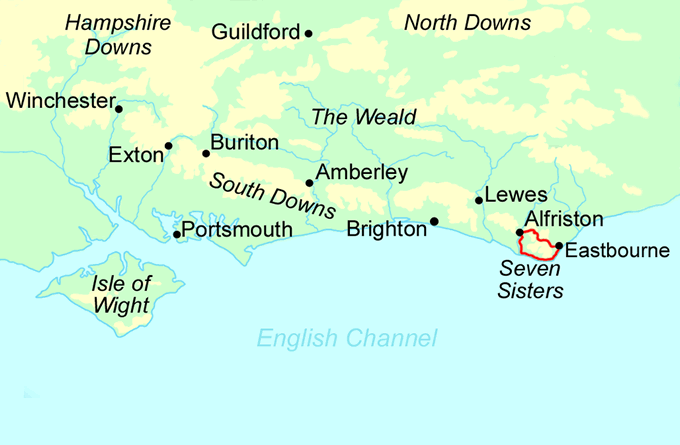
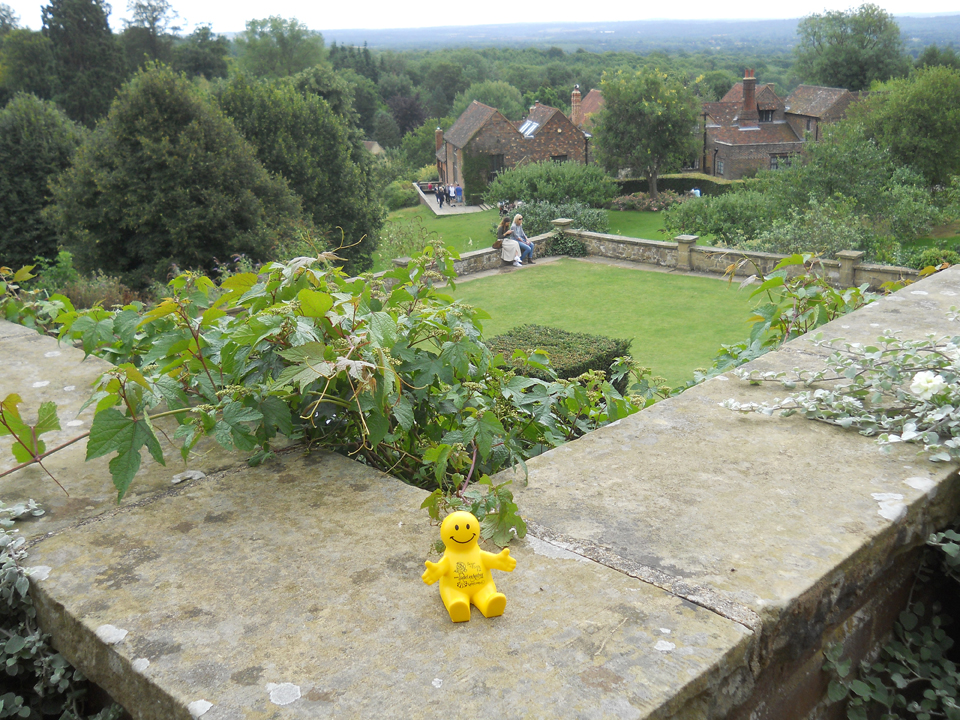
On Monday I hopped on a train to Birmingham, then changed to one for Kidderminster. (I just love these English names, don’t you? Mousehole is my favorite, but I’m assured that it is a lovely place to visit despite the name.) At Kidderminster, I took a taxi to The Elms Hotel in Abberley, where I was met by the lovely Heather King and her fabulous, quadralingual dog, Roxy. Heather is an amazingly talented author of Regency stories (and, as Vandalia Black, of rather darker paranormal ones). Heather and I are online friends and have been part of two Regency anthologies, Beaux Ballrooms, and Battles and Sweet Summer Kisses. It was truly awesome to meet her in person, as well as Roxy and the ponies, Merlin and Dub-Dub, and Sootie, the black cat whose offspring were too high-in-the-instep to become acquainted with a Yankee. Heather served me Toad-in-the-Hole, which turned out to be a sort of English comfort food: sausages baked in a sort of pancake batter and served with hot gravy. Besides being very tasty, it served to warm us up inside and outside, after a day spent mucking about the ruins of Witley Court in the pouring rain. (It rains in England. Deal with it.)

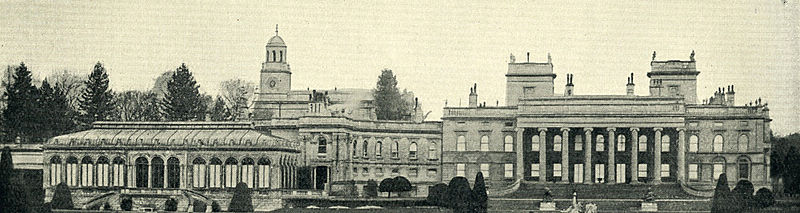
Witley Court

Witley Court was once one of the great houses of the Midlands, but a devastating fire in 1937 left it in ruins. While one cannot but regret the loss of such a beautiful home, the exposure of the “bare bones” has proved to be valuable to historians interested in learning about historical building practices.

800px-Witley_Court_circa_1900_2

Witley Court, 1900

Witley Court today

Witley Court today

Thomas Foley (whose grandson became the 1st Baron Foley) built the house in 1665 on the site of a manor house. Additions were made by John Nash in the 19th century, and the house was sold to the Dudley family (later to be given an earldom) in 1837.

Tramping about the ruins of the house turned out to be much more appealing than one might have expected, even in the pouring rain! The gardens are lovely, particularly the fountain (see video here), and the parish church on the property—which is not a ruin—is magnificent.

See photos here.

Berrington Hall

On Tuesday Heather, Roxy, and I visited Berrington Hall, a splendid country home in Leominster (pronounced Lemster, or so they tell me). It was designed in the late 18th century by Henry Holland, whose talent, although not eclipsing that of my favorite, Robert Adam, puts him solidly in second place, in my estimation.

In addition to the rich furnishings and décor, there was an exhibit of Georgian fashion throughout the house, which included—believe it or not—costumes from the 1995 BBC production of Pride and Prejudice. Yes, I was close enough to touch the costumes worn by Darcy and Lizzie during the final proposal scene, as well as many others. Truly an awesome experience!

Henry Holland!!!

Henry Holland!!!

The vast grounds include a walled garden with some vintage apple trees, a ha-ha, a lake, and some lovely paths. Heather and I enjoyed a delicious picnic before exploring further some of those paths. And not a drop of rain!

See photos here.

Waddesdon Manor

On Wednesday I took a train to Aylesbury, in Buckinghamshire (where, incidentally, the estate of my hero in The Third MacPherson Sister is located) to visit Waddesdon Manor.

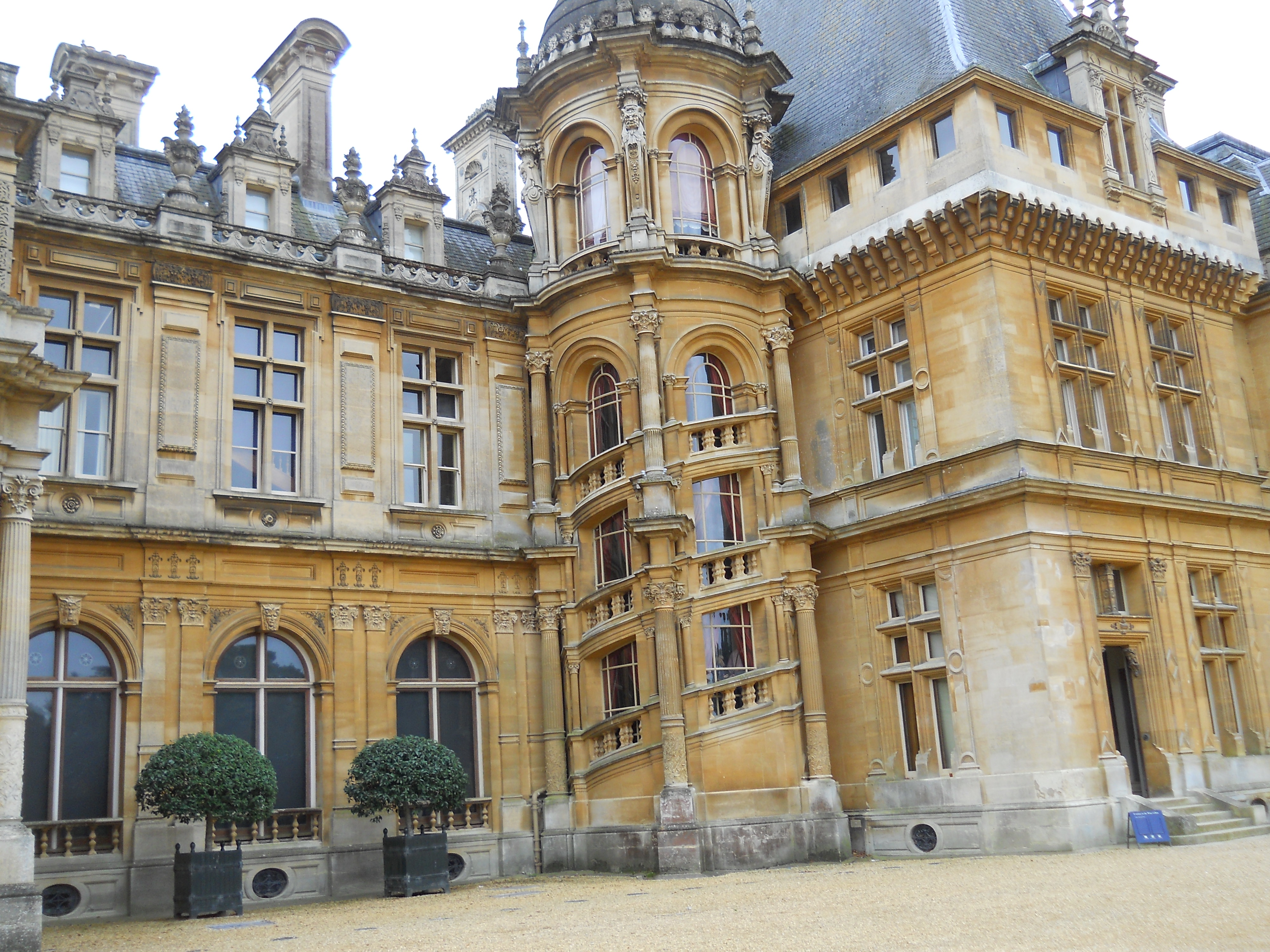
Waddesdon Manor was built in neo-renaissance style in the late 19th century as a sort of French château by the Baron Ferdinand de Rothschild of the Austrian banking family. The baron fell in love with his second cousin, Evelina, and married her, only to lose her in childbirth eighteen months later. The baron never married again, but became a compulsive collector instead. The furnishings are considered to be among the richest of any stately manor anywhere.

These stairs are reminiscent of those at the Château de Chambord in France

These stairs are reminiscent of those at the Château de Chambord in France

Unfortunately, I was only able to tour the house due to time considerations, but I plan to visit again to get a good look at the extensive grounds and other buildings, such as the Aviary and the Dairy.

Although cloudy, it didn’t rain until I had returned to London, where I got promptly soaked making a last round of Piccadilly Street and Fortnum & Mason. But hey, it rains in England. That’s why it’s so beautiful!

See photos here.

Adieu to England

Squidgeworth enjoyed his orange juice on the plane.

Squidgeworth enjoyed his orange juice on the plane.

It was with a tear in my eye as Squidgeworth and I said goodbye to England on Thursday. For now. We had a marvelous time and were fortunate to be able to visit many wonderful places, but there are still lots more on our bucket list. I’ve already booked our flight and flat for next year’s trip in August.

So much to see, so little time!

Next week: Squidgeworth and I have some travel tips for you!

Susana’s 2015 English Adventure: Week 3

house copy

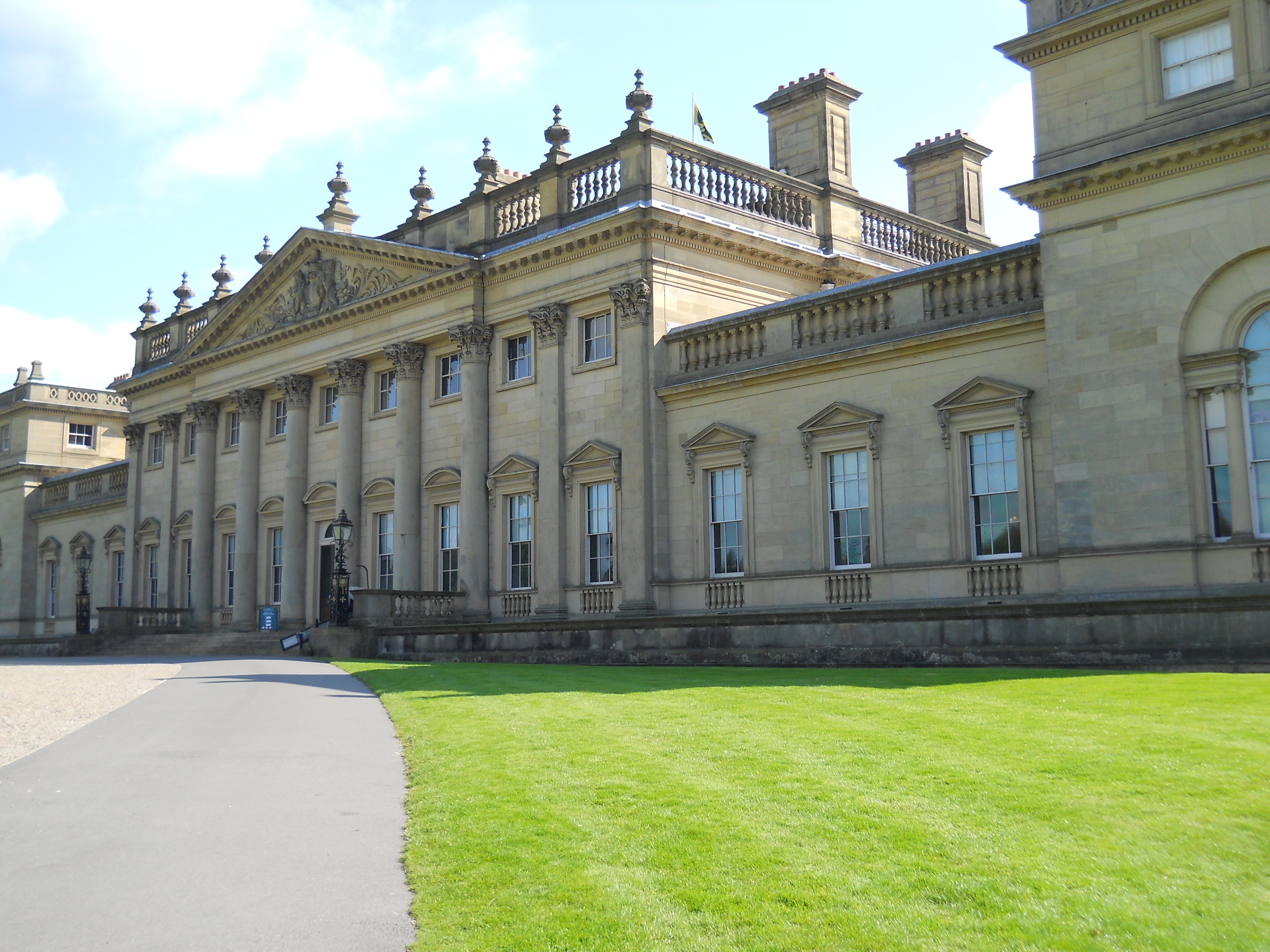
Harewood House

Harewood

On Monday I took an early train north to York, left my suitcase at the hotel, and headed off to Harewood (which can be pronounced either hairwood or hahrwood, depending on the person with whom you are speaking).

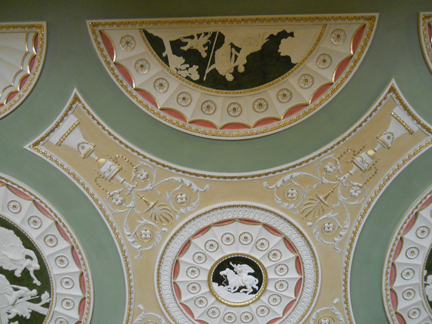
My overall reaction to Harewood is… Robert Adam! I don’t know how the man got around to accomplishing so much in England’s great houses in one lifetime, but from now on I will judge all of the ones I visit by the quality of their Robert Adam touches (or lack of it).

ceiling5 copy

Oh yes, I suppose I should mention the excellent work by Charles Barry and the Chippendale furniture too. Utterly fabulous!

In later years, Harewood was the home of Queen Elizabeth’s aunt, the Princess Mary, after she married the sixth Earl of Harewood, Henry Lascelles, who served in the First World War.

Photos of Harewood

Castle Howard

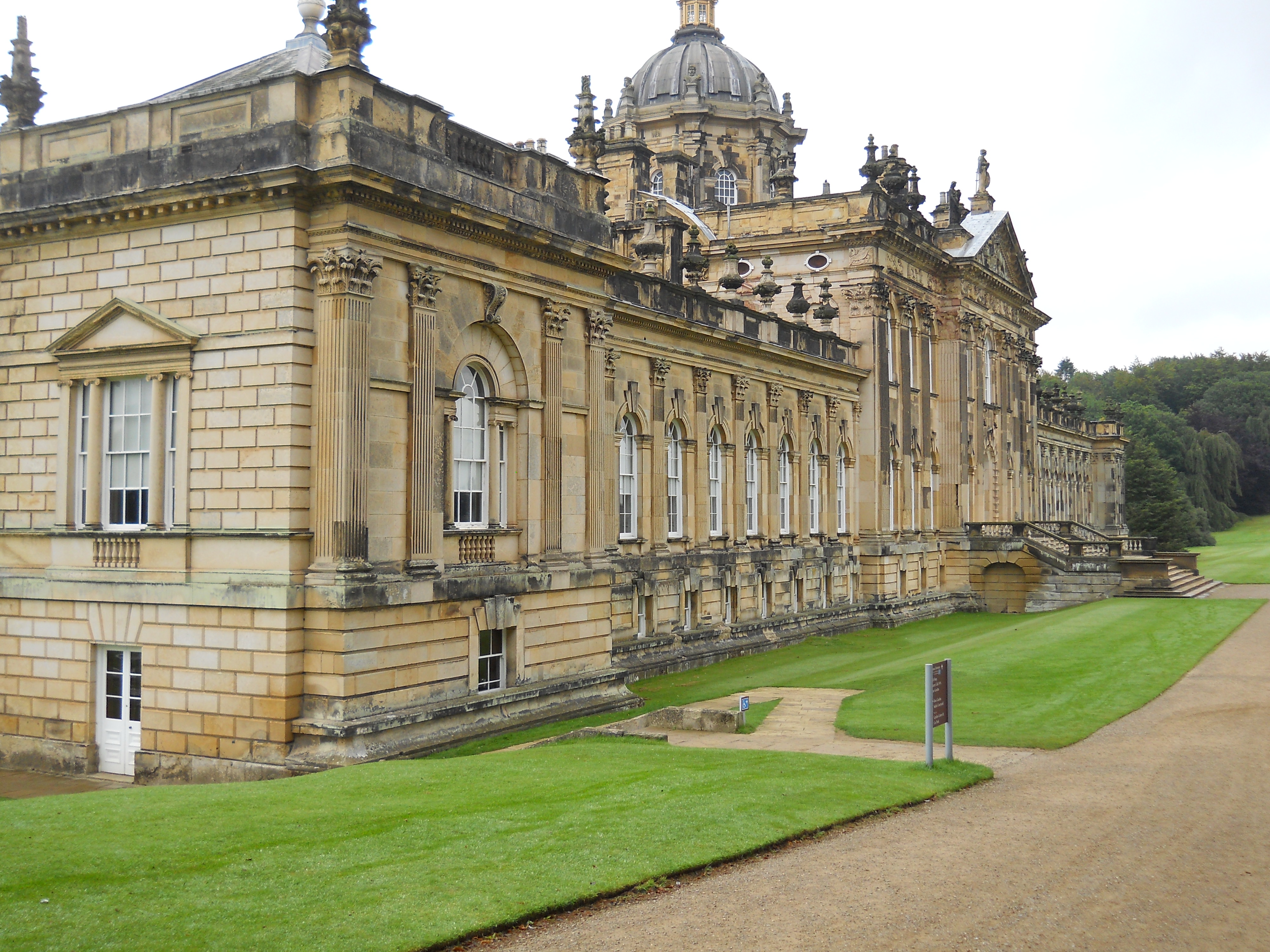
Castle Howard was originally built in 1700 by the 3rd Earl of Carlisle, who was a younger son of the Duke of Norfolk. Yes, Catherine Howard, unfortunate fifth wife of Henry VIII, was of the same family, but she predated the house. John Vanbrugh, the architect, was also the architect for Blenheim Palace, which is spectacular in itself.

The 4th and 5th earls traveled widely on the continent and were great collectors. The current earl lives at another house, and this one is owned by a private trust, headed by Carlisle family members.

CastleHoward2 copy

Castle Howard is well-known for being the setting of the popular Brideshead Revisited television series.

The 6th countess was the eldest daughter of the 5th Duke of Devonshire and his wife Georgiana. She became the mother of 12 children, and you can see her bedroom in the photos.

Photos of Castle Howard

Haworth

One of my favorite books of all time is Jane Eyre, and I loved Wuthering Heights as well. So visiting the parsonage where the Brontë family lived with their vicar father was a significant milestone. Very different from the magnificent houses I’ve been visiting on this trip! Startling to hear that nearly half of all children born at this time died before the age of six, and poor Rev. Brontë saw his wife and all his children die before he did.

paintingbyBranwell

Photos of Haworth

The Foundling Museum

If you ever wondered what happened to England’s abandoned children, this museum tells the sobering story of the Foundling Hospital, Britain’s first home for abandoned children. Mothers who left their children there also left tokens (buttons, jewelry, coins, or whatever they had) to identify their children in case their circumstances changed and they could claim them someday. Unfortunately, most of the children were never claimed. At the ages of 9-14, children were sent away to be apprentices or servants. It wasn’t an ideal situation, but at least the children were fed and clothed and educated up to a point, which was certainly better than being left to die in the streets, which was a common practice in some areas. Sadly, much of society shunned the offspring of prostitutes or unmarried couples and really didn’t consider it a great loss if they died.

One mother left a Vauxhall season pass as a token for her child

One mother left a Vauxhall season pass as a token for her child

Another focus of the museum is the founder, Thomas Coram, as well as supporters William Hogarth and George Frideric Handel and a large collection of paintings donated to the hospital that were used to entice potential contributors to come to the hospital.

Squidgeworth found a friend!

Squidgeworth found a friend!

See photos here.

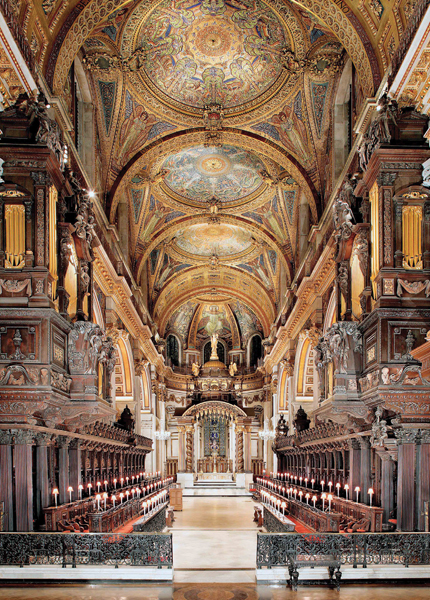
St. Paul’s Cathedral

Beautiful and impressive. Admiral Lord Nelson and the Duke of Wellington are buried in the crypt.

GTO 225 London.qxp:Regional Update.qxd

See photos here.

York

Spent a day walking around York and shopping. Did the Richard III Experience and Squidgeworth got put in jail for a short time, but he smiled all the way through it. Nothing gets him down, not even getting shut up in that tiny cell.

yorkprison

See photos here.


Sadly, less than a week remains before Squidgeworth and I fly back across the pond.

So much to see, so little time!

Judith Laik: The Lady Protests

Terriers in Great Britain during the Regency period

by Judith Laik

The British Isles have been the flowering place for a disproportionate number of breeds that we know today. Even given the US ties to Britain, which might have predisposed early settlers to favor dogs from there, as the years have gone on and more breeds have been introduced from once-exotic places, it must be noted that the cluster of islands off the northwest coast of Europe has proven to be especially rich soil for the development of dogs.

This is especially true for the group of dogs known as Terriers. Among the thirty breeds currently recognized by the American Kennel Club, only four have an origin other than the British Isles!

That means that as writers who set our novels in England, Scotland, Wales, and Ireland, we have a wide selection of dog breeds to use. However, one caution: until around the middle of the nineteenth century, people did not think of specific breeds of dogs in the same way we do today. Previous to and during the Regency, dogs were bred more for function that to maintain a pure strain.

Though a number of breeds had been bred “true” – to a conformation and behavioral type – these were more likely to be dogs whose function benefited the aristocracy, such as Foxhounds, Greyhounds, and Sporting or Gun dogs. Paintings of the time show that these dogs could easily be compared with their counterparts today.

However, the more lowly, working breeds, such as herding dogs, were not uniform in type until later in the century. Terriers also ranked mostly as “dogs of the people.” People of all ranks owned Terriers. They were literally the “in the trenches” fighters against the most populous and harmful of humankind’s enemies. And they were the “dog of all work” – guarding the homestead, tending flocks, hunting rabbits and other small game – for the family who couldn’t afford to keep a separate dog for every purpose. As well, the larger landholder frequently used Terriers as an adjunct to his other dogs. They accompanied the Foxhounds on the hunt, Gundogs on a shoot.

And a few lucky terriers did end up becoming pampered pets. Because of their smaller size, they could be easily fitted into a house and live a life of leisure, their only work to serve as companions to their masters and mistresses.

So, when I needed my secondary heroine to adopt a stray dog in my story, The Lady Protests, a Terrier seemed to be a perfect choice. I could easily see it having gotten lost from a careless, or perhaps even abusive master, and it wasn’t too large to conveniently (or not so conveniently, in this case!) travel with the heroine in a coach. But, I never named his breed in the story, only describing his brown coat color and shagginess.

Here’s an image of what Rags might look like:
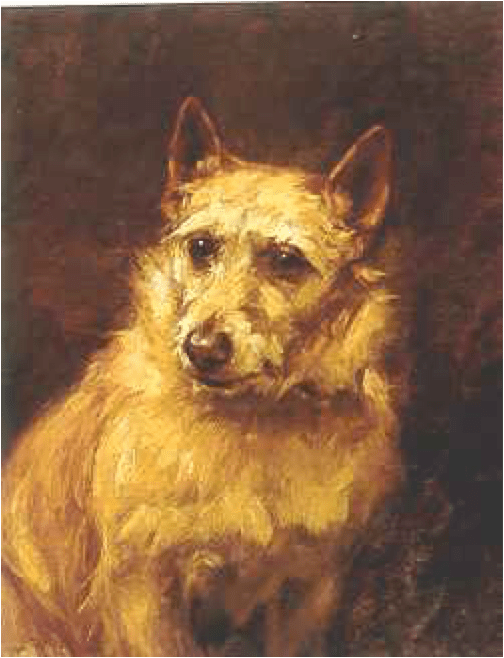
No.1

Image from A BREED APART: The Art Collections of the American Kennel Club and the American Kennel Club Museum of the Dog, William Secord, 1988; the painting is by Maud Earl, a famous late-nineteenth century dog artist

And, yes, this painting came from well past our era. It’s hard to find images of Terriers earlier in the century. What follows are some from the late eighteenth century to around 1830.

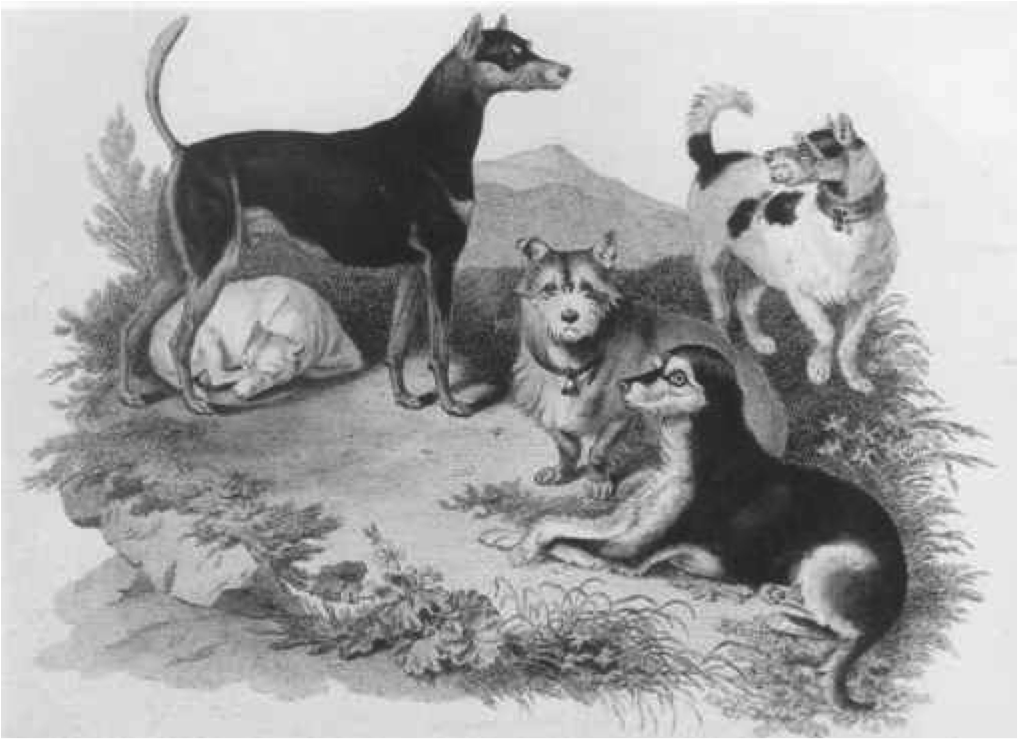
One of the best sources for the history of dogs in the British Isles is the Cynographia Britannia, published in several parts from 1799-1805. The image below is of the Terrier group, by Sydenham Edwards. From Collection American Kennel Club. Photography by Dave King. DOG PAINTING, 1840-1940 by William Secord, 1992*:
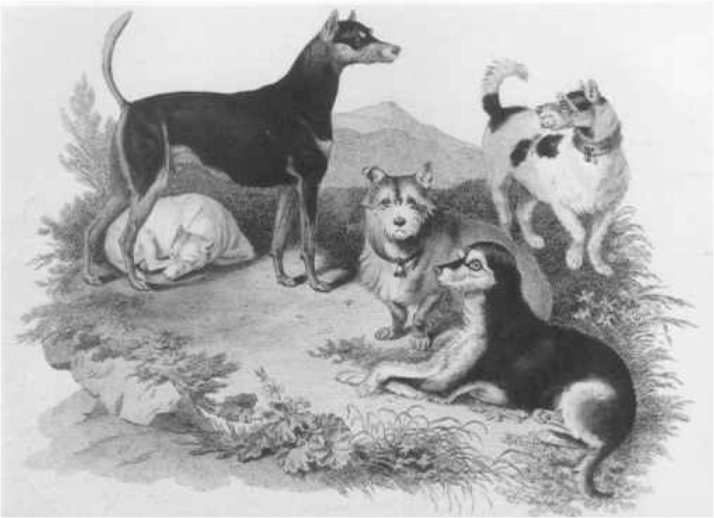
No.2

This is a good representation of Terrier breeds one could have seen early in the nineteenth century. The smooth-coated dog on the left was a Smooth Black-and-Tan Terrier. The breed name was later changed to Manchester Terrier; it also became an ancestor in other breeds. Sleeping underneath him is a White English Terrier, which also was an important ingredient in several breeds, but which is now extinct. In the center, by my guess, is an example of the old Scotch Terrier, from which all the Scottish terrier breeds descended; or it could be an early Norwich Terrier. At back on the right, I believe, is an early Wire Fox Terrier. And in the foreground is a Wire Black-and-Tan Terrier, or early Welsh Terrier.

Warning: some of the following paintings may offend our modern-day sensibilities!

Billy, the rat-killing terrier. Coloured engraving from The Kennel Club’s Art Collection Catalogue. Note: The Kennel Club is the English equivalent of the American Kennel Club, the chief registry for purebred dogs in the country.
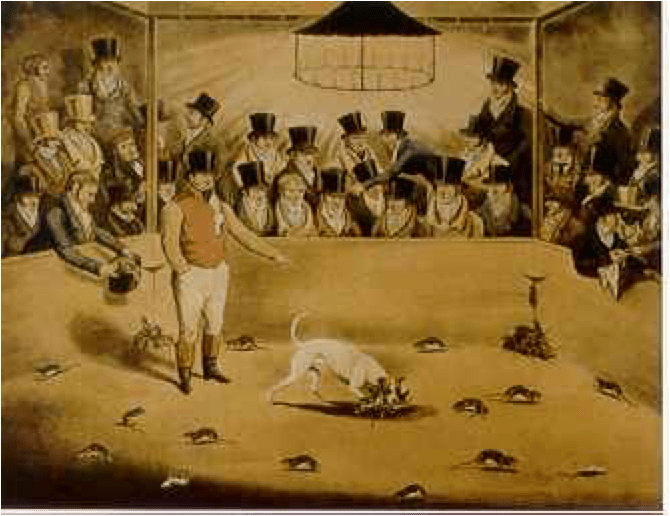
No.4

The caption states: “The Phenomenon of the Canine Race, and Superior Vermin killer of his day having killed nearly 4,000 rats in about Seven Hours.” From a broadsheet for the Westminster Pit in March 1825.

Here’s another image, also described as a rat terrier, which illustrates that in this time a “breed” was what its function was, not what it looked like:
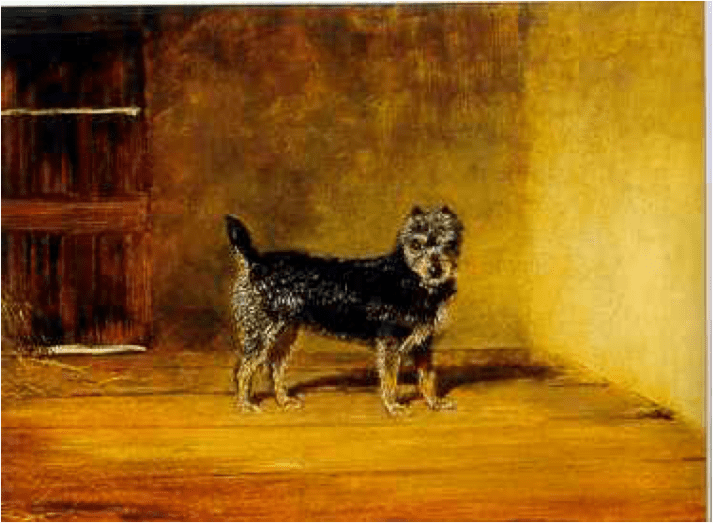
NO.5

Rat Terrier in an Interior, 19th Century, English School. Oil on panel. Private Collection. DOG PAINTING: The European Breeds, William Secord, 2000.

Secord says: Many of the early Terriers evolved from what was known as the English Black-and-tan Terrier (now called the English Toy Terrier), a rough-coated little dog noted for its ability to catch vermin. This one is depicted in a barn-like interior, where his abilities would have been very much needed.

Here’s an image of a very young Princess (later Queen) Victoria. It’s not the best quality, and the little black dog at the left is hard to see, but it’s from not much past our time. Victoria was an avid lover of dogs, and owned many breeds in her lifetime, often leading to a huge bump in the popularity of a particular breed.
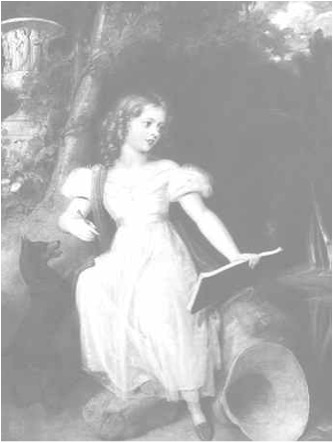
Young Victoria With Nellie, Her Black and Tan Terrier, 1830, Richard Westall. Oil on canvas. Collection: Her Majesty the Queen. DOG PAINTING, 1840-1940, William Secord, 1992.

Young Victoria With Nellie, Her Black and Tan Terrier, 1830, Richard Westall. Oil on canvas. Collection: Her Majesty the Queen. DOG PAINTING, 1840-1940, William Secord, 1992.

Later in the century, this breed would be renamed the Manchester Terrier, with standard and toy varieties. Secord notes that Westall was known mostly as a watercolourist and book illustrator who exhibited actively at the Royal Academy, and the drawing master to Princess Victoria. Nellie was one of Victoria’s first dogs; she showed her love of animals early.
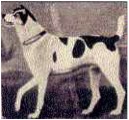
Viper, by Sartorius, 1796. Catalogue, temporary exhibit of The Kennel Club Art Gallery.

Viper, by Sartorius, 1796. Catalogue, temporary exhibit of The Kennel Club Art Gallery.

A very early image of a Smooth Fox Terrier. The painting may not be that anatomically correct; the head looks very small for the size of its body.
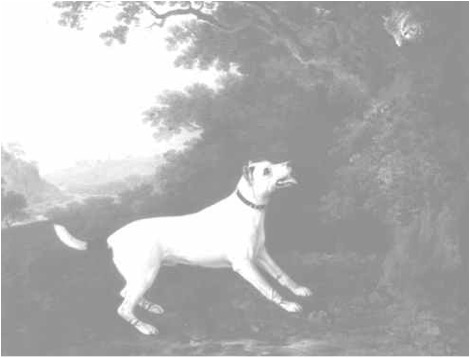
Smooth Fox Terrier, c. 1790, John Boultbee. Oil on canvas. Private Collection. Photography by Grant Taylor. DOG PAINTING, 1840-1940, William Secord, 1992.

Smooth Fox Terrier, c. 1790, John Boultbee. Oil on canvas. Private Collection. Photography by Grant Taylor. DOG PAINTING, 1840-1940, William Secord, 1992.

Secord says: Reputed to be the first known painting of a Smooth Fox Terrier, this painting is typical of the work of Boultbee. Influenced by the paintings of George Stubbs, Boultbee was known as a horse and animal painter with a highly finished, polished style.

Compare with the dog below, listed as a White English Terrier:

No.9

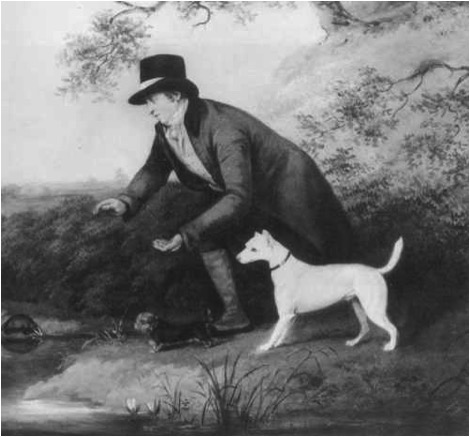
Secord’s caption reads: The now extinct White English Terrier and other early Terriers were often used to catch foxes and badgers, the latter being seen in the left middleground of this painting. Notice the small size of the little dog at the sportsman’s foot, a Terrier of unknown origin.

I think the smaller dog in the painting could be a Waterside Terrier, an early ancestor of the Yorkshire Terrier, or a small rough-coated Black-and-Tan.
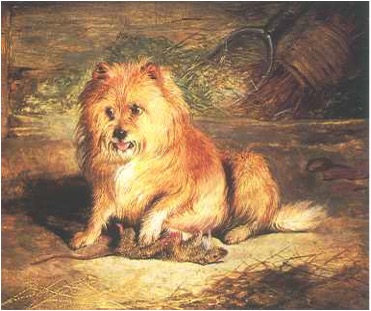
Vixen, 1824, Edwin Henry Landseer. Oil on panel. Collection Ruth Havemeyer Norwood. DOG PAINTING: The European Breeds, William Secord, 2000.

Vixen, 1824, Edwin Henry Landseer. Oil on panel. Collection Ruth Havemeyer Norwood. DOG PAINTING: The European Breeds, William Secord, 2000.

About this painting, Secord says: Described as a ‘thorough-bred Scotch Terrier’, a pet of Mrs. W.W. Simpson, this painting was published in 1824 in a sporting magazine with twenty lines of descriptive text. It was later etched by Jessica Landseer, the artist’s sister. Very small in scale, the painting was completed when the artist was only twenty-two years old.

Landseer was a noted painter of dogs, a favorite artist of Queen Victoria, painting many of her pets through the years. Note that, although the caption says Vixen is a pet, it still is living up to the terrier reputation as a killer of vermin.

The following information about the history of the Scottish breeds came from the West Highland White Terrier Club of America, which I found there when I was researching for a class on dog breeds in the Regency in 2005. Unfortunately they have considerably changed their site and the history of the Westie now is very brief. Here’s the older entry, as I think it is informative:

The short-legged terriers of Scotland are now recognized as the Scottish, Skye, Cairn, Dandie Dinmont, and West Highland White Terriers. All undoubtedly descend from the same roots. All of these dogs were valued as intrepid hunters of small game. Originally, their coat colors ranged from black to red to cream or white.

There does not seem to be any consensus as to how the five breeds evolved. Information I found led me around in a circle.

Here is an image of two more dogs described as Scotch Terriers:

Terriers Fighting Over a Rabbit, Martin T. Ward (1799-1874), oil on canvas. Collection AKC. A BREED APART: The Art Collections of the American Kennel Club and the American Kennel Club Museum of the Dog, William Secord, 1988.

Terriers Fighting Over a Rabbit, Martin T. Ward (1799-1874), oil on canvas. Collection AKC. A BREED APART: The Art Collections of the American Kennel Club and the American Kennel Club Museum of the Dog, William Secord, 1988.

Secord, in the text near this painting, says: While the terriers are certainly cleaned up, with none of the dirt or burrs in their coats that one would expect, they are nevertheless depicted as working terriers, rather than pets. The West Highland White Terrier-type dog with the cropped ears, for instance, is shown with a wild, determined expression, his teeth firmly planted in the black and tan terrier’s ear. The object of their attention lies dead beneath them, his eyes lifeless and blood trickling from his nose on to the ground.

I don’t have any early images of these breeds, but Wire Fox Terriers, and the Wire or Rough Black and Tan Terrier would have been in existence early in the century.

This is information I found on the Border Terrier club in 2005, which was removed when I looked again a few years later:

The BT is one of several working terrier breeds to emerge along the borders of England and Scotland where terriers have been used to hunt fox, otter, and vermin for centuries. The Border, the Bedlington, and the Dandie Dinmont are thought to have a common ancestor. A soft top knot, characteristic of the Bedlington and the Dandie Dinmont, is seen sometimes in the Border along with white on the chest and the occasional white on the foot. The Border has rarely been sought out for his appearance. However, his plain brown coat and self-effacing manners in public disguise a cheerful and sensible companion for those who enjoy a terrier bred to think for himself.

Note that this contradicts what I quoted above as the ancestry of the Dandie Dinmont Terrier, which grouped it with the other Scottish breeds. I don’t know what the truth is in this case.

The BT can be identified in hunting scenes painted in the eighteenth century, bringing up the rear behind horses and the hounds, obviously determined to get there on his sturdy legs in time to help with the action.

I haven’t found any of those hunting scenes in my research.

The Lakeland Terrier originated in the Lake District of Cumberland, England near the Scottish border in the 1800’s. He is related to several terrier breeds and is one of the oldest working terrier breeds still in use today. His diverse ancestors include the now extinct Old English Black and Tan terrier, the early Dandi Dinmont, Bedlington and Border Terriers. He probably existed in extremely early form, if at all, in the first years of the century.

Sealyham Terriers were developed in mid-19th century in Wales by a Capt. John Edwards, so wouldn’t have been around during the Regency. And the Airedale Terrier developed too late to use one of our books. If you find a silhouette of each breed, you can see that the body and head type of the Airedale, Lakeland, Fox (both smooth and wire), Irish, and Welsh Terriers is very similar. Early types of some of these breeds would have existed.

My evidence suggests Staffordshire Terriers and Bull Terriers, although in the Terrier group now, would still be considered “crossbreeds” during the Regency. The Parson Russell Terriers and Russell Terriers have a fascinating story, but their development, as an offshoot of Fox Terriers, was in the mid-19th century.

DNA testing would probably settle the questions about how the various breeds developed. I haven’t come across any information that suggests such testing has been done. For our purposes as writers, it suffices to get some idea of whether the various breeds would have existed in our time, and how they looked.

* William Secord was the founding director of the AKC’s Museum of the Dog, and owns a gallery in New York City specializing in dog and other animal art. He is considered “the recognized expert on 19th century dog paintings.”

Most of the images in this article, except the two from a catalogue of an exhibit of art by The Kennel Club, are from one of three gorgeous coffee-table books, authored by Secord, with fantastic illustrations and a great deal of information about the dogs, the art, and the artists. They are a rich source of images of the dogs of the past:

A BREED APART: The Art Collections of the American Kennel Club and the American Kennel Club Museum of the Dog, by William Secord, Antique Collectors’ Club ltd, Woodbridge, Suffolk, England, ©2001, ISBN 1-85149-400-6

DOG PAINTING, 1840-1940, A Social History of the Dog in Art, by William Secord, Antique Collectors’ Club, ©1992, ISBN 1-85149-139-2

DOG PAINTING: The European Breeds, by William Secord, Antique Collectors’ Club, ©2000, ISBN 1-85149-238-0

About The Lady Protests (Coming Soon)

Book Three in the Unsuitable Brides series

Pageflex Persona [document: PRS0000038_00074]

A Lady in Charge

Since the death of her musician stepfather, Beatrice Foxworth has struggled to hold her remaining family together: her innocent, head-in-the-clouds stepsister, Arietta; and her devastated mother. When Arietta is abducted, Beatrice must save her from ruin – or worse

A Pleasure-seeking Gentleman

Philip Hollesley carelessly promised a friend to oversee his naïve younger brother’s first essay into London bachelorhood. When Jasper Linton elopes with an unsuitable young woman, the last thing Philip wants to do is become involved. But he gave his word, so it’s up to him to chase down the young fool before he can tie the knot in Gretna Green.

Adversaries Turned Reluctant Allies

But there never was so strange a pursuit. Beatrice and Philip, chaperoned by her devious mother, discover an odd assortment of humanity is also tracking them: a rejected suitor, a debauched lord, an aging demimondaine and her aristocratic lover, a group of rowdy young bucks, and a mysterious man.

The Lady Protests

Beatrice and Philip can’t agree on anything – except the necessity to overtake Jasper and Arietta – and to fight their inconvenient attraction to each other.

Excerpt

Jasper Linton’s mistaken assumption about the beautiful musician Arietta Foxworth’s lack of virtue forces him to insist that they must be married. He’s not swayed by her insistence that she doesn’t want to marry him, and they find themselves on the road to Gretna Green, where a series of misadventures leaves them with no traveling money. Now he has to depend on her ability to make money by singing and playing her violin in the public squares of the towns on their way. In Mansfield, she adopts a starving, abused little dog, who takes violent exception to their attempt to clean him up with a nice bath and runs away again. The story picks up the next morning as a broken-hearted Arietta prepares to continue their journey:

Listlessly, Arietta prepared to travel to Chesterfield, and entertain the good folk after they arrived there. She donned her new gown and bonnet, and decided she looked more like her usual style than she had at any time since Jasper had carried her off. Except for the dark marks under her eyes, and the skin still slightly mottled from crying.

Her new gown didn’t give her spirits a lift, however. What she really wished for was to stay in bed with Jasper’s arms around her, and never have to face such a cruel world again.

Descending to breakfast in the common room at the inn with him, she made an indifferent meal despite his coaxing. His worried gaze followed her, and when he at last gave up and asked if she were ready to travel, she apathetically agreed.

They walked out of the inn and crossed the courtyard to where their coach stood waiting. Just as Jasper gave her a hand to step up into the carriage, a small form darted from the shadows and leaped at her.

She gave a small scream, and then recognized the little dog from the day before. Clasping him to her breast, she sobbed, “Oh, Rags, you’ve come back to me!” and buried her face in his still matted, still damp, not-too-clean ruff. He twisted about in her arms, trying to lick her face, as enthusiastic and happy as she.

“‘Rags?’” Jasper queried.

“Yes, I had decided yesterday that is the name I would give him, but when he ran away it hardly seemed worth mentioning.” She sniffed, but felt a huge grin splitting her face at the same time.

“No doubt he realized his best chance of getting his next meal was to wait in hopes you’d come back outside.”

“Oh! Yes, I’m very sure he is starving! Jasper, please go back to the pie lady and buy more pies for Rags!”

“Oh, very well,” he said, pretending annoyance, but he had a huge smile on his face as well. “You get in the carriage and hold on to him, especially when I come back. If he runs off again, we’re not staying in town to look for him.”

While she clutched the dog to her, Jasper boosted her into the carriage and slammed the door behind her. Rags began wriggling to get free, and she spoke soothingly to him, but he kept up the struggles. She needed a leash, but where could she procure one?

Knowing it would take Jasper several minutes to reach the pie stall and return again, she let Rags free. The ribbons on her new bonnet flopped forward as she set him on the carriage floor, which gave her an idea. Pulling off the hat, she tore the ribbons loose and tied them together, then fastened the joined ribbon around the dog’s neck. He didn’t care for that either, but she placed him on the seat beside her and stroked him, speaking in a consoling voice, and he quieted.

To ensure he didn’t pull his improvised leash out of her hands, she tied the loose end to her own wrist. Now all she had to worry about was whether the ribbon was strong enough to hold when Rags pulled on it.

She was about to find out. Apparently, the process of getting the ribbons off her hat and onto Rags had taken longer than she realized, because Jasper’s voice came to her from immediately outside the carriage. “I’m back. Hold on to the dog.” A small pause, and he opened the door.

Rags barked and growled fiercely and threw himself at Jasper, who reflexively stepped back, leaving a gap between him and the door. The dog’s leap took him to full extension of the ribbons and they parted.

By this time, however, Rags had caught the scent of pies, and instead of escaping, he leaped at Jasper again, trying to procure a pie. Arietta caught the little dog, Jasper entered the carriage, and gave Rags one of the pies as he closed the door.

“If he’s been starving, we don’t want to feed him too much at once or he’ll become ill. I have six, and we’ll parcel them out during the day,” he said, sitting across from Arietta.

Rags had other ideas, though. He bolted down the pie, lunged for the nearest in Jasper’s hands, and proceeded to make short work of it also.

Arietta and Jasper both laughed at the dog’s eagerness. Jasper said, “I shall have to place the rest out of his reach.” Keeping a firm grip on the remaining pies, he called out to Cobleigh, “Hand me my portmanteau.” When the coachman obliged, Jasper tucked the pies away securely inside and handed the case to Cobleigh to stow. “My clothes will smell like beef pies, but that can’t be helped.”

He looked at the broken-apart ribbons and said, “The ribbons didn’t tear; they just came untied. They should work as a leash with a better knot.” He refastened them and ordered Cobleigh to proceed. Arietta heard the coachman give orders to the post boys, and the carriage moved off. Rags whined and jumped at the window, but she petted and soothed him, and he settled down again in her lap and went to sleep.

By the time Arietta and Jasper arrived in Chesterfield, they had fed Rags two more meat pies in an attempt to keep him quiet. Jasper and Arietta finished off the other two pies themselves.

Rags, although still disgracefully matted and dirty, appeared to have already filled out, his abdomen bulging with food. To Arietta’s eyes, his ribs seemed to stick out noticeably less, although she could not be sure whether that was wishful thinking on her part.

After the fourth pie, he finally curled up on the seat next to her and snoozed. He roused when the coach arrived in Chesterfield, jumping up with his front paws on the window edge and peered out.

The coach pulled into the yard of yet another inn. Jasper stepped down and made arrangements for the carriage to remain there while he and Arietta performed in the Market Place, although he seemed not to feel it necessary to inform the landlord of their purpose.

When he tried to leave Rags in the care of Cobleigh, however, his coachman and Arietta both protested quite vocally. Cobleigh didn’t wish to be saddled with the pup, and Arietta refused to be parted from him.

So, with Arietta holding the blue ribbon attaching her to the dog and Jasper carrying her violin case, they made their way to the Market Place.

“Maybe we should see if there’s another pie seller here before we set up to entertain. Rags will want more pies, and I will be hungry again when I finish.”

“Good idea,” Jasper nodded, and they began a tour of the stalls in the market. An hour later, they had found the pie seller and stocked up on pies.

Finally, they found a good place for Arietta to sing. Jasper handed her the violin and took Rags’ leash so she could concentrate on playing.

She set to tuning the violin. With the first notes, Rags yelped loudly and sat, tearing at his right ear with the back paw. Arietta stopped, and the dog cast an offended look her way. She hurried over to pet Rags, but the hurt expression in his eyes did not offer absolution for Arietta’s crime.

“What am I to do?” she asked, turning her attention to Jasper. “I have to play. We need the money.”

“Keep going. He’ll get used to the sound. Dogs have sensitive ears.”

Doubtfully, Arietta picked up the violin again and continued tuning it.

Rags lay on the ground, a pitiful series of groans and growls issuing forth, while it appeared he tried to cover his ears with his front paws.

To top Arietta’s humiliation, a crowd began to gather, laughing and pointing at Rags.

“Start playing a tune,” Jasper suggested. “He’ll like that better. Most people don’t much care for the sound of tuning an instrument either.”

She launched into a soft melody.

Rags did not like it any better.

The crowd grew, along with the laughter.

Nearly crying now, Arietta bravely kept playing.

Rags continued making pathetic sounds as if he were being tortured. “Ow-wow-wow-grrrrr-uff-ow-grr-wow-wow-grrrrr-uff!” He apparently had not found a way to cover both ears with his paws at the same time, so he twisted from side to side, placing a paw over his left ear, then the right.

Arietta brought the song to a premature end. “I cannot do this.”

“Try just singing with no accompaniment,” Jasper suggested.

Arietta set the violin aside, and Rags quieted, although his eyes still held accusation. Arietta began to sing, starting out softly, “‘The water is wide, I can-not cross o’er. And neither have I the wings to fly.’”

Fortunately, Rags did not seem to mind her voice quite so much. Although he turned her back to Arietta and lay in a position that indicated disapproval, he at least did not express it vocally.

Arietta sang more strongly, noticing gratefully that the crowd lingered, even without the hilarious sight and sound of the music-critic dog. “While there’s breath in my body, he’s the one that I love still,” she finished, looking at Jasper.

She sang a few more songs, although having to ignore shouts from the audience to “play the violin again!” Eventually she felt obliged to answer them. “I would not be so cruel to my poor little dog, or to you, as to play my instrument again!”

She took some comfort from the fact that her voice had returned to normal, all trace of her cold gone. And even more that it seemed despite what she felt was the ruin of her performance by Rags’ adamant displeasure, it appeared a good many people had contributed to the pile of coins in the violin case. Jasper again put them into his purse, packed the violin away, and gave an arm to her to leave the square.

About the Author

I live on a mini-farm near Seattle with my husband, daughter, some horses (only two are ours), two cats, and a number of Collies — we’re a dog show family.

Our vintage farmhouse needs constant upkeep, which we can barely keep up with, since it always needs new paint or new fences or…Luckily the most recent thing we repaired is the plumbing, so that’s working pretty well these days. With us living out in the country, we experience frequent power outages. There’s nothing more romantic than huddling under blankets in front of a cozy fire in the fireplace, with more blankets blocking the drafts from the other rooms in the house. The downside is that without power the well doesn’t work, either.

My husband and I like to get away as often as we can, taking off for a few days at the ocean or the lake. I usually bring my laptop with me on these excursions, working on whatever my current writing project is. I love to travel to more faraway places also. Our big adventure this year was a family trip to my husband’s birthplace, Estonia with all three of our children and two of the grandchildren. We visited beautiful places all around the country and had a couple of gatherings of relatives. We received the most amazing welcome from them. I know now what it’s like to be treated like royalty!

My favorite destination, though, is England. My most recent trips there, in 2003 and 2005, were with groups equally fascinated with the Regency period, and we visited many sites with associations to that time. Heaven! There’s nothing like actually seeing the locations where my stories took place, even if altered to varying degrees by the 200-some years since those events happened. As a bonus, the gift shops at many of the museums and historic sites have more lovely books that I would never have come across at home!
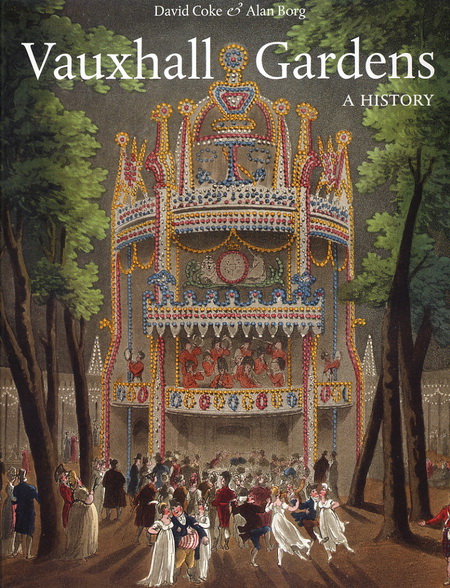
Susana’s 2015 English Adventure: Week 1

eastbourne map

For the first three days, Squidgeworth and I were the guests of Jay Dixon, a friend of mine who lives in Eastbourne. She was kind enough to take us around to visit some historical places of interest in the area, including the Redoubt Fortress, a quaint little town called Alfriston, Firle Place, and Chartwell.

Unfortunately, I could not get my laptop to work with her Wifi system, so I had to go cold turkey from the Internet, which was instrumental later on when I arrived in London at my rental flat. It turns out that the previous renters of the flat I was scheduled for had trashed the place, and the company had switched me to another one, but I didn’t get the message because of my Internet blackout. It was a bit harrowing at first, but I was delighted that the flat they switched me to was the one I stayed in last year, near Baker Street, so I already knew the ropes. (I wanted this one, but at the time I was booking, it was already taken. There must have been a cancellation.)

Squidgeworth makes himself at home at our rental flat near Baker Street

Squidgeworth makes himself at home at our rental flat near Baker Street

Eastbourne: The Redoubt

The Redoubt is a circular military fortress that was built in 1804 when it was rumored that Napoleon had plans to invade England.

REDOUBT MODEL VILLAGE

Wikipedia

The Village of Alfriston

On Thursday we visited this quaint little village not far from Eastbourne. In addition to the historic buildings, a highlight was St. Andrew’s Church. The Clergy House was the first property purchased by the National Trust. Unfortunately, it was closed, but I did get photos of the outside.

The Clergy House

The Clergy House

St. Andrew's Church & Cemetery, Alfriston

St. Andrew’s Church & Cemetery, Alfriston


GEORGE INN copy

The George Inn, Alfriston


The Star Inn, Alfriston

The Star Inn, Alfriston


Squidge at a The Apiary Café in Alfriston

Squidge at a The Apiary Café in Alfriston

Wikipedia

Firle Place

Firle Place is the family seat of the Gages, the current owner being Nicholas Gage, the 8th Viscount Gage. The manor house has been in the family for over 500 years, and the estate includes a village among its 6000 acres of land. Sir John Gage was the executor of Henry VIII’s will. General Thomas Gage was at one time commander-in-chief of the British Army during the American Revolution, but was replaced after the disaster of Bunker Hill.

Squidgeworth at Firle Place

Squidgeworth at Firle Place


Firle Place

Firle Place

Wikipedia

Chartwell

Chartwell, in Kent, was the principal residence of Winston Churchill, in his adult life. Henry VIII is believed to have stayed here during his courtship of Anne Boleyn, who lived at nearby Hever Castle.

The Churchills extensively renovated the house and gardens. Winston actually became a licensed brick layer and was noted for his wall building.

Chartwell

Chartwell


Squidgeworth at Chartwell

Squidgeworth at Chartwell

Wikipedia

The Victoria & Albert Museum

A visit to the V & A is a must for every trip to London. On this trip, my focus was Vauxhall, as the Handel statue is here, as well as three of the supper-box paintings. Unfortunately, it was difficult to get good photos of the paintings and other pictures due to the darkness of the room (which is true of many other things I tried to photograph). No doubt the low light is an attempt to preserve the aged items as long as possible. But I did get a good photo of the Handel statue, with Squidgeworth getting in on the action, as usual.

Squidgeworth and the Handel statue that used to sit in Vauxhall Gardens

Squidgeworth and the Handel statue that used to sit in Vauxhall Gardens

My Vauxhall Gardens board on Pinterest is a work in progress, but you can see there two videos about Vauxhall Gardens, one of which I photographed at the V & A and another I found on YouTube. I’ll be adding more photos as I find the time.

Susana’s Vauxhall Gardens Pinterest Board

Coach at the V

Coach at the V & A Museum


Painted silk gown

Painted silk gown at the V & A Museum

Shannon Donnelly: Lady Chance

palaisroay1600

Researching the Palais Royal

One of the fun things about writing—for me, at least—is the research. I love to dig into history; in particular, I love to look for just the right setting to help a scene come alive. Lady Chance, the follow-up book to Lady Scandal, comes out this August; it’s set in Paris of 1814, and since gambling and cards are in the book, that meant I could use the Palais Royal.

The palace was originally designed by Jacques Lemercier and construction started 1628 for the infamous Cardinal Richelieu. It was originally known as the Palais Cardinal, but became a royal palace after the cardinal bequeathed the building to Louis XIII.

Louis handed the palace to the Queen Mother, Anne of Austria, and then Henrietta Maria and her daughter Henrietta Anne Stuart, who had escaped from the English civil war, took up residence. Henrietta Anne later married Phillipe de France, duc d’Orléans, and the palace became known as the House of Orléans. The duchesse was the one who created the ornamental garden of the palace.

Louis XIV was succeeded by his great-grandson, and the duc d’Orléans became regent of young Louis XV. The Palais Royal was then opened so the public could view the Orléans art collection, and that began the palace’s more public life.

Louis Philippe II held the royal palace from 1780 until his death. He renovated the building, and the garden was now surrounded by a mall of shops, cafes, salons, refreshment stands and bookstores.

At that time, the Palais Royal became a meeting ground for revolutionaries. Its owner, Philippe d’Orléans sided with the revolutionaries. He changed his name to Philippe Égalité and his house became the Palais de l’Égalité. He opened the gardens to the public and enclosed them with colonnades lined with shops.

palaisroyal-demimonde

On the ground floor shops sold “perfume, musical instruments, toys, eyeglasses, candy, gloves, and dozens of other goods. Artists painted portraits, and small stands offered waffles.” The demi-monde could also parade their wares—themselves—and often had rooms on the upper floors for their customers’ convenience.

By 1807, the Palais Royal boasted “twenty-four jewelers, twenty shops of luxury furniture, fifteen restaurants, twenty-nine cafes and seventeen billiards parlors.”

palais-royal-10 copy

While the more elegant restaurants were open on the arcade level to those with the money to afford good food and wine, the basement of the Palais Royal offered cafés with cheap drinks, food and entertainment for the masses, such as at the Café des Aveugles.

palisroyal

Upon the death of the duc, the palace’s ownership reverted to the state, and for a time it was known as Palais du Tribunat. After the Bourbon restoration to power in 1814, the duc d’Orléans took back his title and the Palais Royal took back its name, but kept its reputation for a fashionable meeting place. And that is when Lady Chance is set.

In 1814, Paris was under occupation by the allied forces that had defeated Napoleon. Russian cuirassiers, Prussian lancers, Hungarian hussars, Cossacks, and French soldiers all rubbed shoulders—and were not always in harmony with each other. But it was said of the Palais Royal that “You can see everything, hear everything, know everyone who wants to be found.”

paris_russians

Véry Frères in the Palais Royal was accounted the most expensive restaurant in Paris, and one could dine with “brilliantly lit salons, granite tables, gilt bronze candelabra and mirror-lined walls.” Trois Frères Provençaux was famous for poulet à la Marengo—Chicken Marengo, said to be the dish served Napoleon’s victory at Marengo. In Paris Between Empires, Philip Mansel talks of dining at Le Caveau, or at the royalist Café de Foy. While Café des Mille Colonnes on the first floor of arcade provided its patrons, “Mirrored salons, hung with ‘magnificent chandeliers’ and supported by Corinthian columns of green marble.” The building was also home to the fashionable resturant Le Grand Véfour.

palaisroyalresturant

On the second floor, elegant card rooms offered deep gaming—these are the salons featured in Lady Chance.

About Lady Chance

Can an English lady find love and common ground with a French soldier?

In Paris of 1814, as Bourbon king again takes the throne, and the Black Cabinet—a shadowy group of agents employed by the British—is sent to unmask dangerous men and stop assassinations. When Diana, Lady Chauncey—known as Lady Chance—is recruited by her cousin to use her skill at cards to help him delve into these plots, she meets up with a man she thought dead. Diana finds herself swept into adventure and intrigue, and once again into the arms of the French officer she tangled with ten years ago. But she is no longer an impulsive girl, and he may not be the man she once thought was honorable and good.

After the recent defeat of his country, Giles Taliaris wants nothing more than a return to his family’s vineyards in Burgundy. But his younger brother seems involved in dangerous plots to return France to a republic. To get his family through these troubles, Giles can only tread warily. When he again meets meet the English girl he once knew and thought lost to him, he finds himself torn between duty and desire. Can he find his way through this tangle—and if he does, how can he convince his Diana to give up everything for him?

Amazon

Excerpt

Diana blinked twice and let her stare travel the room once more. “I rather thought the gaming rooms of the Palais Royal would be more…”

“Degenerate? Depraved? Decayed?” Jules asked.

“Grand, actually. Oh, the colonnade outside is charming, but this…” She fluttered a kid glove at their surroundings—at the draped windows, the high vaulted room with its plaster ceiling, the discreet décor with respectable landscapes hung over a tasteful, floral wallpaper. Chandeliers glittered overhead. Around them, dozens of uniformed gentlemen lounged or indulged in intense card play or watched the gaming with elegant women on their arms.

Lady Chance 01_sm copyShe had seen Russian Cossacks in the streets, distinct with their heavy boots, loose black trousers and red jackets. Inside this room, above the closed shops of the Palais Royal, officers from the Army of Silesia leaned against the walls, their uniforms as precise as their actions. Sullen French officers lurked at the edges of the room, unhappy with the foreign soldiers who had so recently beaten them. Accents and languages tumbled around her—a hint of Dutch, a dash of French, guttural Germanic phrases. Perfumes and a hint of smoky tallow from the candles scented the air. Diana gave Jules a sideways glance. “This almost looks more like the engravings I’ve seen of London clubs.”

Or like affairs of the London season, she thought. She’d had only two seasons and had not wanted a third. The play in London had always been dull or had been filled with women whose eyes glittered too brightly and gentlemen who bet too rashly. Here in the Palais Royal, just as with any notable event in London, music drifted through the rooms. A quartet was playing, she thought. Skilled enough to take on Mozart’s music and do the lively tune some justice.

Turning to her, Jules leaned closer. “The Bourbons may be back on the throne, but the Parisians look to good English coin to return prosperity. Hence this emulation of London with the rather French addition of the demi-monde in attendance. However, do not mistake matters. There are those who would have their emperor back.”

Stepping behind her, he helped her off with her cloak. He left that and his hat and cane with the porter. He wore his customary black coat, along with formal evening breeches, a white shirt, and a pale yellow waistcoat. He looked stark and properly British. She had worn gold to compliment his dress. A clinging silk that almost left her feeling a girl again with ruffles at her ankles and a daringly low Parisian neckline. They stepped into the club and Jules found them glasses of champagne. She walked the room beside him, watching him nod to acquaintances.

She had been to the Palais Royal during the day to visit the shops on the ground floor. Perfume could be had, along with toys, candy, gloves, waffles from stands, or portraits from struggling artists. But at night, the shops closed and the Palais Royal transformed itself. Véry Frères, the most expensive restaurant in Paris she had heard, offered brilliantly lit salons, granite tables, gilt-bronze candelabra and mirror-lined walls, as well as fabulous meals. In the basements of the Palais Royal, one could find establishments offering drink, food or entertainment such as at the Café des Aveugles, renowned for its orchestra of blind musicians.

They were blind for a reason for the galleries were where ladies of all shapes and colors and sizes offered themselves for sale.

This establishment—above the streets and the closed shops and below the rented rooms of those girls looking for customers—seemed designed to cater to patrons with money. There would be few enough Frenchmen who fit that description just now, Diana knew.

She had glimpsed the poverty on the journey to Paris.

The crossing to France had been long, taking fourteen hours to Boulogne with a fitful, unfriendly wind. The carriage ride to Paris had been even longer. And quite sad. This was not the country she knew from ten years ago. Old men, women, and thin boys populated the villages, for the young men had all gone to war. She had glimpsed far too many skinny cows and poorly worked fields. They had been cheered in some towns—the English liberators who had helped free France from an oppressive empire. In other towns, the French watched them pass with suspicion in their eyes. Not everyone welcomed back the rightful French king. And the destruction on the outskirts of Paris marked where battle had raged less than a fortnight ago. No wonder so many of these Frenchmen appeared so gloomy with defeat a sore and recent memory.

All that seemed put aside, however, in the pleasure houses of the Palais Royal. After a sip of champagne with bubbles that tickled her nose, Diana asked, “Just why am I being paraded?”

“A small introduction only. Making you a familiar face that will be welcomed when you deem to grace one of the tables.”

She eyed the women with their painted faces who clung to the officers’ arms. Very few sons of France seemed to be able to compete with the dashing foreigners. She glanced at Jules and kept her voice dry. “I can see the last of my respectability vanishing on the horizon.”

“Cousin, this is Paris. You may rub elbows with these delightful creatures who hire out their most intimate charms and still be free to dance with dukes and true ladies the next evening. The French understand these things.”

“It is good someone does. Now that I am decked out in the finest Paris has to offer, and have your grandmama’s emeralds hanging about my neck—I do hope your mother did not object to such a loan—what exactly is it that I am here to do?”

They had spent the journey to Paris discussing recent events, political situations, and the gossip of who was who in Paris. All of it a prelude to this—or so she guessed. To own the truth, she had simply wanted to enjoy going somewhere. Anywhere. Now she glanced around the room, a flutter in her stomach. What was she doing here? She wasn’t up to this sort of intrigue.

She forced a smile and lifted an eyebrow at Jules.

He gave her a small, approving nod. “You are doing all you must. You look a likely widow in need of amusement. Soon you shall find a spot at a select table. Win a bit. Lose more. After the drink has flowed and the hour grows late, I shall make a few introductions. Those gentlemen will lose heavily to you, I expect.”

She gave a small shrug. She had learned young how easy it was to lose at any game. Growing up, her older cousins—Jules included—had pounded home that lesson. They had never let her succeed at anything unless she deserved the win. And of her marriage—well, the less said there, the better, she thought. She twirled her fan. “Am I to keep their funds? Press them for something other than coins to clear their debts of honor to me?”

Jules’ smile did not falter, but Diana thought something hard appeared in his eyes. “Cousin, in cards, one never reveals one’s hand until all play is done. Let us say for now it is good to have certain pockets empty. It takes money to make mischief.”

She huffed out a breath. “Why do simple answers always sound only part of the truth? And chess is your game. You always plan at least seven moves ahead. So what are you not yet telling me?”

He patted her hand. “Enough for now, other than that I count on your shocking, unpredictable whims to keep us all on our toes.”

Diana shook her head and drained her champagne. “In chess, in Paris, or merely as a gamester?”

“You said it yourself—you must be an adventuress.”

Pulling in a breath, she pushed back her shoulders. “Yes, I did say so. Well, adventuring we go. Where do I begin? And I hope all this…this whatever is for a good cause.”

“Good may depend upon one’s views. Our view is to safeguard England’s interests. If certain rumors are true, a good man’s life may be at stake. However, Paris is rife just now with stories of everything from a dozen pretenders to the throne—the lost Bourbon prince returned from God knows where—to schemes that might bring back that dangerous fellow we were just discussing.”

“Ah, poor Louis-Charles, the dauphin.” She shook her head. “I would rather meet him than the former emperor.” A chill touched her back. She had met Bonaparte once. Seen him briefly, really. Before he had crowned himself emperor, and long before his recent surrender. At the time of her encounter he’d had another man’s wife on his arm, stolen from one of his generals. She still thought that a petty thing to do. She had also thought him short, fascinating in a way, and not much of a gentleman. He had once brought order to the French Revolution, but he had gone on to set Europe ablaze. And his command of a decade ago to arrest all the English in France had sent her running from Paris. That still rankled. She had been having such fun at the time. And if that had not happened, then she would not…

Ah, but this trip—and Jules—would give her better memories. She would focus on that.

It certainly took little effort to do as Jules bade her. He guided her to a table where gallant young gentlemen played—two French officers, an English gentleman in evening wear, and a Hungarian Hussar in a dashing uniform with excessive braid who at once offered her his seat. She played as Jules had asked, winning a little, losing a bit more. Jules had offered to stand the nonsense so she had no worries about emptying her purse. She found the play a touch tame. The Palais Royal was not living up to its reputation for vice. Given the circumstances, she only sipped at her wine and watched the cards fall with mild interest.

Jules soon introduced a fellow to her—a young Frenchman whose fair windswept hair and high shirt points spoke of his dandy ambitions. He joined the table, and Diana took up the cards. Jules gave her a nod and a direct stare, and she knew he wanted her to stop being careless.

She had barely dealt out the cards when a name came to her that she had never expected to hear again. A card tumbled from suddenly numb hands. Forcing a smile, Diana begged pardon. She finished the deal with stiff fingers and swept the room with a glance. It could not be, she thought, her heart beating too quick and her breath short and fast. He had died on a battlefield years ago. Someone must have only mentioned his name, that was all. But she had to look anyway. She had to be certain.

She scanned the faces nearest the entrance, seeking anything familiar—a profile, a glimpse of a captain’s uniform, a face that she could still recall from so long ago. And there—across the room in the foyer—he stood, far too solid to be a ghost.

About the Author

Shannon Donnelly’s writing has won numerous awards, including a nomination for Romance Writer’s of America’s RITA award, the Grand Prize in the “Minute Maid Sensational Romance Writer” contest, judged by Nora Roberts, and others. Her writing has repeatedly earned 4½ Star Top Pick reviews from Romantic Times magazine, as well as praise from Booklist and other reviewers, who note: “simply superb”…”wonderfully uplifting”….and “beautifully written.”

In addition to her Regency romances, she is the author of the Mackenzie Solomon, Demon/Warders Urban Fantasy series, Burn Baby Burn and Riding in on a Burning Tire, and the SF/Paranormal, Edge Walkers. Her work has been on the top seller list of Amazon.com and includes the historical romances, The Cardros Ruby and Paths of Desire.

She is the author of several young adult horror stories, and has also written computer games and offers editing and writing workshops. She lives in New Mexico with two horses, two donkeys, two dogs, and the one love of her life. Shannon can be found online at shannondonnelly.com, facebook.com/sdwriter, and twitter.