Archives

Flying Machines and Waggons and What It Was Like To Travel in Them

dust jacket

The following post is the twenty-sixth of a series based on information obtained from a fascinating book Susana obtained for research purposes. Coaching Days & Coaching Ways by W. Outram Tristram, first published in 1888, is replete with commentary about travel and roads and social history told in an entertaining manner, along with a great many fabulous illustrations. A great find for anyone seriously interested in English history!

Portrait of a Flying Machine

…they were principally composed of a dull black leather, thickly studded by way of ornament with broad black-headed nails, tracing out the panels in the upper tier of which were four oval windows, with heavy red wooden frames, or leather curtains. Upon the doors were displayed in large characters the names of the places whence the coach started, and where it was going to—another matter. The shape of the Flying Machine was a matter left much open to choice. You could ride in one shaped like a diving bell; or in one the exact representation of a distiller’s vat, hung equally balanced between immense back and front springs; or in one made after the pattern of a violoncello case—past all comparison the most fashionable shape. If my readers are tempted to cry why this thusness, I can only say because these violoncello-like Flying Machines hung in a more graceful posture—namely, inclining on to the back springs—and gave those who sat within it “the appearance of a stiff Guy Fawkes uneasily seated.” But this is a satiric touch, surely. To get on to the roofs, however. These generally rose into a swelling curve, which was sometimes surrounded by a high iron guard, after the manner of our more modern four-wheeled cabs. The coachman and the guard (who always held his carbine ready cocked upon his knee—an attitude which must have made inside passengers wish they had insured their lives) then sat together over a very long and narrow boot which passed under a large spreading hammercloth hanging down on all sides, and furnished with a most luxuriant fringe. Behind the coach was the immense basket, stretching far and wide beyond the body in which it was attached by long iron bars or supports passing beneath it. I am not surprised to learn that these baskets were never very great favourites, though their difference of price caused them to be frequently filled—but another proof of needs must when the devil drives—. And as for the notion of these Flying coaches when well on the road, it was “as a ship rocking or beating against a heavy sea’ straining all her timbers, with a low moaning sound as she drives over the contending waves.” With which extraordinary simile we may leave Flying Machines behind us—and any description of their successors too. For are not the models of the crack coaches in coaching’s primest age to be seen every day in Piccadilly? They are—and some very delightful rides can be had in them too.
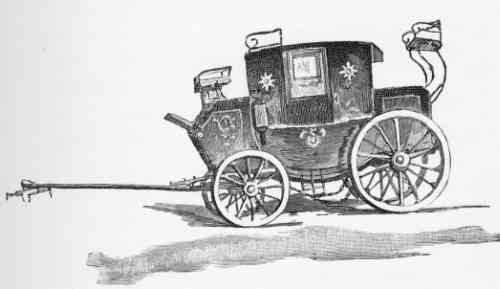
old English flying mail coach

old English flying mail coach

The experience of “travelling in one of these perfected turn-outs”

Not that travelling in these perfected turn-outs was always like riding on a bed of roses, as I have had occasion frequently to point out, which consideration brings me to the inevitable comparison of the advantages of rail versus road. On which great subject much can be said on both sides, as a celebrated Attorney-General for Honolulu once remarked. De Quincey, for instance, may talk of the “fine fluent motion of the Bristol Mail,” and call up recollections in our minds of the modern Bristol Mail’s motion as anything but fluent; he may glorify “the absolute perfection of all the appointments about the carriage and the harness, their strength, their brilliant cleanliness, their beautiful simplicity, the royal magnificence of the horses; “but here is another side to the picture. I quote from Hone’s Table-books, an extract in the style of Jingle, and worthy of him.
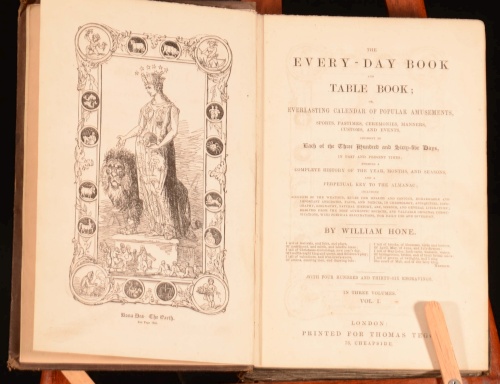
HONE'S BOOK

Hone’s Every-Day Book and Table Book

“STAGE COACH ADVENTURES.

“INSIDE.—Crammed full of passengers—three fat fusty old men—a young Mother and sick child—a cross old maid—a poll parrot—a bag of red herrings—double-barrelled gun (which you are afraid is loaded)—and a snarling lap dog in addition to yourself. Awake out of a sound nap with the cramp in one leg and the other in a lady’s bandbox—pay the damage (four or five shillings) for gallantry’s sake—getting out in the dark at the half-way house, in the hurry stepping into the return coach and finding yourself next morning at the very spot you had started from the evening before—not a breath of air—asthmatic old woman and child with the measles—window closed in consequence—unpleasant smell—shoes filled with warm water—look up and find it’s the child—obliged to bear it—no appeal—shut your eyes and scold the dog—pretend sleep and pinch the child—mistake—pinch the dog and get bit.—Execrate the child in return—black looks—no gentleman—pay the Coachman and drop a piece of gold in the straw—not to be found—fell through a crevice—Coachman says ‘He’ll find it.’—Can’t—get out yourself—gone—picked up by the Ostler—no time for blowing up—Coach off for next stage—lose your money—get in—lose your seat—stuck in the middle—get laughed at—lose your temper—turn sulky—and turned over in a horse-pond.
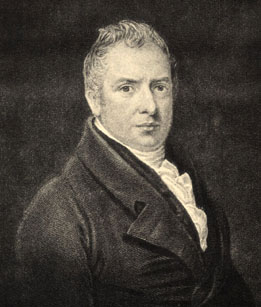
William Hone

William Hone

“OUTSIDE.—Your eye cut out by the lash of a clumsy Coachman’s whip—hat blown off into a pond by a sudden gust of wind—seated between two apprehended murderers and a noticed sheep-stealer in irons—who are being conveyed to gaol—a drunken fellow half asleep falls off the Coach—and in attempting to save himself drags you along with him into the mud—musical guard, and driver horn mad—turned over.—One leg under a bale of cotton—the other under the Coach—hands in breeches pockets—head in hamper of wine—lots of broken bottles versus broken heads.—Cut and run—send for surgeons—wounds dressed—lotion and lint four dollars—take post-chaise—get home—lay down—and laid up.”

coach

stage coach and mail

Stage coach and mail


Mail coach

Mail coach


 Index to all the posts in this series

1: The Bath Road: The (True) Legend of the Berkshire Lady

2: The Bath Road: Littlecote and Wild William Darrell

3: The Bath Road: Lacock Abbey

4: The Bath Road: The Bear Inn at Devizes and the “Pictorial Chronicler of the Regency”

5: The Exeter Road: Flying Machines, Muddy Roads and Well-Mannered Highwaymen

6: The Exeter Road: A Foolish Coachman, a Dreadful Snowstorm and a Romance

7: The Exeter Road in 1823: A Myriad of Changes in Fifty Years

8: The Exeter Road: Basingstoke, Andover and Salisbury and the Events They Witnessed

9: The Exeter Road: The Weyhill Fair, Amesbury Abbey and the Extraordinary Duchess of Queensberry

10: The Exeter Road: Stonehenge, Dorchester and the Sad Story of the Monmouth Uprising

11: The Portsmouth Road: Royal Road or Road of Assassination?

12: The Brighton Road: “The Most Nearly Perfect, and Certainly the Most Fashionable of All”

13: The Dover Road: “Rich crowds of historical figures”

14: The Dover Road: Blackheath and Dartford

15: The Dover Road: Rochester and Charles Dickens

16: The Dover Road: William Clements, Gentleman Coachman

17: The York Road: Hadley Green, Barnet

18: The York Road: Enfield Chase and the Gunpowder Treason Plot

19: The York Road: The Stamford Regent Faces the Peril of a Flood

20: The York Road: The Inns at Stilton

21: The Holyhead Road: The Gunpowder Treason Plot

22: The Holyhead Road: Three Notable Coaching Accidents

23: The Holyhead Road: Old Lal the Legless Man and His Extraordinary Flying Machine

24: The Holyhead Road: The Coachmen “More Celebrated Even Than the Most Celebrated of Their Rivals” (Part I)

25: The Holyhead Road: The Coachmen “More Celebrated Even Than the Most Celebrated of Their Rivals” (Part II)

26: Flying Machines and Waggons and What It Was Like To Travel in Them

27: “A few words on Coaching Inns” and Conclusion

The Holyhead Road: The Coachmen “More Celebrated Even Than the Most Celebrated of Their Rivals” (Part II)

dust jacket

The following post is the twenty-fifth of a series based on information obtained from a fascinating book Susana obtained for research purposes. Coaching Days & Coaching Ways by W. Outram Tristram, first published in 1888, is replete with commentary about travel and roads and social history told in an entertaining manner, along with a great many fabulous illustrations. A great find for anyone seriously interested in English history!

Sam Hayward: “An artist of a finer mould”

An artist of a finer mould was Sam Hayward, who drove the Wonder from Shifnal to Shrewsbury (18 miles). Not only was he a fine performer on the Road—but he did a deed in the usual way of business when he got into Shrewsbury which made spectators stare. The Lion yard is just on the top of the hill in Shrewsbury, and is so placed that to coachmen not demigods, to turn into it off a sharpish pitch with a heavy load was to attempt the impossible to an accompaniment of breaking poles and shrieking passengers. All other coaches coming from London went in therefore ignominiously by the backway, though they came out at the usual entrance. Not so Sam Hayward on the Wonder. Secure in the knowledge of accomplished strength he smilingly hugged the kerbstone on the near side, passed the entrance for a few yards—but yards accurately calculated—then described a round and imperial circle, and shot in under the archway a victorious, a classic charioteer. People at first thought him mad—I read, when they saw him thus as it were defying the thunder—but they soon saw that he knew what he was doing, and could do it.

Winterbotham: “amazing fresh”

Of quite a different type was one Winterbotham—who drove the Holyhead Mail four stages out of Holyhead and who on one occasion when Mr. Birch Reynardson—the great authority in this part of the world—approached the coach, was described to him by the guard as being “amazing fresh.” “Amazing fresh” is not only good in my eyes: it is delicious. And how when Winterbotham presently put in an appearance did he answer to this poetic description? Why, amazingly. “He approached rolling about like a seventy-four in a calm: or as if he were walking with a couple of soda-water bottles tied under his feet.” The peculiarity of this gait, which might have been much appreciated on the Metropolitan boards as an eccentric dancer’s new departure, did not appeal to the teller of this tale as prophetic of safety from the box-seat of a crack coach. So Winterbotham in all the meridian of his freshness was included, a solitary passenger in the stuffy inside—and Mr. Birch Reynardson himself assumed the ribbons. At the change near St. Asaph, sixty miles from Holyhead, inquires were made after Winterbotham’s condition. But all his freshness had deserted the cooped-up charioteer! He was however found fairly rational though excessively dejected, and expressed himself thus on an unique experience— “Well I think I’d better get outside now! I aren’t used to this. Well! This is traveling like a gentleman, and inside the Mail to be sure! Well! I never travelled inside a Mail or a coach before; and I dare say I never shall again! I don’t think I like the inside of a coach much; and so I’d better get out now! it feels wonderful oldd somehow to be inside the Mail; and I really hardly know how I got there.”

Dan Herbert: “perfected in his quiet method of driving bad teams without punishing them”

On the same coach, but further up the road, Dan Herbert did his twenty-four miles between Eccleshall and Lichfield with two changes, and his twenty-four miles back the same day,—an artist perfected in the quiet method, driving bad teams punctually without punishing them, rather by the medium of fine hands and temper coaxing them along. He was upwards of thirty years on the Chester and Holyhead Mail, and in consideration of his faithful and correct attention to business was awarded a scarlet coat on every anniversary of the King’s birthday.

mail coach?

George Clark: “an artist of the same calibre and of like style”

And George Clarke was an artist of the same calibre and of like style. He took the Umpire at Newport Pagnell (fifty-one miles from London), and met the down coach at Whetstone returning about nine o’clock. The most valuable of servants, because the first coachman in England for bad horses. Having always had weak horses to nurse, the ordeal had worn him down to a pattern of patience. With these and other great weights upon severe ground, he was steady, easy and economical in thong and cord, very light-handed, and sometimes even playful!

John Marchant and Bob Snow: “demigods whose steel nerves their passengers implicitly trusted”

…these men [John Marchant of the Manchester Telegraph and Bob Snow of the Defiance] drove opposition coaches, in which speed was the one thing looked up to, associated in a mild degree with a more or less reasonable amount of safety. And they drove furiously to beat the record—careful of nothing so long as the coach kept on its wheels, demi-gods whose steel nerves their passengers implicitly trusted, well knowing as they did that if those steel nerves had for an instant failed their owners the whole stock and lot would have gone to the Deuce in an instant.

'The Opposition Coaches', 1837 (1927).Artist: Charles Cooper Henderson

‘The Opposition Coaches’, 1837 (1927).Artist: Charles Cooper Henderson

It was this sort of fiery opposition kept up between the two crack Manchester coaches which called forth some such comment as the following, comments constantly to be culled from contemporary magazines:—

“Whoever takes up a newspaper in these eventful times it is even betting whether an accident by a coach or a suicide first meets his eye. Now really as the month of November is fast approaching, when from foggy weather and dark nights, both these calamities are likely to increase, I merely suggest the propriety of any unfortunate gentleman resolved on self-destruction, trying to avoid the disgrace attached to it by first taking a few journeys by some of these Dreadnought, Highflyer, or Tally-ho coaches; as in all probability he may meet with as instant a death as if he had let off one of Joe Manton’s pistols in his mouth, or severed his head from his body with one of Mr. Palmer’s best razors.”

mr. palmer's razors

Trade card of Mr. Palmer, cutler and razor-maker


 Index to all the posts in this series

1: The Bath Road: The (True) Legend of the Berkshire Lady

2: The Bath Road: Littlecote and Wild William Darrell

3: The Bath Road: Lacock Abbey

4: The Bath Road: The Bear Inn at Devizes and the “Pictorial Chronicler of the Regency”

5: The Exeter Road: Flying Machines, Muddy Roads and Well-Mannered Highwaymen

6: The Exeter Road: A Foolish Coachman, a Dreadful Snowstorm and a Romance

7: The Exeter Road in 1823: A Myriad of Changes in Fifty Years

8: The Exeter Road: Basingstoke, Andover and Salisbury and the Events They Witnessed

9: The Exeter Road: The Weyhill Fair, Amesbury Abbey and the Extraordinary Duchess of Queensberry

10: The Exeter Road: Stonehenge, Dorchester and the Sad Story of the Monmouth Uprising

11: The Portsmouth Road: Royal Road or Road of Assassination?

12: The Brighton Road: “The Most Nearly Perfect, and Certainly the Most Fashionable of All”

13: The Dover Road: “Rich crowds of historical figures”

14: The Dover Road: Blackheath and Dartford

15: The Dover Road: Rochester and Charles Dickens

16: The Dover Road: William Clements, Gentleman Coachman

17: The York Road: Hadley Green, Barnet

18: The York Road: Enfield Chase and the Gunpowder Treason Plot

19: The York Road: The Stamford Regent Faces the Peril of a Flood

20: The York Road: The Inns at Stilton

21: The Holyhead Road: The Gunpowder Treason Plot

22: The Holyhead Road: Three Notable Coaching Accidents

23: The Holyhead Road: Old Lal the Legless Man and His Extraordinary Flying Machine

24: The Holyhead Road: The Coachmen “More Celebrated Even Than the Most Celebrated of Their Rivals” (Part I)

25: The Holyhead Road: The Coachmen “More Celebrated Even Than the Most Celebrated of Their Rivals” (Part II)

26: Flying Machines and Waggons and What It Was Like To Travel in Them

27: “A few words on Coaching Inns” and Conclusion

A Word About the Status of Catholics in Regency England

Painting-of-a-martyr-on-the-rack_large

“Sorry, but King Henry says your religion, which until very recently was King Henry’s religion, as well as our religion, as it had been for 9 centuries, is alien and un-English”

It wasn’t until recently when I read Philippa Carr’s Miracle at St. Bruno’s that I began to feel the English people’s pain as they were forced from Catholicism to Protestantism to Catholicism again and then finally back to Protestantism at the whim Henry VIII and his offspring. The heroine’s devout Catholic father must either accept his sovereign’s “reforms”—devised solely for the purpose of enabling him to divorce his wife—or offer his head on the block. Following Henry VIII’s death, his eldest daughter—granddaughter to the originators of the Inquisition, Ferdinand and Isabella of Spain—demanded that everyone revert back to Catholicism or likewise suffer the severing of their heads. When Bloody Mary died and was replaced with her Protestant sister Elizabeth, Catholicism was abolished. No more of this religious switching back and forth, chopping off heads of devout people who happened to align themselves with the “wrong” religion.

Sir Thomas More (by Hans Holbein): refused to accept Henry VIII as Head of the Anglican Church, was convicted of treason and beheaded

Unfortunately, that meant many years of religious persecution for the Catholics. Masses had to be said it secret. Priests had to be trained abroad, and if they were caught, it meant execution for them and those who harbored them. “Priest holes” or secret hiding places were constructed in homes harbor them in case of a search.

Persecution eased a bit when Charles II took the throne; he had a Catholic wife. By the 18th century there was much more social acceptance of Catholics—they were allowed to worship at the Embassies of Catholic nations in London, for example. In 1785, the Prince of Wales (later George IV) illegally married a divorced Catholic woman, Maria Fitzherbert (never officially acknowledged). Catholics were excluded from Parliament, magistristracies, military commissions, and universities, but most other fields were open to them. Catholic worship became legal in 1791, so Catholics no longer had to have masses performed secretly in their homes.

During the Regency, a Catholic could be an officer in the army or navy, but not hold a seat in Parliament. Catholic marriages had to be performed in an Anglican church with an Anglican minister in order to be valid, although a Catholic ceremony could be held afterward (doing it first could leave them open to fines). A mixed marriage with a Catholic wife was more easily accepted in Society than one with a Catholic husband. (Although, to be fair, the Catholics didn’t approve of mixed marriages either.) The Protestant husband had to take an oath abjuring the Pope, and generally, the children were to be brought up Protestant, although in some cases, the boys were Catholic and the girls Protestant.

Catholics could go about their business much the same way as Protestants, although there was still plenty of prejudice against them. Generally, most Protestant families steered their marriageable children away from Catholics, and vice versa.

In Lost and Found Lady, Catalina, born and bred in Spain, is a devout Catholic. Rupert has promised his father he will choose a “suitable wife,” so when sparks begin to fly between him and the lovely girl who saved his life, he has to keep his emotions in check because Catalina is in no way the sort of wife his father would accept. But as their relationship grows, Rupert finally realizes that his heart has already made the choice for him.

 waterloo_cover_best web

Our Stories

Jillian Chantal: Jeremiah’s Charge

Emmaline Rothesay has her eye on Jeremiah Denby as a potential suitor. When Captain Denby experiences a life-altering incident during the course of events surrounding the Battle of Waterloo, it throws a damper on Emmaline’s plans.

Téa Cooper: The Caper Merchant

The moon in Gemini is a fertile field of dreams, ideas and adventure and Pandora Wellingham is more than ready to spread her wings. When Monsieur Cagneaux, caper merchant to the rich and famous, introduces her to the handsome dragoon she believes her stars have aligned.

Susana Ellis: Lost and Found Lady

Catalina and Rupert fell in love in Spain in the aftermath of a battle, only to be separated by circumstances. Years later, they find each other again, just as another battle is brewing, but is it too late?

Aileen Fish: Captain Lumley’s Angel

Charged with the duty of keeping his friend’s widow safe, Captain Sam Lumley watches over Ellen Staverton as she recovers from her loss, growing fonder of her as each month passes. When Ellen takes a position as a companion, Sam must confront his feelings before she’s completely gone from his life.

Victoria Hinshaw: Folie Bleue

On the night of the 30th Anniversary of the Battle of Waterloo, Aimée, Lady Prescott, reminisces about meeting her husband in Bruxelles on the eve of the fighting. She had avoided the dashing scarlet-clad British officers, but she could not resist the tempting smile and spellbinding charm of Captain Robert Prescott of the 16th Light Dragoons who— dangerously to Aimée— wore blue.

Heather King: Copenhagen’s Last Charge

When Meg Lacy finds herself riding through the streets of Brussels only hours after the Battle of Waterloo, romance is the last thing on her mind, especially with surly Lieutenant James Cooper. However, their bickering uncovers a strange empathy – until, that is, the lieutenant makes a grave error of judgment that jeopardizes their budding friendship…

Christa Paige: One Last Kiss

The moment Colin held Beatrice in his arms he wanted one last kiss to take with him into battle and an uncertain future. Despite the threat of a soldier’s death, he must survive, for he promises to return to her because one kiss from Beatrice would never be enough.

Sophia Strathmore: A Soldier Lay Dying

Amelia and Anne Evans find themselves orphaned when their father, General Evans, dies. With no other options available, Amelia accepts the deathbed proposal of Oliver Brighton, Earl of Montford, a long time family friend. When Lord Montford recovers from his battle wounds, can the two find lasting love?

David W. Wilkin: Not a Close Run Thing at All

Years, a decade. And now, Robert had come back into her life. Shortly before battle was to bring together more than three hundred thousand soldiers. They had but moments after all those years, and now, would they have any more after?

About Lost and Found Lady

On April 24, 1794, a girl child was born to an unknown Frenchwoman in a convent in Salamanca, Spain. Alas, her mother died in childbirth, and the little girl—Catalina—was given to a childless couple to raise.

Eighteen years later…the Peninsular War between the British and the French wages on, now perilously near Catalina’s home. After an afternoon yearning for adventure in her life, Catalina comes across a wounded British soldier in need of rescue. Voilà! An adventure! The sparks between them ignite, and before he returns to his post, Rupert promises to return for her.

But will he? Catalina’s grandmother warns her that some men make promises easily, but fail to carry them out. Catalina doesn’t believe Rupert is that sort, but what does she know? All she can do is wait…and pray.

But Fate has a few surprises in store for both Catalina and Rupert. When they meet again, it will be in another place where another battle is brewing, and their circumstances have been considerably altered. Will their love stand the test of time? And how will their lives be affected by the outcome of the conflict between the Iron Duke and the Emperor of the French?

Amazon.com • iBooks • Kobo • Barnes & Noble

Amazon.uk • Amazon.ca • Amazon.au

Amazon Print

The Holyhead Road: Old Lal the Legless Man and His Extraordinary Flying Machine

dust jacket

The following post is the twenty-third of a series based on information obtained from a fascinating book Susana recently obtained for research purposes. Coaching Days & Coaching Ways by W. Outram Tristram, first published in 1888, is replete with commentary about travel and roads and social history told in an entertaining manner, along with a great many fabulous illustrations. A great find for anyone seriously interested in English history!

The Holyhead Road enters Buckinghamshire at Brickhills… forty-five miles from London. …I must not leave these forty-five miles behind me without noting a curious sight which was often to be seen on this stretch from the topics of coaches before the legislature forbade the use of dogs as animals of draught. This sight was an old pauper, born without legs but with a sporting turn of mind. This natural bias led him to contrive a small waggon—very light, as may well be imagined since it had nothing but a board for the body. It was however fitted with springs, lamps, and all necessary appliances, and was drawn by a new kind of team in the form of three fox-hounds harnessed abreast.

In this flying machine of his own contriving, Old Lal, for such was the name of the old pauper born without legs—no name having been given him by his Godfathers and Godmothers at his baptism—Old Lal used to make the most terrific times. His teams were well matched in size and pace, cleverly harnessed, and he dashed by coaches making even their twelve miles an hour like the shot out of a gun, and with a slight cheer of encouragement to his team; but not in any spirit of insolence or defiances, as Captain M.E. Haworth (who in his Roaa Scrapings has preserved this episode of the North-western Road) is careful to tell us, but merely to urge the hounds to their pace.

ISLINGTON TO DUNSTABLE

This pace in the end proved fatal to Old Lal, after having lived for many years on the alms of passengers by coaches between the Peacock at Islington and the Sugar Loaf at Dunstable. For one winter, when according to the ostler of the Sugar Loaf’s version, “the weather was terrible rough, there was snow and hice, and the storm blowed down a-many big trees, and them as stood used to ‘oller and grunt up in the Pine Bottom so that he’d heerd folks say that the fir-trees was a-rubbing themselves against one another—”one such winter as this Old Lal had not been seen for three weeks. This fact did not cause any anxiety to his friend the ostler. But one Sunday afternoon, when he had “four o’clocked his horses” and was putting a sack over his shoulders, preparatory to going down to his cottage, who should come up to him but one Trojan—a fox-hound and a respected member of Old Lal’s team. The fact that Trojan had part of his harness on, set the ostler thinking that he had cut and run, and that perhaps he had left Old Lal in trouble.

PEACOCK INN, ISLINGTON

PEACOCK INN, ISLINGTON

This supposition proved correct; but it was never believed that old Trojan was the cause of Old Lal being found dead on the side of the road some distance off his waggon which was found stuck fast between two fir-trees, with one of the hounds still in harness lying dead beside it. No! It was believed by the ostler that the guilt of Old Lal’s death lay at the door of another of the dogs—one Rocket, who turned up at the Sugar Loaf shortly after the arrival of Trojan. For this Rocket, according to the ostler, possessed many traits calculated to give rise to suspicion. In the first place, he was “a younger and more ramblier dog;” in the second place, “he never settled nowhere;” and in the third place, the last that the ostler heard of him was that, “being allers wondering fond of sport,” he had joined a pack of Harriers at Luton. …All three which considerations put together induced in the ostler the very probable belief that Rocket was the instigator of the poor old man’s death; that he (Rocket) must have caught a view of a fox, or at any rate have crossed a line of scent and bolted off the road and up through the wood, and “after he had throwed the old man out, continued the chase till the waggon got hung fast to a tree and tied them all up.” The jury, it may be remarked in conclusion, who sat on Old Lal’s remains, did not rise to this very lucid explanation of the cause of their session; for according to the ostler, they contented themselves with observing “That Old Lal was a pauper wagrant, that he had committed accidental death, and the coroner sentences him to be buried in the parish in which he was last seen alive.” He was buried in a square box accordingly, and the ostler and Trojan the fox-hound were the sole assistants at the rite.

Click here for a vintage advertisement for the Sugarloaf Inn

SUGARLOAF INN

SUGARLOAF INN

Another Version of the Tale

Tales From Tring Brewery

In this version, it was Thomas Pickford, Chairman of the Turnpike Trust who built the cart for Old Lal—who had been an ostler until losing his legs in an accident—so that he could earn money running errands and such. However, Pickford didn’t expect that the cart would be used to race coaches for the passengers’ entertainment, and in doing so, prove to be a danger to travelers. According to this source, Old Lal’s death was caused by a fox enticing the hounds to chase after him “over fields and ditches,” before getting the cart caught between the two trees and causing Old Lal’s death.


 Index to all the posts in this series

1: The Bath Road: The (True) Legend of the Berkshire Lady

2: The Bath Road: Littlecote and Wild William Darrell

3: The Bath Road: Lacock Abbey

4: The Bath Road: The Bear Inn at Devizes and the “Pictorial Chronicler of the Regency”

5: The Exeter Road: Flying Machines, Muddy Roads and Well-Mannered Highwaymen

6: The Exeter Road: A Foolish Coachman, a Dreadful Snowstorm and a Romance

7: The Exeter Road in 1823: A Myriad of Changes in Fifty Years

8: The Exeter Road: Basingstoke, Andover and Salisbury and the Events They Witnessed

9: The Exeter Road: The Weyhill Fair, Amesbury Abbey and the Extraordinary Duchess of Queensberry

10: The Exeter Road: Stonehenge, Dorchester and the Sad Story of the Monmouth Uprising

11: The Portsmouth Road: Royal Road or Road of Assassination?

12: The Brighton Road: “The Most Nearly Perfect, and Certainly the Most Fashionable of All”

13: The Dover Road: “Rich crowds of historical figures”

14: The Dover Road: Blackheath and Dartford

15: The Dover Road: Rochester and Charles Dickens

16: The Dover Road: William Clements, Gentleman Coachman

17: The York Road: Hadley Green, Barnet

18: The York Road: Enfield Chase and the Gunpowder Treason Plot

19: The York Road: The Stamford Regent Faces the Peril of a Flood

20: The York Road: The Inns at Stilton

21: The Holyhead Road: The Gunpowder Treason Plot

22: The Holyhead Road: Three Notable Coaching Accidents

23: The Holyhead Road: Old Lal the Legless Man and His Extraordinary Flying Machine

24: The Holyhead Road: The Coachmen “More Celebrated Even Than the Most Celebrated of Their Rivals” (Part I)

25: The Holyhead Road: The Coachmen “More Celebrated Even Than the Most Celebrated of Their Rivals” (Part II)

26: Flying Machines and Waggons and What It Was Like To Travel in Them

27: “A few words on Coaching Inns” and Conclusion

The Holyhead Road: Three Notable Coaching Accidents

dust jacket

The following post is the twenty-second of a series based on information obtained from a fascinating book Susana recently obtained for research purposes. Coaching Days & Coaching Ways by W. Outram Tristram, first published in 1888, is replete with commentary about travel and roads and social history told in an entertaining manner, along with a great many fabulous illustrations. A great find for anyone seriously interested in English history!

london-st albans

As soon as 1742, the North-western Roads were already famous for speed.

…it came to pass in 1754 that a company of Manchester merchants, having considered how Time flew, and to what a degree the success or non-success of commercial speculation coincided with the flight of Time, bethought them how most nearly in their passage to and from London they might fly themselves. To which end they started a new sensation called a “Flying Coach.” And they carefully put forward in a well-weighed prospectus the claims of their invention to the title, stating that there was non nonsensical pretence about the thing this time, but that in point of honest fact they seriously contemplated running their machine at the accelerated speed of five miles an hour; and that however incredible it might appear, the coach would actually, barring accidents, arrive in London four days and a half after leaving Manchester!

Before the days of MADD (Mothers Against Drunk Driving)

Bar-room_Scene,_William_Sidney_Mount,_1835

Bar-room Scene, William Sidney Mount, 1835

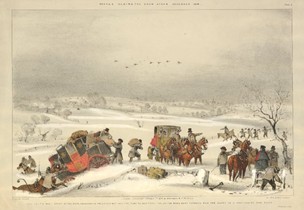
The first casualty to be noticed on the North-western Road occurred… so near to London indeed as Finchley Common (which is about a mile and a half beyond Highgate Archway), though the cause of the accident, the first cause, originated at a place called Redbourn, twenty-one miles down the road. And in this wise: Owing to an obstruction below Dunstable—in point of fact to heavy snow-drifts—four or five coaches started together thence. They all went at a fair pace, not racing, but passing each other at the different stages, till they reached the Green Man at Fincley, where according to immemorial prescription the four coachmen alighted for a drink, or rather for four. And now “a change came o’er the spirit of the scene.” In other words, one “Humpy,” so called either from his driving the Umpire (but I hope not) or from his having a hump on his back, which is more probably, was discovered to have taken too much spirits. For he was very noisy and shouted and hallooed at the top of his voice, though at what it is impossible to conjecture. However, the old coachman who tells the story… suspected that something would happen. So he kept behind, and waited to see what he would see. He first of all saw one of the three coaches by a fence opposite a public-house… he saw a coach lying on its side—the Manchester Umpire in fact—the coach of the too demonstrative Humpy… The forepart of the coach was broken, the luggage was scattered all over the road, also the passengers, who, thus agreeably circumstances, improved the shining hour by bewailing their bruises and cursing the conduct of Humpy. This was rather unchivalrous of them as it turned out, thus to rail against; for Humpy was also on his back perfectly helpless, “like a large black beetle,” moaning and groaning most hideously, and certainly more injured that anybody else… From Humpy himself therefore no explanation of how things had occurred was naturally forthcoming. But there were not wanting men unkind enough to allege that this complete turnover resultted from now more intricate a fact than that of the miserable Humpy having his leaders’ reins wrongly placed between his fingers, which was done when he took them from his box-passenger, after the last, the fatal, brandy and water. The natural but very embarrassing consequence was that when Humpy suddenly discovered that he was too near the fence, he pulled the wrong rein, and there they were—on their backs in the road.

No speed limits either?

'The Opposition Coaches', 1837 (1927).Artist: Charles Cooper Henderson

The Opposition Coaches, 1837, Charles Cooper Henderson (1927)

A more serious accident than this, inasmuch as one of the unfortunate passengers was killed, happened to the Holyhead Mail, a little further down the road, a mile indeed on the London side of St. Albans. This arose from the exciting but highly dangerous pastime of racing. The Holyhead Mail, via Shrewsbury, attempted to pass the Chester Mail by galloping furiously by on the wrong side of the road. The coachman of the Chester Mail resented the indignity, and pulled his leaders across his rival’s—a heap of stones conveniently placed by the road side did the rest of the business, and in a moment converted two spick and span turn-outs, full of passengers more or less alive and alarmed, into a mass of struggling horseflesh, splintered wood and groaning wounded. The inquest on the victim of this rivalry among coachmen was held at the Peahen inn in St. Albans, and a verdict of manslaughter was returned against both artists. Abundant subsequent opportunity was afforded them of meditating on their sins, for they were kept in irons in St. Albans for six months before they were tried at Hertford—in which town they enjoyed a further twelve months’ imprisonment in the county gaol.

Duty wins over heroism (unless the ladies are attractive)

The Louth Mail Accident

The Louth Mail Accident

A snow effect is the next coaching incident to be chronicled in this neighbourhood of St. Albans, richer surely in its agreeably diversified crop of casualties than any other place in England. The North-western coaches… seem to have got the full benefit of the historic snow-storm of 1836. This visitation lasted the best part of a week and has never been equalled in England before or since. The drifts in some hollows were said to be twenty feet deep—which caused some passengers not unnaturally to report that they were “mountains high,” and some coachmen to state that the snow in some places was higher than their heads as they sat on the box. “Never before,” writes a correspondent of the Times of that day (quoted by Captain Malet in his Annals of the Road)—“never before within recollection was the London Mail stopped for a whole night at a few miles from London, and never before have we seen the intercourse between the southern shores of England and the metropolis interrupted for two whole days.”

White Hart Inn, St. Albans

White Hart Inn, St. Albans

…many mails and coaches remained hopelessly stuck, able neither to get up the road nor down it—a state of affairs which must have caused many passengers to use srange words, and the landlords of the Angel, White Hart, and Woolpack to make hay while the snow fell. And some people were not so fortunate as to be stuck fast in a picturesque place where there was something eat, as Burdett, the guard of the Liverpool Mail, was able to testify. For on Tuesday, December 27, of this memorable year, this guard from his vnatage point, beheld a chariot buried in the snow and without horses, safely at anchor at about a mile on the London side of St. Albans. And he had no sooner seen it—and two elderly ladies inside it, who rent the welkin with clamorous cries for help—than he found, by being suddenly precipitated head firstinto twelve feet of snow, that his coach had got into a drift too. Having recovered his perpendicular, and emptied his mouth, a natural curiosity prompted Burdett to cross-examine the ladies on their somewhat forlorn position. They told him that their post-boy and left them for St. Albans to get fresh cattle, and had been gone two hours—no doubt having elected to get brandy for himself instead. Meanwhile, there they were—and in a very deplorable plight surely. But will it be believed that this heart-moving vision of beauty in distress did not move the guard of the Liverpool Mail in the least! No! He proceeded stolidly in the plain path which is duty’s—a fact whih tends to the suspicion that the ladies cannot have been beauties. But whether they were or no, Burdett, after having heard their story, turned a deaf ear to their appeals for help. He just helped his coachman, his passengers, and his four horses on to their feet—(for the horses too had assumed a recumbent position)—and having extricated his mail, by the help of his tools, curses, and other expedients not mentioned in the text, pursued his journey to London, leaving the chariot and the ladies to their fate.

Mail Coach in a Snowstorm c.1835-40 by Charles Cooper Henderson 1803-1877

Mail Coach in a Snowstorm c. 1835-40, Charles Cooper Henderson


 Index to all the posts in this series

1: The Bath Road: The (True) Legend of the Berkshire Lady

2: The Bath Road: Littlecote and Wild William Darrell

3: The Bath Road: Lacock Abbey

4: The Bath Road: The Bear Inn at Devizes and the “Pictorial Chronicler of the Regency”

5: The Exeter Road: Flying Machines, Muddy Roads and Well-Mannered Highwaymen

6: The Exeter Road: A Foolish Coachman, a Dreadful Snowstorm and a Romance

7: The Exeter Road in 1823: A Myriad of Changes in Fifty Years

8: The Exeter Road: Basingstoke, Andover and Salisbury and the Events They Witnessed

9: The Exeter Road: The Weyhill Fair, Amesbury Abbey and the Extraordinary Duchess of Queensberry

10: The Exeter Road: Stonehenge, Dorchester and the Sad Story of the Monmouth Uprising

11: The Portsmouth Road: Royal Road or Road of Assassination?

12: The Brighton Road: “The Most Nearly Perfect, and Certainly the Most Fashionable of All”

13: The Dover Road: “Rich crowds of historical figures”

14: The Dover Road: Blackheath and Dartford

15: The Dover Road: Rochester and Charles Dickens

16: The Dover Road: William Clements, Gentleman Coachman

17: The York Road: Hadley Green, Barnet

18: The York Road: Enfield Chase and the Gunpowder Treason Plot

19: The York Road: The Stamford Regent Faces the Peril of a Flood

20: The York Road: The Inns at Stilton

21: The Holyhead Road: The Gunpowder Treason Plot

22: The Holyhead Road: Three Notable Coaching Accidents

23: The Holyhead Road: Old Lal the Legless Man and His Extraordinary Flying Machine

24: The Holyhead Road: The Coachmen “More Celebrated Even Than the Most Celebrated of Their Rivals” (Part I)

25: The Holyhead Road: The Coachmen “More Celebrated Even Than the Most Celebrated of Their Rivals” (Part II)

26: Flying Machines and Waggons and What It Was Like To Travel in Them

27: “A few words on Coaching Inns” and Conclusion

The York Road: Hadley Green, Barnet

dust jacket

The following post is the seventeenth of a series based on information obtained from a fascinating book Susana recently obtained for research purposes. Coaching Days & Coaching Ways by W. Outram Tristram, first published in 1888, is replete with commentary about travel and roads and social history told in an entertaining manner, along with a great many fabulous illustrations. A great find for anyone seriously interested in English history!

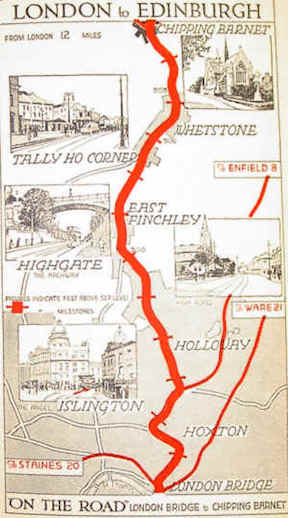
The Great North Road

map

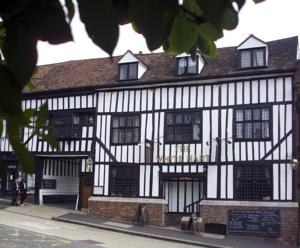
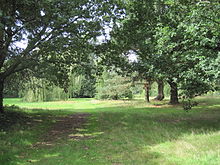
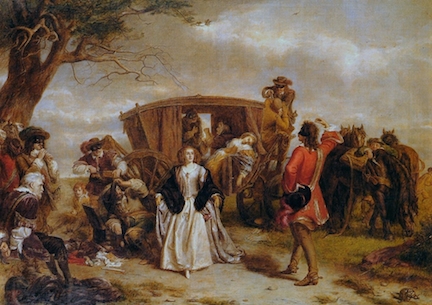
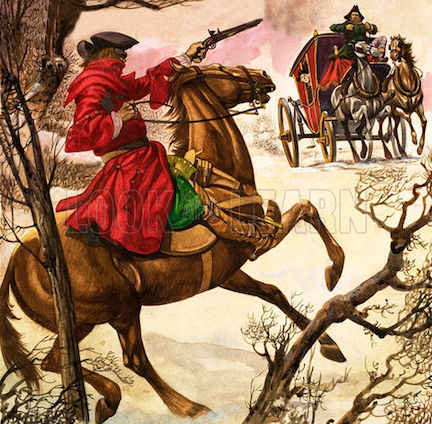
220px-Hadley_GreenAnd Barnet is soon a memory on the great north road. A memory however which shows some claim to “recollection dear”, fixing as it does the site of a great battle and of a highwayman’s exploits, which have occupied almost the same space in history—I mean fiction—No! I mean history. To come to details:—On Hadley Green, half-a-mile to the north of the town, was fought on a raw, cold and dismal Easter Day, in the year 1471, the famous battle between the Houses of York and Lancaster which ended in the death of the king-maker, and established Edward IV on the throne; and behind an oak tree, which still stands opposite the Green Man at the junction of the York and Holyhead Roads, the immortal Dick Turpin used to sit silent on his mare, Black Bess, patiently waiting for some traveller to speak to.

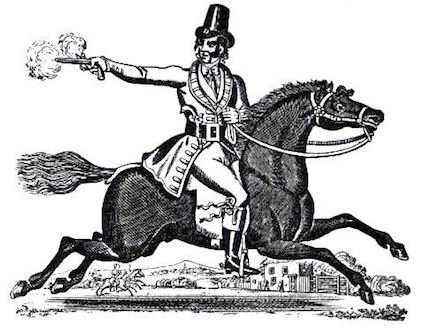
The romanticized Dick Turpin

The romanticized highwayman

A Not-So-Gallant Highwayman

Dick Turpin attacking the mail-coach in Epping ForestLet me preface this by saying that the real Dick Turpin was a violent criminal and not the sort of gallant Robin Hood frequently found in historical romances and in William Harrison Ainsworth’s Rookwood. His gangs robbed, maimed, killed and raped. It was due to men like him that coaches traveling on the highways of England often had armed outriders for protection. Nor was he a particularly handsome fellow. The London Gazette describes him as:

Richard Turpin, a butcher by trade, is a tall fresh coloured man, very much marked with the small pox, about 26 years of age, about five feet nine inches high, lived some time ago in Whitechapel and did lately lodge somewhere about Millbank, Westminster, wears a blue grey coat and a natural wig.

The London Gazette: no. 7379. p. 1. 22 February 1734. )

turpin1

Prior to taking up coach-robbing, Turpin was part of a gang who did what we would call home invasions—beating and torturing the occupants, in one case forcing a bare-buttocked man to sit on the fire. Scenes right out of Criminal Minds! A behavioral analyst would understand this better than I, because I simply cannot imagine why anyone would do this for the piddly amount they came away with—often less than thirty pounds!

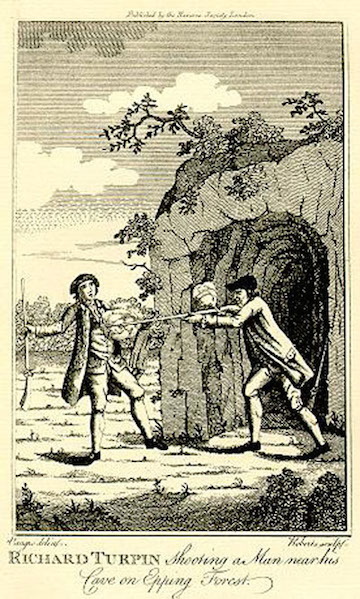
That gang—termed the “Essex Gang”—ceased to exist when authorities rounded up and executed many of the members in 1735. That’s when our Dick turned to robbing coaches. He was hiding out in Epping forest when he shot and killed a servant who recognized him.

Dick_turpin_murderer

It having been represented to the King, that Richard Turpin did on Wednesday the 4th of May last, barbarously murder Thomas Morris, Servant to Henry Tomson, one of the Keepers of Epping-Forest, and commit other notorious Felonies and Robberies near London, his Majesty is pleased to promise his most gracious Pardon to any of his Accomplices, and a Reward of 200l. to any Person or Persons that shall discover him, so as he may be apprehended and convicted. Turpin was born at Thacksted in Essex, is about Thirty, by Trade a Butcher, about 5 Feet 9 Inches high, brown Complexion, very much mark’d with the Small Pox, his Cheek-bones broad, his Face thinner towards the Bottom, his Visage short, pretty upright, and broad about the Shoulders.

—The Gentleman’s Magazine (June 1737)

Escaping to the north, he began calling himself Palmer, and under that name, was accused of shooting another man’s cock (a chicken, I believe!) and tossed in the House of Correction at Beverley. Suspected of horse theft, he was transferred to York Castle and sentenced to death for that. It wasn’t until he wrote a letter to his brother-in-law—who promptly refused it—that his true identity was discovered. He was executed at Knavesmire and buried at St. George’s Church in Fishergate. Ironically, his body was robbed by bodysnatchers, who made their living selling bodies to medical schools—but it was recovered soon after and reburied.

Dick-Turpin-Grave

 Index to all the posts in this series

1: The Bath Road: The (True) Legend of the Berkshire Lady

2: The Bath Road: Littlecote and Wild William Darrell

3: The Bath Road: Lacock Abbey

4: The Bath Road: The Bear Inn at Devizes and the “Pictorial Chronicler of the Regency”

5: The Exeter Road: Flying Machines, Muddy Roads and Well-Mannered Highwaymen

6: The Exeter Road: A Foolish Coachman, a Dreadful Snowstorm and a Romance

7: The Exeter Road in 1823: A Myriad of Changes in Fifty Years

8: The Exeter Road: Basingstoke, Andover and Salisbury and the Events They Witnessed

9: The Exeter Road: The Weyhill Fair, Amesbury Abbey and the Extraordinary Duchess of Queensberry

10: The Exeter Road: Stonehenge, Dorchester and the Sad Story of the Monmouth Uprising

11: The Portsmouth Road: Royal Road or Road of Assassination?

12: The Brighton Road: “The Most Nearly Perfect, and Certainly the Most Fashionable of All”

13: The Dover Road: “Rich crowds of historical figures”

14: The Dover Road: Blackheath and Dartford

15: The Dover Road: Rochester and Charles Dickens

16: The Dover Road: William Clements, Gentleman Coachman

17: The York Road: Hadley Green, Barnet

18: The York Road: Enfield Chase and the Gunpowder Treason Plot

19: The York Road: The Stamford Regent Faces the Peril of a Flood

20: The York Road: The Inns at Stilton

21: The Holyhead Road: The Gunpowder Treason Plot

22: The Holyhead Road: Three Notable Coaching Accidents

23: The Holyhead Road: Old Lal the Legless Man and His Extraordinary Flying Machine

24: The Holyhead Road: The Coachmen “More Celebrated Even Than the Most Celebrated of Their Rivals” (Part I)

25: The Holyhead Road: The Coachmen “More Celebrated Even Than the Most Celebrated of Their Rivals” (Part II)

26: Flying Machines and Waggons and What It Was Like To Travel in Them

27: “A few words on Coaching Inns” and Conclusion

The Dover Road: Blackheath and Dartford

dust jacket

The following post is the fourteenth of a series based on information obtained from a fascinating book Susana recently obtained for research purposes. Coaching Days & Coaching Ways by W. Outram Tristram, first published in 1888, is replete with commentary about travel and roads and social history told in an entertaining manner, along with a great many fabulous illustrations. A great find for anyone seriously interested in English history!

Note: Comment to enter the contest for Susana’s September Giveaway, a lovely necklace from London’s National Gallery (see photo at right).

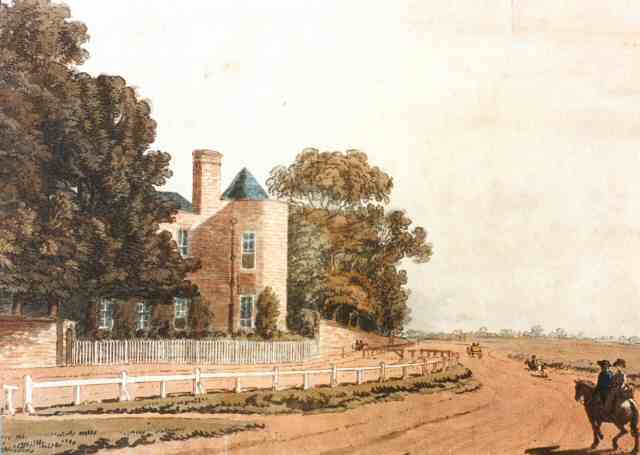
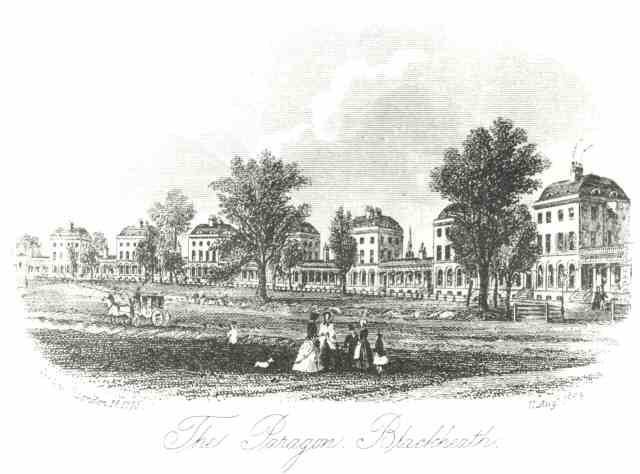
Blackheath: Dark-Colored Heathland

The area of Blackheath is about seven miles from London Bridge. Originally the name of an open space for public meetings of the ancient hundred of Blackheath, this name was also given to the Victorian suburb that was developed later in the 19th century. While this area was certainly used for burial pits for the victims of the Black Death in the 14th century, it was only one of many used for such a purpose in London and was not the source of the name. Blackheath comes from Old English, “dark-colored heathland,” undoubtedly referring to the color of the soil.

Besides a queen devoted to junketings [Queen Caroline, who lived at Montague House], a letter-writing father, bent on directing his son to the deuce [Lord Chesterfield], and a great warrior [Major General James Wolfe, conqueror of Quebec], rebellion has in the good old days…raised its head on this celebrated spot; and it raised its head in the person of Wat Tyler, who was here in 1381 at the head of one hundred thousand other heads (which was wise of him seeing that he had previously cracked a poll-tax collector’s head at Dartford, after drinking too much ale, I suppose, at the celebrated Bull Inn). Another rebel was here, at Blackheath 1497. Lord Audley to wit, who went through the somewhat aimless exercise of bringing troops all the way from Cornwall, pitching their tents, and immediately afterwards suffering defeat at the hands of Henry the Seventh.

Montague House, residence of Queen Caroline

Montague House, residence of Queen Caroline

The Predecessor of Rotten Row?

For this celebrated spot occupied in the annals of England much the same sort of position apparently as Rotten Row occupies in the annals of contemporary fashion. It was the place where kings and ministers met casually on their way to or from London, and babbled of the weather, the price of corn, the latest hanging, the odds on the next bear-fight, the state of the unemployed, or any other kindred subject which might suggest itself to medieval brains, in an open space, where it was not too windy.

blackheath

Henry the Fifth a Spoilsport?

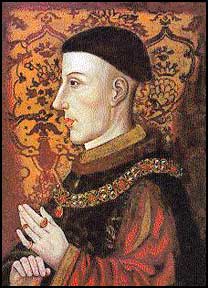
On his return to London, “The Victor of Agincourt” was greeted here by “the mayor and five hundred citizens of London. The mayor and aldermen had prepared an elaborate reception, with wine and scarlet and gold robes and all the trappings. But Henry “nipped all the worthy mayor’s preparations in the bud,” refusing to accept the praise and thanks that should go to God.

A pious decision, but one which must have been extremely unsatisfactory to town councillors who had launched forth in the way of dress and decorations, and to the thousands of Londoners who had flocked out to Blackheath to see the show.

Henry V: not in a proper mood to be fêted

Henry V: not in a proper mood to be fêted

Henry the Eighth: A Guilty Conscience?

It was here on Blackheath that the already muchly married king publicly received his fourth wife, with all due decency and decorum, having already made up his royal mind to put her away privately. For Henry on this occasion did not play fair; and though he pretended to Anne of Cleves herself that it was at this meeting on Blackheath that he had first seen here—in saying so, he said that which was not; for he had already privately inspected her at the Crown Inn at Rochester. It was on this occasion it may be remembered that the bluff Tudor gave way to a regrettable license of speech at first sight of the goods the gods had provided for him, and said many things unfit for publication; which shocked the onlookers, and made Cromwell put his hands to his head to feel if it was still in his shoulders.

Alas, Cromwell, as the advocate for this marriage, paid for his folly with his head. Anne of Cleves, however,

was content to forego the dubious joys of married life for the possession of the several manors in Kent and Sussex that her grateful late lord bestowed upon her. The number of these manors exceeds belief, and at the same time gracefully gauges Henry’s conception of the magnitude of the matrimonial peril past. Indeed, it seems to me that…whenever he had nothing villainous on hand, and was disinclined for tennis, he gave Anne of Cleves a manor or two simply to while away the time.

setWidth320-The-Manor-Gatehouse1

The Manor Gatehouse is all that is left of the manor Henry VIII presented to Anne of Cleves as “one of the first manors granted to this little-married but much-dowered lady.”

Charles II’s Triumphant Procession

…it was in 1660 no doubt that the grandest of its historical pageants was to be seen: when the long reaction against Puritanism had suddenly triumphed, and all England went mad on a May morning at the Restoration of her exiled king; when through sixty-one miles as it were of conduits running wine, triumphal arches, gabled streets hung with tapestry—through battalions of citizens in various bands, some arrayed in coats of black velvet with gold chains, some in military suits of cloth of gold or silver—Charles, who had slept at Rochester the night before, rode on to Blackheath between his brothers, the Dukes of York and Gloucester.

Charles II riding into London

Charles II riding into London

Sir Walter Scott, in his novel Woodstock (1826), paints a picture of Charles catching a glimpse of the characters of the novel in the crowd and making a point to dismount, prevent the aged Sir Henry Lee from rising, and ask for his blessing, after which, “his very faithful servant, having seen the desire of his eyes, was gathered to his fathers.”Quite a poignant scene, but could not have happened in real life since Sir Henry had passed away fifty years earlier. Don’t you just love historical fiction?

Charles Dickens: “veritable genius of the road”

His memory burns by the way—as all but the wicked man who has not read Pickwick and David Copperfield will remember—and indeed A Tale of Two Cities. For in the second chapter of that wonderful book the very spirit of the Dover Road in George the Third’s time is caught as if by magic.

A Tale of Two Cities: read Chapter Two here: http://www.online-literature.com/dickens/twocities/2/

Who does not remember these things? Who has not read them again and again? I declare that I think this second chapter of A Tale of Two Cities a picture of the old coaching days more perfect than any that has been painted. Every detail is there in three pages.

tale

George IV Insulted at the Bull Inn

In 1822

…while the great Fourth George was majestically reposing in his royal post-chaise in front of the old archway he experienced an unpleasant surprise. A very ungentlemanly man named Calligan, a working currier who ought to have known better, suddenly projected his head into the carriage window, and observed in a voice of thunder, “You’re a murderer!” an historical allusion to the king’s late treatment of Queen Caroline, which made the royal widower “sit up”. Upon which a bystander named Morris knocked the personal currier down,and the window of the post-chaise was pulled up, and the post-boy told to drive on as quickly as possible.

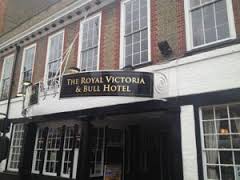
The Royal Victoria and Bull Inn (formerly the Bull Inn)

The Royal Victoria and Bull Hotel (formerly the Bull Inn)


 Index to all the posts in this series

1: The Bath Road: The (True) Legend of the Berkshire Lady

2: The Bath Road: Littlecote and Wild William Darrell

3: The Bath Road: Lacock Abbey

4: The Bath Road: The Bear Inn at Devizes and the “Pictorial Chronicler of the Regency”

5: The Exeter Road: Flying Machines, Muddy Roads and Well-Mannered Highwaymen

6: The Exeter Road: A Foolish Coachman, a Dreadful Snowstorm and a Romance

7: The Exeter Road in 1823: A Myriad of Changes in Fifty Years

8: The Exeter Road: Basingstoke, Andover and Salisbury and the Events They Witnessed

9: The Exeter Road: The Weyhill Fair, Amesbury Abbey and the Extraordinary Duchess of Queensberry

10: The Exeter Road: Stonehenge, Dorchester and the Sad Story of the Monmouth Uprising

11: The Portsmouth Road: Royal Road or Road of Assassination?

12: The Brighton Road: “The Most Nearly Perfect, and Certainly the Most Fashionable of All”

13: The Dover Road: “Rich crowds of historical figures”

14: The Dover Road: Blackheath and Dartford

15: The Dover Road: Rochester and Charles Dickens

16: The Dover Road: William Clements, Gentleman Coachman

17: The York Road: Hadley Green, Barnet

18: The York Road: Enfield Chase and the Gunpowder Treason Plot

19: The York Road: The Stamford Regent Faces the Peril of a Flood

20: The York Road: The Inns at Stilton

21: The Holyhead Road: The Gunpowder Treason Plot

22: The Holyhead Road: Three Notable Coaching Accidents

23: The Holyhead Road: Old Lal the Legless Man and His Extraordinary Flying Machine

24: The Holyhead Road: The Coachmen “More Celebrated Even Than the Most Celebrated of Their Rivals” (Part I)

25: The Holyhead Road: The Coachmen “More Celebrated Even Than the Most Celebrated of Their Rivals” (Part II)

26: Flying Machines and Waggons and What It Was Like To Travel in Them

27: “A few words on Coaching Inns” and Conclusion

The Brighton Road: “The Most Nearly Perfect, and Certainly the Most Fashionable of All”

dust jacket

The following post is the twelfth of a series based on information obtained from a fascinating book Susana recently obtained for research purposes. Coaching Days & Coaching Ways by W. Outram Tristram, first published in 1888, is chock full of commentary about travel and roads and social history told in an entertaining manner, along with a great many fabulous illustrations. A great find for anyone seriously interested in English history!

The Brighton Road, Mr. Tristram suggests, might be called the “Regent’s Road,” since it was the Prince who, once he determined the health benefits of the seaside city, saw to it that the road was made passable.

For before the Pavilion was, Brighton was about as easy to get at as the Cranmere Pool in the middle of Dartmoor, the moon, the North Pole, the special exits in case of fire at our principal theatres, or anything else on earth totally inaccessible.

It was in 1750 when Brighton was nothing but a small fishing village that Doctor Richard Russell visited and proclaimed that sea water was beneficial to health, which began the exodus of wealthy hypochondriacs to seaside resorts. At that time, however, our author suggests that oxen were required to cope with the deep ruts. “People got into coaches to go to Brighton and only got out of them when they were overturned.”

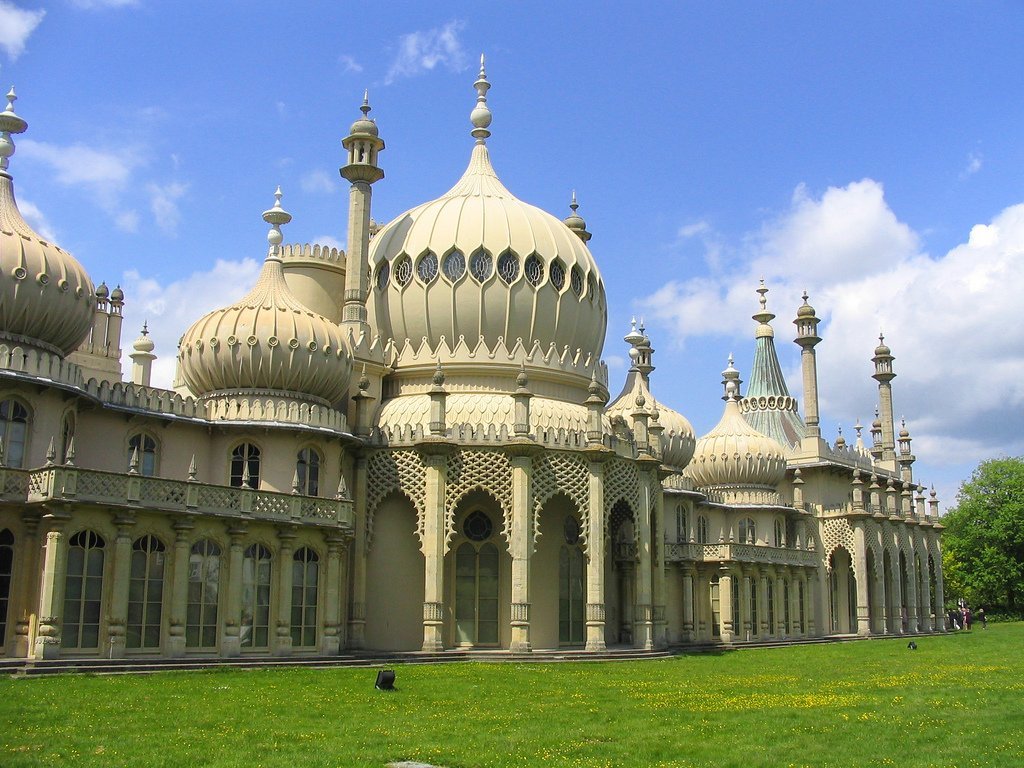
All these horrors of the Brighton Road the much abused George the Fourth did away, with a sweep as it were of his fat, bejewelled and august hand! He built the Pavilion, and people from all parts of the country came straightway to see it and him… the crowds soon found…that if they were to come to Brighton, and to court, they had better have some decent road to come upon. And from this simple bringing home of a plain truth came into existence the Brighton Road—“perhaps the most nearly perfect, and certainly the most fashionable of all.”

Brighton Pavilion1

Brighton Pavilion

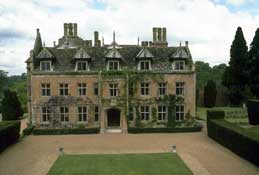
Cuckfield Park, Cuckfield, West Sussex

This sixteenth century manor is known for its ghost, said to be that of Anne Sergison, who, already afflicted with a somewhat combative nature, had to fight a long and sordid court battle to get it. It came to light after her brother’s death that the thirteen-year-old girl assumed to be his daughter was actually a “supposititious” (don’t you just love that word?) child imposed on him by his wife. No one knows what happened to the girl and her mother, but Anne’s ghost has been spotted in the corridors and the avenue leading to the house, and some say she particularly attended her granddaughter’s wedding in 1890. No rest for the wicked, so they say.

Cuckfield Park was the inspiration for William Harrison Ainsworth’s novel Rookwood.

Cuckfield Park

Cuckfield Park

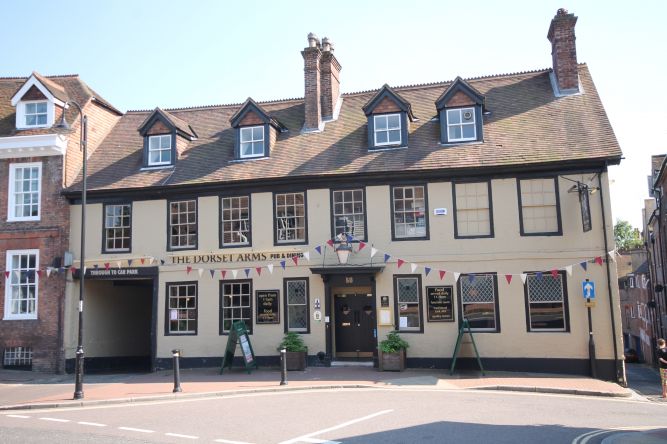
The Dorset Arms, East Grinstead

All distinguished travellers on the Brighton Road pulled up as a matter of course at the Dorset Arms. Amongst those whose names have been handed down as habitual visitors, was Lord Liverpool, who always stayed at the Dorset Arms when on his way to visit the Harcourt seat near Buxted… Another constant guest was Lord Seymour, who died, I believe, in 1837—mean, I am sorry to say…and yet not mean either one way, for if he didn’t eat and drink much, he possessed a passion for illumination which must have produced some respectable items in the bill—thirty wax candles or more burning in his bedroom all night. Spencer Perceval too (the Prime Minister remarkable for great ability and for having been shot in the lobby of the House of Commons in 1812 by John Bellingham) must have been a familiar figure at the Dorset Arms, for the house from which he was married in 1790 to Miss Jane Wilson stands just at the bottom of the Dorset Arms’ garden.

The Dorset Arms

The Dorset Arms

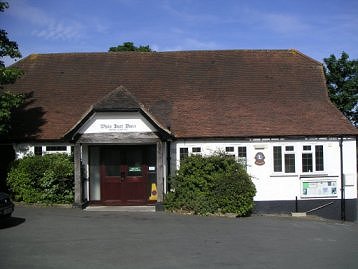
The Clayton Arms, formerly the White Hart and currently the White Hart Barn, Godstone Green

It is said the that in 1815 the Regent, the Tsar of Russia, and many royal visitors stayed at the inn on their way to Blindley Heath, to be present at the fight for the championship of England…Blindley Heath was one of the most popular and celebrated of prize-fighting rendezvous.

“The Fancy were all upon the alert soon after breakfast” (I quote from Boxiana’s description of the Grand Pugilistic combat between Randall and Martin, at Crawley Down, thirty miles from London, on Tuesday, May 4, 1819 “on the Monday to ascertain the seat of action; and as soon as the important whisper had gone forth, that Crawley Down was likely to be the place, the toddlers were off in a twinkling… Between the hours of two and three o’clock in the afternoon upwards of a hundred gigs were counted passing through Croydon… Long before eight o’clock in the evening every bed belonging to the inns and public houses in Godstone, East Grinstead, Reigate, Bletchingley, &c., were doubly and some trebly occupied.”

“Those persons whose blunt enabled them to procure beds, could not obtain any sleep, for carriages of every description were passing through the above towns all night… The brilliants also left Brighton and Worthing at about the same period, and thus were the roads thronged in every direction… It is supposed if the carriages had all been placed in one line they would have reached from London to Crawley. The amateurs were of the highest distinction, and several noblemen and foreigners of rank were upon the ground.”

The White Hart Barn, now the village hall of Godstone Green

The White Hart Barn, now the village hall of Godstone Green

Regent and emperor putting up at a wayside inn to witness a fight for the championship!…The noblemen and foreigners of rank crowding round the twenty-four foot ring! What can give us a better idea of the Brighton Road in its prime than these facts? What paint more vividly what I call its “Regency flavour”, its slang, its coarseness, its virility—in a word, its “Corinthianism”?

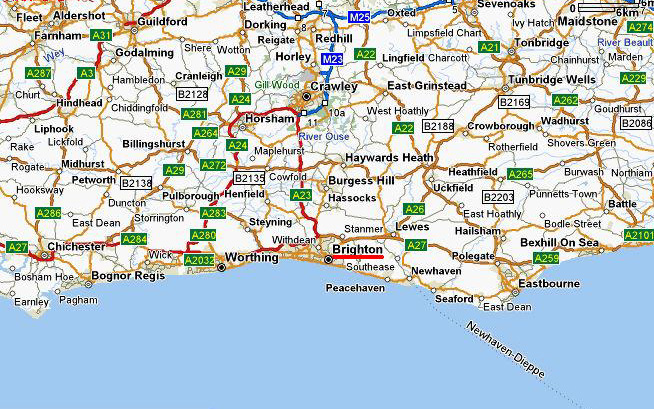
brighton-map

 Index to all the posts in this series

1: The Bath Road: The (True) Legend of the Berkshire Lady

2: The Bath Road: Littlecote and Wild William Darrell

3: The Bath Road: Lacock Abbey

4: The Bath Road: The Bear Inn at Devizes and the “Pictorial Chronicler of the Regency”

5: The Exeter Road: Flying Machines, Muddy Roads and Well-Mannered Highwaymen

6: The Exeter Road: A Foolish Coachman, a Dreadful Snowstorm and a Romance

7: The Exeter Road in 1823: A Myriad of Changes in Fifty Years

8: The Exeter Road: Basingstoke, Andover and Salisbury and the Events They Witnessed

9: The Exeter Road: The Weyhill Fair, Amesbury Abbey and the Extraordinary Duchess of Queensberry

10: The Exeter Road: Stonehenge, Dorchester and the Sad Story of the Monmouth Uprising

11: The Portsmouth Road: Royal Road or Road of Assassination?

12: The Brighton Road: “The Most Nearly Perfect, and Certainly the Most Fashionable of All”

13: The Dover Road: “Rich crowds of historical figures”

14: The Dover Road: Blackheath and Dartford

15: The Dover Road: Rochester and Charles Dickens

16: The Dover Road: William Clements, Gentleman Coachman

17: The York Road: Hadley Green, Barnet

18: The York Road: Enfield Chase and the Gunpowder Treason Plot

19: The York Road: The Stamford Regent Faces the Peril of a Flood

20: The York Road: The Inns at Stilton

21: The Holyhead Road: The Gunpowder Treason Plot

22: The Holyhead Road: Three Notable Coaching Accidents

23: The Holyhead Road: Old Lal the Legless Man and His Extraordinary Flying Machine

24: The Holyhead Road: The Coachmen “More Celebrated Even Than the Most Celebrated of Their Rivals” (Part I)

25: The Holyhead Road: The Coachmen “More Celebrated Even Than the Most Celebrated of Their Rivals” (Part II)

26: Flying Machines and Waggons and What It Was Like To Travel in Them

27: “A few words on Coaching Inns” and Conclusion

The Portsmouth Road: Royal Road or Road of Assassination?

dust jacket

The following post is the eleventh of a series based on information obtained from a fascinating book Susana recently obtained for research purposes. Coaching Days & Coaching Ways by W. Outram Tristram, first published in 1888, is chock full of commentary about travel and roads and social history told in an entertaining manner, along with a great many fabulous illustrations. A great find for anyone seriously interested in English history!

The Portsmouth Road has been described to me by one having authority as the Royal Road: and certainly kings and queens have passed up and down it, eaten and drunken in the Royal Rooms, still to be seen in some of the old inns; snored in the Royal Beds (also in places to be seen, but not slept in), and dreamed of ruts of bogs, and blasted heaths and impassable morasses, and all the sundry and other mild discomforts which our ancestors, whether kings or cobblers, had to put up with; or those among them at all events who travelled when the weather was rainy, and there were no real roads to travel upon.

To me however the Portsmouth Road—so called Royal—presents itself in a less august guise; so much so that if I were asked to give it a name whereby it might be especially distinguished, I should be inclined, I think, to call it the Road of Assassination. And it will be found to have claim to the title.

The Unknown Sailor

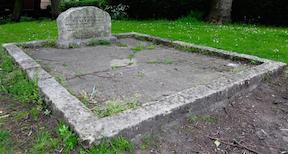
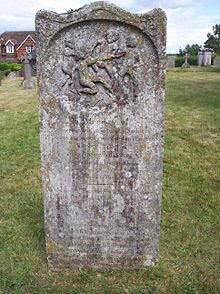
The Portsmouth Road after Godalming and Milford consisted of a “gravelly road” for five miles up Hindhead Hill that led them directly to a “silent memorial of murder,” a gravestone reminder

of a barbarous murder committed on the spot on the person of an unknown sailor (who lies buried in Thursley Churchyard, a few miles off); and airs also with some satisfaction the feeling then very prevalent (before Scotland Yard was), that murderers are a class who invariably fall into the hands of justice. We are perhaps not so credulous as this nowadays; but we put our trust in a large detective force when our throats have been cut, and hope for the best. The local police of 1786 however could have given many of our shining lights a lesson, it seems to me; for on the very afternoon of September the 4th in that year (which was the date of the murder) they apprehended three men named Lonegon, Casey, and Marshall, twelve miles further down the road…engaged in the unwise exercise of selling the murdered man’s clothes. For this, and previous indiscretions, they were presently hanged in chains on the top of Hindhead as a warning…

The ill-fated sailor, walking from London to rejoin his ship in Portsmouth, met up with three other sailors in Thursley and treated them to food and drinks before setting off again in their company. His reward was to be murdered and decapitated and thrown into a valley, where he was promptly discovered and the alarm raised. His murderers were apprehended that same day at the Sun Inn in Rake, rather unwisely selling off their victim’s clothing.

220px-Unknown_Sailors_GraveIn memory of

A generous but unfortunate Sailor

Who was barbarously murder’d on Hindhead

On September 24th 1786

By three Villains

After he had liberally treated them

And promised them his farther assistance

On the road to Portsmouth.

The Murders by the Smugglers

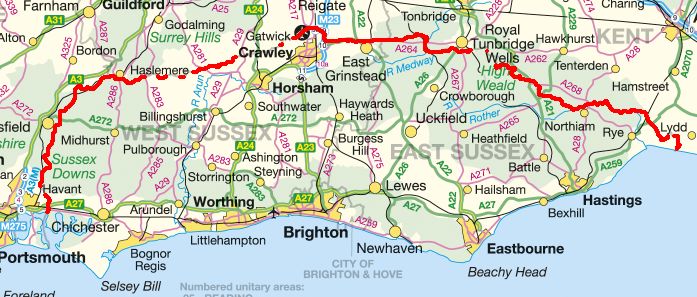
Sussex_Police_Authority_Map

All through the last century, then, it seems the country from Portsmouth…was infested by gangs of smugglers.

From time to time, after some unusually audacious outbreak against custom-house laws had taken place, violent reprisals were made; but on the whole the revenue officers seem to have had decidedly the worst of it, and the smugglers enjoyed an enviable immunity from the retribution of justice. The climax to this condition of affairs came on the 6th and 7th of October, 1747, when a gang of some sixty of these desperadoes assembled secretly in Charlton Forest; made a suddenly raid on Poole; broke open the custom, where a large quantity of tea which had been seized from one of their confederates, was lodged, and made off with the booty, without encountering any resistance from the surprised authorites.

barbarous11

Ye Smugglers breaking open ye King’s Custom House at Poole

The cocky smugglers made a “riotous procession” retreating with their booty, and one of them, a man named Diamond, recognized Daniel Chater, a shoemaker, in the crowd and threw him a bag of tea. The same Diamond was taken into custody at Chichester, and Chater, having been promised a reward, was persuaded to accompany a custom house officer, William Galley, to Chichester for the purpose of identifying said Diamond.

The pair made the unfortunate decision to stay at the White Hart, where the landlady, “friendly of course to smugglers and highwaymen”, suspecting that they meant harm to her friends, sent for seven of them to intervene. Galley and Chater “were prevailed upon with force to stay and drink more rum” and when unconscious, the letter Galley was carrying detailing their errand was intercepted, and the criminals debated whether or not to murder them. Two of the smugglers’ wives who had joined the party urged them to “Hang the dogs, for they came here to hang us.”

This view of the case seems to have in an instant turned men into monsters. A devilish fury possessed the whole company. Jackson rushed into the room where Chater and Galley were sleeping. He leaped upon the bed and awakened them by spurring them on the forehead. He flogged them about the head with a horsewhip till their faces poured with blood. Then they were taken out to the back yard, and both of them tied on to one horse, their four legs tied together, and these four legs tied under the horse’s belly.

They had not got a hundred yards from the house when Jackson, in one of those sudden accesses of fiendishness continually characteristic of the whole affair, and which seemed a veritable possession of the devil himself, yelled out—“Whip them! Cut them! Slash them! Damn them!” and in an instant the whole gang’s devilish fury was wreaked on their bound and helpless enemies.

Near Rake Hill, Galley fell off the horse and was presumed to be dead, so they buried him in a foxhole in Harting Coombe. When he was found, however, his hands were covering his eyes, presumably to protect them from the dirt, so he was, in effect, buried alive.

Chater did not find so fortunate a release from his torments. He was kept for over two days chained by the leg in an outhouse of the Red Lion at Rake, “in the most deplorable condition that man was ever in; his mind full of horrors, and his body all over pain and anguish with the blows and scourges they had given him.” All this while the smugglers were calmly debating as to how they should finally make an end of him. At length a decision was come to. Subjected all the way to treatment which I cannot describe, he was taken back to the same Harris Well where it had been originally proposed to murder Galley; and after an unsuccessful attempt at hanging him there, he was thrown down it, and an end put at last to his awful sufferings by heaving stones being thrown on top of him.

The heinousness of the crime demanded swift justice, and the gang was hanged at Chichester on 18th January 1749, except for one, who died of fright the night before the execution.

barbarous8

The unfortunate William Galley put by the Smugglers into the Ground … before he was quite Dead

barbarous12

Mr Galley and Mr Chater put by ye Smugglers on one Horse near Rowland Castle

The Assassination of the Duke of Buckingham

After all this, a simple assassination may strike you as a mere church picnic. But it was at the Spotted Dog Inn in 1628 that James I’s favorite (and some say lover) was assassinated by a discontented half-pay officer who had been turned down for promotion.

buckingham

It remains for me to remark that the journey of Felton to London, where he was hanged, drawn, and quartered at Tyburn, was accomplished amidst scenes of extraordinary and many-sided excitement; and coming, as it does, before a similarly mournful expedition over the same ground on the part of the Duke of Monmouth, seems to me to cast a characteristic gloom over the annals of a road—not remarkable for coaching anecdotes or coaching records—which has been called Royal, and rightly perhaps enough,—but which has yet witnessed, so far as its historical side is concerned, and so far as my knowledge goes, gloomier and more tragic scenes than any other of the great thoroughfares out of London.

These days we have organized police forces and all sorts of high-tech devices and forensic methods to apprehend and prosecute criminals…and yet crime seems to be everywhere, even such horrific murders as described here. Are today’s criminals smarter, do you think, or were more crimes undetected back then?

Comment and enter to win Susana’s September Giveaway, a lovely necklace from London’s National Gallery (see photo at right).

 Index to all the posts in this series

1: The Bath Road: The (True) Legend of the Berkshire Lady

2: The Bath Road: Littlecote and Wild William Darrell

3: The Bath Road: Lacock Abbey

4: The Bath Road: The Bear Inn at Devizes and the “Pictorial Chronicler of the Regency”

5: The Exeter Road: Flying Machines, Muddy Roads and Well-Mannered Highwaymen

6: The Exeter Road: A Foolish Coachman, a Dreadful Snowstorm and a Romance

7: The Exeter Road in 1823: A Myriad of Changes in Fifty Years

8: The Exeter Road: Basingstoke, Andover and Salisbury and the Events They Witnessed

9: The Exeter Road: The Weyhill Fair, Amesbury Abbey and the Extraordinary Duchess of Queensberry

10: The Exeter Road: Stonehenge, Dorchester and the Sad Story of the Monmouth Uprising

11: The Portsmouth Road: Royal Road or Road of Assassination?

12: The Brighton Road: “The Most Nearly Perfect, and Certainly the Most Fashionable of All”

13: The Dover Road: “Rich crowds of historical figures”

14: The Dover Road: Blackheath and Dartford

15: The Dover Road: Rochester and Charles Dickens

16: The Dover Road: William Clements, Gentleman Coachman

17: The York Road: Hadley Green, Barnet

18: The York Road: Enfield Chase and the Gunpowder Treason Plot

19: The York Road: The Stamford Regent Faces the Peril of a Flood

20: The York Road: The Inns at Stilton

21: The Holyhead Road: The Gunpowder Treason Plot

22: The Holyhead Road: Three Notable Coaching Accidents

23: The Holyhead Road: Old Lal the Legless Man and His Extraordinary Flying Machine

24: The Holyhead Road: The Coachmen “More Celebrated Even Than the Most Celebrated of Their Rivals” (Part I)

25: The Holyhead Road: The Coachmen “More Celebrated Even Than the Most Celebrated of Their Rivals” (Part II)

26: Flying Machines and Waggons and What It Was Like To Travel in Them

27: “A few words on Coaching Inns” and Conclusion

The Exeter Road: The Weyhill Fair, Amesbury Abbey and the Extraordinary Duchess of Queensberry

dust jacket

The following post is the ninth of a series based on information obtained from a fascinating book Susana recently obtained for research purposes. Coaching Days & Coaching Ways by W. Outram Tristram, first published in 1888, is chock full of commentary about travel and roads and social history told in an entertaining manner, along with a great many fabulous illustrations. A great find for anyone seriously interested in English history!

map

The Weyhill Fair

The Telegraph, rival of the Quicksilver which our author repeatedly states can do 175 miles in eighteen hours, used to pass through Weyhill, which was famous for its annual fair, “which would make those people who have never seen one stare.”

This festivity, which is indeed quite an un-English and out-of-the-way sight, begins on October 10th (Michaelmas Eve) and goes on for six days, during which all the country-side seems to have broken loose, and high junketings are to be seen. Besides junketings (which prevail chiefly on the last day of the fair in connection with peep-shows of the most blood-curdling description, whirligigs, merry-go-rounds, rifle galleries, and gingerbread) are also to be seen wonderful shows of sheep, magnificent cheeses, the finest hops in England displayed in the Farnham Row, great exhibits of machinery and enormous carthorses, and, enveloping all, a Babel indescribable.

Amesbury and the Abbey

Amesbury is where Guinevere arrived “somewhat late at night, after a ride across the Plain” after her affair with Lancelot was discovered.

“…hither came Queen Elfrida in 980…after her murder of her stepson Edward at Corfe; and, bent like all medieval murderesses suffering from a temporary mental depression, on building a church. When she came to the point however, and had interviewed the architect and the abbot, she went the whole hog and built an abbey.”

Amesbury Abbey (the church)

Amesbury Abbey (the church)

Prior to Henry VIII’s dissolution, the abbey played host, when “the Exeter road at that time was but a medieval cart-track, and a very bad one too,” to Eleanor of Brittany, sister of Prince Arthur and Mary, sixth daughter of Edward I. “Eleanor, Queen of Henry III, died here, and Katharine of Aragon stayed for a while here on her first arrival in England in 1501.”

Following the dissolution, “the abbey of Amesbury became Amesbury Abbey and passed from the Earl of Somerset, to whom it was granted by Henry VIII, into the respective hands of the Aylesburys, Boyles, and Queensberrys…”

The Abbey eventually became the parish church, and the nearby mansion of the same name built by Inigo Jones is now part of a group by the same name that operates nursing and retirement homes in the area.

Amesbury Abbey_thumb

Amesbury Abbey (the stately home)

This is where Kitty, “the charming Duchess of Queensberry played the Lady Bountiful in the place, and by entertaining Prior and Gay the Abbey graced the quaint old Wiltshire town with the memories of two of the not least celebrated of the English humorists.”

The Duchess of Queensberry

According to the Douglas family history, Catherine Douglas, née Hyde, was an outspoken, rather eccentric woman who “loved walking, avoided alcohol and was an enthusiastic planter of trees at her husband’s estates.” She’d grown up “in a household frequented by literary celebrities,” and it was she about whom Prior wrote the poem “The Female Phaeton: Upon Lady Kitty’s First Appearing in Public” when she was sixteen.

Catherine Douglas, Duchess of Queensberry

Catherine Douglas, Duchess of Queensberry

Following her marriage to Charles Douglas, 3rd duke of Queensberry, the acclaimed beauty Kitty became an avid patron of the arts, to the point of being exiled from court when her defense of the playwright John Gay offended King George II. Gay spent the last years of his life at the Abbey, where he wrote the Beggar’s Opera, and was given a lavish funeral at his death in 1732.

The Douglas family history fails to mention the fascinating story of Julius Soubise, a Negro slave from the West Indies who was given to the duchess in 1764 when he was ten years old. She gave him a privileged life, treating him as her own son, and he became a noted fencing and riding master, a member of the most exclusive clubs, and quite popular among upper-class social circles. A violinist and singer, he trained in oratory with the actor David Garrick. At times he claimed to be African royalty, calling himself “Prince Ana-Ana-maboe” or the “Black Prince.” It was rumored that the duchess and her protégé had a sexual relationship, so perhaps that is the reason Soubise was left out of the family history. Is it only coincidence that the duchess died two days after Soubise sailed for India?

julius-soubise

Julius Soubise

One reason I love delving into these family histories is the interesting things you find. The 3rd Duke of Queensberry, it turns out, succeeded his father “due to special remainder,” when his older brother James was declared insane. Both of the 3rd duke’s sons predeceased him and the title passed to a distant cousin, William Douglas, who later became a friend of the Prince of Wales.

The Duchess of Queensberry Rules

Actually, it was the 9th Marquess of Queensberry to whom the  1867 code on which modern boxing is based can be attributed (although he was not the author, merely the endorser). This code, meant for both amateur and professional matches, is and was the first to mention the use of gloves for boxing. The dear duchess had nothing to do with it, having passed on ninety years earlier.

 Index to all the posts in this series

1: The Bath Road: The (True) Legend of the Berkshire Lady

2: The Bath Road: Littlecote and Wild William Darrell

3: The Bath Road: Lacock Abbey

4: The Bath Road: The Bear Inn at Devizes and the “Pictorial Chronicler of the Regency”

5: The Exeter Road: Flying Machines, Muddy Roads and Well-Mannered Highwaymen

6: The Exeter Road: A Foolish Coachman, a Dreadful Snowstorm and a Romance

7: The Exeter Road in 1823: A Myriad of Changes in Fifty Years

8: The Exeter Road: Basingstoke, Andover and Salisbury and the Events They Witnessed

9: The Exeter Road: The Weyhill Fair, Amesbury Abbey and the Extraordinary Duchess of Queensberry

10: The Exeter Road: Stonehenge, Dorchester and the Sad Story of the Monmouth Uprising

11: The Portsmouth Road: Royal Road or Road of Assassination?

12: The Brighton Road: “The Most Nearly Perfect, and Certainly the Most Fashionable of All”

13: The Dover Road: “Rich crowds of historical figures”

14: The Dover Road: Blackheath and Dartford

15: The Dover Road: Rochester and Charles Dickens

16: The Dover Road: William Clements, Gentleman Coachman

17: The York Road: Hadley Green, Barnet

18: The York Road: Enfield Chase and the Gunpowder Treason Plot

19: The York Road: The Stamford Regent Faces the Peril of a Flood

20: The York Road: The Inns at Stilton

21: The Holyhead Road: The Gunpowder Treason Plot

22: The Holyhead Road: Three Notable Coaching Accidents

23: The Holyhead Road: Old Lal the Legless Man and His Extraordinary Flying Machine

24: The Holyhead Road: The Coachmen “More Celebrated Even Than the Most Celebrated of Their Rivals” (Part I)

25: The Holyhead Road: The Coachmen “More Celebrated Even Than the Most Celebrated of Their Rivals” (Part II)

26: Flying Machines and Waggons and What It Was Like To Travel in Them
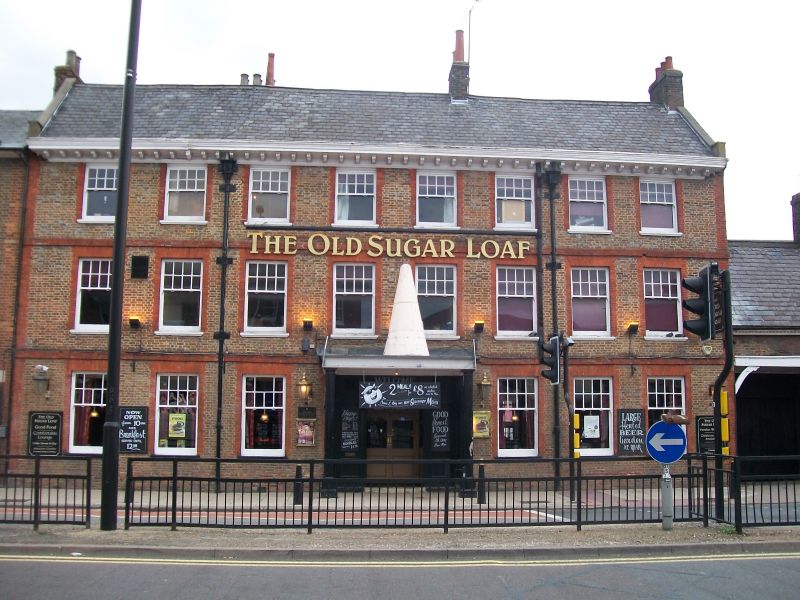
27: “A few words on Coaching Inns” and Conclusion