Archives

The Exeter Road: Stonehenge, Dorchester and the Sad Story of the Monmouth Uprising

dust jacket

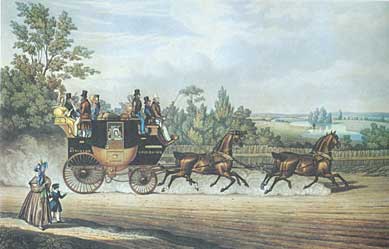
The following post is the tenth of a series based on information obtained from a fascinating book Susana recently obtained for research purposes. Coaching Days & Coaching Ways by W. Outram Tristram, first published in 1888, is chock full of commentary about travel and roads and social history told in an entertaining manner, along with a great many fabulous illustrations. A great find for anyone seriously interested in English history!
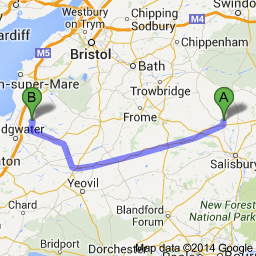
map

A = Stonehenge, B = Sedgemoor

Stonehenge

Mr. Outram declines to say much about Stonehenge

because everybody has written about it, and most people have read what has been written. If anybody however has not seen it, should chance to be in the neighbourhood I would advise them (without troubling themselves much beforehand as to whether it is Druidical, or post Roman, or built by the Belgae) to approach it from Amesbury about sunset, when they will see what they will see, and return home—or I am in error—well-pleased with what they have seen.
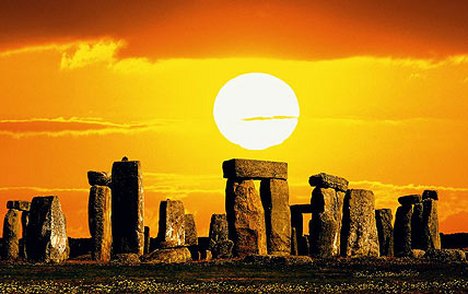
Stonehenge2SAT_428x269_to_468x312

The Woodyates Inn and the Taking of Monmouth

James Scott, Duke of Monmouth was the illegitimate son of Charles II and his mistress, Lucy Walter. There were rumors of a marriage between the two, which would have made the duke heir to the throne, but Charles II himself maintained that his only wife was the queen, Catherine of Braganza. Unfortunately, he and Catherine never had any children, so when he died, the throne passed to his brother, who became James II.

James Scott, Duke of Monmouth

James Scott, Duke of Monmouth

James had Catholic leanings and was married to a Catholic wife, and  this caused a great deal of unrest. Few people wanted to see the sort of bloody inquisition that occurred in the reign of Mary I. Monmouth was good-looking and as charming as his father and decidedly Protestant, so there were many who preferred to believe that he was the true heir, as he did himself, declaring on multiple occasions that he was the true King and even undergoing a coronation of sorts.

It was not to be, however. Monmouth’s forces were defeated by King James II’s armies on the

bleak plain of Sedgemoor, and crushed for ever the daring hopes of the brilliant young nobleman who was for so long the darling of the West. The memory of Monmouth is still preserved about Woodyates. It was close to the Woodyates Inn that the giving in of the desperately ridden horses stopped the flight of Monmouth, Grey, and Buyse to the sea. Here the fugitives turned their horses loose, concealed the bridles and saddles, disguised themselves as rustics, and made their way on foot towards the New Forest; and quite close by they fell into the hands of James’s troopers. Monmouth himself was taken on the Woodlands Estate near Horton, his captors failing for some moments to recognise in the gaunt figure, crouching in a ditch, dressed like a shepherd, with a beard of three days’ growth, already prematurely grey, the once brilliant and graceful son of Charles II and Lucy Walters.

battle-of-sedgemoor

Monument of the Battle of Sedgemoor

Dorchester and the Bloody Assize of Judge Jeffreys
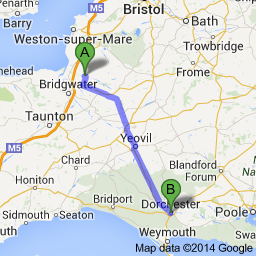
A = Sedgemoor B = Dorchester

A = Sedgemoor, B = Dorchester

Although he begged forgiveness of his uncle and converted to Catholicism, the wayward Monmouth was executed for treason at Tower Hill. The disposition of his followers is described below.

“The court, writes Macaulay, “was hung, by order of the chief justice, with scarlet, and this innovation, seemed to the multitude to indicate a bloody purpose. It was also rumoured that when the clergyman who preached the assize sermon enforced the duty of mercy, the ferocious countenance of the judge was distorted by an ominous grin. These things made men augur ill of what was to follow.

“More than three hundred prisoners were to be tried. The work seemed heavy, but Jeffreys had a contrivance for making it light. He let it be understood that the only chance of obtaining pardon or respite was to plead guilty. Twenty-nine persons who put themselves on their country and were convicted were ordered to be tied up without delay. The remaining prisoners pleaded guilty by scores. Two hundred and ninety-two received sentence of death.”

Charles Jeffreys, the Hanging Judge

George Jeffreys, the Hanging Judge

James II Deposed

With the birth of a son from his Catholic wife in 1688, the unrest about a Catholic heir increased, and James was deposed, to be replaced by his daughter from his first wife, Mary II, and her husband, William III.


 Index to all the posts in this series

1: The Bath Road: The (True) Legend of the Berkshire Lady

2: The Bath Road: Littlecote and Wild William Darrell

3: The Bath Road: Lacock Abbey

4: The Bath Road: The Bear Inn at Devizes and the “Pictorial Chronicler of the Regency”

5: The Exeter Road: Flying Machines, Muddy Roads and Well-Mannered Highwaymen

6: The Exeter Road: A Foolish Coachman, a Dreadful Snowstorm and a Romance

7: The Exeter Road in 1823: A Myriad of Changes in Fifty Years

8: The Exeter Road: Basingstoke, Andover and Salisbury and the Events They Witnessed

9: The Exeter Road: The Weyhill Fair, Amesbury Abbey and the Extraordinary Duchess of Queensberry

10: The Exeter Road: Stonehenge, Dorchester and the Sad Story of the Monmouth Uprising

11: The Portsmouth Road: Royal Road or Road of Assassination?

12: The Brighton Road: “The Most Nearly Perfect, and Certainly the Most Fashionable of All”

13: The Dover Road: “Rich crowds of historical figures”

14: The Dover Road: Blackheath and Dartford

15: The Dover Road: Rochester and Charles Dickens

16: The Dover Road: William Clements, Gentleman Coachman

17: The York Road: Hadley Green, Barnet

18: The York Road: Enfield Chase and the Gunpowder Treason Plot

19: The York Road: The Stamford Regent Faces the Peril of a Flood

20: The York Road: The Inns at Stilton

21: The Holyhead Road: The Gunpowder Treason Plot

22: The Holyhead Road: Three Notable Coaching Accidents

23: The Holyhead Road: Old Lal the Legless Man and His Extraordinary Flying Machine

24: The Holyhead Road: The Coachmen “More Celebrated Even Than the Most Celebrated of Their Rivals” (Part I)

25: The Holyhead Road: The Coachmen “More Celebrated Even Than the Most Celebrated of Their Rivals” (Part II)

26: Flying Machines and Waggons and What It Was Like To Travel in Them

27: “A few words on Coaching Inns” and Conclusion

The Exeter Road: Basingstoke, Andover and Salisbury and the Events They Witnessed

dust jacket

The following post is the eighth of a series based on information obtained from a fascinating book Susana recently obtained for research purposes. Coaching Days & Coaching Ways by W. Outram Tristram, first published in 1888, is chock full of commentary about travel and roads and social history told in an entertaining manner, along with a great many fabulous illustrations. A great find for anyone seriously interested in English history!

Basingstoke

In 1645 Cromwell took Basing House after a four-year struggle, stripped the lead off the roof of the Abbey in order to cast bullets, leaving the house in ruins. Basingstoke, however was a popular place for coaches to stop for meals.

Between Basingstoke and Andover is a “desolate country” where coaches could make good time. The White Hart in Whitchurch was a “bustling place” where coaches from London to Salisbury and Oxford to Winchester crossed each other.” (Note: it’s still there and has fifteen rooms available should you desire to stay there!)

Andover

Here Henry VII rested from his labours after suppressing the insurrection of Perkin Warbeck; but whether the miserly Tudor put up at the Star and Garter, or the everlasting White Hart, or their medieval equivalents, if there were any, is more than I can say. It was upon Andover to link another royalty with the place, that James II fell back, after the breaking-up of the camp at Salisbury. Here it was that he was deserted by Prince George [Prince of Denmark, his daughter Anne’s husband], remarkable for his impenetrable stupidity and his universal panacea for all contingencies in a catch-word. Whatever happened, “Est-il possible?” was his exclaim. He supped with the king, who was at the moment overwhelmed naturally enough with his misfortunes, said nothing during a dull meal, but directly it was over slipped out to the stable in the company of the Duke of Ormond, mounted, and rode off. James did not exhibit much surprise on learning the adventure, being used to desertion by this time. He merely remarked, “What, is ‘Est-il possible?’ gone too! A good trooper would have been a greater loss;” and left for London—I was going to say by the next coach.

Two important coaching roads diverge about a half-mile out of Andover, which was also the scene of an escaped lioness on the Exeter Mail on October 20, 1816.

Salisbury

salisbury-cathedral-whats-on-in-salisbury“One of the most picturesque towns in the south of England,” Salisbury, where the Quicksilver (which could do 175 miles in 18 hours, our author notes repeatedly) stopped to change horses, “is almost exactly half way between Exeter and London.”

The town of Salisbury, which is eighty miles seven furlongs from Hyde Park Corner, is chiefly remarkable for its cathedral; and it owes this agreeable notoriety to the north wind. This may sounds trange in the ears of those who have not, attired as shepherds, highwaymen or huntsmen, braved the elements in the surrounding plain. Those however who have enjoyed this fortune, will not be surprised to learn, that when the winds raged in the good old days of 1220 round the original church of Old Sarum, which was quite unprotected and perched upon a hill, the congregation were utterly unable to hear the priests say mass; and no doubt they were unable to hear the sermon too. This fact much exercised the good Bishop Poore; and so, a less windy site having opportunely been revealed to him in a dream by the Virgin he got a license from Pope Honorius for removal. Which done—with a medieval disregard for the safety of the local cowherd or government inspector—he aimlessly shot an arrow into the air from the ramparts of Old Sarum, and (unlike Mr. Longfellow’s hero), having marked where it fell, there laid the foundations of the existing beautiful church.

The first among the myriad of royal visitors to Salisbury was Richard II, “who was here immediately before his expedition to Ireland, where he should clearly never have gone.” Apparently the town was not at all impressed with his “amiable inclination towards charging his subjects with his outings,” considering the fact that his household consisted of “ten thousand persons, three hundred of whom were cooks” and for him they had to provide tables. The town “a short time after expressed their thanks for his visit, by, with almost indecent alacrity, espousing the cause of Henry.”

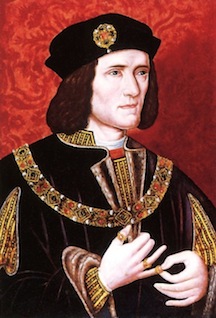
In 1484

Richard III

Richard III

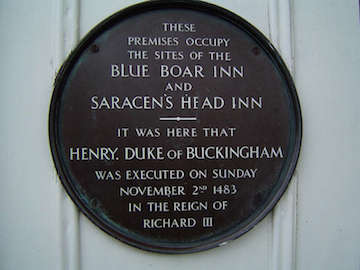
…the hunchbacked Richard honoured Salisbury with his presence; but he was not I expect in the best of tempers, for here to him was brought the Buckingham we have all read of in the play, who had just seized the fleeting opportunity to head an insurrection against the king, in an unprecedentedly wet season in Wales. The result was that he was unable to cross the Severn, and this misfortune brought him too to Salisbury, where Richard was waiting to superintend his execution at what is now the Saracen’s Head.

In the courtyard of this inn, which was then called the Blue Boar, and not “in an open space,” as Shakespeare has described it (as if he were speaking of Salisbury Plain), Buckingham had his head cut oft according to contemporary prescription. We have none of us seen the episode presented on the stage, but we have read the carpenters’ scene, which Shakespeare wrote in, to give the gentleman who originally played Buckingham a chance, and allow a few moments more preparation for Bosworth Field. And we may recollect that it consists princiapply in Buckingham asking whether King Richard will not let him speak to him, and on being told not at all, informing the general company, at some length, that it is All-Souls’ Day, and that as soon as he has been beheaded, he intends to commence “walking”.

plaque2

Although the inn has been replaced by Debenham’s, a department store, some say they have seen or experienced the Duke’s ghost, so ladies, you might want to reconsider using the dressing rooms there—just an FYI.

After Richard and Buckingham, there came to Salisbury in the way of kings, Henry VII in 1491. Henry VIII in 1535 with Ann Boleyn, already in all probability engaged in those sprightly matrimonial differences as to men and the things which culminated the year following on Tower Green. Next in order, came to Salisbury, Elizabeth, bound for Bristol, bent, as on all her royal progresses, on keeping her nobility’s incomes within bounds, and shooting tame stags that were induced to meander before her bedroom windows. After the virgin queen came James I, who liked the solitudes which surrounded the Salisbury of those days, for the two-fold reason, firstly, because they saved him in a large measure from the invasion of importunate suitors (who were afraid of having their purses taken on Salisbury Plain before they could proffer their supplications), and, secondly, because they were well stocked with all sorts of game on which he could wreak his royal and insatiable appetite for hunting. The “open” nature of the country might perhaps be added as another reason for the sporting king’s liking for the place: for James was no horseman, and as he was in no danger of meeting a hedge in an area of thirty miles, the going must have suited him down to the ground.

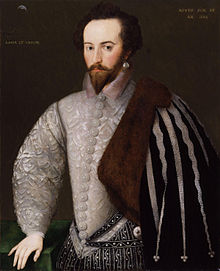
Sir Walter Raleigh

Sir Walter Raleigh

It was also hear that Sir Walter Raleigh, upon his return to England from an unsuccessful expedition to Spain, tried to gain audience with James to explain himself and beg pardon, but was forced to return to London where he was imprisoned and executed.

The merry monarch [Charles II] was here twice, but on neither occasion, I suspect was he peculiarly merry; for after the battle of Worcester, when he lay concealed near the town for a few days, and his companions used to meet at the King’s Arms in John Street, to plan his flight, the Ironsides were much too close on his track to allow opportunity for jesting; and when he came here as king in 1665, all but the most forced mirth was banished from a court which dreaded every day to be stricken by the plague.

 Index to all the posts in this series

1: The Bath Road: The (True) Legend of the Berkshire Lady

2: The Bath Road: Littlecote and Wild William Darrell

3: The Bath Road: Lacock Abbey

4: The Bath Road: The Bear Inn at Devizes and the “Pictorial Chronicler of the Regency”

5: The Exeter Road: Flying Machines, Muddy Roads and Well-Mannered Highwaymen

6: The Exeter Road: A Foolish Coachman, a Dreadful Snowstorm and a Romance

7: The Exeter Road in 1823: A Myriad of Changes in Fifty Years

8: The Exeter Road: Basingstoke, Andover and Salisbury and the Events They Witnessed

9: The Exeter Road: The Weyhill Fair, Amesbury Abbey and the Extraordinary Duchess of Queensberry

10: The Exeter Road: Stonehenge, Dorchester and the Sad Story of the Monmouth Uprising

11: The Portsmouth Road: Royal Road or Road of Assassination?

12: The Brighton Road: “The Most Nearly Perfect, and Certainly the Most Fashionable of All”

13: The Dover Road: “Rich crowds of historical figures”

14: The Dover Road: Blackheath and Dartford

15: The Dover Road: Rochester and Charles Dickens

16: The Dover Road: William Clements, Gentleman Coachman

17: The York Road: Hadley Green, Barnet

18: The York Road: Enfield Chase and the Gunpowder Treason Plot

19: The York Road: The Stamford Regent Faces the Peril of a Flood

20: The York Road: The Inns at Stilton

21: The Holyhead Road: The Gunpowder Treason Plot

22: The Holyhead Road: Three Notable Coaching Accidents

23: The Holyhead Road: Old Lal the Legless Man and His Extraordinary Flying Machine

24: The Holyhead Road: The Coachmen “More Celebrated Even Than the Most Celebrated of Their Rivals” (Part I)

25: The Holyhead Road: The Coachmen “More Celebrated Even Than the Most Celebrated of Their Rivals” (Part II)

26: Flying Machines and Waggons and What It Was Like To Travel in Them
27: “A few words on Coaching Inns” and Conclusion

The Exeter Road: A Foolish Coachman, a Dreadful Snowstorm and a Romance

dust jacket

The following post is the sixth of a series based on information obtained from a fascinating book Susana recently obtained for research purposes. Coaching Days & Coaching Ways by W. Outram Tristram, first published in 1888, is chock full of commentary about travel and roads and social history told in an entertaining manner, along with a great many fabulous illustrations. A great find for anyone seriously interested in English history!

Breakfast at The Three Pigeons Inn, Brentford

Brentford-Market & Three Pigeons

The Brentford Market and the Three Pigeons Inn

In the 17th and 18th centuries when Brentford was a thriving market and resort town, the Three Pigeons Inn was famous for its post-horses, of which it could stable up to one hundred. Its varied entertainments can be found in such literature as The Roaring Girle or Moll Cut-Purse (1611), She Stoops to Conquer (1773), The Merrie Conceited Jests of George Peele—The Jests of George Peele with Four of His Companions at Brainford (1607) and The Alchemist 1610).

Decisions! Decisions!

It’s snowing when our intrepid passengers are refreshed after their breakfast at The Three Pigeons. “…the coachman’s nose beams a benignant purple, and the ostler recommends another glass as an antidote to the weather, of which he presages the worst.”

Following their earlier adventure with the highway (see the previous post), the ladies are more concerned with the possibility of further encounters with outlaws. Mirabel, our gallant hero, squeezes the lovely Belinda’s hand in reassurance and they exchange “delicious looks.”

coach in snow

Upon reaching Hounslow, the coach begins to jolt and stops at The George Inn, where the landlord, who has six empty beds, warns them that the Bath Flying Machine has been snowed up at Colnbrook and that they had best stop for the night. “As sole answer to this appeal, the coachman, full of valour, calls for more brandy, and two more horses to take them over the heath…”

The first thing they encounter is the Salisbury Fly in a snowdrift.

The driver of the Exeter Fly observes this catastrophe, but he does not regard it, or regards it purely as a landmark, and majestically avoids the pit into which his unfortunate brother has fallen.

“The snow drives; the wind blows it full in their faces; the horses begin to show signs of suddenly capitulating.” The coachman whips them unmercifully, but they slow down to a walk. The passengers begin to believe they are lost, but then the snow relents, and the coach pulls in to The Bush at Staines. The landlord counsels them to stay for the night, and the passengers, if truth be told, would like to follow that advice.

Success, stimulant, and the lull in the snow storm have, however, made the coachman daring. He observes thickly that he is an Englishman, and declares his intention of inning at Bagshot for the night, whether the passengers leave the coach or stick to it. Upon this, the young captor of the highwayman [Mirabel] says, blushing with ingenuous shame, that he is willing to go on; upon which the lady [Belinda], blushing also, says that she is willing too. This necessitates the mother also putting her neck in jeopardy, and she, too, re-enters the coach.

brentford to bagshot map

A = Brentford, B = Bagshot

After this, the lawyer and the captain cannot honorably refuse, so the coach takes off with a full quota of passengers, and the snow begins to fall once more. Nerves on edge, the captain and the lawyer bicker, the guard, fearing highwaymen, takes out his blunderbuss, and the coachman tries to urge the horses to go faster as they approach Bagshot Heath. “…but highwaymen are not such fools as to be out in such weather, and the driver, who can see nothing at all, drives into a rut a yard deep.”

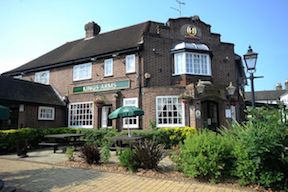
The gallant Mirabel takes the opportunity to rescue Belinda and her mother from the overturned coach, then turning to do the same with the rest of the motley crew. At that point he suggests that someone go on ahead to The King’s Arms at Bagshot to get help.

“The only answer to this appeal comes from the guard, who raises his blunderbuss gravely, and mistaking a too curious shepherd who approaches from behind a bush for a footpad, shoots him…”

The injured shepherd is given a bottle of brandy, and Mirabel, realizing he cannot be in two places at one time, confers the safety of the ladies to the lawyer, and takes off on one of the horses to get help. In under an hour, the rescuers approach, only to be shot at by the guard, who is drunk with power at having just shot the shepherd.

All’s Well That Ends Well

All the way to the King’s Arms he [the guard] babbles of the hundred pounds due him for ridding the heath of a footpad; the shepherd consults the lawyer meanwhile as to damages and as to how an action would lie…Mirabel gently presses Belinda’s hand and the pressure is ever so faintly returned…and the party arrive finally at The King’s Arms, Bagshot where a wonderful display of good cheer oppresses a groaning table—“Iris-tinted rounds of beef, marble-veined ribs, gelatinous veal pies, colossal hams, gallons of old ale, bins full of old port and burgundy.”

And here, in the midst of an old English plenty, my travellers are snowed up for nearly a week. And Mirabel proposes to Belinda, and is accepted; and the man of law drinks a congratulatory bottle of port with the fortunate wooer; and proposes himself to the widow next day, and is refused; and Mirabel drinks a bottle of port with him—a consolatory one this time; and the guard is forgiven by the shepherd; and the captain is rude to Betty the chambermaid, and gets his face slapped for his pains in a long oak corridor; and so in the old coaching days, when Exter was five days’ journey from London, and ladies wore hoops and farthingales, and gentlemen bag wigs and three-cornered hats, the old coaching world went round.

kings-arms

I love a happy ending. Don’t you?

BTW, today you could travel from Brentford to Bagshot in 36 minutes. But perhaps not in snowstorm.

Susana’s August Giveaway*

Susana brought back some lovely treasures from her trip to England, and she’d like to share them with you. This month she’s giving away a lovely mug (purchased at Chatsworth) illustrated with a famous painting of the Duchess of Devonshire.

Click on the image of the mug in the right column to enter the Rafflecopter. A runner-up will win “The Regency: Love’s Golden Age” mug. Enter every day if you wish! Good luck!

*International winners will receive the equivalent in gift cards.


 Index to all the posts in this series

1: The Bath Road: The (True) Legend of the Berkshire Lady

2: The Bath Road: Littlecote and Wild William Darrell

3: The Bath Road: Lacock Abbey

4: The Bath Road: The Bear Inn at Devizes and the “Pictorial Chronicler of the Regency”

5: The Exeter Road: Flying Machines, Muddy Roads and Well-Mannered Highwaymen

6: The Exeter Road: A Foolish Coachman, a Dreadful Snowstorm and a Romance

7: The Exeter Road in 1823: A Myriad of Changes in Fifty Years

8: The Exeter Road: Basingstoke, Andover and Salisbury and the Events They Witnessed

9: The Exeter Road: The Weyhill Fair, Amesbury Abbey and the Extraordinary Duchess of Queensberry

10: The Exeter Road: Stonehenge, Dorchester and the Sad Story of the Monmouth Uprising

11: The Portsmouth Road: Royal Road or Road of Assassination?

12: The Brighton Road: “The Most Nearly Perfect, and Certainly the Most Fashionable of All”

13: The Dover Road: “Rich crowds of historical figures”

14: The Dover Road: Blackheath and Dartford

15: The Dover Road: Rochester and Charles Dickens

16: The Dover Road: William Clements, Gentleman Coachman

17: The York Road: Hadley Green, Barnet

18: The York Road: Enfield Chase and the Gunpowder Treason Plot

19: The York Road: The Stamford Regent Faces the Peril of a Flood

20: The York Road: The Inns at Stilton

21: The Holyhead Road: The Gunpowder Treason Plot

22: The Holyhead Road: Three Notable Coaching Accidents

23: The Holyhead Road: Old Lal the Legless Man and His Extraordinary Flying Machine

24: The Holyhead Road: The Coachmen “More Celebrated Even Than the Most Celebrated of Their Rivals” (Part I)

25: The Holyhead Road: The Coachmen “More Celebrated Even Than the Most Celebrated of Their Rivals” (Part II)

26: Flying Machines and Waggons and What It Was Like To Travel in Them
27: “A few words on Coaching Inns” and Conclusion

The Bath Road: The (True) Legend of the Berkshire Lady

The following post is the first of a series based on information obtained from a fascinating book Susana recently obtained for research purposes. Coaching Days & Coaching Ways by W. Outram Tristram, first published in 1888, is chock full of commentary about travel and roads and social history told in an entertaining manner, along with a great many fabulous illustrations. A wonderful find for anyone seriously interested in English history!

dust jacket

Frances Kendrick: The Berkshire Lady

map

As we follow the Bath Road, Tristram recounts the story of Frances Kendrick, a nineteen-year-old young lady who is fortunate to be not only beautiful and gracious, but also very wealthy and, atypical for the time, retains full control of her life and her fortune. Not surprisingly, nearly every young man she meets falls in love with her and offers her marriage. Many of them are exceedingly eligible, but she turns them all down because she doesn’t reciprocate their feelings. Most young ladies would have felt under pressure to choose one, but Frances has no parents and thus no reason to do so.

Eventually, the rejected suitors get together and start a rumor that Miss Kendrick deliberately leads them on so that she can enjoy their misery when she refuses their offers of marriage. It is all nonsense done out of spite, of course, but it has the effect of nearly ruining her chance of finding true love.

Benjamin Child, Esq. is a workaholic, poverty-stricken barrister who also happens to be unpretentious and quite good-looking himself. Like all the rest, he is instantly attracted to the lovely heiress, and she to him, to the point where her rejected suitors decide to put a spanner in the works by taking him aside and telling him that Miss Kendrick is a soulless thief of hearts. Benjamin doesn’t like the idea of being considered a fortune-hunter anyway, so he takes off for London and tries unsuccessfully to forget about Frances Kendrick.

Poor Frances is heartbroken. She has finally found the gentleman of her dreams, and he doesn’t seem to share her feelings. After discovering the rumors being circulated about her, she is desperate to find a way to prove to him that her character has been unfairly tarnished and that she truly loves him. But how can she do that when he won’t come near her?

berkslady

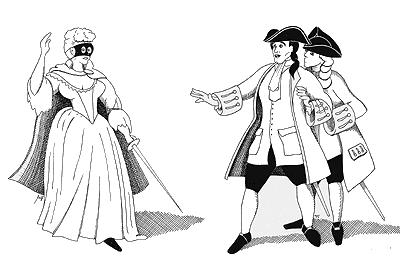
Fight me or marry me!

What she does sounds like a scenario in a historical romance, but it really did happen! Frances issues a challenge to Mr. Child to fight a mortal duel in Calcott Park (part of her estate). Despite the fact that the challenge gives no pretext for the duel, Mr. Child shows up and finds himself facing a masked, cloaked young lady with a sword who tells him in no uncertain terms that he can either fight her or marry her. By this time, he has discerned her identity and, pleased to find that she returns his feelings, agrees to marry her with a special license in St. Mary’s Church, Walgrave.

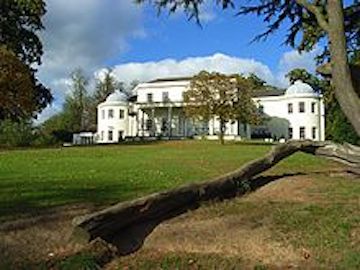
Prospect Park, the site of the famous (non) duel

Prospect Park, the site of the famous (non) duel

I love a good legend, and what a treat to discover it really did happen!

Frances Kendrick and Benjamin Child were married March 28, 1707 at St. Mary’s Church in Wargrave, as you can see for yourself in the parish register. When Frances died in 1722, her eccentric husband had her placed in a lead coffin shaped to follow exactly the lines of her body, which was laid to rest in the Kendrick family vault at St. Mary’s Church in Reading. (The coffin was found and examined in 1820.)

Benjamin sold Calcott House (although he later refused to move out of it and the new owner had to destroy the house to get him out of it), and later moved to a farm on the estate that he remodeled and became what is now known as Prospect House. It is here where the ghost of the Berkshire Lady is said to roam, seeking her true love.

Prospect Park Mansion House

Prospect Park Mansion House

You can read the famous ballad of the Berkshire Lady here. Even better, you can read an 1879 fictionalized version of the story by Katherine Sarah MacQuoid on Google here. (I heartily recommend it!) More details about the story behind the legend are here.

Through the tollgate: an example of the illustrations

Through the tollgate: an example of the illustrations in the book

 Index to all the posts in this series

1: The Bath Road: The (True) Legend of the Berkshire Lady

2: The Bath Road: Littlecote and Wild William Darrell

3: The Bath Road: Lacock Abbey

4: The Bath Road: The Bear Inn at Devizes and the “Pictorial Chronicler of the Regency”

5: The Exeter Road: Flying Machines, Muddy Roads and Well-Mannered Highwaymen

6: The Exeter Road: A Foolish Coachman, a Dreadful Snowstorm and a Romance

7: The Exeter Road in 1823: A Myriad of Changes in Fifty Years

8: The Exeter Road: Basingstoke, Andover and Salisbury and the Events They Witnessed

9: The Exeter Road: The Weyhill Fair, Amesbury Abbey and the Extraordinary Duchess of Queensberry

10: The Exeter Road: Stonehenge, Dorchester and the Sad Story of the Monmouth Uprising

11: The Portsmouth Road: Royal Road or Road of Assassination?

12: The Brighton Road: “The Most Nearly Perfect, and Certainly the Most Fashionable of All”

13: The Dover Road: “Rich crowds of historical figures”

14: The Dover Road: Blackheath and Dartford

15: The Dover Road: Rochester and Charles Dickens

16: The Dover Road: William Clements, Gentleman Coachman

17: The York Road: Hadley Green, Barnet

18: The York Road: Enfield Chase and the Gunpowder Treason Plot

19: The York Road: The Stamford Regent Faces the Peril of a Flood

20: The York Road: The Inns at Stilton

21: The Holyhead Road: The Gunpowder Treason Plot

22: The Holyhead Road: Three Notable Coaching Accidents

23: The Holyhead Road: Old Lal the Legless Man and His Extraordinary Flying Machine

24: The Holyhead Road: The Coachmen “More Celebrated Even Than the Most Celebrated of Their Rivals” (Part I)

25: The Holyhead Road: The Coachmen “More Celebrated Even Than the Most Celebrated of Their Rivals” (Part II)

26: Flying Machines and Waggons and What It Was Like To Travel in Them
27: “A few words on Coaching Inns” and Conclusion

Knole House: One of the Top Five Largest English Homes

grounds

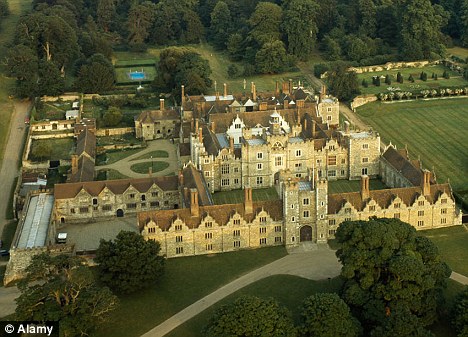
Anyone seeking a stately manor experience within easy reach of London might consider Knole House, in Sevenoaks, Kent. Depending on the train, it’s about 30-40 minutes by train, and my roundtrip fare purchased online was less than 12 pounds. Situated about 1.5 miles from the train station, there are buses from the station. If you go on a weekend in the summer, you can ride the vintage bus that does a simple trip around the town and ends up at Knole. (If you meet Alan or Ian or Ray, please say hi for me!)

deer

It’s a deer park!

An Archbishop’s Palace

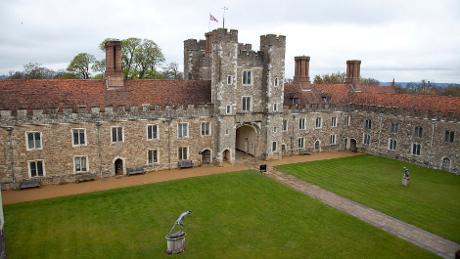
Originally built in 1456 for Thomas Bourchier, Archbishop of Canterbury, who left it to the Canterbury See, the house was later enlarged and improved with a new courtyard—Green Court—and entrance tower. Henry VIII liked it so much that he apparently thought it much too palatial for an archbishop, and he seized it for himself from Thomas Cranmer in 1538.

Green Court

Green Court

The Sackvilles

250px-Thomas_Sackville,_1st_Earl_of_Dorset_by_John_De_Critz_the_Elder

Thomas Sackville

In 1566 the house came into the possession of Thomas Sackville, a cousin of Elizabeth I, and it has remained in the Sackville family (Earls and Dukes of Dorset and Barons Sackville) since 1603. Vita Sackville-West, author of Knole and the Sackvilles, a classic in the literature of English country houses, was unable to inherit the house due to the family tradition of primogeniture, and it passed on to her uncle instead.

Currently maintained by The National Trust, the Sackvilles still own (and occupy) more than half of the house and a large share of the gardens.

The Furnishings

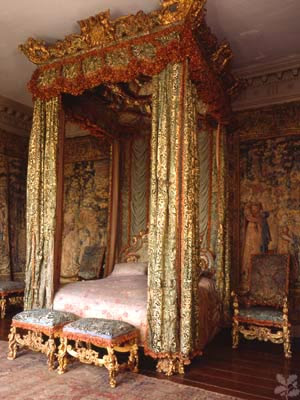
The collection of 17th century Stuart furnishings is unmatched anywhere, primarily because the 6th Earl, in his position as Lord Chamberlain to William III, was able to snatch for himself pieces discarded from royal redecorating schemes.

Toward the end of the 18th century, the third Duke added to the collection paintings by the old masters from his grand tour of Europe, as well as portraits commissioned from (then contemporary) artists Reynolds and Gainsborough.

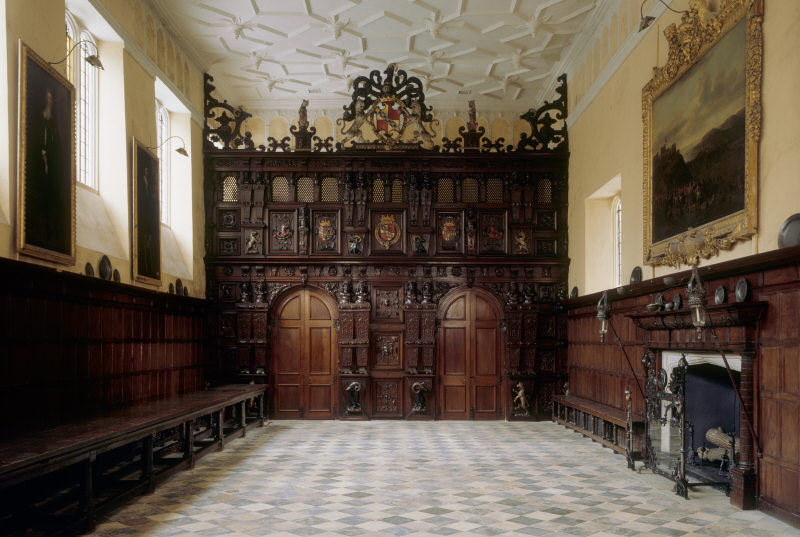
Great Hall

Great Hall

Due to the fact that the house was occupied intermittently and the pieces kept under dust sheets for many years, the visitor will find little changed in this house from the time of the third Duke.


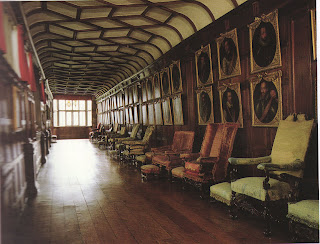
The Brown Gallery

The Brown Gallery

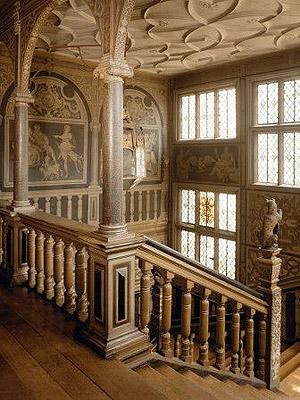
stairway

Notice the image of the leopard (taken from the Sackville coat of arms) on the newel post.


The Venetian Room

The Venetian Room

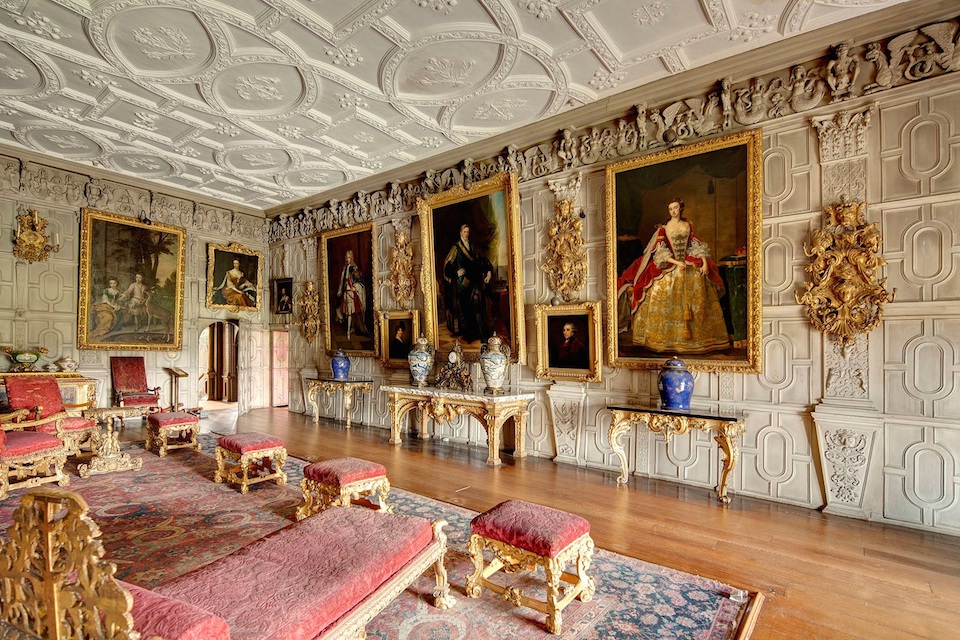
The ballroom

The ballroom

Mirror in the Cartoon Room

Mirror in the Cartoon Room

KNOLE

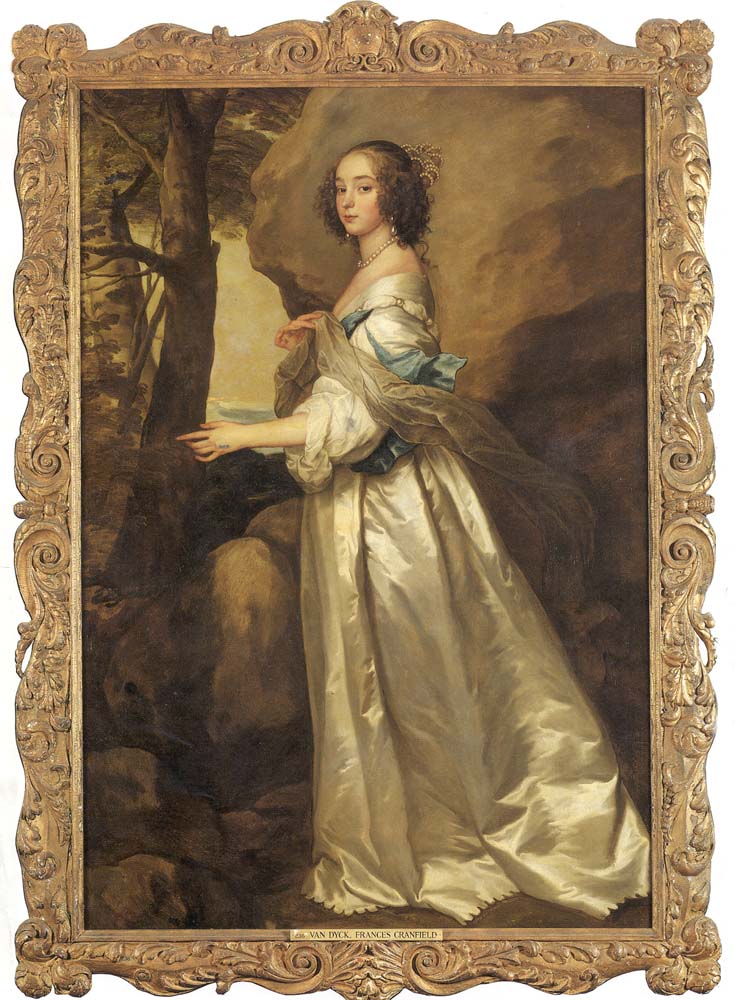
Van Dyke: Lady Frances Cranfield, later Countess of Dorset

A Calendar House

This house may have once been a calendar house, with 365 rooms, 52 staircases, 12 entrances and 7 courtyards, but the current number of staircases is much lower.

For more photos, check out my Pinterest board.

The Banqueting House: An Artistic and Historical Masterpiece

banqueting8

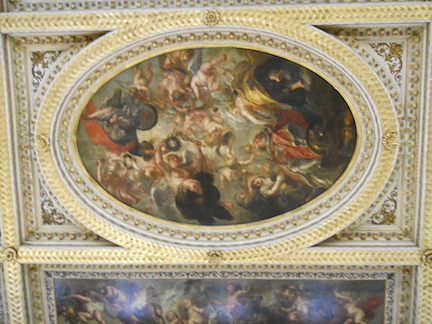
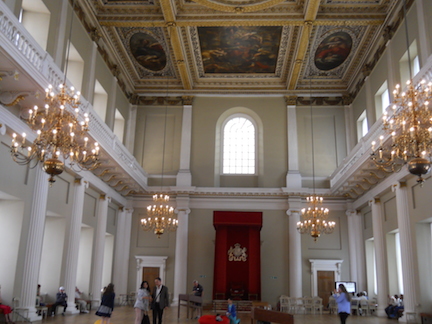
The Banqueting House on Whitehall Street is the only remaining building of the Palace of Whitehall, which was the primary residence of English monarchs for much of the 17th century. In its day, it was the largest palace in Europe, eclipsing even Versailles and the Vatican with its 1500 rooms. Henry VIII married Anne Boleyn and Jane Seymour there (in 1533 and 1536), and it was there where he died in 1547.

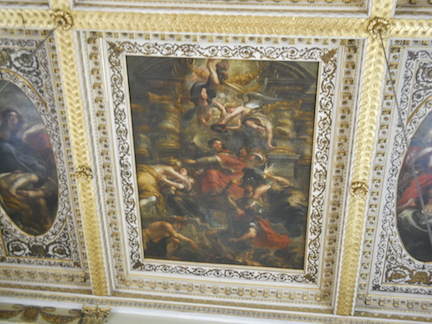
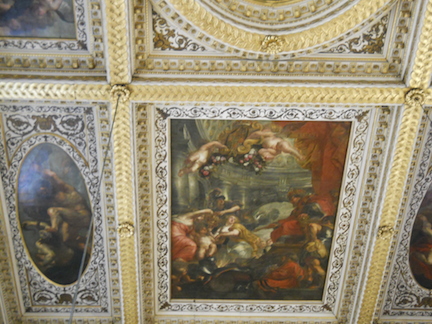
banqueting2In 1622 James I commissioned Inigo Jones to redesign the Banqueting Room, and Charles I was responsible for adding the beautiful ceiling with paintings by Rubens. These paintings, designed to reinforce Charles I’s belief in the divine right of kings, were completed in Antwerp and rolled up for transportation to England, where they were painstakingly laid out and attached to coffers in the ceiling.

Prior to the addition the ceilings, the room was often used for elaborate masques and pageants. Afterward, it was determined that the smoke from the bright lights would damage the ceiling, and it was used primarily for official functions.

It was across this floor that Charles I walked one final time before meeting his fate on the scaffold constructed outside. (So much for the divine right kings.)

banqueting9For some reason, Cromwell chose not to destroy the building as he did so many other buildings symbolic of royal preference. Perhaps because he decided to use it for his own state functions.

Fires in 1691 and 1698 destroyed nearly all the Whitehall Palace buildings, except for this one, probably because Sir Christopher Wren, the reigning architect of the day, had the building next to it blown up to prevent the fire from spreading to the Banqueting House.

A Single Room

While it’s only a single room, it’s definitely something not to be missed. The audio guide that comes with your admission fee is excellent, there are lots of chairs and benches where you sit and gaze at the room while listening, and if you’re very fortunate, you can grab one of the beanbags on the floor and lie prone while admiring the lovely ceiling. When I was there on a Saturday, there weren’t a lot of people there—while I expect everywhere else in Westminster was teeming with crowds as usual—and I could lie there and contemplate the historical and artistic significance of the room in peace.

banqueting3

banqueting5

banquetint4

banqueting6

throne

Kris Tualla and her Discreet Gentlemen

1

Ever find a hero that won’t let go of YOU?

A couple of years ago, I read an article in the Romance Writer Report which stated that women are attracted to a man who “looks at them like they are the only thing in the room.” I found that idea intriguing. So I started wondering, what sort of man would have that kind of intensity?

A deaf man.

So I dove in and decided to write a deaf hero. Because I write historicals and Norsemen, I set him in the 1700s in Christiania (now Oslo) Norway. Next, I needed to figure out what a deaf man could do to support himself, after being passed over as heir because of his hearing loss. He told me he solves crimes because (in his gestures): When people find out I’m deaf, they forget I’m in the room. Plus, he reads lips.

After dragging Brander Hansen through all kinds of emotional torture ~ and having him track a serial killer along southern Norway’s coastline ~ he gets his “Happily Ever After” with the heroine. I typed The End, and thought I was done.

He didn’t agree.

After a few months, Brander nudged me and asked if I was really certain I wanted to let go of him.

I wasn’t.

With a deep breath and a squaring of shoulders, I turned back to look at Brander’s life with his new wife, Regin Kildahl. Turns out, the spunky Baroness wasn’t ready to sit back and enjoy a quiet life either. Enter Desert Breeze Publishing and contracts for FIVE books, based on the strength of the first, “A Discreet Gentleman of Discovery.”

Through 2012 and 2013, we also released “A Discreet Gentleman of Matrimony” (a murder behind locked doors), “A Discreet Gentleman of Consequence” (18th-century version of a Ponzi scheme), and “A Discreet Gentleman of Intrigue” (spy playing all sides).

The fifth book released today through Desert Breeze: “A Discreet Gentleman of Mystery” (a dead body inside a wall of Regin’s ancestral home).

http://www.desertbreezepublishing.com/brands/Kris-Tualla.html

Writing a deaf hero in the 1700s was a challenge, to be honest. Aside from the lack of a formal sign language, the common perception of the deaf was that they were stupid. Of course, Brander turns that to his advantage.

Another challenge was figuring out a way to let the reader know HOW the dialog was being delivered. I decided on:

“Spoken words are in quotation marks.”

Written words are in italics.

And when Brander gestures: His sentences look like dialog, but without quote marks.

Will this book be the last about Brander and Regin? I’m not certain. I have a Renaissance knight stubbornly demanding his turn next, and he’s a trilogy. While Desert Breeze is strongly hinting that they would like more, I’ll have to wait and listen to Brander.

And for a mute-by-choice deaf man, he does have a very loud voice.

adgom                             3

About the Author

kris-tuallaKris Tualla, a dynamic award-winning author of historical romances, writes with a fast-paced and succinct style. Her plots are full of twists, passion, and very satisfying outcomes! Kris started with nothing but a nugget of a character in mind, and has created a dynasty – The Hansen Series. Norway is the new Scotland!

Kris is an active member of Romance Writers of America, Sisters in Crime, and the Historical Novel Society. She is an enthusiastic speaker and teacher, and created Arizona Dreamin’ ~ Arizona’s first romance-reader event!