For anyone who ordered A Christmas Quintet on Amazon and received the wrong book, Amazon has advised us to (1) Ask for a refund on the order page and (2) if that doesn’t work, call 888-280-4331. Simply explain that you purchased the book, it was the wrong book, the book is no longer on your Kindle, and you require a refund.
We humbly apologize for the error and the inconvenience it has caused you.
We are still working on a solution with other vendors.
Della’s Gown for the Lauds’ Christmas Ball
You may know that I am an avid collector of fashion prints. I have a ton of them! When I was writing Della’s Christmas Gift, I started looking around for a ball gown for her to wear at the Lauds’ Christmas Ball in 1801. This is the one I chose for her. You can read about it in this excerpt:
Madame Celeste Modiste
Leicester, Leicestershire
12 December 1801
“Well, I do think the white satin trimmed in gold would become you well, Della, with your dark hair. White is the fashionable color these days. Mama says white is the only appropriate color for young girls to wear in the evening.”
Helena held up the shimmering fabric against Della’s chest while an employee obligingly carried the remainder of the bolt.
“I told you I shan’t wear white,” Della insisted, pushing the fabric away. “White isn’t even a color. I prefer the lavender sarcenet.”
Stepping off the small stool, she selected the lavender bolt and held it under her face in front of the mirror.
Helena took a step back and studied her for a moment. “I must say, it does flatter your coloring. Perhaps with a delicate white handkerchief tied about the neck.”
Della frowned at the white handkerchief idea, but eventually agreed that white was the best trim color for the dress. Necklines for evening were lower than she was accustomed to, and she wasn’t eager to show off too much décolletage. She found her full breasts somewhat embarrassing, not to mention inconvenient when she was out tending the stock. She was secretly envious of Helena’s more elegant figure that better suited the current styles. Her bosoms didn’t jiggle when she moved quickly or danced, nor was she ogled by members of the male sex wherever she went.
After hearing her grumble about this, Helena laughed. “My dear, you don’t know how many young ladies envy your-er-fullness.” She glanced down at her own meager chest. “Mama kept telling me mine would fill out in time, but I haven’t seen evidence of it so far, and I’m a full year older than you are.”
Della’s eyes widened. “But… why? They are so… unwieldy! I’ve tried binding them to my chest, but it’s not at all comfortable, and Thomas and the farmhands laugh at me behind my back.”
A shocked gasp came from behind her. “Oh mademoiselle, you must never do such a thing again! You have lovely high bosoms that should be cherished and prized, even exploited!”
Madame Celeste grinned at Della’s white face. “Poor dear, it is such a dommage you have had no maman to guide you. For she would have advised you that a chest such as yours is highly attractive to gentlemen. Your husband will convince you of that, when you are married.”
Well! Della couldn’t understand that at all. In any case, she didn’t want a husband, unless it could be Toby Boxworth. But he seemed to prefer Helena’s more modest figure.
While she mulled over this contradiction, Madame Celeste and Helena discussed a way of using boning under the breasts in her short stays to provide more support. Following this, the young ladies sorted through ribbons and trims for the neckline and sleeves, purchased a small length of white satin for the headdress, and headed for the haberdashery next door for a few sprigs of silk lavender flowers to dress it up.
“As for slippers,” Helena suggested when they entered the ladies’ shoe shop across the street, “Purchase at least two pairs if you plan to dance. I’ve had mine shred to pieces at a ball and would have had to return home in my stockings had my maid not brought along a spare.”
“Perhaps they should be made sturdier,” Della mumbled as the proprietor approached with a bow. Helena gave her a warning glance before she smiled and spoke to him.
“My cousin wishes to be measured for two pairs of white silk dancing slippers, if you please. They’ll be needed soon, for a Christmas Eve ball.”
“Ah, for the ball at Laud Manor. Come this way, miss. We will get you fitted up in good time for the event.”
“Please, do make them as stout as you can. Miss Paget is extraordinarily fond of dancing, you see.” Helena smiled wickedly at Della, who rolled her eyes.
The shoemaker clenched his jaw. “Our footwear is always sturdy, miss. We serve the best families in the shire, and they never have cause to complain.”
I hesitate to ask this in view of the inconvenience I’ve caused by uploading the wrong file for A Christmas Quintet; however, if you could contribute a review to any book vendors or sites like Bookbub, the Belles would be exceedingly grateful! I never realized a simple mistake could cause such an avalanche of bad publicity!
The Bluestocking Belles have produced a new set of Christmas stories for your holiday enjoyment! They include:
Friends to Lovers—The farmer’s daughter, the viscount’s son, and the estate manager reunite as adults. Della is starry-eyed for the viscount’s son, but is he really the one for her? (Regency, Christmas)
Fake Relationship—When the pressure to marry is overwhelming, can a plan put in place at a Christmas house party turn into a love that will last forever? (Regency, Christmas)
Second-Chance Love—An accident leaves the modiste burned, blinded and in despair until the physician offers hope and stirs memories. (Regency, Christmas)
Country Mouse and Marriage-Shy Duke—Invited at the last minute to make up the numbers, she expects to be an interested observer. The duke has other ideas. (Georgian, Twelfth Night)
Two Spies, One Secret—Trapped in a deserted wilderness, will they set aside secrets and past betrayals to rekindle their love and ring in the New Year together? (Medieval, Hogmanay)
Away From the Holiday Crowd by Sherry Ewing
When the pressure to marry is overwhelming, can one Christmas house party provide a love that will last forever?
David Chadwick, Marquis of Lockhart feels burdened by his title’s responsibilities. Heir to a duchy, he knows he must marry but seeks a genuine connection beyond wealth and status. A chance encounter by the lake with his neighbor’s eldest daughter opens his eyes to the possibilities that might blossom between them.
Lady Elinor Lacey has yet to find a man she would consider for her husband. But time is running out when her father demands she pick an eligible lord by Christmas. When the Marquis of Lockhart shows up at the edge of their property, she sees him in an entirely new light, giving her hope.
Their conversation becomes easier the longer they converse. David and Elinor begin concocting a plan to give them more time to find their perfect match. What could possibly go wrong? But as love begins to enter the picture, can the two of them go beyond their original plan and let love into their hearts?
Should Auld Acquaintance Be Forgot? by Alina K. Field
Dreading meeting an old enemy at a Yuletide house party, Madame Marie La Fanelle, an acclaimed London modiste, has a clumsy encounter with a lamp that leaves her burned, blinded, and in terror of the future.
But then a kind German physician appears, offering a hopeful diagnosis, and stirring memories of the man she once loved. Can the magic of the holidays heal Marie’s blindness and soften the hardened hearts of two prideful lovers?
Maryann and the Twelfth Knight by Jude Knight
Maryanne is only at the house party as chaperone for her half-sister. She is far too old and insignificant to attract the attention of a duke. Or, at least, if he is pursuing her it cannot be for honorable purposes.
Dell knows it is time to take a wife, but the offerings of the marriage mart bore him to tears. The only lady of interest at his sister’s house party is the spinster chaperone. But she isn’t eligible, is she?
Her Hogmanay Spy by Rue Allyn
In the winter of 1296, can a Scottish Lady and an English knight survive shipwreck, winter in the wilderness, and a betrayal that could break hearts to bring in the new year with a love for all time?
Excerpt: Della’s Christmas Gift by Susana Ellis
Paget House
Ibstock, Leicestershire
15 September 1801
“LAUD’S HEIR RETURNS FROM GRAND TOUR. In search of wife, says reputable source.”
Della’s brother threw down the latest copy of The Teatime Tattler and snickered. “Poor sod’s too young for a leg-shackle. Doubtless Lady Laud’s pressing for grandchildren. Mothers!”
Their father lifted an eyebrow. “If your mother were still alive, you’d be wed by now, Thomas. I suppose I’ve been negligent on that front. You’re what, thirty now? Ought to be settled down.”
Thomas’s fork clattered when it hit his plate. “And who would I marry? Some farm girl like Della here? If I were a banker’s son I could look higher.”
Della winced and her father’s face turned red. “THOMAS! Apologize to your sister this instant!”
“Sorry,” he mumbled. But Della could tell he wasn’t sincere, even before he added, “But dammit, she should be wed by now too. But what choices does she have, as a farmer’s daughter? We should all be better off if we sold out and went into banking.”
Thomas Sr. pounded the table hard enough to rattle his plate. “ENOUGH!”
Both of his offspring stiffened and stared at him incredulously. Their father rarely lost his temper, and never at the breakfast table. But there had been more than a few arguments recently, Della mused.
“This farm has provided you an easy life, Thomas. You’ve been handed everything you need and want, even a chance for a superior education at Cambridge, which you squandered by neglecting your studies in favor of—er—” he swallowed as he glanced at Della“studies of a different sort.”
Della snorted and promptly looked down at her lap when her father gave her a stern look. Well really. She was twenty years old, the same age as Thomas when he returned home from Cambridge in disgrace. Did they really believe she hadn’t heard all the stories about his misdeeds there? Rumors had been rife at the time, and although she might not have understand exactly what they meant at the age of ten, she had since apprehended them more clearly.
“I’m inclined to believe that this self-indulgent lifestyle you’ve embarked on can be attributed to the influence of the useless young lords with whom you caroused first at Harrow and then at Cambridge.” He shook his head. “Your mother would be ashamed, Thomas.”
His son had the decency to drop his chin.
And well he should, thought Della. He’d had the good fortune to have had a mother, at least. She’d never had that opportunity, her mother having died at Della’s birth.
Their father pushed back his chair and rose from table. “Thomas, your jaunts to London and York and all points in between are now cancelled. Henceforth, you will spend your time at Paget & Sons, employed in furthering the interests of our sheep and cattle.”
Folding his arms in front him, he glared at his son. “In case you’ve forgotten all you’ve been taught over the years, I’ll put the lad in charge to refresh your memory.”
With that, he marched out of the room.
Della giggled. The image of Thomas being bear-led around the farm by the much-younger estate manager seemed dubious at best.
He slapped the table. “It’s not funny! I don’t care a jot about sheep and cattle, and you all know it! Besides, I have a shooting party next week. It’s almost the end of the grouse season.”
Della’s hands curled up. “You should care. This farm will be yours someday! It’s in your own best interests to ensure its prosperity.”
Thomas’s lips curled. “It’s been losing money for years. By the time it comes down to me, it’ll be worth a pittance. Best to sell out now and put the capital where it can do some good.”
Tilting his head, he studied her with a gleam in his eye.
“If I’m not mistaken, you are out there with the cattle every day. And Kit too. Now there’s a match for you—the rustic farm girl and the penniless estate manager.”
Della tossed the remainder of her sausage at him. “You are horrid, Thomas.”
“And you’re a twit,” he threw back as he exited the room.
Della heaved a sigh. It wasn’t that she didn’t like Kit. He’d been one of her best friends forever. But as for marriage, she had something else in mind.
Reaching for the Teatime Tattler, she smoothed her fingers over the headline. Toby was looking for a wife, was he? Well, she intended that he look no further than the neighboring estate.
What’s in the box? Hints:
• something Christmas-connected
• something tea-connected
• 2 somethings France-connected
• 2 somethings writing-connected
And, of course, the box is a prize in itself!
Contest ends December 1, 2024. The entry with the most correct answers will win the prize. In the event of a tie, the winner will be chosen randomly.
About the Bluestocking Belles
The Bluestocking Belles (the “BellesInBlue”) are eight very different writers united by a love of history and a history of writing about love. From sweet to steamy, from light-hearted fun to dark tortured tales full of angst, from London ballrooms to country cottages to the sultan’s seraglio, one or more of us will have a tale to suit your tastes and mood.
Susana and her sisters have just discovered that they are going to participate in the Season in York, and they are excitedly planning how to manage wardrobes for the seven older girls when they have scarcely enough money for one. Thankfully, Susana is a quasi-professional dressmaker, and she can help them create a wardrobe that all can share with enough clever disguises.
“You know, Susana, I think there are some gowns and things of Mama’s up in the attic. Perhaps from our stepmothers as well, although I believe Martin removed his mother’s things for Chloe.”
“Well, he can just bring them right back, since our stepsister is to be presented too.” They knew Chloe well; she’d lived with them until her mother’s death, when her brother Martin and their guardian, their mother’s brother, took her in. She visited her half-sisters Emma and Merri occasionally. And Martin, relieved to have Patience take on Chloe’s presentation, had eagerly provided funds to pay for the ball. And her wardrobe, so that was one sister Susana did not have to clothe.
“Let’s take a look.”
It had been years since she had perused her mother’s things. Nine years since her death, when the maids had packed up her possessions and banished them to the attic. And fortunate indeed that they had made their way to Starbrook after the family had been exiled from the main house. No doubt the newest Lady Seahaven would have organized a bonfire for all of her predecessors’ belongings.
Not a nice thought, she chided herself. But it was hard to think well of the usurping Seaheavens, who had inherited and dislodged them from the home they had known all their lives.
Mama, she thought as they opened one of the chests that held her things. You were the same age as Barbara when you left us. How I wish you were still here.
The Lady Seahavens hadn’t moved much in society, as their thoughtless husband saw no need to take them along when he traveled to London, for Parliament, and other things. His ladies had no need of extravagant gowns. But they did socialize with the local gentry, so Doro and Susana did find a few of their mother’s evening gowns. Of course, they were nine years out of fashion, but Susana thought she could make them work with a few alterations. The trims were a bit worse for wear, but there might be a way to revive them.
“Oh, look at this!”
Doro held out a doll, about sixteen inches long, wrapped in delicate tissue paper. The head and body were carved of a single piece of wood; the legs were of wood too but separately attached to the torso. The upper arms were formed of stuffed linen, also attached to the torso, wooden lower arms and hands attached to those.
“I remember this!” cried Susana. “Mama showed it to me once and said it was made to resemble the Duchess of Devonshire. See the hairstyle and the wide bonnet! She has all the undergarments too! And the sash: she’s dressed for the 1784 election campaign. Mama said her grandfather had it made for her. It wasn’t a toy, though. It’s a Pandora. A fashion doll. That’s why she wouldn’t let me play with it.”
“It’s beautiful,” said Doro wistfully. “It shouldn’t be left in old trunk.”
“If we put it out somewhere, we’ll have to be sure Emma and Merri don’t get their hands on it.”
“And Jane,” Doro added absent-mindedly. “Look at the quality of the material—the stockings, the chemise, the petticoats. And there’s a corset too—looks exactly like the real thing!”
Susana ran her finger along the blue silk overdress. “The silk is very fine. I would say French, coming from that era.” She turned to the reverse side and gasped. “It’s English. It’s stamped Macclesfield Silks.”
Macclesfield Silks. Where Blaise had gone to work. With a man called Thomas Pemberton.
“Doro,” she said slowly. “What was our mother’s birth name?”
Doro squeezed her eyes shut. “We never met them, for some reason. Mama never spoke of them. I suppose they disapproved of her marriage, although most people would be over the clouds happy for their daughter to marry an earl.” She grabbed Susana’s arm. “Pemberton! Her name was Maryann Pemberton!”
Susana’s mouth fell open. Could it be true? She and Doro and Barbara related to the Thomas Pemberton of Macclesfield Silks?
“A cup of tea,” she said. “I need a cup of tea.”
Pandora Dolls
Many of you know that I collect fashion prints. I have a ton of them and love them all. But in the time prior to fashion prints, there were fashion dolls. One of them was called a Pandora.
How on earth was a fashionable lady in the 18th century able to keep up with the latest trends? The answer was the Pandora, or miniature dolls dressed up in the latest modes. Keep in mind, this was long before magazines were invented—and the first ones were incredibly rare and expensive, as they were hand-painted by groups of (probably shockingly underpaid) little girls and young women! Clothing was also far more expensive than it is today, so it was important to know all the details of the cut, colour and fabric that you wanted.
In 1712, when Britain and France were at war with each other, Pandora dolls were exempt from the ban on enemy imports, and even received a military escort! Marie-Antoinette, when preparing to go over to France from Austria, got sent a host of these dolls in different fabrics and fashions.
Today, fashion victims use fashion magazines, shows etc. to become informed about fashion news. But what sources did they use in the 18 th century to catch the latest trends when none of these media existed? Long before the first Barbie appeared, there already existed a doll that wore lavish wardrobe and matching accessories but didn’t function as a toy at all. This paper examines how a doll called Pandora was sent abroad by French dressmakers to promote and sell Parisian fashion around the world. First, Pandora had to conquer the royal houses in Europe. Then, she made her way into the department stores and finally into the bourgeois home. Interestingly, her triumphal procession did not stop there: By the middle of the 18th century she had even crossed the Atlantic to be exhibited in Boston and New York….
The doll’s body and head were carved by hand from one piece of wood, which had been turned on a lathe. The legs were made separately and attached at the hips and knees to the Pandora’s body. The lower arms and hands were also crafted of wood; in contrast the upper arms were ‘[…] made of either soft linen fabric or kid leather, attached to the torso’.Most dolls had painted eyes, but some of them had sparkling glass eyes, which was more labour-intensive because for this purpose the doll maker had to carve diamond-shaped holes into the head and then inserted blown glass balls….
Furthermore, the fashion dolls all had either painted hair or wore wigs made of flax or wool. The hair of the dolls was designed to be worn in the popular style of the time because it was absolutely essential that besides wearing the right clothes, the Pandora had the latest hairstyle as well as accessories that matched her wardrobe. Interestingly, although most 18 th century dolls represented women or girls, there also existed male, boy and even infant dolls. Unfortunately, the vast majority of these fashion figures of the late 17 th and early 18 th century have not withstood the test of time. This is due to two reasons: Firstly, the unwieldy size of the dolls and secondly, the material that was used to make them….
An English 18th –century fashion doll in the Fashion Gallery at the V&A. There are 6 fashion dolls in the same room.
Intended as advertisement for the French fashion and the dressmakers, the dolls functioned as mannequins and were dressed in a petite-size version of everything a fashionable woman needed to wear, including the proper foundation garments, which meant that the Pandoras were outfitted head to toe and displayed the latest fashions concerning clothes and hairstyle. ‘By the seventeenth century, when these French figures were known as “Pandora,“the dressing of the head and hair was as important as the garment’. The doll’s outer garment was a dress made of highest quality cloth: linen, cotton, wool brocade or silk, followed by a petticoat or multiple layers of petticoats, which gave the dress or skirt the desired fashionable shape. The hoop petticoat or wicker, also known as panier, was part of the women’s underwear and consisted of a basket. ‘They [the petticoats] could get as wide as 18 feet (5 metres), and satirists talked of hoops of 7 or 8 yards (6 or 7 metres) wide’. The extremely wide framework of the hoop made it difficult for women to walk through the doors, sit down on a chair or in a coach. Some even wore a stomacher, which was in fashion throughout the 17 th and 18 th century in Europe and North America. The stomacher was a v-shaped piece of fabric made either of the same material as the dress or of contrasting materials. It was worn across the chest and stomach and embroidered or decorated with pearls or other gemstones. Other key characteristics of women’s clothing that were also part of the fashion dolls’ outfit were corsets and linen shifts. Knitted stockings, shoes, a muslin cap and jewellery often completed the outfit.
Another question is: who were the potential buyers of the fashion dolls? First, the dressmakers and tailors purchased the fashion doll. Above all the Pandoras functioned as display and show items. Since fashion was extremely expensive, the rich costumers wanted to have a look at what they were going to spend their money on….
The French doll makers received orders from all over the world, since almost every British women of that time wanted to have their one little mannequin to keep abreast with the latest Parisian fashion trends. In the Augustan Age it was very common not only to adopt the French customs, etiquette, lifestyle and manners but also the clothing fashions. It is remarkable how widely the dolls were distributed geographically in the 18 th century. They were not only dispatched throughout Europe but were also shipped across the Atlantic. Travelling around the world in the name of fashion, the Pandoras took over two functions: on the one hand, they were the ideal advertising vehicle for French fashion; on the other hand, they served as a kind of diplomatic representation of France. The fashion doll became one of the most important and popular French export goods.
And then I discovered that newly-created French court fashion dolls can be purchased on Etsy. You might have to sell your family heirlooms to buy them, but one can dream!
The print of the Coal Exchange is intended to represent that busy period of the day when buyers and sellers meet for the purpose of completing their old bargains, and making new ones. The groups are disposed with so much felicity, that they form a pleasing foreground, and break in the architectural perspective without diminishing its effect. A collection of individuals, meeting with a view to their separate interests, necessarily describe the same passions, varied only by the difference of character upon which they operate; but the artist has given an expression to the group on the left hand very different from either of the groups on the right: the simplicity which distinguishes one of the figures is highly characteristic. The tall figure with a paper in his hands behind him, appears intended to represent a trader of the old school, and forms an admirable contrast to the buckish nonchalance of the more modern merchant leaning against a pillar. The aldermanic figure which appears to be resisting the eloquence of an inferior tradesman, is happily contrasted with the spare and meagre figures which compose that group. There’s an arch simplicity in the countenance of the orator with a pen in his hand, that seems to bespeak confidence as well as attention. There is a chaste correctness in the whole picture, highly creditable to the taste of the artists, and it produces altogether an effect which the subject scarcely promised.
This building was purchased, in the year 1805, by the corporation of the city of London, from the merchants and factors whose private property it had been, for the sum of 25,400/. in pursuance of an act of the 43d George III. intituled. An Act for establishing a free Market in the City of London for theSale of Coals, and for preventing Frauds and Impositions in the Vend and Deliveryof all Coals brought into the Port of London, within certain Places therein mentioned.The powers granted by this act have been altered and enlarged by subsequent acts of the 44th, 46th, and 47th George III. The property of the land and building is vested in the lord mayor, who is empowered to receive a duty of one penny per chaldron (or ton, if sold by weight,) on all coals, CINDERS, or CULM, brought to the port of London: the object of this duty is to repay the purchase money, and to support the expences of the establisment; when a sufficient sum for this* purpose has been raised, the duty is to cease. The business of the Coal Exchange is conducted by fifteen gentlemen, called the Board of Sea-Coal Meters. In their office is taken the metage duty above-mentioned; and also the orphan duty, which is collected by the principal clerk (as deputy for Mr. Alderman Newnham). There are two clerks in this office, and about one hundred ship-meters, assisted by labouring meters. The duty on metage is one shilling, to be paid for every live chaldrons or one vat, which is paid into the Chamber of London by the meters upon oath. Their business is, to deliver all coal-ships that come into the port of London. Every ship, within twenty-four hours after her arrival at or to the westward of Gravesend, is obliged to send an affidavit of the quantity and quality of her cargo; which, unless freighted for government, must be sold in the open market. Any merchant or owner may bring their own coals into this market, without the intervention of a factor or middle man, in quantities not less than twenty-one chaldrons. Every sale must be in the regular appointed hours, from twelve to two; and the price of the coals, with the name at full length, of both buyer and seller, entered in a book, a copy of which must be given to the clerk of the market, who is to keep a register of each sale: the penalty for not delivering such copy to the clerk, is not exceeding 100/. nor less than 20/.: any fraudulent bargain, such as the making an entry of one price in the market, and agreeing upon some deduction or abatement to be allowed afterwards, subjects the offender to a like penalty.
The Land-Coal Meters is another department: there are three principal meters for the city of London at present, but the establishment will be reduced to two at the death of any one of the present holders of that office. Their business is, to inspect by themselves, or by their deputies and labouring meters cause to be inspected, the admeasurement of coals sold by wharf measure. Others are appointed for Surry and for the city of Westminster. In London, the principal meters are appointed by the lord mayor and court of aldermen, and are liable to be fined or discharged for neglect of duty or malversation in their office: their jurisdiction extends over the city of London and its liberties, and from the Tower to Limehouse-Hole. The principal meters for Surry are elected by the churchwardens of the different parishes, and are, for neglect or other offences, under the controul of the quarter sessions for the county: their jurisdiction extends over all the parishes on the southern banks of the Thames, from Egnam to Rotherhithe. The principal meter for Westminster is appointed by the king, and under the controul of the magistrates. There are three clerks of the market, and also a beadle, who resides in the house.
It is impossible in our limits to enter into the minutiae, but a general idea of the extent of this important trade may be formed from an average estimate taken from the books, by favour of Mr. W. Drummer, principal clerk in the Sea-Coal-Ship Meters’ Office, and deputy receiver of the orphan duty. The number of the ships employed are from three hundred and fifty to five hundred, which make about four thousand seven hundred voyages, and bring to the port of London the amazing quantity of 960,000 chaldrons of coals, yearly.
A duty of one shilling per chaldron on all coals brought from Newcastle-upon-Tyne to the port of London, was granted by King Charles II. to Charles Lenox, Duke of Richmond, his natural son by Lady Louisa Renne de Pennecourt, a lady who was brought over by his sister, the Duchess of Orleans, in the year 1760, for the express purpose of making a conquest of that amorous monarch, with a view to confirm him in the French interest: in this project she completely succeeded, and retained her ascendency over him till she died. Charles created her Duchess of Portsmouth, Countess of Farnham, and Baroness Petersfield: Louis XIV. also, at his request, conferred on her the title of Duchess of Aubigny.
In the year 1799, government thought proper to purchase of the late duke his right to the duty on coals above-mentioned. It appears, from the books in the Sea-Coal-Meters’ Office, that it brought in to the duke from 22,000/. to 24,000/. per annum: he, however, agreed to accept from government an annuity of 20,000/. for his own life and that of the present duke.
St. Paul’s Cathedral was principally built by several duties on coals. By the 22d Charles II. from 1670 to 1677, two shillings per chaldron was laid on coals, from thence to 1680, three shillings per chaldron, one fourth to be applied to the building St. Paul’s; 1st James II. from 1687 to 1700, one shilling and sixpence per chaldron, two thirds towards the building; 8th William III. from 1700 to 1708, twelve shillings per chaldron, two thirds for the use of St. Paul’s; 1st Anne, for eight years from 1708, two shillings per chaldron, the whole for this great purpose.
One of the first stops on my recent sojourn in the UK was this 1824 workhouse, near Nottingham. I was staying in Leicester at the time, so I arrived there by rail and taxi, in time for a fabulous tour by a knowledgeable guide. I expected to hear terrible stories about suffering and starving and desperate, mistreated inhabitants. Surprisingly, that was not the case.
While workhouse life was no picnic for its inmates, it was almost certainly better than the alternative; starving to death, dying of exposure, and having to watch your children and family suffer along with you. Before workhouses, the needs of the poor were to be attended to by the local parish. No doubt this system offered assistance to many, but it often came with resentment by the better-situated residents who had to fork up the funds to pay for it. Nobody likes to pay taxes, no matter what their economic situation. But if you’re working your butt off and just managing to get by, you might well resent some people getting taken care of with your money.
Dr. J.T. Becher, Founder
Then came the Rev. John Thomas Becher. He was Vicar-General of Southwell Minster from 1818-1840. A social reformer, he was instrumental in the creation of this prototype of 19th century workhouse that was cited by the Royal Commission on the poor law as the best example among the existing workhouses, before the New Poor Law of 1834 led to the construction of workhouses across the country. (Wikipedia)
The purpose of the workhouse was to provide an institution to feed, clothe, and house the poor in one place, which would supposedly be a significant savings to the parish. Which it did.
But, you ask, wasn’t it a horrible, prison-like existence to be an inmate there? Well, no. It wasn’t a prison at all. You could leave at any time, if you thought you could fare better elsewhere. And if you were wrong and wanted to come back, they might even take you back.
It wasn’t an easy life, but you had your basic needs met, and maybe even a few more. Many children did not go to school in those days (if they did they went on Sundays only and worked at home or at outside jobs the rest of the week), but this workhouse provided a school and a teacher for the children who lived there. These children would have a better chance to survive on their own when they were old enough to leave.
A pail of oakum
Of course, everyone who was able-bodied did have to work. Hard. Some of the work could be caring for those who were not able-bodied. Or it might be cooking or sewing or cleaning or laundry, if you were female. The males did the vegetable gardening and maintenance tasks. In the fall, they were sometimes hired (at cheap wages) by local farmers to bring in the harvest. Profits from their activities came back to the workhouse coffers. One particularly odd task suited for men and women who were incapable of hard physical work was to recycle old cords from sailing ships by “picking” (untangling) them. It was slow, tedious, and hard on thumbs and fingers. Men were assigned to pick 4-1/2 lbs. a day and women 3-1/2. Can you imagine? But pretty much everyone had to do their part. Because, you know, it brought in money, and they can’t be a burden on the taxpayers, can they?
The men, women, and children were segregated at Southwell’s workhouse. Which doesn’t mean they didn’t see each other. The women had to go into the men’s quarters to clean, and they may have glimpsed each other at meals. But they all had separate living and sleeping quarters and separate outside patios. No hanky panky here, even for married couples.
Except for the Master and Matron. This married couple who presided over the workhouse had their own separate living quarters. They managed the finances (although the advisory board made most of the decisions), kept records, and pretty much kept things running smoothly.
The building was in use up to the 1990’s, not as workhouse, but as a temporary residence for mothers and children. The National Trust acquired it after that, and had it renovated in the early 2000’s until it was opened to the public in 2002.
That’s not to say that all workhouses were similar to this one. It’s quite likely that many were as horrific as we assume them to be. I’m sure I’d rather not be inmate of any workhouse. But it provided help for many people who needed it at the time.
The annexed print is a very accurate and interesting view of this celebrated chapel: the general effect of the architecture is simple and agreeable. There is a singularity in the pillars; those in the second range in the galleries do not stand perpendicularly upon those under them, but are removed a little more backward: this is mentioned to account for the singular appearance they have in the view, and which might otherwise have been supposed to have proceeded from some error in the artist: in truth, the perspective in this, as in every production of Mr. Pugin’s, is always accurate, and conducted with real taste and elegance. The various groups of figures are designed with great spirit, and are highly characteristic of the groups we usually meet with in a Catholic chapel: the general effect of light and shade is broad and simple; the principal light being thrown upon the altar is highly judicious, and is productive of the happiest effect: the picture by Rigaud is in his best style, and the other decorations of the altar are extremely elegant.
The Catholic Chapel in Duke-street, Lincoln’s Inn Fields, was first opened in the reign of James II. and has continued ever since, with very little interruption, as a place of worship for the Catholics.
In the year 1762 it was burned down by accident, and soon after the present structure was erected, at the expence of the King of Sardinia, from a plan by Signor Jean Baptist Jaque, an amateur of architecture, and secretary of Count Vizi, the Sardinian envoy to the British court.
His Sardinian majesty was at all the expence of this chapel till he lost Savoy and Piedmont by the French revolution: at present it is principally supported by voluntary contributions.
The dreadful riots. of June 1780, were produced by the misguided zeal of Lord George Gordon, who having held out to the populace, that the church was in danger from an act which was passed, affording some relief to the Catholics, called a meeting of the Protestants in St. George’s Fields; and they, to the number of fifty thousand, signed a petition for the repeal of the act, and a 2 went in a body, with Lord George Gordon at their head, to present their petition to the House of Commons: they called themselves The Protestant Association. These people, though perhaps mistaken, were however generally respectable and orderly; but the cry of “No Popery” had spread among the lower orders of the people, who, incited by a set of abandoned and desperate wretches, involved the metropolis in all the horrors of anarchy and disorder.
Ignatius Sancho, in his letters, gives a very lively and animated description of that dreadful period. On the 2d of June, the day appointed for the consideration of the wished-for repeal. Lord North just got to the house a quarter of an hour before the associators arrived in Palace-yard. By the evening there were at least an hundred thousand poor, miserable, ragged rabble, from twelve to sixty years of age, with blue cockades in their hats, besides half as many women and children, all parading the streets, the bridge, and the park, ready for any and every mischief. Lord Sandwich was wounded by them, but was rescued by the guards. A large party of them went about two in the afternoon to visit the king and queen, and entered the park for that purpose, but found the guard too numerous to be forced, and after some useless attempts, gave it up. The Catholic Chapel, the subject of this article, was attacked by the mob and materially injured: with much other valuable property, they destroyed a fine-toned organ, and a very fine altar-piece, painted by Casali: the Sardinian ambassador offered live hundred guineas to the rabble, to save the picture and the organ; but they told him, they would burn him if they could get at him, and instantly destroyed them both.
These dreadful scenes continued to disgrace the metropolis till the 9th of June, when the rioters were suppressed, after having destroyed the premises of Mr. Langdale, an eminent distiller, on Holborn-Hill; numbers of them miserably perished in the flames, intoxicated to stupefaction with the spirituous liquors, which were set running down the kennels.
The mischief executed by these wicked and infatuated wretches was enormous. The Fleet prison, the Marshalsea, King’s Bench, both compters, and Tothill Fields, with Newgate, were forced open; Newgate partly burned, and three hundred felons, from thence only, let loose upon the world. The King’s Bench also was burned. The insurgents visited the Tower, but found it too strong for them. But so supine and feeble was the government of the city under Braek Kennett, then lord mayor, that the mob succeeded at the Artillery-ground, where they found, and took to their use, five hundred stand of arms. The Bank was threatened, but preserved by a detachment of the guards. Lord Mansfield’s house was completely destroyed; and, to the irreparable loss of learning and science, his valuable library and collection of manuscripts, which had been the labour of many years and great expence to bring together, devoted without mercy to the devouring flames.
The military power at last restored the affrighted capital to order. The obnoxious bill was repealed; many of the rioters were hanged, and Lord George Gordon committed to the Tower: he was afterwards tried and acquitted, hut was put in charge of his friends as a lunatic. It is whimsical, that this hero of the Protestant religion, when he was some years after confined in Newgate for a libel on the Queen of France, turned Jew.
To return to the chapel: it was again restored. The picture was replaced by one painted by John Francis Rigaud, R. A.; it represents Christ taken down from the cross, and is one of the best productions of his pencil. The new organ is much esteemed by connoisseurs; it was built by England.
All the church service, except the sermon, is in Latin. The masses are sung by the choir, which is under the direction of the organist, who is generally the composer of the music performed there. This chapel can boast of having had some of the most eminent British musicians for the directors of the choir, among whom the celebrated Dr. Arne was organist for several years. Mr. Samuel Webbe now holds that situation, a gentleman who is not only eminent for the grave and solemn style of his church music, but has also gained high reputation for the beauty and sprightliness of his lighter compositions.
Alicia’s story begins in The Third MacPherson Sister, where her unkindness results in Rebecca MacPherson’s unceremonious removal from London. But the spoiled duke’s daughter suffers repercussions as well, and for the first time she yearns to be a better person. Perhaps the handsome young vicar might be able to help her.
Evan and Alicia are strongly attracted to each other, but she’s not for him. Her wealth and status—and his past—stand between them.
What will it take for this pair to realize that love is the only thing that matters?
“My ankle,” she said, wincing as she pointed to her left boot. “I think it’s swollen because I can’t get the boot off. Watch out for the marshy spots!” She warned him as he came to a clump of high grass. “I forgot the fens extended into Blackburn land. Merlin—that’s my horse—stepped into one and unseated me when he pulled out his foot to escape.”
“I see. And Merlin-er-bailed out on you?”
“Not at all,” she said with a superior look. “Merlin is a highly-trained stallion, you know. I sent him home to fetch help. But it’s much better that you have come along. It will be dark soon, and I wasn’t sure how long it would take them to find me.”
He caught a hint of fear in her golden-brown eyes before it was replaced with confident self-assurance.
“It would be my pleasure to escort you home, Miss—?” Then he realized she didn’t know him either, so he added hurriedly, “Evan Campbell, at your service.”
“Lady Alicia Howland, from Huntingdon Manor,” she said with a bright smile on her imminently kissable lips. Where had that thought come from?
He bent down and examined the boot. “It will have to be cut off. I’m afraid I don’t have a knife with me, however. I suppose the thing to do is to carry you to my cart”—he was suddenly embarrassed by his humble equipage— “and convey you to Blackburn Court where a doctor may be summoned.”
She nodded hesitantly. “I suppose you are right. Huntingdon is only a mile from here as the crow flies, but this little mishap has caused me to recall that it’s best to take the road than risk the fens this time of year.”
As he bent down to gather her in his arms, she added, “I think you’d best use the gate this time. I hope I’m not too heavy.”
“I’ll manage,” he said shortly. At six feet two and broad-shouldered, he was hardly a weakling. Was she afraid he would drop her?
She was no lightweight, though. Taller than average, with curves in all the right places, she was a pleasing armful rather than a burden. The feel of her arms around his neck and the proximity of her chest to his made his body stir with desires he hadn’t felt since… well, not for a very long time. He thought he’d managed to drive out the old Evan, the dissolute young man with nothing to do but seek his own pleasure. But there were times when his nemesis came back to haunt him. Like now, when he held a beautiful woman in his arms.
About Susana Ellis
Susana Ellis is a retired teacher, part-time caregiver, sewist, cook, and fashion print collector. Lifelong reading and a fascination with history led her to writing historical romances. She is one of the original Bluestocking Belles and a member of Regency Fiction Writers and the Maumee Valley Romance Authors Inc.
You can contact Susana Ellis at these social media links:
When the Bluestocking Belles’ 2022 Desperate Daughters was published, it was missing a story by one of the strategic sisters. Readers noticed and expressed their concern about Lady Susana’s future. (Yes, she was named after me because I was the one who failed to write the story.) This situation made me very sad and last fall I finally wrote Susana’s story and we added it to the Belles’ original book. If you own it and haven’t read the story, you can go into your Kindle library and update it so that Susana’s story is included. If you haven’t purchased that book yet, you can do so at any time and read all of the connected stories.
As of July 1, 2024, however, you can purchase A Seamstress, a Soldier, and a Secret separately from the original book, both digitally and in print.
A Seamstress, a Soldier, and a Secret
As a gifted seamstress, Lady Susana Bigglesworth contributes to her family’s livelihood by working as a modiste in a haberdashery shop in Leeds, far away enough from her home in Harrogate to prevent tongues from wagging about an earl’s daughter being “in trade.”
Blaise Arquette returns from nearly two decades of fighting the French to discover a pretty young lady seamstress working in his brother’s haberdashery shop. Perhaps it’s a good thing she’s leaving for Harrogate and a Season in York, because, sadly, he has nothing to offer her.
A Trip to Macclesfield to Visit The Silk Museum
The city of Macclesfield, Cheshire and the silk industry play an important part in Susana’s story, so when I was in the UK this past May, I paid them a visit. Fascinating!
History of the Silk Industry in Macclesfield
Macclesfield was once the world’s biggest producer of finished silk. A domestic button industry had been established in the town by the mid-16th century, although the first mention of silk buttons is not until 1649. In the mid-18th century, when metal buttons became fashionable, the silk-button industry transitioned to silk manufacture in mills. Macclesfield’s first silk mill was founded by Charles Roe in 1743 or 1744. The mills were initially powered by water, and later by steam. There were 71 silk mills operating in 1832, employing 10,000 people, but a crash occurred in 1851 and many mill-workers emigrated to the American silk town of Paterson, New Jersey. (Wikipedia)
The Museum was great, but the guided tour of Paradise Mill next door was the best part of the excursion. Our tour guide showed us through the factory, from the spinning and winding machines to the looms and the (surprisingly) automated jacquard machines. Not only does she operate the looms and other machines, but she is also painstakingly refitting the machines that are currently inoperable.
Winding machine
These are the cards punched with holes that automate the design process of the jacquard silk
Jacquard designs
The hole punching machine used to create the cards for making jacquard silk
“Macclesfield Silks”
So now I can visualize the silk mill owned by the fictional Thomas Pemberton in A Seamstress, a Soldier, and a Secret. I might have to write more stories about silk and seamstresses and soldiers. We’ll see!
The annexed print represents the hall in which bank notes are issued and exchanged: it is a noble room, seventy-nine feet by forty, and contains a very fine marble statue of King William the Third, the founder of the Bank; an admired piece of sculpture, and the production of Cheere. The various groups of figures in this hall are well conceived, and the busied and careful countenances of the monied interest, well contrasted with the countryman’s gaping face of astonishment, and the gaiety of the sailor and his chere amie: the perspective is good, and the effect of the whole striking and impressive.
The building called the Bank, is a stone edifice, situated a little to the north of Cornhill. The front, composed of a center eighty feet in length, of the Ionic order, on a rustic base; and two wings, ornamented with a colonnade. The back of the building, which is in Lothbury, is a high and heavy wall of stone, with a gateway for carriages into the bullion-court. The principal entrance into the Bank is from Threadneedle-street. On the east side of this entrance is a passage leading to a very spacious apartment, which is called the Rotunda, where the stock-brokers, stock-jobbers, and other persons meet for the purpose of transacting business in the public funds. Branching out of the Rotunda are the various offices appropriated to the management of each particular stock; in each of these offices, under the several letters of the alphabet, are arranged the books in which the amount of every individual’s interest in such a fund is registered. Here, from the hours of eleven to three, a crowd of eager money-dealers assemble, and avidity of gain displays itself in a variety of shapes, truly ludicrous to the disinterested observer. The jostling and crowding of the jobbers is so excessive, and so loud and clamorous at times are the mingled voices of buyers and sellers, that all distinction of sound is lost in a general uproar: on such occasions, which are not unfrequent, a temporary silence is procured by the beadle or porter of the Bank, in the following manner: Dressed in his robe of office, a scarlet gown, and gold-laced hat, he mounts a kind of pulpit, holding in one hand a silver-headed staff, and in the other a watchman’s rattle. By a powerful exercise of the rattle, he soon silences the vociferous and discordant clamour, and produces a temporary calm.
The Bank of England was first established in the year 1694, partly for the convenience of commerce, and partly also for the emolument of the proprietors; and it is the greatest bank of circulation in Europe. The scheme was projected by Mr. William Paterson, a merchant, and long debated in the Privy Council. At length, by an act of William and Mary, c. 20. it was enacted, that their majesties might grant a commission to take particular subscriptions for 1,200,000/. of any persons, natives or foreigners; whom their majesties were hereby empowered to incorporate, with a yearly allowance of 100,000/ viz. 96,000/. or 8 per cent, for interest till redeemed, and 4000/. to be allowed the intended Bank for charges of management. The corporation was to have the name of “The Governor and Company of the Bank of England;” their said fund to be redeemable upon a year’s notice after the 1st of August, 1705, and payment of the principal, and then the corporation to cease. The company was enabled by this act to purchase lands, &c. unlimitedly, and to enjoy the other usual powers of corporation: their stock was to be transferable. They were restricted from borrowing more than 1,200,000/. except on Parliament funds; and from trading in any merchandise, except in bills of exchange and bullion, and in the sale of such goods as were the produce of lands purchased by the corporation; and all bills obligatory under the seal of the said corporation, were made assignable by endorsement. The charter of incorporation was executed July 27, 1694; which directs, that there be a governor, deputy-governor, and twenty-four directors; and specifies the qualifications of voters and directors, together with other regulations, which have been farther amended and enlarged by subsequent statutes.
In 1697, the Bank was allowed to enlarge its capital stock by an engraftment of 1,001,171/. 10s. This engraftment is said to have been for the support of public credit. In 1696, tallies had been at 40, 50, and 60 per cent, discount, and bank notes at 20 per cent. During the great recoinage of silver which was going on at this time, the Bank had thought proper to discontinue the payment of its notes, which necessarily occasioned their discredit. By this engrafting act, as it was called, the capital stock of the Bank was to be exempted from any tax: no act of the corporation, nor of its court of directors, nor sub-committees, should subject the particular share of any member to forfeiture; but these shares were subject to the payment of all just debts contracted by the corporation: and it was made felony to counterfeit the common seal of the Bank affixed to their sealed bills, or to alter or erase any sum in, or any endorsement on, their sealed notes, signed by order of the said governor and company, or to forge or counterfeit the said bills or notes. This act was judiciously framed for the restoration of public credit; and it served to effect two points, viz. the rescue of the exchequer tallies and orders from the stock-jobbing harpies, by engrafting them into this company; and also cancelling the engrafted bank notes, which had been at 20 per cent, discount, because the government had been greatly deficient in their payments to the Bank; and a good interest was secured to the proprietors of the increased capital. By the statute 6th Anne, c. 22. it was enacted, for securing the credit of the Bank of England, that no other banking company in England should consist of more than six persons, empowered to issue bills or notes payable on demand, or for any time less than six months; which is the only exclusive privilege belonging to the Bank. In pursuance of the 7th Anne, c. 7. the Bank advanced and paid into the Exchequer 400,000/.; making in all 1,600,000/. which it had advanced upon its original annuity of 96,000/. interest, and 4000/. for the expence of management. In pursuance of the same act, the Bank cancelled exchequer bills to the amount of 1,775,027/. 17 s. 10-1/2 d. at 6 per cent, interest: it likewise undertook the circulation of 2,500,000/. of exchequer bills, issued for the supply of the year; and it was at the same time allowed to take subscriptions for doubling its capital: in 1709, therefore, the capital of the Bank amounted to 4,402,343/. 17 s. 10-1/2 d. and it had advanced to government 3,375,027/. 17 s. 10-1/2 d. By a call of 15 per cent, there was paid in and made stock 656,204/. 1 s. 9 d.; and by another call of 10 per cent, in 1710, 501,448/. 12 s. 11 d.: in consequence of these two calls the Bank capital amounted to 5,559,995/. 14s. 8 d. In consideration of the sum of 400,000/. advanced to government without interest, the exclusive privileges of the Bank were prolonged to one year’s notice after the 1st of August, 1732. By the 12th Anne, c. 11. the company obtained an additional term of ten years to the period of their continuance as a corporation; so that they were not to be dissolved but upon a year’s notice after the 1st of August, 1742. In the following year, they first received the subscriptions to a loan for the public service, which had been hitherto usually taken at the Exchequer; but the Bank being found more convenient for monied persons, has usually received them ever since. In pursuance of statute Geo. I. c. 7, 8, 9. in 1717, the Bank delivered up two millions of exchequer bills to be cancelled; and it had therefore, at this time, advanced to government 5,375,027/. 17 s. 10-1/2 d.: it was now agreed to reduce the interest from 6 to 5 per cent. In pursuance of statute 8th Geo. I. c. 24. in 1722, the Bank purchased of the South Sea Company, stock to the amount of 4,000,000/.; and in this year, in consequence of the subscriptions which it had taken in for enabling it to make this purchase, its capital stock was increased by 3,400,000/.: at this time, therefore, the Bank had advanced to the public 9,375,027/. 17s. 10-1/2 d. of which the sum of 1,600,000/. was entitled to 6 per cent, interest till the 1st of August, 1743; but the rest was to be reduced to 4 per cent, from and after Midsummer 1727; and the capital stock amounted only to 8,959,995/. 14s. 8 d. It was upon this occasion that the sum which the Bank had advanced to the public, and for which it received interest, began first to exceed its capital stock, or the sum for which it paid a dividend to the proprietors of bank stock; or, in other words, that the Bank began to have an undivided capital, over and above its divided one; and it has continued to have an undivided capital of the same kind ever since. In 1728, the Company of the Bank advanced to government 1,750,000/. at 4 per cent, interest, without any power of enlarging their capital. In the following year, they advanced the farther sum of 1,250,000/. at 4 per cent. The capital due from government, after sundry redemptions, was 10,100,000/.; of which the sum of 1,000,000/. was redeemed in 1738, being part of the principal for exchequer bills cancelled in 1717. In 1742 the company advanced a farther sum of 1,600,000/. towards the supply for that year, without receiving any additional allowance for interest or management; but they were empowered to enlarge their capital stock to the same amount. And by the act 15th Geo. II. c. 13. establishing this contract, by which the privileges of the Bank were continued till one year after the 1st of August, 1764, it was declared, that the acts of 7th and 12th Anne, and all other acts for determining the corporation, should be void; and that the Governor and Company of the Bank, should remain a body corporate and politic for ever, subject to such regulations as were contained in the acts and charters then in force. The whole sum advanced on the original fund of 100,000/. thus became 3,200,000/. and the interest upon it, from the 1st of August, 1743, 3 per cent, per annum.
In consequence of the statute 19th Geo. II. c. 6. in 1746, the Bank agreed to deliver up to the Treasury 986,800/. in exchequer bills; in lieu of which, it was to have an annuity of 4 per cent, for that sum out of the fund for licensing spirituous liquors; and the Bank was empowered to add the said 986,800/. to its capital stock, by taking in subscriptions for that purpose: accordingly, at Michaelmas 1746, the whole debt due to the Bank by the public was 11,686,800/. and its divided capital had been raised, by different calls and subscriptions, to 10,780,000/. The state of these sums has continued to be the same ever since. In 1764, the Company of the Bank agreed to advance 1,000,000/. towards the supplies in exchequer bills, to be repaid in 1766; and to pay into the Exchequer 110,000/. without any repayment of the principal, or allowance of interest for the same: in consideration of which, their charter was extended to the 1st of August, 1786, and the dividend on the company’s stock was raised from 41 to 5 per cent.: at Michaelmas 1767, it was raised to 5-1/2 per cent.
From a very early period after the establishment of the Bank, it had been the practice of the company to assist government with money, by anticipation of the land and malt taxes, and by making temporary advances on exchequer bills and other securities. In the year 1781, the sums thus lent to government amounted to upwards of eight millions, in addition to the permanent debt of11,686,800/. An agreement was now entered into for the renewal of their charter, the term of which was extended to 1812, on the company’s engaging to advance 2,000,000/. on exchequer bills, at 3 per cent, interest, to be paid off within three years out of the sinking fund. In order to enable them to make this advance, a call of 8 per cent, on their capital was thought necessary, by which their former capital stock of 10,780,000/. was increased to 11,642,400/. The sum on which they now divide the dividend was also increased one half per cent, so that it now became 6 per cent. In consequence of large advances to government, the great exportation of coin and bullion to Germany and Ireland, and several concurring circumstances, which, at the commencement of the year 1797, produced an unusual demand of specie from different parts of the country on the metropolis, an order of the Privy Council was issued on the 26th of February, prohibiting the directors of the Bank from issuing any cash in payment till the sense of Parliament on this subject was obtained. This restriction was sanctioned by Parliament, and a committee was appointed to examine the state of the Bank; from whose report it appeared, that, on the 25th of February, after examining the outstanding claims against it with the corresponding assets, the amount of the demands on the Bank was 15,770,390/.; and that of assets, not including the sum of 11,686,800/. of permanent debt due by government, was 17,597,298/.: so that there was a surplus of 3,826,908/.
Soon after the meeting of Parliament in November following, the committee of secrecy, appointed to enquire into the expediency of continuing the restriction on the Bank, reported, that the total amount of outstanding demands on the Bank, on the 11th of November, was 17,578,910/.; and of the funds for discharging the same, exclusively of the permanent debt, 21,418,640/. leaving a balance in favour of the Bank at that time of 3,839,730/. The report stated, that the advances to government had been reduced to 4,258,140/.; and that the cash and bullion in the Bank had increased to more than five times the value at which they stood on the 25th of February, 1797, when it was about 1,272,000/.
By this statement, the solvency and solidity of the Bank were satisfactorily evinced; and indeed its stability must be coeval with that of the British government. All that it has advanced to the public must be lost before its creditors can sustain any loss. No other banking company in England can be established by act of Parliament, or can consist of more than six members. It acts, not only as an ordinary bank, but as a great engine of state. It receives and pays the greater part of the annuities which are due to the creditors of the public; it circulates exchequer bills; and it advances to government the annual amount of land and malt taxes, which are frequently not paid up for some years. It likewise discounts the bills of merchants, and has, upon several different occasions, supported the credit of the principal houses, not only of England, but of Hamburgh and Holland. The business of the bank is under the direction of a governor, sub-governor, and twenty-four directors, who are elected annually by a general court; and is transacted by a great number of clerks in different offices.
The qualification of a director is 2000/. of a deputy-governor 3000/. and of a governor 4000/.; 5000/. bank stock entitles the proprietor to vote at general courts, provided he has been in possession of it six months.
The company may not improperly be denominated a trading company, and that which is peculiarly distinguished by the appellation of bank stock, is a trading stock, the dividend of which, amounting to 11,642,400/. paid half-yearly, and now 7 per cent, accrues from the annual income of the company: and this arises from the interest received for the money advanced by the proprietors to the public, or the permanent debt of 11,686,800/.; from interest on the annual temporary advances; from the profits of their dealings in bullion and of their discount; from the interest of stock held by the company; from the sums allowed by government for the management of the annuities paid at the offices of the Bank, such as an allowance of 450/. per million for management of the public funds, and the allowance of 805/. 15s. 10d. per million for receiving the contributions to loans; and from some other smaller articles.
The Bank of England may be considered as the main spring of that complicated mechanism, by which the commercial payments of this country are transacted, and by which the comparatively small sum of money with which they are transacted, is kept in perpetual and regular circulation. The subordinate parts of this machine consist of about seventy private banking-houses in London, and about three hundred and eighty-six banks dispersed over the country. By the joint operation of these various money-dealers, almost all bank payments founded on commercial bargains, are ultimately settled in London with the money which issues from the Bank of England. This money consists, in ordinary times, partly of coin, and partly of bank notes. From its large capitaland extensive issue of paper, that Bank indirectly supplies the nation with as much gold as is required for circulation. Its notes are issued in loans, granted either for the accommodation of the public Treasury, or for that of merchants, by discount of their bills; and, in consequence of a common agreement among the bankers, no notes of any private house are current in London. All the large payments of that metropolis are in this manner effected by the paper of the Bank of England, and they are chiefly transacted by the private bankers, who, according to a conjectural estimate, make daily payments to the amount of four or five millions, and have probably in their hands a very large proportion of the whole of the notes circulating in the metropolis.
The following table will exhibit, at one view, the state of the cash and bullion, the average of bank notes in circulation, and also the discounts and advances to government during the several periods which it comprehends.
In the beginning of 1798, the Bank advanced to government 3,000,000/. of exchequer bills, and in the progress of the year a farther advance of 500,000/.; so that the total sum advanced by the Bank for the public service, and outstanding on the 7th of December, was 6,777,739/. At a general court held the 14th of March, 1799, it was agreed to advance to government 1,500,000/. on exchequer bills; and it was proposed to divide among the proprietors the 5 per cent, stock held by the company, for the million subscribed tthe Loyalty loan; and with this view, to purchase 39,240 /. of the same stock, to make up the sum held by them to 1,164,240/. in order to make a dividend of 10/. 5 percent, stock for every 100/. bank capital: accordingly the transfer was made on the 1st of June.
In November following, a negociation was entered into for renewing the term of the company’s charter, although about thirteen years of it remained. The proposition was agreed to at a general court held January the 9th, 1800. The conditions were, that the Bank should advance to government 3,000,000/. for the service of the year 1800, on exchequer bills, payable, without interest, out of the supplies to be granted for the year 1806: in consideration of which the term of their charter was continued till the end of twelve months’ notice after the 1st of August, 1833.
The amount of bank notes in circulation had gradually increased since the beginning of 1797, and, during the year 1800, amounted to about 15,000,000/. The amount, on an average of a month, to the 25th of January, 1801, was 16,365,200/. consisting of 13,845,800/. in notes of 51. and upwards, and 2,519,400/. in notes of 1/. and 2/. At a general court held the 19th of March, 1801, another occasional dividend of stock was proposed. This dividend was to be made of 582,120/. of 5 per cent, navy annuities, at the rate of 5 per cent, for every 100/. bank capital; and the transfer was made on the first of May.
The print annexed is a spirited representation of that interesting scene, a public auction. The various effect which the lot (a Venus) has on the company, is delineated with great ability and humour. The auctioneer, animated with his subject, seems to be rapidly pouring forth such a torrent of eloquence as cannot fail to operate on the feelings of his auditors; indeed, having two of their senses enlisted in his favour, there seems to be little doubt that he will succeed. The eloquence of the rostrum is of a peculiar nature, Foote, who delineated every object that he chose with an astonishing truth and felicity, has, in his Minor, drawn an auctioneer with so much whim and drollery, and which, if a little outré, possesses so many striking characteristics, that it may serve for a portrait of the whole. Our animated auctioneer, adorning his Venus with all the flowers of rhetoric, seems to be saying, with Smirke in the Minor, “A-going for five and forty, — no body more than five and forty? — Pray, ladies and gentlemen, look at this piece! — quite flesh and blood, and only wants a touch from the torch of Prometheus, to start from the canvass and fall a-bidding!” And these flowers are not scattered in vain; (‘for,” continues Smirke, “a general plaudit ensued, — I bowed, and in three minutes knocked it down at sixty-three — ten”
The tout-ensemble of this print is marked with propriety and interest. The great variety of character, the masses of light and shade judiciously opposed to each other, the truth of the perspective, and the felicity of touch which the artist has adopted to give the idea of old pictures in the back ground, hwe the happiest effect imaginable.
That in the rage for purchasing old pictures the craft of experienced dealers should frequently impose upon those who might think it necessary to appear to have, what nature had denied them, taste and judgment, is not to be wondered at. All living genius was discouraged, or only found patrons in these dealers if they would condescend to manufacture for them Raphaels and Claudes, Corregios and Salvator Rosas. That they could not always get a sufficient supply of copies from Italy, the following extract from a valuable work may give some idea: — “Among the papers of a lately deceased virtuoso, I met with a few manuscript sheets, entitled ‘Hints for a History of the Arts in Great Britain, from the Accession of the Third George.’ The following extract proves, that painting pictures called after the ancient masters, was not confined to Italy: we had in England some industrious and laborious painters, who, like the unfortunate Chatterton, gave the honours of their best performances
To others. To the narrative there is no date, but some allusions to a late sovereign determine it to be a short time before we discovered that there were, in the works of our own poets, subjects as well worthy of the pencil as any to be found in the idle tales of antiquity, or the still more idle legends of Popery.
“The late edict of the emperor for selling the pictures of which he has despoiled the convents, will be a very fortunate circumstance for many of the artists in this country, whose sole employment is painting of old pictures; and this will be a glorious opportunity for introducing the modern antiques into the cabinets of the curious.
“A most indefatigable dealer, apprehensive that there might be a difficulty and enormous expence in procuring from abroad a sufficient quantity to gratify the eagerness of the English connoisseurs, has taken the more economical method of having a number painted here. The bill of one of his workmen, which came into my hands by an accident, I think worth preservation, and I have taken a copy for the information of future ages. Every picture is at present most sacredly preserved from the public eye, but in the course of a few months they will be smoked into antiquity, and roasted into old age, and may probably be announced in manner and form following:
‘To the Lovers of Virtu.
‘Mr. — has the heartfelt pleasure of congratulating the lovers of the fine arts upon such an opportunity of enriching their collections, as no period, from the days of the divine Apelles to the present irradiated era, ever produced; nor is it probable that there ever will be in any future age so splendid, superb, brilliant, and matchless ail assemblage of unrivalled pictures, as he begs leave to announce to the connoisseurs, are now exhibiting at his great room in; being the principal part of that magnificent bouquet, which has been accumulating for so many ages, been preserved with religious care, and contemplated with pious awe, while they had an holy refuge in the peaceful gloom of the convents of Germany. By the edict of the emperor, they are banished from their consecrated walls, and are now emerged from their obscurity with undiminished lustre! with all their native charms mellowed by the tender softening- pencil of time, and introduced to this emporium of taste! this favourite seat of the arts! this exhibition-room of the universe! and need only to be seen to produce the most pleasing and delightful sensations.
‘When it is added, that they were selected by that most judicious and quick-sighted collector. Monsieur D, it will be unnecessary to say more; his penetrating eye and unerring judgment, his boundless liberality and unremitting industry, have insured him the protection of a generous public, ever ready to patronise exertions made solely for their gratification.
‘N. B. Descriptive catalogues, with the names of the immortal artists, may be had as above.’
“THE BILL.
‘Monsieur Varnish, To Benjamin Bistre, Dr.
‘To painting the Woman caught in Adultery, on a green ground, by Hans Holbein £3 3 0
‘To Solomon’s wise Judgment, on pannel, by Michael Angelo . 2 12 6
‘To painting and canvass for a naked Mary Magdalen, in the undoubted style of Paul Veronese 2 2 0
‘To brimstone for smoking ditto 0 2 6
‘Paid Mrs. W for a live model to sit for Diana bathing, by Tintoretto 0 16 8
‘Paid for the hire of a layman, to copy the Robes of a Cardinal, for a Vandyke 0 5 0
‘Portrait of a Nun doing Penance, by Albert 0 2 2
‘Paid the female figure for sitting thirty minutes in a wet sheet, that I might give the dry manner of Vandyke* 0 10 6
‘The Tribute Money rendered with all the exactness of Quintin Mestius, the famed blacksmith of Antwerp 2 12 6
‘To Ruth at the Feet of Boaz, on an oak board, by Titian 3 3 0
‘St. Anthony preaching to the Fishes, by Salvator Rosa 3 10 0
‘The Martyrdom of St. Winifred, with a view of Holy well Bath, by Old Frank 1 11 6
‘To a large allegorical Altar-piece, consisting of Men and Angels, Florses and River-gods; ’tis thought most happily hit off for a Rubens 5 5 0
‘To Susannah bathing; the two Elders in the back ground, by Castiglione 2 2 0
‘To the Devil and St. Dunstan, high finished, by Teniers 2 2 0
‘To the Queen of Sheba falling down before Solomon, by Murillio 2 12 6
‘To Judith in the Tent of Holofernes, by Le Brun 1 16 0
‘To a Sisera in the Tent of Jael, its companion, by the same 1 16 0
‘Paid for admission into the House of Peers, to take a sketch of a great character, for a picture of Moses breaking the Tables of the Law, in the darkest manner of Rembrandt, not yet finished 0 2 6
It is to be hoped, that a general knowledge and taste for the arts are now so far diffused among us, that the nobility and gentry are awake to living merit, and can properly appreciate those powers by which the old masters have acquired their high reputation. They are no longer to be imposed on by the stale tricks of those jugglers in picture-craft, who made large fortunes by their ill-reposed confidence. A few recent examples will suffice to prove the increased taste and judgment of the public.
In March 1795, the very fine collection of pictures by the ancient masters, the property of Sir Joshua Reynolds, was sold by auction for 10,319/. 2s. 6d .; and in April 1796, various historical and fancy pieces of his own painting, together with some unclaimed portraits, were sold for 4505/. 18s. His very valuable collection of drawings and prints is not yet disposed of.
In April 1806, thirty-two choice Flemish pictures were sold by auction, and produced 6733 guineas. One of them, by Paul Potter, was knocked down at 1450 guineas; though this, it is said, was bought in.
But it is only for works of the very first-rate excellence, which, in the present state of pictorial knowledge, the nobility and gentry will be liberal; and many speculators in second and third-rate pictures have been miserably disappointed, notwithstanding the pompous and high-sounding names with which they crowded their catalogues. In the year 1802, Count Hagen consigned to England a collection of pictures, the catalogue of which announced a most select assemblage of the very first masters; and the prices they were valued at raised the expectation of cognoscent to the highest pitch: their number was about sixty, and their value he estimated at 20,000/. After many consultations whether they should be exhibited and sold by private contract, or public auction, the latter were as determined on; and that Mr. Christie, instead of two days’ view, should allow a week for their exhibition. This being settled, the sale came on, and the produce did not nearly cover the expences: it is true, that four of the best were bought in and sent back to Dresden; but the proprietor had a deficit to pay upon the others amounting to 183/. 16s. besides the freight, &c. for the return of the four unsold: so that he paid for selling his pictures, and gave them into the bargain.
About the same time a Mr. Lemmer arrived with another cargo from Vienna. This was a smaller collection, amounting to about thirty: it was generally supposed that they belonged to Count Harrach. This collection, however, met with no better success: for, after a long private exhibition, a public sale was resorted to; and the result was, that Mr. Lemmer let his rubbish go for whatever it would fetch, and bought in all the pictures that were tolerable. This mad speculation, considering the great distance, the travelling of three people in a carriage built on purpose, and drawn by six horses, and a residence of above eight months in London, could not have cost the noble speculator less than 12 or 1500/.
The fate of the Truschessian gallery is still a stronger proof of the absurd notions which foreigners entertain of the knowledge and judgment of English collectors. The count brought over a collection consisting of above one thousand pictures: and that among them were several chefs d’oeuvres, cannot be denied; but he asserted that the whole were unique, and of themselves sufficient to form a splendid national gallery; and, by his estimation, at a fourth part of their real value, they were worth 60,000/. But as Messrs. Fries, bankers at Vienna, had advanced 27,000/. to the count, and taken this collection as a security, after many unsuccessful endeavours to dispose of it, the mortgager determined to sell by public auction those not sold by private sale. These pictures were publicly exhibited for about two years: of course their merits and demerits would be fully ascertained. The net produce of the public and private sale did not amount to more than 18,000/.: and here it must be observed, that the mortgagees bought in more than twenty of the best, which they accounted for to the proprietor at the sums the auctioneer knocked them down at, and which are included in the 18,000/.
By the statute 19th Geo. III. c. 56. s. 3. it is provided, that no person shall exercise the trade or business of an auctioneer, or seller by commission, at any sale of estate, goods, or effects whatsoever, whereby the highest bidder is deemed the purchaser, without taking out a licence; which, if it is in the bills of mortality, shall be granted by the commissioners of excise, and elsewhere by the collectors, supervisors, & c.; for which licence to sell by auction in any part of England or Wales, shall be paid the sum of twenty shillings, and elsewhere five shillings; and the said licence shall be renewed annually, ten days at least before the expiration of the former; and if any person shall act without such licence, he shall forfeit 100/. if it is within the bills, and elsewhere 50/.
All kinds of property sold by auction, except cloth wove in this kingdom, and sold in the piece as taken from the loom, and in lots of 20/. or upwards, pays a duty of seven-pence in the pound; and the auctioneer shall give a bond on receiving his licence, with two sureties in 5000/. that he will, within fourteen days after every such sale, deliver an account thereof at the next excise-office, and will not sell any goods contrary to the directions of this act, 27th Geo. III. c. 13. &c.
Christie’s Auction Room
*Some of the ancient masters acquired a dry manner of painting from studying after wet drapery. WEBB on painting.

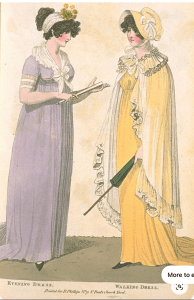
 I hesitate to ask this in view of the inconvenience I’ve caused by uploading the wrong file for A Christmas Quintet; however, if you could contribute a review to any book vendors or sites like Bookbub, the Belles would be exceedingly grateful! I never realized a simple mistake could cause such an avalanche of bad publicity!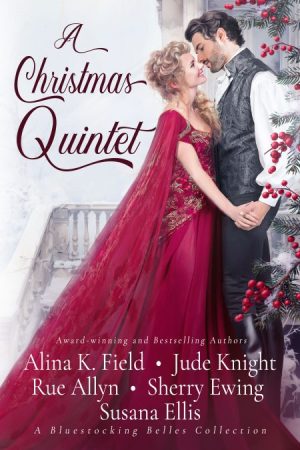
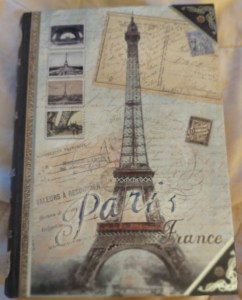
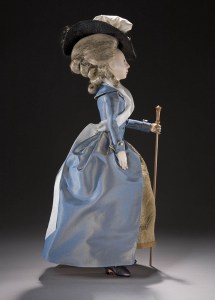

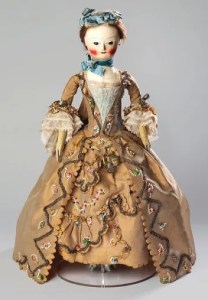
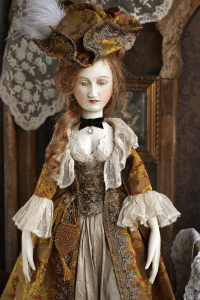
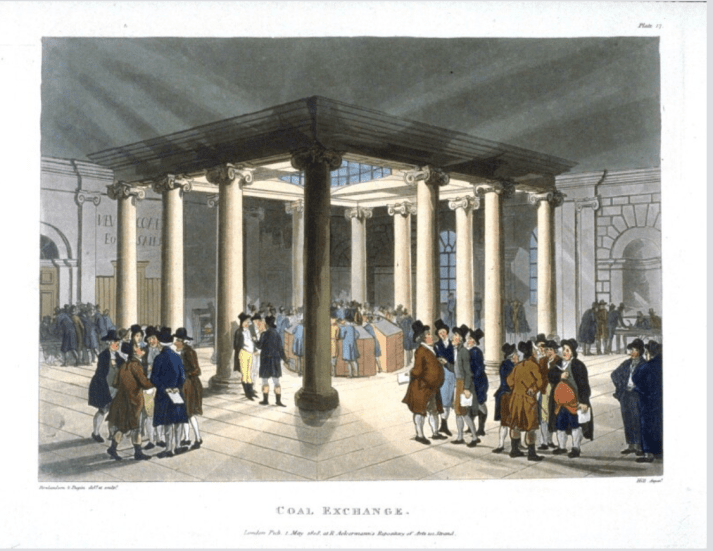
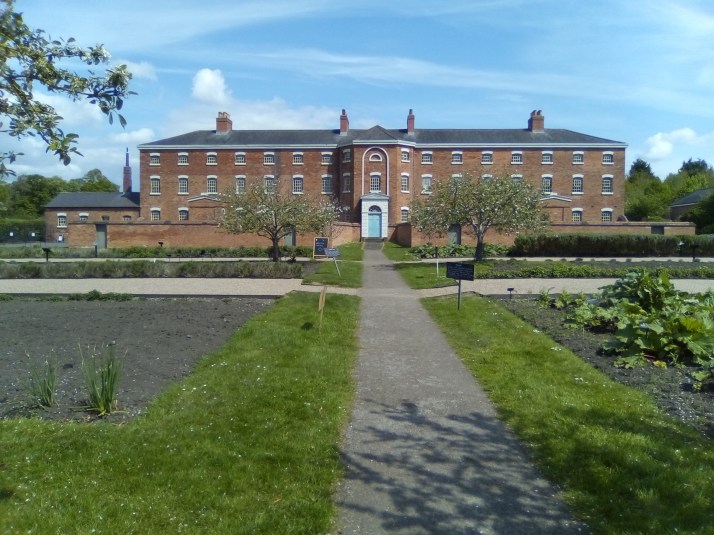
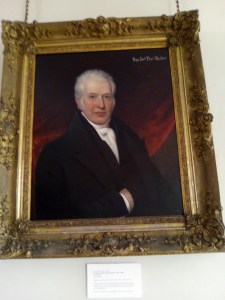
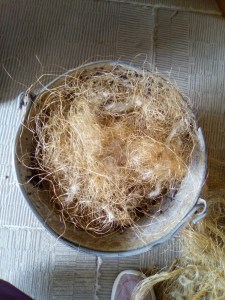
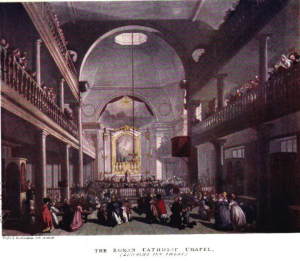

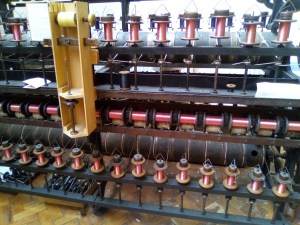
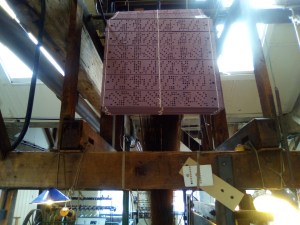

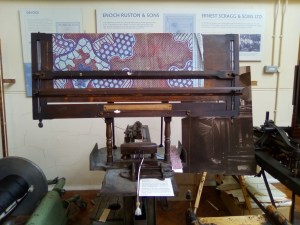


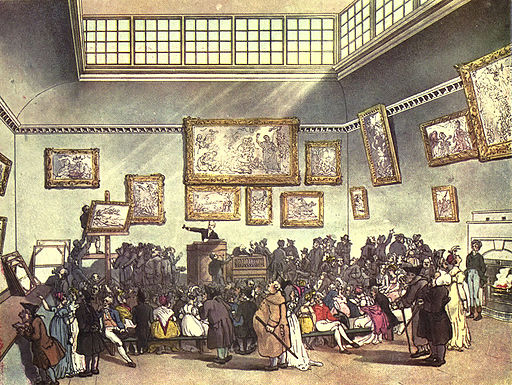
 Susana's Parlour