Archives

Romance of London: Comments on Hogarth’s “Industrious and Idle Apprentices”

Romance of London: Strange Stories, Scenes And Remarkable Person of the Great Town in 3 Volumes

John Timbs

John Timbs (1801-1875), who also wrote as Horace Welby, was an English author and aficionado of antiquities. Born in Clerkenwell, London, he was apprenticed at 16 to a druggist and printer, where he soon showed great literary promise. At 19, he began to write for Monthly Magazine, and a year later he was made secretary to the magazine’s proprietor and there began his career as a writer, editor, and antiquarian.

This particular book is available at googlebooks for free in ebook form. Or you can pay for a print version.

Comments on Hogarth’s “Industrious and Idle Apprentices”

William Makepeace Thackeray

William Makepeace Thackeray

Mr. Thackeray, in his Lectures on the English Humorists, thus vividly paints the scenes of Hogarth’s masterpieces; at the same time he very ingeniously contrasts the past with the present—one of the more immediate benefits of the Lecture: the past is generally interesting, but it chiefly becomes instructive when brought under the powerful focus of the present. His account of Hogarth’s “Apprentices” is a masterpiece in this way:

1William_Hogarth_-_Industry_and_Idleness,_Plate_1;_The_Fellow_'Prentices_at_their_Looms

William_Hogarth-Industry and Idleness, Plate 1; The Fellow ‘Prentices at their Looms

Fair-haired Frank Goodchild smiles at his work, whilst naughty Tom Idle snores over his loom. Frank reads the edifying ballads of Whittington and the London ‘Prentice: whilst that reprobate Tom Idle prefers Moll Flanders, and drinks hugely of beer.

2william_hogarth_-_industry_and_idleness_plate_2_the_industrious_prentice_performing_the_duty_of_a_christian.png

William Hogarth-industry and idleness plate 2 the industrious prentice_performing the duty of a Christian

Frank goes to church on a Sunday, and warbles hymns from the gallery; while Tom lies on a tomb-stone outside playing at halfpenny-under-the-hat, and with street blackguards, and deservedly caned by the beadle.

william_hogarth_-_industry_and_idleness_plate_3_the_idle_prentice_at_play_in_the_church_yard_during_divine_service

william hogarth -industry and idleness plate 3 the idle prentice at play in the church yard during divine service

Frank is made overseer of the business; whilst Tom is sent to sea.

4William_Hogarth_-_Industry_and_Idleness,_Plate_4;_The_Industrious_'Prentice_a_Favourite,_and_entrusted_by_his_Master

William_Hogarth Industry and Idleness, Plate 4; The Industrious ‘Prentice a Favourite, and entrusted by his Master


william_hogarth_-_industry_and_idleness_plate_5_the_idle_prentice_turnd_away_and_sent_to_sea

william hogarth – industry and idleness plate 5 the idle prentice turnd away and sent to sea

Frank is taken into partnership, and marries his master’s daughter, sends out broken victuals to the poor, and listens in his night-cap and gown with the lovely Mrs. Goodchild by his side, to the nuptial music of the city bands and the marrow-bones and cleavers; whilst idle Tom, returned from sea, shudders in a garret lest the officers are coming to take him for picking pockets.

william_hogarth_-_industry_and_idleness_plate_6_the_industrious_prentice_out_of_his_time__married_to_his_masters_daughter

william hogarth – industry and idleness plate 6 the industrious prentice out of his time married to his masters daughter

william_hogarth_-_industry_and_idleness_plate_7_the_idle_prentice_returnd_from_sea__in_a_garret_with_common_prostitute

william hogarth – industry and idleness plate 7 the idle prentice returnd from sea in a garret with common prostitute

The Worshipful Francis Goodchild, Esq., becomes Sheriff of London, and partakes of the most splendid dinners which money can purchase or alderman devour; whilst poor Tom is taken up in a night cellar, with that one-eyed and disreputable accomplice who first taught him to play chuck-farthing on a Sunday.

william_hogarth_-_industry_and_idleness_plate_8_the_industrious_prentice_grown_right__sheriff_of_london

william hogarth – industry and idleness plate 8 the industrious prentice grown right sheriff of london

What happens next? Tom is brought up before the justice of his county, in the person of Mr. Alderman Goodchild, who weeps as he recognizes his old brother ‘prentice, as Tom’s one-eyed friend peaches on him, as the clerk makes out the poor rogue’s ticket for Newgate.

william_hogarth_-_industry_and_idleness_plate_9_the_idle_prentice_betrayed_and_taken_in_a_night-cellar_with_his_accomplice

william hogarth – industry and idleness plate 9 the idle prentice betrayed and taken in a night-cellar with his accomplice


william_hogarth_-_industry_and_idleness_plate_10_the_industrious_prentice_alderman_of_london_the_idle_on_brought_before_him__impreachd_by_his_accomplice

william hogarth -industry and idleness plate 10 the industrious prentice alderman of_london the idle on brought before him impreachd by his accomplice

Then the end comes. Tom goes to Tyburn in a cart with a coffin in it; whilst the right Honorable Francis Goodchild, Lord Mayor of London, proceeds to his Mansion House, in his gilt coach, with four footmen and a sword-bearer, whilst the companies of London march in the august procession, whilst the train-bands of the city fire their pieces and get drunk in his honor; and oh, crowning delight and glory of all, whilst his majesty the king looks out of his royal balcony, with his ribbon on his breast, and his queen and his star by his side at the corner house of St. Paul’s Church-yard, where the toy-shop is now.

william_hogarth_-_industry_and_idleness_plate_11_the_idle_prentice_executed_at_tyburn

william_hogarth- industry and idleness plate 11 the idle prentice executed at tyburn


william_hogarth_-_industry_and_idleness_plate_12_the_industrious_prentice_lord-mayor_of_london

william_hogarth -industry and idleness plate 12 the industrious prentice ord-mayor of london

How the times have changed! The new Post-office now not disadvantageously occupies that spot where the scaffolding is on the picture, where the tipsy trainband-man is lurching against the post, with his wig over one eye, and the ‘prentice-boy is trying to kiss the pretty girl in the gallery. Past away ‘prentice boy and pretty girl! Past away tipsy trainband-man with wig and bandolier! On the spot where Tom Idle (for whom I have an unaffected pity) made his exit from this wicked world, and where you see the hangman smoking his pipe, as he reclines on the gibbet, and views the hills of Harrow on Hampstead beyond—a splendid marble arch, a vast and modern city—clean, airy, painted drab, populous with nursery-maids and children, the abodes of wealth and comfort—the elegant, the prosperous, the polite Tyburnia rises, the most respectable district in the habitable globe!

In that last plate of the London Apprentices, in which the apotheosis of the Right Honorable Francis Goodchild is drawn, a ragged fellow is represented in the corner of the simple kindly piece, offering for sale a broadside, purporting to contain an account of the appearance of the ghost of Tom Idle, executed at Tyburn. Could Tom’s ghost have made its appearance in 1847, and not in 1747, what changes would have been remarked by that astonished escaped criminal! Over that road which the hangman used to travel constantly, and the Oxford stage twice a week, go ten thousand carriages every day; over yonder road, by which Dick Turpin fled to Windsor, and Squire Western journeyed into town, when he came to take up his quarters at the Hercules Pillars not he outskirts of London, what a rush of civilization and order flows now! What armies of gentlemen with umbrellas march to banks, and chambers, and counting-houses! What regiments of nursery-maids and pretty infantry: what peaceful processions of policemen, what light broughams and what gay carriages, what swarms of busy apprentices and artificers, riding on omnibus-roofs, pass daily and hourly! Tom Idle’s times are quite changed; many of the institutions gone into disuse which were admired in his day. There’s more pity and kindness, and a better chance for poor Tom’s successors now than at that simpler period, when Fielding hanged him, and Hogarth drew him.

One hundred and fifty years after Thackeray’s assertions that the world is a kinder place toward kids like Idle Tom, I’m not so certain I can say the same. As a former teacher, it seems to me that the system is still stacked against kids who “dance to a different drum” or who are raised in poverty and/or by indifferent parents. And I’ll be damned if I know how to change that. What do you think?


Romance of London Series

  1. Romance of London: The Lord Mayor’s Fool… and a Dessert
  2. Romance of London: Carlton House and the Regency
  3. Romance of London: The Championship at George IV’s Coronation
  4. Romance of London: Mrs. Cornelys at Carlisle House
  5. Romance of London: The Bottle Conjuror
  6. Romance of London: Bartholomew Fair
  7. Romance of London: The May Fair and the Strong Woman
  8. Romance of London: Nancy Dawson, the Hornpipe Dancer
  9. Romance of London: Milkmaids on May-Day
  10. Romance of London: Lord Stowell’s Love of Sight-seeing
  11. Romance of London: The Mermaid Hoax
  12. Romance of London: The Bluestocking and the Sweeps’ Holiday
  13. Romance of London: Comments on Hogarth’s “Industries and Idle Apprentices”
  14. Romance of London: The Lansdowne Family
  15. Romance of London: St. Margaret’s Painted Window at Westminster
  16. Romance of London: Montague House and the British Museum
  17. Romance of London: The Bursting of the South Sea Bubble
  18. Romance of London: The Thames Tunnel
  19. Romance of London: Sir William Petty and the Lansdowne Family
  20. Romance of London: Marlborough House and Sarah, Duchess of Marlborough
  21. Romance of London: The Duke of Newcastle’s Eccentricities
  22. Romance of London: Voltaire in London
  23. Romance of London: The Crossing Sweeper
  24. Romance of London: Nathan Mayer Rothschild’s Fear of Assassination
  25. Romance of London: Samuel Rogers, the Banker Poet
  26. Romance of London: The Eccentricities of Lord Byron
  27. Romance of London: A London Recluse

Romance of London: Bartholomew Fair

Romance of London: Strange Stories, Scenes And Remarkable Person of the Great Town in 3 Volumes

John Timbs

John Timbs (1801-1875), who also wrote as Horace Welby, was an English author and aficionado of antiquities. Born in Clerkenwell, London, he was apprenticed at 16 to a druggist and printer, where he soon showed great literary promise. At 19, he began to write for Monthly Magazine, and a year later he was made secretary to the magazine’s proprietor and there began his career as a writer, editor, and antiquarian.

This particular book is available at googlebooks for free in ebook form. Or you can pay for a print version.

The vow of a jester

Rahere_Jester_to_Henry_1st

Rahere, jester to King Henry I

This famous Fair, formerly held every year in Smithfield, at Bartholomewtide [August 24], and within the precinct of the Priory of St. Bartholomew, originated in a grant of land from Henry I., to his jester Rahere, who, disgusted by his manner of living, repented him of his sins, and undertook a pilgrimage to Rome. Here, attacked by sickness, he made a vow, that if he recovered his health, he would found a hospital for poor men. Being reinstated, and on his return to England to fulfill his promise, St. Bartholomew is said to have appeared to him in a vision, and commanded him to found a Church in Smithfield, in his name… The site, which had been previously pointed out in a singular manner to Edward the Confessor, as proper for a house of prayer, was a mere marsh, for the most part covered with water; while on that portion which was not so, stood the common gallows—”the Elms,” in Smithfield, which for centuries after continued to be the place of execution.

The Bartholomew Fair

St. Bartholomew's Church

St. Bartholomew’s Church

The Priory, however, looked to temporal as well as spiritual aid, for his foundation; and therefore, obtained a royal charter to hold a Fair annually at Bartholomewtide, for three days—on the eve, the fête-day of the saint, and the day after; “firm peace,” being granted to all persons frequenting the Fair of St. Bartholomew. This brought traders from all parts, to Smithfield: thither resorted clothiers and drapers, not merely of England, but all countries, who there exposed their goods for sale. The stalls or booths were erected within the walls of the priory churchyard, the gates of which were locked each night, and a watch was set in order to protect the various wares…

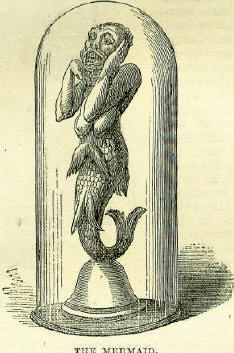
murmaid

At the dissolution of religious houses, the privilege of the Fair was in part transferred to the Mayor and Corporation; and in part to Richard Rich, Lord Rich, who died in 1560, and was ancestor of the Earls of Warwick and Holland. It ceased, however to be a cloth fair of any great importance in the reign of Queen Elizabeth. The drapers of London found another and more extensive market for their woolens; and the clothiers, in the increase of communication between distant places, a wider field for the sale of their manufactures. It subsequently became a Fair of a very diversified character. Monsters, motions, rolls, and rarities were the new attractions to be seen; and the Fair was converted into a kind of London carnival for persons of every condition and degree of life. The Fair was proclaimed by the Lord Mayor, beneath the entrance arch of the priory; and its original connexion with the cloth trade was commemorated in a mock proclamation on the evening before, made by a company of drapers and tailors, who met at the Hand and Shears, a house of call for their fraternity in Cloth Fair, whence they marched and announced the Fair opened and concluded with shouting and the “snapping of shears.”

With respect to the tolls, Strype tells us that “Each person having a booth, paid so much per foot for the first three days. The Earl of Warwick and Holland is concerned in the toll gathered the first three days in the fair, being a penny for each burthen of good brought in or carried out; and to that end there are persons that stand at all the entrances into the Fair…

bartholomewfairup

The Fair lengthens to fourteen days

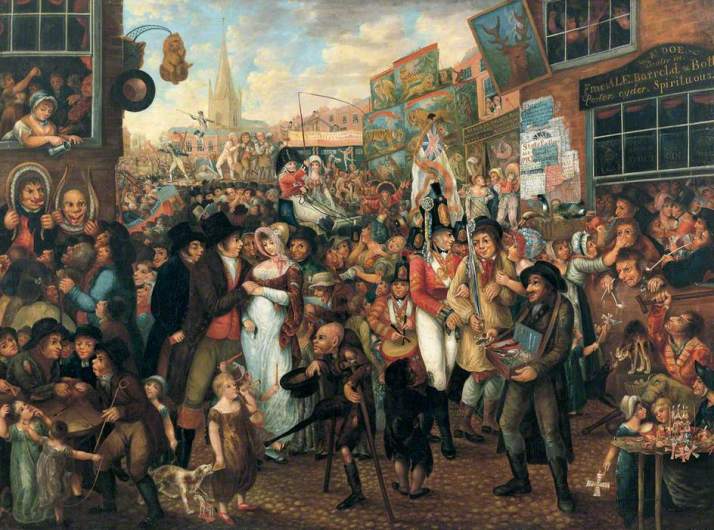
“In the reign of Charles II., as might be expected, the Fair was extended from three to fourteen days, when all classes, high and low, visited the carnival.” Pepys mentioned walking up and down the fair grounds on August 30, 1667, and discovering Lady Castlemaine at a puppet-play, “and the street full of people, expecting her coming out.” In 1668, Pepys went to the fair “to see the mare that tells money, and many things to admiration, and then the dancing of the ropes, and also the Irish stage play, which is very ridiculous.”

(c) Dover Collections; Supplied by The Public Catalogue Foundation

(c) Dover Collections; Supplied by The Public Catalogue Foundation

Theatrical booths were very popular. “Ben Jonson, the actor (says Dr. Rimbault), was connected with the booth before 1694, in which year he joined Cibber’s company; he was celebrated as the grave-digger in Hamlet…

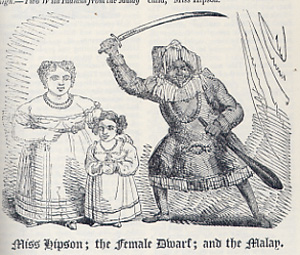
Here were motions or puppet-shows of Jerusalem, Nineveh, and Norwich; and the Gunpowder Plot played nine times in an afternoon; wild beasts, dwarfs, and other monstrosities; operas and tight-rope-dancing and sarabands [dances]; dogs dancing the morris; the hare beating the tabor; and rolls of every degree.

Bartholomew Fair 1825

Bartholomew Fair 1825

From a newspaper in 1734:

At Goodwin’s Large Theatrical Booth, opposite the White Hart, in West Smithfield, near Cow Lane, the town will be entertained with a humorous Comedy of three acts, called ‘The Intriguing Footman, or the Spaniard Outwitted;’ with a Pantomime entertainment of Dancing, between a Soldier and a Sailor, and a Tinker and a Tailor, and Buxom Joan of Deptford.

At Hippisley and Chapman’s Great Theatrical Booth, in the George Inn Yard, Smithfield, the town will be humorously diverted with an excellent entertainment; Signor Arthurian, who has a most surprising talent at grimace, and will, on this occasion, introduce upwards of fifty whimsical, sorrowful, comical, and diverting faces.”

The fourteen days were found too long, for the excesses committed were very great; and in the year 1708, the period of the Fair was restricted to its old duration of three days.

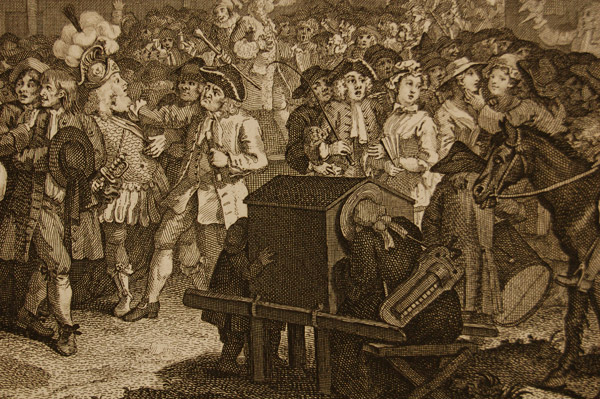
Hogarth 1733

Hogarth 1733

Three days of revelry

The influence of the fair in the neighborhood was to make general holiday… We read that in Little Britain, “during the time of the Fair, there was nothing going on but gossiping and gadding about. The still quiet streets of Little Britain were overrun with an irruption of strange figures and faces; every tavern was a scene of rout and revel. The fiddle and the song are heard from the taproom, morning, noon, and night; and at each window might be seen some group of loose companions, with half-shut eyes, hats on one side, pipe in mouth, tankard in hand, fondling, and prosing, and singing maudlin songs over their liquor. Even the sober decorum of private families was no proof against this saturnalia. There was no such thing as keeping maid-servants within doors. Their brains were absolutely set maddening with Punch and the puppet-show; the flying horses; Signior Polito; the Fire-eater, the celebrated Mr. Paap; and the Irish Giant. The children, too, lavished all their holiday-money in toys and gilt gingerbread, and filled the house with the Lilliputian din of drums, trumpets, and penny whistles.”

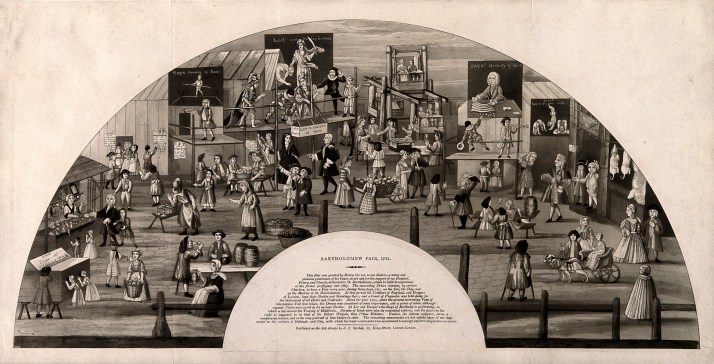
V0014666 Bartholomew Fair, site of St. Bartholomew's Hospital, London Credit: Wellcome Library, London. Wellcome Images images@wellcome.ac.uk http://wellcomeimages.org Bartholomew Fair, site of St. Bartholomew's Hospital, London, pictured in 1721. Aquatint with etching, c. 1800. Published: - Copyrighted work available under Creative Commons Attribution only licence CC BY 4.0 http://creativecommons.org/licenses/by/4.0/

Bartholomew Fan

The end of Bartholomew Fair

The Lord Mayor and Aldermen had, for 300 years, tried by orders, proclamations, juries, and presentments to abolish the Fair, but without effect; when the Court of Common Council took the work in hand. Having obtained entire control over the Fair by the purchase of Lord Kensington’s interest, they refused to let standings for shows and booths; they prevailed upon the Lord Mayor and Sheriffs to give up the practice of going to open the Fair in state, with a herald to proclaim it, and officers to marshal the procession; the posting of the proclamation about the streets, interdicting rioting and debauchery during the days of the Fair and within its precincts, were discontinued… In 1852, not a single show was to be seen on the ground; and in 1855 the Fair expired… and Bartholomew Fair was extinct.

Author’s Note: I’m thinking of having my Regency characters attend the fair, even though it was rather scandalous. What do you think?

Bartholomew-Fair

Romance of London Series

  1. Romance of London: The Lord Mayor’s Fool… and a Dessert
  2. Romance of London: Carlton House and the Regency
  3. Romance of London: The Championship at George IV’s Coronation
  4. Romance of London: Mrs. Cornelys at Carlisle House
  5. Romance of London: The Bottle Conjuror
  6. Romance of London: Bartholomew Fair
  7. Romance of London: The May Fair and the Strong Woman
  8. Romance of London: Nancy Dawson, the Hornpipe Dancer
  9. Romance of London: Milkmaids on May-Day
  10. Romance of London: Lord Stowell’s Love of Sight-seeing
  11. Romance of London: The Mermaid Hoax
  12. Romance of London: The Bluestocking and the Sweeps’ Holiday
  13. Romance of London: Comments on Hogarth’s “Industries and Idle Apprentices”
  14. Romance of London: The Lansdowne Family
  15. Romance of London: St. Margaret’s Painted Window at Westminster
  16. Romance of London: Montague House and the British Museum
  17. Romance of London: The Bursting of the South Sea Bubble
  18. Romance of London: The Thames Tunnel
  19. Romance of London: Sir William Petty and the Lansdowne Family
  20. Romance of London: Marlborough House and Sarah, Duchess of Marlborough
  21. Romance of London: The Duke of Newcastle’s Eccentricities
  22. Romance of London: Voltaire in London
  23. Romance of London: The Crossing Sweeper
  24. Romance of London: Nathan Mayer Rothschild’s Fear of Assassination
  25. Romance of London: Samuel Rogers, the Banker Poet
  26. Romance of London: The Eccentricities of Lord Byron
  27. Romance of London: A London Recluse
Vauxhall Gardens: The Business Side

vauxhallbook

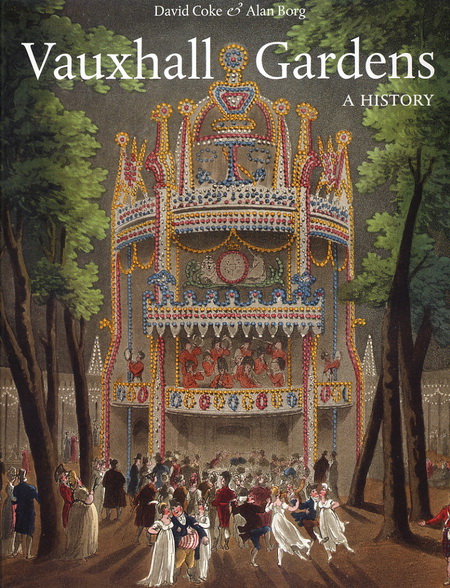
Vauxhall Gardens: A History

David Coke & Alan Borg

The Vauxhall Pleasure Gardens is one of the places I’d love to slip back in time to visit, just to catch a glimpse of what it was like. After recently splurging to buy this lovely coffee-table book, I thought it might make a wonderful subject for a new blog series. But do buy the book too, if you can! The photos are fabulous!

Vauxhall’s huge success after Jonathan Tyers’s acquisition of the property, which had been in existence for seventy years as the “New Spring Gardens”, can be attributed to the man’s perception that his idealistic dream must be counter-balanced by sound financial practices. An essential element of this was publicity, and of this, Tyers proved to be a master. How did he do this?

Promoting Vauxhall

He promoted the gardens as a sort of “heaven on earth,” a magical sort of place to lift one’s spirits after a hard day in the real world.

[T]his was achieved through stories in literature and the printed media, through popular songs and through the artworks and music he commissioned. The second was the flattery of his audience; he consistently treated his visitors as special people, always referring to them as persons of quality, ladies and gentlemen, patriots, libertarians, educated people who appreciated fine things and good music. And the last was the simple dissemination of factual information about Vauxhall, its history, its current attractions, and how this pleasure garden should be enjoyed, by means of articles in newspapers and periodicals, of histories and guidebooks and of topographical and satirical engravings.

John Lockman, Publicist

John Lockman, Publicist

In truth, of course, Vauxhall fell short of perfection, and that’s where John Lockman came in. He was a sort of early publicist, who wrote poems and songs designed to “underscore Tyers’s transformation of a notorious gathering place for drunks, gamblers and prostitutes into a civilised pleasure garden where anyone could enjoy a decorous evening’s entertainment without risk to their reputation.”
Lockman’s assistance was necessary because it was impossible to exclude troublemakers, particularly if they were respectably dressed. “[I]t was easier to sell an enhanced image of the place to a persuadable public.

Tyers was always careful to make everybody in his clientele feel good about themselves, and in particular about their patronage of Vauxhall. In his press announcements, for instance, he would often start by thanking his visitors for their support, especially if the weather had been bad, and would repeatedly finish by pledging to keep out of his gardens anyone not worthy of their company.

Another tactic was to use magazines and newspapers. Newspapers, of course, were a no-brainer. Letters such as the “S. Toupee” articles published in Scots Magazine may or may not have been instigated by Tyers, but they certainly proved valuable in driving up excitement for Vauxhall. “Of the Luxury of the English; and a Description of Ranelagh Gardens and Vaux-hall, in a Letter from a Foreigner to his Friend at Paris,” supposedly written by Henry Fielding (a friend of Tyers) and commissioned by Tyers, piled on the praise for Vauxhall in comparison to Ranelagh Gardens.

A female audience was enticed to Vauxhall by published songs and by scenes in novels set in Vauxhall Gardens. And then there were the Love at First Sight articles, or “Lonely Hearts” columns, which may or may not have been genuine. Here’s one from the London Chronicle in August 1758:

A young Lady who was at Vauxhall on Thursday night last, in company with two gentlemen, could not but observe a young gentleman in blue and a gold-laced hat, who, being near her by the orchestra during the performance, especially the last song, gazed upon her with the utmost attention. He earnestly hopes (if unmarried) she will favour him with a line directed to A.D. at the bar of the Temple Exchange Coffee-house, Temple-bar, to inform him whether fortune, family, and character, may not entitle him upon a further knowledge, to hope an interest in her heart.

Another marketing tactic was to engage actors dressed as gentlemen to patronize coffee-houses to express their intention to go to Vauxhall and entreat others to meet them there.

Tyers’s Management Style

It goes without saying that if one wishes to have customers return, one has to ensure that their first time is as pleasant and enjoyable as possible. If you knew Jonathan Tyers—and you probably wouldn’t because it was never himself he wanted to promote and therefore took pains to remain in the background—you could see him in the kitchens working as hard as his employees to get the food out to the customers.

Waiters, or “drawers” were freelance employees, who were constrained to work hard in order to earn tips and keep their posts. Since in other venues, “drawers” were known to steal from their employers, “Vauxhall waiters were required to pay for the food on collection from the kitchens, and themselves ran the risk of defaulting customers, especially if they had not been sufficiently polite or efficient in their service.”

Although he had to maintain a strict discipline among his employees, he was a thoughtful employer. When two of his waiters married two of his barmaids, he provided wedding rings and an elaborate dinner at his home in Denbies, with fifty of his staff as guests.

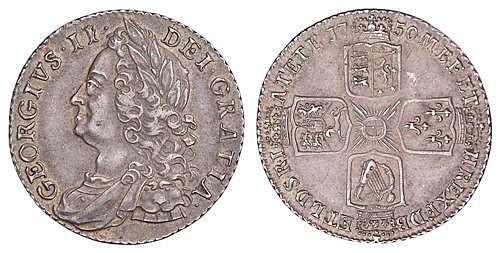
one shilling coin

Vauxhall Tickets

Up until 1736, the admission cost was sixpence, but afterward, the price was doubled to one shilling. Considering the expense of maintaining and improving the gardens and contriving new entertainments, this seems modest indeed; however, there was more to be made from the food and drink once the visitors were admitted. For the visitors, there was also the cost of dressing respectably and the cost of transportation. The one shilling price was fixed until 1792, when it was doubled to two shillings.

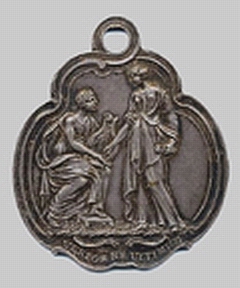
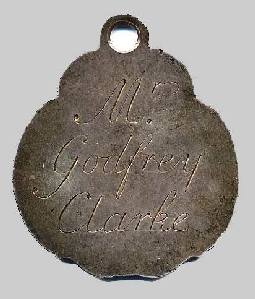
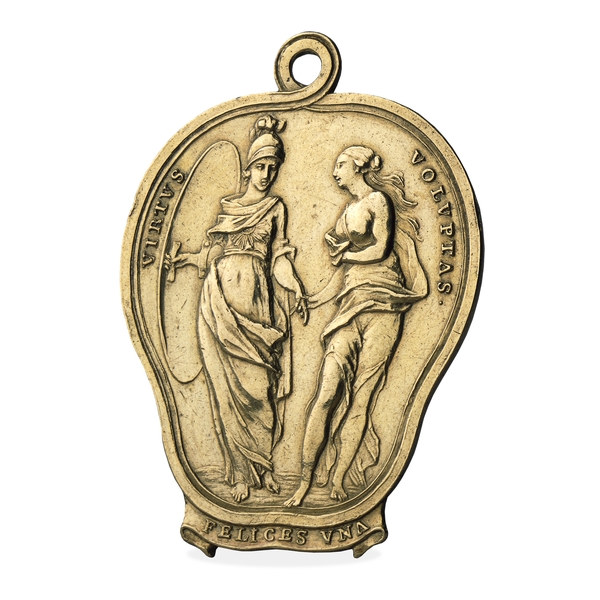
Season Ticket greySeason Ticket grey reverse

In 1737 Tyers initiated a subscription price, or season ticket. The metal tickets were issued to a thousand people at a guinea each, and would admit two people to the gardens for the entire season. Not only did this ensure repeat visits by two thousand people, it provided him with funds upfront to use for maintenance and improvement.

The relief on the obverse usually represented, through classical imagery, a particular aspect of Vauxhall Gardens, often associated with the music. On the reverse was engraved the subscriber’s name, accompanied… by the ticket’s number.

silver ticket

silver ticket

In 1738, the tickets were made of silver and the price rose by three shillings. In 1741, the price was raised to two guineas.

As a comparison, a season ticket for two to the Great Room in Soho was five guineas, while individual concerts were ten and a half shillings, the same price as Handel’s fundraising concert at the Foundling Hospital in 1749. Almack’s (founded in 1765) charged ten guineas for a once-weekly ball over twelve weeks, so Vauxhall tickets were considered quite a bargain.

Hogarth's gold "perpetual" ticket

Hogarth’s gold “perpetual” ticket

Attendance

“S. Toupee” in his letters in Scots Magazine estimated that “not less than one thousand shillings are received each evening of performance during the season,” not including season ticket holders. Special events, such as the rehearsal of Handel’s Music for the Royal Fireworks, drew several thousand spectators. Opening and closing nights and royal birthdays also drew large crowds.

The opening night of the 1769 season, for instance, was a remarkably fine evening for the time of year, and it was estimated that ‘there were upwards of twenty thousand of the first nobility present.’

Crime and Disorder

Even though it suffered occasional lean times, there can be little doubt that eighteenth-century Vauxhall Gardens became the most popular single visitor attraction for London… With these numbers of people coming together, especially to a place where alcohol was available, crime, vandalism and disorder were inevitable.

Nor was it just pickpockets and prostitutes his police force (initiated in 1732) had to deal with. While Tyers encouraged his waiters to restrict alcohol consumption, it was difficult for them or even him to police the mischievous London Bucks, who were of a class higher than his. Tyers and his staff managed these problems themselves, even if it meant “eating” the cost of vandalism, not wanting to involve courts, which would draw bad publicity. “S. Toupee,” in one of his letters in 1739, “pointed out that there was ‘a man in the posture of a Constable, to protect the Ladies from any insult, &c.’ at the end of each walk.

Besides the half-dozen or so constables, he employed up to eight men to guard the route from the river and led a (possibly regular) blitz against the pickpockets.

Refreshments

Anyone who has worked in the restaurant industry can tell you how difficult a task it is to prepare food for crowds of people, but how many restaurants have to cater for 500-1000 or more hungry people? This is a logistical nightmare that Tyers managed with aplomb.

Consistent with his insistence on featuring English art and music, the food at Vauxhall was simple and English. There were complaints about the prices, of course. Here are some prices from one of the “S. Toupee” letters in 1739:

  • one bottle of French claret: 5 shillings
  • one cold chicken: 2-1/2 shillings
  • one quarter of cyder: 1 shilling
  • one quart of small-beer: 4 pence
  • one slice of bread: 2 pence
  • one slice of cheese: 4 pence
  • dish of ham or beef: 1 shilling, salad, an extra pence
  • sweet pastries: 1 shilling
  • custards and cheesecakes: 4 pence
  • heart cakes and Shrewsbury cakes: 2 pence
  • one bottle of champagne and arrack: 8 shillings
  • two pounds of ice: sixpence
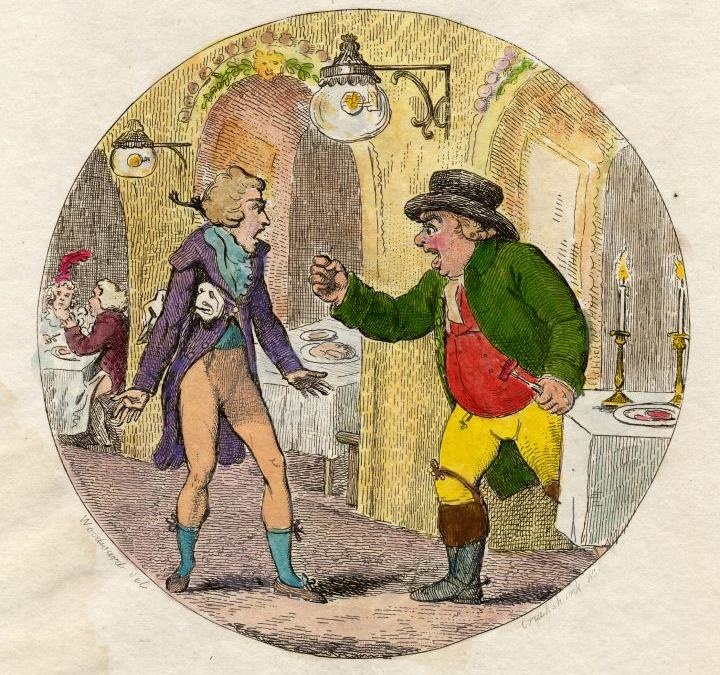
Isaac Cruikshank, A Country Farmer & Waiter at Vauxhall. A farmer in country dress, on his first visit to Vauxhall, has ordered ham in expectation of a plateful of English gammon. When the waiter brings him the notoriously thin slices that were Vauxhall ham, the farmer is furious.

Isaac Cruikshank, A Country Farmer & Waiter at Vauxhall. A farmer in country dress, on his first visit to Vauxhall, has ordered ham in expectation of a plateful of English gammon. When the waiter brings him the notoriously thin slices that were Vauxhall ham, the farmer is furious.

Even a devoted fan such as “S. Toupee” confessed that the food was expensive. The sliced meats were thin, especially the ham. “This was all part of the fun of the evening—a great joke on fashionable society who were happy to play along.” A well-known verse alluding to this:

Never trouble Ham House, or its inmates at all,

For a ghost, that may be but a sham,

But seek in a sandwich that’s cut at Vauxhall,

For the true apparition of Ham.’

Note:

The cost of the food did not alter significantly over the whole period from Tyers’s re-launch until the gardens’ final closure; the prices of wines and spirits, however, were a different matter, rising sharply in the nineteenth century.

Susana’s Vauxhall Blog Post Series

  1. Vauxhall Gardens: A History
  2. Vauxhall Gardens: Jonathan Tyers—“The Master Builder of Delight” 
  3. Vauxhall Gardens: A New Direction
  4. Vauxhall Gardens: The Orchestra and the Supper-Boxes 
  5. Vauxhall Gardens: The Organ, the Turkish Tent, and the Rotunda
  6. Vauxhall Gardens: Three Piazzas of Supper-Boxes
  7. Vauxhall Gardens: “whither every body must go or appear a sort of Monster in polite Company”
  8. Vauxhall Gardens: The Competition
  9. Vauxhall Gardens: The Artwork, Part I
  10. Vauxhall Gardens: The Artwork, Part II
  11. Vauxhall Gardens: The Music, 1732-1859
  12. Vauxhall Gardens: The Business Side
  13. Vauxhall Gardens: Developments from 1751-1786
  14. Vauxhall Gardens: Thomas Rowlandson’s Painting (1785)
  15. ‎Vauxhall Gardens: The Third Generation of the Tyers Family and the Jubilee of 1786
  16. Vauxhall Gardens: An Era of Change (1786-1822), Part I
  17. Vauxhall Gardens: An Era of Change (1786-1822), Part II
  18. Vauxhall Gardens: An Era of Change (1786-1822), Part III
  19. Vauxhall Gardens: The Final Years, Part I
  20. Vauxhall Gardens: The Final Years, Part II
  21. Vauxhall Gardens: The Final Years, Part III
  22. Vauxhall Gardens: The Final Years, Part IV
  23. Vauxhall Gardens: Farewell, for ever

Vauxhall Gardens: The Artwork, Part II

vauxhallbook

Vauxhall Gardens: A History

David Coke & Alan Borg

The Vauxhall Pleasure Gardens is one of the places I’d love to slip back in time to visit, just to catch a glimpse of what it was like. After recently splurging to buy this lovely coffee-table book, I thought it might make a wonderful subject for a new blog series. But do buy the book too, if you can! The photos are fabulous!

The Paintings in the Pillared Saloon

The Pillared Saloon was built onto the Rotunda in 1750-51 to provide more wall space for paintings and, of course, draw more visitors. The original idea was to have allegorical paintings of the royal family—Prince Frederick and his family—demonstrating how love of the arts manifested his virtue and patriotism. Frederick’s untimely death in 1751 put paid to this idea and delayed the project for almost ten years.

Two full-length portraits of George III and Queen Charlotte in their coronation robes did appear soon after their marriage in 1761. The royal pair is known to have sat for the painter—undoubtedly Frances Hayman—in person as a special favor to Jonathan Tyers.

The Seven Years’ War Paintings

In contrast to the lightheartedness of the supper-box paintings and the drama of the Shakespearean scenes, the four remaining paintings for the Pillared Saloon were to be patriotic history paintings. These were not the typical classical scenes or representations of events from the distance past, but “very recent military actions populated by real living people wearing contemporary costume.”

[Hayman] chose not the violence of heroic death or even topographical portrayals of military action, but rather its aftermath, in order to convey the virtues of the individual British military commanders, magnanimous and humane in victory.

pillaredsaloon001

The Surrender of Montreal to General Amherst

Amazingly, this painting appeared in the Pillared Saloon in 1761, only eight months after the event it depicts.

It was the most overtly propagandic of the four military scenes, emphasising the selfless humanity of General Jeffrey Amherst: Hayman showed him handing out food to the starving and defeated population and returning to them their possessions; this was intended to be in stark contrast to the merciless treatment they might have expected from the French, had they been victorious, and especially from their Indian allies.

In the Description (1762), much is made of the contrast between the defeated and miserable French and the victorious but humane British, and the author instructed readers to view the paintings as a true representation of one of ‘the most glorious transactions of the present war’.

pillaredsaloon002

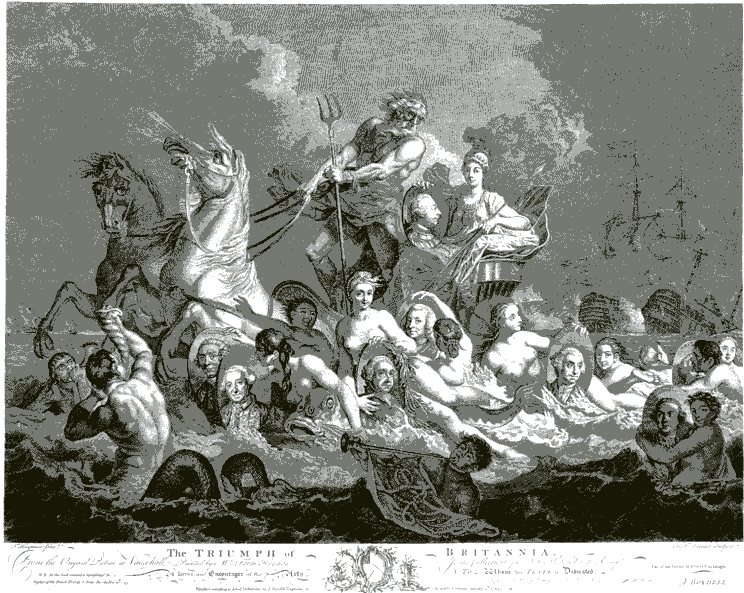
The Triumph of Britannia

The second painting, which was installed for the opening of the 1762 season, was a representation of the defeat of the French fleet at Quiberon Bay in November 1759. “As its allegorical title would suggest, it was intended to glorify the British military leaders involved in the action and the natural alliance of Britannia with Neptune that had given Britain mastery of the seas.”

However, because it did not entirely succeed in capturing the essential majestic dignity that was necessary to this type of allegorical work, the Triumph of Britannia was not always taken seriously by its audience. It is specifically and humorously singled out in Fanny Burney’s novel Evelina of 1778; during a visit to Vauxhall, Mr. Smith ridiculously mistakes the figure of Neptune for that of a famous general, despite the fact that he is wearing ‘the oddest dress for a general ever I see’.

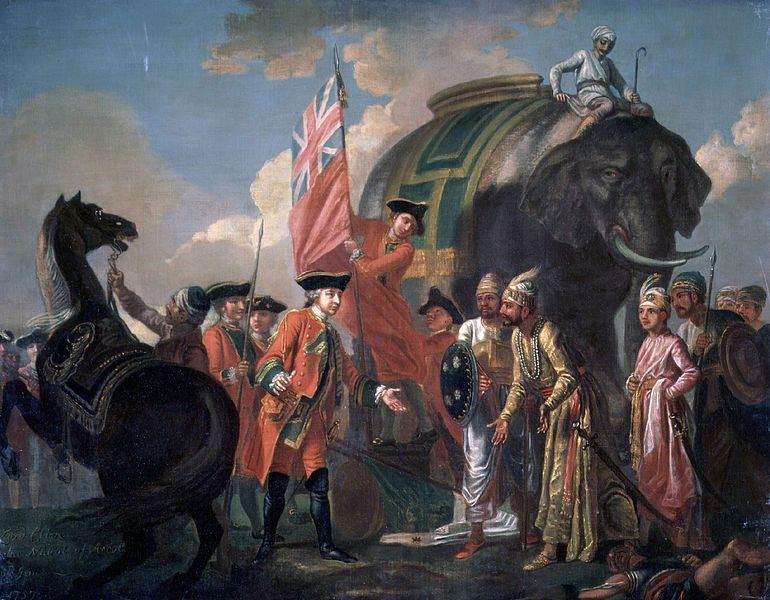
Lord Clive, Hayman, 1760

Lord Clive Receiving the Homage of the Nabob

A companion piece to the Surrender, this painting was installed in time for the 1763 season. The historical event depicted was the Battle of Plassey, at which Robert Clive ousted the ruling Nawab of Bengal, Siraj-ud-daula and, “in an apparently magnanimous act, [Clive] then supported the claim to supremacy of the elderly general Mir Jafar (c. 1691-1765), Nawab of Murshidabad, who had actually fought against the British, but who was more easily persuaded to the British point of view.”

In that battle the British forces were famously outnumbered by twenty to one, but were nevertheless victorious with the loss of only eighteen men (according to Clive), lending it the heroic ideal; in fact this was undeserved, and the British were saved from probable defeat only by the quick thinking of their artillerymen who covered their weapons and powder during a downpour, while the enemy did not.

The description of the painting started with “The subject of this picture is of the most interesting nature, to every Briton who regards the honour and propsperity of this country’, no doubt insinuating that it would be unpatriotic to criticize it.
The second description

praises General Clive for his leadership, and for his generosity in giving the sultanate to Mir Jafar;

therefore performing for his Country a most important Service, as well as procuring for the India Company and Individuals the Sum of Three Millions Sterling, for their Losses sustained at Calcutta; with such Privileges, Immunities, and Advantages, as they never enjoyed before. And this Revolution hath been moreover the Means of the India Company’s acquiring the Territorial Possessions, to the Amount of Seven hundred thousand Pounds per Annum.

In retrospect, General Clive’s generosity seems less altruistic considering the huge commercial gains resulting from the acquisition of this territory.

Britannia Distributing Laurels

A companion piece to the Triumph of Britannia, Britannia Distributing Laurels was installed in 1764. Unfortunately, no version of this piece is known to be in existence. However, it is known to have depicted the full-length figures of Generals Granby, Monckton, Albemarle, Coote, Townshend and Wolfe, all in Roman costume, allegorical in nature.

The story goes that, when Granby came to Hayman’s studio in St. Martin’s Lane, he challenged Hayman to a boxing match before the sitting. After a hesitant start, which Granby overcame by saying that the exercise would give animation to his portrait, Hayman apparently floored the marquis with a tremendous punch to the stomach, and Mrs. Hayman, hurrying upstairs to see what the noise was, found them ‘rolling over each other on the carpet like two bears.’

Tyers as the Ultimate Patron of 18th century British Art

The inscription under the engraving of Hayman’s Triumph of Britannia describes him as a ‘”Lover and Encourager of the Arts.’” He was described by Henry Angelo as having “laid out more money in the encouragement of English art than any man of his time. Indeed, his house was so full of pictures, that after hanging them, even on his stair-case, there were still some to spare.”

Jonathan Tyers didn’t just use art to further his commercial ambitions; he was a true conoisseur. And it was his dream to open up the arts to all layers of society, not just the upper class.

The huge developments in British art through the middle of the eighteenth century were in large part due to the concurrence of Vauxhall Gardens, the Foundling Hospital, the Society of Artists and the Royal Academy and to the men involved in those institutions, notably Hogarth, Hayman and, of course, Tyers… After the collaboration of Tyers and Hayman, the visual arts at Vauxhall never again received the same degree of patronage from its proprietors.

The paintings and sculpture at Vauxhall Gardens would have been the best-known works of art in England at the time, seen by tens of thousands of people, including significant numbers of artists, every year. Although Tyers owed much to Hogarth, initially the driving force behind the artistic concept of the gardens, it was Hayman, Tyers’s artistic director, who could be seen as the more influential figure. This was partly because of the huge exposure of his original work at Vauxhall, and also because he was the linchpin that held together the London art profession, with a finger in all the principal artistic pies of the time—the St Martin’s Lane Academy, Vauxhall Gardens, the Foundling Hospital, the Society of Artists and, eventually, their august offspring, the Royal Academy.

Susana’s Vauxhall Blog Post Series

  1. Vauxhall Gardens: A History
  2. Vauxhall Gardens: Jonathan Tyers—“The Master Builder of Delight” 
  3. Vauxhall Gardens: A New Direction
  4. Vauxhall Gardens: The Orchestra and the Supper-Boxes 
  5. Vauxhall Gardens: The Organ, the Turkish Tent, and the Rotunda
  6. Vauxhall Gardens: Three Piazzas of Supper-Boxes
  7. Vauxhall Gardens: “whither every body must go or appear a sort of Monster in polite Company”
  8. Vauxhall Gardens: The Competition
  9. Vauxhall Gardens: The Artwork, Part I
  10. Vauxhall Gardens: The Artwork, Part II
  11. Vauxhall Gardens: The Music, 1732-1859
  12. Vauxhall Gardens: The Business Side
  13. Vauxhall Gardens: Developments from 1751-1786
  14. Vauxhall Gardens: Thomas Rowlandson’s Painting (1785)
  15. ‎Vauxhall Gardens: The Third Generation of the Tyers Family and the Jubilee of 1786
  16. Vauxhall Gardens: An Era of Change (1786-1822), Part I
  17. Vauxhall Gardens: An Era of Change (1786-1822), Part II
  18. Vauxhall Gardens: An Era of Change (1786-1822), Part III
  19. Vauxhall Gardens: The Final Years, Part I
  20. Vauxhall Gardens: The Final Years, Part II
  21. Vauxhall Gardens: The Final Years, Part III
  22. Vauxhall Gardens: The Final Years, Part IV
  23. Vauxhall Gardens: Farewell, for ever

Vauxhall Gardens: The Artwork, Part I

vauxhallbook

Vauxhall Gardens: A History

David Coke & Alan Borg

The Vauxhall Pleasure Gardens is one of the places I’d love to slip back in time to visit, just to catch a glimpse of what it was like. After recently splurging to buy this lovely coffee-table book, I thought it might make a wonderful subject for a new blog series. But do buy the book too, if you can! The photos are fabulous!

A Statue for the Greatest Composer of English Music (1738)

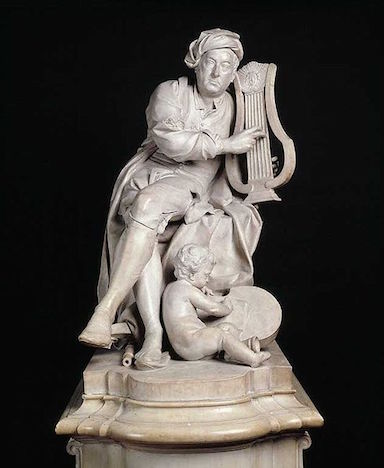
The life-sized sculpture of George Frideric Handel by Louis François Roubiliac (1702-62) was

the most important of Tyers’s early series of artistic commissions for the gardens. This work epitomised the explosive moment of the English Rococo style, not for any inclusion of outwardly Rococo motifs, but for the new spirit of playfulness and informality that it embodied, and it came to personify Vauxhall Gardens.

handel statue

There is now near finished a Statue of the justly celebrated Mr. Handel, exquisitely done by the ingenious Mr. Raubillac, of St. Martin’s-Lane, Statuary, out of one entire Block of white Marble, which is to be placed in a grand Nich, erected on Purpose in the great Grove at Vaux-hall Gardens.

alcove1

Note the Handel statue in its “Grand Nich” (original placement) at right

The “Grand Nich” or “Grand Alcove” was demolished after a decade to make room for more supper-boxes, and the statue was left free-standing until 1762, when it was arranged under a Doric portico similar in size to the “Grand Nich.” In 1786, following the Vauxhall Jubilee celebrations, it was removed to the back of the Orchestra. Before it was removed from the gardens in 1818, it held court in the New Supper Room built in 1791, and then, in 1813, “to its own small circular domed temple behind the Orchestra.”

Victoria and Albert Museum

The Handel statue can be seen today at the Victoria and Albert Museum in London, along with a group of the original supper-box paintings and Roubiliac’s terracotta model for the portrait bust of Jonathan Tyers.

In spite of many years’ exposure to the elements, to vandalism, accidental damage, relocations and restorations, the surface of the sculpture still bears the sculptor’s marks and finished, evidence of his high degree of skill and craftsmanship, equally of his mastery and love of the material.

“A mass audience for contemporary art”

Francis Hayman by Sir Thomas Lawrence

Francis Hayman by Sir Thomas Lawrence, 1760’s

Artwork was an important element in Jonathan Tyers’ vision of capturing his visitors’ emotions and induce them “to enjoy themselves, to refresh their spirits and to spend their money.” In order to do this, Tyers formed an alliance with his friend William Hogarth’s nearby academy to produce the work he needed, which included buildings, paintings, sculptures, furnitures, tableware, glass, interiors, and lighting. This arrangement benefitted both parties, providing Tyers with the high-quality artisans he needed at a reasonable cost, and an opportunity for Hogarth’s students’ work to be displayed to the public in a way not seen before. The person chosen to manage the project was the theatrical scene-painter, Francis Hayman (1708-76).

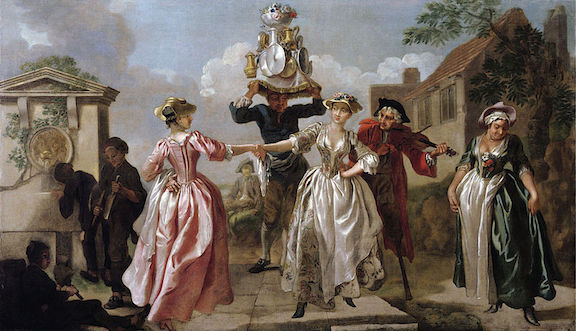
Francis Hayman and studio, The Milkmaids' Garland, oil on canvas, c. 1740 (Victoria and Albert Museum, London)

Francis Hayman and studio, The Milkmaids’ Garland, oil on canvas, c. 1740 (Victoria and Albert Museum, London)

The Supper-Box Paintings

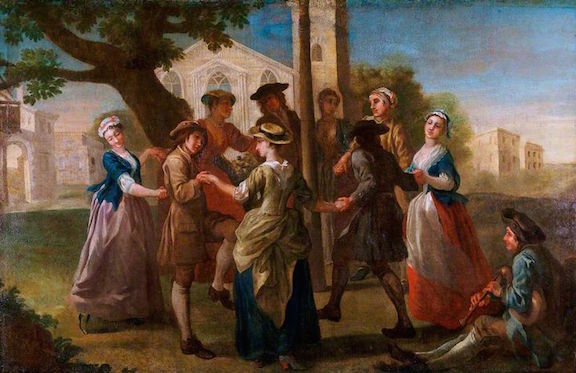
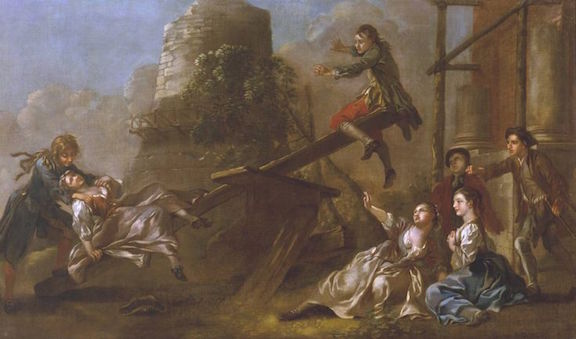
To add color and enhance the visitor’s mood, the back upper wall of each supper-box in the 1730’s and 40’s was decorated by an eight foot by five painting, designed by Francis Hayman and H.F. Gravelot and painted by the students at St. Martin’s Lane Academy. These paintings

represent people from all sectors of society, from villagers, peasant children and milkmaids to aristocratic and fashionable ladies and gentlemen. Painted on a large scale, some of the figures are nearly life-sized and close enough to the picture plane for the viewer to discern their expressions and interrelationships.

Francis Hayman and stuido, Country Dancers round the Maypole, oil on canvas, late 1730's (Victoria and Albert Museum, London)

Francis Hayman and stuido, Country Dancers round the Maypole, oil on canvas, late 1730’s (Victoria and Albert Museum, London)

The pictures depicted scenes of theatre, daily life and rustic amusements. A Toupee letter (see post here) of 28 June 1739 states that, when the paintings were revealed,

the eye is relieved by the agreeable surprise of some of the most favoured fancies of our poets in the most remarkable scenes of our comedies, some of the celebrated dancers, &c. in their most remarkable attitudes, several of the childish diversions, and other whims that are well enough liked by most people at a time they are disposed to smile, and every thing of a light kind, and tending to unbend the thoughts, has an effect desired before it is felt.

Francis Hayman and studio, The Play of See-saw, oil on canvas, 1740-43 (Tate, London)

Francis Hayman and studio, The Play of See-saw, oil on canvas, 1740-43 (Tate, London)

The Display of the Paintings

In the 1730’s the supper-boxes were open on all sides during daylight hours, to allow visitors to enjoy the views over the neighbouring countryside. However, as dusk fell, Tyers had created two extraordinary surprises for his guests. The first was the almost magical instantaneous illumination of the gardens with oil lamps. This wonder was swiftly followed by a second spectacular special effect, namely:

a master piece of machinery, by which all the English ladys and delicate gentlemen are in a moment screend from the damps of the night air. […] When the clock strikes nine, there is heard a third sound of the whistle, and immediately there rises, as out of the earth, a vast number of rollers, which unfolding themselves as they rise, cover all the boxes in three of their sides, and fasten themselves in the extremitys of each box. All these coverings are painted with elegant designs, in lively colours, so that each box is enclosed by three large pictures, and at the same time that they completely protect the company from the injurys of the air, present a numerous collection of grand and pleasing paintings.

By 1741, all the paintings were fixed in position on the back or side wall of the boxes… Tyers had introduced further improvements and the supper-boxes had been adapted to make them more weatherproof, more robust and more firmly divided from each other.

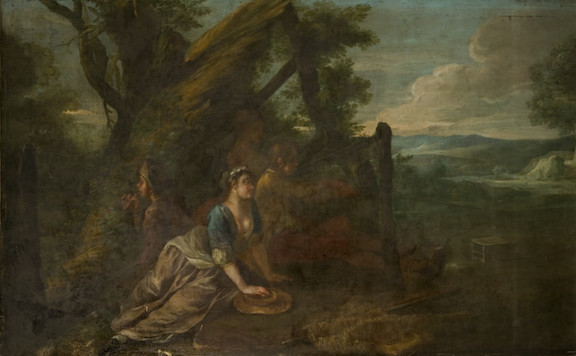
Francis Hayman and studio, Bird-catching, by a Decoy with a Whistle and Net, oil on canvas, c. 1740 (Victoria and Albert Museum, London)

Francis Hayman and studio, Bird-catching, by a Decoy with a Whistle and Net, oil on canvas, c. 1740 (Victoria and Albert Museum, London)

In spite of all the damage inflicted on these paintings by their exposure to the weather, the proximity of food, wine, candles, and oil lamps—not to mention the early days of being rolled up and down on a nightly basis—many of these paintings remained at Vauxhall for a hundred years.


Susana’s Vauxhall Blog Post Series

  1. Vauxhall Gardens: A History
  2. Vauxhall Gardens: Jonathan Tyers—“The Master Builder of Delight” 
  3. Vauxhall Gardens: A New Direction
  4. Vauxhall Gardens: The Orchestra and the Supper-Boxes 
  5. Vauxhall Gardens: The Organ, the Turkish Tent, and the Rotunda
  6. Vauxhall Gardens: Three Piazzas of Supper-Boxes
  7. Vauxhall Gardens: “whither every body must go or appear a sort of Monster in polite Company”
  8. Vauxhall Gardens: The Competition
  9. Vauxhall Gardens: The Artwork, Part I
  10. Vauxhall Gardens: The Artwork, Part II
  11. Vauxhall Gardens: The Music, 1732-1859
  12. Vauxhall Gardens: The Business Side
  13. Vauxhall Gardens: Developments from 1751-1786
  14. Vauxhall Gardens: Thomas Rowlandson’s Painting (1785)
  15. ‎Vauxhall Gardens: The Third Generation of the Tyers Family and the Jubilee of 1786
  16. Vauxhall Gardens: An Era of Change (1786-1822), Part I
  17. Vauxhall Gardens: An Era of Change (1786-1822), Part II
  18. Vauxhall Gardens: An Era of Change (1786-1822), Part III
  19. Vauxhall Gardens: The Final Years, Part I
  20. Vauxhall Gardens: The Final Years, Part II
  21. Vauxhall Gardens: The Final Years, Part III
  22. Vauxhall Gardens: The Final Years, Part IV
  23. Vauxhall Gardens: Farewell, for ever

Vauxhall Gardens: A New Direction

vauxhallbook

Vauxhall Gardens: A History

David Coke & Alan Borg

The Vauxhall Pleasure Gardens is one of the places I’d love to slip back in time to visit, just to catch a glimpse of what it was like. After recently splurging to buy this lovely coffee-table book, I thought it might make a wonderful subject for a new blog series. But do buy the book too, if you can! The photos are fabulous!

William Hogarth Comes to the Rescue

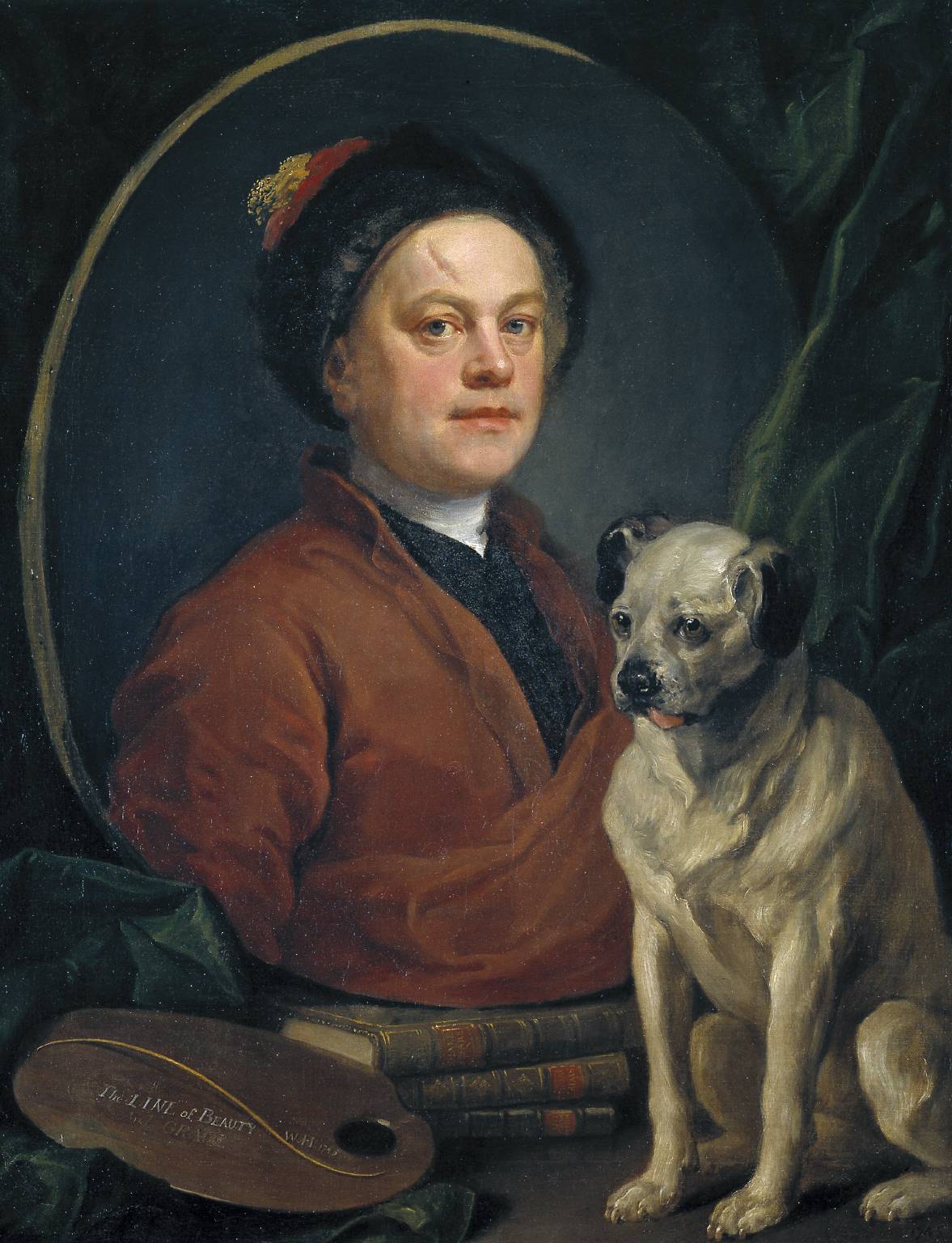
The Painter and his Pug 1745 William Hogarth 1697-1764 Purchased 1824 http://www.tate.org.uk/art/work/N00112

The Painter and his Pug 1745 William Hogarth

In our last installment, Vauxhall mastermind Jonathan Tyers was facing financial ruin when his most recent event wiped away all the profits of his other three. The story goes that his good friend William Hogarth, who still lived nearby, saw Tyers looking very dejected and asked what was the matter. Tyers replied that he was just trying to decide whether hanging himself or drowning was a better way to kill himself. Hogarth convinced him to wait until the following day, when he would share some ideas that might help. It can’t be known for certain what those ideas were, but it is clear that Hogarth was responsible for turning around the situation at Vauxhall.

In 1733 Tyers presented his friend William Hogarth with a solid gold pass to the gardens, giving free entry in perpetuity to a coach full of people. This unique and generous gift was accompanied by something even more precious, a small portrait of Tyers himself, painted when he was a young man visiting Paris, a gesture made in recognition of Hogarth’s many past favours.

hogarth pass

One of Hogarth’s ideas undoubtedly had to do with including contemporary English art, as he was always looking for places to display his own work and that of friends and students. Hogarth also persuaded Tyers to tone down his old-fashioned moralizing and use pleasure and enjoyment as his educational tools.

Early Design and Layout

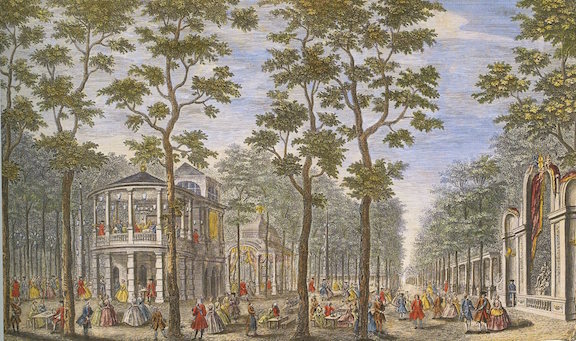
When Jonathan Tyers took on Vauxhall Gardens, the site was more like a densely wooded park than a garden, and was basically a rectangle of mixed deciduous woodland, mainly elm, lime and sycamore, cut through by a grid of several long walks at approximate right angles to each other.

There were in the public areas no bodies of water or fountains, no angles other than right angles, no formal flower beds, no mound, no topiary, no serpentine walks, nor the mazes or grottos…

Sophisticated landscape design played little part in Tyers’s Vauxhall, which was intended to accommodate as many people as possible with seeming overcrowded, while at the same time never appearing too sparsely populated.

The Proprietor’s House: the Entrance to the Gardens

prop001

The Proprietor’s House (right) which served as the entrance to the gardens (Vauxhall is written upon the doorway). The left side may have been the residence of the Tyers family.

The interior of the Proprietor’s House was described in the 1830’s by a writer who called himself the ‘tame cat’ of the gardens. On some of the ceilings ‘there were dim paintings, which the proprietor averred were the works of William Hogarth’. The house also boasted a large ballroom and ten bedrooms on the second floor. On the ground floor, above extensive cellars, there were:

Two handsome Parlours, with Dove and Marble Chimney Pieces, and Folding Doors, with Communication into the Pavilion Supper Rooms, and Private Entrance from the Lane, with Noble Light Staircase, Manager’s Office, and Public Entrance, called the Water Gate, with Money Takers’ Officers; Housekeeper’s Room, with Presses; Spacious Bar fronting the Gardens; Bread Room; Store Room; Pantry; China Room; Chicken Pantry; Glass Room; Punch Room; Pastry Room, with Tiled Bottom, and Confectionary, with Two excellent Ovens, Stewing Stoves, and Dressers, a capital large Paved Kitchen, with Dresser and Shelves; Scullery, with Pump of fine Water; and Yard, with detached Servants’ Dining Room; Pantry; Larder; Boiling House; Ham Room; Shed; and Servants’ Office.

Entering the gardens through this substantial house, at least for the first-time visitor, would have been a thrilling experience. After the discomfort of the journey, the modest entrance door, and the gloomy passage through the house, the first sight of the gardens, with their confusion of noise, colour, smell and movement, would have been breathtaking, like the raising of a curtain in a theatre, immediately transporting the visitor to another world.

The Prince’s Pavilion and Great Room

prince002

Situated adjacent to the Proprietor’s House, and accessible from it, [the Prince’s Pavilion] was a Kentian, classically inspired rectangular building with a portico of four Doric columns, set up on a basement storey, and accessed by a double flight of seven steps over a low arch… At the back of the portico, through a central door, was a single large drawing-room.

The name ‘Prince’s Pavilion’ refers specifically to the broad open-fronted portico at the front of the building… The attached Great Room or Salon was reached through the rusticated central doorway at the back of the portico. This room was richly decorated… It was fitted with fine mirrors, a grand chandelier, and a series of busts of modern worthies, including Isaac Newton, Alexander Pope and Abraham de Moivre.

Regular news reports attest to the prince’s frequent use of the pavilion and the Great Room behind it. On a typical occasion in 1737, a Saturday evening early in the season, the prince and his party, including the Earl of Darnley and the Earl of Crawford, Lord and Lady Torrington, Lady Irwin and Lord Baltimore, danced and supped in the Great Room from seven until midnight, after which their river journey back to Whitehall was accompanied by trumpets and French horns.

Susana’s Vauxhall Blog Post Series

  1. Vauxhall Gardens: A History
  2. Vauxhall Gardens: Jonathan Tyers—“The Master Builder of Delight” 
  3. Vauxhall Gardens: A New Direction
  4. Vauxhall Gardens: The Orchestra and the Supper-Boxes 
  5. Vauxhall Gardens: The Organ, the Turkish Tent, and the Rotunda
  6. Vauxhall Gardens: Three Piazzas of Supper-Boxes
  7. Vauxhall Gardens: “whither every body must go or appear a sort of Monster in polite Company”
  8. Vauxhall Gardens: The Competition
  9. Vauxhall Gardens: The Artwork, Part I
  10. Vauxhall Gardens: The Artwork, Part II
  11. Vauxhall Gardens: The Music, 1732-1859
  12. Vauxhall Gardens: The Business Side
  13. Vauxhall Gardens: Developments from 1751-1786
  14. Vauxhall Gardens: Thomas Rowlandson’s Painting (1785)
  15. ‎Vauxhall Gardens: The Third Generation of the Tyers Family and the Jubilee of 1786
  16. Vauxhall Gardens: An Era of Change (1786-1822), Part I
  17. Vauxhall Gardens: An Era of Change (1786-1822), Part II
  18. Vauxhall Gardens: An Era of Change (1786-1822), Part III
  19. Vauxhall Gardens: The Final Years, Part I
  20. Vauxhall Gardens: The Final Years, Part II
  21. Vauxhall Gardens: The Final Years, Part III
  22. Vauxhall Gardens: The Final Years, Part IV
  23. Vauxhall Gardens: Farewell, for ever