Archives

Chatsworth: A Grand House, To Be Sure, But Would You Wish to Live There?

Charming Chatsworth

Since reading Amanda Foreman’s Georgiana, Duchess of Devonshire, which includes much of the infamous duchess’s letters and journal entries, I’ve been fascinated by the Devonshire family. The only thing missing among the highly dramatic history of this noble, highly-esteemed family—possibly the wealthiest in England in the Georgian era—is a happy ending. The Devonshires of this period are prime examples of failed British aristocratic marriage and family values. With a seemingly endless source of income and the highest social status, why were these people so desperately unhappy?

It also begs the question that if we all truly believe that money and possessions not only do not make us happy but tend to bring along with them worries and responsibilities to weigh us down, then why do so many of us never seem to have enough? How much is enough? A comfortable life with enough income to cover the bills sounds reasonable. But does that mean stately homes, expensive cars, and a yacht to sail around the world? If you have that, would you be satisfied, or would you yearn for even more? If the billionaires of this world were truly happy, then why do they keep going after more and more? What do you do with a billion dollars anyway, especially with tax loopholes that the ordinary citizen does not enjoy? In the end, do you get a solid gold casket or something? Do you get special privileges in heaven?

Enough preaching. I wanted to write about my Chatsworth experiences this week. Yes, there are lessons to be learned. Unfortunately, most people aren’t inclined to learn from the past, and thus we keep making the same mistakes over and over.

Georgiana, Duchess of Devonshire
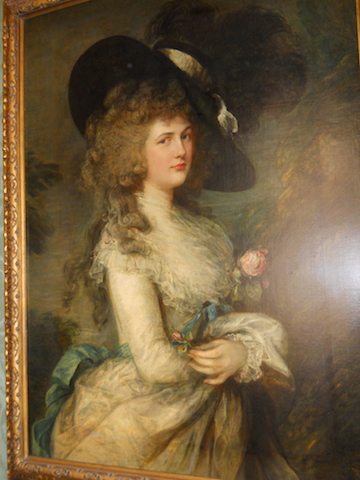
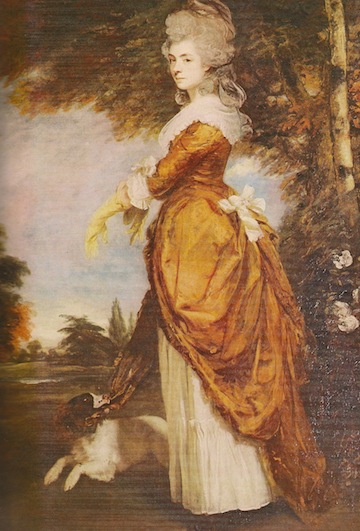
Georgiana Cavendish, Duchess of Devonshire

Georgiana Cavendish, Duchess of Devonshire

Pronounced George-ayna, by the way. Georgiana was the oldest daughter of the First Earl Spencer and his wife, also Georgiana. The Earl and his wife were childhood sweethearts. If you visit Spencer House on St. James Place in London (see my Pinterest board here), you will be told about their great love and shown all sorts of decorative features that proclaim their love match. It truly warms the heart of a romance addict. Except that…it doesn’t ring true when you realize they subjected their beloved seventeen-year-old daughter to a loveless marriage that brought her much unhappiness. What went wrong?

Well, perhaps it wasn’t entirely their fault. Young Georgiana probably thought it was a dream come true to marry the richest man in England who also happened to be a duke (the 5th Duke of Devonshire). It must have been a shock, though, to discover that her husband had no intention of being faithful, that even at the time of their marriage, his mistress gave birth to an illegitimate daughter who was eventually brought into the Devonshire family to be raised after her mother died. Georgiana herself found it difficult to conceive and suffered miscarriages before producing three children, two daughters, and finally a son, sixteen years after her marriage.
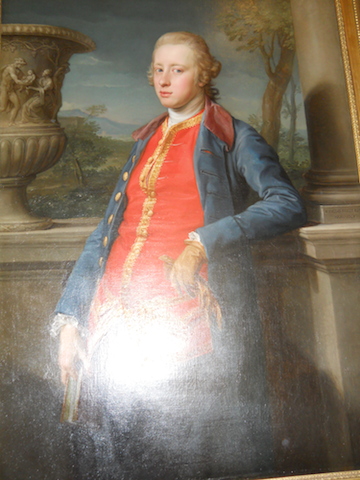
William Cavendish, 5th Duke of Devonshire

William Cavendish, 5th Duke of Devonshire

Georgiana enjoyed her life as a leading lady of fashion and politics in the ton. A friend of Queen Marie Antoinette of France, they copied each other’s fashions, including excessively tall hairstyles and large hats. Georgiana was also a leader of the Whig movement, hosting popular salons at Devonshire House in London for all the prominent Whigs of the time. (See a blog post here about her political exploits.) But with all this, she wasn’t happy. She spent lavishly, and gambled excessively (see post about her gambling exploits here), to the point where even the coffers of the richest man in England were seriously threatened. Her mother, the Countess Spencer—who also gambled beyond her means, particularly after her beloved husband died—warned her to be honest with her husband and to be more prudent in her gambling. Didn’t happen. The duke only found out the truth about her debts after her death. I guess they didn’t have Gamblers Anonymous in those days, or they’d know an addict isn’t able to manage his addiction prudently without giving it up entirely.

Georgiana seemed to have everything, and yet, she didn’t. Desperate for a close friend, when she met Lady Elizabeth Foster, who was separated from her husband and sons and seemingly destitute, Georgiana insisted she reside with them, and so began the ménage à trois. Lady Foster bore Georgiana’s husband two illegitimate children, who were brought up in the Devonshire home with their half-siblings, and Georgiana didn’t seem to mind. She and Bess were the best of friends, although many, including Lady Spencer, believed Bess to be a con-artist of the worst kind.

Charles Grey, 2nd Earl Grey and later Prime Minister

Charles Grey, 2nd Earl Grey and later Prime Minister

After the birth of her son, who later became the 6th Duke, Georgiana felt free to have love affairs of her own. She fell in love with Charles Grey, later to become an earl and a prime minister, and bore him a daughter, who was raised by the child’s paternal grandparents. Her husband was enraged and exiled Georgiana to France for three years, during which time she worried that her son would never know her. (Okay, the duke was a man of his time and perhaps not so terrible as he seems today, but punishing his wife for something he’d been doing for all their marriage just does not give a good impression of his character. Maybe it’s just me?)

Georgiana died in 1806 at 48 of a liver abscess (an eerie coincidence since I had this same affliction last fall, but am completely healed, thank heavens), and three years later, Lady Foster married the duke and became the second duchess, whereupon she admitted the paternity of her two illegitimate children and demanded that the duke provide for them as handsomely (or more so) as his legitimate children. (No, I don’t like her. Can you tell?)

Elizabeth Cavendish, second wife of the 5th Duke of Devonshire

Elizabeth Cavendish, second wife of the 5th Duke of Devonshire

The 6th Duke

Georgiana’s son was sixteen when his mother died and twenty-one when his father died and he inherited. He was active in Whig politics, but his special interest was landscaping and architecture. He had a north wing added to the house and an extensive renovation of the gardens. He spent lavishly to improve the property, which at that time included about 83,000 acres. William never married, having courted Georgiana’s sister’s daughter, Lady Caroline Ponsonby (yes, the one who went nutso over Lord Byron) and lost her to William Lamb, who undoubtedly regretted his marriage in retrospect. Perhaps His Grace realized his good fortunate in escaping a miserable marriage and couldn’t bring himself to risk it again. Certainly the marriages in his own family must have given him quite a few qualms!

The Devonshire Arms

The Devonshire Arms

The Devonshire Arms

Described as “a picturesque country pub at the heart of village life, offering the charm and character of an historic inn with a contemporary twist,” the Devonshire Arms offers comfortable rooms, superb food, and a quaint, medieval building that won’t fail to inspire any dedicated history lovers who book rooms here. Check out my Pinterest board here. And the village of Beeley is equally charming.

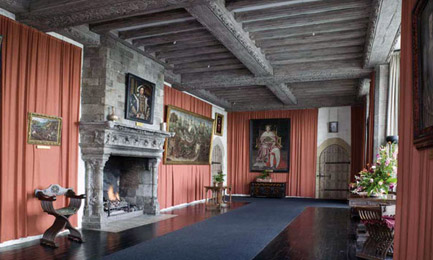
Chatsworth

Chatsworth is such a beautiful place, filled with such priceless art and furnishings (see Pinterest board here), that one can’t quite understand how so many of its inhabitants, possessed of great wealth and just about anything they wished, were so obviously unhappy. I thought about this a great deal as I took my time touring the rooms and listening to the audioguide, and even as I walked among the rolling hills and sheep from my lodgings to the house. So much beauty and wealth, and yet, I am not envious. At this point in my life, I don’t aspire to such heavy responsibilities, no matter the grandeur and glamorous lifestyle. It is enough for me to have the privilege of seeing it and experiencing it this one time.

Lovely ceilings throughout the house
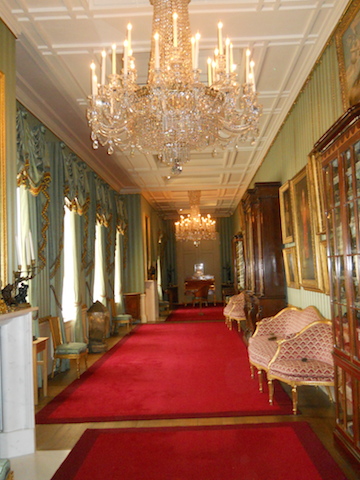
Lovely ceilings throughout the house

Sketches Room (my favorite)

Sketches Room (my favorite)

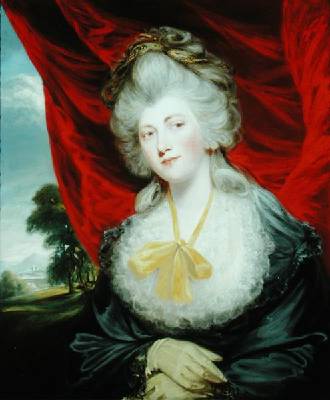
Countess Spencer, Georgiana's mother

Countess Spencer, Georgiana’s mother

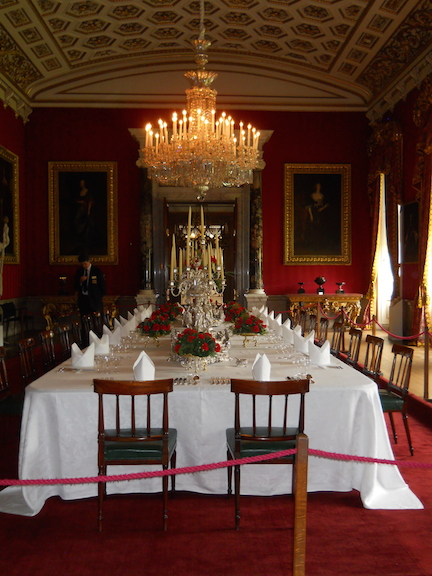
Dining Room

Dining Room

Devonshire family portraits
Devonshire family portraits

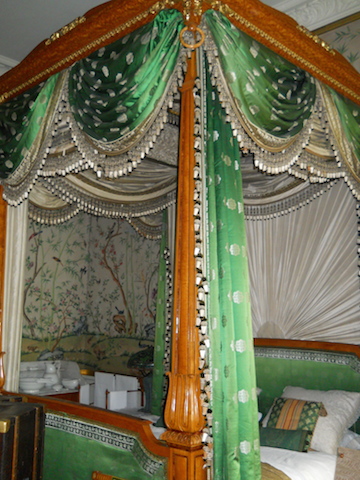
Wellington Bedroom

Wellington Bedroom

On With the New: Wall sculpture of DNA maps of current Devonshire family

On With the New: Wall sculpture of DNA maps of current Devonshire family

What do you think? Would you like to live the life of a wealthy celebrity? I’m curious to know if others feel as I do that “enough is enough”, and that happiness is not found in great wealth and possessions.

Hertford House and the Wallace Collection

One of my favorite activities is to visit beautiful, historic houses with lovely art and furnishings—even better if they are Georgian. In addition to the lovely rooms, there are so many captivating stories to remind me of the bygone era and the colorful personalities who used to live and/or socialize within them.

WallaceHouse

Hertford House is located on Manchester Square only blocks from the flat I’ve leased near Baker Street and quite close to the fabulous shops on Oxford Street as well. Because it’s small compared to other museums in London, it’s much less crowded and suitable for a leisurely visit. It is more of an art gallery than an example of a Georgian home, however, but if you enjoy both, you’re in luck!

Lady Hertford, 1800

Lady Hertford, 1800

The historical gossip that I wanted to know immediately if this home had anything to do with the Marchioness of Hertford who was a longtime mistress of the Prince Regent. Yes, indeed, Lady Hertford was the wife of the 2nd Marquess, but it was the 4th Marquess who left the house and the collection to his illegitimate son, Sir Richard Wallace, whose widow left it to the nation.

Seymour-Conway was the family name of the Hertfords (think Jane Seymour, Henry VIII’s third wife), and they were close connections to the Duke of Somerset.

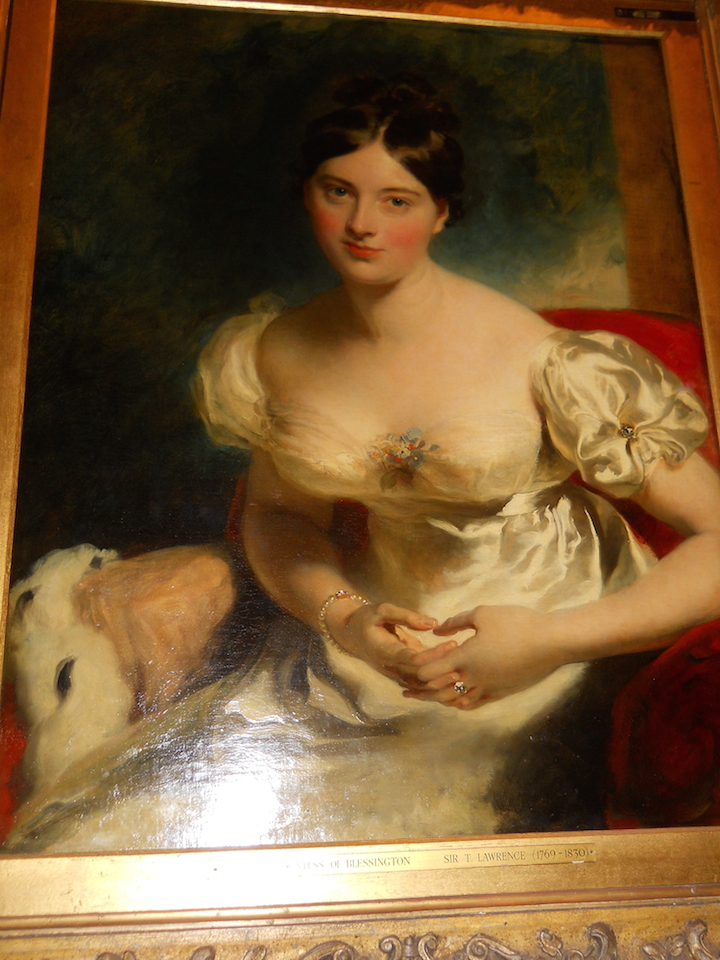
Marguerite, Countess of Blessington

Marguerite, Countess of Blessington

The house is filled with beautiful rooms and art treasures, as well as an armory. In the very first salon is a lovely painting of the Countess of Blessington by Sir Thomas Lawrence (as beautiful as she appears, it is said that she was even more ravishing in person). The countess’s beauty literally took her from rags to riches, as she rose from a sea captain’s mistress to an earl’s wife, and eventually into a ménage à trois with a young Comte d’Orsay. Besides her beauty, she was quite intelligent and held glittering salons for the crème de la crème of European society, including Lord Byron, of whom she wrote in Conversations with Lord Byron.

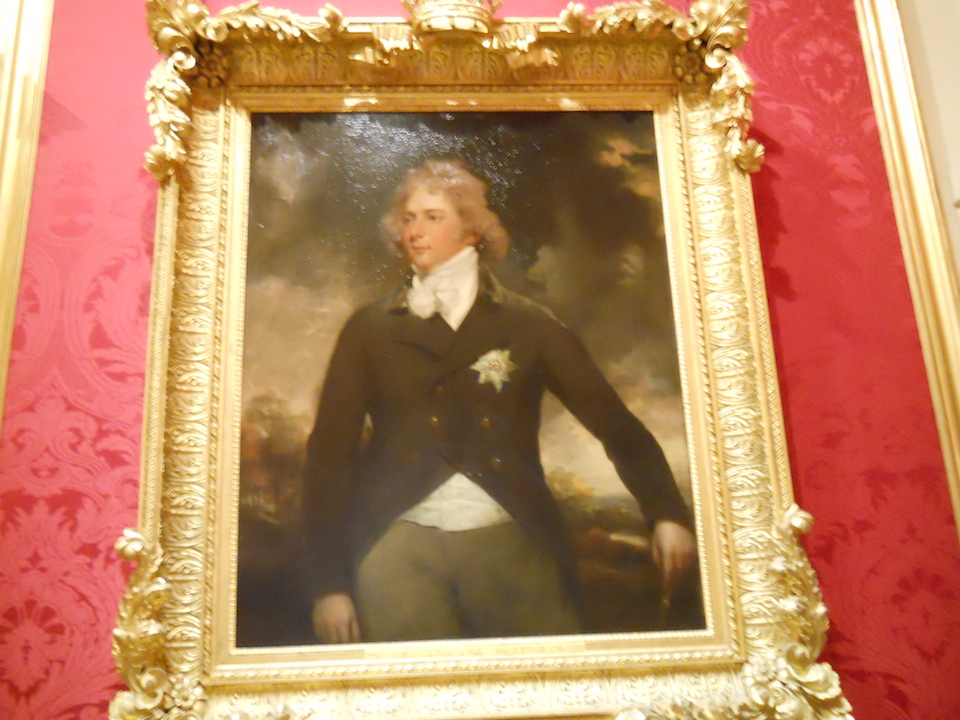
George, Prince of Wales (later George IV)

George, Prince of Wales (later George IV)

The painting of the Prince of Wales as he was in 1792) was presented to the 3rd Marquess in 1810 while his mother was the Prince’s mistress. And there’s a lovely Lawrence portrait of Emma Hamilton as well.

Emma Hamilton

Emma Hamilton

In another room is a portrait by Gainsborough of Mary Robinson, the Prince Regent’s first mistress, as Perdita in Shakespeare’s A Winter’s Tale.

Mary Robinson, as Perdita

Mary Robinson, as Perdita

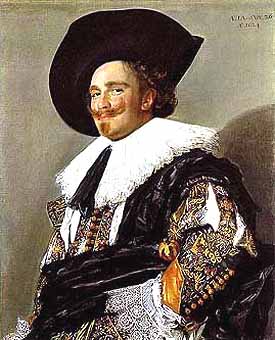
Franz Halz’s The Laughing Cavalier is here, and much, much more. Admission is free, and being so close, I can see myself returning for at least one more visit.

cavalier

Franz Hals’s The Laughing Cavalier

Be sure to put it on your list for your next trip to London!

For more photos of paintings and furnishings, check out my Pinterest board!

The Regency Gentleman’s Passion For the Turf

racecourse

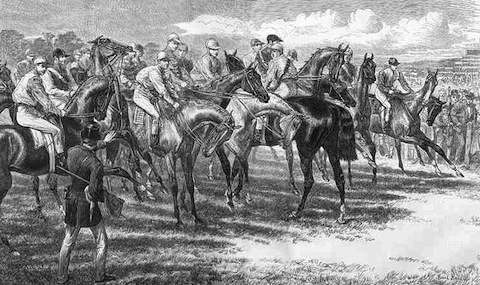
Breeding and training thoroughbreds for racing was the passion of many wealthy gentlemen of good birth. Even more participated in watching and wagering the races. Newmarket, with its network of race courses, sponsored seven race meetings a year, and a third of all the race horses in England were trained nearby. (Transporting horses was very difficult, and most horses were walked to the race course, so it was better to keep them as near as possible.)

Around 500 spectators—nearly all upper-class—gathered to watch the race on horseback, sitting on top of carriage roofs, or standing around the course at Newmarket, as there were no grandstands as there were at other courses. In 1809, the 2000 Guineas, a sweepstakes for three-year-olds was established at Rowley Mile. The 1000 Guineas, a race for three-year-old fillies was established in 1817 at the less taxing course of Ditch Mile.

newmarket

Prince George was an enthusiastic participant in racing in his younger days (1788-1791), but withdrew in a huff when the jockey of his horse Escape was involved in a dreadful scandal, and the Jockey Club—the organization that oversaw the sport—insisted that the Prince give the jockey his marching orders. What was the scandal? A matter of Escape losing a race one day, forcing the odds up for the next day, resulting in the Prince winning a large sum of money. The Prince continued to patronize the races, however. He just could not resist the lure of the excitement and gambling.

Types of Races

Horse matches were head-to-head contests where individual owners would agree on a wager, and the winner took all. Spectators would make side bets as well. In one famous match, Hambletonian vs. Diamond, almost 300,000 pounds changed hands.

Plate and cup matches, where the prize was a trophy, were quite common as well.

The sweepstakes, however, with a line-up of horses running against each other, was the most popular in the late 18th/early 19th century. The owners put up a specified sum to subscribe to the race, and the winner took everything.

Race Courses

Ascot, with its close proximity to London, became a popular venue for fashionable race fans. In 1814, popular heroes such as Blücher, Tsar Alexander, the King of Prussia and Hetnan Platov provided additional entertainment for the race-mad hordes.

epsom downs

Epsom Downs

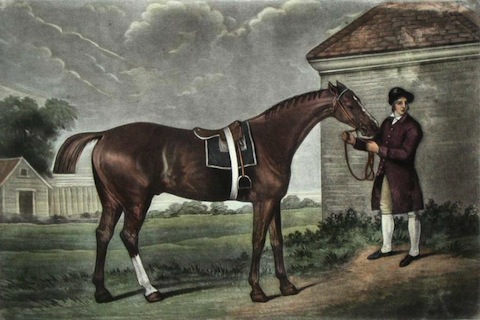
Epsom Downs, home of the legendary horse Eclipse, drew large crowds of the fashionable on Derby Day (named after the Earl of Derby who was instrumental in its development), a one-and-a-half mile race for three-year-olds. The only permanent structure on the course was Prinny’s stand, a miniature “castle” with Gothic arches where he could sit with his cronies to enjoy the races.

Eclipse

Eclipse

Other race courses were Goodwood in Yorkshire, Newcastle, Chester, Warwick, Winchester and Doncaster. Raikes (a dandy, banker and diarist) says:

“The Prince made Brighton and Lewes the gaiest scene of the year in England. The Pavilion was full of guests; the Steyne was crowded with all the rank and fashion from London during that week; the best horses were brought from Newmarket and the North, to run at these races, on which immense sums were depending; and the course was graced by the handsomest equipages.”

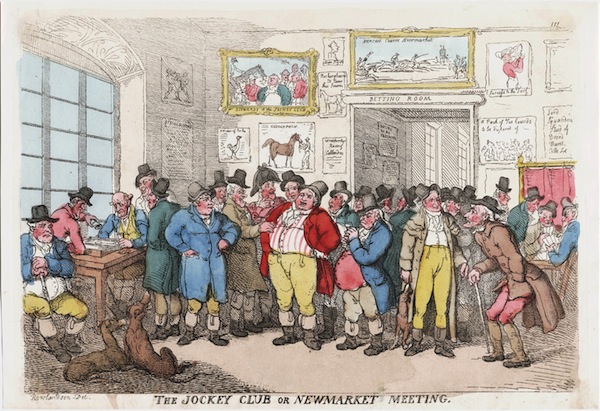
The Jockey Club

The organization responsible for regulating the racing world was the Jockey Club, whose members in 1790 included the Prince Regent, the Dukes of Bedford, Cumberland, Devonshire, and Norfolk. The Jockey Club established rules for such things as record-keeping and ensured that they were followed.

Wagering

As in London clubs and gaming hells, fortunes were won and lost at race courses. Brummell, too, lost large sums on horse racing. Raikes says:

“…I was never more surprised than when, in 1816, one morning he confided to me, that he must fly the country that night and by stealth. The next day he was landed in Calais, and, as he said, without any resources. I had several letters from him, at that time written with much cleverness, in which his natural high spirits struggled manfully against his overpowering reverses; but from the first he felt confident that he should never be able to return to his own country.”

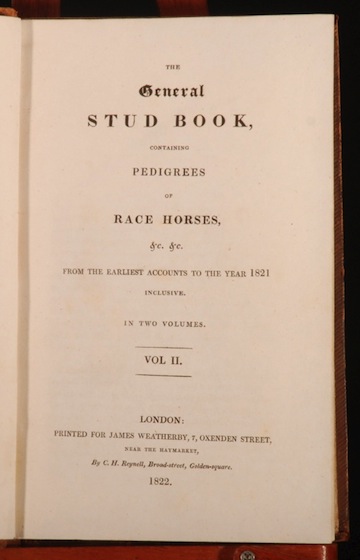
Stud Book

Stud Book

Laudermilk, Sharon H. and Hamlin, Theresa L., The Regency Companion, Garland Publishing, 1989.

The Regency Gentleman series

The Regency Gentleman: His Upbringing

The Fashionable Gentleman

The Rise and Fall of Beau Brummell 

Gentlemen’s Clubs in Regency London

Captain Who?

Gentlemen’s Sports in the Regency

The Gentleman’s Passion for Horses

Riding to the Hounds

The Regency Gentleman’s Passion for the Turf

Riding to the Hounds

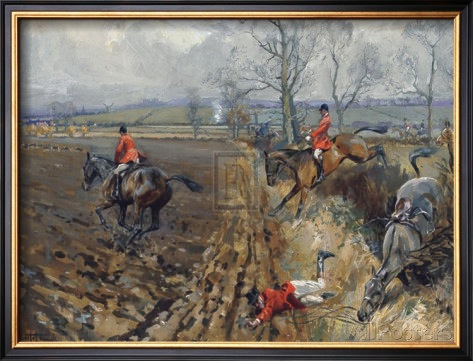
jumping

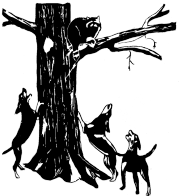
The changes that took place in the Georgian era had the effect of making the Regency era the Golden Age of Foxhunting. Faster hounds and horses that could jump at a gallop made the sport more exciting and more dangerous. Instead of foxhunters having to dig the fox out of its hole, the faster hounds would chase him up a tree—treeing—so that he could be thrown down to the dogs below. The first man up to the kill—the brusher—received the brush of the fox for his efforts. The brusher would be capped by the other hunters, that is he would collect half a crown or so for his triumph.

Black and White Treeing_small

Foxhunting was not only for the upper classes. Mr. Gunter, the London confectioner known for his ices, was a foxhunting fiend. Captain Gronow says:

“Everybody knows the story of Gunter the pastry-cook. He was mounted on a runaway horse with the King’s hounds, and excused himself for riding against Alvanley by saying, ‘O my lord, I can’t hold him, he’s so hot!’ ‘Ice him, Gunter—ice him’ was the consoling rejoinder.”

The Duke of Rutland's hounds

The journalist Nimrod in Sporting Magazine wrote that what is needed to be a good foxhunter is a good seat and a light hand. Also important is cool confidence and perception. A good foxhunter was “game to the back bone.”

An article in The Beau Monde in 1807 stated that:

“The duration of the chace should never be less than one hour, nor ought it to exceed two, which will, in most cases, be found sufficiently long if properly followed. Indeed, very few fox-chaces would ever exceed two hours if there were not a fault somewhere, either in the day, the huntsman, or the hounds.”

Some devoted foxhunters rode to the hounds six days a week. The best foxhunting was during January, February, and March, because the fox left the strongest scent during the cold weather.

foxhunt

The Duke of Wellington kept a stud of eight horses and hunted nearly every day on the Peninsula. He wore a blue frock coat given him by Lady Salisbury instead of the traditional red. Beau Brummell was an indifferent hunter, because he couldn’t bear to sully his rig with mud.

The Belvoir Estate

The Belvoir Estate

The enormous expense of maintaining a pack of hounds made private packs out of reach for most. The Duke of Rutland was one exception, but most people paid a subscription fee to a master who organized hunts. The Quorn might have around 200 subscribers, while smaller packs might have 50. In general, the neighborhood supported their hunting meets, but if the master allowed the hunters to destroy fields without compensating the local farmers, he might find his foxes hunted and killed by angry farmers in retribution.

Fox hunts normally started at ten or eleven in the morning, with hunters, horses, hounds, and liveried servants gathering at inns, markets, crossroads, or the lawns of stately homes. Hunters could wear what they chose, but the traditional dress was a red or black coat with white leather breeches, top boots, and a silk hat.

Regency ladies did not ride to the hunt in general, because the sidesaddle used at the time was not steady enough to be safe for galloping over bullfinches and hedgerows. This changed in the 1830’s after the development of a sidesaddle with three crutches that would secure the thigh. Exceptions were Lady Laetitia Lade and Lady Salisbury. But the truth is, most men didn’t want to hunt with the ladies because they were either too slow or better than the men, which was not acceptable either.

Lady-Salisbury

Marchioness of Salisbury

Laudermilk, Sharon H. and Hamlin, Theresa L., The Regency Companion, Garland Publishing, 1989.

The Regency Gentleman series

The Regency Gentleman: His Upbringing

The Fashionable Gentleman

The Rise and Fall of Beau Brummell 

Gentlemen’s Clubs in Regency London

Captain Who?

Gentlemen’s Sports in the Regency

The Gentleman’s Passion for Horses

Riding to the Hounds

The Regency Gentleman’s Passion for the Turf

Gentlemen’s Sports in the Regency

True Regency gentlemen did not sully their hands with work—that was for the lower classes. An exception to that rule would be managing his estates. Although he would generally have an estate manager or steward to handle the day-to-day tasks, the supervision of that employee would fall to him.

If all was in order, however, the Regency gentleman was fortunate to possess a considerable amount of free time, particularly the younger generation whose fathers yet survived, leaving them at liberty to seek their own pleasures, often referred to as attaining one’s “Town bronze.”

A previous post touched on the gentlemen’s clubs and gaming hells. Drinking, gambling and wenching were all popular pastimes for the gentlemen with time on their hands, especially for the young “cubs” or “greenhorns” who had yet to learn to be wary of pitfalls, such as “Captain Sharps” out to relieve them of their money by nefarious means. But when they weren’t indulging in the Regency era’s form of “partying,” they would likely engage in sporting events.

Boxing

A true gentleman had to be “good with his fists,” so many a gentleman frequented such pugilistic clubs as Gentleman Jackson’s on Bond Street, the Daffy Club, Limmer’s Hotel, Offley’s, and the Puglistic Society.

jackson-john-111

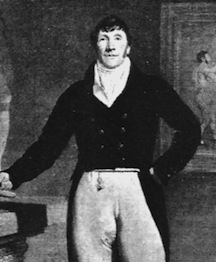
Gentleman Jackson was a former champion who enjoyed the respect and admiration of English society. His boxing academy on Number 13 Bond Street was a popular location for gentlemen who wished to improve their pugilistic skills. Jackson was instrumental in organizing the Pugilistic Society, which was formed at Thatched House Tavern in May 1814. The Pugilistic Society had the effect of lending respectability to the sport.

Offley’s was a sporting hotel in Henrietta Street that was known for its excellent beefsteak and ale. The Daffy Club, originally held at the Castle Tavern in Holborn, was an informal club reputed for the quantities of “blue ruin” (homemade gin).

mendoza_32-530x317

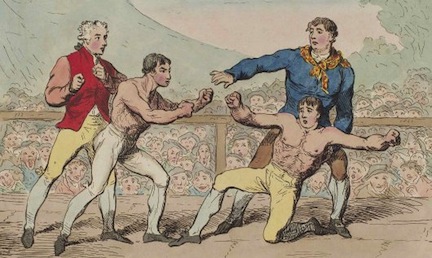
Prize fights or “mills” were usually held just outside of cities and towns where organizers could avoid the many laws regulating the sport. As soon as a fight was announced, hordes would swarm the town well in advance in order to secure accommodations. Those who arrived after every public house and inn was occupied either had to try to sleep in their carriages amidst all the racket in the street or stay up all night.

Fencing

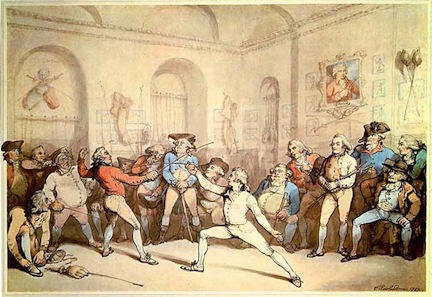
Angelo’s School of Arms

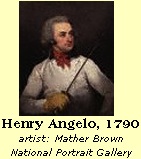
henry_angeloIn 1755, an Italian riding and fencing master by the name of Dominico Angelo Malevolti Tremamondo came to London and earned a reputation for extraordinary fencing skills. He opened “Angelo’s School of Arms,” first at Carlisle House, and then the Opera House Buildings in Haymarket. Angelo’s was a popular place for gentlemen to socialize, watch exhibitions of master fencers, and perfect their own equestrian and fencing skills. Angelo’s son Henry took over operations in 1785, and in 1817, he turned it over to his own son, also Henry. The elder Henry played a pivotal role in assisting his friend Gentleman Jackson establish his own boxing salon.

Blood Sports

The Royal Cockpit

Of all the violent animal sports—which included bear baiting and bull baiting—cock fighting was by far the most popular. The Birdcage Walk and the Royal Cockpit were two of the special indoor arenas where crowds gathered to gamble on the outcomes and watch the fights. The birds were armed with sharp spurs and the cruelty and violence was extreme. (No hero of mine will ever enjoy this sport, I assure you!)

Laudermilk, Sharon H. and Hamlin, Theresa L., The Regency Companion, Garland Publishing, 1989.

The Regency Gentleman series

The Regency Gentleman: His Upbringing

The Fashionable Gentleman

The Rise and Fall of Beau Brummell 

Gentlemen’s Clubs in Regency London

Captain Who?

Gentlemen’s Sports in the Regency

The Gentleman’s Passion for Horses

Riding to the Hounds

The Regency Gentleman’s Passion for the Turf

Captain Who?

Rees Howell Gronow

Rees Howell Gronow

The Welsh-born Rees Howell Gronow attended Eton with Percy Bysshe Shelley. The young Gronow’s military career began in 1813, when he was sent to Spain with a detachment from his regiment, where his participation in military endeavors was significant. After being posted to London a year later, he became known as one of the primary dandies of his time, being one of the few officers ever admitted to Almack’s, the exclusive assembly rooms on King Street. Neither titled nor wealthy, Gronow was considered one of the most handsome gentlemen of the ton, and that, together with the fact that he was a meticulous dresser, was enough to elevate him into the highest circles of London society. His portrait appeared in shop windows along with other famous gentlemen of the time, such as the Regent, Alvanley, Brummell, etc. He was an excellent shot, second only to the famous Captain Ross, and participated in many duels.

Although not called by the War Office for service on the continent, Gronow used 600 pounds won at the gambling tables to equip himself with a horse and gear and took himself off anyway. He participated in France at Quatre Bras and Waterloo, and was soon after made a lieutenant, and later, captain, of his regiment. He continued with his regiment in England until 1821, when he retired.

In 1821 he spent a short time in debtors’ prison. In 1825, he married an opera dancer. He made his home in London, where he mixed with the highest echelons of society, for many years afterward. During that time he ran unsuccessfully for Parliament on three occasions. Eventually, he moved to Paris. where, in 1858 when he was 63, he married the daughter of a Breton aristocratic who was young enough to be his granddaughter. They had four children together, for which he failed to provide after his death at age 70, according to the Morning Post.

bookToday, Gronow is mostly known for his Reminiscences, in which he discusses his military service, his personal experiences with many prominent Regency-era personages, as well as life in Restoration France. He is frequently quoted in The Regency Companion, from which I’ve been gleaning historical tidbits of interest to fans of the Regency period. The Kindle edition of his book is available for free on Amazon. (See below)

Reminiscences of Captain Gronow

Laudermilk, Sharon H. and Hamlin, Theresa L., The Regency Companion, Garland Publishing, 1989.

The Regency Gentleman series

The Regency Gentleman: His Upbringing

The Fashionable Gentleman

The Rise and Fall of Beau Brummell 

Gentlemen’s Clubs in Regency London

Captain Who?

Gentlemen’s Sports in the Regency

The Gentleman’s Passion for Horses

Riding to the Hounds

The Regency Gentleman’s Passion for the Turf

Gentlemen’s Clubs in Regency London

Gentlemen of birth and/or wealth aspired to membership at one of London’s exclusive gentlemen’s clubs, where they could indulge in drink and gambling without the intrusion of lesser men. Potential members could be refused membership by one blackball.

Captain Gronow comments in his “Reminiscences” that

“female society amongst the upper classes was notoriously neglected….How could it be otherwise, when husbands spent their days in the hunting field, or were entirely occupied with politics, and always away from home during the day; whilst the dinner party, commencing at seven or eight, frequently did not break up before one in the morning. There were then, four- and even five-bottle men, and the only thing that saved them was drinking very slowly out of very small glasses.”

White's: note the famous Bow Window

White’s: note the famous Bow Window

White’s

White’s was the unofficial headquarters of the Tory party, while Brooks’s was for the Whigs, although several gentlemen belonged to both. From 1812 to 1816, Beau Brummell reigned supreme at White’s, along with his circle of friends, which included Lord Alvanley, the Duke of Argyll, “Poodle” Byng, “Ball” Hughes, Sir Lumley Skeffington, and Lords Sefton, Worcester, and Foley. Brummell approved who was allowed to sit in the famous Bow window, and decreed that there would be no acknowledgments of passersby. After Brummell’s fall from grace, Lord Alvanley replaced him. This is reportedly where Alvanley wagered 3,000 pounds on which of two raindrops would reach the bottom of the window first. It is not known whether he won or lost.

Gambling and betting were the two main forms of entertainment. The famous White’s Betting Book contains documentation for bets on a wide variety of subjects, including births, deaths, marriages, and battles. In the card rooms, fortunes were won or lost playing card games, the most popular of which was whist.

Gaming room at Brook's

Gaming room at Brooks’s

Brooks’s

The club that became Brooks’s was founded by William Almack, also the founder of Almack’s Assembly Rooms. Brooks’s was the preferred club of many famous Whigs, such as the Prince Regent, William Wilberforce, William Lamb, Charles James Fox, Lord Carlisle, Lord Robert Spencer, and General Fitzpatrick. The preferred card games here were faro, hazzard and macao.

Boodle's

Boodle’s

Boodle’s

Another establishment founded by the industrious William Almack, Boodle’s also had a famous bow window. Boodle’s was mostly patronized by country gentlemen who came to town for the good food and the gambling. Brummell, Wellington, and Wilberforce held memberships here as well.

Watier's: nicknamed the Dandy Club by Lord Byron

Watier’s: nicknamed the Dandy Club by Lord Byron

Watier’s

Considered the greatest gambling club of the Regency before its demise in 1819, Watier’s was founded in 1805 when the Prince Regent and his dinner guests were complaining about the monotonous food at the gentlemen’s clubs. The Prince asked one of his cooks, a Mr. Watier, if he would consider taking a house and starting a club.

Byron called it the Dandy Club. As the acknowledged arbiter of gentlemen’s fashions and behavior, Brummell reigned supreme here as well. The game of macao was the preferred game of chance, and Brummell himself lost a fortune here.

Gaming Hells

There was no lack of gaming establishments for the lesser souls who did not qualify for the exclusive men’s clubs. The play at these gaming “hells” was not always above-board, and many a greenhorn was exploited there, along with many unfortunate highly-ranked players. Many of these were owned by shady characters who operated under the radar of law-enforcement.

brook's chips

Gronow, Rees Howell, Reminiscences of Captain Gronow, Kindle edition free on Amazon

Laudermilk, Sharon H. and Hamlin, Theresa L., The Regency Companion, Garland Publishing, 1989.

The Regency Gentleman series

The Regency Gentleman: His Upbringing

The Fashionable Gentleman

The Rise and Fall of Beau Brummell 

Gentlemen’s Clubs in Regency London

Captain Who?

Gentlemen’s Sports in the Regency

The Gentleman’s Passion for Horses

Riding to the Hounds

The Regency Gentleman’s Passion for the Turf

Leeds Castle: Castle of Queens

Leeds_Castle_(2004a)

My current WIP is a time travel set in 1817 England, featuring my favorite time-traveling lady, Lady Pendleton, in a role as deux ex machina. She’s helping my 21st century heroine (Helena) adapt to the Regency era while she searches for answers to a mystery regarding her family origins. In Chapter Seven, Helena is serving as a temporary governess to Lady P’s grandchildren in Kent, about two miles from one of the most charming castles in England, Leeds Castle. So why shouldn’t she—accompanied by the hero, of course—take the children on a field trip?

Upon learning of the fabulous maze on the property, I was all set to have my protagonists have a private interlude while the children explore the maze. Until I discovered that the maze wasn’t put in until 1987! (While I adore research, sometimes it can really be a downer!)

I toyed with the idea of doing it anyway—how many of my readers will know this? The problem is—I would know it! However, the idea occurred to me of my heroine—who had visited the castle in the 21st century—mentioning the maze and getting blank stares from everyone, and then the current owner stroking his chin and saying what a good idea that would be! And my heroine as usual wondering if her mistakes—and she makes them frequently—might have some horrific effect on the time-space continuum. Something my intrepid Lady P doesn’t believe in.

Anyway, I thought my readers at Susana’s Parlour might enjoy the results of some of my research on Leeds Castle. It’s very visitor-friendly—I’ll be including it on my list for my own trip this summer.

Origins

leeds-castle-lightboxlarge-427

Originally a Norman stronghold, the first structure was built almost a thousand years ago, in 1119. In 1278, King Edward I expanded it, creating the lake that now surrounds it and building a barbican (a fortified outpost or gateway) that spans three islands and a gloriette (pavilion or other structure built in a garden) with apartments from the king and queen. In 1519, Henry VIII remodeled it for his first wife, Catherine of Aragon.

The Queens

Catherine of Aragon, Spanish Princess

Catherine of Aragon, Spanish Princess

  • Eleanor of Castile, first wife Edward I, bought it in 1278.
  • Margaret of France, second wife of Edward I, was given the castle after Eleanor’s death.
  • Following the death of Edward II, his wife Queen Isabella held it until it passed to Edward III on her death.
  • Richard II gave it to his wife, Anne of Bohemia,
  • in 1382.Henry IV gave it to his wife, Joan of Navarre, in 1403.
  • Henry V left it to his wife, Catherine of Valois in 1422.
  • Her grandson, Henry VIII, gave it to his wife, Catherine of Aragon, in 1500.
  • Elizabeth I was imprisoned there during her sister Mary’s reign.
  • George III and Queen Charlotte visited there in 1778.

Georgian Period

Fiennes Wykeham (later Martin was added) took possession in 1793, selling the family estates in Virginia in order to make extensive renovations of the property in Tudor style, which were completed in 1823. Fiennes Wykeham was the son of Mary Fox, daughter of Charles Fox, the colorful Whig leader. This turned out to be quite fortuitous, since I had set up my hero to be a distant relative of the Melbourne family, who were prominent Whigs as well. Turns out Fiennes Wykeham was a friend of his and quite amenable to the idea of the visit to the property—still under renovation in 1817—in Chapter 7. (I love it when a plan comes together!)

Planning a Visit?

Be careful—Leeds Castle is not anywhere near the major English city of Leeds in the north. It’s near the village of Leeds, about five miles from Maidstone in Kent. There are bus tours, or you can drive or take a train/bus combination—it’s about two hours from London. You’ll find lots to do there for adults or children. In the center of the maze is the entrance to a mysterious grotto. There’s a dog collar museum—yes, that’s right—and you can even book overnights there for special events, such as an opulent Valentine’s Dinner with your special Significant Other, and a great 1920’s House Party in April. Here’s the brochure: http://user-3vovb8a.publ.com/Leeds-Castle-Dine-Sleep-Events-2014#8. There’s a golf course, a playground for children, falconry displays, and you can even punt on the moat. Click here for more information.

leeds_castle460_1390295c

Banquetting Hall of Henry VIII

Banqueting Hall of Henry VIII

Tudor Courtyard

Tudor Courtyard

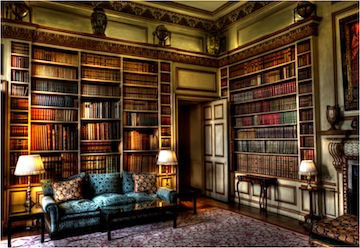
Library

Library

Cozy room

Cozy room

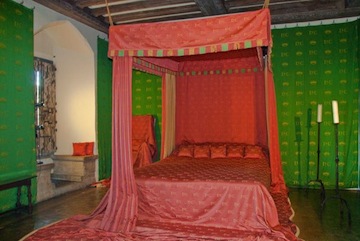
Bedroom

Bedroom

Philip Astley: Equestrian, Showman and Entrepreneur

Philip Astley: Equestrian, Showman and Entrepreneur

Philip-Astley

Philip Astley: Early Life

Philip Astley was born in Staffordshire (about 150 miles from London) on January 8, 1742. When he was around eleven years old, his family moved to London, where his father had a carpentry shop near Westminster Bridge. In 1759, he went to be trained in horsemanship in Wilton at Lord Pembroke’s estate, where he showed extraordinary promise. Soon after, in search of excitement, he left his family and joined a regiment of light dragoons called Eliot’s Light Horse, later the 15th Light Hussars.

Astley’s Military Service

Astley was assigned to care for and train the horses to be “bomb-proof”, i.e., not to take off in fear at the sound of gunshot. His unit was soon shipped off to Hamburg, Germany to assist the Prussians in fighting the French in the Seven Years’ War. The 15th distinguished itself by being instrumental in capturing sixteen colors (flags) from the French, and one of them was taken by Philip Astley. Losing one such flag would be considered a disaster, so losing sixteen of them was humiliating for the French. The tactics and riding skills of the 15th were too much for the French to overcome. The 15th was awarded the country’s first ever Battle Honor and nicknamed “The Fighting Fifteenth.”

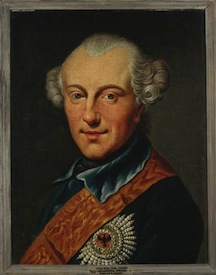
That same year, Astley earned the lifelong gratitude of royalty when he single-handedly rode through enemy lines to rescue Karl Wilhelm Ferdinand, the Duke of Brunswick. A prince of the Holy Roman Empire, the duke was married to George II’s daughter and was the father of Princess Caroline, who would become the wife of George IV.

duke of brunswick

Karl Wilhelm Ferdinand, Duke of Brunswick

Astley continued to prove himself throughout the remainder of the Seven Years’ War. In 1766, he was discharged from the army and given a white charger called Gibraltar as a token of appreciation from his commander. Having married and become the father of John Philip Conway Astley, he took a job at a nearby riding school that demonstrated tricks as well as teaching riding skills. After a year, Astley obtained some property and started his own establishment.

Astley’s Amphitheatre: The Beginning

It was around 1768 when people would come around to watch Astley and his pupils perform equestrian tricks. A collection bucket was sent around, money started to pour in, and Astley began to hire musicians. He’d stand on his head on the back of a horse, straddle two cantering and jumping horses, and often be joined by his wife Patty, also a talented performer. Even at this early stage, Astley knew that variety was the best way to keep his audience happy, and he was never satisfied to keep performing the same tricks over and over again.

Mr. Astley, Sergeant-Major in His Majesty’s Royal Regiment of Light Dragoons. Nearly twenty different attitudes will be performed on one, two, and three horses, every evening during the summer, at his riding school. Doors to be open at four, and he will mount at five. Seats, one shilling; standing places, sixpence.

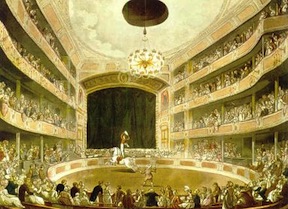
amphitheatre

It wasn’t long before Astley mysteriously found a diamond ring on Westminster Bridge and was able to lease (and then acquire) a piece of property south of the bridge. He cut down the timber and constructed the first Astley’s Amphitheatre, although it was first called The British Riding School. The fenced-in compound was in open-air, but had a covered standing area for visitors and a central viewing platform. Eventually, a dome-shaped roof covered the entire ring, and there was a room above the horses’ stables where wealthy visitors could sit.

The Licensing Act of 1737

Censorship was alive and well in England for more than two centuries due to this law that gave the Lord Chamberlain the power to approve or ban public performances. The only two theaters authorized to perform plays were Covent Garden and Drury Lane. Any other performances could get raided and their employees thrown into prison. Astley fought public officials trying to shut him down for many years, often using his upstanding military background and royal connections to keep his business going. At one point, George III himself came to his defense, perhaps because a dozen years earlier Astley had saved him from injury on Westminster Bridge when a horse pulling his carriage became uncontrollable. It didn’t hurt that Astley celebrated the King’s birthday on June 4th every year with a fireworks demonstration over the Thames either.

Astley’s Goes on Tour

As other performers—jugglers, rope-walkers, tumblers, clowns, etc.—were added, Astley’s role became more producer, artistic director, marketer, and business manager.

In the autumn, Astley used his army training to take his show on tour, where he would perform at fairs and gardens, in fields, and borrowed theaters, with staging and fencing loaded on wagons, as far away as Edinburgh.

It was, perhaps, inevitable that he would conquer the French with his extraordinary show. He charmed Marie-Antoinette, who called him “le plus bel homme d’Europe”, and in 1802, during a brief period of peace with the French, he achieved an audience with Napoleon and was granted reparations for the theater that was appropriated by the republican army during the revolution. Brussels, Vienna, and Belgrade were among the European capitals he captivated prior to the French Revolution

Astley’s After Astley

Rendell, Mike. Astley's Circus: The Story of an English Hussar. 2014
Rendell, Mike. Astley’s Circus: The Story of an English Hussar. 2014. Amazon

Following Philip Astley’s death in 1814, his son John managed the circus. After he died in 1821, Andrew Ducrow, son of the “Flemish Hercules” took over management of the Amphitheatre. Ducrow was the first performer to ride six horses at once. After Ducrow died (following a devastating fire—the third in its history—the property was rebuilt by William Batty. After Batty came a long a long line of new owners, but by the second half of Queen Victoria’s reign, Astley’s was long-since its prime. It was closed in 1893 and demolished two years later.

Astley’s Accomplishments

  • The first ringmaster. Astley went around in military costume announcing the acts in his booming voice, cracking the whip, and generally serving as Master of Ceremonies.
  • Pioneered the idea of the circus parade to create enthusiasm for his performances
  • Astley propagated the idea of a ring with a diameter of 42 feet as the optimal for circus acts.
  • Although he is often called the “Father of the Modern Circus,” he never called his venue a circus.

“…everything was delightful, splendid, and surprising!”

Charles Dickens, Master Humphrey’s Clock

For a detailed list of some of the “attitudes” offered in Astley’s performances, click here.

Lady P and Hyde Park

LadyP2Lady P is back! She stayed a bit longer with her grandchildren than expected, but hey, who wouldn’t want to spend Christmas with the little ones? But she became weary of cold English winters and couldn’t resist the temptation of spending the winter with Susana here in central Florida. Mrs. Barlow, who came for an interview in a previous post, had already spoken enthusiastically of the palm trees and alligators and orange trees, so she arrived post-haste this morning—Twelfth Day—following a lovely Twelfth Night celebration with her family in the 19th century.

Over a quick breakfast of coffee from Susana’s new Keurig (which fascinates her), yogurt and boiled eggs, they discussed the new story Susana is working on, which features Lady P herself and her daughter’s family. It’s a bit out of the usual thing for Susana, being a time travel with a heroine who travels back to the 19th century to find her family, and Lady P’s advice has been invaluable. For one thing, the heroine lands in 1817 Hyde Park, and right from the beginning Susana ran into problems trying to find out what Hyde Park looked like in 1817. For example, the Marble Arch wasn’t built until 1827.

Lady P: No rose garden either. Although that does seem a nice touch. I must mention it when next I encounter His Royal Highness.

Susana [sighing]: No, I’m going to have rewrite the entire first scene! I’m thinking she’ll have to land somewhere near Hyde Park Corner and the Rotten Row.

Lady P: Be sure to keep her well out of the way of the horses and carriages, then. Tattersall’s is there too, you know.

SandHillCrane.180184808_std

Susana: What about Sister Ignatia? Would a religious reformer be hanging about in Hyde Park, do you think?

Lady P: Generally, you don’t see the riffraff there. Hyde Park is primarily for the upper classes. But there are exceptions…servants who accompany their masters and mistresses, and there are Tattersall’s employees, of course. I have seen a few do-gooders handing out tracts from time to time.

Susana: Is it likely an unaccompanied young lady might be attacked by ruffians there?

Lady P [frowning]: An unaccompanied young lady might be attacked by ruffians anywhere, Susana! I regret to say that even gentlemen might try to take advantage. It’s not common, but crime in Hyde Park is not completely unknown.

Susana: Ah, so I won’t have to change the scene completely, then.

Lady P [peering out the window]: Are those ostriches out there? Do let us go for a stroll, Susana. And oh, what are those funny little vehicles with the canvas roofs? Can we ride in one?

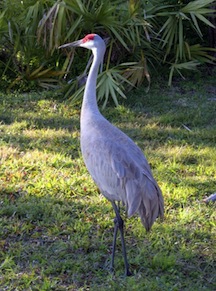
Susana: Golf carts. People use them here to get around the park. I don’t have one myself, but I’m sure the neighbors will give you a ride. Oh, and the birds are sand hill cranes. Aren’t they pretty?

Regency Rites: Hyde Park

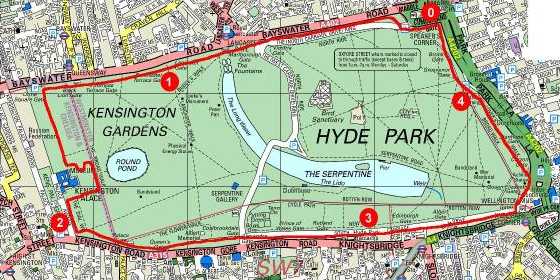
hyde-park-london-running-route-serpentine-rcOriginally, the Manor of Hyde was part of the Roman estate of Eia, and included what is now Green’s Park and Kensington Park. About 600 acres until the establishment of Kensington Park, it was given to Geoffrey de Mandeville by William the Conqueror. De Mandeville left it to the Holy Fathers of Westminster Abbey, where it remained for five centuries until Henry VIII dissolved the monasteries.

It was a great hunting ground, rich in deer, boar, hare, otter, wildfowl, and game birds.

Under Charles II, the route was called “the Ring” or “the Tour”. A French visitor said:

They take their rides in a coach in an open field where there is a circle, not very large, enclosed by rails. There, the coaches drive slowly round, some in one direction, others the opposite way, which, seen from a distance, produces as rather pretty effect, and proves clearly that they only come there in order to see and be seen.”

Paintings by pissarro3

Painting by Pissarro

Samuel Pepys wrote (of Charles II):

After dinner to Hyde Park. At the Park was the King and in another coach my lady Castlemaine , they greeting one another every turn:”

William II bought the manor at Kensington and Kensington house grew into Kensington Palace, and the western end of Hyde Park was taken for the Palace estate, which would one day become Kensington Gardens.
William III and Queen Mary used to drive along the road, and it became known as La Route du Roi, which became corrupted into Rotten Row.

For showing off coaches and their teams, Hyde Park remained the place to be.”

In 1730, George II laid down a radius of paths and his wife Queen Caroline had the Serpentine constructed by widening the Westbourne brook and draining its pools.

Hyde Park was also a popular location for duels, military floggings, and suicides (drownings). The gallows at nearby Tyburn was used for hangings until 1783, when it was moved to Newgate.
George-Leslie-Hunter-xx-Rotten-Row-Hyde-Park-xx-Private-collection

Painting by George Leslie Hunter

There were soldiers’ camps and military parades, and in 1814, 12,000 men marched past the Prince Regent, the Duke of York, the King of Prussia, the Emperor of Russia, General Blücher, and Lords Beresford and Hill. A reenactment of the Battle of Trafalgar was performed on the Serpentine.

In 1821, Hyde Park was the scene of an elaborate celebration of George IV’s coronation. There were Chinese lanterns, clowns, conjurors, swords swallowers, fire-eaters, acrobats, swings, roundabouts, fireworks, military bands, boat races, elephants, and dancing donkeys and dwarfs.

After John Loudon McAdam improved roads with stone broken small enough to make a hard smooth surface, all sorts of carriages appeared in Hyde Park, and being a good whip became a mark of social distinction. George IV was known to be an excellent whip, as was his daughter, Princess Charlotte of Wales. The Four-in-Hand Club made its appearance, with only the very best whipsters allowed as members.

Horse & Carriage: The Pageant of Hyde Park, J.N.P. Watson, London: The Sportsman’s Press, 1990.

Belles-and-beaus

Painting by William Heath