Archives

Shannon Donnelly: Lady Chance

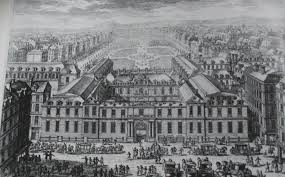
palaisroay1600

Researching the Palais Royal

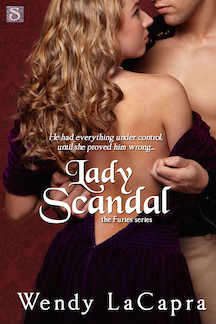
One of the fun things about writing—for me, at least—is the research. I love to dig into history; in particular, I love to look for just the right setting to help a scene come alive. Lady Chance, the follow-up book to Lady Scandal, comes out this August; it’s set in Paris of 1814, and since gambling and cards are in the book, that meant I could use the Palais Royal.

The palace was originally designed by Jacques Lemercier and construction started 1628 for the infamous Cardinal Richelieu. It was originally known as the Palais Cardinal, but became a royal palace after the cardinal bequeathed the building to Louis XIII.

Louis handed the palace to the Queen Mother, Anne of Austria, and then Henrietta Maria and her daughter Henrietta Anne Stuart, who had escaped from the English civil war, took up residence. Henrietta Anne later married Phillipe de France, duc d’Orléans, and the palace became known as the House of Orléans. The duchesse was the one who created the ornamental garden of the palace.

Louis XIV was succeeded by his great-grandson, and the duc d’Orléans became regent of young Louis XV. The Palais Royal was then opened so the public could view the Orléans art collection, and that began the palace’s more public life.

Louis Philippe II held the royal palace from 1780 until his death. He renovated the building, and the garden was now surrounded by a mall of shops, cafes, salons, refreshment stands and bookstores.

At that time, the Palais Royal became a meeting ground for revolutionaries. Its owner, Philippe d’Orléans sided with the revolutionaries. He changed his name to Philippe Égalité and his house became the Palais de l’Égalité. He opened the gardens to the public and enclosed them with colonnades lined with shops.

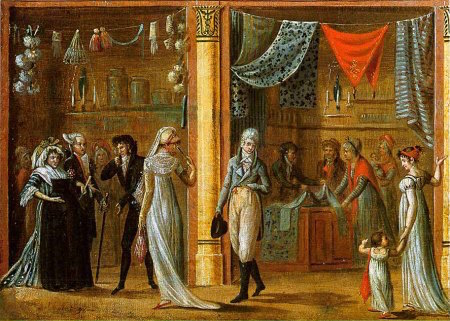
palaisroyal-demimonde

On the ground floor shops sold “perfume, musical instruments, toys, eyeglasses, candy, gloves, and dozens of other goods. Artists painted portraits, and small stands offered waffles.” The demi-monde could also parade their wares—themselves—and often had rooms on the upper floors for their customers’ convenience.

By 1807, the Palais Royal boasted “twenty-four jewelers, twenty shops of luxury furniture, fifteen restaurants, twenty-nine cafes and seventeen billiards parlors.”

palais-royal-10 copy

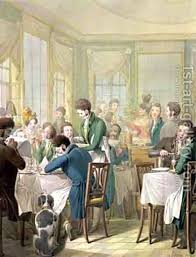
While the more elegant restaurants were open on the arcade level to those with the money to afford good food and wine, the basement of the Palais Royal offered cafés with cheap drinks, food and entertainment for the masses, such as at the Café des Aveugles.

palisroyal

Upon the death of the duc, the palace’s ownership reverted to the state, and for a time it was known as Palais du Tribunat. After the Bourbon restoration to power in 1814, the duc d’Orléans took back his title and the Palais Royal took back its name, but kept its reputation for a fashionable meeting place. And that is when Lady Chance is set.

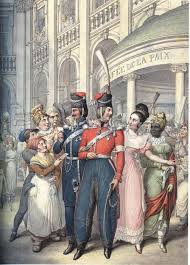
In 1814, Paris was under occupation by the allied forces that had defeated Napoleon. Russian cuirassiers, Prussian lancers, Hungarian hussars, Cossacks, and French soldiers all rubbed shoulders—and were not always in harmony with each other. But it was said of the Palais Royal that “You can see everything, hear everything, know everyone who wants to be found.”

paris_russians

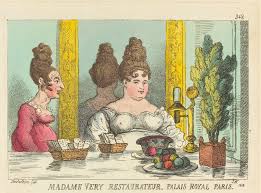
Véry Frères in the Palais Royal was accounted the most expensive restaurant in Paris, and one could dine with “brilliantly lit salons, granite tables, gilt bronze candelabra and mirror-lined walls.” Trois Frères Provençaux was famous for poulet à la Marengo—Chicken Marengo, said to be the dish served Napoleon’s victory at Marengo. In Paris Between Empires, Philip Mansel talks of dining at Le Caveau, or at the royalist Café de Foy. While Café des Mille Colonnes on the first floor of arcade provided its patrons, “Mirrored salons, hung with ‘magnificent chandeliers’ and supported by Corinthian columns of green marble.” The building was also home to the fashionable resturant Le Grand Véfour.

palaisroyalresturant

On the second floor, elegant card rooms offered deep gaming—these are the salons featured in Lady Chance.

About Lady Chance

Can an English lady find love and common ground with a French soldier?

In Paris of 1814, as Bourbon king again takes the throne, and the Black Cabinet—a shadowy group of agents employed by the British—is sent to unmask dangerous men and stop assassinations. When Diana, Lady Chauncey—known as Lady Chance—is recruited by her cousin to use her skill at cards to help him delve into these plots, she meets up with a man she thought dead. Diana finds herself swept into adventure and intrigue, and once again into the arms of the French officer she tangled with ten years ago. But she is no longer an impulsive girl, and he may not be the man she once thought was honorable and good.

After the recent defeat of his country, Giles Taliaris wants nothing more than a return to his family’s vineyards in Burgundy. But his younger brother seems involved in dangerous plots to return France to a republic. To get his family through these troubles, Giles can only tread warily. When he again meets meet the English girl he once knew and thought lost to him, he finds himself torn between duty and desire. Can he find his way through this tangle—and if he does, how can he convince his Diana to give up everything for him?

Amazon

Excerpt

Diana blinked twice and let her stare travel the room once more. “I rather thought the gaming rooms of the Palais Royal would be more…”

“Degenerate? Depraved? Decayed?” Jules asked.

“Grand, actually. Oh, the colonnade outside is charming, but this…” She fluttered a kid glove at their surroundings—at the draped windows, the high vaulted room with its plaster ceiling, the discreet décor with respectable landscapes hung over a tasteful, floral wallpaper. Chandeliers glittered overhead. Around them, dozens of uniformed gentlemen lounged or indulged in intense card play or watched the gaming with elegant women on their arms.

Lady Chance 01_sm copyShe had seen Russian Cossacks in the streets, distinct with their heavy boots, loose black trousers and red jackets. Inside this room, above the closed shops of the Palais Royal, officers from the Army of Silesia leaned against the walls, their uniforms as precise as their actions. Sullen French officers lurked at the edges of the room, unhappy with the foreign soldiers who had so recently beaten them. Accents and languages tumbled around her—a hint of Dutch, a dash of French, guttural Germanic phrases. Perfumes and a hint of smoky tallow from the candles scented the air. Diana gave Jules a sideways glance. “This almost looks more like the engravings I’ve seen of London clubs.”

Or like affairs of the London season, she thought. She’d had only two seasons and had not wanted a third. The play in London had always been dull or had been filled with women whose eyes glittered too brightly and gentlemen who bet too rashly. Here in the Palais Royal, just as with any notable event in London, music drifted through the rooms. A quartet was playing, she thought. Skilled enough to take on Mozart’s music and do the lively tune some justice.

Turning to her, Jules leaned closer. “The Bourbons may be back on the throne, but the Parisians look to good English coin to return prosperity. Hence this emulation of London with the rather French addition of the demi-monde in attendance. However, do not mistake matters. There are those who would have their emperor back.”

Stepping behind her, he helped her off with her cloak. He left that and his hat and cane with the porter. He wore his customary black coat, along with formal evening breeches, a white shirt, and a pale yellow waistcoat. He looked stark and properly British. She had worn gold to compliment his dress. A clinging silk that almost left her feeling a girl again with ruffles at her ankles and a daringly low Parisian neckline. They stepped into the club and Jules found them glasses of champagne. She walked the room beside him, watching him nod to acquaintances.

She had been to the Palais Royal during the day to visit the shops on the ground floor. Perfume could be had, along with toys, candy, gloves, waffles from stands, or portraits from struggling artists. But at night, the shops closed and the Palais Royal transformed itself. Véry Frères, the most expensive restaurant in Paris she had heard, offered brilliantly lit salons, granite tables, gilt-bronze candelabra and mirror-lined walls, as well as fabulous meals. In the basements of the Palais Royal, one could find establishments offering drink, food or entertainment such as at the Café des Aveugles, renowned for its orchestra of blind musicians.

They were blind for a reason for the galleries were where ladies of all shapes and colors and sizes offered themselves for sale.

This establishment—above the streets and the closed shops and below the rented rooms of those girls looking for customers—seemed designed to cater to patrons with money. There would be few enough Frenchmen who fit that description just now, Diana knew.

She had glimpsed the poverty on the journey to Paris.

The crossing to France had been long, taking fourteen hours to Boulogne with a fitful, unfriendly wind. The carriage ride to Paris had been even longer. And quite sad. This was not the country she knew from ten years ago. Old men, women, and thin boys populated the villages, for the young men had all gone to war. She had glimpsed far too many skinny cows and poorly worked fields. They had been cheered in some towns—the English liberators who had helped free France from an oppressive empire. In other towns, the French watched them pass with suspicion in their eyes. Not everyone welcomed back the rightful French king. And the destruction on the outskirts of Paris marked where battle had raged less than a fortnight ago. No wonder so many of these Frenchmen appeared so gloomy with defeat a sore and recent memory.

All that seemed put aside, however, in the pleasure houses of the Palais Royal. After a sip of champagne with bubbles that tickled her nose, Diana asked, “Just why am I being paraded?”

“A small introduction only. Making you a familiar face that will be welcomed when you deem to grace one of the tables.”

She eyed the women with their painted faces who clung to the officers’ arms. Very few sons of France seemed to be able to compete with the dashing foreigners. She glanced at Jules and kept her voice dry. “I can see the last of my respectability vanishing on the horizon.”

“Cousin, this is Paris. You may rub elbows with these delightful creatures who hire out their most intimate charms and still be free to dance with dukes and true ladies the next evening. The French understand these things.”

“It is good someone does. Now that I am decked out in the finest Paris has to offer, and have your grandmama’s emeralds hanging about my neck—I do hope your mother did not object to such a loan—what exactly is it that I am here to do?”

They had spent the journey to Paris discussing recent events, political situations, and the gossip of who was who in Paris. All of it a prelude to this—or so she guessed. To own the truth, she had simply wanted to enjoy going somewhere. Anywhere. Now she glanced around the room, a flutter in her stomach. What was she doing here? She wasn’t up to this sort of intrigue.

She forced a smile and lifted an eyebrow at Jules.

He gave her a small, approving nod. “You are doing all you must. You look a likely widow in need of amusement. Soon you shall find a spot at a select table. Win a bit. Lose more. After the drink has flowed and the hour grows late, I shall make a few introductions. Those gentlemen will lose heavily to you, I expect.”

She gave a small shrug. She had learned young how easy it was to lose at any game. Growing up, her older cousins—Jules included—had pounded home that lesson. They had never let her succeed at anything unless she deserved the win. And of her marriage—well, the less said there, the better, she thought. She twirled her fan. “Am I to keep their funds? Press them for something other than coins to clear their debts of honor to me?”

Jules’ smile did not falter, but Diana thought something hard appeared in his eyes. “Cousin, in cards, one never reveals one’s hand until all play is done. Let us say for now it is good to have certain pockets empty. It takes money to make mischief.”

She huffed out a breath. “Why do simple answers always sound only part of the truth? And chess is your game. You always plan at least seven moves ahead. So what are you not yet telling me?”

He patted her hand. “Enough for now, other than that I count on your shocking, unpredictable whims to keep us all on our toes.”

Diana shook her head and drained her champagne. “In chess, in Paris, or merely as a gamester?”

“You said it yourself—you must be an adventuress.”

Pulling in a breath, she pushed back her shoulders. “Yes, I did say so. Well, adventuring we go. Where do I begin? And I hope all this…this whatever is for a good cause.”

“Good may depend upon one’s views. Our view is to safeguard England’s interests. If certain rumors are true, a good man’s life may be at stake. However, Paris is rife just now with stories of everything from a dozen pretenders to the throne—the lost Bourbon prince returned from God knows where—to schemes that might bring back that dangerous fellow we were just discussing.”

“Ah, poor Louis-Charles, the dauphin.” She shook her head. “I would rather meet him than the former emperor.” A chill touched her back. She had met Bonaparte once. Seen him briefly, really. Before he had crowned himself emperor, and long before his recent surrender. At the time of her encounter he’d had another man’s wife on his arm, stolen from one of his generals. She still thought that a petty thing to do. She had also thought him short, fascinating in a way, and not much of a gentleman. He had once brought order to the French Revolution, but he had gone on to set Europe ablaze. And his command of a decade ago to arrest all the English in France had sent her running from Paris. That still rankled. She had been having such fun at the time. And if that had not happened, then she would not…

Ah, but this trip—and Jules—would give her better memories. She would focus on that.

It certainly took little effort to do as Jules bade her. He guided her to a table where gallant young gentlemen played—two French officers, an English gentleman in evening wear, and a Hungarian Hussar in a dashing uniform with excessive braid who at once offered her his seat. She played as Jules had asked, winning a little, losing a bit more. Jules had offered to stand the nonsense so she had no worries about emptying her purse. She found the play a touch tame. The Palais Royal was not living up to its reputation for vice. Given the circumstances, she only sipped at her wine and watched the cards fall with mild interest.

Jules soon introduced a fellow to her—a young Frenchman whose fair windswept hair and high shirt points spoke of his dandy ambitions. He joined the table, and Diana took up the cards. Jules gave her a nod and a direct stare, and she knew he wanted her to stop being careless.

She had barely dealt out the cards when a name came to her that she had never expected to hear again. A card tumbled from suddenly numb hands. Forcing a smile, Diana begged pardon. She finished the deal with stiff fingers and swept the room with a glance. It could not be, she thought, her heart beating too quick and her breath short and fast. He had died on a battlefield years ago. Someone must have only mentioned his name, that was all. But she had to look anyway. She had to be certain.

She scanned the faces nearest the entrance, seeking anything familiar—a profile, a glimpse of a captain’s uniform, a face that she could still recall from so long ago. And there—across the room in the foyer—he stood, far too solid to be a ghost.

About the Author

Shannon Donnelly’s writing has won numerous awards, including a nomination for Romance Writer’s of America’s RITA award, the Grand Prize in the “Minute Maid Sensational Romance Writer” contest, judged by Nora Roberts, and others. Her writing has repeatedly earned 4½ Star Top Pick reviews from Romantic Times magazine, as well as praise from Booklist and other reviewers, who note: “simply superb”…”wonderfully uplifting”….and “beautifully written.”

In addition to her Regency romances, she is the author of the Mackenzie Solomon, Demon/Warders Urban Fantasy series, Burn Baby Burn and Riding in on a Burning Tire, and the SF/Paranormal, Edge Walkers. Her work has been on the top seller list of Amazon.com and includes the historical romances, The Cardros Ruby and Paths of Desire.

She is the author of several young adult horror stories, and has also written computer games and offers editing and writing workshops. She lives in New Mexico with two horses, two donkeys, two dogs, and the one love of her life. Shannon can be found online at shannondonnelly.com, facebook.com/sdwriter, and twitter.

Jude Knight: A Baron for Becky

BfB cover final small copy

Aldridge Interviews His Creator

by Jude Knight

In the rush to launch A Baron for Becky, this past month I’ve given the study no more than a flick with a duster and a lick and a promise from the vacuum. Every surface is covered with papers and books. The Marquis of Aldridge looks out of place, prowling the limited space between the clutter, the two computer stations, the stack of printers, and the bookshelves.

I can’t mistake him, though. This invention of my overactive mind is actually here, in the 21st century, in my work room, tipping his head to read the book spines, and picking up the pair of copper seals on the window ledge.

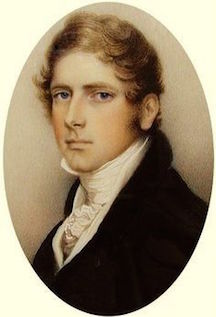
Aldridge

Anthony Grenville, Marquis of Aldridge

He is such a peacock, with his highly embroidered waistcoat, the jewelled pin placed just so in a cravat knot of his own devising, the pantaloons and coat fitting so tightly to to every muscled inch of him that my mouth goes dry. I have been happily married for forty-three and a half years, but I am neither blind nor dead, and anyone can admire the conformation of a fine thoroughbred.

What is he doing here? One of my friends had a similar visit when she offended a character by not knowing how to pronounce his name, and I must admit to providing Aldridge with plenty of reason to be annoyed with me.

“Good morning, Aldridge.”

He quirks one corner of his mouth, the signature half-grin I’ve seen so many times in my imagination. “So this is where you make us all,” he says.

“Here, on the way to and from the office, sitting up in bed, out in the lounge,” I tell him. I write all my first drafts on the iPad, which goes everywhere with me. And even when I’m not writing I’m often thinking about little bits of dialogue or ways to solve plot issues, or details of character background.

He nods as if I’ve said all that aloud. “We never leave you alone, do we?” His warm voice is sympathetic.

“Take a seat, Aldridge,” I suggest, but he shakes his head.

“There is only the one chair, ma’am,” he points out. True. I work at a standing desk and the room is small, so the only chair is the one my husband uses at his workstation. And Aldridge, whose manners are impeccable, would never sit while I remain standing.

“Fetch a chair from the next room,” I tell him, and he brings in a dining room chair, which he turns back on to the seat I’ve now taken and straddles, resting his elbows on the curved wooden top rail.

I return to his question. “You never do,” I agree. “You, in particular, Aldridge. This latest book was not on my publication schedule, but you insisted.” I have around 40 plots roughly sketched covering 20 years in the fictional world that Aldridge inhabits, and A Baron for Becky was not one of them.

He dismisses my complaint with a casual wave. “You are pleased with this book,” he reminds me. “And it is not my book, anyway. It is very much Becky’s book.”

This is true, but it was Aldridge who bothered me until I began writing. And his presence in the book is not inconsiderable.

“Is there something I can do for you, Aldridge?” I asked.

He widens his eyes, cocks his head to one side, and straightens his lips to look sincere. “I thought it would be nice to visit.” His guileless look wouldn’t fool me even if I had not made him. I raised six children. I know when someone is trying to feed me a line.

“You have some questions?” I ask.

I see the calculation in his eyes as he considers, and the moment when he decides to come clean; the relaxation of tiny muscles around the eyes and mouth, the sudden warmth in the gold flecks that lighten the brown of his eyes.

“How long do I have to wait?”

I know what he is asking, but I’m not sure what I can safely answer. It wouldn’t do to give him information he could use to avoid the stories to come. I had better find out what he already knows. “What year are you in, Aldridge?”

“1810, ma’am. The wedding was last week.”

Edward Archer by Andrew Plimer, 1815 copy

Anthony Grenville, Marquis of Aldridge

Ah. It will be a while then. In 1810, Aldridge’s happy ending was still four years in the future.

“I’m sorry, Aldridge. You will have to be patient. But trust me. I do believe in happy endings, you know.”

He stands abruptly, tipping the chair then catching it with a casual hand before pacing again—two paces to the paper store, two paces back to the bookshelf. With his back to me, he combs the fingers of one hand through his hair, a dearly familiar gesture that ripples the muscles of his shoulder in interesting ways.

When he turns again, his face is calm, set in its usual amused lines though the twinkle is missing from his eyes.

“I have no choice but to trust you, ma’am.” Then, suddenly wistful, “You will see us happy, will you not? As you did Rede and Anne, and their friends Candle and Min? A real marriage, with friendship and mutual respect as well as passion?” His brows draw together, and his voice is stern. “You are not always so kind to your characters, ma’am.”

I remember what happened to John, and am silent. Aldridge is right, but so am I. To be fair to my readers means being unfair to my characters, and happy endings for some may involve unhappy endings for others.

Aldridge will have his happy ending. I cannot promise him that, since his future must remain a mystery to him, but I know it. He has some trials to come, poor bedevilled rake that he is, but he will have his happy ending.

Perhaps he sees the truth in my eyes, because he leans over and kisses my cheek. “I know you will do your best,” he says. “I will talk to you soon.”

He fades from view, as if someone slid a transparency control, leaving nothing behind but the lingering scent of bergamot and wintergreen.

I have no doubt I’ll be hearing from him again; perhaps not in person, but certainly at 1.30am when I wake with his voice in my ears, telling me more of his personal story. Yes. Aldridge will certainly have his happy ending. In time.

A random commenter will receive a digital copy of A Baron for Becky.

About A Baron for Becky

Becky is the envy of the courtesans of the demi-monde—the indulged mistress of the wealthy and charismatic Marquis of Aldridge. But she dreams of a normal life; one in which her daughter can have a future that does not depend on beauty, sex, and the whims of a man.

Finding herself with child, she hesitates to tell Aldridge. Will he cast her off, send her away, or keep her and condemn another child to this uncertain shadow world?

The devil-may-care face Hugh shows to the world hides a desperate sorrow; a sorrow he tries to drown with drink and riotous living. His years at war haunt him, but even more, he doesn’t want to think about the illness that robbed him of the ability to father a son. When he dies, his barony will die with him. His title will fall into abeyance, and his estate will be scooped up by the Crown.

When Aldridge surprises them both with a daring proposition, they do not expect love to be part of the bargain.

Amazon • Amazon UK  • Amazon Aus

Smashwords • Barnes & Noble • iBooks • Kobo

Excerpt

The maid must have added a fresh log to the fire just before they arrived. The top was still uncharred, but flames licked up from the bed of hot embers. A twig that jutted from one side suddenly flared, turned black, and shrivelled. The bottom of the log began to glow red.

The duchess spoke again, startling Becky out of her flame-induced trance.

“What do you want for your daughter, Mrs Darling?”

“A better life,” Becky said, suddenly fierce. “A chance to be respectable. A life that does not depend on the whims of a man.”

“The first two may be achievable,” the duchess said, dryly. “The third is unlikely in the extreme. And you expect my son to help you to this goal, I take it.”

Becky was suddenly tired of polite circling. “I was saving so that I could leave this life; start again in another place under another name. But my last protector cheated me and stole from me.

“I do what I must, Your Grace. Should I have killed myself when I was disgraced? I had no skills anyone wanted to buy. I could play the piano, a little; sew, but others were faster and better; paint, but indifferently; parse a Latin sentence, but not well. Should I have starved in the gutter where they threw me?

“Well, I wasn’t given that choice. Those who took me from the gutter knew precisely what I had that others would pay for. As soon as I could, I began selling it for myself, and I Will. Not. Be. Ashamed.”

Her vehemence did not ruffle the duchess’s calm. “We all do what we must, my dear. I am not judging you. Men have the power in this world, and we women of the gentry are raised to depend on them for our survival. But you must know that Aldridge cannot offer marriage to a woman with your history.”

About the Author

Jude Knight copyJude Knight writes strong determined heroines, heroes who can appreciate a clever capable woman, villains you’ll love to loathe, and all with a leavening of humour.

Jude Knight is the pen name of Judy Knighton. After a career in commercial writing, editing, and publishing, Jude is returning to her first love, fiction. Her novella, Candle’s Christmas Chair, was released in December 2014, and is in the top ten on several Amazon bestseller lists in the US and UK. Her first novel Farewell to Kindness, was released on 1 April, and is first in a series: The Golden Redepennings.

Website • Facebook • Twitter

Newsletter • Blog • Goodreads

Alicia Quigley: The Contraband Courtship

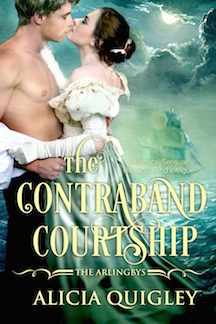
ContrabandCourtship2Final-FJM_High_Res_1800x2700 copy

I’m happy to be back at Susana’s Parlour! I always enjoy my visits!

My latest book, The Contraband Courtship, came out in July. This is the second book in The Arlingbys series and it deals with Malcolm Arlingby, the Earl of Wroxton, the brother of Rowena Arlingby whose romance with the Earl of Brayleigh was the subject of the first book of the series, A Collectors Item. In that story, Rowena helped solve a murder case a dozen years old, which had resulted in the unjust exile of Malcolm to the Continent when he was falsely accused. In The Contraband Courtship, the Earl of Wroxton has returned to his estates for the first time in all those years to find that smugglers are using his property with impunity to move casks from the coast inland. However, that’s not all he finds.

He meets his headstrong neighbor, Helena Keighley, who is most definitely not impressed with “the Wicked Earl,” as he’s been dubbed. Neither is Malcolm all that fond of Helena. They make the perfect pair, though. Despite Malcolm’s name having been cleared, there are still those in the ton who look upon him as scandalous. Helena, unbeknownst to Malcolm at first, is no less welcome in polite society, having been the subject of a scandal during her Season.

I’ve written before on the topic of smuggling in the Regency, an issue that plays a huge role in The Contraband Courtship. This time, I’d like to talk about the courtship, not the contraband. Though if Helena hadn’t been part of a scandal years earlier, this courtship would be considered contraband (OK, we’d have to tweak the definition a bit as the word refers to goods, not relationships).

Courtship in the Regency

was a very serious undertaking that came with a fair number of rules. It was, for the woman, a matter of planning for the rest of her life. She wasn’t allowed to take an overt part in the process (baffling, no?) in order to protect her reputation and, in fact, had very little control in the matter other than the ability to refuse an unwanted suitor.

The man looking for a wife bore the responsibility of winning over a prospective bride. While technically powerless, that prospective bride did have some behind-the-scenes ability to influence the outcome. The fine art of flirting or subtler tactics such as seeking introductions while not appearing overly eager are a couple examples. Women had to be very careful, though; if they were seen as taking too much control, they ran the risk of being labeled hoydens.

Of course, the whole process was further complicated by those rules I mentioned. The couple could:

  • Never be alone in a room
  • Never travel in a carriage without a chaperone
  • Never speak privately (though dances were one way of bypassing that one)
  • Not correspond with or give presents to one another
  • Not have any intimate touch, including handshakes (again, dancing helped)
  • Not call each other by their Christian names
  • Not dance more than two dances on a given evening (rumors of an engagement were sure to follow if they did)

Indeed, the allowed form of greeting and leave taking was a curtsy or a slight bow of the head.

How does this impact Malcolm and Helena? In many respects, it gave them a lot more freedom. Plus, they were out in the country and not in ever-watchful London. Though, the social graces were minded in the country, too, there were fewer eyes trained on them. As a man in this situation, Malcolm has more freedom than Helena anyway; however, that’s only increased due to the location and his already somewhat tarnished reputation.

Helena, on the other hand, is in a unique position.

Her scandalous reputation also frees her from many of the usual social strictures of courtship. In her case, the freedom extended to not even considering the issue. After her disgrace, she retired to her family’s estate which she ultimately managed for her minor brother. Marriage was, in her mind, simply no longer an option.

Helena is much luckier than many Fallen Women, as they were known. It was not uncommon in the era for disgraced women to become prostitutes or courtesans. The difference between the two was often the level of companionship and the price. Courtesans offered more than just sex; a man could find companionship and, depending on the courtesan, intellectual entertainment.

Given Helena’s character, I cannot imagine either option would have appealed to her. Fortunately for her, she had an understanding family and the opportunity to return home to tend the estate. I find her to be a woman of great courage in the face of unfortunate circumstances. Such courage, strength of will and intellect make her the perfect woman for Malcolm, the Wicked Earl.

I hope you’ve enjoyed this peek into the courtship customs of the era. As always, it’s been a joy for me to share them with you!

About The Counterfeit Courtship

Malcolm Arlingby, Rowena’s headstrong brother from A Collector’s Item, settles into his new life as the Earl of Wroxton. Content to while away his time in the decadence he missed during his exile from England, Malcolm hasn’t been paying attention to the duties that come with the title. A letter from the mistress of a neighboring estate warns of smugglers using Malcolm’s lands for their dastardly deeds and he must finally put aside his entertainments to handle the business of being an Earl.

Helena, the one who sent the letter, is not the sour spinster Malcolm was expecting, however. She is a beautiful, vibrant and equally headstrong woman who is more than ready to take Malcolm to task for ignoring his duties. As the pair becomes embroiled in solving the problem of the smugglers, a strong attraction develops. The smugglers aren’t going without a fight, though.

Will a chance encounter with his new neighbor bring Malcolm all the things he never knew he wanted? Or, will the smugglers destroy it all? Find out in “The Contraband Courtship.”

Amazon

Excerpt

THE CONTRABAND COURTSHIP

CHAPTER 1

Malcolm Arlingby, Earl of Wroxton, awoke as the first rays of sun peeked around the edges of the burgundy velvet curtains that hung over the windows of his bedroom. He laid comfortably for a moment, appreciating the fineness of the linens that covered the bed, the luxury of the over-stuffed goose feather pillows, and the enormous size of the carved mahogany bed in which he rested. It was a far cry, he thought, from his life not six months before.

So much had changed, and yet so much had not. He still awoke early, no matter how late he stayed out, and he slept lightly, always with a sense of his surroundings. But this morning was much as the past mornings had been; he was safely ensconced in a luxurious bedroom, servants at his beck and call, the Wroxton fortune at his disposal, no longer having to live by his wits or earn his keep at the gambling table.

He rolled over and lazily eyed the woman who lay next to him. She slept soundly, her dusky hair strewn across the white pillows, one arm thrown over her head, the lace-edged sheet pushed down so one rounded breast peeped above it, its nipple a dusky pink. Malcolm reached out, touching it gently with one finger. Instantly it puckered and elongated, and, with a knowing smile, he lowered his lips, eagerly suckling the pointed tip.

“Mmmm.” The woman stirred, and, without opening her eyes, raised one hand to cradle his head. “What time is it?”

“Early, I think,” responded Malcolm. “Do you wish to go back to sleep?”

“I’m here for you any time, Malcolm,” she answered. Slowly she raised her eyelids to reveal a pair of liquid brown eyes flecked with gold. “Day or night.”

“Well, it’s barely day, but if you have time for me now…” Malcolm pushed the sheet down to cup her other breast in his hand as he moved to straddle her.

“Always,” she answered, her hands moving caressingly over his muscular chest, to follow the arrow of blond hair downward under the soft linen sheets. Malcolm groaned as her clever fingers found their target, and speared his fingers through her hair, as he pressed his mouth to hers, kissing her deeply. When he raised his head, she smiled and repeated, “Any time.” Then with a salacious smile she added “Any way

Much later Malcolm turned away from Estella and rolled onto his back, reaching out for a cigarette. “I can’t imagine what ails your husband, to neglect you so, Estella. You’re beautiful, more than willing, but not demanding, and amusing to converse with. Yet he is almost never at your side.”

“Richard is always pleasant company, when he is about,” she replied. “But he married only to provide an heir for the estates. It’s his duty, and he did it, but not with enthusiasm.”

“So, not much in the petticoat line, it seems,” Malcolm remarked. “Do you suppose he is a man milliner?”

“Oh, I have no notion,” Estella answered. “I am very fond of him you know, and he’s very helpful when it comes to all manner of things; he knows where the best tea is to be had, and the latest modiste, and is always completely correct when it comes to advising one on looking one’s best. But he has his own friends and amusements and really, I am not inclined to trouble him, if he does not trouble me. As long as I bring no cuckoos into the nest, he will not be unhappy.”

She rolled over onto him, propping herself on his chest with her forearms. “But why are we wasting our time discussing my husband? I promise you, he is not spending a moment worrying about me.”

Some hours later Malcolm strode down St. James Street, impeccably clad in dark blue coat of fine wool broadcloth. His cravat was tied in the mathematical knot, and his biscuit-hued pantaloons were tucked into betasseled Hessian boots with a mirror-like polish. He had left Estella sipping chocolate in his bed, well-sated. He knew she was clever enough to be gone by the time he returned; she knew better than to be demanding, and, in return, he indulged all her whims. Never, he thought, had he been more contented.

He strode up the stairs to White’s with a jaunty step. As he entered, a few heads turned, and he greeted their looks with a grin. Taking up a paper, he seated himself in a high-backed leather chair.

“Who’s the dashing fellow who just walked in?” asked one elderly gentleman of the man next to him.

Horace Worth gave him a surprised look. “Haven’t you heard? Oh, I’d forgot you’d been on the Continent these past months. Holmwood. That is the Earl of Wroxton.”

The gentleman turned in surprise. “Wroxton? I thought Felix Arlingby was the current earl.”

Mr. Worth shook his head. “No, that fellow is Malcolm Arlingby, the old earl’s son, returned to take up his birthright. “

The other man gaped. “Not the murderer?”

“No, not the murderer, or so it seems,” said Mr. Worth. “It appears that we were all mistaken. Malcolm Arlingby’s name has been cleared, and he has succeeded to his father’s estate.”

“Well, I’ll be damned. He was gone for twelve years or more, was he not?”

“At least. And now he’s back and has been cutting quite a swathe through Society,” said Mr. Worth with a shrug. “The ladies, of course, cannot resist his looks or his reputation as a bit of a rake, and as for the men—outside of some jealousy among them, there’s nothing not to like. He’s a fine horseman, a pleasant companion, pays his debts of honor, and is generous with his funds.”

As they gazed at Malcolm, an elegant dark haired gentleman entered the room and paused for a moment, obviously searching for someone. His sharp green eyes eventually lit on Malcolm, and he strolled across the room, dropping into the chair across from him. The elderly gentleman drew in his breath.

“Isn’t that Brayleigh?” he asked. “Malcolm Arlingby and the Earl of Brayleigh always loathed each other. I wonder they are sitting across from each other.”

Mr. Worth laughed. You have been gone far too long,” he said. “Brayleigh is married to Wroxton’s sister. They are—well, I will not say they are the best of friends, but they tolerate each other. I understand Lady Brayleigh will brook nothing else.”

“Well, I’ll be,” said his friend, staring openly at the two men. “Brayleigh and Wroxton are being civil to one another? I would never have believed it if I didn’t see it with my own eyes!”

Brayleigh looked around and sighed. “You might as well put down your newspaper, Arlingby, I know you’re aware I’m here,” he said.

Malcolm lowered the offending broadsheet a few inches and peered at Brayleigh over the top of it. “Am I to have no peace?” he asked peevishly.

“None at all,” said Brayleigh with equanimity. “I wonder you can tolerate the attention. Horace has obviously just told the entire story to Rupert Holmwood. He is gaping at us as though we are here solely for his entertainment.”

Malcolm shook his head. “It is always thus. Just when I think everyone knows of it, some damned idiot turns up who must be enlightened.” He folded the paper and tossed it on the table next to him. “I don’t imagine you’re here for the pleasure of my company, Brayleigh. What does my sister want?”

A small smile appeared on Brayleigh’s face. “How well you understand me,” he murmured. “Rowena indeed asked me to find you and bid you wait upon her this afternoon. I gather she has some matters she wishes to discuss with you.”

“Lord help me,” said Malcolm. “What is it now?”

“I apprehend it has something to do with the Wroxton estates,” replied Brayleigh. “That, and your friendship with the lovely Estella Lacey.”

Malcolm groaned. “She has heard of that, has she?”

Brayleigh raised an eyebrow. “All of London has heard of that. Surely you were not under the misapprehension that the pair of you have been discreet?”

“We have no reason to be discreet, so I can’t see why anyone should care,” complained Malcolm. “Her husband has no interest in her now that she has given him a son, and it is not as though I have a wife to worry about.”

“And yet, everyone does care, because you are the notorious Malcolm Arlingby,” said Brayleigh. “Really, I would think that at this point you would be beyond being surprised.”

Malcolm shrugged. “It can’t be helped,” he said. He gave Brayleigh a rueful grin. “And a bit of gossip doesn’t matter to me. After all, if I survived the last twelve years, I can survive this.”

“Then you will not mind returning with me to Brayleigh House and explaining it all to Rowena,” said the earl calmly.

“I’d rather go to Almack’s and dance with chits just out of the school room all night, and you know it,” said Malcolm cheerfully. “But I suppose I had better get it out of the way. Rowena is nothing if not persistent.”

“A wise choice.” The earl stood. “The sooner you get this over with, the sooner you can return to the charming Estella.”

Malcolm rose reluctantly. “If Rowena doesn’t have other plans for me,” he said gloomily.

Brayleigh laid a sympathetic hand on his shoulder. “I have no doubt that your sister only has your best interests at heart,” he said.

“That’s what I’m afraid of,” replied Malcolm.

The two men strolled out of the room, leaving Mr. Holmwood gaping after them.

One half hour later Malcolm and the earl entered the library at Brayleigh House, where a woman sat in an overstuffed leather chair, reading a book. She looked up when the two of them entered, and rose to her feet, her dress of figured muslin fluttering around her. Her wide violet eyes sparkled as she ran a few steps and threw herself into Brayleigh’s arms.

“Alaric, you found him,” she said. “How kind of you to help me.”

Brayleigh dropped a kiss on her cheek and slipped one arm around her waist. “It was not difficult, but I’m always happy when I can please you, my dear,” he answered.

“Lord, you two are tiresome,” protested Malcolm, throwing himself into an armchair. His stretched his long legs out in front of him and glared at them. “I think I liked it better when you were quarrelling all the time. At least that was entertaining.”

Brayleigh shook his head and released his wife. “I’m sorry you no longer find us amusing, Wroxton,” he said. “I, on the other hand, find this existence entirely pleasurable.”

He looked at his wife with a satisfied smiled, and she flushed slightly and reached out and took his hand.

“No, don’t start pawing at each other again, I can’t abide it,” said Malcolm. “What did you want to see me about, Rowena?”

With an amused glance at her husband, Rowena sank into the chair across from him, while Brayleigh leaned on the corner of the desk, his arms folded.

“Oh ho, it must be something very serious,” said Malcolm. “I count on you, Brayleigh, to give me your support.”

“Oh, I don’t meddle in Arlingby affairs,” said the earl calmly. “You will have to contend with Rowena in this matter.”

Malcolm groaned. “All right, what is it then?”

Rowena made an exasperated sound. “Malcolm, I know that you missed England and the pleasures of London dreadfully while you were on the Continent,” she said briskly. “But you have been the Earl of Wroxton for eight months now, and you still have not visited the estate.”

“I stay in close contact with the bailiff,” said Malcolm peevishly. “And both Father and Felix took good care of Wroxton. There is no reason for me to interfere in its running. Indeed, I doubt I’d be thanked for poking my nose into it.”

“But surely you wish to visit Wroxton and see how things go on,” said Rowena. “And you did tell me you wished to rebuild the stables.”

“What are you going on about? I have my horses here in London, where I can use them, and I’ve sent several to Wroxton as breeding stock. I don’t know why you’re suddenly so concerned about this,” Malcolm asked. “I think I deserve to enjoy myself a bit after everything that happened.”

“Of course you do, dear,” Rowena assured him. “It is just that—well, that it has been some time, and I wonder if perhaps you need to—well, think of the future a bit more.”

“Is this about Estella?” asked Malcolm suspiciously.

“Well, it is not only about Mrs. Lacey,” said Rowena, looking a bit embarrassed. “But, certainly, I have my concerns about her. She is married, Malcolm, and unlikely to be free to wed you any time soon.”

“Wed me?” Malcolm gave a hoot of laughter. “I should say not!”

“You see?” said Rowena. “I know that you wish to enjoy yourself, and I would never say you did not deserve to, but surely you are aware of the duty you owe your family.”

“Rowena, I have years ahead of me to sire a pack of children, if that’s what I decide needs to be done,” said Malcolm. “But for now, I have no interest in leg shackling myself to one woman. I’ve spent twelve years on the Continent living by my wits, and damn, I want to enjoy myself now. One of Estella’s principal charms—outside of the most obvious ones—is that she cannot importune me to marry her!”

“You are being very vexing,” said Rowena. “It is not that I wish to deny you your pleasures, Malcolm—”

“I should say not! And, sister dear, should you even know about Estella?”

“Don’t be ridiculous,” said Rowena crossly. “All the world knows about the two of you. I’m hardly an innocent. The gossips are only too happy to inform me that half the ladies in London have either succumbed to you since your return or to Alaric prior to our marriage.”

“Only half? Well, you might have taken Brayleigh out of circulation, Rowena, but you can’t force me into such a staid existence.” Malcolm gave his sister a shrewd glance. “There’s more here than you’re telling me. You might as well come out with it.”

Rowena exchanged a glance with Alaric. “Well, if you must know, I have received a letter from Helena Keighley.”

“Who?” asked Malcolm.

“Helena Keighley. The daughter of Sir Douglas.” At Malcolm’s blank look, Rowena sighed. “Really, Malcolm, this is why you must go to Wroxton. Sir Douglas Keighley’s estate marches with Wroxton to the west. You must have met him, and Helena, dozens of times when you were a child.”

“Oh yes, Keighley, I remember the name,” said Malcolm. “Sir Douglas, you say? As I recall, Father said he was a bruising rider to hounds.”

“Yes, Malcolm, I’m sure he was,” said Rowena impatiently. “But this has nothing to do with fox hunting. “

“A pity, I might almost be tempted to leave London for that,” said Malcolm. “What does this Miss Keighley want?”

“I received a letter from Helena a few days ago,” she said, producing a folded piece of paper and waving it at Malcolm. “She would have written to you, but had no idea where to find you, and we are acquainted. She is a year or two older than I am, but we did spend some time together as children, and of course I have met her at assemblies and house parties. Surely you remember her.”

“I can’t be bothered to remember your childhood friends, Rowena,” said Malcolm. “I had other things to attend to. What does this mysterious letter say?” asked Malcolm.

Rowena unfolded the letter and perused it quickly. “Here it is,” she said. “It seems that French brandy is being smuggled in through Kent, and the lack of interest of the Earl of Wroxton in his estate has been taken as a sign that his lands are free to be used for this purpose. While Felix Arlingby was not a strong-minded gentleman, he cared enough to prevent such nonsense, but now landings occur almost nightly. I have no doubt that some of the servants have been bribed to allow this. The whole affair is unsettling; I have no desire to see Keighley lands overrun by ruffians because Wroxton is poorly managed. It is imperative that your brother cease his wastrel ways and take up the responsibilities that come with his birthright. He was ever an irresponsible young man, but surely the circumstances of the past years must have brought him some wisdom, no matter how slight. Please inform him that he is needed immediately at Wroxton.”

“What a termagant!” said Malcolm. “She doesn’t even know me, and she’s calling me a wastrel!”

“You might not remember Helena, but I have no doubt she remembers you,” said Rowena. “You were wont to tease her unmercifully when we were young.”

“Did I?” asked Malcolm. “Well, she no doubt deserved it; she sounds to be remarkably pert. And why isn’t Sir Douglas attending to this? It seems deuced odd to me that Miss Keighley should be meddling.”

“Sir Douglas is elderly and—and not quite right in the head,” said Rowena. “And her brother is only seventeen. Helena has been managing the estate quite successfully for some years.”

“She’s unmarried, I suppose?” asked Malcolm. When Rowena nodded, he shook his head. “I can see her now; a prim and proper spinster, glaring at me from behind spectacles.”

“That is not fair,” protested Rowena. “Helena is really quite lovely.”

“Then why is she unmarried?” retorted Malcolm.

Rowena looked nonplussed. “Really, Malcolm, Miss Keighley’s personal life is not what I wanted to talk to you about. Surely you can see that you must go to Wroxton and take care of this.”

“I don’t see why the bailiff can’t handle it,” said Malcolm. He groaned when Rowena glared at him. “Oh, very well, I will go to Wroxton. You are right; I should have gone months ago. I am the new earl, and it’s time I took charge.”

At Rowena’s look of amazement, he laughed. “I’m not such a wastrel as you and Miss Keighley think, little sister,” he said. “I know I should have visited long ago, but I didn’t want to force cousin Felix to leave hastily, and then, after he moved out—well, then other things happened, and I didn’t care to leave London. But it shouldn’t take long to tidy this up, and I can do the pretty in the county; talk to the gentry, visit the tenants, and be back in no time.”

Rowena blinked. “Thank you, Malcolm.”

He laughed. “You thought it would be much harder to convince me, didn’t you? But some time away from London won’t go amiss—Lady Hartsmoor seems determined that I shall marry that whey-faced daughter of hers, and if I make myself scarce, perhaps some other fool will catch her eye.”

“I’m just pleased you are going, and, to be truthful, I wouldn’t want you marrying Lady Maria; she seems dreadfully dull. I will write to Helena and tell her that you will be visiting Wroxton soon.” She paused. “You won’t take Mrs. Lacey with you, will you? I’m not sure the countryside is ready for her.”

“I doubt she’d go,” said Malcolm cheerfully. “She’s very fond of me, but fonder of her modiste, I’d say. And when I return she’ll be that much happier to see me.”

He stood and dropped a kiss on Rowena’s cheek. “I will try to not disgrace the Arlingby name,” he said teasingly. “But this Miss Keighley sounds terrifying. I only hope I can stand up to her!”

“Don’t be ridiculous,” said Rowena fondly. “I’m sure you will take care of things quickly, and Helena will be a great help to you. She is very sensible and intelligent.”

Malcolm grinned. “So, not my sort of woman at all,” he laughed. “I’ll leave in a few days, and be back before you know it.” He shook Alaric’s hand and, with a wink at Rowena, sauntered out of the room.

Rowena shook her head as the door closed behind him. Alaric walked over to her and took her in his arms.

“Why did you not tell him about Helena Keighley?” he asked.

Rowena wrinkled her nose. “He was gone when the scandal broke, and does not know of it. There is no reason to spread gossip, particularly when I have no idea what truly happened. Helena never speaks of it, and I know better than most about being compromised! I see no reason to cause her further distress.”

“He is expecting a dried up spinster,” said Alaric. “I’d say Miss Keighley will be a bit of a surprise.”

Rowena laughed. “Indeed, she will. I suppose it is too much to hope that Malcolm will understand how extraordinary she is.”

“Your brother? He can’t see past the end of his nose,” said Alaric. At Rowena’s cross look, he chuckled. “And now, my dear, I am weary of the subject of the Earl of Wroxton. Perhaps we can find a more congenial way to amuse ourselves.”

With that, he lowered his lips to Rowena’s, and she very soon put Malcolm out of her mind.

CHAPTER 2

Malcolm left Brayleigh House in a thoughtful mood. He knew that Rowena was right, and that he should have traveled to his estates long ago. But he had always found an excellent excuse not to visit; at first he had not wanted to rush the removal of his cousin, who had been named the earl in his absence, and then there had been innumerable amusements to attend and the threads of old friendships to pick up. And Estella, of course. She had blown into his life and into his bed in a matter of days, a situation that he did not regret.

In his more reflective moments, he realized too that he had avoided visiting Wroxton because it made him think of his father and the days before his exile on the continent. He had respected his father, but as a youth had thought him too staid and serious. To a youthful Malcolm it had seemed as though his father’s interest in his estates and his books had kept him from enjoying life to its fullest. Visiting the Wroxton lands as the new earl would mean that it was time for him to take up the responsibilities and duties of his father.

Malcolm ran a hand through his fair hair and frowned. It had to be faced, he supposed. It was not as though he would have to stay long, though. He would nip down to Kent, make sure the local authorities were on the job, spend a week or so placating the neighbors, and see that Miss Keighley was no longer upset. It was a good thing she was a spinster, he thought. He knew the ladies found his dashing ways attractive, and he had little doubt that he would be able to charm her.

His soon arrived home and he entered the hallway with a frown on his face. He started slightly when he saw Estella in the center of the room, looking charming in a lavender-hued muslin morning dress with VanDyked trim. She gazed into the mirror, holding a deep poke bonnet, as though she had just been preparing to nestle it over the abundance of dark brown ringlets that surrounded her piquant face.

She blinked her large hazel eyes at him in the mirror and turned, smiling. “What are you doing back here so quickly?” she asked. “I was just leaving.”

Malcolm paused a moment to admire her fine figure, and then took her hand. “It’s just as well,” he said. “I need to talk to you.”

“What did you need to say to me, Malcolm?” she purred, moving closer to him.

“It’s not that, Estella,” said Malcolm hastily. At the look on her face, he shook his head. “Not that I’d mind at all, but I do want to talk to you for a moment.”

“Talk?” said Estella. “You rarely want to do that.”

“It’s just that I need to go down to Wroxton for a week or so,” he said.

“Whatever for?” asked Estella. “Surely your bailiff can handle matters for you. The countryside at this time of year would be dismal.”

“No doubt,” said Malcolm. “But I’ve avoided it as long as I can, and now there is a matter of smugglers. The neighbors think they’re using my property and want me to put a stop to it.”

“You?” Estella laughed. “You’d be more likely to encourage them, no doubt. I’ve never known you to question where your brandy comes from.”

Malcolm grinned reluctantly. “It’s not that I particularly care about the smugglers. But they’re upsetting the tenants and the neighboring gentry. My sister tells me it is high time I take up my duties as earl.”

Estella pouted charmingly. “Your sister again,” she said. “Why does she feel she needs to meddle in your life?”

“My sister is the reason I’m the Earl of Wroxton, and not dead, or still in exile,” observed Malcolm. “Besides, in this case, she is right.”

“Are you sure she’s not simply trying to get you away from me?” asked Estella.

“Well, I don’t suppose it bothers her that we’ll be apart,” observed Malcolm. “But I don’t think that’s her main concern.”

Estella glanced at him out of the corner of her eye. “I could go with you,” she ventured.

Malcolm laughed. “Didn’t you just say the country is dismal at this time of year? I would enjoy your company, but it won’t do to shock the gentry on my first visit home in twelve years. It’s not that I won’t miss you, Estella, but you wouldn’t be happy at Wroxton.”

“So you will simply leave me here alone? I shall grow bored,” she warned.

“Don’t try to make me feel sorry for you; I doubt you’ll miss me for a second,” said Malcolm cheerfully.

“And if I find another man to amuse me?” asked Estella.

“That’s your business, darling,” said Malcolm cheerfully. “I never asked you to be true to me.”

Estella made an exasperated noise. “You might at least pretend you care for me,” she said.

Malcolm chuckled. “If you thought I cared for you, you’d take advantage of me, my dear,” he said. “But I’ll admit that I will miss you, especially at night.”

Estella smiled winningly. “I will miss you, too,” she murmured.

“Then I’ll look forward to my return,” said Malcolm cheerfully. “I’ll wrap up this little problem and take care of Miss Keighley as quick as can be and come back to town before you have time to notice I’ve gone.”

“Miss Keighley?” asked Estella.

“Aye,” said Malcolm. “She’s the daughter of the neighboring estate. It seems she wrote to my sister to complain of the smugglers. I take it she’s a bit of a dragon and will need some soothing.”

“Miss Helena Keighley?” asked Estella.

“Dash it, stop saying her name over and over,” said Malcolm. “Yes, Miss Helena Keighley.”

“Oh,” said Estella, stretching the word out to several syllables.

“Oh, what?” asked Malcolm crossly.

“I think I am acquainted with your Miss Keighley,” said Estella.

“She’s not my Miss Keighley,” responded Malcolm. “She sounds remarkably as though she’s nobody’s Miss Keighley.”

“Well, then I believe I know Miss Helena Keighley,” said Estella. “We are much of an age, and she came out the same year I did.”

“Well, she’s unmarried, so I gather she didn’t make a splash,” said Malcolm.

“Oh, she made a splash,” said Estella, looking a bit smug.

“Damn it, Estella, if you want to tell me something, tell me,” said Malcolm peevishly.

Estella shrugged. “Miss Keighley was quite lovely, if you care for lanky redheads.”

“I prefer petite brunettes, myself,” said Malcolm promptly.

“I suppose I should be glad of that,” Estella said coyly. “As I said, she was quite lovely in her own way, but she didn’t attract many suitors.”

“And why was that?” asked Malcolm.

Estella shrugged. “She seemed to think rather highly of herself,” she ventured. “She was forever expressing her opinion. The gentlemen were rather taken aback.”

Malcolm grinned. “I imagine they were. Rowena has that effect on men, though Brayleigh doesn’t seem to care.”

“Well, I thought her quite tiresome,” said Estella. “I suppose someone may eventually have made her an offer, as her father is wealthy, but then something happened.” She paused dramatically.

“I suppose it must have, as she is unmarried,” said Malcolm unhurriedly.

Estella glowered at him for a moment. “If you are minded to be unpleasant, I won’t go on.”

Malcolm shrugged. “Then don’t,” he said. “I’ve no interest in old scandals.”

“Oh, you are impossible,” laughed Estella. “But I will tell you anyway. “

“I thought you might,” said Malcolm.

“One night, at a rout at Montagu House, she was discovered in a compromising situation with Lord Denby,” said Estella, lowering her voice in a conspiratorial manner. “They were quite alone in a curtained anteroom, and he was holding her in his arms!”

Malcolm wrinkled his nose. “I can’t like Denby,” he observed. “He always seemed to be a bit underbred.”

“That is not the point,” said Estella. “Miss Keighley apparently found him attractive enough! But then something even more shocking happened!”

“Well, I’m not all that shocked by your first revelation,” observed Malcolm. “I know from experience that things aren’t always what they appear.”

“You cannot possibly be defending her,” objected Estella.

“I don’t know the woman, why would I defend her?” said Malcolm. “She’s making my life deuced uncomfortable just now. I only said that things aren’t always what they appear to be.”

“You can be so tiresome at times,” said Estella. She paused, and then leapt back into her story. “As I said, the story became more complicated. Lord Denby proposed, of course, as he was honor bound. And Miss Keighley turned him down!”

“Did she so?” asked Malcolm. “Smart girl. As I said, Denby always makes me a bit uncomfortable.”

“Well, she was kissing him, so I have no idea why she turned him down. She was ruined, of course! No man would have her, as she clearly had no care at all of her virtue!”

Malcolm laughed at that. “Since when do you have such a care of yours, Estella?”

Estella drew herself up. “I am married, and there is no breath of doubt with regard to my son’s parentage,” she replied, offended.

“But you haven’t seen your husband in months,” said Malcolm. “And it’s no secret whose bed you are in each night.”

“Richard doesn’t care. And I am married,” Estella repeated.

“Ah, I see,” said Malcolm. “That makes all the difference.”

“It does indeed,” said Estella. “We all know how these things work. If you mean to say Miss Keighley is much like me, I think I will be very hurt.”

“Oh, I’m sure she’s not like you at all,” said Malcolm.

Estella looked at him closely, wondering whether to be offended. She finally smiled charmingly. “You are such a wretch, Malcolm,” she offered. “I am convinced you are trying to provoke me.”

Malcolm smiled lazily. “Now, why would I want to do that? I am happiest when you are pleased with me, to be sure.”

“If you wish me to be pleased with you, you will no longer compare me to Miss Keighley,” replied Estella.

“If you will forgive me, I am tired of the subject,” said Malcolm. “Surely there is something more interesting we can do than discuss a spinster I do not remember who is doing her best to make my life uncomfortable.”

Estella glanced at him from under her lashes. “I was about to leave,” she said. “But if you wish, I could stay for a bit.”

“A capital idea,” said Malcolm.

CHAPTER 3

One week later Malcolm rode up to Keighley Hall on a well-made dark bay hack. He eyed the timber-framed manor house closely; while it was several centuries old, it was well-kept, and the paths and grounds surrounding it were manicured and verdant. Clearly, whoever was attending to the land had a fine attention to detail.

A footman emerged from the house to take the reins of his horse, and he dismounted gracefully, with a word of thanks.

“Is Sir Douglas at home?” he asked.

“Sir Douglas does not see visitors,” said the manservant. “If it’s about anything to do with the estate, you’d be wanting Miss Keighley.”

Malcolm sighed. He had hoped he might be able to avoid the redoubtable Miss Keighley. But he could recognize when he was defeated.

“Is Miss Keighley available, then?” he asked.

“She’s not in the house,” ventured the man. “She’d be down at the stables. I don’t know how long it will be before she returns.”

“Well, I have business with her that can’t wait,” said Malcolm. “I’ll find her for myself.”

“Miss Keighley might prefer that you wait in the house,” said the footman doubtfully. “I could show you in and fetch her for you.”

“It doesn’t matter,” said Malcolm. “I know her from when we were children. I doubt she will care.”

Under the lackey’s doubtful gaze, Malcolm stalked off in the direction of the stables. As he walked, he looked around him, absently admiring the tidiness of the grounds. It compared favorably to Wroxton, and he felt a pang of guilt about the neglect his ancestral lands had suffered over the past months. Miss Keighley clearly knew well how to run an estate. He was too accustomed to Rowena’s unconventional behavior to consider that odd, but he nonetheless felt a reluctance to meet her. He had a constitutional dislike of being ordered about, and he feared that Miss Keighley was very much the sort of woman who would feel he needed guidance.

Miss Helena Keighley pushed a lock of auburn hair out of her eyes and sighed, as she felt at the loose bun she had gathered her hair in before coming out to check the horses that morning. Reassured that it was not going to come down completely, she rubbed her hands over the canvas apron that covered her faded blue-grey linsey-woolsey dress, and the equally worn dark blue spencer she wore over it. She looked at the groom and the horse he was holding in the barn aisle.

“Is he lame, Macklin?” she asked.

“Yes, came out of his stall this morning limping, miss,” he replied.

“Poor boy,” Helena crooned to the horse as she reached down to lift his hoof. She felt it carefully, finding a sensitive spot. “You can feel the heat in it. ‘Tis almost certainly an abscess,” she said. “Soak it in Epsom salts, and put a drawing poultice on it. Perhaps we can bring it to the surface, so it will drain.”

“Aye miss, I thought the same. I expect we’ll have a bit of time with him for the next few weeks though. The wet weather in the spring always seems to bring it out in him.”

Helena smiled her agreement, and patted the horse’s neck in sympathy, then blew gently at his soft nose. The smile brought a glow to her face, and lit up her large brown eyes. Framed with thick black lashes despite her auburn hair, and surmounted by finely shaped brows, they typically surveyed the world with a bit of cynicism, but were softened now by her affection for the horse. She had a straight nose, high cheekbones and plush-lipped mouth above a very firm chin. With her fine complexion and delicate color, she presented a rather startling contrast to the decidedly shabby garments she wore. Helena raised her face from the horse, removed her apron and looked at the groom.

“Thank you, Macklin,” she said. “I suppose I will go back to the house now.”

The groom nodded and walked away, leading the limping horse slowly. Helena stood for moment, enjoying the pleasant scent of the hay in the stalls and savoring the time alone. While she was truly devoted to tending the estate that belonged to her father and would pass from him to her brother, at times it seemed as though she never had a moment for herself. If tomorrow were fine, perhaps she would shirk some of her duties and take a book down to the cliffs for a few hours.

Her reverie was interrupted by the sounds of boot heels ringing on the floor of the stables, and a cheerful whistle. She looked up to see a tall, slender gentleman sauntering towards her, dressed very elegantly in a riding coat of a green so dark it was reminiscent of a pine forest at night, buff colored breeches, and white topped riding boots, clearly made to measure and polished to a mirror shine. His pale hair was modishly cut à la Brutus, and his angelic blue eyes were wide set in a face that, while not classically handsome, held a great deal of charm. She drew in her breath slightly. Many years had passed, but she certainly recognized Malcolm Arlingby, despite the tiny lines that now creased the outer edges of his eyelids. It seemed her letter to Rowena had done its work.

She looked down at herself, momentarily dismayed by the shabbiness of the grey dress she was wearing, but then dismissed the thought. If Malcolm had not already heard of her scandalous past, someone was bound to enlighten him soon. It made very little difference what she might look like. She stepped forward into the sunlight that slanted across the stable.

Malcolm stopped, the whistle arrested on his lips. His eyes trailed over Helena’s slender figure and widened.

“I was expecting a groom, or perhaps a stable boy,” he said cheerfully. “But I think you’ll do, my girl.”

Helena’s eyes widened at his impertinent words, and she opened her mouth to give him a sharp set down, but Malcolm continued.

“Where’s your mistress? I have business with her, and was told she was to be found in the stables.”

Helena froze. Clearly, he not only did not recognize her, and had mistaken her for a servant. She glared at him disdainfully.

“You’re a haughty one, ain’t you?” said Malcolm, a laugh in his voice. “Is Lady Helena not about then?”

Aware that her genteel speech would give her away, Helena said nothing.

Malcolm shrugged. “Women,” he said. “Never where you want them to be. But you, on the other hand—well, if I’d remembered the serving girls were so lovely in Kent, I’d have been back before this.”

Before Helena could react, Malcolm had an arm firmly about her shoulders and had pulled her close to his lean body. Helena was startled to realize that, despite her own height, her head just barely overtopped his shoulder. Before she could contemplate that fact any further, however, Malcolm lowered his head to hers and kissed her firmly on the lips. She made an outraged sound.

“Hush,” said Malcolm cheerfully. “It’s not as though you haven’t been kissed before, my girl.”

Helena raised her hands to his chest to push him away, but somehow found herself only pressing her palms against his broad shoulders, as she breathed in the hint of sandalwood and cinnamon scent that must have lingered from his morning ablutions, spiked with the warmth and scent of his skin. It was remarkably appealing, and she breathed in deeply, feeling her lips soften against his. The earl clearly felt her relax, for his hands slid down to her waist, pressing her chest against his. He slanted his head a little and she felt his lips pressing hers open. She felt her bosom swell and tighten, and her lips opened involuntarily and when Malcolm’s tongue touched hers, a bolt of sensation shot downward, and she felt an instant urge to press her hips forward against his. Suddenly, reality intruded on her, and she pushed firmly against Malcolm’s chest, wresting her lips from his. He moved back a half step, and then dropped his head to briefly kiss the side of her neck before straightening.

Malcolm gazed down at her steadily, a hint of perturbation in his eyes. “That was—remarkable,” he said softly. “Some local lad is a lucky fellow, to be sure.”

Helena stepped back, fighting the urge to press her hand to her lips. She had made a grave mistake it seemed, in not informing Malcolm who she was. But that was, nonetheless, no excuse for his behavior. It seemed that his years abroad had not taught him discretion. But, she realized ruefully, hers had been equally lacking. Something about Wroxton’s scent, feel, and presence seemed to call to her on an elemental level.

Malcolm pulled himself together and, fishing in his pocket, produced a guinea, which he pressed into her hand. “I thank you, my dear,” he said. “I did not mean to impose upon you, but your loveliness could not be resisted. I meant to see your mistress, but somehow I cannot regret her absence. Do you know where I might find her?”

Helena paused a moment, and then tilted her chin at him proudly. “I don’t know,” she said, producing her finest Kentish accent. It was imperfect, but the earl did not appear to notice. “But her abigail told me she means to go to the assembly at Folkestone tonight.”

Malcolm groaned. “I can’t abide country dances. So provincial and the refreshments are terrible. Do you think Miss Keighley has returned to the house?”

Helena shook her head firmly. “No, she’s not in the house,” she assured him.

About the Author
AQ Twitter Avi copy

Alicia Quigley is a lifelong lover of romance novels, who fell in love with Jane Austen in grade school, and Georgette Heyer in junior high. She made up games with playing cards using the face cards for Heyer characters, and sewed regency gowns (walking dresses, riding habits and bonnets that even Lydia Bennett wouldn’t have touched) for her Barbie. In spite of her terrible science and engineering addiction, she remains a devotee of the romance, and enjoys turning her hand to their production as well as their consumption.

WebsiteBlog • FacebookTwitter

Author page


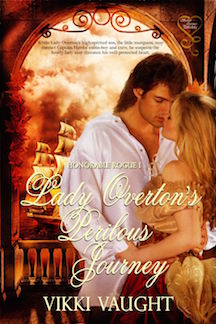
Vikki Vaught: Lady Overton’s Perilous Journey

I want to thank Susana for having me on her blog today. I’m very exciting about my new release, Lady Overton’s Perilous Journey. This is the first book in my Honorable Rogue series. This series is set in early 19th century England & America. I’d like to discuss some of the fascinating research I did for my book.

photo (2) copyI originally set this book in 1809, but on further research I discovered Jefferson convinced the U.S. congress to pass the Embargo Act of 1807, which stopped all foreign trade. While Jefferson did not want to involve the U.S. in the conflict between France and England, he wanted to put in place financial sanctions that could possibly hurt these countries economically. This act devastated the economy. American ships literally remained in port rotting in the harbors.

Here is some background history that led up to the embargo. Britain and France resumed their war in 1803, causing relations to become strained between any countries, deciding to remain neutral. In 1806 France passed a law against trading with neutral countries, and since America did not take sides in the conflict between the two countries, the French began plundering American ships. In 1807, Britain passed a bill prohibiting trade between France and neutral countries. The British began seizing American vessels and demanding that all ships pull into their ports before they were allowed to trade with other countries.

The British also started boarding American vessels and began seizing any sailors they deemed were deserters from the Royal British Navy. This infuriated the U.S. and thousands of American sailors were unlawfully impressed into the British Navy.

During the last sixteen days of Jefferson’s presidency, a bill was passed replacing the Embargo Act with the Non-Intercourse Act of 1809. While this act opened up trade again, it did not allow trade with Britain. Since my story has my heroine fleeing England on an American vessel, I needed to move it to a different year, prior to the escalating issues between the two countries. Since 1802 was the only year that England and France were not at war, I decided to place my story in that year.

This was by no means the only research I did for Lady Overton’s Perilous Journey, but was certainly the most important. While this is a novel of fiction, I wanted to ensure that the happenings within the story were possible.

I hope you’ll enjoy the romance between Alex and Anissa as much as I enjoyed writing their love story. Happy reading!

Halloween Background

About Lady Overton’s Perilous Journey

When her son’s life is threatened, Anissa, Marchioness of Overton, seeks refuge by sailing to America. Before the ship reaches the high seas, sparks fly between her and Captain Alex Hawks. Although the young widow may be lonely, and afraid, she cannot risk the diversion a romantic entanglement could bring, no matter how much she wants to lose herself in the captain’s embrace.

The Captain vows to protect the young Lord Overton, but can offer no assurance that the marchioness will leave his ship with her virtue intact. Alex is drawn to Anissa’s beauty and courage, as a hummingbird is to the nectar of a flower. How long can he fight a losing battle before he surrenders and makes her his own?

Will Alex be able to keep this remarkable woman and her child safe? Will his passion for Anissa be enough or will their differences keep them apart?

Secret CravingsAmazonBarnes & NobleARe

Excerpt

She cuddled her sleeping child close as she scanned the overcrowded common area. Her insides churned as she wove her way through the crowded tables, the chairs filled with dirty, unsavory-looking men. The strong smell of sweat mingled with ale threatened to turn her stomach and had her breathing through her mouth.

Anissa approached the man the stable boy had described. “Sir, are you Captain Hawks?”

He turned around, and in a drawling voice, he answered, “Well, darlin’, that’s my name.” He swept his tri-corn hat from his head, stood and bowed. “Captain Alex Hawks, at your service. What can I do for you?”

Anissa gazed up into the blackest eyes she had ever seen and wanted to fall into them. Mesmerized, she blinked as a shiver ran across her shoulders. This was not the time to notice this man’s eyes, no matter how compelling they were. Now was the time to use her charms to convince him to take her on his ship.

“My name is—” she quickly searched for a name, not wanting to give him her identity, “—Mrs. Carlson. I would like to pay for passage on your ship. I understand you are leaving for America this morning.” Then, thinking of a city she had heard of in America, she added, “I need to go to Boston, where some of my family lives. Would you be able to help me?”

Captain Hawks gave her an appraising stare, which unnerved her. This man was intimidating, to say the least. “I’m not going to Boston. And, I don’t normally take on passengers. I’m headed to Baltimore, and it’s a far piece from Boston, darlin’.”

“Please take me. I have to leave for America as soon as possible.” Anissa had to convince him to allow her passage. “And as far as your destination is concerned, I’m sure once I am in America, I shall be able to travel to Boston from there.”

“Darlin’, do you even know where Baltimore is and how far it is from Boston?”

Anissa wished he would quit calling her darling. It was quite presumptuous of him, and she did not appreciate it at all. Of course, she did not want to anger him, so she kept her feelings to herself. “Well, no, not really. How far is it?”

“It’s over four hundred miles,” Captain Hawks explained, as if he were speaking to a child, which further irritated her, tugging at her frazzled nerves. “You would be better served if you found a passenger ship going there. I have an associate who should be arriving in a few days, and his ship is going to Boston. He also takes passengers. I’m sure he would be happy to take you on board.”

Oh, dear, why did I say Boston? Please, Lord, let me convince him to take me.

Every hour brought her closer to the chance of discovery. She could not afford to wait for another ship. She needed to get as far away from Lord Howard as possible, immediately.

“Captain, I do not have a few days to wait. My uncle is dreadfully ill. He may only have a few months to live, so I need to leave right away. Please allow me to travel on your ship.” She looked up at him, willing a few tears into her eyes, praying to gain his sympathy.

Captain Hawks sighed and rolled his obsidian eyes toward the ceiling. “I know I’m going to regret this. All right, darlin’, if it’s that important, I’ll take you. I hope you realize how uncomfortable this voyage will be for you and the child. The cabin you will be in barely has room to turn around in. Are you sure you don’t want to reconsider?”

“We shall be fine, regardless of the conditions.”

He shook his head, sending her heart to the floor.

Oh, Lord, please don’t let him change his mind.

What shall I do if he has?

About the Author

Vikki Vaught started her writing career when a story invaded her mind and would not leave.

Over the last few years, she has written more than a half dozen historical romances and is presently working on her next. Her new release, Lady Overton’s Perilous Journey, published by Secret Cravings Publishing is the first book in her Honorable Rogue series.

Vikki loves a “Happily Ever After”, and she writes them in her stories. While romance is the central theme of all her books, she includes some significant historical event or place in all her novels.

While all her books are love stories, she has also written short contemporary sweet romances as Vikki McCombie and erotic romances using the pen name of V.L. Edwards.

For the last decade, Vikki has lived in the beautiful foothills of the Smoky Mountains of Tennessee with her beloved husband, Jim, who is the most tolerant man in the world to put up with her when she is in a writing frenzy. When she is not writing or working her day job, you’ll find her curled up in a comfortable chair reading her Kindle, lost in a good book with a cup of tea at her side.

WebsiteEmailFacebookTwitterGoogle+Pinterest

Amazon Author Page • Goodreads Author Page 

Wendy LaCapra: Lady Scandal

VBT_TourBanner_LadyScandal copy

The author will award one of ten ebooks to ten randomly drawn winners via Rafflecopter. Click here for the Rafflecopter. Click the banner above to follow the tour and increase your chances of winning.

Interview with Wendy LaCapra

Susana: Any weird things you do when you’re alone?

Wendy: When my husband is traveling, I leave the hall lights (which are LED’s) on all night. I also tend to over-indulge in pasta J

Susana: What is your favorite quote and why?

Wendy: My day is made if I can quote Prince Humperdinck, “Skip to the end” or (and this is more rare) the Man in Black himself, “If we only had a wheelbarrow, now that would be something.”

Susana: Who is your favorite author and why?

Wendy: Can’t name just one. In romance I am a big fan of Gaelen Foley, Joanna Bourne, Mary Balogh & Eileen Dreyer to name just a few.

Susana: What, in your opinion, are the most important elements of good writing?

Wendy: I cannot dissect. I think different authors have different strengths (dialogue, characterization, great description, subtle use of narrative techniques) and if they lead with their strength the book they create is going to be fabulous.

Susana: Where did you get the idea for this book?

Wendy: I’m not sure. This series started with a snippit of research about the charge of petty treason, started to take form with more research on Lady Worsley, but when I started writing, all three Furies stepped on stage at once, fully formed. It may have taken some false starts to find Sophia’s match, but once she met Randolph, the rest of the story flowed.

01MediaKit_Teaser1 copy

About Lady Scandal

London, 1784

Sophia Baneham has lived in the poison of her dead father’s shadow for longer than she cares to admit. Now she exists outside of polite society’s influence, holding gambling parties for London’s most dangerous men. When a man walks into one of her soirees, a compelling mix of charisma and icy control, he offers the lady of sin a wager she can’t refuse…

Lord Randolph is a spy in the service of His Majesty, but he’s given an oath to protect the daughter of his mentor. Even as his gamble of marriage starts to spiral out of control and his passions ignite, Randolph is determined that he’ll handle things his way…

But when danger closes in, Randolph won’t just have to protect Sophia from an intended killer. He’ll have to protect her from himself…

Amazon Barnes & Noble

Excerpt

He had never before failed in a mission. Never.

Clearly, he had been off his game and there was only one reason.

BookCover_LadyScandal copySophia.

Before they had met, Randolph had thought of Sophia as an evil-made-necessary—a means to probe the secrets Baneham had left behind. But then she had turned her cornflower blue eyes on him and everything had changed.

…Hours after returning from India, he arrived at a Fury soiree—uninvited. Lady Sophia’s footman stuttered under his glower, but the man refused to grant him entry. No one could be admitted to the soiree, the man insisted, without approval of the hostess, even if accompanied, as Randolph was, by the hostess’s cousin.

He remained in the hall, suffering the indignity of his wait with hands clasped behind his back. The entry was hardly what he had expected of Baneham’s home. The man had been the epitome of male. These furnishings could only be described as—he suppressed an inward shudder—dainty.

He peered into the rooms beyond. The dandies within did nothing to dilute the feminine air. The library was a rainbow of velvet jackets and frothing cravats, topped with clouds of fluffed white wigs. Even from the distance, the scent proved this the motliest male collection of Eau du Cologne enthusiasts ever assembled.

“Cousin Charles has brought me a gift, I see.” Her voice sang over his veins the way the wind sang against lines of a hoisted sail—the song sank all the way into his cock.

He turned.

The voice came from a petite, provocatively curved woman sewn into her pink silk bodice—he could think of no other way the fabric could fit so tight. Her hair powder was laced with a matching pink hue. She looked like strawberries and cream and, if he was permitted a taste of her lips, he was certain she’d be as mouthwateringly sweet.

Her gaze dropped from his face and traveled boldly down his body.

By Saint George, he wanted a sampling of her sweetness.

“Lord Randolph,” he said, “at your service.”

Her faint smile implied a flirtatious scold. “You do not have an invitation, Lord Randolph.”

“Soon remedied, I hope. I am recently returned from the continent.” She did not need to know which continent—nor how recently. “I have heard your soirees are the must-attend events for any London rake worth his salt.”

“Do you fancy yourself a rake, then, Lord Randolph?” She sounded hopeful, blast her sensual voice.

He leaned forward and whispered, “Issue me an invitation, sweetness, and I will provide any proof you may require.”

“No proof is required…” a faint, secret smile teased her mouth—both challenge and invitation, “at present.”

…It had been lust at first sight. She lit a carnal fire in his blood and the resulting burn was hotter and deeper than any he’d known.

About the Author

AuthorPhoto_LadyScandal copyWendy LaCapra, a 2012 Golden Heart® Finalist, has been reading romance since she discovered Victoria Holt (in the library’s adult section!)  From that point on, her only dream was to create worlds with historical richness, intrigue and pleasure. She lives in NYC with her husband and can occasionally be found gossiping about history and romance with the Dashing Duchesses or burning up the web with those mystical mistresses of resilience, the GH class of 2012 aka the Firebirds.

Website FacebookTwitter

LadyScandalGiveaway copy


Leigh Michaels: Magical Weddings

“Taking the Waters” in Regency England

by Leigh Michaels

When I turned my novella, Her Wedding Wager, over to the beta readers, one of them commented, “I don’t understand this sentence: ‘My uncle was taking the waters in Tunbridge Wells last summer.’

Taking the waters meant drinking or bathing in the water from a natural mineral spring, which was thought to cure pretty much everything from heart disease to infertility.

Leigh MichaelsMost readers of historical romances are familiar with Bath, where many an aristocratic family visited the natural hot springs and where Romans had established the famous baths during their occupation of England. But among the other spa towns and mineral springs prominent in England was Tunbridge Wells, located southeast of London, with relatively easy access during the Regency era via a turnpike road. Not as famous as Bath, Tunbridge Wells first gained notoriety in the 17th century when the springs were discovered.

Ailing individuals who drank the water found that it smelled foul and tasted vile. “Treatments” often included drinking several glasses throughout each day.

I’m tempted to wonder if people actually felt better after their course of treatment, or if they only talked themselves into feeling better so they could stop!

What odd treatments used in the past have you heard or read about?

Leigh will gift an ebook —Gentlemen in Waiting—to one commenter.

About Her Wedding Wager

Celia’s best hope of finding a husband – and avoiding the marriage her uncle has in mind for her – is Lady Stone’s high-society wedding party. With two earls, a viscount, and a baron to choose from, Celia should be content. So why is she paying more attention to her distant cousin Simon Montrose? He’s not only the man her Uncle Rupert thinks she should marry, but Simon’s the one who bet her she can’t capture a titled gentleman before the party’s over.

WeddingWager-cover web copy

Excerpt

Noting the way her mother’s lower lip trembled at the reminder, Celia changed the subject. “As I was about to say, Uncle Rupert, if a London Season is out of the question, then Lady Stone’s house party is by far your best opportunity to get me off your hands and married. You keep telling me that the young men I meet at the assemblies here are far beneath my touch.”

“And so they are. Haven’t seen any yet with ambition or good sense. And not a one with so much as a pair of coppers to rub together, either, which is why they cast their gaze toward my fortune. But the only man you need is right here.” Rupert waved his fork toward Simon.

Her cousin? Of course he wasn’t serious, to imply that she and Simon…

Celia couldn’t help it. She giggled.

About Magical Weddings

box set cover small copy

Her Wedding Wager is the lead-off title in the boxed set, Magical Weddings. Leigh Michaels is the award-winning author of more than 100 books, including historical romance, contemporary romance, and non-fiction. More than 35 million copies of her books are in print in 25 languages and 120 countries. She is the author of On Writing Romance and teaches romance writing online at Gotham Writers Workshop.

Website Facebook TwitterBlog

Whether real or only in the hearts of the bride and groom, the magic of weddings is undeniable. And irresistible! As these 15 enchanting happily-ever-afters by bestselling and award-winning authors prove.

From sweet to spicy, the romances bundled into this set cross time and unite hearts, cast spells of laughter, battle wedding jitters and fight back tears, while weaving love’s hopeful magic throughout 1400 pages.

The boxed set includes a variety of sub-genres, lengths, and heat levels – something for everyone.

Her Wedding Wager by Leigh Michaels, National bestselling and Award-winning author. Celia’s doomed to an arranged marriage–unless she can win the most important bet of her life!

The Last Wedding at Drayhome (Breens Mist Witches) by Aileen Harkwood. Never underestimate the power of a witch and warlock in love who have nothing left to lose.

The Dress by Eve Devon. Two couples, 400 years apart. From a masquerade ball in Venice 1615 to a wedding in England 2015, can a dress laced with magic weave its spell through the fabric of time?

Second Chance Bride by Raine English, USA Today bestselling and Award-winning author. She thinks she’s marrying the man of her dreams, until a telepathic rescue dog leads her to someone else… Will this bride-to-be say “I do” to the wrong man?

Two Hearts Surrendered by Tamara Ferguson, Bestselling and Award-winning author. Will two warring hearts be strong enough to survive the ultimate battle?

Something Borrowed, Something Blue by Lynda Haviland. She has a wedding to crash–until love gets in the way!

Heart of the Secret (Witches of Lane County) by Jody A. Kessler, Bestselling and Award-winning author. A 500 year-old curse, a witch who will do anything to marry her one true love, and the heart of a secret that will either divide them or bring them together…forever.

The Jealous Love of a Scoundrel by Jane Lark, National bestselling author. How do you fight a calling that comes from your soul?

A Wedding Across the Winds of Time by Bess McBride, National bestselling author. Darius and Molly found each other Across the Winds of Time. Now, it’s time for their wedding!

Kiss This by L.L. Muir, National bestselling and Award-winning author. You never expect the florist to catch the bouquet…

Caution is a Virtue by Jennifer Gilby Roberts. How much is too much to risk for love?

Loving Lindy by Jan Romes. In order to become the bank’s new Vice President, Gunther Justin has to be “settled.” With Lindy McPherson posing as his fiancé everything is set to go off without a hitch–until real feelings get in the way.

With this Kiss by Heather Thurmeier. Does a simple kiss have enough magic to reunite lovers?

Real Magic by Elsa Winckler. She’s the bridesmaid, he’s a best man. Will the magical evening stay just that or will it turn out to be real after all?

The Wedding Guests (A Tassamara Short Story) by Sarah Wynde. When unexpected guests attend Akira and Zane’s wedding, lives will change forever. But for better or for worse?

Amazon.comAmazon.ukAmazon.ca

Barnes & NobleKobo iBooksGooglePlay

Collette Cameron: Virtue and Valor

sugar loaf moulds copy

One Lump or Two?

by Collette Cameron

Often, when reading historicals (Over four decades now! Gads!) I’ll read something and not think twice about it.

In this instance, I’m talking about lumps of sugar, you know, as in, Do you want one lump or two in your tea?

For years, I mistakenly assumed it was the British way of referring to sugar cubes, which weren’t patented until 1843 by Jakub Krystof Rad who operated a sugar refinery. According to history, his wife sliced her finger cutting a lump of sugar and complained that sugar should come in a convenient size for a teacup. Being a dutiful husband, he created the nifty little units we take for granted today.

220px-Cukrová_homole_001 copyThe English, however, had to wait until 1875 for the luxury of sugar cubes on their tea trays.

Until the late nineteenth century, sugar was purchased in whitish cone-shaped loaves or pieces hacked from a loaf with a chisel and hammer (Hard stuff-those loaves!).

After a lengthy refining process, the sugar was poured into cone-shaped molds with a small hole in the bottom to let the dark syrup drain out. To whiten the sugar, a solution of dissolved loaf sugar or white clay was repeatedly applied to the large end of the loaf, and as the liquid drained through the sugar, it purged any remaining molasses or dark coloring.

Once tapped from the molds, the sugar was wrapped in blue paper to enhance the whiteness.

The largest loaves (called bastards) were lower grade sugar, and as you can imagine, the smaller loaves were extremely expensive.

sugar copy

After purchasing whatever quality of sugar the mistress of the household could afford, how did she fill her sugar basin? She couldn’t very well pass around the entire loaf and ask her guest so take a lick! I did read sometimes larger chunks were simply dunked in the tea because they wouldn’t fit into the cup.

Those were dried and used again. I’m truly hoping not by different guests.

The elite ladies of the ton, weren’t about to get their dainty fingers sticky, no indeed. Plucking a lump or two from a china sugar basin with tongs was much preferred.

But, how to get those neat little lumps?

sugar nips copy

First, a section of sugar had to be hammered from the loaf, and then nippers—an iron plyer-like tool—were used to lop of a hunk.

That in itself was no easy chore.

The larger cones weighed thirty pounds and measured fourteen inches tall with a three foot base. The higher quality cones used for tea typically weighed between one and three pounds with only a six-inch base and were much more manageable.

220px-Zuckerhüte_Zucker-Museum copy

Still, no convenient granulated sugar or cubes for those Regency biscuits or tea!

sugar nippers on stand copy

Some nippers came on stands so the user could put their weight into nipping off a piece of sugar. Naturally, tidy, uniform lumps were preferred for serving guests, and that chore generally fell to the mistress of the house or a highly trusted servant.

Sugar, like tea, was expensive and both were often kept in locked chests or caddies to which the mistress kept the keys. Some sugar chests had compartments for powdered and granulated sugar.

Just how did the cook come by powdered and granulated sugar? The lumps were pounded or grated to create granulated sugar and a mortar and pestle was used to make powdered sugar.

download copy

Now, don’t you have even more appreciation for those elaborate confections nibbled by callers as they whispered about the latest on dit over a steaming cup of sugar-sweetened tea?

In my new release, Virtue and Valor (Highland Heather Romancing a Scot, Book 2), Isobel enjoys a morning cup of tea.

VirtueandValor_MEME_4 copy

About Virtue and Valor (Highland Heather Romancing a Scot Series, Book 2)

Bartholomew Yancy never expected to inherit an English earldom and had no intention of marrying. Now, the Earl of Ramsbury and last in his line, he’s obligated to resign his position as England’s War Secretary, find a wife, and produce an heir. Only one woman holds the least appeal: Isobel Ferguson, an exquisite Scotswoman. Brought to Scotland to mediate between feuding clans, he doggedly woos her.

Disillusioned with men pursuing her for her attractiveness, rather than her unusual intellect, Isobel has all but abandoned any hope of finding a husband in the Highlands. Not only does she believe Yancy no different than her other suitors, he’s a notorious rake. She’s been told he’s practically betrothed. Therefore, his interest in her cannot possibly be honorable, and so she shuns his attentions.

When Isobel is mistakenly abducted by a band of rogue Scots, Yancy risks his life to rescues her. To salvage her compromised reputation, her brother and father insist she marry him. Yancy readily agrees, but Isobel—knowing full well she’s fated for spinsterhood by refusing his offer— won’t be coerced into marriage.

Amazon

Excerpt

Pouring a cup of tea, Isobel inhaled the heady scent. She added two lumps of sugar and a dash of milk before stirring the contents.

perf5.000x8.000.inddShe adored the smell of hot tea. The scent reminded her of her childhood. Every morning, Mother had gathered the children around her for a cuddle and enjoyed a cup with them.

Lifting the hand-painted teacup to her lips, Isobel eyed the disgruntled maid stomping about the bedchamber, casting her astringent glances every now and again.

“Suppose this means ye be plannin’ on wallowin’ about in the muck too.” Maura did exaggerate so.

Isobel pointedly focused her attention on the ceiling to keep from rolling her eyes.

“I do not wallow, as you know full well.” She wiggled her free hand at the maid. “My hands and nails shan’t even get dirty.”

“Ladies do not collect rocks and dead things turned to rocks.” Maura harrumphed and trundled her way to the rumpled bed. She shuddered dramatically. “It be unnatural, I tell ye. Creatures turned to stone. They be cursed. The same as Lot’s wife in the Good Book.”

“She was turned into a pillar of salt, not stone.” Isobel suppressed a chuckle and spread jam over a roll.

Humph. Stone. Salt. It makes no matter to me.”

Maura patted the purple and white coverlet into place then adjusted a couple of pillows to her satisfaction. “A curse is a curse—like those Callanish sinners turned to stone for their heathen activities on the Sabbath.”

“Maura, that’s Superstitious drivel. The Callanish Circle was used to track lunar activity.”

Clearly baffled, Maura pursed her lips and squinted at Isobel. “Loony activity?”

Lunar. The path of the moon.” Isobel smiled, pointing with a forefinger and drawing an arc in the air.

“The sinner’s-to-stone business is nonsense. Simply a silly legend spread by the early Kirk of Scotland to discourage rites they didn’t approve of.”

About the Author

Collette Cameron copyBestselling, award-winning author, Collette Cameron, has a Bachelor of Science in Liberal Studies and a Master’s in Teaching. Author of the Castle Brides Series, Highland Heather Romancing a Scot Series, and Conundrums of the Misses Culpepper Series, Collette writes Regency and Scottish historicals and makes her home in the Pacific Northwest with her husband and five mini-dachshunds. Mother to three and a self-proclaimed Cadbury Chocolate chocoholic, Collette loves a good joke, inspirational quotes, flowers, trivia, and all things shabby chic or cobalt blue. You’ll always find dogs, birds, quirky—sometimes naughty—humor, and a dash of inspiration in her novels.

Her motto for life? You can’t have too much chocolate, too many hugs, too many flowers, or too many books. She’s thinking about adding shoes to that list.

Connect with Collette:

Website • Blue Rose Romance Blog • Twitter • Facebook • Newsletter

Resources:

http://www.nytimes.com/2012/11/18/magazine/who-made-that-sugar-cube.html?_r=0

http://www.oldandinteresting.com/sugar-nippers.aspx

https://en.wikipedia.org/wiki/Sugarloaf

https://regencyredingote.wordpress.com/2008/11/14/take-your-lumps-sweet-ones/

http://etiquipedia.blogspot.com/2014/04/regency-era-etiquette-and-when-sugar.html

Images courtesy of Wikimedia Commons

Elyse Huntington: My Dark Duke

Elyse Huntington Interviews

the Duke and Duchess of Trent

As the clock in the hall chimes, I try not to fidget. The most famous couple in the beau monde had finally agreed to be interviewed and they had chosen me over all the other publications; most of whom had many scores more readers than my modest ladies’ magazine. I could scarce believe my good fortune. Yet the expensive furnishings in the room do much to convince me that this is in truth reality, and not just a dream.

The door opens and I leap to my feet as the Duke and Duchess of Trent enter. It is difficult not to stare. They are an extraordinarily handsome couple, both possessing dark hair and eyes, both tall and lean. The duchess smiles at me as I curtsy and waves for me to sit. Trent is more reserved; however, I detect nothing but good humour in his eyes.

We exchange greetings and after we have settled on our respective sofas, I compliment Her Grace on the magnificence of her cream-coloured silk gown which is heavily adorned with lace. She laughs. “Why, thank you. It is one of James’ favourites. It brings back a fond memory for both of us.”

Intrigued, I ask what that memory is.

“Why don’t you tell the tale, darling?” says the duchess.

Untitled“I met Alethea in a library at a ball her godfather was hosting.” The duke’s voice is a baritone, silkily rich and smooth. I could have listened to him for hours. He chuckles, surprising me. The smile softens the severity of his features, making him appear even more attractive. I am beginning to see why the duchess had married him after previously refusing six offers of marriage. “Actually,” says the duke, “it would be more accurate to say that she fell upon me as I was trying to save her.”

“He was most heroic,” teases the duchess while her husband shakes his head, looking amused.

“What was it about His Grace that attracted you?” I ask.

“Hmm . . . He is a very handsome man, as you can clearly see.”

I hear the duke clearing his throat somewhat uncomfortably and bite back a smile.

The duchess continues. “It is hard to say. There was something between us from the start, what I do not know. James has this presence that makes it difficult for you to concentrate on anything other than him. And he can be very charming. Indeed I found I could not say no to him.”

“I beg to differ,” interrupts Trent, arching an eyebrow at his wife. “You could say no, and you did.”

I can’t help but smile when the duchess sighs and gives me a look as if to say ‘men’.

“I saw that,” drawls the duke and she flashes him an impudent smile in reply. The obvious love in the look they exchange makes my heart contract.

I turn to Trent. “And you, Your Grace, what drew you to Her Grace?”

“Her independent spirit, her intelligence, her skill in fencing, her love of reading. Everything about her made me want to spend more and more time with her until I realised that I wanted nothing more than to spend every minute of the rest of my life with her at my side.”

“James,” whispers the duchess, tears in her eyes.

He takes her hand and kisses it before turning back to me. He looks faintly embarrassed. “I am not normally so expressive.”

It is enormously sweet and I feel privileged at being able to witness this intimacy between them. I remind myself to continue. “Would you care to address the rumour that you were forced to marry?”

It is the duchess who replies. “I will neither confirm nor deny that rumour, but as you can see, we are blissfully happy.”

“And what about His Grace’s past,” I venture, wondering if the duchess would even deign to answer my impertinent question. “Did that not give you pause?”

“Yes, of course it did,” she replied, surprising me with her candidness. “But I knew that James was not guilty of what he had been accused of. And I was right.”

“I see.” I wanted to ask the next question, but from the duke gives me a speaking look and I know my time with them has come to an end. As I thank them for their time and take my leave, I can’t help wondering if I will ever find the kind of love that the Dark Duke has found with his duchess.

About My Dark Duke

A steamy Georgian romance about desire, the importance of staying true to yourself and the power of the past to cast a shadow on the present.

Since his notorious wife died in mysterious circumstances, rumours about James, the handsome Duke of Trent, have scandalized society. Now, he must marry again—but finding an eligible woman willing to overlook his past won’t be easy.

Defiantly single, Lady Alethea Sinclair has already turned down six offers of marriage. She prefers living on her own terms and refuses to answer to any man. Yet when Alethea meets the seductive and enigmatic Duke she finds herself strangely drawn to him.

Intrigued by Alethea’s defiance of society’s expectations, James is instantly taken with the willful beauty and soon they are enjoying a playful flirtation. And when circumstances force them into a comprising situation, he does the honourable thing and marries her.

But adjusting to the constraints of marriage doesn’t come easily to the rebellious Alethea and, despite their growing feelings for each other, the Duke’s troubled past keeps getting in the way. Can they learn to trust each other and give love a chance before it’s too late?

AmazonKobo

Also available on iBooks and Google Play.

About the Author

OLYMPUS DIGITAL CAMERA

Elyse spent her childhood years in Borneo. She moved to Australia when she was a teenager and was an avid reader of romances. It was her love of historical romance that led her to write My Dark Duke, which finaled in the Romance Writers of Australia Emerald Award contest in 2014.

A lawyer by profession, Elyse is a self-confessed compulsive buyer of any books featuring dukes. She also loves reading stories featuring alpha billionaires—undoubtedly because they are the embodiment of modern-day dukes. Elyse spends her free time (and perhaps a little too much of her not-so-free time) fantasising about wickedly handsome heroes and the strong heroines who ultimately tame them.

Elyse loves to hear from her readers. You can contact her via:

WebsiteFacebook

Check out the bonus epilogue for My Dark Duke at her website.

Vanessa Kelly: How to Marry a Royal Highlander

HIGHLANDER

About How to Marry a Royal Highlander

Illegitimate yet thoroughly irresistible, the Renegade Royals are leaving behind their careers as daring spies for the greatest adventure of all…

At sixteen, Alasdair Gilbride, heir to a Scottish earldom, fled the Highlands and an arranged betrothal. Ten years later, Alasdair must travel home to face his responsibilities. It’s a task that would be much easier without the distracting presence of the most enticing woman he’s ever met…

After one escapade too many, Eden Whitney has been snubbed by the ton. The solution: rusticating in the Scottish wilderness, miles from all temptation. Except, of course, for brawny, charming Alasdair. The man is so exasperating she’d likely kill him before they reach the border—if someone else weren’t trying to do just that. Now Eden and Alasdair are plunging into a scandalous affair with his life and her reputation at stake—and their hearts already irreparably lost…

SusanaSays3Susana Says

… another Renegade Royal meets his match: 5/5 stars

Alasdair Gilbride, a natural son of the Duke of Kent (who will soon become the father of the future Queen Victoria), has been avoiding his responsibilities as heir to a Scottish earldom (through his deceased mother) for the past ten years by serving his country as a spy during the war with France. The war is over, his grandfather is ailing, and he no longer has any excuse for avoiding his dilemma—an unwanted betrothal to his cousin.

At the same time, Eden Whitney finds herself needing to get out of Town for awhile. The last thing she wants to do is spend the winter in a cold castle in Scotland, but her mother insists they accept Captain Gilbride’s offer. Edie and Gilbride have always had a bickering sort of relationship, but the closer they get to the frozen tundra that Scotland is presumed to be, the more her feelings for him begin to melt her antagonism. But family honor demands that he marry another… even if breaks her heart.

Like the rest of the Renegade Royals, Alasdair harbors his share of guilt and shame for being the “cuckoo in the nest,” even though he was the innocent party, and even though he does legitimately carry the blood of the earl his grandfather, through his mother. Eventually that’s what causes him to abandon the family and seek honor through service to his country. But does that mean he can get away with breaking a betrothal and wreaking havoc in the clan without a pang of conscience?

The relationship between Alec and Eden was amusing to watch, as it was easy to see how they felt about each other even before they could admit it to themselves. Mrs. Whitney took a bit longer to warm up to, but even she proved to be a worthy opponent to the crotchety old earl. How to Marry a Royal Highlander was a truly enjoyable read, and I highly recommend it—whether or not you’ve read any of the other books in the series.

About the Author

IMG_0031 copyVanessa Kelly is an award-winning author who was named by Booklist, the review journal of the American Library Association, as one of the “New Stars of Historical Romance.” Her sensual, Regency-set historical romances have been nominated for awards in a number of contests, and her second book, Sex and The Single Earl, won the prestigious Maggie Medallion for Best Historical Romance. Her third book, My Favorite Countess, was nominated for an RT Reviewers’ Choice Award for Best Regency Historical Romance.

Vanessa’s current series, The Renegade Royals, is a national bestseller. The first book in the series, Secrets for Seducing a Royal Bodyguard, received a starred review from Publishers Weekly.

When she’s not dreaming up plots for her next Regency historical novel, Vanessa is writing USA Today Bestselling contemporary romance with her husband under the pen name of V.K. Sykes. The first book in their forthcoming Seashell Bay Series will be released by Grand Central in February, 2015.

You can find Vanessa at www.vanessakellyauthor.com or at www.vksykes.com. She’s also a member of The Jaunty Quills, a group of bestselling authors like Kristan Higgins, Shana Galen, and Jesse Hayworth. You can visit The Jaunty Quills at www.jauntyquills.com.

Cynthia Ripley Miller: On the Edge of Sunrise

Interview with Cynthia Ripley Miller

Susana: Tell us something about the time period you’ve chosen for your first novel.

Cynthia: The few years I taught history, and my travels abroad created my desire to choose a world somewhat familiar to me. I decided that ancient Rome would become my setting, but I wanted a turbulent and exciting time span that would cross cultures and usher in the Medieval Age. From a writer’s perspective, late Rome in the fifth century AD, and the Germanic barbarian Franks—who later became the French Merovingians—filled the niche for drama, intrigue and a fresh era. It beckoned me.

Susana: What inspired your title?

C.Ripley Miller copyCynthia: On the Edge of Sunrise earned its title through a meditative moment and the strength and transformation of the characters and their personal redemptions. My heroine, Arria, and hero, Garic, are nobility in their own culture. Arria’s a Roman senator’s daughter and Garic is a tribal counselor. Arria is raised unconventionally and carries the title of Roman Envoy. Garic mirrors this distinction as a highly regarded warrior, honored for his wisdom as First Counsel to his tribal chieftain. Their ‘love at first sight’ desires force them to cross cultural boundaries; however, both are torn by responsibility and duty to their countries and families. And against the odds, the hidden secret each carries with him.

Susana: What author or authors have inspired your writing?

Cynthia: As an undergraduate student of literature, I eagerly consumed classic fiction. Authors such as Hardy, Dickens, Tolstoy and Steinbeck awakened me to worlds and insights beyond my personal experience, but another side of me loved a historical novel with an adventurous plot. When I wrote, one might say I leaned toward the dark side—genre fiction. Anne Rice’s vampires brought historical settings to life and demonstrated a diversity of human traits despite their undead status. Diana Gabaldon and her Outlander series captured my attention with her vibrant characters, Scottish history, and splash of fantasy. From these influences, I determined to write a historical and adventurous love story.

Susana: What flavor is your writing?

Cynthia: The combination of a chocolate energy bar with a pinch of cayenne might best describe my novel’s flavor. My story is fast-paced with more dialogue than narrative (although there is enough narrative for imagery and internal dialogue). I like action and conflict to keep the story fresh and some red-hot spice to make the plot tantalizing.

Susana: What is your favorite scene in On the Edge of Sunrise?

Cynthia: My favorite scene involves my heroine, Arria, being accompanied to Cambria, a Roman fort town, by the hero, Garic, a Frank warrior noble who has just saved her from a renegade group of barbarians. As they enter the city gates, they come upon a slave auction. Arria sees that in order to help save a mother and her child from slavery, she must buy them. Garic, encourages her and offers his help. The attraction between Arria and Garic has grown throughout the journey, and they share some tender moments. But just as they express their love, the commander of the Roman fort, Arria’s betrothed, interrupts them.

Susana: What books do you have in your TBR pile?

Cynthia: Angelopolis by Danielle Trussoni and Roma by Steven Saylor.

Susana: What is something unusual that most people don’t know?

Cynthia: Many people don’t know that when I was in middle school I was ‘pen pals’ with Katie Kubrick, the director Stanley Kubrick’s daughter.

Susana: What are you working on now?

Cynthia: I’m working on book two in my Long-Hair Saga series, a romantic historical with strong elements of mystery and suspense.

About On the Edge of Sunrise

When love commands, destiny must obey. Against an epic background and torn between duty and passion, Arria Felix, a Roman senator’s daughter, must choose between Rome’s decadent world and her forbidden love—Garic, a Frank barbarian noble.

ontheedgehr copyThe year is AD 450. The Roman Empire wanes as the Medieval Age awakens. Attila the Hun and his horde conquer their way across Europe into Gaul. Caught between Rome’s tottering empire and Attila’s threat are the Frankish tribes and their ‘Long-Hair’ chiefs, northern pagans in a Roman Christian world, and a people history will call the Merovingians.

A young widow, Arria longs for a purpose and a challenge. She is as well versed in politics and diplomacy as any man … but with special skills of her own.

The Emperor Valentinian, determined to gain allies to help stop the Huns, sends a remarkable envoy, a woman, to the Assembly of Warriors in Gaul. Arria will persuade the Franks to stand with Rome against Attila.

When barbarian raiders abduct Arria, the Frank blue-eyed warrior, Garic, rescues her. Alarmed by the instant and passionate attraction she feels, Arria is torn between duty and desire. Her arranged betrothal to the ambitious tribune, Drusus, her secret enlistment by Valentinian as a courier to Attila the Hun, and a mysterious riddle—threaten their love and propel them into adventure, intrigue, and Attila’s camp. Rebels in a falling empire, Arria and Garic must find the strength to defy tradition and possess the love prophesied as their destiny.

About the Author

Cynthia Ripley Miller is a first generation Italian-American writer with a love for history, languages and books. She has lived, worked, and travelled in Europe, Africa, North America and the Caribbean. As a girl, she often wondered what it would be like to journey through time (she still does), yet knew, it could only be through the imagination and words of writers and their stories. Today, she writes to bring the past to life.

Cynthia holds a master’s degree and has taught history and teaches English. Her short fiction has appeared in the anthology Summer Tapestry, at Orchard Press Mysteries.com and The Scriptor. She has reviewed for UNRV Roman History, and writes a blog, Historical Happenings and Oddities: A Distant Focus.

Cynthia has four children and lives with her husband, twin cats, Romulus and Remus, and Jessie, a German Shepherd, in a suburb of Chicago. On the Edge of Sunrise is the first in the Long-Hair Sagas; a series set in late ancient Rome and France and published by Knox Robinson Publishing.

WebsiteTwitter Facebook