Archives

Laurie Alice Eakes: My Enemy, My Heart

A Silly War

Well, maybe most or all war is silly, and the War of 1812 has to be among the silliest. Tiny little United States, with our 18 naval vessels, not all in commission, declared war on powerful Great Britain, with its 506 naval vessels in commission. Our Army was a joke, and half the country was against the war. Yet President Madison and Congress declared war on our old enemy to prove a point. In other words, England was messing with our sailors and our trade freedom, and we didn’t like it. In two and a half years, we got a treaty with everything we wanted. Why?

That why has fascinated me since I first learned of the war way back in the dark ages. The answer ends up being pretty simple: Money.

The USA didn’t have a Navy to speak of, but we still built great sailing vessels—fast and seaworthy. We also had experienced and tough sailors. This means we ended up with a fleet of independent privateers that took so many British merchantmen prizes, the men in England with the money, the merchants, cried “Uncle” and Great Britain promised to cease impressing our sailors and stopping us from trading with France.

That GB was embroiled with Napoleon didn’t hurt either.

Despite our prowess at sea, our land battles were embarrassing losses, yet we walked away with the Northwest Territory, which includes my home state of Michigan, probably one reason for my fascination with the time period.

But another time period with which I am forever fascinated is the Regency. Hmm. The two time periods coincide, yet one rarely ever hears a mention of fighting Americans from Regency authors. This, too, has piqued my interest and set off the “What if—“ factor. From these “What ifs–?” sprang My Enemy, My Heart.

How could I set the War of 1812 in England, when the war barely touched those hallowed—at least to a Regency reader—shores? More reading and research unearthed a place called Dartmoor Prison set—yes, of course—on Dartmoor in Devonshire.

Built in 1809, the walled enclosure was intended for French prisoners. By 1812, it was crowded with the French captured at sea. Then the new war began, and the British crammed American prisoners into the damp, cold, and filthy quarters. These were barracks-like structures and prison yards, plus a marketplace.

A What?

Yes, prisoners could buy and sell goods in a yard, where the public came and went to buy and sell.

Sounds like a recipe for disaster to me, thinking from the point of view of a British guard. And it was. Prisoners escaped fairly often.

Onto an island.

Getting off that island could prove rather difficult. If he was French, he gave himself away the minute he opened his mouth. By 1812, the same went for most Americans, who had been separated from England long enough to be forming very distinct accents.

But my heroine, raised on an American merchantman that is captured, insists she will free her crew from Dartmoor and get them to safety in France. The problem is, she has married an Englishman for her protection, and freeing her crew is treason. Yet they are her family. And so are the parents and sisters of her husband, not to mention how she is beginning to feel about him.

Writing about war is not fun, heart-wrenching, and exciting because of bloody battles, but because of the people and human nature. How far do we take loyalty? Is an American truly doing something wrong to free Americans from her country of origin just because she is married to an Englishman? Yet that Englishman took a great risk with his family to marry her and rescue her from a bad situation, so does she not owe him loyalty?

We often think of war as good guys and bad guys, and often this is true; however, sometimes the lines of demarcation blur. Exploring these harder to define areas and making everything come out happily ever after in the end is the absolutely most fun about writing novels.

Thank you for reading this post. I would love your feedback. I’m not doing a traditional give-away, but have a little gift for anyone who will send me a land address through the contact form on my web site. Below is a snippet of my book. You can read the first chapter on my web site as well.

http://www.lauriealiceeakes.com

About My Enemy, My Heart

memh-large-cover-front-copy

The sea has always been Deirdre MacKenzie’s home, and the crew of her father’s Baltimore clipper is the only family she loves. She’s happier wearing breeches and climbing the rigging of the Maid of Alexandria than donning a dress and learning to curtsey. But, when the War of 1812 erupts, the ship is captured by a British privateer . With her father, the captain, dead, Deirdre sees her crew herded into the hold as prisoners-of-war. Their fate is the notorious Dartmoor prison in England. Her fate as a noncombatant prisoner is uncertain, but the one thing she knows—she must find a way to free her crew.

Kieran Ashford has caused his family one too many scandals. On his way to exile in America, he is waylaid by the declaration of war and a chance to turn privateer and make his own fortune. But he regrets his actions as soon as the rich prize is secured. Kieran figures his best chance at redeeming himself in the eyes of his family is to offer Deidre the protection of his name in marriage. He has no idea that secrets from his parents’ past and Deirdre’s determination to free her crew are on a disastrous collision course.

Love and loyalty clash, as Kieran begins to win Deirdre’s heart despite her plot to betray him and his family. While Kieran works to mend the relationship with his family, he begins to love his bride in spite of what lies between them.

Amazon

Excerpt

From My Enemy, My Heart Chapter 12

England was cold. It was wet. It reeked of too many men packed in dark, dank quarters upon the half-dozen naval vessels anchored in Plymouth Harbor along with countless brigs, schooners, and single-masted pinnaces. Garbage floated on the murky water around which bung boats steered, selling wares ranging from fresh vegetables to doxies.

Though her only coat proved inadequate to the damp chill permeating to her bone marrow, Deirdre stood amidships in the tumbling rain and watched yet one more kind of boat draw away from the Maid of Alexandria—longboats. Rowed by men in the tarred hats, striped shirts, and white duck trousers of British sailors, the two craft carried her crew toward shore, toward prison.

Tears blending with the rain, icy on her face, she waved until the boats vanished around the looming hull of a seventy-four-gun ship-of-the-line. They couldn’t wave back. Their hands and feet were shackled. Neither did they look at her.

Not one of them had looked at her in the six weeks since she had gone ashore with Kieran Ashford at St. George’s and returned two days later with his ring on her finger. She had tried to talk to Ross once.

“I did it for your sakes.” She had pleaded for Ross’s understanding.

Ross spat into the sea. “You’re lying with the enemy.”

“I’m his wife. He has a right to me.”

“And you look like you hate every minute of it.” He had walked away from her without a glance back.

With that, and with every head turned away from her, her heart had torn and her resolve to free them had hardened. All but two of them had given up their chance to escape there on Bermuda in order to rescue her and Kieran from the harbor waters. They had saved her and Kieran’s lives. Freeing them was the least she could do. Once she was settled, once she knew the lay of the land, she would get her men out of prison if it killed her. If the English didn’t hang her for treason, now that she was wed to one of their own, her conscience might.

About the Author

alice-photo“Eakes has a charming way of making her novels come to life without being over the top,” writes Romantic times of bestselling, award-winning author Laurie Alice Eakes. Since she lay in bed as a child telling herself stories, she has fulfilled her dream of becoming a published author, with more than two dozen books in print and several award wins and nominations to her credit, including winning the National Readers Choice Award for Best Regency and being chosen as a 2016 RITA®

She has recently relocated to a cold climate because she is weird enough to like snow and icy lake water. When she isn’t basking in the glory of being cold, she likes to read, visit museums, and take long walks, preferably with her husband, though the cats make her feel guilty every time she leaves the house.

WebsiteFacebookTwitter

Rachel Miles: Tempting the Earl

The backdrop of Tempting the Earl is sedition. Who is leaking government information to the press? To what end? And how can he (or she) be stopped?

In the fall of 1819, the government openly began to repress voices critical of its laws and policies. Though reforming societies had been meeting peaceably for months across the nation, magistrates in Manchester balked at the large numbers of protesters who gathered in St. Peter’s Field. On August 19th, before the speeches could begin, the yeomanry violently dispersed the peaceful group, killing almost a dozen and maiming hundreds. The action gained the derisive name the Peterloo Massacre.

By the end of November, a fearful Parliament had passed the Six Acts, a group of laws restricting large meetings, limiting the rights of the press in what could be said, and narrowing what publishers could print or sell.

The stakes were quite high for those found to be publishing works critical of the government. Fines, imprisonment, deportation, execution—all were possible punishments. As a result, it wasn’t uncommon for journalists (thought that word wasn’t in use yet) to hide behind assumed names, or for publishers to refuse to put their names on books (as John Murray did with Byron’s Don Juan), or to print a European place of publication on a book to hide its origins.

On this day in 1819, in fact, booksellers were tried for selling inappropriate materials. Here’s the story from the London Times.

Marlborough-Street. – Seditious Publications. The vestry of the parish of St. James having lately received information, that certain persons were in the habit of meeting for treasonable practices, they are using every effort to prevent such proceedings; and, fearful that the public mind or morals should be contaminated by the circulation of seditious or blasphemous publications, have instituted proceedings against some of these venders in the parish by information.

Mr. Collinson yesterday attended on the part of St. James’s parish, and suggested to the Magistrate, R. Baker, Esq., that the decision of the present case would prove of some importance to the public; the proceeding was against certain individuals who were in the habit of placarding the outside of their shop windows on the Lord’s-day, announcing that certain seditious pamphlets were sold there, which induced persons to enter and purchase them. He attended at the request of the Vestry and had witnesses to prove the act of selling the works.

Mr William Swainsley, of Pulteney-court, Golden-square, was charged under the same statute with a similar offence. In his defense he said that he did not belong to the shop; his son was a cripple, not able to work, and he set him up in the business of a newspaper-seller, to procure an honest livelihood, which he always had, but he found that the more honestly a man got his living, he was the worst treated: none but rogues were protected.

Magistrate. — That language, I suppose, you think will serve you?

Defendant. — I am under bail at present, for my son, for selling The Republican.

Magistrate. — What, for selling libels?

Defendant. — Your Worship may think it a libel; but for myself, I can see no libel in its contents

The magistrate, said he could not convict the father for the action of the son, but suggested to Mr. Collinson, if the practice was continued, to proceed against them by a fresh information; and intimated to the parties, that they would not be allowed to sell the papers on Sundays, or to have placards outside their windows.

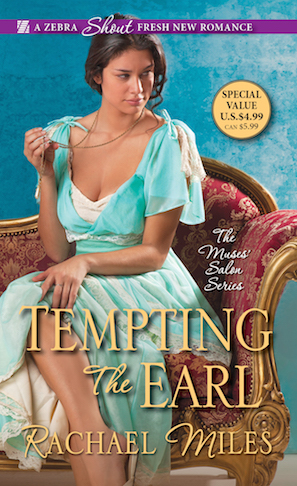
tempting-the-earl-copy

Tempting the Earl

A double life…

Olivia Walgrave is finished with being a countess. Writing under a pen name, her controversial column for the scandal sheets provides her with some income and far more excitement than managing a country estate. Besides, in the three years since the wars have ended, her dashing husband hasn’t spent one night under their roof. So Olivia has prepared a plan, and an annulment. All she needs is his consent…

Lord Harrison Walgrave let his father coerce him into marriage—but his devotion is to his Parliamentary career—and his secret work for the Home Office. Yet now, with freedom in his grasp, he finds he cannot so easily release his wife. Seeing her stirs a hunger no other woman has reached. A distraction now, when he is a breath away from revealing a ring of traitors, could be deadly. Still, wherever his investigations lead, the thought of Olivia lingers. It might be obsession. It might be treason. But the only way to escape the temptation is to succumb…

Barnes & NobleiTunesAmazonRipped Bodice

Excerpt

The man pursued her from the other side of the street, tracking her every step. Olivia had been lucky to notice him, or she would have led him straight to her next meeting. Now she needed to go somewhere—a market, a crowded shop—anywhere to give herself a chance to escape. If he hadn’t already recognized her, then all could still be well.

But the street was quiet, and the shops too small. Nowhere to hide. She looked for her pursuer in the reflection of a shop window as she passed. Still there. She forced herself not to increase her pace. If she hurried, he would know she’d seen him.

Ahead, a carriage pulled to her side of the street, and two footmen carrying packages stepped out of a shop. Footmen and packages meant women shopping.

She looked at the shop’s sign—an open book beside a stack of papers and a jar filled with quills. A bookshop and stationer. She could just read the name of the shop: The African’s Daughter.

A chance.

Olivia eyed the distance to the carriage, estimating how long it would take for the women to leave the shop and step into the coach, and for the coach to pull away. Each moment the women delayed leaving the shop became a moment gained for Olivia to reach the coach.

The footman opened the door to the shop and two women, well-dressed and laughing, stepped out. Olivia clenched her fingers on her worn reticule, holding it close to her belly. In the lining, she’d tucked the instructions for meeting her informant. Usually she memorized the complicated dance of sign and countersign, but she had told herself it wouldn’t matter, this once. But if he caught her, if he found the paper, then it would matter a great deal. And not just for herself.

More than a year had passed since she penned an essay on the struggles of returning soldiers and sent it off to the fashionable newspaper, the World. If she had believed the editor would publish it, she would have chosen a better pseudonym than “An Honest Gentleman.” She hadn’t intended to become the banner bearer for the rights of man. But her essay struck a chord with the British, weary from the wars and the ensuing poor economy. Her correspondence with the editor, a Mrs. Helena Wells, known for her deft editing of the World and her charismatic performances on the Drury Lane stage, had quickly turned to friendship. And soon her essays began appearing every week. Not long after, her former employers at the Home Office found a use for her new work. Having discovered that old enemies of England were using the periodical press to convey state secrets abroad, they asked her to pay careful attention to the path of the information that came her way. She’d almost refused, wishing to be free to advocate for political reform, but they’d assured her—and she believed them—that their aim was only to find those who wished to destroy, not mend. She’d agreed, with the promise that she would be allowed to tell the truth. From corruption in Parliament to abuse on the docks, An Honest Gentleman brought it to a public hungry for an honest voice.

Soon she was receiving correspondence from across the land, asking for her help—or rather An Honest Gentleman’s help—in revealing this or that wrong. From one informant in the London hells, she now had more than twenty across Britain. She’d become—according to Tories—the greatest threat to a peaceable England since Napoleon. But no one expected a short, softly rounded woman with a middle-class accent to wield the pen that caused MPs to shudder. She—and her old employers–had believed anonymity would be protect her. Now, she was not so sure.

She looked ahead, dismayed by the remaining distance to the carriage. The women stood outside the bookshop, their heads bowed in conversation. Keep talking, she willed them. But they moved forward, where a waiting footman handed each one up a three-stepped stool, into the carriage.

She glanced at the nearest window. He still followed. She tamped down on her welling panic. What would she do if he caught her? Him, of all people? It was crucial that An Honest Gentleman’s next essay appear before the upcoming Parliamentary session. One of her trusted correspondents had written that a bill widely supported by the conservative MPs was financed by a group of powerful criminals. But he’d refused to send the name through the mail. If she missed their first meeting, her correspondent might never agree to another.

Before her, the door to the carriage remained open, the footman still waiting. Olivia’s heart rose. Someone else was in the shop!

Instinctively she quickened her pace, then slowed. But it was too late; he had increased his pace as well. With each long step, he narrowed the distance between them. But he had not yet crossed to her side of the street. The carriage would hide her escape.

Only four more shops and she’d be there.

The footman opened the shop door again, and a young woman with a brightly colored feather in her hat moved slowly toward the open carriage door. At the carriage, the younger woman stopped before the steps, then held out her hand. The postilion placed it on his shoulder, and the woman raised her right foot slowly to the first step, bringing her left up to meet it, then repeated the deliberate action. Another time Olivia would have wondered at the young woman’s slow movements, but not today. No, all that mattered was reaching the shop. And she was almost there.

The footman opened the shop door once more, stepping back to let yet another woman out of the shop. Olivia’s eyes met his, pleading, and he held the door another fraction of a second, long enough for her to leap into the bookstore. As the door shut behind her, she heard the coachman call out to the postilion to lash the steps on tight. For another moment or two, the carriage would hide her escape.

To the right of the entrance, two kind-faced women stood at a counter, one an aristocrat, the other a shopkeeper.

“I need . . .” She saw the carriage begin to pull away from the sidewalk, and just past it, the man crossing the street to the shop. She turned back to the women, who waited expectantly. “A man is following me. Can you help?”

Neither woman looked startled. The shopkeeper spoke quickly. “Follow me.”

The aristocrat turned confident gray eyes to Olivia. “I’ll give you time. Go.”

Olivia obeyed without thinking.

“This whole row of buildings backs up to a marsh.” The bookseller spoke softly, as they hurried toward the back of the shop. “No back exit.”

Olivia felt her stomach tighten. He would find her. If she had time, she could hide the instructions in a book. But which one?

“The roof, however, connects this row of buildings almost to the tollbooth beyond the marsh.”

“The roof?” Olivia felt her throat tighten. He’d found her on a roof once before. She pushed the memory away. He’d been angry enough then. This time he had more cause.

“If you are afraid of the roof, lock the attic door behind you and hide until I return.”

“I’m not afraid.”

“Good. On the roof, you’ll find a path of sorts. Stay near the back of the buildings. That way, no one will see you from the street. At the end, climb down a series of lower roofs and balconies until you reach the ground—the descent is protected from view by the curve of the buildings. From there, you can slip into the street unnoticed. It isn’t too hard.” The woman smiled, then added, “If you have a bit of a tomboy in you.”

The shop doorbell rang. Olivia looked toward the salesroom, the woman following her eyes. “I have more than a bit. Where do I start?”

The bookseller motioned to Olivia’s right. A piece of heavy brocade pinned with dozens of broadsides covered the wall between two book cases. The bookseller pushed against it. Not a wall. A door. The woman stepped into a small office, and Olivia, with a last quick glance over her shoulder, closed the office door behind them.

“He’s here. I hear his voice.”

“Go up three flights. My rooms, then the attic, then the roof.” The bookseller opened a smaller door leading to a stairway, then held out a key. “Lock the door behind you. Leave the key on the hook beside the door.”

“How will you retrieve it?”

“I have a second key. You must hurry.” The bookseller paused, searching Olivia’s face. “If you need help again, you will find it. The African’s Daughter turns no one away. Now, you must go.”

Olivia clasped the woman’s hand gratefully, then ran up the stairs.

About the Author

rm-1-dsc_7961-copyRachael Miles writes witty, sexy romance novels set in the British Regency. Booklist describes Miles’ debut series The Muses’ Salon as “impeccably researched and beautifully crafted.” Tempting the Earl – the third standalone novel in the series – received a 4/5 stars Top Pick from RT Book Reviews. It was chosen as one of Amazon’s Editor’s Best Books for November. Compared to Jo Beverley and Mary Jo Putney, Miles is a former professor of book history and nineteenth-century literature. She lives in the woods with her indulgent husband, three rescued dogs,  an ancient cat, and a herd of deer who love her vegetable garden .

WebsiteTwitter FacebookGoodreadsPinterest • Ravelry

Cheryl Bolen: Ex-Spinster By Christmas (House of Haverstock, Book 4)

Interview with Cheryl Bolen

Susana: When did you know you wanted to be a writer?

Cheryl Bolen copyCheryl: When the nun who was my third grade teacher explained about paragraphs and asked us to make up one, I thought, “Wow! This is something I love to do!” I was one of those kids who spelled well and absorbed grammar and punctuation rules like some women collect shoes. Therefore, when I went to college, I decided to major in journalism so I could be paid for writing. (Until the Great Digital Disruption, it wasn’t easy to make it as a novelist in New York publishing.) I did major in journalism, with a double major in English. Then I got a master’s in education in case I ever wanted to teach. I worked for two decades as a journalist, and I also taught English for six years.

Susana: Tell us about getting The Call.

Cheryl: Sadly, I wrote seven complete novels before I got The Call 19 years ago from an editor at Harlequin Historical. I started in romantic suspense and won a lot of contests but never got a contract. Then I wrote a sweeping World War II love story which won even more contests but did not sell. It did, though, sort of get me in the back door at Harlequin because the editor judging the top three manuscripts in a contest in which it placed liked my writing and said if I wrote something that took place before 1900, she’d like to see it. The only historical genre I knew was Georgette Heyer. I’d read every one of her books; so, I sat down and began A Duke Deceived, entered the beginning in a few contests to see if it was good, and it placed in every contest I entered.  So I sent the first three chapters to that Harlequin editor, and she asked to see the complete manuscript. I sent it in and waited five months before I got The Call.

I was working as news editor of our community newspaper and came home for lunch, flipped on my answering machine, and there was a message to call the editor at Harlequin. I was shaking all over. I called my husband’s office to tell him, and he said, “Why in the heck are you calling me? Call her back.” I did, and she said they wanted to buy my book. “How does an advance of $5,000 sound to you?” she asked.  I was thrilled—and still shaking—but tried to calmly say, “That sounds fine.”

Susana: So how many books have you written now?

Cheryl: In August I received a pin from Romance Writers of America for writing 35 books. Since then, I’ve published two novellas. I’ve written for Harlequin, Kensington, Love Inspired Historical, and I’ve written one book for Montlake. It was a lighthearted, romantic contemporary mystery which I envisioned as the first book in the Stately Homes Murders, set in England. I began self-publishing in 2011 and have never been happier—and never made so much money! Of my 37 titles, all but five are Regency-set historicals.

Susana: What’s the heat level of your books?

Cheryl: My first ten years of publishing, I wrote to suit the New York publishers, and they wanted hot. Now that I’m my own boss, most of my books are sensuous with the bedroom door closed.

Susana: What’s next for you?

Cheryl: My next full-length novel will be the story of the third Birmingham brother—at readers’ request. The Birminghams, the richest bankers in England, were introduced in my Brazen Brides series. I haven’t started it and have zero plot ideas. This is a hybrid series, in that the first two (Counterfeit Countess and His Golden Ring) were written for Kensington in 2005, and I’m now continuing the series with my own imprint.

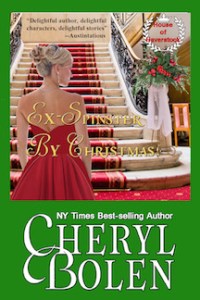
ex-spinster-by-christmas-copy

About Ex-Spinster By Christmas

“Delightful author, delightful characters, delightful stories.”—Austintatious

Ever pragmatic, Lady Caroline Ponsby has given up hope she’ll ever receive a proposal of marriage from Christopher Perry, the wealthy man she’s adored for almost two years. She is determined to be an ex-spinster by Christmas. To that end, she has invited a prospective suitor to spend Christmas with her family. She knows very well that Lord Brockton would love to get his hands on her dowry, and she’d love to be a married woman with a home and family of her own.

The very idea of his Lady Caroline throwing herself away on the likes of the vile Lord Brockton rankles Christopher Perry. A pity he cannot offer for her himself, but a duke’s daughter is too far above his touch, given his family’s humble origins. Nevertheless, Christopher attends the Duke of Aldridge’s Christmas house party with the intention of thwarting Lady Caroline’s grave misalliance with Brockton. If only he’s not too late…

AmazonBarnes & NobleiBooksKobo

Excerpt

http://www.cherylbolen.com/ex-spinster%20excerpt.htm

About Cheryl Bolen

Since being named Notable New Author for 1997, Cheryl Bolen has published more than 35 books with Kensington/Zebra, Harlequin, Love Inspired Historical, Montlake, and independently. She has broken into the top 5 on the New York Times and hit the USA Today bestseller list. Her 2005 One Golden Ring won Best Historical, Holt Medallion, and her 2011 My Lord Wicked was awarded Best Historical in the International Digital Awards, the same year her Christmas novella was chosen as Best Novella. Her books have been finalists for other awards, including the Daphne du Maurier, and have been translated into a dozen languages. She’s also been the number 1 bestselling historical romance author in Germany.

She holds a bachelor’s degree in journalism and English from the University of Texas and a master’s degree from the University of Houston. Her favorite pursuits are reading diaries of dead English women, traveling to England, and watching the Texas Longhorns play football and basketball. She and her recently retired professor husband are the parents of two sons. One is an attorney, the other a journalist.

WebsiteBlogFacebook

Jude Knight: Interview with the Marquis of Aldridge (Giveaway)

Today, we are with that renowned scion of the Grenford family, the Marquis of Aldridge. As the eldest son of the Duke of Haverford whose health is understood to be failing, he has taken over much of the business of the duchy. However, he continues a vigorous social life, and is as popular on his rare appearances in a Society ballroom as he is rumoured to be in less reputable establishments.

(LC stands for Lady Correspondent. The interviewer wishes to remain anonymous, and Aldridge has sworn not to disclose her identity.)

LC: Your lordship has recently returned from Hollystone Hall, where your mother has been holding a Yuletide house party. We are informed you arrived late and left early. Do you have a particular reason for avoiding such events?

(LC blushes. She was present at both the arrival and the departure, but her questions will be printed so she cannot say so. Beyond a twitch of his eyebrows and a quirk of his lips, Aldridge does not acknowledge her deception.)

aldridge-1Aldridge: Errands for my father and other business matters kept me in town, but Her Grace my mother knew not to expect me until Christmas Eve. I would, however, have avoided the party altogether if the duchess had not required my attendance. I find that I spend such occasions avoiding debutantes with a fancy for a ducal coronet. In any house other than my mother’s, I could have discouraged them by a blatant and scandalous pursuit of a willing widow or a straying wife.

I say pursuit… But if that is not sufficient, our behaviour once I have caught the lady who has temporarily attracted my attention tends to drive away the most title-hungry of virgins and their mamas.

You would be wise to believe that my reputation is well deserved, but it is also something of a protection against all but the most ambitious.

However, as I say, I was under my mother’s roof, so the usual avenue was not open to me.

LC: So what did you do instead?

Aldridge: In the event, I had my brother with me, and we protected one another. We even shared a bed chamber, so any blushing virgin who thought to conceal herself in my bed was as much at risk of ending up with the prodigal spare, as with the disreputable heir. (Grins)

The few days I was there proved very entertaining. The duchess’s stated aim for the fortnight was to raise money for her new charity fund, but she was playing matchmaker, of course—and very successfully.

regency-fashionLC: We understand the house party was the venue for several betrothals and a marriage.

Aldridge: Yes, the Earl and Countess of Somerton married at the local church just before Christmas.

LC: Society is aghast to learn that the Earl of Somerton married the actress, Charlotte Halfpenny.

Aldridge: A magnificent actress; possibly the finest of our generation. She will, I am sure, play the part of countess to my dear friend Somerton with as much artistry as she put into her earlier roles.

Two other weddings in those weeks were associated with the house party, though they did not take place at Hollystone Hall. Lady Sophia Belvoir wed Lord Elfingham in London in a private ceremony that received, we are told, the blessing of his dying grandfather, the Duke of Winshire. And the Stanton party were delayed (with the exception of Lady Stanton), because Lord Stanton’s little sister and Frederick Woodville wished to be married in Cumbria.

LC: There is a touch of scandal in both unions, is there not? Why was Lady Stanton not at her daughter’s wedding, and what happened on that wedding journey that caused her stepson to propose to Mr Woodville’s sister?

And Lord Elfingham was made Earl of Sutton by the death of his grandfather. Or was he? The Privileges Committee will soon decide whether the new Duke of Winshire was validly married to the Persian princess who bore his large brood of children.

Aldridge: All three couples are happy. (Aldridge looks surprisingly wistful. Perhaps his mother is not the only romantic in his family.) Our sort generally look for advantage in marriage; family links, or property, or wealth. We do not, as a rule, expect to marry someone with whom we share a deep affection. They are fortunate, Lady F-Lady Correspondent.

LC: Your brother was also hopeful of a betrothal, I believe, my lord.

Aldridge: That is so. We had intended to stay to the end of the house party, but my brother received a message that recalled him to–shall we say Eastern Europe? We have not yet heard the results. I hope that he, too, is happy.

As you mentioned, though, the house party also saw several betrothals, and part of the entertainment was watching the gentlemen and their ladies stumble their way to an understanding.

Mama can take no credit for the betrothal between Mr Durand and the lovely Miss Sedgely. Their affection was fixed prior to the house party, and their fate sealed when half of Society saw them k–. Well. Never mind.

But she was, I am certain, involved in unsnarling the misperception Lord Nicholas Lacey had conceived about Lady de Courtenay. I may have helped a little myself, although flirting outrageously with the lady did not have the intended effect.

Even Mama was uncertain which of her two suitors Lady Anna Wycliffe would choose: Lord Pershore or the Duke of Barnet. But one departed early, and the other remained to be happy.

The affection between Miss Baumann and Mr Halevy also predated the house party, but Mama is undoubtedly correct that she provided the setting for its very satisfactory outcome.

And, of course, Her Grace could hardly have expected the affair between my cousin Cedrica and the chef.

Still. Nothing makes my mother happier than a courtship successfully concluded in a love match.

L.C.: And when we might expect your own betrothal, Lord Aldridge?

Aldridge: (Laughs out loud.) Did my mother put you up to asking that? All I can say is that I do not advise holding your breath.

Giveaway

bfbcover-ebook-small
revealed-in-mist-smallThe Marquis of Aldridge appears in several of the stories in Holly and Hopeful Hearts. He is one of Jude Knight’s characters, and pops up in a number of her books, including A Baron for Becky (where he is not quite the hero) and Revealed in Mist (where he is almost a villain).

To win an ecopy of A Baron for Becky or an ARC of Revealed in Mist, put your answer to the following question in the comments below. I’ll choose a commenter at random.

What did Aldridge do to try to help Lady de Courtenay?

About Holly and Hopeful Hearts

When the Duchess of Haverford sends out invitations to a Yuletide house party and a New Year’s Eve ball at her country estate, Hollystone Hall, those who respond know that Her Grace intends to raise money for her favorite cause and promote whatever marriages she can. Eight assorted heroes and heroines set out with their pocketbooks firmly clutched and hearts in protective custody. Or are they?

Valuing Vanessa, by Susana Ellis

Facing a dim future as a spinster under her mother’s thumb, Vanessa Sedgely makes a practical decision to attach an amiable gentleman who will not try to rule her life.

A Kiss for Charity, by Sherry Ewingcover-of-holly-and-hopeful-hearts-copy-2

Young widow Grace, Lady de Courtenay, has no idea how a close encounter with a rake at a masquerade ball would make her yearn for love again. Can she learn to forgive Lord Nicholas Lacey and set aside their differences to let love into her heart?

Artemis, by Jessica Cale

Actress Charlotte Halfpenny is in trouble. Pregnant, abandoned by her lover, and out of a job, Charlotte faces eviction two weeks before Christmas. When the reclusive Earl of Somerton makes her an outrageous offer, she has no choice but to accept. Could he be the man of her dreams, or is the nightmare just beginning?

The Bluestocking and the Barbarian, by Jude Knight

James must marry to please his grandfather, the duke, and to win social acceptance for himself and his father’s other foreign-born children. But only Lady Sophia Belvoir makes his heart sing, and to win her he must invite himself to spend Christmas at the home of his father’s greatest enemy. 

Christmas Kisses, by Nicole Zoltack

Louisa Wycliff, Dowager Countess of Exeter wants only for her darling daughter, Anna, to find a man she can love and marry. Appallingly, Anna has her sights on a scoundrel of a duke who chases after every skirt he sees. Anna truly thinks the dashing duke cares for her, but her mother has her doubts. 

An Open Heart, by Caroline Warfield

Esther Baumann longs for a loving husband who will help her create a home where they will teach their children to value the traditions of their people, but she wants a man who is also open to new ideas and happy to make friends outside their narrow circle. Is it so unreasonable to ask for toe curling passion as well?

Dashing Through the Snow, by Amy Rose Bennett

Headstrong bluestocking, Miss Kate Woodville, never thought her Christmas would be spent racing across England with a viscount hell-bent on vengeance. She certainly never expected to find love…

Amazon.comAmazon UKAmazon AUS Amazon CAN

SmashwordsKoboBarnes & NobleiBooks

newlogoAbout the Bluestocking Belles

The Bluestocking Belles (the “BellesInBlue”) are seven very different writers united by a love of history and a history of writing about love. From sweet to steamy, from light-hearted fun to dark tortured tales full of angst, from London ballrooms to country cottages to the sultan’s seraglio, one or more of us will have a tale to suit your tastes and mood.

Website and Home of the Teatime Tattler

FacebookTwitterPinterestAmazon Author Page

Caroline Warfield: The Renegade Wife (Giveaway)

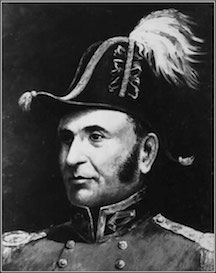
Lieutenant-Colonel John By, Royal Engineers, 1779-1836

John By [Source: By, John, 1832. Unknown Artist, Kingston Picture Collection, Queen’s University Archives, accession number V23 P-58]

John By [Source: By, John, 1832. Unknown Artist, Kingston Picture Collection, Queen’s University Archives, accession number V23 P-58]

After a modestly successful military career, John By was given an assignment the he might well have believed would bring him promotion and renown. He came from modest origins and, while competent, had never achieved the heights of success. He is in some ways a typical professional soldier of the Napoleonic Era. He died in obscurity. So why is he remembered today?

He was assigned to design an entirely navigable waterway to serve as a supply line between Montreal and Kingston using the Rideau and Ottawa rivers. It was to be cut 126 miles through a wilderness of forest, swamps, and rocky terrain far enough removed from the Saint Lawrence River to be easily defended in case of invasion by the Americans to the south. For By, it didn’t work out as he hoped. For Canada, By’s canal is a treasure.

Born at Lambeth in 1779, to a family of watermen, By entered the Royal Military Academy, Woolrich, in 1797 and was commissioned two years later. Initially commissioned to the artillery, he transferred to the Royal Engineers later that year. He served in Plymouth for two years before being sent to Canada in 1802 where he worked on the first small locks on the Saint Lawrence and on the citadel at Quebec. Beginning in late 1810 he served under Wellington in the Peninsula but was recalled in 1812 when the Inspector General of Fortifications, Lt. General Gother Mann, appointed him commanding engineer of the new Royal Gunpowder Mills. After Waterloo, the need for engineers lessened, and By retired.

First Camp at Bytown By John By [Public domain], via Wikimedia Commons

First Camp at Bytown By John By [Public domain], via Wikimedia Commons

John By was 47 when he was called out of retirement to build the canal. There’s every reason to believe he jumped at it. The Duke of Wellington is said to have chosen him specifically, but the orders came from General Mann who had also been his commanding officer during his previous stay in Canada. Both men had confidence with him at the beginning.

Never one to take the easy or obvious way, By began making controversial decisions almost immediately upon arrival in 1826. Instead of setting up housekeeping in Kingston, which already boasted not only a fort and navy base, but also a growing town, he moved his family and set up at the mouth of the Ottawa where there were at most a half dozen households. Even as the Royal Engineers began laying out the plans for the waterway, By laid out plans for a town to be called Bytown to house his headquarters, his home, barracks, and housing for workers. His town is now called Ottawa and is the capital of Canada.

There had been earlier surveys of the country, and some recommendations for much more modest plans than those ultimately carried out. By resurveyed and determined to lay out the waterway using the Rideau River and lakes, canalizing the route where needed, building locks and dams along the way. Contract labor began clearing land that winter.

Entrance of the Rideau Canal at Bytown, 1839, By Ainslie, Henry Francis 1803-1879 [Public domain], via Wikimedia Commons

Entrance of the Rideau Canal at Bytown, 1839, By Ainslie, Henry Francis 1803-1879 [Public domain], via Wikimedia Commons

The single most important decision was to build the locks and canals wide and deep enough to handle the new naval steamships. The original, narrower plans were designed for typical river craft such as Durham boats. In spite of opposition in London, a compromise plan dictated only slightly smaller construction. Building for steam power is typical of By’s far-sighted approach.

In six years By, the engineers, and the contractors had managed the project, with most of the work done by hand by primarily Irish and French workers. They built approximately 50 dams, 47 locks, and blockhouses for defense. The Stone Dam at Jones Falls was the third largest dam in the world when it was built. The eight massive locks at Bytown are still a wonder, and, yes, it accommodated navel steamships. An estimated 1000 men died in the process. By himself contracted malaria, probably as a result of his insistence on inspecting work camps himself. He demanded money for a hospital and housing, and his requests were not always well received.

Lt. Colonel By statue overlooking the locks in Ottawa (my own photo)

Lt. Colonel By statue overlooking the locks in Ottawa (my own photo)

In May 1832 John By was able to sail through the locks by steamship, his work essentially finished. It appears he planned to settle permanently in Bytown, but it was not to be. Precisely at the time of his great triumph, a move was underfoot in London to remove him. He received notice in August:

My Lords further desire that Colonel By may be forthwith ordered to return to this country, that he may be called upon to afford such explanation as My Lords may consider necessary upon this important subject.

The “important subject” was cost overruns and questionable permissions. The committee that examined him grudgingly allowed that the work had been done with care and that most of the cost was unavoidable, but in the end they issued a reprimand for allegedly unauthorized expenditures, which he denied. Instead of the commendations he expected, By was forced out. He struggled to clear his name unsuccessfully. In failing health, he retired to his home in Sussex. Even as he lay ill, his wife continued to write to people begging for help removing the stigma which she believe contributed to his decline. He died, probably of malaria, in 1836.

John By artist unknown (not from life)

John By artist unknown (not from life)

And the canal? It never served the military purpose for which it was intended, but it opened Ontario to settlement and served as a commercial highway throughout the nineteenth century. It is now a UNESCO World Heritage Site, largely used for recreation, and those pesky Americans are welcome to come up and enjoy the still functioning locks and canals.

Want to know more? Try these.

The Virtual Museum of Canada http://bit.ly/2ej9lzX

The Rideau Canal World Heritage Site http://www.rideau-info.com/canal/tales/bye-by.html

The Bytown Museum http://www.bytownmuseum.com/en/engr.html

Robert Passfield, Military Paternalism. https://books.google.com/books?id=CSTSAQAAQBAJ

Giveaway

To celebrate the launch, Caroline will give a copy of one of her Dangerous Series books to one randomly selected person who comments. The winner can choose from the books found here:

http://www.carolinewarfield.com/bookshelf/

About The Renegade Wife

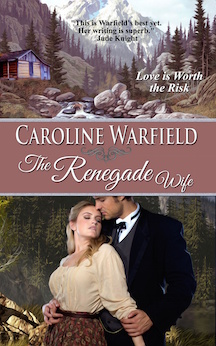
therenegadewifeBetrayed by his cousin and the woman he loved, Rand Wheatly fled England, his dreams of a loving family shattered. He clings to his solitude in an isolated cabin in Upper Canada. Returning from a business trip to find a widow and two children squatting in his house, he flies into a rage. He wants her gone, but her children are sick and injured, and his heart is not as hard as he likes to pretend.

Meggy Blair harbors a secret, and she’ll do whatever it takes to keep her children safe. She’d hopes to hide with her Ojibwa grandmother, if she can find the woman and her people. She doesn’t expect to find shelter with a quiet, solitary man, a man who lowers his defensive walls enough to let Meggy and her children in.

Their idyllic interlude is shattered when Meggy’s brutal husband appears to claim his children. She isn’t a widow, but a wife, a woman who betrayed the man she was supposed to love, just as Rand’s sweetheart betrayed him. He soon discovers why Meggy is on the run, but time is running out. To save them all, Rand must return and face his demons.

Amazon

Excerpt

“Let go of her, Blair, or I’ll shoot you like the dog you are. God knows you deserve it.” For untold minutes all Rand heard was the wind in the trees, and Lena’s whimper behind Pratt’s back. Even Meggy seemed to hold her breath.

Blair let go of her arm so suddenly she stumbled before running back to her children. “The slut and her children are mine, Wheatly, and that makes you a thief.”

“Get on your horse, Blair, and get out of here before I change my mind and shoot you anyway. You too, Pratt.”

Rand kept his pistol aimed at Blair while the men mounted and turn their horses to the lane. Pratt and Martin galloped up the hill and into the woods, but Blair turned half way up and pointed back at Meggy hugging the children in Rand’s doorway.

“They’re mine, Wheatly. I have a writ. I’ll be back with the magistrate and the deputy to have you jailed for resisting. Won’t your fancy relatives like that?” He turned and galloped off.

Rand eased back the hammer of his pistol, when the men cleared the trees. He slid it into a holster, jumped down, and ran to Meggy and the children, pulling all of them into an embrace. Meggy began to weep almost as soon as his hand came around her back, pulling her close with Lena between them and Drew in the crook of his arm.

“You might have killed him, and then where would we be?” she sobbed.

“You would be safe from him.”

“And you would be in jail or worse.”

He didn’t deny it. He kissed the top of her head and down her cheek.

About the Author

Carol Roddy - Author

Award winning author Caroline Warfield has been many things: traveler, librarian, poet, raiser of children, bird watcher, Internet and Web services manager, conference speaker, indexer, tech writer, genealogist—even a nun. She reckons she is on at least her third act, happily working in an office surrounded by windows while she lets her characters lead her to adventures in England and the far-flung corners of the British Empire. She nudges them to explore the riskiest territory of all, the human heart.

Website & BlogFacebookTwitter

Goodreads • Renegade Wife Pinterest Board

Subscribe to Caroline’s Newsletter

Sandra Masters: The Duke’s Magnificent Bastard

Interview with Sandra Masters

Susana: Why did you decide to write Regency romance?

Sandra_2014 50 percent pictureA (3) copySandra: I was an only child whose parents both worked. Before and after school, I was alone, and the only reading materials my parents had was the book Heidi and The Encyclopedia Britannica. You can imagine that the Encyclopedia was dry reading. History intrigued me, particularly the historical period of the Regency era. At the age of thirteen, after a brief stint in a convent in New Jersey, I accepted that the life of a novice nun was not my calling. Interestingly, when I arrived there in Morristown, the convent was an old historical mansion with parquet floors and grand staircases, not mention a soaring ceiling, usually found in Regency mansions.

Visions of dukes, duchesses, viscounts, earls, danced in my head. So I kept on writing. I sometimes think that in another life, I was born during the Regency period. I’ve never created a duke I couldn’t love.

Online classes, seminars, conferencing, monthly meetings, networking, etc. over the past five years made me realize I had to study the craft. Decades later, when I decided that to see my name in print was a goal before I left the planet, I broke through the ceiling. My debut novel was Once Upon a Duke, released July 14, 2015. I’ve been on a marvelous journey ever since, with my fourth book in The Duke Series whose release date is November 4, 2016, The Duke’s Magnificent Bastard.

Susana: When do you write?

Sandra: Writing to me is not a pastime or a way to make money, it is an obsession. I write twelve to thirteen hours a day, every day, and then I read in the wee time of a morning, which doesn’t leave too much time to clean the house. The dust puppies will always be there.

Susana: What is the genre of your new story The Duke’s Magnificent Bastard?

Sandra: This novel is a multi-cultural Regency romance story of a seventeen-year-old Anglo-West Indian bastard, Thorn Wick, now acknowledged by his father, The Duke of Althorn, who was never made aware of his birth. Our hero admires the ward of his father from afar, an aristocratic flirtatious English lady, Alicia, who has designs on him until the reality of loving Thorn too much almost destroys her. Throw in our noble Duke, an evil witch doctor, a Barbados tribal chieftain intent on redemption, horse racing for the Regent, amazing “heavenly” Argamak Turkmen horses, a conspiracy to bring down the monarchy, and our plot thickens. Lust, desire, passion all conflict to epic proportions. Honor, truth, and justice test his values. Just when he starts to believe in fairy tales, another obstacle looms to thwart his plans. And then there’s love!

Susana: Where did you get the idea for this story?

Sandra: Ever since I can remember, the subject of bastardy fascinated. I read John Jakes eight-book series that spanned generations and centuries and decided I wanted to create a ‘magnificent’ bastard of my own.

Susana: How does Thorn react to the stigma?

Sandra: In 1820 Regency England, there is the stigma attached to our hero, Thorn Wick. Yanked from the West Indies, the half-breed, is transported to London, England where he is considered illegitimate. Can anyone imagine the emotions that consumed him? Except for the noble duke’s recognition and that of the family who supports him, acceptance is difficult. Thorn fights against all the odds.

Prepare to be transported from island life in Barbados to aristocratic England and then back to Barbados where stunning revelations wrack our hero’s world.

Susana: What stunning revelations?

Sandra: Without spoiling the story for readers, all I can say is that there is a native uprising against foreign plantation owners, the discovery of the truth about Thorn’s mother’s death, and a flight to save his life as he swims out to a waiting ship bound for England and a bad storm.

Susana: Thank you for allowing me to be a part of Susana’s Parlour.

Now, for the readers, I’d love to ask them what they like to see in a Regency romance!

untitled

About The Duke’s Magnificent Bastard

After three years in England, Thorn Wick, the duke’s bastard son, perfectly flawed, still fights for acceptance in his father’s world as a renowned golden horse trainer. Just when he starts to believe in fairy tales, another obstacle looms to thwart his plans.

Alicia Montgomery, ward of the duke, is in love with Thorn. Strong willed and adventurous, she determines she can convince him to admit his feelings until the reality of loving Thorn too much almost destroyed her.

On a dangerous mission to Barbados at the request of his father, Thorn is stunned when secrets are revealed about his mother. Will Thorn extract revenge for the foul deed?

Can Alicia quell Thorn’s demons and prove to him love can pave the way to their happiness?

Can Thorn relinquish his past because he now has a present and a future? Will he accept the man he has become? Will he return to his father and Alicia and fulfill their destiny?

Coming November 4th, 2016, available for pre-order now at Amazon.

Amazon | Kobo | BN | Apple iBookstore

About the Author

From a humble beginning in Newark, NJ, retired business executive Sandra Masters had a short stay at a convent in Morristown, NJ, to the board rooms of NYC to the ballrooms of the Regency period. Spicy Sensual Seduction with Swagger.

Website • Facebook

K.C. Bateman: A Raven’s Heart (Giveaway)

Interview with Kate Bateman

Susana: What inspired you to start writing?

kate-bateman-author-pic-copyKate: I’ve always been an avid reader, especially of historical romance, but I never considered writing a book myself until around five years ago, when my husband and I moved from England to the US (with his work.)

I’d spent twelve years as an antiques appraiser, running with my own auction house in the UK and I also appearing on several British antiques-related TV shows as an on-screen expert, but since there’s not much use for my auctioneering skills in central Illinois, and with three small kids at home, it was a natural sidestep to use my knowledge to write historical romance.

One day I threw a very badly-written historical across the room in frustration and complained to my husband that I could have done a better job of writing it. He bet me a dollar I wouldn’t even finish a manuscript. I bet HIM a dollar I would. I’d studied English at university, so I knew I could put a coherent sentence together, and I figured well, if they can get published, why shouldn’t I have a go. . . ? At least my historical facts will be accurate. So I made the leap from avid reader to writer.

Susana: How long have you been writing?

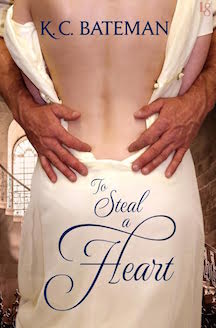
Kate: Well, my first attempt at a historical romance (about five years ago) was set in the Italian Renaissance, which is—according to most of the publishers I approached—a tough time period to sell. So I received numerous rejections, (ouch!) but took on board the fact that editors liked my writing and kept suggesting that I write a regency romance to appeal to a larger readership. So I wrote a regency – the first book in my ‘Secrets and Spies’ series: To Steal A Heart.

I entered a couple of RWA contests, finalled in several, and from that I got a full MS request from my now-editor at Random House, and was subsequently offered a three- book deal. That was in 2015. My first book, To Steal A Heart, came out in February 2016. Book two in the series – A Raven’s Heart—is out this month, on 18th October, and book three, A Counterfeit Heart will be out in May next year.

Susana: What advice would you give to writers just starting out?

Write the books you want to read, and don’t try to copy someone else’s style because you think it will sell—it will come across as forced. I love reading about capable, intelligent heroines, so I to write about ‘historical girls with cool skills’. I also like to highlight the fact that Regency-era romances don’t all have to be set in London ballrooms. There’s a whole world of interesting places out there and many of my ideas come from real-life historical people and events.

My heroines are always feisty, witty, and more than a match for the men in their lives. Unofficially, I describe them as ‘bad-asses in bodices’ or ‘kick-asses in corsets’! To Steal A Heart, features a tightrope-walking thief and the French / British double agent who needs her skills for a prison-break heist. A Raven’s Heart has a code-breaking heroine and the cynical spy assigned to keep her safe. Book three, A Counterfeit Heart, (out next year) has a forger heroine with a dubious moral compass and a suitcase full of fake money… You get the idea!

And I’d also say to new writers: you can always improve your writing. The best thing I ever did was join my local RWA (Romance Writers of America) local chapter and attend conferences and writer events. It helped me connect with other authors whose support, encouragement, teaching, and constructive criticism have been invaluable. I’m always looking for new ways to better my craft.

Susana: Are you a plotter or a pantser?

Kate: I’m a little bit of both, but my natural inclination is pantser. I hate plotting. As my engineer-husband will tell you, I hate organizing, timetables, and planning, but I know it’s just asking for trouble to start writing a book with no idea of your overall story arc, or major plot points. So every time I come to plot a new book I pretend to myself that I’m just ‘jotting down ideas’. I keep a notebook and write down a couple of key scenes, character traits, or snatches of dialogue. I type them up. I work out the order they have to go in to make sense. I work out what scenes I need to slot in between the big scenes to join them together. And hey-presto! It’s turned into an outline / plot without me noticing! By the time I’ve turned all my scribbled notes into actual, readable sentences, the book’s almost half done.

Susana: Tell us something about your new release that’s not in the blurb:

Kate: OK, here are a few fun facts about A Raven’s Heart:

First, one of the themes I play with in A Raven’s Heart concerns internal and external scars. Heloise has a scar on her face which she believes makes her unattractive. Raven’s scars are all on the inside. He thinks he’s too emotionally damaged to love. In this respect they’re opposites—and perfect for one another; they both see past the damage and find something to love underneath.

In one of my favorite scenes Raven lets slip how much he cares for Heloise by referring to the ancient Japanese art of Kinstukuroi. It’s the use of gold to repair a broken piece of pottery, with the understanding that the piece is more beautiful for having been broken and lovingly repaired. I thought that was such a romantic idea that I had to include it in a book. Ostensibly Raven’s discussing his mother’s favorite piece of porcelain, but we know he’s really talking about Heloise.

bowl

Secondly, A Raven’s Heart is set mainly in Spain and the descriptions of the landscape and architecture all come from personal experience. I love traveling, and I was lucky enough to have spent quite a bit of time in Spain as a child. The descriptions of the taste of carobs and pomegranates come from experience! I hope my affection for the country shines through and gives those who’ve never been there a hint of what it’s like. I make Pinterest boards for all my books, so if readers are interested in seeing where I get my inspiration they can take a look: https://www.pinterest.com/kcbateman1/a-ravens-heart-raven-and-heloise-spanish-peninsula/

In the story Heloise goes to visit some prehistoric cave art in the caves near the Spanish village of Altamira. These really exist and the only artistic license I took with the story is that the caves weren’t ‘officially’ discovered or made public until a few years later than 1816. I like to think that the locals could have been aware of the existence of the caves, and the art, but might have been unaware of the importance of them from an anthropological standpoint. There’s no reason to suppose they wouldn’t have shown interested, if eccentric, foreigners like Heloise their local treasure. . .

Here’s an image of the wonderful prehistoric / Neolithic art that can be found in the Altamira caves:

cave

And here is a link to the Wikipedia page:

https://en.wikipedia.org/wiki/Cave_of_Altamira

Thirdly, lots of events in my stories have a basis in real, historical events. For example, A Raven’s Heart features a proposed prisoner swap between the French and the English. In my research, I found evidence for this surprising – if unusual – wartime practice; In 1813, Soult and Wellington agreed to an exchange of three Frenchmen for one Englishman and two Spaniards, a plan agreed by Napoleon.

Fourthly, the heroine in A Raven’s Heart, Heloise, is a talented codebreaker for the British, and in the book she and Raven get to meet her codebreaking idol, George Scovell. Major Scovell, later General Scovell, was is real historical person, and he played a crucial role in cracking the French codes and ensuring a victory for Wellington and his troops in the Peninsular campaign.

Here he is:
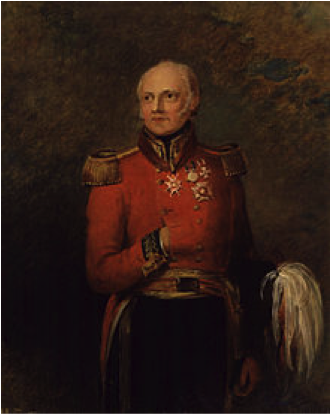
soldier

For those who would like to learn more about this interesting man and his achievements, his Wikipedia entry is fascinating! Sometimes truth is even greater than fiction. https://en.wikipedia.org/wiki/George_Scovell

Susana: What are you currently working on?

Kate: I’m finishing up book three in this Secrets and Spies trilogy, A Counterfeit Heart, which and will be out early next year (May 2017). The heroine, Sabine de la Tour, is also known as ‘Philippe Lacorte,’ the elusive, brilliant French forger. She meets her match in aristocratic spy Richard Hampden—Heloise’s eldest brother.

I’m having a lot of fun with these two. Sabine arrives in England with a suitcase full of counterfeit money. An honest woman would simply destroy the evidence of her crimes. An honest woman would never blackmail her handsome pursuer into paying for her co-operation. But Sabine’s never been all that good at being good…

Sabine can counterfeit anything, but can she tell the difference between what’s real and what’s fake when it comes to something as important as her heart?

Susana: What are you reading now?

Kate: I’m re-reading a couple of my favorite authors on my keepers shelf to remind me what good writing looks like – as inspiration! I’ve just finished the delightful As You Desire by Connie Brockway, whose unusual Egyptian setting I love, and the Medieval / Renaissance historical Shadowheart by Laura Kinsale. I’m now currently half way through Susan Elizabeth Phillips’s funny contemporary It had to be You…

Susana: What is your work schedule when writing?

Kate: I write for several hours every day during the week. I have three small kids, so a good day is when I drop them off at school and manage a solid block of writing before pickup. But I also think it’s really important to keep a work-life balance. You can’t stay slumped over a hot computer monitor all day, so I don’t let myself feel guilty for having lunch out with my girlfriends or meeting up for coffee. I don’t watch a lot of TV, so I sometimes get a couple of extra hours of writing done when the kids are all in bed – accompanied by just one small glass of wine…

Susana: What is one thing your readers would be most surprised to learn about you?

Kate: A lot of people in the UK know me for my antiques-show TV work, as an appraiser, so they’re quite surprised to learn that I also write historical romance. But I have lots of not-so-well-kept secrets. For example, I almost became a ballerina, and took ballet classes for eighteen years, until I decided it was too uncertain a career and went into antiques and writing instead!

Also, I once kissed the policeman on duty outside Number 10 Downing Street after attending a reception with the British Prime Minister. And I can’t touch dry cotton wool. No, really. Even thinking about it puts my teeth on edge, like nails scraping down a blackboard!

Susana: If your publisher offered to fly you anywhere in the world for a research project, where would you go and why?

Kate: Definitely Italy. The landscape! The food! The wine! The art! I’d choose to go stay in a massive crumbling Italian castle perched on the edge of a cliff with a view of the Amalfi Coast and a lovely garden scattered with good-looking Italian groundsmen and gardeners, of course! The fact that I don’t speak Italian would only be a minor inconvenience. I’d go and wander round all my favorite Tuscan haunts, like Siena and Florence, looking for antiques, then I’d watch the film A Room with a View, accompanied by a fabulous coffee and a decadent dessert like tiramisu.

Susana: What do you want people to take away from reading your books?

Kate: That not all Regency-era romances are set in London ballrooms and country houses! There’s a whole world out there to explore – even if it’s only within the pages of a book as an armchair traveler – and lots of fascinating chapters of history to discover. My heroines are intelligent, witty, independent women who are more than a match for their men. Hopefully readers will continue to enjoy the worlds and characters I create and want to read more!

Susana: What has been your biggest adventure to date?

Kate: That’s a tough question! Having my three kids has certainly been an adventure – the little monsters definitely keep me on my toes.

I also love traveling and I’ve been lucky enough to have had several amazing adventures in that respect. I’ve watched the stars from a Touareg tent in the middle of the Morroccan desert, I’ve survived white water rafting on the mighty Zambezi river in Zimbabwe, and trekked to huge reclining buddhas in Thailand. I’ve done some epic road trips across America with my family since moving here, including the Grand Canyon, the Rockies, Yosemite, Death Valley, and the Utah national parks.

But I think my biggest adventure has to be leaving behind my first career — as an antiques appraiser and auctioneer in England — and finding another career I love just as much; that of historical romance author. My path to publication has been one huge adventure, sometimes frustrating, disappointing and nerve-wracking, but also fun, fascinating and exhilarating. I’ve met some wonderful people, made some lifelong friends, and learned so much. I hope to keep writing and to stay in the wonderful world of romance for a very long time!

Susana: Who gave you the writing advice that sticks with you to this day?

Kate: I always remember the Nora Roberts quote about the importance of having a central conflict in your stories. She said something like ‘If your hero’s a fire investigator, your heroine had better be an arsonist!’

Also, and I don’t know who said it, but I have a post-it note taped above my computer with the fundamental ABC’s of writing: Apply Butt to Chair!

Susana: What one modern convenience you could not live without?

Kate: A kettle and teabags. Life’s just not worth living without a nice cup of tea!

About A Raven’s Heart

August 1815. The war with France is officially over, Napoleon’s an exile on St Helena, but Europe is still a very dangerous place to be. . .
a-ravens-heart-final-cover-copyKidnapped and held for ransom at nineteen, ducal heir William Ravenwood knows the only person he can rely on is himself. Now part of a spy ring that includes his friends Nicolas and Richard Hampden, he’s the smuggler known as The Raven, a ruthless agent who specializes in rescuing hostages and prisoners of war from captivity. Raven longs to discover the fate of his colleague, Christopher ‘Kit’ Carlisle, who’s been missing, presumed dead, for over two years. He’s also equally determined to stay away from the one thing he knows is dangerous to his health—the bane of his life, his best friends’ infuriating little sister, Heloise.

Heloise is a brilliant code breaker, one of the English government’s most valuable assets. She’s loved Raven for years, but considering that he rejected her at sixteen, before her face was scarred rescuing her brother from an icy river, she’s certain he doesn’t want her now, despite his outrageous flirting.

But when Heloise decodes a message that proves Kit is alive and a prisoner in Spain, Raven realizes she’s in grave danger. With French agents determined to silence her, he’ll do whatever it takes to keep her safe, even if that means taking her to Spain with him as an unwilling hostage.

As they face French deserters and Spanish freedom fighters, Raven and Heloise try to ignore the simmering attraction that’s been building between them for eight long years. Heloise might be scarred outwardly, but Raven’s wounds are all on the inside. He knows he’s not worthy of her love—a shadowed Hades pining for sun-kissed Persephone—but he’s not above showing her passion for the short time they’re together. Protecting her from danger will be a challenge; protecting her from desire will be pure agony…

AmazonBarnes & NobleiBooks • KoboGoogle Play • ARe

Excerpt

Chapter 1

England, June 1816

“I’m a spy, not a bloody nursemaid!”

William de l’Isle, Viscount Ravenwood, glared across the desk at his mentor, Lord Castlereagh.

The older man shook his head, supremely unmoved by his outburst. “Miss Hampden needs immediate protection. Someone’s targeting my code breakers and whoever killed Edward could also have discovered her identity. I can’t afford to lose her, too.”

Raven narrowed his eyes. “Use another agent.”

Castlereagh gave him one of those level, penetrating looks he so excelled at. “Who? Neither of her brothers are here; Nic’s in Paris, and Richard’s following a lead on that French forger he’s been after for months. Who else is left?” He pinched the bridge of his nose. “We’ve lost too many good men. First Tony got himself killed in France, then Kit disappeared. There’s been no news of him for months.”

Raven frowned. He refused to consider the distasteful probability that his friend was dead. Kit was like him, a master of survival. He could be deep undercover. But with every week that went by with no word it became harder and harder to stay positive.

“And now another good man, Edward Lamb, had been murdered,” Castlereagh sighed. “I don’t want Miss Hampden to be next.”

The older man was a master of applying just the right amount of pressure and guilt. He hadn’t made it to head of the Foreign Office without knowing how to manipulate people.

“You think I should entrust her to a less competent operative?” Castlereagh mused softly. “You’re not burdened by false modesty, Ravenwood. You know you’re the best I have. I was hoping you’d use your exceptional talent for survival to keep Miss Hampden alive, too.”

Raven sighed, well aware he was being backed into a corner. If it had been anyone else he wouldn’t have hesitated. But Heloise Hampden was the fly in his ointment. The spoke in his wheel.

A total bloody menace.

Hellcat Hampden had been the subject of his guilty daydreams for years. What had started out as adolescent musings had matured into fevered erotic fantasies that showed absolutely no sign of abating. He’d told himself the attraction was because she was forbidden, tried to lose himself in other, far more available women. Nothing had worked. And while he’d rarely paid much attention to the monotonous sermons preached by the clergy, he was fairly sure there was something in the bible that said “thou shalt not covet thy best friend’s little sister.” Or words to that effect.

He was the last person she should be entrusted to. He’d sworn to stay away from her. Had avoided her quite successfully—give or take a few blessedly brief skirmishes—for the past six years. Hell, he’d traveled to the far corners of war torn Europe to try to forget her.

And now here he was, drawn back to her by some malevolent twist of fate.

As if his life wasn’t cursed enough already.

Over the past few years they’d settled into an uneasy, albeit barbed, truce; it was a sad reflection on his twisted nature that he preferred sparring with her to holding a reasonable conversation with anyone else.

His blood thrummed at the prospect of seeing her again and he smiled in self-directed mockery. Few things increased his heartbeat anymore. In combat he was a master of his emotions, sleek and deadly and efficient. Fighting barely elevated his pulse. He could kill a man without breaking a sweat. But put him ten paces away from that slip of a girl and a furious drummer took up residence in his chest, battering away against his ribs.

He shook his head. Being near her was a torture he both craved and abhorred, but he had a duty to keep her safe. A duty to her family, to Castlereagh, to the whole damn country. Much as he’d like someone else to deal with her, he didn’t trust anyone else. She was his to torment.

Castlereagh, the old devil, smiled, as if he already sensed Raven’s grudging acceptance. “That’s settled, then. She’s safe at home right now. You can go over and get her in the morning.”

He rose and strode to the door of the study, then flashed an amused glance at Raven’s immaculate evening attire and the mask resting on the desk. “I apologize for interrupting your evening, Ravenwood. I’ll leave you to your entertainments.”

Link to longer excerpt from A Raven’s Heart:

http://www.kcbateman.com/books/sneak-peeks/

In A Raven’s Heart, I hint that Raven and Heloise are like the Greek gods Hades and Persephone – Hades kidnaps Persephone and takes her down to the Underworld, but the two end up falling in love and learning to compromise.

My question to readers is: If you could host a dinner party and include any couple—they can be real historical or fictional/mythological, who would you choose? Anthony and Cleopatra? Elizabeth and Darcy? Cathy and Heathcliff? 

Three random commenters will win a free ebook download of To Steal a Heart, Book 1 in my Secrets & Spies series.
to-steal-a-heart-final-cover-image-copy

About the Author

Kate Bateman (writing as K. C. Bateman) wrote her first historical romance in response to a $1 bet with her husband who rashly claimed she’d ‘never finish the thing.’ She gleefully proved him wrong with a historical set in the Italian Renaissance. Now writing for Random House Loveswept, her latest Secrets & Spies Regency-era trilogy features her trademark feisty, intelligent heroines, wickedly inappropriate banter, and heroes you want to alternately strangle and kiss—all mixed up in the intrigue and turmoil of the Napoleonic wars.

When not traveling to exotic locations ‘for research’, Kate leads a double life as a fine art appraiser and on-screen antiques expert for several TV shows in the UK. She splits her time between Illinois and her native England and writes despite three inexhaustible children and a husband who has flatly refused to read any of her books ‘unless she hits the NY Times Bestseller list.’ It is—naturally—her fervent desire to force the semi-illiterate, number-loving cynic to do so. He still owes her that dollar.

Kate loves to hear from readers.

WebsiteFacebook Twitter

AmazonGoodreadsPinterest

Amy Rose Bennett: The Ice Duchess (Scandalous Regency Widows, Book 2)

In The Ice Duchess, my heroine, Georgiana, the widowed Duchess of Darby, prides herself on her ability to be a brilliant piquet player. Because of her past history—she suffered tremendous heartbreak at the hands of a scoundrel when she was a debutante—she became an adept player. She uses piquet as both a shield and a weapon during ton social events. In her mind, her fearsome card-playing reputation is a way to keep men, especially rakehells, at bay. Rather than converse, or worse still, flirt, she can just play cards. And it feels good to trounce the other player, particularly if he is a man!

Piquet was a popular card game during the Regency era and was often played at home, society events and even at the gaming table. A trick-taking game played by two players, it has quite a complicated scoring system. My hero, Lord Markham, and Georgie play several games during the story and as an author, it was quite a challenge to first of all, come to grips with the rules, and secondly, write the card playing scenes in a way that would be both entertaining and further the plot. I hope readers get a sense of the great strategy involved during the course of play as well as enjoy the banter between Georgie and Markham as both try to gain the ‘upper-hand’. And if any piquet experts out there read my story and find I haven’t got it quite right, I hope they’ll forgive me—it is a very tricky game to say the least!

theiceduchess_med-copy-2

About The Ice Duchess

Georgiana Dudley, the ‘Ice Duchess’, has just emerged from mourning after a nine-year marriage of convenience to the Duke of Darby, her twin brother’s lover. Deeply hurt by a scoundrel a decade ago, Georgie swore she would never turn her head for any man, let alone another rakehell. But then she encounters the wickedly handsome and all too charming Rafe Landsbury, the Earl of Markham and against her better judgment, her interest is reluctantly aroused. An affair may be impossible to resist but dare she trust Lord Markham with her most intimate secrets… and her heart?

Society believes Rafe to be a diplomat but for many years he has been working on the Continent as a spy for the Crown. Leaving the shadowy world of espionage behind, he returns to London with the intention of finding a wife. When he is paired with the frosty yet fascinating Duchess of Darby at the piquet table during a ton ball, he is intrigued. Do-or-die man that he is, he’s certainly not going to let her cool demeanor dissuade him from pursuing her.

When Rafe’s dark past returns to endanger Georgie, he is determined to protect her at all costs, even if that means hiding who he once was. With the stakes so high, both Georgie and Rafe must decide if love is a risk worth taking…

Heat Level: Steamy to hot. This story is a Regency romance with open-door love-making scenes and frank language is used.

Amazon

Excerpt

To give you an idea of the game, I thought I’d share an excerpt from The Ice Duchess. In this scene, Georgie, and Rafe, Lord Markham, are engaging in a piquet re-match at the end of a dinner party. Both are skilled players and both are equally determined to put the other off their game by flirting, which is quite a novel thing for Georgie…

Whilst she shuffled, he deliberately raked her with an appreciative gaze, his eyes shamelessly lingering on her face, her delicious mouth and then her breasts. As he’d anticipated, color immediately rose to her cheeks. She glanced away from him, suddenly very interested in the cards in her hands.

Leaning forward a little, he drew her gaze to him again. “Because the rest of the company are otherwise engaged and we are still somewhat… alone,” he said in a low voice, “I thought I should take this opportunity to tell you how beautiful you look this evening, Your Grace.”

She affected a little laugh before she placed the cards on the table. Something hot and bright flashed beneath the cool blue of her eyes. Anger or desire, he couldn’t tell. “Heavens, you are full of compliments this evening, Lord Markham,” she said. Although she sounded a little breathless, she arched an eyebrow. “But you must realize by now that flattery will get you nowhere when it comes to playing. Only strategy will.”

Cutting the cards with a decided flip, she revealed the seven of clubs. Not good by any means. Her lips flattened, her displeasure clear.

“It would seem a modicum of good luck doesn’t go astray either,” Markham ventured with a wicked grin. He took his turn to shuffle and added, “I don’t know about you, Your Grace, but I’m feeling rather lucky tonight.” His cut revealed the knave of hearts. Although he wouldn’t have first choice from the talon in this first round, the advantage would be his in the sixth and final round of the partie. “I shall be the younger hand to begin with.”

“Of course. I wouldn’t have expected anything less.” The duchess observed him from beneath her eyelashes as he started dealing. “Playing with you again will be quite a romp I should expect, regardless of the outcome.”

The seductress was back. He couldn’t help but play the rake. “I can think of no lovelier woman to romp with than you, Duchess.”

This time, when she blushed, it was to the roots of her hair. There could be no mistaking what he meant by romp. He was a devil, but if she wanted to play with fire, she should expect to get a little burned.

Join Amy’s Release Day Party!

Friday, September 30, 2016 • 6:00 – 10:00 p.m. EDT

Guest Authors • Fun • Books • Prizes

https://www.facebook.com/events/944693238989915/

6-6:20pm EST- Amy Rose Bennett – Author
6:20-6:40pm EST- Susana Ellis
6:40-7pm EST- Jessica Cale
7-7:20pm EST- Nicole Zoltack
7:20-7:40pm EST- Jude Knight
7:40-8pm EST- Elizabeth Ellen Carter – Author
8-8:20pm EST- Sherry Ewing
8:20-8:40pm EST- Cerise DeLand
8:40-9pm EST- Amanda Mariel
9-9:20pm EST- Aurrora St. James
9:20-9:40pm EST- Gina Conkle, Writer
9:40-10pm EST- Amy Quinton

About the Author

AuthorPic copyAmy Rose Bennett has always wanted to be a writer for as long as she can remember. An avid reader with a particular love for historical romance, it seemed only natural to write stories in her favorite genre. She has a passion for creating emotion-packed—and sometimes a little racy—stories set in the Georgian and Regency periods. Of course, her strong-willed heroines and rakish heroes always find their happily ever after.

Amy is happily married to her own Alpha male hero, has two beautiful daughters, and a rather loopy Rhodesian Ridgeback. She has been a speech pathologist for many years but is currently devoting her time to her one other true calling—writing romance.

Website/BlogFacebook TwitterPinterest

Donna Hatch: Courting the Countess

In England, dueling was part of a long-standing code of honor, far beyond mere tradition. Gentlemen took their dueling very seriously; they would rather die than be dishonored. Does your heart go pitter patter just at the sound of that? I admit, at time, mine does. How many men that honorable do you know? Okay, maybe we’d call it misplaced pride, or an overdeveloped sense of vengeance, but hey, that was a different world with a different set of rules. And yeah, I’m glad they don’t do it these days.

pistols

By the Regency era, dueling was outlawed. However, duels still happened more frequently than many people knew. The problem was, because courts were made up of peers, they were reluctant to charge another peer with murder as a result of a duel. There is a case where one nobleman was charged with murder and tried, but used the defense that his behavior was gentlemanly and honorable, meaning that he acted within the proper code of conduct. He was acquitted by his peers.

If they were socially equal, or at least similar, the gentleman who was offended would tell the man who’d wronged him that he should choose his “second,” a close friend or family member who would look out for his best interests. If he was really incensed, he might slap him with his glove, but that was considered extreme and beneath gentlemanly behavior, as it was the ultimate insult and probably resulted in a fight then and there.

The procedure for issuing a challenge was very specific. A gentleman never challenged a social inferior. For instance, a gentleman of significance with ties to the aristocracy or nobility would never challenge a commoner, such as a blacksmith or a farmer. Also, if there was a significant age difference, the duel would not be extended.

shooting

After the verbal challenge–or perhaps warning would be a better word–was issued, depending on the severity of the offense, the other might have a choice; he could either apologize, or he could accept. Sometimes, the apology would not be accepted, often if there were a third person who’d been wronged such as a lady’s honor. (Okay, call me crazy but that almost makes me want to swoon.)

The next day, supposedly after heads had cooled, the wronged man who wished to duel would send his “second” with a written letter challenging the duel. The other may chose to apologize or accept the challenge. If accepted, he would choose swords or pistols and name the time and the place. In my humble opinion, swords was a more more gentlemanly way to duel. If they used pistols, they only used one shot which seems too much like cold-blooded murder. I’m sure they didn’t always shoot to kill, but there was some unwritten rule about the shot purposely going wide and that being bad form. *shrug*

When the allotted day arrived, they met, probably in a remote place where they wouldn’t be caught by the law, and the seconds inspected the weapons to be used. A final opportunity for an apology could be given. If not, the seconds decided if the duel should be fought to (a) first blood, or (b) until one can no longer stand, or (c) to the death. Once that was decided, the opponents dueled and the seconds watched to insure that nothing dishonorable happened.

If during a duel fought by swords, one of the duelers becomes too injured to continue, occasionally the second would step in and duel. Sometimes, the seconds were hot-headed or very angry (loyal?) and ended up dueling each other as well. To my knowledge, this never happened if the duel were fought with pistols.

3

As horrible as it sounds to our modern selves, these gentlemen took their honor very seriously, and considered death preferable to living with the label of a coward, a label that would follow them and their families for years.

And, maybe it’s me, but there a certain romance about a gentleman brave enough and protective enough to be willing to risk death defending my honor from another man who’d besmirched it?

A duel is what leads to all the trouble for my hero in my Regency Romance novel, “Courting the Countess” and causes events he wishes desperately he could change, especially when the duel goes awry and causes pain to an entire family.

I’m sure glad my husband isn’t likely to try dueling…

51fds6xfkcl

Available for pre-order on Amazon

About Courting the Countess

When charming rake Tristan Barrett sweeps Lady Elizabeth off her feet, stealing both her heart and a kiss in a secluded garden, her brother challenges Tristan to a duel. The only way to save her brother and Tristan from harm—not to mention preserve her reputation—is to get married. But her father, the Duke of Pemberton, refuses to allow his daughter to marry anyone but a titled lord. The duke demands that Elizabeth marry Tristan’s older brother, Richard, the Earl of Averston. Now Elizabeth must give up Tristan to marry a man who despises her, a man who loves another, a man she’ll never love.

Richard fears Elizabeth is as untrustworthy as his mother, who ran off with another man. However, to protect his brother from a duel and their family name from further scandal, he agrees to the wedding, certain his new bride will betray him. Yet when Elizabeth turns his house upside down and worms her way into his reluctant heart, Richard suspects he can’t live without his new countess. Will she stay with him or is it too little, too late?

Pre-order now on Amazon for Kindle.

About the Author

donna-2013-copyDonna Hatch, author of the best-selling “Rogue Hearts Series,” is a hopeless romantic and adventurer at heart, the force behind driving her to write and publish seventeen titles, to date. She is a multi-award winner, a sought-after workshop presenter, and juggles multiple volunteer positions as well as her six children. Also music lover, she sings and plays the harp. Though a native of Arizona, she and her family recently transplanted to the Pacific Northwest where she and her husband of over twenty years are living proof that there really is a happily ever after.

Cover Reveal: Holly and Hopeful Hearts by the Bluestocking Belles

cover-of-holly-and-hopeful-hearts-copy

About Holly and Hopeful Hearts

When the Duchess of Haverford sends out invitations to a Yuletide house party and a New Year’s Eve ball at her country estate, Hollystone Hall, those who respond know that Her Grace intends to raise money for her favorite cause and promote whatever marriages she can. Eight assorted heroes and heroines set out with their pocketbooks firmly clutched and hearts in protective custody. Or are they?

A Suitable Husband, by Jude Knight

As the Duchess of Haverford’s companion, Cedrica Grenford is not treated as a poor relation and is encouraged to mingle with Her Grace’s guests. Surely she can find a suitable husband amongst the gentlemen gathered for the duchess’s house party. Above stairs or possibly below.

Valuing Vanessa, by Susana Ellis

Facing a dim future as a spinster under her mother’s thumb, Vanessa Sedgely makes a practical decision to attach an amiable gentleman who will not try to rule her life.

A Kiss for Charity, by Sherry Ewing

Young widow Grace, Lady de Courtenay, has no idea how a close encounter with a rake at a masquerade ball would make her yearn for love again. Can she learn to forgive Lord Nicholas Lacey and set aside their differences to let love into her heart?

Excerpt

Artemis, by Jessica Cale

Actress Charlotte Halfpenny is in trouble. Pregnant, abandoned by her lover, and out of a job, Charlotte faces eviction two weeks before Christmas. When the reclusive Earl of Somerton makes her an outrageous offer, she has no choice but to accept. Could he be the man of her dreams, or is the nightmare just beginning?

Excerpt

The Bluestocking and the Barbarian, by Jude Knight

James must marry to please his grandfather, the duke, and to win social acceptance for himself and his father’s other foreign-born children. But only Lady Sophia Belvoir makes his heart sing, and to win her he must invite himself to spend Christmas at the home of his father’s greatest enemy.

Excerpt

Christmas Kisses, by Nicole Zoltack

Louisa Wycliff, Dowager Countess of Exeter wants only for her darling daughter, Anna, to find a man she can love and marry. Appallingly, Anna has her sights on a scoundrel of a duke who chases after every skirt he sees. Anna truly thinks the dashing duke cares for her, but her mother has her doubts.

Excerpt

An Open Heart, by Caroline Warfield

Esther Baumann longs for a loving husband who will help her create a home where they will teach their children to value the traditions of their people, but she wants a man who is also open to new ideas and happy to make friends outside their narrow circle. Is it so unreasonable to ask for toe curling passion as well?

Excerpt

Dashing Through the Snow, by Amy Rose Bennett

Headstrong bluestocking, Miss Kate Woodville, never thought her Christmas would be spent racing across England with a viscount hell-bent on vengeance. She certainly never expected to find love…

Excerpt

Coming November 8.

Eight original stories, 578 pages of diverse characters,  complex relationships, and happily-ever-afters for $2.99.

Pre-order Now!

Amazon.comAmazon UKAmazon AustraliaAmazon Canada

Kobo Smashwords

Excerpt from Valuing Vanessa

“Are you certain it is not an imposition, Miss Sedgely? Because I shouldn’t mind showing the ladies around myself, in Mrs. Seavers’s absence.”

Vanessa’s chin rose as she directed a firm gaze at the institution’s housekeeper. “I assure you there is no imposition whatsoever, Mrs. Barnes. I shall be pleased to guide the ladies on their tour this morning, as Matron directed.”

Mrs. Barnes flushed. Obviously she considered the task her own prerogative, but Vanessa had not taken the trouble to get the hospital matron out of town just to be foiled by the housekeeper.

“But what about your class, Miss Sedgely? The children do so look forward to them! Why, they will be exceedingly disappointed to miss them today.” She leaned in closer, her eyes gleaming. “I hear that little Willie had prepared a special passage to read for you. He is quite partial to you, you know.”

Vanessa refused to allow herself to be diverted, in spite of the tiny twinge of guilt she felt deep inside. “My maid has agreed to take my classes for today. She has assisted me previously, you know, and thus is well-known to the children.”

She gave a curt nod to the housekeeper, who took it as the dismissal it was meant to be, and walked out of the room.

The Board of Governors were conducting a meeting in a quarter hour’s time, and Vanessa had taken great pains to find a reason to be lingering in the foyer as the gentlemen arrived. It was Mr. George Durand she wished to encounter, of course. During the week since the masquerade at Vauxhall, she had unearthed a great deal of information about the attractive gentleman.

George William Durand was the grandson of a viscount, his late father being the younger son, who had made law his profession. Durand’s cousin William had become the 4th Viscount Faringdon five years ago following his father’s death, and he had four healthy sons to follow him, which meant the title was unlikely to fall to George. George had followed his father into the law profession, although interestingly, he had briefly studied landscape gardening with one of Capability Brown’s former associates. That ended after his marriage, however, when young George set himself to becoming a successful solicitor like his father. His wife, Geneviève d’Aumale, was a French émigrée, the daughter of a comte who had lost his head on the Place de la Concorde at the hands of revolutionaries. She, her sister Juliette, and their mother the comtesse had lost their lives in a carriage accident which had arisen from an attack of highwaymen.

So dreadful. Life was so ephemeral. In a matter of minutes, three ladies’ lives had been snuffed out in such a horrific manner, leaving their husbands to bear the loss as best they could. And their adolescent daughters, of course. Both Durand and Lord Nicholas had daughters, approximately the same age. And perhaps not surprisingly, both had been residing with relatives since the tragedy. Men were notoriously helpless when it came to their maturing daughters. But in retrospect, Vanessa thought it rather pitiable that the girls had effectively lost both parents in that one disastrous moment.

One thing was certain, however. A well-off gentleman with a near-grown daughter was clearly in need of a wife. And Vanessa thought she might suit this one very well indeed.