Archives

The Exeter Road: Basingstoke, Andover and Salisbury and the Events They Witnessed

dust jacket

The following post is the eighth of a series based on information obtained from a fascinating book Susana recently obtained for research purposes. Coaching Days & Coaching Ways by W. Outram Tristram, first published in 1888, is chock full of commentary about travel and roads and social history told in an entertaining manner, along with a great many fabulous illustrations. A great find for anyone seriously interested in English history!

Basingstoke

In 1645 Cromwell took Basing House after a four-year struggle, stripped the lead off the roof of the Abbey in order to cast bullets, leaving the house in ruins. Basingstoke, however was a popular place for coaches to stop for meals.

Between Basingstoke and Andover is a “desolate country” where coaches could make good time. The White Hart in Whitchurch was a “bustling place” where coaches from London to Salisbury and Oxford to Winchester crossed each other.” (Note: it’s still there and has fifteen rooms available should you desire to stay there!)

Andover

Here Henry VII rested from his labours after suppressing the insurrection of Perkin Warbeck; but whether the miserly Tudor put up at the Star and Garter, or the everlasting White Hart, or their medieval equivalents, if there were any, is more than I can say. It was upon Andover to link another royalty with the place, that James II fell back, after the breaking-up of the camp at Salisbury. Here it was that he was deserted by Prince George [Prince of Denmark, his daughter Anne’s husband], remarkable for his impenetrable stupidity and his universal panacea for all contingencies in a catch-word. Whatever happened, “Est-il possible?” was his exclaim. He supped with the king, who was at the moment overwhelmed naturally enough with his misfortunes, said nothing during a dull meal, but directly it was over slipped out to the stable in the company of the Duke of Ormond, mounted, and rode off. James did not exhibit much surprise on learning the adventure, being used to desertion by this time. He merely remarked, “What, is ‘Est-il possible?’ gone too! A good trooper would have been a greater loss;” and left for London—I was going to say by the next coach.

Two important coaching roads diverge about a half-mile out of Andover, which was also the scene of an escaped lioness on the Exeter Mail on October 20, 1816.

Salisbury

salisbury-cathedral-whats-on-in-salisbury“One of the most picturesque towns in the south of England,” Salisbury, where the Quicksilver (which could do 175 miles in 18 hours, our author notes repeatedly) stopped to change horses, “is almost exactly half way between Exeter and London.”

The town of Salisbury, which is eighty miles seven furlongs from Hyde Park Corner, is chiefly remarkable for its cathedral; and it owes this agreeable notoriety to the north wind. This may sounds trange in the ears of those who have not, attired as shepherds, highwaymen or huntsmen, braved the elements in the surrounding plain. Those however who have enjoyed this fortune, will not be surprised to learn, that when the winds raged in the good old days of 1220 round the original church of Old Sarum, which was quite unprotected and perched upon a hill, the congregation were utterly unable to hear the priests say mass; and no doubt they were unable to hear the sermon too. This fact much exercised the good Bishop Poore; and so, a less windy site having opportunely been revealed to him in a dream by the Virgin he got a license from Pope Honorius for removal. Which done—with a medieval disregard for the safety of the local cowherd or government inspector—he aimlessly shot an arrow into the air from the ramparts of Old Sarum, and (unlike Mr. Longfellow’s hero), having marked where it fell, there laid the foundations of the existing beautiful church.

The first among the myriad of royal visitors to Salisbury was Richard II, “who was here immediately before his expedition to Ireland, where he should clearly never have gone.” Apparently the town was not at all impressed with his “amiable inclination towards charging his subjects with his outings,” considering the fact that his household consisted of “ten thousand persons, three hundred of whom were cooks” and for him they had to provide tables. The town “a short time after expressed their thanks for his visit, by, with almost indecent alacrity, espousing the cause of Henry.”

In 1484
Richard III

Richard III

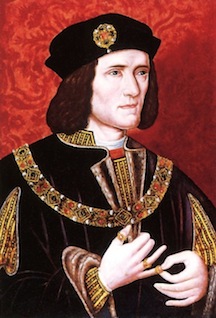
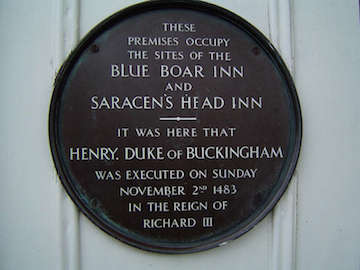
…the hunchbacked Richard honoured Salisbury with his presence; but he was not I expect in the best of tempers, for here to him was brought the Buckingham we have all read of in the play, who had just seized the fleeting opportunity to head an insurrection against the king, in an unprecedentedly wet season in Wales. The result was that he was unable to cross the Severn, and this misfortune brought him too to Salisbury, where Richard was waiting to superintend his execution at what is now the Saracen’s Head.

In the courtyard of this inn, which was then called the Blue Boar, and not “in an open space,” as Shakespeare has described it (as if he were speaking of Salisbury Plain), Buckingham had his head cut oft according to contemporary prescription. We have none of us seen the episode presented on the stage, but we have read the carpenters’ scene, which Shakespeare wrote in, to give the gentleman who originally played Buckingham a chance, and allow a few moments more preparation for Bosworth Field. And we may recollect that it consists princiapply in Buckingham asking whether King Richard will not let him speak to him, and on being told not at all, informing the general company, at some length, that it is All-Souls’ Day, and that as soon as he has been beheaded, he intends to commence “walking”.
plaque2

Although the inn has been replaced by Debenham’s, a department store, some say they have seen or experienced the Duke’s ghost, so ladies, you might want to reconsider using the dressing rooms there—just an FYI.

After Richard and Buckingham, there came to Salisbury in the way of kings, Henry VII in 1491. Henry VIII in 1535 with Ann Boleyn, already in all probability engaged in those sprightly matrimonial differences as to men and the things which culminated the year following on Tower Green. Next in order, came to Salisbury, Elizabeth, bound for Bristol, bent, as on all her royal progresses, on keeping her nobility’s incomes within bounds, and shooting tame stags that were induced to meander before her bedroom windows. After the virgin queen came James I, who liked the solitudes which surrounded the Salisbury of those days, for the two-fold reason, firstly, because they saved him in a large measure from the invasion of importunate suitors (who were afraid of having their purses taken on Salisbury Plain before they could proffer their supplications), and, secondly, because they were well stocked with all sorts of game on which he could wreak his royal and insatiable appetite for hunting. The “open” nature of the country might perhaps be added as another reason for the sporting king’s liking for the place: for James was no horseman, and as he was in no danger of meeting a hedge in an area of thirty miles, the going must have suited him down to the ground.
Sir Walter Raleigh

Sir Walter Raleigh

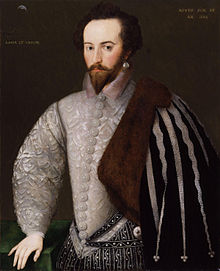
It was also hear that Sir Walter Raleigh, upon his return to England from an unsuccessful expedition to Spain, tried to gain audience with James to explain himself and beg pardon, but was forced to return to London where he was imprisoned and executed.

The merry monarch [Charles II] was here twice, but on neither occasion, I suspect was he peculiarly merry; for after the battle of Worcester, when he lay concealed near the town for a few days, and his companions used to meet at the King’s Arms in John Street, to plan his flight, the Ironsides were much too close on his track to allow opportunity for jesting; and when he came here as king in 1665, all but the most forced mirth was banished from a court which dreaded every day to be stricken by the plague.

 Index to all the posts in this series

1: The Bath Road: The (True) Legend of the Berkshire Lady

2: The Bath Road: Littlecote and Wild William Darrell

3: The Bath Road: Lacock Abbey

4: The Bath Road: The Bear Inn at Devizes and the “Pictorial Chronicler of the Regency”

5: The Exeter Road: Flying Machines, Muddy Roads and Well-Mannered Highwaymen

6: The Exeter Road: A Foolish Coachman, a Dreadful Snowstorm and a Romance

7: The Exeter Road in 1823: A Myriad of Changes in Fifty Years

8: The Exeter Road: Basingstoke, Andover and Salisbury and the Events They Witnessed

9: The Exeter Road: The Weyhill Fair, Amesbury Abbey and the Extraordinary Duchess of Queensberry

10: The Exeter Road: Stonehenge, Dorchester and the Sad Story of the Monmouth Uprising

11: The Portsmouth Road: Royal Road or Road of Assassination?

12: The Brighton Road: “The Most Nearly Perfect, and Certainly the Most Fashionable of All”

13: The Dover Road: “Rich crowds of historical figures”

14: The Dover Road: Blackheath and Dartford

15: The Dover Road: Rochester and Charles Dickens

16: The Dover Road: William Clements, Gentleman Coachman

17: The York Road: Hadley Green, Barnet

18: The York Road: Enfield Chase and the Gunpowder Treason Plot

19: The York Road: The Stamford Regent Faces the Peril of a Flood

20: The York Road: The Inns at Stilton

21: The Holyhead Road: The Gunpowder Treason Plot

22: The Holyhead Road: Three Notable Coaching Accidents

23: The Holyhead Road: Old Lal the Legless Man and His Extraordinary Flying Machine

24: The Holyhead Road: The Coachmen “More Celebrated Even Than the Most Celebrated of Their Rivals” (Part I)

25: The Holyhead Road: The Coachmen “More Celebrated Even Than the Most Celebrated of Their Rivals” (Part II)

26: Flying Machines and Waggons and What It Was Like To Travel in Them

27: “A few words on Coaching Inns” and Conclusion

The Exeter Road in 1823: A Myriad of Changes in Fifty Years

dust jacket

The following post is the seventh of a series based on information obtained from a fascinating book Susana recently obtained for research purposes. Coaching Days & Coaching Ways by W. Outram Tristram, first published in 1888, is chock full of commentary about travel and roads and social history told in an entertaining manner, along with a great many fabulous illustrations. A great find for anyone seriously interested in English history!

Fifty Years Later

Mr. Tristram, our illustrious author, wants us to know that travel has undergone a great deal of change from 1773, so he tells us the story of our hero Mirabel (see previous posts) fifty years later, when he’s in his seventies, having lived most of his life overseas and now is returning to England to take the same route to Exeter. Dressed in much the same way he did then, he waits outside the Gloucester Coffee-house for the Exeter Fly, where the young bucks stare at his old-fashioned attire.

Perhaps Mirabel looks like Mr. Bennet from P&P?

Perhaps Mirabel looks like Mr. Bennet from P&P?

The Comet

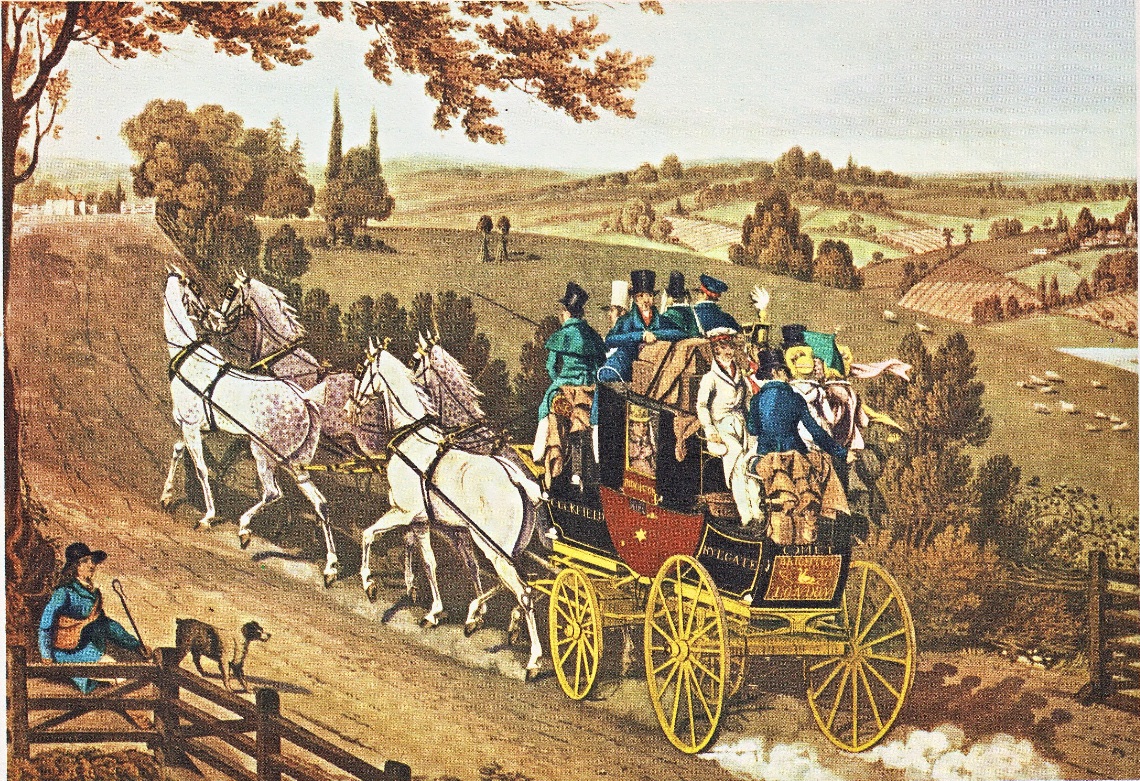
He expects to see the Exeter Fly—a trifle improved upon possibly—but still the Exeter Fly. And what does he see in its stead rapidly approaching? Why, a turn-out drawn by four spanking grays, which he takes to be a gentleman’s carriage, and which would do credit to a crowned head.

comet

The Comet on the way to Brighton

It’s called the Comet and our friend Mirabel soon learns where its name came from. He mistakes the coachman, who is well-dressed and genteel (for he is also the proprietor of the coach) for a gentleman. The Hercules Pillars at Hyde Park Corner no longer exists (recall that Apsley House replaced it soon after our last trip to Exeter), and the roads are macadamized and therefore much smoother than when they were made with stone.

The Comet travels at ten miles an hour and arrives at Hounslow fifty-five minutes after leaving Hyde Park Corner, not stopping at Brentford at all. Mirabel is eager for some breakfast since being told that the coach would change horses there.

The proprietor, smiling superior, blandly tells him that they have changed horses while he was putting on his spectacles. “Only one minute allowed for it at Hounslow, sir, and it is often done in fifty seconds by those nimble-fingered horse-keepers.”

He then proceeds to urge the horses forward in such a way as to cause the coach to rock violently and alarm our valiant Mirabel (remember when he apprehended the highway back in 1773?). In response to his concerns, the proprietor says simply: “Oh, sir, we always ‘spring them’ over these six miles.”

He looks out and sees death and destruction before his eyes, the horses going at the rate of a mile in three minutes, and the coachman in the act of taking a pinch of snuff.

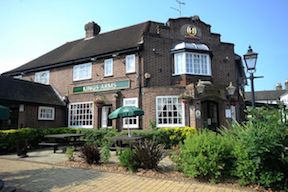
The King's Arms at Bagshot

The King’s Arms at Bagshot

At Staines, the coach takes on a fine thoroughbred “with a twitch on his nose” and Mirabel feels queasy, but the proprietor says, “Let ’em go, and take care of yourselves.” Just as Mirabel expected, the thoroughbred takes off and soon the horses are galloping and the coach rocks unmercifully, but the proprietor manages to steady them, and when Mirabel descends from the Comet at Bagshot, he is grateful to be alive and determined to find a slower and safer coach to take for the remainder of the journey.

The Regulator

Assured that the Regulator will be there in hour, Mirabel finally gets his breakfast and is ready and waiting when the Regulator draws up to the King’s Arms.

He sees…that it is a strong, well-built drag, painted chocolate, bedaubed all over with gilt letters, a bull’s head on the doors, a Saracen’s head on the hind boot, and drawn by four strapping horses.

The inside being full, Mirabel rides on the outside, and is relieved when the Regulator travels at a steady pace for the first five miles out of Bagshot. Once they reach the Hartford Bridge Flats, however, the coachman “springs ’em” to a gallop, and they go so face they catch up to the Comet. In the words of the coachman:

“He [Mirabel] was seated with his back to the horses, his arms extended to each extremity of the guard irons, his teeth set grim as death, his eyes cast down towards the ground, thinking the less he saw of his danger the better;”

and in this state he arrived at Hartford Bridge. Here he dismounted from the Regulator with the alacrity of lightning. “I will walk into Devonshire,” he cries. Then he thinks better of this, and says he will post; then he is told that posting will cost him twenty pounds; and then he says that will never do, and asks whether the landlord of The White Lion can suggest no coach to his notice that does not carry luggage on the top.

The Quicksilver Mail (the Devonshire)

The landlord advises him to take the Quicksilver mail, which travels at night, well-armed, with lamps and guards, and when asked about the speed, demurs and doesn’t mention that the Quicksilver mail (the Devonshire) is the fastest coach in England and commonly called the miracle of the road. But it doesn’t have luggage on top, at least.

Mirabel loses his head, and in spite of the assurances of the passengers that all is right, thrusts it out of the window to see where the deuce they are going to, sees nothing but dust and whirling wheels, and loses his wig.

Alas, we never find out whether or not poor old Mirabel ever got to Exeter, just that the coach reached Basingstoke, and presumably left our elderly hero there.

At least it wasn’t snowing as it did the last time!

 Index to all the posts in this series

1: The Bath Road: The (True) Legend of the Berkshire Lady

2: The Bath Road: Littlecote and Wild William Darrell

3: The Bath Road: Lacock Abbey

4: The Bath Road: The Bear Inn at Devizes and the “Pictorial Chronicler of the Regency”

5: The Exeter Road: Flying Machines, Muddy Roads and Well-Mannered Highwaymen

6: The Exeter Road: A Foolish Coachman, a Dreadful Snowstorm and a Romance

7: The Exeter Road in 1823: A Myriad of Changes in Fifty Years

8: The Exeter Road: Basingstoke, Andover and Salisbury and the Events They Witnessed

9: The Exeter Road: The Weyhill Fair, Amesbury Abbey and the Extraordinary Duchess of Queensberry

10: The Exeter Road: Stonehenge, Dorchester and the Sad Story of the Monmouth Uprising

11: The Portsmouth Road: Royal Road or Road of Assassination?

12: The Brighton Road: “The Most Nearly Perfect, and Certainly the Most Fashionable of All”

13: The Dover Road: “Rich crowds of historical figures”

14: The Dover Road: Blackheath and Dartford

15: The Dover Road: Rochester and Charles Dickens

16: The Dover Road: William Clements, Gentleman Coachman

17: The York Road: Hadley Green, Barnet

18: The York Road: Enfield Chase and the Gunpowder Treason Plot

19: The York Road: The Stamford Regent Faces the Peril of a Flood

20: The York Road: The Inns at Stilton

21: The Holyhead Road: The Gunpowder Treason Plot

22: The Holyhead Road: Three Notable Coaching Accidents

23: The Holyhead Road: Old Lal the Legless Man and His Extraordinary Flying Machine

24: The Holyhead Road: The Coachmen “More Celebrated Even Than the Most Celebrated of Their Rivals” (Part I)

25: The Holyhead Road: The Coachmen “More Celebrated Even Than the Most Celebrated of Their Rivals” (Part II)

26: Flying Machines and Waggons and What It Was Like To Travel in Them
27: “A few words on Coaching Inns” and Conclusion

Five Random Things About Me: Authors After Dark

I’m Susana Ellis and I’m a Featured Author at the Authors After Dark conference in Charlotte, NC this coming week. I’m SO looking forward to meeting you all at the AAD!

I write Regency romance since I’m a complete nut about history and romance (not in that order). My mom made me a spectacular Regency gown and pelisse that I plan to wear for the book signing. I have two blogs—Susana’s Parlour for historical readers, and Susana’s Morning Room for all types of romance. I brought back a number of treasures for giveaways from my recent trip to London, and hope you’ll enter the contest (see photo at right). But even if you don’t win that one, I’ll have some great prizes to give away Friday for my parlor game at the AAD.

Five Random Things About Me

  1. I’m a lifelong resident of Ohio, but I recently became a snowbird (just in time to miss last year’s nasty winter). I live in Toledo from May through October and Eustis, Florida from November through April. It wouldn’t bother me if I never saw snow again!
  2. One of my sisters has eleven children (ages 20 to 11 months). The first two are National Merit Scholars, and it looks like the third might be one too. They are entirely home-schooled until they go to college.
  3. I really hate housework, especially dusting. Why bother, since it’ll just get dusty again anyway? My floors are usually pretty clean, though, since I have Roomba robot vacuum cleaners (Romeo I and Romeo II) in both of my residences. Now why can’t they invent a robot to dust and clean toilets?
  4. I’m completely obsessed with anything Outlander. I paid $600 in an auction to have lunch with Diana Gabaldon last October in Phoenix. I signed up for STARZ just to watch the new show, and after seeing the first episode, I’m certain it’s going to be a huge hit!
  5. I buy almost all my clothes from QVC. It’s just…simpler. My favorite hosts are Lisa Robertson, Antonella Nestor, Leah Williams, Jayne Brown, David Venable and Mary Beth Roe. I love Philosophy and Mally Cosmetics and, well, lots of other stuff too!

hat

I’ll probably wear my black floral hat a lot in Charlotte, so stop by and chat with me about yourself and what books and authors you prefer. I read lots of sub-genres and heat levels and am always looking for great new reads!

Web site • Email • Facebook • Twitter • Linked In • Pinterest • Google+

Susana’s Parlour

Susana’s Morning Room

Other AAD Authors To Check Out

Julie Morgan • Candace Blevins • Kerry Adrienne • Bethany Lopez

Mina Khan JoLynne Valerie • Colette Saucier

The Bath Road: Lacock Abbey

The following post is the third of a series based on information obtained from a fascinating book Susana recently obtained for research purposes. Coaching Days & Coaching Ways by W. Outram Tristram, first published in 1888, is chock full of commentary about travel and roads and social history told in an entertaining manner, along with a great many fabulous illustrations. A great find for anyone seriously interested in English history!

dust jacket

Lacock Abbey and Romance

While I’ve visited the village of Lacock, wandering through the charming little town which was filmed as Meriton in the 1995 BBC version of Pride and Prejudice on two occasions, both were group tours not allowing enough time to visit the Abbey. All I could do was peer longingly through the iron gates and vow someday to return. Next time.

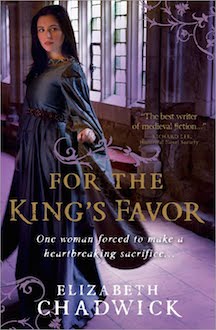
For the Kings Favor by Elizabeth Chadwick - CoverIt was on one of the tours that I learned the connection between Lacock Abbey and a book I had recently read by Elizabeth Chadwick, For the King’s Favor. Highly recommended for any fan of British history! It’s the story of a former mistress of Henry II who is torn away from her son and married off to another. A small part in the story is played by the illegitimate son, William Longespée, brought up in the king’s household. It turns out that William married Ela, 3rd Countess of Salisbury and became the 3rd Earl of Salisbury. (Yep, a title that could be inherited by a female, believe or not!)

It must have been a happy marriage, not only because they had at least eight children (not that unusual in those days), but because when he died, his widow founded an abbey in his honor, endowing it with rich farmlands which returned large profits from wool. The inscription on her tombstone indicates that she was a very well-loved lady:

Below lie buried the bones of the venerable Ela, who gave this sacred house as a home for the nuns. She also had lived here as holy abbess and Countess of Salisbury, full of good works.

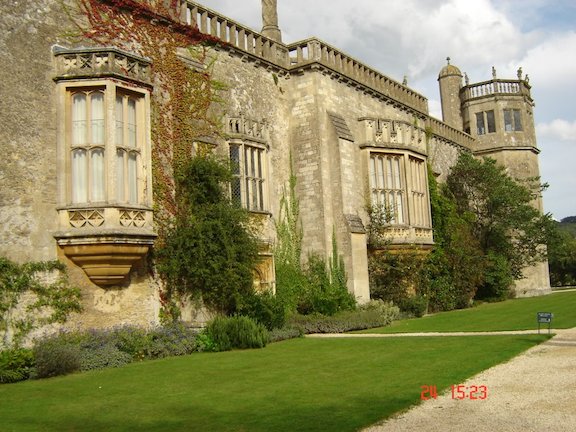
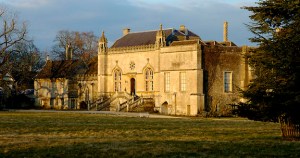
In the sixteenth century during Henry VIII’s Dissolution of the Monasteries, Lacock Abbey was fortunate to escape destruction when it was sold to Sir William Sharington for 783 pounds, and he turned it into a private residence, demolishing the church and making extensive renovations, apparently showing quite good taste. His tastes were expensive, however, and later on he was convicted of embezzling from the Bristol Mint.

abbey

lacock-abbey

http://uktripper.com/visits/lacock-abbey Lacock Abbey photo – Copyright: Andrew Cox 2010

A Famous Elopement (Don’t try this at home!)

From Coaching Days and Coaching Ways:

Here [Lacock] there is an Abbey with a romance attached to it, which tells how a young lady, discoursing one night to her lover from the battlements of the Abbey church, though strictly forbidden to do so by her papa, remarked “I will leap down to you” (which was surely very unwise), and leapt. The wind came to the rescue and “got under her coates” (the ulster I presume of the 16th century) and thus assisted, the young lady, whose name was Sherington [sic], flopped into the arms of the young man, whose name was Talbot, and killed him to all appearances fatally dead on the spot, at which she sat down and wept. Upon this the defunct Talbot, who had been only temporarily deprived of breath, came to life again, and at the same moment the lady’s father, with a fine instinct for a melodramatic situation, jumped out of a bush and observed that “as his daughter had made such a leap to him she should e’en marry him,” meaning Talbot, which was rather obscure, but exactly what the young lady wanted, and married she was to Talbot, whose Christian name was John, brought him the Abbey as a dowry, and lived happily ever after.”

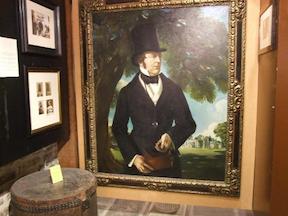
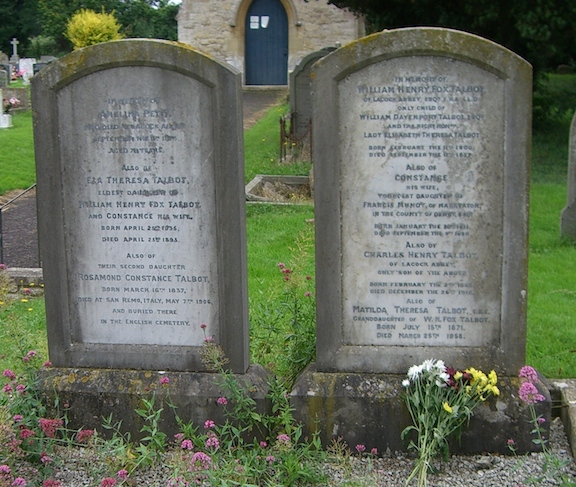
As much as I enjoy Mr. Tristram’s turn of phrase, there are times when I have doubts about the accuracy of his statements. While it is true that a Sharington owned Lacock Abbey, I cannot find that he ever had any children. Nonetheless, it is true that Lacock Abbey was owned by Talbots in its later years, including the famous William Henry Fox Talbot, who is credited with the invention of the calotype process, a precursor of photographic processes of the 19th and 20th centuries. I even saw his grave at the Lacock cemetery just outside the village. So…who knows? It might be true!

William Henry Fox Talbot

William Henry Fox Talbot

Fox_Talbot_grave

Visiting Lacock, Lacock Abbey, and the Fox Talbot Museum

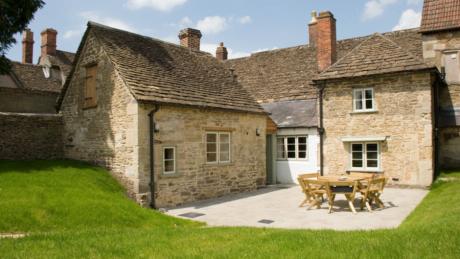
cottageWhile you’re there, why not stay in a timber-framed cottage located right in the heart of the village? A bit pricey, perhaps, but it has four bedrooms and sleeps six, and what better way to relive the past than to live in a charming cottage in a quaint little town for a couple of days! (You might also check out the bed and breakfast establishments available in the village.)

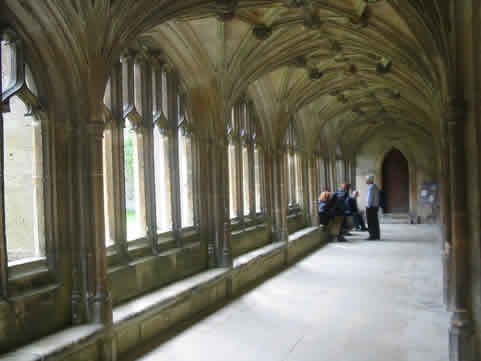
Anybody recognize the cloisters from a famous movie?

Anybody recognize the cloisters from a famous movie?

Update: Lacock Abbey stumbled upon this post and informed me that the young lady who accidentally “killed” her lover was Olive Sharington, daughter of Henry Sharington, who inherited the Abbey from his brother William, who had no children. Mystery solved!

 Index to all the posts in this series

1: The Bath Road: The (True) Legend of the Berkshire Lady

2: The Bath Road: Littlecote and Wild William Darrell

3: The Bath Road: Lacock Abbey

4: The Bath Road: The Bear Inn at Devizes and the “Pictorial Chronicler of the Regency”

5: The Exeter Road: Flying Machines, Muddy Roads and Well-Mannered Highwaymen

6: The Exeter Road: A Foolish Coachman, a Dreadful Snowstorm and a Romance

7: The Exeter Road in 1823: A Myriad of Changes in Fifty Years

8: The Exeter Road: Basingstoke, Andover and Salisbury and the Events They Witnessed

9: The Exeter Road: The Weyhill Fair, Amesbury Abbey and the Extraordinary Duchess of Queensberry

10: The Exeter Road: Stonehenge, Dorchester and the Sad Story of the Monmouth Uprising

11: The Portsmouth Road: Royal Road or Road of Assassination?

12: The Brighton Road: “The Most Nearly Perfect, and Certainly the Most Fashionable of All”

13: The Dover Road: “Rich crowds of historical figures”

14: The Dover Road: Blackheath and Dartford

15: The Dover Road: Rochester and Charles Dickens

16: The Dover Road: William Clements, Gentleman Coachman

17: The York Road: Hadley Green, Barnet

18: The York Road: Enfield Chase and the Gunpowder Treason Plot

19: The York Road: The Stamford Regent Faces the Peril of a Flood

20: The York Road: The Inns at Stilton

21: The Holyhead Road: The Gunpowder Treason Plot

22: The Holyhead Road: Three Notable Coaching Accidents

23: The Holyhead Road: Old Lal the Legless Man and His Extraordinary Flying Machine

24: The Holyhead Road: The Coachmen “More Celebrated Even Than the Most Celebrated of Their Rivals” (Part I)

25: The Holyhead Road: The Coachmen “More Celebrated Even Than the Most Celebrated of Their Rivals” (Part II)

26: Flying Machines and Waggons and What It Was Like To Travel in Them
27: “A few words on Coaching Inns” and Conclusion

The Bath Road: Littlecote and Wild William Darrell

The following post is the second of a series based on information obtained from a fascinating book Susana recently obtained for research purposes. Coaching Days & Coaching Ways by W. Outram Tristram, first published in 1888, is chock full of commentary about travel and roads and social history told in an entertaining manner, along with a great many fabulous illustrations. A great find for anyone seriously interested in English history!

058

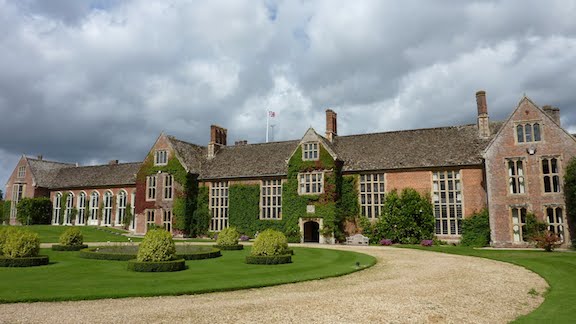
Littlecote House

Littlecote House

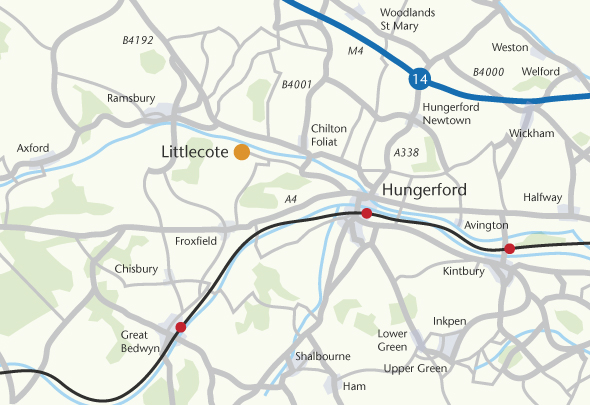
Littlecote House, near Ramsbury, Wiltshire, was first a medieval mansion, built around 1290 by the de Calstone family. It fell into the hands of William Darrell in 1415 when he married Elizabeth de Calstone. The Tudor mansion was built in the mid-sixteenth century. Henry VIII courted his third wife Jane Seymour here; her grandmother was a Darrell. Elizabeth I, James I, Charles II and William of Orange stayed here.

map

Wild William Darrell (1539-89)

The last Darrell at Littlecote is best remembered for his contentiousness and scandals. His father having left Littlecote to his mistress, Mary Fortescue (who liked to call herself Lady Darrell), William set in motion a series of lawsuits to wrest it away from her. This was the first of countless lawsuits filed in his lifetime, which ended by draining him of his fortune and forcing him to mortgage or sell most of the 25 manors inherited from his father. Litigation with his mother’s family over one such manor lasted 20 years!

Not the sort of man you’d want as a neighbor!

Darrell was also known for his amorous exploits. The most famous was his affair with the wife of Sir Walter Hungerford, who was subsequently abandoned by her husband when she wrote this to Darrell:

“I, by the oath I have sworn upon the holy evangelist, do acknowledge that if Sir Walter Hungerford, my husband now living, do depart out of this life … I will take you to my husband.”

An Elizabethan Horror Story

Enjoy Mr. Tristram’s dramatic narration in Coaching Days & Coaching Ways:

The whole story would pass before us under a ghostly, shimmering, ghoul-like glamour: the midwife at Shefford, a village seven miles off, waked in the dead of night, with a promise of high pay for her office on condition that she should be blindfolded! the headlong ride through the wild weather behind the silent serving man! the arrival at a large house which was strange to her! the mounting of the long stairs, which the woman, shadowed already with some grim foreboding, counted carefully as she passed up them! the delivery in a gloomy, richly furnished room of a masked lady! the entrance of a tall man “of ferocious aspect”, who seized the newborn child, thrust it into the fire that was blazing on the hearth, ground it under his heavy boot till it was cinders! then the trembling departure of the pale spectator of the hideous scene, blindfolded as she had come, aghast, speechless, carrying a heavy bribe with her as the price of guilty silence, but carrying also a piece of the curtain which she had cut out of the bed—all this scene of horror how the author of The Dragon Volant would have described it for us! And all this horror is history!

The original deposition made on her death-bed by the midwife, whose name was Mrs. Barnes, and committed to writing by Mr. Bridges, magistrate of Great Shefford, is in existence to this day, and is proof beyond cavil. It is from this point that rumour begins. That rumour, backed in my opinion by damning circumstance, has for two hundred years connected the tragedy with Littlecote House and William Darrell, commonly called Wild Darrell, then its proprietor. It is alleged that the midwife’s depositions set justice on the murderer’s track, and that the fitting of the piece of curtain which Mrs. Barnes had taken away with her into a rent found in the curtain of the Haunted Room at Littlecote, marked the scene of the murder. Wild Darrell was tried for his life, it is said, but escaped by bribing the officers of the law with the reversion of his large estates. But—so runs the rumour—the memory of his crime pursued him. He was haunted by ghastly spectres which he tried to forget in wild excesses, but which no seas of claret would lay. Finally as he was riding recklessly down the steep downs, with the scene of his atrocity in sight, at headlong speed, the reins loose, his body swaying in the saddle, pale, wild-eyed, unkempt, the very picture of debauched and guilty recklessness, tearing from the Furies of the past, that past confronted him. The apparition of a babe burning in a flame barred his path. The horse reared violently at the supernatural sight. Darrell was violently thrown, and the wicked neck, which had escaped the halter by a bribe, was broken at last as it deserved to be.

Wild Darrell is remembered but as a name now, and as a name for all that is wicked. (Coaching Days & Coaching Ways, pp. 38-41)

Sir Walter Scott recounted this story in the notes to his narrative poem, Rokeby. (Free on Google, check out p. 400).

Littlecote House Hotel

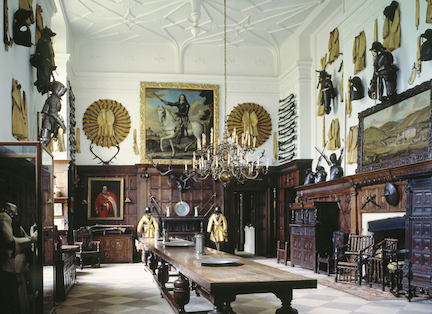
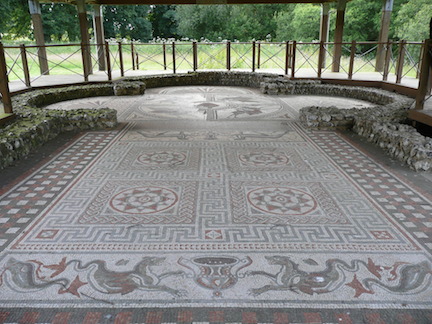
Guess what? Not only can you visit Littlecote House, but you can stay overnight in the Tudor mansion, as Susana did recently at Chatsworth, Hever Castle, and Leeds Castle! Besides the house and gardens (and ghosts, perhaps?), there are remains of a Roman villa and a lovely mosaic as well. Check it out!

The Great Hall

The Great Hall

The garden of Littlecote House Hotel in Wiltshire

The gardens

Roman mosaic

Roman mosaic

Ruins of Roman Villa

Ruins of Roman Villa


 Index to all the posts in this series

1: The Bath Road: The (True) Legend of the Berkshire Lady

2: The Bath Road: Littlecote and Wild William Darrell

3: The Bath Road: Lacock Abbey

4: The Bath Road: The Bear Inn at Devizes and the “Pictorial Chronicler of the Regency”

5: The Exeter Road: Flying Machines, Muddy Roads and Well-Mannered Highwaymen

6: The Exeter Road: A Foolish Coachman, a Dreadful Snowstorm and a Romance

7: The Exeter Road in 1823: A Myriad of Changes in Fifty Years

8: The Exeter Road: Basingstoke, Andover and Salisbury and the Events They Witnessed

9: The Exeter Road: The Weyhill Fair, Amesbury Abbey and the Extraordinary Duchess of Queensberry

10: The Exeter Road: Stonehenge, Dorchester and the Sad Story of the Monmouth Uprising

11: The Portsmouth Road: Royal Road or Road of Assassination?

12: The Brighton Road: “The Most Nearly Perfect, and Certainly the Most Fashionable of All”

13: The Dover Road: “Rich crowds of historical figures”

14: The Dover Road: Blackheath and Dartford

15: The Dover Road: Rochester and Charles Dickens

16: The Dover Road: William Clements, Gentleman Coachman

17: The York Road: Hadley Green, Barnet

18: The York Road: Enfield Chase and the Gunpowder Treason Plot

19: The York Road: The Stamford Regent Faces the Peril of a Flood

20: The York Road: The Inns at Stilton

21: The Holyhead Road: The Gunpowder Treason Plot

22: The Holyhead Road: Three Notable Coaching Accidents

23: The Holyhead Road: Old Lal the Legless Man and His Extraordinary Flying Machine

24: The Holyhead Road: The Coachmen “More Celebrated Even Than the Most Celebrated of Their Rivals” (Part I)

25: The Holyhead Road: The Coachmen “More Celebrated Even Than the Most Celebrated of Their Rivals” (Part II)

26: Flying Machines and Waggons and What It Was Like To Travel in Them

27: “A few words on Coaching Inns” and Conclusion

The Bath Road: The (True) Legend of the Berkshire Lady

The following post is the first of a series based on information obtained from a fascinating book Susana recently obtained for research purposes. Coaching Days & Coaching Ways by W. Outram Tristram, first published in 1888, is chock full of commentary about travel and roads and social history told in an entertaining manner, along with a great many fabulous illustrations. A wonderful find for anyone seriously interested in English history!

dust jacket

Frances Kendrick: The Berkshire Lady

map

As we follow the Bath Road, Tristram recounts the story of Frances Kendrick, a nineteen-year-old young lady who is fortunate to be not only beautiful and gracious, but also very wealthy and, atypical for the time, retains full control of her life and her fortune. Not surprisingly, nearly every young man she meets falls in love with her and offers her marriage. Many of them are exceedingly eligible, but she turns them all down because she doesn’t reciprocate their feelings. Most young ladies would have felt under pressure to choose one, but Frances has no parents and thus no reason to do so.

Eventually, the rejected suitors get together and start a rumor that Miss Kendrick deliberately leads them on so that she can enjoy their misery when she refuses their offers of marriage. It is all nonsense done out of spite, of course, but it has the effect of nearly ruining her chance of finding true love.

Benjamin Child, Esq. is a workaholic, poverty-stricken barrister who also happens to be unpretentious and quite good-looking himself. Like all the rest, he is instantly attracted to the lovely heiress, and she to him, to the point where her rejected suitors decide to put a spanner in the works by taking him aside and telling him that Miss Kendrick is a soulless thief of hearts. Benjamin doesn’t like the idea of being considered a fortune-hunter anyway, so he takes off for London and tries unsuccessfully to forget about Frances Kendrick.

Poor Frances is heartbroken. She has finally found the gentleman of her dreams, and he doesn’t seem to share her feelings. After discovering the rumors being circulated about her, she is desperate to find a way to prove to him that her character has been unfairly tarnished and that she truly loves him. But how can she do that when he won’t come near her?

berkslady

Fight me or marry me!

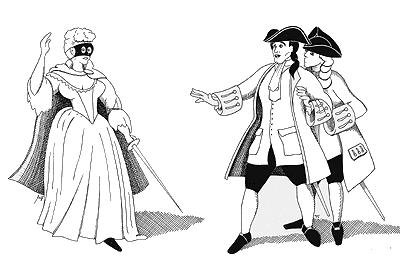
What she does sounds like a scenario in a historical romance, but it really did happen! Frances issues a challenge to Mr. Child to fight a mortal duel in Calcott Park (part of her estate). Despite the fact that the challenge gives no pretext for the duel, Mr. Child shows up and finds himself facing a masked, cloaked young lady with a sword who tells him in no uncertain terms that he can either fight her or marry her. By this time, he has discerned her identity and, pleased to find that she returns his feelings, agrees to marry her with a special license in St. Mary’s Church, Walgrave.

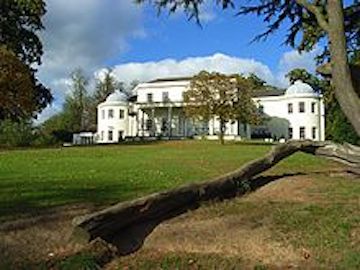
Prospect Park, the site of the famous (non) duel

Prospect Park, the site of the famous (non) duel

I love a good legend, and what a treat to discover it really did happen!

Frances Kendrick and Benjamin Child were married March 28, 1707 at St. Mary’s Church in Wargrave, as you can see for yourself in the parish register. When Frances died in 1722, her eccentric husband had her placed in a lead coffin shaped to follow exactly the lines of her body, which was laid to rest in the Kendrick family vault at St. Mary’s Church in Reading. (The coffin was found and examined in 1820.)

Benjamin sold Calcott House (although he later refused to move out of it and the new owner had to destroy the house to get him out of it), and later moved to a farm on the estate that he remodeled and became what is now known as Prospect House. It is here where the ghost of the Berkshire Lady is said to roam, seeking her true love.

Prospect Park Mansion House

Prospect Park Mansion House

You can read the famous ballad of the Berkshire Lady here. Even better, you can read an 1879 fictionalized version of the story by Katherine Sarah MacQuoid on Google here. (I heartily recommend it!) More details about the story behind the legend are here.

Through the tollgate: an example of the illustrations

Through the tollgate: an example of the illustrations in the book

 Index to all the posts in this series

1: The Bath Road: The (True) Legend of the Berkshire Lady

2: The Bath Road: Littlecote and Wild William Darrell

3: The Bath Road: Lacock Abbey

4: The Bath Road: The Bear Inn at Devizes and the “Pictorial Chronicler of the Regency”

5: The Exeter Road: Flying Machines, Muddy Roads and Well-Mannered Highwaymen

6: The Exeter Road: A Foolish Coachman, a Dreadful Snowstorm and a Romance

7: The Exeter Road in 1823: A Myriad of Changes in Fifty Years

8: The Exeter Road: Basingstoke, Andover and Salisbury and the Events They Witnessed

9: The Exeter Road: The Weyhill Fair, Amesbury Abbey and the Extraordinary Duchess of Queensberry

10: The Exeter Road: Stonehenge, Dorchester and the Sad Story of the Monmouth Uprising

11: The Portsmouth Road: Royal Road or Road of Assassination?

12: The Brighton Road: “The Most Nearly Perfect, and Certainly the Most Fashionable of All”

13: The Dover Road: “Rich crowds of historical figures”

14: The Dover Road: Blackheath and Dartford

15: The Dover Road: Rochester and Charles Dickens

16: The Dover Road: William Clements, Gentleman Coachman

17: The York Road: Hadley Green, Barnet

18: The York Road: Enfield Chase and the Gunpowder Treason Plot

19: The York Road: The Stamford Regent Faces the Peril of a Flood

20: The York Road: The Inns at Stilton

21: The Holyhead Road: The Gunpowder Treason Plot

22: The Holyhead Road: Three Notable Coaching Accidents

23: The Holyhead Road: Old Lal the Legless Man and His Extraordinary Flying Machine

24: The Holyhead Road: The Coachmen “More Celebrated Even Than the Most Celebrated of Their Rivals” (Part I)

25: The Holyhead Road: The Coachmen “More Celebrated Even Than the Most Celebrated of Their Rivals” (Part II)

26: Flying Machines and Waggons and What It Was Like To Travel in Them
27: “A few words on Coaching Inns” and Conclusion

Knole House: One of the Top Five Largest English Homes

grounds

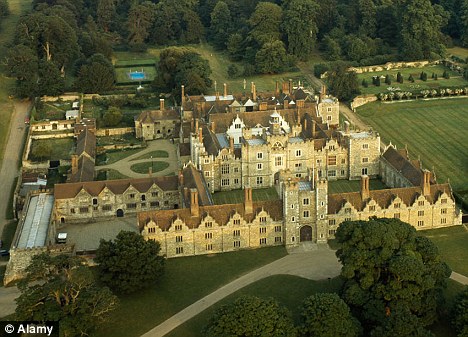
Anyone seeking a stately manor experience within easy reach of London might consider Knole House, in Sevenoaks, Kent. Depending on the train, it’s about 30-40 minutes by train, and my roundtrip fare purchased online was less than 12 pounds. Situated about 1.5 miles from the train station, there are buses from the station. If you go on a weekend in the summer, you can ride the vintage bus that does a simple trip around the town and ends up at Knole. (If you meet Alan or Ian or Ray, please say hi for me!)

deer

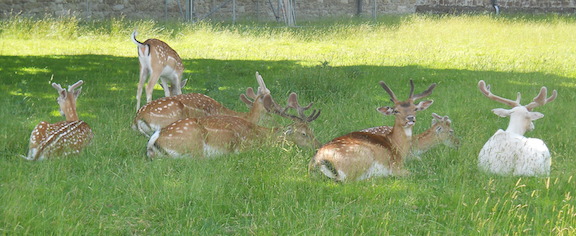
It’s a deer park!

An Archbishop’s Palace

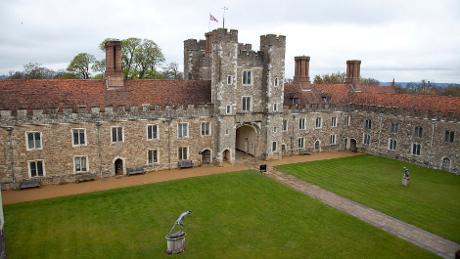
Originally built in 1456 for Thomas Bourchier, Archbishop of Canterbury, who left it to the Canterbury See, the house was later enlarged and improved with a new courtyard—Green Court—and entrance tower. Henry VIII liked it so much that he apparently thought it much too palatial for an archbishop, and he seized it for himself from Thomas Cranmer in 1538.

Green Court

Green Court

The Sackvilles

250px-Thomas_Sackville,_1st_Earl_of_Dorset_by_John_De_Critz_the_Elder

Thomas Sackville

In 1566 the house came into the possession of Thomas Sackville, a cousin of Elizabeth I, and it has remained in the Sackville family (Earls and Dukes of Dorset and Barons Sackville) since 1603. Vita Sackville-West, author of Knole and the Sackvilles, a classic in the literature of English country houses, was unable to inherit the house due to the family tradition of primogeniture, and it passed on to her uncle instead.

Currently maintained by The National Trust, the Sackvilles still own (and occupy) more than half of the house and a large share of the gardens.

The Furnishings

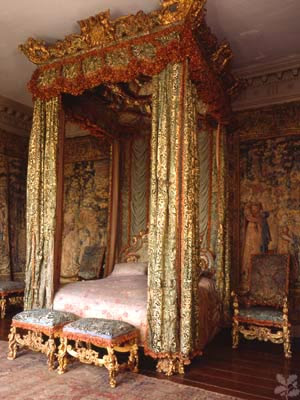
The collection of 17th century Stuart furnishings is unmatched anywhere, primarily because the 6th Earl, in his position as Lord Chamberlain to William III, was able to snatch for himself pieces discarded from royal redecorating schemes.

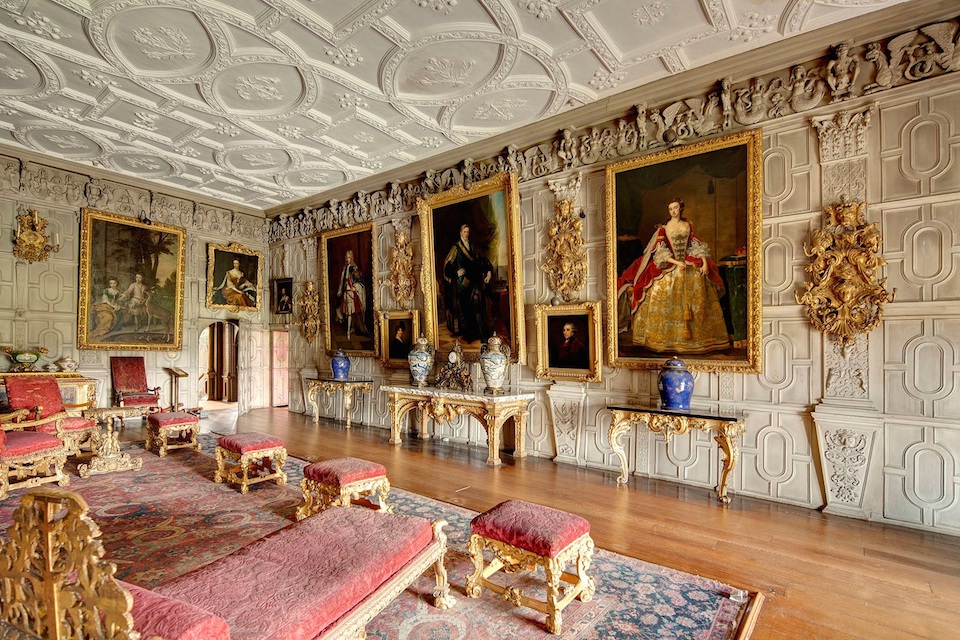
Toward the end of the 18th century, the third Duke added to the collection paintings by the old masters from his grand tour of Europe, as well as portraits commissioned from (then contemporary) artists Reynolds and Gainsborough.

Great Hall

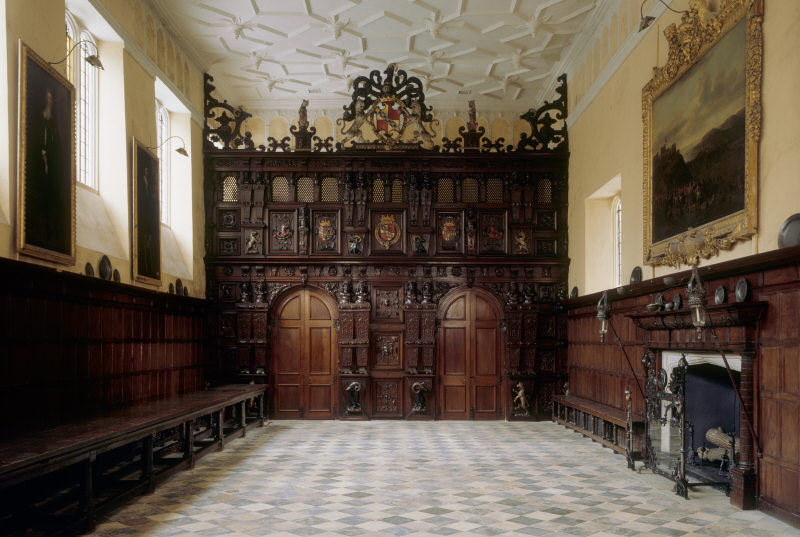
Great Hall

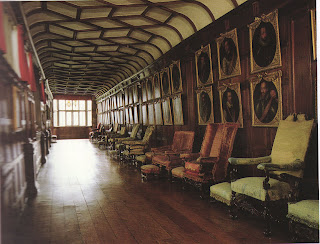
Due to the fact that the house was occupied intermittently and the pieces kept under dust sheets for many years, the visitor will find little changed in this house from the time of the third Duke.


The Brown Gallery

The Brown Gallery

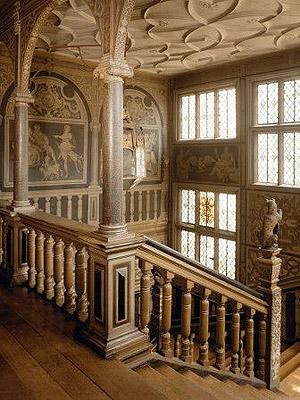
stairway

Notice the image of the leopard (taken from the Sackville coat of arms) on the newel post.


The Venetian Room

The Venetian Room

The ballroom

The ballroom

Mirror in the Cartoon Room

Mirror in the Cartoon Room

KNOLE

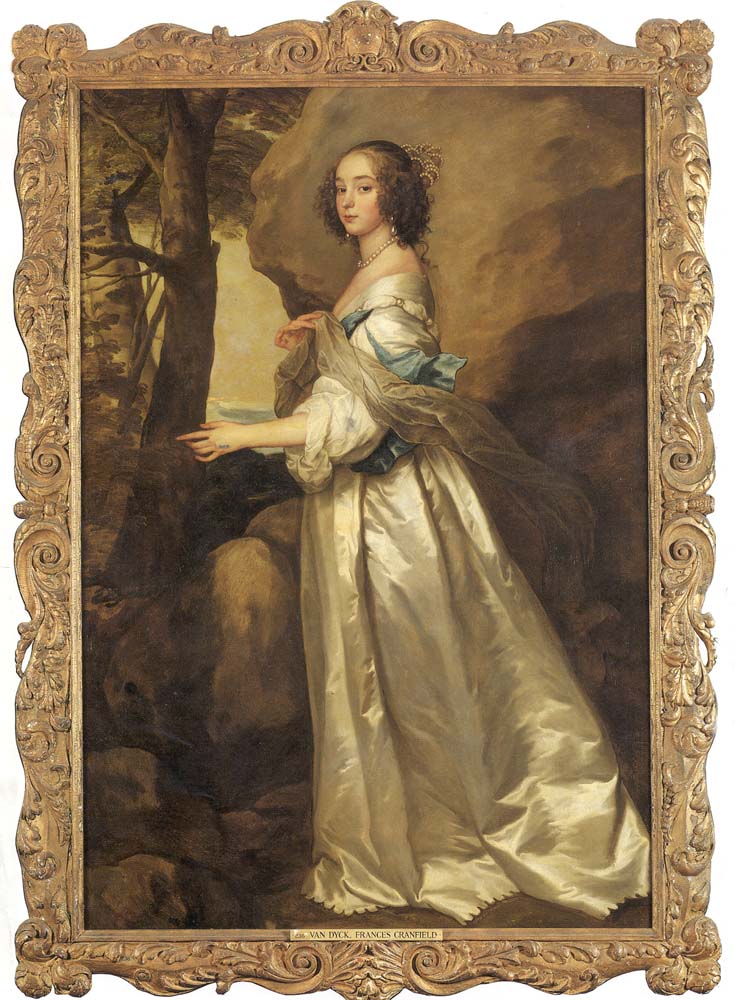
Van Dyke: Lady Frances Cranfield, later Countess of Dorset

A Calendar House

This house may have once been a calendar house, with 365 rooms, 52 staircases, 12 entrances and 7 courtyards, but the current number of staircases is much lower.

For more photos, check out my Pinterest board.

Apsley House Celebrates the 199th Anniversary of the Victory of Waterloo

wellington

Arthur Wellesley, Duke of Wellington

Many authors of historical romance are passionate about military history and delight in studying every little detail. I have to admit that I was always bored in history class when we studied battles and dates and stuff. To me, history is the story is people and how they lived, what they thought, and how they struggled through life’s challenges. Which is why I love visiting historical homes and museums and imagining what it was like back then.

As much as Society tried to ignore the military conflicts and live their lives normally (much as we do even today), these wars—particularly the Peninsular War—directly affected them. As a Regency romance author, I don’t (or haven’t) written directly about this war with Napoleon, but it is important to know about it because my characters would have known about it, and it would no doubt have affected their thoughts and attitudes. Britain lost 15,000, the Prussians, 7,000, at Waterloo alone (Napoleon lost 25,000 and 8,000 captured). That’s not counting the losses in the previous years. And keep in mind that France was only an English Channel away, so there was a good chance Napoleon might try to invade Britain itself at some point. (It wasn’t quite like WWII where Britain was actually attacked by German warplanes, but it had to be a concern of the British people during the Regency era as well.)

For that reason alone, I embrace the study of this important battle, and why I returned to Apsley House (Wellington’s home) this weekend for the Waterloo Festival.

Jacques-Louis_David_-_The_Emperor_Napoleon_in_His_Study_at_the_Tuileries_-_Google_Art_ProjectImagine how the history of the world would have changed had Napoleon emerged the victor at Waterloo? Would he indeed have been able to conquer the world? There is no doubt that he was a military genius, but he was human and made some mistakes that contributed to his downfall. Of course, the heavy downpour the day before the battle was a contributing factor as well.

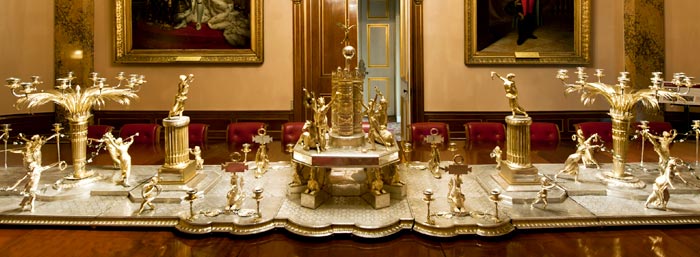
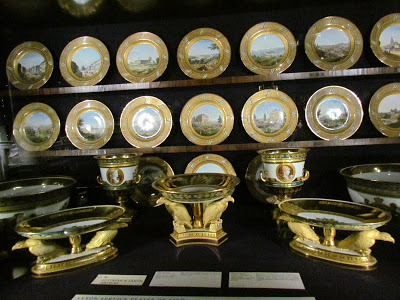
Apsley House is a beautiful home, full of portraits of Wellington and his cronies and important statesmen of the time. (Did you know he and Napoleon were born the same year?) I have a feeling Wellington actually admired Napoleon’s military acumen, in spite of his determination to thwart the man’s ambitions to rule the world. I’ve seen a lot of beautiful homes this summer, and I love to savor each and every piece, but the one thing that really impresses me about Apsley House is the numerous, extravagant gifts that were pressed upon the Iron Duke from grateful statesmen all over the world. The priceless silver pieces, the china and porcelain, the furniture, the sculptures—this extraordinary man did the world a tremendous favor by managing to stop the most cunning, determined, and ambitious man anyone of the time had ever seen.

spectacular-silver

porcelain

silver

Arthur Wellesley, the Duke of Wellington, was like a god!

The Festival

Besides visiting the house itself, during the festival included various events. For example, I enjoyed watching the demonstration of the soldiers of the 95th Rifles. See the video here. I believe they will improve with practice! Then, in the ballroom, another “soldier” gave a rundown of the battle using vegetables, fruits, and baguettes. The end of the demonstration is here.

95th Rifles

95th Rifles

For more photos of Apsley House, Wellington, and Waterloo, check out my Pinterest page here.

Next year is the bicentennial. Are you up for a trip to London in 2015?


Hever Castle: Anne Boleyn’s Childhood Home

castle5

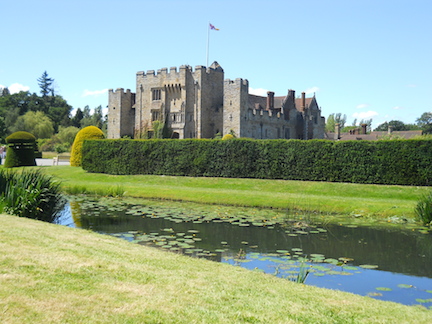
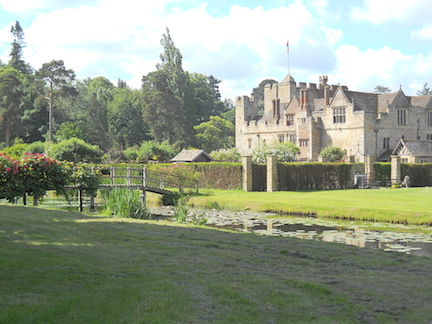
The original defensive castle was started in 1270, and in the 15th and 16th centuries, it became the home of the powerful Bullen (Boleyn) family, who added the Tudor dwelling to the castle. This is where Thomas Boleyn, a diplomat and politician who later became the 1st Earl of Wiltshire and the 1st Earl of Ormond lived with his wife, Elizabeth Howard (daughter of the Duke of Norfolk), and their three surviving children, George, Anne, and Mary.

Anne Boleyn

Anne Boleyn

Anne, of course, was destined to become the second wife of Henry VIII—and the reason for his break from Rome to make himself the Head of the Church of England so that he could grant himself a divorce from his first wife, Catherine of Aragon, who had failed to give him a son. And since Anne herself could only give him a daughter, a pretext had to be found to get rid of her so that he could find a woman who would. She was convicted of adultery and incest with her brother George, and both of them were executed on the block.
Henry VIII

Henry VIII

Very tragic. But it was Anne’s daughter Elizabeth who would become one of the greatest monarchs of England, the Virgin Queen Elizabeth I. And Thomas Boleyn, who lies in the nearby church, is her maternal grandfather.

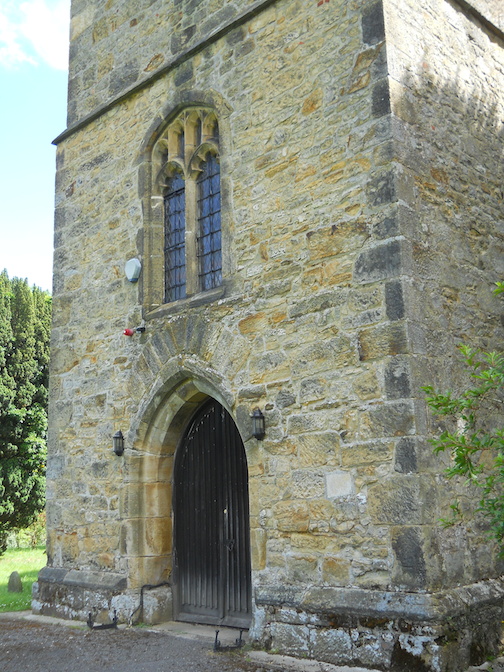
Church where Thomas Boleyn is buried

Church where Thomas Boleyn is buried

Poor Henry is more known for his marital discords than anything else he did, unless it might be destroying England’s greatest monasteries in order to steal their wealth to fund his lifestyle. (Apologies to anyone reading this who might be a Henry VIII fan, but as you can see, I’m not one.) His third wife gave him a son and promptly died, and he had his marriage to Anne of Cleves, annulled. In the annulment document, she was granted Hever Castle, which had come to him at the death of Thomas Boleyn, among other properties.

Anne of Cleves

Anne of Cleves

By the early 20th century, the property was in poor repair and was purchased by the American millionaire, William Waldorf Astoria, for a family residence. He added the Astor Wing, built in Tudor style, which has now become the Hever Castle Luxury Bed & Breakfast. I stayed there and highly recommend it! Be sure to book ahead, as rooms are limited.

astor3

Astor Wing

astor2

Astor Wing

One of the things I noticed here was the large number of families, including seniors in wheelchairs, visiting the castle and grounds. I’m pretty sure the castle isn’t accessible to wheelchairs, but the gardens have ramps so that Granny and Aunt Sally can come to enjoy the beauty of nature. I have also noticed that many of these sites offer playgrounds and activities for children, and that school children come here for field trips. Lucky kids! Imagine how much more knowledgeable and interested in history they will be when they are older than our American kids are!

castle20

Yes, it has a moat and a drawbridge!

Yes, it has a moat and a drawbridge!

courtyard2


Banquet Hall

Banquet Hall

Maze

Maze

garden14

For more photos, check out my Pinterest page.

Hever Castle is near Edenbridge, Kent. And if you go there by train, make sure to have a mobile phone with you, because there is no one, absolutely no one, at the Hever train station!

The Banqueting House: An Artistic and Historical Masterpiece

banqueting8

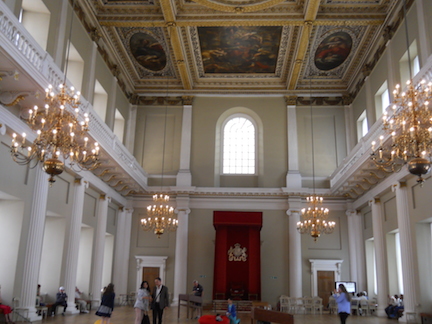
The Banqueting House on Whitehall Street is the only remaining building of the Palace of Whitehall, which was the primary residence of English monarchs for much of the 17th century. In its day, it was the largest palace in Europe, eclipsing even Versailles and the Vatican with its 1500 rooms. Henry VIII married Anne Boleyn and Jane Seymour there (in 1533 and 1536), and it was there where he died in 1547.

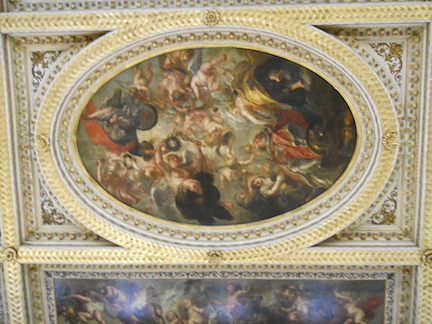
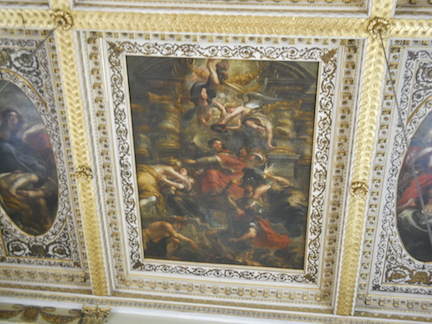
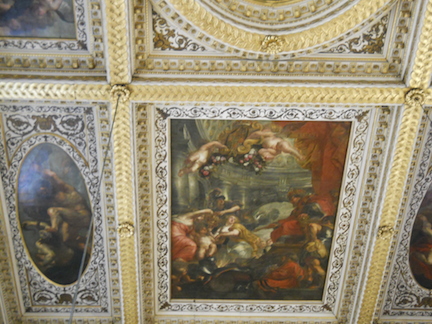
banqueting2In 1622 James I commissioned Inigo Jones to redesign the Banqueting Room, and Charles I was responsible for adding the beautiful ceiling with paintings by Rubens. These paintings, designed to reinforce Charles I’s belief in the divine right of kings, were completed in Antwerp and rolled up for transportation to England, where they were painstakingly laid out and attached to coffers in the ceiling.

Prior to the addition the ceilings, the room was often used for elaborate masques and pageants. Afterward, it was determined that the smoke from the bright lights would damage the ceiling, and it was used primarily for official functions.

It was across this floor that Charles I walked one final time before meeting his fate on the scaffold constructed outside. (So much for the divine right kings.)

banqueting9For some reason, Cromwell chose not to destroy the building as he did so many other buildings symbolic of royal preference. Perhaps because he decided to use it for his own state functions.

Fires in 1691 and 1698 destroyed nearly all the Whitehall Palace buildings, except for this one, probably because Sir Christopher Wren, the reigning architect of the day, had the building next to it blown up to prevent the fire from spreading to the Banqueting House.

A Single Room

While it’s only a single room, it’s definitely something not to be missed. The audio guide that comes with your admission fee is excellent, there are lots of chairs and benches where you sit and gaze at the room while listening, and if you’re very fortunate, you can grab one of the beanbags on the floor and lie prone while admiring the lovely ceiling. When I was there on a Saturday, there weren’t a lot of people there—while I expect everywhere else in Westminster was teeming with crowds as usual—and I could lie there and contemplate the historical and artistic significance of the room in peace.

banqueting3

banqueting5

banquetint4

banqueting6

throne