Archives

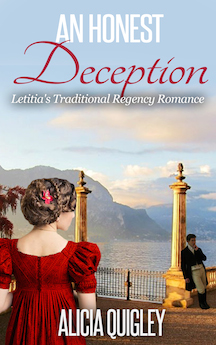
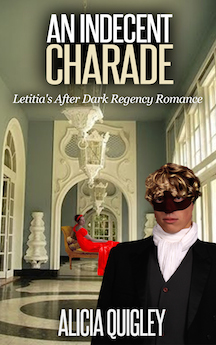
Alicia Quigley: An Honest Deception/An Indecent Charade

All About Alicia Quigley

The first thing that readers may want to know about me, is that “I” am a pseudonym for two sisters living in central Michigan who find writing to be the thing they most enjoy doing together. We actually started writing together quite a long time ago, but since the road to publication for authors mired in a “flyover” state was long and difficult at the time, our work was never published. With the advent of e-books and indie publishing, we decided recently that the time had come to try again, and we published our first pair of books, A Duchess Enraged and A Most Unusual Situation, almost exactly a year ago. We’ve been thrilled with the good reception our books have gotten, so this guest blog post is a chance to celebrate our first year as authors, as well as discuss our newest pair of books, An Honest Deception and An Indecent Charade.

Why do I say, “pair of books”? Well, in most cases we publish two versions of each book! One version we refer to as a Traditional (close those bedroom doors!) version, and the other as an After Dark (take the bedroom doors off the hinges!) version. We decided to do this because we enjoy writers like Georgette Heyer, who barely even hinted that characters had a sex life, as well as the work of authors such as Lisa Kleypas, Jo Beverley and Madeleine Hunter, who make it very clear that they do. This made us feel that we’d like to offer something to readers of both types!

We have released three pairs of books as well as a Christmas novella, The Yuletide Countess, that was written as a Traditional only, and a full length novel, Sense and Sensuality, which is only After Dark. These books are both sequels: The Yuletide Countess to The Secret Bluestocking/A Lady of Passion and Sense and Sensuality to A Duchess Enraged/A Most Unusual Situation. In these books, the decision to do only one version was driven by the personality of the characters, their motivations and the decision to include descriptions of sexual encounters or not (Harriet, the heroine of The Yuletide Countess, would have fainted from embarrassment if we wrote her into a sex scene, poor dear!).

An Honest Deception/An Indecent Charade are also sequels to The Secret Bluestocking/A Lady of Passion. Like these two books and The Yuletide Countess, the plot is driven by the way societal constraints on women’s actions and their personalities and life situations affect their ability to control their own lives. In it, a secondary character Letitia, Lady Morgan, has been newly widowed when her wastrel husband dies in a riding accident. To reach her own HEA, she struggles to overcome the very difficult financial straits that this leaves her in, along with the efforts of her relations to push her into a distasteful second marriage. I find Letitia a very sympathetic heroine; she has a sweet personality, but is smart and fun. She’s the kind of girlfriend you’d enjoy having a coffee with and you want her to win out!

I think that acknowledging and respecting the heavy limitations on women that are a fact of history while creating a plot and characters that the modern reader will enjoy is one of the major challenges in writing a historical romance. We try to look at the legal, historical and cultural framework to find actual events, social trends, writers and other period-relevant situations that allow characters and plots that are appealing today to be realistic as well. For example, the works of Mary Wollstonecraft play a large role in the decision of the unmarried heroine of A Lady of Passion to have an affair. But widows like Caroline, the heroine of Sense and Sensuality, or Letitia in An Indecent Charade were considered at the time to be relatively free to do the same without risk of scandal. Given such a breath of freedom, I enjoy watching both women find themselves and their power (as well as some very entertaining sex).

About An Honest Deception

Will love rescue her long-suffering heart or will she be doomed to a loveless arranged marriage?

After the death of her wastrel husband, Alfred, Lady Letitia Morgan wants nothing more than to settle into the peaceful life of a widow. Her limited finances are enough to provide Letty and her two children that simple life.

However, her well-meaning cousin demands that she remarry as soon as is proper; indeed, he feels it to be her duty as a woman and to her family. To that end, he moves to arrange her marriage to the Bishop of Mainwaring, someone for whom Letty has no feelings whatsoever.

In the meantime, Phillip Masham, Marquess of Eynsford and long-time friend of Francis, Lord Exencour, has found himself very much interested in Letty. Unfortunately for him, Letty’s opinion of titled gentry was quite soured by the late Baron Morgan. Not one to give up, the creative Marquess becomes Mr. Phillip Markham, a solicitor in the Inner Temple, in hopes that Letty will get to know him for who his is, beyond his title.

The two form a friendship that may deepen into love, but will it survive the truth?

Letty Trad v2 copy

Amazon

About An Indecent Charade: Letitia’s After Dark Regency Romance

Will passion revive her long-suffering heart or will she be doomed to a loveless arranged marriage?

After the death of her wastrel husband, Alfred, Lady Letitia Morgan wants nothing more than to settle into the peaceful life of a widow. Her limited finances are enough to provide Letty and her two children that simple life.

Phillip Masham, Marquess of Eynsford and long-time friend of Francis, Lord Exencour, finds himself very much interested in Letty. Unfortunately for him, Letty’s opinion of titled gentry was quite soured by the late Baron Morgan. Not one to give up, the creative Marquess becomes Mr. Phillip Markham, a solicitor in the Inner Temple, in hopes that Letty will get to know him for who his is, beyond his title.

However, her well-meaning cousin demands that she remarry as soon as is proper; indeed, he feels it to be her duty as a woman and to her family. To that end, he moves to arrange her marriage to the Bishop of Mainwaring, someone for whom Letty has no feelings whatsoever.

Letty and Phillip embark upon an affair that may deepen into love, but will it survive the truth?

Letty AD v2 copy

Amazon

Excerpt

About the Author

I am a lifelong lover of romance novels, who fell in love with Jane Austen in grade school, and Georgette Heyer in junior high.  I made up games with playing cards using the face cards for Heyer characters, and sewed regency gowns (walking dresses, riding habits and bonnets that even Lydia Bennett wouldn’t have touched) for my Barbie.  In spite of a terrible science and engineering addiction, I remain a devotee of the romance, and enjoy turning hand to their production as well as their consumption.

WebsiteFacebook • TwitterPinterestNewsletter

Regan Walker: The Shamrock and the Rose

Theatre Choices for Valentine’s Day in Regency London

By Regan Walker

 Today, we have a lot of choices for theaters (“theatre” in England) if we’re looking for one for Valentine’s Day, but you might be surprised to know how many theatres Londoners had to choose from during the Regency period.

In researching London theatres in England during the Regency period (1811-1820) for my Valentine’s Day story The Shamrock & The Rose I was amazed to discover the numerous choices that Londoners had on any given night. Many more than we have today in many of America’s cities if we are talking live theatre. From the variety of choices Londoners had, it would seem they frequently enjoyed an evening at the theatre with as many as 20,000 attending on any given evening.

One could see a drama, perhaps one of Shakespeare’s plays, a light comedy or an opera, as well as ballet, pantomimes and skits—even a clown! And some of these offerings might be combined in a single theatre in a single night.

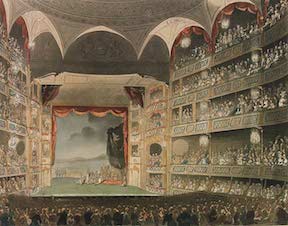
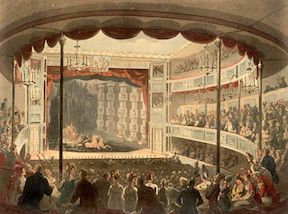
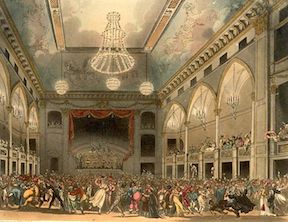
As you can see from the pictures, while the theatres had boxes on the sides for those who could afford them, the majority of people stood in the central area. The theatres were lit mostly by candlelight from a score of chandeliers, and while this might seem romantic, it also presented some issues. First, since this light was not dimmed as the entertainment began, you could see everyone in the audience as well as the actors on stage and they could see you! So whatever activities you might think to engage in while in your private box, they had best be discreet. Second, the use of candlelight also posed a fire hazard, as evidenced by the fact several of the theatres burned down and had to be replaced.

More than one theatre had Letters Patent from the Crown, and could, therefore, claim the name “Theatre-Royal.” In addition to those, there were more specialized theatres and smaller playhouses as well. Here are some of the choices they had:

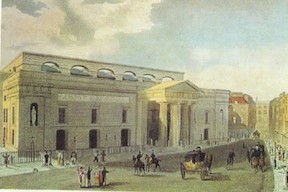
The Theatre-Royal, Covent Garden (now the Royal Opera House) was rebuilt in 1809 after a fire destroyed it the year before. Holding crowds exceeding 3,000, it became, perhaps, the leading theatre of the time. Several of the actresses and singers who performed on this stage married into the peerage, including Mary Bolton, Lady Thurlow, mentioned in my story.

Theatre Royal Covent Garden copy

The Theatre-Royal Covent Garden

The Theatre-Royal, Drury Lane (mentioned in my Christmas short story, The Holly & The Thistle in reference to its holiday entertainment), was redesigned in 1812 after a fire destroyed it in 1809. That was the fourth theatre to be on the site, the first having been constructed in 1663, pursuant to Letters Patent from Charles II. This was the first theatre to be entirely lit by gaslight in 1817.

The Theatre-Royal Drury Lane

The Theatre-Royal Drury Lane

The Theatre-Royal, Hay-Market (also known as Haymarket Theatre or the Little Theatre) dates to 1720. (My Valentine’s Day short story, The Shamrock & The Rose opens with a scene set in this theatre.) It was relocated and redesigned in 1820 and the new theatre, while in many ways a reflection of the old one with flat sidewalls, tiers of boxes, a back gallery and the pit, was much more opulent with colors of pink, crimson and gold, and a circular vestibule “almost lined” with mirrors. It was the last theatre to be lit by gaslight (in 1843).

The Theatre-Royal Hay-Market

The Theatre-Royal Hay-Market

The Sadler’s Wells Theatre in the London Borough of Islington during the Regency featured famous actors, including Edmund Kean and Joseph Grimaldi, who was best remembered for his character “Joey the Clown” with white face and rouge half-moons on each cheek. Sadler’s Wells (also known as “The Aquatic Theatre“) was used to stage sensational naval melodramas, including a recreation of Nelson’s victory at the Nile called Naval Pillars, and a recreation of the Franco-Spanish siege of Gibraltar, which included water and replicas of the fleet of ships, using a one inch to one foot scale, and working miniature cannon.

Sadler Wells Theatre

Sadler’s Wells Theatre

In addition to the major theatres holding thousands, there were many other options for the theatregoer in the Regency:

The Pantheon, constructed on Oxford Street in 1772, was originally designed for balls and masquerades before becoming an opera house in 1791. It was converted to a theatre 1811-12, but its role in the theatres of London was short lived. Damaged by fire and troubled financially owing to irregularities in its license, it was replaced in 1814 by the Pantheon Bazaar.

The Pantheon Theatre

The Pantheon Theatre

The Haymarket (King’s Theatre) Opera House was originally built by the architect and playwright Sir John Vanbrugh in 1705. Destroyed by fire in 1789, it was rebuilt and used extensively for opera.

The Lyceum Theatre first became a “licensed” house in 1809 and was rebuilt in 1816, and renamed The English Opera House. It was famous for being the first theatre in London to feature some gas lighting (1817), and for hosting the London première of Mozart’s Italian opera Così fan tutte.

The Adelphi Theatre was constructed in 1806 by merchant John Scott to showcase his daughter’s theatrical talents, and was given a new facade and redecorated in 1814. It reopened in 1819 as the Adelphi, named after the area of West London built by the brothers Adam from 1768. Among the actors who appeared on its stage was the comedian Charles Matthews, whose work was so admired by young Charles Dickens.

The Olympic Theatre was a playhouse built from the timbers of the French warship “Ville de Paris” (the former deck serving as the stage). It opened as the “Olympic Pavilion” in 1806. After financial losses, in 1813, it was sold to Robert William Elliston, who refurbished the interior and renamed it the “Little Drury Lane” by virtue of its proximity to the more established patent theatre.

The Royalty Theatre was opened in 1787 by the actor John Palmer in defiance of the 1737 patent monopoly act and featured as its first production As You Like It. Without a proper license, however, it was forced to close, and Palmer was arrested. Under the management of William Macready, the Royalty continued on, struggling with pantomimes and burlettas (comic opera). In 1816, it was renamed the “East End Theatre,” and continued to offer entertainment until it was burned down ten years later.

About The Shamrock and the Rose

A stint playing Portia at the Theatre-Royal at Haymarket in London, a dropped valentine and a dangerous desire lead gentle-born Rose Collingwood into the arms of a handsome Irish barrister whose love will hazard all she is.

Amazon

Excerpt

“Who chooseth me must give and hazard all he hath.”

—from The Merchant of Venice by William Shakespeare

London, February 1818

Morgan O’Connell hardly noticed Sophie as she turned her attention from the stage and artfully tossed her head of dark curls, smiling at him from behind her lace-covered fan. He was tired of his companion’s feigned shyness and coquettish glances, just as he was tired of the play they would be seeing. The Merchant of Venice, though just beginning, held little interest for him. Once a favorite, he supposed he’d seen too many bad productions for it to remain so. Still, he liked the ambience of the Theatre-Royal at Haymarket, which seemed the place he most often sought entertainment now that he lived in London. Sophie seemed to be enjoying it, too.

ReganWalker The Shamrock & The Rose-small copyHis gaze drifted to the stage where appeared the three chests from which Portia’s suitors must choose, her dead father having left a puzzle to determine which man would gain both his daughter and his wealth. Gold, silver and lead; only one held the prize. And the cost to hazard a guess was high, for those who failed must vow never to wed.

As the play unfolded, Morgan’s eyes soon diverted from the chests to the woman acting the part of Portia. She was beautiful and young, somewhere between nineteen and twenty-one. Though he couldn’t tell if that luxurious long brown hair was the actress’s own, the sixteenth-century gown was most becoming to her curves. Her acting was extraordinary, holding him enraptured and sweeping him into a story he’d thought no longer held any allure. Small movements of her eyes, facial expressions and gestures conveyed much that Shakespeare’s lines did not. If she’d never spoken a word, he would have known Portia’s true heart. When she did speak, he believed in a real Portia of long ago.

Ignoring his female companion, Morgan leaned forward. “A superb Portia, Roger, would you not agree?”

“She’s captured my attention,” his friend whispered, likely so Judith Seaton sitting next to him would not hear. Judith was a new love interest, and Roger had been trying to impress her. “I’ve heard she is fresh to the stage but already drawing many compliments.”

“Remind me who she is,” Morgan said in a voice too low for Sophie to hear.

“Lily Underwood, as I recall the playbill.”

Morgan nodded and sat back, relieved that Sophie had again taken up her study of the audience below. It was clear she was more a follower of the haut ton than a devotee of Shakespeare.

From his box above the stage, Morgan could see well the actors moving about below. His eyes lingered on the woman portraying Portia, the one he now knew as Miss Underwood. She had a compelling voice, one that deepened as the character she portrayed donned the guise of a man to adroitly argue the points of law that would save her lover’s friend while cleverly entrapping the moneylender who demanded Antonio’s flesh.

Leaning forward, he listened as she spoke the lines that were his favorites:

“The quality of mercy is not strain’d.
It droppeth as the gentle rain from heaven
Upon the place beneath. It is twice blest:
It blesseth him that gives and him that takes.”

Portia was the kind of woman Morgan wanted: brave, forthright and intelligent, a woman whose spirit was equal to his own. Unfortunately, these were not qualities he’d find in an English actress, however comely. And though he might consider a tryst with such an actress, his Irish family would only be satisfied with an Irish bride.

About the Author

Regan Walker profile pic 2014 copyBestselling author Regan Walker loved to write stories as a child, particularly those about adventure-loving girls, but by the time she got to college more serious pursuits took priority. One of her professors encouraged her to pursue the profession of law, which she did. Years of serving clients in private practice and several stints in high levels of government gave her a love of international travel and a feel for the demands of the “Crown” on its subjects. Hence her romance novels often involve a demanding sovereign who taps his subjects for “special assignments.” In each of her novels, there is always real history and real historic figures.

Regan lives in San Diego with her golden retriever, Link, whom she says inspires her every day to relax and smell the roses.

Website BlogTwitterFacebook • Goodreads

Marisa Dillon: The Lady of the Garter

IMG_4235.JPG

HAPPY BIRTHDAY, MARISA!

VBT_TourBanner_TheLadyOfTheGarter copy

Marisa Dillon will be awarding a $25 Amazon or Barnes and Noble GC to a randomly drawn winner via Rafflecopter during the tour. Click here for the Rafflecopter. Click on the banner above to follow the tour and increase your chances of winning.

Interview with Marisa Dillon

Susana: How did you come up with the idea for this book?

Marisa Riding copyMarisa: The inspiration for the story came to me after a trip I took back in time one autumn afternoon. I live in Ohio, and we have one of the largest and most authentic Renaissance Festivals in the country.

I even dressed the part and took a ride on a warhorse. I was inspired by what I saw. The jousting reenactments, danger, romance, chivalry, comedy, comradery. It was all there and I wanted to write a story about that world.

Susana: Tell us more about the real history in this story?

Marisa: I love the idea of chivalry and romance mingling together. In the late 15th century, the notion of the knight in shining armor was not a fantasy, but a reality (if history doesn’t lie).  And as a lover of history and romance, I couldn’t resist researching and then writing about a group of knights who have been revered and served the English monarchy for generations. The Most Noble Order of the Garter was founded by King Edward III in 1348, holds the highest order of chivalry, and is the most prestigious group in service to England.

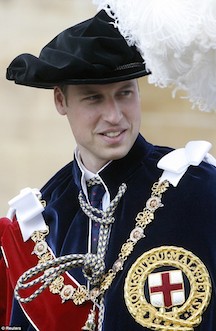
Price William Orde of the Garter copyEven Prince William, Duke of Cambridge, serves as a Garter Knight today.

As a homage to King Edward, I named the squire, who becomes a knight in my story, after the Garter’s founder, but there’s more to my squire than meets the eye.

Susana:  Many readers enjoy a historical romances. What kind of research did you do?

Marisa: Well, as much as I like to think watching jousting matches at the Ren Fair would help me write a story that featured knights in tournaments, I realized early on, that I’d need to do something more in-depth.

Knights at Tournament copyI was surprised to find that the Ren Fair had a book kiosk and stumbled upon a book called “Knights at Tournament,” by Christopher Gravatt.

This resource was indispensable. I also interviewed a man who travels the country working as a jousting knight on the Ren Fair circuit and on the TV show, “Full Metal Jousting.”

He told me what it felt like to be struck by a lance and how it impacted his body, liking putting him bed for a few days to recover after one brutal hit.

Full-metal-jousting copy

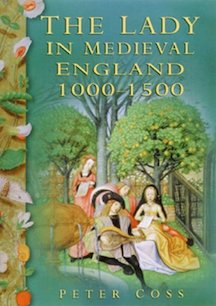
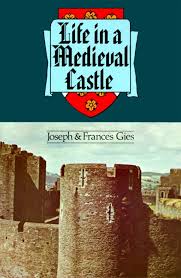
Also, when it came to getting details about the 15th Century. I had these three books at my fingertips. These resources helped me paint my pictures of medieval life and they also ensured my descriptions were accurate.

Research book

The Lady in Medieval England 1000-1500 copy

Life in a Medieval Castle

Words like bailey, porticus were imperative for the story to describe places in the castle. I also needed to know what period items of clothing were called in that era. A hauberk of chain mail and a houppelande gown, were items I described my characters wearing, helping to provide authenticity and provoke visual imagines for the reader.

About The Lady of the Garter

When Henry VII takes the throne, not all are loyal to the new king. Garter knight, Sir James, is charged with bringing dissenters to justice. Determined to fulfill his vows, he’s unprepared for Lady Elena, a girl from his past he’s never forgotten.

Lady Elena defies her family and disguises herself as a squire to reunite with the man she’s always loved. She might be able to wield a sword, but she still possesses a woman’s heart.

Thrust into a world of danger and family rivalry, James and Elena face the ultimate test.

Can James avenge his father’s death and find passion, or will his Garter oaths hold him to a life of service without love?

Amazon

Excerpt

Cover_TheLadyOfTheGarter copyElena had prayed that James would rescue her, but not at the price he paid. How would she ever make this right? First, she’d lost his trust. Now he lost Dragon because of her carelessness. She fully expected to be escorted back to Warwickshire after they returned to Nunnery. She hoped it would be with anyone but James or she wouldn’t survive it.

“God’s blood, woman, who do you think you are?” His deep, powerful voice made her cringe.

She couldn’t answer.

He sighed, steering the horse underneath some trees. Then he turned so abruptly, she thought he’d strike her.

“Are you daft, woman?”

She covered her face with both hands.

“You’re not ready to be a knight, Elena. Look at me.” He drew her hands away. “You’ve sworn allegiance to me, but you constantly disobey.” His eyebrows knit together. “You’ve begged for guidance, yet refuse to follow my instructions.” He shook his head. “You speak of courage, yet don’t show any. Did you not consider the consequences when you lied your way into my life? You’re selfish and don’t consider the future. The ability to sacrifice for the good of others is what qualifies a man for knighthood. Your heart is unworthy.”

But her heart was worthy. Perhaps not for knighthood, but for love. His love. And that seemed more important to her now. Although his criticism hurt, she knew he cared about her. His eyes showed it. She kissed him, her quivering lips met his. It was the only answer she could give. She needed to sate her unbridled passion. She wanted him. She wanted this. It might be her only chance before he came to his senses.

He responded, embracing her.

When he finally released her, she whimpered and leaned into him, wanting more.

He gazed into her eyes. Why had he stopped?

About the Author

With a degree in journalism, Marisa has spent many years writing for the television industry. As an award-winning producer/director/marketer, she has worked on commercial production, show creation, product branding and social media.

Marisa’s passion for writing began when her first-grade teacher read her poem aloud and posted it on the classroom wall. She soon followed up by writing plays for her neighborhood friends and hosting the productions in her garage.

Marisa has always enjoyed reading romance novels and now realizes a dream come true, writing romantic adventures. She lives in Kettering, Ohio, with her first love and knight in shining armor, James.

You can visit Marisa at: www.marisadillon.com. And you can connect with Marisa on Facebook.com/pages/Marisa-Dillon and Twitter.com/marisadillon.

Ann Lethbridge: Captured Countess (a Beresford Abbey story)

Interview with Ann Lethbridge

Susana: What inspired you to start writing?

Ann: The first time I got my fingers on a typewriter keyboard at the age of about eight in a friend’s house, I wanted to write. I was trying to write poetry, because the typewriter allowed you to put the lines on the page in interesting shapes.

AnnLethbridge Photo copyI enjoyed writing what we called composition at school but I never actually dreamed of being “a writer.” In all of my 9-5 jobs I was required to write reports, and to brainstorm in meetings. I think the experience gave me a great appreciation and some skill in the presentation of ideas in a logical matter, and using my imagination, although it wasn’t fiction. Or shouldn’t have been, anyway. It wasn’t until much later that I attempted a novel during a period of utter enforced boredom and I won’t bore you with the details.

Having finished the first book, not a book anyone would actually want to read mind you, I was hooked.

Susana: How long have you been writing?

Ann: I began that first novel in the year 2000. Was it something about a new millennium that compelled me to start in a completely different direction? I have often wondered if it was karma or fate, or just plain luck.  Needless to say my first baby was a bit of an ugly duckling, but I persevered. Since then I have published fourteen full length novels and fourteen short stories, most of them with Harlequin Historicals. My first book came out in 2006 and all but two of the books I wrote between 2000 and now are in print.

Susana: What advice would you give to writers just starting out?

Ann: My advice would be to finish the first book, write THE END, no matter how many doubts you have. And once finished, and while you are revising and polishing, start the next one and the next.

If you receive feedback from critique partners or contests, take it under advisement, see if it works for you, but never forget that writing is a creative art and that what works for one may not work for another. It is your book. I do not advise that, however, if you land a contract and an editor. Editors are to be listened to.

While you are writing, and submitting finished books to agents and editors, or hiring editors for your story, you should also be attending conferences and writing workshops that work for your particular genre. I would also advise that it is a very bad idea to revise and revise one book over a period of years rather than moving on to something new. That sort of revision will suck the life out of a creative work, though you will need to polish each work more than once before it is ready to be shown to the world.

A writer should continue to attend writing workshops no matter how many books they have published.

For independent publishing you will need to hire a concept editor and a copy editor when your book is finished. You will need to follow their advice with respect the to manuscript, which means you need to select them carefully and trust their judgement.

Above all, persevere, not with the same book, but with the learning and the writing, and more writing.

Susana: What comes first: the plot or the characters? Are you a plotter or a pantser?

Ann: The two questions combine for me. I am a pantser, which is a horrible process because it involves many incorrect pathways and dead ends, but if I try anything else, I become bored. So I don’t.

Plot or characters: I always start with a first scene. It comes to me fully formed and rarely changes. It is almost set in stone.

I just finished a Christmas novella. I lay down on the couch and thought “Christmas…” and a scene played out in my head. It came with characters and a situation. If I try to redirect it, then it turns right back around and starts where it had before. I think this relates back to being a pantser.

Then I learn about the characters. Why they are there? What is wrong? What is right? Who they are and why they are who they are? The scene rolls out like a movie and leaves me wandering along behind trying to pick up the threads. As I said. Horrible. And it is always the same. Yuck.

Susana: Tell us something about your newest release that is NOT in the blurb.

Ann: I found this amazing bit of information—Beau Brummell played cricket for the County of Hampshire against the newly formed England team. A bit like a home team taking on the Olympic team in some sports today.

Now as we all know, The Beau does not get hot and sweaty. E.v.e.r. But he did play cricket in a pretty famous game at Lord’s Cricket Ground and he batted exceedingly well, twenty-three runs before he was caught out. And of all the luck, my heroine is French, so it gave me a bit of a chance to explain the game without it sounding stilted.  I could not resist. And nor could she. The hero, of course, managed to catch a wild ball before it hit the spectators. Well he is the hero.

Susana: What are you reading now?

Ann: I read a great deal, inside and outside my genre. I have a thing going for Grace Burrowes, Nalini Singh and Diana Gabaldon at the moment as well as fantasy writer Brandon Sanderson. Why oh why can’t these folks write faster? Honestly I love books and if the writer hooks me, I read everything they have. I love all genres, but always go back to my historical romances for my real fix.

Right now I have just finished a binge with Grace and since I am about to start a new book, likely I will be on hiatus from reading anything until I have the few first chapters down. I do not like to let another writer in my head when I am at the beginning of a book.

Susana: What is your work schedule like when writing?

Ann: I think my schedule is pretty well like most writers. I get up at around 7:30, read email, knowing I shouldn’t be reading email (it’s a procrastination tactic). After coffee and getting dressed I start work. I work on the story until noon if things are going well, naturally interrupting myself with email, to procrastinate. Afternoons are spent on the promoting side of things, errands, housework and procrastinating with email.

Susana: What did you want to be when you grew up?

Ann: A princess.

Susana: What is the funniest thing that ever happened to you as a writer?

Ann: Before I was published and I was working full time, I would write every chance I got, in the car, at a hockey game, in bed with one of those little pen lights.  One day when we were driving my daughter back to university, I spent the whole drive in the backseat writing. I know lots of people cannot do this, but reading in a car has never bothered me.

Anyway, it was a three-hour drive and I got heaps done. A whole scene of a book, now published as The Gamekeeper’s Lady. On the way home, I offered to read the scene, a sex scene, to my husband to keep him entertained, the well having dried by that time. It was dark but I had the reading light on.

He cheerfully agreed. So I read about my hero getting it on with his rather evil mistress, before he said goodbye to her. I hope I am not shocking you. After about half an hour, my dearly beloved slowed down and was looking mystified. “What is wrong,” I asked. “I haven’t a clue where we are,” he answered.

So you see it really is true, a guy’s brain moves location when he gets to thinking about you know what.  It took us at least half an hour of driving around to get us unlost and back on the right road. Thinking back, I should have claimed this as a tax-deductible expense for research.

Susana: LOL!

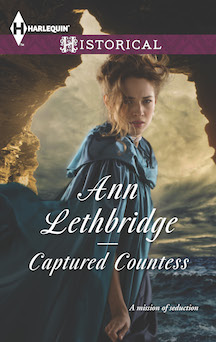
About Captive Countess

Never trust a spy! 

Captured Countess copyNicoletta, the Countess Vilandry, is on a dangerous mission—to lure fellow spy Gabriel D’Arcy into bed and into revealing his true loyalties. With such sensual games at play and such strong sensations awakened, suddenly Nicky’s dangerously close to exposing her real identity.

Gabe knows that the countess has been sent to seduce him. The only question is to what end? He’s never met such a captivating woman—and he’s determined to enjoy every seductive second she spends as his very willing captive!

iBooksAmazonUS • AmazonCABarnes & Noble

HarlequinChapters Indigo

Excerpt

About the Author

An army brat born in England, Ann lived all over the UK in her youth. She grew up loving history, but majored in business with history on the side. Now living in Canada, she has a husband and two lovely daughters and a Maltese Terrier called Teaser, who likes to sit on a chair beside the computer while she creates her award winning Regency historical romances.

During her successful career as an administrator, the call of the past and the stories in her imagination brought her to a fork in the road. After her first book was published in 2006, she decided to write full time and hasn’t looked back. She has given talks on the various aspects of publishing as well as workshops on the craft of writing. She blogs regularly about her research on her Regency Ramble Blog.

Over the years several of her books have won awards including an honorable mention by Foreword Magazine. She is particularly proud of her 2009 win of the Daphne DuMaurier Award for Excellence in Mystery/Suspense for The Rake’s Inherited Courtesan. Recently She finaled in the Booksellers Best and the Golden Quill.

She loves the Georgian era, and within that, the period known as the long Regency. She also adores happy endings. You will find her print books in bookstores in the month of issue, as well as on line where you will also find her e-books.

Website Blog • FacebookTwitter

Louise Lyndon: Love and Vengeance

NBTM_TourBanner_OfLoveAndVengeance copy

Louise will be awarding a $15 Amazon or Barnes and Noble GC to a randomly drawn winner via Rafflecopter during the tour. Click here for the Rafflecopter. Click the banner above to follow the tour and increase your chances of winning.

Interview With Louise Lyndon

Susana: What advice would you give to writers just starting out?

Louise: Write. Then write some more. Do not stop after the first rejection – remember, they are rejecting your story, not you as a writer. Enter competitions for feedback. Choose a competition with an editor of a publisher you’re interested in submitting work to. Don’t bombard yourself with reading ‘how to write’ books. I have one or two – and to be honest, I have only read one of them. But just keep writing. This is the only way you’re going to improve on your craft.

Susana: What comes first: the plot or the characters?

Louise: For me, characters. Rather, they come to me in a snippet of a scene. I’ll play that scene over and over in my head and then I’ll write it. Now, that scene is just a random scene. Usually I know nothing else other than that scene. Then I start to think about the characters in the scene. Who are they? Where did they come from? What are they doing there? It builds from there.

Susana: Are you a plotter or a pantser?

Louise: Oh, I’m a panster. I mentioned earlier that I’ll have a random scene pop into my head and then build the characters from there that is how I build the plot. I’ll ask myself, what happened in the scene prior to this one to get them to this point? I do a lot of my writing working backward.

Susana: Tell us something about your newest release that is NOT in the blurb.

Louise: My newest release, Of Love and Vengeance, is about a few things really. Firstly, it’s about prejudices, mainly about how we can tar an entire group by either misconceptions or by the behavior of a few. Both the hero and heroine are guilty of doing this, so we get to see how they deal with this. It’s also about acceptance, not just of each other, but of yourself as well. Laila, the heroine has a birthmark that covers one side of her face, and she really struggles with loving herself because of it. So we also see how she learns to love herself.

Susana: What did you want to be when you grew up?

Louise: I always wanted to be an audio engineer. You know, one of those people who sets up all the audio equipment at concerts and in recording studies. When I was seventeen I took a course in audio engineering, because from as long as I could remember that was what I wanted to do. I got my qualifications and then realized that perhaps it wasn’t what I wanted to be after all!

Susana: What is one thing your readers would be most surprised to learn about you?

Louise: I love doing obstacle races like Spartan, and Tough Mudder. To look at me you wouldn’t think so. I refer to myself as a Rueben’s woman (curvy and plump!) and I do not look as if I am into exercise. I always like to put on make-up and straighten my hair (I love my InStyler), I’m a bit of a girly girl. So, the last place you’d expect to find me is shoulder deep in stinky, sticky mud, crawling under barbed wire, hoisting myself up a rope, and climbing over 12 foot walls. My sister doesn’t believe it and she’s seen the photos!

Susana: What would we find under your bed?

Louise: I’m afraid to look to be honest! But, the last time I did work up the courage to look I found an old pair of ASICS trainers I no longer wear, and empty shoe box, which I should have put the old trainers in, and a recipe book for my nutribullet.

Susana: Do you have a favorite quote or saying?

Louise: I have two. 1/ Everything has its beauty, but not everyone sees it. 2/ Bang on enough doors and one is bound to open.

Susana: Every writer dreams of getting “the call.” What were you doing when yours came? Who got to hear the good news first?

Louise: My “call” came in the form of an email. I remember it clearly. It was May 17, 7.59am (I remember the time exactly because I was on my way into the office and I checked the time on my phone) and before heading into the building where I work I quickly checked my emails. There was an email from The Wild Rose Press, and I thought it was going to be a rejection. I stopped reading after the first sentence… I have finished reviewing the manuscript, Of Love and Vengeance.  I’d like to offer you a contract. I must had re-read that sentence at least ten times. Then I called my sister, who thought someone must have died because why else would I be ringing her so early!

Susana: What is the one modern convenience you can’t do without?

Louise: Anything electrical! But mainly my microwave, Instyler, and laptop. Not necessarily in that order.

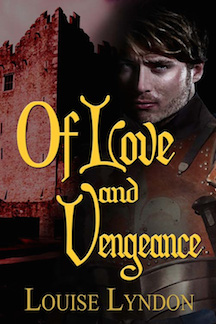
About Of Love and Vengeance

Forced to marry Lord Aymon to ensure her young nephew’s survival, English Lady Laila vows undying hatred for the Norman she holds responsible for the deaths of so many innocents. Discovering Aymon has committed an act of treason gives her the chance to seek vengeance he deserves. But can Laila let Aymon die at the hands of the king once she learns the truth?

A hardened Norman warrior, Lord Aymon has lived through atrocities no man ever should. With the invasion of England over, all he wants is a quiet life and a wife who will give him heirs and obey his every command. Instead, he finds himself wed to feisty and outspoken Laila. But when she learns the truth of his treasonous act, can Aymon count on her to keep his secret?

AmazonBarnes & Noble Wild Rose Publishing

Excerpt

Aymon caught a flicker of movement from a window on the second story. “I think we’re about to meet the welcome party.” An arrow zoomed toward him and landed on the pommel of his saddle. A half an inch closer and he would no longer be able to sire children. As if in demonstration of his ability with the bow and arrow, the shooter fired again. This time directed toward Hugh. The second arrow too came within a half an inch of his friend’s manhood.

Cover_OfLoveandVengeance copy“You missed!” Aymon called toward the shooter. He questioned his stupidity for mocking someone with such a good aim.

“You want me to show you how good an aim I really am?” a woman’s voice echoed out across the yard.

“Bloody hell,” Hugh half cursed, half laughed. “Where does a woman learn to shoot like that?”

Aymon was shocked and admittedly a little impressed a woman had such remarkable shooting skills. He could use such a sharp shooter on his side in battle. After all, it was better to have someone so skilled firing for you than at you.

Aymon raised his black leather gloved hand in surrender. “No. I’m firmly attached to my balls, thank you very much.”

“Who are you?” the shooter demanded. “And what do you want? There is nothing of value here for you to steal. Be on your way, man, and leave me in peace.”

“Some would say a female is of value,” Aymon drawled sardonically.

A second arrow lodged firmly on the pommel between his legs.

“I do not give third chances. I’ll give you to the count of three to leave. Or else you will find an arrow straight through your heart.”

Aymon’s warhorse whinnied, and he fought to control the beast whose temperament was as black as his coat. “Put down your weapon!”

“One!”

“We mean you no harm!”

“Two!”

“I am Lord Aymon, and this is Lord Hugh. I’ve come to claim what is rightfully mine.”

Silence.

The two men looked at one another unsure what to do. “Should we storm the building and lay claim to what is yours?”

Aymon shook his head. He dismounted but never took his eyes from the door to the manor.

“She will soon make her appearance.”

Hugh, too, dismounted. “How can you be so sure?”

Aymon looked at his friend. “We do not have arrows through our hearts.”

About the Author

AuthorPic_OfLoveAndVengeance copyLouise grew up in country Victoria, Australia, before moving to England, where for sixteen years she soaked up the vibrancy of London and the medieval history of England. She has since returned to Australia and now lives in Melbourne.

She has been writing the moment she picked up a copy of Diana Gabaldon’s first Outlander novel twenty something years ago. She thought to herself, ‘this is what I want to do’ – not travel back in time, but become a novelist! She has always had snippets of dialogue and scenes floating around in her head with characters screaming at her to bring them to life.

In 2013, Louise won first prize in the Crested Butte Sandy Writing contest – Historical category for her story, The Promise, which is now called, Of Love and Vengeance.

When not writing, she can be found covered in mud, crawling under barbed wire and hoisting herself over twelve foot walls – under the guise of competing in Spartan races all over Australia.

 EmailWebsiteBlogFacebookTwitterPinterest

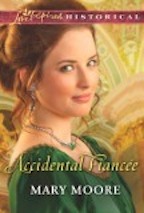
Mary Moore: Accidental Fiancée

About Accidental Fiancée

email size copyLady Grace Endicott never would have dreamed she’d be ruined by a rake. But after an innocent encounter with notorious scoundrel Lord Weston is misconstrued, her beloved sister’s introduction to Society-and her own reputation-are put at risk. The only way to avoid a scandal is a betrothal.

Brandon Roth-Lord Weston-doesn’t quite know what to think of his independent fiancée…or their growing friendship. Yet their engagement ruse is quickly becoming more than a temporary fix. If he can convince Grace that his wicked ways are now far behind him, he’ll be able to prove that he wants nothing more than to care for the lovely lady…

AmazonBarnes & NobleChristian Book Distributors

Excerpt

Review

“I’m in a Regency tailspin! Toe-curling satisfaction guaranteed. Lord Weston is the quintessential Regency hero. His rakish past and sarcastic humour can’t hide the real gentleman that lies within. I was intrigued after the first meet but when I reached page 139 I became completely smitten. Be. Still. My. Heart.

Grace has no intention of falling in love. She’s given up on believing there’s a living, breathing knight in shining armor in her future. Oh my goodness, but she is so wrong. But, beware, there is treachery afoot that complicates a smooth path towards a happily ever after and that makes for a thrilling read.

In addition, Moore has included a moving inspirational thread that flows easily throughout the story. Nothing stilted or forced. Just pure truth and the hope of grace. Beautiful tie-in to the heroine’s name.

This stunning Regency romance makes for an exhilarating read.”

About the Author

Mary-11 Color Blue w scarf smiling close-up 2- Like copyMary Moore has been writing historical fiction for 20 years. She has dedicated her writing to encouraging others in the Lord.

Her debut, The Aristocrat’s Lady, won acclaimed awards such as 2011 RT Reviewers Choice Award, and 2011 Holt Medallion for Best Book by a Virginia Author.

When not writing, she loves trips with her husband, reading and ministering in her church. Please visit Mary on her website www.marymooreauthor.com.

WebsiteEmailFacebookTwitter

The York Road: The Inns at Stilton

dust jacket

The following post is the twentieth of a series based on information obtained from a fascinating book Susana recently obtained for research purposes. Coaching Days & Coaching Ways by W. Outram Tristram, first published in 1888, is replete with commentary about travel and roads and social history told in an entertaining manner, along with a great many fabulous illustrations.

A Vivid Description of an Inn

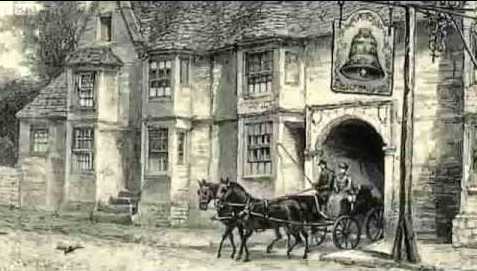
bell inn2

The Bell Inn at Stilton

As I read Mr. Tristram’s description of these inns at Stilton—particularly the Bell—I found myself feeling the emotional impact of his words that made the visual details more alive and real to me. It was almost as though I were there in the innyard, watching the herds get shod for their long trip to London. Or later, watching the Scots prisoners march past from Culloden to await an uncertain future amongst the enemy.

Perhaps it’s just me and my own vivid imagination that responds so intimately to these passages. But I’m reproducing them here in the hope that you will also be able to experience the historical reality of these old inns, as described by W. Outram Tristram. I am convinced that not only will I be setting a scene here at some point in the near future in one of my own stories, but I will put this inn on my list for a place to stay at a future trip, as I find staying overnight in these historical buildings so inspiring!

bell inn

The Bell Inn

Click here for map

“No place more representative of the ‘Coaching Age Decayed,’ than Stilton, is to be found on Earth”

plaque-on-pub-wall

For here the Great Northern way has diverged from the line of the old road, and by doing so, has turned a vast coaching emporium into a corpse of a town… It was rather, in its best days, a village clustering about two magnificent inns, the Angel and the Bell, which still stare at each other stonily across the great North Road. At the Angel, well known in the coaching days as the house of the famed Miss Worthington (stout, smiling, the christener of Stilton cheeses made miles away, but so called because they were sold at her hospitable door), over 300 horses were stabled for coaching and posting purposes. Vast barracks indeed stretching at the back of the old house—one wing of which alone is now open to travellers—tell of the bustle of post-boys, of the hurrying to and fro of fidgety passengers over-eager to be off, the harnessing and unharnessing of horses, of all the many-voiced Babel of travel in fact which fifty years ago surged and swayed round this teeming coaching centre, now lying silent and deserted as the grave. I am told—and from its central position on the great North Road seventy-five miles from London, I can well understand the fact—that at Stilton in the old days the ebb and flow and traffic never ceased. All day coaches and postchaises continually poured into the place and out of it. And by night the great mails running from Johan o’Groat’s almost, into the heart of London, thundered through the splendid broad thoroughfare, visible mediums as it were of an empire’s circulation. And other wayfarers besides postillions and coachmen seemed never off the road—huge flocks of geese destined for the London market, and travelling the seventy-five miles with uncommon ease; enormous droves of oxen, not such roadsters born. Each beast was indeed thrown and shod at Stilton to enable them to bear the journey. And to show the huge press even of this kind of traffic, this business of shoeing oxen was a trade almost in itself, as I have been told by the present landlord of the Angel Inn, who used in his youth to do the office himself, and to whose still active memory I am indebted for most of the foregoing details.

The Bell Inn

The Bell Inn

And to cross the road (the breadth of the great North Road at Stilton at once seizes the imagination, it is royal, the breadth of it, and looks like the artery of a nation), to cross the road from the Angel, and to come to the Angel’s great rival, the Bell, is to bridge a whole period in the history of English travel; to pass in twenty yards from the age of crack coaches and spicy teams to times long antecedent, when Flying Machines were not; when the great roads were hazily marked over desolate heathy tracks; when men travelled on horseback and women rode pillion, and people only felt secure when they went in large companies; when the solitary travellers went in fear of their lives when the gloaming overtook them, and “spurred apace to reach the timely inn.”

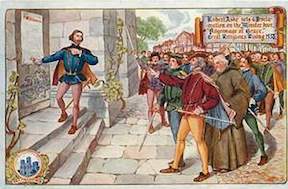
Here is a picture of medieval travel such as I think must have often been witnessed from the windows of such old houses of entertainment as the Bell at Stilton, when the Tudors ruled England. And often sterner episodes of history must have passed beneath its magnificent copper sign than wedding processions of royal princesses, even in the days, when England was called merry, and was merry England indeed. During the year 1536 the Bell at Stilton was no doubt often visited by one of those medley cavalcades so common at the time, consisting of abbots in full armour, waggon-loads of victuals, oxen and sheep, and a banner borne by a retainer on which was worked a plough, a chalice, and a Host, a horn, and the five wounds of Christ—the well-known badge which marked the fiery course of the Pilgrimage of Grace. This great rising, which began in Lincolnshire ran much of its course along the Great North Road—who knows how much of it passed through the now-deserted rooms and corridors of the great Northern inns such as this Bell at Stilton! It was in an inn at Lincoln at all events that on a night of October there was present a gentleman of Yorkshire whose name (Robert Aske) a few weeks later was ringing through every English household in accents of terror or admiration.

robert-aske-leader-of-the-pilgrimage-of-grace1

Robert Aske leading the Pilgrimage of Grace: a rebellion against Henry VIII’s dissolution of the monasteries

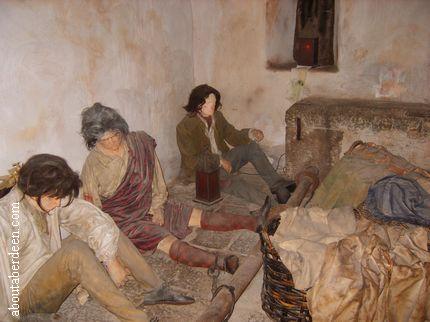
But indeed standing before such a monument of days gone by as this is, it is not a question of this or that romantic episode rising to a fanciful man’s mind as the pageant of a whole nation’s history passing in a sort of ghostly procession. And what episode of that pageant or such part of it at all events as passed on the Great North Road, has not this great deserted house of entertainment seen, fed, sheltered within its now crumbling walls? Gallants of Elizaeth’s day, Cavaliers of Charles the First’s, Ironsides on their way to Marston Moor, Restoration Courtiers flying from the Plague. And in days more modern, King’s messengers spurring to London with the tidings of Culloden—and Cumberland himself fresh from his red victory, and the long line of Jacobite prisoners passing in melancholy procession, their arms pinioned behind them, each prisoner’s horse led by a foot soldier carrying a musket with fixed bayonet; each division preceeded by a troop of horse with drawn swords, the drums insulting the unhappy prisoners by beating a triumphal march in derision.

Jacobite_Prisoners

Jacobite prisoners after Culloden

Why, scenes beyond number such as these must have passed before the long gabled front of this old Bell at Stilton; passed, faded, been succeeded by hundreds more stirring, which in their turn too, vanished like some half-remembered dream. And the old house still seems to keep some mysterious memory of these scenes locked in its old withered heart; as gaunt, ghost-like, deserted, but half alive, it stares night and day on the lonely North Road.

bell inn4

The Bell Inn


 Index to all the posts in this series

1: The Bath Road: The (True) Legend of the Berkshire Lady

2: The Bath Road: Littlecote and Wild William Darrell

3: The Bath Road: Lacock Abbey

4: The Bath Road: The Bear Inn at Devizes and the “Pictorial Chronicler of the Regency”

5: The Exeter Road: Flying Machines, Muddy Roads and Well-Mannered Highwaymen

6: The Exeter Road: A Foolish Coachman, a Dreadful Snowstorm and a Romance

7: The Exeter Road in 1823: A Myriad of Changes in Fifty Years

8: The Exeter Road: Basingstoke, Andover and Salisbury and the Events They Witnessed

9: The Exeter Road: The Weyhill Fair, Amesbury Abbey and the Extraordinary Duchess of Queensberry

10: The Exeter Road: Stonehenge, Dorchester and the Sad Story of the Monmouth Uprising

11: The Portsmouth Road: Royal Road or Road of Assassination?

12: The Brighton Road: “The Most Nearly Perfect, and Certainly the Most Fashionable of All”

13: The Dover Road: “Rich crowds of historical figures”

14: The Dover Road: Blackheath and Dartford

15: The Dover Road: Rochester and Charles Dickens

16: The Dover Road: William Clements, Gentleman Coachman

17: The York Road: Hadley Green, Barnet

18: The York Road: Enfield Chase and the Gunpowder Treason Plot

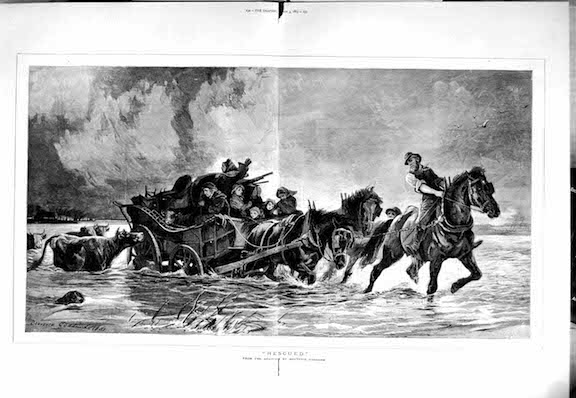
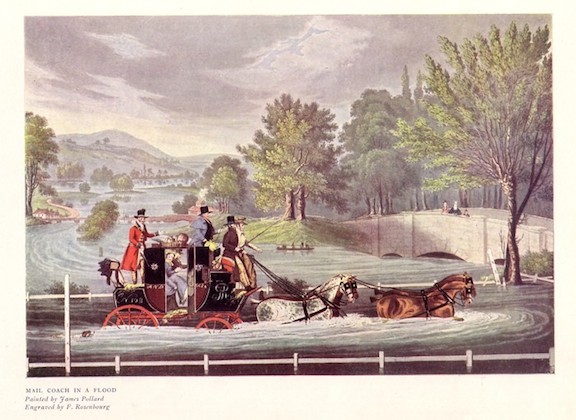
19: The York Road: The Stamford Regent Faces the Peril of a Flood

20: The York Road: The Inns at Stilton

21: The Holyhead Road: The Gunpowder Treason Plot

22: The Holyhead Road: Three Notable Coaching Accidents

23: The Holyhead Road: Old Lal the Legless Man and His Extraordinary Flying Machine

24: The Holyhead Road: The Coachmen “More Celebrated Even Than the Most Celebrated of Their Rivals” (Part I)

25: The Holyhead Road: The Coachmen “More Celebrated Even Than the Most Celebrated of Their Rivals” (Part II)

26: Flying Machines and Waggons and What It Was Like To Travel in Them

27: “A few words on Coaching Inns” and Conclusion

Lauren Smith: The League of Rogues, Book 2

Character Interview with Lucien and Horatia

from His Wicked Seduction

Rochester Hall in Kent was full of life for the Christmas holidays. I was fortunate that I could take a chance to interview Lord Rochester and his soon to be bride Horatia Sheridan. Their engagement had caused quite a scandal because Horatia’s brother Cedric was Lucien’s friend, and they had fought a duel on Christmas day over Horatia’s honor, and then all three of them were nearly killed by an assassin from Lucien’s past. It was a story I needed to hear more details about and had reached out to Horatia for an interview.

Lauren_Smith_2014 copyShortly after arriving at the beautiful mansion in the countryside via coach, I was escorted to a drawing room to wait for his lordship and Horatia to arrive. A few moments later, a maid with a tea tray bustled in, followed by a handsome man in his early thirties with dark red hair and a wicked, yet playful smile. He tugged the edges of his silver waistcoat down and walked over to where I sat on the settee and bowed gracefully.

“Tis a pleasure, Madame.” He captured my hand and feathered a light kiss across my knuckles.

“Thank you, my lord. It’s a pleasure to meet you too.” I knew I was blushing, and by the amused glint in his eyes, he knew I was blushing too. Even betrothed and most decidedly off limits to a woman like me, Lucien, Lord Rochester, was irresistible.

The door opened again, to admit a woman I recognized, my friend Horatia Sheridan. In a rich blue silk gown, a color more suited to a married lady than a unmarried one, she looked stunning. In Rochester Hall, away from society’s judgmental eyes, Horatia was wearing gowns that looked much better with her fair skin.

“Lauren!” She rushed to greet me and we embraced.

“I’m so happy for you, Horatia. When I heard the news, I knew I had to come down and speak to you and meet your future husband.”

“Thank you.” Horatia snuck a little glance at Lucien who was grinning openly. The rogue. I smiled too.

“Why don’t we sit down and you can ask us your questions.” Horatia suggested.

Me: Lucien, it is no secret that you are a member of the League of Rogues. What is it like to be branded a rogue by London’s society?

Lucien: “Good lord, you don’t hold back, do you? Well, yes, I’m a member of the League. There are six of us: Godric, Cedric, Ashton, Charles, Jonathan and myself. I don’t mind the amusing moniker of the name. It suits me quite well. I’m both an acknowledged rake and a rogue, so why deny it?” he leaned back in his chair and crossed one booted knee over his ankles.

Me: So, Lucien – tell us about this Midnight Garden we’ve heard about? Is it the type of place you would think to encounter a young girl?

At this Lucien actually paled. “Right, well. It’s a place of ill repute,” he hesitated. “You know, a place where a man or woman with sensual appetites can be sated. Certainly not a place for a well bred young woman.” He coughed and shot a direct gaze at Horatia. She shrugged at him, then smoothed her skirts, as though unperturbed by his silent chastisement.

Me: Then it must have about given you a heart attack when you noticed Horatia there! Tell us about it?

“I’ll tell you,” Horatia butted in before Lucien could speak. “I think I was more shocked than he, even though it was my plan to find him. You see, I bribed one of his servants to find out where he went in the evenings, and decided that if he wanted a woman to take to bed, it had better be me, since I was so completely in love with him. Then when I came into his room, we each wore masks per the rules of the Garden, but he recognized me, and I knew it was him.” Horatia finally looked over at her lover, a playful little smile on her lips. “He thought he’d teach me a lesson and half-seduce me, but we both lost ourselves to the passion and it was wonderful.”

Me: Horatia – it must have been quite frightening to go to that place – what made you decide to do that?

“Lucien was afraid to fall in love with me because he is my brother’s best friend. Cedric would have killed him if he even looked at me in a desiring way. But I knew I had to be with Lucien, and that meant taking wild risks in order to save him from his attempt to hide from me.”

Me: It seems like you took a round about way to love – did you ever have any doubts that you would be separated?

Lucien answered this time. “Well, when her brother had his pistol pointed at my chest there were definitely doubts that I might shed this mortal coil and never seen my beloved, darling Horatia ever again.”

Horatia’s eyes sparked with tears. “And that wasn’t even the worst of it. When that assassin trapped us in the burning gardener’s cottage, I was convinced we would not make it out. But we did.” She took Lucien’s hand and they shared a secret look of love.

Me: You’ve known each other since you were quite young.  Any fun childhood memories?

Lucien laughed. “I was a young man when I met Horatia. She was only fourteen and I was in my twenties. She was also so serious as a child, determined to replace her deceased mother in the family and take care of her older brother Cedric and her younger sister Audrey.”

“And you were all charm and teasing, Lucien. It’s what drew me to you. Like a flower to the sun, I craved your light-hearted spirit to ease my serious one,” Horatia added.

Me: Were any of those memories at Rochester Hall? Had you ever spent the Christmas holidays there before with Lucien’s family?

Horatia shook her head. “I only spent one real holiday at Rochester Hall and it wasn’t during Christmas. I was there during the spring and accidentally ruined Lucien’s attempt to propose another woman. I spilled a bucket of water over her head from the top of a gazebo.”

Lucien chuckled. “I was so furious with you, love, but now I can only thank you from saving me from marrying that awful creature.” He turned to face me. “You see, I was going to marry Melanie Burns. She ended up marrying my dreaded enemy, Hugo Waverly. It was him who sent the assassin after us to kill us, but not because of Melanie. That’s another story, I won’t share here.”

Me: As one of the League of Rogues, we had never thought you’d settle down – not for years! What was it that Horatia did or said to get you to abandon your single life so quickly? 

Lucien smirked. “What indeed?” He slid a hand into the pocket of his dark blue trousers and pulled out a piece of fine red silk cut into a strip. “I discovered my little Horatia had a taste for bondage in bed, she like to be tied up, just as much as I loved to tie her up, among other things.” He winked at his future wife. “But the truth is this, she wasn’t afraid to be herself with me, even when I was a fool and tried to push her away. She was brave, bold and beautiful, and I knew a woman like that was a rare find and I couldn’t deny my feelings for her any longer. A woman like that deserves to be loved and cherished, even by a scoundrel like me.”

Me: Are you sad to leave your reputation as a playboy behind – or are you excited for whatever new adventures lie in front of you with your new wife?

He laughed. “Sad to leave behind my lonely bachelor ways? Absolutely not.”

Horatia giggled. “He’s most happily entertained with me. I keep him busy and satisfied.

“No doubt,” Lucien continued. “We’ll have plenty of children to keep us both busy. My mother will get her wish for grandchildren sooner rather than later I expect.”

Me: And now the most important question of the interview – now that Lucien is in wedded bliss, which of her children will Lady Rochester now turn her matchmaking abilities to?

“My mother? Who will her next matchmaking victim be? That’s a frightening guess to make. I feel, if I answer that I’d condemn one of my younger brothers or my sister to a wedding. But, then again, I’d love to torture one of my siblings. Let’s see, next in line by age is Lawrence, he’s like me, too stubborn for even my mother to arrange anything. Then there’s Avery, the family spy, always off on the Continent doing lord knows what to save King and Country. Then there’s Linus, he’s lovestruck with Lucinda Cavendish but far too young to marry, he’s only twenty-one. I would have to my bet on Lysandra, my only sister, just nineteen. However, she’s a real blue stocking, addicting to education and learning, not into husband hunting. I imagine my mother will set her sights on poor Lysa.”

I laughed and thanked Lucien and Horatia for allowing me to ask those rather personal questions. They in turn insisted that I stay with them through the remainder of the holidays. A Russell family Christmas? How could I refuse? Humming merrily, I picked up my belongings and went straight to my rooms, determined to write their story, His Wicked Seduction, one more adventures of the League of Rogues. I can’t wait!

About The League of Rogues, Book 2

Can the League’s most wicked rakehell be tamed? Or has this Rogue fallen too far?

Horatia Sheridan has been hopelessly in love with Lucien, her brother’s best friend, ever since he rescued her from the broken remains of her parents’ wrecked carriage. His reputation as London’s most notorious rakehell doesn’t frighten her, for under his veneer of cool authority she has glimpsed a man whose wicked desires inspire her own.
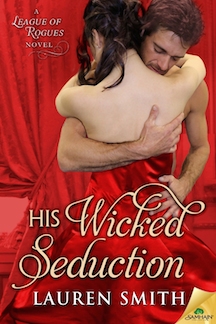
HisWickedSeduction300 copyLucien, Marquess of Rochester, has deliberately nurtured a reputation for debauchery that makes every matchmaking mother of the ton quake with fear. His one secret: he is torn between soul-ripping lust for Horatia, and the loyalty he owes her brother.

That loyalty is put to the test when an old enemy of the League threatens Horatia’s life. With Christmas drawing near, he sweeps her away to his country estate, where he can’t resist granting her one wish—to share his bed and his heart.

But sinister forces are lurking, awaiting the perfect moment to exact their revenge by destroying not only whatever happiness Lucien might find in Horatia’s arms, but the lives of those they love.

Warning: This book contains an intelligent lady who is determined to seduce her brother’s friend, a brooding rake whose toy of choice in bed is a little bit of bondage with a piece of red silk, a loyal band of merry rogues and a Christmas love so scorching you’ll need fresh snow to extinguish it.

AmazonBarnes & NobleiBooksKobo • Samhain • Google

Excerpt

She is going to be the death of me.

“Lucien! You’re not even listening to me, are you? I’m in desperate need of a new valet and you’ve been woolgathering rather than offering suggestions. I daresay you have enough for a decent coat and a pair of mittens by now.”

Lucien Russell, the Marquess of Rochester, looked to his friend Charles. They were walking down Bond Street, Lucien keeping careful watch over one particular lady without her knowledge and Charles simply enjoying the chance for an outing. The street was surprisingly crowded for so early in the day and during such foul wintry weather.

“Admit it,” Charles prodded.

Lucien fought to focus on his friend. “Sorry?”

The Earl of Lonsdale fixed him with a stern glare which, given that his usual manner tended towards jovial, was a little alarming.

“Where is your head? You’ve been out of sorts all morning.”

Lucien grunted. He had no intention of explaining himself. His thoughts were sinful ones, ones that would lead him straight to a fiery spot in Hell, assuming one wasn’t already reserved for him. All because of one woman: Horatia Sheridan.

She was halfway up Bond Street on the opposite side of the road, a beacon of beauty standing out from the women around her. A footman dressed in the Sheridan livery trailed diligently behind her with a large box in his arms. A new dress, if Lucien had to hazard a guess. She should not be out traipsing about on snow-covered walkways, not with these carriages rumbling past, casting muddy slush all over. It frustrated him to think she was risking a chill for the sake of shopping. It frustrated him more that he was so concerned about it.

“I know you think I’m a half-wit on most days, but—”

“Only most?” Lucien couldn’t resist the verbal jab.

Charles grinned. “As I was saying, it’s a bit obvious our leisurely stroll is merely a ruse. I’ve noticed we’ve stopped several times, matching the pattern of a certain lady of our acquaintance across the street.”

So Charles had been watchful after all. Lucien shouldn’t have been surprised. He hadn’t done his best to conceal his interest in Horatia Sheridan. It was too hard to fight the natural pull of his gaze whenever she was near. She was twenty years old, yet she carried herself with the natural grace of a mature and educated queen. Not many women could achieve such a feat. For as long as he’d known her, she’d been that way.

He’d been a young man in his twenties when he met her, and she’d been all of fourteen. She’d been like a little sister to him. Even then, she’d struck him as more mentally and emotionally mature than most women in their later years. There was something about her eyes, the way her doe-brown pools held a man rooted to the spot with intelligence—and in these last few months, attraction…

“You’d best stop staring,” Charles intoned quietly. “People are starting to notice.”

“She shouldn’t be out in this weather. Her brother would have a fit.” Lucien tugged his leather gloves tighter, hoping to erase the lingering effects of the chill wind that slid between his coat sleeves and gloves.

Charles burst out into a laugh, one loud enough to draw the attention of nearby onlookers. “Cedric loves her and little Audrey, but you and I both know that does not stop either of them from doing just as they please.”

There was far too much truth in that. Lucien and Charles had known Cedric, Viscount Sheridan for many years, bonded during one dark night at university. The memory of when he, Charles, Cedric and two others, Godric and Ashton, had first met always unsettled him. Still, what had happened had forged an unbreakable bond between the five of them. Later, London, or at least the society pages, had dubbed them The League of Rogues.

The League. How amusing it all was…except for one thing. The night they’d formed their alliance each of the five men had been marked by the Devil himself. A man by the name of Hugo Waverly, a fellow student at Cambridge, had sworn vengeance on them.

And sometimes Lucien wondered if they didn’t deserve it.

Lucien shook off the heavy thoughts. He was drawn to the vision of Horatia pausing to admire a shop window displaying an array of poke bonnets nestled on stands. Her beleaguered footman stood by her elbow, juggling the box in his arms. He nodded smartly as Horatia pointed out a particular bonnet. Lucien was tempted to venture forth and speak with her, possibly lure her into an alley in order to have just a moment alone with her. Even if he only spoke with her, he feared the intimacy of that conversation would get him a bullet through his heart if her brother ever found out.

Charles had walked a few feet ahead, then stopped and turned to kick a pile of snow into the street. “If this is how you mean to spend the day then consider me gone. I could be at Jackson’s Salon right now, or better yet, savoring the favors of the fine ladies at the Midnight Garden.”

Lucien knew he’d put Charles out of sorts asking him to come today, but he’d had a peculiar feeling since he’d risen this morning, as though someone was walking over his grave. Ever since Hugo Waverly had returned to London, he had been keeping on eye on Cedric’s sisters, particularly Horatia. Waverly had a way of creating collateral damage and Lucien would do anything to keep these innocent ladies safe. But she mustn’t know he was watching over her. He’d spent the last six years being outwardly cold to her, praying she’d stop gazing at him in that sweet, loving way of hers.

It was cruel of him, yes, but if he did not create some distance, he’d have had her on her back beneath him. She was too good a woman for that, and he was far too wicked to be worthy of her. Rather like a demon falling for an angel. He longed for her in ways he’d never craved for other women, and he could never have her.

The reason was simple. His public reputation did not do justice to the true depth of his debauchery. A man like him could and should never be with a woman like Horatia. She was beauty, intelligence and strength, and he would corrupt her with just one night in his arms.

Within the ton, there was scandal and then there was scandal. For a certain class of woman, being seen with the wrong man in the wrong place could be enough to ruin her reputation and damage her prospects. These fair creatures deserved nothing but the utmost in courtesy and propriety.

For others, the widows still longing for love, those who had no interest in husbands but did from time to time seek companionship, and that rare lovely breed of woman who had both the wealth and position to afford to not give a toss about what society thought, there was Lucien. He seduced them all, taught them to open themselves up to their deepest desires and needs, and seek satisfaction. Not once had a woman complained or been dissatisfied after he had departed from her bed. But there was only one bed he sought now, and it was one he should never be invited into.

He glanced about and noticed a familiar coach among the other carriages on the street. Much of the street’s traffic had been moving steadily and quicker than the people on foot, but not that coach. There was nothing unusual about it; the rider was covered with a scarf like all the others, to keep out the chill, yet each time he and Charles had crossed a street, the coach had shadowed them.

“Charles, do think we’re being followed?”

Charles brushed off some snow from his gloved hands when it dropped onto him from a nearby shop’s eave. “What? What on earth for?”

“I don’t know. That carriage. It has been with us for quite a few streets.”

“Lucien, we’re in a popular part of London. No doubt someone is shopping and ordering their carriage to keep close.”

“Hmm,” was all he said before he turned his attention back to Horatia and her footman. One of her spare gloves fell out of her cloak and onto the ground, going unnoticed by both her and her servant. Lucien debated briefly whether or not he should interfere and alert her to the fact that he and Charles had been following her. When she continued to walk ahead, leaving her glove behind, he made his decision.

Lucien caught up with his friend still ahead of him on the street. “I’ll not keep you. Horatia’s dropped a glove and I wish to return it to her.”

“Plagued by a bit of chivalry, eh? Go on then, I want to stop here a moment.” He pointed to a bookshop.

“Very good. Catch me up when you’re ready.”

Lucien dodged through the traffic on the road and was halfway across the street when pandemonium struck.

Bond Street was turned on its head as screams tore through the air. The coach that had been shadowing him raced down the road in Lucien’s direction. Yet, rather than trying to halt the team, the driver whipped the horses, urging them directly at Lucien.

He was too far across the street to turn back; he had to get to safety and get others out of the way. Horatia! She could be trampled when it passed her. Lucien’s heart shot into his throat as he ran. The driver whipped the horses again, as if sensing Lucien’s determination to escape.

“Horatia!” Lucien bellowed at the top of his lungs. “Out of the way!”

About the Author

Amazon Best Selling author, Lauren Smith is an attorney by day, author by night, who pens adventurous and edgy romance stories by the light of her smart phone flashlight app. She’s a native Oklahoman who lives with her three pets: a feisty chinchilla, sophisticated cat and dapper little schnauzer. She’s won multiple awards in several romance subgenres including being an Amazon.com Breakthrough Novel Award Quarter-Finalist and a Semi-Finalist for the Mary Wollstonecraft Shelley Award.

 WebsiteFacebookTwitterGoodreads 

“Smith’s fast-paced historical keeps readers on their toes as they’re taken hostage by a whirlwind of characters and an unforgettable romance. Readers will get their fair share of emotional outbursts, which includes laughter, lust, anger and sadness…it’s action-packed, sizzling hot and readers of all genres will enjoy the scramble to the finish.”—RT Book Reviews Magazine
 
“Lauren Smith’s debut League of Rogues novel is a fun, clever and wonderfully sympathetic read that will no doubt earn her a number of fans. Her insight into her characters and willingness to take risks with them is impressive…and brought a fresh voice and a heap of compassion, transforming it into something highly readable and quite enjoyable.”—The Romance Reviews
 
“The best thing for me was the quality of Lauren Smith’s writing. I will read her again. She is a fresh voice to watch out for.”—Romantic Historical Reviews
 
“I really enjoyed Wicked Designs, Lauren Smith’s debut Regency historical novel. This witty and entertaining romance features an emotionally scarred hero, a smart heroine and a loveable group of rogues… Emily is a delightful heroine. She is smart, courageous and spirited enough to stand up for herself. I love her determination to outwit her captors and escape. She certainly keeps those five rogues on their toes!”—Rakes and Rascals.com
Gina Danna: Great & Unfortunate Desires

BBT_GreatAndUnfortunateDesires copy

Gina will be awarding a $10 Amazon or B/N GC to a randomly drawn winner via Rafflecopter during the tour. Click here for the Rafflecopter. Click on the banner above to follow the tour and increase your chances of winning.

About Great & Unfortunate Desires

Victorian England c. 1870

Operating as a British spy, Tristan St.James, the new Marquis of Wrenworth, barely escapes Afghanistan with his life in the spring of 1869. He plans to seek vengeance against the traitor who exposed him and for the agent he’s forced to kill. Returning to England, as a lord, he must marry. Haunted by guilt from the horrors of war, he avoids love at all costs, but finds himself drawn to the only woman who is disinterested in him.
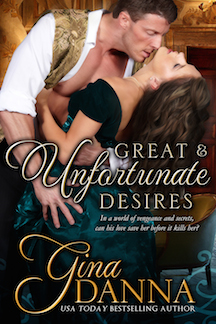
Lady Evelyn Hurstine has waited over two years for the return of her love, a man who left for war in the East. But during that time, she suffered a brutal assault, resulting in a child and fear of any man touching her except for the man she once knew. The pursuit by the marquis scares her but her excuses against his proposal dwindle.

Their marriage strengthens into love until she discovers her husband isn’t the safety she believed but the one who killed the man she once loved. Caught in a world of intrigue and mayhem, Tristan must prove his love to her before the traitor destroys them both.

AmazonBarnes & Noble

Excerpt

“I shall talk to him shortly.”

Evelyn raised her brows, eyeing over his shoulder. “Shortly may be now, my lord.”

Cover_GreatAndUnfortunateDesires copyTristan turned. Barreling down the lawn, creating a wake in in his path, Evelyn’s father stormed toward them. Not far behind him was Huntington and his son. Tristan gauged their pace and the distance. He had a few seconds and could hear Evelyn’s foot tapping against the grass. Frankly, he was surprised she hadn’t crossed her arms in anger or left him. With every second, her behavior and decision to stay put only made him more interested in her. Damn! Her dowry and position made her exactly what he needed his English bride to be like, with a ramrod backbone and a defiance of societal rules. As Evelyn’s father got closer, there was only one thing Tristan could think of to ensure she become his. In one swift move, he turned, pulled her close, bent her backward, and pressed his cheek to hers. She gasped.

“Considering the situation, you need me as much as I need you. We are the perfect match,” he whispered, smiling and gesturing as if to kiss her.

They both knew in that moment she became his forever. The compromising position between two single people in a public setting was shocking to the ton.

Tristan heard the grass crunching under the footsteps of the Baron and his party. He didn’t look in their direction but eased back from Evelyn, watching her reaction. Suppressed fury blazed in her eyes, and her body was rigid.

“Naught, naught, naught,” he murmured. “To slap me would be appropriate but would serve you no purpose.”

Despite the fire in her gaze, she relaxed a little within his arms. “But it would give me satisfaction nevertheless,” she whispered defiantly, although she didn’t move.

About the Author

AuthorPic_Great and Unfortunate Desires copyBorn in St. Louis, Missouri, Gina Danna has spent the better part of her life reading. History has been her love and she spent numerous hours devouring historical romance stories, dreaming of writing one of her own. Years later, after receiving undergraduate and graduate degrees in History, writing academic research papers and writing for museum programs and events, she finally found the time to write her own stories of historical romantic fiction.

Now, under the supervision of her three dogs and three cats, she writes amid a library of research books, with her only true break away is to spend time with her other life long dream – her Arabian horse – with him, her muse can play.

 WebsiteFacebookTwitter

The York Road: The Stamford Regent Faces the Peril of a Flood

dust jacket

The following post is the nineteenth of a series based on information obtained from a fascinating book Susana recently obtained for research purposes. Coaching Days & Coaching Ways by W. Outram Tristram, first published in 1888, is replete with commentary about travel and roads and social history told in an entertaining manner, along with a great many fabulous illustrations. A great find for anyone seriously interested in English history!

The Playfulness of the River Ouse

Click here to see map.

At a place called St. Neot’s, fifty-six miles from London, the Regent coach used to leave the main road, every now and then, for some reason which remains occult, and go round by some paper mills, which were naturally situated on the flat. The river Ouse has a habit, as is well known, of playfully overflowing its banks, and the consequence was that the road lying before the Regent coach lay sometimes for half a mile under water. Now an extra pair of leaders were put on, and ridden by a horsekeeper, who made the best of his way through a situation which was novel not to say precarious. The water was often up to the axle-trees; and on the particular occasion…went beyond this limit and invaded the inside of the coach. For a moment or two the Stamford Regent was afloat, also two old ladies who were inside of it, with their goods and chattels. Their cries and laments when they found the coach gradually be converted into an Ark were heartrending in the extreme. They gave themselves utterly for gone, and prepared for the most comfortable, but noisiest of all deaths. Nor were the outside passengers in very much better plight. For though they were not sitting absolutely in the water, as I am sorry to say the old ladies were; still they were sitting in wet clothes, which is the next thing to it—and in this situation commanded as fine a prospect of water above, below, and around, as has been seen by travellers I should say since the flood. In addition to this not altogether gratifying panorama of flood effects, unseen dangers were on every side; to wit, a large ditch on one side, and a series of huge heaps of stones on the other; both pleasantly invisible by reason of great waters, but both clearly there for a specific purpose; the stones to overturn the carriage; the ditch to receive it when it had been overturned. It must have been a truly critical five minutes for the Rent, Tom Hennessy, the passengers, the horses and everybody else, but they all got safely through and thanked their stairs.

 carriage flood 18831908-horse-carriage-print-river-flood_700_600_O7K9

 Index to all the posts in this series

1: The Bath Road: The (True) Legend of the Berkshire Lady

2: The Bath Road: Littlecote and Wild William Darrell

3: The Bath Road: Lacock Abbey

4: The Bath Road: The Bear Inn at Devizes and the “Pictorial Chronicler of the Regency”

5: The Exeter Road: Flying Machines, Muddy Roads and Well-Mannered Highwaymen

6: The Exeter Road: A Foolish Coachman, a Dreadful Snowstorm and a Romance

7: The Exeter Road in 1823: A Myriad of Changes in Fifty Years

8: The Exeter Road: Basingstoke, Andover and Salisbury and the Events They Witnessed

9: The Exeter Road: The Weyhill Fair, Amesbury Abbey and the Extraordinary Duchess of Queensberry

10: The Exeter Road: Stonehenge, Dorchester and the Sad Story of the Monmouth Uprising

11: The Portsmouth Road: Royal Road or Road of Assassination?

12: The Brighton Road: “The Most Nearly Perfect, and Certainly the Most Fashionable of All”

13: The Dover Road: “Rich crowds of historical figures”

14: The Dover Road: Blackheath and Dartford

15: The Dover Road: Rochester and Charles Dickens

16: The Dover Road: William Clements, Gentleman Coachman

17: The York Road: Hadley Green, Barnet

18: The York Road: Enfield Chase and the Gunpowder Treason Plot

19: The York Road: The Stamford Regent Faces the Peril of a Flood

20: The York Road: The Inns at Stilton

21: The Holyhead Road: The Gunpowder Treason Plot

22: The Holyhead Road: Three Notable Coaching Accidents

23: The Holyhead Road: Old Lal the Legless Man and His Extraordinary Flying Machine

24: The Holyhead Road: The Coachmen “More Celebrated Even Than the Most Celebrated of Their Rivals” (Part I)

25: The Holyhead Road: The Coachmen “More Celebrated Even Than the Most Celebrated of Their Rivals” (Part II)

26: Flying Machines and Waggons and What It Was Like To Travel in Them

27: “A few words on Coaching Inns” and Conclusion