Tag Archive | Vauxhall Gardens

Vauxhall Gardens: An Era of Change (1786-1822), Part I

vauxhallbook

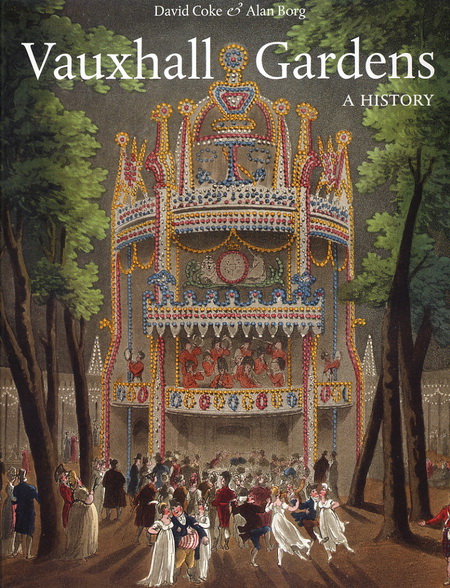
Vauxhall Gardens: A History

David Coke & Alan Borg

The Vauxhall Pleasure Gardens is one of the places I’d love to slip back in time to visit, just to catch a glimpse of what it was like. After recently splurging to buy this lovely coffee-table book, I thought it might make a wonderful subject for a new blog series. But do buy the book too, if you can! The photos are fabulous!

While the years from 1732 to 1786 were the undoubtedly the heyday of Vauxhall, the years following the Jubilee continued to attract large numbers of visitors and was the most popular outdoor entertainment for many years. Charles Burney’s daughter Sarah wrote in 1807:

You should quit your Devonshire Shades were it only to share in the universal rage there is for going to Vauxhall. I never knew anything like it. The whole London World seems to be seized with a fit of the fool.

Vauxhall fashions

Vauxhall Fashions, engraving (David Coke’s collection) from La Belle Assemblée no. 7 (August 1806). Many dressmakers and retailers advertised their wares as representing the latest fashions seen at Vauxhall.

Scenes from Vauxhall were presented on stage, authors such as John Keats, Pierce Egan, and William Thackeray wrote about it, and others tried to copy it, in London and elsewhere. Bath’s Sydney Gardens, opened in 1795 and much visited by Jane Austen, was modeled on Vauxhall in London, as was Tivoli in Copenhagen. Vauxhalls started appearing everywhere.
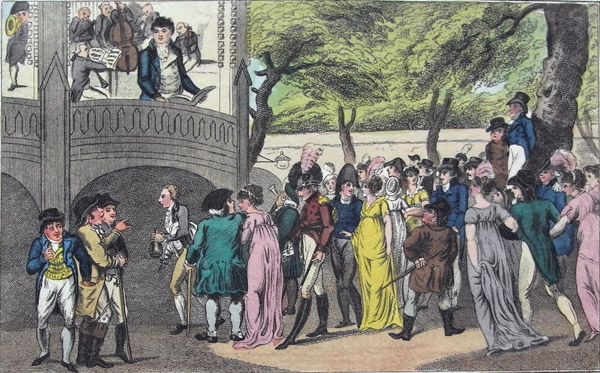
Exif_JPEG_PICTURE

One half of the world don’t know how t’other lives, Sung by Mr. Dignum in Vauxhall Gardens, etching, 1805 (British Museum, London, 1861.0518.1087). A very popular tenor at the gardens, Dignum also gave the farewell address at the end of several seasons.

A change in clientele

In the early nineteenth century, however, with England’s middle and working classes rapidly expanding due to the Industrial Revolution and the rapid growth of London’s population, Vauxhall’s clientele began to change as well.

The social balance was changing too; the old aristocracy watched nervously as France spiralled into revolutionary chaos, and several of the great families decided to move back to the country, to avoid the potential dangers of urban unrest… In addition, social circles were becoming more restricted and inward-looking; the London aristocracy was being rapidly overtaken in terms of numbers by the professional middle classes of industrialists, businessmen, doctors and lawyers. To support them, huge numbers of labourers, tradesmen and servants moved to the capital.

Because of this influx, houses began to pop up in and around Vauxhall, which meant that the Kennington Street area was no longer a country hamlet, but a part of the city itself, and the residents didn’t always appreciate all the racket coming from Vauxhall in the early hours of the morning.

Picturesque Elevation of the Iron Bridge created over the Thames at Vauxhall, engraving, 1816 (David Coke's collection). Designed by the engineer James Walker, the new bridge greatly shortened the land journey from London to Vauxhall Gardens.

Picturesque Elevation of the Iron Bridge created over the Thames at Vauxhall, engraving, 1816 (David Coke’s collection). Designed by the engineer James Walker, the new bridge greatly shortened the land journey from London to Vauxhall Gardens.

A significant advantage was the completion of the new Vauxhall Bridge in August 1816, which shortened considerably the route from the West End.

The bridge remained open all night, both for pedestrians and for coaches, catering for those revellers who stayed on into the small hours, to the annoyance of the local residents who were trying to sleep.

A change of attractions

The form of the entertainments at Vauxhall remained traditional to the end of the eighteenth century. Various new attractions were introduced only gradually and these were directly in response to new forms of popular entertainment that had sprung up elsewhere in London.

One of these was Philip Astley’s enormously popular shows, with “daring displays of horsemanship”, as well as jugglers, tight-rope walkers, and great pageants of historical events. See my post of Astley’s Amphitheatre here.

Vauxhall had always promoted patriotic songs and military bands, and later added battle reconstructions and victory celebrations, after Astley’s model. The Battle of Waterloo was considered to be the “most spectacular event ever staged at Vauxhall.”

Boat races on the Thames was another innovation, which including a rowing race for watermen and a sailing match for ‘gentlemen’s pleasure sailing boats’. Which was followed by a grand gala in the gardens, of course. In 1812, the contest was called the Vauxhall Grand Regatta.

Vauxhall Sailing Match, engraving, 1800 (Minet Library, London, Lambeth Archives Department, V. fo. 57). This appears to be the only surviving image of one of the Vauxhall sailing matches.

Vauxhall Sailing Match, engraving, 1800 (Minet Library, London, Lambeth Archives Department, V. fo. 57). This appears to be the only surviving image of one of the Vauxhall sailing matches.

Advances in science and technology brought ballooning to the gardens, the first balloon ascension beginning in 1802, but not becoming a regular feature until the 1820’s. André Jacques Garnerin, the first Vauxhall aeronaut, experimented with making parachute jumps from balloons. One of his flights included releasing a cat from a height of 600 feet, who descended safely into some resident’s garden. George Colman the younger, a playwright, wrote

Poor Puss in a grand parachute
Was sent to sail down through the air
Plump’d into a garden of fruit,
And played up old Gooseberry there:
The gardener transpiring with fear,
Stared just like a hundred struck hogs;
And swore, tho’ the sky was quite clear,
‘Twas beginning to rain cats and dogs.

Fireworks, first introduced in 1783, were limited to special occasions at first, but pyrotechnic displays did not become standard until 1798.

When it was time for the fireworks to start, a bell was rung and everyone went to the firework ground at the far eastern end of the gardens. The hours varied, displays being advertised at 9, 10 and 11 p.m.; on gala nights there was often more than one show.

Changes in proprietors and prices

Jonathan Tyers the younger’s son-in-law, Bryant Barrett, managed the gardens until his death in 1809, when his sons Jonathan Tyers Barrett and George Rogers Barrett inherited. Jonathan Barrett became sole owner in 1818. In 1821, the gardens were leased to relatives and business partners Thomas Bish and Frederick Gye, later joined by Richard Hughes, “and the trio used their option to buy the property in 1825 for £30,000.”

In 1792, the price of admission was raised to 2 shillings for regular nights and 3 shillings for the Grand Galas (masquerades), which involved elaborate fancy dress.


Susana’s Vauxhall Blog Post Series

Vauxhall Gardens: The Third Generation of the Tyers Family and the Jubilee of 1786

vauxhallbook

Vauxhall Gardens: A History

David Coke & Alan Borg

The Vauxhall Pleasure Gardens is one of the places I’d love to slip back in time to visit, just to catch a glimpse of what it was like. After recently splurging to buy this lovely coffee-table book, I thought it might make a wonderful subject for a new blog series. But do buy the book too, if you can! The photos are fabulous!

Following Jonathan Tyers’s death in 1767, his son Jonathan Tyers the younger managed the gardens, along with the assistance of his sister Elizabeth Wood and other family members, until 1786. At that time, the responsibility for the park was passed on to Bryant Barrett, who was Tyers the younger’s son-in-law, married to his only daughter, Elizabeth.

Barrett was a wax chandler by trade, which was a fortunate coincidence, since Vauxhall Gardens must have been spending a fortune on candles and lighting fixtures.

The most visible aspect of Barrett’s initiative appears in the start of regular newspaper advertisements giving details of the musical programmes for each evening; but it was also at this time that proprietors began to sponsor sailing matches on the Thames.

Lean years at Vauxhall

The 1770’s and early 1780’s had been lean ones for Vauxhall, partly because of the increase in crime and vandalism within its walks; but bad behaviour was clearly not the proprietors’ only problem. …quite apart from financial depression in the early 1770’s and grim news from the American colonies, the appalling weather of the summers of 1775-7 had cost the Tyers family a great deal. …

Samuel Arnold finally had to close Marylebone Gardens in 1778… No clear reason is given for this, but the complaints of local residents, especially about the fireworks, are bound to have been a contributor factor. Ironically, Marylebone’s initial advantage in being so close to London had become its eventual downfall.

The Jubilee of 1786

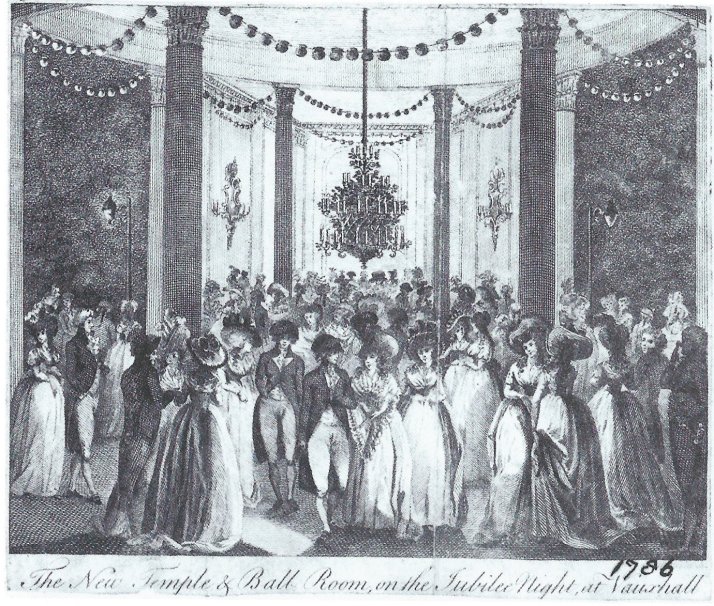
J. Wooding, The New Temple & Ball Room, on the Jubilee Night, at Vauxhall, engraving, c. 1786. The circular Grand Temple at the junction of the Grand South Walk and the Centre Cross Walk, with the temporary ballrooms added to its north and south. The artist was keen to show all the different forms of lighting in use.

J. Wooding, The New Temple & Ball Room, on the Jubilee Night, at Vauxhall, engraving, c. 1786. The circular Grand Temple at the junction of the Grand South Walk and the Centre Cross Walk, with the temporary ballrooms added to its north and south. The artist was keen to show all the different forms of lighting in use.

The approach of the half-century mark of the opening of Vauxhall Gardens “must have come as a godsend to Barrett at the start of his proprietorship.”

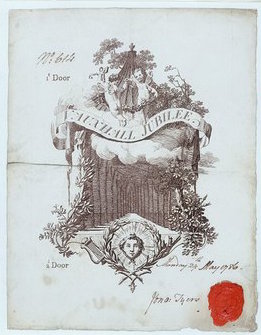
The last great fashionable event had been the hugely successful Ridotto al Fresco of 1769. In a conscious attempt to remind people of the ‘good old days’, when the gardens had last been patronised by fashionable society, the design of the ticket for the vent of the event of seventeen years earlier was adapted for the 1786 Jubilee.

Ticket for the Vauxhall Jubilee, 29 May, engraving. Signed, dated and sealed by Jonathan Tyers the younger, although the management of the park was now in the hands of his son-in-law, Bryant Barrett.

Ticket for the Vauxhall Jubilee, 29 May, engraving. Signed, dated and sealed by Jonathan Tyers the younger, although the management of the park was now in the hands of his son-in-law, Bryant Barrett.

In preparation for the event, which took place on 29 May 1786, the following renovations were completed:

  1. The buildings around the Grove were painted in an elegant pale blue and white livery, and flowering shrubs were planted to appeal to the modern taste in gardening.
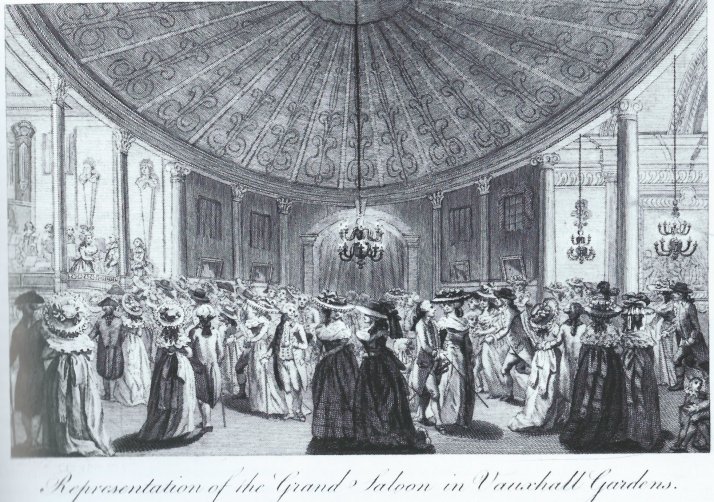
  2.  The Rotunda’s interior decoration was completely renewed, with modern mirrors, and the Ionic columns of the Pillared Saloon were renewed with a rich deep pink scagliola. Window frames were replaced and draped with tasselled crimson and silver fabric, and the Rotunda Orchestra was filled with evergreen plants under a decorated ceiling. In the other recess (where the original Rotunda Orchestra had been housed), the large transparent painting of George, Prince of Wales (later the Prince Regent and George IV) in a noble classical pose was replaced with another transparency depicting an amphitheatre of the Corinthian order, through which could be seen a perspective view of a garden. (Apparently, the original transparency was criticized by some as having nothing in common with the Prince’s true character.)
  3. 14,000 coloured lights and wreaths of artificial flowers were draped around the pillars and in festoons around the cornices of the Covered Walks.
  4. A circular Grand Temple was set up at the crossing of the Grand South Walk and the Centre Cross Walk, “little more than a dome on eight classical columns.”
  5. The Centre Cross Walk was partly built over to give more dancing space in two temporary ballrooms, attached to the Grand Temple on the north and south. “The walls of these ballrooms were painted with Arcadian pastoral scenes beyond a range of Ionic columns decorated with wreaths of flowers, while the ceiling showed a sky filled with ‘tender variegated clouds.’” …In each of the ballrooms was an alcove for the musicians, and others for tables stocked with lemonade, capillaire, and orgeat (soft drinks flavoured with orange flower or almond syrup.) The whole strucutre was of course illuminated with thousands of coloured lamps ‘producing a refugency of light that dazzles and surprises.’
  6. On the site of the former Prince’s Pavilion (built for George III’s father), a new room was created for Prince George and his party.
  7. The entrance to the gardens on Kennington Lane was renewed and enlarged, soon becoming the main coach-entrance, later to be expanded with cloakrooms, waiting-rooms, and other public facilities.
handbill

Handbill for the Vauxhall Jubilee, 1786. A very plain and understated piece of printing, designed only to impart information about the event.

The Jubilee was attended by somewhere between five and six thousand people, most in fashionable and elegant costume, a few in fancy dress, which in this period meant smart dress with added details, such as feathers, flowers, ribbons, ruffs, etc., not character costumes.

There were last night above 6000 persons present, and among them some of the first people in the kingdom, but as is always the case at Vauxhall, it was a mélange; the cit and the courtier jostled each other with the usual familiarity; the half guinea was no repellent to the middling order; John Bull loves to shoulder his superiors in rank, his betters he’ll not allow them to be; and where he pays as much for admission, he never considers them to be more than his equals.

Anon., Representation of the Grand Saloon in Vauxhall Gardens, engraving, after 1786. An unusual view of the renovated Rotunda interior, taken from the entrance off the Grand Walk. The Rotunda Orchestra is on the left, and one of Hayman's paintings from his Seven-Years War series is visible in the Pillared Saloon on the right.

Anon., Representation of the Grand Saloon in Vauxhall Gardens, engraving, after 1786. An unusual view of the renovated Rotunda interior, taken from the entrance off the Grand Walk. The Rotunda Orchestra is on the left, and one of Hayman’s paintings from his Seven-Years War series is visible in the Pillared Saloon on the right.

On the following day, the gardens were opened to four thousand people who were not able to get tickets after those for the first event were sold out.

A successful season

Barrett took advantage of the popular trend of holding military fetes to honor the huge numbers of soldiers coming home from North America by promoting a patriotic tone to this one, with large transparencies framed by martial and naval motifs.

Later that year, when George III escaped a “rather pathetic assassination” by a housemaid with a knife outside St. James’s Palace, Vauxhall celebrated the king’s survival with a new patriotic song by James Hook and an organ concerto with variations on God Save the King.

Barrett’s first season at the helm “once more confirmed Vauxhall as a popular and respectable venue for fashionable society during the 1780’s. However,

…the public attitude towards the gardens was beginning to undergo a fundamental change. The largely unquestioning indulgence was now a thing of the past, and questions were being asked as to whether a pleasure garden was more of a nuisance than a benefit. The establishment’s opposition to public entertainment was strengthening.

Neighbors who had complained for years about the disruption caused by those returning home in the early hours of the morning, were starting to be heard.


Susana’s Vauxhall Blog Post Series

  1. Vauxhall Gardens: A History
  2. Vauxhall Gardens: Jonathan Tyers—“The Master Builder of Delight” 
  3. Vauxhall Gardens: A New Direction
  4. Vauxhall Gardens: The Orchestra and the Supper-Boxes 
  5. Vauxhall Gardens: The Organ, the Turkish Tent, and the Rotunda
  6. Vauxhall Gardens: Three Piazzas of Supper-Boxes
  7. Vauxhall Gardens: “whither every body must go or appear a sort of Monster in polite Company”
  8. Vauxhall Gardens: The Competition
  9. Vauxhall Gardens: The Artwork, Part I
  10. Vauxhall Gardens: The Artwork, Part II
  11. Vauxhall Gardens: The Music, 1732-1859
  12. Vauxhall Gardens: The Business Side
  13. Vauxhall Gardens: Developments from 1751-1786
  14. Vauxhall Gardens: Thomas Rowlandson’s Painting (1785)
  15. ‎Vauxhall Gardens: The Third Generation of the Tyers Family and the Jubilee of 1786
  16. Vauxhall Gardens: An Era of Change (1786-1822), Part I
  17. Vauxhall Gardens: An Era of Change (1786-1822), Part II
  18. Vauxhall Gardens: An Era of Change (1786-1822), Part III
  19. Vauxhall Gardens: The Final Years, Part I
  20. Vauxhall Gardens: The Final Years, Part II
  21. Vauxhall Gardens: The Final Years, Part III
  22. Vauxhall Gardens: The Final Years, Part IV
  23. Vauxhall Gardens: Farewell, for ever

Vauxhall Gardens: Thomas Rowlandson’s Painting (1785)

vauxhallbook

Vauxhall Gardens: A History

David Coke & Alan Borg

The Vauxhall Pleasure Gardens is one of the places I’d love to slip back in time to visit, just to catch a glimpse of what it was like. After recently splurging to buy this lovely coffee-table book, I thought it might make a wonderful subject for a new blog series. But do buy the book too, if you can! The photos are fabulous!

I’m so excited! I just bought a mounted poster of this painting in color from art.com to hang in my bedroom/office here in Florida.

By the time this painting appeared, Jonathan Tyers had died and Vauxhall Gardens passed on to his wife and children, but it was his son Jonathan Tyers Jr.—that n’er-do-well younger son who wed a widowed lady much older than he and caused a giant rift among his parents—who assumed his father’s role in managing the park.

Thomas_Rowlandson_-_Vaux-Hall_-_Dr._Johnson,_Oliver_Goldsmith,_Mary_Robinson,_et_al


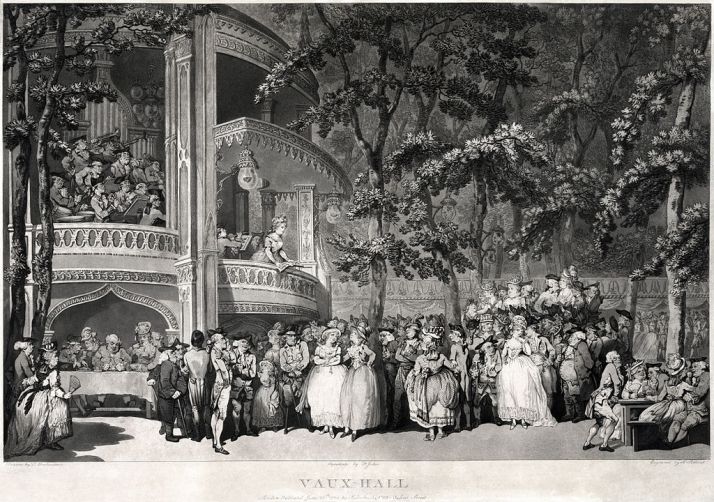
In the supper-box on the left we see, reading left to right, James BoswellMrs Thrale (who appears twice), Dr. Johnson, and Oliver Goldsmith.

The ‘macaroni’ Captain Edward Topham (scandalmonger to The World) is quizzing Georgiana, Duchess of Devonshire and her sister Lady Duncannon (Sheridan’s Lady Bessborough), watched by a naval figure with an eye patch and a wooden leg (not included in the Mellon version), always called Admiral Paisley, but Paisley did not lose his leg and eye until 1st June 1794, so it cannot be him. To the left of him, a young girl (a young boy in the Mellon version) holding the hand of a man who could be the comic actor, William Parsons, or Rowlandson’s friend Jack Bannister.

Peering at the two ladies from behind a tree is a figure traditionally, though improbably, identified as Sir Henry Bate-Dudley, the ‘Fighting Parson’, editor of the Morning Herald; he is more likely to be Thomas Tyers (son of Jonathan Tyers the great entrepreneur and proprietor of Vauxhall Gardens from 1729 until 1767) who stands next to the Scotsman James Perry, editor of the London Gazette. The couple on their right could well be the artist himself and his current girlfriend. and to the right of them stands the actress Mary ‘Perdita’ Robinson, with her husband on her right and the Prince of Wales (later George IV) on her left.

Looking up at the singer, the couple on the extreme left, have been identified as the actress Miss Hartley, in company with one of her many admirers, possibly Mr. Colman, but, suggested by their position apart from the crowd, they could also be members of the Tyers family (most likely Jonathan jr. and his wife Margaret, or their son-in-law Bryant Barrett and his wife Elizabeth. The large lady seated at the table on the right is Mrs Barry, the old Madam of Sutton Street, Soho, with two of her customers and one of her girls.

In the orchestra, we can see Jacob Nelson, the tympanist, who had played at Vauxhall since 1735, and died there after fifty years’ performing, Mr Fisher on oboe, probably Hezekiah Cantelo and Mr. Sargent on trumpet, and Barthélemon, the leader, who retired in 1783. James Hook, the composer, organist, musical director and prolific song-writer, may be seen between Barthelemon and the singer, the 38-year-old Frederika Weichsell, who was Rowlandson’s next-door neighbour in Church Street, and the mother of Mrs. Elizabeth Billington. Elizabeth had just (aged 18) married James Billington, a double-bass player, in 1783, much against her parents’ wishes.

A number of those present in this scene had already died by the time Rowlandson produced the painting, and the affair between the Prince and Perdita Robinson was already over.

Although there is no direct evidence for this, it seems likely, because of the dating, and because of the central position of the singer, that the painting was created by Rowlandson as a retirement gift for Frederika Weichsel, whether from him personally, or specially commissioned by the proprietors of the gardens.


Susana’s Vauxhall Blog Post Series

  1. Vauxhall Gardens: A History
  2. Vauxhall Gardens: Jonathan Tyers—“The Master Builder of Delight” 
  3. Vauxhall Gardens: A New Direction
  4. Vauxhall Gardens: The Orchestra and the Supper-Boxes 
  5. Vauxhall Gardens: The Organ, the Turkish Tent, and the Rotunda
  6. Vauxhall Gardens: Three Piazzas of Supper-Boxes
  7. Vauxhall Gardens: “whither every body must go or appear a sort of Monster in polite Company”
  8. Vauxhall Gardens: The Competition
  9. Vauxhall Gardens: The Artwork, Part I
  10. Vauxhall Gardens: The Artwork, Part II
  11. Vauxhall Gardens: The Music, 1732-1859
  12. Vauxhall Gardens: The Business Side
  13. Vauxhall Gardens: Developments from 1751-1786
  14. Vauxhall Gardens: Thomas Rowlandson’s Painting (1785)
  15. ‎Vauxhall Gardens: The Third Generation of the Tyers Family and the Jubilee of 1786
  16. Vauxhall Gardens: An Era of Change (1786-1822), Part I
  17. Vauxhall Gardens: An Era of Change (1786-1822), Part II
  18. Vauxhall Gardens: An Era of Change (1786-1822), Part III
  19. Vauxhall Gardens: The Final Years, Part I
  20. Vauxhall Gardens: The Final Years, Part II
  21. Vauxhall Gardens: The Final Years, Part III
  22. Vauxhall Gardens: The Final Years, Part IV
  23. Vauxhall Gardens: Farewell, for ever

Vauxhall Gardens: The Artwork, Part II

vauxhallbook

Vauxhall Gardens: A History

David Coke & Alan Borg

The Vauxhall Pleasure Gardens is one of the places I’d love to slip back in time to visit, just to catch a glimpse of what it was like. After recently splurging to buy this lovely coffee-table book, I thought it might make a wonderful subject for a new blog series. But do buy the book too, if you can! The photos are fabulous!

The Paintings in the Pillared Saloon

The Pillared Saloon was built onto the Rotunda in 1750-51 to provide more wall space for paintings and, of course, draw more visitors. The original idea was to have allegorical paintings of the royal family—Prince Frederick and his family—demonstrating how love of the arts manifested his virtue and patriotism. Frederick’s untimely death in 1751 put paid to this idea and delayed the project for almost ten years.

Two full-length portraits of George III and Queen Charlotte in their coronation robes did appear soon after their marriage in 1761. The royal pair is known to have sat for the painter—undoubtedly Frances Hayman—in person as a special favor to Jonathan Tyers.

The Seven Years’ War Paintings

In contrast to the lightheartedness of the supper-box paintings and the drama of the Shakespearean scenes, the four remaining paintings for the Pillared Saloon were to be patriotic history paintings. These were not the typical classical scenes or representations of events from the distance past, but “very recent military actions populated by real living people wearing contemporary costume.”

[Hayman] chose not the violence of heroic death or even topographical portrayals of military action, but rather its aftermath, in order to convey the virtues of the individual British military commanders, magnanimous and humane in victory.

pillaredsaloon001

The Surrender of Montreal to General Amherst

Amazingly, this painting appeared in the Pillared Saloon in 1761, only eight months after the event it depicts.

It was the most overtly propagandic of the four military scenes, emphasising the selfless humanity of General Jeffrey Amherst: Hayman showed him handing out food to the starving and defeated population and returning to them their possessions; this was intended to be in stark contrast to the merciless treatment they might have expected from the French, had they been victorious, and especially from their Indian allies.

In the Description (1762), much is made of the contrast between the defeated and miserable French and the victorious but humane British, and the author instructed readers to view the paintings as a true representation of one of ‘the most glorious transactions of the present war’.

pillaredsaloon002

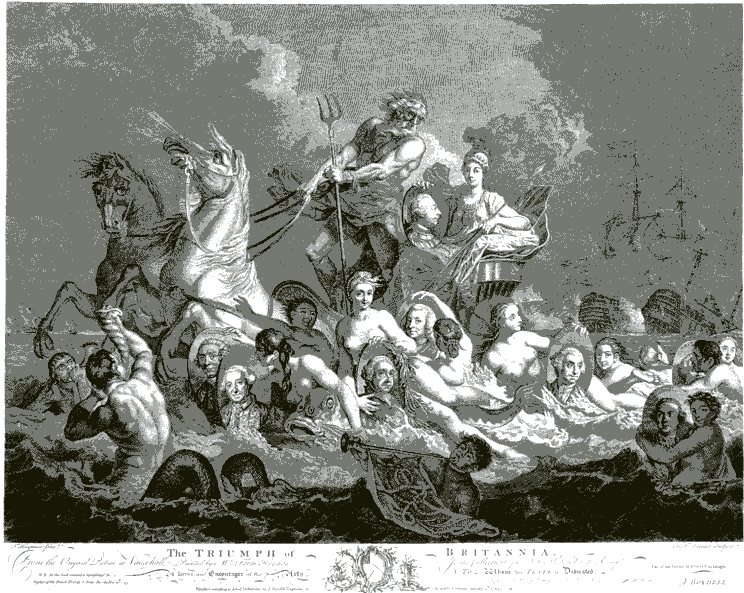
The Triumph of Britannia

The second painting, which was installed for the opening of the 1762 season, was a representation of the defeat of the French fleet at Quiberon Bay in November 1759. “As its allegorical title would suggest, it was intended to glorify the British military leaders involved in the action and the natural alliance of Britannia with Neptune that had given Britain mastery of the seas.”

However, because it did not entirely succeed in capturing the essential majestic dignity that was necessary to this type of allegorical work, the Triumph of Britannia was not always taken seriously by its audience. It is specifically and humorously singled out in Fanny Burney’s novel Evelina of 1778; during a visit to Vauxhall, Mr. Smith ridiculously mistakes the figure of Neptune for that of a famous general, despite the fact that he is wearing ‘the oddest dress for a general ever I see’.

Lord Clive, Hayman, 1760

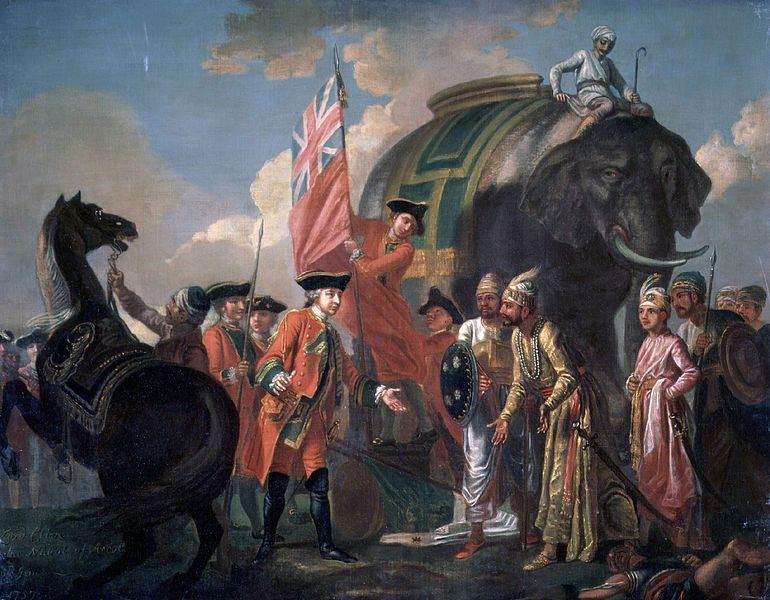
Lord Clive Receiving the Homage of the Nabob

A companion piece to the Surrender, this painting was installed in time for the 1763 season. The historical event depicted was the Battle of Plassey, at which Robert Clive ousted the ruling Nawab of Bengal, Siraj-ud-daula and, “in an apparently magnanimous act, [Clive] then supported the claim to supremacy of the elderly general Mir Jafar (c. 1691-1765), Nawab of Murshidabad, who had actually fought against the British, but who was more easily persuaded to the British point of view.”

In that battle the British forces were famously outnumbered by twenty to one, but were nevertheless victorious with the loss of only eighteen men (according to Clive), lending it the heroic ideal; in fact this was undeserved, and the British were saved from probable defeat only by the quick thinking of their artillerymen who covered their weapons and powder during a downpour, while the enemy did not.

The description of the painting started with “The subject of this picture is of the most interesting nature, to every Briton who regards the honour and propsperity of this country’, no doubt insinuating that it would be unpatriotic to criticize it.
The second description

praises General Clive for his leadership, and for his generosity in giving the sultanate to Mir Jafar;

therefore performing for his Country a most important Service, as well as procuring for the India Company and Individuals the Sum of Three Millions Sterling, for their Losses sustained at Calcutta; with such Privileges, Immunities, and Advantages, as they never enjoyed before. And this Revolution hath been moreover the Means of the India Company’s acquiring the Territorial Possessions, to the Amount of Seven hundred thousand Pounds per Annum.

In retrospect, General Clive’s generosity seems less altruistic considering the huge commercial gains resulting from the acquisition of this territory.

Britannia Distributing Laurels

A companion piece to the Triumph of Britannia, Britannia Distributing Laurels was installed in 1764. Unfortunately, no version of this piece is known to be in existence. However, it is known to have depicted the full-length figures of Generals Granby, Monckton, Albemarle, Coote, Townshend and Wolfe, all in Roman costume, allegorical in nature.

The story goes that, when Granby came to Hayman’s studio in St. Martin’s Lane, he challenged Hayman to a boxing match before the sitting. After a hesitant start, which Granby overcame by saying that the exercise would give animation to his portrait, Hayman apparently floored the marquis with a tremendous punch to the stomach, and Mrs. Hayman, hurrying upstairs to see what the noise was, found them ‘rolling over each other on the carpet like two bears.’

Tyers as the Ultimate Patron of 18th century British Art

The inscription under the engraving of Hayman’s Triumph of Britannia describes him as a ‘”Lover and Encourager of the Arts.’” He was described by Henry Angelo as having “laid out more money in the encouragement of English art than any man of his time. Indeed, his house was so full of pictures, that after hanging them, even on his stair-case, there were still some to spare.”

Jonathan Tyers didn’t just use art to further his commercial ambitions; he was a true conoisseur. And it was his dream to open up the arts to all layers of society, not just the upper class.

The huge developments in British art through the middle of the eighteenth century were in large part due to the concurrence of Vauxhall Gardens, the Foundling Hospital, the Society of Artists and the Royal Academy and to the men involved in those institutions, notably Hogarth, Hayman and, of course, Tyers… After the collaboration of Tyers and Hayman, the visual arts at Vauxhall never again received the same degree of patronage from its proprietors.

The paintings and sculpture at Vauxhall Gardens would have been the best-known works of art in England at the time, seen by tens of thousands of people, including significant numbers of artists, every year. Although Tyers owed much to Hogarth, initially the driving force behind the artistic concept of the gardens, it was Hayman, Tyers’s artistic director, who could be seen as the more influential figure. This was partly because of the huge exposure of his original work at Vauxhall, and also because he was the linchpin that held together the London art profession, with a finger in all the principal artistic pies of the time—the St Martin’s Lane Academy, Vauxhall Gardens, the Foundling Hospital, the Society of Artists and, eventually, their august offspring, the Royal Academy.

Susana’s Vauxhall Blog Post Series

  1. Vauxhall Gardens: A History
  2. Vauxhall Gardens: Jonathan Tyers—“The Master Builder of Delight” 
  3. Vauxhall Gardens: A New Direction
  4. Vauxhall Gardens: The Orchestra and the Supper-Boxes 
  5. Vauxhall Gardens: The Organ, the Turkish Tent, and the Rotunda
  6. Vauxhall Gardens: Three Piazzas of Supper-Boxes
  7. Vauxhall Gardens: “whither every body must go or appear a sort of Monster in polite Company”
  8. Vauxhall Gardens: The Competition
  9. Vauxhall Gardens: The Artwork, Part I
  10. Vauxhall Gardens: The Artwork, Part II
  11. Vauxhall Gardens: The Music, 1732-1859
  12. Vauxhall Gardens: The Business Side
  13. Vauxhall Gardens: Developments from 1751-1786
  14. Vauxhall Gardens: Thomas Rowlandson’s Painting (1785)
  15. ‎Vauxhall Gardens: The Third Generation of the Tyers Family and the Jubilee of 1786
  16. Vauxhall Gardens: An Era of Change (1786-1822), Part I
  17. Vauxhall Gardens: An Era of Change (1786-1822), Part II
  18. Vauxhall Gardens: An Era of Change (1786-1822), Part III
  19. Vauxhall Gardens: The Final Years, Part I
  20. Vauxhall Gardens: The Final Years, Part II
  21. Vauxhall Gardens: The Final Years, Part III
  22. Vauxhall Gardens: The Final Years, Part IV
  23. Vauxhall Gardens: Farewell, for ever

Vauxhall Gardens: The Artwork, Part I

vauxhallbook

Vauxhall Gardens: A History

David Coke & Alan Borg

The Vauxhall Pleasure Gardens is one of the places I’d love to slip back in time to visit, just to catch a glimpse of what it was like. After recently splurging to buy this lovely coffee-table book, I thought it might make a wonderful subject for a new blog series. But do buy the book too, if you can! The photos are fabulous!

A Statue for the Greatest Composer of English Music (1738)

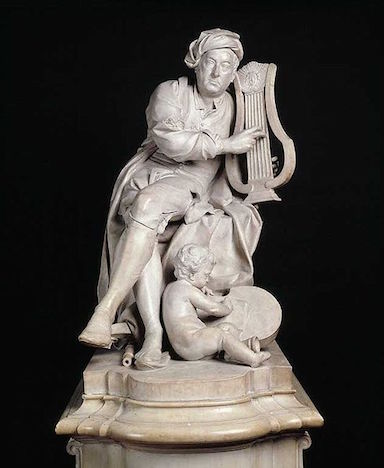
The life-sized sculpture of George Frideric Handel by Louis François Roubiliac (1702-62) was

the most important of Tyers’s early series of artistic commissions for the gardens. This work epitomised the explosive moment of the English Rococo style, not for any inclusion of outwardly Rococo motifs, but for the new spirit of playfulness and informality that it embodied, and it came to personify Vauxhall Gardens.

handel statue

There is now near finished a Statue of the justly celebrated Mr. Handel, exquisitely done by the ingenious Mr. Raubillac, of St. Martin’s-Lane, Statuary, out of one entire Block of white Marble, which is to be placed in a grand Nich, erected on Purpose in the great Grove at Vaux-hall Gardens.

alcove1

Note the Handel statue in its “Grand Nich” (original placement) at right

The “Grand Nich” or “Grand Alcove” was demolished after a decade to make room for more supper-boxes, and the statue was left free-standing until 1762, when it was arranged under a Doric portico similar in size to the “Grand Nich.” In 1786, following the Vauxhall Jubilee celebrations, it was removed to the back of the Orchestra. Before it was removed from the gardens in 1818, it held court in the New Supper Room built in 1791, and then, in 1813, “to its own small circular domed temple behind the Orchestra.”

Victoria and Albert Museum

The Handel statue can be seen today at the Victoria and Albert Museum in London, along with a group of the original supper-box paintings and Roubiliac’s terracotta model for the portrait bust of Jonathan Tyers.

In spite of many years’ exposure to the elements, to vandalism, accidental damage, relocations and restorations, the surface of the sculpture still bears the sculptor’s marks and finished, evidence of his high degree of skill and craftsmanship, equally of his mastery and love of the material.

“A mass audience for contemporary art”

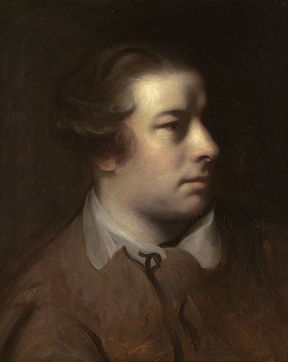
Francis Hayman by Sir Thomas Lawrence

Francis Hayman by Sir Thomas Lawrence, 1760’s

Artwork was an important element in Jonathan Tyers’ vision of capturing his visitors’ emotions and induce them “to enjoy themselves, to refresh their spirits and to spend their money.” In order to do this, Tyers formed an alliance with his friend William Hogarth’s nearby academy to produce the work he needed, which included buildings, paintings, sculptures, furnitures, tableware, glass, interiors, and lighting. This arrangement benefitted both parties, providing Tyers with the high-quality artisans he needed at a reasonable cost, and an opportunity for Hogarth’s students’ work to be displayed to the public in a way not seen before. The person chosen to manage the project was the theatrical scene-painter, Francis Hayman (1708-76).

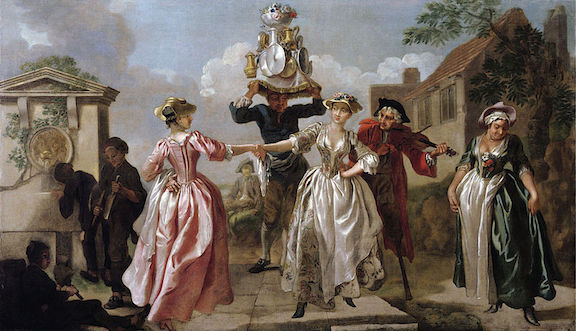
Francis Hayman and studio, The Milkmaids' Garland, oil on canvas, c. 1740 (Victoria and Albert Museum, London)

Francis Hayman and studio, The Milkmaids’ Garland, oil on canvas, c. 1740 (Victoria and Albert Museum, London)

The Supper-Box Paintings

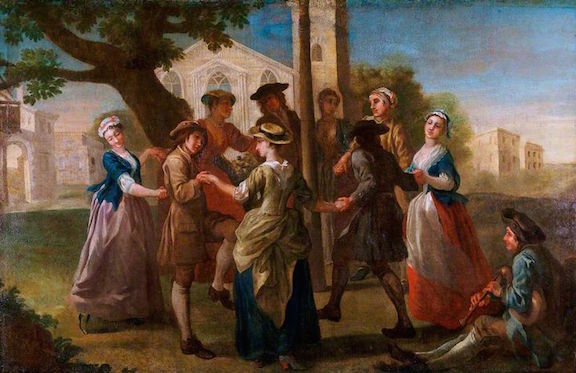
To add color and enhance the visitor’s mood, the back upper wall of each supper-box in the 1730’s and 40’s was decorated by an eight foot by five painting, designed by Francis Hayman and H.F. Gravelot and painted by the students at St. Martin’s Lane Academy. These paintings

represent people from all sectors of society, from villagers, peasant children and milkmaids to aristocratic and fashionable ladies and gentlemen. Painted on a large scale, some of the figures are nearly life-sized and close enough to the picture plane for the viewer to discern their expressions and interrelationships.

Francis Hayman and stuido, Country Dancers round the Maypole, oil on canvas, late 1730's (Victoria and Albert Museum, London)

Francis Hayman and stuido, Country Dancers round the Maypole, oil on canvas, late 1730’s (Victoria and Albert Museum, London)

The pictures depicted scenes of theatre, daily life and rustic amusements. A Toupee letter (see post here) of 28 June 1739 states that, when the paintings were revealed,

the eye is relieved by the agreeable surprise of some of the most favoured fancies of our poets in the most remarkable scenes of our comedies, some of the celebrated dancers, &c. in their most remarkable attitudes, several of the childish diversions, and other whims that are well enough liked by most people at a time they are disposed to smile, and every thing of a light kind, and tending to unbend the thoughts, has an effect desired before it is felt.

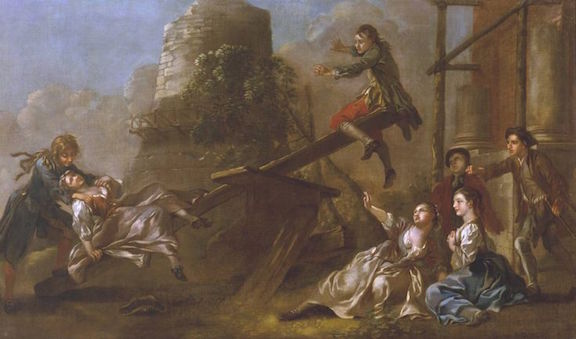
Francis Hayman and studio, The Play of See-saw, oil on canvas, 1740-43 (Tate, London)

Francis Hayman and studio, The Play of See-saw, oil on canvas, 1740-43 (Tate, London)

The Display of the Paintings

In the 1730’s the supper-boxes were open on all sides during daylight hours, to allow visitors to enjoy the views over the neighbouring countryside. However, as dusk fell, Tyers had created two extraordinary surprises for his guests. The first was the almost magical instantaneous illumination of the gardens with oil lamps. This wonder was swiftly followed by a second spectacular special effect, namely:

a master piece of machinery, by which all the English ladys and delicate gentlemen are in a moment screend from the damps of the night air. […] When the clock strikes nine, there is heard a third sound of the whistle, and immediately there rises, as out of the earth, a vast number of rollers, which unfolding themselves as they rise, cover all the boxes in three of their sides, and fasten themselves in the extremitys of each box. All these coverings are painted with elegant designs, in lively colours, so that each box is enclosed by three large pictures, and at the same time that they completely protect the company from the injurys of the air, present a numerous collection of grand and pleasing paintings.

By 1741, all the paintings were fixed in position on the back or side wall of the boxes… Tyers had introduced further improvements and the supper-boxes had been adapted to make them more weatherproof, more robust and more firmly divided from each other.

Francis Hayman and studio, Bird-catching, by a Decoy with a Whistle and Net, oil on canvas, c. 1740 (Victoria and Albert Museum, London)

Francis Hayman and studio, Bird-catching, by a Decoy with a Whistle and Net, oil on canvas, c. 1740 (Victoria and Albert Museum, London)

In spite of all the damage inflicted on these paintings by their exposure to the weather, the proximity of food, wine, candles, and oil lamps—not to mention the early days of being rolled up and down on a nightly basis—many of these paintings remained at Vauxhall for a hundred years.


Susana’s Vauxhall Blog Post Series

  1. Vauxhall Gardens: A History
  2. Vauxhall Gardens: Jonathan Tyers—“The Master Builder of Delight” 
  3. Vauxhall Gardens: A New Direction
  4. Vauxhall Gardens: The Orchestra and the Supper-Boxes 
  5. Vauxhall Gardens: The Organ, the Turkish Tent, and the Rotunda
  6. Vauxhall Gardens: Three Piazzas of Supper-Boxes
  7. Vauxhall Gardens: “whither every body must go or appear a sort of Monster in polite Company”
  8. Vauxhall Gardens: The Competition
  9. Vauxhall Gardens: The Artwork, Part I
  10. Vauxhall Gardens: The Artwork, Part II
  11. Vauxhall Gardens: The Music, 1732-1859
  12. Vauxhall Gardens: The Business Side
  13. Vauxhall Gardens: Developments from 1751-1786
  14. Vauxhall Gardens: Thomas Rowlandson’s Painting (1785)
  15. ‎Vauxhall Gardens: The Third Generation of the Tyers Family and the Jubilee of 1786
  16. Vauxhall Gardens: An Era of Change (1786-1822), Part I
  17. Vauxhall Gardens: An Era of Change (1786-1822), Part II
  18. Vauxhall Gardens: An Era of Change (1786-1822), Part III
  19. Vauxhall Gardens: The Final Years, Part I
  20. Vauxhall Gardens: The Final Years, Part II
  21. Vauxhall Gardens: The Final Years, Part III
  22. Vauxhall Gardens: The Final Years, Part IV
  23. Vauxhall Gardens: Farewell, for ever

Vauxhall Gardens: “whither every body must go or appear a sort of Monster in polite Company”

vauxhallbook

Vauxhall Gardens: A History

David Coke & Alan Borg

The Vauxhall Pleasure Gardens is one of the places I’d love to slip back in time to visit, just to catch a glimpse of what it was like. After recently splurging to buy this lovely coffee-table book, I thought it might make a wonderful subject for a new blog series. But do buy the book too, if you can! The photos are fabulous!

The Toupee Letters

Scots Magazine ran a series of articles in 1739-40 purporting to be “from a London correspondent, a certain ‘S. Toupee’, portraying the social scene in London, and at Vauxhall in particular, to the Scottish readership.”

The letters begin by explaining that because ordinary people of the London beau monde in search of simple pleasures were no longer satisfied with the traditional pastime of enjoying the beauties of nature, for their own sake, more fashionable amusements had been brought in from overseas, in particular the ridotto al fresco. Just how popular the gardens had become is illustrated by the fact that, despite the ingrained British dread of damp evenings, and the gentry’s habit of moving to the country in the summer, the average nightly number of paying visitors… was around a thousand. From this, it is possible to calculate that, as the Vauxhall season lasted for about one hundred evenings between May and September, the annual admissions income would amount to £5000 to £6000, a healthy figure that must have been substantially more than the normal revenue expenditure to run such a venture.

The type of entertainment provided was considered to be very new; it was well received, especially by fashionable ladies whose social life hitherto had been restricted to calling on acquaintances or going to the occasional ball, all within a very small circle of friends and relatives. Pleasure gardens opened up a whole new world to these people—a polite and exciting world where they could go with their family or friends, where they were free to entertain and mix socially with an infinitely broader circle than had been possible previously.

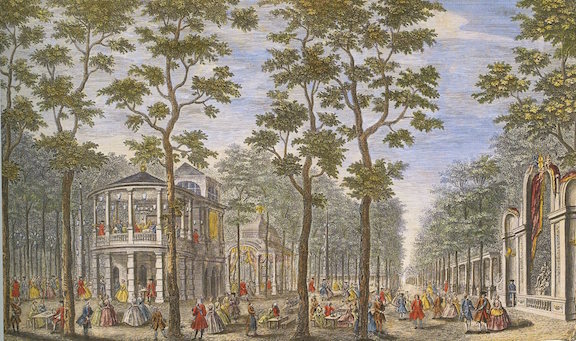
J. Maurer, A Perspective View of Vaux Hall Garden, etching, hand-coloured, 1744 (David Coke's collection). The view looking down the Grand South Walk before the classical triumphal arches were installed, with Roubiliac's Grand Alcove on the right.

J. Maurer, A Perspective View of Vaux Hall Garden, etching, hand-coloured, 1744 (David Coke’s collection). The view looking down the Grand South Walk before the classical triumphal arches were installed, with Roubiliac’s Grand Alcove on the right.

A Typical Visit to Vauxhall (from 7-10 p.m.)

The journey usually began with a boat ride from Whitehall or Westminster. On one occasion, Toupee writes about accompanying “a family group including Tom, a young musician who played the latest opera melodies on his French horn, while Miss Kitty was asked by her mother to sing one of the latest Italian songs.”

Others on their way to the gardens in neighbouring boats included ‘Sir John, from Fenchurch-street’, with his wife and all his children, attended by a footman. A Cheapside apprentence called William was on an illicit outing with Sukey, his master’s daughter… ‘An honest old mechanick’ and his wife followed; he was returning to Vauxhall after many years’ absence, to see how it had changed, reassuring his wife that the gardens must be a respectable place for her to be going, because the Prince of Wales himself was a regular visitor. This piece is clear evidence for the type of social mix that Tyers wanted to see at Vauxhall, although it is equally clear that, just because people inhabited the same space and came into direct contact, they did not necessarily interact in any meaningful way.

Pet dogs were not allowed in the gardens, but that did not stop people bringing them along for the ride, maybe to occupy the liveried footman who would not be admitted by Tyers’s gatekeeper, but could walk the dog in the fields of Lambeth. Having entered the tardens, Toupee’s party saw all the sights, listened to the music and strolled around the walks, watching and being watched by the other visitors.

The third letter, concerning the hour before closure at 10 p.m., starts with a detailed description of the dinner, accompanied by music from the Orchestra. The dramatic finale to the letter is the boat trip home, recounting the dangers of the riverside and the traditional ‘Thames ribaldry’, long-winded insults from the occupants of nearby boats that were suffered by voyagers as far apart in time as Addison’s Sir Roger in 1711 and Oakman’s John Gilpin in 1785.

“Sexual freedom was intrinsic to the gardens”

The overriding topic that runs flagrantly throughout the three letters is the meeting of the sexes, and the self-evident truth that human nature takes full advantage of any liberty offered to it. If Toupee is to be believed, Tyers was promoting his gardens as a place for lovers to meet, for initiating and nurturing romantic attachments, for sexual intrigue and adventures, and for illicit affairs; or, if he was not promoting these activities as such, he created an environment that made them possible and, indeed, inevitable. The river-crossing, the music, the paintings, the food, the walks and even the weather were all seen by Toupee as legitimate means to this one specific end.

The focus for most of the licentious activity in the gardens was not the Grove or the surrounding supper-boxes, which were too public, but the Druid’s Walk or Lover’s Walk, an unlit avenue running between and parallel with the Grand South Walk and Kennington Lane. It was distinguished from the other avenues by the fact that the trees met overhead, plunging it into shadow even before dusk. This concealing shade was unrelieved by artificial light until 1764, when magistrates forced Tyers to act against the immoral behaviour that the darkness encouraged, and to install lighting there.

At its eastern end, the Druid’s Walk met the avenue that ran around the eastern and northern edges of the gardens, always known as the Dark Walks; the darkness heightened the receptivity of impressionable young minds to emotional seduction, and no female reputation was safe…

Tyers employed constables to patrol the end of each walk in an attempt to keep such incidences to a minimum, but even they were not able to watch everybody all the time.

“The… cold and miserable spring of 1740”

I was blown through and through, in such a manner, as to drink four full glasses of French wine, before I knew I was alive. And, in that cold condition, as returning by water would have endanger’d my life, I was forced to be shook in a most unmerciful hack, till one half of my joins were distorted, and the other bruised to a jelly.

Indeed, all of the Toupee letters highlight the fact that the pleasures of the evening were never without their discomforts; and that a full enjoyment of the experience was predicated upon a full participation in the inconveniences, dangers and risks, whether perceived or real.

“The outstanding fashionable attraction of the London summer season”

In a sample letter from a young lady in town to her aunt in the country, published in 1741, the novelist Samuel Richardson confirmed that regular visits to the gardens had become an obligatory feature of the fashionable lifestyle, having his subject comment… that ‘I went on Monday last to Vaux-hall Gardens, whither every body must go, or appear a sort of Monster in polite Company.’

Susana’s Vauxhall Blog Post Series

  1. Vauxhall Gardens: A History
  2. Vauxhall Gardens: Jonathan Tyers—“The Master Builder of Delight” 
  3. Vauxhall Gardens: A New Direction
  4. Vauxhall Gardens: The Orchestra and the Supper-Boxes 
  5. Vauxhall Gardens: The Organ, the Turkish Tent, and the Rotunda
  6. Vauxhall Gardens: Three Piazzas of Supper-Boxes
  7. Vauxhall Gardens: “whither every body must go or appear a sort of Monster in polite Company”
  8. Vauxhall Gardens: The Competition
  9. Vauxhall Gardens: The Artwork, Part I
  10. Vauxhall Gardens: The Artwork, Part II
  11. Vauxhall Gardens: The Music, 1732-1859
  12. Vauxhall Gardens: The Business Side
  13. Vauxhall Gardens: Developments from 1751-1786
  14. Vauxhall Gardens: Thomas Rowlandson’s Painting (1785)
  15. ‎Vauxhall Gardens: The Third Generation of the Tyers Family and the Jubilee of 1786
  16. Vauxhall Gardens: An Era of Change (1786-1822), Part I
  17. Vauxhall Gardens: An Era of Change (1786-1822), Part II
  18. Vauxhall Gardens: An Era of Change (1786-1822), Part III
  19. Vauxhall Gardens: The Final Years, Part I
  20. Vauxhall Gardens: The Final Years, Part II
  21. Vauxhall Gardens: The Final Years, Part III
  22. Vauxhall Gardens: The Final Years, Part IV
  23. Vauxhall Gardens: Farewell, for ever