Tag Archive | Memoirs of a Highland Lady

Memoirs of a Highland Lady: Harvest Home

Harvest Home

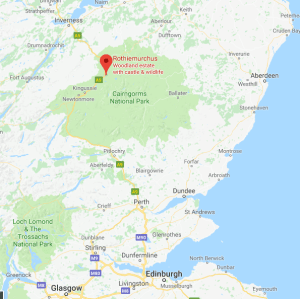
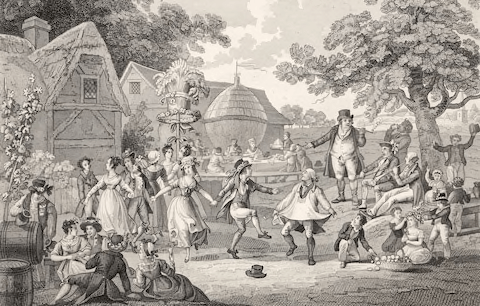
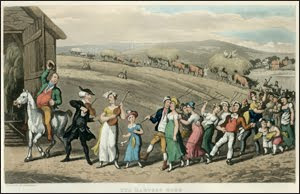
We had three harvest homes to keep in Rothiemurchus: a very small affair indeed at the Croft; a luncheon in the parlour for us children only, and a view of the barn prepared for the dinner and dance to the servants. It was a much merrier meeting at the Dell; my father and mother and all of us, stuffed into the carriage, or on it, drove there to dinner, which was served in the best parlour, my father at the head of the table, Duncan McIntosh at the foot, and those for whom there was not room at the principal board went with at least equal glee to a side table. There was always broth, mutton boiled and roasted, fowls, muirfowl*****—three or four pair in a dish—apple pie and rice pudding, such jugs upon jugs of cream. Cheese, oatcakes and butter; thick bannocks of flour instead of wheaten bread, a bottle of port, a bottle of sherry, and after dinner, do end to the whiskey punch. In the kitchen was all the remains of the sheep, more broth, more mutton, haggis, head and feet singed, puddings black and white, a pile of oaten cakes, a kit of butter, two whole cheeses, one tub of sowans*, another of curd, whey and whiskey in plenty. The kitchen party, including any servants from house or farm that could be spared so early from the Croft, the Doune, or Inverdruie, dined when we had done, and we ladies, leaving the gentlemen to more punch, took a view of the kitchen festivities before retiring to the bed chamber of Mrs McIntosh to make the tea. When the gentlemen joined us the parlour was prepared for dancing. With what extasies we heard the first sweep of that masterly bow across the strings of my father’s Cremona. It had been my grandfather’s. A small very sweetly toned instrument lent to Mr McIntosh to be kept in order. He thought it wanting in power, his reels could not be given with spirit from it, so he enlarged the S holes. What became of this valuable instrument I know not. It had been spoiled. The first Strathspey**** was danced by my father and Mrs McIntosh; as the principal personages. The other pair to form the foursome was of less consequence. If my mother danced at all, it was later in the evening. My father’s dancing was peculiar; a very quiet body and very busy feet, they shuffled away in time quick time steps of his own composition, boasting of little variety, sometimes ending in a turn about which he imagined was the fling; as English it was altogether as if he had never left Hertfordshire. My Mother did better, she moved quietly in highland matron fashion, ‘high and disposedly’ like Queen Elizabeth and Mrs McIntosh, for however lightly the lasses footed it, Etiquette forbade the wives to do more than ‘tread the measure.’ William and Mary moved in the grave style of my Mother; Johnny without instructions danced beautifully; Jane was perfection, so light, so active, and so graceful; but of all the dancers there, none were equal to little Sandy**, the present Factor, the son of Duncan McIntosh, though no son of his wife.
Harvest Home

We were accustomed to dance with all the company, just as if they had been our equals; it was always done and without injury to either party. There was no fear of undue assumption on the one side, or low familiarity on the other; a vein of thorough good breeding ran through all the ranks, of course influencing the manners and rendering the intercourse of all most particularly agreeable. About midnight the carriage would be ordered to bring our happy party home. It was late enough before the remainder separated.

The Doune harvest home was very nearly like that at the Dell, only that the dinner was in the farm kitchen and the ball in the barn, and two fiddlers stuck up on tubs formed the orchestra. A whole sheep was killed, and near a boll*** of meal baked, and a larger company was invited, for our servants were more numerous and they had leave to bring a few relations. We always went down to the farm in the carriage drawn by some of the men, who got glasses of whiskey apiece for the labour, and we all joined in all the reels the hour or two we staid, and drank punch to every body’s health made with brown sugar, and enjoyed the fun, and felt as little annoyed by all the odours of the atmosphere as any of the humbler guests to whom the Entertainment was given.

*sowans: Oats and meal steeped in water for a week until sour, when they are strained; the jelly-like liquor is left to ferment and separate; the solid matter is sowans.

**Mr McIntosh spent the winter isolated in the forest “with no companion but Mary, of a certain age, and never well-favoured. The result was Sandy, a curious compound of his young handsome father and plain elderly mother. It was this Mary who was the cook at Inverdruie, and a very good one she was, and a decent body into the bargain, much considered by Mrs McIntosh. There was no attempt to excuse, much less to conceal her history; in fact, such occurrences were too common to be commented on… [Mrs McIntosh] had brought little Sandy home at her marriage and as much as lay in her power acted a mother’s part by him; her children even accused her of undue partiality for the poor boy who was no favourite with his father. If so, the seed was sown in good ground, for Sandy was the best son she had. It was a curious state of manners, this.

***boll: 6 bushels or 48 gallons
****the Strathspey: https://www.youtube.com/watch?v=rrzxO_MUVW0, https://en.wikipedia.org/wiki/Strathspey_(dance)

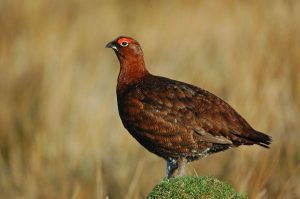
*****muirfowl (red grouse)


Memoirs of a Highland Lady
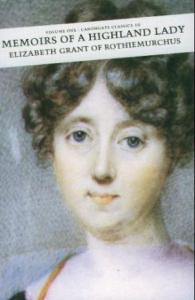
‘I was born on the 7th May 1797 of a Sunday evening at No. 5 N. side of Charlotte Square, Edinburgh, in my father’s own lately built house and I am the eldest of five children he and my mother raised to maturity.’ Thus opens one of the most famous set of memoirs ever written. Since its first bowdlerised edition in 1898, they have been consistently in print. This is the first ever complete text. Written between 1845 and 1854 the memoirs were originally intended simply for Elizabeth’s family, but these vivid and inimitable records of life in the early 19th century, and above all on the great Rothiemurchus estate, full of sharp observation and wit, form an unforgettable picture of her time. The story ends with the thirty-three-year-old Elizabeth finding her own future happiness in marriage to an Irish landowner, Colonel Smith of Baltiboys. ‘A masterpiece of historical and personal recall.’ Scotsman
Amazon

Memoirs of a Highland Lady

Memoirs of a Highland Lady: “Duchess of Sussex”

Ramsgate, Kent

“Duchess of Sussex”

Lady Augusta Murray

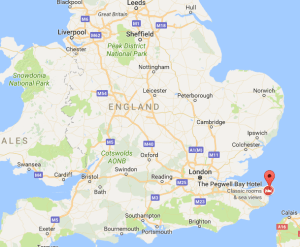
Mrs. Peter Grant had taken a house for us on the East Cliff, a very fine situation with a splendid sea view. We were at some distance from the town, a sort of Common all round us, and one house only near; it was indeed attached to ours, the two stood together alone, out of the way of all the rest of Ramsgate. Our neighbor was Lady Augusta Murray, called by her friends the Duchess of Sussex, although her marriage to the Duke, which really did take place abroad, was null in this country. She had been created Baroness D’Ameland, and had a pension settled on her of £3000 a year, on which to bring up her two children, a boy and girl, fine, large, handsome young people, unduly imbued with the grandeur of their birth. She never committed herself by calling herself or them by any title: ‘My boy, my girl,’ she always said in speaking of or to them. The Servants, however, mentioned them as the Prince and Princess, as did all the acquaintances who visited at the house. Prince Augustus was about 17, extremely good looking, though rather inclined to be stout; very good natured he was too, amiable and devoted to his mother. He was going into the army under the name of D’Este, a bitter pill to the Duchess, although it was one of the royal surnames, and had been chosen for his son by the Duke himself. Princess Augusta was some years younger than her brother though she looked nearly as old. She was but 12, and particularly handsome on a large scale, a fine figure, and fine features, with a charming expression of countenance. The Duchess’s house was small, though larger than ours, for she had turned the whole ground floor into one room, a library and built a dining room out behind. The drawing room floor was her own apartment, containing bedroom, sitting room, and her maid’s room; the floor above was equally divided between her son and daughter. She kept no horses, for she never drove out. She passed most of her time in a very large garden, well walled in, which covered a couple of acres or more, and extended all down the slope of the cliff to the town. Our two families soon became intimate, the younger ones especially passing the greater part of the day together, a friendship beginning then which never entirely ceased while the opportunity served to bring any of us together. The advances, however, were amusing. The Duchess, as a royal personage, must be waited on. My Mother, who was very retiring, would not take such a step forward as the leaving her name at the great lady’s door. My father, who had bowed, and been spoken to when gallantly opening gates, could do no more without his wife; so all came to a full stop. Meanwhile, Jane and I, who had made acquaintance out of the free Common of the downs with the little Princess, untroubled by any notions of etiquette, enjoyed our intercourse with our new acquaintance amazingly; Jane and she soon becoming fast friends. One evening she approached the paling which separated our two small gardens just as my Mother was stepping over the gravel towards the carriage to take her airing. I shall never forget the picture; she leaned on the top rail, her large leaved Tuscan hat thrown back off her dark close cropped hair, and her fine countenance brightened by the blush of girlish modesty, while she held up a small basket full of fine peaches, an offering from her mother. A visit of thanks was of course necessary, and found agreeable. A few days after the Duchess bade Jane tell her Mama that she had returned her call when her Mama was unluckily out, and that she hoped they would be good neighbors. On this hint we all acted. We never expected H.R.H. to call nor even believed in the reported first call. My Mother occasionally went in there with some of us. My father constantly; indeed, he soon became her confidential adviser in many of her difficulties, trying to get her through some of the troubles which harassed her existence. We were all made very happy by this addition to our Ramsgate pleasures; we liked the place itself and our life there, and above all we liked our neighbors.

From Wikipedia:

Prince Augustus Frederick, Duke of Sussex

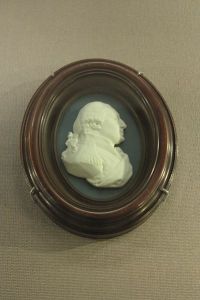
Prince Augustus Frederick, Duke of Sussex (27 January 1773 – 21 April 1843) was the 6th son and 9th child of King George III and his consort Charlotte of Mecklenburg-Strelitz. He was the only surviving son of George III who did not pursue an army or navy career.

While travelling in Italy, the prince met Lady Augusta Murray (1768–1830), the second daughter of the 4th Earl of Dunmore. The couple secretly married in Rome on 4 April 1793. The King’s minister of Hanover affairs Ernst zu Münster was sent to Italy to escort him back to London.

The couple married again without revealing their full identities at St George’s, Hanover Square, Westminster, on 5 December 1793. Both marriages took place without the consent, or even the knowledge, of his father.

In August 1794, the Prerogative Court annulled the prince’s first marriage on the grounds that it contravened the Royal Marriages Act 1772, not having been approved by the King. However, Prince Augustus Frederick continued to live with Lady Augusta until 1801, when he received a parliamentary grant of £12,000 and the couple separated. Lady Augusta retained custody of their children and received maintenance of £4,000 a year. Their two children were named Augustus Frederick d’Este and Augusta Emma d’Este, both parents being descended from the royal House of Este. In 1806, their mother, Lady Augusta, was given royal licence to use the surname “de Ameland” instead of Murray.

Memoirs of a Highland Lady

‘I was born on the 7th May 1797 of a Sunday evening at No. 5 N. side of Charlotte Square, Edinburgh, in my father’s own lately built house and I am the eldest of five children he and my mother raised to maturity.’ Thus opens one of the most famous set of memoirs ever written. Since its first bowdlerised edition in 1898, they have been consistently in print. This is the first ever complete text. Written between 1845 and 1854 the memoirs were originally intended simply for Elizabeth’s family, but these vivid and inimitable records of life in the early 19th century, and above all on the great Rothiemurchus estate, full of sharp observation and wit, form an unforgettable picture of her time. The story ends with the thirty-three-year-old Elizabeth finding her own future happiness in marriage to an Irish landowner, Colonel Smith of Baltiboys. ‘A masterpiece of historical and personal recall.’ Scotsman

Amazon

Memoirs of a Highland Lady

Memoirs of a Highland Lady: The Moral Training of Great Men Began in a Cabin

Willie Grant was a fine handsome boy, a favourite with every body and the darling of his poor father, who had but this bright spot to cheer his dull home horizon. All this summer Willie had come to the Doune with the parson every third Sunday; that is, they came on Saturday, and generally remained over Monday. He was older than any of us, but not too old to share all our out of doors fun, and he was full of all good, really and truly sterling. We were to love one another for ever, yet we never met again. When we returned to the highlands he was in the East India Military College, and then he sailed, and though he lived to come home, marry, and to settle in the highlands, neither Jane nor I ever saw him more. How many of these fine lads did my father and Charles Grant send out to India? Some that throve, some that only passed, some that made a name we were all proud of, and not one that ever I heard of that disgraced the homely rearing of their humbly positioned but gentle born parents. The moral training of those simple times bore its fair fruits: the history of half the great men in the last age began in a cabin.

Colquhoun Grant, Gentleman Spy

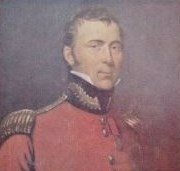
Sir Charles Forbes was the son of a small farmer in Aberdeenshire. Sir William Grant, the Master of the Rolls, was a mere peasant—his Uncles floated my father’s timber down the Spey as long as they had strength to follow the calling. General William Grant was a footboy in my Uncle Rothy’s family. Sir Colquhoun Grant, though a woodsetter’s child, was but poorly reared, in the same fashion as Mrs. Pro’s fortunate boys. Sir William Macgregor, whose history should we tell it was most romantick of all, was such another. The list could be easily lengthened did my memory serve, but these were among the most striking examples of what the good plain schooling of the dominie, the principles and the pride of the parents, produced in young ardent spirits: forming characters which, however they were acted on by the world, never forgot home feelings, although they proved this differently. The Master of the Rolls, for instance, left all his relations in obscurity. A small annuity rendered his parents merely independant of hard labour; very moderate portions just secured for his sisters decent matches in their own degree; an occasional remittance in a bad season helped an Uncle or a brother out of difficulty. I never heard of his going to see them, or bringing any of them out of their own sphere to visit him. While the General shoved on his brothers, educated his nephews and nieces, pushed the boys up, married the girls well—such of them at least as had a wish to raise themselves and almost resented the folly of Peter the Pensioner (see below), who would not part with one of his flock from the very humble home he chose to keep them in. Which plan was wisest or was either quite right? Which relations were happiest—those whose feelings were sometimes hurt, or those whose frames were sometimes over wearied and but scantily refreshed? I often pondered in my own young enquiring mind over these and similar questions…

Peter the Pensioner

We knew him always as Peter the Pensioner, on account of sixpence a day my father got him from Greenwich, in lieu of an eye he had lost in some engagement. He lived in one of a row of cottages on the Mill town moor, with a very large family of children, all of whom earned their bread by labour. We had a son in the wood work and a daughter as kitchenmaid during the time their uncle the General was paying a visit to us.

Memoirs of a Highland Lady

Elizabeth Grant of Rothiemurchus

Memoirs of a Highland Lady

Memoirs of a Highland Lady: Lovat, the Chief of the Clan Fraser

Lovat, the Chief of the Clan Fraser

Archibald Campbell Fraser

The peerage had been forfeited by the wicked lord in the last rebellion, the lands and the Chieftainship had been left with a cousin, the rightful heir, who had sprung from the common stock before the attainder. He was an old man, and his quiet, comfortable wife was an old woman. They had been at Cluny, the Lady of the Macpherson Chieftain being their niece, or the laird their nephew, I don’t exactly know which; and their servants told ours they had had a hard matter to get their master away, for he was subject to strange whims, and he had taken it into his head when he was there that he was a Turkey hen, and so he had made a nest of straw in his carriage and filled it with eggs and a large stone, and there he sat hatching, never leaving his station save twice a day like other fowl, and having his supplies of food brought to him. They had at last to get the Lady Cluny’s henwife to watch a proper moment to throw out all these eggs and to put some young chickens in their place, when Lovat, satisfied he had accomplished his task, went about clucking and strutting with wonderful pride in the midst of them, running about to collect his flock, flapping the tails of his coat as the hens do their wings in like circumstances. He was quite sane in conversation generally, rather an agreeable man I heard them say, and would be as steady as other people for a certain length of time; but every now and then he took these strange fancies, when his wife had much ado to bring him out of them.

https://en.wikipedia.org/wiki/Archibald_Campbell_Fraser_of_Lovat

Memoirs of a Highland Lady

‘I was born on the 7th May 1797 of a Sunday evening at No. 5 N. side of Charlotte Square, Edinburgh, in my father’s own lately built house and I am the eldest of five children he and my mother raised to maturity.’ Thus opens one of the most famous set of memoirs ever written. Since its first bowdlerised edition in 1898, they have been consistently in print. This is the first ever complete text. Written between 1845 and 1854 the memoirs were originally intended simply for Elizabeth’s family, but these vivid and inimitable records of life in the early 19th century, and above all on the great Rothiemurchus estate, full of sharp observation and wit, form an unforgettable picture of her time. The story ends with the thirty-three-year-old Elizabeth finding her own future happiness in marriage to an Irish landowner, Colonel Smith of Baltiboys. ‘A masterpiece of historical and personal recall.’ Scotsman

Amazon

Memoirs of a Highland Lady