
In which our heroine discovers an ancient feud…
and becomes the victim of her parents’ shortcomings
The first year my brother was at College he made acquaintance with a young man a few years older than himself, the son of one of the Professors. His friend was tall, dark, handsome, very engaging in his manners, very agreeable in his conversation, and considered by all who had been employed in his education to possess abilities quite worthy of the talented race he belonged to. The Bar was to be his profession, more by way of occupation for him in the meanwhile than for any need he would ever have to practise Law for a livelihood. He was an only son. His father was rich, his mother had been an heiress, and he was the heir of an old, nearly bedrid bachelour Uncle who possessed a very large landed property on the banks of the Tweed. Was it fair, when a marriage was impossible, to let two young people as him and me pass day after day for months familiarly together.
…
When we all removed to Edinburgh William lost no time in introducing his friend to us; all took to him amazingly; he was my constant partner, joined us in our walks, sat with us every morning, was invited frequently as company and was several times asked to stay and partake of the family dinner. It never entered my head that his serious attentions would be disagreeable, nor my Mother’s, I really believe, that such would ever grow out of our brother and sister intimacy.
…
Then came Miss Baillie’s fête, and the poem in which I figured so gracefully. It was in every mouth, for it itself it was a gem, and I was so completely the genius of it, none but a lover could have mingled so much tenderness with, his admiration. On the poet’s next visit my Mother received him very coldly. At our next meeting she declined his now regular attendance. At the next party she forbade my dancing with him: after the indelicate manner in which he had brought my name before the publick in connexion with his own, it was necessary to meet so much forwardness by a reserve that would keep such presumption at a proper distance. I listened in silence, utterly amazed, and might in such perfectly submission habits of obedience had we been brought up, have submitted sorrowfully and patiently, but she went too far. She added that she was not asking much of me, for this disagreeable young man had no attaching qualities; he was neither good looking, nor well bred, nor clever, nor much considered by persons of judgment, and certainly by birth no way the equal of a Grant of Rothiemurchus.
I left the room, flew to my own little attick, what a comfort that corner all to myself was then and often afterwards to me. I laid my head upon my bed, and covering my face with my hands, vainly trying to keep back the tears… Long I staid there, half thinking, half dreaming, till a new turn took me, the turn of unmitigated anger. Were we puppets, to be moved about with strings. Where we supposed to have neither sense nor feeling. Was I so poor in heart as to be able to like today, and loathe tomorrow, so deficient in understanding as to be incapable of seeing with my eyes, hearing with my ears, judging with my own perceptions. This long familiar intimacy permitted, then suddenly broken upon false pretences. They don’t know me, thought I; alas, I did not know myself. To my mother throughout that miserable day I never articulated one syllable. My father was in London.
My first determination was to see my poet and inquire of him whether he were aware of any private enmity between our houses. Fortunately he also had determined on seeking an interview with me in order to find out what it was my mother had so suddenly taken amiss in him. Both so resolved, we made our Meeting out, and a pretty Romeo and Juliet business it ended in. There was an ancient feud, a College quarrel between our fathers which neither of them had ever made a movement to forgive. It was more guessed at from some words his mother had dropt than clearly ascertained, but so much he had too late discovered, that a more intimate connexion would be as distasteful to the one side as the other.
We were very young, we were very much in love, we were very hopeful. Life looked so far, it had been latterly so happy. We could conceive of no old resentments between our parents that would not yield to the welfare of their children. He remembered that his father’s own marriage was an elopement followed by forgiveness and a long lifetime of perfect conjugal felicity. I recollected my mother telling me of the Montague and Capulet feud between the Neshams and the Ironsides, how my grandfather had sped so ill for years in his wooing, and how my grandmother’s constancy had carried the day, and how all parties had ‘as usual’ been reconciled… These lessons had made quite as much impression as more moral ones. So, reassured by these arguments, we agreed to wait, to keep up our spirits, to give time to be true and faithful to each other, and to trust to the Chapter of accidents.

In all this there was nothing wrong, but a secret correspondence in which we indulged ourselves was a step into the wrong, certainly… One of these stray notes from him tome was intercepted by my mother, and some of the expressions employed were so starting to her that in a country like Scotland, where so little constitutes a marriage, she almost feared we had bound ourselves by ties sufficiently binding to cause considerable annoyance, to say the least of it. She therefore consulted Lord Gillies as her confidential advisor, and he had a conference with Lord Glenlee, the trusted lawyer on the other side, and then the young people were spoken to, to very little purpose.
What passed in the other house I could only guess at from after circumstances. In ours, Lord Gillies was left by my Mother in the room with me; he was always gruff, cold, short in manner, the reverse of agreeable and no favourite with me, he was ill selected for the task of inducing a young lady to give up her lover… He counseled me, by every consideration of propriety, affection, and duty, to give ‘this foolish matter up.’ Ah, Lord Gillies, thought I, did you give up Elizabeth Carnegie? did she give up you. When you dared not meet openly, what friend abetted you secretly*. I wish I had had the courage to say this, but I was so nervous at his knowing my story, so abashed at our conversation that words would not come, and I was silent. To my mother I found courage to say that I had yet heard no reasons which would move me to break the word solemnly given, the troth plighted, and could only repeat what I had said at the beginning that we were resigned to wait.
Lord Glenlee had made as little progress; he had had more of a storm to encounter, indignation having produced a flow of eloquence. Affairs therefore remained at a stand still. The fathers kept aloof—mine indeed was still in London; but the mothers agreed to meet and see what could be managed through their agency. Nothing very satisfactory. I would promise nothing, sign nothing, change nothing, without an interview with my betrothed to hear from his own lips his wishes. As if my mind had flown to meet his, he made exactly the same reply to similar importunities. No interview would be granted, so there we stopt again. A growing fancy early perceived might have been easily diverted. It was a matter of more difficulty to tear asunder two hearts too long united.
At length his mother proposed to come and see me, and to bring with her a letter from him, which I was to burn in her presence after reading, and might answer, and she would carry the answer back on the same terms. I knew her well, for she had always been kind to me and had encouraged my intimacy with her daughters; she knew nothing of my more intimate relations with her son. The letter was very lover like, very tender to me, very indignant with every one else, very undutiful and very devoted, less patient than we had agreed on being, more audacious than I dared to be. I read it in much agitation—read it, and then laid it on the fire. ‘and now before you answer it, my poor dear child,’ said this most excellent and most sensible woman, ‘listen to the very words I must say to you,’ and then in the gentlest manner, as a tender surgeon might cautiously touch a wound, rationally and truthfully, she laid all the circumstances of our unhappy case before me, and bade me judge for my self on what was fitting for me to do. She indeed altered all my high resolves, annihilated all my hopes, yet she soothed while she probed, she roused while seeming to crush and she called forth feelings of duty, of self respect, of proper self sacrifice, in the place of the mere passion that had hitherto governed me. She told me that although she had considered my education to have been in many respects faulty, the life I led frivolous and that there was much in my own unformed character to condemn, she would have taken me to heart as her daughter, for the pure, simple nature that shone through all imperfections, and for the true love I bore her son. She knew there was a noble disposition beneath the little follies, but her husband she said would never think so, never ever endure an alliance with my father’s child. They had been friends, intimate friends, in their School and College days; they quarreled, on what grounds neither of them ever had been known to give to any human being the most distant hint, but in proportion to their former affection was the inveteracy of their after dislike… My father had written to my mother that he would rather see me in the grave than the wife of that man’s son. Her husband had said to her that if that marriage took place he would never speak to his son again, never notice him, nor allow of his being noticed by the family. She told me her husband had a vindictive as well as a violent and a positive temper, and that she suspected there must be a touch of the same evil dispositions in my father, or so determined an enmity could not have existed… At their age she feared there was no cure… She said we had been cruelly used, most undesignedly; she blamed neither so far, but she had satisfied her judgment that the peculiar’ situation of the families now demanded from me this sacrifice; I must set free her son, he could not give me up honourably.… She said what she liked, for I seldom answered her; my doom was sealed; I was not going to bring misery in my train to any family, to divide it and humiliate myself, destroy perhaps the future of the man I loved, rather than give him or myself some present pain…
I told her I would write what she dictated, sign Lord Glenlee’s ‘renunciation,’ promise to hold no secret communication with her son. I kept my word; she took back a short note in which… I gave him back his troth. He wrote, and I never opened his letter; he came and I would not speak, but as a cold acquaintance. What pain it was to me those who have gone through the same ordeal alone could comprehend. His angry disappointment was the worst to bear; I felt it was unjust, and yet it could not be explained away, and pacified. I caught a cold luckily, and kept my room awhile. I think I should have died if I had not been left to rest a bit.

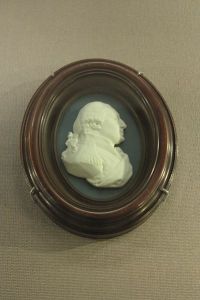
Adam Gillies, Lord Gillies (1760-1842)
*I searched in vain for any information about Lord Gillies’ illicit marriage to Elizabeth Carnegie. Lord Gillies was a Scottish judge (and somewhat of a hypocrite, it seems).
Memoirs of a Highland Lady
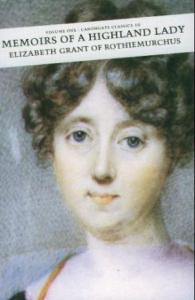 ‘I was born on the 7th May 1797 of a Sunday evening at No. 5 N. side of Charlotte Square, Edinburgh, in my father’s own lately built house and I am the eldest of five children he and my mother raised to maturity.’ Thus opens one of the most famous set of memoirs ever written. Since its first bowdlerised edition in 1898, they have been consistently in print. This is the first ever complete text. Written between 1845 and 1854 the memoirs were originally intended simply for Elizabeth’s family, but these vivid and inimitable records of life in the early 19th century, and above all on the great Rothiemurchus estate, full of sharp observation and wit, form an unforgettable picture of her time. The story ends with the thirty-three-year-old Elizabeth finding her own future happiness in marriage to an Irish landowner, Colonel Smith of Baltiboys. ‘A masterpiece of historical and personal recall.’ Scotsman
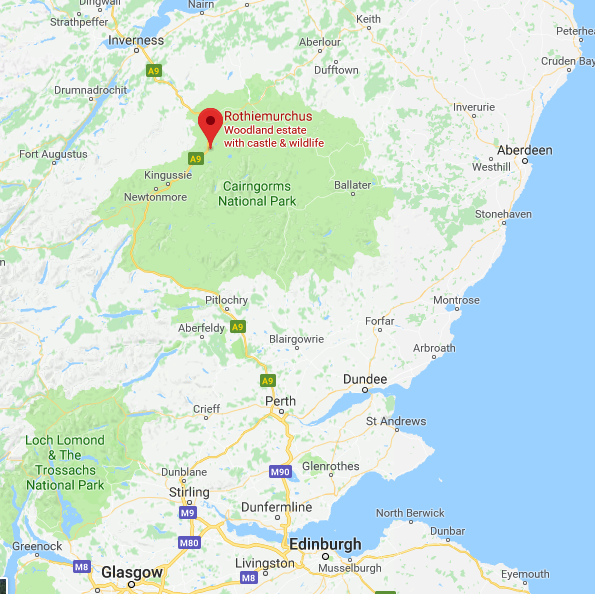
Memoirs of a Highland Lady
- Lovat, the Chief of the Clan Fraser
- The Moral Training of Great Men Began In a Cabin
- “Duchess of Sussex”
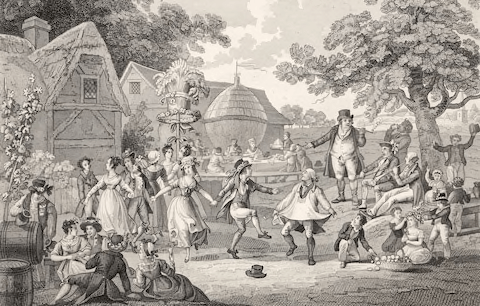
- Harvest Home
- “The short romance which changed all things for me”
- Resentment and Recovery
- Queen of Sweden
- The Last Winter in Edinburgh
- Rotterdam and Mr. George Canning
- Waterloo and the Return to Edinburgh
- Frugality, Practicality, and Much Reflection
- Further Hardships and Preparing for a Voyage
- Shipboard Life
- Life in India and Another Sister Wed
- Colonel and Mrs. Smith


 Susana's Parlour