Archives

Historical Romance Deal Breaker #6: Heroes With Mistresses or Who Sleep With Servants

susana's avatarSusana's Parlour

Literally decades of reading historical romances have led me to develop strong opinions of what defines a truly satisfying story, so the other day I set about making a list of characteristics that turn a potential five-star read into a one- or two-star. Admittedly, there are some skillful authors who manage to successfully incorporate one or more of these scenarios in their books; however, I have run across quite a few more who in my opinion haven’t quite managed it.

These are what I call “deal breakers”—characteristics that make a book a wall-banger instead of a pleasurable diversion. Not surprisingly, many involve character, particularly, the character of the hero and heroine. They have to be likable. They have to be three-dimensional, i.e., well-drawn-out characters with flaws, not fairy princesses. And they have to be able to fall in love, convincingly, the head-over-heels kind of love.

Overview of Susana’s Historical Romance Deal…

View original post 492 more words

Regency Rites: Almack’s Assembly Rooms

What was Almack’s?

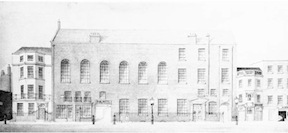
Almack’s was founded in 1765 by a Mr. McCall. The building was located on King Street just off St. James Street* and included a large ballroom, as well as supper rooms and card rooms.

Almack’s was ruled by a select committee of society matrons known as the Lady Patronesses. These ladies ruled the club with an iron hand; only the crème de la crème (about 25%) of London society were authorized to cross the threshold of this exclusive circle. Each application for membership was carefully scrutinized by the high-handed patronesses, who were not above using their power for retribution against their rivals or other personal reasons.

The food served was not of the best quality. Alcohol was not served—only tea and lemonade.The floor of the ballroom was said to be dreadful, and the rigid rules set by the patronesses could not be broken by anyone. It is said that the Duke of Wellington, the hero of the Peninsular War, was refused admission because he did not sport the proper dress—knee breeches, white neckcloth, and a long-tailed coat. The doors were locked precisely at eleven o’clock and no one was allowed in after that for any reason. There was a long list of”do’s” and “don’ts” (mostly don’ts) for the young debutantes, and any infraction could result in expulsion from the club and social censure. When the waltz was finally given the seal of approval—it was condemned for years as being scandalous due to the close proximity of the dancers’ bodies—the young ladies had to be individually approved to dance it by one of the patronesses.

Almack's Assembly Rooms

Almack’s Assembly Rooms

Almack’s balls were decidedly not anywhere near the grandest balls of the London Season, so why did the matchmaking mothers of the haut ton scramble to get their hands on those square cardboard vouchers that would gain them admittance?

One word—marriage. Almack’s was the exclusive “marriage mart” of the ton. While potential spouses for your sons and daughters could be found elsewhere, the “best” ones could ideally be found at Almack’s, where the average, everyday riffraff need not apply. Who wouldn’t want their daughter to find a wealthy, well-connected—perhaps titled—spouse to enrich the family fortunes? Matchmaking mothers everywhere yearned to have their marriageable offspring included among the exclusive company of Almack’s.

Who were the Patronesses?

The Lady Patronesses—six or seven at any one time—were:

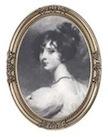
Lady Castlereagh

Lady Castlereagh

Lady Castlereagh (Emily Anne) was a wealthy earl’s daughter who married the Viscount Castlereagh (later the 2nd Marquess of Londonderry), who held many political posts (Secretary of States for War, Secretary of State for Foreign Affairs, and leader of the House of Commons) during the period. Lady Castlereagh was the one who insisted that the door to Almack’s be closed promptly at eleven. She and Mrs. Drummond Burrell were both known for their disdainful arrogance.

Lady Jersey

Lady Jersey

Lady Jersey, “Queen Sarah,” “Silence,” or “Sally” to her close friends was the wealthy daughter of the 10th Earl of Westmoreland who married the 5th Earl of Jersey. Lady Jersey’s mother-in-law, Lady Frances Jersey, was at one time the mistress of the Prince of Wales (it was she who recommended he choose Princess Caroline for his wife), and her parents eloped to Gretna Green (quite the scandal). Lady Jersey’s younger sister married the brother of the scandalous Lady Caroline Lamb, but when the latter ridiculed her in her vengeful novel Glenarvon, Lady Jersey barred her from Almack’s forever.

Lady Sefton

Lady Sefton

Lady Sefton (Maria) assisted many a green girl to negotiate the hazards of the marriage mart. Her husband was an enthusiastic sporting man, and a member of the Four-in-Hand Club (an elite club for only the best drivers).

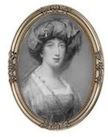
Lady Cowper

Lady Cowper

Lady Cowper (Emily) was the daughter of the great political hostess, Lady Melbourne, and due to her mother’s numerous affairs, her paternity was never verified. She disapproved of her sister-in-law, Lady Caroline Lamb, but was otherwise known as one of the kindest of the patronesses.

Princess Esterhazy

Princess Esterhazy

Princess Esterhazy (Thérèse) was the grand niece of Queen Charlotte and never let anyone forget it. Her husband Prince Paul Esterhazy served as the Austrian ambassador to England 1815-1842. She and the Countess Lieven demonstrated the utmost in continental sophistication.

Countess Lieven

Countess Lieven

Countess Lieven (Dorothea) was the first foreigner to serve as a patroness of Almack’s. Her husband the Count was the Russian ambassador to England from 1812 to 1834. Besides being a leader of London society, she was a significant political force in Great Britain, France and Russia.

Mrs. Drummond Burrell

Mrs. Drummond Burrell

Mrs. Drummond Burrell (Clementina) was a great heiress and daughter of an earl who later became a baroness when her husband succeeded to his father’s title. Although one of the younger patronesses, she was considered the most arrogant and haughty of them all.

Appearance was everything.

It’s interesting to note that while London society, as demonstrated by the Lady Patronesses, demanded a high degree of moral perfection, it was really the façade that counted. As long as you behaved with discretion—i.e., didn’t get caught—you could have adulterous affairs with impunity. While it was expected that wives would remain faithful to their husbands until the birth of an heir or two, after that, it was quite common for both husband and wife to indulge in affairs. It was widely known that Lady Melbourne had affairs with politically powerful men who fathered many of her children, but her the importance of her position precluded any open censure.

Most of the Lady Patronesses of Almack’s had notorious affairs. Emily Cowper, taking the advice of her mother, the above-mentioned Lady Melbourne, to be true to her lover rather than her husband, had a long affair with Lord Palmerston, who later became Prime Minister, and after her husband died, they married and lived happily ever after.

As long as it was behind closed doors—and you were wealthy and important enough—you could get away with a considerably lower standard of behavior. Of course, marriages tended to be more about property, wealth and family connections than any sort of love or affection, so perhaps such scenarios were a natural result of cold-blooded unions.

The King Street location of Almack’s is an office building now; when I was there two weeks ago, it was covered with scaffolding. Christie’s Auction House is across the street.

The Regency Rites series

Regency Rites: The Well-Dressed Regency Lady 

Regency Rites: Presentation at Court

Regency Rites: Almack’s Assembly Rooms 

Regency Rites: The London Season

Episode #13: Lady P Discusses the Luddite Uprising, the Assassination of Spencer Perceval, and the General Unfairness of Life

Lady Pendleton, Damian Ashby’s eccentric aunt (see the epilogue to Treasuring Theresa on Susana’s web site), is visiting Susana from the early 19th century. She’s intrigued by life in 21st century Toledo, Ohio, and, of course, Susana is thrilled to have the opportunity to pick her brain about life in Regency England. It certainly gives her a great deal to write about in Susana’s Parlour!

Susana: Lady P and I recently returned to Ohio after spending a month in Florida where she enjoyed taking daily “constitutionals” around the retirement village where my parents live, and eventually condescended to take a dip in the heated pool, although the bathing costume she rigged for herself raised more than a few eyebrows from the other swimmers.

Lady P [indignantly]: My dear Susana, I could not possibly have appeared in public in those-those underthings you and your mother wore. I should have been utterly humiliated!

Susana: They are called swimsuits, Lady P. Bathing costumes. And that’s what everyone else wore.

Lady P [with a hand to her head]: The gentlemen—such as they were—were much worse. I thought I would swoon when I saw those naked chests!

Susana [chuckling]: But surely you have seen a bare-chested man before, Lady P. Why, you and Lord P were married for nearly twenty years, were you not?

Lady P: Well, of course I did, but not in public, Susana. Why, my Pendleton was exceedingly conscious of propriety. He would never have appeared in public half-dressed; why his valet would have slit his own throat before allowing it!

Susana [biting her lips to keep from laughing at the thought of the suicidal valet]: These gentlemen are from the 21st century, Lady P. Frankly, what these men wore was quite modest compared to some of the younger gentlemen. Don’t you remember that day when we went to the beach and saw—

Lady P [shuddering]: Do not even remind me, Susana. The young women’s attire…why they were nearly as naked as the day they were born! Where is their sense of modesty?

Susana [making a mental note to avoid beaches and pools in the future]: Perhaps we should get back to today’s topic—the Luddite revolt in 1811-12. Can you tell my readers what you recall of that uncertain time?

Lady P: Indeed I can, although one could wish to forget it.

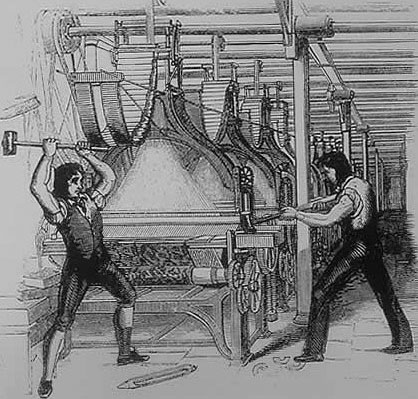
ludditesSusana: It started in the Midlands with the stocking industry, when stockingers, using looms and equipment leased from their employers in their homes, lost more than half their income when they were forced to produce cheap stockings that their employers could sell in larger quantities and increase their profits. Is that correct?

Lady P: How could I forget? Those stockings fell apart after barely a week of wear, and even the servants disdained them!

Susana: That was the same year the harvest failed, and food prices rose to an alarming level, and more and more people were suffering in economic distress.

Lady P: A shilling for a loaf of bread! It was outrageous!

Susana: People became desperate, and before long, gangs of disguised men started going around destroying the frames and looms used to produce the stockings to protest the treatment of the workers and the poverty more and more of them were forced to endure.

Lady P: That may be how it started, Susana, but it escalated into so much more than that. Why, many of us feared an uprising against the monarchy comparable to the French Terror of barely two decades past. And there wasn’t much to be done about it; Pendleton told me that fully half of the militia had taken up the cudgel for General Ludd in stealth and would turn against their officers in a trice if ordered to put down the revolutionaries.

Susana: I’m curious to know what Lord P thought should be done about it. He was a Tory, and the Tories were in power. Did he approve the decision to make frame-breaking a capital offense?

Lady P [shaking her head and sighing]: No, of course he did not. He thought it was incredibly stupid to think that masses of starving insurgents could be deterred by fear of the gibbet if they were caught. [Swallowing hard] He was, in fact, quite moved by Lord Byron’s speech in the House of Lords, where he decried the Tories’ attempt to solve the problem by force. He insisted—quite eloquently, Lord P admitted—that the Midland workers were being exploited to increase the profits of a few hosiers, and that the resulting misery benefitted no one.

Susana [thoughtfully]: The more things change, the more they stay the same. [Seeing Lady P’s raised eyebrow]: I was just thinking of how the Ohio House of Representatives just voted to eliminate the forty-hour work week so that employers won’t have to pay overtime—pay them double—for working more than that.

Lady P: As to that, I can’t say, Susana. But that is one reason I became a Whig. I would never go so far as to overturn the entire government and plunge the country into turmoil and terror such as what happened in France, but I have always believed that certain reforms to prevent the poor from being exploited could be instituted without much upheaval, and that the entire country would be the better for it. [Sighing] Dear Pendleton felt the same, but he was unable to persuade his colleagues to listen to reason. As afraid as they were of a revolution, the only solution the Tories could agree on was to threaten the insurgents.

Susana: It wasn’t long after that the Tories fell out of power, didn’t they? After the assassination of the Prime Minister?

Lady P: Indeed, and it was well-deserved too. Not because the Whigs’ ideas were much better, although they certainly used the Tories’ imprudence to their advantage. The Prince Regent’s intemperate behavior and his treatment of his wife made him vastly unpopular, so the Whigs took up the cudgel for Princess Caroline, proclaiming that she was being badly treated, and causing more riots, spreading to the north.

percevalSusana: And didn’t the people actually cheer the assassin as he was led to his execution a week later? There was that much dissatisfaction with the government that they cheered the murderer of the Prime Minister?

Lady P [tight-lipped]: Poor Lord Perceval. He was a good man. Had twelve children, you know. A family man. He could have gone far, if it weren’t for that Bellingham fellow shooting him in the House of Commons. Do you know the government wouldn’t even give him a public funeral because they were fearful of riots? I hardly knew what to say to his wife Jane when I saw her after that.

Susana [sighing]: Some things seem so unfair, don’t they? Like my friend whose daughter just died of breast cancer at age thirty-seven. Or many of my friends whose husbands lost their jobs and couldn’t find anything comparable afterward because of their age and the cost of health insurance. What do you say? How do you help them?

Lady P [clucking]: I suppose there will always be misery and injustice, no matter how diligently we try to eliminate it.

Susana: But that doesn’t mean we should stop trying.

Lady P [smiling]: Exactly. Now, Susana, don’t you think something should be done about all the weeds in the back garden? Since the weather turned warmer, they seem to be popping up all over the place.

Susana [leaving the room]: Have at ’em, Lady P. There’s a hoe in the shed and some work gloves in the drawer over there.

Lady P [frowning]: And where might you be going, then?

Susana [from the office]: I have a Christmas story to write. Deadline, you know. Can’t be bothered with weeds for awhile.

Lady P makes a beeline for the back door, audibly grumbling about “misplaced priorities,” “writing Christmas stories in May,” and that she “really should go back to the 19th century where there were gardeners to do such onerous tasks.”

As always, please do comment if you have any questions you’d like to ask Lady P about the late Georgian/Regency era. She does love to chat!

The Lady P Series

Episode #1: Susana’s Adventures With Lady P: The Introduction

Episode #2: Lady P Talks About… Pride and Prejudice?

Episode #3: Lady P and the Duchess Who Lost a Billion Dollars

Episode #4: Lady P and the Face On the $100 Bill

Episode #5: In Which Lady P Discovers Sparkly Fabrics and Ponders Violating the Prime Directive

Episode #6: Lady P Dishes the Dirt on the Duchess of Devonshire

Episode #7: The Political Exploits of Lady P and the Duchess of Devonshire

Episode #8: Lady P and the Prince Regent’s Illicit Marriage

Episode #9: In Which Lady P Depletes the Cooking Sherry During Her Discussion of Caroline of Brunswick

Episode #10: Lord Byron: Mad, Bad, and Dangerous to Know

Episode #11: In Which Lady P Talks About Hannah More and the Rights of Women

Episode #12: Lady P’s Revelations Regarding George III and His Peculiar Progeny

Episode #13: Lady P Discusses the Luddite Uprising, the Assassination of Spencer Perceval, and the General Unfairness of Life

Episode #14: In Which Leticia, Lady Beauchamp, Pops In For an Interview On Her Personal Acquaintance With Princess Charlotte of Wales

Episode #15: Lady P On Assignment in 1814 Kent

Lady P Quizzes Jane Livingston, the Hero’s Sister From “A Twelfth Night Tale”

The Dress: Episode #3

In Kansas City at the Romantic Times Convention!

We did it!

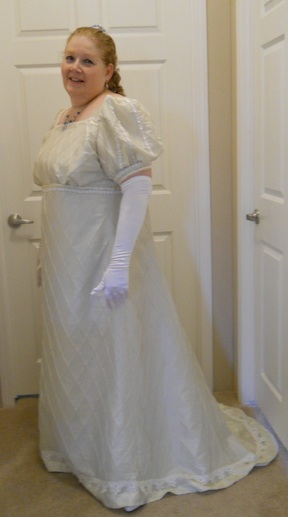
The dress and coat are both done, no thanks to me since I got sick the last couple of days and couldn’t even help with the handwork. The best I could do was show up for fittings, pose for pictures, and eventually, pack up the car for the 1200-mile trip from the Florida retirement community to Kansas City. I still feel a bit like the wicked stepsister, taking off for the ball while leaving Cinderella at home to prepare two houses (mine and hers) for the summer while we head back to Ohio. I seriously owe you, Mom!

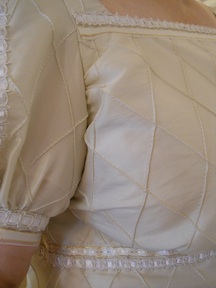
gown427-4My mom’s a genius! Not only did she do a fantastic job on both garments, but she sewed on hanger loops and outfitted me with a needle and thread in case something goes wrong. She really deserves to be here at RT on Wednesday night when I wear it to the Ellora’s Cave disco party (not going to do any disco dancing, however) and the 30th Anniversary Ball on Thursday. I’ve promised photos, and they’ll be posted here as well.

Observations on the entire process

  • This is not a project for an amateur. I could never have done this myself, and I do have some sewing experience. The fitted bodice required a LOT of pattern alterations, since we couldn’t use any sort of stretchy fabric and still remain anywhere close to authentic.
  • The gown my sister had made had two separate drawstrings in the bodice to make it more fitted, since she was not available for fittings. That turned out well, but I’m not sure that would have worked well with the pattern we used.
  • We had to fudge on the back closings, since we could not get the eyehole punch to work through two layers of fabric and interfacing. In the end, we used hooks and eyes and snaps, and yes, I do need a lady’s maid to help me into it. (Any volunteers?)

How much did I spend on this project?

  • As to that, I’m not sure I really want to know. The most costly trip to Jo-Ann’s was $143, and that was mostly for the fabric and lining (for both the gown and the coat). The price for the trim and lace was another $100 or so (and totally worth it, I think you will agree), and there were several other trips to Jo-Ann’s in various towns for things like interfacing and other sewing notions. A few things (like the eyehole punch) got returned too, so I can’t tell you the final cost. But I would guess it was at least $350, and that does NOT include the hours and hours my mother put into it. But that’s not all! I also invested a considerable sum in accessories, including:
  • Regency slippers with “diamond” clips, plus clockwork stockings, from American Duchess
  • ringlet hairpiece
  • three different tiaras (couldn’t make up my mind)
  • long white gloves
  • brooch to wear with the coat
  • special “undies” (not authentic, but who’s going to know?)

gown_detailBut it’s not about the money.

It’s never been about the money.

It started with my friend Ellen’s idea for promoting Susana Ellis the author at conferences like this one (although I suspect that I will not be the only one in costume here.) But it became so much more than that. I never could have guessed how much my mother and I bonded during this process—from the first days of discussing the project to the difficult decisions about fabric choice (would you believe we originally intended the blue satin to be the gown and the cream pintuck taffeta to be the coat?) and many setbacks (like when the sleeve had to be redone and then we had to abandon the project for a few days to head north for a funeral) and wondering if it was possible to finish both garments in time for the conference.

Surprisingly, even my father became invested in this project. During the times when he seemed to have some health setbacks himself and Mom started worrying about having to head north earlier than planned and not being able to finish the coat, he told her to quit worrying about him and just finish it! He wanted to see the final product as much as we did, and thus, he started working harder at his physical therapy exercises (he has Parkinson’s).

Today’s the day!

I’m writing this on Wednesday, so by the time this goes live, the first event (the Ellora’s Cave disco party) will be over and hopefully I will have some photos to post. I’m planning to wear the gown for a Club RT appearance at 3:30, and then comes the stage walk with the Ellora’s Cave caveman. Oh yeah!

Click here for the video of the walk across the stage!

coat427-3On Thursday I’ll be wearing it for the Expo from 4-6 and then the RT ball in the evening. On Friday morning I have another appearance at Club RT. By then I’m sure it’ll be ready for the dry cleaner’s and the next opportunity, probably the RWA Conference in Atlanta.

If you are going to be at any of these events, please come up and chat with me and check out the gown in person. I’m looking forward to making lots of reader-author friends while I’m here, and I do hope you will be one of them! Warning: don’t be surprised if I ask you to be “lady’s maid” for me! Regency ball gowns were generally worn by well-off young ladies with abigails to assist them in dressing, and unfortunately, my first choice in lady’s maids—my sister Gloria—had to stay home with her cat. Where is a hunky Ellora’s Cave caveman when you need one?

Oh, and in case you’re wondering: Mom is NOT interested in taking this up as a profession or a hobby. Being retired in itself is a very time-consuming activity. Once is enough…and I’m the lucky one!

The Dress: Episode #1

The Dress: Episode #2

Spotlight On Regency Personage Hannah More

220px-HannahMoreMonday’s Lady P episode mentioned Hannah More as having a significant influence on the changing attitudes toward women in the late Georgian/Regency era. Regency readers will recognize the name as being the author of books that many well-meaning Regency mothers assigned their daughters to read while said daughters preferred to indulge themselves with Mrs. Radcliffe’s novels.

Hannah More grew up in a very religious family. Her father taught in a free school and later opened a girls’ school managed by his daughters while he himself managed a boys’ school. Hannah started writing at a young age, beginning with pastoral plays for the young girls at the school to act out, and eventually moving on to London, where her play Percy was a great success at Covent Garden. For several years she enjoyed the social circle of a well-known group of bluestockings (a pejorative term referring to a female intellectual). Her second play, however, was not a success, and after a falling-out with a poet friend, Hannah withdrew from London’s intellectual circles and began to focus on religious and philanthropic works.

As the Regency period advanced and the older generation of politically-active ladies died or became infirm, fewer women involved themselves directly in politics. In 1815 Hannah More wrote a study on St. Paul’s description of the female character, which instructed women to dress themselves modestly and atone for their spiritual weakness by keeping silent and learning from the men. By daring to publish her writing, Hannah was herself breaking these rules, for which she apologized in all of her works.

  • Thoughts on the Importance of the Manners of the Great to General Society (1788)
  • An Estimate of the Religion of the Fashionable World (1790)
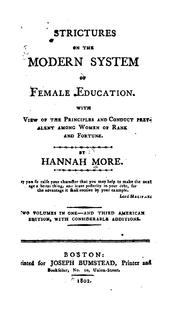
  • Strictures on the Modern System of Female Education (1799)
  • Hints toward Forming the Character of a Young Princess (1805)
  • Coelebs in Search of a Wife (1809)
  • Practical Piety (1811)
  • Christian Morals (1813)
  • Character of St. Paul (1815)
  • Moral Sketches (1819)

stricturesIn spite of the daunting titles, Hannah’s work outsold all of the authors of the aforementioned novels, and she became a force to be reckoned with, responsible for the sudden popularity of “religion of the heart” and countless conversions to the Evangelical faith.

Women could, of course, become involved in charity work to benefit the poor, and Hannah and her sisters threw themselves into establishing a series of schools in rural areas. The schools taught reading, the Bible, and catechism, as well as sewing and knitting, but not writing, as that was thought to give the poor too much power. Even then, they ran into opposition from the farmers, who feared that too much education would prove the end of agriculture, and from the clergy, who claimed that she was teaching Methodism, a religious movement of the lower classes that was considered dangerous by the established churches.

Along with William Wilberforce, she became a major force in the fight to abolish the slave trade, publishing a poem called Slavery in 1788.

The Pendulum Swings the Other Way

Through her writings and philanthropic work, Hannah More wielded a huge influence on English society, urging people to seek God in their hearts through Bible reading, to live their lives in an orderly and circumspect manner, and to help the poor escape their misery.

For the most part, though, her strictures did not address the moral depravity of the upper classes, where debauchery and excesses continued to rule the behavior of the Prince Regent and his brothers on down. The Evangelical movement did not address the inequalities in English society, but took the position that if God chose someone to be rich or poor, there must be a good reason for it, and the best thing to be done was to be content with one’s circumstances and look toward treasures in heaven. Wilberforce, for all of his efforts to help the poor in Africa, condemned as immoral the formation of unions against unfair employers in England. Easy to say for a man who inherited wealth and married more of it.

Another problem with the Evangelical movement that Hannah More was a part of was when the fight against “worldliness” went to extremes. Just about anything pleasurable was considered “worldly,” including dancing, card playing, and taking country walks on Sundays. By the time Thomas Bowdler had begun altering Shakespeare’s works to make them acceptable for reading in mixed company, the puritanical excesses of the Evangelicals were making them a laughingstock.

In Episode #11, Lady P decries the extremism in English morality. Hannah More’s popularity is proof that her “religion of the heart” was a timely one that many were eager to hear. Taken to extremes, as it was by Wilberforce and other Evangelicals, however, that message becomes lost in a sea of strictures and censorship that incites ridicule and rebellion.

Thanks go to:

Our Tempestuous Day by Carolly Erickson, 1986.

Episode #8: Lady P and the Prince Regent’s Illicit Marriage

Lady Pendleton, Damian Ashby’s eccentric aunt (see the epilogue to Treasuring Theresa on Susana’s web site), is visiting Susana from the early 19th century. She’s intrigued by life in 21st century Toledo, Ohio, and, of course, Susana is thrilled to have the opportunity to pick her brain about life in Regency England. It certainly gives her a great deal to write about in Susana’s Parlour!

Susana [to the Reader]:

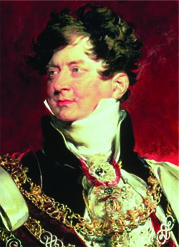
regentThe Prince of Wales became Regent in 1811 when his father was deemed unable to reign due to madness. He is often caricatured in historical fiction. Dubbed as “Prinny,” (and other, less polite sobriquets), the king’s eldest surviving son was intemperate in just about every area of his life and generally disliked by the populace.

So naturally, one of the first topics I broached with Lady Pendleton when she arrived on my doorstep was the Prince Regent and what he was like. And she did have a lot to say…but then, she usually does, doesn’t she?

Lady P:

I didn’t meet the Prince Regent until just after my marriage, and although we traveled in the same social circles, Pendleton did not approve of him, and not just because of politics. The Prince was a confirmed skirt chaser before his eighteenth birthday, and he tended to be attracted to older women. Though not normally a jealous man, Lord P did not like to see me much in company with him. I mean, how does one turn down the attentions of a future monarch without incurring rancor and courting future ill-will? No indeed, Pendleton remained riveted to my side whenever we accepted invitations to Carlton House or any event at which the Prince was expected to put in an appearance. [Sighing] Of course, my dear husband never knew of the handful of times I met the Prince at one of Georgiana’s salons at Devonshire House. But then, Lord P would never have countenanced my attendance at a Whig affair, so I simply omitted mentioning it. For his own good, of course.

maria_fitzAlthough I saw His Royal Highness eyeing my form with appreciation on occasion, he never importuned me in any way. No doubt it was due to the fact that he was already infatuated with Maria Fitzherbert, who, like me, was a half dozen or so years older than he was. He’d already had several mistresses by then, including that unfortunate actress, Mary Robinson, but this was different. He was well and truly besotted with Mrs. Fitzherbert.

Susana:

Is it true that he contracted an illegal marriage with her?

Lady P:

Oh, indeed he did. Georgiana told me she was particularly asked by His Highness to assist Mrs. Fitzherbert’s acceptance in the ton. Of course, she could not refuse, although it was exceedingly distasteful to her. She and Maria detested one another, and as fond as she was of the Prince, Georgiana could not like the rashness of his actions in making such an imprudent marriage. Besides the fact that the law prohibited him from marrying without the approval of his father, she was twice-widowed already and a Catholic. [Shaking her head] Could he have found anyone less suitable to be spouse of a king?

Susana:

So it was widely known that he had married without permission. Did his parents know? I wonder how they could countenance his marriage to Princess Caroline, then. Would that not be bigamy?

Lady P:

Well, even when he was sane, George III despised his eldest son. His illness notwithstanding, the old king was a conscientious ruler and I’m certain he despaired of the nation’s future well-being under his dissipated, self-indulgent son. [Shrugging] As to the unsuitability of his marriage, well, there was nothing to be done but to ignore it. I’m sure Maria was offered money to destroy the marriage lines and take herself off, but she was a good Catholic and considered herself married in the eyes of God. Well, the Pope himself declared the marriage valid.

Susana:

Ah yes, no doubt he had hopes of bringing the English back into the True Faith.

Lady P [snickering]:

As if that would ever have happened! Although he lived on and off with her for the better part of two decades, the Prince philandered with others during that time, and even severed his relationship with her just prior to his marriage to that German princess, Caroline. When that turned out to be a colossal disaster, he reconciled with Maria briefly, but when that ended as well, the affair was well and truly over and one couldn’t even mention her name without incurring tirades of anger and bitterness.

Susana:

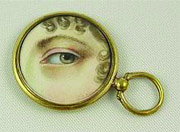
And yet, didn’t he make a request to be buried with her cameo, or some such trinket?

mariaseyeLady P [sighing]:

It was a miniature of her eye, something she’d given him in the early days to remind him of her—that she was watching him—when they were apart. Despite everything that happened, he kept it, and they said he did speak of her affectionately at the end.

But she was a fool for throwing her lot in with him in the first place. Royal princes don’t marry commoners, and royal heirs marry for state reasons. At least they did in my day. I must confess that it warmed my heart to watch Prince William’s wedding to Kate Middleton on that computer contraption of yours, although I find it fascinating that she is related to Lord Shelbourne, who was prime minister for a year or so before Charles James Fox’s Whigs trounced him out of office. Why, Lord P and I knew him well.

Susana:

It’s a small world, or so they say.

Lady P:

Indeed it is. Everyone is related to everyone else. It is enough to boggle the mind. I wonder if you and I could be related to each other, Susana? Have you ever thought of that possibility?

Susana [chuckling]:

Well, you do bear a certain resemblance to my mother. But no, I haven’t yet found a connection. I wonder if a DNA test would help?

Lady P [puzzled]:

A DNA test? What can that be? Do explain yourself, Susana.

Susana [to the Reader]:

Well, our conversation took a different direction at that point, but I’m sure I shall have an opportunity to pick her brain further about the Prince Regent at another time.

As always, please do comment if you have any questions you’d like to ask Lady P about the late Georgian/Regency era. She does love to chat!

The Lady P Series

Episode #1: Susana’s Adventures With Lady P: The Introduction

Episode #2: Lady P Talks About… Pride and Prejudice?

Episode #3: Lady P and the Duchess Who Lost a Billion Dollars

Episode #4: Lady P and the Face On the $100 Bill

Episode #5: In Which Lady P Discovers Sparkly Fabrics and Ponders Violating the Prime Directive

Episode #6: Lady P Dishes the Dirt on the Duchess of Devonshire

Episode #7: The Political Exploits of Lady P and the Duchess of Devonshire

Episode #8: Lady P and the Prince Regent’s Illicit Marriage

Episode #9: In Which Lady P Depletes the Cooking Sherry During Her Discussion of Caroline of Brunswick

Episode #10: Lord Byron: Mad, Bad, and Dangerous to Know

Episode #11: In Which Lady P Talks About Hannah More and the Rights of Women

Episode #12: Lady P’s Revelations Regarding George III and His Peculiar Progeny

Episode #13: Lady P Discusses the Luddite Uprising, the Assassination of Spencer Perceval, and the General Unfairness of Life

Episode #14: In Which Leticia, Lady Beauchamp, Pops In For an Interview On Her Personal Acquaintance With Princess Charlotte of Wales

Episode #15: Lady P On Assignment in 1814 Kent

Lady P Quizzes Jane Livingston, the Hero’s Sister From “A Twelfth Night Tale”
Episode #7: The Political Exploits of Lady P and the Duchess of Devonshire

Lady Pendleton, Damian Ashby’s eccentric aunt (see the epilogue to Treasuring Theresa on Susana’s web site), is visiting Susana from the early 19th century. She’s intrigued by life in 21st century Toledo, Ohio, and, of course, Susana is thrilled to have the opportunity to pick her brain about life in Regency England. It certainly gives her a great deal to write about in Susana’s Parlour!

red_3smLady P: I’m afraid you find me alone this morning, since Susana is so occupied with her accounts that she begged me to talk to you on my own. Of course, I did tell her that it isn’t strictly necessary to pay the tradesmen’s bills on time; mine are often several months in arrears—due to my demanding schedule, you know—but the merchants with whom I do business have no concerns about being paid eventually. [Sigh] But she insists that there are dreadful penalties for tardiness in meeting one’s obligations, such as one’s credit rating being lowered, whatever that means, so I graciously agreed to serve in her stead once again.

devonshireShe just finished reading a biography written about my good friend Georgiana, the Duchess of Devonshire, and she said she thought her readers would enjoy hearing about Georgiana’s political exploits, and mine too, of course, since I did campaign with her on several occasions.

Well, I suppose I must first mention the brilliant salons at Devonshire House where all the important players in the Whig Party used to meet and have the most intriguing discussions. I was able to attend only a handful of times when Pendleton was out of town—he would never countenance that sort of thing, you know, being a Tory from way back, although I did try at first to explain to him that politics is not something that can be inherited like money or a house—but when I did I was simply fascinated. Georgiana was astonishingly intelligent, you know. If she hadn’t been a female, I’m sure she would have risen to Prime Minister, and I can assure you that if she had, the country would have fared ever so much better than it did at the hands of the men! Not to mention her sense of fashion.

cjfoxBut…no, those of the female sex were not even allowed to vote, so it was quite a scandal when Georgiana and her sister and several other prominent women marched in favor of Charles James Fox in the early days. Charles was a distant cousin, you see, and they were quite cozy with one another. It was really quite something to see, Georgiana leading the women, all carrying signs, through the streets as the onlookers cheered. She had such a presence, you know. I believe she could have convinced them to vote for a monkey and they’d have done so quite happily.

Why, I’ll never forget the day an Irish dustman approached her as she was descending from her carriage and said, “Love and bless you, my lady, and let me light my pipe in your eyes.” [Chuckle] She was forever saying that “After the dustman’s compliment, all others are insipid.”

But Devonshire put his foot down after someone started a rumor that she was selling kisses for votes—how ridiculous that was, but people will believe the most ridiculous things when they see those scandalous prints that make the rounds. So she had to restrict her political activities to less public venues, although everyone knew she still had the ear of all the prominent Whigs of the time.

Georgiana had a great many faults, of course, but I do give her credit for her role in opening the door for the female sex in the political arena. Why, at the time I really expected that women’s suffrage was right around the corner; how shocked and disappointed I was to learn afterward that it was a good hundred years before women were allowed the right to vote. [Shaking her head] That daughter of Kent’s—what was her name?—Victoria—has a lot to answer for, I vow, for her part in setting the cause of women back for so many decades!

Lady P: Oh dear, Susana says I have neglected to mention that the Whigs—or at least the modern Whigs of my day—supported changes in government and society, giving more rights and power to the middle and lower classes and less to the wealthy aristocrats. Why, Georgiana and Fox both supported the American Revolution, and were called traitors by the Tories for it on many an occasion, even after the war was lost. And Georgiana did support the French Revolution at first, even being a particular friend of Marie-Antoinette, until she saw firsthand what was happening there with the guillotine and all. No, she always used to tell me that she hoped that dealing with the situation with the lower classes before it got to the breaking point would stave off the occurrence of such a horrific uprising here in England.

Because really, even if there are as many as ten thousand of us in the ton, we are greatly outnumbered by the common folk, and one can only press them so far before someone draws their attention to the strength of their numbers and leads them into an uprising. [Shuddering] That’s why Pendleton and the Tories opposed education for the masses. Ignorance makes them more malleable, of course. What would he say if he were here to know that Damian’s wife Theresa supports a free school for the common folk in Granville and Letchworth? Thankfully, he passed on to his reward long before. I miss him dreadfully, of course, but he could be so obstinate at times. I always attributed it to that Scottish great-grandmother of his…

And, as always, please do comment if you have any questions you’d like to ask Lady P about the late Georgian/Regency era. She does love to chat!

The Lady P Series

Episode #1: Susana’s Adventures With Lady P: The Introduction

Episode #2: Lady P Talks About… Pride and Prejudice?

Episode #3: Lady P and the Duchess Who Lost a Billion Dollars

Episode #4: Lady P and the Face On the $100 Bill

Episode #5: In Which Lady P Discovers Sparkly Fabrics and Ponders Violating the Prime Directive

Episode #6: Lady P Dishes the Dirt on the Duchess of Devonshire

Episode #7: The Political Exploits of Lady P and the Duchess of Devonshire

Episode #8: Lady P and the Prince Regent’s Illicit Marriage

Episode #9: In Which Lady P Depletes the Cooking Sherry During Her Discussion of Caroline of Brunswick

Episode #10: Lord Byron: Mad, Bad, and Dangerous to Know

Episode #11: In Which Lady P Talks About Hannah More and the Rights of Women

Episode #12: Lady P’s Revelations Regarding George III and His Peculiar Progeny

Episode #13: Lady P Discusses the Luddite Uprising, the Assassination of Spencer Perceval, and the General Unfairness of Life

Episode #14: In Which Leticia, Lady Beauchamp, Pops In For an Interview On Her Personal Acquaintance With Princess Charlotte of Wales

Episode #15: Lady P On Assignment in 1814 Kent

Lady P Quizzes Jane Livingston, the Hero’s Sister From “A Twelfth Night Tale”

Episode #5: In Which Lady P Discovers Sparkly Fabrics and Ponders Violating the Prime Directive

Lady Pendleton, Damian Ashby’s eccentric aunt (see the epilogue to Treasuring Theresa on Susana’s web site), is visiting Susana from the early 19th century. She’s intrigued by life in 21st century Toledo, Ohio, and, of course, Susana is thrilled to have the opportunity to pick her brain about life in Regency England. It certainly gives her a great deal to write about in Susana’s Parlour!

Susana (To the Reader): Today we are shopping for the fabric for the Regency ball gown I mentioned in the first post about Lady P’s visit. We postponed the trip for a couple of weeks because we thought there was going to be a big sale at JoAnn’s at the end of the month. Actually, we discovered the sale was already over! But Lady P was far too wired for shopping to tolerate another delay, so we forged ahead to the fabrics. As you might imagine, Lady P was overwhelmed by the selection!

Lady P: Here I thought Ellington’s Emporium well-stocked with the latest textiles! They have nothing on this-this Joanne’s…is that the name of the linen-draper? Or perhaps his wife’s?

Susana: Joanne’s, yes. It’s a national chain—that is, there are many stores of the same name around the country for those who enjoy sewing and handcrafts.

Lady P: So there isn’t any person named Joanne, then?

Susana: I don’t really know. No one here, at any rate.

Lady P: Young people! Too self-absorbed to ask obvious questions! Goodness! Are those tiny diamonds woven somehow into the cloth?

Susana: Oh no, just something sparkly. Sparkly is the fashion these days.

Lady P: Yes, I see. Everything here is glittering like treasure. Goodness, I’d love a gown made up of this aubergine material. Little sparkling flowers all over it! What about you? I daresay this would become you as well.

Susana: Uh, no. Purple is definitely not my color. And besides, I’m looking for a fabric similar to what was used in 1813 England. Sparkly fabric would be a dead giveaway.

Lady P: What a pity. These are so beautiful. I have half a mind to have a whole new wardrobe made up to take back with me to my own time. Why, I would be a sensation! The talk of the town! And dear Theresa could use some new additions to her wardrobe after her latest lying-in. She’s expecting her third, you know. Amelia came first, and then little Charles Robert, the heir. Named after her father, you know.

Susana: How lovely! I’d love to meet Theresa someday. But…no, you can’t take back anything from this time period when you return to the 19th century.

Lady P: Poppycock! Of course I can!

Susana: Anyone who watches science fiction knows that you can’t meddle with history. It has to follow its natural course. Otherwise, the future might evolve differently and people like me might not even exist.

Lady P: Well, of course that would be a shame, but then, if you didn’t exist, you wouldn’t even know it, would you?

Susana: Hmm… no, I suppose not.

LadyP2Lady P: Perhaps the new future would be a better one than it would have been. Have you considered that?

Susana: Well, uh, not really.

Lady P: Even so, Susana, I hardly think that taking back a trunk of new gowns with—what do you call them–—sparkly fabric?—would upset the future world all that much.

Susana: Well, perhaps not, but how would you explain having such unusual gowns in the 19th century? If you tell the truth, who will believe you? At best, they will confine you to Bedlam. At worst, they might burn you at the stake as a witch.

Lady P: Nonsense! Witches are no longer burned at the stake in England, Susana.

Susana: Nonetheless…

Lady P: I shall have to think on it. Now… if you must have the sort of fabric from my time, let’s look at the silks and muslins and see what we can come up with. I still think you would look well in orange or yellow…

fabric2smSusana (to the Reader): They told me finding the appropriate fabric for a reproduction gown would be difficult, and they were right! Sparklies aside, they just don’t make fabrics the way they used to. After several false starts, we finally settled on the cream taffeta pintuck for the gown and the blue satin for the coat. And we’re making a chemise as well. The gown is supposed to be lined, as is the coat, and I’m wondering how comfortable it will be to wear five layers of fabric in a crowded exhibit hall at the convention. Can we get away with not lining the gown and hoping that the chemise keeps it from being too revealing? Decisions, decisions!

In the meantime, I’ve been showing Lady P some episodes of Star Trek that feature the Prime Directive. As much as I enjoy having her here, I am not keen on disrupting the past and thus inadvertently starting World War III. But it’s an uphill battle. She seems to grasp certain concepts quite quickly, but those she finds inconvenient she persists in misunderstanding. Like a few other people I know.

As always, please comment if you have any specific questions you’d like Susana to pose to Lady P while she is here.

The Lady P Series

Episode #1: Susana’s Adventures With Lady P: The Introduction

Episode #2: Lady P Talks About… Pride and Prejudice?

Episode #3: Lady P and the Duchess Who Lost a Billion Dollars

Episode #4: Lady P and the Face On the $100 Bill

Episode #5: In Which Lady P Discovers Sparkly Fabrics and Ponders Violating the Prime Directive

Episode #6: Lady P Dishes the Dirt on the Duchess of Devonshire

Episode #7: The Political Exploits of Lady P and the Duchess of Devonshire

Episode #8: Lady P and the Prince Regent’s Illicit Marriage

Episode #9: In Which Lady P Depletes the Cooking Sherry During Her Discussion of Caroline of Brunswick

Episode #10: Lord Byron: Mad, Bad, and Dangerous to Know

Episode #11: In Which Lady P Talks About Hannah More and the Rights of Women

Episode #12: Lady P’s Revelations Regarding George III and His Peculiar Progeny

Episode #13: Lady P Discusses the Luddite Uprising, the Assassination of Spencer Perceval, and the General Unfairness of Life

Episode #14: In Which Leticia, Lady Beauchamp, Pops In For an Interview On Her Personal Acquaintance With Princess Charlotte of Wales

Episode #15: Lady P On Assignment in 1814 Kent

Lady P Quizzes Jane Livingston, the Hero’s Sister From “A Twelfth Night Tale”

Episode #4: Lady P and the Face On the $100 Bill

ben_franklin

Lady Pendleton, Damian Ashby’s eccentric aunt (see the epilogue to Treasuring Theresa on Susana’s web site), is visiting Susana from the early 19th century. She’s intrigued by life in 21st century Toledo, Ohio, and, of course, Susana is thrilled to have the opportunity to pick her brain about life in Regency England. It certainly gives her a great deal to write about in Susana’s Parlour!

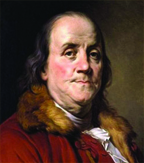
Susana (to the Reader): One of my traditional New Year’s goals is to work on clearing up the clutter in my basement office. I use a FlyLady timer that my friend Ellen sent me and tackle the mess fifteen minutes at a time. Well, I was going through some of the travel paraphernalia I brought back from England last May, and I found a $100 bill I had taken along just in case my debit card got eaten up by some greedy ATM. Since I usually carry around $60 or less at one time, I was just about to take out a bank deposit envelope when Lady P caught sight of the picture of Benjamin Franklin on the bill and mentioned that her father had been a great friend of his and that she had met him several times during her come-out. And she did have some fascinating things to say about this famous American statesman and his progency that you may not have heard before.

Lady P: My father dabbled a bit in science, you know. Younger sons do need to find something to occupy their time, even if they marry heiresses, as Papa did. In any event, Papa was a great patron of the sciences, and he and Mr. Franklin took to each other immediately. Papa visited his lodgings on Craven Street quite often to conduct experiments and whatnot.

Susana: How fascinating that you were able to meet Benjamin Franklin! What was he like?

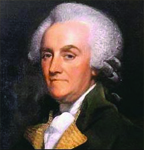
Lady P: Quite a charming man. Not a dasher, you understand, though exceedingly well-groomed. But his witty conversation and elegant manners…goodness, if his son William had inherited even a small portion of his father’s charm…I daresay he could have married into the ton, despite his unfortunate birth.william_franklin

Susana: Unfortunate birth?

Lady P: Indeed. He was a natural son, you know. Acknowledged, of course, and a British Loyalist all his life. Much better looking than his father, even in his sixth decade, as he was when I met him in the 1790’s, but certainly lacking his father’s éclat. you understand. Landed on his feet, though. Married a sugar heiress, I believe.

Susana: An illegitimate son who was a British Loyalist. Fascinating.

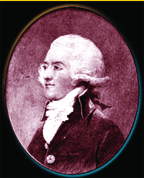
Lady P: Not so unusual. Like many colonists, the elder Mr. Franklin had divided loyalties. Why, Papa told me that many a time Mr. Franklin bemoaned the fact that neither side was willing to compromise on their positions. In the end, he took the side of the colonists and never returned to England, but his son William did. Fathered an illegitimate son of his own, too. Who in turn fathered two illegitimate children by two different women.william_temple

Susana: Oh dear. So many illegitimate children! Must have been quite scandalous at the time!

Lady P: Not really. Natural children are quite common. Our Englishwomen are known for their attraction for the male sex, you understand. It’s all in the complexion.

Susana: Er, yes. Of course.

Lady P: Dear Pendleton, of course, was much too prudent to indulge in such behavior, but his uncle–goodness, I could tell you endless stories about his escapades. Poor Aunt Lavinia was forever being humiliated…

Unfortunately, Susana never did finish de-cluttering her office. But she has pages and pages of notes about late 18th/early 19th century scandals that she plans to turn into a book one day. Lady P predicts an instant best-seller.

See you on Monday! As always, please comment if you have any specific questions you’d like Susana to pose to Lady P while she is here.

The Lady P Series

Episode #1: Susana’s Adventures With Lady P: The Introduction

Episode #2: Lady P Talks About… Pride and Prejudice?

Episode #3: Lady P and the Duchess Who Lost a Billion Dollars

Episode #4: Lady P and the Face On the $100 Bill

Episode #5: In Which Lady P Discovers Sparkly Fabrics and Ponders Violating the Prime Directive

Episode #6: Lady P Dishes the Dirt on the Duchess of Devonshire

Episode #7: The Political Exploits of Lady P and the Duchess of Devonshire

Episode #8: Lady P and the Prince Regent’s Illicit Marriage

Episode #9: In Which Lady P Depletes the Cooking Sherry During Her Discussion of Caroline of Brunswick

Episode #10: Lord Byron: Mad, Bad, and Dangerous to Know

Episode #11: In Which Lady P Talks About Hannah More and the Rights of Women

Episode #12: Lady P’s Revelations Regarding George III and His Peculiar Progeny

Episode #13: Lady P Discusses the Luddite Uprising, the Assassination of Spencer Perceval, and the General Unfairness of Life

Episode #14: In Which Leticia, Lady Beauchamp, Pops In For an Interview On Her Personal Acquaintance With Princess Charlotte of Wales

Episode #15: Lady P On Assignment in 1814 Kent

Lady P Quizzes Jane Livingston, the Hero’s Sister From “A Twelfth Night Tale”
Episode #3: Lady P and the Duchess Who Lost a Billion Dollars

Lady Pendleton, Damian Ashby’s eccentric aunt (see the epilogue to Treasuring Theresa on Susana’s web site), is visiting Susana from the early 19th century. She’s intrigued by life in 21st century Toledo, Ohio, and, of course, Susana is thrilled to have the opportunity to pick her brain about life in Regency England. It certainly gives her a great deal to write about in Susana’s Parlour!

Susana (to the Reader): Lady P took to driving like a duck to water, except that she has no sense of distance and thought she had to press the accelerator down to the floor. There was a point when I saw a pole looming closer and closer and was convinced we were both goners when she jerked the steering wheel and swerved away, narrowly missing it, but running straight through a deep pothole that would have jerked us out of our seats had we not been wearing seat belts. To make a long story short, the car is in the shop for the next several days—I told them to take their time fixing it—and so Lady P and I are walking and begging rides with friends for awhile.

My next-door neighbors, Stephanie and Derrick, invited us to go with them to the Hollywood Casino that opened last year in Rossford, and Lady P wanted to know more about it.

Lady P: A casino? Where people play games of chance and lose their fortunes?

Susana: Well, I don’t know about that last part. I think a few people must win. But there are other things to do there besides gamble.

Lady P: Oh, I know about that. Pendleton told me about the painted ladies upstairs.

Susana: Oh no! I didn’t mean that. I mean, there are no painted ladies there. There are several restaurants—my friend Ray works as a cook there and he says the food is excellent.

Lady P: So people go there only for a good meal?

Susana: I think they have entertainment and dancing on weekends. But…I don’t suppose that would appeal to you.

Lady P: Why not? I was told once by my friend Charles James Fox that I am one of the best dancers in the ton.

Susana: Er, it’s not that kind of dancing. It’s modern dancing. But perhaps you’d be more interested in the slots.

Lady P: The slots? Is that a dance?

Susana: No, the slots are machines into which you insert money, push down a lever to make the pictures spin, and if you get just the right combination, you win more money.

Lady P: And if you don’t?

Susana: You lose. Most of the time you lose, actually. But it’s fun to watch the little pictures spinning around and the excitement of waiting for the machine to stop to find out if you won anything. And the clanging and ringing noises the machines make too. I like the slots.devonshire

Lady P: How much money have you won from the machines?

Susana: Well, once I won about 150 quarters, but I spent them all trying to win more, and ended up losing about $60 overall.

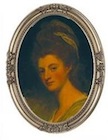
Lady P: Indeed. You sound very much like dear Georgiana Cavendish, the Duchess of Devonshire. Such a lovely woman, before she took ill. Very popular, quite a leader of society. Charles Fox was her cousin, in fact. I was sincerely fond of them both, but they had quite an appetite for games of chance. Especially Georgiana. I knew her since her marriage, and every time I saw her—at parties or balls or even political dinners—she’d find her way to start some sort of game of chance. Why, at Lady Fontaine’s Venetian breakfast, she took a deck of cards out of her reticule and won 400 guineas from her hostess’s mother. Of course, the next night she lost 1,700 and had to beg her husband for the money to pay it. But instead of paying the debt, she had the notion to try to increase it, and before she knew it, she had lost all of it, plus more.

Susana: I imagine her husband was livid.

Lady P: You don’t think she ever told him, do you? Indeed not. She simply couldn’t bring herself to do it, unless the dunns were at her door. In any case, Pendleton told me Devonshire was similarly afflicted. Quite a pair, those two. Why, I heard she had lost nearly a million pounds in her lifetime; there’s no telling how much more he lost.

Susana: A million pounds? Why…that would be—let’s see, where’s my calculator—oh my goodness—over a billion dollars today!

Lady P: Indeed. Georgiana told me once that her pin money was 4,000 pounds a year, which would be enough to provide her all the gowns and fripperies she could possibly desire. Her sister Harriet had only 400 pounds, but she managed to drive her family into bankruptcy. Georgiana had to bail her out of the Fleet Prison when she was arrested for debts.cjfox

Susana: The gambling fever tends to run in families. You say her cousin was a gambler too?

Lady P: Such a shame. He was an amiable gentleman. Even after he got so fat and they circulated all those cartoons ridiculing him. But he had no self-restraint at all, poor man. Pendleton told me the night before he died, Fox had been drinking most intemperately, and the doctors said his liver was hard as a rock.

Susana: Oh dear. I’m suddenly not feeling like a trip to the casino. What would you think, my lady, if we were to order a pizza again tonight?

Lady P: Italian food again? In my day, it was French food that everyone doted on.

Susana: There is no French restaurant in Toledo, and we have no vehicle to travel up to Detroit, so it’s either pizza or the McDonalds across the street.

Lady P: I suppose the pizza will do, since you only have the one vehicle. But no anchovies this time, if you please. Wine too, if they have it. I didn’t care for that strange bubbly drink they brought last time.

Susana: They don’t sell alcoholic beverages, but I have some red wine somewhere.

Lady P: Excellent. And then perhaps I can tell you about the discussion I had with Pendleton when he returned from White’s in the early hours of the morning with pockets to let after losing a hundred pounds. Well, we were newly married at the time, and after the talking-to I gave him, he never did it again. Have I mentioned that I can be quite convincing at times…?

Susana (to the Reader): As you can see, Lady P thrives on recounting all of her experiences in Regency England. If you have any questions you would like to ask her, or possible suggestions for outings—when the car is repaired, of course—please mention it in your comments, and I’ll do my best to get answers for you.

The Lady P Series

Episode #1: Susana’s Adventures With Lady P: The Introduction

Episode #2: Lady P Talks About… Pride and Prejudice?

Episode #3: Lady P and the Duchess Who Lost a Billion Dollars

Episode #4: Lady P and the Face On the $100 Bill

Episode #5: In Which Lady P Discovers Sparkly Fabrics and Ponders Violating the Prime Directive

Episode #6: Lady P Dishes the Dirt on the Duchess of Devonshire

Episode #7: The Political Exploits of Lady P and the Duchess of Devonshire

Episode #8: Lady P and the Prince Regent’s Illicit Marriage

Episode #9: In Which Lady P Depletes the Cooking Sherry During Her Discussion of Caroline of Brunswick

Episode #10: Lord Byron: Mad, Bad, and Dangerous to Know

Episode #11: In Which Lady P Talks About Hannah More and the Rights of Women

Episode #12: Lady P’s Revelations Regarding George III and His Peculiar Progeny

Episode #13: Lady P Discusses the Luddite Uprising, the Assassination of Spencer Perceval, and the General Unfairness of Life

Episode #14: In Which Leticia, Lady Beauchamp, Pops In For an Interview On Her Personal Acquaintance With Princess Charlotte of Wales

Episode #15: Lady P On Assignment in 1814 Kent

Lady P Quizzes Jane Livingston, the Hero’s Sister From “A Twelfth Night Tale”