Archives

The Belles’ Holiday Wassailing Tour: Course #4

Welcome to the 4th stop of the

Belles’ Holiday Wassailing Tour!

Lady Pendleton

Lady Pendleton

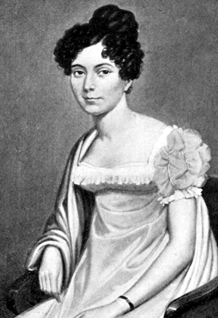
The time-traveling Lady Pendleton and her family welcome you to Christmas 1811 at the Pendleton estate in Wittersham, East Sussex. Present are: Lady Julia Tate, her eldest daughter; Lady Philippa Bland and her husband George, Viscount Hooper; Lady Sarah Newsome, her husband Sir Henry Newsome, and their two daughters, Emily (2) and Theodora (3 months).

Note: Julia’s sister Lady Sarah and her family feature prominently in the sequel to An Ultimate Escape, which is titled A Home for Helena (available soon).

To win a digital copy of Lost and Found Lady and a lovely perfumed frame and cameo, mention (1)  your favorite Christmas film and (2) the name and title of the hero of Amy Rose Bennett’s story in Mistletoe, Marriage, and Mayhem in the comments below (one random commenter will be chosen). The answer can be found on her post here: http://amyrosebennett.com/the-bluestocking-belles-holiday-wassailing-tour/.
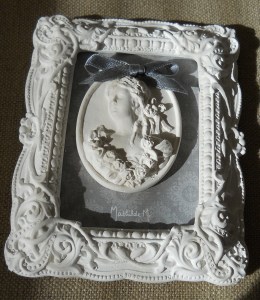
perfumedframe&cameo

Separator

Lady Julia Tate

Lady Julia Tate

Lady Pendleton, her daughter Julia, and Oliver Stanton are characters in The Ultimate Escape, a time travel novella in Mistletoe, Marriage, and Mayhem.

Oliver Stanton

Mr. Oliver Stanton

On the eve of her wedding, Julia realizes she cannot marry her fiancé after all, no matter that it’s been her dream for eight long years. Too distraught to face him, she follows in her mother’s footsteps and flees to the future for a brief reprieve.

Oliver knows he has bungled things badly, but he is determined to win the woman he loves, even if he must travel through time to do it.

Separator

Christmas 1810 had been a sober affair, the Pendletons’ first without their beloved patriarch’s gentle humor. A year later, however, his wife and daughters had recovered from their grief well enough to feel his spiritual presence in their lives.

“Remember how Papa loved to sing Christmas carols before dinner?” Julia suggested as they waited in front of the fire in the music room for their Christmas dinner to be ready. “I’d like to suggest Deck the Halls. Philippa, will you play for us?”

Philippa raised her eyebrows. “You may do it yourself, Julia. We all had the same music lessons, after all.”

Julia shrugged. “I’m holding the baby,” she argued. “Little Theodosia is fast asleep. You would surely not wish to wake her, would you?”

Lady Pendleton and her youngest daughter exchanged a glance. The rivalry between Julia and Philippa had become routine in their family, even after they had become adults.

Philippa gave Julia a look of annoyance and moved to the pianoforte. “What song shall we begin with?” she asked, deliberately ignoring Julia’s request.

“I Thaw Thwee Ships come thailing in,” chimed in two-year-old Emily, “on Chwithmath Day, on Chwithmath Day.”

Sarah’s oldest daughter was playing on the floor with a model of the HMS Victory, Lord Nelson’s ship at the Battle of Trafalgar, that her father had given her for Christmas. Her mother had lightheartedly accused him of wishing Emily were a boy, but for whatever reason, their little daughter eschewed her dolls for the colorfully-painted ship.

“Emily has decided. I Saw Three Ships it is,” Philippa agreed, and played a chord to begin the singing.

Separator

I Saw Three Ships

https://www.youtube.com/watch?v=C5LROczmJHg

Separator

Excerpt from The Ultimate Escape

She’d been standing there a few minutes, beginning to feel the sudden chilling of the air through her fur-lined cloak when the door to the house opened and a stout, middle-aged woman gestured for her to come inside.

“Weren’t you told to come in through the back entrance? We’ve been expecting you for over an hour, you know. Dear me, you must be freezing to death out there… might have a bit of snow this evening, or so they say.”

Julia’s mouth fell open. They were expecting her? No, of course not. She was being mistaken for someone else.

“I don’t think…” she began, but was interrupted by another, taller, woman, who unhooked her cloak and dragged her into a back room.

“The hair needs some work,” she commented as she surveyed Julia’s appearance. The dress is the right period, but the freckles! The agency surely knows proper ladies of the Regency did not have freckles.”

Julia’s eyes narrowed. She’d heard enough of that nonsense in her early years. “I assure you, they did, madam, if that was the complexion they were born with.” Scrubbing them with lemon juice and taking parasols everywhere had never made much of a difference, so she had learned to accept hers gracefully.

The tall woman raised her eyebrows and mumbled something about the “impertinence of young people these days,” and the other woman brought her some coffee and biscuits, and before she knew what was happening, her hair was restyled, her gown brushed and tidied, and she was sent upstairs to the “Striped Drawing Room” to mingle with the guests and talk to them about what it was like to live in “the Regency.”

There was an awkward moment or two before she learned that “the Regency” was the period from 1811-1820 when the Prince of Wales ruled as his father’s proxy until the king’s death in 1820. The Prince had been Regent for nearly two years in her own time, but nobody she knew called it “the Regency.” And she hadn’t, of course, known the date of the King’s death. That caused a tear or two until she realized suddenly that he had been dead for nearly 200 years, and so was everyone else she knew. Even she herself. Just thinking about it made her head spin.

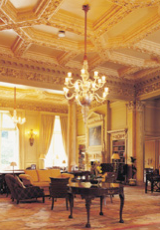
But she didn’t have long to brood, because there were visitors to talk to. And other interesting things to learn—more awkward moments—such as the name of the house—Apsley House—and its most famous occupant—the Duke of Wellington, who turned out to be Arthur Wellesley, a particular friend of her father’s who, in her time, had only recently been made a marquess. From listening to the guides of some of the groups who toured the house, she learned that Wellesley had triumphed against the French emperor in a famous battle in an obscure Belgian town called Waterloo… that he had been showered with lavish gifts from all over the world, and even become Prime Minister. How intriguing!

Although she found it amusing to speak with the visitors about attending balls and dinners and answering a multitude of questions about the period in which she lived, she was relieved when the young woman whose place she had taken finally arrived, and she could leave to continue her explorations of the London of the future. What else might she discover before returning to her own time?

Separator

christmasgoose

“The Christmas goose looks lovely,” Lady Pendleton commented, her eyes a bit moist. “Will you not carve it, Sir Henry? It is a Tate family tradition for the senior male to carve the bird.”

The butler placed the goose on the table in front of him, and a footman handed him the necessary utensils.

“My pleasure, your ladyship.” He rose and winked at Lady Sarah, who bit her lip to keep from smiling. It was no secret that she was considerably younger than her husband and that he had nearly a decade on Philippa’s husband, Viscount Hooper. “I’ve carved a few birds in my time.”

Yorkshire Christmas pie

http://www.janeausten.co.uk/yorkshire-christmas-pie-georgian-turducken/

First make a good standing crust, let the wall and bottom be very thick; bone a turkey, a goose, a fowl, a partridge, and a pigeon. Season them all very well, take half an ounce of mace, half an ounce of nutmegs, a quarter of an ounce of cloves, and half an ounce of black pepper, all beat fine together, two large spoonfuls of salt, and then mix them together. Open the fowls all down the back, and bone them; first the pigeon, then the partridge, cover them; then the fowl, then the goose, and then the turkey, which must be large; season them all well first, and lay them in the crust, so as it will look only like a whole turkey; then have a hare ready cased, and wiped with a clean cloth. Cut it to pieces; that is, joint it, season it, and lay it as close as you can on one side; and the other side woodcocks, moor game, and what sort of wild fowl you can get. Season them well, and lay them close, put at least four pounds of butter into the pie, then lay on your lid, which must be a very thick one, and let it be well baked. It must have a very hot oven, and will take at least four hours.

Recipe from: Hannah Glasse, The Art of Cookery Made Plain and Easy, 1747

With thanks to the Jane Austen Society (Please see above link for an in-depth discussion of the recipe)

Separator

Wassail

http://www.foodnetwork.com/recipes/alton-brown/wassail-recipe.html

Recipe by: Alton Brown

Ingredients

  • 6 small Fuji apples, cored
  • 1 cup brown sugar
  • 1 cup water
  • 72 ounces ale
  • 750 ml Madeira
  • 10 whole cloves
  • 10 whole allspice berries
  • 1 cinnamon stick, 2-inches long
  • 1 teaspoon ground ginger
  • 1 teaspoon ground nutmeg
  • 6 large eggs, separated

Directions

  • Preheat the oven to 350 degrees F.
  • Put the apples into an 8 by 8-inch glass baking dish. Spoon the brown sugar into the center of each apple, dividing the sugar evenly among them. Pour the water into the bottom of the dish and bake until tender, about 45 minutes.
  • Pour the ale and Madeira into a large slow cooker. Put the cloves, allspice, and cinnamon into a small muslin bag or cheesecloth, tied with kitchen twine, and add to the slow cooker along with the ginger and nutmeg. Set the slow cooker to medium heat and bring the mixture to at least 120 degrees F. Do not boil.
  • Add the egg whites to a medium bowl and using a hand mixer, beat until stiff peaks form. Put the egg yolks into a separate bowl and beat until lightened in color and frothy, approximately 2 minutes. Add the egg whites to the yolks and using the hand mixer, beat, just until combined. Slowly add 4 to 6 ounces of the alcohol mixture from the slow cooker to the egg mixture, beating with the hand mixer on low speed. Return this mixture to the slow cooker and whisk to combine.
  • Add the apples and the liquid from the baking dish to the wassail and stir to combine. Ladle into cups and serve.

Separator

Negus

http://www.janeausten.co.uk/negus/

To every pint of port wine, allow 1 quart of boiling water, 1/4 lb. of sugar, 1 lemon, grated nutmeg to taste.

As this beverage is more usually drunk at children’s parties than at any other, the wine need not be very old or expensive for the purpose, a new fruity wine answering very well for it. Put the wine into a jug, rub some lumps of sugar (equal to 1/4 lb.) on the lemon-rind until all the yellow part of the skin is absorbed, then squeeze the juice, and strain it. Add the sugar and lemon-juice to the port wine, with the grated nutmeg; pour over it the boiling water, cover the jug, and, when the beverage has cooled a little, it will be fit for use. Negus may also be made of sherry, or any other sweet white wine, but is more usually made of port than of any other beverage.

Sufficient: Allow 1 pint of wine, with the other ingredients in proportion, for a party of 9 or 10 children.

Recipe from: Mrs. Beeton’s Book of Household Management, 1861

With thanks to the Jane Austen Society (Please see above link for an in-depth discussion of the recipe)

separator

Box-Set-3D-Square-Web

Mistletoe, Marriage, and Mayhem: A Bluestocking Belles Collection
In this collection of novellas, the Bluestocking Belles bring you seven runaway Regency brides resisting and romancing their holiday heroes under the mistletoe. Whether scampering away or dashing toward their destinies, avoiding a rogue or chasing after a scoundrel, these ladies and their gentlemen leave miles of mayhem behind them on the slippery road to a happy-ever-after.

***All proceeds benefit the Malala Fund.***

Goodreads Reviews

Amazon | Smashwords | Amazon UK | Amazon Australia | Amazon Canada | Barnes & Noble | iTunes | Kobo

Donate to the Malala Fund

Separator

Links to all of the Belles’ holiday wassailing stops, with a different Regency era Christmas carol, dinner selection, and beverage, and wassail recipes at every stop that you can make in the modern kitchen.

christmas

Digital Christmas Card by EKDuncan using digital Christmas ornaments of Regency ladies

Encounter at White’s: a cross-post with Nicole Zoltack

Whites Club London-M

Oliver handed his hat and gloves to the porter as he removed his coat and presented it as well. Shivering in the notoriously chilly foyer at White’s Club, he made his way quickly toward the drawing room, where no doubt there would be a roaring fire. After more than a fortnight of escorting his fiancée and her mother to balls and ton events nearly every evening, not to mention drives in the park and ices at Gunter’s—along with his responsibilities at the bank—he was looking forward to an evening with his cronies and nice cognac or two. White’s always had the best spirits in town.

Oliver Stanton

Oliver Stanton

He hadn’t got very far, however, when he very nearly collided with Stephen Huntington, Duke of Wyngate, who was emerging from the card room with an expression of tight-lipped determination on his face.

“Pardon me,” the duke said, straightening his coat somewhat nervously.

“No need,” said Oliver easily. “Wasn’t watching where I was going. Join me in a drink, Your Grace?”

The duke blinked and stumbled back a step. “Why yes, I would appreciate that, Stanton.”

The two men strolled to the drawing room and claimed two leather chairs near the fire.

“A cognac for me,” Oliver told the waiter. “Wyngate?”

"Portrait of Citizen Guerin," by Robert Lefevre, 1801, French. The Age of Napoleon. Ed. Katell le Bourhis. NY: The Metropolitan Museum of Art / Harry N. Abrams, Inc., 1989. p.82, pl. 72.

Stephen Huntington, Duke of Wyngate

He liked Stephen Huntington, and not just because he was a duke and one of the bank’s best customers. He was an honorable man and not at all puffed up about it. Some titled gentlemen didn’t deign to speak to him unless it was at the bank and they needed access to their money. Wyngate wasn’t that sort.

“Cognac sounds perfect.” The duke rubbed his forehead.

“Right away, gentlemen.” The waiter bowed and disappeared into the back rooms.

The duke cleared his throat. “I-I have a strange question for you, Stanton, if I may.”

Oliver nodded. Who was he to gainsay a duke, even if he wished to. And he was curious to know what was behind the normally easy-going duke’s skittish behavior.

“Have we crossed paths, recently? Since the Hansens’ ball last week, I mean?”

Oliver’s eyes narrowed. “Why no, I don’t believe so. Why do you ask?”

Stephen tugged at his collar. “Ah… well, that’s good. That’s good,” he repeated. “You see… I have heard rumors that there is a man impersonating me throughout the country. I can scarcely believe it! But I cannot ignore such a thing, lest it be true and the wretch is up to serious mischief.”

Oliver’s eyes widened. “Impersonating you? But how is that possible? You are widely known in London, Your Grace.”

shapeimage_1The duke plucked a glass of brandy from the waiter’s tray and took a long sip. Oliver did likewise, wondering who would dare to play such a trick on the Duke of Wyngate, of all people.

“I do not know. I guess the reprobate must resemble me. Sound like me as well.” Wyngate took another swallow and set down his glass. “No one has come to the bank asking about my money recently? That could certainly be a factor.”

“Money is always a factor,” Oliver said dryly. “But no, I can assure you that your accounts are safe. I would have been notified had someone come to withdraw funds unexpectedly.” He set his own glass on the table. “How did the news come to you of this extraordinary situation?”

“My friends.” He gestured behind him toward the card room. “They can be rather prone to jokes and mischief, but somehow I doubt they would jest about something as serious as this.” He shrugged. “No need to concern yourself further. I am certain the matter will be resolved shortly. Now tell me, Stanton. I see that Lady Julia has recovered from her illness. Will your nuptials be rescheduled soon?”

Lady Julia Tate (at age 27)

Lady Julia Tate

Oliver winced, as he always did when that particular question was raised, which was happening quite frequently in the fortnight or so since their wedding guests had been sent home without witnessing a wedding or even catching sight of the bride and groom.

“I do not mean to pry.” Wyngate drank the last of cognac. “I was hoping one of us was happy.”

“Soon,” Oliver said. “These things take time to arrange, you know. The ladies expect such things. And I wouldn’t want my bride to be deprived of the wedding of her dreams simply because she was taken ill the night before the first one was to take place.”

He grinned. “What about you, Wyngate? Any interest in setting up your own nursery any time soon?” Any man with a title had to concern himself with the matter of an heir sooner a later. Particularly a duke.

“Oh no. Not I. I am not the least bit interested in marriage. And even if I were, with an imposter running about, I will be far too busy to woo and win the heart of any lady.”

Oliver chuckled. “A wealthy duke could have his choice of any young lady in the ton. With or without the wooing. But you must certainly investigate this matter of an imposter. Particularly if he resembles you to the extent that he could ruin your reputation. Do let me know if I can be of any assistance to you, Your Grace.”

“Thank you. You have always been a loyal and good friend.” Wyngate stood. “I would appreciate it if you could keep this matter to yourself. Unless you should happen to see another me…” He shook his head.

map

“Of course, Your Grace.”

“I should be off to try to track this rogue down. Do take care.” The duke turned and called for his horse.

Oliver rose and offered his hand. “Good luck, Your Grace.”

“You as well.” The duke shook his hand and gave him a tight smile. “Shall I expect another wedding invitation any time soon?”

“Of course, Your Grace.” At least Oliver hoped it would be soon. The new house on Manchester Square was nearly ready, and he was eager to finally have Julia as his wife at last.

A Celebration of Waterloo: The Prince of Orange

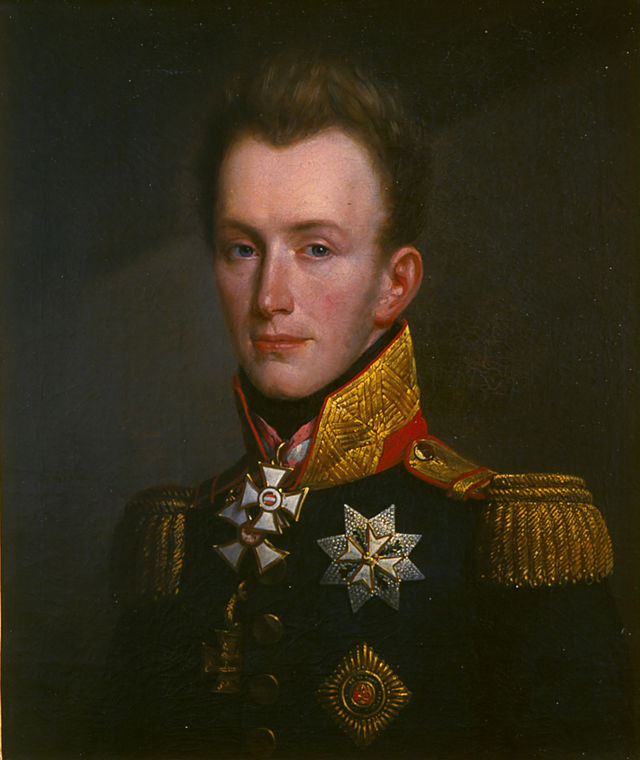
The young Prince of Orange

The young Prince of Orange

About the Prince

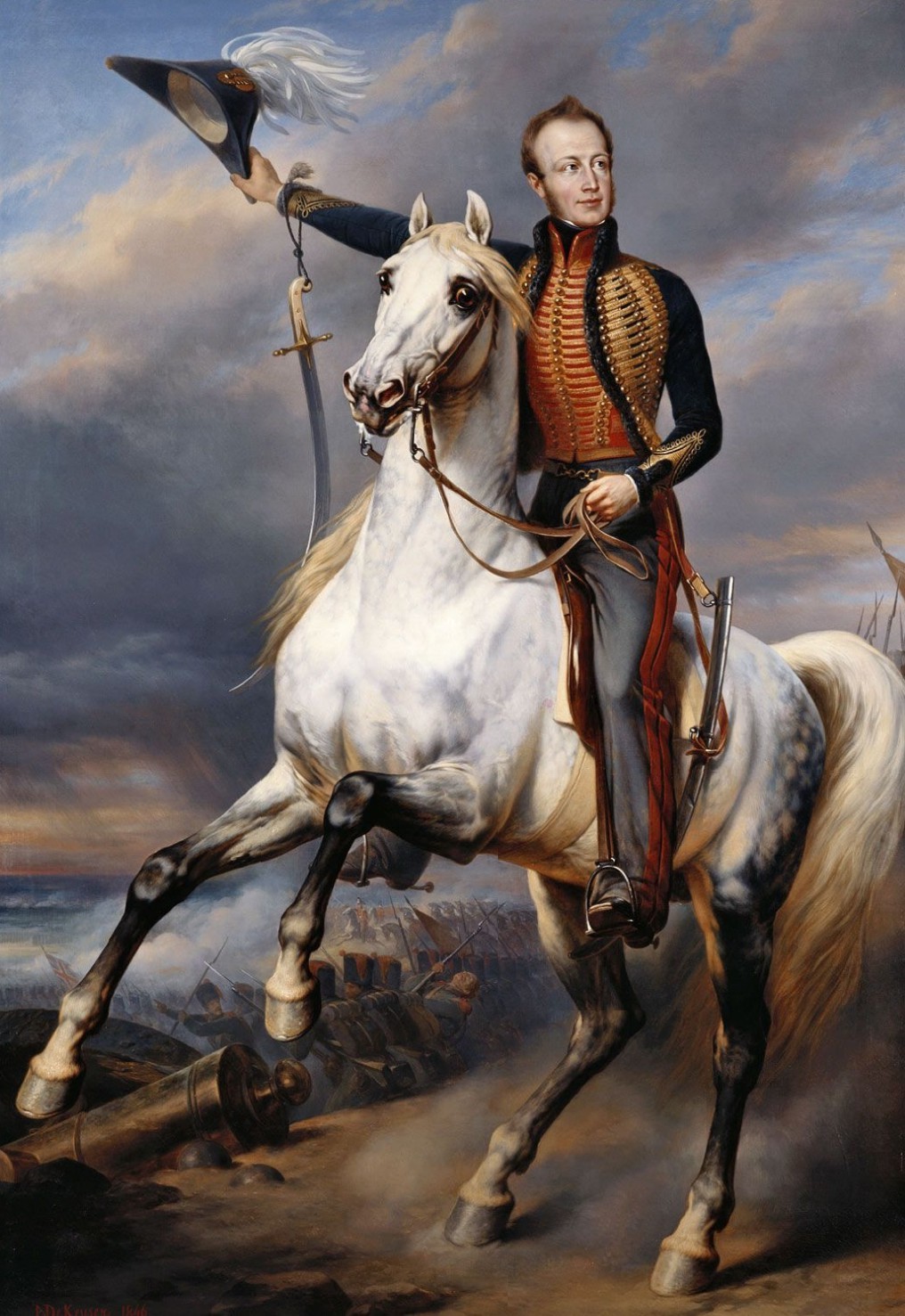
William Frederick George Louis was the son of William I of the Netherlands and Wilhelmina of Prussia. When his father proclaimed himself king in 1815 (16 March), he became Prince of Orange. After his father’s abdication in 1840, he became King William II of the Netherlands.

Avid readers of Regency historical fiction might recognize him as the rejected suitor of Princess Charlotte. The Prince Regent arranged the match, but his estranged wife opposed it, and when Charlotte finally met him, she did as well. Whether the problem lay with his personal qualities or the necessity of having to live in the Netherlands or both, the young princess eventually had her way, and married Prince Leopold of Saxe-Coburg-Saalfield (later King of Belgium) in 1816.

PRINCE OF ORANGE ON HORSEAt the age of two, William fled with his family from the French to Prussia, where he had a military education and served in the Prussian army. Then he studied at the University of Oxford, where he was quite popular and nicknamed “Slender Billy” by the English public. As a result of his ex-patriot upbringing, there were complaints when he eventually returned to the Netherlands that he seemed more foreign than Dutch.

William joined the British army and became aide-de-camp to Wellington in the Peninsular War in 1811 when he was only nineteen years old. In 1815 he joined the Allied Coalition for the final confrontation with Napoleon at Waterloo, where he commanded the I Allied Corps, which was a conglomeration of armies from Britain, Hanover, the Netherlands, Nassau, and Belgium.

This mishmash included many Belgian soldiers who had formerly fought in Napoleon’s Grand Armée—some of whom wore the same uniforms. A source of confusion? Indeed yes, but what was worse was that some allegiance to France still remained, as well as a very real fear of fighting against their former emperor. Communication between all these nationalities was also a problem. Wellington knew he had a problem there, but with rumors abounding of the swelling numbers of Napoleon’s troops, he couldn’t afford to be too selective as he was hastily assembling his own forces.

The Controversy

At 23, the Prince was considered by many to be too young to have the rank of Major-General and given an entire Corps to command. It was said that he was assigned this position because Wellington desperately needed the 30,000 Dutch-Belgian troops and that his son’s promotion was the price of the Dutch king’s cooperation.

The traditional (i.e., British) view was that 200 of the Dutch-Belgian troops took off in the opposite direction when faced by the French. Non-British sources protest, however, that newly-arrived British infantrymen, confused by the similarity of the French and Dutch uniforms, opened fire on them both, causing the Dutch-Belgians to lose a large number of horses, which caused these unmounted soldiers to fall back and not be available for active duty.

From The Cowards at Waterloo (a Dutch account of the battle: http://www.napolun.com/mirror/napoleonistyka.atspace.com/Waterloo_Cowards.html)

Unfortunately most of the British accounts have tended to magnify out of all proportion the accomplishments of the very modest numbers of British soldiers. These authors are unashamedly biased, their troops are super-human, the Duke practically a deity. Below is a fragment of hugely popular in English speaking countries book “Waterloo” by Cornwell (the adventures of super-soldier Major Sharpe). The readers are fed with some colorful descriptions of Belgian cowardice and ‘Dutch courage’. The Belgians and Dutch flee without fight, their commander Prince Orange is “little Dutch boy” etc. In contrast the British soldiers are all-conquering heroes, and their commanders are either tough as a nail or geniuses (or both).

Where does the truth lie? Probably somewhere in the middle. The Prince of Orange acquitted himself well in the Peninsula as aide-de-camp to Wellington, and he was certainly not the first young man his age to have such a high rank. The language problem throughout the conflict was not limited to his troops, and wasn’t his fault. Prejudice on both sides had to be a factor as well. Just as there are some who say the Prussians under Ziethen did come through in the end and should be given some credit for the victory. It’s hardly surprising that the British accounts give the British the lion’s share, but at the same time it’s advisable to take some conclusions with a grain of salt.

Lost and Found Lady

With that in mind, I had just read Bernard Cornwell’s Waterloo prior to writing this story, so my portrayal of the Prince of Orange and the Dutch-Belgian troops conforms to the traditional views. So keep in mind when you read it that the Prince was likely not a cartoon-character of a man at all, in spite of the way he has been characterized over the years.

waterloo_cover_best web

Our Stories

Jillian Chantal: Jeremiah’s Charge

Emmaline Rothesay has her eye on Jeremiah Denby as a potential suitor. When Captain Denby experiences a life-altering incident during the course of events surrounding the Battle of Waterloo, it throws a damper on Emmaline’s plans.

Téa Cooper: The Caper Merchant

The moon in Gemini is a fertile field of dreams, ideas and adventure and Pandora Wellingham is more than ready to spread her wings. When Monsieur Cagneaux, caper merchant to the rich and famous, introduces her to the handsome dragoon she believes her stars have aligned.

Susana Ellis: Lost and Found Lady

Catalina and Rupert fell in love in Spain in the aftermath of a battle, only to be separated by circumstances. Years later, they find each other again, just as another battle is brewing, but is it too late?

Aileen Fish: Captain Lumley’s Angel

Charged with the duty of keeping his friend’s widow safe, Captain Sam Lumley watches over Ellen Staverton as she recovers from her loss, growing fonder of her as each month passes. When Ellen takes a position as a companion, Sam must confront his feelings before she’s completely gone from his life.

Victoria Hinshaw: Folie Bleue

On the night of the 30th Anniversary of the Battle of Waterloo, Aimée, Lady Prescott, reminisces about meeting her husband in Bruxelles on the eve of the fighting. She had avoided the dashing scarlet-clad British officers, but she could not resist the tempting smile and spellbinding charm of Captain Robert Prescott of the 16th Light Dragoons who— dangerously to Aimée— wore blue.

Heather King: Copenhagen’s Last Charge

When Meg Lacy finds herself riding through the streets of Brussels only hours after the Battle of Waterloo, romance is the last thing on her mind, especially with surly Lieutenant James Cooper. However, their bickering uncovers a strange empathy – until, that is, the lieutenant makes a grave error of judgment that jeopardizes their budding friendship…

Christa Paige: One Last Kiss

The moment Colin held Beatrice in his arms he wanted one last kiss to take with him into battle and an uncertain future. Despite the threat of a soldier’s death, he must survive, for he promises to return to her because one kiss from Beatrice would never be enough.

Sophia Strathmore: A Soldier Lay Dying

Amelia and Anne Evans find themselves orphaned when their father, General Evans, dies. With no other options available, Amelia accepts the deathbed proposal of Oliver Brighton, Earl of Montford, a long time family friend. When Lord Montford recovers from his battle wounds, can the two find lasting love?

David W. Wilkin: Not a Close Run Thing at All

Years, a decade. And now, Robert had come back into her life. Shortly before battle was to bring together more than three hundred thousand soldiers. They had but moments after all those years, and now, would they have any more after?

About Lost and Found Lady

On April 24, 1794, a girl child was born to an unknown Frenchwoman in a convent in Salamanca, Spain. Alas, her mother died in childbirth, and the little girl—Catalina—was given to a childless couple to raise.

Eighteen years later…the Peninsular War between the British and the French wages on, now perilously near Catalina’s home. After an afternoon yearning for adventure in her life, Catalina comes across a wounded British soldier in need of rescue. Voilà! An adventure! The sparks between them ignite, and before he returns to his post, Rupert promises to return for her.

But will he? Catalina’s grandmother warns her that some men make promises easily, but fail to carry them out. Catalina doesn’t believe Rupert is that sort, but what does she know? All she can do is wait…and pray.

But Fate has a few surprises in store for both Catalina and Rupert. When they meet again, it will be in another place where another battle is brewing, and their circumstances have been considerably altered. Will their love stand the test of time? And how will their lives be affected by the outcome of the conflict between the Iron Duke and the Emperor of the French?

Amazon.comiBooksKoboBarnes & Noble

Amazon.uk Amazon.caAmazon.au

Amazon Print

Beaux, Ballrooms, and Battles: Release Day!

waterloo_cover_best webBeaux, Ballrooms, and Battles:

A Celebration of Waterloo

June 18, 1815 was the day Napoleon Bonaparte’s Grande Armée was definitively routed by the ragtag band of soldiers from the Duke of Wellington’s Allied Army in a little Belgian town called Waterloo. The cost in men’s lives was high—22,000 dead or wounded for the Allied Army and 24,000 for the French. But the war with Napoleon that had dragged on for a dozen years was over for good, and the British people once more felt secure on their island shores.

The bicentenary of the famous battle seemed like an excellent opportunity to use that setting for a story, and before I knew it, I had eight other authors eager to join me,and to make a long story short, today our Waterloo-themed anthology has been released to the world.

You are all invited to:

Our Stories

Jillian Chantal: Jeremiah’s Last Charge

Emmaline Rothesay has her eye on Jeremiah Denby as a potential suitor. When Captain Denby experiences a life-altering incident during the course of events surrounding the Battle of Waterloo, it throws a damper on Emmaline’s plans.

Téa Cooper: The Caper Merchant

The moon in Gemini is a fertile field of dreams, ideas and adventure and Pandora Wellingham is more than ready to spread her wings. When Monsieur Cagneaux, caper merchant to the rich and famous, introduces her to the handsome dragoon she believes her stars have aligned.

Susana Ellis: Lost and Found Lady

Catalina and Rupert fell in love in Spain in the aftermath of a battle, only to be separated by circumstances. Years later, they find each other again, just as another battle is brewing, but is it too late?

Aileen Fish: Captain Lumley’s Angel

Charged with the duty of keeping his friend’s widow safe, Captain Sam Lumley watches over Ellen Staverton as she recovers from her loss, growing fonder of her as each month passes. When Ellen takes a position as a companion, Sam must confront his feelings before she’s completely gone from his life.

Victoria Hinshaw: Folie Bleue

On the night of the 30th Anniversary of the Battle of Waterloo, Aimée, Lady Prescott, reminisces about meeting her husband in Bruxelles on the eve of the fighting. She had avoided the dashing scarlet-clad British officers, but she could not resist the tempting smile and spellbinding charm of Captain Robert Prescott of the 16th Light Dragoons who— dangerously to Aimée— wore blue.

Heather King: Copenhagen’s Last Charge

When Meg Lacy finds herself riding through the streets of Brussels only hours after the Battle of Waterloo, romance is the last thing on her mind, especially with surly Lieutenant James Cooper. However, their bickering uncovers a strange empathy—until, that is, the lieutenant makes a grave error of judgment that jeopardizes their budding friendship…

Christa Paige: One Last Kiss

The moment Colin held Beatrice in his arms he wanted one last kiss to take with him into battle and an uncertain future. Despite the threat of a soldier’s death, he must survive, for he promises to return to her because one kiss from Beatrice would never be enough.

Sophia Strathmore: A Soldier Lay Dying

Amelia and Anne Evans find themselves orphaned when their father, General Evans, dies. With no other options available, Amelia accepts the deathbed proposal of Oliver Brighton, Earl of Montford, a long time family friend. When Lord Montford recovers from his battle wounds, can the two find lasting love?

David W. Wilkin: Not a Close Run Thing At All

Years, a decade. And now, Robert had come back into her life. Shortly before battle was to bring together more than three hundred thousand soldiers. They had but moments after all those years, and now, would they have any more after?

About Lost and Found Lady

On April 24, 1794, a girl child was born to an unknown Frenchwoman in a convent in Salamanca, Spain. Alas, her mother died in childbirth, and the little girl—Catalina—was given to a childless couple to raise.

Eighteen years later…the Peninsular War between the British and the French wages on, now perilously near Catalina’s home. After an afternoon yearning for adventure in her life, Catalina comes across a wounded British soldier in need of rescue. Voilà! An adventure! The sparks between them ignite, and before he returns to his post, Rupert promises to return for her.

But will he? Catalina’s grandmother warns her that some men make promises easily, but fail to carry them out. Catalina doesn’t believe Rupert is that sort, but what does she know? All she can do is wait…and pray.

But Fate has a few surprises in store for both Catalina and Rupert. When they meet again, it will be in another place where another battle is brewing, and their circumstances have been considerably altered. Will their love stand the test of time? And how will their lives be affected by the outcome of the conflict between the Iron Duke and the Emperor of the French?

Amazon.com • Amazon.uk • Amazon.ca • Amazon.au

 Barnes & Noble • iBooks • Kobo

Excerpt

September 14, 1793

A beach near Dieppe, France

“I don’t like the look of those clouds, monsieur,” Tobias McIntosh said in fluent French to the gray-bearded old man in a sailor hat waiting impatiently near the rowboat that was beginning to bob more sharply with each swell of the waves. “Are you sure your vessel can make it safely all the way to Newhaven in these choppy seas?”

The old man waved a hand over the horizon. “La tempête, it is not a threat, if we leave immédiatement. Plus tard…” He shrugged. “Je ne sais pas.”

“Please, mon amour,” pleaded the small woman wrapped in a hooded gray cloak standing at his side. “Allow me to stay with you. I don’t want to go to England. I promise I will be prudent.”

A strong gust of wind caught her hood and forced it down, revealing her mop of shiny dark locks. Tobias felt like seizing her hand and pulling her away from the ominous waves to a place of safety where she and their unborn child could stay until the senseless Terreur was over.

“Justine, ma chère, we have discussed this endlessly. There is no place in France safe enough for you if your identity as the daughter of the Comte d’Audet is discovered.” He shivered. “I could not bear it if you were to suffer the same fate at the hands of the revolutionaries as your parents did when I failed to save them.”

She threw her arms around him, the top of her head barely reaching his chin. “Non, mon amour, it was not your fault. You could not have saved them. It was miraculeux that you saved me. I should have died with them.”

She looked up to catch his gaze, her face ashen. “Instead, we met and have had three merveilleux months together. If it is my time to die, I wish to die at your side.”

Tobias felt like his heart was going to break. His very soul demanded that the two of them remain together and yet… there was a price on both their heads, and the family of the Vicomte Lefebre was waiting for him in Amiens, the revolutionaries expected to reach them before midday. It was a dangerous work he was involved in—rescuing imperiled French nobility from bloodthirsty, vengeful mobs—but he had pledged himself to the cause and honor demanded that he carry on. And besides, there was now someone else to consider.

“The child,” he said with more firmness than he felt. “We have our child to consider, now, Justine ma chère. The next Earl of Dumfries. He must live to grow up and make his way in the world.”

Not to mention the fact that Tobias was human enough to wish to leave a child to mark his legacy in the world—his and Justine’s. He felt a heaviness in his heart that he might not live long enough to know this child he and Justine had created together. He could not allow his personal wishes to undermine his conviction. Justine and the child must survive.

Justine’s blue eyes filled with tears. “But I cannot! I will die without you, mon cher mari. You cannot ask it of me!”

“Justine,” he said, pushing away from her to clasp her shoulders and look her directly in the eye. “You are a brave woman, the strongest I have ever known. You have survived many hardships and you can survive this. Take this letter to my brother in London, and he will see to your safety until the time comes that I can join you. My comrades in Newhaven will see that you are properly escorted.”

He handed over a letter and a bag of coins. “This should be enough to get you to London.”

After she had reluctantly accepted and pocketed the items beneath her cloak, he squeezed her hands.

“Be sure to eat well, ma chère. You are so thin and my son must be born healthy.”

She gave him a feigned smile. “Our daughter is the one responsible for my sickness in the mornings… I do not believe she wishes me to even look at food.”

She looked apprehensively at the increasingly angry waves as they tossed the small boat moored rather loosely to a rock on the shore and her hands impulsively went to her stomach.

“Make haste, monsieur,” the old sailor called as he peered anxiously at the darkening clouds. “We must depart now if we are to escape the storm. Bid your chère-amie adieu maintenant or wait for another day. I must return to the bateau.”

“Tobias,” she said, her voice shaking.

He wondered if he would ever again hear her say his name with that adorable French inflection that had drawn him from their first meeting.

“Go, Justine. Go to my family and keep our child safe. I promise I will join you soon.”

He scooped her up in his arms and carried her toward the dinghy, trying to ignore her tears. The old sailor held the boat as still as he could while Tobias placed her on the seat and kissed her hard before striding back to the shore, each footstep heavier than the last.

He studied the darkening sky as the sailor climbed in the boat. “You are sure it is safe?”

“La Chasseresse, she is très robuste. A few waves will not topple her, monsieur.”

“Je t’aime, mon amour,” she said to him plaintively, her chin trembling.

“Au revoir, ma chère,” he said, trying to smile, although his vision was blurring from tears.

Will I ever see her again?

He stood watching as the dinghy made its way slowly through the choppy sea to the larger ship anchored in the distance, grief-stricken and unable to concentrate on anything but his pain. When the ship finally sailed off into the horizon, he fell to his knees and prayed as he had never done before for the safety of his beloved. He remained in that position until drops of rain on his face reminded him of the Lefebre family waiting for him in Amiens.

With a deep breath, he rose and made his way to the nearby forest, where his horse waited, tied to a tree.

“Come, my friend. We have a long, wet journey ahead of us.”

Setting foot in the stirrup, he swung his leg over the saddle and urged the horse to a gallop, feeling his heart rip into pieces with every step away from his beloved.

A Celebration of Waterloo: The Battle of Salamanca

map_sm

July 22, 1812

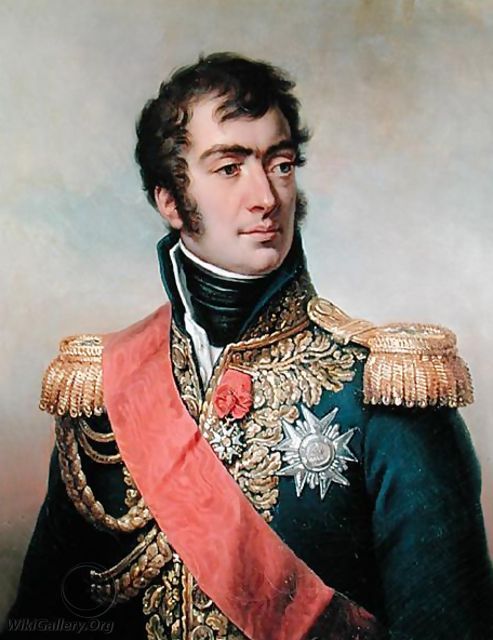
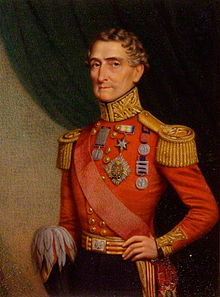
Both armies were just outside Salamanca. It was hot and humid, particularly after a heavy thunderstorm the night before. Wellington, aware that French reinforcements were expected, was planning to retreat back to Ciudad Rodrigo. Marmont, the French commander, was eager to do battle before the arrival of the reinforcements so that he could claim all the credit for defeating Wellington.

Auguste de Marmont

Auguste Marmont

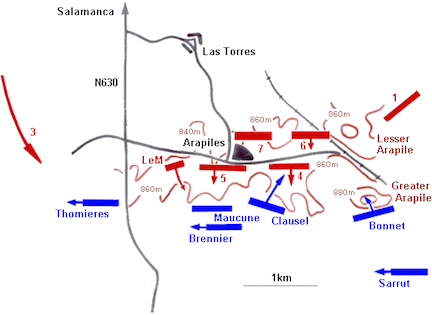
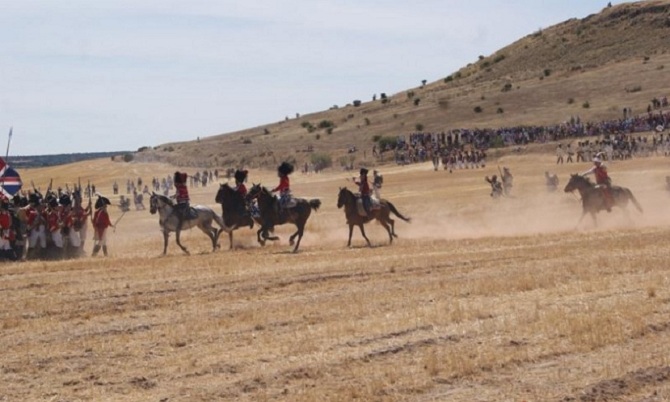
However, Wellington received reports (no doubt from his Exploring Officers) that French troops were taking up positions on the slopes of two steep hills, the Arapiles (south of Salamanca). Wellington saw the danger immediately and ordered the French repulsed, sending two infantry divisions to take position below the ridge of the closer hill. Having seen the dust in the distance from the supply wagons on their way to Ciudad Rodrigo and believing that the British were in retreat, Marmont didn’t realize that most of Wellington’s troops were still hidden behind the ridge. Wellington ordered up two more divisions from Salamanca.

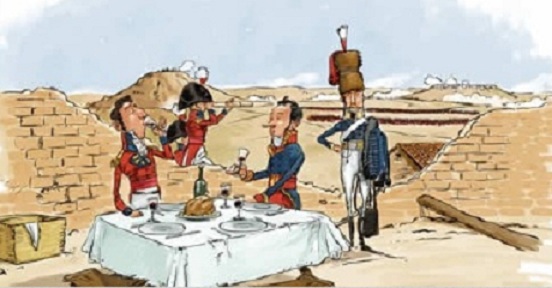
Cartoon - alava

At midday, Wellington descended the near hill and joined his senior staff for a very late breakfast at a nearby farm where they had a good view of the area. Because of bullets flying from nearby skirmishes, the meal had to be moved to a safer place. Wellington paced the wall of the farmyard, scanning the area with his spyglass. When finally persuaded to eat some bread and part of a roast chicken, he grabbed one of the chicken legs and ate it with one hand while continuing to study the area between the two ridges with his spyglass.

At 2:00, he rose from the table with a whoop of delight, throwing the chicken leg over his shoulder and shouting, “By God! That will do!” and ran to his horse, ordering his men to follow him.

French troops were marching through the gap of the two ridges—exactly what he had been hoping to see. Turning to his Spanish aide-de-camp, Miguel Ricardo de Alava y Esquivel, he remarked, “Mon cher Alava, Marmont est perdu!” (My dear Alava, Marmont is lost!)

Marmont had made a fatal error in judgment and Wellington knew he was in a perfect position to crush the French.

Wellington struck hard and fast, taking the French by surprise. Marmont was badly wounded by an exploding shell and carried to the rear. Other French senior officers were killed or severely wounded, and the French had no chance to re-group.

FrenchchargingasquareThe main battle took less than an hour. It was later said that Wellington had “defeated 40,000 men in 40 minutes.” Wellington himself took a ball in the thigh, but his holster took most of the hit, leaving him with a minor wound.

Unfortunately, most of the remaining French army managed to escape across the Tormes River, due to a failure of the Spanish commander abandoning his post against orders.

The night after the battle, the residents of Salamanca, having seen most of the conflict, came out onto the battlefield with provisions for the men, who had gone without eating and drinking for nearly a day while fighting a battle under the grueling Spanish sun.

Two imperial eagles snatched from the French during the Battle of Salamanca

Two imperial eagles snatched from the French during the Battle of Salamanca

Lost and Found Lady

Catalina lives near the battlefield outside a town called Las Torres. After the battle, she finds a wounded British soldier on the road and takes him to a place of safety where she can tend to his head wound. The British soldier is Rupert Ellsworth, one of Wellington’s Exploring Officers. The pair are immediately drawn to each other, but Rupert knows there’s no future for them, having promised his father he would marry a suitable English girl. A devout Catholic, Catalina is not a whore to be loved and abandoned. Still, Rupert cannot help but wish he could sweep her away from her disagreeable family. After he returns to his company, they both wonder if they will ever see each other again.

waterloo_cover_best web

Amazon.com • Amazon.uk • Amazon.ca • Amazon.au

 Barnes & Noble • iBooks • Kobo

Beaux, Ballrooms, and Battles

Release Day Party: April 1, 2015, 11 a.m. – 11 p.m. EDT

Rafflecopter: ends April 18

Website: www.beauxballroomsandbattles.com

Facebook Page

Jillian Chantal: Jeremiah’s Charge

Emmaline Rothesay has her eye on Jeremiah Denby as a potential suitor. When Captain Denby experiences a life-altering incident during the course of events surrounding the Battle of Waterloo, it throws a damper on Emmaline’s plans.

Téa Cooper: The Caper Merchant

The moon in Gemini is a fertile field of dreams, ideas and adventure and Pandora Wellingham is more than ready to spread her wings. When Monsieur Cagneaux, caper merchant to the rich and famous, introduces her to the handsome dragoon she believes her stars have aligned.

Susana Ellis: Lost and Found Lady

Catalina and Rupert fell in love in Spain in the aftermath of a battle, only to be separated by circumstances. Years later, they find each other again, just as another battle is brewing, but is it too late?

Aileen Fish: Captain Lumley’s Angel

Charged with the duty of keeping his friend’s widow safe, Captain Sam Lumley watches over Ellen Staverton as she recovers from her loss, growing fonder of her as each month passes. When Ellen takes a position as a companion, Sam must confront his feelings before she’s completely gone from his life.

Victoria Hinshaw: Folie Bleue

On the night of the 30th Anniversary of the Battle of Waterloo, Aimée, Lady Prescott, reminisces about meeting her husband in Bruxelles on the eve of the fighting. She had avoided the dashing scarlet-clad British officers, but she could not resist the tempting smile and spellbinding charm of Captain Robert Prescott of the 16th Light Dragoons who—dangerously to Aimée—wore blue.

Heather King: Copenhagen’s Last Charge

When Meg Lacy finds herself riding through the streets of Brussels only hours after the Battle of Waterloo, romance is the last thing on her mind, especially with surly Lieutenant James Cooper. However, their bickering uncovers a strange empathy—until, that is, the lieutenant makes a grave error of judgment that jeopardizes their budding friendship…

Christa Paige: One Last Kiss

The moment Colin held Beatrice in his arms he wanted one last kiss to take with him into battle and an uncertain future. Despite the threat of a soldier’s death, he must survive, for he promises to return to her because one kiss from Beatrice would never be enough.

Sophia Strathmore: A Soldier Lay Dying

Amelia and Anne Evans find themselves orphaned when their father, General Evans, dies. With no other options available, Amelia accepts the deathbed proposal of Oliver Brighton, Earl of Montford, a long time family friend. When Lord Montford recovers from his battle wounds, can the two find lasting love?

David W. Wilkin: Not a Close Run Thing at All

Years, a decade. And now, Robert had come back into her life. Shortly before battle was to bring together more than three hundred thousand soldiers. They had but moments after all those years, and now, would they have any more after?

A Celebration of Waterloo: The Romance of Harry and Juana Smith

Beaux, Ballrooms, and Battles:

A Celebration of Waterloo

June 18, 1815 was the day Napoleon Bonaparte’s Grande Armée was definitively routed by the ragtag band of soldiers from the Duke of Wellington’s Allied Army in a little Belgian town called Waterloo. The cost in men’s lives was high—22,000 dead or wounded for the Allied Army and 24,000 for the French. But the war with Napoleon that had dragged on for a dozen years was over for good, and the British people once more felt secure on their island shores.

The bicentenary of the famous battle seemed like an excellent opportunity to use that setting for a story, and before I knew it, I had eight other authors eager to join me,and to make a long story short, in a bit over two weeks our anthology of nine Waterloo-themed stories will be released to the world.

You are all invited to:

The Inspiration for Lost and Found Lady

In my preparatory reading for this project, I discovered the real-life romance of Harry Smith and his wife Juana while reading Georgette Heyer’s The Spanish Bride. Add to that my deep affection for Spain and the Spanish language, and the result is a story of a romance between an injured British soldier and the extraordinary young peasant girl who rescued him after the Battle of Salamanca.

spain_Cadiz_hervas_map

Henry (Harry) George Wakelyn Smith (1787-1860)

220px-Sir_Harry_Smith

Harry was born in Whittlesey, Cambridgeshire, the son of a surgeon. He entered the army in 1805 and saw action in South America (1806-7), but it was his service in the Peninsular War with the 95th Rifles as a scout that brought him into prominence, and that’s where he met his wife. Prior to Waterloo, he served in the United States (witnessed the burning of the capitol in 1814), and after Waterloo, South Africa and India.

Juana María de los Dolores de León Smith (1798-1872)

juanasmith

A descendent of Ponce de León, Juana was orphaned at fourteen and, deprived of all family property after the siege of Badajoz in April of 1812, she and her older sister approached the British Army for protection during the atrocious massacre (indiscriminate looting, killing, and raping of Spanish civilians by British and Portuguese soldiers following the heat of battle). It was love at first sight. Despite her youth (and marriage at that age was not uncommon in Spain at the time), Juana and Harry were married four days later, and remained devoted to each other the rest of their lives.

Despite her convent upbringing, Juana insisted on remaining with Harry throughout the war, bearing the privations of army life so cheerfully that she became the darling of the 95th Rifles. Wellington himself familiarly called her “Juanita”.

From The Autobiography of Lieutenant-General Sir Harry Smith

Now comes a scene of horror I would willingly bury in oblivion. The atrocities committed by our soldiers on the poor innocent and defenceless inhabitants of the city, no words suffice to depict. Civilized man, when let loose and the bonds of morality relaxed, is a far greater beast than the savage, more refined in his cruelty, more fiend-like in every act; and oh, too truly did our heretofore noble soldiers disgrace themselves, though the officers exerted themselves to the utmost to repress it, many who had escaped the enemy being wounded in their merciful attempts! Yet this scene of debauchery, however cruel to many, to me as been the solace and the whole happiness of my life for thirty-three years. A poor defenceless maiden of thirteen years was thrown upon my generous nature through her sister, as described so ably in Johnny Kincaid’s book, of which this in an extract—

kincaid“I was conversing with a friend the day after, at the door of his tent, when we observed two ladies coming from the city, who made directly towards us; they seemed both young, and when they came near, the elder of the two threw back her mantilla to address us, showing a remarkably handsome figure, with fine features; but her sallow, sun-burnt, and careworn, though still youthful, countenance showed that in her ‘the time for tender thoughts and soft endearments had fled away and gone.’

“She at once addressed us in that confident, heroic manner so characteristic of the high-bred Spanish maiden, told us who they were—the last of an ancient and honourable house—and referred to an officer high in rank in our army, who had been quartered there in the days of her prosperity, for the truth of her tale.

“Her husband, she said, was a Spanish officer in a distant part of the kingdom; he might, or he might not, still be living. But yesterday she and this her young sister were able to live in affluence and in a handsome house; to-day they knew not where to lay their heads, where to get a change of raiment or a morsel of bread. Her house, she said, was a wreck; and, to show the indignities to which they had been subjected, she pointed to where the blood was still trickling down their necks, caused by the wrenching of their ear-rings through the flesh by the hands of worse than savages, who would not take the trouble to unclasp them!

“For herself, she said, she cared not; but for the agitated and almost unconscious maiden by her side, whom she had but lately received over from the hands of her conventual instructresses, she was in despair, and knew not what to do; and that, in the rapine and ruin which was at that moment desolating the city, she saw no security for her but the seemingly indelicate one she had adopted—of coming to the camp and throwing themselves upon the protection of any British officer who would afford it; and so great, she said, was her faith in our national character, that she knew the appeal would not be made in vain, nor the confidence abused. Nor was it made in vain! Nor could it be abused, for she stood by the side of an angel! A being more transcendingly lovely I had never before seen—one more amiable I have never yet known!

“Fourteen summers had not yet passed over her youthful countenance, which was of a delicate freshness—more English than Spanish; her face, though not perhaps rigidly beautiful, was nevertheless so remarkably handsome, and so irresistibly attractive, surmounting a figure cast in nature’s fairest mould, that to look at her was to love her; and I did love her, but I never told my love, and int the mean time another and a more impudent fellow stepped in and won her! But yet I was happy, for in him she found such a one as her loveliness and her misfortunes claimed—a man of honour, and a husband in every way worthy of her!”

“That a being so young, so lovely, and so interesting, just emancipated from the gloom of a convent, unknowing of the world and to the world unknown, should thus have been wrecked on a sea of troubles, and thrown on the mercy of strangers under circumstances so dreadful, so uncontrollable, and not have sunk to rise no more, must be the wonder of every one. Yet from the moment she was thrown on her own resources, her star was in the ascendant.”

“Guided by a just sense of rectitude, an innate purity of mind, a singleness of purpose which defied malice, and a soul that soared above circumstances, she became alike the adored of the camp and of the drawing-room, and eventually the admired associate of princes. She yet lives, in the affections of her gallant husband, in an elevated situation in life, a pattern to her sex, and everybody’s beau ideal of what a wife should be.”

I confess myself to be the “more impudent fellow,” and if any reward is due to a soldier, never was one so honoured and distinguished as I have been by the possession of this dear child (for she was little more than a child at this moment), one with a sense of honour no knight ever exceeded in the most romantic days of chivalry, an understanding superior to her years, a masculine mind with a force of character no consideration could turn from her own just sense of rectitude, and all encased in a frame of Nature’s fairest and most delicate moulding, the figure of an angel, with an eye of light and an expression which then inspired me with a maddening love which, from that period to this (now thirty-three years), has never abated under many and the most trying circumstances. Thus, as good may come out of evil, this scene of devastation and spoil yielded to me a treasure invaluable; to me who, among so many dear friends, had escaped all dangers; to me, a wild youth not meriting such reward, and, however desirous, never able to express half his gratitude to God Almighty for such signal marks of His blessing shown to so young and so thoughtless a being. From that day to this she has been my guardian angel. She has shared with me the dangers and privations, the hardships and fatigues, of a restless life of war in every quarter of the globe. No murmur has ever escaped her. Bereft of every relative, of every tie to her country but the recollection of it, united to a man of different though Christian religion, yet that man has been and is her all…”

The Protagonists of Lost and Found Lady

Rupert Ellsworth, like Harry Smith is an explorer scout with the British Army in Spain. Also like Harry, he’s a younger son seeking to make his own way in life. He might have become a career soldier as Harry did, had his life not taken a different turn in 1812. When he meets Catalina, he’s not looking for love or marriage, and if he were, it certainly wouldn’t be to a penniless Spanish Catholic!

Catalina’s upbringing wasn’t at all like Juana Smith’s. Orphaned at birth, she is taken in by a couple who treat her as an unpaid servant. Her eagerness to learn attracts the attention of a local priest, who takes it upon himself to give her an education comparable to that of an elite gentleman. When she meets Rupert, she is reflecting on her limited options for the future and wondering if she could escape her humdrum life by becoming a nun. At eighteen when she meets Rupert, she’s older than Juana, but, like Harry’s wife, she’s reached a turning point in her life.

What happens when these two meet after the Battle of Salamanca? Hmm…

waterloo_cover_best web

Amazon.comAmazon.uk Amazon.caAmazon.au

 Barnes & Noble • iBooks • Kobo

Beaux, Ballrooms, and Battles

Release Day Party: April 1, 2015, 11 a.m. – 11 p.m. EDT

Rafflecopter: ends April 18

Website: www.beauxballroomsandbattles.com

Facebook Page

Jillian Chantal: Jeremiah’s Charge

Emmaline Rothesay has her eye on Jeremiah Denby as a potential suitor. When Captain Denby experiences a life-altering incident during the course of events surrounding the Battle of Waterloo, it throws a damper on Emmaline’s plans.

Téa Cooper: The Caper Merchant

The moon in Gemini is a fertile field of dreams, ideas and adventure and Pandora Wellingham is more than ready to spread her wings. When Monsieur Cagneaux, caper merchant to the rich and famous, introduces her to the handsome dragoon she believes her stars have aligned.

Susana Ellis: Lost and Found Lady

Catalina and Rupert fell in love in Spain in the aftermath of a battle, only to be separated by circumstances. Years later, they find each other again, just as another battle is brewing, but is it too late?

Aileen Fish: Captain Lumley’s Angel

Charged with the duty of keeping his friend’s widow safe, Captain Sam Lumley watches over Ellen Staverton as she recovers from her loss, growing fonder of her as each month passes. When Ellen takes a position as a companion, Sam must confront his feelings before she’s completely gone from his life.

Victoria Hinshaw: Folie Bleue

On the night of the 30th Anniversary of the Battle of Waterloo, Aimée, Lady Prescott, reminisces about meeting her husband in Bruxelles on the eve of the fighting. She had avoided the dashing scarlet-clad British officers, but she could not resist the tempting smile and spellbinding charm of Captain Robert Prescott of the 16th Light Dragoons who—dangerously to Aimée—wore blue.

Heather King: Copenhagen’s Last Charge

When Meg Lacy finds herself riding through the streets of Brussels only hours after the Battle of Waterloo, romance is the last thing on her mind, especially with surly Lieutenant James Cooper. However, their bickering uncovers a strange empathy—until, that is, the lieutenant makes a grave error of judgment that jeopardizes their budding friendship…

Christa Paige: One Last Kiss

The moment Colin held Beatrice in his arms he wanted one last kiss to take with him into battle and an uncertain future. Despite the threat of a soldier’s death, he must survive, for he promises to return to her because one kiss from Beatrice would never be enough.

Sophia Strathmore: A Soldier Lay Dying

Amelia and Anne Evans find themselves orphaned when their father, General Evans, dies. With no other options available, Amelia accepts the deathbed proposal of Oliver Brighton, Earl of Montford, a long time family friend. When Lord Montford recovers from his battle wounds, can the two find lasting love?

David W. Wilkin: Not a Close Run Thing at All

Years, a decade. And now, Robert had come back into her life. Shortly before battle was to bring together more than three hundred thousand soldiers. They had but moments after all those years, and now, would they have any more after?

A Regency Christmas Dinner

Christmas Decoration

Merry Christmas!

 Reblogged from Kathy L. Wheeler‘s Blog

December 10, 2013

Roast beef dinner

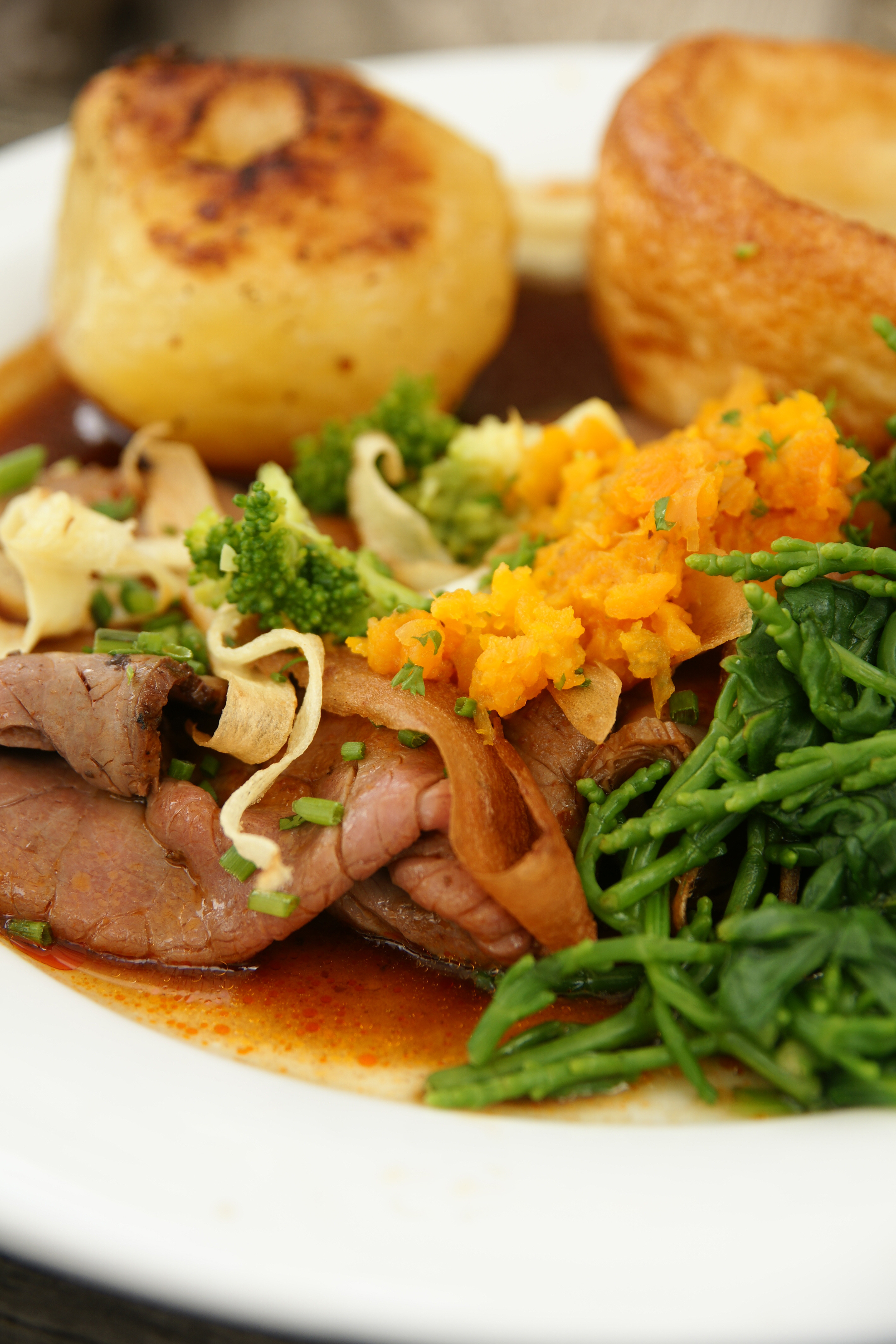
Christmas Dinner, served around midday, might feature a boar’s head (really a pig, since there weren’t any boars around by then), roast goose or roast turkey (which came to England from the New World around 1550 and rose in popularity through the eighteenth century). These were accompanied by vegetables such as boiled or steamed brussels sprouts, carrots, parsnips, and roast potatoes (sometimes boiled or mashed), as well as stuffing.

According to legend, Henry VIII was the first to have turkey served at Christmas. In A Christmas Carol (1843), Scrooge sends the Cratchitts a large turkey for their Christmas dinner. But turkey did not become a popular favorite in England until the 20th century.

The meal would be accompanied by wine or wassail (See December 13th post), which was often made with sherry or brandy.

wassail copy

For dessert, there was always a Christmas pudding (See December 3rd post), which might be served with brandy butter or cream. Although it was sometimes called “plum pudding,” there were no plums—only raisins. Mince pie was another traditional favorite (See December 4th post). There might also be gingerbread and marzipan and other popular sweet treats.

After dinner, the family might gather around the pianoforte (if there was one) and sing carols such as Deck the Halls, Here We Come a-Wassailing, and While Shepherds Watched Their Flocks. Most other Christmas carols sung today are of German origin and didn’t spread to England until Victorian times.

Traditionally, a small tithe was given to a landowner on Christmas Day, and sometimes children might receive a small toy, but the Regency Christmas was not a time of gift-giving as it is today. All in all, Christmas was a time for family to assemble together and celebrate the Christmas-tide Season.

A Twelfth Night Tale is on sale for the remainder of 2014!

In A Twelfth Night Tale, the Barlows celebrate the holiday with their neighbors, the Livingstons, and the St. Vincents—a wealthy viscount who is courting the elder daughter Lucy and his three daughters. Andrew Livingston, who has returned wounded from the Peninsula, suffers a few pangs of jealousy as he watches the viscount’s attentiveness to the now-grown-up-and-very-desirable Lucy. Is it too late for him to stake a claim for her?

http://www.susanaellis.com/A_Twelfth_Night_Tale.html

twelfthnighttale_msr copy200x300

Ellora’s Cave • Amazon • Barnes & Noble • Kobo


Authors in Bloom Blog Hop

Books - it is our memory concept


Baked Meatball Parmigiana

meatball-parm1Meatballs (if you choose to make your own)

  • 1-1/2 pounds meatloaf mix (beef, pork, veal combo)
  • 4 cloves garlic, roughly chopped, not minced
  • chopped fresh parsley (handful)
  • 1 cup bread crumbs
  • 1 cup shredded Parmesan or Asiago cheese (not grated)
  • 2 eggs
  • salt to taste

Mix the above ingredients and form your meatballs (not too large). Pour 1-2 tablespoons oil on a baking pan with sides and bake at 400 for 20 minutes. Lower oven to 375.

Topper ingredients

  • spaghetti sauce of your choice (two 24-ounce jars)
  • mozzarella cheese (lots)

In a 9 x 13 pan (or ceramic dish), pour some sauce to cover the bottom. Add your meatballs. Cover with remainder of sauce and top with lots and lots of mozzarella cheese.

Cover with foil and bake for 20 minutes. Remove foil and bake another 20 minutes or until cheese has begun to brown.You might raise the temperature to 400 for the last four minutes to assist with browning.

Susana’s Giveaway*

A Lovely Treasure Box of Goodies, including

A Twelfth Knight Tale silver-plated Christmas bracelet

A Twelfth Night Tale silver-plated Christmas bracelet

  • A Twelfth Night Tale silver-plated Christmas bracelet
  • a Celtic pen from Scotland
  • a deck of Ellora’s Cave playing cards
  • a sterling silver circle necklace
  • a keychain from London
  • jeweled soap
  • two Susana Ellis pens

and whatever else she decides to put in it, such as collector cards, bookmarks, and chocolates!

*A winner from outside the U.S. will receive a $25 Amazon gift card instead of the Treasure Box.

Click here for the Rafflecopter

Before you go—

Leave a blog post comment about your favorite spring activities, and don’t forget to include your email address so that you can be contacted if you are chosen as the winner.

Authors in Bloom Prizes

Grand Prize: A Kindle or Nook e-reader ($200 value) +$25 gift card (US only)

Second Prize: $25 e-reader gift card (international)

Author Prizes will vary. Note that only visitors who leave comments at each and every stop on the tour will be eligible for the Grand Prizes and Second Prize. Winners will be posted on the first (Dianne Venetta) and last (A Cozy Reader’s Corner) stops on the tour.

Good luck to all of you! I hope you discover some fantastic new authors along the way!

1. Dianne Venetta ~ Cozy Mystery/Romance (US) 41. Stacey Joy Netzel
2. Rose Anderson 42. Deb Sanders
3. Alexa Grace 43. Janette Harjo
4. Katharina Gerlach, YA Fantasy author 44. Donna Marie Rogers
5. Jennifer Lowery 45. J.L. Campbell
6. Catheirne Chant (US) 46. Lorraine Paton (INTL)
7. S.D. Bancroft 47. Amy Saunders, Chick-Lit Mysteries (US)
8. J.D. Faver ~ Bad Girls Need Love Too…(Intl) 48. Jencey Gortney
9. Tara Manderino (Intl) 49. Sandra Cox
10. Judy Baker, Cowboys and Indian Romances 50. Alisia Compton
11. Sharon Kleve 51. Cate Dean
12. Sara Walter Ellwood (US) 52. Lisa Lickel
13. Anna Patterson 53. Iyana Jenna
14. Karl Fields (Intl) 54. Jesse Kimmel-Freeman (INT)
15. LENA HART 55. Sheila Seabrook
16. Janice Seagraves, author 56. Rose Cooper
17. Lakisha Spletzer 57. Halimah bint David
18. Gemma Juliana 58. Grace Peterson
19. Victoria Adams 59. Nancy Pi-Sunyer
20. Daryl Devore 60. Elena Williams
21. Jeana E. Mann, New Adult Romance 61. Scandalous Stories
22. Not Neccesarily In That Order 62. Lisa Orgler
23. Brenda Maxfield\’s Smart and Sassy Teen Reads (INT) 63. L.A. Sartor
24. Elizabeth McKenna 64. BloominThyme
25. H. A. Somerled 65. Margarita Matos (UF & Romance)
26. Susana Ellis 66. Lisa Chalmers
27. Aileen Fish 67. Diane Burton
28. Cheryl Bolen 68. Rebecca J. Clark
29. Elizabeth Rose 69. Victoria Pinder
30. L. Alison Heller 70. Zelda Benjamin
31. Eleanor Moran 71. Liz Allen (US)
32. K C Maguire 72. Stacy Juba\’s Characters at a Crossroads
33. Patricia W. Fischer 73. Jennifer Conner Romance Author
34. Mindy Hardwick, Author 74. I Am A Reader
35. Melanie Macek 75. Darcy Flynn (US)
36. Karen McCullough 76. Joanne Jaytanie
37. Michelle Abbott 77. Cassandra L Shaw
38. Mary Laudien 78. Janette Harjo
39. Aubrey Wynne 79. Louisa Mack
40. Kimberly K. Comeau 80. Tiffany Schlarman

treasuringtheresa_1.75

Treasuring Theresa

a sweet Regency short story

She’s a country lady. He’s a London swell. They have nothing in common. Or have they?

Lady Theresa despises London society. What’s worse is that she has to attend the betrothal ball of the young man she expected to marry. To deflect all the pitiful glances from the other guests, she makes a play for the most striking gentleman there—who happens to be her Cousin Damian, who is everything she despises.

Damian, Lord Clinton sees a desperate young lady with no social graces, and it solidifies his opinion that country folk are beneath him. But it so happens that he is the heir to that young lady’s father’s title and estate, and the time comes when he finds himself obliged to spend some time there.

Thrown together, both Damian and Theresa discover each other’s hidden depths. But are their differences too much to overcome to make a successful match?

Ellora’s Cave • Amazon • Barnes & Noble

AllRomance eBooks • Kobo

Another Sneak Peak of “A Home For Helena”

Lady P

Lady P

Lady Pendleton: Dear me! Susana has a special treat for you today, dear readers. She’s been working long and hard to tell the story of a young girl called Helena who came to me from the 21st century seeking my help in finding the family from whose arms she was snatched when only a babe.

In this scene, Helena is recalling her consultation with the gypsy lady who offers to help her travel back to the past to discover the truth about her origins.

**********

The sign painted on the window read “Genuine Gipsy Fortune Telling” in large red letters with “Palm Reading • Tarot Cards” in smaller print underneath with the bottom line proclaiming “Séances Scheduled at Your Convenience”. A mannequin dressed flamboyantly in a red peasant blouse and gold skirt stood in the window with outstretched arms, no doubt meant to lure the bystander inside. Although an attempt had been made to give her a gypsy appearance—black wig tied back under a bright red headscarf, and glittery gold dripping from every possible place—her expression was the typical bland stare associated with mannequins.

It was cheesy. The sort of place an educated person would never deign to enter. Certainly not Helena, who didn’t believe in psychics or fortune telling, let alone time travel. Was her coincidental meeting with Mrs. Herne simply a scheme to drum up business?

If so, she had been very, very good at it. Her dark eyes seemed to probe into Helena’s very soul, seeing things she could not possibly have known otherwise. A lost soul, she had proclaimed. Wrenched out of her time. Isolated and alone because her soul was out of sync.

“I have a friend who might be able to help you,” she had said cautiously. When asked what she meant, the woman had turned cagey.

“Come to my shop”—she pushed a card toward Helena—“and we can discuss it.”

Helena’s eyes narrowed. “Why not now? Here?” she asked, indicating the lively sandwich shop. “Why must I go to your shop?” She wanted to believe. Mrs. Herne’s words struck a nerve. She’d never fit in, no matter how much she’d tried. Perhaps…there was a reason for it. Something she could do about it. But…travel through time? That sort of thing happened only in science fiction. As Dr. McCoy explained in Star Trek IV: The Voyage Home: “Sure, you slingshot around the Sun, pick up enough speed—you’re in time warp. If you don’t, you’re fried.

Helena and James

Helena and James

But here she was, standing outside Mrs. Herne’s fortune-telling shop, gathering up the courage to go inside. Well, she’d come this far. Might as well go for broke. She stepped forward.

The foyer was papered in red damask sprinkled with gold medallions. On a table between two gold satin wingback chairs was an antique ouiji board. On the adjacent wall was a showcase with a magnificent crystal ball in the center and zodiac plates on the side.

But what really drew Helena’s attention was the familiar-looking Zoltar fortune-telling machine in the corner. The gold-turbaned gypsy male had a narrow black beard and a thick mustache that turned up at the ends like a villain’s. He wore a black leather vest over a gold shirt, hoop earrings, and his eyes seemed to be laughing at her. The case of the machine was of elaborately-carved wood painted in black and gold, and the front of the glass box said “Zoltar” in gold-outlined red at the top, and “speaks” on the bottom. His right hand hovered over a crystal ball, and the left seemed to beckon her to come closer. Now where had she seen that before?

“It was the movie Big,

Mrs. Herne pushed aside some of the strands of colorful beads that obscured the interior of her shop as she approached Helena.

“They had one exactly like this, but mine is the original. I purchased it from Patty Astley herself when her husband refused to have it anywhere near his amphitheatre. She was a good friend of mine, was Patty. Quite the horsewoman, too. But then, Philip was an excellent teacher.”

Astley? Of Astley’s Amphitheatre? From upwards of two hundred years ago?

“How old are you, Mrs. Herne?”

She was tall and had a generous, but not zaftig, figure in her flowing crimson caftan. Her black hair was liberally streaked with gray, and her dusky face showed the beginnings of wrinkles. She certainly did not have the look of an aged woman.

Mrs. Herne threw back her head and laughed loudly.

“How old do you think I am?” she asked finally.

“Oh…well…forty-five?” Helena hedged, trying to be diplomatic. She actually figured the woman for about a decade older.

“Right you are, Miss Helena. I stopped aging on my fifty-fifth birthday.” She smiled at Helena’s startled reaction. “You were trying to be kind, of course. To a young person, fifty years seems a long time. In reality, fifty is the best age. You know yourself well by then, and aren’t always trying to become someone else. And you don’t take things so seriously. Life is meant to be enjoyed, after all.” She looked Helena directly in the eye. “After all, fifty is the new forty, or so they say.”

“Come inside, and sit for awhile, and I’ll fetch some tea.”

She was personable and kind, and her words carried the semblance of truth. The tea had long grown cold by the time Helena left the shop, carrying a round gray stone flecked with gold and a list of instructions—mostly preparations for the trip and suggestions for what to do when she arrived. Mrs. Herne’s clairvoyant power pointed to the year 1792 as her birth year, and it was decided that 1817 would be the most opportune time for her return.

“And my good friend Lady Pendleton will be there to assist you!” she had exclaimed. “How very fortunate that she is in Town for the Season this year!”

Helena wasn’t entirely certain who or what Lady Pendleton was, but then, she hadn’t quite figured out Mrs. Herne either. Was she a fool to trust either one of them? Perhaps, but it wasn’t like she had to jump off a cliff or anything. She only had to clasp the rock tightly in her hands and concentrate on thinking about where she wanted to travel to.

“But you must truly wish it,” Mrs. Herne cautioned. “Reflect on your desire to be reunited with your true family and live the life you were meant to live.”

And how to return if things didn’t work out in the 19th century?

“Oh, Agatha will help you. Lady Pendleton, that is. Or you can drop by my shop on Gracechurch Street. Only thing is, I was traveling quite a bit myself that year, so you may or may not find me there. You have a better chance with Lady Pendleton.”

And what if she couldn’t find Lady Pendleton?

“Oh well, you’re a bright girl. Not like the silly chits typical of the period. Keep your wits about you and learn from your surroundings. You’ll be fine.”

Would she? Helena recalled Claire Fraser being branded a witch in Outlander and wondered if they burned witches at the stake in that era. Oh no, they were dunking her, weren’t they, before Jamie came to the rescue.

Mrs. Herne was frowning. “That was nothing more than a book.”

It was eerie how easily the gypsy lady read her thoughts.

“If this is where you belong, you’ll adapt. In time.”

Helena didn’t like the sound of “if.”

But in the end, she couldn’t resist. The past was pulling at her, drawing her, and she finally let it take her into its mysterious lair.

**********

Lady Pendleton: Yes, well, time travel does have that effect on people. I find it rather addictive, actually.

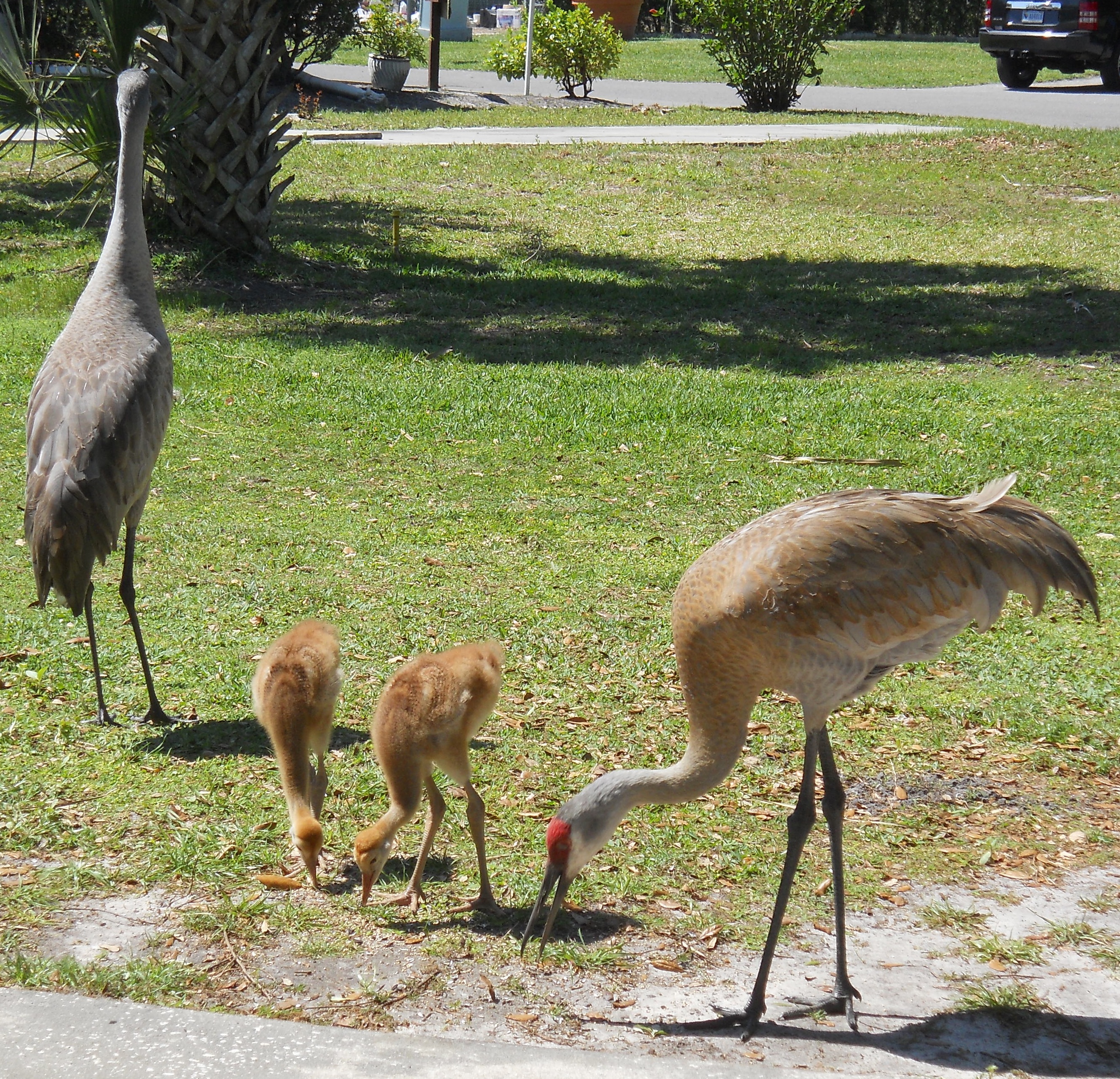
Oh, I wanted to tell you that Susana and I are having a wonderful time in Florida. It’s a bit cold today, but sunny and beautiful, and I was simply over the moon to catch my first glimpse of the baby sand hill cranes. Here are some photos of them. I almost got close enough to touch them! Aren’t they adorable?

babycranes

Baby sand hill cranes

Mama Crane

Mama Crane

Crane Family Having Luncheon

Crane Family Having Luncheon

Lady P in Florida and a Sneak Preview of “A Home For Helena”

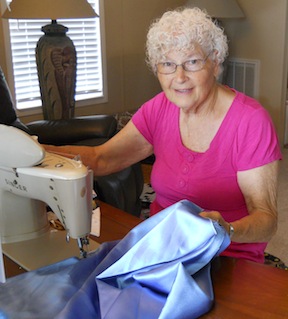
Susana: Lady P has been having a wonderful time with me this winter in central Florida. She gets along well with my parents, especially my mother.

Susana's mother, Mrs. Ellis

Susana’s mother, Mrs. Ellis

Lady P: In many ways, Mrs. Ellis and I are kindred spirits. Why, she even looks like me when she puts on that navy bonnet with the crimson trim. She dotes on her grandchildren, as I do, of course, and I even helped her make the most darling little dresses and skirts for them, as well as a vest and trousers for the boy. Did you know that Susana’s sister has eleven children, nine of them girls? Goodness, I don’t know how she manages without any servants. My own daughter Sarah cannot manage her three even with a houseful of servants.

Susana: I don’t think that’s fair, your ladyship. Having your mother there to nitpick over everything you do can be nerve-wracking for anyone. Especially when your mother—or your houseguest—thinks everything should be done her way

Lady P: Well really, Susana, your housekeeping skills are sadly lacking, and you don’t even have the sense to feel remorseful about it. If you refuse to clean your house yourself, the very least you could do is hire someone else to do it.

Susana [shrugging]: Cleaning is a waste of time. It’ll only get dirty again, after all. Besides, I don’t care to have some stranger in my house while I’m busy writing and need to concentrate. Your banging around is about as much as I can stand. In any case, Romeo Roomba does a fabulous job cleaning the floors. All I have to do is push the “on” button and when he’s finished he returns to his charging station and turns himself off. What could be better?

Lady P

Lady P

Lady P [clucking her tongue]: What is the world coming to when you have to get a machine to do such a simple task for you? Why, in my day, the maids had to take up the rugs and beat the dust out of them.

Susana: Oh yes, I’m sure everything was done much better in the 19th century. No doubt you had to walk three miles to school every day, and you and your siblings used to fight over the gizzard when roast chicken was served.

Lady P: Well! I can see you’re not in a proper mood for a conversation. Perhaps I shall indulge myself with a dip in the bathing pool.

Susana: A wonderful idea, Lady P! The other residents always enjoy chatting with you. Why, when you left the other day, it was so quiet you could hear a pin drop, and several people got up and left out of sheer boredom.

Following Lady P’s Departure

Susana [chuckling]: And they do get a kick out of seeing her in her outlandish bathing costume too. She couldn’t find a proper one here, of course, so she made one out my mother’s old capri pants and a belted T-shirt. She insists she can’t possibly be seen in a modern bathing suit, not even one with a skirt.

Anyway, in spite of all our bickering, Lady P has been assisting me with my current work-in-progress, A Home For Helena. The story is loosely based on a true story in which Lady P played a pivotal role. Of course, the names and details have been changed to protect the innocent—and the guilty, I suppose.

A Home For Helena

Helena and James

Helena and James

Helena Lloyd grew up in foster homes until she was finally adopted by a kind old lady who loved her and taught her how to live by example. When she died, she left Helena enough money to attend college and get her MBA. But Helena discovered the business world was not for her, so she tried a few other things. When the story starts, she has just quit her job as a nanny for a wealthy couple in London, but is being stalked by her former employer. She runs into a gypsy lady who tells her that she is a soul lost in the wrong era. Sounds crazy, but when she thinks about it, there seems to be a ring of truth in it. So she agrees to travel to the era she supposedly “belongs” in, which is Regency-era England.

Helena doesn’t know the first thing about the Regency era, but fortunately, the gypsy lady gives her the address of a prominent London lady who has done a bit of time traveling herself. You guessed it—my own Lady Pendleton!

While staying with Lady P, an urgent message arrives from Lady P’s daughter in Kent. The Newsomes are in desperate need of a governess, and at Lady P’s urging, Helena agrees to travel there and fill in until a permanent governess can be found.

That’s when she meets James Walker, a neighboring widower whose daughter Annabelle is temporarily lodging with the Newsomes. His first marriage was a disaster, and he’s not keen on remarrying, but since he can’t seem to manage his young daughter on his own, everyone is telling him to find a wife.

The Newsomes’ new governess is about as un-governess-like as you can get. She’s young and beautiful, wears stylish clothing, and her teaching methods are decidedly odd. Not to mention her manner of speech, which is nothing like any American he has ever met. She is also quite free with her opinions, and James could never bear to have a wife like that. Not that he’s interested in marrying her. His next wife will be quiet and biddable and content with what he can offer her.

But is that what he really wants?

Helena finds James Walker devastatingly handsome, but she’s not there to find a husband. She doubts that a modern woman could bear to live in a period where women lived completely under their husband’s control. And even if she could, surely the knowledge of her journey through time would send him running in the opposite direction.

Wouldn’t it?

Who were Helena’s parents and how did she end up two hundred years in the future? Will Helena and James be able to resolve their differences and live happily ever after?

And most of all, what role will Lady P play in the final showdown?

Tune in later this year when A Home For Helena hits the digital shelves

If you could travel through time, where would you go and why? Do you think you could make the decision to remain there permanently?