Archives

Susana’s 2015 English Adventure: Week 2

Hatfield House

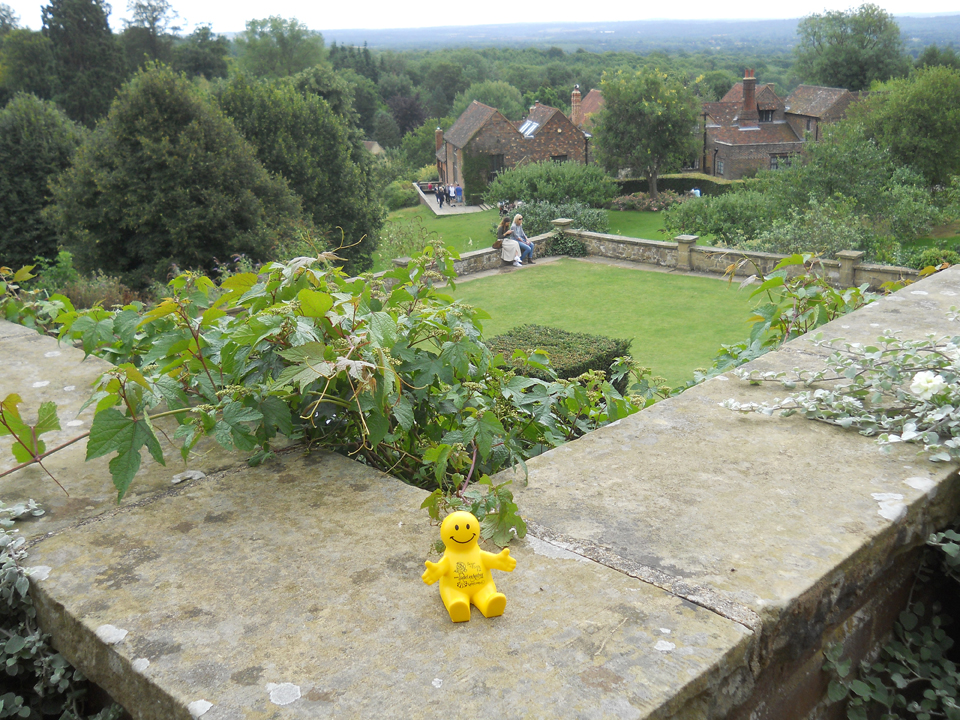
Hatfield House is a Jacobean manor built by Robert Cecil, the son of William Cecil, the most trusted advisor of Elizabeth I. Robert succeeded his father as Elizabeth’s advisor, eventually becoming an advisor of James I as well. Robert Cecil is the one who discovered the plot of Guy Fawkes and others to blow up the House of Lords. A later Cecil (James) was made Marquis of Salisbury, and the Salisburys still own and live at Hatfield House more than 500 years later.

Hatfield Palace, which stood nearby (of which only a banquet room remains) was where all of Henry VIII’s children (Mary, Elizabeth, and Edward) were raised. It was here where Elizabeth learned that she was queen after the death of her sister Mary.

OLYMPUS DIGITAL CAMERA

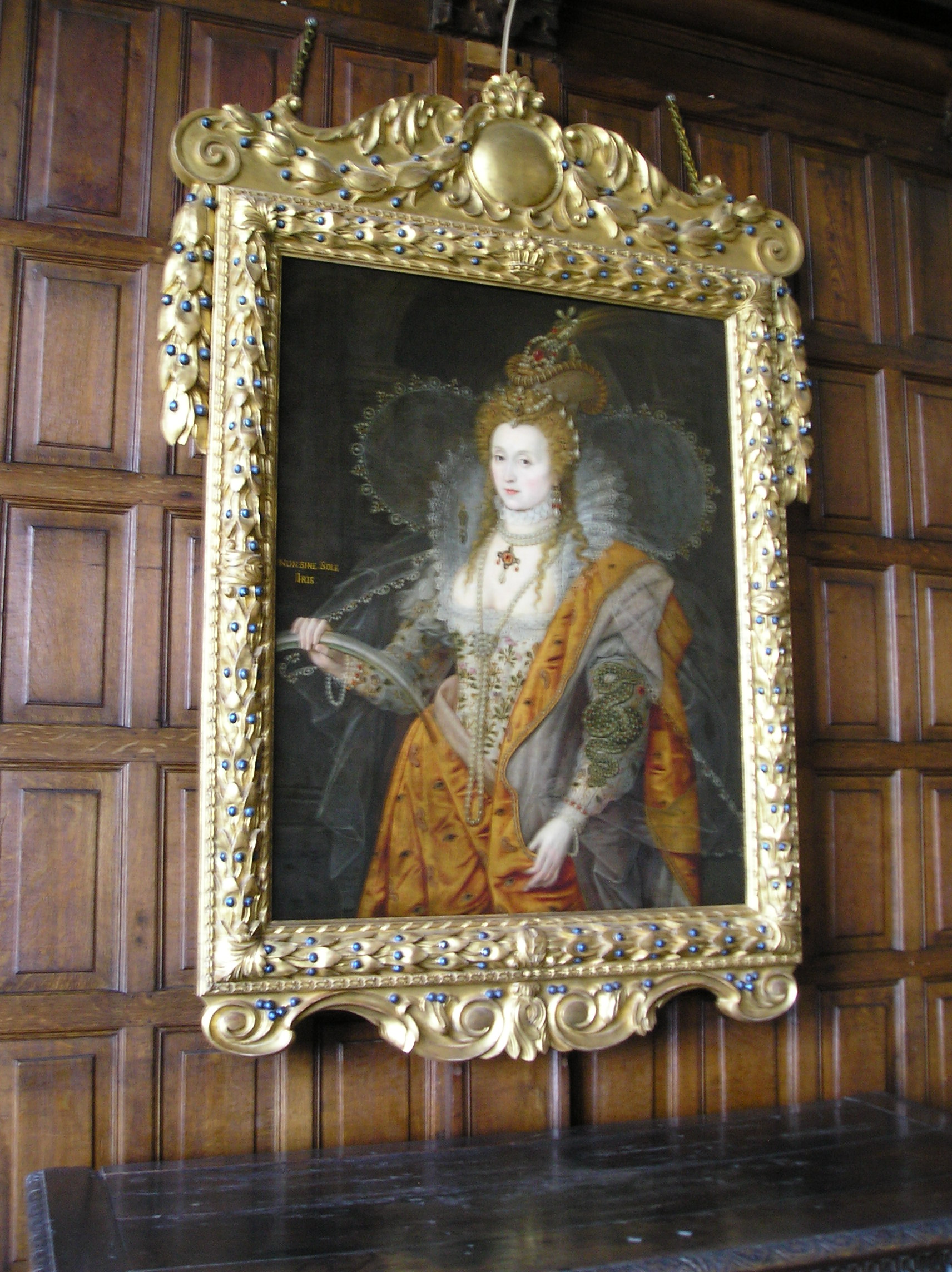
Elizabeth I

Photos of Hatfield House

Kenwood House

William Murray, 1st Earl of Mansfield, bought the house in 1754 and commissioned Robert Adam to remodel it, which he did from 1764-1779. The library is a masterpiece of Robert Adam genius, but the rest of the house is equally splendid. It is a pity that most of the original Adam-designed furniture was dispersed long ago, but a later owner, a Lord Iveagh, purchased the house in 1925 and displayed his fabulous collection of paintings there before leaving the house and its contents to the nation in 1927.

LIBRARY3

Lord Mansfield and his wife never had children of their own, but they did take in two young daughters of nephews: Lady Elizabeth Murray and Dido Belle, who was a mixed-race daughter of an enslaved West Indian woman. Dido Belle was the subject of a recent film, Belle.

Dido Belle and Elizabeth Murray

Dido Belle and Elizabeth Murray

Pictures of Kenwood House

Buckingham Palace

Buckingham Palace needs no introduction from me. I scheduled my trip this year so that I could visit, since it’s only open to visitors when the Queen is on holiday in Scotland (August and September). No photographs allowed, so I pinned these from other people’s Pinterest boards.

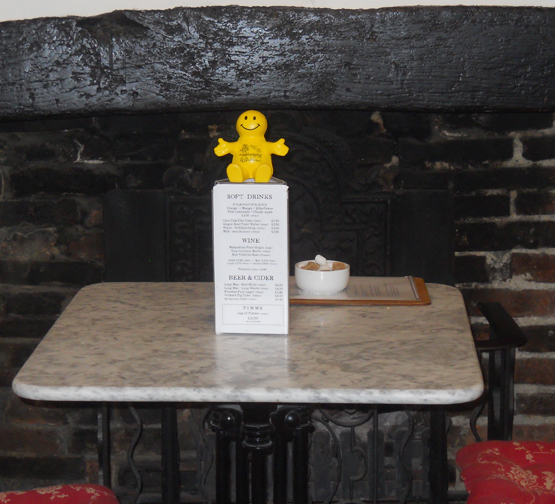
Here’s Squidgeworth ready to enjoy a coffee and scone with me after the tour.

SNACKATBUCKINGHAM

Pictures of Buckingham Palace

Osterley Park

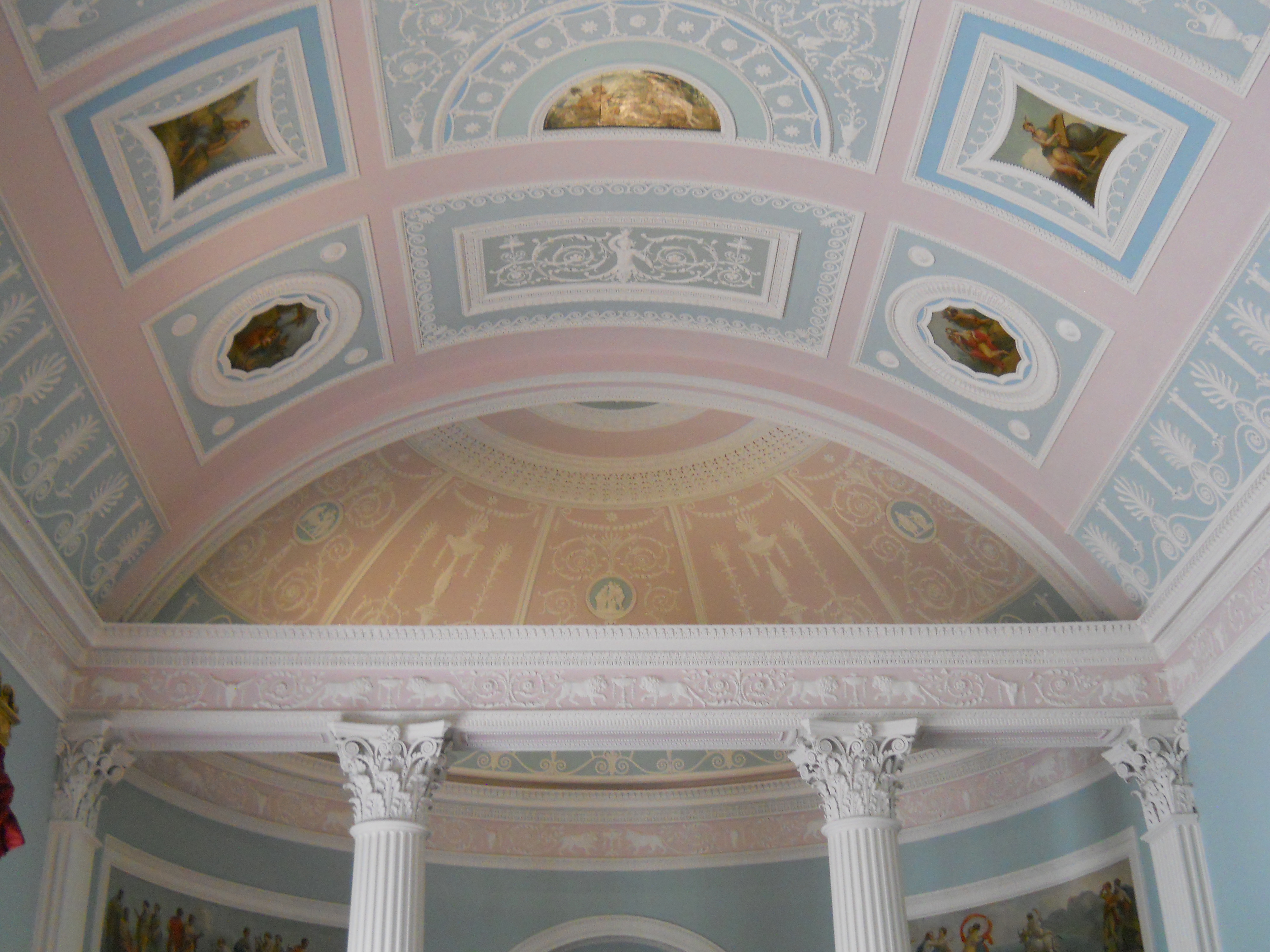
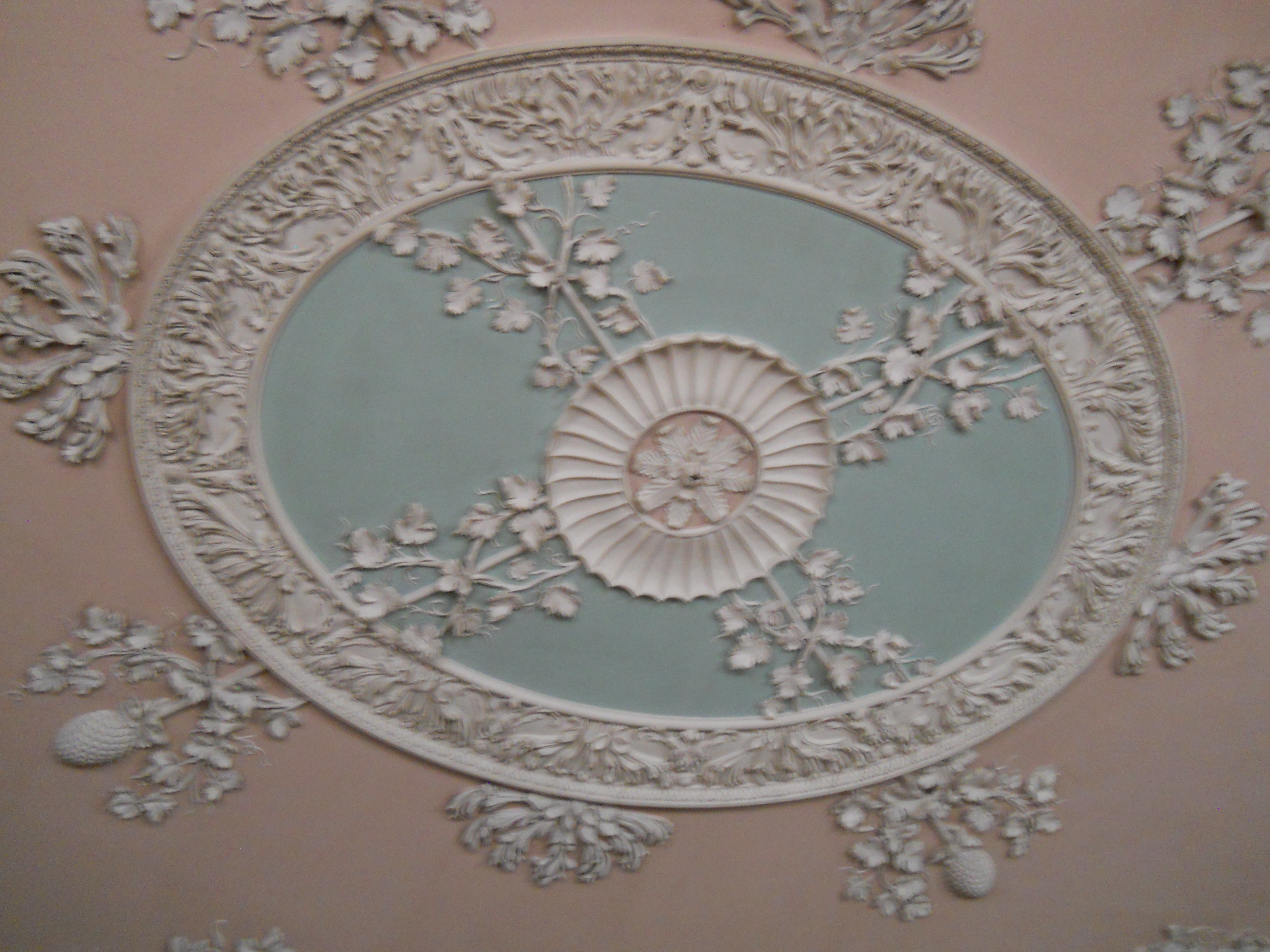
Built by Sir Thomas Gresham, financial advisor of Elizabeth I, Osterley Park was later purchased by Robert Child, a wealthy banker, who left it (and his entire fortune) to his granddaughter, Sarah Fane, who married George Villiers and became Lady Jersey (yes, Sally Jersey, one of the patronesses at Almack’s during the Regency period) a year later. But the house has been little used, as the Jerseys preferred spending their time at other properties. Here you will see not only the Robert Adam touches, but also nearly all of the original furniture, including the room where Adam worked and some of his drawings.

PINK:BLUECEILING

Pictures of Osterley Park

Devizes & the Bear Hotel

BEARHOTEL

The Bear Inn was once owned by the father of a young Thomas Lawrence, who used to charm the clientele by reciting poetry and drawing likenesses. He was quite good, and was eventually knighted for his portrait painting. See my blog post here.

Pictures of Devizes

Bath

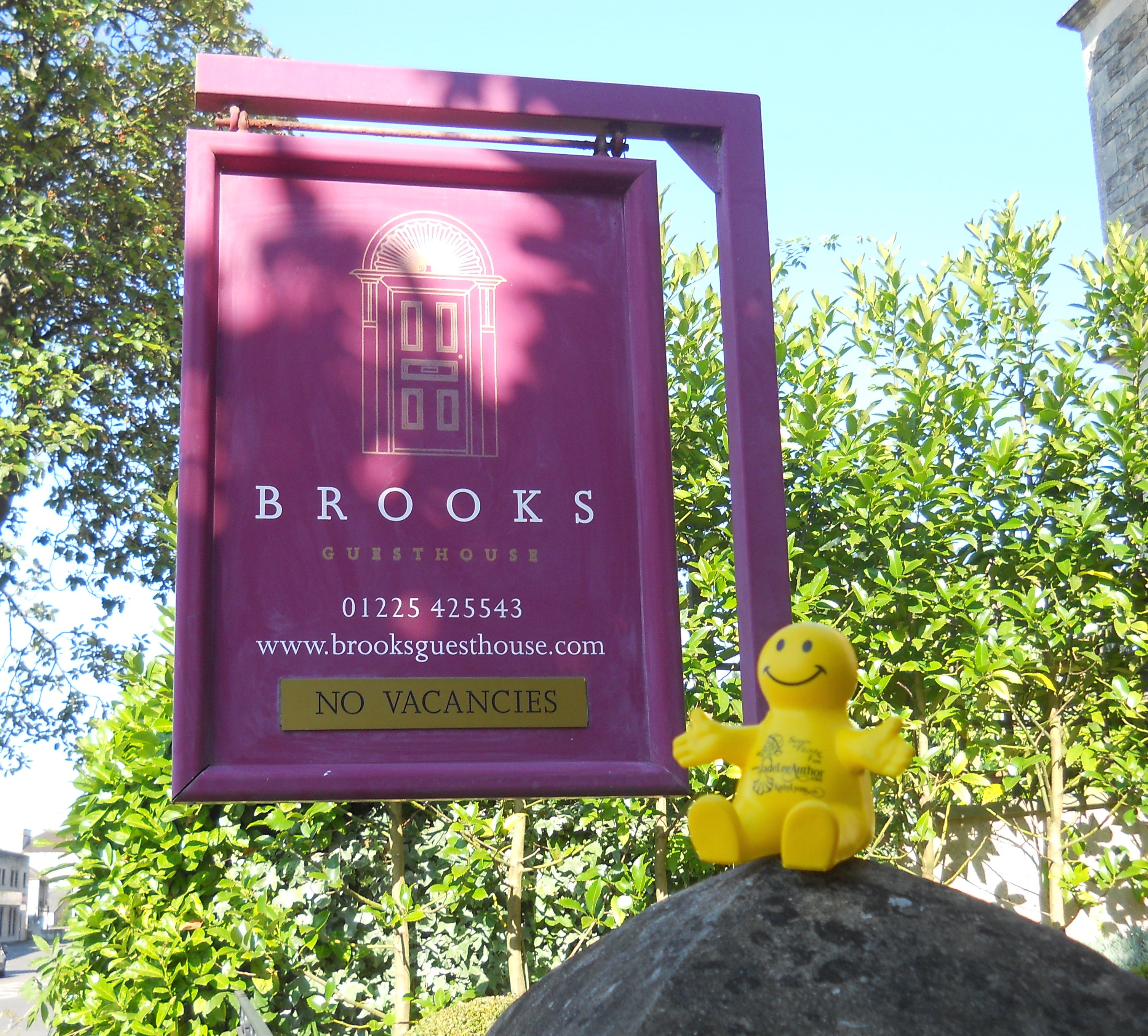
Squidgeworth and I had a very enjoyable two days in Bath, staying at the Brooks Guesthouse, where I stayed three years ago on my Rick Steves tour. Here I visited No. 1 Royal Crescent, the Jane Austen Centre, the Victoria Art Gallery, the Holburne Museum, the Assembly Rooms and Fashion Museum (second visit), and Sally Lunn’s.

Here’s Squidgeworth saying goodbye to Bath.

SquidgeBrooks

Pictures of Bath

Susana’s 2015 English Adventure: Week 1

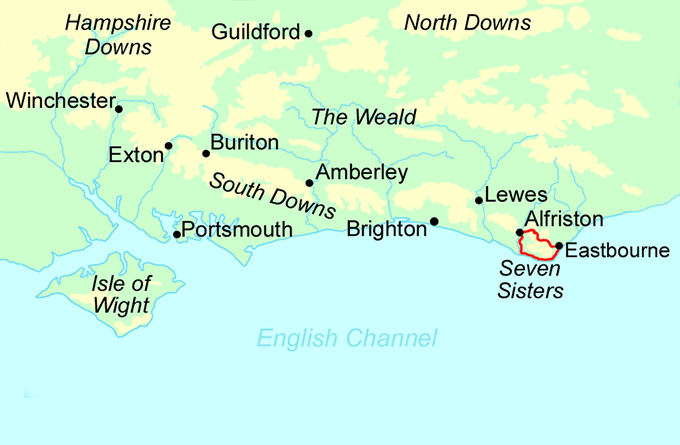
eastbourne map

For the first three days, Squidgeworth and I were the guests of Jay Dixon, a friend of mine who lives in Eastbourne. She was kind enough to take us around to visit some historical places of interest in the area, including the Redoubt Fortress, a quaint little town called Alfriston, Firle Place, and Chartwell.

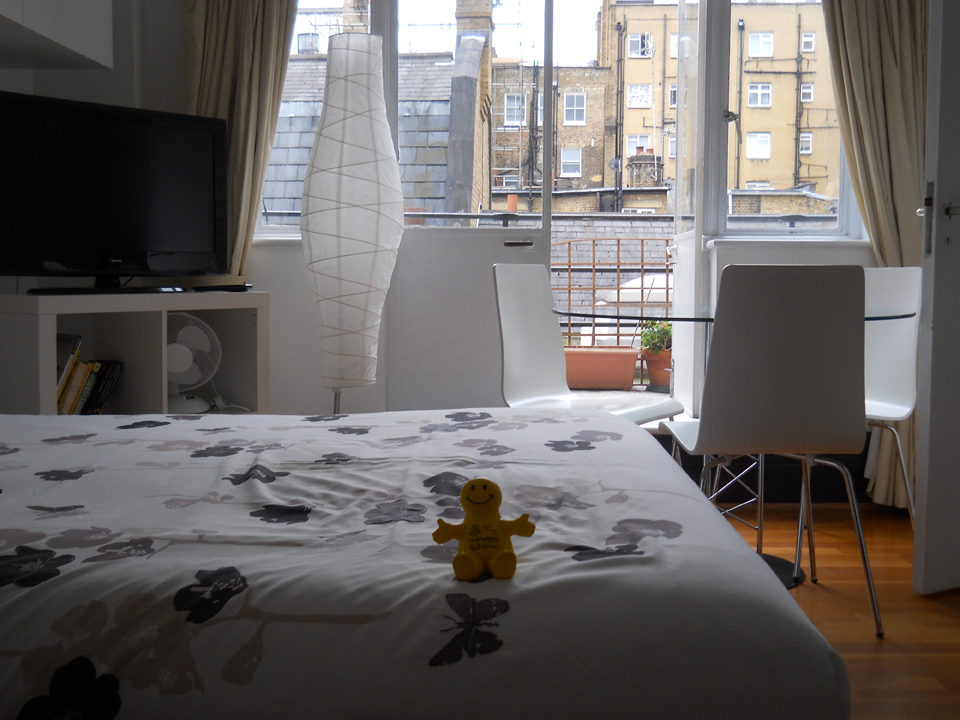
Unfortunately, I could not get my laptop to work with her Wifi system, so I had to go cold turkey from the Internet, which was instrumental later on when I arrived in London at my rental flat. It turns out that the previous renters of the flat I was scheduled for had trashed the place, and the company had switched me to another one, but I didn’t get the message because of my Internet blackout. It was a bit harrowing at first, but I was delighted that the flat they switched me to was the one I stayed in last year, near Baker Street, so I already knew the ropes. (I wanted this one, but at the time I was booking, it was already taken. There must have been a cancellation.)

Squidgeworth makes himself at home at our rental flat near Baker Street

Squidgeworth makes himself at home at our rental flat near Baker Street

Eastbourne: The Redoubt

The Redoubt is a circular military fortress that was built in 1804 when it was rumored that Napoleon had plans to invade England.

REDOUBT MODEL VILLAGE

Wikipedia

The Village of Alfriston

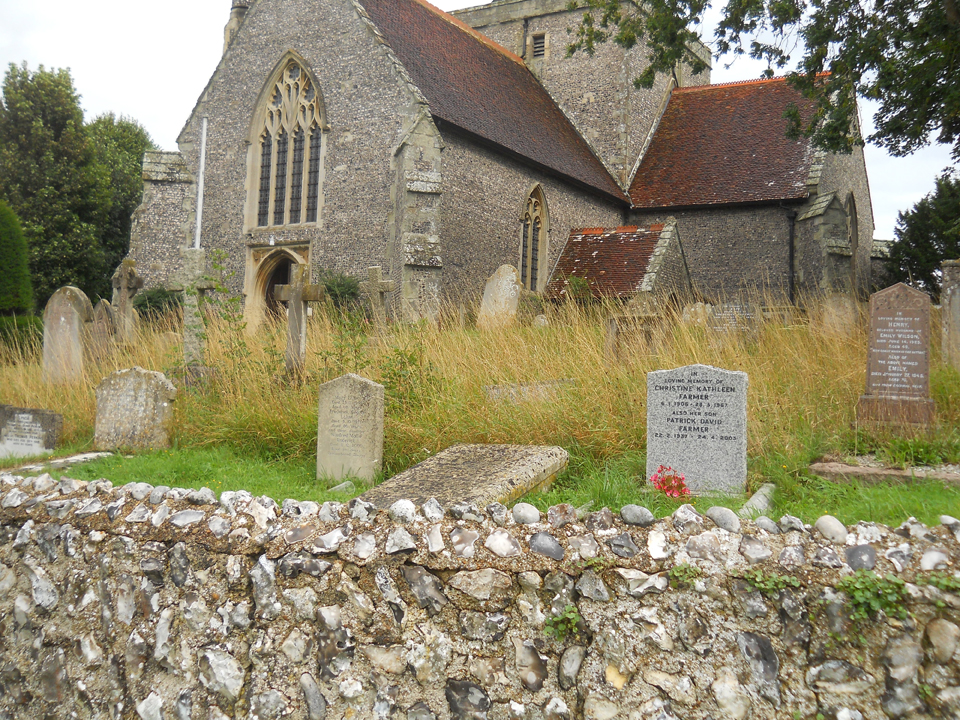
On Thursday we visited this quaint little village not far from Eastbourne. In addition to the historic buildings, a highlight was St. Andrew’s Church. The Clergy House was the first property purchased by the National Trust. Unfortunately, it was closed, but I did get photos of the outside.

The Clergy House

The Clergy House

St. Andrew's Church & Cemetery, Alfriston

St. Andrew’s Church & Cemetery, Alfriston


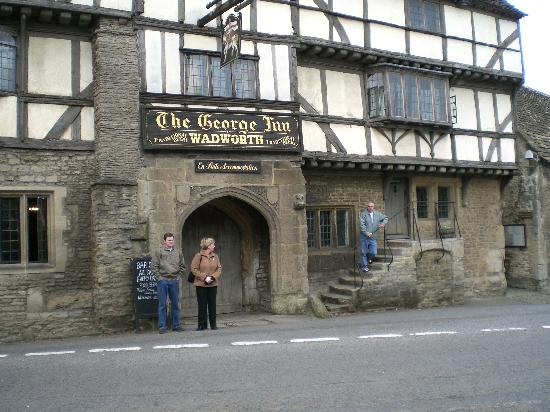
GEORGE INN copy

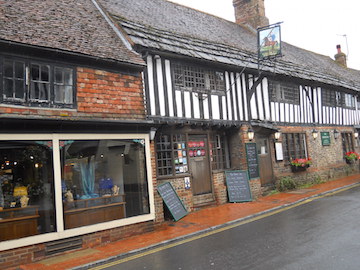
The George Inn, Alfriston


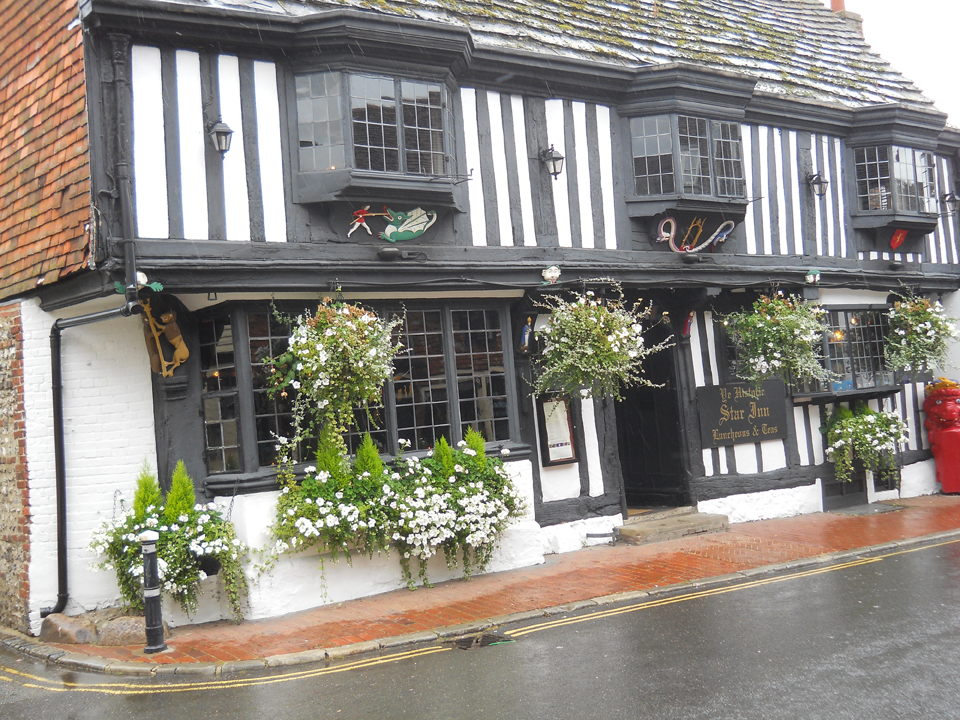
The Star Inn, Alfriston

The Star Inn, Alfriston


Squidge at a The Apiary Café in Alfriston

Squidge at a The Apiary Café in Alfriston

Wikipedia

Firle Place

Firle Place is the family seat of the Gages, the current owner being Nicholas Gage, the 8th Viscount Gage. The manor house has been in the family for over 500 years, and the estate includes a village among its 6000 acres of land. Sir John Gage was the executor of Henry VIII’s will. General Thomas Gage was at one time commander-in-chief of the British Army during the American Revolution, but was replaced after the disaster of Bunker Hill.

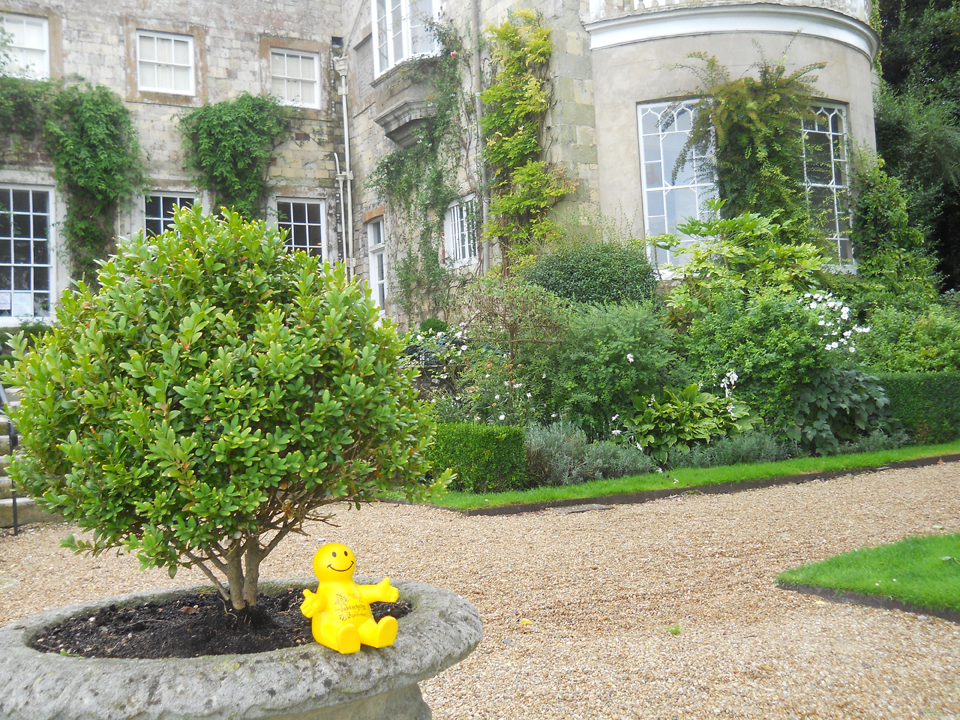
Squidgeworth at Firle Place

Squidgeworth at Firle Place


Firle Place

Firle Place

Wikipedia

Chartwell

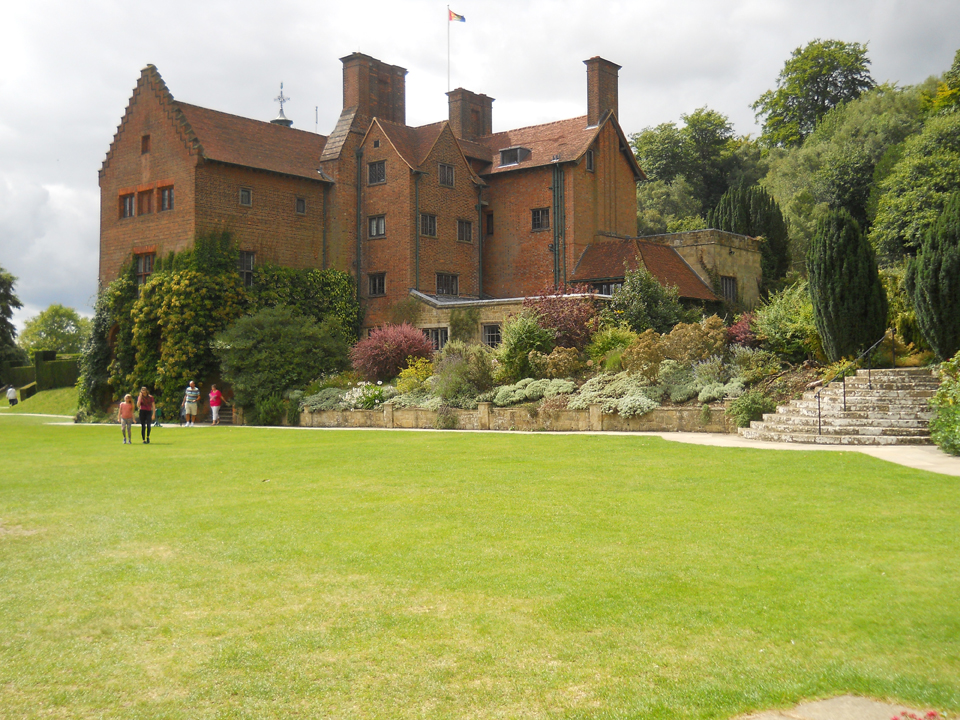
Chartwell, in Kent, was the principal residence of Winston Churchill, in his adult life. Henry VIII is believed to have stayed here during his courtship of Anne Boleyn, who lived at nearby Hever Castle.

The Churchills extensively renovated the house and gardens. Winston actually became a licensed brick layer and was noted for his wall building.

Chartwell

Chartwell


Squidgeworth at Chartwell

Squidgeworth at Chartwell

Wikipedia

The Victoria & Albert Museum

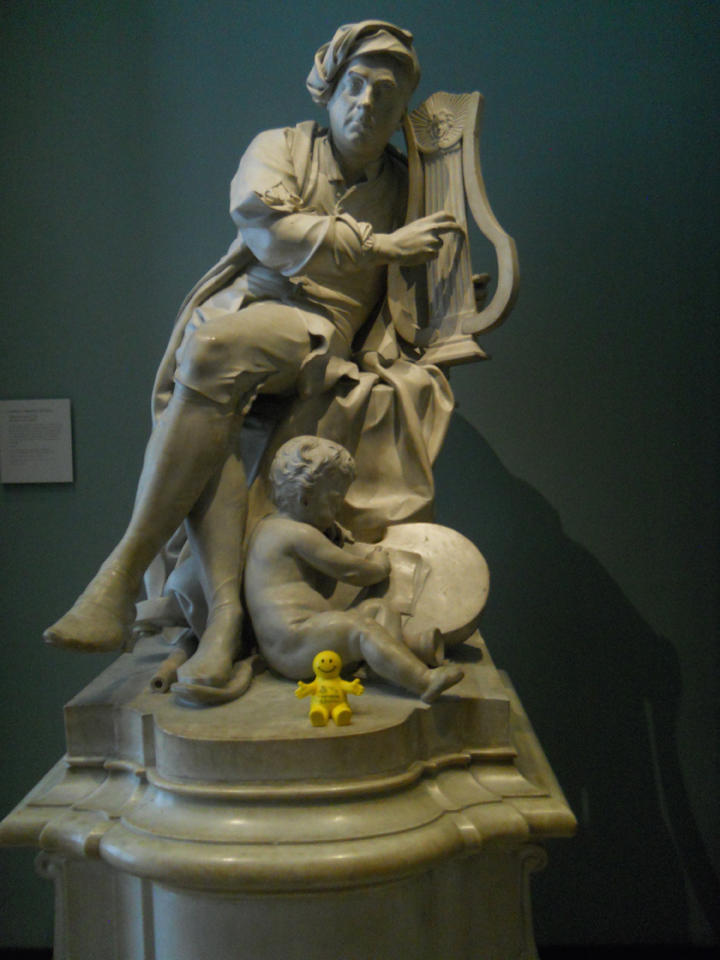
A visit to the V & A is a must for every trip to London. On this trip, my focus was Vauxhall, as the Handel statue is here, as well as three of the supper-box paintings. Unfortunately, it was difficult to get good photos of the paintings and other pictures due to the darkness of the room (which is true of many other things I tried to photograph). No doubt the low light is an attempt to preserve the aged items as long as possible. But I did get a good photo of the Handel statue, with Squidgeworth getting in on the action, as usual.

Squidgeworth and the Handel statue that used to sit in Vauxhall Gardens

Squidgeworth and the Handel statue that used to sit in Vauxhall Gardens

My Vauxhall Gardens board on Pinterest is a work in progress, but you can see there two videos about Vauxhall Gardens, one of which I photographed at the V & A and another I found on YouTube. I’ll be adding more photos as I find the time.

Susana’s Vauxhall Gardens Pinterest Board

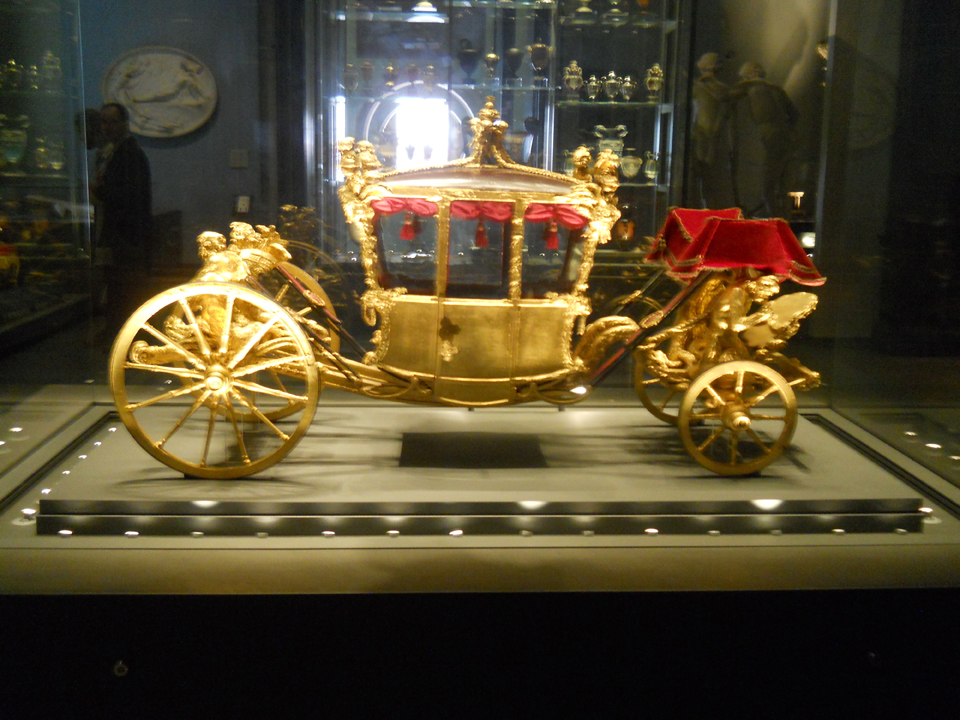
Coach at the V

Coach at the V & A Museum


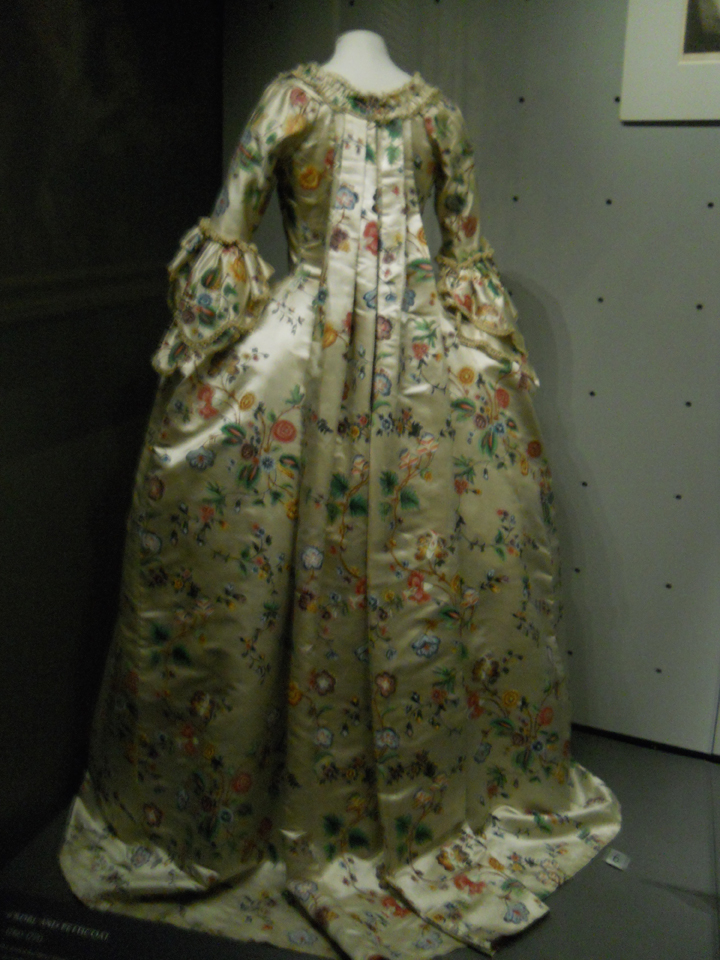
Painted silk gown

Painted silk gown at the V & A Museum

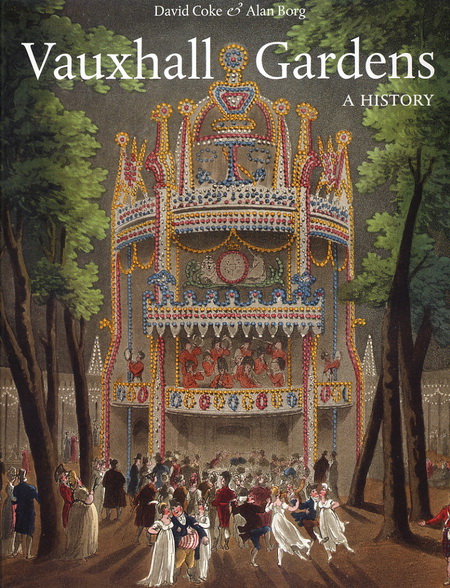
Vauxhall Gardens: A History

vauxhallbook

Vauxhall Gardens: A History

David Coke & Alan Borg

The Vauxhall Pleasure Gardens is one of the places I’d love to slip back in time to visit, just to catch a glimpse of what it was like. After recently splurging to buy this lovely coffee-table book, I thought it might make a wonderful subject for a new blog series. But do buy the book too, if you can. The photos are fabulous!

newspringgardensmap

Public Gardens

Royal Parks, such as St. James and Hyde Park, began to open up to the public in the seventeenth century. The first “Spring Garden” was located near St. James Park. Amenities in 1614 included a bathing pond, water fountains, graveled paths and fruit trees, a butt for archery, and a tiltyard. A bowling green was added by Charles II. It also became known for excessive drinking, quarrels, and hopeful prostitutes.

Samuel Pepys and the “Old” and “New” Spring Gardens

But there were also “Spring Gardens” at Vauxhall during the early seventeenth century, and after the Restoration, two of them, one “Old” and one “New” which has caused much confusion over the years. The “Old Spring Garden” was a pleasant place to walk with trees and flowers, with food available that Samuel Pepys spoke of as too “dear”, causing him and his family to eat at a nearby house instead after they had also visited the “New Spring Garden.” The word “New” was used to indicate that it was re-opened after the Restoration. Before 1750, when Westminster Bridge was opened, most visitors arrived by boat.

Taking water for vauxhall - Be careful, my love, don't expose your leg

TAKING WATER FOR VAUXHALL – Be careful, my Love, don’t expose your Leg

An early visitor, Balthasar de Monconys, described it:

We took a boat to the other side of the Thames to see two gardens, where everyone can go and walk, have something to eat in the restaurants or in the cabins in the garden. They are called Spring Gardens, that is to say Jardin du Printemps, and the new one is more beautiful than the old. I admired the beauty of the grassy walks and the niceness of the sanded ones. It is divided into a large number of plots twenty or thirty yards square, enclosed by gooseberry hedges, and these plots are also planted with raspberry bushes, roses, and other shrubs, as well as herbs and vegetables, such as peas, beans, asparagus, strawberries and so on. The walks are bordered with jonquils, gilliflowers or lilies. We returned after we had eaten and went again to Longacre.

Samuel_Pepys

Samuel Pepys

Samuel Pepys

Samuel Pepys was a frequent visitor to the gardens, mentioning it twenty-three times in his Diary from 1662 to July 1668. On one of his earlier visits, he mentions “boys doing tumbling tricks”. In 1665 when the plague began to take hold, he mentions “the ayre and pleasure of the garden, was a great refreshment to me, and methinks, that which we ought to Joy ourselves in.” A month later, he writes:

I to Fox-hall, where to the Spring-garden; but I do not see one guest there, the town being so empty of anybody to come thither. Only, while I was there, a poor woman came to scold with the master of the house that a kinswoman, I think, of hers, that was newly dead of the plague, might be buried in the church-yard; for, for her part, she should not be buried in the Commons, as they said she should.

A year later, Pepys describes visiting the park with a friend and having a sexual encounter with some prostitutes in a private arbor. He also mentions bird (particularly nightingale) and animal calls, an entertainment which was to become customary at Vauxhall. From his writings, one can infer that entrance to the gardens was free, but that food and drink were not. One entry describes a situation where ladies were stalked by drunken men. Pepys says this:

… at last, the ladies did get off out of the house and took boat and away. I was troubled to see them abused so; and could have found my heart, as little desire of fighting as I have, to have protected the ladies.

Another time, when he visited with his wife, he was again troubled by these young rapscallions:

So over the water with my wife and Deb and Mercer to Spring-garden, and there eat and walked, and observe how rude some of the young gallants of the town are become, to go into people’s arbors where there are not men, and almost force the women—which troubled me, to see the confidence of the vice of the age: and so we away by water, with much pleasure home.

Food and Drink at the Spring Gardens

Restoration literature mentions waiters. The food served was usually cold: the very thin ham shavings that Vauxhall was known for, chicken served with salad, and occasionally beef and lobster. Strawberries and cream were popular, the fruit grown in local market gardens. Beverages were wine, beer, and rack punch (a drink from India containing arrack—distilled from coconut sap—hot water, limes, sugar, and spice).

The Great Walk

Tom Brown mentions the Great Walk—the central feature of the gardens—in Amusements, published in 1700.

The ladies that have an inclination to be private take delight in the close walks of Spring Gardens, where both sexes meet and mutually serve one another as guides to lose their way; the windings and turnings in the little wilderness are so intricate that the most experienced mothers have often lost themselves in looking for their daughters.

Much mention is made of intrigues and sexual encounters in the “Spring Gardens,” although it is hinted that such is of a somewhat higher class there than in other public venues. Sir Roger de Coverley complained to the mistress of the house “that he should be a better customer to her garden if there were more nightingales and fewer strumpets” after he was accosted by a “wanton baggage” there.

An escape from the city

The Spring Gardens, although not really the countryside, were far enough away from the dirt and smells of the city that its widely diverse visitors could—at least for a short while—escape their troubles. The following anonymous verses were published in the Gentleman’s Magazine of June 1732:

At Vauxhall Stairs they land, their Passage pay,

And to Spring Gardens, tread the beck’ning way.

‘Hail pleasing Shades! O hail thou secret Grove!

The blest Retreat of Liberty and Love.

All hail, ye Bow’rs! Ye beaut’ous Silvan Scenes,

Ye Grotts, and Mazes of fresh blooming Greens;

Here dwells no Care, no matrimonial Strife,

The peevish Husband, nor the bawling Wife;

Here’s no Restraint to make our Pleasures cloy,

We part at will, and as we please enjoy

See how the Birds by Nature taught to rove,

How sweet they sing, and how like us they love.

With careless Ease they hop from Tree to Tree,

And are as Merry, and as blest as we.

Thrice happy State! Each am’rous Trulla says,

And baits with Poison all the various ways;

The Walks are fill’d with Throngs of different Sort,

From Fleet Street, Drury, and incog., from Court.

To these fair Shades, see Belles and Beaus advance,

Some sigh, some sing, some whistle, and some dance.

Susana’s Vauxhall Blog Post Series

  1. Vauxhall Gardens: A History
  2. Vauxhall Gardens: Jonathan Tyers—“The Master Builder of Delight” 
  3. Vauxhall Gardens: A New Direction
  4. Vauxhall Gardens: The Orchestra and the Supper-Boxes 
  5. Vauxhall Gardens: The Organ, the Turkish Tent, and the Rotunda
  6. Vauxhall Gardens: Three Piazzas of Supper-Boxes
  7. Vauxhall Gardens: “whither every body must go or appear a sort of Monster in polite Company”
  8. Vauxhall Gardens: The Competition
  9. Vauxhall Gardens: The Artwork, Part I
  10. Vauxhall Gardens: The Artwork, Part II
  11. Vauxhall Gardens: The Music, 1732-1859
  12. Vauxhall Gardens: The Business Side
  13. Vauxhall Gardens: Developments from 1751-1786
  14. Vauxhall Gardens: Thomas Rowlandson’s Painting (1785)
  15. ‎Vauxhall Gardens: The Third Generation of the Tyers Family and the Jubilee of 1786
  16. Vauxhall Gardens: An Era of Change (1786-1822), Part I
  17. Vauxhall Gardens: An Era of Change (1786-1822), Part II
  18. Vauxhall Gardens: An Era of Change (1786-1822), Part III
  19. Vauxhall Gardens: The Final Years, Part I
  20. Vauxhall Gardens: The Final Years, Part II
  21. Vauxhall Gardens: The Final Years, Part III
  22. Vauxhall Gardens: The Final Years, Part IV
  23. Vauxhall Gardens: Farewell, for ever


“A few words on Coaching Inns” and Conclusion

dust jacket

The following post is the twenty-seventh and final of a series based on information obtained from a fascinating book Susana obtained for research purposes. Coaching Days & Coaching Ways by W. Outram Tristram, first published in 1888, is replete with commentary about travel and roads and social history told in an entertaining manner, along with a great many fabulous illustrations. A great find for anyone seriously interested in English history!

“…And now a few words on the Coaching Inns”

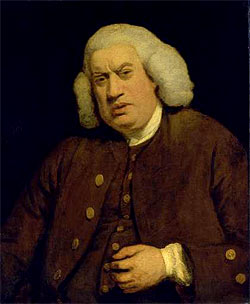
Dr. Samuel Johnson

Dr. Samuel Johnson

“There is no private house,” said Johnson—it was in the Old Chapel House inn in Oxfordshire, on the Birmingham Road, that he gave vent to the profundity—“there is no place,” he said, at which people can enjoy themselves as well as at a capital tavern like this. Let there be ever so great a plenty of good things, ever so much grandeur, ever so much elegance, ever so much desire that every guest should be easy, in the nature of things it cannot be. There must always be some degree of care and anxiety. The master of the house is anxious to entertain his friends; these in their turn are anxious to be agreeable to him, and to no one but a very impudent dog can as freely command what is in another man’s house as if it were his own. Whereas at a tavern there is a general freedom from anxiety. You are sure you are welcome, and the more noise you make the more trouble you give, the more good things you call for, the welcomer you are. No servants will attend you with the alacrity which waiters do, who are incited by the prospect of an immediate reward in proportion as they please. No, sir; there is nothing which has been contrived by man by which so much happiness is produced as by a good tavern or inn.”

Lamenting the loss of the “finest examples of this hospitable sort of architecture”

Hear, hear! say I; but while on the subject of inns may remark that I have been much disappointed in my ramblings; in truth began some six years too late from this point of view. For in that interval the country has been deprived of many of its finest examples of this hospitable sort of architecture. Of those fine examples—few and far between—which still remain, many are now sinking into a state of irremediable disrepair—witness the great inn at Stilton for one—and will in the near fulness of time doubtless be improved altogether off the face of the earth.

george inn norton st philip

The George Inn, Norton St. Philip (near Bath)

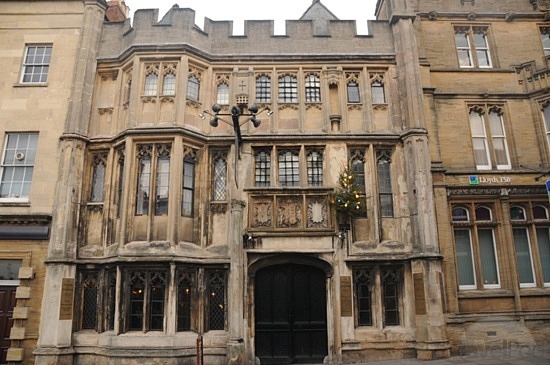
At Norton St. Philip, then, in Somersetshire, seven miles south-east of Bath, there still stands in the George Inn, a half-timbered, fifteenth century house, of the finest possible type. Monmouth passed the night of June 26th, 1685 at this George…At Glastonbury, in the same county, an inn of the same name—the George—with front one splendid mass of panelling, pierced where necessary for windows, the finest piece of domestic work in one of the most entrancing towns in England from an antiquary’s point of view, dates from the fourth Edward; while, to go further afield for a fine specimen of a different period, at Scole in Suffolk, the White Hart, erected in 1655 by John Peck, merchant, of Norwich, still retains some fine carving, and had till the end of the last century an enormous sign containing many figures—Diana and Actaeon, Charon, Cerberus, and sundry other worthies, carved in wood by Fairchild, at a cost of 1057 pounds.

george-pilgrims-hotel-1492-glastonbury-n1-st-fillans

The George & Pilgrim Hotel, Glastonbury

Conclusion

If a minor measure of success attends my enterprize I shall be content—content, that is to say, if I have caught some flavour of the romance of the Great Roads of England from the time when the Flying Machine of Charles the Second’s age lumbered out of the Belle Savage Yard, up to the day when the Holyhead Mail via Shrewsbury, timed at eleven miles an hour, was our fathers’ wonder, and the pride of this perfect road— “Mr. Bicknell’s spicy team of greys.”

scole-scole-inn-5279

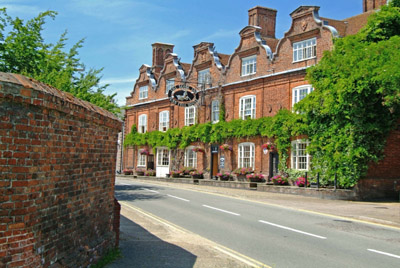
The Scole Inn, Suffolk (formerly White Hart)

scole_inn_stairs

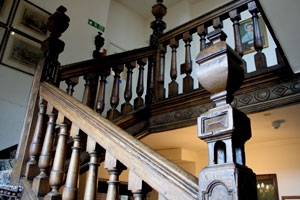
Stairs at the Scole Inn


 Index to all the posts in this series

1: The Bath Road: The (True) Legend of the Berkshire Lady

2: The Bath Road: Littlecote and Wild William Darrell

3: The Bath Road: Lacock Abbey

4: The Bath Road: The Bear Inn at Devizes and the “Pictorial Chronicler of the Regency”

5: The Exeter Road: Flying Machines, Muddy Roads and Well-Mannered Highwaymen

6: The Exeter Road: A Foolish Coachman, a Dreadful Snowstorm and a Romance

7: The Exeter Road in 1823: A Myriad of Changes in Fifty Years

8: The Exeter Road: Basingstoke, Andover and Salisbury and the Events They Witnessed

9: The Exeter Road: The Weyhill Fair, Amesbury Abbey and the Extraordinary Duchess of Queensberry

10: The Exeter Road: Stonehenge, Dorchester and the Sad Story of the Monmouth Uprising

11: The Portsmouth Road: Royal Road or Road of Assassination?

12: The Brighton Road: “The Most Nearly Perfect, and Certainly the Most Fashionable of All”

13: The Dover Road: “Rich crowds of historical figures”

14: The Dover Road: Blackheath and Dartford

15: The Dover Road: Rochester and Charles Dickens

16: The Dover Road: William Clements, Gentleman Coachman

17: The York Road: Hadley Green, Barnet

18: The York Road: Enfield Chase and the Gunpowder Treason Plot

19: The York Road: The Stamford Regent Faces the Peril of a Flood

20: The York Road: The Inns at Stilton

21: The Holyhead Road: The Gunpowder Treason Plot

22: The Holyhead Road: Three Notable Coaching Accidents

23: The Holyhead Road: Old Lal the Legless Man and His Extraordinary Flying Machine

24: The Holyhead Road: The Coachmen “More Celebrated Even Than the Most Celebrated of Their Rivals” (Part I)

25: The Holyhead Road: The Coachmen “More Celebrated Even Than the Most Celebrated of Their Rivals” (Part II)

26: Flying Machines and Waggons and What It Was Like To Travel in Them

27: “A few words on Coaching Inns” and Conclusion

A Word About the Status of Catholics in Regency England

Painting-of-a-martyr-on-the-rack_large

“Sorry, but King Henry says your religion, which until very recently was King Henry’s religion, as well as our religion, as it had been for 9 centuries, is alien and un-English”

It wasn’t until recently when I read Philippa Carr’s Miracle at St. Bruno’s that I began to feel the English people’s pain as they were forced from Catholicism to Protestantism to Catholicism again and then finally back to Protestantism at the whim Henry VIII and his offspring. The heroine’s devout Catholic father must either accept his sovereign’s “reforms”—devised solely for the purpose of enabling him to divorce his wife—or offer his head on the block. Following Henry VIII’s death, his eldest daughter—granddaughter to the originators of the Inquisition, Ferdinand and Isabella of Spain—demanded that everyone revert back to Catholicism or likewise suffer the severing of their heads. When Bloody Mary died and was replaced with her Protestant sister Elizabeth, Catholicism was abolished. No more of this religious switching back and forth, chopping off heads of devout people who happened to align themselves with the “wrong” religion.

Sir Thomas More (by Hans Holbein): refused to accept Henry VIII as Head of the Anglican Church, was convicted of treason and beheaded

Unfortunately, that meant many years of religious persecution for the Catholics. Masses had to be said it secret. Priests had to be trained abroad, and if they were caught, it meant execution for them and those who harbored them. “Priest holes” or secret hiding places were constructed in homes harbor them in case of a search.

Persecution eased a bit when Charles II took the throne; he had a Catholic wife. By the 18th century there was much more social acceptance of Catholics—they were allowed to worship at the Embassies of Catholic nations in London, for example. In 1785, the Prince of Wales (later George IV) illegally married a divorced Catholic woman, Maria Fitzherbert (never officially acknowledged). Catholics were excluded from Parliament, magistristracies, military commissions, and universities, but most other fields were open to them. Catholic worship became legal in 1791, so Catholics no longer had to have masses performed secretly in their homes.

During the Regency, a Catholic could be an officer in the army or navy, but not hold a seat in Parliament. Catholic marriages had to be performed in an Anglican church with an Anglican minister in order to be valid, although a Catholic ceremony could be held afterward (doing it first could leave them open to fines). A mixed marriage with a Catholic wife was more easily accepted in Society than one with a Catholic husband. (Although, to be fair, the Catholics didn’t approve of mixed marriages either.) The Protestant husband had to take an oath abjuring the Pope, and generally, the children were to be brought up Protestant, although in some cases, the boys were Catholic and the girls Protestant.

Catholics could go about their business much the same way as Protestants, although there was still plenty of prejudice against them. Generally, most Protestant families steered their marriageable children away from Catholics, and vice versa.

In Lost and Found Lady, Catalina, born and bred in Spain, is a devout Catholic. Rupert has promised his father he will choose a “suitable wife,” so when sparks begin to fly between him and the lovely girl who saved his life, he has to keep his emotions in check because Catalina is in no way the sort of wife his father would accept. But as their relationship grows, Rupert finally realizes that his heart has already made the choice for him.

 waterloo_cover_best web

Our Stories

Jillian Chantal: Jeremiah’s Charge

Emmaline Rothesay has her eye on Jeremiah Denby as a potential suitor. When Captain Denby experiences a life-altering incident during the course of events surrounding the Battle of Waterloo, it throws a damper on Emmaline’s plans.

Téa Cooper: The Caper Merchant

The moon in Gemini is a fertile field of dreams, ideas and adventure and Pandora Wellingham is more than ready to spread her wings. When Monsieur Cagneaux, caper merchant to the rich and famous, introduces her to the handsome dragoon she believes her stars have aligned.

Susana Ellis: Lost and Found Lady

Catalina and Rupert fell in love in Spain in the aftermath of a battle, only to be separated by circumstances. Years later, they find each other again, just as another battle is brewing, but is it too late?

Aileen Fish: Captain Lumley’s Angel

Charged with the duty of keeping his friend’s widow safe, Captain Sam Lumley watches over Ellen Staverton as she recovers from her loss, growing fonder of her as each month passes. When Ellen takes a position as a companion, Sam must confront his feelings before she’s completely gone from his life.

Victoria Hinshaw: Folie Bleue

On the night of the 30th Anniversary of the Battle of Waterloo, Aimée, Lady Prescott, reminisces about meeting her husband in Bruxelles on the eve of the fighting. She had avoided the dashing scarlet-clad British officers, but she could not resist the tempting smile and spellbinding charm of Captain Robert Prescott of the 16th Light Dragoons who— dangerously to Aimée— wore blue.

Heather King: Copenhagen’s Last Charge

When Meg Lacy finds herself riding through the streets of Brussels only hours after the Battle of Waterloo, romance is the last thing on her mind, especially with surly Lieutenant James Cooper. However, their bickering uncovers a strange empathy – until, that is, the lieutenant makes a grave error of judgment that jeopardizes their budding friendship…

Christa Paige: One Last Kiss

The moment Colin held Beatrice in his arms he wanted one last kiss to take with him into battle and an uncertain future. Despite the threat of a soldier’s death, he must survive, for he promises to return to her because one kiss from Beatrice would never be enough.

Sophia Strathmore: A Soldier Lay Dying

Amelia and Anne Evans find themselves orphaned when their father, General Evans, dies. With no other options available, Amelia accepts the deathbed proposal of Oliver Brighton, Earl of Montford, a long time family friend. When Lord Montford recovers from his battle wounds, can the two find lasting love?

David W. Wilkin: Not a Close Run Thing at All

Years, a decade. And now, Robert had come back into her life. Shortly before battle was to bring together more than three hundred thousand soldiers. They had but moments after all those years, and now, would they have any more after?

About Lost and Found Lady

On April 24, 1794, a girl child was born to an unknown Frenchwoman in a convent in Salamanca, Spain. Alas, her mother died in childbirth, and the little girl—Catalina—was given to a childless couple to raise.

Eighteen years later…the Peninsular War between the British and the French wages on, now perilously near Catalina’s home. After an afternoon yearning for adventure in her life, Catalina comes across a wounded British soldier in need of rescue. Voilà! An adventure! The sparks between them ignite, and before he returns to his post, Rupert promises to return for her.

But will he? Catalina’s grandmother warns her that some men make promises easily, but fail to carry them out. Catalina doesn’t believe Rupert is that sort, but what does she know? All she can do is wait…and pray.

But Fate has a few surprises in store for both Catalina and Rupert. When they meet again, it will be in another place where another battle is brewing, and their circumstances have been considerably altered. Will their love stand the test of time? And how will their lives be affected by the outcome of the conflict between the Iron Duke and the Emperor of the French?

Amazon.com • iBooks • Kobo • Barnes & Noble

Amazon.uk • Amazon.ca • Amazon.au

Amazon Print

The Holyhead Road: Old Lal the Legless Man and His Extraordinary Flying Machine

dust jacket

The following post is the twenty-third of a series based on information obtained from a fascinating book Susana recently obtained for research purposes. Coaching Days & Coaching Ways by W. Outram Tristram, first published in 1888, is replete with commentary about travel and roads and social history told in an entertaining manner, along with a great many fabulous illustrations. A great find for anyone seriously interested in English history!

The Holyhead Road enters Buckinghamshire at Brickhills… forty-five miles from London. …I must not leave these forty-five miles behind me without noting a curious sight which was often to be seen on this stretch from the topics of coaches before the legislature forbade the use of dogs as animals of draught. This sight was an old pauper, born without legs but with a sporting turn of mind. This natural bias led him to contrive a small waggon—very light, as may well be imagined since it had nothing but a board for the body. It was however fitted with springs, lamps, and all necessary appliances, and was drawn by a new kind of team in the form of three fox-hounds harnessed abreast.

In this flying machine of his own contriving, Old Lal, for such was the name of the old pauper born without legs—no name having been given him by his Godfathers and Godmothers at his baptism—Old Lal used to make the most terrific times. His teams were well matched in size and pace, cleverly harnessed, and he dashed by coaches making even their twelve miles an hour like the shot out of a gun, and with a slight cheer of encouragement to his team; but not in any spirit of insolence or defiances, as Captain M.E. Haworth (who in his Roaa Scrapings has preserved this episode of the North-western Road) is careful to tell us, but merely to urge the hounds to their pace.

ISLINGTON TO DUNSTABLE

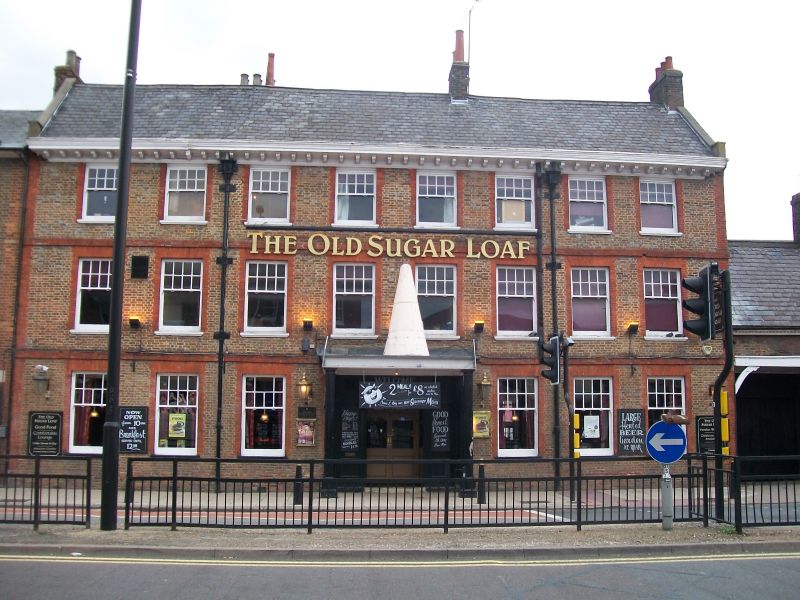
This pace in the end proved fatal to Old Lal, after having lived for many years on the alms of passengers by coaches between the Peacock at Islington and the Sugar Loaf at Dunstable. For one winter, when according to the ostler of the Sugar Loaf’s version, “the weather was terrible rough, there was snow and hice, and the storm blowed down a-many big trees, and them as stood used to ‘oller and grunt up in the Pine Bottom so that he’d heerd folks say that the fir-trees was a-rubbing themselves against one another—”one such winter as this Old Lal had not been seen for three weeks. This fact did not cause any anxiety to his friend the ostler. But one Sunday afternoon, when he had “four o’clocked his horses” and was putting a sack over his shoulders, preparatory to going down to his cottage, who should come up to him but one Trojan—a fox-hound and a respected member of Old Lal’s team. The fact that Trojan had part of his harness on, set the ostler thinking that he had cut and run, and that perhaps he had left Old Lal in trouble.

PEACOCK INN, ISLINGTON

PEACOCK INN, ISLINGTON

This supposition proved correct; but it was never believed that old Trojan was the cause of Old Lal being found dead on the side of the road some distance off his waggon which was found stuck fast between two fir-trees, with one of the hounds still in harness lying dead beside it. No! It was believed by the ostler that the guilt of Old Lal’s death lay at the door of another of the dogs—one Rocket, who turned up at the Sugar Loaf shortly after the arrival of Trojan. For this Rocket, according to the ostler, possessed many traits calculated to give rise to suspicion. In the first place, he was “a younger and more ramblier dog;” in the second place, “he never settled nowhere;” and in the third place, the last that the ostler heard of him was that, “being allers wondering fond of sport,” he had joined a pack of Harriers at Luton. …All three which considerations put together induced in the ostler the very probable belief that Rocket was the instigator of the poor old man’s death; that he (Rocket) must have caught a view of a fox, or at any rate have crossed a line of scent and bolted off the road and up through the wood, and “after he had throwed the old man out, continued the chase till the waggon got hung fast to a tree and tied them all up.” The jury, it may be remarked in conclusion, who sat on Old Lal’s remains, did not rise to this very lucid explanation of the cause of their session; for according to the ostler, they contented themselves with observing “That Old Lal was a pauper wagrant, that he had committed accidental death, and the coroner sentences him to be buried in the parish in which he was last seen alive.” He was buried in a square box accordingly, and the ostler and Trojan the fox-hound were the sole assistants at the rite.

Click here for a vintage advertisement for the Sugarloaf Inn

SUGARLOAF INN

SUGARLOAF INN

Another Version of the Tale

Tales From Tring Brewery

In this version, it was Thomas Pickford, Chairman of the Turnpike Trust who built the cart for Old Lal—who had been an ostler until losing his legs in an accident—so that he could earn money running errands and such. However, Pickford didn’t expect that the cart would be used to race coaches for the passengers’ entertainment, and in doing so, prove to be a danger to travelers. According to this source, Old Lal’s death was caused by a fox enticing the hounds to chase after him “over fields and ditches,” before getting the cart caught between the two trees and causing Old Lal’s death.


 Index to all the posts in this series

1: The Bath Road: The (True) Legend of the Berkshire Lady

2: The Bath Road: Littlecote and Wild William Darrell

3: The Bath Road: Lacock Abbey

4: The Bath Road: The Bear Inn at Devizes and the “Pictorial Chronicler of the Regency”

5: The Exeter Road: Flying Machines, Muddy Roads and Well-Mannered Highwaymen

6: The Exeter Road: A Foolish Coachman, a Dreadful Snowstorm and a Romance

7: The Exeter Road in 1823: A Myriad of Changes in Fifty Years

8: The Exeter Road: Basingstoke, Andover and Salisbury and the Events They Witnessed

9: The Exeter Road: The Weyhill Fair, Amesbury Abbey and the Extraordinary Duchess of Queensberry

10: The Exeter Road: Stonehenge, Dorchester and the Sad Story of the Monmouth Uprising

11: The Portsmouth Road: Royal Road or Road of Assassination?

12: The Brighton Road: “The Most Nearly Perfect, and Certainly the Most Fashionable of All”

13: The Dover Road: “Rich crowds of historical figures”

14: The Dover Road: Blackheath and Dartford

15: The Dover Road: Rochester and Charles Dickens

16: The Dover Road: William Clements, Gentleman Coachman

17: The York Road: Hadley Green, Barnet

18: The York Road: Enfield Chase and the Gunpowder Treason Plot

19: The York Road: The Stamford Regent Faces the Peril of a Flood

20: The York Road: The Inns at Stilton

21: The Holyhead Road: The Gunpowder Treason Plot

22: The Holyhead Road: Three Notable Coaching Accidents

23: The Holyhead Road: Old Lal the Legless Man and His Extraordinary Flying Machine

24: The Holyhead Road: The Coachmen “More Celebrated Even Than the Most Celebrated of Their Rivals” (Part I)

25: The Holyhead Road: The Coachmen “More Celebrated Even Than the Most Celebrated of Their Rivals” (Part II)

26: Flying Machines and Waggons and What It Was Like To Travel in Them

27: “A few words on Coaching Inns” and Conclusion

The Holyhead Road: The Gunpowder Treason Plot

dust jacket

The following post is the twenty-first of a series based on information obtained from a fascinating book Susana recently obtained for research purposes. Coaching Days & Coaching Ways by W. Outram Tristram, first published in 1888, is replete with commentary about travel and roads and social history told in an entertaining manner, along with a great many fabulous illustrations. A great find for anyone seriously interested in English history!

Mr. Ambrose Rookwood

…in November, 1605, roads as we now understand them did not exist; but this same route, or at all events tracks across un-inclosed heaths; even then connected the above-mentioned places [St. Albans, Redbourn, Dunstable, Brick-hill, Towcester, Dunchurch, Coventry, Birmingham, and Shrewsbury] with each other and the capital, and marked the shortest way for those riding post to reach Northamptonshire, or the Counties beyond its borders.

Map: St. Albans – Dunstable – Towcester – Daventry

Mr. Ambrose Rookwood

Mr. Ambrose Rookwood

Early then in the November of 1605, certain elaborate preparations which had been made for rapid travelling between London and Dunchurch, 80 miles down in Warwickshire was the common talk of ostlers and loafers at the chief posting-houses at St. Albans, Dunstable, Towcester, and Daventry. At each of these places, a Mr. Ambrose Rookwood, a young Catholic gentleman of fortune, well known on the road for his splendid horses, had placed heavy relays. The heaviness of these relays excited continual discussion. The confused rumour of the tap-room, fed by chance travellers on the road, decreed presently that these heavy relays were to carry Mr. Ambrose Rookwood down to a great hunting party, to be shortly assembled at Dunsmoor. But when this hunting party was to take place, no one seemed to know, or why the young Catholic gentleman should have made such elaborate preparations to reach it so hurriedly.

An Aura of Fear Pervades London

And so the few intervening days passed till the 5th of November, 1605, dawned grayly over London—amidst torrents of driving rain and wild gusts of a west wind which had gathered strength as the night waned, and by daylight had grown into a hurricane—dawned on a city distracted. Narrow streets were already crowded with excited groups, who whispered, gesticulated at street corners. Some men but half dressed rushed from their houses as if the rumour of some monstrous imminent doom had startled them suddenly from sleep. Others with drawn swords in their hands counselled all men to arm in one breath, and, as now and again a woman’s shriek rose above the press everywhere,—but no fixed rumour prevailed. Only each man eyed his neighbour suspiciously, only a vague feeling as of some nightmare had seized upon London that the past darkness had brought forth a portent.

Mr. Ambrose Rookwood and Mr. Thomas Winter Join the Fray

thomas winter

Mr. Thomas Winter

In the dim twilight of that November dawn Mr. Ambrose Rookwood, the young Catholic gentleman, whose relays of fine horses had excited such discussion on the North-western Road—came out into these distracted streets, in company with a friend—one Mr. Thomas Winter. The two gentlemen walked aimlessly here and there for some time, listening attentively to all that was said on all sides, now joining themselves to a group and adding questions on their own part, to the sort of universal interrogatory which prevailed—now shuddering and passing, on their way wuickly as the unformed phantom of the people’s fear began to grow gradually into defined shape. Then as if fearful any longer of uncertainty, they made with extraordinary coolness towards the Parliament House.

The sun had not yet risen; but in the middle of King Street, Westminster, the two found a guard standing. Permission to pass was peremptorily refused. Then as Mr. Rookwood’s friend stood parleying with the guard a white-faced citizen passed by hurriedly, exclaiming in panic-stricken tones, “There is treason discovered! And the king and lords should have been blown up.”

Flight of the Conspirators

The two gentlemen turned without a word, and made for their horses. The heavy relays on the North-western Road were now to be put to their proper use. But great caution had to be exercised. The appalling news had circulated in the city with the rapidity of poison. Barricades were being hastily erected at the ends of the streets; passengers were being stopped and questioned; any appearance of hurry would have led to instant arrest. It was eleven o’clock therefore before the two gentlemen got clear of London—and they were but just in time; for rumours were already in the air of a proclamation forbidding anybody to leave the town for three days. Once clear of London they rode desperately.

Huddington Court, Worcester

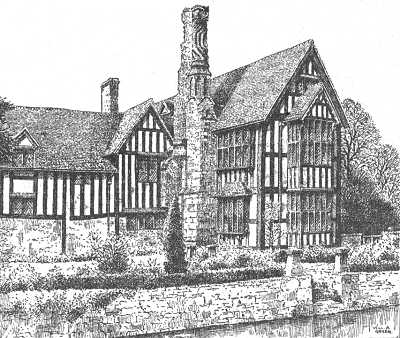
Huddington Court, Worcester

Few incidents I think in history seize the imagination so forcibly as that wild flight of the Gunpowder Conspirators northward. Thomas Winter made for his brother’s house at Huddington in Worcestershire; but Rookwood rode fiercely down the North-western Road to bear the fatal news to the conspirators already assembling on Dunsmoor. Catesby, Piercy, John and Christopher Wright were he knew on the road in front. But the relays already placed for him, and the desperate fear which urged him forwards enabled Rookwood to overtake the others as they were rising the ascent at Brickhill.

In a few words he told them what had happened in London—that Fawkes had been arrested and lodged in the Tower—that at any moment torture might make him give up their names—that the whole scheme had fallen through, and that their only chance of safety lay in instantly joining their friends. From this moment the flight became a stampede. “They devoured the ground,” shouting as they rode through startled towns and villages that they were carrying despatches from the King to Northampton, flinging off their large cloaks, heavy with the rain that still poured remorselessly, that they might add wings even to their precipitate flight. Rookwood rode thirty miles in two hours on one horse. At six in the evening the fugitives arrived at Catesby’s house at Ashby St. Ledgers, about three miles from Daventry. They had ridden the eighty miles from London in seven hours.

Map: Ashby St. Ledgers – Gayhurst

The gatehouse occupied by the Catesbys

The gatehouse occupied by the Catesbys

Here after a brief consultation with Robert Winter, who was staying in the house (it still stands in all its gloomy suggestiveness, this home of England’s most desperate conspirator), they rode off hastily on the same tired horses to join Sir Everard Digby and the pretended hunting gathering on Dunsmoor Heath which the direct road to Holyhead still crosses at the eighty-fifth mile-stone from London.

Sir Everard Digby, knighted by the king three years before he plotted to kill him

Sir Everard Digby, knighted by the king three years before he plotted to kill him

Their further wild course through Warwickshire to Holbeach on the Staffordshire border calls here for no telling, as it is no longer associated with the Road. But so intimately associated with the Gunpowder Treason does the way to Holyhead seem that thought its history is closed so far as the directest route is concerned, the earlier route by Chester has another link to add to its story. A short distance from Newport Pagnell (fifty-one miles from London), stands Gayhurst,the fine Elizabethan house once the home of Sir Everard Digby. Of him a sympathetic historian writes, “His youth, his personal graces, the constancy which he had exhibited whilst he believed himself a martyr in a good cause, the deep sorrow which he testified on becoming sensible of his error, seem to have moved all hearts with pity and even admiration; and if so detestable a villainy as the Gunpowder Plot may be permitted to have its hero Everard Digby was undoubtedly the man.”

Gayhurst House

Gayhurst House

The gray walls of his beautiful Buckinghamshire house were indeed witnesses at all events of some of the most suggestive incidents in the heart-quaking scheme. Fawkes was a frequent guest here—meditating through the prolonged rains which heralded the approach of the destined day, on the state of the powder, by now safely placed under the Parliament House; riding to and fro frequently from London; often an unexpected, always a welcome guest. From Gayhurst, besides, set out that Pilgrimage to St. Winifred’s well, in Flintshire, the motive of which was so much discussed after the discovery of the Conspiracy.

St. Winefride's Well: site of the conspirators' meetings?

St. Winefride’s Well: site of the conspirators’ meetings?

Motives apart however, what is mort important from my point of view is that the company of about thirty persons—all relations of the conspirators; some of the actual conspirators among these, travelled in coaches—proceeded by Daventry to John Grant’s house at Norbrook, a fine melancholy, moated manor once (where is it now?), thence to Robert Winters, at Huddington, and so to Flintshire by Shrewsbury.

holbeche

Holbeche House: where the surviving conspirators were captured


 Index to all the posts in this series

1: The Bath Road: The (True) Legend of the Berkshire Lady

2: The Bath Road: Littlecote and Wild William Darrell

3: The Bath Road: Lacock Abbey

4: The Bath Road: The Bear Inn at Devizes and the “Pictorial Chronicler of the Regency”

5: The Exeter Road: Flying Machines, Muddy Roads and Well-Mannered Highwaymen

6: The Exeter Road: A Foolish Coachman, a Dreadful Snowstorm and a Romance

7: The Exeter Road in 1823: A Myriad of Changes in Fifty Years

8: The Exeter Road: Basingstoke, Andover and Salisbury and the Events They Witnessed

9: The Exeter Road: The Weyhill Fair, Amesbury Abbey and the Extraordinary Duchess of Queensberry

10: The Exeter Road: Stonehenge, Dorchester and the Sad Story of the Monmouth Uprising

11: The Portsmouth Road: Royal Road or Road of Assassination?

12: The Brighton Road: “The Most Nearly Perfect, and Certainly the Most Fashionable of All”

13: The Dover Road: “Rich crowds of historical figures”

14: The Dover Road: Blackheath and Dartford

15: The Dover Road: Rochester and Charles Dickens

16: The Dover Road: William Clements, Gentleman Coachman

17: The York Road: Hadley Green, Barnet

18: The York Road: Enfield Chase and the Gunpowder Treason Plot

19: The York Road: The Stamford Regent Faces the Peril of a Flood

20: The York Road: The Inns at Stilton

21: The Holyhead Road: The Gunpowder Treason Plot

22: The Holyhead Road: Three Notable Coaching Accidents

23: The Holyhead Road: Old Lal the Legless Man and His Extraordinary Flying Machine

24: The Holyhead Road: The Coachmen “More Celebrated Even Than the Most Celebrated of Their Rivals” (Part I)

25: The Holyhead Road: The Coachmen “More Celebrated Even Than the Most Celebrated of Their Rivals” (Part II)

26: Flying Machines and Waggons and What It Was Like To Travel in Them

27: “A few words on Coaching Inns” and Conclusion

The York Road: Enfield Chase and the Gunpowder Treason Plot

dust jacket

The following post is the eigthteenth of a series based on information obtained from a fascinating book Susana recently obtained for research purposes. Coaching Days & Coaching Ways by W. Outram Tristram, first published in 1888, is replete with commentary about travel and roads and social history told in an entertaining manner, along with a great many fabulous illustrations. A great find for anyone seriously interested in English history!

The Gunpowder Treason Plot

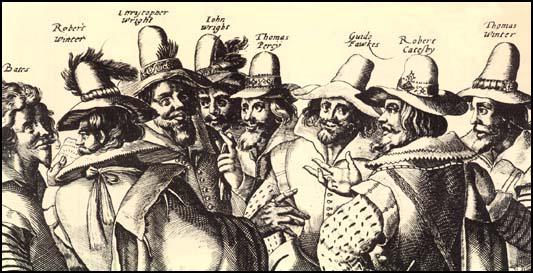
The conspirators

The conspirators

In 1605, a group of English Catholics, led by Robert Catesby, met at a house called White Webbs near Enfield Chase, to plot to assassinate James I and put his daughter Elizabeth on the throne, who, although only nine years old, was to be the Catholic head of state. An anonymous letter galvanized the authorities into action. Guy Fawkes was found in the House of Lords with 36 barrels of gunpowder on October 26, 1605. The other conspirators fled, but were captured, although Catesby was killed in a shootout. The other men, including a Jesuit priest called Father Garnet, were sentenced to be hanged, drawn and quartered. There was speculation that the priest, although he undoubtedly knew of the plot, was innocent because of his vow to the confidentiality of the confessional. Our illustrious author, however, seems to think that Father Garnet was in it up to his eyeballs.

For here, at this lonely house, then in the middle of Enfield Chase, nearly all the actors in the dark catastrophe, imminent at Westminster, at one time or another gathered. Over and over again the ten miles between Enfield Wash and London must have rung to the sound of their horses’ hoofs, as they rode fiercely between White Webbs and London. That Catesby was here ten days before the mediated explosion is evident from Winter’s confession:

“Then was the parliament anew prorogued until the fifth of November, so as we all went down until some ten days before, when Mr. Catesby came up with Mr. Fawkes to an house by Enfield Chase called White Webbs, whither I came to them, and Mr. Catesby willed me to inquire whether the young prince came to the parliament: I tolde him I heard that his grace thought not to be there. ‘Then must we have our horses,’ said Mr. Catesby, ‘beyond the water, and provision of more company to surprise the prince, and leave the duke alone.’”

That a more important factor in the deadly design—if the latest judgment of posterity is to be believed even that Catesby himself was frequently at the old house in Enfield Chase is shown in the examination of James Johnson: that is to say in the examination of Guy Fawkes.

It was stated by him that the place had been taken of Dr. Huicke by his master, Mr. Meaze, of Berkshire, for his sister, Mrs. Perkins (alias Mrs. Ann Vaux); that Mrs. Vaux had spent a month there and mass had been said by a priest whose name deponent did not know.

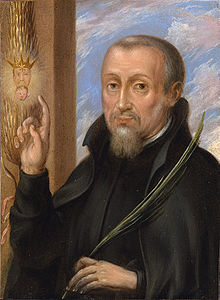
Father Henry Garnet

Father Henry Garnet

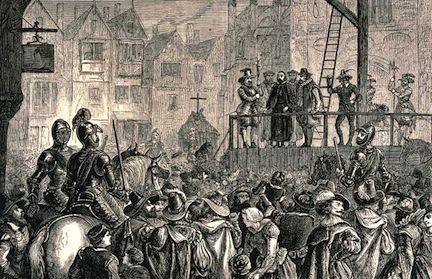
And as Mr. Meaze, of Berkshire, was none other than Henry Garnet, the Provincial of the English Jesuits, the importance of the testimony becomes apparent. And the fact gives birth to a fancy. It is interesting to me to think that Mr. Meaze, of Berkshire, with his candid blue eyes, his fair curling hair, his polished, courteous manners, his form tending to an embonpoint by no means suggestive of asceticism; it is interesting to me, I say, to think that Mr. Meaze of Berkshire, may have been a well-known and respected figure about Enfield Wash. That he may have been recognized as Father Garnet, for the first time as he stood absolutely under the beam on that May morning—”the morrow of the Invention of the Cross”—on the great scaffold at the west of end of old St. Paul’s; that he may have been recognized there by some Enfield yeoman, who had ridden in from Enfield to see the show, little expecting to see in the last victim, in the most distinguished of all the victims perhaps, to a justly outraged justice, the courteous, handsome stranger, who he had so admired and respected down in his quiet Enfield home!

Father Garnet at the gallows

Father Garnet at the gallows

Guy Fawkes Day

Apparently, all that remains of Guy Fawkes Day is an occasional bonfire and the burning of effigies of disliked celebrities, and fireworks. In some places it gets lumped together with Halloween. But it no longer has much to do with religion and politics as it originally did.

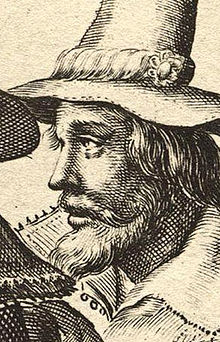
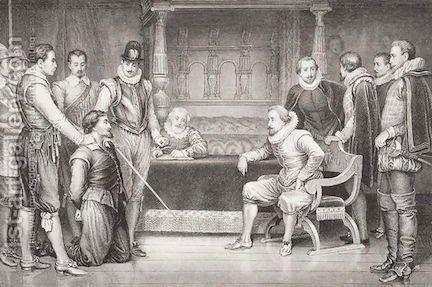
Guy Fawkes interrogated by James I

Guy Fawkes interrogated by James I


 Index to all the posts in this series

1: The Bath Road: The (True) Legend of the Berkshire Lady

2: The Bath Road: Littlecote and Wild William Darrell

3: The Bath Road: Lacock Abbey

4: The Bath Road: The Bear Inn at Devizes and the “Pictorial Chronicler of the Regency”

5: The Exeter Road: Flying Machines, Muddy Roads and Well-Mannered Highwaymen

6: The Exeter Road: A Foolish Coachman, a Dreadful Snowstorm and a Romance

7: The Exeter Road in 1823: A Myriad of Changes in Fifty Years

8: The Exeter Road: Basingstoke, Andover and Salisbury and the Events They Witnessed

9: The Exeter Road: The Weyhill Fair, Amesbury Abbey and the Extraordinary Duchess of Queensberry

10: The Exeter Road: Stonehenge, Dorchester and the Sad Story of the Monmouth Uprising

11: The Portsmouth Road: Royal Road or Road of Assassination?

12: The Brighton Road: “The Most Nearly Perfect, and Certainly the Most Fashionable of All”

13: The Dover Road: “Rich crowds of historical figures”

14: The Dover Road: Blackheath and Dartford

15: The Dover Road: Rochester and Charles Dickens

16: The Dover Road: William Clements, Gentleman Coachman

17: The York Road: Hadley Green, Barnet

18: The York Road: Enfield Chase and the Gunpowder Treason Plot

19: The York Road: The Stamford Regent Faces the Peril of a Flood

20: The York Road: The Inns at Stilton

21: The Holyhead Road: The Gunpowder Treason Plot

22: The Holyhead Road: Three Notable Coaching Accidents

23: The Holyhead Road: Old Lal the Legless Man and His Extraordinary Flying Machine

24: The Holyhead Road: The Coachmen “More Celebrated Even Than the Most Celebrated of Their Rivals” (Part I)

25: The Holyhead Road: The Coachmen “More Celebrated Even Than the Most Celebrated of Their Rivals” (Part II)

26: Flying Machines and Waggons and What It Was Like To Travel in Them

27: “A few words on Coaching Inns” and Conclusion

The Dover Road: Blackheath and Dartford

dust jacket

The following post is the fourteenth of a series based on information obtained from a fascinating book Susana recently obtained for research purposes. Coaching Days & Coaching Ways by W. Outram Tristram, first published in 1888, is replete with commentary about travel and roads and social history told in an entertaining manner, along with a great many fabulous illustrations. A great find for anyone seriously interested in English history!

Note: Comment to enter the contest for Susana’s September Giveaway, a lovely necklace from London’s National Gallery (see photo at right).

Blackheath: Dark-Colored Heathland

The area of Blackheath is about seven miles from London Bridge. Originally the name of an open space for public meetings of the ancient hundred of Blackheath, this name was also given to the Victorian suburb that was developed later in the 19th century. While this area was certainly used for burial pits for the victims of the Black Death in the 14th century, it was only one of many used for such a purpose in London and was not the source of the name. Blackheath comes from Old English, “dark-colored heathland,” undoubtedly referring to the color of the soil.

Besides a queen devoted to junketings [Queen Caroline, who lived at Montague House], a letter-writing father, bent on directing his son to the deuce [Lord Chesterfield], and a great warrior [Major General James Wolfe, conqueror of Quebec], rebellion has in the good old days…raised its head on this celebrated spot; and it raised its head in the person of Wat Tyler, who was here in 1381 at the head of one hundred thousand other heads (which was wise of him seeing that he had previously cracked a poll-tax collector’s head at Dartford, after drinking too much ale, I suppose, at the celebrated Bull Inn). Another rebel was here, at Blackheath 1497. Lord Audley to wit, who went through the somewhat aimless exercise of bringing troops all the way from Cornwall, pitching their tents, and immediately afterwards suffering defeat at the hands of Henry the Seventh.

Montague House, residence of Queen Caroline

Montague House, residence of Queen Caroline

The Predecessor of Rotten Row?

For this celebrated spot occupied in the annals of England much the same sort of position apparently as Rotten Row occupies in the annals of contemporary fashion. It was the place where kings and ministers met casually on their way to or from London, and babbled of the weather, the price of corn, the latest hanging, the odds on the next bear-fight, the state of the unemployed, or any other kindred subject which might suggest itself to medieval brains, in an open space, where it was not too windy.

blackheath

Henry the Fifth a Spoilsport?

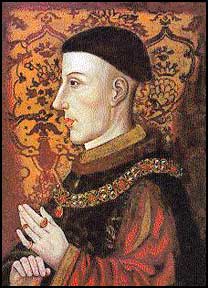
On his return to London, “The Victor of Agincourt” was greeted here by “the mayor and five hundred citizens of London. The mayor and aldermen had prepared an elaborate reception, with wine and scarlet and gold robes and all the trappings. But Henry “nipped all the worthy mayor’s preparations in the bud,” refusing to accept the praise and thanks that should go to God.

A pious decision, but one which must have been extremely unsatisfactory to town councillors who had launched forth in the way of dress and decorations, and to the thousands of Londoners who had flocked out to Blackheath to see the show.

Henry V: not in a proper mood to be fêted

Henry V: not in a proper mood to be fêted

Henry the Eighth: A Guilty Conscience?

It was here on Blackheath that the already muchly married king publicly received his fourth wife, with all due decency and decorum, having already made up his royal mind to put her away privately. For Henry on this occasion did not play fair; and though he pretended to Anne of Cleves herself that it was at this meeting on Blackheath that he had first seen here—in saying so, he said that which was not; for he had already privately inspected her at the Crown Inn at Rochester. It was on this occasion it may be remembered that the bluff Tudor gave way to a regrettable license of speech at first sight of the goods the gods had provided for him, and said many things unfit for publication; which shocked the onlookers, and made Cromwell put his hands to his head to feel if it was still in his shoulders.

Alas, Cromwell, as the advocate for this marriage, paid for his folly with his head. Anne of Cleves, however,

was content to forego the dubious joys of married life for the possession of the several manors in Kent and Sussex that her grateful late lord bestowed upon her. The number of these manors exceeds belief, and at the same time gracefully gauges Henry’s conception of the magnitude of the matrimonial peril past. Indeed, it seems to me that…whenever he had nothing villainous on hand, and was disinclined for tennis, he gave Anne of Cleves a manor or two simply to while away the time.

setWidth320-The-Manor-Gatehouse1

The Manor Gatehouse is all that is left of the manor Henry VIII presented to Anne of Cleves as “one of the first manors granted to this little-married but much-dowered lady.”

Charles II’s Triumphant Procession

…it was in 1660 no doubt that the grandest of its historical pageants was to be seen: when the long reaction against Puritanism had suddenly triumphed, and all England went mad on a May morning at the Restoration of her exiled king; when through sixty-one miles as it were of conduits running wine, triumphal arches, gabled streets hung with tapestry—through battalions of citizens in various bands, some arrayed in coats of black velvet with gold chains, some in military suits of cloth of gold or silver—Charles, who had slept at Rochester the night before, rode on to Blackheath between his brothers, the Dukes of York and Gloucester.

Charles II riding into London

Charles II riding into London

Sir Walter Scott, in his novel Woodstock (1826), paints a picture of Charles catching a glimpse of the characters of the novel in the crowd and making a point to dismount, prevent the aged Sir Henry Lee from rising, and ask for his blessing, after which, “his very faithful servant, having seen the desire of his eyes, was gathered to his fathers.”Quite a poignant scene, but could not have happened in real life since Sir Henry had passed away fifty years earlier. Don’t you just love historical fiction?

Charles Dickens: “veritable genius of the road”

His memory burns by the way—as all but the wicked man who has not read Pickwick and David Copperfield will remember—and indeed A Tale of Two Cities. For in the second chapter of that wonderful book the very spirit of the Dover Road in George the Third’s time is caught as if by magic.

A Tale of Two Cities: read Chapter Two here: http://www.online-literature.com/dickens/twocities/2/

Who does not remember these things? Who has not read them again and again? I declare that I think this second chapter of A Tale of Two Cities a picture of the old coaching days more perfect than any that has been painted. Every detail is there in three pages.

tale

George IV Insulted at the Bull Inn

In 1822

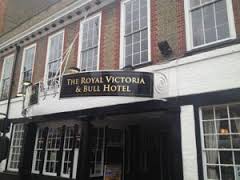
…while the great Fourth George was majestically reposing in his royal post-chaise in front of the old archway he experienced an unpleasant surprise. A very ungentlemanly man named Calligan, a working currier who ought to have known better, suddenly projected his head into the carriage window, and observed in a voice of thunder, “You’re a murderer!” an historical allusion to the king’s late treatment of Queen Caroline, which made the royal widower “sit up”. Upon which a bystander named Morris knocked the personal currier down,and the window of the post-chaise was pulled up, and the post-boy told to drive on as quickly as possible.

The Royal Victoria and Bull Inn (formerly the Bull Inn)

The Royal Victoria and Bull Hotel (formerly the Bull Inn)


 Index to all the posts in this series

1: The Bath Road: The (True) Legend of the Berkshire Lady

2: The Bath Road: Littlecote and Wild William Darrell

3: The Bath Road: Lacock Abbey

4: The Bath Road: The Bear Inn at Devizes and the “Pictorial Chronicler of the Regency”

5: The Exeter Road: Flying Machines, Muddy Roads and Well-Mannered Highwaymen

6: The Exeter Road: A Foolish Coachman, a Dreadful Snowstorm and a Romance

7: The Exeter Road in 1823: A Myriad of Changes in Fifty Years

8: The Exeter Road: Basingstoke, Andover and Salisbury and the Events They Witnessed

9: The Exeter Road: The Weyhill Fair, Amesbury Abbey and the Extraordinary Duchess of Queensberry

10: The Exeter Road: Stonehenge, Dorchester and the Sad Story of the Monmouth Uprising

11: The Portsmouth Road: Royal Road or Road of Assassination?

12: The Brighton Road: “The Most Nearly Perfect, and Certainly the Most Fashionable of All”

13: The Dover Road: “Rich crowds of historical figures”

14: The Dover Road: Blackheath and Dartford

15: The Dover Road: Rochester and Charles Dickens

16: The Dover Road: William Clements, Gentleman Coachman

17: The York Road: Hadley Green, Barnet

18: The York Road: Enfield Chase and the Gunpowder Treason Plot

19: The York Road: The Stamford Regent Faces the Peril of a Flood

20: The York Road: The Inns at Stilton

21: The Holyhead Road: The Gunpowder Treason Plot

22: The Holyhead Road: Three Notable Coaching Accidents

23: The Holyhead Road: Old Lal the Legless Man and His Extraordinary Flying Machine

24: The Holyhead Road: The Coachmen “More Celebrated Even Than the Most Celebrated of Their Rivals” (Part I)

25: The Holyhead Road: The Coachmen “More Celebrated Even Than the Most Celebrated of Their Rivals” (Part II)

26: Flying Machines and Waggons and What It Was Like To Travel in Them

27: “A few words on Coaching Inns” and Conclusion

The Portsmouth Road: Royal Road or Road of Assassination?

dust jacket

The following post is the eleventh of a series based on information obtained from a fascinating book Susana recently obtained for research purposes. Coaching Days & Coaching Ways by W. Outram Tristram, first published in 1888, is chock full of commentary about travel and roads and social history told in an entertaining manner, along with a great many fabulous illustrations. A great find for anyone seriously interested in English history!

The Portsmouth Road has been described to me by one having authority as the Royal Road: and certainly kings and queens have passed up and down it, eaten and drunken in the Royal Rooms, still to be seen in some of the old inns; snored in the Royal Beds (also in places to be seen, but not slept in), and dreamed of ruts of bogs, and blasted heaths and impassable morasses, and all the sundry and other mild discomforts which our ancestors, whether kings or cobblers, had to put up with; or those among them at all events who travelled when the weather was rainy, and there were no real roads to travel upon.

To me however the Portsmouth Road—so called Royal—presents itself in a less august guise; so much so that if I were asked to give it a name whereby it might be especially distinguished, I should be inclined, I think, to call it the Road of Assassination. And it will be found to have claim to the title.

The Unknown Sailor

The Portsmouth Road after Godalming and Milford consisted of a “gravelly road” for five miles up Hindhead Hill that led them directly to a “silent memorial of murder,” a gravestone reminder

of a barbarous murder committed on the spot on the person of an unknown sailor (who lies buried in Thursley Churchyard, a few miles off); and airs also with some satisfaction the feeling then very prevalent (before Scotland Yard was), that murderers are a class who invariably fall into the hands of justice. We are perhaps not so credulous as this nowadays; but we put our trust in a large detective force when our throats have been cut, and hope for the best. The local police of 1786 however could have given many of our shining lights a lesson, it seems to me; for on the very afternoon of September the 4th in that year (which was the date of the murder) they apprehended three men named Lonegon, Casey, and Marshall, twelve miles further down the road…engaged in the unwise exercise of selling the murdered man’s clothes. For this, and previous indiscretions, they were presently hanged in chains on the top of Hindhead as a warning…

The ill-fated sailor, walking from London to rejoin his ship in Portsmouth, met up with three other sailors in Thursley and treated them to food and drinks before setting off again in their company. His reward was to be murdered and decapitated and thrown into a valley, where he was promptly discovered and the alarm raised. His murderers were apprehended that same day at the Sun Inn in Rake, rather unwisely selling off their victim’s clothing.
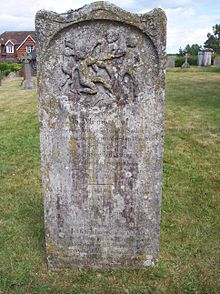
220px-Unknown_Sailors_GraveIn memory of

A generous but unfortunate Sailor

Who was barbarously murder’d on Hindhead

On September 24th 1786

By three Villains

After he had liberally treated them

And promised them his farther assistance

On the road to Portsmouth.

The Murders by the Smugglers

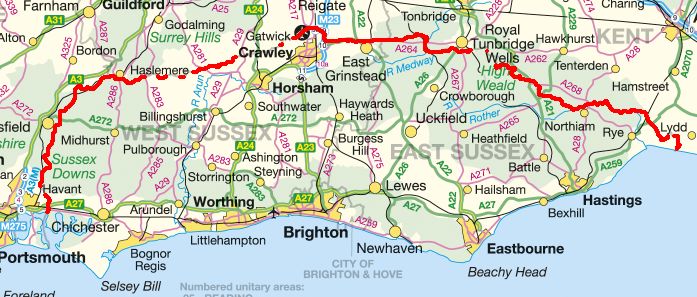
Sussex_Police_Authority_Map

All through the last century, then, it seems the country from Portsmouth…was infested by gangs of smugglers.

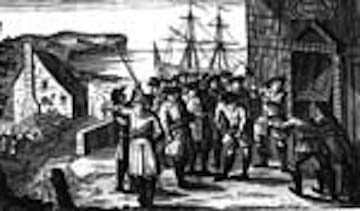
From time to time, after some unusually audacious outbreak against custom-house laws had taken place, violent reprisals were made; but on the whole the revenue officers seem to have had decidedly the worst of it, and the smugglers enjoyed an enviable immunity from the retribution of justice. The climax to this condition of affairs came on the 6th and 7th of October, 1747, when a gang of some sixty of these desperadoes assembled secretly in Charlton Forest; made a suddenly raid on Poole; broke open the custom, where a large quantity of tea which had been seized from one of their confederates, was lodged, and made off with the booty, without encountering any resistance from the surprised authorites.
barbarous11

Ye Smugglers breaking open ye King’s Custom House at Poole

The cocky smugglers made a “riotous procession” retreating with their booty, and one of them, a man named Diamond, recognized Daniel Chater, a shoemaker, in the crowd and threw him a bag of tea. The same Diamond was taken into custody at Chichester, and Chater, having been promised a reward, was persuaded to accompany a custom house officer, William Galley, to Chichester for the purpose of identifying said Diamond.

The pair made the unfortunate decision to stay at the White Hart, where the landlady, “friendly of course to smugglers and highwaymen”, suspecting that they meant harm to her friends, sent for seven of them to intervene. Galley and Chater “were prevailed upon with force to stay and drink more rum” and when unconscious, the letter Galley was carrying detailing their errand was intercepted, and the criminals debated whether or not to murder them. Two of the smugglers’ wives who had joined the party urged them to “Hang the dogs, for they came here to hang us.”

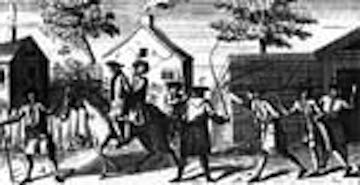
This view of the case seems to have in an instant turned men into monsters. A devilish fury possessed the whole company. Jackson rushed into the room where Chater and Galley were sleeping. He leaped upon the bed and awakened them by spurring them on the forehead. He flogged them about the head with a horsewhip till their faces poured with blood. Then they were taken out to the back yard, and both of them tied on to one horse, their four legs tied together, and these four legs tied under the horse’s belly.

They had not got a hundred yards from the house when Jackson, in one of those sudden accesses of fiendishness continually characteristic of the whole affair, and which seemed a veritable possession of the devil himself, yelled out—“Whip them! Cut them! Slash them! Damn them!” and in an instant the whole gang’s devilish fury was wreaked on their bound and helpless enemies.

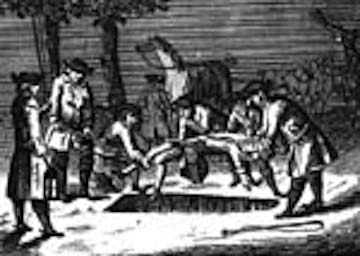
Near Rake Hill, Galley fell off the horse and was presumed to be dead, so they buried him in a foxhole in Harting Coombe. When he was found, however, his hands were covering his eyes, presumably to protect them from the dirt, so he was, in effect, buried alive.

Chater did not find so fortunate a release from his torments. He was kept for over two days chained by the leg in an outhouse of the Red Lion at Rake, “in the most deplorable condition that man was ever in; his mind full of horrors, and his body all over pain and anguish with the blows and scourges they had given him.” All this while the smugglers were calmly debating as to how they should finally make an end of him. At length a decision was come to. Subjected all the way to treatment which I cannot describe, he was taken back to the same Harris Well where it had been originally proposed to murder Galley; and after an unsuccessful attempt at hanging him there, he was thrown down it, and an end put at last to his awful sufferings by heaving stones being thrown on top of him.

The heinousness of the crime demanded swift justice, and the gang was hanged at Chichester on 18th January 1749, except for one, who died of fright the night before the execution.
barbarous8

The unfortunate William Galley put by the Smugglers into the Ground … before he was quite Dead
barbarous12

Mr Galley and Mr Chater put by ye Smugglers on one Horse near Rowland Castle

The Assassination of the Duke of Buckingham

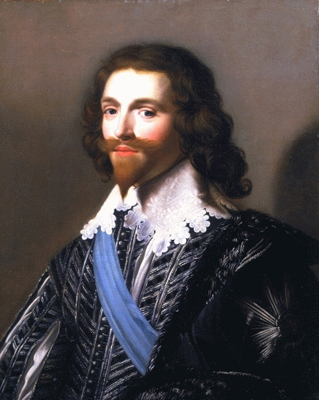
After all this, a simple assassination may strike you as a mere church picnic. But it was at the Spotted Dog Inn in 1628 that James I’s favorite (and some say lover) was assassinated by a discontented half-pay officer who had been turned down for promotion.
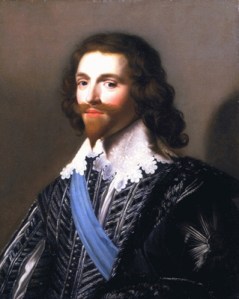
buckingham

It remains for me to remark that the journey of Felton to London, where he was hanged, drawn, and quartered at Tyburn, was accomplished amidst scenes of extraordinary and many-sided excitement; and coming, as it does, before a similarly mournful expedition over the same ground on the part of the Duke of Monmouth, seems to me to cast a characteristic gloom over the annals of a road—not remarkable for coaching anecdotes or coaching records—which has been called Royal, and rightly perhaps enough,—but which has yet witnessed, so far as its historical side is concerned, and so far as my knowledge goes, gloomier and more tragic scenes than any other of the great thoroughfares out of London.
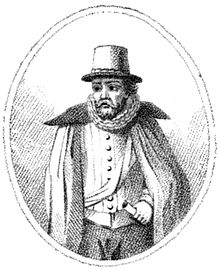
These days we have organized police forces and all sorts of high-tech devices and forensic methods to apprehend and prosecute criminals…and yet crime seems to be everywhere, even such horrific murders as described here. Are today’s criminals smarter, do you think, or were more crimes undetected back then?

Comment and enter to win Susana’s September Giveaway, a lovely necklace from London’s National Gallery (see photo at right).

 Index to all the posts in this series

1: The Bath Road: The (True) Legend of the Berkshire Lady

2: The Bath Road: Littlecote and Wild William Darrell

3: The Bath Road: Lacock Abbey

4: The Bath Road: The Bear Inn at Devizes and the “Pictorial Chronicler of the Regency”

5: The Exeter Road: Flying Machines, Muddy Roads and Well-Mannered Highwaymen

6: The Exeter Road: A Foolish Coachman, a Dreadful Snowstorm and a Romance

7: The Exeter Road in 1823: A Myriad of Changes in Fifty Years

8: The Exeter Road: Basingstoke, Andover and Salisbury and the Events They Witnessed

9: The Exeter Road: The Weyhill Fair, Amesbury Abbey and the Extraordinary Duchess of Queensberry

10: The Exeter Road: Stonehenge, Dorchester and the Sad Story of the Monmouth Uprising

11: The Portsmouth Road: Royal Road or Road of Assassination?

12: The Brighton Road: “The Most Nearly Perfect, and Certainly the Most Fashionable of All”

13: The Dover Road: “Rich crowds of historical figures”

14: The Dover Road: Blackheath and Dartford

15: The Dover Road: Rochester and Charles Dickens

16: The Dover Road: William Clements, Gentleman Coachman

17: The York Road: Hadley Green, Barnet

18: The York Road: Enfield Chase and the Gunpowder Treason Plot

19: The York Road: The Stamford Regent Faces the Peril of a Flood

20: The York Road: The Inns at Stilton

21: The Holyhead Road: The Gunpowder Treason Plot

22: The Holyhead Road: Three Notable Coaching Accidents

23: The Holyhead Road: Old Lal the Legless Man and His Extraordinary Flying Machine

24: The Holyhead Road: The Coachmen “More Celebrated Even Than the Most Celebrated of Their Rivals” (Part I)

25: The Holyhead Road: The Coachmen “More Celebrated Even Than the Most Celebrated of Their Rivals” (Part II)

26: Flying Machines and Waggons and What It Was Like To Travel in Them

27: “A few words on Coaching Inns” and Conclusion