Archives

Another Sneak Peak of “A Home For Helena”

Lady P

Lady P

Lady Pendleton: Dear me! Susana has a special treat for you today, dear readers. She’s been working long and hard to tell the story of a young girl called Helena who came to me from the 21st century seeking my help in finding the family from whose arms she was snatched when only a babe.

In this scene, Helena is recalling her consultation with the gypsy lady who offers to help her travel back to the past to discover the truth about her origins.

**********

The sign painted on the window read “Genuine Gipsy Fortune Telling” in large red letters with “Palm Reading • Tarot Cards” in smaller print underneath with the bottom line proclaiming “Séances Scheduled at Your Convenience”. A mannequin dressed flamboyantly in a red peasant blouse and gold skirt stood in the window with outstretched arms, no doubt meant to lure the bystander inside. Although an attempt had been made to give her a gypsy appearance—black wig tied back under a bright red headscarf, and glittery gold dripping from every possible place—her expression was the typical bland stare associated with mannequins.

It was cheesy. The sort of place an educated person would never deign to enter. Certainly not Helena, who didn’t believe in psychics or fortune telling, let alone time travel. Was her coincidental meeting with Mrs. Herne simply a scheme to drum up business?

If so, she had been very, very good at it. Her dark eyes seemed to probe into Helena’s very soul, seeing things she could not possibly have known otherwise. A lost soul, she had proclaimed. Wrenched out of her time. Isolated and alone because her soul was out of sync.

“I have a friend who might be able to help you,” she had said cautiously. When asked what she meant, the woman had turned cagey.

“Come to my shop”—she pushed a card toward Helena—“and we can discuss it.”

Helena’s eyes narrowed. “Why not now? Here?” she asked, indicating the lively sandwich shop. “Why must I go to your shop?” She wanted to believe. Mrs. Herne’s words struck a nerve. She’d never fit in, no matter how much she’d tried. Perhaps…there was a reason for it. Something she could do about it. But…travel through time? That sort of thing happened only in science fiction. As Dr. McCoy explained in Star Trek IV: The Voyage Home: “Sure, you slingshot around the Sun, pick up enough speed—you’re in time warp. If you don’t, you’re fried.

Helena and James

Helena and James

But here she was, standing outside Mrs. Herne’s fortune-telling shop, gathering up the courage to go inside. Well, she’d come this far. Might as well go for broke. She stepped forward.

The foyer was papered in red damask sprinkled with gold medallions. On a table between two gold satin wingback chairs was an antique ouiji board. On the adjacent wall was a showcase with a magnificent crystal ball in the center and zodiac plates on the side.

But what really drew Helena’s attention was the familiar-looking Zoltar fortune-telling machine in the corner. The gold-turbaned gypsy male had a narrow black beard and a thick mustache that turned up at the ends like a villain’s. He wore a black leather vest over a gold shirt, hoop earrings, and his eyes seemed to be laughing at her. The case of the machine was of elaborately-carved wood painted in black and gold, and the front of the glass box said “Zoltar” in gold-outlined red at the top, and “speaks” on the bottom. His right hand hovered over a crystal ball, and the left seemed to beckon her to come closer. Now where had she seen that before?

“It was the movie Big,

Mrs. Herne pushed aside some of the strands of colorful beads that obscured the interior of her shop as she approached Helena.

“They had one exactly like this, but mine is the original. I purchased it from Patty Astley herself when her husband refused to have it anywhere near his amphitheatre. She was a good friend of mine, was Patty. Quite the horsewoman, too. But then, Philip was an excellent teacher.”

Astley? Of Astley’s Amphitheatre? From upwards of two hundred years ago?

“How old are you, Mrs. Herne?”

She was tall and had a generous, but not zaftig, figure in her flowing crimson caftan. Her black hair was liberally streaked with gray, and her dusky face showed the beginnings of wrinkles. She certainly did not have the look of an aged woman.

Mrs. Herne threw back her head and laughed loudly.

“How old do you think I am?” she asked finally.

“Oh…well…forty-five?” Helena hedged, trying to be diplomatic. She actually figured the woman for about a decade older.

“Right you are, Miss Helena. I stopped aging on my fifty-fifth birthday.” She smiled at Helena’s startled reaction. “You were trying to be kind, of course. To a young person, fifty years seems a long time. In reality, fifty is the best age. You know yourself well by then, and aren’t always trying to become someone else. And you don’t take things so seriously. Life is meant to be enjoyed, after all.” She looked Helena directly in the eye. “After all, fifty is the new forty, or so they say.”

“Come inside, and sit for awhile, and I’ll fetch some tea.”

She was personable and kind, and her words carried the semblance of truth. The tea had long grown cold by the time Helena left the shop, carrying a round gray stone flecked with gold and a list of instructions—mostly preparations for the trip and suggestions for what to do when she arrived. Mrs. Herne’s clairvoyant power pointed to the year 1792 as her birth year, and it was decided that 1817 would be the most opportune time for her return.

“And my good friend Lady Pendleton will be there to assist you!” she had exclaimed. “How very fortunate that she is in Town for the Season this year!”

Helena wasn’t entirely certain who or what Lady Pendleton was, but then, she hadn’t quite figured out Mrs. Herne either. Was she a fool to trust either one of them? Perhaps, but it wasn’t like she had to jump off a cliff or anything. She only had to clasp the rock tightly in her hands and concentrate on thinking about where she wanted to travel to.

“But you must truly wish it,” Mrs. Herne cautioned. “Reflect on your desire to be reunited with your true family and live the life you were meant to live.”

And how to return if things didn’t work out in the 19th century?

“Oh, Agatha will help you. Lady Pendleton, that is. Or you can drop by my shop on Gracechurch Street. Only thing is, I was traveling quite a bit myself that year, so you may or may not find me there. You have a better chance with Lady Pendleton.”

And what if she couldn’t find Lady Pendleton?

“Oh well, you’re a bright girl. Not like the silly chits typical of the period. Keep your wits about you and learn from your surroundings. You’ll be fine.”

Would she? Helena recalled Claire Fraser being branded a witch in Outlander and wondered if they burned witches at the stake in that era. Oh no, they were dunking her, weren’t they, before Jamie came to the rescue.

Mrs. Herne was frowning. “That was nothing more than a book.”

It was eerie how easily the gypsy lady read her thoughts.

“If this is where you belong, you’ll adapt. In time.”

Helena didn’t like the sound of “if.”

But in the end, she couldn’t resist. The past was pulling at her, drawing her, and she finally let it take her into its mysterious lair.

**********

Lady Pendleton: Yes, well, time travel does have that effect on people. I find it rather addictive, actually.

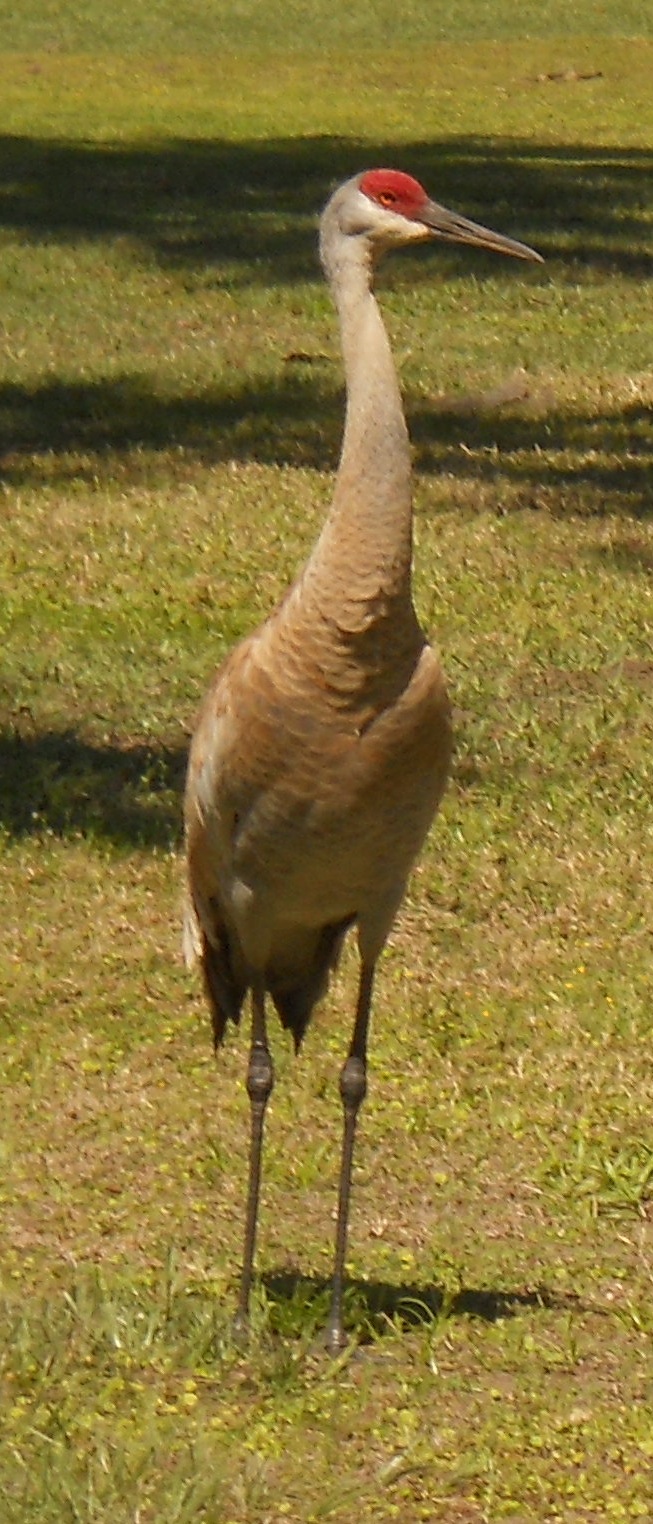
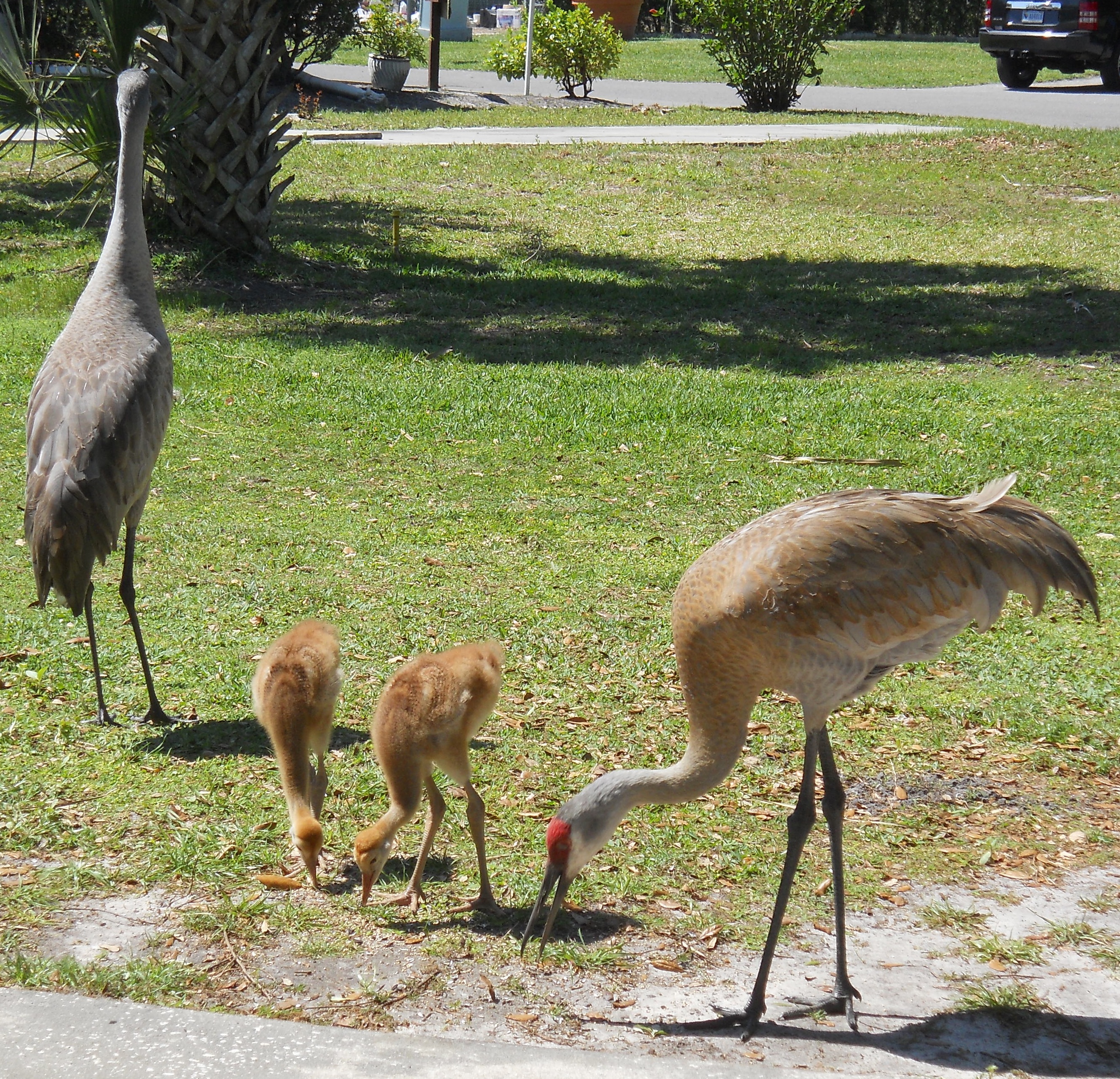
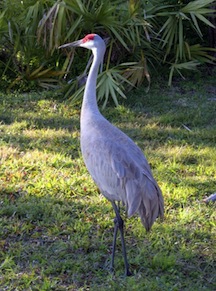
Oh, I wanted to tell you that Susana and I are having a wonderful time in Florida. It’s a bit cold today, but sunny and beautiful, and I was simply over the moon to catch my first glimpse of the baby sand hill cranes. Here are some photos of them. I almost got close enough to touch them! Aren’t they adorable?

babycranes

Baby sand hill cranes

Mama Crane

Mama Crane

Crane Family Having Luncheon

Crane Family Having Luncheon
Planning My London Adventure, Part II

My previous visits to London having been far too short, this year I took the plunge and rented a flat for a month in late spring. Not cheap, but far cheaper than staying in a hotel, and it’s centrally located, near many of the sites I plan to visit. My aim is to write in the morning—as I do now—and visit in the afternoons. Since my intention is to include as much as I can in that month, I’m keeping a spreadsheet of information about places I want to visit, including those farther afield, like Leeds Castle and Chatsworth. I thought perhaps some of my readers might be interested in some of the resources I’ve discovered.

Scenes of Iconic British Estates

iconic estates

While each featured estate’s remarkable beauty is noteworthy, it’s the hidden stories within the homes that set them apart.

Do you have Amazon Prime? If so, you should be able to watch this wonderful series by PBS. The first season consists of fascinating tales and footage about three prominent British estates. I’ve been to Hampton Court, and plan to take in Chatsworth this year if I can.

Secrets of Henry VIII’s Palace, Hampton Court

A Tudor palace built by the infamous Henry VIII together with a European-style baroque palace built by William III. There are plenty of secrets here with Henry VIII alone. The last king to live here was George II. Magnificent gardens with yew trees and and a fabulous maze.The kitchens alone are worth the price of admission, as Henry loved his food and he also had to feed about a thousand others.

Secrets of Althorp: The Spencers

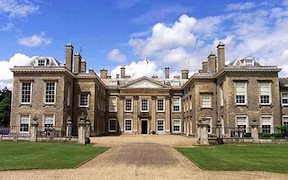
Althorp is the country estate of the Spencer family. The late Princess Diana grew up here after her father became Earl Spencer. Her brother Charles is the current Earl. She is buried on the grounds here.

Like most of the British aristocratic families, the Spencers of Althorp and the Cavendishes of Chatsworth are related. The infamous Georgiana Cavendish was the daughter of the 1st Earl Spencer, who was the great-grandson of the 1st Duke of Marlborough.

Note: Be sure to visit Spencer House, on St. James Place in London. Tours on Sundays only.

p_spencer-family-h_1636014c

Althorp

Secrets of Chatsworth

I’ve read quite a bit about Georgiana Cavendish, the Duchess of Devonshire, but didn’t know that much about the rest of this majestic home’s history. Apparently, the estate was so large (one-fifth the size of Rhode Island) that even after Georgiana’s (pronounced George-ayna) heavy gambling debts were paid after her death, there was still enough money for her son, the Bachelor Duke, to spend millions renovating the grounds.

2006ah1501_fred_and_adele_astaire_1929

Adele and Fred Astaire

Did you know that Fred Astaire had a sister named Adele who was his dancing partner for 27 years? She married Charles Cavendish, the second son of the 9th Duke of Devonshire. After their marriage, she was called Lady Charles Cavendish, or Lady Charles.

PC 309 (crop)

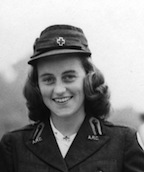
Kathleen Kennedy

Did you know that Kathleen Kennedy, sister of John F., Robert, Teddy, etc. married the eldest son of the 10th Duke of Devonshire, and bore the title Marchioness of Hartington? Unfortunately, he died weeks later in WWII, and she was killed in a plane crash four years later. She is buried in the Cavendish family plot near Chatsworth.

chatsworth grounds

Chatsworth

I also discovered that the BBC aired a three-episode documentary on Chatsworth in 2011, but the programs are not currently available. Bummer!

Chatsworth website

¡Breaking News!

I just booked a room at the Devonshire Arms on the Chatsworth estate for my birthday! A steal at 99 pounds! Do I know how far it is from the main buildings or the train station. Nope! But I guess there must be some sort of transportation. Not sure I want to try driving in England, on the left side of the road, but hey, I’ll do whatever I have to to get there!

devonshire arms

The Devonshire Arms at Beeley

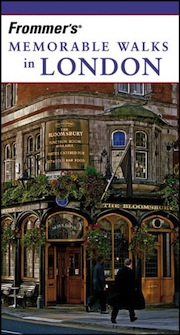
Frommer’s Memorable Walks in London

I’ve also been reading this 2006 book, which is unfortunately no longer in print. I guess they figured out Americans don’t want to walk as much as all that. But you can still get a used copy on Amazon—mine cost one cent plus the $3.99 shipping, for a total of $4.00. The walks here are a bit longer (up to three hours) than in Louise Allen’s book, and as you might expect, the two books do overlap. The historical information is priceless. Checking the current hours online or in a more current book is a must, however. Tours included are:

  • frommersThe City
  • Dickens’s London
  • A Historic Pub Walk
  • Westminster & Whitehall
  • St. James
  • The East End
  • Clerkenwell
  • Bloomsbury
  • Soho
  • Chelsea
  • Hampstead

What resources have you found helpful in planning your trips to England? Please share!

Planning My London Adventure: Part I

As a longtime reader of historical romances set in London, I’ve picked up bits and pieces of the city over the years. Names like Astley’s Amphitheatre, the British Museum, the Vauxhall Pleasure Gardens, Carlton House, and Covent Garden are as familiar to me as my own house. Of course, I’ve never actually seen them—most of them no longer exist, or if they do, they do not bear much resemblance to the places my Regency heroines would have visited. And since my previous visits to London have been of short duration—no more than four or five days at a time—it was impossible to do much more than visit a few museums and places that do exist

But this year, I decided to go all out and rent a flat in the center of London for a whole month! I had to draw a few deep breaths before hitting “Pay now”—a flat on Baker Street during the tourist season carries what I consider an astronomical price—but it is considerably cheaper than the Sherlock Holmes Hotel where I have stayed in the post, and I am familiar with the neighborhood.

However, since I am paying through the nose for this fabulous trip of a lifetime, I’m determined to have a detailed plan of places to visit while I’m there. I’ve purchased several travel guides and researched online, and I thought I’d share my thoughts with you, in case you too get to travel to London at some point in the future.

Daily Schedule

First of all, I’m definitely not going to spend my entire day visiting one sight after another. My back won’t take it, and when I’m in pain, I get cranky. No way do I want to spend a month in London being cranky. Not to mention that I want to be able to get some writing done while I can still feel the magic of the past. (Yes, I will take my noise-canceling headphones with me!)

So the plan is to write in the morning and do my touristy stuff in the afternoon. Of course, I’m planning some trips afield, like to Leeds Castle, which features in my current WIP, but for the most part I’ll be doing my visiting in the afternoons.

The Plan

In future posts, I’ll share some of the places I’ve noted on my spreadsheet, and I hope some of you will share your favorite “must-see” places as well. I’d rather have too many places on my list to choose from than not enough. This won’t be my last trip, but I want to make sure I make good use of the time I have.

Walking Jane Austen’s London: A Tour Guide For the Modern Traveller

Louise-Allen-670

AmazonBarnes & NobleKobo

Louise Allen’s book comes in print as well as Kindle. I bought both. My original intention was to leave the print book at home and use the Kindle edition on my iPad mini while there, but I’m reconsidering. The iPad is slippery and the screen is hard to read in the glare of the sun, and I’m always bumping something accidentally and losing my place. The print book isn’t heavy, so I might just have to save on suitcase weight some other way. [Sigh]

The book offers eight walks through various parts of London, designating places of interest to Regency era fans. Many of these are mentioned in Jane Austen’s writings, as places visited by herself and/or her characters. The book is chock-full of images from drawings or paintings, so even if the actual building no longer exists or has significantly changed, you can look at the picture and imagine what it used to be like in the early 19th century. Priceless!

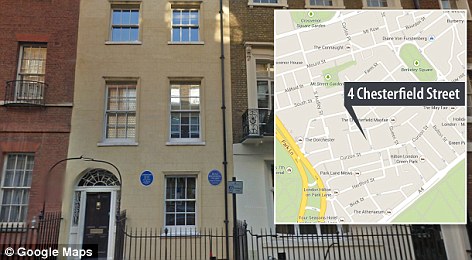
front door

Beau Brummell’s front door on Chesterfield Street

I feel like I know London so much better by just reading the book! Imagine how exciting it will be to actually be there!

Have you tried some of these Jane Austen walks yourself? What are some must-see places I can put on my spreadsheet?

Lady P in Florida and a Sneak Preview of “A Home For Helena”

Susana: Lady P has been having a wonderful time with me this winter in central Florida. She gets along well with my parents, especially my mother.

Susana's mother, Mrs. Ellis

Susana’s mother, Mrs. Ellis

Lady P: In many ways, Mrs. Ellis and I are kindred spirits. Why, she even looks like me when she puts on that navy bonnet with the crimson trim. She dotes on her grandchildren, as I do, of course, and I even helped her make the most darling little dresses and skirts for them, as well as a vest and trousers for the boy. Did you know that Susana’s sister has eleven children, nine of them girls? Goodness, I don’t know how she manages without any servants. My own daughter Sarah cannot manage her three even with a houseful of servants.

Susana: I don’t think that’s fair, your ladyship. Having your mother there to nitpick over everything you do can be nerve-wracking for anyone. Especially when your mother—or your houseguest—thinks everything should be done her way

Lady P: Well really, Susana, your housekeeping skills are sadly lacking, and you don’t even have the sense to feel remorseful about it. If you refuse to clean your house yourself, the very least you could do is hire someone else to do it.

Susana [shrugging]: Cleaning is a waste of time. It’ll only get dirty again, after all. Besides, I don’t care to have some stranger in my house while I’m busy writing and need to concentrate. Your banging around is about as much as I can stand. In any case, Romeo Roomba does a fabulous job cleaning the floors. All I have to do is push the “on” button and when he’s finished he returns to his charging station and turns himself off. What could be better?

Lady P

Lady P

Lady P [clucking her tongue]: What is the world coming to when you have to get a machine to do such a simple task for you? Why, in my day, the maids had to take up the rugs and beat the dust out of them.

Susana: Oh yes, I’m sure everything was done much better in the 19th century. No doubt you had to walk three miles to school every day, and you and your siblings used to fight over the gizzard when roast chicken was served.

Lady P: Well! I can see you’re not in a proper mood for a conversation. Perhaps I shall indulge myself with a dip in the bathing pool.

Susana: A wonderful idea, Lady P! The other residents always enjoy chatting with you. Why, when you left the other day, it was so quiet you could hear a pin drop, and several people got up and left out of sheer boredom.

Following Lady P’s Departure

Susana [chuckling]: And they do get a kick out of seeing her in her outlandish bathing costume too. She couldn’t find a proper one here, of course, so she made one out my mother’s old capri pants and a belted T-shirt. She insists she can’t possibly be seen in a modern bathing suit, not even one with a skirt.

Anyway, in spite of all our bickering, Lady P has been assisting me with my current work-in-progress, A Home For Helena. The story is loosely based on a true story in which Lady P played a pivotal role. Of course, the names and details have been changed to protect the innocent—and the guilty, I suppose.

A Home For Helena

Helena and James

Helena and James

Helena Lloyd grew up in foster homes until she was finally adopted by a kind old lady who loved her and taught her how to live by example. When she died, she left Helena enough money to attend college and get her MBA. But Helena discovered the business world was not for her, so she tried a few other things. When the story starts, she has just quit her job as a nanny for a wealthy couple in London, but is being stalked by her former employer. She runs into a gypsy lady who tells her that she is a soul lost in the wrong era. Sounds crazy, but when she thinks about it, there seems to be a ring of truth in it. So she agrees to travel to the era she supposedly “belongs” in, which is Regency-era England.

Helena doesn’t know the first thing about the Regency era, but fortunately, the gypsy lady gives her the address of a prominent London lady who has done a bit of time traveling herself. You guessed it—my own Lady Pendleton!

While staying with Lady P, an urgent message arrives from Lady P’s daughter in Kent. The Newsomes are in desperate need of a governess, and at Lady P’s urging, Helena agrees to travel there and fill in until a permanent governess can be found.

That’s when she meets James Walker, a neighboring widower whose daughter Annabelle is temporarily lodging with the Newsomes. His first marriage was a disaster, and he’s not keen on remarrying, but since he can’t seem to manage his young daughter on his own, everyone is telling him to find a wife.

The Newsomes’ new governess is about as un-governess-like as you can get. She’s young and beautiful, wears stylish clothing, and her teaching methods are decidedly odd. Not to mention her manner of speech, which is nothing like any American he has ever met. She is also quite free with her opinions, and James could never bear to have a wife like that. Not that he’s interested in marrying her. His next wife will be quiet and biddable and content with what he can offer her.

But is that what he really wants?

Helena finds James Walker devastatingly handsome, but she’s not there to find a husband. She doubts that a modern woman could bear to live in a period where women lived completely under their husband’s control. And even if she could, surely the knowledge of her journey through time would send him running in the opposite direction.

Wouldn’t it?

Who were Helena’s parents and how did she end up two hundred years in the future? Will Helena and James be able to resolve their differences and live happily ever after?

And most of all, what role will Lady P play in the final showdown?

Tune in later this year when A Home For Helena hits the digital shelves

If you could travel through time, where would you go and why? Do you think you could make the decision to remain there permanently?

Leeds Castle: Castle of Queens

Leeds_Castle_(2004a)

My current WIP is a time travel set in 1817 England, featuring my favorite time-traveling lady, Lady Pendleton, in a role as deux ex machina. She’s helping my 21st century heroine (Helena) adapt to the Regency era while she searches for answers to a mystery regarding her family origins. In Chapter Seven, Helena is serving as a temporary governess to Lady P’s grandchildren in Kent, about two miles from one of the most charming castles in England, Leeds Castle. So why shouldn’t she—accompanied by the hero, of course—take the children on a field trip?

Upon learning of the fabulous maze on the property, I was all set to have my protagonists have a private interlude while the children explore the maze. Until I discovered that the maze wasn’t put in until 1987! (While I adore research, sometimes it can really be a downer!)

I toyed with the idea of doing it anyway—how many of my readers will know this? The problem is—I would know it! However, the idea occurred to me of my heroine—who had visited the castle in the 21st century—mentioning the maze and getting blank stares from everyone, and then the current owner stroking his chin and saying what a good idea that would be! And my heroine as usual wondering if her mistakes—and she makes them frequently—might have some horrific effect on the time-space continuum. Something my intrepid Lady P doesn’t believe in.

Anyway, I thought my readers at Susana’s Parlour might enjoy the results of some of my research on Leeds Castle. It’s very visitor-friendly—I’ll be including it on my list for my own trip this summer.

Origins

leeds-castle-lightboxlarge-427

Originally a Norman stronghold, the first structure was built almost a thousand years ago, in 1119. In 1278, King Edward I expanded it, creating the lake that now surrounds it and building a barbican (a fortified outpost or gateway) that spans three islands and a gloriette (pavilion or other structure built in a garden) with apartments from the king and queen. In 1519, Henry VIII remodeled it for his first wife, Catherine of Aragon.

The Queens

Catherine of Aragon, Spanish Princess

Catherine of Aragon, Spanish Princess

  • Eleanor of Castile, first wife Edward I, bought it in 1278.
  • Margaret of France, second wife of Edward I, was given the castle after Eleanor’s death.
  • Following the death of Edward II, his wife Queen Isabella held it until it passed to Edward III on her death.
  • Richard II gave it to his wife, Anne of Bohemia,
  • in 1382.Henry IV gave it to his wife, Joan of Navarre, in 1403.
  • Henry V left it to his wife, Catherine of Valois in 1422.
  • Her grandson, Henry VIII, gave it to his wife, Catherine of Aragon, in 1500.
  • Elizabeth I was imprisoned there during her sister Mary’s reign.
  • George III and Queen Charlotte visited there in 1778.

Georgian Period

Fiennes Wykeham (later Martin was added) took possession in 1793, selling the family estates in Virginia in order to make extensive renovations of the property in Tudor style, which were completed in 1823. Fiennes Wykeham was the son of Mary Fox, daughter of Charles Fox, the colorful Whig leader. This turned out to be quite fortuitous, since I had set up my hero to be a distant relative of the Melbourne family, who were prominent Whigs as well. Turns out Fiennes Wykeham was a friend of his and quite amenable to the idea of the visit to the property—still under renovation in 1817—in Chapter 7. (I love it when a plan comes together!)

Planning a Visit?

Be careful—Leeds Castle is not anywhere near the major English city of Leeds in the north. It’s near the village of Leeds, about five miles from Maidstone in Kent. There are bus tours, or you can drive or take a train/bus combination—it’s about two hours from London. You’ll find lots to do there for adults or children. In the center of the maze is the entrance to a mysterious grotto. There’s a dog collar museum—yes, that’s right—and you can even book overnights there for special events, such as an opulent Valentine’s Dinner with your special Significant Other, and a great 1920’s House Party in April. Here’s the brochure: http://user-3vovb8a.publ.com/Leeds-Castle-Dine-Sleep-Events-2014#8. There’s a golf course, a playground for children, falconry displays, and you can even punt on the moat. Click here for more information.

leeds_castle460_1390295c

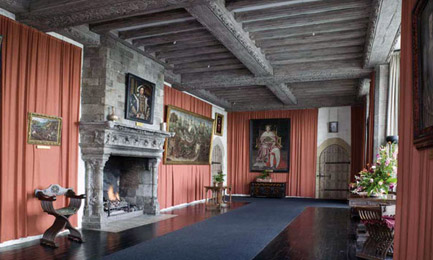
Banquetting Hall of Henry VIII

Banqueting Hall of Henry VIII

Tudor Courtyard

Tudor Courtyard

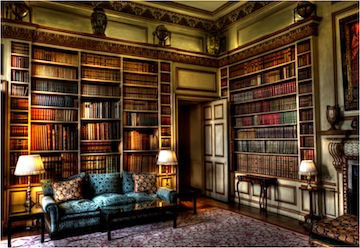
Library

Library

Cozy room

Cozy room

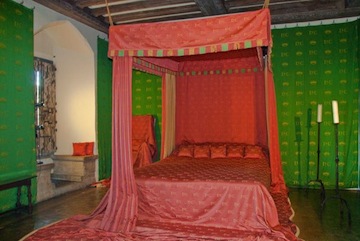
Bedroom

Bedroom

Philip Astley: Equestrian, Showman and Entrepreneur

Philip Astley: Equestrian, Showman and Entrepreneur

Philip-Astley

Philip Astley: Early Life

Philip Astley was born in Staffordshire (about 150 miles from London) on January 8, 1742. When he was around eleven years old, his family moved to London, where his father had a carpentry shop near Westminster Bridge. In 1759, he went to be trained in horsemanship in Wilton at Lord Pembroke’s estate, where he showed extraordinary promise. Soon after, in search of excitement, he left his family and joined a regiment of light dragoons called Eliot’s Light Horse, later the 15th Light Hussars.

Astley’s Military Service

Astley was assigned to care for and train the horses to be “bomb-proof”, i.e., not to take off in fear at the sound of gunshot. His unit was soon shipped off to Hamburg, Germany to assist the Prussians in fighting the French in the Seven Years’ War. The 15th distinguished itself by being instrumental in capturing sixteen colors (flags) from the French, and one of them was taken by Philip Astley. Losing one such flag would be considered a disaster, so losing sixteen of them was humiliating for the French. The tactics and riding skills of the 15th were too much for the French to overcome. The 15th was awarded the country’s first ever Battle Honor and nicknamed “The Fighting Fifteenth.”

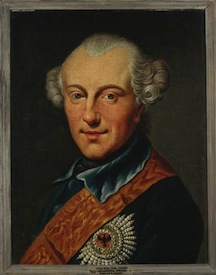
That same year, Astley earned the lifelong gratitude of royalty when he single-handedly rode through enemy lines to rescue Karl Wilhelm Ferdinand, the Duke of Brunswick. A prince of the Holy Roman Empire, the duke was married to George II’s daughter and was the father of Princess Caroline, who would become the wife of George IV.

duke of brunswick

Karl Wilhelm Ferdinand, Duke of Brunswick

Astley continued to prove himself throughout the remainder of the Seven Years’ War. In 1766, he was discharged from the army and given a white charger called Gibraltar as a token of appreciation from his commander. Having married and become the father of John Philip Conway Astley, he took a job at a nearby riding school that demonstrated tricks as well as teaching riding skills. After a year, Astley obtained some property and started his own establishment.

Astley’s Amphitheatre: The Beginning

It was around 1768 when people would come around to watch Astley and his pupils perform equestrian tricks. A collection bucket was sent around, money started to pour in, and Astley began to hire musicians. He’d stand on his head on the back of a horse, straddle two cantering and jumping horses, and often be joined by his wife Patty, also a talented performer. Even at this early stage, Astley knew that variety was the best way to keep his audience happy, and he was never satisfied to keep performing the same tricks over and over again.

Mr. Astley, Sergeant-Major in His Majesty’s Royal Regiment of Light Dragoons. Nearly twenty different attitudes will be performed on one, two, and three horses, every evening during the summer, at his riding school. Doors to be open at four, and he will mount at five. Seats, one shilling; standing places, sixpence.

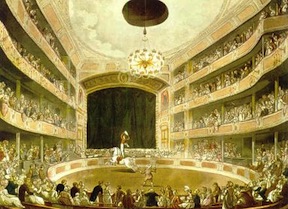
amphitheatre

It wasn’t long before Astley mysteriously found a diamond ring on Westminster Bridge and was able to lease (and then acquire) a piece of property south of the bridge. He cut down the timber and constructed the first Astley’s Amphitheatre, although it was first called The British Riding School. The fenced-in compound was in open-air, but had a covered standing area for visitors and a central viewing platform. Eventually, a dome-shaped roof covered the entire ring, and there was a room above the horses’ stables where wealthy visitors could sit.

The Licensing Act of 1737

Censorship was alive and well in England for more than two centuries due to this law that gave the Lord Chamberlain the power to approve or ban public performances. The only two theaters authorized to perform plays were Covent Garden and Drury Lane. Any other performances could get raided and their employees thrown into prison. Astley fought public officials trying to shut him down for many years, often using his upstanding military background and royal connections to keep his business going. At one point, George III himself came to his defense, perhaps because a dozen years earlier Astley had saved him from injury on Westminster Bridge when a horse pulling his carriage became uncontrollable. It didn’t hurt that Astley celebrated the King’s birthday on June 4th every year with a fireworks demonstration over the Thames either.

Astley’s Goes on Tour

As other performers—jugglers, rope-walkers, tumblers, clowns, etc.—were added, Astley’s role became more producer, artistic director, marketer, and business manager.

In the autumn, Astley used his army training to take his show on tour, where he would perform at fairs and gardens, in fields, and borrowed theaters, with staging and fencing loaded on wagons, as far away as Edinburgh.

It was, perhaps, inevitable that he would conquer the French with his extraordinary show. He charmed Marie-Antoinette, who called him “le plus bel homme d’Europe”, and in 1802, during a brief period of peace with the French, he achieved an audience with Napoleon and was granted reparations for the theater that was appropriated by the republican army during the revolution. Brussels, Vienna, and Belgrade were among the European capitals he captivated prior to the French Revolution
Astley’s After Astley

Rendell, Mike. Astley's Circus: The Story of an English Hussar. 2014
Rendell, Mike. Astley’s Circus: The Story of an English Hussar. 2014. Amazon

Following Philip Astley’s death in 1814, his son John managed the circus. After he died in 1821, Andrew Ducrow, son of the “Flemish Hercules” took over management of the Amphitheatre. Ducrow was the first performer to ride six horses at once. After Ducrow died (following a devastating fire—the third in its history—the property was rebuilt by William Batty. After Batty came a long a long line of new owners, but by the second half of Queen Victoria’s reign, Astley’s was long-since its prime. It was closed in 1893 and demolished two years later.

Astley’s Accomplishments

  • The first ringmaster. Astley went around in military costume announcing the acts in his booming voice, cracking the whip, and generally serving as Master of Ceremonies.
  • Pioneered the idea of the circus parade to create enthusiasm for his performances
  • Astley propagated the idea of a ring with a diameter of 42 feet as the optimal for circus acts.
  • Although he is often called the “Father of the Modern Circus,” he never called his venue a circus.

“…everything was delightful, splendid, and surprising!”

Charles Dickens, Master Humphrey’s Clock

For a detailed list of some of the “attitudes” offered in Astley’s performances, click here.

Lady P and Hyde Park

LadyP2Lady P is back! She stayed a bit longer with her grandchildren than expected, but hey, who wouldn’t want to spend Christmas with the little ones? But she became weary of cold English winters and couldn’t resist the temptation of spending the winter with Susana here in central Florida. Mrs. Barlow, who came for an interview in a previous post, had already spoken enthusiastically of the palm trees and alligators and orange trees, so she arrived post-haste this morning—Twelfth Day—following a lovely Twelfth Night celebration with her family in the 19th century.

Over a quick breakfast of coffee from Susana’s new Keurig (which fascinates her), yogurt and boiled eggs, they discussed the new story Susana is working on, which features Lady P herself and her daughter’s family. It’s a bit out of the usual thing for Susana, being a time travel with a heroine who travels back to the 19th century to find her family, and Lady P’s advice has been invaluable. For one thing, the heroine lands in 1817 Hyde Park, and right from the beginning Susana ran into problems trying to find out what Hyde Park looked like in 1817. For example, the Marble Arch wasn’t built until 1827.

Lady P: No rose garden either. Although that does seem a nice touch. I must mention it when next I encounter His Royal Highness.

Susana [sighing]: No, I’m going to have rewrite the entire first scene! I’m thinking she’ll have to land somewhere near Hyde Park Corner and the Rotten Row.

Lady P: Be sure to keep her well out of the way of the horses and carriages, then. Tattersall’s is there too, you know.

SandHillCrane.180184808_std

Susana: What about Sister Ignatia? Would a religious reformer be hanging about in Hyde Park, do you think?

Lady P: Generally, you don’t see the riffraff there. Hyde Park is primarily for the upper classes. But there are exceptions…servants who accompany their masters and mistresses, and there are Tattersall’s employees, of course. I have seen a few do-gooders handing out tracts from time to time.

Susana: Is it likely an unaccompanied young lady might be attacked by ruffians there?

Lady P [frowning]: An unaccompanied young lady might be attacked by ruffians anywhere, Susana! I regret to say that even gentlemen might try to take advantage. It’s not common, but crime in Hyde Park is not completely unknown.

Susana: Ah, so I won’t have to change the scene completely, then.

Lady P [peering out the window]: Are those ostriches out there? Do let us go for a stroll, Susana. And oh, what are those funny little vehicles with the canvas roofs? Can we ride in one?

Susana: Golf carts. People use them here to get around the park. I don’t have one myself, but I’m sure the neighbors will give you a ride. Oh, and the birds are sand hill cranes. Aren’t they pretty?

Regency Rites: Hyde Park

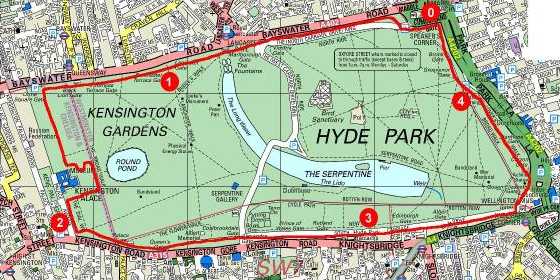
hyde-park-london-running-route-serpentine-rcOriginally, the Manor of Hyde was part of the Roman estate of Eia, and included what is now Green’s Park and Kensington Park. About 600 acres until the establishment of Kensington Park, it was given to Geoffrey de Mandeville by William the Conqueror. De Mandeville left it to the Holy Fathers of Westminster Abbey, where it remained for five centuries until Henry VIII dissolved the monasteries.

It was a great hunting ground, rich in deer, boar, hare, otter, wildfowl, and game birds.

Under Charles II, the route was called “the Ring” or “the Tour”. A French visitor said:

They take their rides in a coach in an open field where there is a circle, not very large, enclosed by rails. There, the coaches drive slowly round, some in one direction, others the opposite way, which, seen from a distance, produces as rather pretty effect, and proves clearly that they only come there in order to see and be seen.”

Paintings by pissarro3

Painting by Pissarro

Samuel Pepys wrote (of Charles II):

After dinner to Hyde Park. At the Park was the King and in another coach my lady Castlemaine , they greeting one another every turn:”

William II bought the manor at Kensington and Kensington house grew into Kensington Palace, and the western end of Hyde Park was taken for the Palace estate, which would one day become Kensington Gardens.

William III and Queen Mary used to drive along the road, and it became known as La Route du Roi, which became corrupted into Rotten Row.

For showing off coaches and their teams, Hyde Park remained the place to be.”

In 1730, George II laid down a radius of paths and his wife Queen Caroline had the Serpentine constructed by widening the Westbourne brook and draining its pools.

Hyde Park was also a popular location for duels, military floggings, and suicides (drownings). The gallows at nearby Tyburn was used for hangings until 1783, when it was moved to Newgate.

George-Leslie-Hunter-xx-Rotten-Row-Hyde-Park-xx-Private-collection

Painting by George Leslie Hunter

There were soldiers’ camps and military parades, and in 1814, 12,000 men marched past the Prince Regent, the Duke of York, the King of Prussia, the Emperor of Russia, General Blücher, and Lords Beresford and Hill. A reenactment of the Battle of Trafalgar was performed on the Serpentine.

In 1821, Hyde Park was the scene of an elaborate celebration of George IV’s coronation. There were Chinese lanterns, clowns, conjurors, swords swallowers, fire-eaters, acrobats, swings, roundabouts, fireworks, military bands, boat races, elephants, and dancing donkeys and dwarfs.

After John Loudon McAdam improved roads with stone broken small enough to make a hard smooth surface, all sorts of carriages appeared in Hyde Park, and being a good whip became a mark of social distinction. George IV was known to be an excellent whip, as was his daughter, Princess Charlotte of Wales. The Four-in-Hand Club made its appearance, with only the very best whipsters allowed as members.

Horse & Carriage: The Pageant of Hyde Park, J.N.P. Watson, London: The Sportsman’s Press, 1990.

Belles-and-beaus

Painting by William Heath

Susana Interviews Mrs. Barlow, the Mother of the Heroine of “A Twelfth Night Tale”

Susana is going all out to celebrate the release of A Twelfth Night Tale!

giant_treasure

Besides the Grand Prize—a Giant Treasure Box—she is giving away a Twelfth Night Tale Christmas charm bracelet (silver-plated) for one random commenter on each of the twelve stops of the tour.

Click here for the Rafflecopter for the Giant Treasure Box!

A Twelfth Night Tale Giant Treasure Box*

  • lovely gift box
  • A Twelfth Night Tale Christmas charm bracelet (silver-plated)
  • Father Christmas figurine
  • Three Wise Men figurine
  • Thomas Kinkade photo collage
  • Treasuring Theresa mug
  • Treasuring Theresa necklace
  • Treasuring Theresa keychain
  • two Christmas ornaments from Scotland (Mary Queen of Scots and fleur-de-lys)
  • two decks of Ellora’s Cave playing cards
  • two perfumed soaps from Scotland
  • fizzing bath salts from Scotland
  • Celtic pen from Scotland
  • “jeweled” soap
  • nail clipper keychain from London
  • stuffed toy bear

*In lieu of the treasure box, a winner from outside the U.S. will receive a gift card from the book retailer of their choice.

My time-traveling Regency lady, Lady Pendleton, came down with a stomach ailment and was unable to travel to Oxfordshire to complete the series of interviews she agreed to before returning to the 21st century. (Prior to that, however, she did manage to interview Jane Livingston, the hero’s sister, while they were both enjoying the Little Season in London.) And she somehow contrived to send Mrs. Barlow, Lucy’s mother, to me at my winter home in Florida for a brief interview. Someday I’m going to get her to tell me how she does these things. (And get her to take her back to Regency England with her—wouldn’t that be a historical researcher’s dream?)

Susana: Welcome to Florida, Mrs. Barlow. I hope you enjoy your stay. May I offer you some refreshments?

Mrs. Barlow: [looking around her in wonder] No thank you, Miss Ellis. My stomach is still a bit queasy from the journey.

Susana: Oh dear, I hope you are not coming down with the same ailment that has sidelined my friend Lady Pendleton.

Mrs. Barlow: Lady Pendleton? Oh yes, the…uh…woman who sent me here. She’s a bit…eccentric, is she not?

Susana: [hiding a smile] Indeed she is, Mrs. Barlow. But kindhearted and quite harmless, really.

Mrs. Barlow: [looking relieved] I’m glad to hear it, Miss Ellis. This is all quite a shock, you know. She said you wished to inquire about my daughter Lucy?

Susana: Er, yes. It’s research for a story I’m writing. I understand you have five daughters?

Mrs. Barlow: [Sighing] Indeed I do. Five daughters to marry off and no sons.

Susana: And Lucy is the eldest?

Mrs. Barlow: Yes, she is already eight and ten years of age and of an age to make her bow to Society, but unfortunately, her father and I have not the means to stake her. [Shaking her head] A house in London with servants is enormously expensive. We cannot even stand the cost of providing her with a suitable wardrobe. [Sighing] It is very sad, really. Lucy is a delightful girl who would be a splendid wife, but there are few eligible gentlemen here in Charlbury.

Susana: I understand the young man next door recently returned from service in the Peninsula. Livingston, I believe. Andrew Livingston. Could he be a prospect, do you think?

Mrs. Barlow: [Sighing deeply] No, unfortunately he’s betrothed to some London chit. Since before he took up his colors two years ago. I suppose they’ll be marrying posthoste now that he’s returned. A shame really, because Lucy has always had a tendre for him. The Livingstons are an unexceptionable family and quite well-to-heel, and it would be a great thing if Lucy were to be settled so near—but no, he’s never seen Lucy as anything but a child, and besides, he’s spoken for.

Susana: What a conundrum! Are there no other ways for young ladies to meet eligible gentlemen in the country?

Mrs. Barlow: Occasionally, someone’s cousin or nephew comes to town for a visit, but there are few eligibles in that lot. There are assemblies, of course. Oh, that reminds me. [Perking up] There was a quite agreeable viscount at the last assembly who seemed quite taken with Lucy. He danced twice with her. Perhaps he will come to call soon. Oh my, that would be a marvelous thing for my girls! To have their sister a viscountess who can sponsor them in London when the time comes! I must urge Lucy to encourage him!

Susana: Was she equally taken with him, then?

Mrs. Barlow: [shrugging] These things resolve themselves over time. I don’t believe she was repulsed by him. He looked well enough, for an older gentleman, and his manners were unexceptionable. It is said that he was a considerate husband to his late wife, and seems to be devoted to his three daughters.

Susana: Oh, he’s a widower. No doubt looking for a mother for his daughters.

Mrs. Barlow: And an heir, of course. He still needs a son to inherit, and Lucy is young enough to manage that.

Susana: [Doubtfully] I suppose so, and yet…one could wish a love match for her.

Mrs. Barlow: [Stiffening] Lucy is a practical girl, and not at all the sort to waste time dreaming of the impossible. She will make a wonderful wife and mother and take great pleasure in using her elevated circumstances to assist her sisters.

Susana: I’m sure she will, Mrs. Barlow. I did not mean to imply otherwise. Please forgive me if I offended you.

Mrs. Barlow: [Relaxing] Of course. I’m afraid this is a topic about which Mr. Barlow and I frequently cross swords. He says Lucy is still young and will find her own way. But he’s never been the most practical man, and I suspect he’d be just as glad to have all of them at home with us forever.

Susana: An indulgent father then. [Glances at the clock]. Oh dear, it’s almost time for our visit to end. I wonder if you’d like to take a walk around the park, Mrs. Barlow. It’s such a lovely day, and you might enjoy the flora and fauna here in central Florida. Perhaps we’ll even see an alligator in the lake.

Mrs. Barlow: An alligator! Goodness!

Susana: From a distance, of course. But there are palm trees and snake birds, and plenty of sun to warm you before you go back to chilly England

Mrs. Barlow: [shivering] Chilly indeed! The weather has been exceptionally cold this year. By all means, let us walk a bit in the sunshine.

And so ends the interview. It may interest you to know that the winter of 1813-1814, when A Twelfth Night Tale takes place, was one of the coldest on record, so much so that in February the Thames froze and a frost fair was held for four days, during which an elephant was led across the river under Blackfriars Bridge. 

About A Twelfth Night Tale

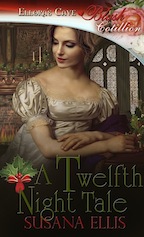
twelfthnighttale_4inchA wounded soldier and the girl next door find peace and love amidst a backdrop of rural Christmas traditions.

Without dowries and the opportunity to meet eligible gentlemen, the five Barlow sisters stand little chance of making advantageous marriages. But when the eldest attracts the attention of a wealthy viscount, suddenly it seems as though Fate is smiling upon them.

Lucy knows that she owes it to her younger sisters to encourage Lord Bexley’s attentions, since marriage to a peer will secure their futures as well as hers. The man of her dreams has always looked like Andrew Livingston, her best friend’s brother. But he’s always treated her like a child, and, in any case, is betrothed to another. Perhaps the time has come to put away childhood dreams and accept reality…and Lord Bexley.

Andrew has returned from the Peninsula with more emotional scars to deal with than just the lame arm. Surprisingly, it’s his sister’s friend “Little Lucy” who shows him the way out of his melancholy. He can’t help noticing that Lucy’s grown up into a lovely young woman, but with an eligible viscount courting her, he’ll need a little Christmas magic to win her for himself.

Available

Ellora’s CaveAmazonBarnes & NobleKobo

Excerpt

Jane was chatty as usual, prattling on about the wedding, her latest letter from Theodore and the coming events for the Christmas holidays.

“We are expecting you all at our house for Christmas dinner as usual,” Lucy broke in. “Mama has a new recipe for plum pudding and she’s anxious to see what you think of it.”

The Livingstons had been guests of the Barlows for every Christmas dinner since Mrs. Livingston’s death. Jane and Andrew’s mother had been a wonderful hostess and a great advocate for the Yuletide traditions, and after she had passed away,

Mrs. Barlow had begun the practice of sharing the family Christmas with their good friends and neighbors. There was never a dull moment in a household with five such lively daughters as the Barlow girls, and the Livingstons were not allowed the luxury of brooding over the past during a time of year meant to be joyful.

“Yes indeed,” piped up Mr. Livingston. “Your mother sets a fine table and it’s always a pleasure to be among so many pretty young lasses, is it not, Andrew?”

“Most assuredly,” said Andrew, with an appreciative smile at Lucy. “If Miss Barlow here is any indication, the Barlow girls must be growing up quite agreeably.”

Lucy flushed. “You must come to the church tomorrow night for the Christmas Eve pageant,” she put forward. “My sisters and I are all in the play, and Jane will need an escort.”

Andrew raised his eyebrows. “You are all five in the play? I don’t recall so many females involved in the nativity.”

Lucy laughed. “I’m the director,” she said. “Laura plays the part of Mary, Lydia is one of the wise men, Louisa is a shepherd, and Lila is a camel.” She grinned. “The script originally called for domestic animals, but Lila being Lila, refused to settle for anything so mundane.”

“Who, then, is the Christ Child?” inquired Andrew after the laughter had subsided.

“Louisa’s cat, Beau,” Lucy told him. “We meant to use the Tadsens’ baby in the beginning, but he wouldn’t stay still and kept crying, so we tried several dogs and cats for the part, and Beau was the most cooperative.”

More smiles circled the table, and Andrew agreed that he would be pleased to escort Jane to the pageant.

“How could I possibly refuse? This production is certain to be the highlight of the county. You should accompany us, Papa,” he said, turning to his father.

“Perhaps I shall,” said Mr. Livingston.

Jane and Lucy excused themselves, leaving the two gentlemen to their port.

“Oh Lucy!” Jane said when they reached the drawing room. “I’ve had the most marvelous idea! Well, it was your doing, really.”

“Me? What did I do?” Lucy was mystified.

“You invited Andrew to the pageant! Brilliant thinking! He’s been holed up in his bedchamber like a grumpy bear for weeks now, even before Cecilia jilted him. We need to get him out of the house. Encourage him to meet other people and stop feeling sorry for himself.”

She gave Lucy a speculative look. “And now that I think about it, you would be the best person to do it. Cheer him up, I mean. I haven’t seen Andrew in such a lively frame of mind since…well, before he went off to war.”

Lucy was horrified…and hopeful. “You want me to be in charge of cheering up Andrew? Why not you? You are his sister.”

“I’ve tried everything I know, and it’s no use. You are with him for an hour and he’s laughed twice!” She grasped Lucy’s shoulder. “Look, I’m not asking you to marry Andrew or anything like that. All you have to do is come for visits, bring your sisters, persuade him to get out of the house, things like that. You can do that, can’t you? For my sake?”

“Well…” said Lucy doubtfully.

“You do like Andrew, don’t you? Want him to regain his spirits?”

“Of course.” That was the problem. She liked him far too much. It wouldn’t do to get her hopes up and then have them dashed to pieces.

“Then it’s settled.”

And in spite of everything, Lucy was glad that it was.

Contacts

Web site • Email • Facebook • Twitter • Linked In • Pinterest • Google+Goodreads

Susana’s Parlour (Regency Blog) • Susana’s Morning Room (Romance Blog)

Lady P Quizzes Jane Livingston, the Hero’s Sister From “A Twelfth Night Tale”

Lady Pendleton (the eccentric aunt of Damian Ashby from the epilogue to Treasuring Theresa) is a time-traveling Regency lady who is currently enjoying the Little Season in 1813 London. She was introduced to Miss Jane Livingston at a ball, and being notoriously meddlesome, she corners Jane in the ladies’ retiring room and quizzes her unmercifully, as is her custom.

Lady P: I understand that your family resides in Oxfordshire, Miss Livingston. Are you related to the late Ruth Livingston, perhaps?

Jane [stiffly]: She was my mother, ma’am.

Lady P [with a nod]: Indeed, just as I thought. I knew her when she came out, as Ruth Marley, of course. I was newly married at the time, but I recall her being a most gracious young lady, and the match with young Livingston seemed unexceptional. [Cocking her head to the right] She wasn’t much in London over the years, was she?

Jane: She was more comfortable in country society. My father too. We did go to London occasionally, though. My brother and I loved to go to Astley’s Amphitheatre and the British Museum.

Lady P: Ah, you have a brother. Tell me about him.

Jane [swallowing back tears]: We’ve just received word that Andrew has been wounded at Roncesvalles, and will be returning home soon. We haven’t been notified as to the nature of his injury, but he is alive, and for that we are exceedingly grateful.

Lady P [taking Jane’s hands]: Oh my dear, I do apologize for distressing you. I had no idea. Here, take my handkerchief.

Jane [dabbing at her eyes]: Thank you, Lady Pendleton. You need not apologize; the news has only just reached us that Andrew is on his way back to us, accompanied by his comrade, a Mr. Bainbridge. We are anxious to see him, of course, but also quite worried about the nature and gravity of his injuries.

Lady P: Of course, my dear. Take comfort in the fact that his injuries will surely mend more quickly once he is in the bosom of his family.

Jane [looking doubtful]: Perhaps. But there is just Papa and me. [Frowning] And Cecilia, of course. [At Lady P’s blank look] Andrew’s betrothed.

Lady P [with a reassuring smile]: A young lady to fuss over him…just what the doctor ordered.

Jane: [wrinkling her nose]: Cecilia Ashburton? Fussing over him? Somehow I can’t imagine it.

Lady P [frowning]: I take it you don’t approve of Miss Ashburton?

Jane [sighing]: Well, she did seem to care for him at first, but when he left for the Peninsula she seemed to have forgotten all about us. Her lively social life makes all the society columns, and her behavior—well, she’s surrounded by beaux who don’t seem to know about Andrew at all! I’ve been in Town this year for my come-out and she hasn’t called even once!

Lady P [patting Jane’s hand]: Perhaps she has been fretting for him and is simply trying to fill the void of his absence. One never knows what another person is feeling, you know.

Jane: Perhaps, but I could wish that Andrew would marry a nice, down-to-earth girl like my good friend Lucy Barlow. She’d be perfect for him, and then we would be sisters! But he still treats her like a child—even though she’s all of eighteen now!

Lady P: Lucy Barlow? I don’t recall that name. Has she been presented at court?

Jane [sadly]. No. The Barlows haven’t the means for it, and there are five daughters. Not much hope that any of them will marry to advantage, stuck in Charlbury the way they are.

Lady P [clasping Jane’s hand]: Take heart, my dear. Things work out the way they were meant to be. For now, let us pray that your brother returns safely and makes a satisfactory recovery.

Jane [swallowing]: Indeed, my lady. Andrew must be our first concern. Thank you for your counsel. I shall endeavor not to meddle in my brother’s personal life.

Lady P [rising]: As to that, my dear, I believe I have quizzed you long enough. Let us return to the ball and set our minds on happier things. I believe young Lord Needham was seeking a dance with you before I whisked you away.

Jane [with a rueful smile]: A reminder that I have yet to find my own match, after a whole Season! It is much easier to find matches for others, do you not agree, Lady P?

Lady P [with a secret smile]: Sometimes it is, Miss Livingston. And sometimes it just comes naturally.

About A Twelfth Night Tale

twelfthnighttale_4inchA wounded soldier and the girl next door find peace and love amidst a backdrop of rural Christmas traditions.

Without dowries and the opportunity to meet eligible gentlemen, the five Barlow sisters stand little chance of making advantageous marriages. But when the eldest attracts the attention of a wealthy viscount, suddenly it seems as though Fate is smiling upon them.

Lucy knows that she owes it to her younger sisters to encourage Lord Bexley’s attentions, since marriage to a peer will secure their futures as well as hers. The man of her dreams has always looked like Andrew Livingston, her best friend’s brother. But he’s always treated her like a child, and, in any case, is betrothed to another. Perhaps the time has come to put away childhood dreams and accept reality…and Lord Bexley.

Andrew has returned from the Peninsula with more emotional scars to deal with than just the lame arm. Surprisingly, it’s his sister’s friend “Little Lucy” who shows him the way out of his melancholy. He can’t help noticing that Lucy’s grown up into a lovely young woman, but with an eligible viscount courting her, he’ll need a little Christmas magic to win her for himself.

Available

Ellora’s CaveAmazonBarnes & Noble • Kobo • Sony • AllRomance eBooks

Excerpt

All Rights Reserved, Ellora’s Cave Publishing, Inc.

A Blush® Regency romance from Ellora’s Cave

Chapter One

The Barlow Home

near Charlbury, Oxfordshire

23 December 1813

“It’s so kind of you to call, Lord Bexley. The flowers you sent are simply lovely, are they not, Lucy?”

Unable to miss the warning tone in her mother’s voice, Lucy sat up straight in her chair and smiled sweetly at their caller.

“Oh yes indeed. They are undoubtedly the most beautiful I’ve ever received, my lord.”

Of course, she did not mention that they were the first flowers she’d ever been sent by a gentleman. And considering that there were few opportunities to meet eligible gentlemen in the quiet little neck of the woods where the Barlows resided, the arrangement was quite likely to remain the only floral tribute to come her way.

Her caller beamed with pleasure. “They were the best I could find at the florist, but of course they cannot hold a candle to your beauty and sweetness, Miss Barlow.”

Lucy swallowed and forced herself to reply. “You embarrass me with your flattery, my lord.”

“Not at all,” he insisted. “You were quite the belle of the Christmas Ball last evening, Miss Barlow. I was much envied to be allowed the honor of two dances with you when so many gentlemen had to be turned away.”

The “Christmas Ball” was merely a small celebration at the local assembly rooms. Her mother had encouraged her to favor Lord Bexley, but in truth, Lucy herself had not found him objectionable. He was an accomplished dancer and quite distinguished-looking, in spite of the fact that he had at least twenty years over her.

At eighteen, she was of an age to be out in society, and Lord Bexley, a wealthy widower from Warwickshire, was undoubtedly the most eligible gentleman in the county. Recently out of mourning, he was seeking a new wife and a mother to his three children, and as Mrs. Barlow kept telling her, Lucy should be flattered that he seemed to be favoring her for the role.

Well, she was flattered. Wasn’t she? The number of young ladies far exceeded that of eligible gentlemen, and she didn’t wish to be left on the shelf. With her family in financial difficulties and four younger sisters to be married off, Lucy knew she owed it to them to marry well and do what she could to find her sisters suitable matches as well.

She was prepared to do her duty and make the best of it, but somehow, when she thought of marriage and children, it was not the kindly Lord Bexley who came to mind. It was the face of the strapping, dark-haired Adonis with laughing gray eyes who lived on an adjoining estate with his younger sister—her bosom friend Jane—who had teased her unmercifully from the time she learned to walk. She couldn’t remember a time when she hadn’t been in love with Andrew Livingston—she’d even asked him to marry her at the age of five when he’d been twelve and about to leave for Eton. He’d laughed and quipped that it would be like marrying his sister, and she’d nursed a broken heart ever since.

She sighed as she frequently did when she thought of Andrew and his affianced wife, and her mother glared at her. Fortunately, Phillips wheeled in the tea cart and Mrs. Barlow’s attention was mercifully diverted.

“Please do the honors, Lucy. An excellent opportunity to practice your housewifely skills.”

Lucy flushed. Could her mother’s intentions be more obvious? But Lord Bexley did not seem to notice. He smiled kindly at her somewhat shaky inquiry as to his preferences, and thanked her graciously when she brought him his tea and a plate of cherry tarts.

“Quite charming,” he commented as he regarded her with obvious approval. It was unclear whether he was speaking to her or to her mother, and Lucy wasn’t sure how to respond.

Fortunately, there was a shriek followed by the sound of fierce arguing from the back rooms of the house. Lucy turned instinctively to the door, which was promptly thrust open and filled by the figure of her sister Lydia, who was breathing hard and wringing her hands in agitation.

“Do come, Lucy! Lila and Louisa are having one of their rows again, in the kitchen of all places. Lila broke one of Cook’s mixing bowls, and Cook swears she’ll leave if someone doesn’t stop them and you know you’re the only one who can, Lucy!” She flushed when she saw Lord Bexley and her mother’s angry face. “Oh…pardon me, I didn’t realize we had a guest.” She backed out into the hall, shooting Lucy a pleading look as she did so.

Relieved for an excuse to terminate the social call, Lucy muttered her excuses and scrambled out of the room. But not before she heard her mother’s mortified apology and Lord Bexley’s soothing reply that he found it quite agreeable to discover a young lady so accomplished in the maternal skills.

Goodness, he really was intent on courting her! She should be flattered. She was a sensible girl, and it was pointless to set her cap at Andrew Livingston, in any case. Lord Bexley would be an excellent match for her. His three daughters could not possibly be as troublesome as her two youngest sisters, after all.

She gritted her teeth and hurried to the kitchen, the ineffectual Lydia as usual trailing behind her. The second eldest Barlow daughter was as helpless as their mother at controlling the two youngest children. When Lucy married and left the house, as she would in time, her bookish middle sister Laura was going to have to take up the reins.

About the Author

P1smsqA former teacher, Susana is finally living her dream of being a full-time writer. She loves all genres of romance, but historical—Regency in particular—is her favorite. There’s just something about dashing heroes and spunky heroines waltzing in ballrooms and driving through Hyde Park that appeals to her imagination.

In real life, Susana is a lifelong resident of northwest Ohio, although she has lived in Ecuador and studied in Spain, France and Mexico. More recently, she was able to travel around the UK and visit many of the places she’s read about for years, and it was awesome! She is a member of the Maumee Valley and Beau Monde chapters of Romance Writers of America.

Contacts

Web site • Email • Facebook • Twitter • Linked In • Pinterest • Google+Goodreads

Susana’s Parlour (Regency Blog) • Susana’s Morning Room (Romance Blog)

Regency Rites: The Well-Dressed Regency Lady

gowns

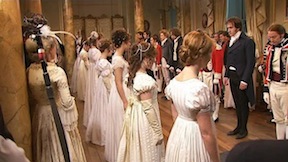
By the early nineteenth century, imitation of the classical was the rage in Europe, in architecture as well as fashion. Ladies’ gowns became simpler, with low necklines and ribbons tied beneath the bust, usually white due to a mistaken belief that the white marble statues being excavated in Greece were the original color. (They weren’t; the original brightly-colored paint had worn off.) Napoleon preferred ladies in white, and even though Britain and France were at war during this time, French fashions were all the rage.

Thin fabrics were de rigueur, muslin being the most popular, followed by silks and satins. As the new century progressed into the Regency and beyond, ladies’ gowns became more ornate, with another gown worn over the classical one, either a shorter length or with the front panels open to reveal the under-dress. Trims became more and more ornate, with ribbons, bows, and furbelows everywhere; collars of Elizabethan lace took the stage. By 1815, colored and grander fabrics were back.

Wardrobe

A fashionable lady had an extensive dress wardrobe, including:

  • carriage dresses

  • court dresses

  • dinner dresses

  • evening dresses

  • full evening dresses

  • garden dresses

  • morning dresses (also called “undress”)

  • opera dresses

  • promenade dresses

  • riding dresses

  • theater dresses

  • walking dresses

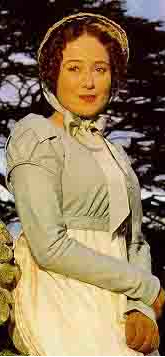
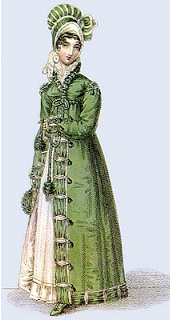
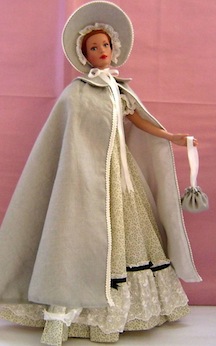
 Even in the dead of winter, many ladies would rather shiver in their flimsy gowns than be so unfashionable as to wear a heavy wrap. However, they did have shawls—Kashmir shawls had the advantage of being both light and warm—and various types of coats and jackets. A pelisse was an elegant overdress with long sleeves that buttoned down the front. A mantle was a rectangular fabric gathered at the neck. A spencer was simply a short jacket that reached the waist of the gown. Cloaks were often lined and/or trimmed with fur.

spencer
Lizzie wears a spencer over her dress.
pelisse
A pelisse à la militaire
mantle_reticule
The lady wears a mantle and carries a reticule.

For the most part, shoes in this period were “straights,” meaning there was no left or right shoe. Pumps made of embellished kid called slippers were very popular. Ladies had half-boots for walking, and stout boots for cold weather might be fur-lined. White silk hose tied at the knee (or later, the thigh) were often decorated with flowers or bowknots.

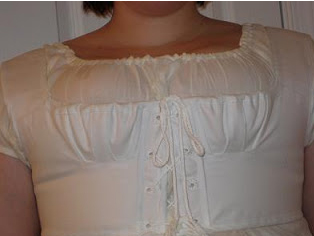
short corset common in the Regency

Under-drawers were not widely worn until after the Regency, around 1820. Short corsets with shaped cups for the breasts were common, although longer corsets were available to assist those with problem figures. A petticoat called a chemise was worn under the gown.

Hats & Accessories

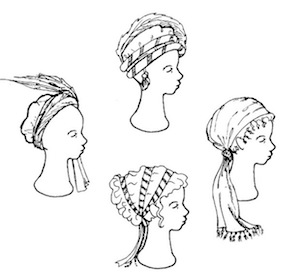
Smaller, simpler bonnets gradually became more ornate, constructed with straw, velvet, satin, and crepe, trimmed with ribbons, ostrich plumes, and fabrics. Decorated caps (undress bonnets) of lace or satin were worn indoors and outdoors in informal settings. Turbans of various styles were popular for full-dress occasions.

turbans
Various styles of turbans popular in the Regency

A fashionable lady had ribbons, jewels, combs, plumes, and hairpieces to dress up her hair for elegant evenings. Gone was the “big hair” of the previous century that towered so high that once a lady’s hair caught fire from the chandelier (Georgiana, Duchess of Devonshire). Classical hairstyles to match the classical gowns were “in”, and short, cropped hair, à la Titus, was popular through 1810.

fans

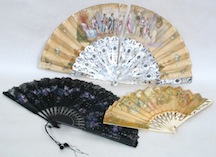
Fans made of ivory with silk, gauze, or lace were another important accessory for every occasion. Every young lady learned the “language of the fan” in order to convey social messages without having to be rude. There were different fans for different occasions, and some were jeweled and hand-painted.

As for jewelry, simple gold crosses expanded to jeweled necklaces, bracelets, tiaras, and even elaborate clasps on shawls and wraps. Silk parasols, often decorated with fringe, were required during outdoor activities in order to prevent the development of freckles. A reticule, or ridicule, was a small bag often made with fabric from a gown used for carrying coins and items formerly carried in pockets.

parasol

A Lady’s Maid

A lady’s maid or abigail was necessary for such things as caring for clothing, preparing baths, dressing (gowns usually fastened in the back), and doing hair. She also accompanied her mistress while shopping and walking; young, unmarried ladies were not allowed out without chaperones, at least not while in the city.

Shopping!!!

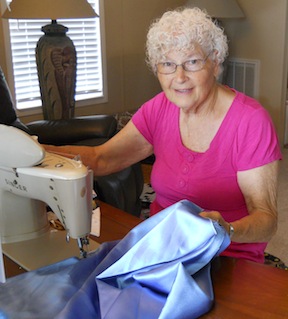
One of my favorite scenes in Regency stories is when the ladies go shopping. After having my own Regency gown and pelisse made for me this year (by my own very talented mother), I wasn’t all that keen on the frequent fittings. And not being able to get in and out of my gown without assistance. But I LOVE feeling like a princess when I wear it!

Of course, having a gown made this way is a great deal more complicated—and expensive—than buying one in a department store. But then, the dress you end up with is uniquely yours by the time you add the trim and embellishments—you’re not likely to ever see anyone else wearing it.

Would you ever consider having a period gown made up like this? Where would you wear it?

Click here to see photos of my Regency outfit.

 The Regency Companion, Sharon Laudermilk and Theresa L. Hamlin, Garland Publishing, Inc., 1989, pp. 30-48.

The Regency Rites series

Regency Rites: The Well-Dressed Regency Lady 

Regency Rites: Presentation at Court

Regency Rites: Almack’s Assembly Rooms 

Regency Rites: The London Season