Archives

Captain Who?

Rees Howell Gronow

Rees Howell Gronow

The Welsh-born Rees Howell Gronow attended Eton with Percy Bysshe Shelley. The young Gronow’s military career began in 1813, when he was sent to Spain with a detachment from his regiment, where his participation in military endeavors was significant. After being posted to London a year later, he became known as one of the primary dandies of his time, being one of the few officers ever admitted to Almack’s, the exclusive assembly rooms on King Street. Neither titled nor wealthy, Gronow was considered one of the most handsome gentlemen of the ton, and that, together with the fact that he was a meticulous dresser, was enough to elevate him into the highest circles of London society. His portrait appeared in shop windows along with other famous gentlemen of the time, such as the Regent, Alvanley, Brummell, etc. He was an excellent shot, second only to the famous Captain Ross, and participated in many duels.

Although not called by the War Office for service on the continent, Gronow used 600 pounds won at the gambling tables to equip himself with a horse and gear and took himself off anyway. He participated in France at Quatre Bras and Waterloo, and was soon after made a lieutenant, and later, captain, of his regiment. He continued with his regiment in England until 1821, when he retired.

In 1821 he spent a short time in debtors’ prison. In 1825, he married an opera dancer. He made his home in London, where he mixed with the highest echelons of society, for many years afterward. During that time he ran unsuccessfully for Parliament on three occasions. Eventually, he moved to Paris. where, in 1858 when he was 63, he married the daughter of a Breton aristocratic who was young enough to be his granddaughter. They had four children together, for which he failed to provide after his death at age 70, according to the Morning Post.

bookToday, Gronow is mostly known for his Reminiscences, in which he discusses his military service, his personal experiences with many prominent Regency-era personages, as well as life in Restoration France. He is frequently quoted in The Regency Companion, from which I’ve been gleaning historical tidbits of interest to fans of the Regency period. The Kindle edition of his book is available for free on Amazon. (See below)

Reminiscences of Captain Gronow

Laudermilk, Sharon H. and Hamlin, Theresa L., The Regency Companion, Garland Publishing, 1989.

The Regency Gentleman series

The Regency Gentleman: His Upbringing

The Fashionable Gentleman

The Rise and Fall of Beau Brummell 

Gentlemen’s Clubs in Regency London

Captain Who?

Gentlemen’s Sports in the Regency

The Gentleman’s Passion for Horses

Riding to the Hounds

The Regency Gentleman’s Passion for the Turf

Gentlemen’s Clubs in Regency London

Gentlemen of birth and/or wealth aspired to membership at one of London’s exclusive gentlemen’s clubs, where they could indulge in drink and gambling without the intrusion of lesser men. Potential members could be refused membership by one blackball.

Captain Gronow comments in his “Reminiscences” that

“female society amongst the upper classes was notoriously neglected….How could it be otherwise, when husbands spent their days in the hunting field, or were entirely occupied with politics, and always away from home during the day; whilst the dinner party, commencing at seven or eight, frequently did not break up before one in the morning. There were then, four- and even five-bottle men, and the only thing that saved them was drinking very slowly out of very small glasses.”

White's: note the famous Bow Window

White’s: note the famous Bow Window

White’s

White’s was the unofficial headquarters of the Tory party, while Brooks’s was for the Whigs, although several gentlemen belonged to both. From 1812 to 1816, Beau Brummell reigned supreme at White’s, along with his circle of friends, which included Lord Alvanley, the Duke of Argyll, “Poodle” Byng, “Ball” Hughes, Sir Lumley Skeffington, and Lords Sefton, Worcester, and Foley. Brummell approved who was allowed to sit in the famous Bow window, and decreed that there would be no acknowledgments of passersby. After Brummell’s fall from grace, Lord Alvanley replaced him. This is reportedly where Alvanley wagered 3,000 pounds on which of two raindrops would reach the bottom of the window first. It is not known whether he won or lost.

Gambling and betting were the two main forms of entertainment. The famous White’s Betting Book contains documentation for bets on a wide variety of subjects, including births, deaths, marriages, and battles. In the card rooms, fortunes were won or lost playing card games, the most popular of which was whist.

Gaming room at Brook's

Gaming room at Brooks’s

Brooks’s

The club that became Brooks’s was founded by William Almack, also the founder of Almack’s Assembly Rooms. Brooks’s was the preferred club of many famous Whigs, such as the Prince Regent, William Wilberforce, William Lamb, Charles James Fox, Lord Carlisle, Lord Robert Spencer, and General Fitzpatrick. The preferred card games here were faro, hazzard and macao.

Boodle's

Boodle’s

Boodle’s

Another establishment founded by the industrious William Almack, Boodle’s also had a famous bow window. Boodle’s was mostly patronized by country gentlemen who came to town for the good food and the gambling. Brummell, Wellington, and Wilberforce held memberships here as well.

Watier's: nicknamed the Dandy Club by Lord Byron

Watier’s: nicknamed the Dandy Club by Lord Byron

Watier’s

Considered the greatest gambling club of the Regency before its demise in 1819, Watier’s was founded in 1805 when the Prince Regent and his dinner guests were complaining about the monotonous food at the gentlemen’s clubs. The Prince asked one of his cooks, a Mr. Watier, if he would consider taking a house and starting a club.

Byron called it the Dandy Club. As the acknowledged arbiter of gentlemen’s fashions and behavior, Brummell reigned supreme here as well. The game of macao was the preferred game of chance, and Brummell himself lost a fortune here.

Gaming Hells

There was no lack of gaming establishments for the lesser souls who did not qualify for the exclusive men’s clubs. The play at these gaming “hells” was not always above-board, and many a greenhorn was exploited there, along with many unfortunate highly-ranked players. Many of these were owned by shady characters who operated under the radar of law-enforcement.

brook's chips

Gronow, Rees Howell, Reminiscences of Captain Gronow, Kindle edition free on Amazon

Laudermilk, Sharon H. and Hamlin, Theresa L., The Regency Companion, Garland Publishing, 1989.

The Regency Gentleman series

The Regency Gentleman: His Upbringing

The Fashionable Gentleman

The Rise and Fall of Beau Brummell 

Gentlemen’s Clubs in Regency London

Captain Who?

Gentlemen’s Sports in the Regency

The Gentleman’s Passion for Horses

Riding to the Hounds

The Regency Gentleman’s Passion for the Turf

Lady P and Hyde Park

LadyP2Lady P is back! She stayed a bit longer with her grandchildren than expected, but hey, who wouldn’t want to spend Christmas with the little ones? But she became weary of cold English winters and couldn’t resist the temptation of spending the winter with Susana here in central Florida. Mrs. Barlow, who came for an interview in a previous post, had already spoken enthusiastically of the palm trees and alligators and orange trees, so she arrived post-haste this morning—Twelfth Day—following a lovely Twelfth Night celebration with her family in the 19th century.

Over a quick breakfast of coffee from Susana’s new Keurig (which fascinates her), yogurt and boiled eggs, they discussed the new story Susana is working on, which features Lady P herself and her daughter’s family. It’s a bit out of the usual thing for Susana, being a time travel with a heroine who travels back to the 19th century to find her family, and Lady P’s advice has been invaluable. For one thing, the heroine lands in 1817 Hyde Park, and right from the beginning Susana ran into problems trying to find out what Hyde Park looked like in 1817. For example, the Marble Arch wasn’t built until 1827.

Lady P: No rose garden either. Although that does seem a nice touch. I must mention it when next I encounter His Royal Highness.

Susana [sighing]: No, I’m going to have rewrite the entire first scene! I’m thinking she’ll have to land somewhere near Hyde Park Corner and the Rotten Row.

Lady P: Be sure to keep her well out of the way of the horses and carriages, then. Tattersall’s is there too, you know.

SandHillCrane.180184808_std

Susana: What about Sister Ignatia? Would a religious reformer be hanging about in Hyde Park, do you think?

Lady P: Generally, you don’t see the riffraff there. Hyde Park is primarily for the upper classes. But there are exceptions…servants who accompany their masters and mistresses, and there are Tattersall’s employees, of course. I have seen a few do-gooders handing out tracts from time to time.

Susana: Is it likely an unaccompanied young lady might be attacked by ruffians there?

Lady P [frowning]: An unaccompanied young lady might be attacked by ruffians anywhere, Susana! I regret to say that even gentlemen might try to take advantage. It’s not common, but crime in Hyde Park is not completely unknown.

Susana: Ah, so I won’t have to change the scene completely, then.

Lady P [peering out the window]: Are those ostriches out there? Do let us go for a stroll, Susana. And oh, what are those funny little vehicles with the canvas roofs? Can we ride in one?

Susana: Golf carts. People use them here to get around the park. I don’t have one myself, but I’m sure the neighbors will give you a ride. Oh, and the birds are sand hill cranes. Aren’t they pretty?

Regency Rites: Hyde Park

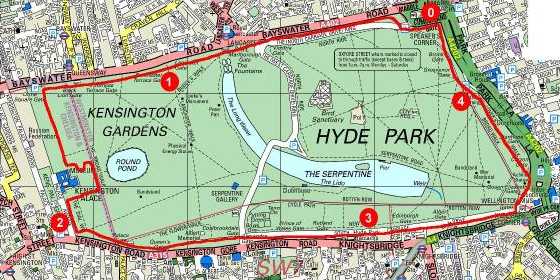
hyde-park-london-running-route-serpentine-rcOriginally, the Manor of Hyde was part of the Roman estate of Eia, and included what is now Green’s Park and Kensington Park. About 600 acres until the establishment of Kensington Park, it was given to Geoffrey de Mandeville by William the Conqueror. De Mandeville left it to the Holy Fathers of Westminster Abbey, where it remained for five centuries until Henry VIII dissolved the monasteries.

It was a great hunting ground, rich in deer, boar, hare, otter, wildfowl, and game birds.

Under Charles II, the route was called “the Ring” or “the Tour”. A French visitor said:

They take their rides in a coach in an open field where there is a circle, not very large, enclosed by rails. There, the coaches drive slowly round, some in one direction, others the opposite way, which, seen from a distance, produces as rather pretty effect, and proves clearly that they only come there in order to see and be seen.”

Paintings by pissarro3

Painting by Pissarro

Samuel Pepys wrote (of Charles II):

After dinner to Hyde Park. At the Park was the King and in another coach my lady Castlemaine , they greeting one another every turn:”

William II bought the manor at Kensington and Kensington house grew into Kensington Palace, and the western end of Hyde Park was taken for the Palace estate, which would one day become Kensington Gardens.

William III and Queen Mary used to drive along the road, and it became known as La Route du Roi, which became corrupted into Rotten Row.

For showing off coaches and their teams, Hyde Park remained the place to be.”

In 1730, George II laid down a radius of paths and his wife Queen Caroline had the Serpentine constructed by widening the Westbourne brook and draining its pools.

Hyde Park was also a popular location for duels, military floggings, and suicides (drownings). The gallows at nearby Tyburn was used for hangings until 1783, when it was moved to Newgate.

George-Leslie-Hunter-xx-Rotten-Row-Hyde-Park-xx-Private-collection

Painting by George Leslie Hunter

There were soldiers’ camps and military parades, and in 1814, 12,000 men marched past the Prince Regent, the Duke of York, the King of Prussia, the Emperor of Russia, General Blücher, and Lords Beresford and Hill. A reenactment of the Battle of Trafalgar was performed on the Serpentine.

In 1821, Hyde Park was the scene of an elaborate celebration of George IV’s coronation. There were Chinese lanterns, clowns, conjurors, swords swallowers, fire-eaters, acrobats, swings, roundabouts, fireworks, military bands, boat races, elephants, and dancing donkeys and dwarfs.

After John Loudon McAdam improved roads with stone broken small enough to make a hard smooth surface, all sorts of carriages appeared in Hyde Park, and being a good whip became a mark of social distinction. George IV was known to be an excellent whip, as was his daughter, Princess Charlotte of Wales. The Four-in-Hand Club made its appearance, with only the very best whipsters allowed as members.

Horse & Carriage: The Pageant of Hyde Park, J.N.P. Watson, London: The Sportsman’s Press, 1990.

Belles-and-beaus

Painting by William Heath

Regency Rites: Almack’s Assembly Rooms

What was Almack’s?

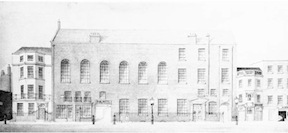
Almack’s was founded in 1765 by a Mr. McCall. The building was located on King Street just off St. James Street* and included a large ballroom, as well as supper rooms and card rooms.

Almack’s was ruled by a select committee of society matrons known as the Lady Patronesses. These ladies ruled the club with an iron hand; only the crème de la crème (about 25%) of London society were authorized to cross the threshold of this exclusive circle. Each application for membership was carefully scrutinized by the high-handed patronesses, who were not above using their power for retribution against their rivals or other personal reasons.

The food served was not of the best quality. Alcohol was not served—only tea and lemonade.The floor of the ballroom was said to be dreadful, and the rigid rules set by the patronesses could not be broken by anyone. It is said that the Duke of Wellington, the hero of the Peninsular War, was refused admission because he did not sport the proper dress—knee breeches, white neckcloth, and a long-tailed coat. The doors were locked precisely at eleven o’clock and no one was allowed in after that for any reason. There was a long list of”do’s” and “don’ts” (mostly don’ts) for the young debutantes, and any infraction could result in expulsion from the club and social censure. When the waltz was finally given the seal of approval—it was condemned for years as being scandalous due to the close proximity of the dancers’ bodies—the young ladies had to be individually approved to dance it by one of the patronesses.

Almack's Assembly Rooms

Almack’s Assembly Rooms

Almack’s balls were decidedly not anywhere near the grandest balls of the London Season, so why did the matchmaking mothers of the haut ton scramble to get their hands on those square cardboard vouchers that would gain them admittance?

One word—marriage. Almack’s was the exclusive “marriage mart” of the ton. While potential spouses for your sons and daughters could be found elsewhere, the “best” ones could ideally be found at Almack’s, where the average, everyday riffraff need not apply. Who wouldn’t want their daughter to find a wealthy, well-connected—perhaps titled—spouse to enrich the family fortunes? Matchmaking mothers everywhere yearned to have their marriageable offspring included among the exclusive company of Almack’s.

Who were the Patronesses?

The Lady Patronesses—six or seven at any one time—were:

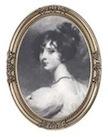
Lady Castlereagh

Lady Castlereagh

Lady Castlereagh (Emily Anne) was a wealthy earl’s daughter who married the Viscount Castlereagh (later the 2nd Marquess of Londonderry), who held many political posts (Secretary of States for War, Secretary of State for Foreign Affairs, and leader of the House of Commons) during the period. Lady Castlereagh was the one who insisted that the door to Almack’s be closed promptly at eleven. She and Mrs. Drummond Burrell were both known for their disdainful arrogance.

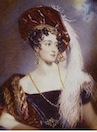
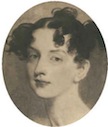
Lady Jersey

Lady Jersey

Lady Jersey, “Queen Sarah,” “Silence,” or “Sally” to her close friends was the wealthy daughter of the 10th Earl of Westmoreland who married the 5th Earl of Jersey. Lady Jersey’s mother-in-law, Lady Frances Jersey, was at one time the mistress of the Prince of Wales (it was she who recommended he choose Princess Caroline for his wife), and her parents eloped to Gretna Green (quite the scandal). Lady Jersey’s younger sister married the brother of the scandalous Lady Caroline Lamb, but when the latter ridiculed her in her vengeful novel Glenarvon, Lady Jersey barred her from Almack’s forever.

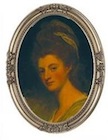
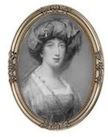
Lady Sefton

Lady Sefton

Lady Sefton (Maria) assisted many a green girl to negotiate the hazards of the marriage mart. Her husband was an enthusiastic sporting man, and a member of the Four-in-Hand Club (an elite club for only the best drivers).

Lady Cowper

Lady Cowper

Lady Cowper (Emily) was the daughter of the great political hostess, Lady Melbourne, and due to her mother’s numerous affairs, her paternity was never verified. She disapproved of her sister-in-law, Lady Caroline Lamb, but was otherwise known as one of the kindest of the patronesses.

Princess Esterhazy

Princess Esterhazy

Princess Esterhazy (Thérèse) was the grand niece of Queen Charlotte and never let anyone forget it. Her husband Prince Paul Esterhazy served as the Austrian ambassador to England 1815-1842. She and the Countess Lieven demonstrated the utmost in continental sophistication.

Countess Lieven

Countess Lieven

Countess Lieven (Dorothea) was the first foreigner to serve as a patroness of Almack’s. Her husband the Count was the Russian ambassador to England from 1812 to 1834. Besides being a leader of London society, she was a significant political force in Great Britain, France and Russia.

Mrs. Drummond Burrell

Mrs. Drummond Burrell

Mrs. Drummond Burrell (Clementina) was a great heiress and daughter of an earl who later became a baroness when her husband succeeded to his father’s title. Although one of the younger patronesses, she was considered the most arrogant and haughty of them all.

Appearance was everything.

It’s interesting to note that while London society, as demonstrated by the Lady Patronesses, demanded a high degree of moral perfection, it was really the façade that counted. As long as you behaved with discretion—i.e., didn’t get caught—you could have adulterous affairs with impunity. While it was expected that wives would remain faithful to their husbands until the birth of an heir or two, after that, it was quite common for both husband and wife to indulge in affairs. It was widely known that Lady Melbourne had affairs with politically powerful men who fathered many of her children, but her the importance of her position precluded any open censure.

Most of the Lady Patronesses of Almack’s had notorious affairs. Emily Cowper, taking the advice of her mother, the above-mentioned Lady Melbourne, to be true to her lover rather than her husband, had a long affair with Lord Palmerston, who later became Prime Minister, and after her husband died, they married and lived happily ever after.

As long as it was behind closed doors—and you were wealthy and important enough—you could get away with a considerably lower standard of behavior. Of course, marriages tended to be more about property, wealth and family connections than any sort of love or affection, so perhaps such scenarios were a natural result of cold-blooded unions.

The King Street location of Almack’s is an office building now; when I was there two weeks ago, it was covered with scaffolding. Christie’s Auction House is across the street.

The Regency Rites series

Regency Rites: The Well-Dressed Regency Lady 

Regency Rites: Presentation at Court

Regency Rites: Almack’s Assembly Rooms 

Regency Rites: The London Season

Episode #14: In Which Leticia, Lady Beauchamp, Pops In For an Interview On Her Personal Acquaintance With Princess Charlotte of Wales

Susana [to the Reader]: I’m afraid Lady P had to return to the 19th century for a christening (no, not Damian and Theresa’s this time, but one of her own daughters’ offspring). She promised to return after she’s had a comfortable coze with her daughters and grandchildren, but in the meantime, she sent someone who she said was a personal friend of Princess Charlotte, the daughter of the Prince Regent.

Lady Beauchamp: I would not characterize our acquaintanceship in quite that manner, Miss Ellis.

Susana: Forgive me, Lady Beauchamp, but I am not finished speaking to the readers.

Lady Beauchamp: Well, do hurry, then. I have an important social engagement this afternoon.

Susana [taking a deep breath]: Yes, well, Lady Beauchamp is the former Leticia Snodgrass, who was presented in London about the same time as Lady P’s niece-by-marriage, Theresa Ashby. You can read more about that in the epilogue to Treasuring Theresa, which is a free read on my web site: http://www.susanaellis.com/pub.html.

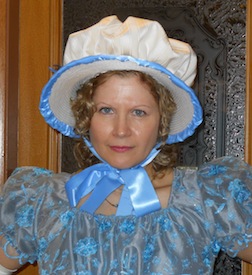
gloria_gown_stern

Leticia, Lady Beauchamp, née Snodgrass

Lady Beauchamp: Is it really? I daresay I should like to see how I am characterized in the story.

Susana [hurriedly]: Perhaps we should get back to the subject at hand, you being a marchioness and your time being so valuable and all. Why don’t you begin by telling us about your marriage and your family?

Lady Beauchamp: Of course. I was quite sought-after in my first season—many offers were made for my hand, you know—but there were only a handful of dukes that year and they were all married, so I chose to wed Lord Beauchamp. We had a fabulous wedding at St. George’s, and the Prince kissed my hand and called me the most beautiful bride he’d ever seen.

Susana: And your husband and family? Please tell us about them.

Lady Beauchamp: Fortunately, my youngest, George Augustus, takes after his mother. [Smiling] He has the most adorable cherubic face and blue eyes so like mine. I think it quite likely that his hair will lighten before long as well.

Susana: And your older son?

Lady Beauchamp [grimacing]: It is most unfortunate that Robert William takes after his father. Sturdy, bookish, and quite dull. At least dear Robbie has not lost his hair as his father has. Lord Beauchamp is much older than I, you know. His first wife gave him only daughters, but it was I who gave him his heir and a spare. [Preening]

Susana: I…see. Well, now that my readers are informed as to your…uh…pedigree, let us move on to the topic at hand. How did you become acquainted with the Princess Charlotte, Lady Beauchamp?

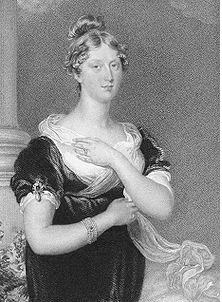
Princess Charlotte of Wales, during her pregnancy

Princess Charlotte of Wales, during her pregnancy

Lady Beauchamp [wrinkling her nose]: Of course. Well, we had met in passing at ton events when she was a child, although rarely with her mother, since her father wished to limit her exposure to her mother’s eccentricities. [Coughing delicately]. Blood will tell, however. Lady de Clifford, who had the charge of her at the time—only a baroness, you know—gave her far too much freedom. The girl had no sense of propriety—quite the hoyden as a child, but it was far worse when she reached adolescence.

Susana: Well, adolescence is a difficult time for everyone. I taught thirteen-year-olds for twenty-five years, you know. The best thing about it is that it eventually passes. I suppose the Princess showed the usual interest in the opposite sex?

Lady Beauchamp [shaking her head]: Oh, much worse than that, my dear Miss Ellis! If it wasn’t one of her cousins (illegitimate, you understand), it was William, Duke of Gloucester. They all took her fancy at one time or another. The rumors were rampant all over Town! Upon this proof that she took after her scandalous mother, the Prince Regent made arrangements for a marriage with William of Orange, hoping for an alliance with the Netherlands. It all came to nothing of course. Stubborn, stubborn girl! Not at all the sort of girl who ought to be a princess!

Susana: Do you know why she didn’t like the Prince of Orange?

Lady Beauchamp [curling her lip]: Indeed I do. She confided in me once—quite soon after she and Prince Leopold had settled at Claremont House—which is near Beauchamp’s estate in Surrey, you know—that he refused to promise to allow her mother to visit them after they were married because of her scandalous reputation, and after that, she steadfastly refused to have him. [Leaning closer to Susana] Of course, by then her mother had already fled to the Continent, and she never saw her again anyway.

Susana: How sad!

Lady Beauchamp [shrugging]: Was it? Many would say it was all for the best.

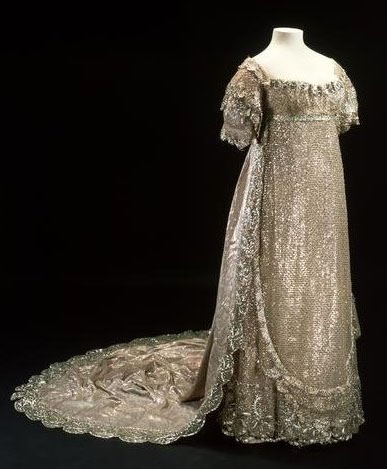
Princess Charlotte's silver lace wedding gown

Princess Charlotte’s silver lace wedding gown

Susana: So you socialized with the royal pair after their marriage. What can you tell us about them?

Lady Beauchamp: Quite a boring pair, really. Prince Leopold—who was quite impoverished, you understand, before he wed the heir to the throne of England—took rather too much of an interest in agriculture for my taste. Of course, he and Beauchamp used to tramp all over looking at crops, of all things. Her Royal Highness thought it was quaint.

Susana: But they got on well together?

Lady Beauchamp [reluctantly]: I suppose they must have. I never heard talk of rows between them, and her manner of dress became more sedate after her marriage. Indeed, Prince Leopold seemed to have a calming influence on her. We shared a box at the races once, and when Her Royal Highness began to show rather more enthusiasm than was proper, her husband caught her attention and said, “Doucement, chérie,” and she immediately smiled and regained her composure.

Susana [eyes filling with tears]: How sweet! What a shame their time together was so short! Were you around her during her pregnancy?

Lady Beauchamp: Her confinement, Miss Ellis. Do try to exercise a bit of restraint in your speech, even though you are American. [Sighing heavily]. Indeed I did see her a few times, although as her condition advanced, she was kept in seclusion. Considering all of the doctors who were consulted, one would have thought at least one would have been able to assist her safely through her trial. But no, she was allowed to eat until she reached elephantine proportions, and then they tried to starve her until she turned despondent. Why, Sir Richard Croft was not even a physician! My own husband would never have allowed a mere accoucheur near me when I was brought to bed. But it’s like my mother says, everything the Prince Regent touches ends in failure. Born under an unlucky star, she believes.

Susana: I understand Prince Leopold never recovered from the death of his wife and son.

Lady Beauchamp: Nor has England either. One would think the world has come to an end. The King has no legitimate grandchildren and his youngest son is over forty. The city closed down for two weeks and within a few days there was no black cloth to be had, as all of England was in mourning. Beauchamp said there wasn’t a dry eye to be seen during the funeral, when she was laid to rest with her son at her feet in St. George’s Chapel at Windsor Castle. To be sure, I can’t imagine what will happen to the succession now. I suppose all of the royal princes will run out and marry and try to sire an heir as quickly as possible. [Pursing her lips] Well, all I can say is they’d be well advised to do it soon, because the King’s health deteriorates as we speak, and the Regent isn’t much better. [Sliding her chair closer to Susana] My dear Miss Ellis, it occurs to me that you must be in possession of—shall we say?—interesting information about what happened with the succession. Perhaps you would be kind enough to indulge my curiosity?

Susana [glancing at her watch]: Oh dear, look at the time! If you do not return immediately, Lady Beauchamp, I fear you will be late for Lady Pritchard’s Venetian Breakfast. Do accept my sincere thanks for condescending to speak with me this morning!

Lady Beauchamp [with narrowed eyes]: As it happens, you are correct, Miss Ellis. I really must take my leave of you. However, you can be sure that I shall seek out Lady Pendleton as soon as may be to discover what she knows. [She waves her arms and disappears.]

Susana [gripping the arms of her chair]: I do wonder how this time travel thing is managed. Lady P has mentioned something about an old lady who runs the apothecary shop on Dapple Street, but she has so far declined to go into detail. [Frowning] When she does return, we are going to have a long chat about a few things I discovered after she left. For one thing, my digital camera is missing…after she went on a photography binge taking pictures of everything, even the engine of the car. And then there is a little matter of charges on my credit card for $800 at Toys R Us and more than $300 at the Battery Warehouse. Did she hear nothing I told her about the Prime Directive?

Lady P will be back soon. As always, please do comment if you have any questions you’d like to ask Lady P about the late Georgian/Regency era. She does love to chat!

The Lady P Series

Episode #1: Susana’s Adventures With Lady P: The Introduction

Episode #2: Lady P Talks About… Pride and Prejudice?

Episode #3: Lady P and the Duchess Who Lost a Billion Dollars

Episode #4: Lady P and the Face On the $100 Bill

Episode #5: In Which Lady P Discovers Sparkly Fabrics and Ponders Violating the Prime Directive

Episode #6: Lady P Dishes the Dirt on the Duchess of Devonshire

Episode #7: The Political Exploits of Lady P and the Duchess of Devonshire

Episode #8: Lady P and the Prince Regent’s Illicit Marriage

Episode #9: In Which Lady P Depletes the Cooking Sherry During Her Discussion of Caroline of Brunswick

Episode #10: Lord Byron: Mad, Bad, and Dangerous to Know

Episode #11: In Which Lady P Talks About Hannah More and the Rights of Women

Episode #12: Lady P’s Revelations Regarding George III and His Peculiar Progeny

Episode #13: Lady P Discusses the Luddite Uprising, the Assassination of Spencer Perceval, and the General Unfairness of Life

Episode #14: In Which Leticia, Lady Beauchamp, Pops In For an Interview On Her Personal Acquaintance With Princess Charlotte of Wales

Episode #15: Lady P On Assignment in 1814 Kent

Lady P Quizzes Jane Livingston, the Hero’s Sister From “A Twelfth Night Tale”

Episode #10: Lord Byron: Mad, Bad, and Dangerous to Know

Lady Pendleton, Damian Ashby’s eccentric aunt (see the epilogue to Treasuring Theresa on Susana’s web site), is visiting Susana from the early 19th century. She’s intrigued by life in 21st century Toledo, Ohio, and, of course, Susana is thrilled to have the opportunity to pick her brain about life in Regency England. It certainly gives her a great deal to write about in Susana’s Parlour!

Susana: [to the Reader]:

Lady P and I just finished watching the 2007 BBC movie about Lord Byron, and I thought you might find some of her reminiscences of the original characters as intriguing as I did. [Turning to Lady P] You knew the real Lord Byron, did you not, Lady P? What was your impression of him?

byronLady P:

Oh yes, I was acquainted with the man, as was anyone who was anyone in the ton during the spring of 1812 when he came onto the scene. I could never understand why women were making cakes of themselves over him. He wasn’t all that well-favored, you know, not nearly as attractive as that actor who played him in the film. Although he did have a certain magnetism, I suppose, when he looked at a woman with “the stare,” that is, with hooded eyes. I’m not at all sure what he was conveying with that most peculiar stare, but whatever it was had the effect of making formerly sensible women abandon all pretense of prudence in order to attract his attention.

Susana:

Undoubtedly Lady Caroline Lamb was one of them.

Lady P:

She was the worst of them, but then, she was always somewhat of a loose screw, Susana. Even when she was small—she was eight years old when her mother, Georgiana’s sister, moved the family into Devonshire House to escape her father’s abuse—Georgiana used to tell me about her flights of fancy and frequent mood swings, and when she married George Lamb and moved into Melbourne House, we all hoped that her husband and Lady Melbourne, his mother, a prominent Whig hostess you know, would prove to be steadying influences on her.

Susana:

It didn’t work out that way, though, did it?

Lady P [shaking her head]:

Not at all. You know, Susana, it is never a good idea for a newlywed to move in with her husband’s family. Or the other way round, I’m sure. In this case, Caroline clashed constantly with Lady Melbourne, and it only got worse when Caroline and Byron were so foolish as to allow their affair to become public. Harriet—Lady Bessborough, Caroline’s mother, you know—tried to rein her in, especially after Lord Byron tried to break things off with her, but Caroline was so far gone from reality that she listened to no one. She foisted herself on his friends and begged them to help her win him back. She threatened to harm herself. She neither ate nor slept and was quite wraith-like when her mother and husband finally persuaded her to go to Ireland with them. But even that wasn’t the end of it. Poor Caroline raved over him until the day she died, alternately loving and hating him.

carolinelamb

Susana:

I suppose today she’d be diagnosed bipolar and given medication to help her cope with her illness.

Lady P [frowning]:

Bipolar?

Susana:

Mood swings. You know, when someone is rapturously happy and believes everything is right with the world and doesn’t care if everyone knows it, and then later falls into a serious depression. I’m no psychiatrist, of course, but it does sound to me like she suffered from such an affliction.

Lady P:

Well, she did suffer from some sort of affliction, that much is obvious. And I shouldn’t wonder if Lord Byron didn’t suffer from something similar. He too, was something of a loose screw. Although I can’t really say what he was like as a child. I did hear that his father was something of a tyrant, like Caroline’s.

Susana:

What an interesting thought! But did he exhibit an equal passion for her, at least while their affair was still going full-swing?

Lady P [with a decidedly unladylike snort]:

Oh yes, indeed. Of course, when he first came onto the social scene, he was a Nobody and she the reigning Beauty. No doubt he was flattered when she took an interest in him. They were both poets, you know, possessed of mercurial artistic temperaments. At first, her mad, childlike bravado attracted him, but when Lady Melbourne got her clutches into him and convinced him that Caroline’s antics could make him persona non grata in society, he began to cool toward her.

Susana:

Lady Melbourne? Caroline’s mother-in-law? Why would Lord Byron pay attention to anything she said about Caroline?

Lady P:

My dear Susana, Lady Melbourne was one of the premier Whig hostesses, exceedingly attractive for her age, and it was whispered about that Lord Byron was infatuated with her. Yes, even though she was more than thirty years his senior. It does happen, you know. She had many affairs with prominent men, including the Prince Regent, and her son George bears an uncanny resemblance to him too.

Susana:

So why was she so critical of Caroline, then, if she indulged in adulterous affairs herself?

Lady P [somewhat impatiently]:

The difference between them, my dear Susana, is that Lady Melbourne’s lovers were carefully chosen to increase her influence in political circles. She was also careful to manage them with the utmost discretion. Caroline, well, she had no such scruples. She was the victim of her impulses. And to a lesser extent, Lord Byron was to his as well.

Susana:

I feel so sorry for her. But Lord Byron did not pine away for her, did he?

Lady P:

Not at all. He cut a wide swathe among the ladies of London. [Lowering her voice] It is said that he had an incestuous relationship with his half-sister Augusta, and that her daughter Elizabeth is his.

Susana:

Goodness! For a society so bent on propriety, there was certainly a great deal of scandalous goings-on!

Lady P [sighing]:

Oh yes indeed! It was keeping up appearances that was the important thing. So hypocritical. Why, I always thought it was beyond outrageous when Lady Swindon cast her maid into the streets for being with child when she herself was having an affair with the Duke of Kent. I do hope I was able to instill better principles into my own daughters while they were growing up.

Susana:

Lord Byron eventually married, did he not? I heard that his daughter Ada was the world’s first computer programmer.

Lady P:

Computer programmer? Well, I can’t speak to that, since I have no notion of what that is, except for that machine you use for your writing. But yes, he did marry Annabella Milbank, who was Lady Melbourne’s favorite niece and an heiress besides. And now that I think on it, I do recall that she was thought to be something of a bluestocking, so it is likely that she would have an intelligent daughter. Why, Annabella was better educated than most of the men of the ton; you’d have thought she’d have better sense than to marry a sad rattle like George Byron.

Susana:

Those mesmerizing, hooded stares of his, no doubt.

Lady P:

She probably thought she could reform him. She was quite a devout young lady, I believe. [Shaking her head] Such a shame. Why, I made sure my girls knew better than to attempt such a thing with their husbands. There are ways a woman can influence her husband’s opinions—I can certainly attest to that—but it is far better to choose a mate who doesn’t require a great deal of changing. Do remember that, Susana.

Susana [rolling her eyes]:

Of course, Lady P. [To the reader] That’s all for today. I hope you enjoyed Lady P’s reminiscences about the celebrated poet that Lady Caroline called “mad, bad, and dangerous to know.”

As always, please do comment if you have any questions you’d like to ask Lady P about the late Georgian/Regency era. She does love to chat!

Episode #9: In Which Lady P Depletes the Cooking Sherry During Her Discussion of Caroline of Brunswick

TRRanniversarysmWin a $20 Amazon Gift Card and/or a Treasuring Theresa coffee mug!

Susana’s Parlour is celebrating the second anniversary of The Romance Reviews with the Treasuring Theresa Lucky In Love Giveaway. To enter the contest, click the TRR graphic at right or the Treasuring Theresa graphic in the side bar.

Before you go, leave a comment on today’s post for five contest entries. Be sure to include your email address in your comment!

Lady Pendleton, Damian Ashby’s eccentric aunt (see the epilogue to Treasuring Theresa on Susana’s web site), is visiting Susana from the early 19th century. She’s intrigued by life in 21st century Toledo, Ohio, and, of course, Susana is thrilled to have the opportunity to pick her brain about life in Regency England. It certainly gives her a great deal to write about in Susana’s Parlour!

Susana [to the Reader]:

In our last encounter, Lady P enlightened us on the Prince of Wales’ illegal marriage to a twice-widowed Catholic lady unsuitable in every way to be Queen Consort of England. Following that, he married—for reasons of state—his first cousin, Caroline of Brunswick, daughter of his father’s sister. I’ve read of what a dreadful disaster that was, but I wanted to pick Lady P’s brain about it.

Lady P:

Really, Susana! Pick my brain, indeed! What an indelicate turn of phrase!!

Susana:

It’s just an expression, your ladyship. It means—well, I should have said only that I’m curious to learn what you have to say about the Prince’s choice of wife.

Lady P [shuddering]:

Naturally I have a great deal to say about it, but first I must shake off the image of some quack physician performing surgery on my brain. Is there anything left of the cooking sherry?

Susana:

No, you finished that one off last week after watching the finale of Downton Abbey, don’t you remember? But don’t despair—I bought a new bottle yesterday at the Kroger store.

[A slight pause while Susana leaves the room and returns with a glass of wine for Lady P.]

Lady P [after draining half the glass and dabbing at her lips with a handkerchief]:

Just the thing. I do enjoy a little wine in the evening, you know. What a pity you have no wine cellar. Why, in my day, every reputable household had a wine cellar and a stock of good wine. Even though you yourself do not indulge, Susana, you ought at least to think of your guests!

Susana [shrugging]:

My friends and I usually go out. In any case, if your ladyship is properly refreshed, I wonder if we could resume our conversation about the Princess of Wales. I have heard that she and the Prince detested each other on sight. Is that true, do you think?

caroline2Lady P:

That was indeed the on dit, and I must say, I could believe it. The Prince arrived late to his wedding, and in a most intoxicated state, too. Lady Bessborough—Georgiana’s sister Harriet, you know—told me that the night before he’d written a note declaring his everlasting love to Maria Fitzherbert—with whom he was estranged at the time—and he made out a will leaving everything he owned to her as well. Harriet was much distressed to see the state he was in.

Susana [shaking her head]:

Then why was she chosen in the first place? He was a grown man; surely he could have found a way to avoid it if he’d wished to.

Lady P:

Was he? A grown man, I mean. Much of the time his behavior resembled that of an over-indulged child. [Looking around nervously] I suppose I can say that with impunity since he’s been dead for nearly two centuries, but truly, my dear, the Prince of Wales was never the man his father was, the madness notwithstanding. [Sighing] In any case, the Prince had accumulated such debts that Mr. Pitt—the Prime Minister, you know—promised to give him a substantial increase in income if he were to make a suitable marriage.

Susana:

So…he was forced to marry Caroline of Brunswick to pay his debts? Did he have no other prospective brides to choose from?

Lady P:

Well, when you eliminate the Catholic royalty and those who were already wed, there were only two who were eligible, both of them his first cousins. Princess Louise of Mecklenberg-Strelitz was his father’s brother’s daughter, and frankly, she was the prettier of the two and seemingly possessed of the better temperament. There were rumors of Princess Caroline’s scandalous behavior even then, you see.

Susana:

Then why did he choose her? Did she have a larger dowry?

Lady P [clucking]:

The on dit was that Lady Jersey—the Prince’s mistress at the time—chose her because she seemed a less formidable rival.

Susana:

So…he allowed his mistress to choose his wife?

Lady P:

If you believed the Prince to be a man of integrity and good character, my dear Susana, then you have not been attending my words at all. The man had no intention of forming a true marriage, and even though he had broken with Maria, in some manner he still considered her his true wife and resented the necessity of making another connection for state purposes.

Susana:

So he didn’t really care who he married.

Lady P:

Whom, my dear. Not who. No, I don’t suppose he did. Consequently, when he ended up with a wife as odious as Caroline, nearly everyone secretly believed his punishment was well deserved.

Susana:

Did you agree with them, Lady P?

Lady P [sighing]:

As many faults as the Prince had, my dear, they were nothing compared to those of Caroline of Brunswick. Those who defended her when apprised of his cruel treatment—and that was nearly the whole of England, you know—could hardly have been well acquainted with her. Well, Sally Jersey was an exception, but then, Sally never did approve of the Prince, since she was forever having to live down the fact that her mother-in-law had been his mistress for a time, and had, in fact, chosen Caroline for him in the first place.

Susana:

Sally Jersey, one of the patronesses of Almack’s? Who would refuse vouchers to young ladies who did not demonstrate the utmost propriety in their conduct?

Lady P:

The same.

carolineSusana:

What did you think of Caroline, Lady P?

Lady P [throwing up her arms]:

She was truly dreadful, Susana. She rarely bathed, ate and drank to excess, was most immoderate in her dress and speech, and it was said that she was not chaste. But you should really ask Leticia, Lady Beauchamp, since she served—most unwillingly, I must say—as one of the Princess’s ladies-in-waiting.

Susana:

Lady Beauchamp? Where have I heard that name before?

Lady P:

She was an acquaintance of Theresa’s, you know, Damian’s wife?

Susana:

Ah, yes. But they were hardly bosom friends, as I recall.

Lady P [smiling]

Oh my, not at all. But they were merely young girls at the time, and you know how catty young girls can be. But then…perhaps we should arrange to have Leticia come for a visit sometime soon. I think you would enjoy—how did you put it—performing surgery on her brain for a time.

Susana:

Picking her brain is the proper expression, Lady P.

Lady P:

It is not proper at all, Susana, and you know it quite well. I do feel the need for another glass of that cooking sherry, if you don’t mind.

Susana [to the Readers]:

That’s all for this episode. But I am intrigued by the idea of speaking with Leticia, Lady Beauchamp. Perhaps Lady P will be able to persuade her to come for a brief visit to tell me about her experiences with the infamous Princess of Wales who was never allowed to be Queen. I can’t promise anything, however. This time travel thing can be very complicated.

As always, please do comment if you have any questions you’d like to ask Lady P about the late Georgian/Regency era. She does love to chat!

The Lady P Series

Episode #1: Susana’s Adventures With Lady P: The Introduction

Episode #2: Lady P Talks About… Pride and Prejudice?

Episode #3: Lady P and the Duchess Who Lost a Billion Dollars

Episode #4: Lady P and the Face On the $100 Bill

Episode #5: In Which Lady P Discovers Sparkly Fabrics and Ponders Violating the Prime Directive

Episode #6: Lady P Dishes the Dirt on the Duchess of Devonshire

Episode #7: The Political Exploits of Lady P and the Duchess of Devonshire

Episode #8: Lady P and the Prince Regent’s Illicit Marriage

Episode #9: In Which Lady P Depletes the Cooking Sherry During Her Discussion of Caroline of Brunswick

Episode #10: Lord Byron: Mad, Bad, and Dangerous to Know

Episode #11: In Which Lady P Talks About Hannah More and the Rights of Women

Episode #12: Lady P’s Revelations Regarding George III and His Peculiar Progeny

Episode #13: Lady P Discusses the Luddite Uprising, the Assassination of Spencer Perceval, and the General Unfairness of Life

Episode #14: In Which Leticia, Lady Beauchamp, Pops In For an Interview On Her Personal Acquaintance With Princess Charlotte of Wales

Episode #15: Lady P On Assignment in 1814 Kent

Lady P Quizzes Jane Livingston, the Hero’s Sister From “A Twelfth Night Tale”

Episode #8: Lady P and the Prince Regent’s Illicit Marriage

Lady Pendleton, Damian Ashby’s eccentric aunt (see the epilogue to Treasuring Theresa on Susana’s web site), is visiting Susana from the early 19th century. She’s intrigued by life in 21st century Toledo, Ohio, and, of course, Susana is thrilled to have the opportunity to pick her brain about life in Regency England. It certainly gives her a great deal to write about in Susana’s Parlour!

Susana [to the Reader]:

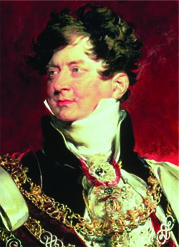
regentThe Prince of Wales became Regent in 1811 when his father was deemed unable to reign due to madness. He is often caricatured in historical fiction. Dubbed as “Prinny,” (and other, less polite sobriquets), the king’s eldest surviving son was intemperate in just about every area of his life and generally disliked by the populace.

So naturally, one of the first topics I broached with Lady Pendleton when she arrived on my doorstep was the Prince Regent and what he was like. And she did have a lot to say…but then, she usually does, doesn’t she?

Lady P:

I didn’t meet the Prince Regent until just after my marriage, and although we traveled in the same social circles, Pendleton did not approve of him, and not just because of politics. The Prince was a confirmed skirt chaser before his eighteenth birthday, and he tended to be attracted to older women. Though not normally a jealous man, Lord P did not like to see me much in company with him. I mean, how does one turn down the attentions of a future monarch without incurring rancor and courting future ill-will? No indeed, Pendleton remained riveted to my side whenever we accepted invitations to Carlton House or any event at which the Prince was expected to put in an appearance. [Sighing] Of course, my dear husband never knew of the handful of times I met the Prince at one of Georgiana’s salons at Devonshire House. But then, Lord P would never have countenanced my attendance at a Whig affair, so I simply omitted mentioning it. For his own good, of course.

maria_fitzAlthough I saw His Royal Highness eyeing my form with appreciation on occasion, he never importuned me in any way. No doubt it was due to the fact that he was already infatuated with Maria Fitzherbert, who, like me, was a half dozen or so years older than he was. He’d already had several mistresses by then, including that unfortunate actress, Mary Robinson, but this was different. He was well and truly besotted with Mrs. Fitzherbert.

Susana:

Is it true that he contracted an illegal marriage with her?

Lady P:

Oh, indeed he did. Georgiana told me she was particularly asked by His Highness to assist Mrs. Fitzherbert’s acceptance in the ton. Of course, she could not refuse, although it was exceedingly distasteful to her. She and Maria detested one another, and as fond as she was of the Prince, Georgiana could not like the rashness of his actions in making such an imprudent marriage. Besides the fact that the law prohibited him from marrying without the approval of his father, she was twice-widowed already and a Catholic. [Shaking her head] Could he have found anyone less suitable to be spouse of a king?

Susana:

So it was widely known that he had married without permission. Did his parents know? I wonder how they could countenance his marriage to Princess Caroline, then. Would that not be bigamy?

Lady P:

Well, even when he was sane, George III despised his eldest son. His illness notwithstanding, the old king was a conscientious ruler and I’m certain he despaired of the nation’s future well-being under his dissipated, self-indulgent son. [Shrugging] As to the unsuitability of his marriage, well, there was nothing to be done but to ignore it. I’m sure Maria was offered money to destroy the marriage lines and take herself off, but she was a good Catholic and considered herself married in the eyes of God. Well, the Pope himself declared the marriage valid.

Susana:

Ah yes, no doubt he had hopes of bringing the English back into the True Faith.

Lady P [snickering]:

As if that would ever have happened! Although he lived on and off with her for the better part of two decades, the Prince philandered with others during that time, and even severed his relationship with her just prior to his marriage to that German princess, Caroline. When that turned out to be a colossal disaster, he reconciled with Maria briefly, but when that ended as well, the affair was well and truly over and one couldn’t even mention her name without incurring tirades of anger and bitterness.

Susana:

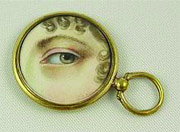
And yet, didn’t he make a request to be buried with her cameo, or some such trinket?

mariaseyeLady P [sighing]:

It was a miniature of her eye, something she’d given him in the early days to remind him of her—that she was watching him—when they were apart. Despite everything that happened, he kept it, and they said he did speak of her affectionately at the end.

But she was a fool for throwing her lot in with him in the first place. Royal princes don’t marry commoners, and royal heirs marry for state reasons. At least they did in my day. I must confess that it warmed my heart to watch Prince William’s wedding to Kate Middleton on that computer contraption of yours, although I find it fascinating that she is related to Lord Shelbourne, who was prime minister for a year or so before Charles James Fox’s Whigs trounced him out of office. Why, Lord P and I knew him well.

Susana:

It’s a small world, or so they say.

Lady P:

Indeed it is. Everyone is related to everyone else. It is enough to boggle the mind. I wonder if you and I could be related to each other, Susana? Have you ever thought of that possibility?

Susana [chuckling]:

Well, you do bear a certain resemblance to my mother. But no, I haven’t yet found a connection. I wonder if a DNA test would help?

Lady P [puzzled]:

A DNA test? What can that be? Do explain yourself, Susana.

Susana [to the Reader]:

Well, our conversation took a different direction at that point, but I’m sure I shall have an opportunity to pick her brain further about the Prince Regent at another time.

As always, please do comment if you have any questions you’d like to ask Lady P about the late Georgian/Regency era. She does love to chat!

The Lady P Series

Episode #1: Susana’s Adventures With Lady P: The Introduction

Episode #2: Lady P Talks About… Pride and Prejudice?

Episode #3: Lady P and the Duchess Who Lost a Billion Dollars

Episode #4: Lady P and the Face On the $100 Bill

Episode #5: In Which Lady P Discovers Sparkly Fabrics and Ponders Violating the Prime Directive

Episode #6: Lady P Dishes the Dirt on the Duchess of Devonshire

Episode #7: The Political Exploits of Lady P and the Duchess of Devonshire

Episode #8: Lady P and the Prince Regent’s Illicit Marriage

Episode #9: In Which Lady P Depletes the Cooking Sherry During Her Discussion of Caroline of Brunswick

Episode #10: Lord Byron: Mad, Bad, and Dangerous to Know

Episode #11: In Which Lady P Talks About Hannah More and the Rights of Women

Episode #12: Lady P’s Revelations Regarding George III and His Peculiar Progeny

Episode #13: Lady P Discusses the Luddite Uprising, the Assassination of Spencer Perceval, and the General Unfairness of Life

Episode #14: In Which Leticia, Lady Beauchamp, Pops In For an Interview On Her Personal Acquaintance With Princess Charlotte of Wales

Episode #15: Lady P On Assignment in 1814 Kent

Lady P Quizzes Jane Livingston, the Hero’s Sister From “A Twelfth Night Tale”