Archives

The Regency Gentleman’s Passion For the Turf

racecourse

Breeding and training thoroughbreds for racing was the passion of many wealthy gentlemen of good birth. Even more participated in watching and wagering the races. Newmarket, with its network of race courses, sponsored seven race meetings a year, and a third of all the race horses in England were trained nearby. (Transporting horses was very difficult, and most horses were walked to the race course, so it was better to keep them as near as possible.)

Around 500 spectators—nearly all upper-class—gathered to watch the race on horseback, sitting on top of carriage roofs, or standing around the course at Newmarket, as there were no grandstands as there were at other courses. In 1809, the 2000 Guineas, a sweepstakes for three-year-olds was established at Rowley Mile. The 1000 Guineas, a race for three-year-old fillies was established in 1817 at the less taxing course of Ditch Mile.
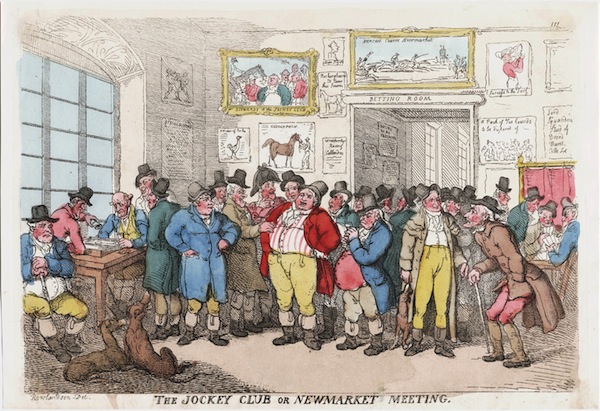
newmarket

Prince George was an enthusiastic participant in racing in his younger days (1788-1791), but withdrew in a huff when the jockey of his horse Escape was involved in a dreadful scandal, and the Jockey Club—the organization that oversaw the sport—insisted that the Prince give the jockey his marching orders. What was the scandal? A matter of Escape losing a race one day, forcing the odds up for the next day, resulting in the Prince winning a large sum of money. The Prince continued to patronize the races, however. He just could not resist the lure of the excitement and gambling.

Types of Races

Horse matches were head-to-head contests where individual owners would agree on a wager, and the winner took all. Spectators would make side bets as well. In one famous match, Hambletonian vs. Diamond, almost 300,000 pounds changed hands.

Plate and cup matches, where the prize was a trophy, were quite common as well.

The sweepstakes, however, with a line-up of horses running against each other, was the most popular in the late 18th/early 19th century. The owners put up a specified sum to subscribe to the race, and the winner took everything.

Race Courses

Ascot, with its close proximity to London, became a popular venue for fashionable race fans. In 1814, popular heroes such as Blücher, Tsar Alexander, the King of Prussia and Hetnan Platov provided additional entertainment for the race-mad hordes.
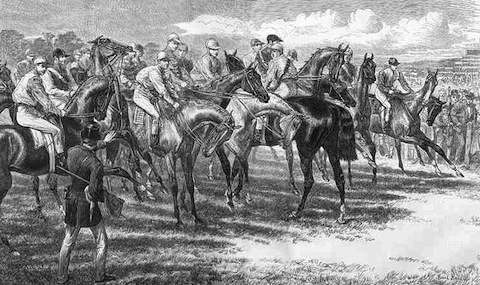
epsom downs

Epsom Downs

Epsom Downs, home of the legendary horse Eclipse, drew large crowds of the fashionable on Derby Day (named after the Earl of Derby who was instrumental in its development), a one-and-a-half mile race for three-year-olds. The only permanent structure on the course was Prinny’s stand, a miniature “castle” with Gothic arches where he could sit with his cronies to enjoy the races.
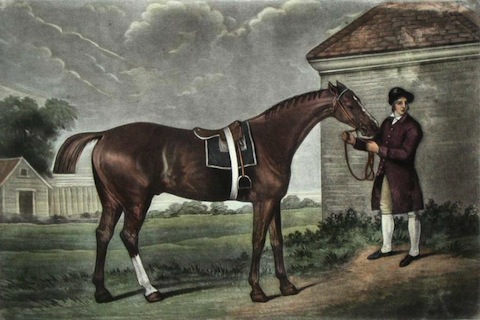
Eclipse

Eclipse

Other race courses were Goodwood in Yorkshire, Newcastle, Chester, Warwick, Winchester and Doncaster. Raikes (a dandy, banker and diarist) says:

“The Prince made Brighton and Lewes the gaiest scene of the year in England. The Pavilion was full of guests; the Steyne was crowded with all the rank and fashion from London during that week; the best horses were brought from Newmarket and the North, to run at these races, on which immense sums were depending; and the course was graced by the handsomest equipages.”

The Jockey Club

The organization responsible for regulating the racing world was the Jockey Club, whose members in 1790 included the Prince Regent, the Dukes of Bedford, Cumberland, Devonshire, and Norfolk. The Jockey Club established rules for such things as record-keeping and ensured that they were followed.

Wagering

As in London clubs and gaming hells, fortunes were won and lost at race courses. Brummell, too, lost large sums on horse racing. Raikes says:

“…I was never more surprised than when, in 1816, one morning he confided to me, that he must fly the country that night and by stealth. The next day he was landed in Calais, and, as he said, without any resources. I had several letters from him, at that time written with much cleverness, in which his natural high spirits struggled manfully against his overpowering reverses; but from the first he felt confident that he should never be able to return to his own country.”
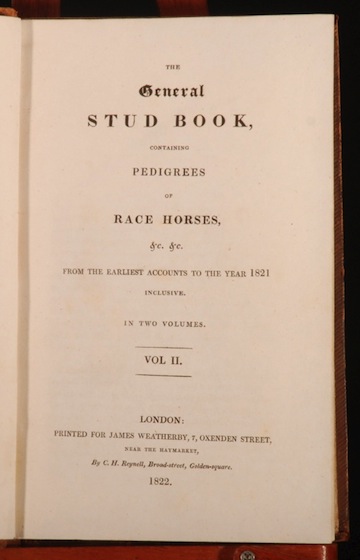
Stud Book

Stud Book

Laudermilk, Sharon H. and Hamlin, Theresa L., The Regency Companion, Garland Publishing, 1989.

The Regency Gentleman series

The Regency Gentleman: His Upbringing

The Fashionable Gentleman

The Rise and Fall of Beau Brummell 

Gentlemen’s Clubs in Regency London

Captain Who?

Gentlemen’s Sports in the Regency
The Gentleman’s Passion for Horses

Riding to the Hounds

The Regency Gentleman’s Passion for the Turf

Riding to the Hounds

jumping

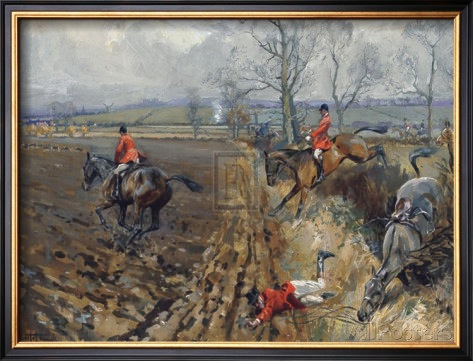
The changes that took place in the Georgian era had the effect of making the Regency era the Golden Age of Foxhunting. Faster hounds and horses that could jump at a gallop made the sport more exciting and more dangerous. Instead of foxhunters having to dig the fox out of its hole, the faster hounds would chase him up a tree—treeing—so that he could be thrown down to the dogs below. The first man up to the kill—the brusher—received the brush of the fox for his efforts. The brusher would be capped by the other hunters, that is he would collect half a crown or so for his triumph.

Black and White Treeing_small

Foxhunting was not only for the upper classes. Mr. Gunter, the London confectioner known for his ices, was a foxhunting fiend. Captain Gronow says:

“Everybody knows the story of Gunter the pastry-cook. He was mounted on a runaway horse with the King’s hounds, and excused himself for riding against Alvanley by saying, ‘O my lord, I can’t hold him, he’s so hot!’ ‘Ice him, Gunter—ice him’ was the consoling rejoinder.”

The Duke of Rutland's hounds

The journalist Nimrod in Sporting Magazine wrote that what is needed to be a good foxhunter is a good seat and a light hand. Also important is cool confidence and perception. A good foxhunter was “game to the back bone.”

An article in The Beau Monde in 1807 stated that:

“The duration of the chace should never be less than one hour, nor ought it to exceed two, which will, in most cases, be found sufficiently long if properly followed. Indeed, very few fox-chaces would ever exceed two hours if there were not a fault somewhere, either in the day, the huntsman, or the hounds.”

Some devoted foxhunters rode to the hounds six days a week. The best foxhunting was during January, February, and March, because the fox left the strongest scent during the cold weather.

foxhunt

The Duke of Wellington kept a stud of eight horses and hunted nearly every day on the Peninsula. He wore a blue frock coat given him by Lady Salisbury instead of the traditional red. Beau Brummell was an indifferent hunter, because he couldn’t bear to sully his rig with mud.

The Belvoir Estate

The Belvoir Estate

The enormous expense of maintaining a pack of hounds made private packs out of reach for most. The Duke of Rutland was one exception, but most people paid a subscription fee to a master who organized hunts. The Quorn might have around 200 subscribers, while smaller packs might have 50. In general, the neighborhood supported their hunting meets, but if the master allowed the hunters to destroy fields without compensating the local farmers, he might find his foxes hunted and killed by angry farmers in retribution.

Fox hunts normally started at ten or eleven in the morning, with hunters, horses, hounds, and liveried servants gathering at inns, markets, crossroads, or the lawns of stately homes. Hunters could wear what they chose, but the traditional dress was a red or black coat with white leather breeches, top boots, and a silk hat.

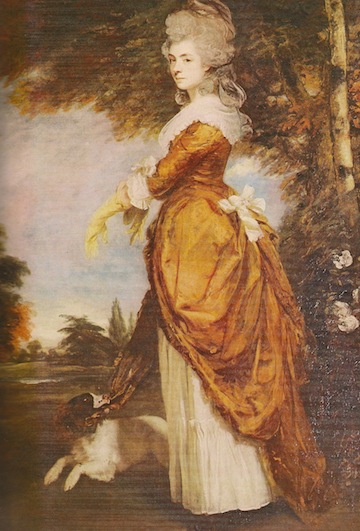
Regency ladies did not ride to the hunt in general, because the sidesaddle used at the time was not steady enough to be safe for galloping over bullfinches and hedgerows. This changed in the 1830’s after the development of a sidesaddle with three crutches that would secure the thigh. Exceptions were Lady Laetitia Lade and Lady Salisbury. But the truth is, most men didn’t want to hunt with the ladies because they were either too slow or better than the men, which was not acceptable either.

Lady-Salisbury

Marchioness of Salisbury

Laudermilk, Sharon H. and Hamlin, Theresa L., The Regency Companion, Garland Publishing, 1989.

The Regency Gentleman series

The Regency Gentleman: His Upbringing

The Fashionable Gentleman

The Rise and Fall of Beau Brummell 

Gentlemen’s Clubs in Regency London

Captain Who?

Gentlemen’s Sports in the Regency
The Gentleman’s Passion for Horses

Riding to the Hounds

The Regency Gentleman’s Passion for the Turf

Gentlemen’s Sports in the Regency
True Regency gentlemen did not sully their hands with work—that was for the lower classes. An exception to that rule would be managing his estates. Although he would generally have an estate manager or steward to handle the day-to-day tasks, the supervision of that employee would fall to him.

If all was in order, however, the Regency gentleman was fortunate to possess a considerable amount of free time, particularly the younger generation whose fathers yet survived, leaving them at liberty to seek their own pleasures, often referred to as attaining one’s “Town bronze.”

A previous post touched on the gentlemen’s clubs and gaming hells. Drinking, gambling and wenching were all popular pastimes for the gentlemen with time on their hands, especially for the young “cubs” or “greenhorns” who had yet to learn to be wary of pitfalls, such as “Captain Sharps” out to relieve them of their money by nefarious means. But when they weren’t indulging in the Regency era’s form of “partying,” they would likely engage in sporting events.

Boxing

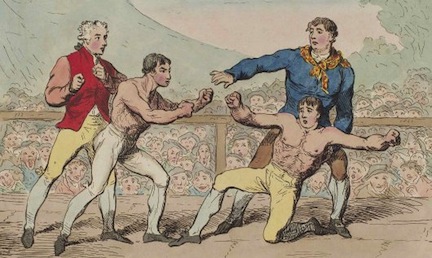
A true gentleman had to be “good with his fists,” so many a gentleman frequented such pugilistic clubs as Gentleman Jackson’s on Bond Street, the Daffy Club, Limmer’s Hotel, Offley’s, and the Puglistic Society.

jackson-john-111

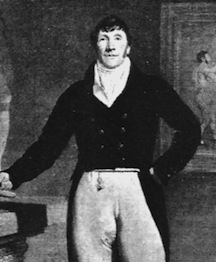
Gentleman Jackson was a former champion who enjoyed the respect and admiration of English society. His boxing academy on Number 13 Bond Street was a popular location for gentlemen who wished to improve their pugilistic skills. Jackson was instrumental in organizing the Pugilistic Society, which was formed at Thatched House Tavern in May 1814. The Pugilistic Society had the effect of lending respectability to the sport.

Offley’s was a sporting hotel in Henrietta Street that was known for its excellent beefsteak and ale. The Daffy Club, originally held at the Castle Tavern in Holborn, was an informal club reputed for the quantities of “blue ruin” (homemade gin).

mendoza_32-530x317

Prize fights or “mills” were usually held just outside of cities and towns where organizers could avoid the many laws regulating the sport. As soon as a fight was announced, hordes would swarm the town well in advance in order to secure accommodations. Those who arrived after every public house and inn was occupied either had to try to sleep in their carriages amidst all the racket in the street or stay up all night.

Fencing

Angelo’s School of Arms

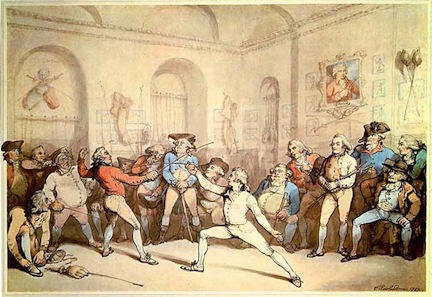
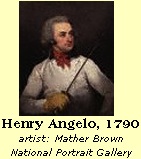
henry_angeloIn 1755, an Italian riding and fencing master by the name of Dominico Angelo Malevolti Tremamondo came to London and earned a reputation for extraordinary fencing skills. He opened “Angelo’s School of Arms,” first at Carlisle House, and then the Opera House Buildings in Haymarket. Angelo’s was a popular place for gentlemen to socialize, watch exhibitions of master fencers, and perfect their own equestrian and fencing skills. Angelo’s son Henry took over operations in 1785, and in 1817, he turned it over to his own son, also Henry. The elder Henry played a pivotal role in assisting his friend Gentleman Jackson establish his own boxing salon.

Blood Sports

The Royal Cockpit

Of all the violent animal sports—which included bear baiting and bull baiting—cock fighting was by far the most popular. The Birdcage Walk and the Royal Cockpit were two of the special indoor arenas where crowds gathered to gamble on the outcomes and watch the fights. The birds were armed with sharp spurs and the cruelty and violence was extreme. (No hero of mine will ever enjoy this sport, I assure you!)

Laudermilk, Sharon H. and Hamlin, Theresa L., The Regency Companion, Garland Publishing, 1989.

The Regency Gentleman series

The Regency Gentleman: His Upbringing

The Fashionable Gentleman

The Rise and Fall of Beau Brummell 

Gentlemen’s Clubs in Regency London

Captain Who?

Gentlemen’s Sports in the Regency
The Gentleman’s Passion for Horses

Riding to the Hounds

The Regency Gentleman’s Passion for the Turf

Captain Who?

Rees Howell Gronow

Rees Howell Gronow

The Welsh-born Rees Howell Gronow attended Eton with Percy Bysshe Shelley. The young Gronow’s military career began in 1813, when he was sent to Spain with a detachment from his regiment, where his participation in military endeavors was significant. After being posted to London a year later, he became known as one of the primary dandies of his time, being one of the few officers ever admitted to Almack’s, the exclusive assembly rooms on King Street. Neither titled nor wealthy, Gronow was considered one of the most handsome gentlemen of the ton, and that, together with the fact that he was a meticulous dresser, was enough to elevate him into the highest circles of London society. His portrait appeared in shop windows along with other famous gentlemen of the time, such as the Regent, Alvanley, Brummell, etc. He was an excellent shot, second only to the famous Captain Ross, and participated in many duels.

Although not called by the War Office for service on the continent, Gronow used 600 pounds won at the gambling tables to equip himself with a horse and gear and took himself off anyway. He participated in France at Quatre Bras and Waterloo, and was soon after made a lieutenant, and later, captain, of his regiment. He continued with his regiment in England until 1821, when he retired.

In 1821 he spent a short time in debtors’ prison. In 1825, he married an opera dancer. He made his home in London, where he mixed with the highest echelons of society, for many years afterward. During that time he ran unsuccessfully for Parliament on three occasions. Eventually, he moved to Paris. where, in 1858 when he was 63, he married the daughter of a Breton aristocratic who was young enough to be his granddaughter. They had four children together, for which he failed to provide after his death at age 70, according to the Morning Post.

bookToday, Gronow is mostly known for his Reminiscences, in which he discusses his military service, his personal experiences with many prominent Regency-era personages, as well as life in Restoration France. He is frequently quoted in The Regency Companion, from which I’ve been gleaning historical tidbits of interest to fans of the Regency period. The Kindle edition of his book is available for free on Amazon. (See below)

Reminiscences of Captain Gronow

Laudermilk, Sharon H. and Hamlin, Theresa L., The Regency Companion, Garland Publishing, 1989.

The Regency Gentleman series

The Regency Gentleman: His Upbringing

The Fashionable Gentleman

The Rise and Fall of Beau Brummell 

Gentlemen’s Clubs in Regency London

Captain Who?

Gentlemen’s Sports in the Regency
The Gentleman’s Passion for Horses

Riding to the Hounds

The Regency Gentleman’s Passion for the Turf

The Rise and Fall of Beau Brummell

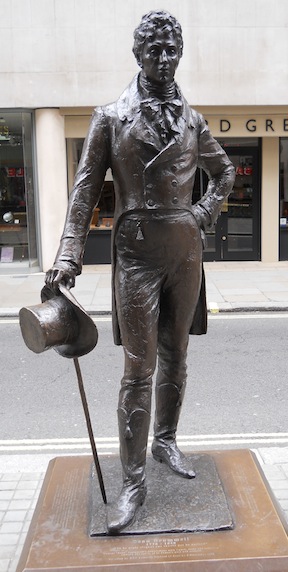
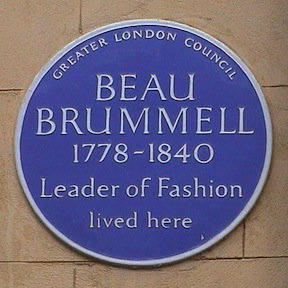
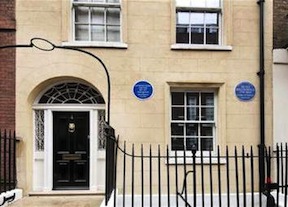
The epitome of a Regency dandy was a young man by the name of George Brummell. George did not grow up in the lap of luxury—his grandfather was rumored to be a personal servant—but his father was secretary to Lord North, and he was sent to Eton at the age of twelve in 1790, where he became very popular. Because of his attention to fashion and grooming, it wasn’t long before he became a great friend of the Prince Regent, who, in 1794, gave him a commission in his own regiment, the 10th Hussars. Brummell, nicknamed “Buck” by his intimates, spent most of his time on military leave, until he inherited 30,000 pounds and resigned, setting up his own household in 1798 at No. 4 Chesterfield Street.

BEAUBRUMMELL copy

Brummell decreed that cut and fit in a gentleman’s clothing were more important than elaborate fabrics. His insistence on cleanliness had the effect of pulling English gentlemen out of the stables and into the baths, and then poured into closely-fitting, well-cut clothing, including snow-white neckcloths tied into elaborate knots, smoothly shaved faces, and hair that required three hairdressers—one for the front, one for the sides and one for the back.

“The Beau” was known for his audacious wit and his condescending comments centering on the bad taste of others, men and women alike. A set-down from him could ruin a young person’s reputation and send them running from London in shame. Brummell and his dandies made it unfashionable to show emotion or any concern for the consequences of their actions. Although he had no social standing of his own, he had even the highest-ranked gentlemen admiring and copying his dress and behavior. Along with Lord Alvanley, Henry Pierpont and Henry Mildmay, he was part of the “Dandy Club” of Watier’s.

Unfortunately, Brummell’s extravagance, gambling and sharp tongue also led to his downfall. In 1813 at a party, the Prince Regent snubbed Brummell and Mildmay, staring them in the face while refusing to speak to them. Brummell quipped to Alvanley, “Who is your fat friend?” and that was the beginning of the end for Brummell.

In 1816 he fled to Calais where he lived in poverty until his death of syphilis in 1840.

londonrem

#4 chesterfield st.

No. 4 Chesterfield Street

Laudermilk, Sharon H. and Hamlin, Theresa L., The Regency Companion, Garland Publishing, 1989.

The Regency Gentleman series

The Regency Gentleman: His Upbringing

The Fashionable Gentleman

The Rise and Fall of Beau Brummell 

Gentlemen’s Clubs in Regency London

Captain Who?

Gentlemen’s Sports in the Regency

The Gentleman’s Passion for Horses

Riding to the Hounds

The Regency Gentleman’s Passion for the Turf

The Fashionable Gentleman

complete

Regency gentlemen had a serious obsession with fashion, especially after Beau Brummell arrived on the London scene. More about him next week.

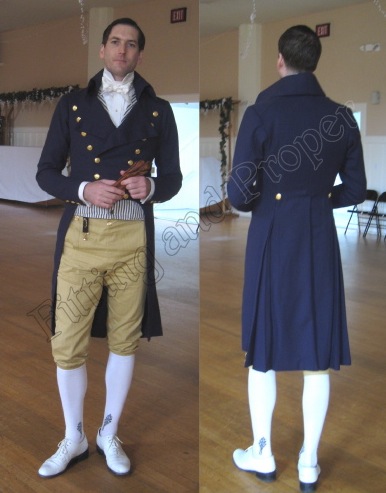
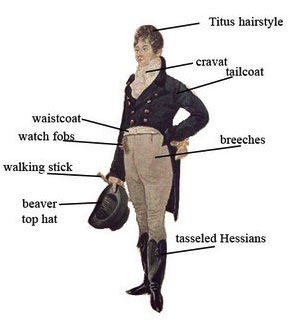
During the Regency, knee breeches gave rise to trousers, although it was a good long time before trousers were accepted at Almack’s Assembly Rooms. By 1816, after Brummell’s flight to the continent, trousers became all the rage, with breeches reserved for very formal occasions (except for older gentlemen who did not adapt well to change).

Pantaloons and trousers were made of light colors, such as buff or yellow, and clung tightly to the body. Pantaloons had side slits with buttons to keep them tight, and straps under the instep to keep them in place.

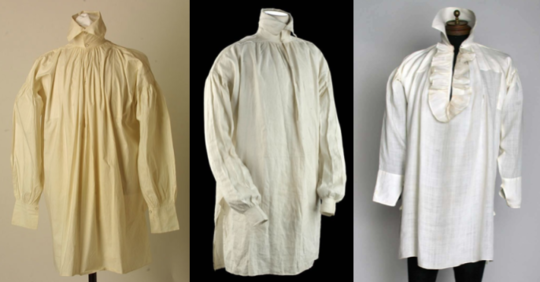
shirts

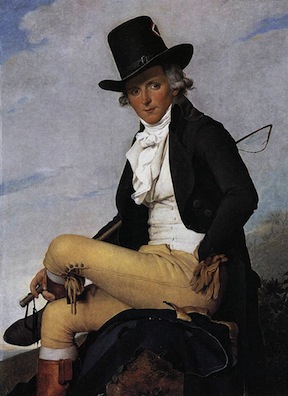
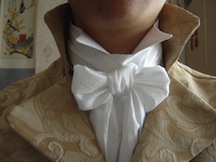
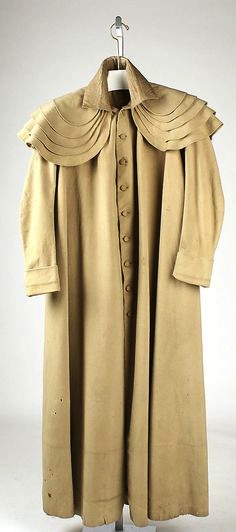
A gentleman’s shirt tended to be long, shapeless, and white. Over the shirt would go the waistcoat (white for evening wear, colorful and eye-catching for day wear). An elaborately-tied cravat would spill over the shirt and waistcoat. Over that would be a dress coat with tails—cut in a straight line from the waist down), or a morning coat or riding coat, which also sported tails, but was cut away in front. Following Waterloo, a frock coat with a military design became popular for informal occasions. Over all of this would be a great coat, worn all year round, often with capes of various lengths along the top.

cravat

greatcoat

greatcoat

morning coat or riding coat

morning coat or riding coat

Black boots were the daytime shoes of choice for a Regency gentleman, particularly Hessians, which were knee boots that sported a tassle in front. Hessians were worn over the trousers, but at the end of the Regency, Wellington boots, which were worn under breeches, which were tied at the foot, became popular. For evening wear, black pumps—perhaps made of the new patent leather—and silk stockings were worn. Hoby was the bootmaker of choice.

Regency gentlemen wore top hats of various shapes and sizes, and hats made of beaver were quite popular. Lock’s was the hatter of choice for the exclusive Regency gentleman. Gloves, jewelry (cravat pins, rings, and fobs), snuff boxes, quizzing glasses, and scents were also important to a gentleman’s toilette. Thanks to Beau Brummell’s fastidious cleanliness, bathing also become de rigueur in the Regency.

Beau Brummell

Beau Brummell

Just as Regency ladies required a personal maid or abigail to assist them with dressing and care for their wardrobe, gentlemen required the services of a valet.

For further information:

Kristen Koster

Laudermilk, Sharon H. and Hamlin, Theresa L., The Regency Companion, Garland Publishing, 1989.

The Regency Gentleman series

The Regency Gentleman: His Upbringing

The Fashionable Gentleman

The Rise and Fall of Beau Brummell 

Gentlemen’s Clubs in Regency London

Captain Who?

Gentlemen’s Sports in the Regency

The Gentleman’s Passion for Horses

Riding to the Hounds

The Regency Gentleman’s Passion for the Turf

A Regency Gentleman: His Upbringing

Privileged children were born at home, typically with the aid of a midwife, and immediately handed over to a wet nurse, since upper class ladies did not nurse their own children. Brought up by servants or dependent relatives, children saw their parents rarely, always accompanied by servants.

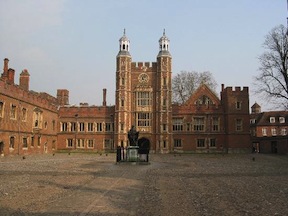
Later, a young gentleman might be tutored by a local clergyman or by a hired tutor or governess. When he could read and write, he would be sent off to public school, such as Eton, Rugby, Harrow, Westminster, Winchester and Charterhouse. The course of study centered on the classics, the French language (used often in polite society when servants were present), drawing and fencing. However, life at public schools could be traumatic.

Eton

Eton

In spite of the outlandish fees charged by these exclusive schools, the accommodations were abominable. Sleeping chambers were cold and damp, food barely edible and scant, and the older boys bullied the younger ones unmercifully. The older—and bigger—boys forced the younger ones as servants—a system known as fagging—and often such treatment resulted in revenge against a headmaster who allowed such brutal bullying to occur. Headmasters, too, were known to cane a boy’s bare buttocks until it bled.

The idea was that a boy who could survive public school and learned the meaning of obedience could be trusted to command—servants or regiments— or succeed in whatever place in Regency society he was fated to take.

Following public school, our young man could go on to Oxford or Cambridge, although he could devote himself to other pleasures—eating, drinking and wenching—as well. Most university students did a fair amount of both.

On the Town

Prior to the Napoleonic Wars, a young man would go on a tour of Europe with a tutor (“bear-leader”) to sample the pleasures of Europe. During the Regency, a young man was more likely to take up a commission in the army (particularly if he was a younger son) or simply learn his way around London, therefore earning his “town bronze.”

A young gentleman was expected to be skilled in fighting with fists, swords, and firearms, as well as gaming. Coolness, courage, and a “stiff, upper lip” were essential for a young man about town. He was also expected to be stylish enough to be accepted into gentlemen’s clubs and ballrooms, including Almack’s Assembly Rooms. Gentlemen, too, were scrutinized by the patronesses before being issued the coveted vouchers.

Other frequent amusements by young bucks might be parading up and down Bond Street and “accidentally” tripping people with their canes, catching the edge of a lace gown with their spurs, or quizzing people with their quizzing glasses. These young men “raising Cain” were the scourge of the night watchmen with their tricks on unwary passers-by.

And then there were their “bits of muslin” or wenches. A young man was expected to marry for money or connections, make sure his heir was his, and then proceed to find passion with a series of mistresses. While discretion was expected, most of society turned a blind eye to these foibles, at least on the part of gentlemen. Ladies’ behavior was much more closely scrutinized.

Laudermilk, Sharon H. and Hamlin, Theresa L., The Regency Companion, Garland Publishing, 1989.

The Regency Gentleman series

The Regency Gentleman: His Upbringing

The Fashionable Gentleman

The Rise and Fall of Beau Brummell 

Gentlemen’s Clubs in Regency London

Captain Who?

Gentlemen’s Sports in the Regency

The Gentleman’s Passion for Horses

Riding to the Hounds

The Regency Gentleman’s Passion for the Turf

Authors in Bloom Blog Hop

Books - it is our memory concept


Baked Meatball Parmigiana

meatball-parm1Meatballs (if you choose to make your own)

  • 1-1/2 pounds meatloaf mix (beef, pork, veal combo)
  • 4 cloves garlic, roughly chopped, not minced
  • chopped fresh parsley (handful)
  • 1 cup bread crumbs
  • 1 cup shredded Parmesan or Asiago cheese (not grated)
  • 2 eggs
  • salt to taste

Mix the above ingredients and form your meatballs (not too large). Pour 1-2 tablespoons oil on a baking pan with sides and bake at 400 for 20 minutes. Lower oven to 375.

Topper ingredients

  • spaghetti sauce of your choice (two 24-ounce jars)
  • mozzarella cheese (lots)

In a 9 x 13 pan (or ceramic dish), pour some sauce to cover the bottom. Add your meatballs. Cover with remainder of sauce and top with lots and lots of mozzarella cheese.

Cover with foil and bake for 20 minutes. Remove foil and bake another 20 minutes or until cheese has begun to brown.You might raise the temperature to 400 for the last four minutes to assist with browning.

Susana’s Giveaway*

A Lovely Treasure Box of Goodies, including

A Twelfth Knight Tale silver-plated Christmas bracelet

A Twelfth Night Tale silver-plated Christmas bracelet

  • A Twelfth Night Tale silver-plated Christmas bracelet
  • a Celtic pen from Scotland
  • a deck of Ellora’s Cave playing cards
  • a sterling silver circle necklace
  • a keychain from London
  • jeweled soap
  • two Susana Ellis pens

and whatever else she decides to put in it, such as collector cards, bookmarks, and chocolates!

*A winner from outside the U.S. will receive a $25 Amazon gift card instead of the Treasure Box.

Click here for the Rafflecopter

Before you go—

Leave a blog post comment about your favorite spring activities, and don’t forget to include your email address so that you can be contacted if you are chosen as the winner.

Authors in Bloom Prizes

Grand Prize: A Kindle or Nook e-reader ($200 value) +$25 gift card (US only)

Second Prize: $25 e-reader gift card (international)

Author Prizes will vary. Note that only visitors who leave comments at each and every stop on the tour will be eligible for the Grand Prizes and Second Prize. Winners will be posted on the first (Dianne Venetta) and last (A Cozy Reader’s Corner) stops on the tour.

Good luck to all of you! I hope you discover some fantastic new authors along the way!

1. Dianne Venetta ~ Cozy Mystery/Romance (US) 41. Stacey Joy Netzel
2. Rose Anderson 42. Deb Sanders
3. Alexa Grace 43. Janette Harjo
4. Katharina Gerlach, YA Fantasy author 44. Donna Marie Rogers
5. Jennifer Lowery 45. J.L. Campbell
6. Catheirne Chant (US) 46. Lorraine Paton (INTL)
7. S.D. Bancroft 47. Amy Saunders, Chick-Lit Mysteries (US)
8. J.D. Faver ~ Bad Girls Need Love Too…(Intl) 48. Jencey Gortney
9. Tara Manderino (Intl) 49. Sandra Cox
10. Judy Baker, Cowboys and Indian Romances 50. Alisia Compton
11. Sharon Kleve 51. Cate Dean
12. Sara Walter Ellwood (US) 52. Lisa Lickel
13. Anna Patterson 53. Iyana Jenna
14. Karl Fields (Intl) 54. Jesse Kimmel-Freeman (INT)
15. LENA HART 55. Sheila Seabrook
16. Janice Seagraves, author 56. Rose Cooper
17. Lakisha Spletzer 57. Halimah bint David
18. Gemma Juliana 58. Grace Peterson
19. Victoria Adams 59. Nancy Pi-Sunyer
20. Daryl Devore 60. Elena Williams
21. Jeana E. Mann, New Adult Romance 61. Scandalous Stories
22. Not Neccesarily In That Order 62. Lisa Orgler
23. Brenda Maxfield\’s Smart and Sassy Teen Reads (INT) 63. L.A. Sartor
24. Elizabeth McKenna 64. BloominThyme
25. H. A. Somerled 65. Margarita Matos (UF & Romance)
26. Susana Ellis 66. Lisa Chalmers
27. Aileen Fish 67. Diane Burton
28. Cheryl Bolen 68. Rebecca J. Clark
29. Elizabeth Rose 69. Victoria Pinder
30. L. Alison Heller 70. Zelda Benjamin
31. Eleanor Moran 71. Liz Allen (US)
32. K C Maguire 72. Stacy Juba\’s Characters at a Crossroads
33. Patricia W. Fischer 73. Jennifer Conner Romance Author
34. Mindy Hardwick, Author 74. I Am A Reader
35. Melanie Macek 75. Darcy Flynn (US)
36. Karen McCullough 76. Joanne Jaytanie
37. Michelle Abbott 77. Cassandra L Shaw
38. Mary Laudien 78. Janette Harjo
39. Aubrey Wynne 79. Louisa Mack
40. Kimberly K. Comeau 80. Tiffany Schlarman

treasuringtheresa_1.75

Treasuring Theresa

a sweet Regency short story

She’s a country lady. He’s a London swell. They have nothing in common. Or have they?

Lady Theresa despises London society. What’s worse is that she has to attend the betrothal ball of the young man she expected to marry. To deflect all the pitiful glances from the other guests, she makes a play for the most striking gentleman there—who happens to be her Cousin Damian, who is everything she despises.

Damian, Lord Clinton sees a desperate young lady with no social graces, and it solidifies his opinion that country folk are beneath him. But it so happens that he is the heir to that young lady’s father’s title and estate, and the time comes when he finds himself obliged to spend some time there.

Thrown together, both Damian and Theresa discover each other’s hidden depths. But are their differences too much to overcome to make a successful match?

Ellora’s Cave • Amazon • Barnes & Noble

AllRomance eBooks • Kobo

Another Sneak Peak of “A Home For Helena”

Lady P

Lady P

Lady Pendleton: Dear me! Susana has a special treat for you today, dear readers. She’s been working long and hard to tell the story of a young girl called Helena who came to me from the 21st century seeking my help in finding the family from whose arms she was snatched when only a babe.

In this scene, Helena is recalling her consultation with the gypsy lady who offers to help her travel back to the past to discover the truth about her origins.

**********

The sign painted on the window read “Genuine Gipsy Fortune Telling” in large red letters with “Palm Reading • Tarot Cards” in smaller print underneath with the bottom line proclaiming “Séances Scheduled at Your Convenience”. A mannequin dressed flamboyantly in a red peasant blouse and gold skirt stood in the window with outstretched arms, no doubt meant to lure the bystander inside. Although an attempt had been made to give her a gypsy appearance—black wig tied back under a bright red headscarf, and glittery gold dripping from every possible place—her expression was the typical bland stare associated with mannequins.

It was cheesy. The sort of place an educated person would never deign to enter. Certainly not Helena, who didn’t believe in psychics or fortune telling, let alone time travel. Was her coincidental meeting with Mrs. Herne simply a scheme to drum up business?

If so, she had been very, very good at it. Her dark eyes seemed to probe into Helena’s very soul, seeing things she could not possibly have known otherwise. A lost soul, she had proclaimed. Wrenched out of her time. Isolated and alone because her soul was out of sync.

“I have a friend who might be able to help you,” she had said cautiously. When asked what she meant, the woman had turned cagey.

“Come to my shop”—she pushed a card toward Helena—“and we can discuss it.”

Helena’s eyes narrowed. “Why not now? Here?” she asked, indicating the lively sandwich shop. “Why must I go to your shop?” She wanted to believe. Mrs. Herne’s words struck a nerve. She’d never fit in, no matter how much she’d tried. Perhaps…there was a reason for it. Something she could do about it. But…travel through time? That sort of thing happened only in science fiction. As Dr. McCoy explained in Star Trek IV: The Voyage Home: “Sure, you slingshot around the Sun, pick up enough speed—you’re in time warp. If you don’t, you’re fried.

Helena and James

Helena and James

But here she was, standing outside Mrs. Herne’s fortune-telling shop, gathering up the courage to go inside. Well, she’d come this far. Might as well go for broke. She stepped forward.

The foyer was papered in red damask sprinkled with gold medallions. On a table between two gold satin wingback chairs was an antique ouiji board. On the adjacent wall was a showcase with a magnificent crystal ball in the center and zodiac plates on the side.

But what really drew Helena’s attention was the familiar-looking Zoltar fortune-telling machine in the corner. The gold-turbaned gypsy male had a narrow black beard and a thick mustache that turned up at the ends like a villain’s. He wore a black leather vest over a gold shirt, hoop earrings, and his eyes seemed to be laughing at her. The case of the machine was of elaborately-carved wood painted in black and gold, and the front of the glass box said “Zoltar” in gold-outlined red at the top, and “speaks” on the bottom. His right hand hovered over a crystal ball, and the left seemed to beckon her to come closer. Now where had she seen that before?

“It was the movie Big,

Mrs. Herne pushed aside some of the strands of colorful beads that obscured the interior of her shop as she approached Helena.

“They had one exactly like this, but mine is the original. I purchased it from Patty Astley herself when her husband refused to have it anywhere near his amphitheatre. She was a good friend of mine, was Patty. Quite the horsewoman, too. But then, Philip was an excellent teacher.”

Astley? Of Astley’s Amphitheatre? From upwards of two hundred years ago?

“How old are you, Mrs. Herne?”

She was tall and had a generous, but not zaftig, figure in her flowing crimson caftan. Her black hair was liberally streaked with gray, and her dusky face showed the beginnings of wrinkles. She certainly did not have the look of an aged woman.

Mrs. Herne threw back her head and laughed loudly.

“How old do you think I am?” she asked finally.

“Oh…well…forty-five?” Helena hedged, trying to be diplomatic. She actually figured the woman for about a decade older.

“Right you are, Miss Helena. I stopped aging on my fifty-fifth birthday.” She smiled at Helena’s startled reaction. “You were trying to be kind, of course. To a young person, fifty years seems a long time. In reality, fifty is the best age. You know yourself well by then, and aren’t always trying to become someone else. And you don’t take things so seriously. Life is meant to be enjoyed, after all.” She looked Helena directly in the eye. “After all, fifty is the new forty, or so they say.”

“Come inside, and sit for awhile, and I’ll fetch some tea.”

She was personable and kind, and her words carried the semblance of truth. The tea had long grown cold by the time Helena left the shop, carrying a round gray stone flecked with gold and a list of instructions—mostly preparations for the trip and suggestions for what to do when she arrived. Mrs. Herne’s clairvoyant power pointed to the year 1792 as her birth year, and it was decided that 1817 would be the most opportune time for her return.

“And my good friend Lady Pendleton will be there to assist you!” she had exclaimed. “How very fortunate that she is in Town for the Season this year!”

Helena wasn’t entirely certain who or what Lady Pendleton was, but then, she hadn’t quite figured out Mrs. Herne either. Was she a fool to trust either one of them? Perhaps, but it wasn’t like she had to jump off a cliff or anything. She only had to clasp the rock tightly in her hands and concentrate on thinking about where she wanted to travel to.

“But you must truly wish it,” Mrs. Herne cautioned. “Reflect on your desire to be reunited with your true family and live the life you were meant to live.”

And how to return if things didn’t work out in the 19th century?

“Oh, Agatha will help you. Lady Pendleton, that is. Or you can drop by my shop on Gracechurch Street. Only thing is, I was traveling quite a bit myself that year, so you may or may not find me there. You have a better chance with Lady Pendleton.”

And what if she couldn’t find Lady Pendleton?

“Oh well, you’re a bright girl. Not like the silly chits typical of the period. Keep your wits about you and learn from your surroundings. You’ll be fine.”

Would she? Helena recalled Claire Fraser being branded a witch in Outlander and wondered if they burned witches at the stake in that era. Oh no, they were dunking her, weren’t they, before Jamie came to the rescue.

Mrs. Herne was frowning. “That was nothing more than a book.”

It was eerie how easily the gypsy lady read her thoughts.

“If this is where you belong, you’ll adapt. In time.”

Helena didn’t like the sound of “if.”

But in the end, she couldn’t resist. The past was pulling at her, drawing her, and she finally let it take her into its mysterious lair.

**********

Lady Pendleton: Yes, well, time travel does have that effect on people. I find it rather addictive, actually.

Oh, I wanted to tell you that Susana and I are having a wonderful time in Florida. It’s a bit cold today, but sunny and beautiful, and I was simply over the moon to catch my first glimpse of the baby sand hill cranes. Here are some photos of them. I almost got close enough to touch them! Aren’t they adorable?

babycranes

Baby sand hill cranes

Mama Crane

Mama Crane

Crane Family Having Luncheon

Crane Family Having Luncheon

Susana’s Parlour Got Nominated For a Lighthouse Award…by some Scottish hamsters!

lighthouse award

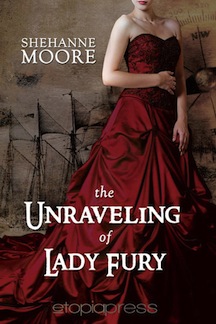
Shehanne Moore is a hoot. A Scots hoot to boot. (Oh look, I’m a poet!) Her Lady Fury hosted me on Furious Unravelingsand I’ve never had so much fun in my life hobnobbing with pirates in the Caribbean. This writer gig is really the best. I never got to meet pirates when I was a teacher! To find out more about Lady Fury and her own special pirate, Flint, check out The Unraveling of Lady Fury.

lady fury

Anyway, Shehanne’s pet hamsters have nominated me for a Lighthouse Award. Isn’t that fabulous! They’re so cute too! Check ’em out here.

The rules:

  • Display the Award Certificate on your blog.
  • Write a post and link back to the blogger that nominated you.
  • Inform your nominees of their award nominations.
  • Share three ways that you like to help others.
  • Nominate as many bloggers as you like.

Three ways I like to help others:

I love to host other authors on my blogs. Susana’s Parlour is for historical romance (mostly Regency) and Susana’s Morning Room is for all sub-genres of romance. I’ve met so many fascinating people, and I hope featuring them and their books helps them find new readers. Information about guest blogging is available in the top menu under Susana Seeks Guest Authors. I also host for Goddess Fish Promotions.

Another thing I enjoy doing is organizing blog tours and hops. After participating in a few very large hops featuring a diverse group of authors, it occurred to me that smaller hops focusing on a single sub-genre—historical—might be more effective.While you still get some folks who are mostly interested in the prize, there seem to be more who are truly interested in discovering new books to read.It’s fun to experiment with new things and discover more about what works and what doesn’t. And I LOVE putting together treasure boxes full of cool stuff for the winner!

Lady P

Lady P

Most of all, I enjoy posting about historical information for the benefit of my readers.That’s why I created Lady P, an eccentric Regency, time-traveling lady who comes to Toledo (and now Florida) to help Susana learn about the “real” Regency. Lady P bears a strong resemblance to my mother, Mrs. Ellis, and I am featuring her in my current WIP, a time travel. Much of what I learn in my own research gets shared here on Susana’s Parlour.

My Nominees

I’m nominating the following bloggers for the Lighthouse Award:

  • Suzi Love
  • Regan’s Romance Reviews (Regan Walker)
  • The Things That Catch My Eye (David William Wilkin)
  • Blue Rose Romance (Collette Cameron)
  • Stories From History (Jane Lark)
  • Regina Jeffers’s Blog
  • Ella Quinn
  • Piper Huguley

Congrats to all the nominees! You deserve it!